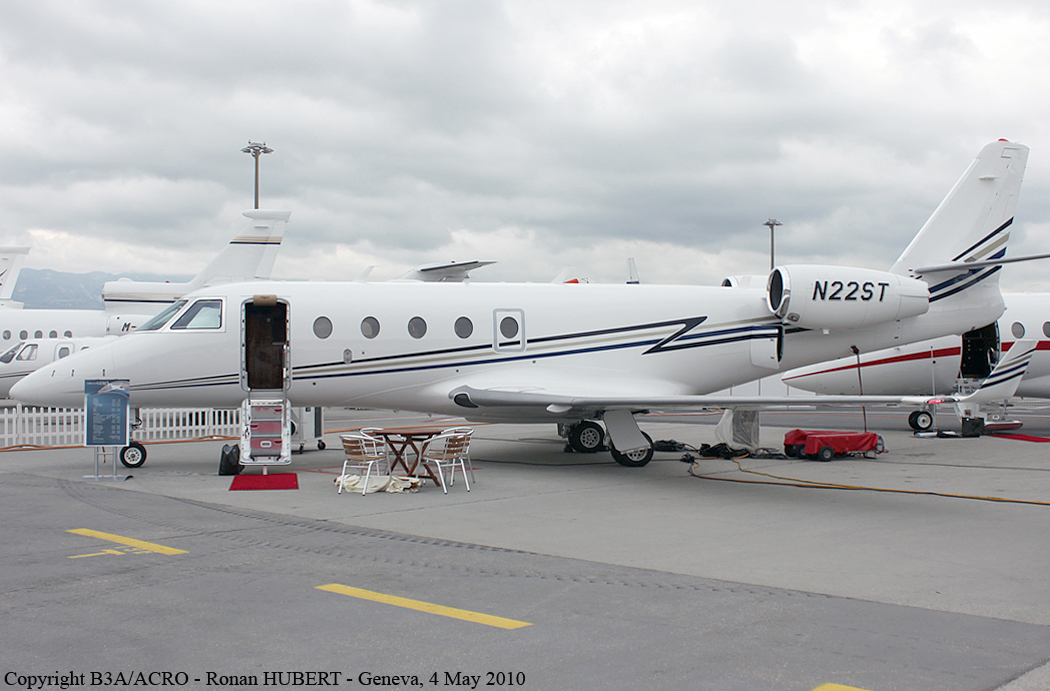
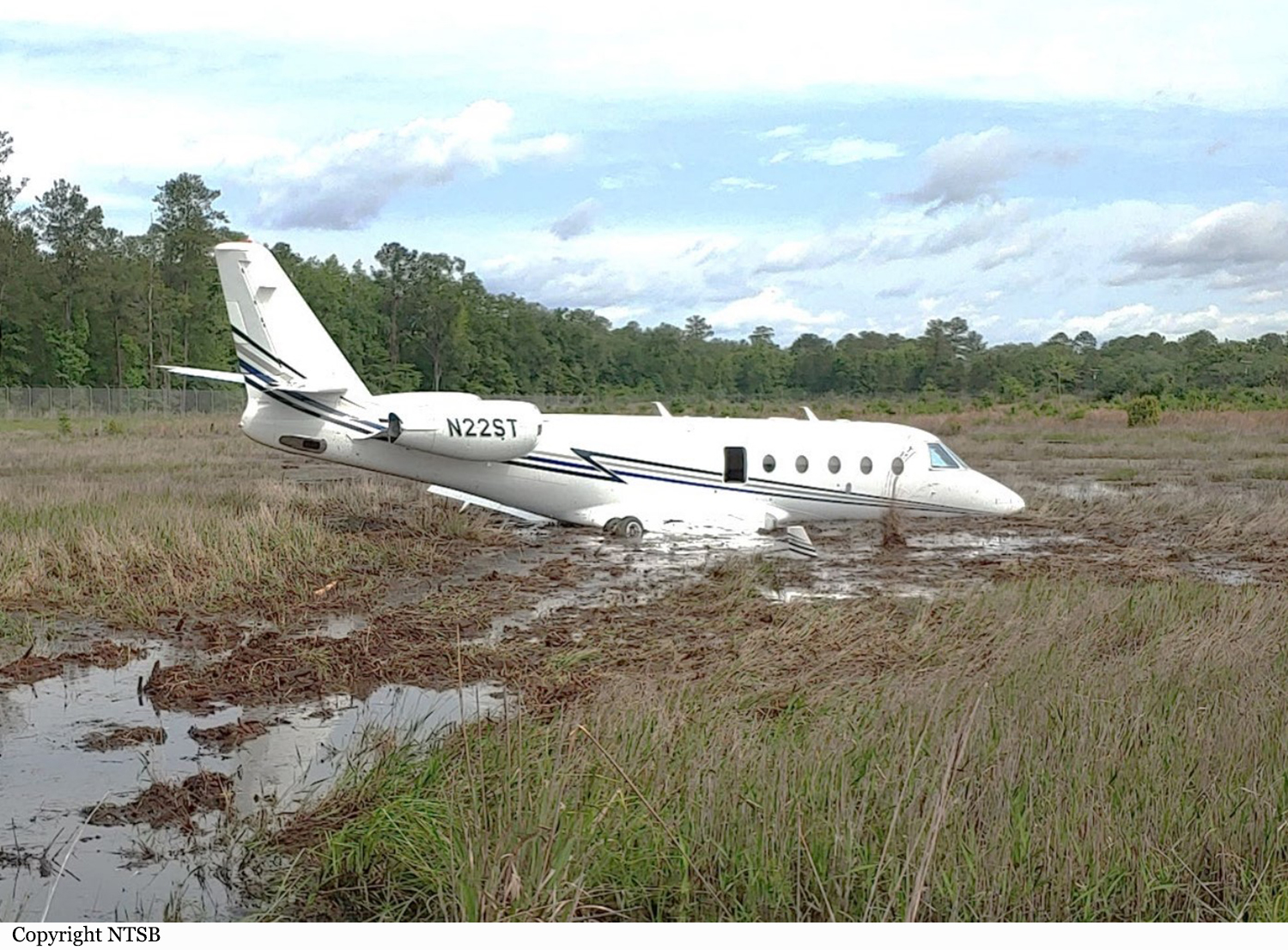
Crash of a Gulfstream G150 in Ridgeland

Date & Time: May 5, 2021 at 1033 LT
Type of aircraft:
Operator:
Registration:
N22ST
Flight Type:
Survivors:
Yes
Schedule:
New Smyrna Beach – Ridgeland
MSN:
251
YOM:
2008
Crew on board:
2
Crew fatalities:
Pax on board:
3
Pax fatalities:
Other fatalities:
Total fatalities:
0
Captain / Total flying hours:
9100
Captain / Total hours on type:
100.00
Copilot / Total flying hours:
1500
Copilot / Total hours on type:
32
Aircraft flight hours:
2580
Circumstances:
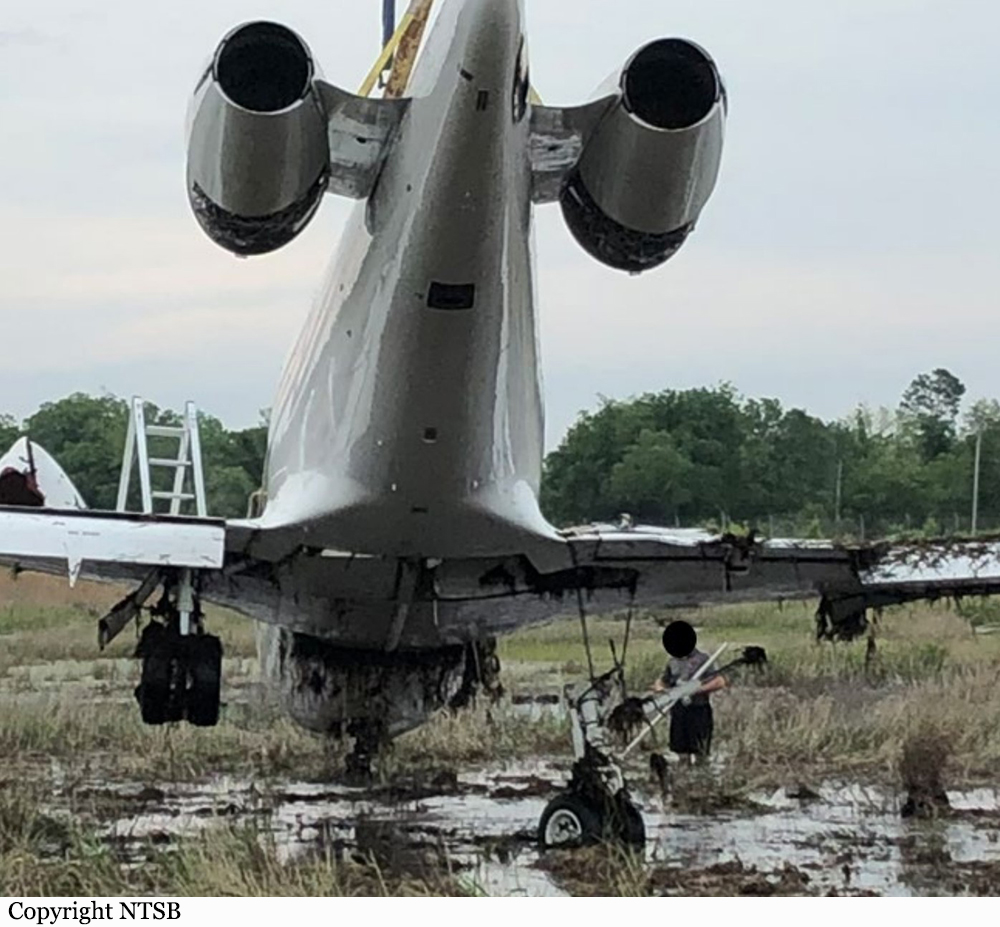
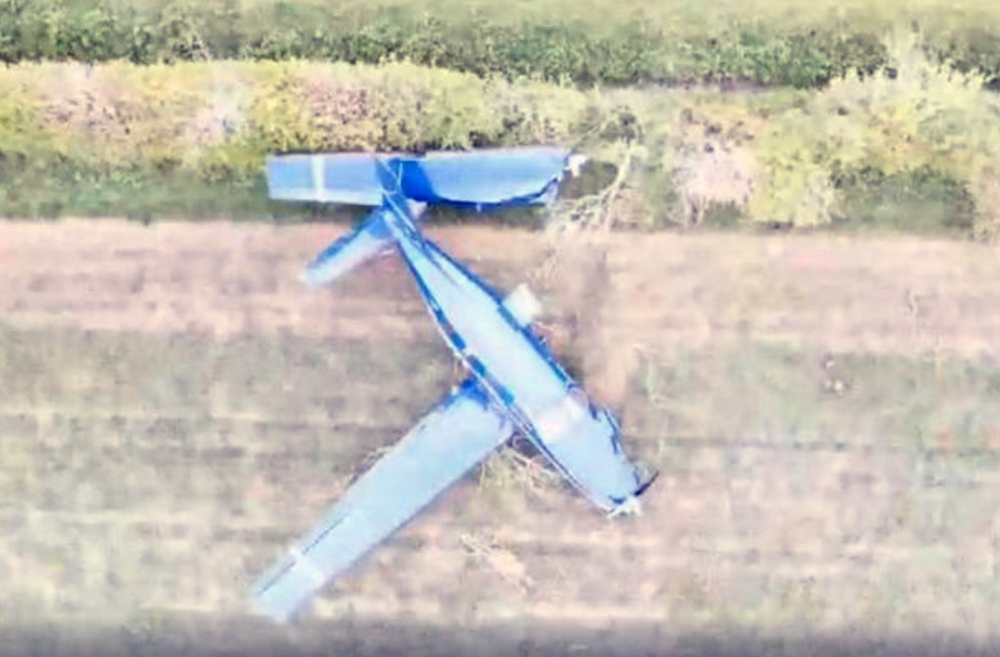
The pilot in command (PIC) and second-in-command (SIC) completed an uneventful positioning flight to pick up passengers and then continued to the destination airport. Cockpit voice recorder (CVR) information revealed that, while en route, the PIC expressed a desire to complete the flight as quickly as possible and arrive at the destination before another airplane that was also enroute to the destination airport, presumably to please the passengers. The PIC compared the flight with an automobile race, and the airplane’s overspeed warning annunciated multiple times during the descent. The flight crew elected to conduct a straight-in visual approach to land. Throughout the final approach, the airplane was high and fast, as evidenced by the SIC’s airspeed callouts. When the SIC asked whether s-turns should be made, and the PIC responded that such turns were not necessary. An electronic voice recorded by the CVR repeatedly provided “sink rate” and “pull up” warnings while the airplane was on final approach, providing indications to the crewmembers that the approach was unstable, but they continued the landing. The airplane touched down about 1,000 ft down the 4,200-ft-long runway. The PIC described that the airplane’s wheel brakes, thrust reversers, and ground air brakes did not function after touchdown, but witness and video evidence showed that the thrust reversers deployed shortly after touchdown. In addition, tire skid marks indicated that wheel braking occurred throughout the ground roll and increased heavily during the final 1,500 ft of the runway when the antiskid system activated. The ground air brakes did not deploy. The airplane overran the runway and came to rest about 400 ft past the departure end of the runway in marshy terrain. The fuselage and wings sustained substantial damage. The switch that controlled the automatic deployment of the ground air brake system was found in a position that should have allowed for their automatic deployment upon landing. There was no evidence to indicate a preaccident mechanical malfunction or failure with the hydraulic system, wheel brakes, thrust reversers, and weight-on-wheel switches, or electrical issues with either air brake switches. The airplane’s ground air brake deployment system logic required that both throttle levers be below 18° (throttle lever angle) in order to activate. The accident airplane’s throttle lever position microswitches were tested after the accident. The left throttle microswitch tested normal, but the right throttle microswitch produced an abnormal electrical current/resistance during initial testing. When the throttle was touched and then further manipulated by hand, the electrical resistance tested normal. The investigation was unable to determine whether the intermittent right throttle microswitch resistance prevented the ground air brakes from deploying because the testing was inconclusive. Landing performance calculations showed that, without ground air brakes, the landing ground roll exceeded the runway that was available from the airplane’s touchdown point about 1,000 ft down the runway. Mobile phone video evidence revealed that a quartering tailwind of about 10 to 15 knots persisted during the landing, which exceeded the manufacturer’s tailwind landing limitation of 10 knots for the airplane, and thus would have further increased the actual ground roll distance beyond that calculated. Throughout the final approach, the flight crew received several indications that the approach was unstable. The flight crew was aware that the airplane was approaching the runway high, fast, and at an abnormal sink rate. Both pilots had an opportunity to call for a go-around, which would have been the appropriate action. However, it is likely that the external pressures that the PIC and SIC accepted to complete the flight as quickly as possible influenced their decision-making in continuing the approach.
Probable cause:
The flight crew’s continuation of an unstable approach and the failure of the ground air brakes to deploy upon touchdown, both of which resulted in the runway overrun. Contributing was the crew’s motivation and response to external pressures to complete the flight as quickly as possible to accommodate passenger wishes and the crew’s decision to land with a quartering tailwind that exceeded the airplane’s limitations.
Final Report:
Crash of a Mitsubishi MU-2B-60 Marquise in Hattiesburg: 4 killed

Date & Time: May 4, 2021 at 2301 LT
Type of aircraft:
Operator:
Registration:
N322TA
Flight Type:
Survivors:
No
Site:
Schedule:
Wichita Falls – Hattiesburg
MSN:
760
YOM:
1980
Crew on board:
1
Crew fatalities:
Pax on board:
2
Pax fatalities:
Other fatalities:
Total fatalities:
4
Captain / Total flying hours:
7834
Captain / Total hours on type:
500.00
Aircraft flight hours:
7610
Circumstances:
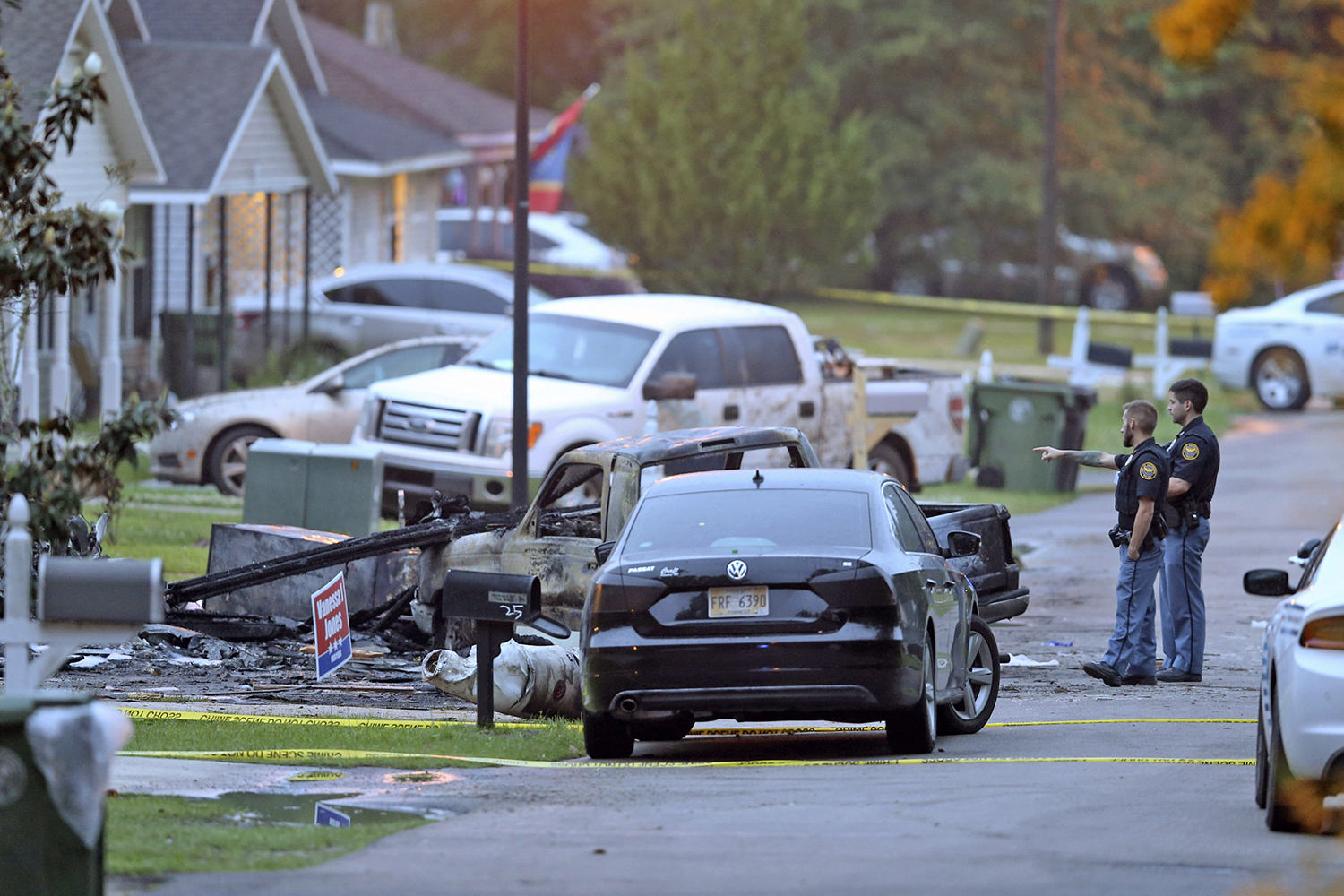
The pilot was flying a non precision approach in instrument meteorological conditions at night. While flying the procedure turn for the approach, the airplane’s speed decayed toward the stall speed before the airplane accelerated back to the standard approach speed. During the descent from the final approach fix, the airplane’s descent stopped for about 30 seconds and then the airplane descended at a rate of about 1,300 ft per minute. The airplane decelerated and continued to descend until the airspeed was about 85 knots (about 7 knots above the calculated stall speed for flaps 20°) and the altitude was 500 ft mean sea level. The last recorded data point showed the airplane about 460 ft mean sea level and 750 ft from the accident site. The airplane impacted a private residence, and a postcrash fire ensued and destroyed the airplane. Impact signatures were consistent with a low-energy impact. Examination of the airframe and engines did not detect any preimpact anomalies that would have precluded normal operations. Signatures on the engines and propellers were consistent with both engines providing power at impact. A review of the pilot’s toxicological information found that the level of eszopiclone in his specimens was subtherapeutic and thus not likely a factor in the accident. The circumstances of the accident are consistent with an inadvertent aerodynamic stall from which the pilot was unable to recover.
Probable cause:
The pilot’s failure to maintain control of the airplane during the night instrument approach which resulted in an inadvertent aerodynamic stall from which the pilot was unable to recover.
Final Report:

Crash of a Piper PA-46-350P Malibu Mirage in Cranfield

Date & Time: Apr 29, 2021 at 1425 LT
Operator:
Registration:
G-HYZA
Flight Type:
Survivors:
Yes
Schedule:
Cranfield - Cranfield
MSN:
46-36130
YOM:
1997
Flight number:
86
Region:
Crew on board:
2
Crew fatalities:
Pax on board:
0
Pax fatalities:
Other fatalities:
Total fatalities:
0
Captain / Total flying hours:
34620
Captain / Total hours on type:
1588.00
Circumstances:
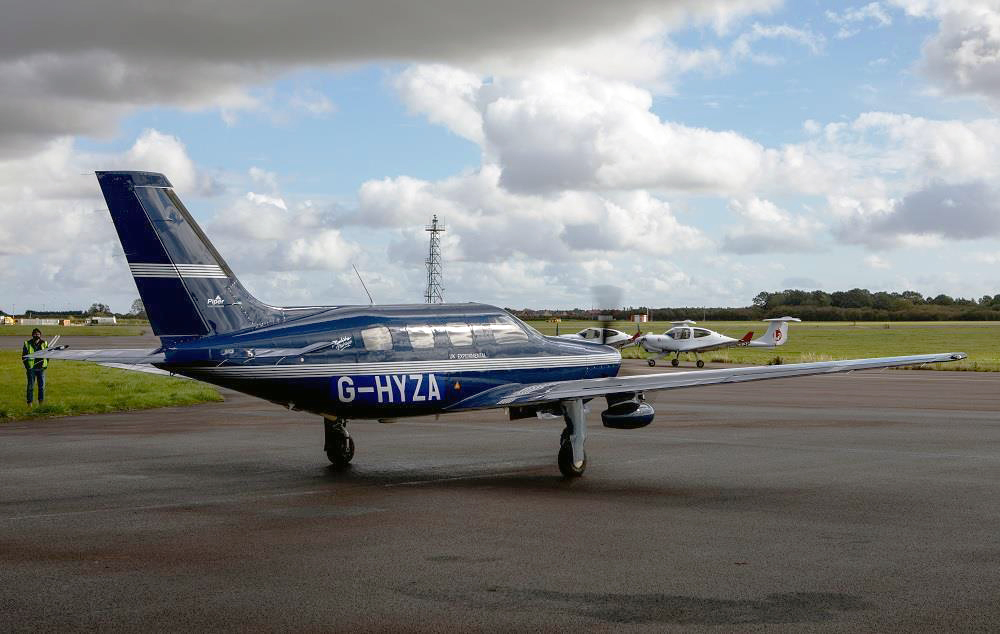
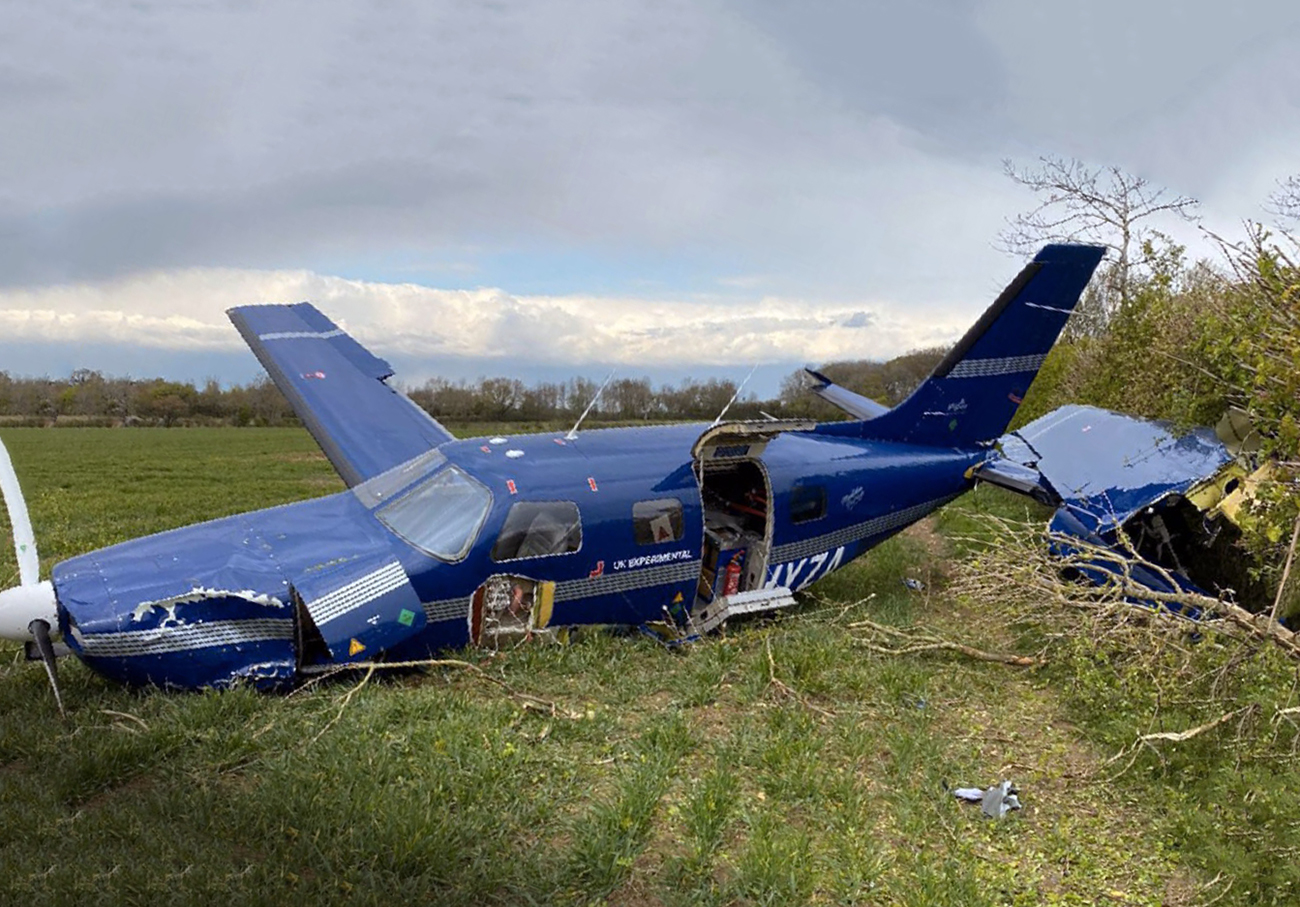
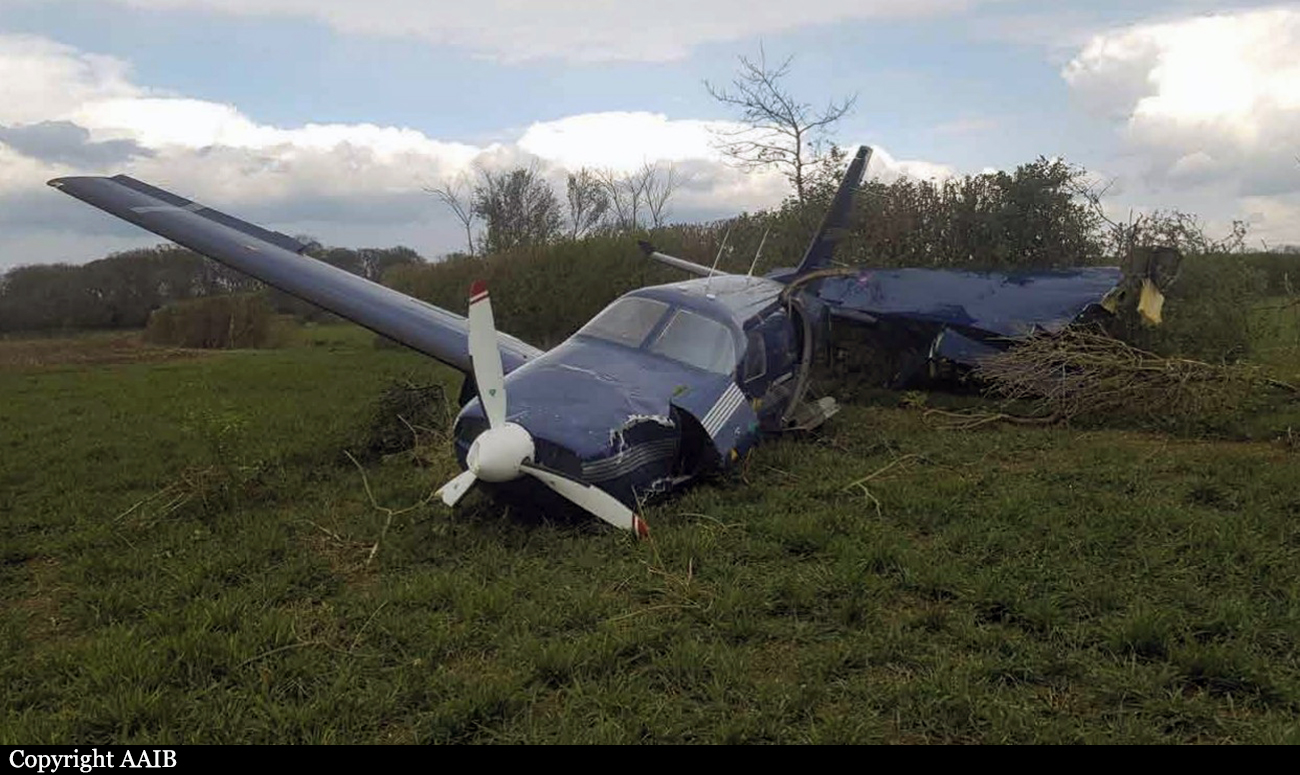
On the morning of the accident flight, G-HYZA was flown for approximately 16 minutes on test flight 85. The flight test team debriefed the results and prepared the aircraft for flight 86. The plan for this flight was for the HV battery to be switched off at the end of the downwind leg then, if able, to fly three or more circuits at 1,000 ft aal using the HFC only to provide electrical power. The flight test team discussed experimenting with combinations of higher airspeeds and propeller rpm that would reduce the aircraft angle of attack and improve the mass flow of air through the radiator which provided cooling for the HFC. This was considered as a potential strategy to manage a slow rise in temperature in the HFC which they had observed in previous flights when flying on that power source alone. The test card for flight 86 was not amended to reflect this intention. At 1406 hrs, following a normal start using both the HV battery and HFC to provide electrical power, the HV was switched off to preserve its electrical capacity. The aircraft taxied to the holding point and was cleared to line up on Runway 03. The weather was fair with good visibility and light winds from 010°. The aircraft entered the runway and backtracked to the threshold where the pilot commenced a run-up of the propulsion system to ensure the HFC could achieve thermal stability within the flight test parameters. Once the temperatures in the HFC were stable, the pilot switched on the HV battery to bring both power sources online and commenced the takeoff run. As the aircraft accelerated and the power lever was advanced, the observer operated the high temperature override switch to maintain the temperature of the HFC within the operating limits. After takeoff, the pilot turned onto the crosswind leg and climbed to the circuit height of 1,000 ft agl. During the downwind leg of the right-hand circuit, the pilot stated the power was set to 95 kW, the propeller to 2,500 rpm and the airspeed to 100 kt. Once stabilized at these parameters, which were at variance with the flight test card conditions, the observer confirmed that the HFC operating temperatures were within limits. He then instructed the pilot to reduce power to 90 kW to assess the effect on the airspeed, which reduced to approximately 95 kt. The pilot increased the power to 95 kW to regain the target speed. The pilot set the power by reference to his display unit which was located below the throttle quadrant. When he looked up from this task, he recognized that the aircraft was in a late downwind position. He turned onto base leg and commented that they were losing speed in the turn. The observer suggested that they could increase power to 120 kW to regain the lost airspeed, then reduce power before turning off the HV battery to re-establish the test conditions. He also suggested a reduction in propeller rpm. The pilot increased power to 120 kW but did not reduce the propeller rpm. As he started to turn onto final, the pilot briefed that once he had established straight and level flight he would reduce the power slightly and turn off the HV battery leaving the electrical motors powered by the HFC. He called final on the radio and was cleared by ATC to fly through at circuit height. Approaching the runway threshold at approximately 940 ft agl, the pilot reduced power to 90 kW, set the airspeed to 90 kt then selected the HV battery to off. Immediately, all electrical drive to the propeller was lost. The pilot and observer made several unsuccessful attempts to reset the system to restore power from the HFC with the observer stating the action to be taken and the pilot making the switch selection. The observer instructed the pilot to select the HV battery to on to reconnect the alternative power source. HV power was not restored so the observer instructed the pilot to attempt a system reset with the HFC in the off position. Electrical power was still not restored and at 440 ft agl the observer declared “the voltage is too high”, to which the pilot replied, “we’ve got to do something quick”. The observer called for a further reset attempt and adjusted the power lever. The aircraft had now travelled the length of the runway and was at approximately 320 ft aal when the observer reported that power could not be restored. The pilot transmitted a MAYDAY call and initiated a turn to the left to position for a landing on Runway 21. Almost immediately he recognized that he did not have sufficient height to complete the manoeuvre so lowered the landing gear and selected full flap for a forced landing in a field that was now directly ahead on a north-westerly heading. The aircraft touched down at approximately 87 kt ground speed on a level grass field. The pilot applied the brakes, and the aircraft continued its movement until it struck, and passed through, a hedge during which the left wing broke away. The nosewheel and left main wheel entered a ditch and the aircraft came to an abrupt stop. The pilot and observer were uninjured and exited the aircraft through the upper half of the cabin door. The airport fire service arrived quickly at the scene. The observer returned to the aircraft and vented the hydrogen tank to atmosphere and disconnected the HV battery to make the aircraft safe.
Probable cause:
The loss of power occurred during an interruption of the power supply when, as part of the test procedure, the battery was selected off with the intention of leaving the electrical motors solely powered by the hydrogen fuel cell. During this interruption the windmilling propeller generated a voltage high enough to operate the inverter protection system, which locked out the power to the motors. The pilot and observer were unable to reset the system and restore electrical power.
Final Report:

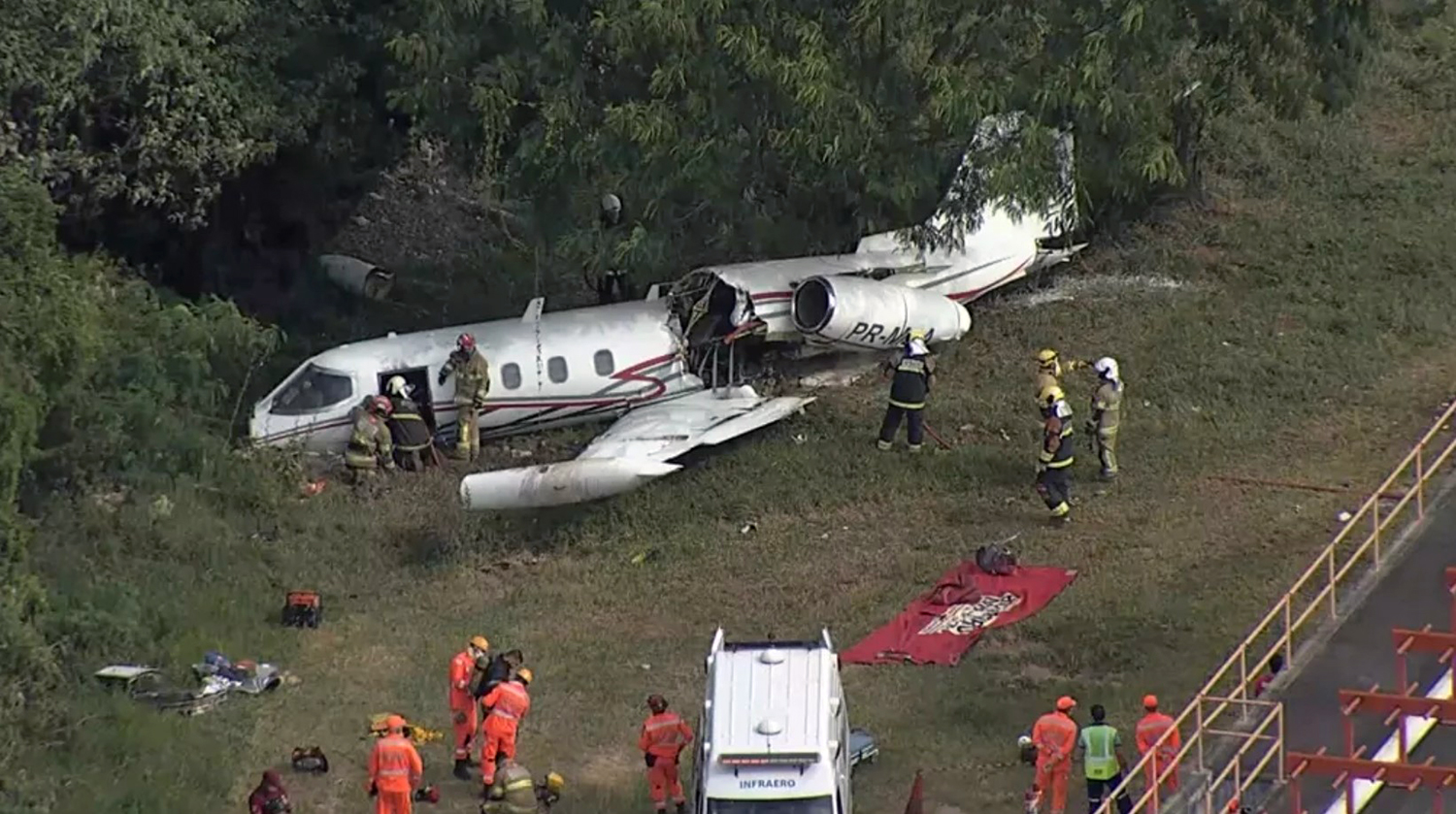
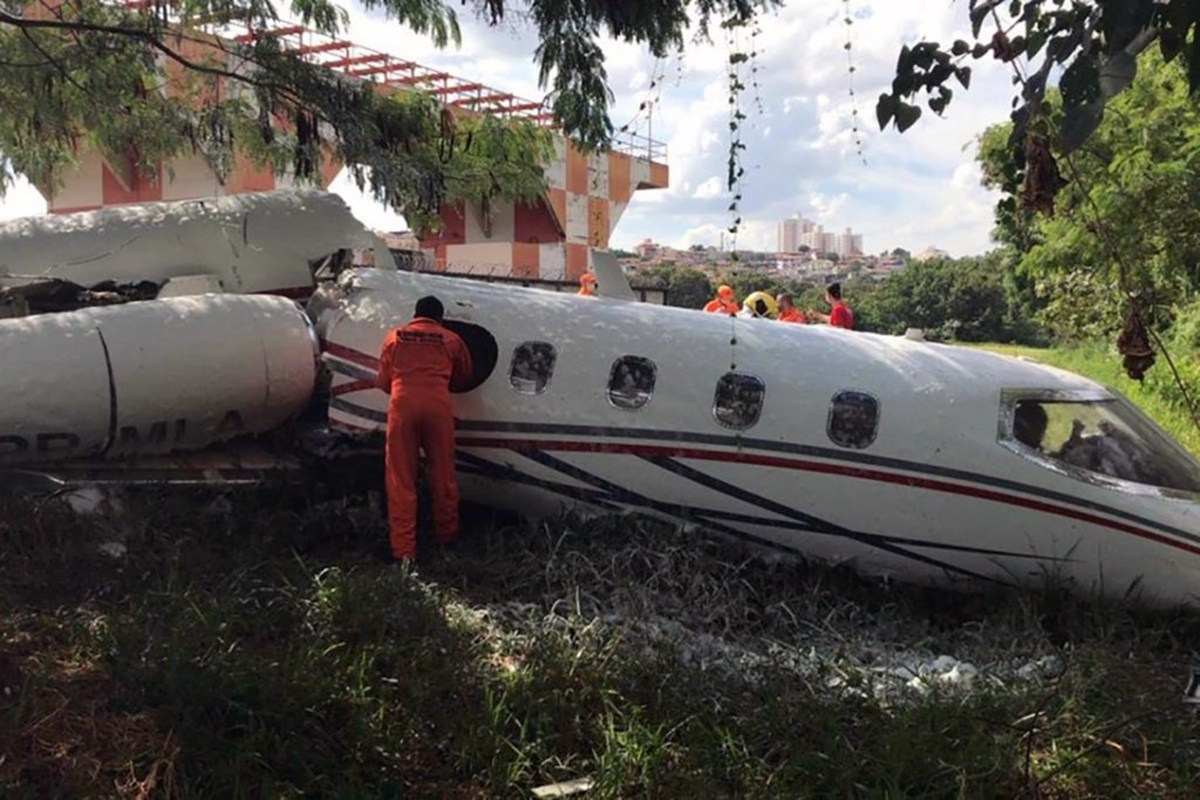
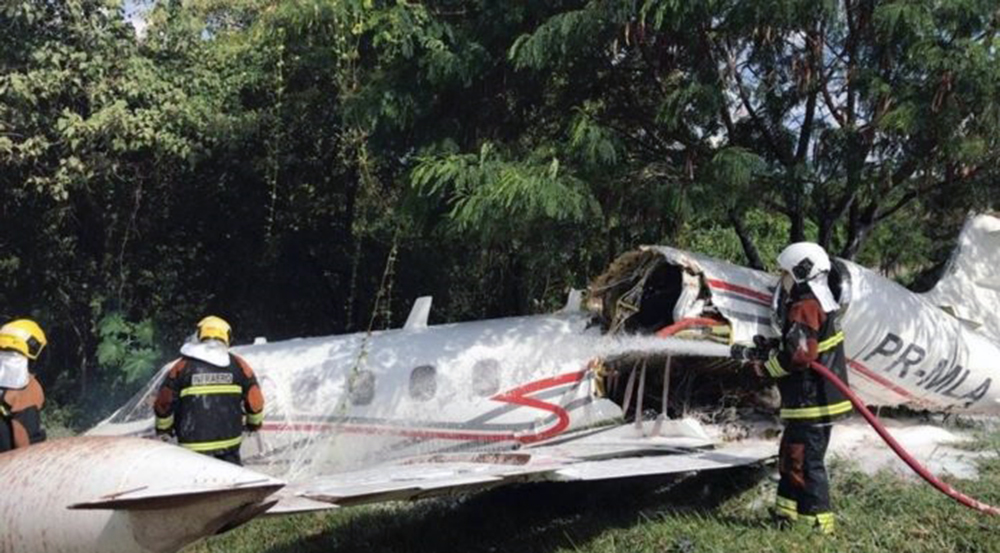
Crash of a Learjet 35A in Belo Horizonte: 1 killed

Date & Time: Apr 20, 2021 at 1452 LT
Type of aircraft:
Registration:
PR-MLA
Flight Type:
Survivors:
Yes
Schedule:
Belo Horizonte - Belo Horizonte
MSN:
35-072
YOM:
1976
Country:
Crew on board:
2
Crew fatalities:
Pax on board:
1
Pax fatalities:
Other fatalities:
Total fatalities:
1
Captain / Total flying hours:
3432
Captain / Total hours on type:
41.00
Copilot / Total flying hours:
3034
Copilot / Total hours on type:
2211
Circumstances:
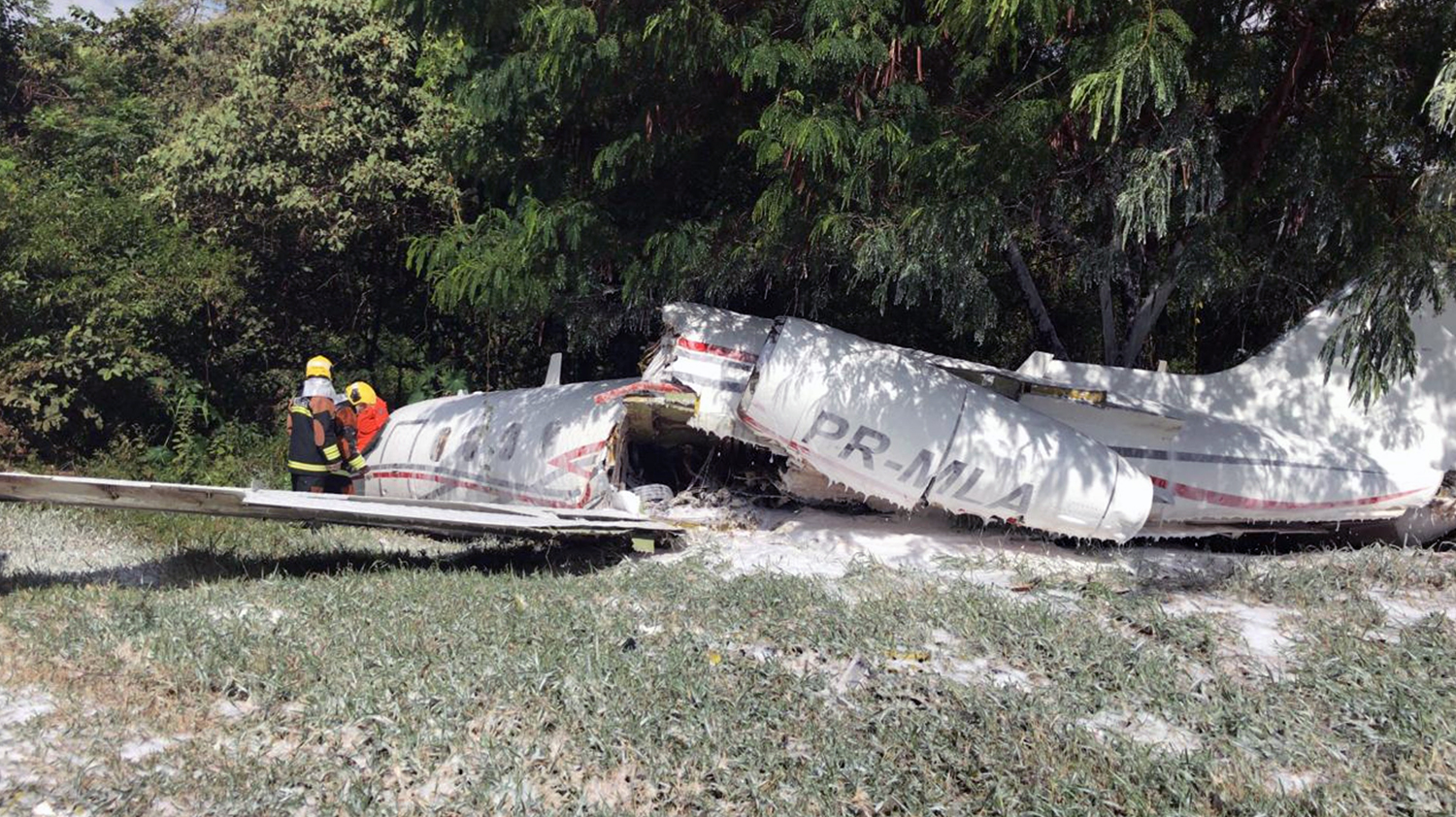
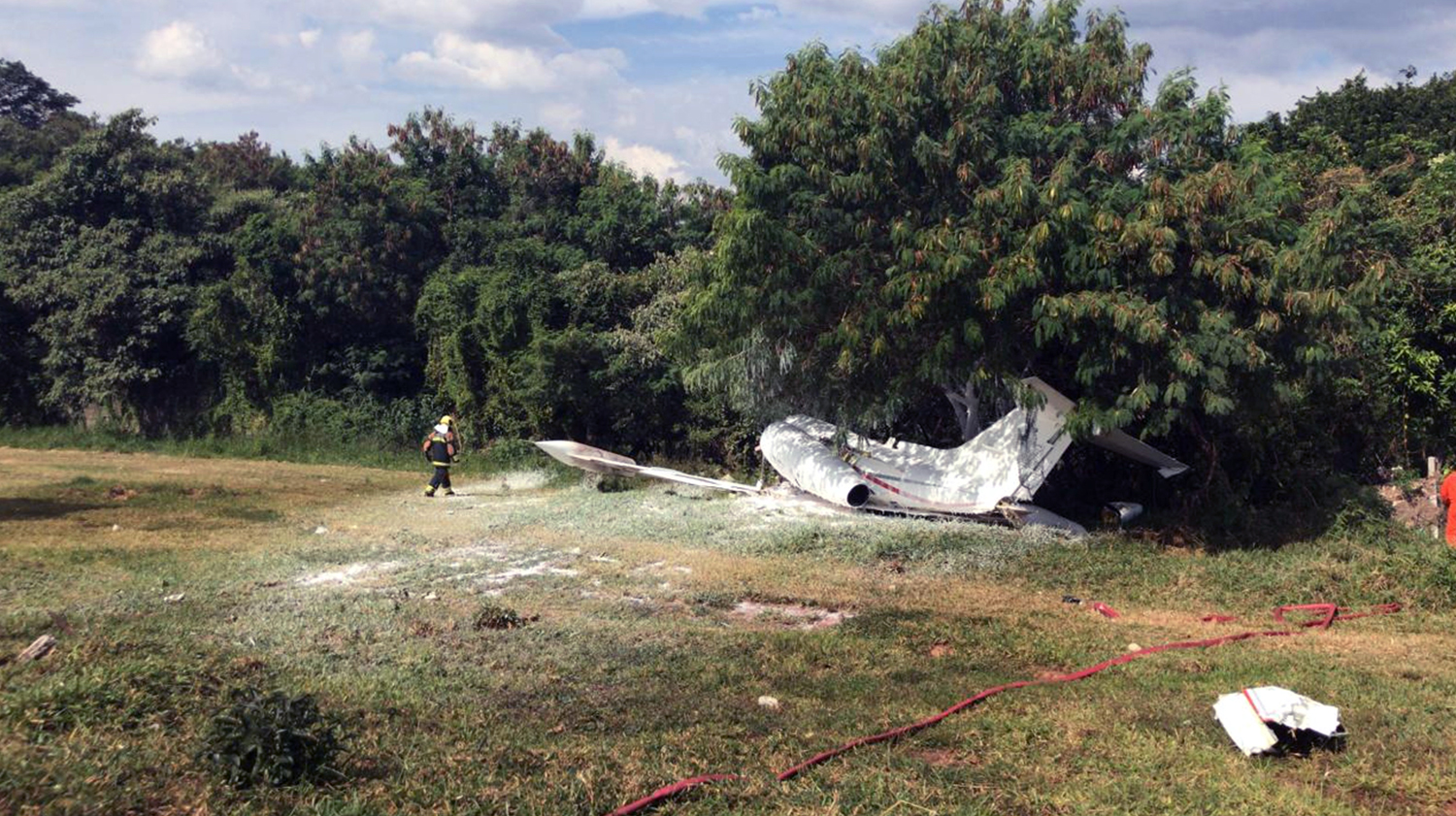
The airplane departed Belo Horizonte-Pampulha-Carlos Drummond de Andrade Airport at 1420LT on a local training fight. On board were two pilots and one passenger. After 30 minutes of flight over the area, the crew returned to the airport and initiated the approach to runway 13 to complete a touch and go manoeuvre. On final approach, the crew forgot to lower the gear, causing the airplane to land on its belly. It slid for few hundred metres, overran, went through the perimeter fence (striking concrete poles) and came to rest against trees, broken in two. The copilot aged 76 was killed while both other occupants were injured.
Probable cause:
Contributing factors:
- Attention – undetermined.
It is possible that the aircraft’s encounter with a kite led to a delayed and imprecise response to operational cues, which may have resulted in a breakdown in the alert and distraction management system, specifically regarding landing gear extension.
- Attitude – undetermined.
Conducting the flight with an unqualified pilot reflected the adoption of inappropriate attitudes such as complacency, overconfidence, and disregard for the requirements established in RBACs 91 and 61, which may have contributed to this accident.
- Crew Resource Management – a contributor.
Inefficient use of the human resources available for the aircraft operation led to inadequate task management among the crew. The PIC never questioned the aircraft’s readiness for landing, and the pilot occupying the right seat failed to monitor the aircraft configuration or assertively advise on the landing gear position for touchdown.
- Perception – a contributor.
During the approach, the aural warning indicating that the landing gear was still retracted was activated and could be heard on the CVR audio. However, the pilots took no corrective action, evidencing impaired ability to recognize and interpret internal environmental cues, which led to reduced situational awareness and culminated in a gear up landing.
- Limited pilot’s experience – undetermined.
Considering the PIC’s operational background, developed almost entirely in rotary wing aviation, it is possible that his limited experience with fixed-wing aircraft had not yet enabled him to acquire the full range of skills and knowledge necessary for the safe operation of Learjet 35 flights.
Final Report:

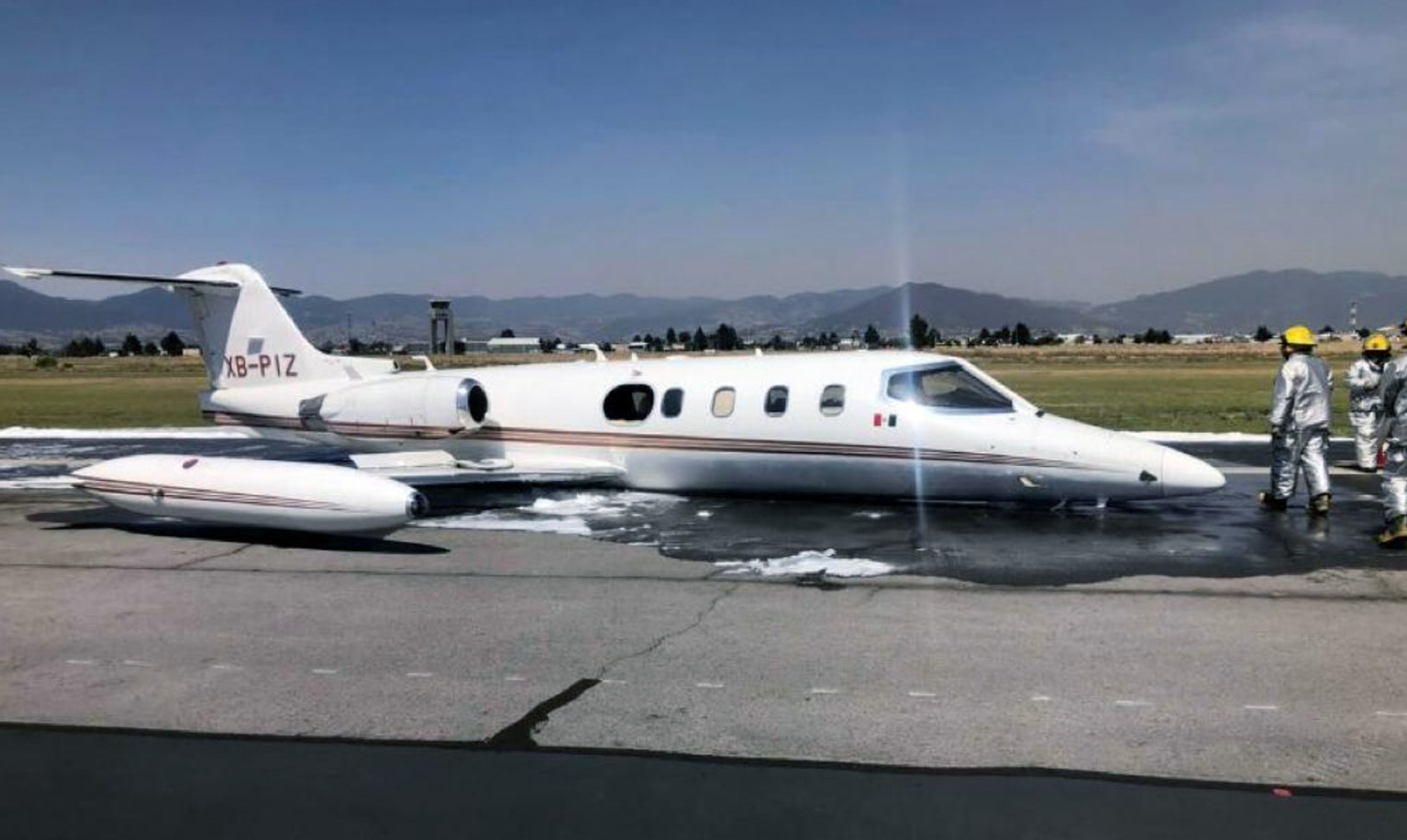
Crash of a Learjet 25B in Toluca

Date & Time: Apr 18, 2021 at 1527 LT
Type of aircraft:
Operator:
Registration:
XB-PIZ
Survivors:
Yes
Schedule:
Cancún - Toluca
MSN:
25-193
YOM:
1975
Location:
Country:
Crew on board:
2
Crew fatalities:
Pax on board:
7
Pax fatalities:
Other fatalities:
Total fatalities:
0
Circumstances:
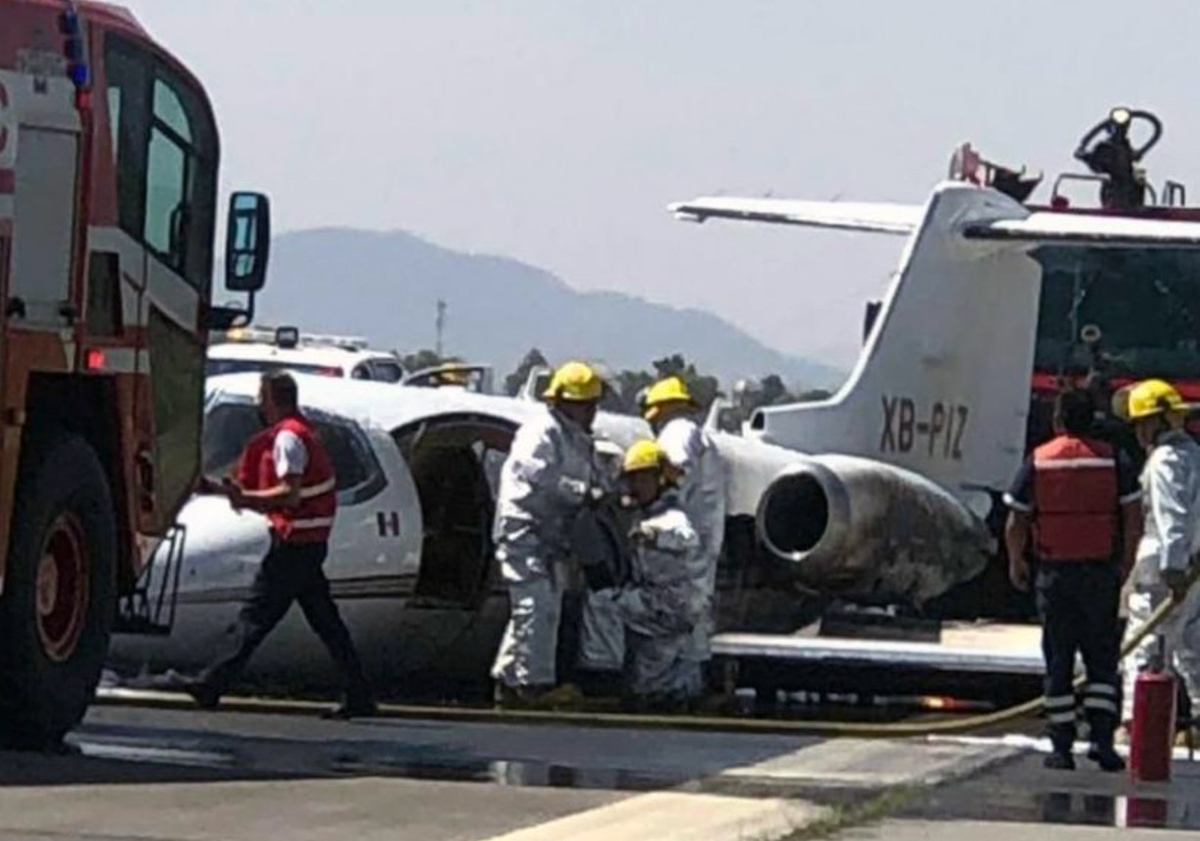
Following an uneventful flight from Cancún, the crew encountered technical problems with the undercarriage while on approach to Toluca-Licenciado Adolfo López Mateos. Decision was taken to complete a belly landing on runway 15/33. The airplane slid for few dozen metres before coming to rest, bursting into flames. All 9 occupants evacuated safely and the aircraft was damaged beyond repair.

Crash of a Beechcraft 200 Super King Air in Nairobi

Date & Time: Mar 26, 2021 at 1630 LT
Operator:
Registration:
5Y-NJS
Flight Type:
Survivors:
Yes
Schedule:
Nairobi – Kisumu – Eldoret – Nairobi
MSN:
BB-837
YOM:
1981
Country:
Region:
Crew on board:
1
Crew fatalities:
Pax on board:
2
Pax fatalities:
Other fatalities:
Total fatalities:
0
Captain / Total flying hours:
6589
Captain / Total hours on type:
4600.00
Aircraft flight hours:
12177
Circumstances:
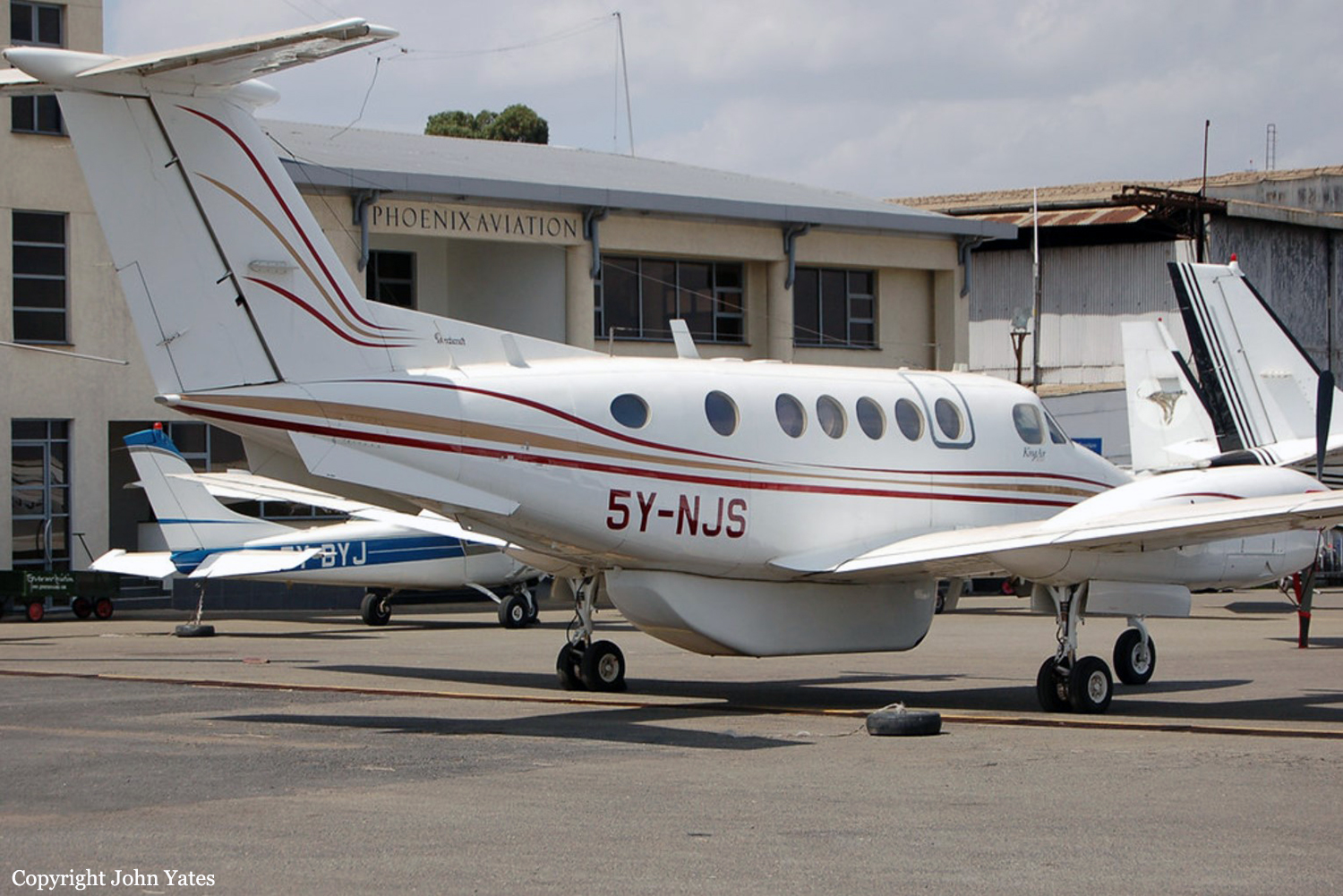
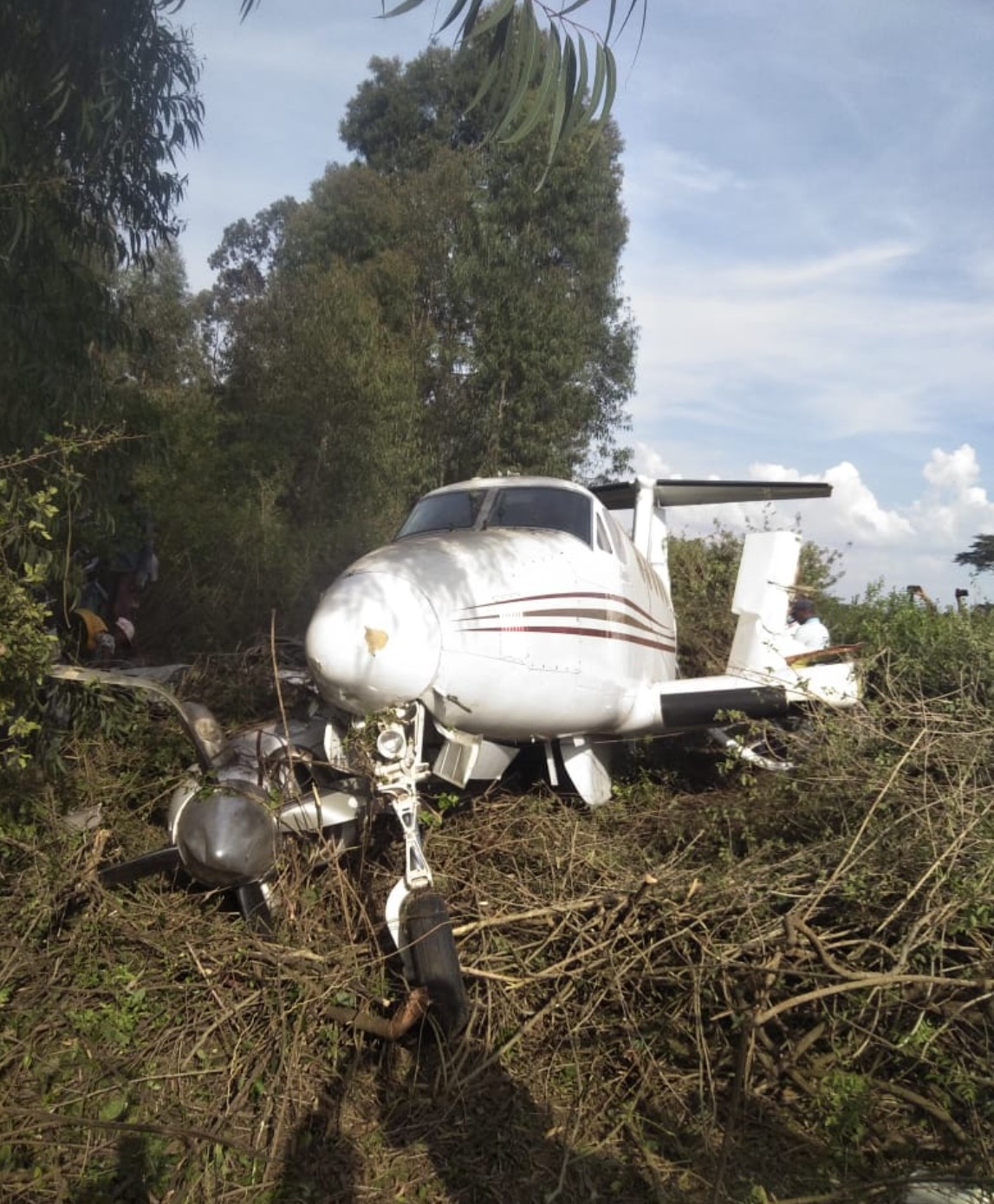
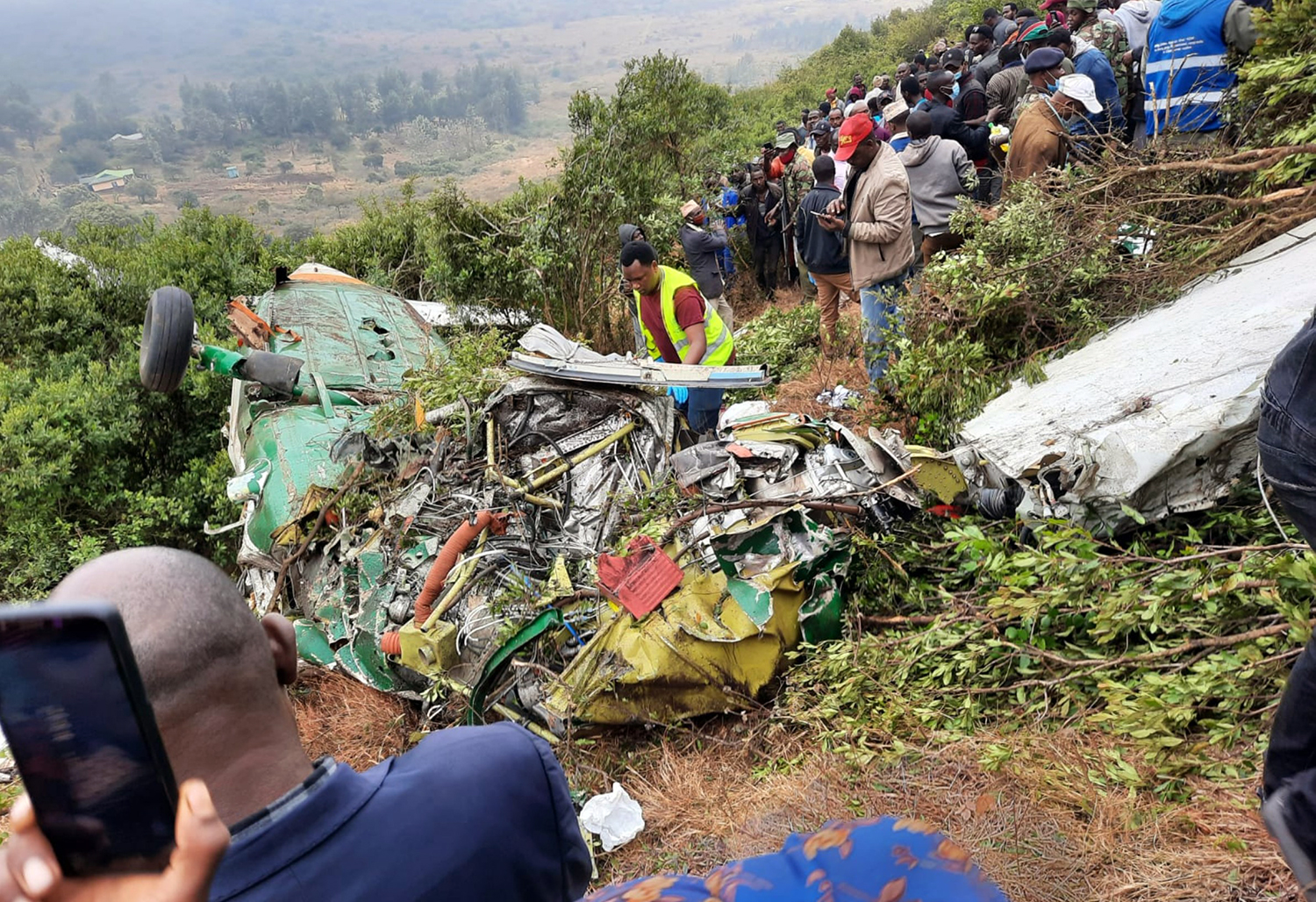
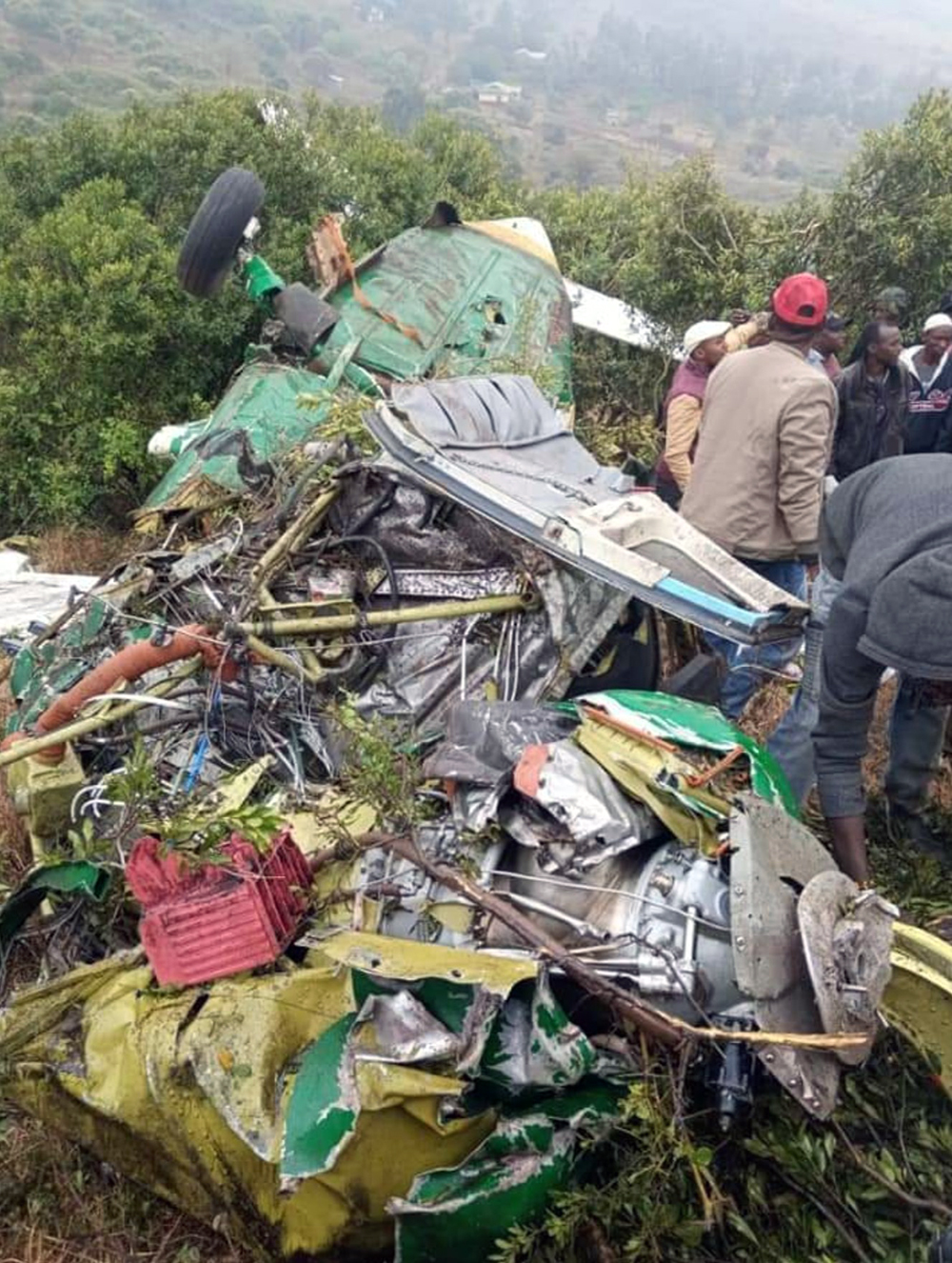
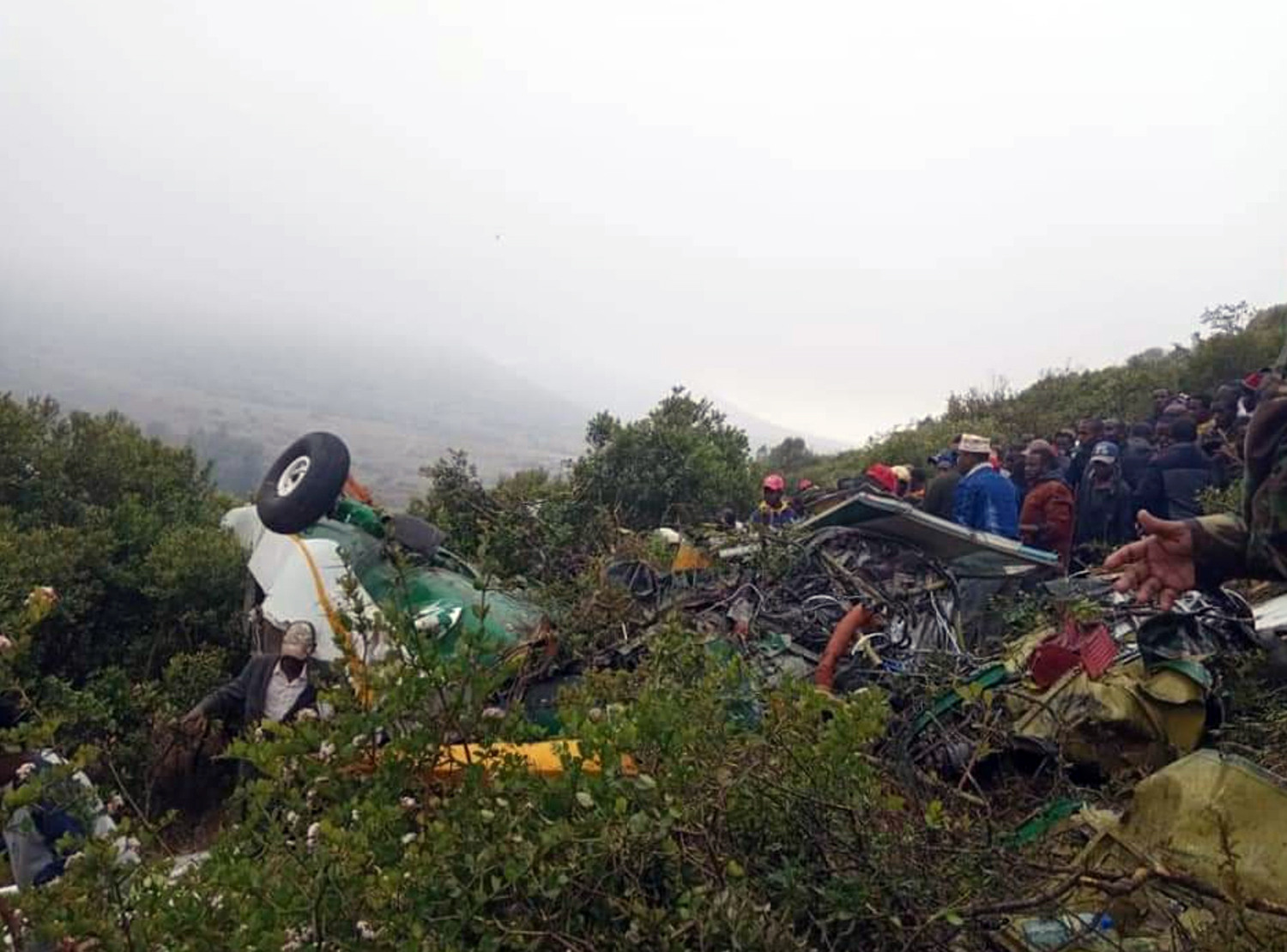
The aircraft, registered 5Y-NJS operated by Westwind Aviation Ltd crashed at Ngong Racecourse. The flight with two onboard was on a private mission to Kisumu, Eldoret and back to Nairobi. The aircraft departed Wilson Airport (HKNW) at 0420Z and landed at Kisumu Airport (HKKI) at 0502Z. It then departed HKKI to HKEL at 1142Z and landed at 1200Z where it picked one passenger. The flight then departed HKEL to HKNW with three onboard at 1247Z with an estimated flight time of 40 minutes. According to the preliminary information obtained from the Captain, the aircraft attained flight level 250 42NM from Eldoret VOR. The flight was then cleared to fly direct to GV VOR by Nairobi Area Control Centre. During descend to flight level 100 they encountered bad weather whereby the wings developed heavy icing. The Captain deployed deicing systems on the wings but the problem persisted. The situation prompted the Captain to request Wilson Control to descend to “Monstry fix” for landing at HKNW which was approved. As the flight continued descending the left engine went off. The Captain requested Wilson Tower for assistance. After 30 seconds, the right engine also went off. The Captain elected to make an emergency landing at Ngong Racecourse. On landing along, the left wing collided with trees and broke-off and separated together with the left engine and the left main landing gear. The turned clockwise through 180° and faced the opposite direction. All three onboard escaped unhurt but the aircraft was destroyed.

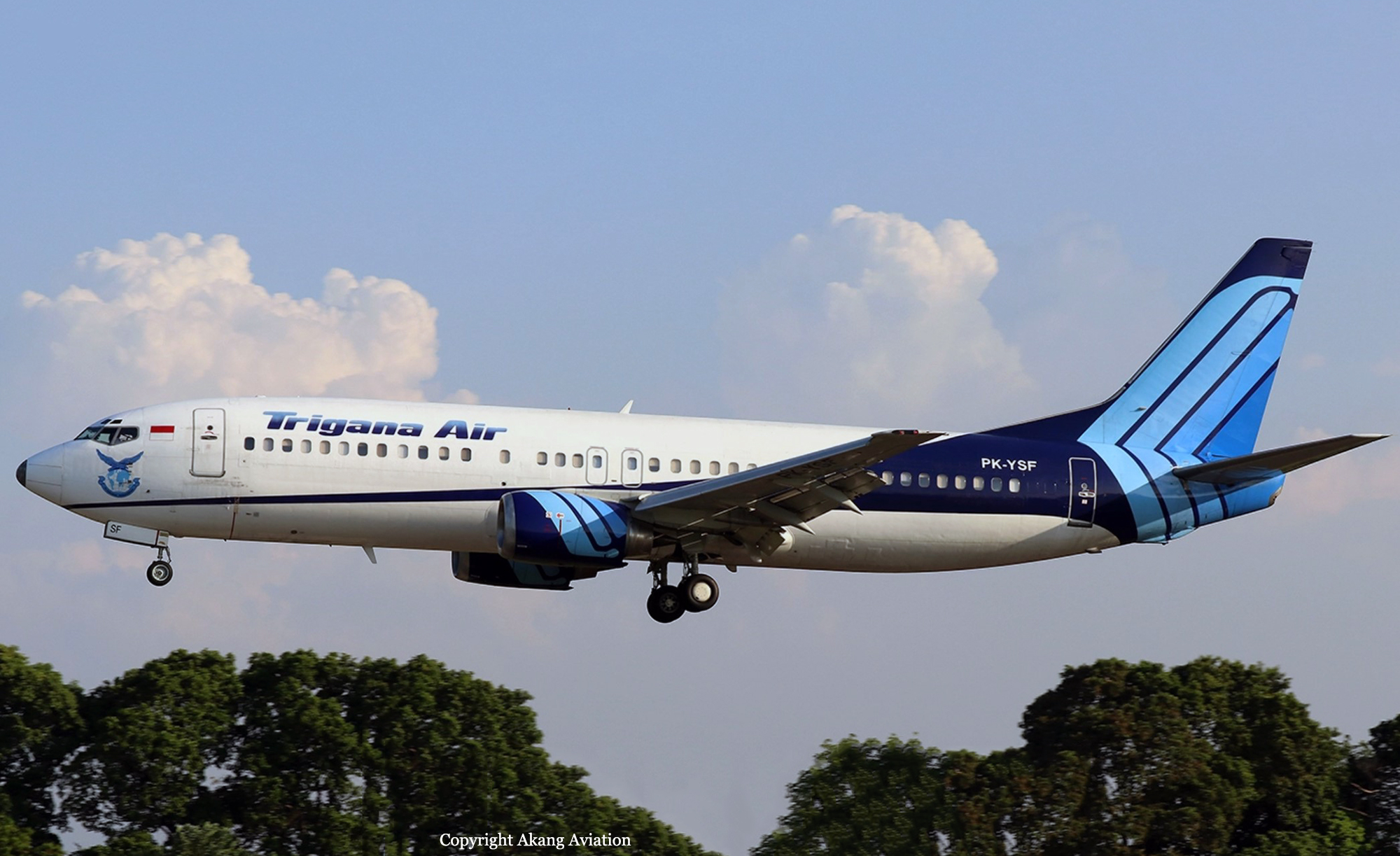
Crash of a Boeing 737-4Y0 in Jakarta

Date & Time: Mar 20, 2021 at 1126 LT
Type of aircraft:
Operator:
Registration:
PK-YSF
Flight Type:
Survivors:
Yes
Schedule:
Jakarta - Makassar
MSN:
23869/1639
YOM:
1988
Country:
Region:
Crew on board:
2
Crew fatalities:
Pax on board:
0
Pax fatalities:
Other fatalities:
Total fatalities:
0
Captain / Total flying hours:
6228
Captain / Total hours on type:
5208.00
Copilot / Total flying hours:
1255
Copilot / Total hours on type:
1084
Aircraft flight hours:
55982
Aircraft flight cycles:
65005
Circumstances:
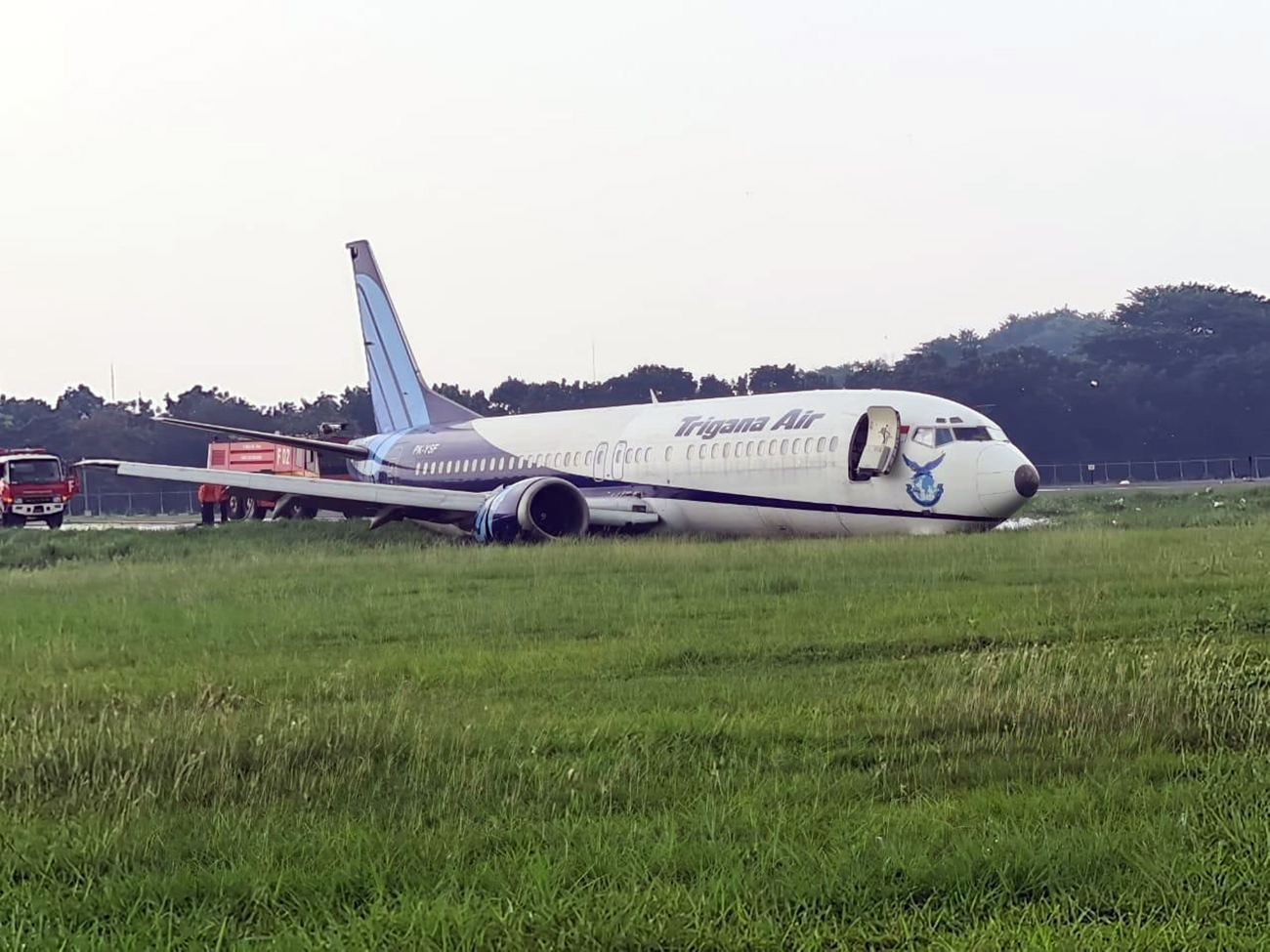
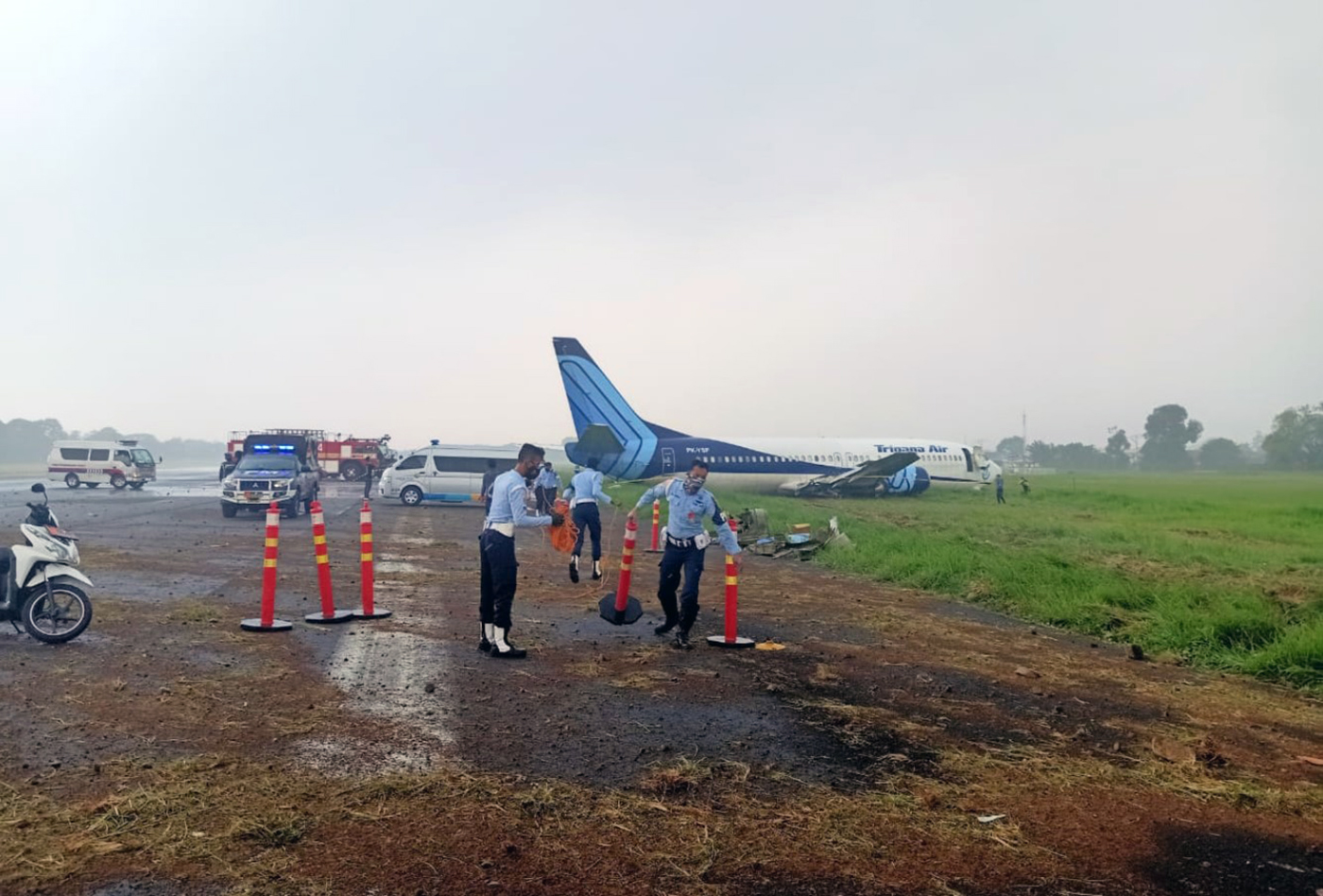
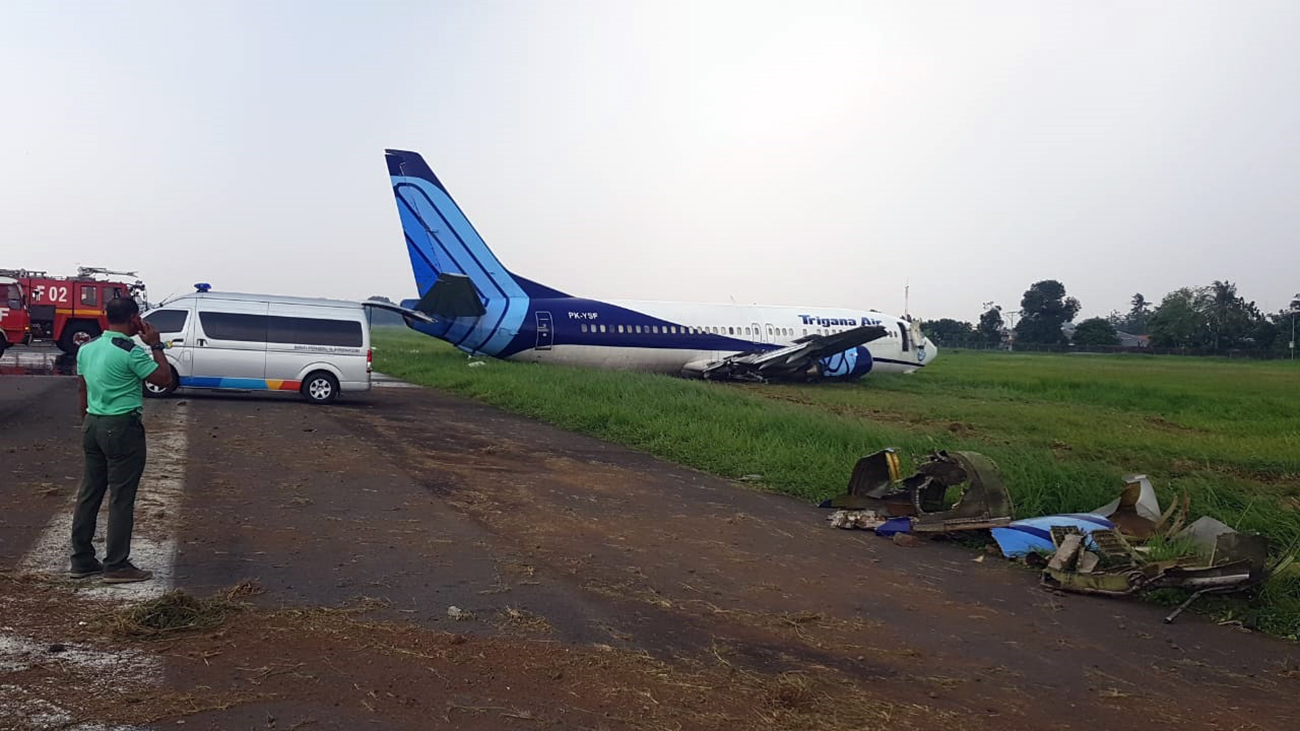
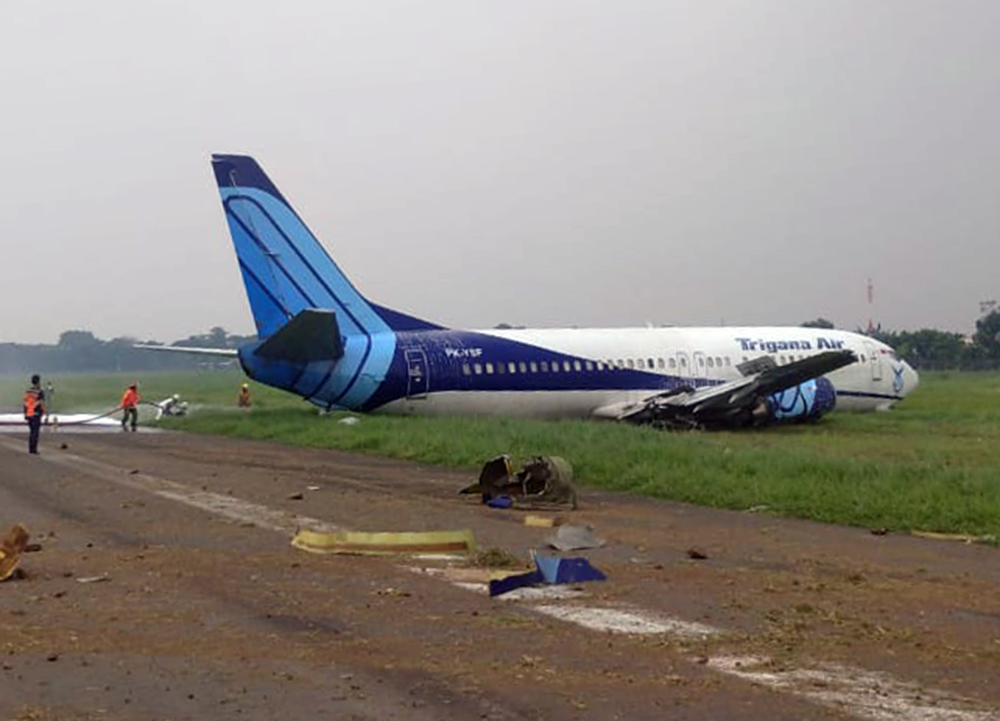
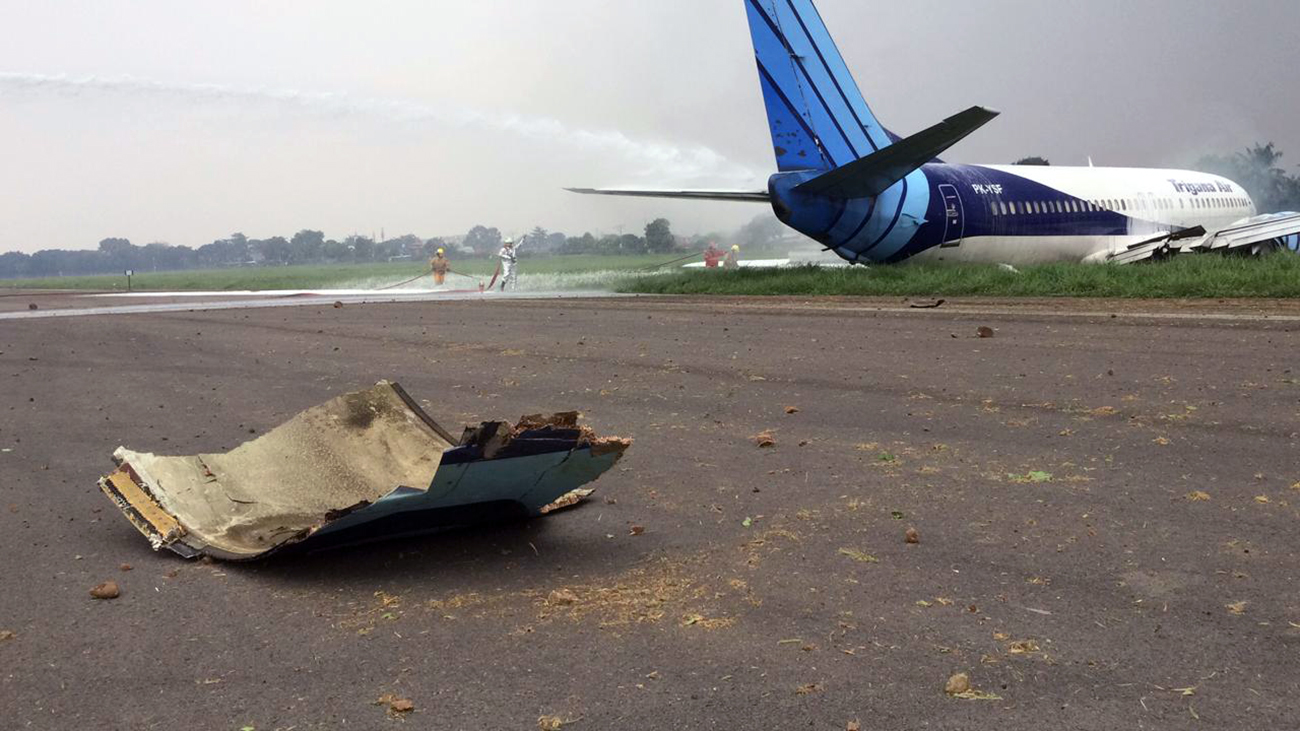
On 20 March 2021, a Boeing 737-400F, registered PK-YSF, was being operated by Trigana Air Service on a non-schedule cargo flight from Halim Perdanakusuma International Airport (WIHH), Jakarta, Indonesia with intended destination of Sultan Hasanuddin International Airport (WAAA), South Sulawesi, Indonesia. On board in this flight was two pilots, one engineer and one Flight Operation Officer (FOO). According to the weight and balance sheet, the flight carried 16,672 kgs of general cargo, takeoff fuel of 11,100 kg and the takeoff weight was 60,695 kg (133,835 lbs). The Pilot in Command (PIC) acted as Pilot Flying (PF) and the Second in Command (SIC) acted as Pilot Monitoring (PM). At 0328 UTC (1028 LT), the PM requested clearance to Halim Tower controller (the controller) to pushback and start the engines. At 1031 LT, the PM requested to the controller for taxi clearance. There was no report of aircraft system abnormality prior to the aircraft departure. At 1047 LT, the controller issued clearance to the PK-YSF pilot to enter and to backtrack Runway 24. At 1051 LT, the PM reported ready for departure to the controller. The controller issued takeoff clearance with additional departure clearance that after takeoff, turn left to heading 180° and initially climb to altitude of 3,000 feet. The PM acknowledged the clearance. The takeoff was conducted with reduced takeoff thrust by assumed temperature of 40°C and the aircraft became airborne at 10:52:57 LT. At 1055 LT, the controller advised the pilot to report when established on heading 180°. The PM reported that they were experiencing right engine failure and requested to fly to AL NDB . The controller advised the PM to turn left heading 060° and to climb to 2,500 feet. Furthermore, the controller asked the pilot intention whether to hold over AL NDB or direct for landing approach. The PM replied that they would hold over AL NDB and added the information that no fire was detected. The controller issued clearance to fly to AL NDB at altitude of 2,500 feet. The controller assumed that PK-YSF would return to Halim and advised the Airport Rescue and Fire-Fighting (ARFF) personnel that PK-YSF experienced right engine failure and would return to Halim. At 1058 LT, the controller requested the information of time required for holding over AL NDB and was replied by the PM that holding would require about 15 minutes. Furthermore, the controller requested whether the pilot able to hold at a point about 15 to 20 Nm from AL NDB and was replied by the PM that they did not objection to the proposal. The controller instructed the pilot to maintain outbound heading up to 15 Nm, at altitude of 2,500 feet. This was intended by the controller to manage the departure and arrival aircraft to and from Halim. At 1116 LT, the PM reported that they were ready to turn left for approach. The controller advised the pilot to turn left and to intercept localizer of the Instrument Landing System (ILS) Runway 24. At 1125 LT, the PM reported to the controller that the Runway was in sight. The controller advised that the wind was from 060° at velocity of 6 knots, QNH 1,007 mbs and issued landing clearance. The aircraft touched down on the touchdown zone and shortly after, both wheels of the right main landing gear detached. The controller noticed spark appeared from the aircraft and pressed the crash bell. At 1127 LT, the controller informed pilots of the other aircraft that the runway blocked by the landing aircraft and identified fire on one of the engines. Few seconds later, the PM called the controller whether any fire and was replied by the controller that fire was visible on the left side of the aircraft.

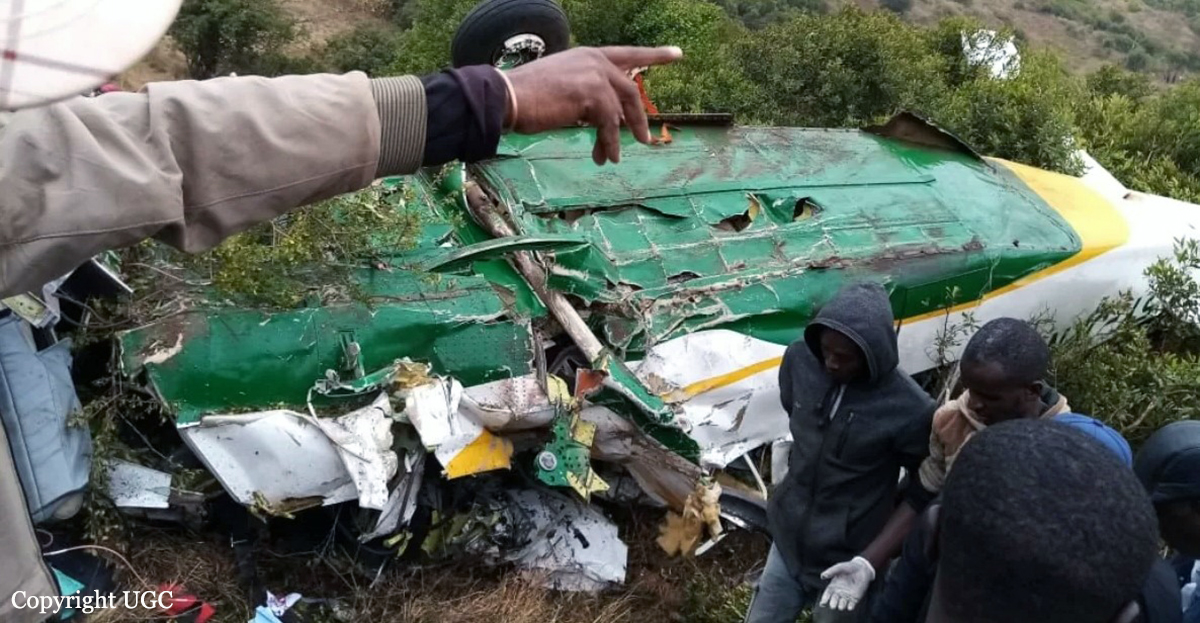
Crash of a Cessna 208B Grand Caravan in Marsabit: 2 killed

Date & Time: Mar 20, 2021 at 1000 LT
Type of aircraft:
Operator:
Registration:
5Y-JKN
Flight Type:
Survivors:
No
Site:
Schedule:
Nairobi – Marsabit
MSN:
208B-0688
YOM:
1998
Country:
Region:
Crew on board:
2
Crew fatalities:
Pax on board:
0
Pax fatalities:
Other fatalities:
Total fatalities:
2
Captain / Total flying hours:
4235
Captain / Total hours on type:
2329.00
Copilot / Total flying hours:
344
Copilot / Total hours on type:
104
Aircraft flight hours:
16343
Circumstances:
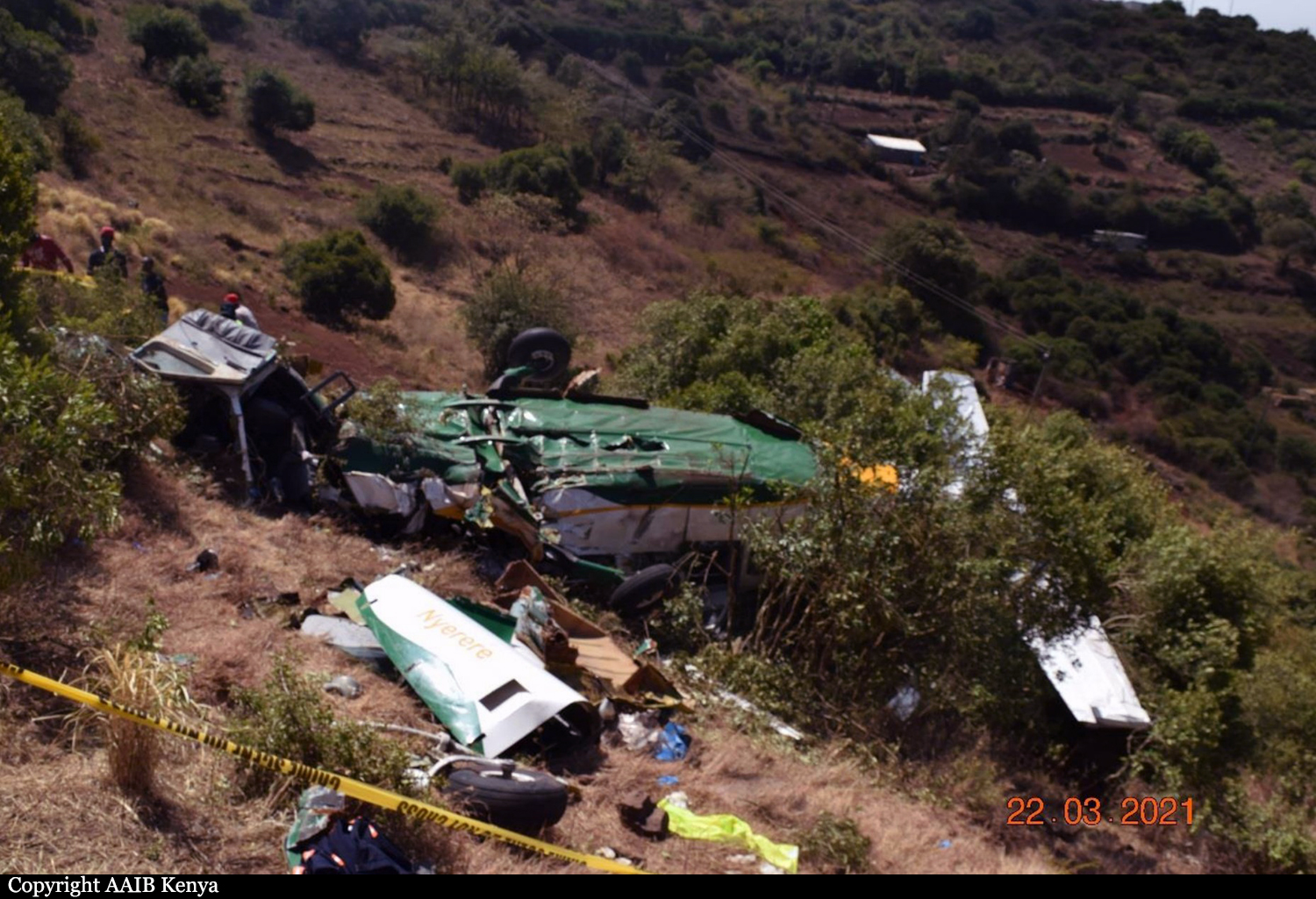
The report describes the accident to C208B type of aircraft, registration 5Y-JKN with two crew on onboard that occurred on Marsabit Hill on 20th March 2021 in which the aircraft crashed killing two crew onboard. The aircraft with 2200lbs fuel onboard was chartered to ferry Marsabit County Officials to a peace keeping mission at Illeret 156 nautical miles North West of Marsabit town. Preliminary information revealed that the aircraft departed Wilson Airport at 08.20am (0520Z) and arrived within the vicinity of Marsabit town at around 10.00a.m (0700Z). It collided with Kofia Mbaya Hill - Marsabit terrain while attempting to approach Marsabit airstrip. The aircraft first impacted the terrain with its nose-wheel and the main landing gears leaving parts of the fuselage and iron box with its content kept in the lower baggage compartment on the sport. It then ballooned and missed a house before it flipped upside down and impacted the ground and came to rest facing opposite direction. It left a trail of aircraft parts along its path before it came to rest. The nosewheel and its assembly separated and fell off and was found next to the house 110m from its first point of impact. There was no fire after impact but all the occupants received fatal injuries.
Probable cause:
The probable cause of the accident was a continued descend into terrain without forward visibility in thick fog.
The following contributing factors were identified:
- Location of the airstrip which is surrounded by high hills,
- Inadequate flight planning and crew resource management.
Final Report:
Crash of an Antonov AN-26 in Almaty: 4 killed

Date & Time: Mar 13, 2021 at 1722 LT
Type of aircraft:
Registration:
02 white
Flight Type:
Survivors:
Yes
Schedule:
Nursultan - Almaty
MSN:
72 01
YOM:
1978
Country:
Region:
Crew on board:
6
Crew fatalities:
Pax on board:
0
Pax fatalities:
Other fatalities:
Total fatalities:
4
Circumstances:
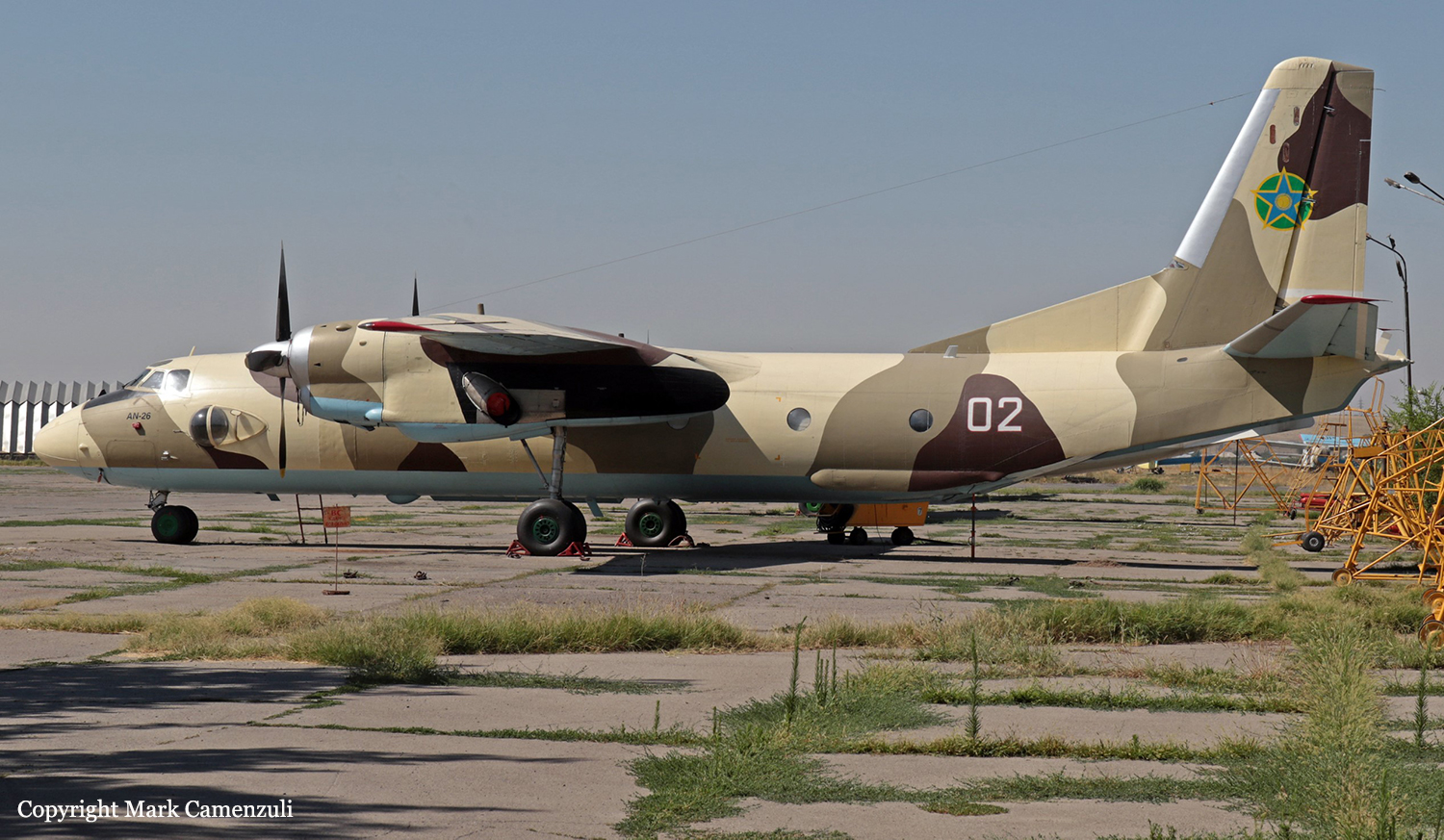
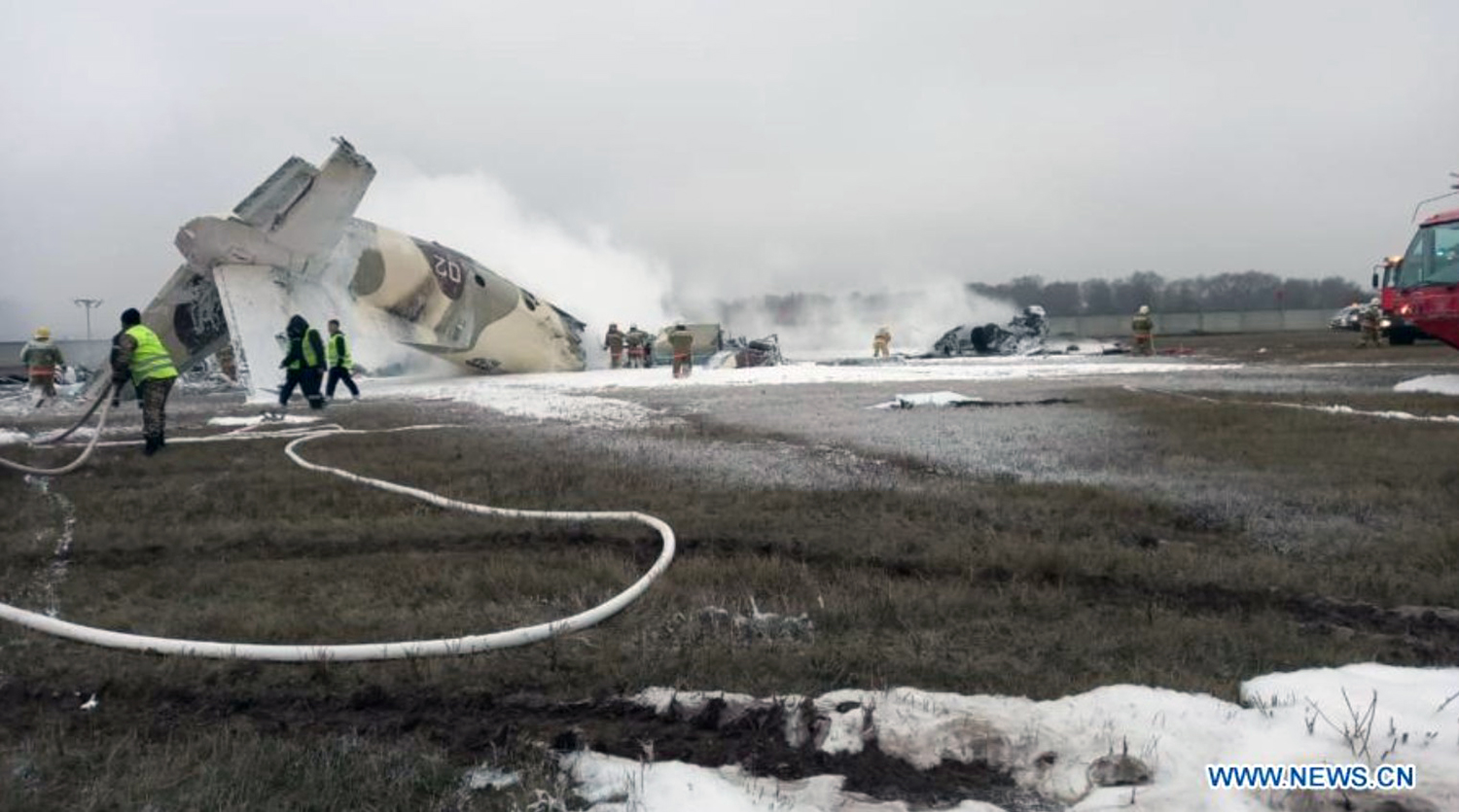
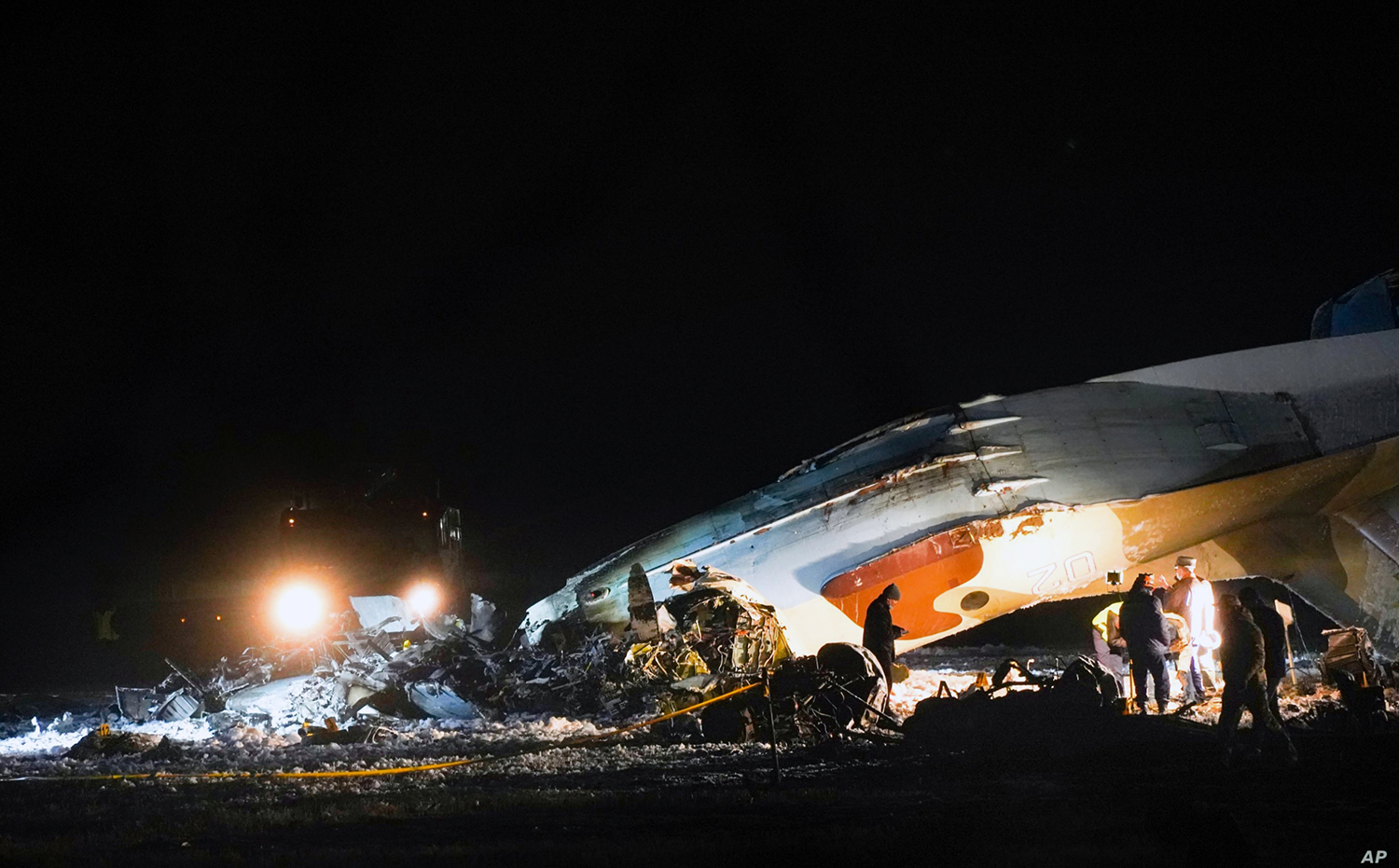
Following an uneventful flight from Nursultan Nazarbayev Airport on behalf of the National Security Committee of the Republic of Kazakhstan, the crew was approaching Almaty Airport runway 23R in marginal weather conditions with a ceiling at 300 feet and a visibility limited to 5 km in freezing drizzle. On short final, the aircraft struck the ground and crashed 600 metres short of runway, bursting into flames. Two crew members were rescued while four others were killed.
Those killed were:
Major Gabit Esimdaevich Barlykbayev,
Captain Doszhan Galymbekovich Baimuratov,
1st Lt Mukhtar Hadzhimukanovich Sagimbayev,
Sgt Vasilkov Evgeny Borisovich.

Crash of a Embraer EMB-120ER Brasília in Detroit

Date & Time: Mar 7, 2021 at 0008 LT
Type of aircraft:
Operator:
Registration:
N233SW
Flight Type:
Survivors:
Yes
Schedule:
Detroit - Akron
MSN:
120-307
YOM:
1995
Flight number:
BYA233
Crew on board:
2
Crew fatalities:
Pax on board:
0
Pax fatalities:
Other fatalities:
Total fatalities:
0
Circumstances:
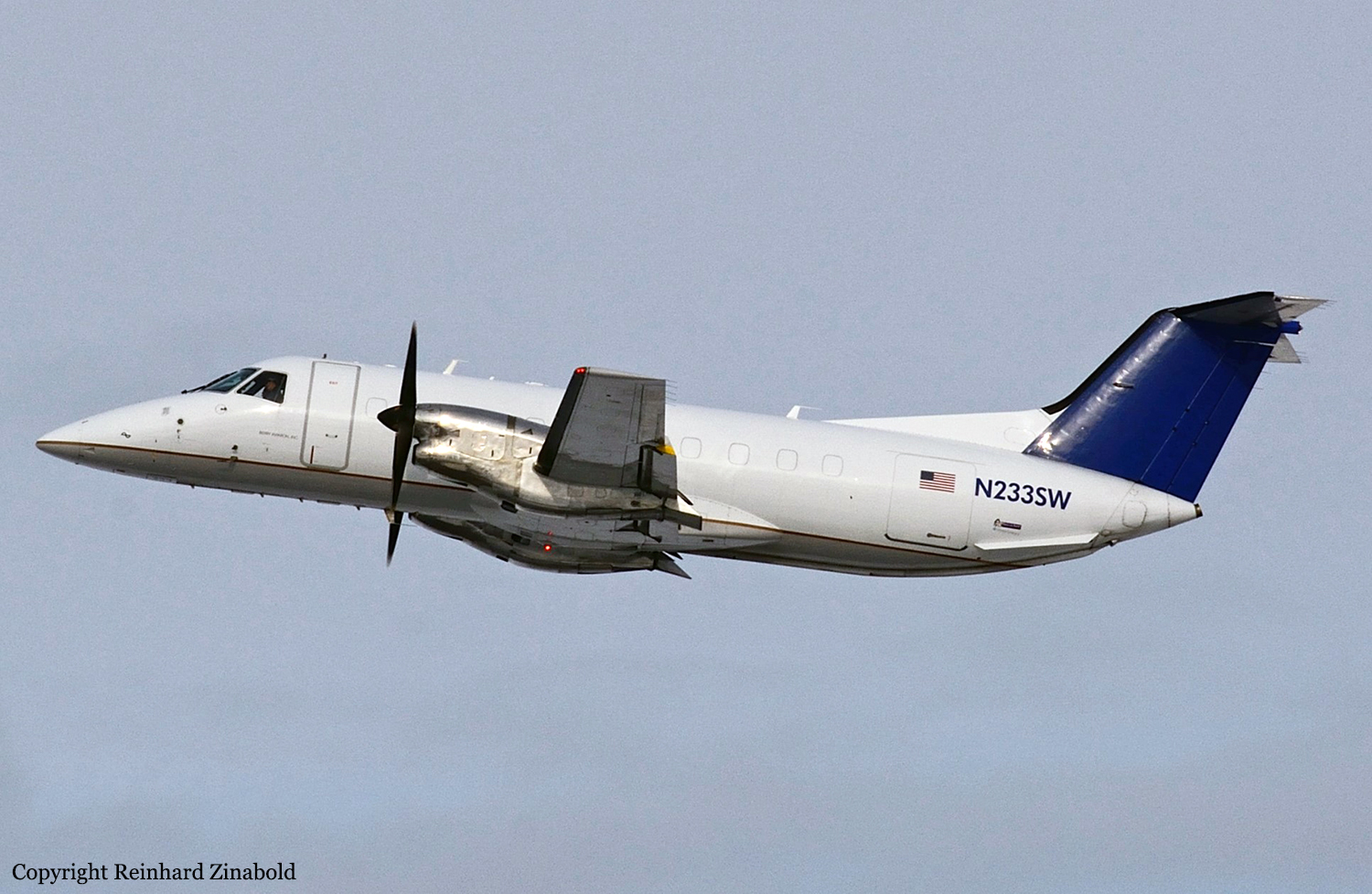
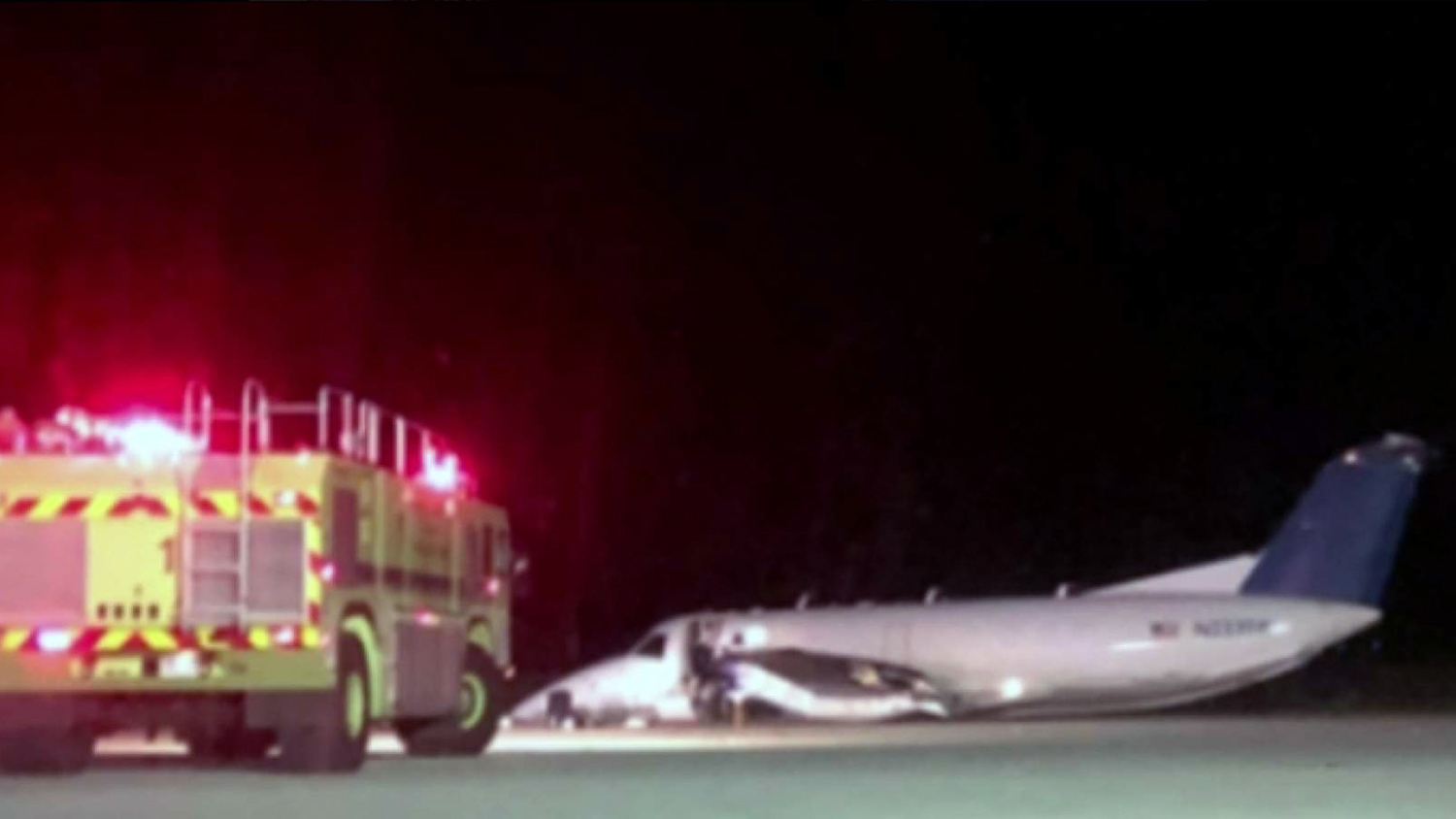
The twin engine airplane departed Detroit-Willow Run (Ypsilanti) Airport at 2337LT on March 6 on a cargo service to Akron-Canton Airport, carrying two pilots and a load of various goods. After takeoff, the crew encountered technical problems and declared an emergency. He completed two low passes in front of the tower, apparently due to gear problems. Eventually, the aircraft belly landed at 0008LT and came to rest on runway 05R. Both pilots evacuated safely and the aircraft was damaged beyond repair.