Crash of a Learjet 35A in Nuremberg: 3 killed

Date & Time: Feb 8, 2001 at 1540 LT
Type of aircraft:
Registration:
I-MOCO
Flight Type:
Survivors:
No
Schedule:
Nuremberg - Rome
MSN:
35-445
YOM:
1981
Country:
Region:
Crew on board:
2
Crew fatalities:
Pax on board:
1
Pax fatalities:
Other fatalities:
Total fatalities:
3
Captain / Total flying hours:
2641
Captain / Total hours on type:
54.00
Copilot / Total flying hours:
575
Copilot / Total hours on type:
192
Circumstances:
During an inspection of the right engine a technician found chips in the oil filter. The damage should have been repaired within the next 20 flight hours. Since the maintenance organization in Switzerland, who usually carry out necessary repairs, did not have the spare parts available on time, the task was assigned to an organization in Nuernberg. On 07.02.2001, the airplane was ferried to Nuernberg and repaired in the presence of the chief technician of the operator. The repairs and the replacement of the parts exclusively on the right engine were certified properly. The return flight to Rome was planned for the 8th of February 2001 at about 1530 o’clock. A charter flight from Rome was to be carried out on the following day. Two pilots and the chief technician of the operator were aboard the aircraft. The flight preparation was carried out by phone from the repair facility. A weather briefing and the NOTAM´s for the flight were obtained properly. The check lists for the take-off were read. During the preparation the unbalanced fuel distribution between the right and left-hand tanks, and the fact that the total amount yet was equal on both sides was discussed. Immediately afterwards the second pilot noticed the failure of his gyro instruments. The airplane was taxied via the taxiways "Juliet" and "Foxtrot" to runway 10. Pilot at the controls was the pilot in command while the second pilot carried out the radio communications with the air traffic control. The pilots received the clearance for a departure via the departure route Noerdlingen (NDG 1 M) to Rome. The take-off was at 1531 o'clock. After 5 nautical miles the airplane turned to the south, following the departure route. At 15:33:49 o'clock the left-hand engine failed without a previous warning. The noise of a down running engine was also heard by several witnesses on the ground. Smoke or a fire was not seen by them. The second pilot reported an emergency with the left-hand engine shortly after the occurrence to the control tower and informed them that they wanted to return for a landing on the runway 10. At that time there were visual meteorological conditions, and the runway was continuously to be seen. Since the departure control Nuernber APP wished to coordinate the flight, the frequency was changed for a short time upon request. After the second pilot had declared the emergency once again they switched back to the tower again and continued the approach to runway 10. Up to the final approach the flight was without particular occurrences. The flaps were first set to 8° and later on to 20°, afterwards the landing gear was extended. At this time the airplane was somewhat north of the extended centerline slightly above the glide path for an instrument approach. Approximately one kilometer in front of the runway, when flying over the main road no. 4 near the small town of Buch, the airplane was observed by different witnesses as it made unusual flight maneuvers. The airplane deviated then from the landing direction to the north, and made some reeling movements. Afterwards it seemed for a short
period that the pilot intended to turn right to reach the runway. Immediately afterwards and near the ground the airplane abruptly stalled to the left approximately maintaining its height, then assuming a bank angle of more than 90°, and crashed nearly upside down at 1540 o’clock into a forest north of the runway. The airport fire service, who were in a standby position due to the announced safety landing of the Learjet reached the accident site approximately 4 minutes later and started to extinguish the fire. All three occupants had lost their lives during the impact. The airplane was destroyed.
Probable cause:
The accident was caused by an in-flight failure of the left power plant approximately 3 minutes after take-off and an inadequate conduct of the subsequent single-engine landing procedure so that in short final the airplane stalled and crashed from low height. The failure of the left engine was caused by intergranular fractures of retention posts on the high pressure turbine disk. As a result of incorrect service life recordings the maximum number of cycles had considerably been exceeded.
Final Report:


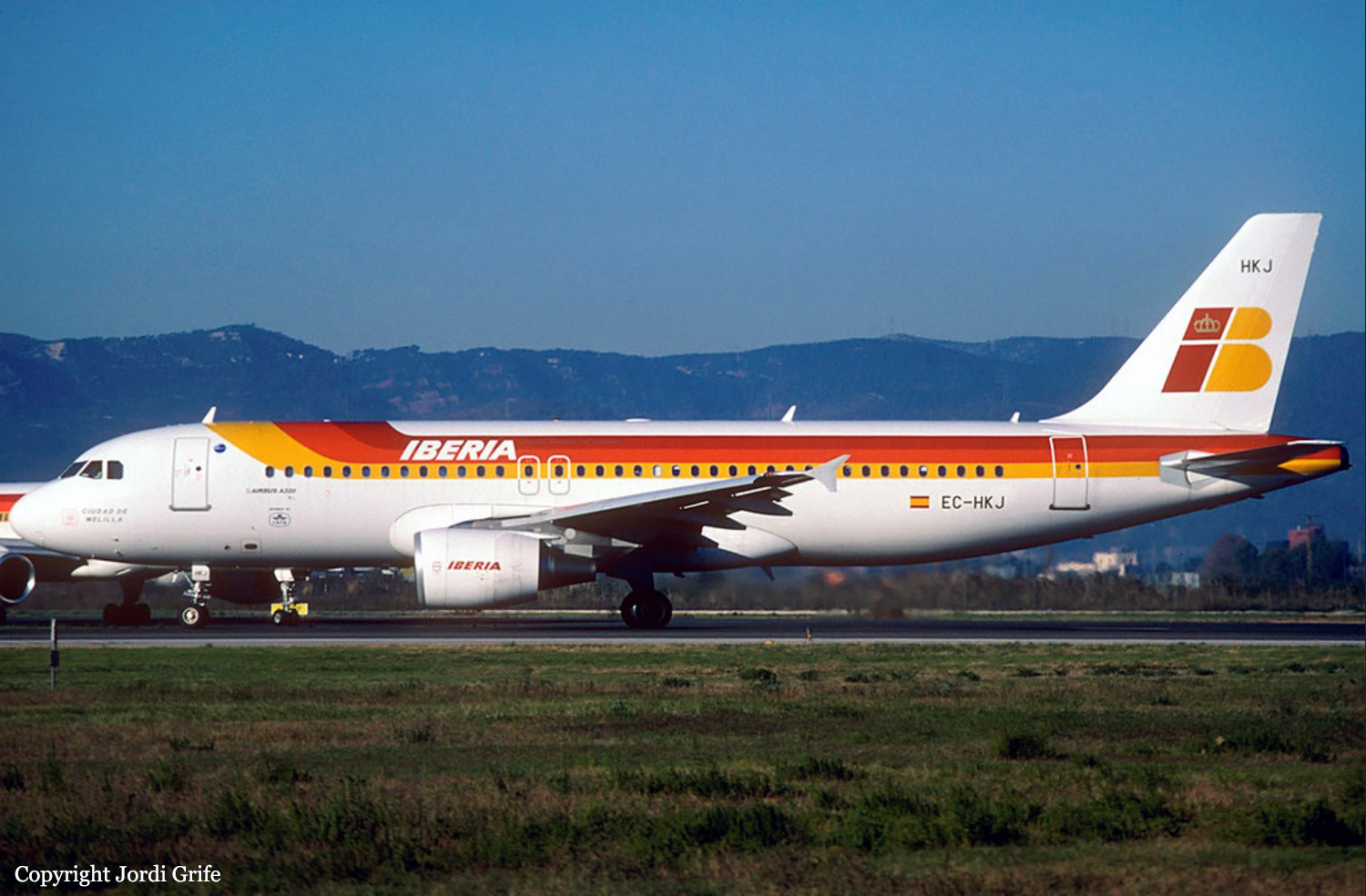
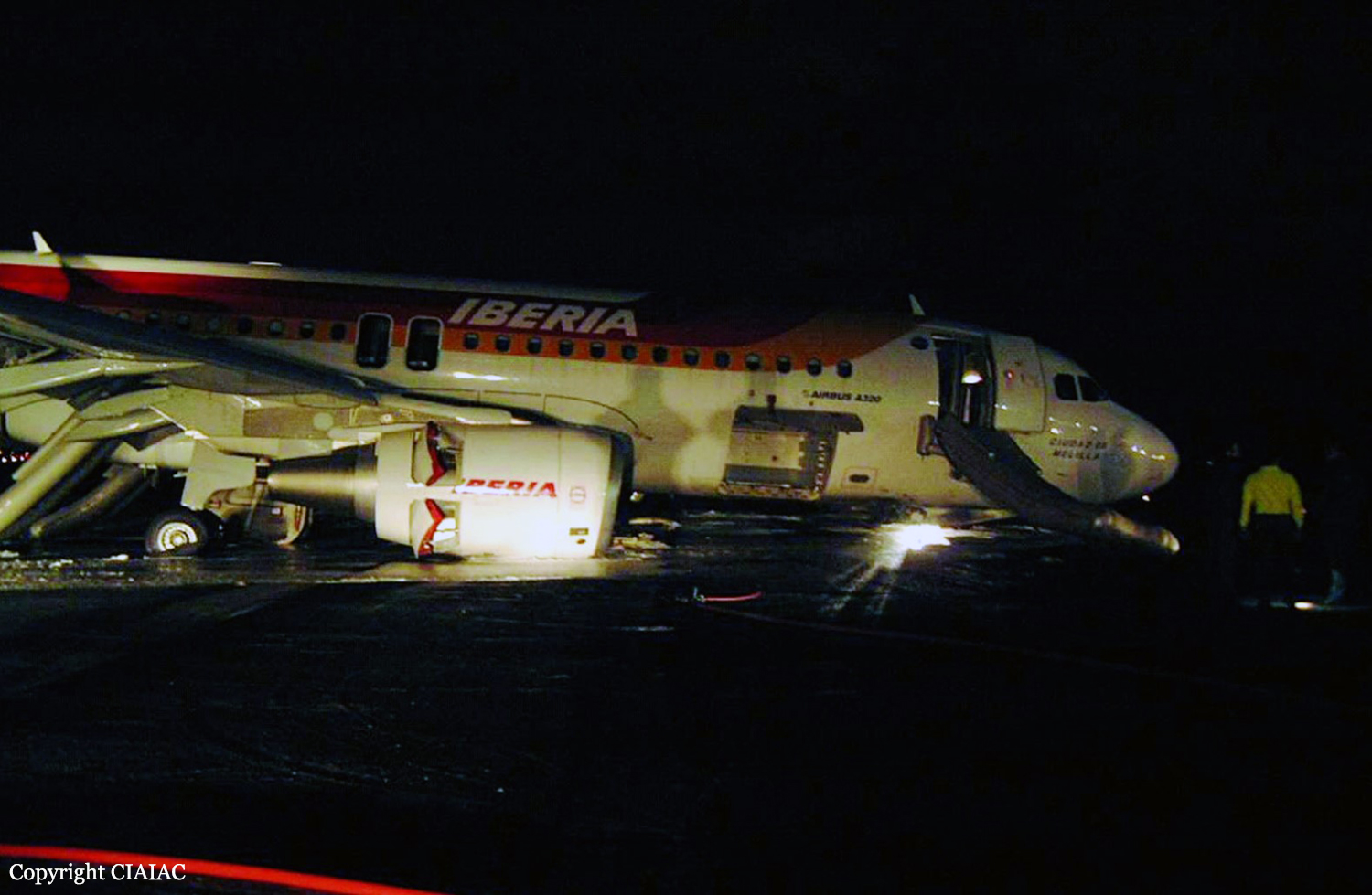
Crash of an Airbus A320-214 in Bilbao

Date & Time: Feb 7, 2001 at 2309 LT
Type of aircraft:
Operator:
Registration:
EC-HKJ
Survivors:
Yes
Schedule:
Barcelona – Bilbao
MSN:
1278
YOM:
2000
Flight number:
IB1456
Country:
Region:
Crew on board:
7
Crew fatalities:
Pax on board:
136
Pax fatalities:
Other fatalities:
Total fatalities:
0
Captain / Total flying hours:
10805
Copilot / Total flying hours:
423
Aircraft flight hours:
1149
Aircraft flight cycles:
869
Circumstances:
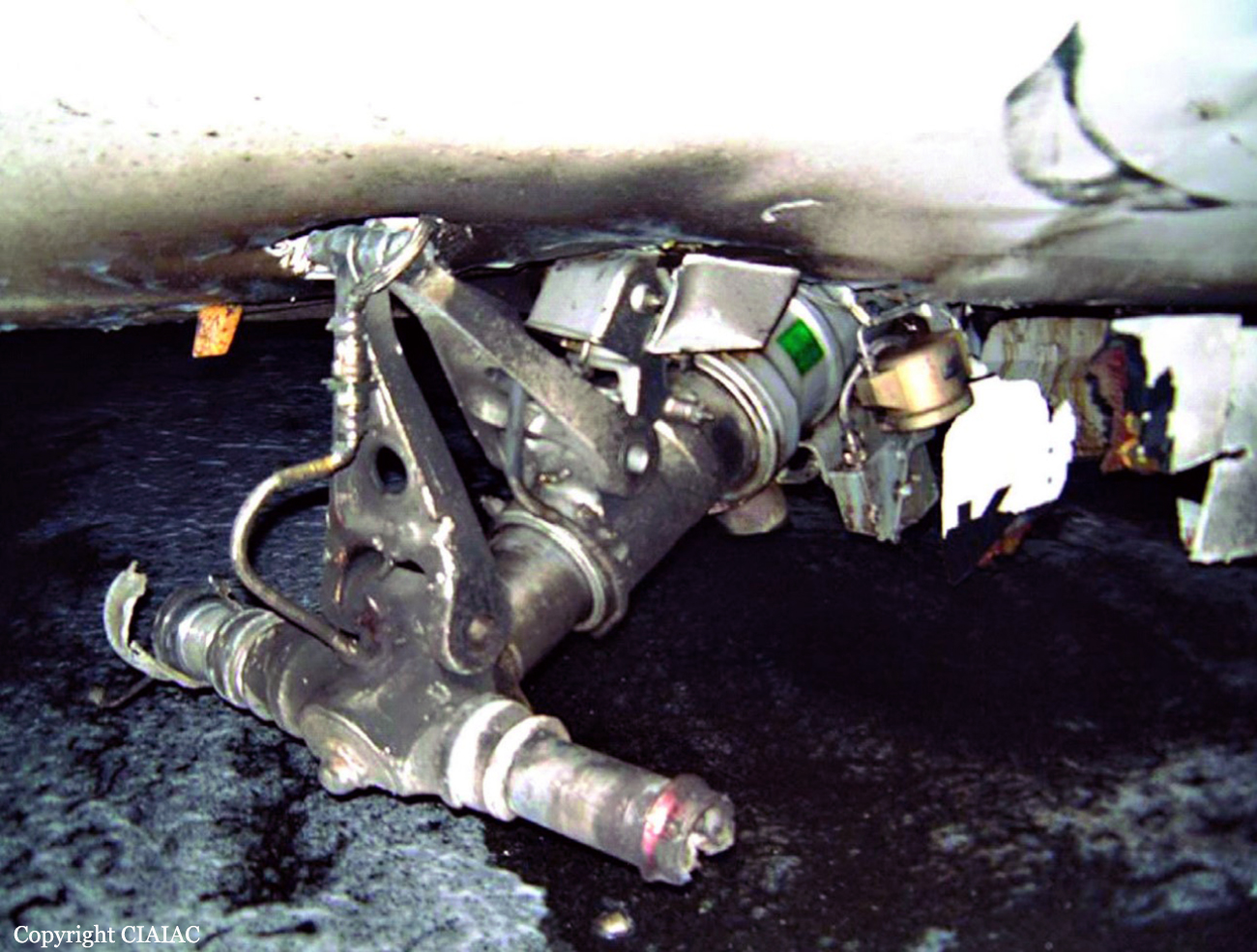
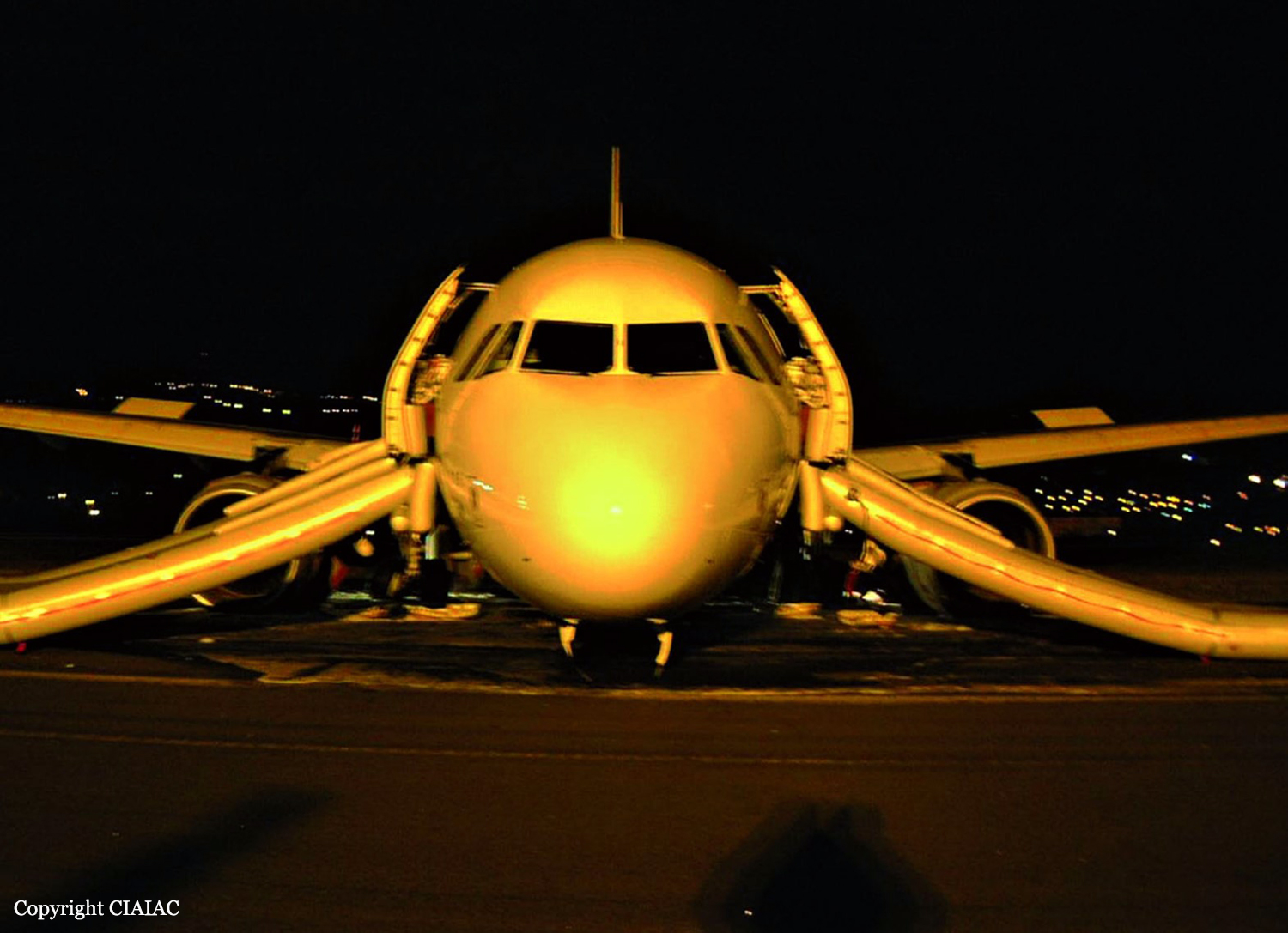
The aircraft was on its final approach to runway 30 of Bilbao Airport. The aircraft, operated by Iberia, was employed on flight IB1456, a scheduled domestic flight from Barcelona to Bilbao, with 136 passengers and 7 crew members on board. The expected flight time was 53 minutes. The current conditions in Bilbao were night VMC, with a 10 knots and southwest (SW) wind and gusts of up to 25 knots. Visibility was more than 10 km and there were scattered clouds above 5,600 feet. The sun had set four hours earlier and all electronic and visual aids in the airport were fully operational. There was no rain and the flight was conducted unter IFR rules. Since the takeoff from Barcelona at 2201LT, the flight had been uneventful. The pilot flying was seated on the right hand side, and he was in line flying under supervision. The captain seated on the left hand side was supervising the flight. A third flight crew member, seated in the jumpseat, was the first officer who had given his seat to the pilot under supervision on the right hand seat. On course to Bilbao, the aircraft flew over Pamplona at FL150, where they were informed of possible light turbulence. A about 25 NM from their destination and at 7,500 feet altitude, they crossed a small cumulus with strong turbulence. Descending through 6,000 feet and established on the Bilbao localizer they found winds of 55 knots. The ATC tower (TWR) of Bilbao cleared them to land on runway 30, and informed the decision height, 247 feet, under VMC conditions and continued the approach to land. One minute prior to touchdown, the tower informed of wind conditions of 240° 8 knots. The aircraft conditions during the approach were: weight, 62,380 kilos; centre of gravity, 28,66% MAC, full flaps. The reference speed (Vref) was 132 knots and the approach speed (Vapp), 142 knots. Autopilot was disconnected by the crew at 400 feet to continue the approach manually. In the last few seconds prior to touchdown, the vertical descent speed was very high, around 1,200 feet per minute (6 metres per second) and the 'sink rate' warning of the GPWS sounded twice. The aircraft did not react to the pitch-up order input applied by both pilots on the side-sticks, due to the design software logic that operates at these specific moments, and did not flare. Announcements of 'dual-input' warning were heard at the time. Then the captain, in view of the 'sink rate' warnings, selected TOGA power setting to go around and abort the landing. The pilot's actions on the flight controls could not avoid a hard touchdown of the aircraft in a slight nose down attitude, and the captain decided to continue the landing and to stop the aircraft. The aircraft slowed-down along 1,100 metres of the runway within the paved surface. It finally came to a stop with its horizontal axis at an angle of 60° to the right of the runway centerline. During the landing roll the nose landing gear collapsed, the four tires of the main gear burst and the engine nacelles, on which the aircraft was leaning after the collapse, dragged along the pavement. Once the aircraft came to a halt, the captain ordered its evacuation, which was carried out using all the exit doors and their slides. During the evacuation a cabin crew member and 24 passengers were injured. All injuries were considered minor except for one, a female passenger whose injuries were considered serious. Seven injured people were taken to hospital.
Probable cause:
The cause of the accident was the activation of the angle of attack protection system which, under a particular combination of vertical gusts and windshear and the simultaneous actions of both crew members on the sidesticks, not considered in the design, prevented the aeroplane from pitching up and flaring during the landing.
Final Report:

Crash of a Short 360-100 in Sheffield

Date & Time: Feb 4, 2001 at 1921 LT
Type of aircraft:
Operator:
Registration:
EI-BPD
Survivors:
Yes
Schedule:
Dublin – Sheffield
MSN:
3656
YOM:
1984
Region:
Crew on board:
3
Crew fatalities:
Pax on board:
25
Pax fatalities:
Other fatalities:
Total fatalities:
0
Captain / Total flying hours:
4484
Captain / Total hours on type:
1392.00
Circumstances:
The crew were planned to fly a scheduled passenger flight from Dublin to Sheffield airport and the commander was the handling pilot for the flight. Both pilots had operated into Sheffield between five and ten times in the previous three months. The aircraft, which was serviceable, took off from Dublin at 1814 hrs and was routed to Sheffield via the VOR/DME navigation beacon at Wallasey at FL90. Prior to descent, the crew obtained the most recent information from the Automatic Terminal Information Service (ATIS); this report, timed at 1820 hrs, was identified as 'Information Hotel'. The reported conditions at Sheffield were: surface wind variable at 03 kt, visibility 4,000 metres in rain and snow, a few clouds at 600 feet, scattered cloud at 1,200 feet and broken cloud at 3,000 feet, the temperature and dew point were coincident at +1°C and the QNH was 989 hPa. Air traffic control was passed to the Sheffield approach controller when the aircraft was 12 nm from the overhead at which time it was descending to 5,000 feet on the QNH. The crew were informed that the current ATIS was now 'Information India' and the aircraft was cleared to descend to 3,000 feet when within 10 nm of the airport. 'Information India', timed at 1850 hrs, contained no significant changes from 'Information Hotel'. The aircraft weight for the landing was calculated to be 11,100 kg with an associated threshold speed of 103 kt. The aircraft was cleared for the ILS/DME procedure for Runway 28 and the crew requested the QFE which was 980 hPa. The decision height for the approach was 400 feet. During the initial stages of the manually flown ILS approach the commander's flight director warning flag appeared briefly but then disappeared and did not reappear during the remaining period of flight. The de-ice boots had been selected to 'ON' early in the descent when the aircraft had briefly encountered light icing. These de-ice boots were selected to 'OFF' when at 5 nm from the runway at which stage there were no indications of icing and the indicated outside air temperature was +5°C. (This is indicative of an actual air temperature of +2°C.) At 1918:11 hrs the crew reported that they were established on the localiser. When the aircraft intercepted the glidepath, the flaps were set to 15° correctly configuring the aircraft for the approach. The handling pilot recalled that initially the rate of descent was slightly higher than the expected 650 ft/min leading him to suspect the presence of a tailwind, however, the rate of descent returned to a more normal value when approximately 4 nm from the runway. The propellers were set to the maximum rpm at 1,200 feet agl. When the crew reported that they were inside 4 nm they were cleared to land and passed the surface wind, which was variable at 2 kt; they were also warned that the runway surface was wet. Both pilots saw the runway lights when approaching 400 feet agl; the flaps were selected to 30° and confirmed at that position. Both pilots believed that the airspeed was satisfactory but, as the commander checked back on the control column for the landing, the rate of descent increased noticeably and the aircraft landed firmly. Both pilots believed that the power levers were in the flight idle position and neither was aware of any unusual control inputs during the landing flare. Two separate witnesses saw the aircraft during the later stages of the approach and the subsequent landing, one of these witnesses was in the control tower and the other was standing in front of the passenger terminal. They both saw the aircraft come into view at a height of approximately 400 feet and apparently travelling faster than normal. They described the aircraft striking the ground very hard with the left wing low; both heard a loud noise coincident with the initial contact. They then reported that the aircraft bounced before hitting the ground again, this time with the nose wheel first, before bouncing once more. Crew statements and flight data evidence indicate that the aircraft lifted no more than 8 feet before settling on the runway and then remained on the ground. The aircraft was then seen to travel about half way along the runway before slewing to the left and running onto the grass. When the aircraft stopped the left wing tip appeared to be touching the grass. When the aircraft came to rest the tower controller asked the crew if they required assistance, this call was timed at 1921:15 hrs. The crew asked for the fire services to be placed on standby but the controller judged that the situation required an immediate and full emergency response and activated the fire and rescue services. The airfield fire services arrived at the aircraft at 1924 hrs and all the passengers had been evacuated by 1925 hrs. The South Yorkshire fire and rescue services arrived at 1933 hrs and assisted in ferrying passengers to the terminal building.
Probable cause:
Evidence from the CVR indicated that the flight was conducted in a thoroughly professional manner in accordance the operator's normal procedures until the final stages of the approach. The recorded data indicate that three seconds prior to touchdown the propeller blade angle changed from the flight range to the ground range. Coincident with this change the CVR recorded sounds consistent with the propellers 'disking' and the FDR indicated that the aircraft then decelerated longitudinally and accelerated downwards. The engineering investigation revealed that the propeller control rigging and the operation of the flight idle baulk were correct. Selection of ground fine requires the pilot to firstly release the flight idle baulk and then lift and pull the propeller levers further back, this combined action rapidly becomes a programmed motor skill in the routine of daily operations. It is therefore possible that the handling pilot unintentionally selected the propellers into the ground fine position whilst still in the air.
Final Report:

Crash of an Antonov AN-26 in Luena: 22 killed

Date & Time: Feb 1, 2001
Type of aircraft:
Operator:
Registration:
T-224
Flight Type:
Survivors:
No
Schedule:
Luau – Luena
Location:
Country:
Region:
Crew on board:
5
Crew fatalities:
Pax on board:
17
Pax fatalities:
Other fatalities:
Total fatalities:
22
Circumstances:
On final approach to Luena Airport, the aircraft was shot down by a missile and crashed, bursting into flames. All 22 occupants were killed.
Probable cause:
Shot down by UNITA rebels.

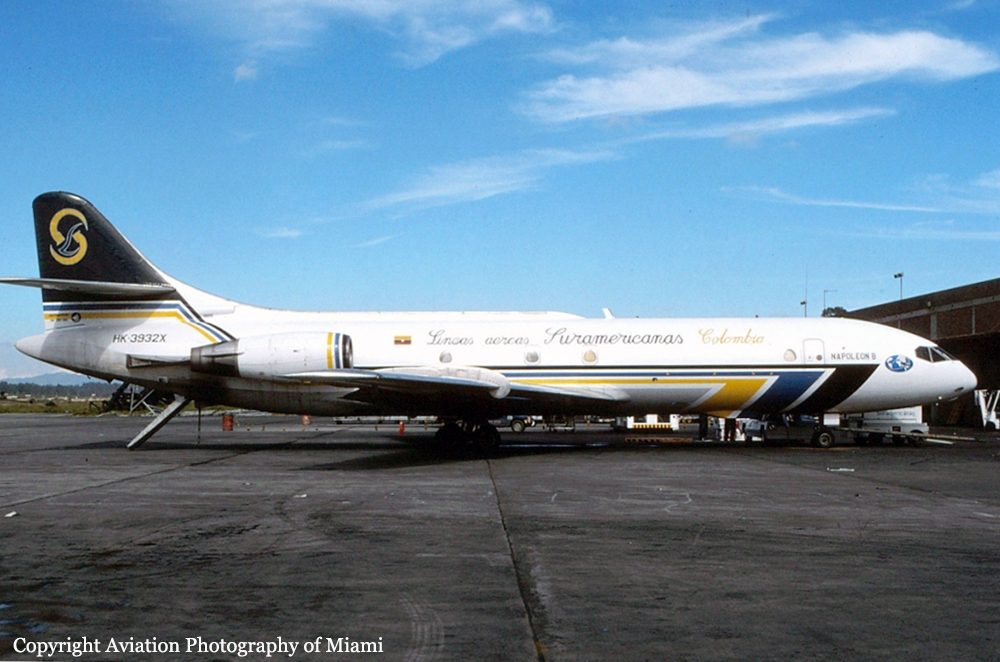
Crash of a Sud-Aviation SE-210 Caravelle 10B1R in Yopal: 3 killed

Date & Time: Jan 31, 2001 at 1649 LT
Operator:
Registration:
HK-3932X
Flight Type:
Survivors:
Yes
Schedule:
Bogotá – Yopal – Mitú
MSN:
201
YOM:
1966
Location:
Country:
Crew on board:
3
Crew fatalities:
Pax on board:
3
Pax fatalities:
Other fatalities:
Total fatalities:
3
Captain / Total flying hours:
3445
Captain / Total hours on type:
2320.00
Copilot / Total flying hours:
320
Copilot / Total hours on type:
320
Aircraft flight hours:
24072
Circumstances:
The aircraft departed Bogotá-El Dorado Airport on a cargo flight to Mitú via Yopal, carrying three passengers, three crew members and a load consisting of 14 drums of fuel. On approach to Mitú-Fabio A. León Bentley, the aircraft was too low. On short final, the left main gear struck a fence and was torn off. A hydraulic failure occurred and the captain decided to divert to Yopal Airport for an emergency landing. While descending to Yopal Airport, following a holding pattern to burn fuel, the right engine failed. The aircraft lost height and crashed 7,9 km short of runway 05. Three people were rescued while three others including one crew member were killed.
Probable cause:
Low situational alert by the pilot-in-command during the final stage of the approach to Mitú Airport and his failure to adequately plan the approach to Yopal Airport during an emergency situation. The following contributing factors were identified:
- Passive attitude of the crew, especially the captain during critical situation,
- Poor crew resources management,
- Lack of crew communication,
- Relative low copilot experience.
Final Report:

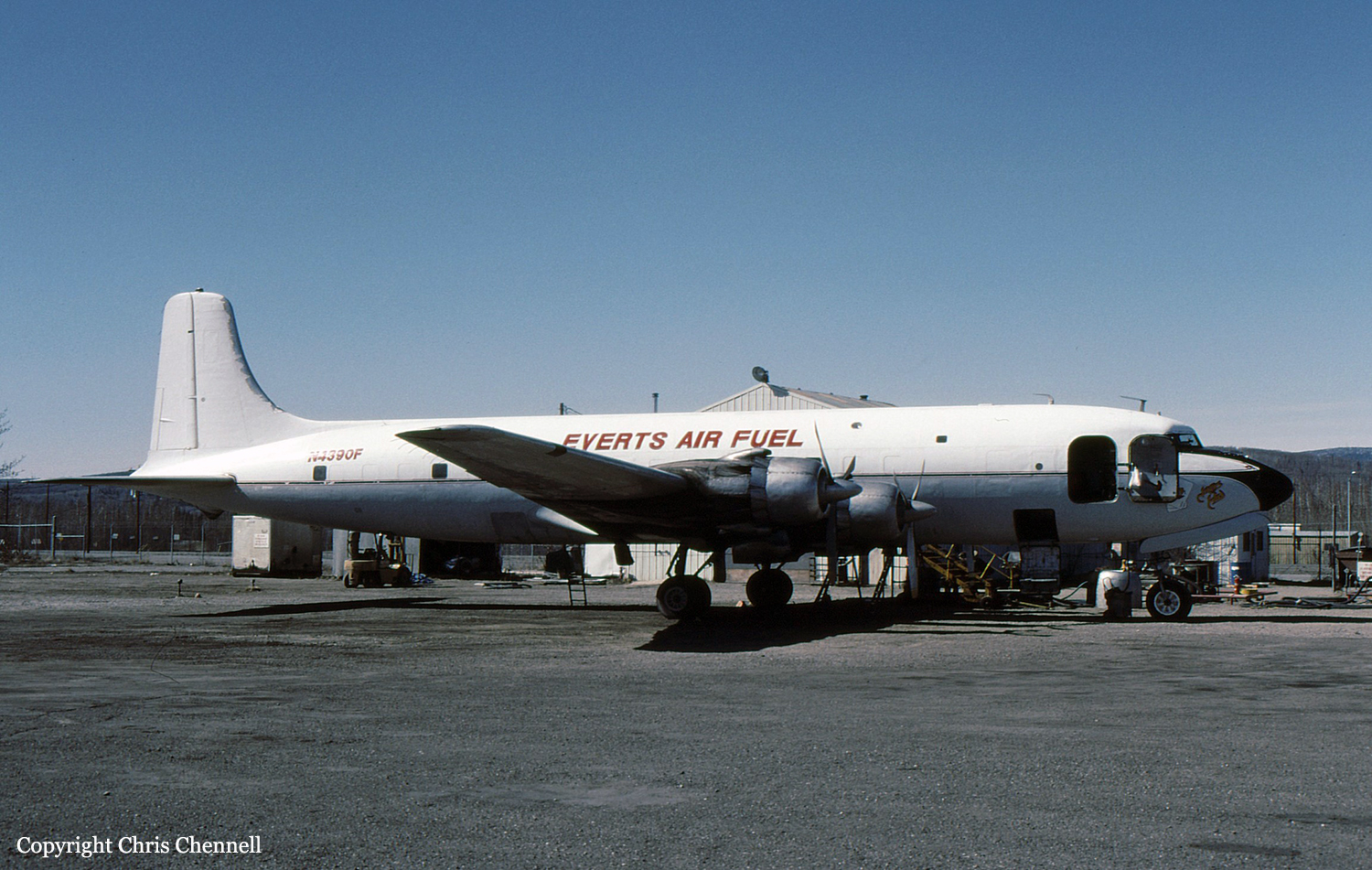
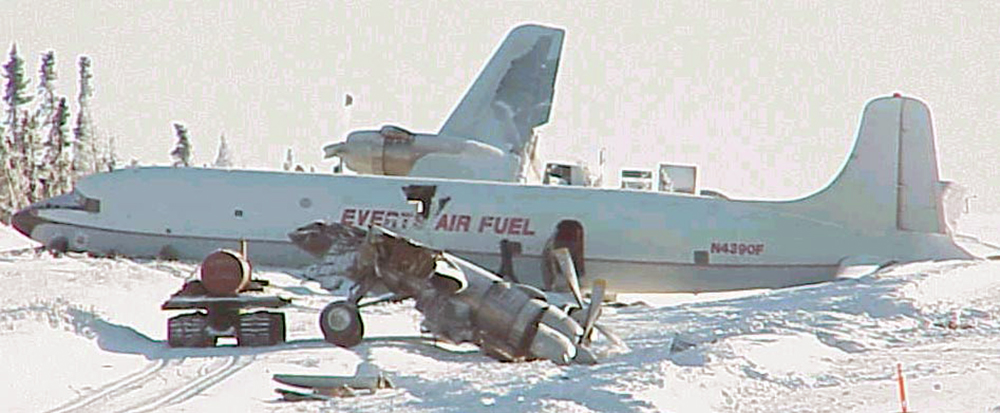
Crash of a Douglas DC-6B in Donlin Creek

Date & Time: Jan 31, 2001 at 1315 LT
Type of aircraft:
Operator:
Registration:
N4390F
Flight Type:
Survivors:
Yes
Schedule:
Fairbanks – Donlin Creek
MSN:
44898
YOM:
1956
Crew on board:
3
Crew fatalities:
Pax on board:
0
Pax fatalities:
Other fatalities:
Total fatalities:
0
Captain / Total flying hours:
29500
Captain / Total hours on type:
8100.00
Aircraft flight hours:
37052
Circumstances:
The certificated airline transport captain related that the purpose of the flight was to deliver about 4,800 gallons of fuel oil to the remote mining site. He said that the 5,400 feet long by 100 feet wide airstrip was situated within hilly, snow-covered terrain. He added that the airstrip has a 7 percent uphill grade. Flat light conditions existed at the airstrip, and light snow showers were present, with visibility reported at 2 miles. The captain stated that during final approach, as the airplane passed over the airstrip threshold, flat light conditions made it very difficult to discern where the airstrip surface was. He said that the initial touchdown was "firm", but was thought to be within acceptable tolerances. Just after touchdown, the left wing broke free from the airplane at the wing to fuselage attach point. The airplane veered to the left, and off the left side of the runway. The captain said that the airplane's computed landing weight was 92,260 pounds.
Probable cause:
The flight crew's misjudged flare while landing. Factors associated with the accident were flat light conditions, snow-covered terrain, and an uphill runway grade.
Final Report:

Crash of a Cessna 402C II in Martha's Vineyard

Date & Time: Jan 30, 2001 at 1835 LT
Type of aircraft:
Operator:
Registration:
N6837Y
Flight Type:
Survivors:
Yes
Schedule:
Providence – Martha’s Vineyard
MSN:
402C-0467
YOM:
1981
Flight number:
9K415
Crew on board:
2
Crew fatalities:
Pax on board:
0
Pax fatalities:
Other fatalities:
Total fatalities:
0
Captain / Total flying hours:
1668
Captain / Total hours on type:
348.00
Aircraft flight hours:
19131
Circumstances:
The pilot departed on a scheduled flight conducted under night instrument meteorological conditions. Arriving in the area of the destination airport, the weather was reported as, winds from 220 degrees at 18 knots, gusts to 25 knots; 1/2 statute miles of visibility and haze; vertical visibility of 100 feet. The pilot was vectored and cleared for the ILS 24 approach. As the airplane crossed the glideslope, the pilot observed that the "ride" became increasingly bumpy and turbulent, with a strong wind component from the right. The approach lights came into view as the airplane neared the runway, but soon disappeared due to the low visibility. The pilot executed a missed approach, and as full power was applied, the airplane began to move laterally to the left. During the missed approach, a "thunk" was heard on the left side of the fuselage, and the airplane descended into the trees. The airplane came to rest in a wooded area about 1/4 mile from the Runway 24 threshold, about 1,000 feet to the left of the extended centerline. Review of the approach plate for the ILS 24 approach revealed that the glide slope altitude at the final approach fix for the non-precision approach, which was located about 4 miles from the approach end of the runway, was 1,407 feet. The glide slope altitude at the middle marker, which was located about 0.6 miles from the approach end of the runway, was 299 feet. Review of radar data revealed that the airplane intercepted the glideslope about 4 miles from the threshold of runway 24. In the following 2 minutes, 30 seconds, the airplane deviated below and returned to the glideslope centerline approximately 4 times, with a maximum deviation of 2-dots below the glideslope centerline. About 1-mile from the runway, the airplane began a trend downward from the glideslope centerline, descending below the 2- dot low deviation line of the glideslope to an altitude of about 300 feet, when the last radar hit was recorded. During the approach, the airplane's ground speed varied between 50 and 125 knots. According to the Aeronautical Information Manual chapter on Navigation Aids, Instrument Landing System (ILS), it stated that "Make every effort to remain on the indicated glide path." It also cautioned the pilot to, "Avoid flying below the glide path to assure obstacle/terrain clearance is maintained."
Probable cause:
The pilot's failure to maintain a stabilized approach with an adequate vertical and lateral track. Also causal was his failure to maintain obstacle clearance.
Final Report:

Crash of a Rockwell Aero Commander 500 near Puerto Plata: 7 killed

Date & Time: Jan 28, 2001 at 0815 LT
Operator:
Registration:
HI-535SP
Flight Type:
Survivors:
No
Site:
Schedule:
Santo Domingo - Puerto Plata
MSN:
500-840
YOM:
1959
Crew on board:
2
Crew fatalities:
Pax on board:
5
Pax fatalities:
Other fatalities:
Total fatalities:
7
Circumstances:
While descending to Puerto Plata Airport, the crew encountered poor weather conditions and limited visibility due to low clouds and fog. The twin engine aircraft struck the slope of Mt Loma del Toro located few km from Puerto Plata and was destroyed. All seven occupants were killed. The crew started the approach prematurely and descended too low in poor visibility.

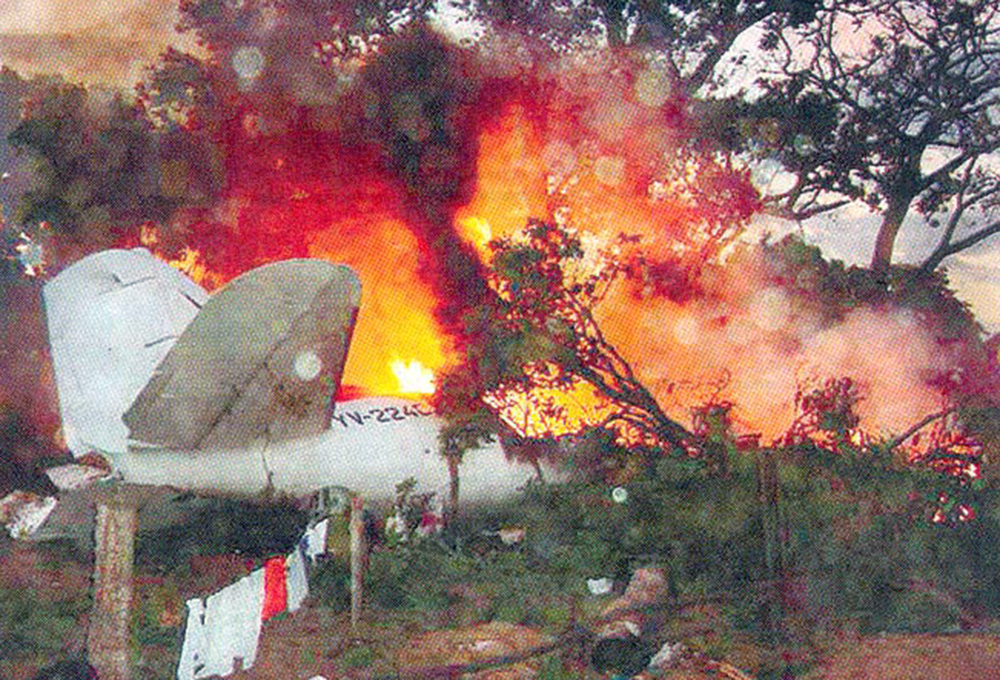
Crash of a Douglas DC-3C in Ciudad Bolívar: 24 killed

Date & Time: Jan 25, 2001 at 1815 LT
Type of aircraft:
Operator:
Registration:
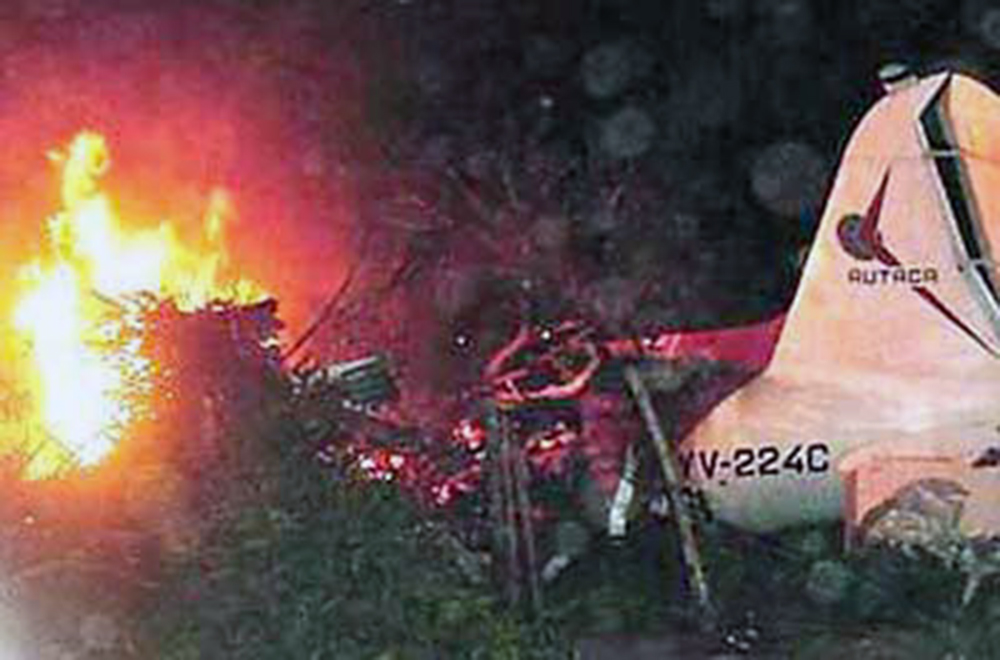
YV-224C
Survivors:
No
Schedule:
Canaima – Ciudad Bolívar – Porlamar
MSN:
19055
YOM:
1943
Flight number:
RM225
Country:
Crew on board:
4
Crew fatalities:
Pax on board:
20
Pax fatalities:
Other fatalities:
Total fatalities:
24
Circumstances:
Shortly after takeoff from Ciudad Bolívar Airport, while climbing, the crew declared an emergency following an engine failure and was cleared for an immediate return. The crew made a turn and while approaching runway 07, the aircraft stalled and crashed near the district of El Perú, bursting into flames. The wreckage was found about 3 km short of runway. The aircraft was totally destroyed by a post crash fire and all 24 occupants were killed, among them 6 US citizens, five Dutch, four Italians, two Hungarian, one Austrian and six Venezuelan. Also, a young woman and her both children who were standing at the crash site were seriously injured.
Probable cause:
Loss of control following an engine failure for unknown reasons.

Crash of a Let L-410UVP in Maiduguri

Date & Time: Jan 23, 2001 at 2130 LT
Type of aircraft:
Operator:
Registration:
9L-LCG
Survivors:
Yes
Schedule:
Jos – Maiduguri
MSN:
85 15 31
YOM:
1985
Location:
Country:
Region:
Crew on board:
4
Crew fatalities:
Pax on board:
14
Pax fatalities:
Other fatalities:
Total fatalities:
0
Circumstances:
The twin engine aircraft departed Jos on a charter flight to Maiduguri, carrying 14 passengers and four crew members for the Nigerian daily newspaper 'This Day'. After takeoff from Jos Airport, the crew was informed about good weather conditions at destination with a 9 km visibility that dropped few minutes later to 5 km. While approaching Maiduguri, the crew encountered poor weather conditions and ATC advised the crew to divert to another airport. The crew followed a holding pattern for few minutes for weather improvement but informed ATC that he was unable to divert due to insufficient fuel reserve. Eventually, the captain attempted an emergency landing 12 km from the airport. The aircraft crash landed in an open field and came to rest. All 18 occupants escaped with minor injuries and the aircraft was damaged beyond repair.
Probable cause:
Forced landing due to the deterioration of the weather conditions with tropical storm. Poor flight preparation from the crew who miscalculated the fuel reserve for a possible alternate airport. It was also determined that the crew was unable to locate the runway because the intensity of the runway light system was too low.