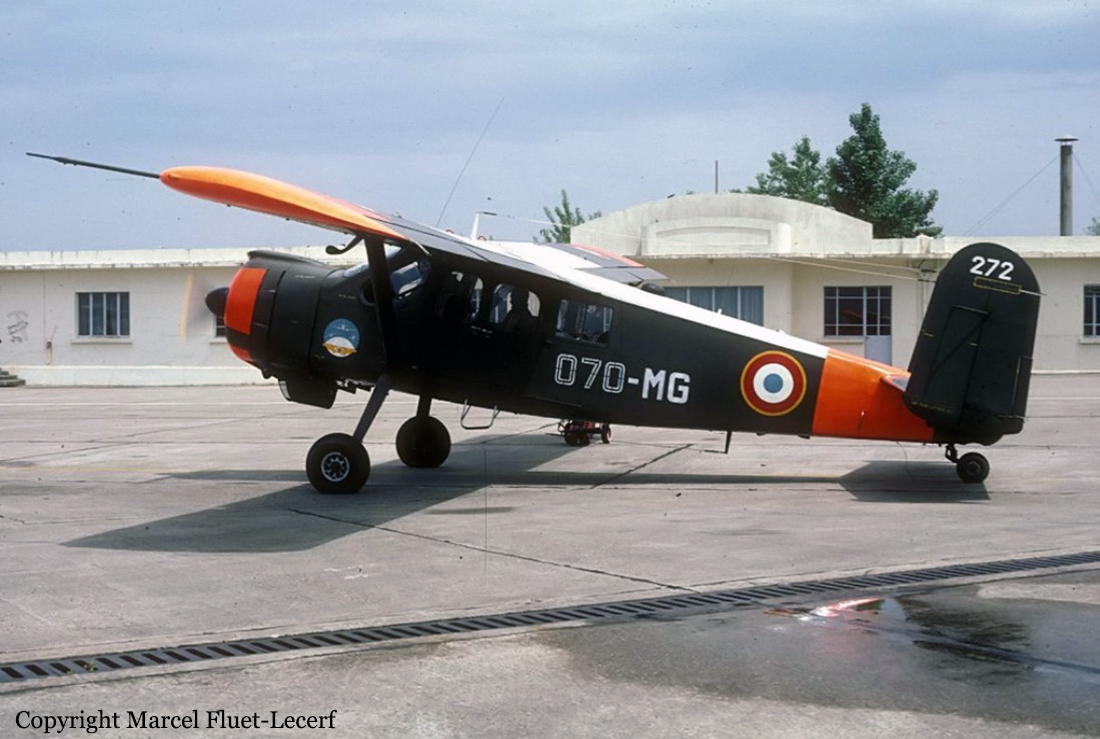
Crash of a Volpar Turboliner 18 in Saint Clair Shores

Date & Time: Nov 19, 1987 at 1725 LT
Type of aircraft:
Operator:
Registration:
N10AS
Flight Phase:
Flight Type:
Survivors:
Yes
Schedule:
Newark - Detroit
MSN:
N-467
YOM:
1950
Crew on board:
1
Crew fatalities:
Pax on board:
0
Pax fatalities:
Other fatalities:
Total fatalities:
0
Captain / Total flying hours:
3080
Captain / Total hours on type:
80.00
Aircraft flight hours:
15800
Circumstances:
While enroute to home base after delivery of revenue cargo, the pilot experienced a total loss of engine power in both engines due to fuel exhaustion. The pilot performed emergency procedures and set the aircraft up for a forced landing in a grassy field on the edge of a lake. The aircraft initially impacted a tree and the rocky berm of the shoreline. The contact with the berm caused the landing gear to break off, the aircraft swerved around and skidded backwards before coming to a rest about 150 feet from the lakeshore. Post accident investigation revealed less than 2 gallons of fuel in each wing tank.
Probable cause:
Occurrence #1: loss of engine power (total) - nonmechanical
Phase of operation: descent
Findings
1. (c) fluid, fuel - exhaustion
2. Engine instruments, fuel quantity gage - incorrect
3. Inattentive - pilot in command
4. (c) planning/decision - poor - pilot in command
----------
Occurrence #2: forced landing
Phase of operation: descent - emergency
----------
Occurrence #3: in flight collision with terrain/water
Phase of operation: descent - emergency
Findings
5. Object - tree(s)
6. Terrain condition - berm
7. Terrain condition - rough/uneven
8. Landing gear - collapsed
Final Report:
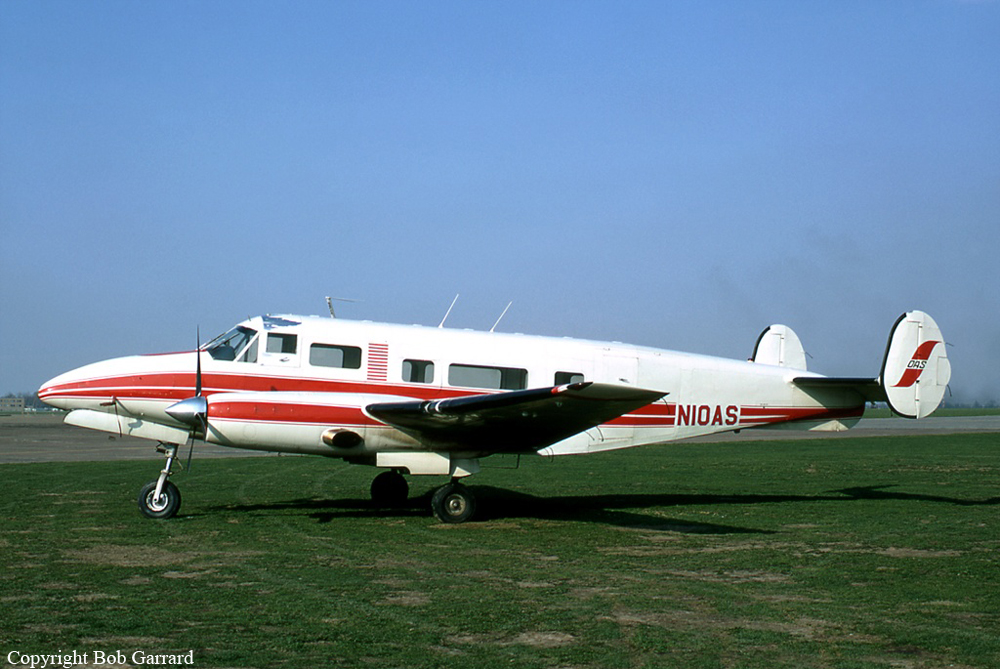
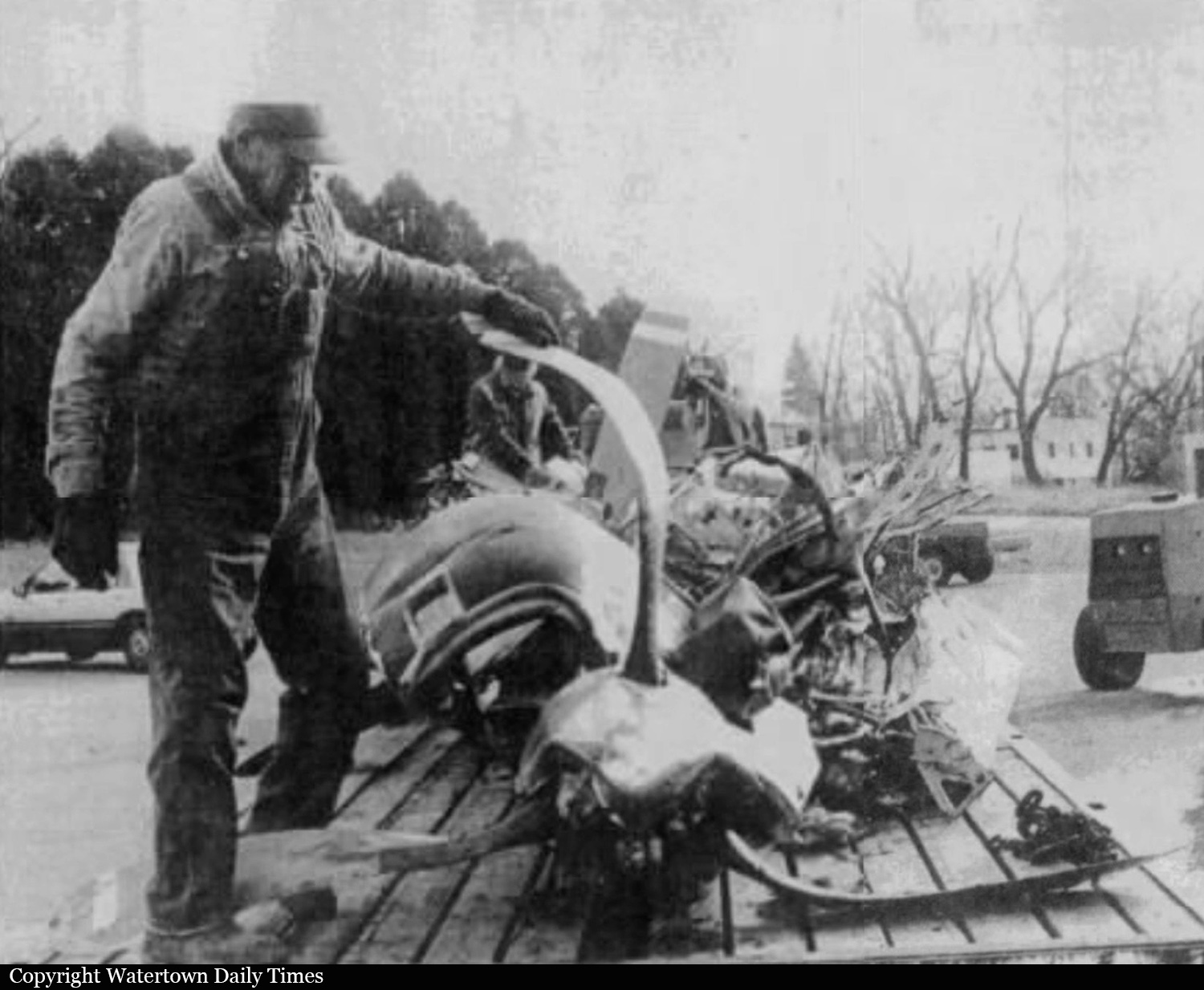
Crash of a Beechcraft 200 Super King Air in Jefferson: 8 killed

Date & Time: Nov 16, 1987 at 0819 LT
Registration:
N334DP
Flight Phase:
Survivors:
No
Schedule:
Chicago - Baraboo
MSN:
BB-1188
YOM:
1984
Crew on board:
2
Crew fatalities:
Pax on board:
6
Pax fatalities:
Other fatalities:
Total fatalities:
8
Captain / Total flying hours:
18000
Captain / Total hours on type:
3000.00
Aircraft flight hours:
1050
Circumstances:
While cruising above freezing level at 12,000 feet, the flight was cleared to descend and maintain 9,000 feet. About 1-1/2 minute later, the flight declared a mayday (emergency). Radio and radar contacts were lost and the aircraft crashed in a near vertical descent. Radar data showed that after starting a descent, the aircraft entered a left/descending maneuver. Subsequently, the left outboard wing panel and both engines separated in flight. The last transponder reply was at 2,800 feet. An exam revealed the left wing panel had separated from positive overload. No fatigue or pre-existing crack was found on any fracture area. Also, damage was found on the left engine's inboard cowling that matched damage on the vertical and right horizontal stabilizers; however, sequence of cowling separation was not verified. The separated wing panel and parts of the engine cowling were found about 3/4 mile from the main wreckage. An NTSB trajectory study indicated an inflight separation occurred at an altitude of approximately 5,600 feet as aircraft was heading southeast in a 50 to 70° dive. Elevation trim indicator was found with a full nose up indication. Both pilots were instrument rated. All eight occupants were killed.
Probable cause:
Occurrence #1: loss of control - in flight
Phase of operation: descent
Findings
1. (c) reason for occurrence undetermined
----------
Occurrence #2: airframe/component/system failure/malfunction
Phase of operation: descent - uncontrolled
Findings
2. Wing - overload
3. (c) design stress limits of aircraft - exceeded
4. Wing - separation
5. Cooling system, cowling - separation
----------
Occurrence #3: in flight collision with terrain/water
Phase of operation: descent - uncontrolled
Final Report:

Crash of a Cessna 441 Conquest in Mexicali: 2 killed

Date & Time: Nov 15, 1987 at 1815 LT
Type of aircraft:
Registration:
N2484B
Flight Phase:
Survivors:
No
Schedule:
San Diego - Palm Springs
MSN:
441-0112
YOM:
1979
Country:
Crew on board:
1
Crew fatalities:
Pax on board:
1
Pax fatalities:
Other fatalities:
Total fatalities:
2
Captain / Total flying hours:
8000
Aircraft flight hours:
1461
Circumstances:
A Cessna 441 operated by the US Customs Services collided with terrain while on an authorized night tactical flight. The copilot did not meet the currency standards as required by USCS and was not qualified in the aircraft. The flight originated during the daylight hours and continued to astronomical twilight. The pilots did not dark adapt previous to the night conditions. Dark adaption was impeded by flight through various light conditions created by terrain and ambient light levels. With night vision impeded the pilot would not have been able to distinguish relief of the terrain. The acft collided with a small ridge that abruptly rose 300 feet. Both occupants were killed.
Probable cause:
Occurrence #1: in flight collision with terrain/water
Phase of operation: maneuvering
Findings
1. (f) terrain condition - uphill
2. (c) altitude - misjudged - pilot in command
3. (f) excessive workload (task overload) - pilot in command
4. (f) light condition - night
5. (c) proper altitude - not maintained - pilot in command
6. (f) visual lookout - inadequate - pilot in command
7. (f) visual/aural detection - pilot in command
8. (f) visual lookout - inadequate - copilot/second pilot
9. (f) visual/aural detection - copilot/second pilot
10. (f) lack of recent instrument time - copilot/second pilot
11. (f) inadequate transition/upgrade training - copilot/second pilot
12. (f) in-flight planning/decision - inadequate - pilot in command
13. (f) crew/group coordination - inadequate - pilot in command
Final Report:

Crash of a Short SC.7 Skyvan 3 Variant 100 in Ulongwé: 10 killed

Date & Time: Nov 6, 1987 at 0830 LT
Type of aircraft:
Operator:
Registration:
7Q-YMB
Flight Phase:
Survivors:
No
Schedule:
Blantyre - Lilongwe
MSN:
1971
YOM:
1980
Location:
Country:
Region:
Crew on board:
2
Crew fatalities:
Pax on board:
8
Pax fatalities:
Other fatalities:
Total fatalities:
10
Circumstances:
While in cruising altitude on a flight from Blantyre to Lilongwe, the twin engine aircraft was shot down by a surface-to-air missile. Out of control, it crashed in Ulongwé, killing all 10 occupants.
Probable cause:
It is believed the aircraft was mistakenly shot down while flying over an area of heavy fightings.

Crash of a Britten-Norman BN-2A-26 Islander near Desert Center: 2 killed

Date & Time: Oct 31, 1987 at 1330 LT
Type of aircraft:
Registration:
N25MR
Flight Phase:
Flight Type:
Survivors:
No
Site:
Schedule:
El Paso - Santa Paula
MSN:
881
YOM:
1980
Crew on board:
1
Crew fatalities:
Pax on board:
1
Pax fatalities:
Other fatalities:
Total fatalities:
2
Captain / Total flying hours:
3000
Captain / Total hours on type:
3.00
Aircraft flight hours:
1119
Circumstances:
The pilot was hired to ferry an Islander from El Paso, TX to Santa Paula, CA. He represented himself to the ferry company as being an experienced Islander pilot. No previous Islander flight time was found in the pilot's logbook. It was the pilot's 40th birthday and he was anxious to complete the flight. He neither filed flight plans nor had current charts. Approaching the Chiriaco summit area along I-10 the terrain rose and a ground-based witness reported clouds were low. The pilot continued the westbound flight. Evidence indicated an overstressed aircraft and an in-flight breakup. Both occupants were killed.
Probable cause:
Occurrence #1: airframe/component/system failure/malfunction
Phase of operation: maneuvering
Findings
1. (f) weather condition - low ceiling
2. Terrain condition - rising
3. (f) in-flight planning/decision - improper - pilot in command
4. (f) self-induced pressure - pilot in command
5. Lack of total experience in type of aircraft - pilot in command
6. (c) design stress limits of aircraft - exceeded - pilot in command
7. Wing - separation
8. Flight control surfaces/attachments - separation
----------
Occurrence #2: in flight collision with terrain/water
Phase of operation: descent - uncontrolled
Final Report:

Crash of a PZL-Mielec AN-2 in Apollonovka: 2 killed

Date & Time: Oct 24, 1987 at 1648 LT
Type of aircraft:
Operator:
Registration:
CCCP-35330
Flight Phase:
Survivors:
No
Schedule:
Apollonovka - Apollonovka
MSN:
1G134-23
YOM:
1972
Country:
Region:
Crew on board:
2
Crew fatalities:
Pax on board:
0
Pax fatalities:
Other fatalities:
Total fatalities:
2
Aircraft flight hours:
10075
Aircraft flight cycles:
53359
Circumstances:
The crew was completing a spraying mission on behalf of the Zarya State Farm. While flying at a height of 18-20 meters and at a speed of 160 km/h, the aircraft entered a right turn, lost altitude, struck tree tops and power cables then crashed onto a house. Both pilots were killed while no one on the ground was hurt.
Probable cause:
The exact cause of the accident could not be determined with certainty. However, it is believed that the loss of control occurred when the crew got distracted from operations due to a momentarily engine malfunction caused by a poor fuel quality.

Crash of a Cessna 208A Caravan I near Travis AFB: 1 killed

Date & Time: Oct 23, 1987 at 0423 LT
Type of aircraft:
Operator:
Registration:
N828FE
Flight Phase:
Flight Type:
Survivors:
No
Schedule:
Oakland - Reno
MSN:
208-0073
YOM:
1985
Crew on board:
1
Crew fatalities:
Pax on board:
0
Pax fatalities:
Other fatalities:
Total fatalities:
1
Captain / Total flying hours:
10495
Captain / Total hours on type:
642.00
Aircraft flight hours:
1721
Circumstances:
While cruising on a scheduled cargo flight in IMC the pilot encountered moderate to severe turbulence near an area where weather cells could have been observed on the aircraft's radar. The pilot reversed course, declared an emergency and lost control of the aircraft. The aircraft entered an uncontrolled descent, collided with terrain and was destroyed. The recently hired pilot had completed the FAA approved ground and flight training program in the aircraft. During the pilot's recent training, neither the FAA nor the operator required the pilot to demonstrate proficiency in unusual attitude recoveries or have knowledge in the operation of the aircraft's weather radar. Company employees, which included the pilot's husband, stated that the pilot had no previous experience with weather radar and did not understand the weather radar installed in this aircraft. They further stated that the pilot appeared to be tired. The pilot, sole on board, was killed.
Probable cause:
The National Transportation Safety Board determines the probable cause(s) of this accident to be:
Pilot's encounter with severe turbulence which precipitated a loss of Aircraft control.
Findings
Occurrence #1: in flight encounter with weather
Phase of operation: cruise - normal
Findings
1. Light condition - dark night
2. (f) weather condition - turbulence in clouds
3. (f) weather radar - not understood - pilot in command
4. (f) inadequate initial training - company/operator management
5. (f) inadequate initial training - faa (principal operations inspector)
6. (c) flight into known adverse weather - continued - pilot in command
----------
Occurrence #2: loss of control - in flight
Phase of operation: maneuvering - turn to reverse direction
Findings
7. (c) spiral - uncontrolled - pilot in command
8. (f) spatial disorientation - pilot in command
9. (f) fatigue (lack of sleep) - pilot in command
----------
Occurrence #3: in flight collision with terrain/water
Phase of operation: descent - uncontrolled
Final Report:

Crash of a Cessna 340A near Bailey: 1 killed

Date & Time: Oct 21, 1987 at 1135 LT
Type of aircraft:
Registration:
N4132G
Flight Phase:
Flight Type:
Survivors:
No
Site:
Schedule:
Denver – Buena Vista
MSN:
340A-0303
YOM:
1977
Location:
Crew on board:
1
Crew fatalities:
Pax on board:
0
Pax fatalities:
Other fatalities:
Total fatalities:
1
Captain / Total flying hours:
4809
Captain / Total hours on type:
364.00
Aircraft flight hours:
2146
Circumstances:
The aircraft crashed on the side of a mountain during visual meteorological conditions. The pilot had been in voice and radar contact with air traffic control until the aircraft disappeared from radar. The pilot reported severe turbulence and a rough running engine to ATC as he was nearing a mountain pass. The pilot stated that he thought the rough running engine was due to fuel contamination. A witness reported that the pilot had said the fuel had contained a lot of water. The pilot reported to ATC that he had just lost the engine and he was attempting to make it through a saddle. A sigmet had been issued for that region and the severe turbulence was confirmed by another pilot. Engine teardown revealed no evidence of preimpact mechanical failure/malfunction.
Probable cause:
Occurrence #1: in flight encounter with weather
Phase of operation: cruise
Findings
1. (c) weather condition - turbulence, clear air
2. (c) flight into known adverse weather - attempted - pilot in command
3. (f) fluid, fuel - contamination
4. (f) preflight planning/preparation - inadequate - pilot in command
5. Powerplant - failure, partial
----------
Occurrence #2: loss of control - in flight
Phase of operation: cruise
Findings
6. (f) weather condition - turbulence
7. (c) preflight planning/preparation - inadequate - pilot in command
8. Powerplant - failure, total
----------
Occurrence #3: in flight collision with terrain/water
Phase of operation: descent - uncontrolled
Final Report:

Crash of a Max Holste M.H.1521M Broussard at the Asinao Pass: 3 killed

Date & Time: Oct 21, 1987
Operator:
Registration:
272/F-RHGE
Flight Phase:
Flight Type:
Survivors:
No
Site:
Schedule:
Solenzara - Solenzara
MSN:
328
YOM:
1960
Country:
Region:
Crew on board:
3
Crew fatalities:
Pax on board:
0
Pax fatalities:
Other fatalities:
Total fatalities:
3
Circumstances:
The crew departed Solenzara AFB on a training mission. The single engine aircraft crashed in unknown circumstances by the Asinao Pass, about 16 km southwest of the Solenzara Airbase. All three occupants were killed.