Crash of a Cessna 207A Skywagon near Ambler: 1 killed

Date & Time: Dec 10, 1987 at 2100 LT
Operator:

Registration:
N9979M
Flight Phase:
Flight Type:
Survivors:
No
Site:
Schedule:
Kotzebue - Shungnak
MSN:
207-0773
YOM:
1984
Location:
Crew on board:
1
Crew fatalities:
Pax on board:
0
Pax fatalities:
Other fatalities:
Total fatalities:
1
Captain / Total flying hours:
446
Captain / Total hours on type:
60.00
Aircraft flight hours:
1536
Circumstances:
The pilot of the air taxi cargo flight was operating at night in marginal VFR conditions when the aircraft struck rising terrain. The aircraft was found the next day at approximately 1000 ast, some 15 miles off the intended route. The pilot was unconscious and suffering from hypothermia and other injuries. He was taken to a hospital, but died later that day. An investigation revealed the aircraft struck the south side of Bismark mountain at approximately 2,100 feet msl while in level flight. Another pilot, who was flying in the area about 2-1/2 hours after the accident, reported that classic white-out conditions existed with moderate snow fall and ice crystals reducing forward visibility to less than 1/2 mile. The pilot (of N9979M) had been recently hired by Bering Air and had only about 23 hours of known flight time in the general area. At the time of employment, he indicated he had approximately 1,536 hours of flight time; however, only 446 hours of flight time was verified by his logbook and other sources. Minimum flight time to act as a pic in the air taxi operation was 500 hours.
Probable cause:
Occurrence #1: in flight encounter with weather
Phase of operation: cruise
Findings
1. (f) preflight planning/preparation - inadequate - pilot in command
2. (f) procedures/directives - not followed
3. (f) lack of total experience - pilot in command
4. (f) inadequate substantiation process - company/operator mgmt
5. (f) light condition - dark night
6. (f) weather condition - obscuration
7. (f) weather condition - ice fog
8. (f) weather condition - snow
9. (f) weather condition - whiteout
10. (c) vfr flight into imc - continued - pilot in command
----------
Occurrence #2: in flight collision with terrain/water
Phase of operation: cruise
Findings
11. (c) became lost/disoriented - inadvertent - pilot in command
12. (f) terrain condition - high terrain
13. (c) proper altitude - not maintained - pilot in command
14. (f) lack of familiarity with geographic area - pilot in command
15. (f) lack of total experience in type operation - pilot in command
Final Report:


Crash of a Britten-Norman BN-2A-21 Defender off Cochin

Date & Time: Dec 9, 1987
Type of aircraft:
Operator:
Registration:
IN132
Flight Phase:
Survivors:
Yes
Schedule:
Cochin - Cochin
MSN:
875
YOM:
1974
Location:
Country:
Region:
Crew on board:
3
Crew fatalities:
Pax on board:
0
Pax fatalities:
Other fatalities:
Total fatalities:
0
Circumstances:
The crew was completing a maritime patrol flight when an engine lost power in flight. The pilot ditched the aircraft few km off Cochin. All three occupants were evacuated safely while the aircraft sank and was lost.
Probable cause:
Loss of engine power for unknown reasons.

Crash of a Cessna 421B Golden Eagle II in Gaaden: 2 killed

Date & Time: Dec 7, 1987 at 1637 LT
Operator:
Registration:
HB-LMI
Flight Phase:
Survivors:
No
Site:
Schedule:
Budapest - Bad Vöslau
MSN:
421B-0838
YOM:
1974
Country:
Region:
Crew on board:
1
Crew fatalities:
Pax on board:
1
Pax fatalities:
Other fatalities:
Total fatalities:
2
Captain / Total flying hours:
6755
Aircraft flight hours:
1800
Circumstances:
The pilot started the approach to Bad Vöslau Airport at dusk and under VFR mode. Due to marginal weather conditions, he was unable to locate the airport then decided to divert to Vienna-Schwechat Airport. He completed a left turn, passed over Baden and continued at an altitude of 2,000 feet when the twin engine aircraft struck a hill and crashed in Gaaden. Both occupants were killed.
Probable cause:
The visibility was too low at the time of the accident to attempt a VFR landing at Bad Vöslau Airport that was not equipped with an ILS. According to weather conditions, the pilot should fly directly to Vienna-Schwechat Airport.
Final Report:

Crash of a BAe 146-200 near San Luis Obispo: 43 killed

Date & Time: Dec 7, 1987 at 1616 LT
Type of aircraft:
Operator:
Registration:
N350PS
Flight Phase:
Survivors:
No
Schedule:
Los Angeles – San Francisco
MSN:
E2027
YOM:
1984
Flight number:
PS1771
Crew on board:
5
Crew fatalities:
Pax on board:
38
Pax fatalities:
Other fatalities:
Total fatalities:
43
Captain / Total flying hours:
11600
Captain / Total hours on type:
1600.00
Aircraft flight hours:
8571
Circumstances:
A recently discharged USAir employee boarded PSA flight 1771 after having left a goodbye message with friends. He bypassed security and carried aboard a borrowed 44 caliber pistol. A note written by this passenger, found in the wreckage, threatened his former supervisor at USAir, who was aboard the flight. At 1613, the pilot reported to Oakland ARTCC that he had an emergency and that gunshots had been fired in the airplane. Within 25 seconds, Oakland control controllers observed that PSA 1771 had begun a rapid descent from which it did not recover. Witnesses on the ground said the airplane was intact and there was no evidence of fire before the airplane struck the ground in a steep nose-down attitude. The cover tape revealed the sounds of a scuffle and several shots which were apparently fired in or near the cockpit. The pistol was found in the wreckage with 6 expended rounds. FAA rules permitted airline employees to bypass security checkpoints. All 43 occupants were killed.
Probable cause:
Occurrence #1: loss of control - in flight
Phase of operation: cruise - normal
Findings
1. (f) security - inadequate - company/operator management
2. (f) procedure inadequate - company/operator management
3. (f) insuff standards/requirements, operation/operator - faa (organization)
4. (c) control interference - intentional - passenger
5. (c) sabotage - intentional - passenger
6. (c) emotional reaction - passenger
7. Incapacitation - pilot in command
8. Incapacitation - copilot/second pilot
9. Suicide - intentional - passenger
----------
Occurrence #2: in flight collision with terrain/water
Phase of operation: descent - uncontrolled
Final Report:

Crash of a Britten-Norman BN-2A-6 Islander on Mt Waddington: 4 killed

Date & Time: Dec 4, 1987
Type of aircraft:
Operator:
Registration:
C-GOMC
Flight Phase:
Survivors:
No
Site:
Schedule:
Bella Coola – Campbell River
MSN:
10
YOM:
1967
Country:
Crew on board:
1
Crew fatalities:
Pax on board:
3
Pax fatalities:
Other fatalities:
Total fatalities:
4
Circumstances:
The twin engine aircraft departed Bella Coola on a scheduled service to Campbell River but failed to arrive at destination. SAR operations were initiated but eventually abandoned after few days as no trace of the aircraft nor the four occupants was found. The wreckage was never localized but it is believed the aircraft may have crashed in the Mt Waddington (4,016 meters high) area.

Crash of a Cessna 404 Titan in the Gishwati Forest: 14 killed

Date & Time: Dec 3, 1987 at 1600 LT
Type of aircraft:
Operator:
Registration:
5Y-EJS
Flight Phase:
Survivors:
No
Site:
Schedule:
Goma - Nairobi
MSN:
404-0232
YOM:
1978
Country:
Region:
Crew on board:
2
Crew fatalities:
Pax on board:
12
Pax fatalities:
Other fatalities:
Total fatalities:
14
Circumstances:
The twin engine aircraft departed Goma Airport on a charter flight to Nairobi, carrying 12 US tourists and two pilots returning from a safari photo trip. While flying over the Gishwati Forest, the aircraft stuck the slope of a mountain and disintegrated on impact. All 14 occupants were killed.

Crash of a Beechcraft C90 King Air in Beaufort: 2 killed

Date & Time: Nov 30, 1987 at 0946 LT
Type of aircraft:
Operator:
Registration:
N4463W
Flight Phase:
Flight Type:
Survivors:
No
Schedule:
Savannah - Philadelphia
MSN:
LJ-633
YOM:
1974
Crew on board:
1
Crew fatalities:
Pax on board:
1
Pax fatalities:
Other fatalities:
Total fatalities:
2
Captain / Total flying hours:
14000
Aircraft flight hours:
2092
Circumstances:
At 0938, while climbing thru 9,000 feet, the pilot was cleared to climb to FL210. Approximately 10 minutes later, the ATC controller noted the aircraft's mode C return wasn't being displayed on his scope. He tried to advise the pilot, but couldn't establish radio contact. The aircraft broke up in flight and the wreckage was found submerged in a creek and on marshland. A large piece of the right outboard wing panel was found about 2 miles east of the main wreckage. The right engine was found approximately 800 feet to 1,200 feet northeast of the main wreckage in 4 feet of water. There was evidence the right outboard wing had failed from upward and aft overload. No pre-accident mechanical failure or malfunction was found that would have resulted in an in-flight break-up. Radar data showed the aircraft was climbing at 115 knots and 1,100 feet/minute; at approximately 16,000 feet msl, rate of climb slowed to approximately 750 feet/minute, then increased to 1,200 feet/minute. Peak altitude was approximately 18,200 feet. Aircraft then entered a steep descent and crashed. At the approximately time and place of peak altitude, primary targets appeared on radar and remained for several minutes. Organic material was found on left engine inlet screen, but source was not determined. Accident occurred along bird flyway. Both occupants were killed.
Probable cause:
Occurrence #1: airframe/component/system failure/malfunction
Phase of operation: climb
Findings
1. (c) reason for occurrence undetermined
2. Design stress limits of aircraft - exceeded
3. Wing - overload
4. Wing - separation
----------
Occurrence #2: in flight collision with terrain/water
Phase of operation: descent - uncontrolled
Findings
5. Terrain condition - water
Final Report:

Crash of a Boeing 707-3B5C in the Andaman Sea: 115 killed

Date & Time: Nov 29, 1987 at 1152 LT
Type of aircraft:
Operator:
Registration:
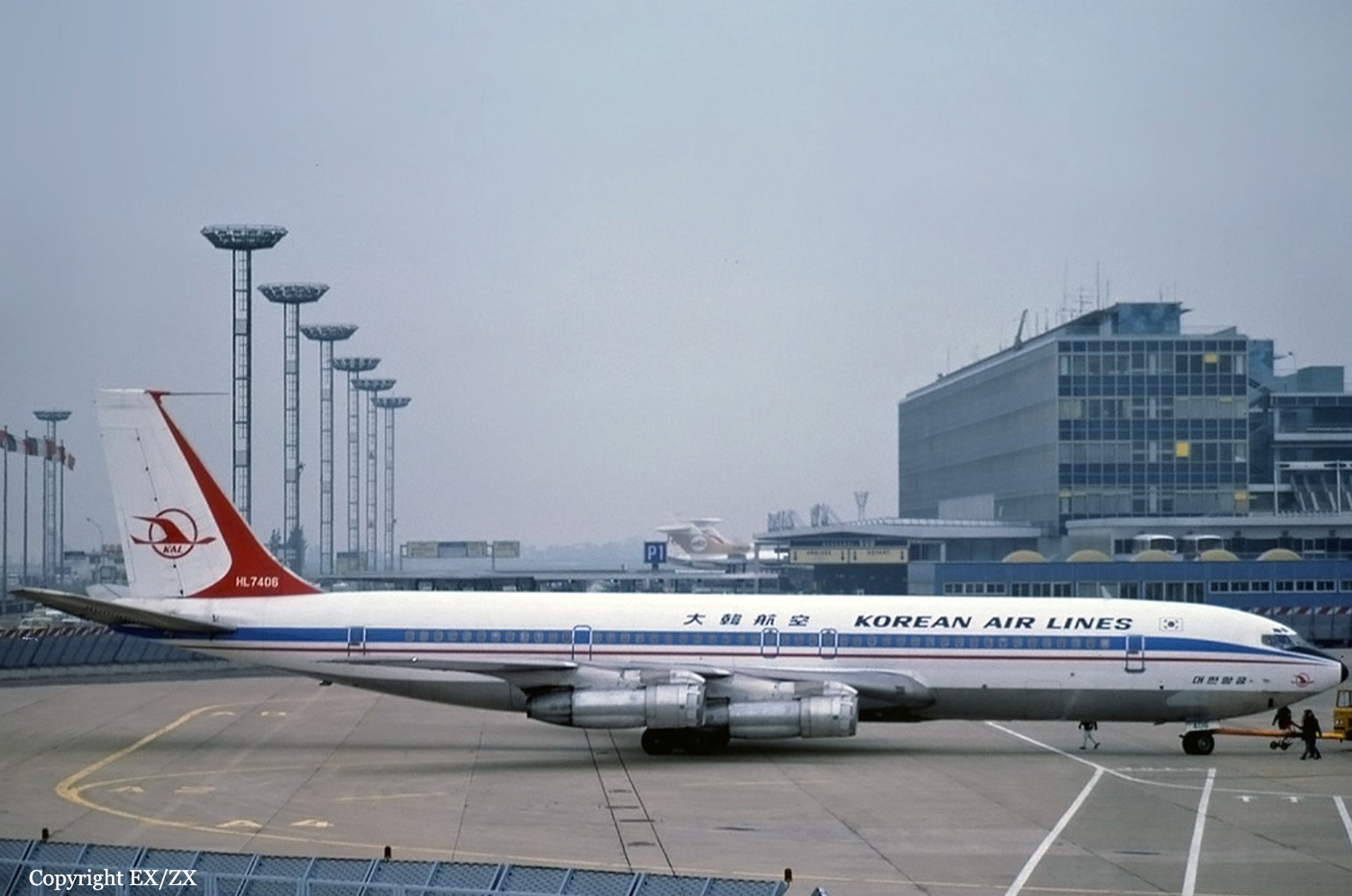
HL7406
Flight Phase:
Survivors:
No
Schedule:
Baghdad - Abu Dhabi - Bangkok - Seoul
MSN:
20522
YOM:
1971
Flight number:
KE858
Country:
Region:
Crew on board:
11
Crew fatalities:
Pax on board:
104
Pax fatalities:
Other fatalities:
Total fatalities:
115
Captain / Total flying hours:
11161
Captain / Total hours on type:
5416.00
Copilot / Total flying hours:
3882
Copilot / Total hours on type:
134
Aircraft flight hours:
36047
Aircraft flight cycles:
19941
Circumstances:
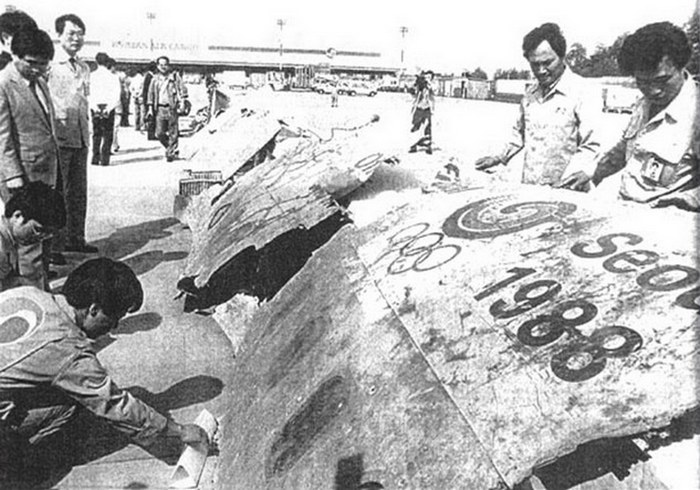
A Boeing 707-300 passenger plane, registered HL7406, was destroyed in an accident in the Indian Ocean, some 100 km off the coast of Myanmar. All 104 passengers and eleven crew members were killed. Korean Air flight 858 departed Baghdad, Iraq on a scheduled service to Seoul, South Korea. En route stops were planned at Abu Dhabi, UAE and Bangkok, Thailand. At 00:01 UTC Flight 858 departed Abu Dhabi, climbing to a cruising altitude of FL370. Last radio contact was at 05:01 UTC when the crew reported that they estimated reaching the TAVOY waypoint over the Andaman Sea at 05:22. Flight 858 was declared missing when it failed to arrive at the destination. On December 13, 1987 a local schooner found pieces of wreckage floating northwest off Tavoy, Myanmar. Korean Authorities, suspecting sabotage after the aircraft became missing, started checking on passengers who disembarked at Abu Dhabi and traced the suspects Mr.Hachiya Shinichi and Miss Hachiya Mayumi to Bahrain where they were apprehended while going through exit formalities at the airport. It was reported that they were found to be holding false Japanese Passports. While being held for interrogation, both committed suicide by taking poison capsules hidden in the cigarettes and Mr.Hachiya Shinichi died. Miss Hachiya Mayumi who survived the attempt was extradited to South Korea. It was reported that the passengers were found to be named Mr. Kim Sung-il and Miss Kim Hyon-hui of North Korean origin. For her role in the bombing Kim Hyun Hui was sentenced to death in March 1989. However, South Korean president Roh Tae-woo pardoned her in 1998.
Probable cause:
In flight explosion of time bomb planted in the aircraft by the two saboteurs disguised as passengers. Investigation revealed that the bomb consisted of a composition C4 type explosive hidden in a battery operated portable transistor radio which was used as a timing device. The timer was activated while they were awaiting embarkation at Baghdad Airport and set to go off 9 hours later. Together with the transistor radio, a liquor bottle containing liquid explosive (type PLX) was taken on board and placed in the overhead baggage rack above seat row n°7 in the forward cabin section of the economy class compartment where they were seated. These timed explosives were left in that place when they disembarked at Abu Dhabi.

Crash of a Boeing 747-244B in the Indian Ocean: 159 killed

Date & Time: Nov 28, 1987 at 0407 LT
Type of aircraft:
Operator:
Registration:
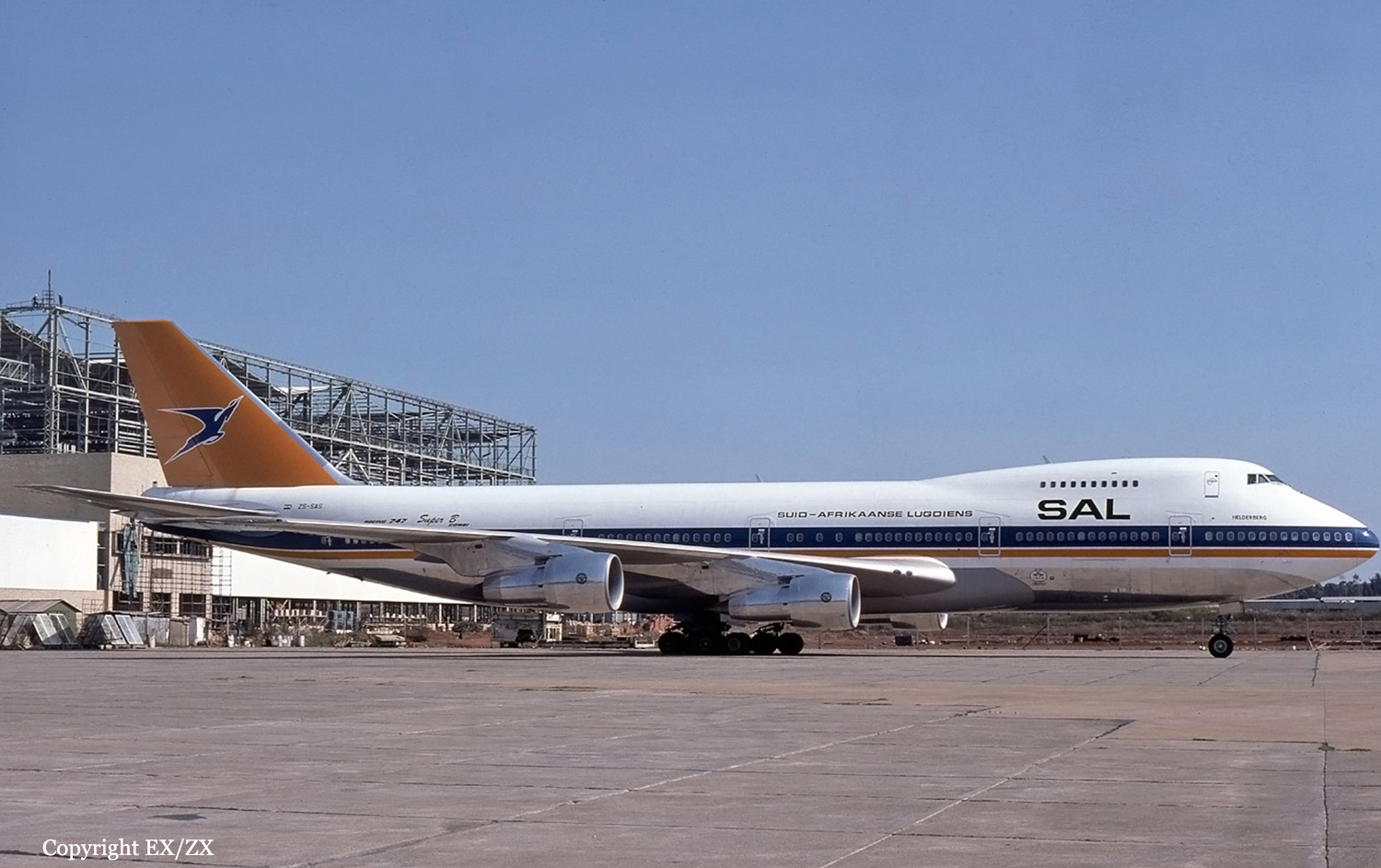
ZS-SAS
Flight Phase:
Survivors:
No
Schedule:
Taipei – Port Louis – Johannesburg
MSN:
22171
YOM:
1980
Flight number:
SA295
Country:
Region:
Crew on board:
19
Crew fatalities:
Pax on board:
140
Pax fatalities:
Other fatalities:
Total fatalities:
159
Captain / Total flying hours:
13843
Captain / Total hours on type:
3884.00
Copilot / Total flying hours:
7362
Copilot / Total hours on type:
4096
Aircraft flight hours:
26743
Aircraft flight cycles:
4877
Circumstances:
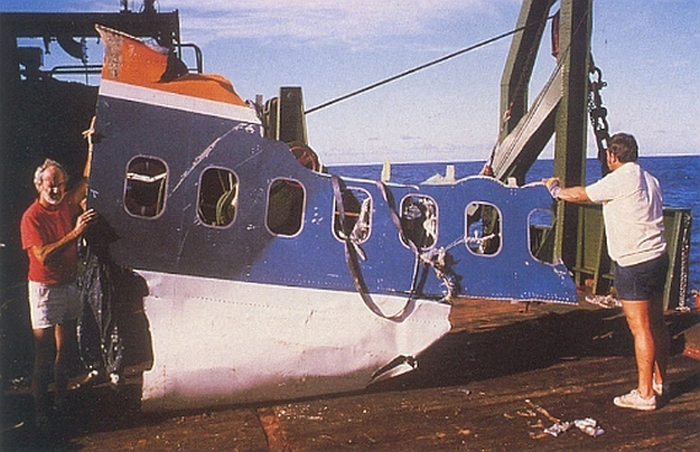
On November 27th 1987 flight SA295 was scheduled to depart from Taipei's Chiang Kai Shek Airport at 13:00 UTC for Mauritius' Plaisance Airport and Johannesburg, South Africa on a scheduled international air transport service. Due to adverse weather and the late arrival of a connecting flight the departure time was delayed and the airplane took off at 14:23 UTC with 149000 kg of fuel, 43225 kg of baggage and cargo, 140 passengers and a crew comprising 5 flight crew members and 14 cabin crew members. The calculated flight time was 10 hours 14 minutes. The take-off was normal. At 14:56 UTC the crew communicated with Hong Kong Radar and thereafter routine position reports were given to the flight information centres (FICs) at Hong Kong, Bangkok, Kuala Lumpur, Colombo, Cocos Islands and Mauritius. At 15:55 a routine report was made to the Operator's base at Johannesburg. The information given was that the airplane had taken off from Taipei at 14:23, was flying at FL310 and that the arrival time at Mauritius was estimated as 00:35 UTC. At about 22:30 the pilot called Mauritius FIC, using HF radio, and advised that the aircraft had been at position 070° East at 22:29 at FL350 and that the time at position 065° East was estimated as 23:12. At 23:13 the position report of 065° East at FL350 was given to Mauritius FIC. The estimated time of arrival (ETA) over position 060° East was given as 23:58. About 23:45 the master fire warning alarm sounded on the flight deck. Somebody, probably the pilot, inquired where the warning had come from and received the reply that it had come from the main deck cargo. The pilot then asked that the check list be read. Some 30 seconds later somebody on the flight deck uttered an oath. The pilot called Mauritius Approach Control at 23:49 and said that they had a smoke problem and were doing an emergency descent to FL140. The approach controller gave clearance for the descent and the pilot asked that the fire services be alerted. The controller asked if full emergency services were required to which the pilot replied in the affirmative. At 23:51 the approach controller asked the pilot for his actual position. The pilot replied: "Now we have lost a lot of electrics, we haven't got anything on the aircraft now". At 23:52 the approach controller asked for an ETA at Plaisance and was given the time of 00:30. At 23:52:50 the pilot made an inadvertent transmission when he said to the senior flight engineer: "Hey Joe, shut down the oxygen left". From this time until 00:01:34 there was a period of silence lasting 8 minutes and 44 seconds. From 00:01:34 until 00:02:14 the pilot inadvertently transmitted instructions, apparently to the senior flight engineer, in an excited tone of voice. Most of the phrases are unintelligible. At 00:02:43 the pilot gave a distance report as 65 nautical miles. This was understood by the approach controller to be the distance to the airport. In fact it was the distance to the next waypoint, Xagal. The distance to the airport at that point was approximately 145 nautical miles. At 00:02:50 the approach controller recleared the flight to FL50 and at 00:03:00 gave information on the actual weather conditions at Plaisance Airport, which the pilot acknowledged. When the approach controller asked the pilot at 00:03: 43 which runway he intended to use he replied one three but was corrected when the controller asked him to confirm one four. At 00:03:56 the controller cleared the flight for a direct approach to the Flic-en-Flac (FF) non-directional beacon and requested the pilot to report on approaching FL50. At 00:04:02 the pilot said: "Kay". From 00:08:00 to 00:30:00 the approach controller called the aircraft repeatedly but there was no reply. The aircraft crashed into the Indian Ocean at a position determined to be about 134 nautical miles North-East of Plaisance Airport. The accident occurred at night, in darkness, at about 00:07 UTC. The local time was 04:07. Within a few days drifting pieces of wreckage were found, but it took until January 28th, 1988 for the main wreckage field to be found on the Ocean floor, at a depth of 4400 meters. The cockpit voice recorder was recovered on 6 January 1989.
Probable cause:
Despite intensive investigation the Board was unable to find or conclude that fireworks or any other illegal cargo were carried in the aircraft. The accident followed an uncontrollable fire in the forward right pallet on the main deck cargo compartment. The aircraft crashed into the sea at high speed following a loss of control consequent on the fire.
Fire of an unknown origin had possibly:
1) incapacitated the crew;
2) caused disorientation of the crew due to thick smoke;
3) caused crew distraction;
4) weakened the aircraft structure, causing an in-flight break-up.;
5) burned through several control cables;
6) caused loss of control due to deformation of the aircraft fuselage.
Final Report:

Crash of a Cessna 208 Caravan I off Kaikoura: 2 killed

Date & Time: Nov 27, 1987 at 2355 LT
Type of aircraft:
Registration:
ZK-SFB
Flight Phase:
Flight Type:
Survivors:
No
Schedule:
Christchurch - Wellington
MSN:
208-0059
YOM:
1985
Country:
Region:
Crew on board:
1
Crew fatalities:
Pax on board:
1
Pax fatalities:
Other fatalities:
Total fatalities:
2
Circumstances:
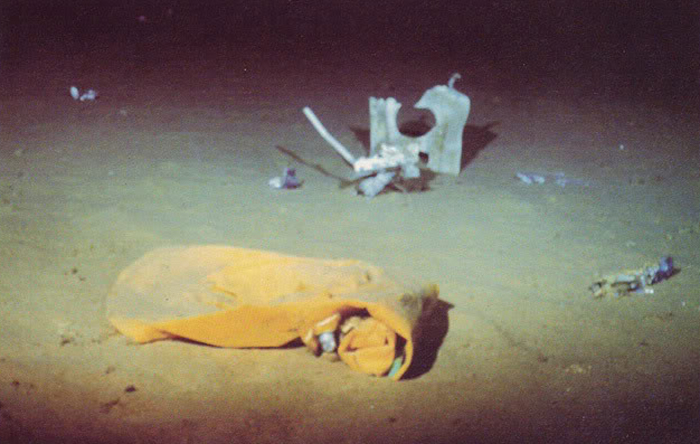
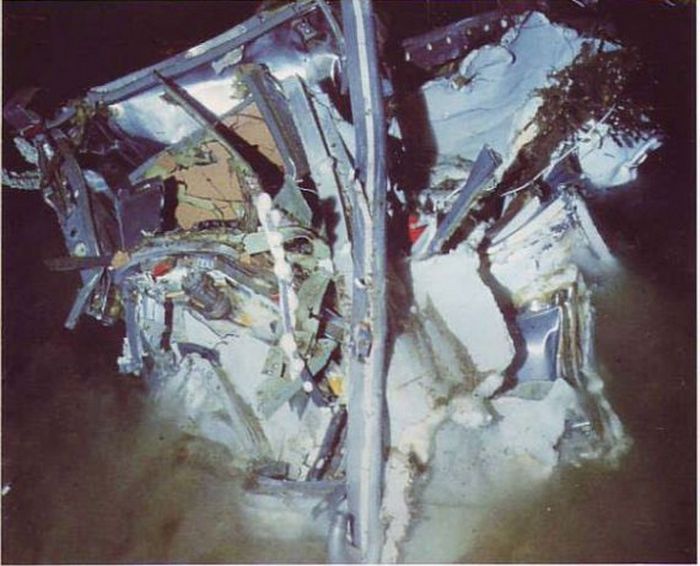
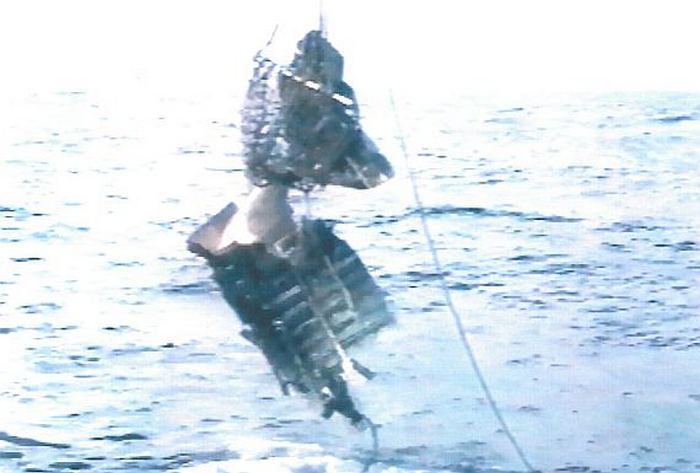
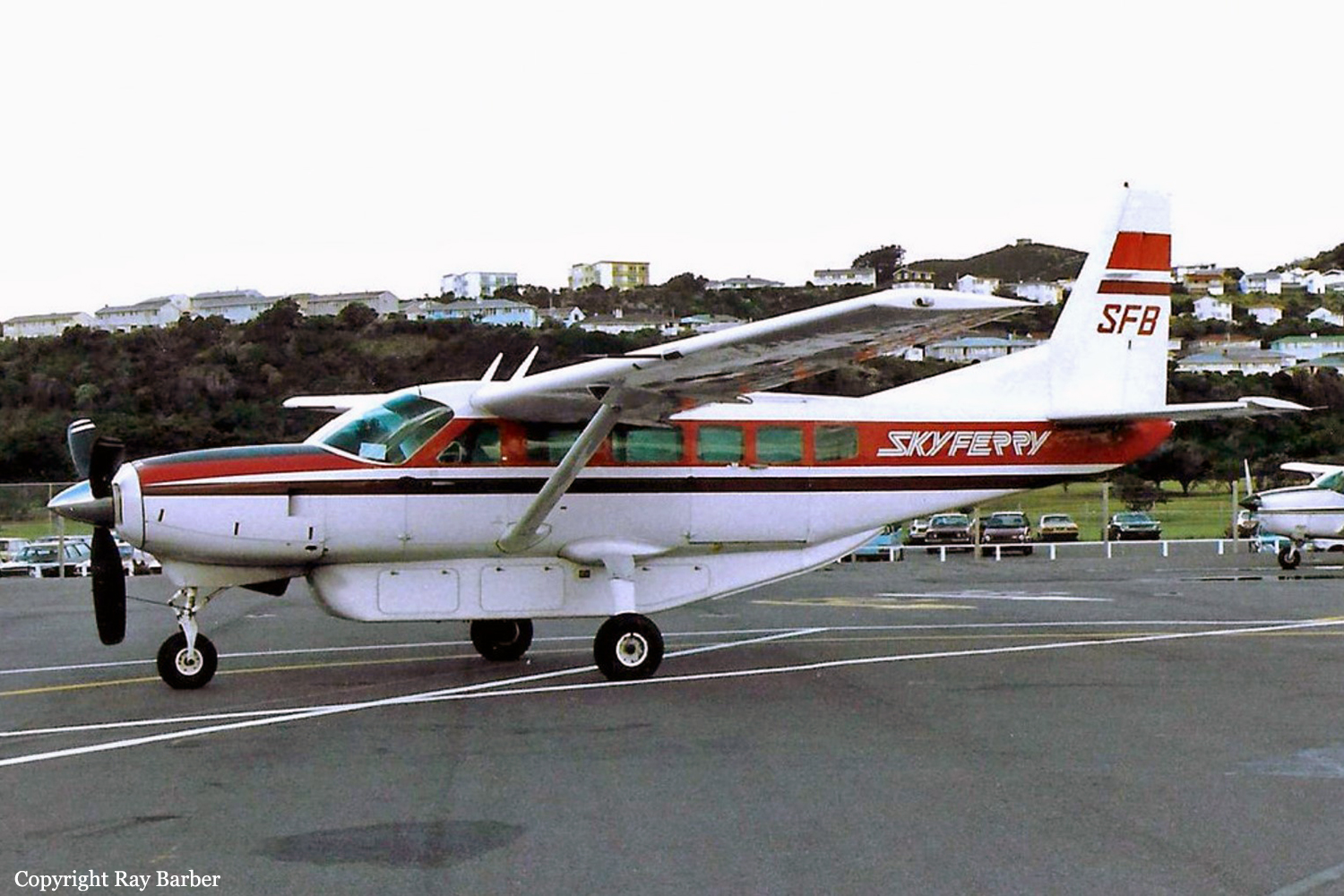
While cruising by night at an altitude of 11,000 feet on a cargo flight from Christchurch to Wellington, the pilot encountered icing conditions. The airplane went out of control, entered a dive and crashed in the sea off Kaikoura. Both occupants were killed.
Probable cause:
The following findings were reported:
- Icing conditions,
- The aircraft was not equipped with deicing systems,
- The pilot was tired due to a duty period more than 18 hours,
- The pilot loaded and unloaded more than 10 tons of cargo during the day,
- The pilot was soaked by rain while doing so because no foul weather gear was provided,
- The pilot did not have sufficient rest time,
- The pilot did not have a proper brake time and meal,
- The pilot was not properly trained concerning indoctrination course and suffered hypoxia in flight.