Crash of a Cessna 208B Grand Caravan in Viacha

Date & Time: Jul 10, 2001 at 1646 LT
Type of aircraft:
Operator:
Registration:
CP-2395
Flight Phase:
Survivors:
Yes
Schedule:
La Paz - Rurrenabaque
MSN:
208B-0842
YOM:
2000
Location:
Country:
Crew on board:
2
Crew fatalities:
Pax on board:
11
Pax fatalities:
Other fatalities:
Total fatalities:
0
Captain / Total flying hours:
2428
Captain / Total hours on type:
304.00
Copilot / Total flying hours:
18340
Copilot / Total hours on type:
18
Circumstances:
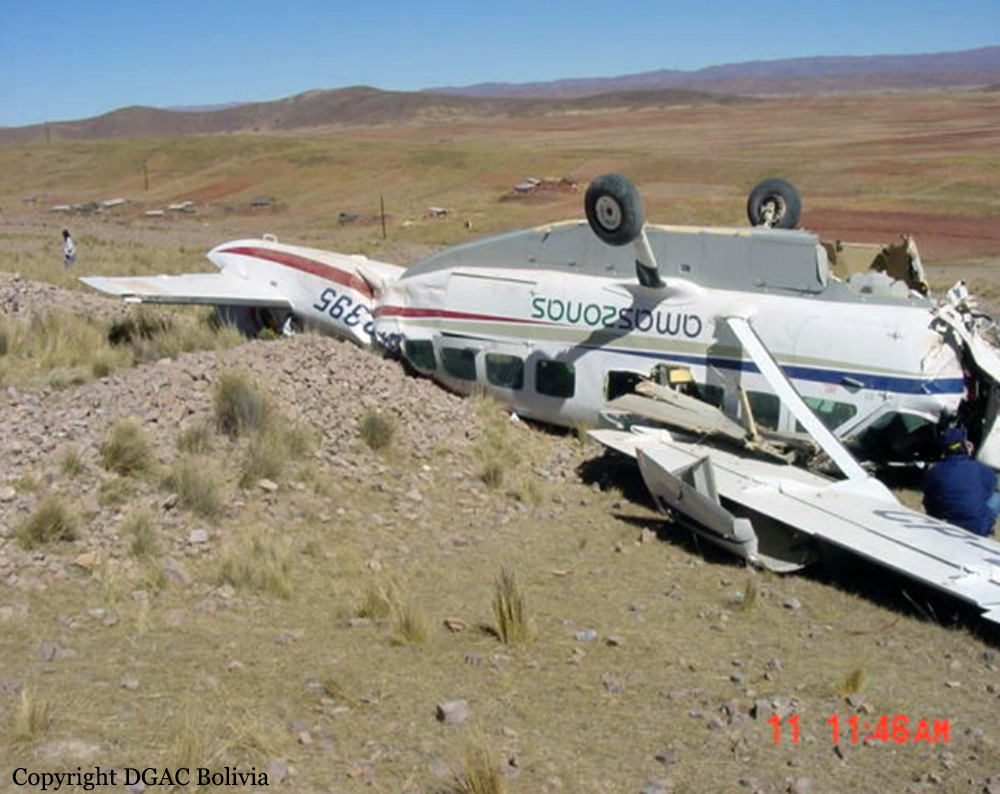
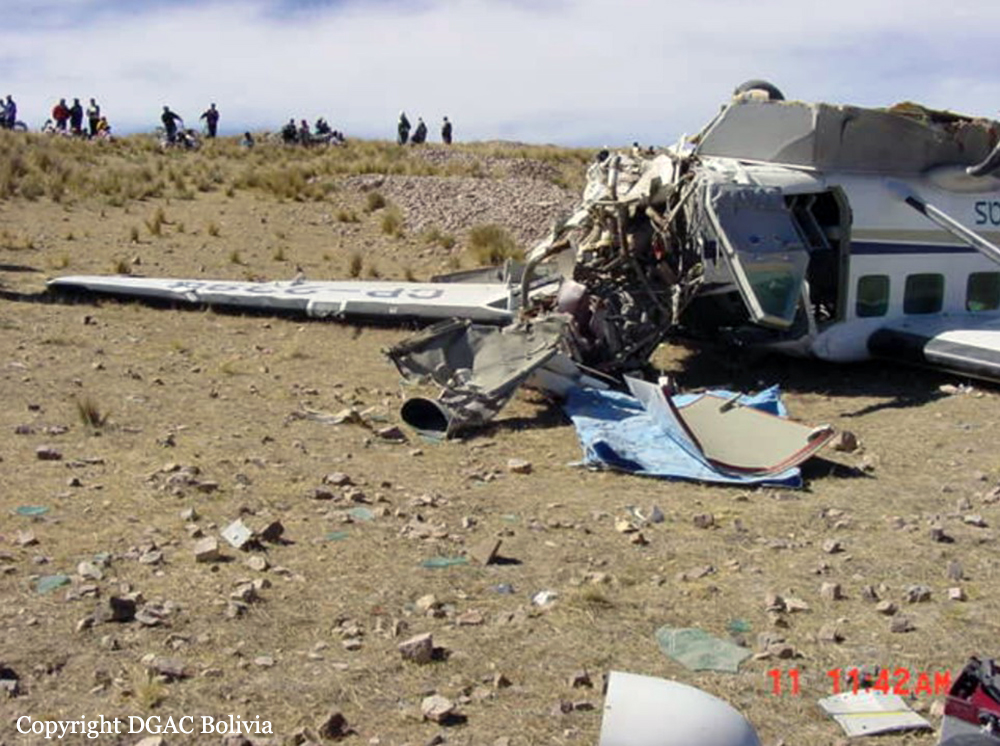
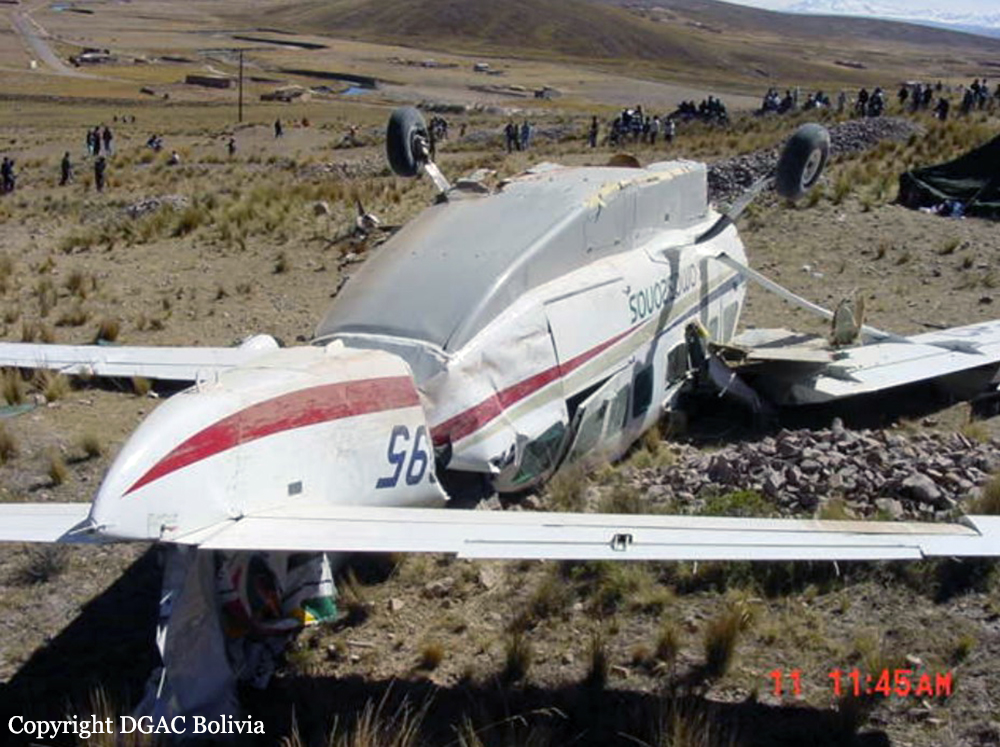
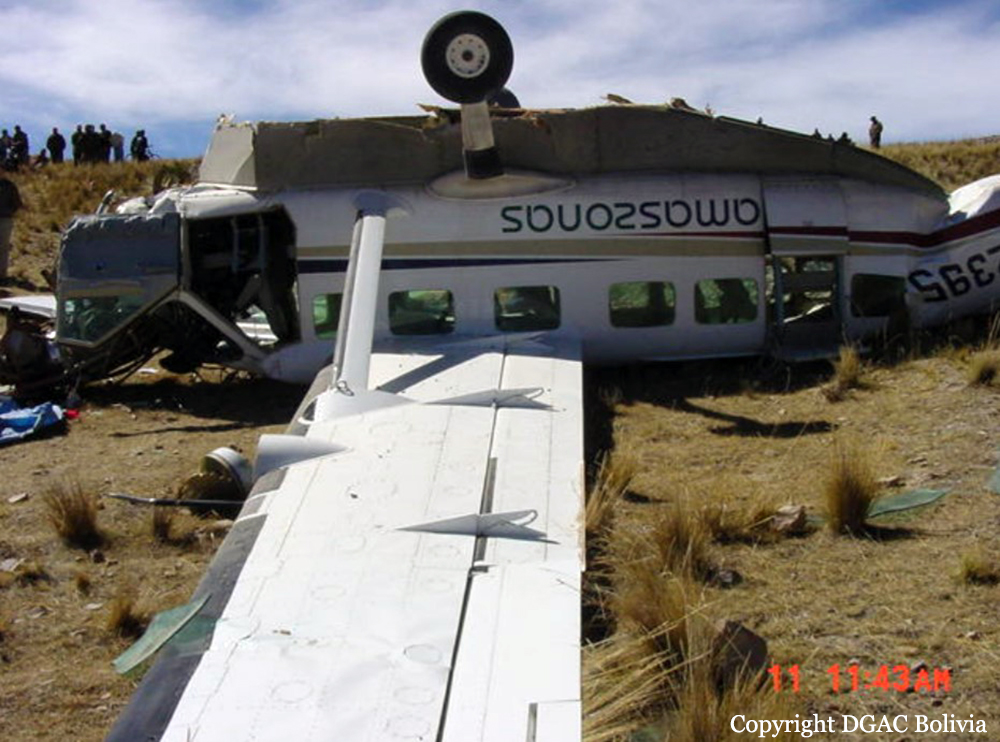
The single engine aircraft departed La Paz-El Alto Airport at 1637LT on a regular schedule flight to Rurrenabaque, carrying 11 passengers and two pilots. About six minutes later, while cruising at an altitude of 14,500 feet, the engine failed. The crew reduced his altitude and attempted an emergency landing when the aircraft crash landed in a field and came to rest upside down. Both pilots and two passengers were seriously injured while nine other occupants were slightly injured. The aircraft was destroyed.
Probable cause:
The probable cause of the accident was the failure of the engine due to the fracture and separation of all turbine compressor blades due to factors undetermined.
Final Report:
Crash of a Pilatus PC-12/45 in the Sea of Okhotsk

Date & Time: Jul 8, 2001 at 1345 LT
Type of aircraft:
Operator:
Registration:
N660NR
Flight Phase:
Survivors:
Yes
Schedule:
Hakodate - Magadan
MSN:
356
YOM:
2000
Country:
Region:
Crew on board:
1
Crew fatalities:
Pax on board:
3
Pax fatalities:
Other fatalities:
Total fatalities:
0
Circumstances:
On July 8, 2001, approximately 1345 local time (0245UTC), a Pilatus PC-12/45, N660NR, registered to a US private owner, operated by Jeflyn Aviation, Inc. doing business as Access Air, and being flown by a US certificated airline transport rated pilot, was presumed destroyed following a ditching in the Sea of Okhotsk, Western Pacific Ocean. The pilot sustained minor injuries and the three remaining Japanese passengers were uninjured. Instrument meteorological conditions prevailed, and an IFR flight plan had been filed and activated. The flight, which was returning to the United States following a round-the-world trip, was being operated under 14CFR91 as a business trip. The aircraft had originated from Hakodate, Japan, departing 0910 hours local time and was destined for Magadan, Russia. The pilot reported in a telephonic interview that the aircraft was established in cruise at 8,100 meters altitude when he felt a vibration followed by a rapid increase in the engine's Turbine Temperature Indication (TTI). He reported that the TTI reached 1144 degrees during which there was a compressor stall. He shut the engine down, feathered the propeller, and initiated a power off emergency descent. During the emergency descent the pilot radioed a mayday on 121.5 MHz, set his transponder to code 7700, and manually activated the emergency locator beacon. The aircraft descended through multiple cloud layers during which the pilot and passengers prepared for the ditching. The pilot reported that upon breaking through the bottom of the last overcast layer, at 100 feet above the water, he encountered swells of approximately 8-12 feet height. He ditched the aircraft on the crest of a swell and the aircraft came to a stop floating in an upright, level attitude. All four occupants exited the aircraft through the main cabin door into a life raft. Over a period of several hours the occupants lost sight of the floating aircraft and after about 15 hours they were picked up by a Russian container ship and airlifted to Sakhalin Island.
Probable cause:
Engine failure for unknown reasons.

Crash of a De Havilland DHC-2 Beaver near Nestor Falls: 1 killed

Date & Time: Jul 7, 2001 at 1530 LT
Type of aircraft:
Registration:
C-FNFO
Flight Phase:
Survivors:
No
Schedule:
Kakabikitchiwan Lake - Aremis Lake
MSN:
819
YOM:
1955
Country:
Crew on board:
1
Crew fatalities:
Pax on board:
0
Pax fatalities:
Other fatalities:
Total fatalities:
1
Captain / Total flying hours:
1500
Captain / Total hours on type:
1300.00
Aircraft flight hours:
11843
Circumstances:
A de Havilland DHC-2 Beaver seaplane, registration C-FNFO, serial number 819, departed from Kakabikitchiwan Lake, Ontario, on a visual flight rules flight for Aremis Lake with only the pilot on board. Shortly after take-off, the aircraft was observed flying northbound at a very low altitude above Sabaskong Bay with the engine operating at a high power setting. The aircraft started to climb and bank to the left. The right wing struck the lower of two electrical wires strung across a channel between two islands. The aircraft was destroyed; the pilot sustained fatal injuries.
Probable cause:
Findings as to Causes and Contributing Factors:
1. The power line running overhead the channel was invisible, except at very short range, and was not marked to indicate its presence.
2. The pilot was flying at a very low altitude and likely did not see the power line.
Findings as to Risk:
1. The Standards Obstruction Markings Manual allows for discretion in deciding whether to assess obstructions, making it possible for some obstructions to not be assessed and, consequently, to not be marked.
Final Report:

Crash of a Cessna 208B Grand Caravan off Fort Lauderdale

Date & Time: Jul 6, 2001 at 1900 LT
Type of aircraft:
Operator:
Registration:
N812MA
Flight Phase:
Flight Type:
Survivors:
Yes
Schedule:
Freeport – Fort Lauderdale
MSN:
208B-0553
YOM:
1996
Crew on board:
2
Crew fatalities:
Pax on board:
0
Pax fatalities:
Other fatalities:
Total fatalities:
0
Captain / Total flying hours:
3700
Captain / Total hours on type:
1200.00
Aircraft flight hours:
5936
Circumstances:
While in cruise flight at 6,500 feet, the airplane's engine jolted and made a whining noise. The propeller stopped and feathered. Attempts to restore engine power were unsuccessful. An emergency was declared, and the airplane was ditched into the Atlantic Ocean 20 miles east of Ft. Lauderdale, Florida. The airplane was not recovered for post-crash examination.
Probable cause:
The undetermined malfunction of the propeller system.
Final Report:

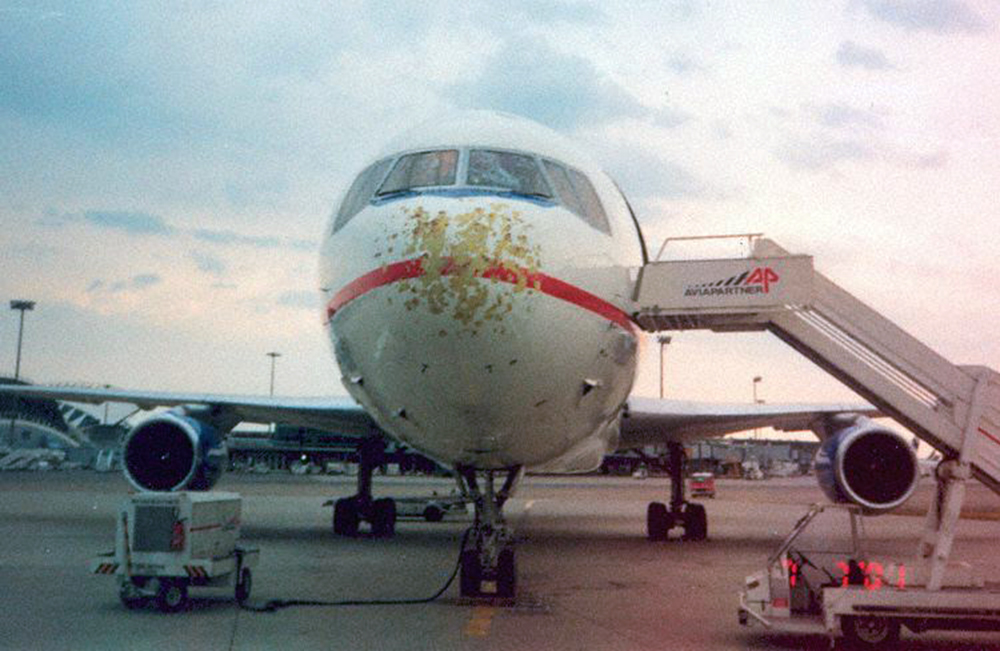
Serious incident with a Lockheed L-1011-385-1-14 TriStar 150 in Lyon

Date & Time: Jul 6, 2001 at 1856 LT
Type of aircraft:
Operator:
Registration:
C-FTNA
Flight Phase:
Survivors:
Yes
Schedule:
Lyon – Berlin
MSN:
1019
YOM:
1972
Flight number:
TS906
Country:
Region:
Crew on board:
14
Crew fatalities:
Pax on board:
197
Pax fatalities:
Other fatalities:
Total fatalities:
0
Captain / Total flying hours:
22000
Captain / Total hours on type:
2600.00
Copilot / Total flying hours:
14300
Copilot / Total hours on type:
180
Aircraft flight hours:
66223
Aircraft flight cycles:
24979
Circumstances:
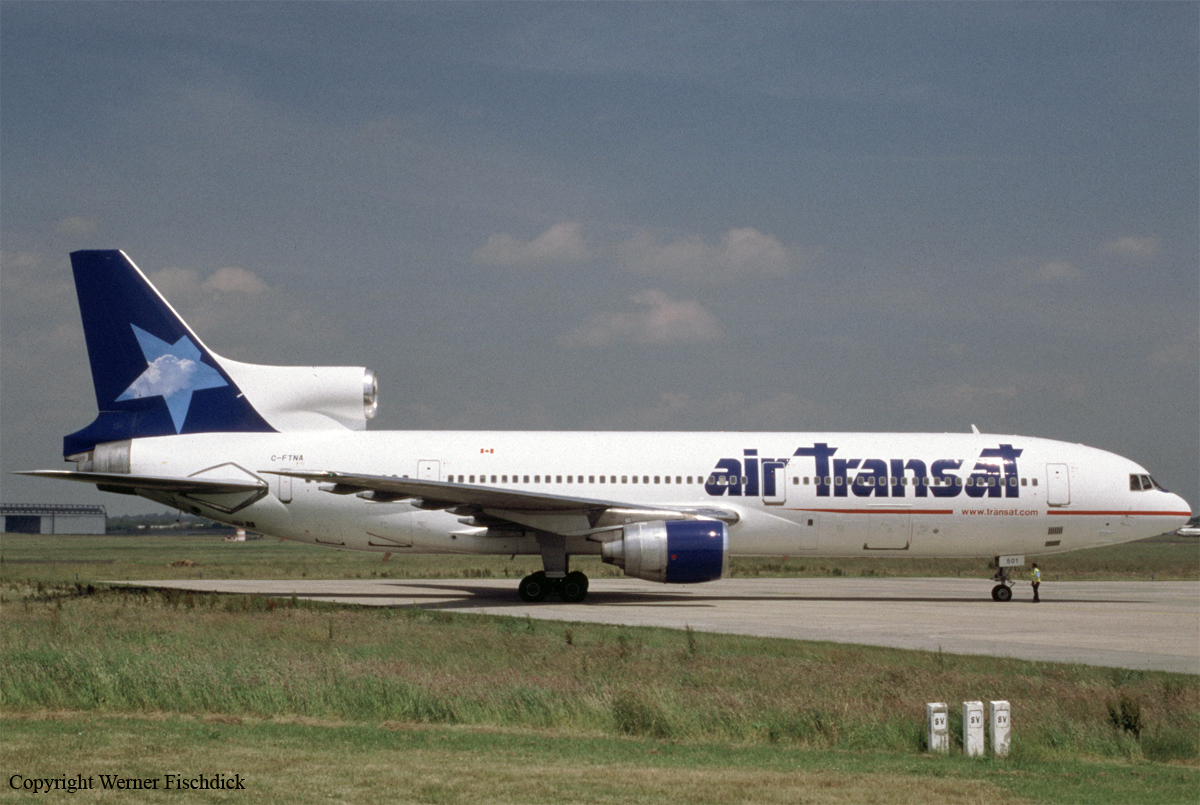
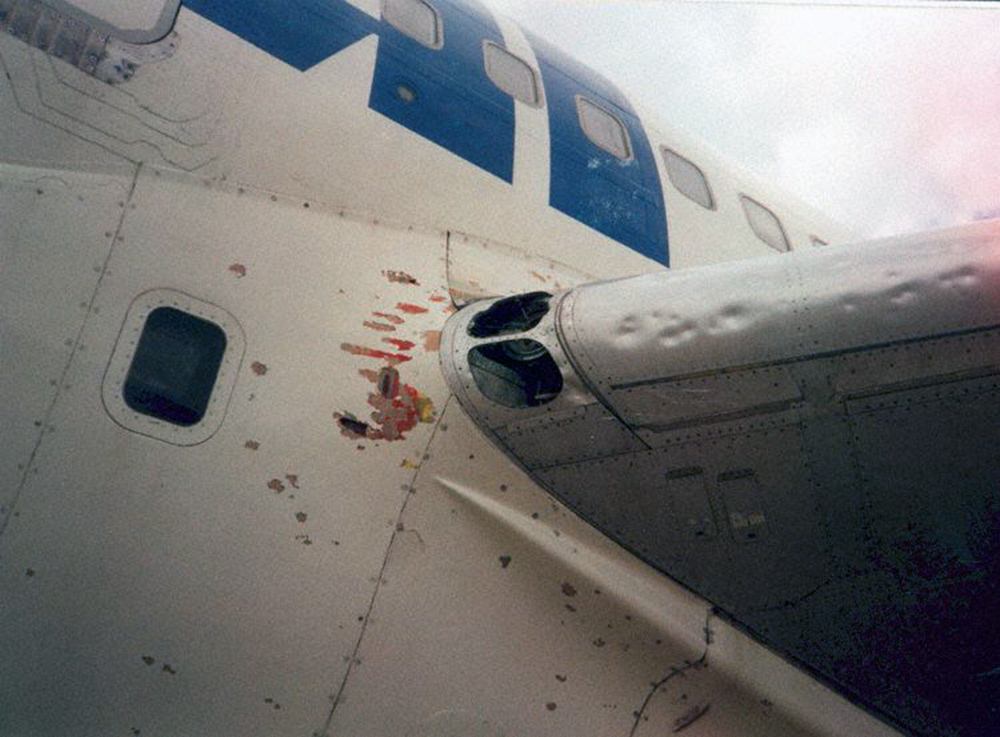
On 6 July 2001 at 18:46, a Lockheed TriStar operated by the Canadian airline Air Transat took off from runway 18R at Lyon Saint-Exupéry Airport (LYS), France for flight TSC906 to Berlin-Schönefeld Airport (SXF) with 14 crew members and 197 passengers. At 18:50 the crew contacted Marseilles and requested a heading of 350 degrees to avoid the area of active clouds that the crew had noticed on their weather radar. The controller cleared the flight to climb to FL160, at the requested course. The flight was cleared to climb further to FL190 and at 18:55 instructed to turn right to the MOREG reporting point. During the turn towards the reporting point, while the autopilot was connected, the crew saw that they were approaching an active cell. The captain, who was PNF, instructed the copilot to tighten the turn, which reached a 45° bank angle. At 18:56 Marseille transferred the flight to Geneva Control. It was during this first turn to MOREG that the first burst of hail hit the plane for a duration of one to two seconds. Then a second hailstorm struck the plane, with a duration of 10 to 15 seconds. At that moment the captain took control of the aircraft putting the airplane in a 60° bank angle. The plane lost 500 feet altitude. The crew did not declare an emergency but advised ATC of his intention to turn back to Lyon. The captain asked the flight engineer to depressurize the cabin, which was conducted during descent. There was no rapid depressurization. The windshield of the cockpit was badly damaged. The copilot had the best visibility and carried out the final approach and landing at Lyon-Saint Exupery. The plane landed safely at 1916LT and all 211 occupants evacuated safely.
Probable cause:
This accident occurred due to the flight of the aircraft in a very active cloud area whose color symbolism on the weather radar on board was not representative of the severity of the phenomena encountered. Although the crew chose to avoid the most active sector of this storm, it nevertheless flew through an area whose color representation on the board radar showed no real activity.
Final Report:

Crash of a Partenavia P.68C Victor in Ikorodu: 2 killed

Date & Time: Jun 16, 2001
Type of aircraft:
Registration:
5N-ATE
Flight Phase:
Survivors:
Yes
Schedule:
Lagos – Calabar
MSN:
244
YOM:
1981
Location:
Country:
Region:
Crew on board:
1
Crew fatalities:
Pax on board:
2
Pax fatalities:
Other fatalities:
Total fatalities:
2
Circumstances:
Few minutes after takeoff from Lagos-Murtala Muhammed Airport, en route to Calabar, the pilot informed ATC about engine problems and was cleared to return. He apparently attempted an emergency landing when the aircraft struck a tree and crashed in Igbogbo, in the southern suburb of Ikorodu, about 25 km east of Lagos Airport. A passenger was seriously injured while the pilot and the second passenger were killed.

Crash of a Mitsubishi MU-2B-20 Marquise in Cerrillos: 2 killed

Date & Time: Jun 10, 2001 at 1221 LT
Type of aircraft:
Operator:
Registration:
N187AF
Flight Phase:
Flight Type:
Survivors:
No
Schedule:
Peoria – Santa Fe
MSN:
187
YOM:
1970
Crew on board:
1
Crew fatalities:
Pax on board:
1
Pax fatalities:
Other fatalities:
Total fatalities:
2
Captain / Total flying hours:
800
Captain / Total hours on type:
4.00
Aircraft flight hours:
6500
Circumstances:
The pilot was maneuvering the airplane south of the airport preparing to make a VFR approach. Witnesses observed the airplane in a right spin. NTAP data showed the airplane to be well above stall speed before disappearing from radar. Examination of the radar data revealed that in 6 seconds, ground speed dropped 31 knots, from 200 knots to 169 knots, and altitude dropped 440 feet, from 11,760 feet to 11,320 feet (4,400 feet per minute). In the next 6 seconds, ground speed dropped another 31 knots, from 169 knots to 138 knots, and altitude dropped 1,020 feet, from 11,320 feet to 10,300 feet (10,200 feet per minute). According to the manufacturer, if the throttles were to be brought back into Beta (flat pitch) range, it is possible that one propeller could go into Beta an instant before the other propeller. If this were to happen, the airplane would instantly snap roll and enter a spiral. The pilot had received an estimated 4 hours of dual instruction in the airplane.
Probable cause:
The pilot's loss of aircraft control inflight for reasons undetermined. Contributing factors were the pilot's inadequate transition/upgrade training and his total lack of experience in aircraft make/model.
Final Report:

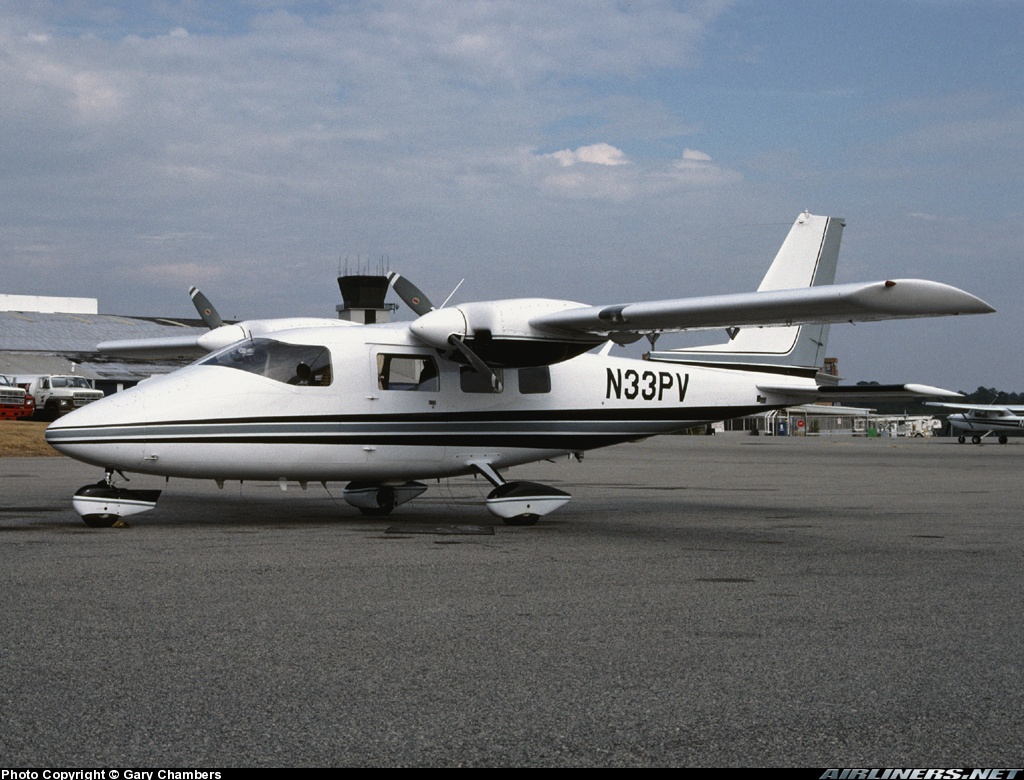
Crash of a Partenavia P.68TC in Gratwich

Date & Time: Jun 3, 2001 at 1317 LT
Type of aircraft:
Operator:
Registration:
N33PV
Flight Phase:
Flight Type:
Survivors:
Yes
Schedule:
Meaux – Liverpool – Henstridge
MSN:
347-33/TC
YOM:
1984
Region:
Crew on board:
1
Crew fatalities:
Pax on board:
4
Pax fatalities:
Other fatalities:
Total fatalities:
0
Captain / Total flying hours:
695
Captain / Total hours on type:
159.00
Circumstances:
The five occupants left Guernsey on 24 May and flew direct to Vannes in Normandy. The pilot routinely cruised at power settings of 2,350 RPM and 32 inches Manifold Pressure giving a speed of 140 KIAS. The flight to Vannes would have taken some 44 minutes in still air and records recovered from the aircraft indicated that it lasted 50 minutes. The aircraft was parked at Vannes for a few days on level ground. No fuel was uplifted before leaving Vannes and the aircraft departed on 31 May to fly to Meaux on the eastern outskirts of Paris. The records indicate that this 254 nm flight lasted 2 hours 5 minutes. The aircraft was parked on level ground at Meaux for a few days. On the morning of 3 June, the day of the accident, the owner taxied the aircraft to the aero club's fuel pumps at Meaux to have the fuel tanks replenished. She believes she may have dipped the tanks before refuelling began but she could not remember the resultant quantities. Whilst the aircraft was being refuelled, the pilot left its vicinity and went into the club premises to file her flight plan, check the weather and pay the fuel and airport charges. The fuel receipt was completed for 157 litres of 100LL AVGAS When the refuelling operator had finished filling the left wing tank he moved towards the right wing but received instructions from a member of the pilot's family that there was no need to refuel the right wing tank. A different member of the family stated, soon after the accident, that this was because the right fuel tank gauge was indicating 2/3 full. Shortly afterwards the pilot returned to the aircraft. She did not dip the tanks after refuelling. On leaving Meaux the pilot recalled that the right tank gauge indicated "almost full" whilst the left tank gauge indicated "a bit less". Her intentions were to fly from Meaux to the airstrip near Liverpool where three persons would disembark and she would then return to Henstridge. There were no refuelling facilities at the Liverpool landing strip and she planned to complete both legs without refuelling. She did so on the basis that the aircraft's endurance on full tanks was about 6 hours and she planned to be airborne for less than this. (The still air flight time was later calculated to be 41/4 hours and the prevailing winds were westerly). The aircraft departed Meaux at 1020 hrs and was flown uneventfully and in VMC conditions towards Liverpool via Compiegne, Abbeville, Lydd, Clacton and Cambridge. The autopilot was disengaged throughout the flight and the pilot could not recall using abnormal amounts of rudder or roll control (the aircraft had no aileron trim). Specifically, she was not aware of any marked imbalance in roll or any abnormal fuel gauge readings. At 1246 hrs when the aircraft was at 3,500 feet altitude and south of Leicester the pilot contacted East Midlands Approach and requested a Flight Information Service en-route to the Lichfield NDB. At 1312 hrs she transmitted a Mayday message on the East Midlands frequency stating that she had "lost" the right engine. The controller responded with information that the nearest airfield was Tatenhill in her six o'clock at about 10 miles range. The pilot turned to the right and took-up a south-westerly track towards Tatenhill. About one minute later, when asked to confirm her altitude, the pilot reported "I HAVE NO ENGINES NOW" followed by "TO DO A FORCED LANDING PAPA VICTOR, OH NO ITS GOING AGAIN". The controller continued providing vectors to Tatenhill whilst his assistant briefed Tatenhill's radio operator and West Drayton's Distress and Diversion cell on the developing situation. At 1315:40 hrs, when the aircraft was 10 miles northwest of Tatenhill at 2,800 feet altitude, the pilot reported "NO ENGINES ... W'ELL HAVE TO FIND A FIELD". The last recorded RTF message from the pilot at 1316:50 hrs was "I HAVE A HI... HILL ERM A FIELD ON A". The pilot was heavily sedated in hospital for some time after the accident and she could remember little of the final stages of the glide approach. The aircraft passed low beside a farmhouse and crash-landed in a field of soft earth with a significant up-slope in the landing direction.
Probable cause:
The accident arose partly through significantly asymmetric fuel quantities in the two wing tanks before the aircraft took off. The pilot was critically injured in the accident and heavily sedated for some time afterwards, which may explain why she could remember few details of the refuelling process at Meaux. Because she left the aircraft during the refuelling operation, she may have been unaware that only the left tank had been replenished. A representative of the flying club at Meaux stated that the club accepted payment for fuel only by French cheque or in cash, and that the pilot paid in cash and appeared to spend all her remaining French currency. However, after paying all the charges at Meaux, the pilot's family had several hundred Francs and some French currency cheques with them and consequently, the inability to pay for more fuel was not an issue. Moreover, no explanation was offered as to how a pilot could pay for 157 litres of fuel before it had been delivered without the refueller receiving instructions to deliver that quantity. The pilot could not remember her instructions to the refueller but her instructions to a family member who remained with the aircraft were that if the left tank was between one half and two thirds full, the right tank was to be filled to within two inches of the filler neck. The pilot now believes that there may have been some confusion between the identification of 'left' and 'right' tanks. Nevertheless, if the fuel tank quantities were similar before the refuelling, it is surprising that the pilot was unaware of any tendency to roll towards the heavier left wing after take-off. Moreover, it is also surprising that the fuel gauges, which worked correctly when tested, did not give early warning of low fuel contents in one tank. The loss of power from the right engine was consistent with exhaustion of the fuel supply from the right wing tank which had not been replenished since the aircraft left Guernsey. Had it not been for the mis-positioned fuel selector valve, the pilot should have had ample fuel to land safely at Tatenhill on one engine, a procedure which she had been adequately trained to accomplish. This option was thwarted when air from the empty right tank reached the left engine. At that moment the left engine began to run intermittently and ultimately the pilot had no option but to execute a forced landing. The pilot chose a brown field in which to land because she feared the aircraft might turn over if she landed in a field of standing crop. The upward slope of the field, the soft earth and the 'clean' wing configuration all contributed to a very heavy forced landing. The pilot did not remember feathering the right propeller (it had been feathered) and she could not explain why she had touched down with the flaps retracted. Nevertheless, the tone of the pilot's voice on the radio suggested that she was coping well with an unpleasant and unforeseen situation. The East Midlands air traffic controller's performance was exemplary.
Final Report:

Crash of an Antonov AN-2 off Volzhsky: 3 killed

Date & Time: Jun 2, 2001
Type of aircraft:
Operator:
Flight Phase:
Survivors:
No
Country:
Region:
Crew on board:
1
Crew fatalities:
Pax on board:
2
Pax fatalities:
Other fatalities:
Total fatalities:
3
Circumstances:
The single engine aircraft was engaged in a local skydiving mission in the region of Volgograd. After some of the skydivers jumped out, the pilot decided to return to his departure point and two passengers remained in the cabin. For unknown reasons, the pilot started a quick descent when, at an altitude of 1,000 metres, he lost control of the airplane that entered a dive and crashed at a speed of 310 km/h in the Akthuba River located near Volzhsky. The aircraft was destroyed and all three occupants were killed.
Probable cause:
For unknown reasons, the pilot initiated a rapid descent when, apparently, the passenger who was seating on the copilot seat (and was not wearing his seatbelt), fell on the control column, causing the aircraft to become uncontrollable.

Crash of a Casa-Nurtanio CN235-100M (IPTN) near Akçadağ: 34 killed

Date & Time: May 16, 2001 at 1315 LT
Operator:
Registration:
086
Flight Phase:
Flight Type:
Survivors:
No
Schedule:
Diyarbakir – Ankara
MSN:
C-086
YOM:
1995
Country:
Region:
Crew on board:
6
Crew fatalities:
Pax on board:
28
Pax fatalities:
Other fatalities:
Total fatalities:
34
Circumstances:
The airplane departed Diyarbakir Airport at 1250LT on a flight to Ankara, carrying 28 passengers and six crew members on behalf of the 2nd Tactical Aerial Force. About 25 minutes into the flight, while cruising in poor weather conditions, the crew declared an emergency and elected to divert to Malatya-Erhaç Airport. Shortly later, the airplane entered an uncontrolled descent, rolled to the left, completed three successive barrels then crashed in an apricot tree plantation located near Akçadağ. The airplane was totally destroyed and all 34 occupants were killed. The loss of control occurred in poor weather conditions (rain and hail) while the airplane was cruising at an altitude of 17,000 feet and at a speed of 444 km/h.
Crew:
Maj Lütfü Ceylan, pilot,
Lt Murat Erdeveci, pilot,
Lt Yılmaz Tekgül, pilot,
Cpt Hakan Bizrelli,
Lt Mahir Turan, pilot,
Yilmaz Gulhan.
Passengers:
Lt Levent Sahin,
Halil Helvacioğlu,
Ümit Basaran,
Nadir Turkmène,
Mikail Altıntas,
Hasan Ersoy,
Turan Kalin,
Zeki Çınar,
Sudi Doruk,
Mehmet Özden,
Ebubekir Çakıcı,
S/Sgt Yılmaz Aydın,
S/Sgt Mahmut Öner,
Zahit Çelik,
Garçon Saadetin,
Sgt Tuncay Urhan,
Sgt Ferhat Öztürk,
Sgt Ersin Bartan,
Sgt Bulent Haluk Demir,
Sgt Isa Turkmène,
Pvt Halit Güney,
Pvt Erdal Şimşek,
Pvt Aydın Uçar,
Pvt Mutlu Kaymakçı,
Pvt Mehmet Ali Karabudak,
Nedim Akyol,
Şefik Ayaydın,
Pvt Atakan Caran.