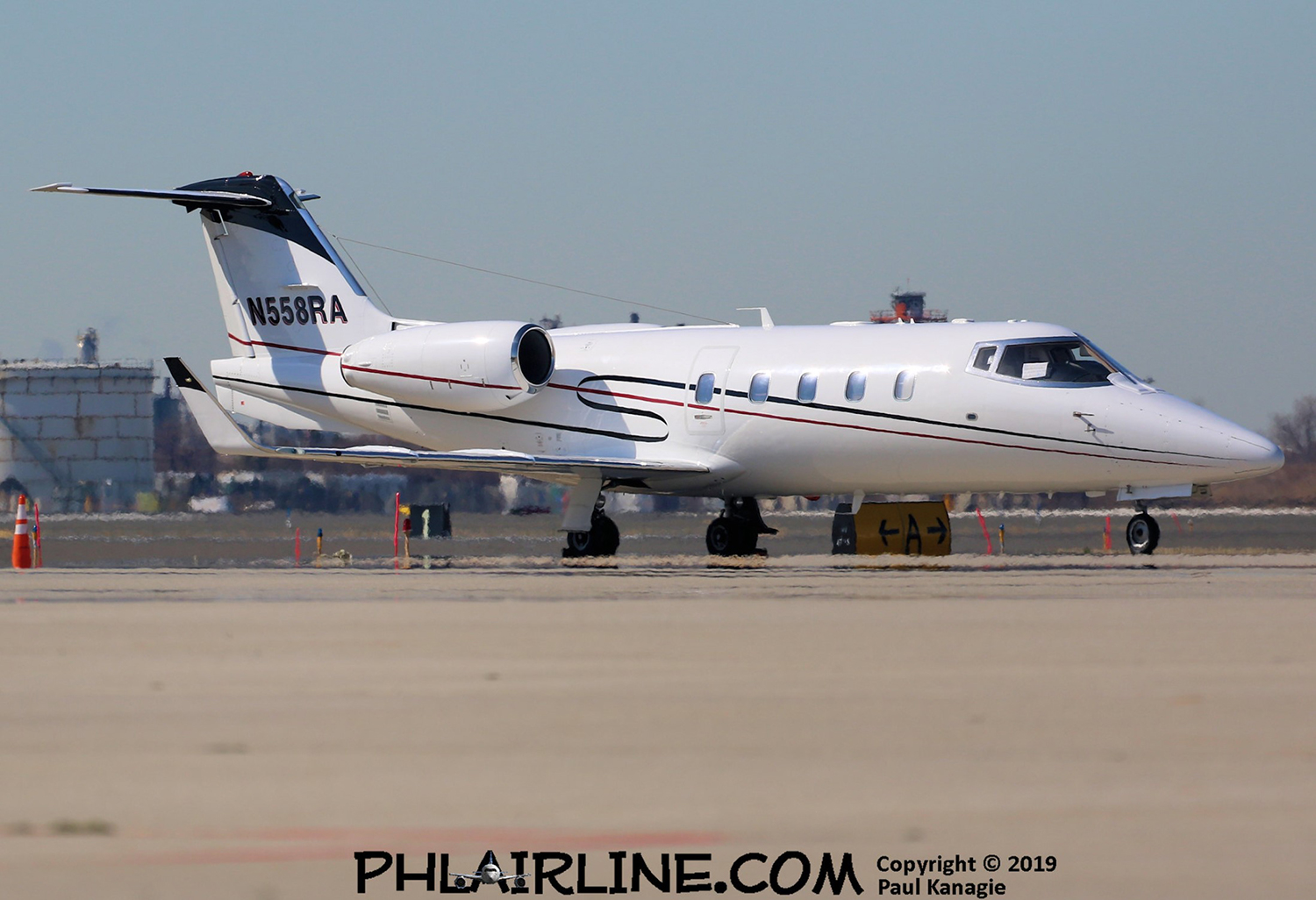
Crash of a Learjet 55 Longhorn in Livingston

Date & Time: Jan 11, 2024 at 0837 LT
Type of aircraft:
Operator:
Registration:
N558RA
Flight Type:
Survivors:
Yes
Schedule:
Pontiac - Livingston
MSN:
55-086
YOM:
1983
Flight number:
RAX698
Crew on board:
2
Crew fatalities:
Pax on board:
0
Pax fatalities:
Other fatalities:
Total fatalities:
0
Captain / Total flying hours:
31800
Captain / Total hours on type:
800.00
Copilot / Total flying hours:
1726
Copilot / Total hours on type:
9
Aircraft flight hours:
14135
Circumstances:
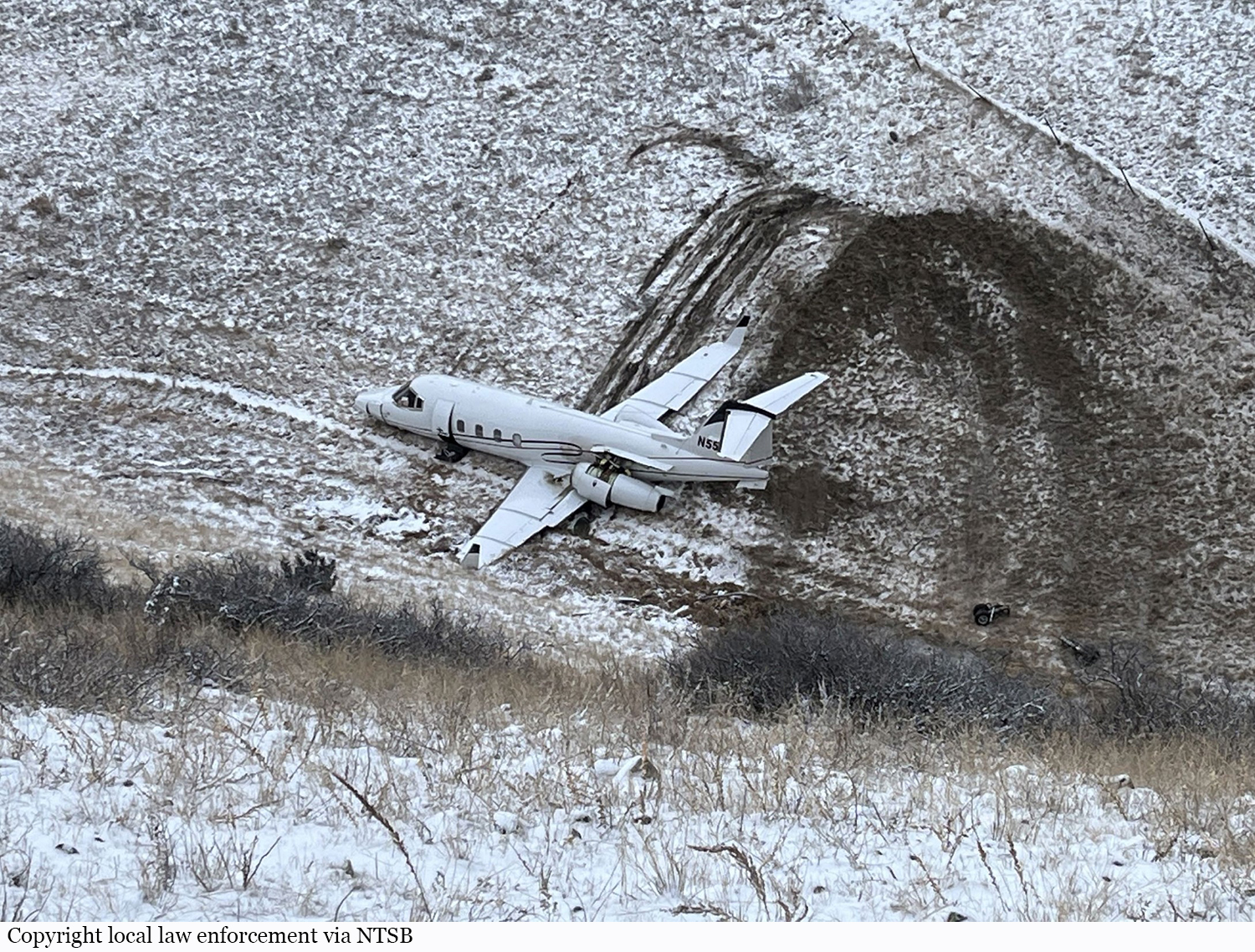
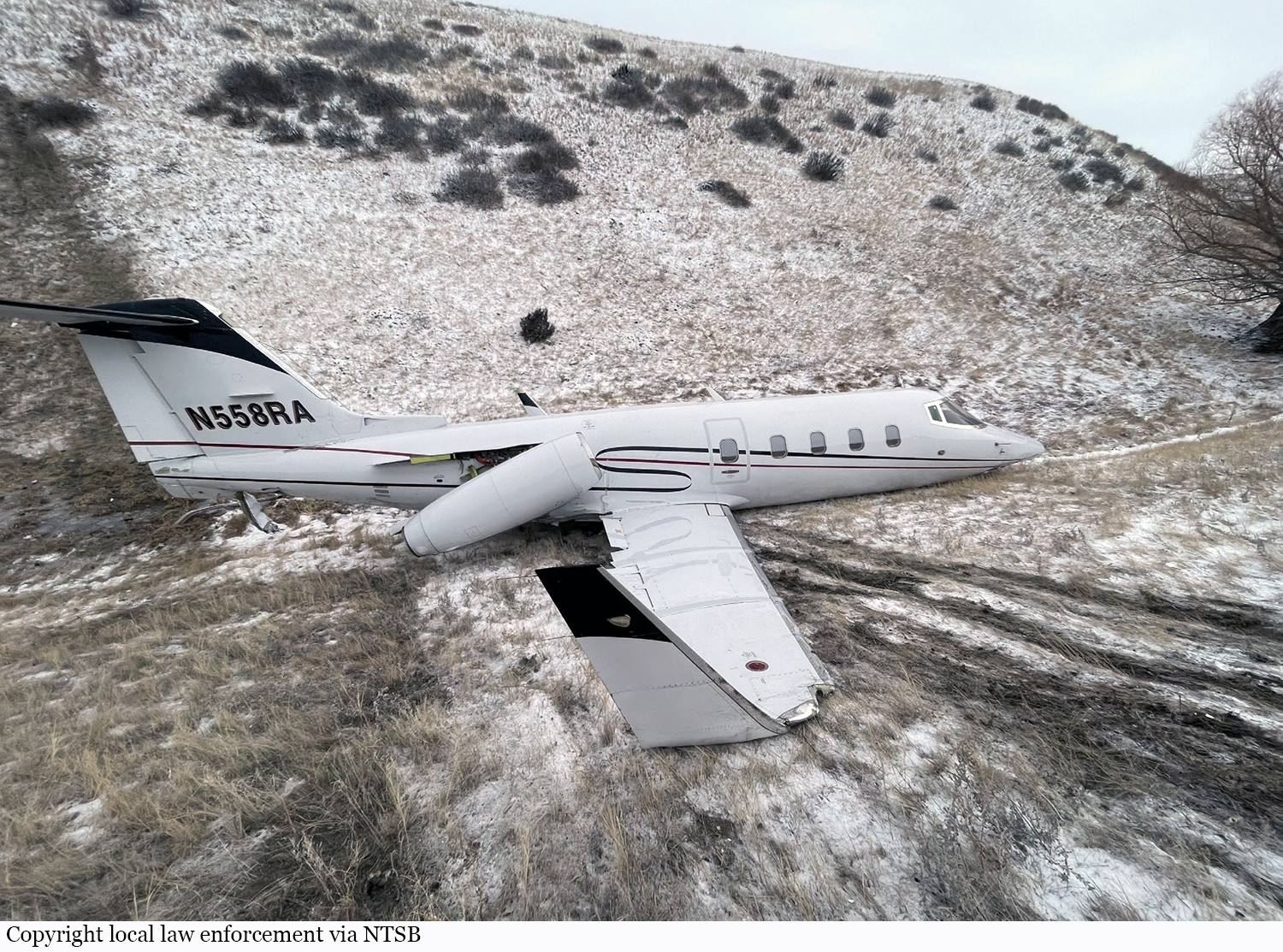
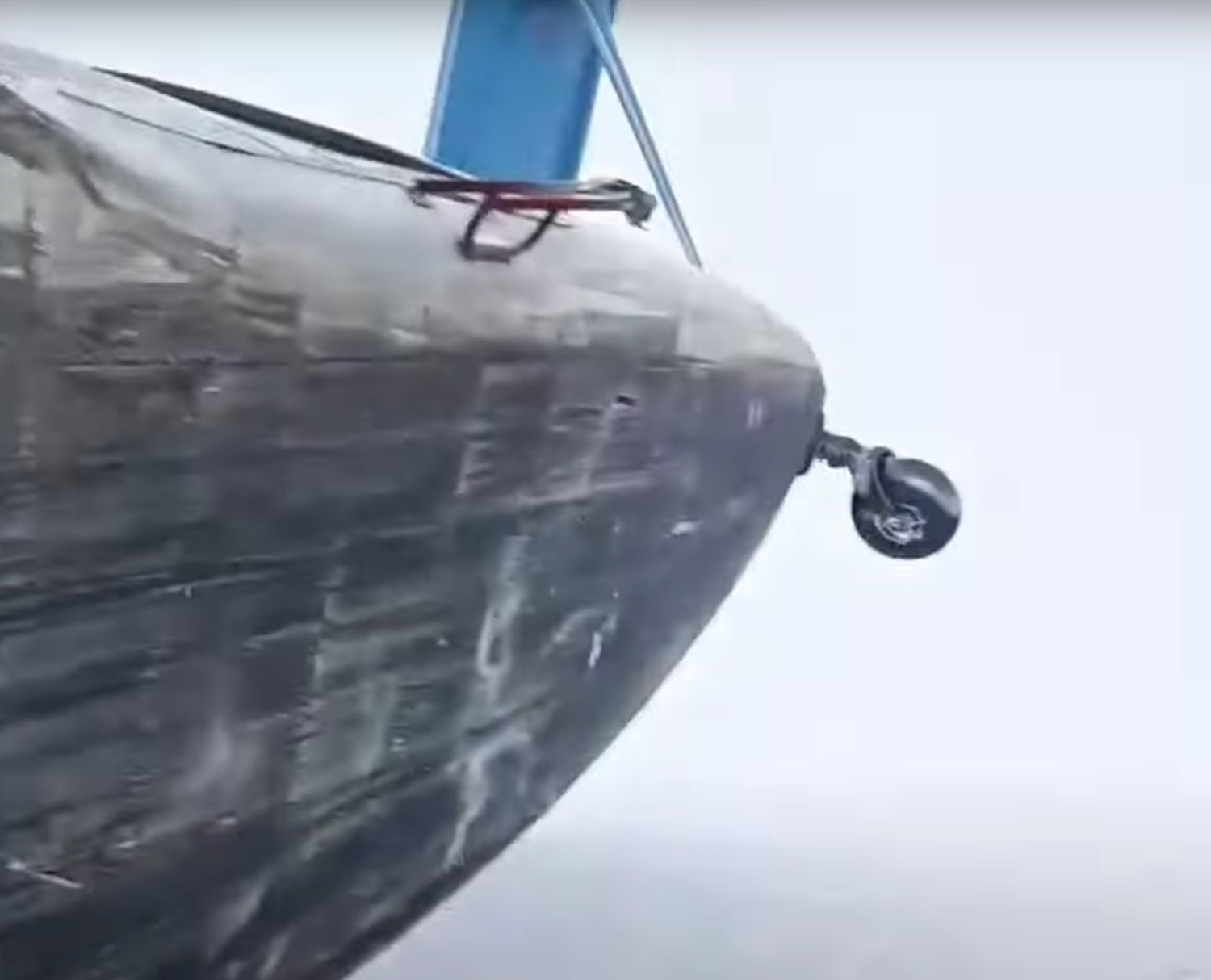
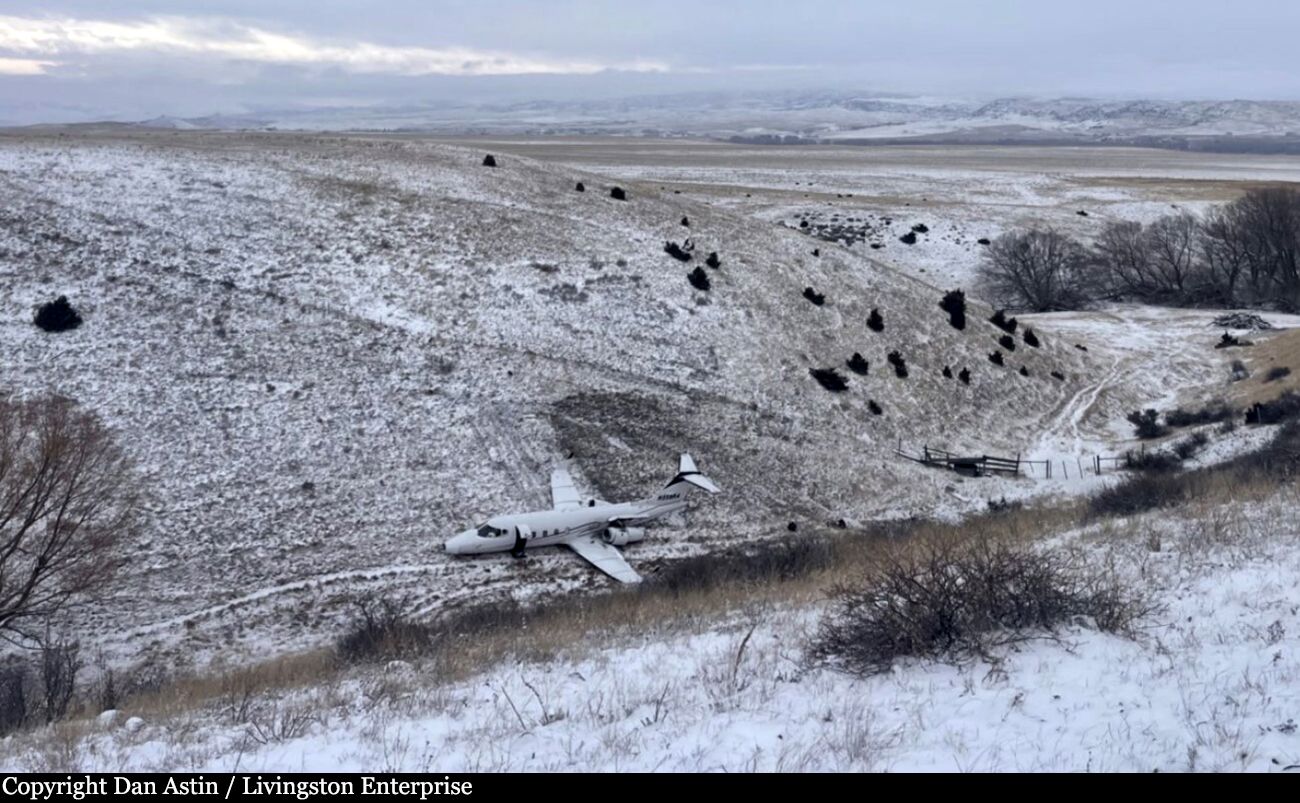
The pilot in command of the airplane reported that, while on an instrument GPS approach, they listened to the automated surface observing system several times and determined that they would be landing with a “light quartering tailwind” on an upsloping runway. Once clear of clouds and with the runway in sight, the pilot canceled the instrument flight rules clearance, announced their position over the airport’s common traffic advisory frequency and received a reply with a report of 1/4 inch of dry snow covering the runway, unplowed. During the landing roll, they applied brakes, extended spoilers, and thrust reversers. Initially the airplane slowed; however, about halfway down the runway, the airplane’s antiskid system was functioning continuously, and the airplane’s rate of deceleration decreased. The pilot was unsure if the thrust reversers deployed, and he cycled the thrust reversers and did not feel any effects. The pilot stated that, in his experience, the airplane’s thrust reversers do not feel very effective. The pilot considered aborting the landing, started to clean up the airplane but thought it was too late. The airplane overran the departure end of the runway, onto a grass covered area and into a deep ravine, resulting in substantial damage to the fuselage and both wings. The pilot reported that there were no preaccident mechanical failures or malfunctions with the airplane that would have precluded normal operation. The automated weather observation station located on the airport reported that, about 44 minutes before the accident, the wind was from 090° at 12 knots. The same automated station reported that, about 16 minutes after the accident, the wind was from 090° at 12 knots. The airplane landed on runway 22. The fixed based operator owner reported that, on the day of the accident, his review of the runway conditions at the airport appeared to be around an inch of snow on the runway surface. Additionally, plowing at the airport so far this year had been “abysmal.” Big windrows and ice chunks have been left; taxiway corners had been built up to the point there could be an occurrence should an airplane be taxiing by. Earlier this year, several departures were delayed due to the runway not being plowed. According to the chairman of the airport board, there is no formal process to conduct runway assessments. However, an airport board member lives in the area and routinely visits the airport to conduct runway assessments. The runway assessments and frequency of the observations are not documented but are conveyed verbally to the airport board via cell phone. To the best of his knowledge, there is no formal snow or ice removal plan. When the runway is required to be cleared, a board member will use county provided equipment to clear the runway. The frequency of the snow removal is not documented. The airport snow removal equipment is limited to clear substance to ½ inch of the runway surface. On the day of the accident, he was not aware of a Notice to Air Misson (NOTAM) issued for the conditions of the runway environment. According to the airplane manufacturer, the estimated landing distance on a dry runway was about 3,350 ft, with loose snow and no tailwind the estimated landing distance was about 6,700 ft, and on loose snow with tailwind, the estimated landing distance was 7,531 ft. According to the Federal Aviation Administration, the airport is not required to have a snow and ice control plan. However, the airport was provided federal funds (grant) to purchase/acquire a snowplow to maintain the airport surfaces during inclement weather conditions. There may be times where issues arise, and action is delayed. In that case it is expected that a NOTAM be issued as outlined in the grant agreement.
Probable cause:
The flight crew’s decision to land on a snow-covered runway with a tailwind, resulting in a runway excursion and subsequent impact with terrain. Contributing to the accident, was the failure of the airport authority to plow the runway.
Final Report:
Crash of a PZL-Mielec AN-2R near Polyarny

Date & Time: Nov 10, 2023 at 1242 LT
Type of aircraft:
Operator:
Registration:
RA-84566
Flight Phase:
Flight Type:
Survivors:
Yes
Schedule:
Pevek - Polyarny
MSN:
1G189-33
YOM:
1980
Country:
Region:
Crew on board:
1
Crew fatalities:
Pax on board:
2
Pax fatalities:
Other fatalities:
Total fatalities:
0
Captain / Total flying hours:
7978
Captain / Total hours on type:
851.00
Aircraft flight hours:
345
Circumstances:
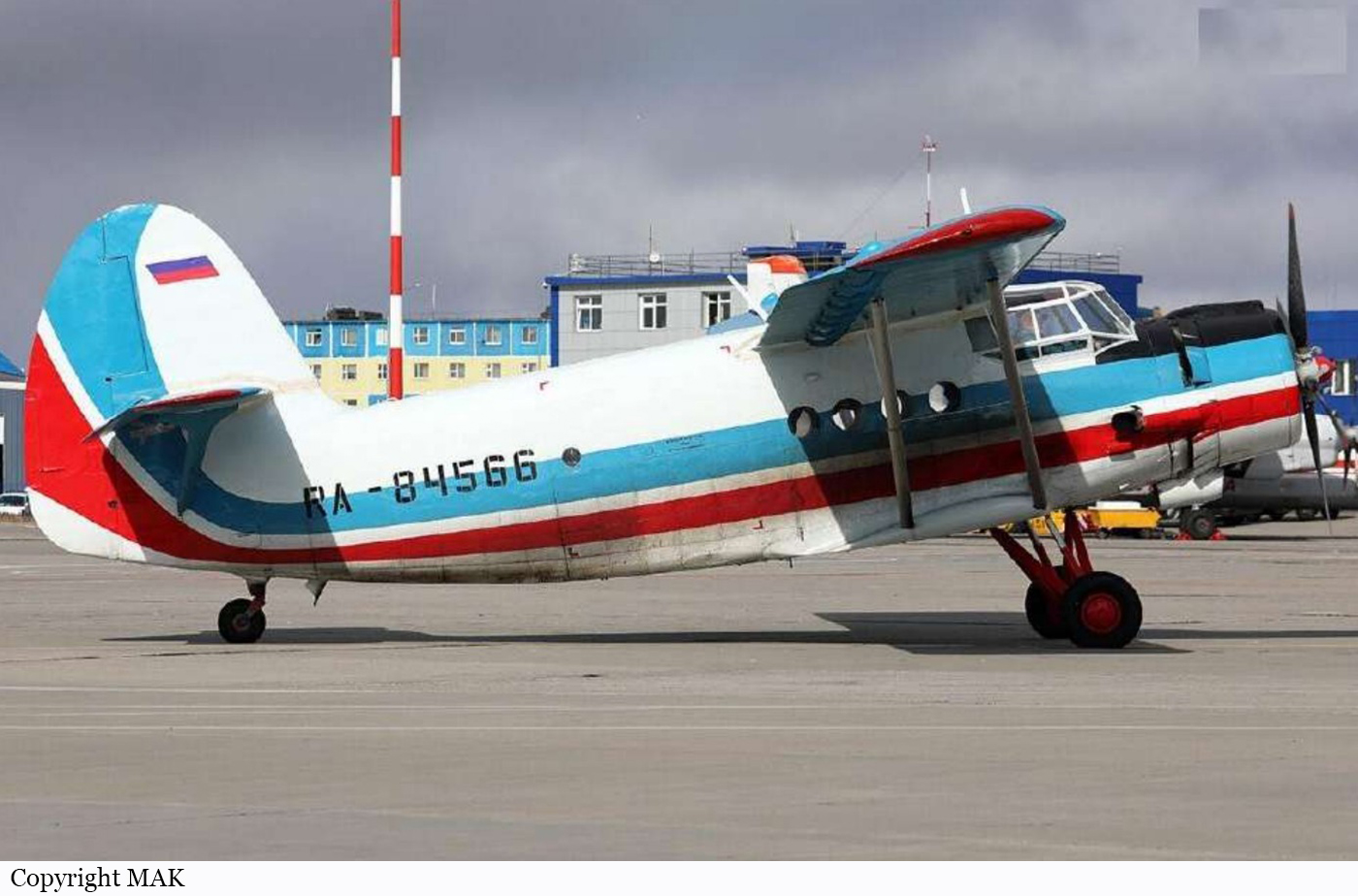
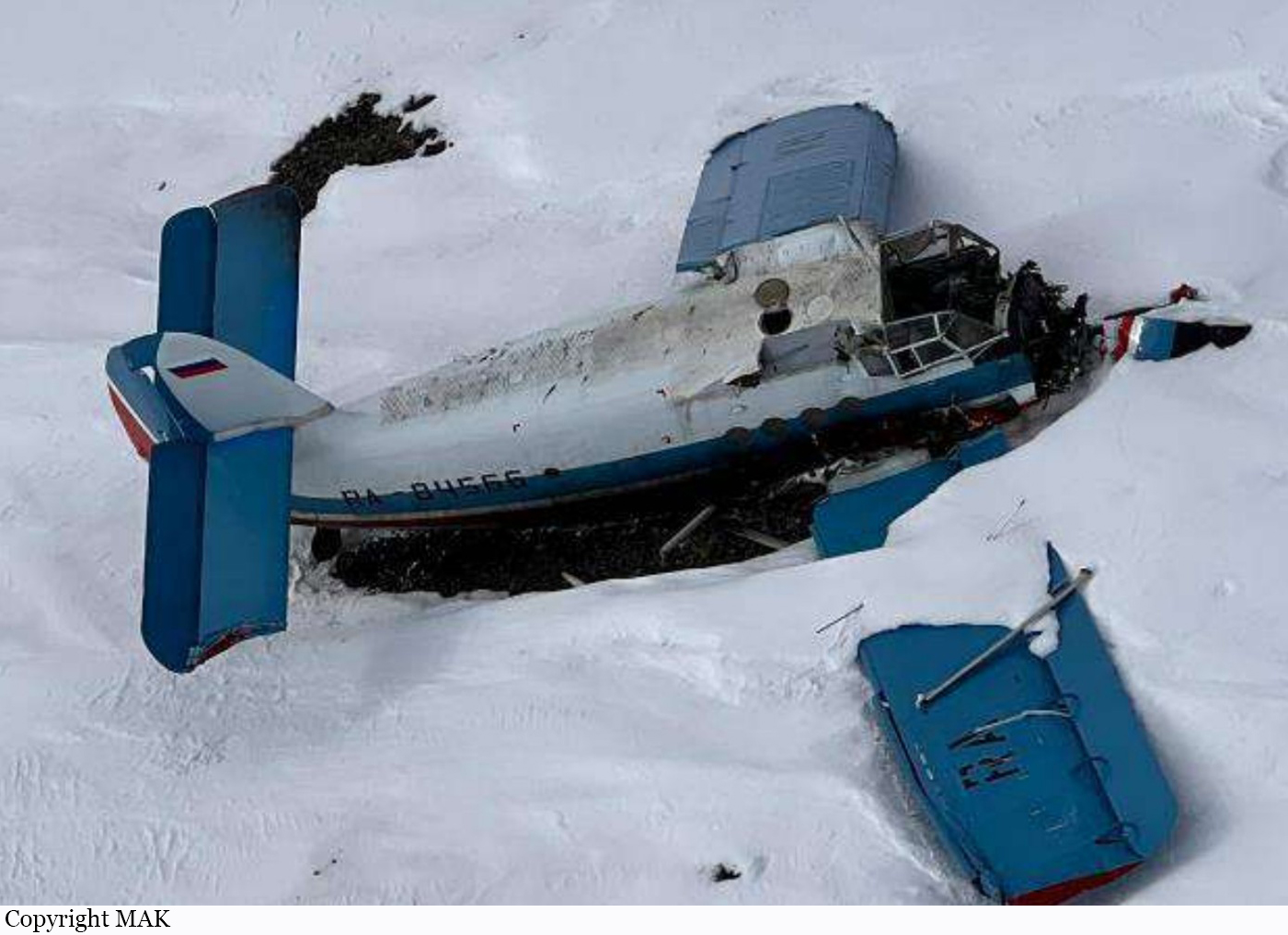
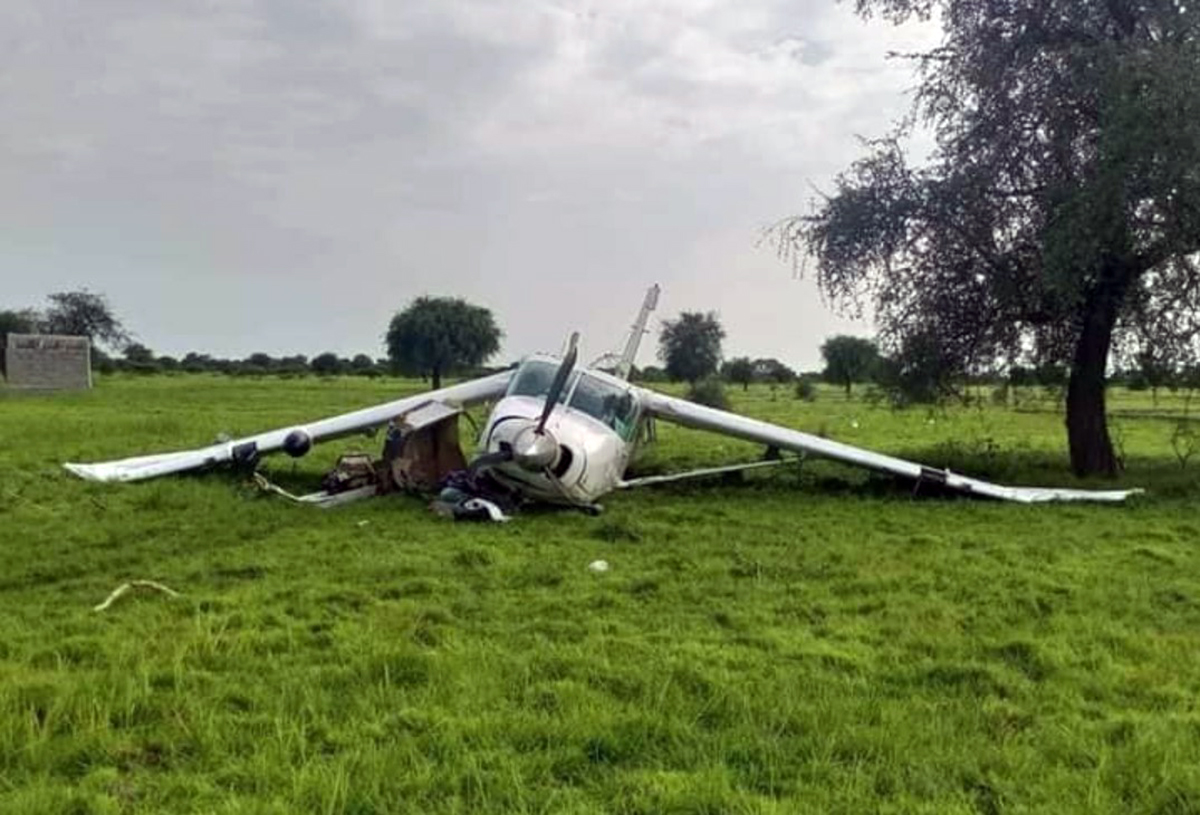
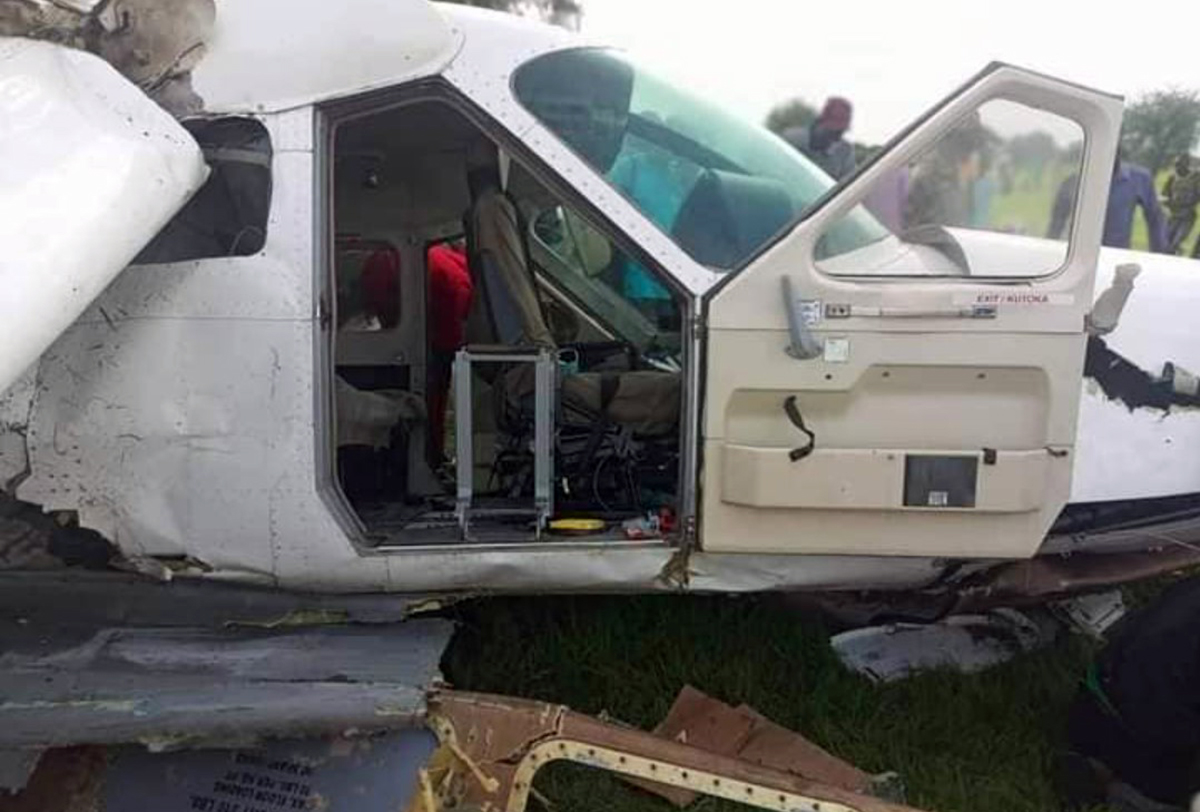
The single engine airplane departed Pevek on a cargo flight to Polyarny, carrying two passengers, one pilot and a load of 150 kg of various goods. Approaching the destination, weather conditions deteriorated with heavy rain falls. In limited visibility, the airplane impacted the ground and crashed in the snow covered tundra few km from Polyarny. The wreckage was found few hours later and all three occupants were injured, the captain seriously. The airplane was a TR-301, a version of the AN-2 without the lower wings. Modification were performed by Tekhnoregion under MSN ТR301.21.004.
Probable cause:
The collision with a mountainside occurred in a mountainous area during daylight under Instrument Meteorological Conditions (IMC) that did not permit Visual Flight Rules (VFR) operations, as a result of the pilot-in-command (PIC) losing visual contact with the ground.
The following contributing factors were identified:
- The decision by the PIC to proceed with the flight despite forecasted meteorological conditions along the route and at the landing site that did not permit VFR operations (due to heavy precipitation).
- The failure of the PIC to take appropriate measures to avoid an hazardous area when signs of dangerous meteorological phenomenons became evident during the flight.
- Conducting the flight in violation of the aircraft's operational limitations under conditions unsuitable for VFR.
- The PIC's failure to make a timely decision to return to the departure airport or divert to an alternate airport when weather conditions deteriorated to levels below the minimums established for VFR operations.
Final Report:

Crash of a Pilatus PC-6/B2-H4 Turbo Porter in Breu: 1killed

Date & Time: Oct 29, 2023 at 1100 LT
Operator:
Registration:
OB-1600
Flight Type:
Survivors:
Yes
Schedule:
Pucallpa – Breu
MSN:
789
YOM:
1977
Location:
Country:
Crew on board:
2
Crew fatalities:
Pax on board:
0
Pax fatalities:
Other fatalities:
Total fatalities:
1
Circumstances:
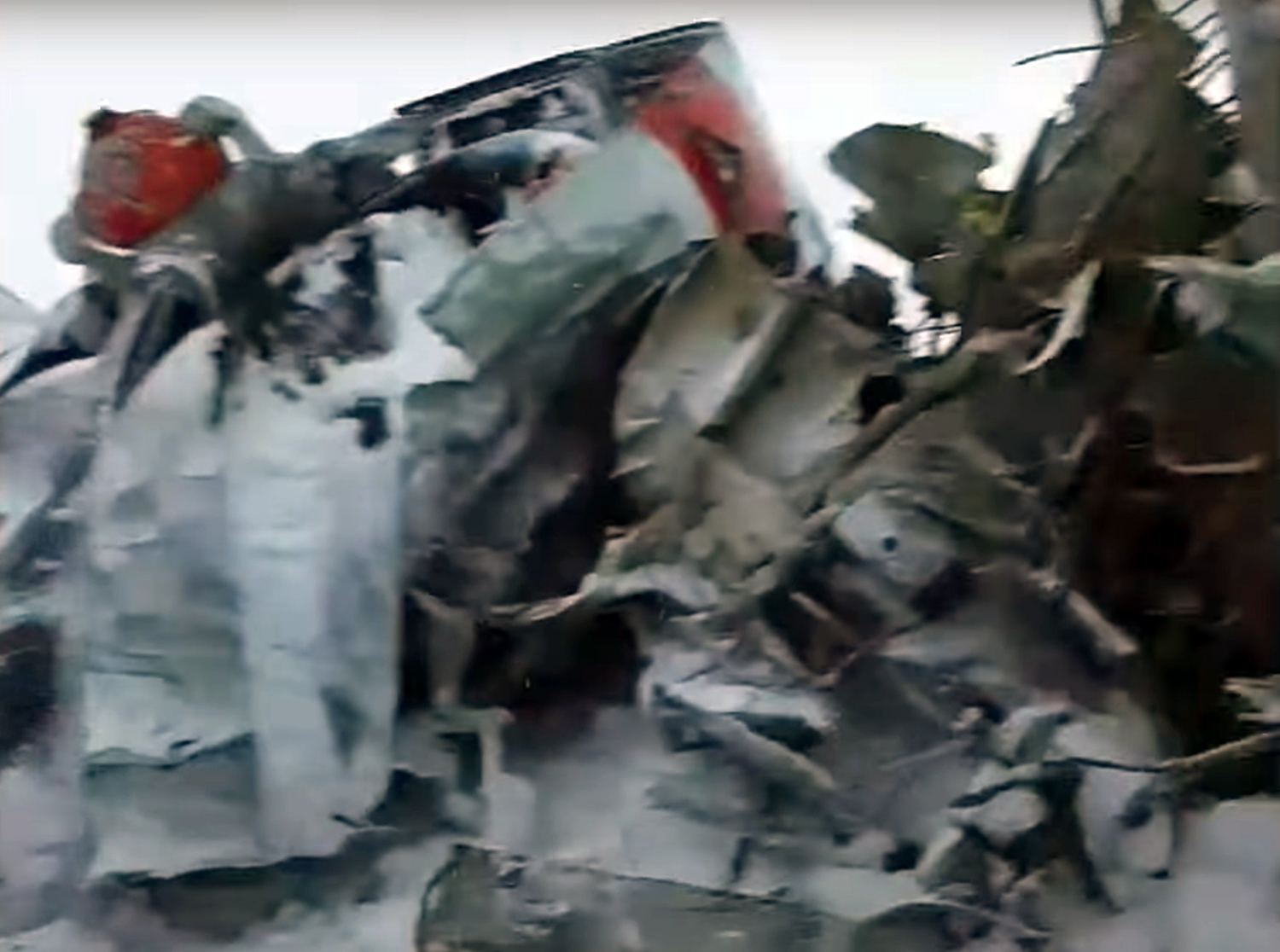
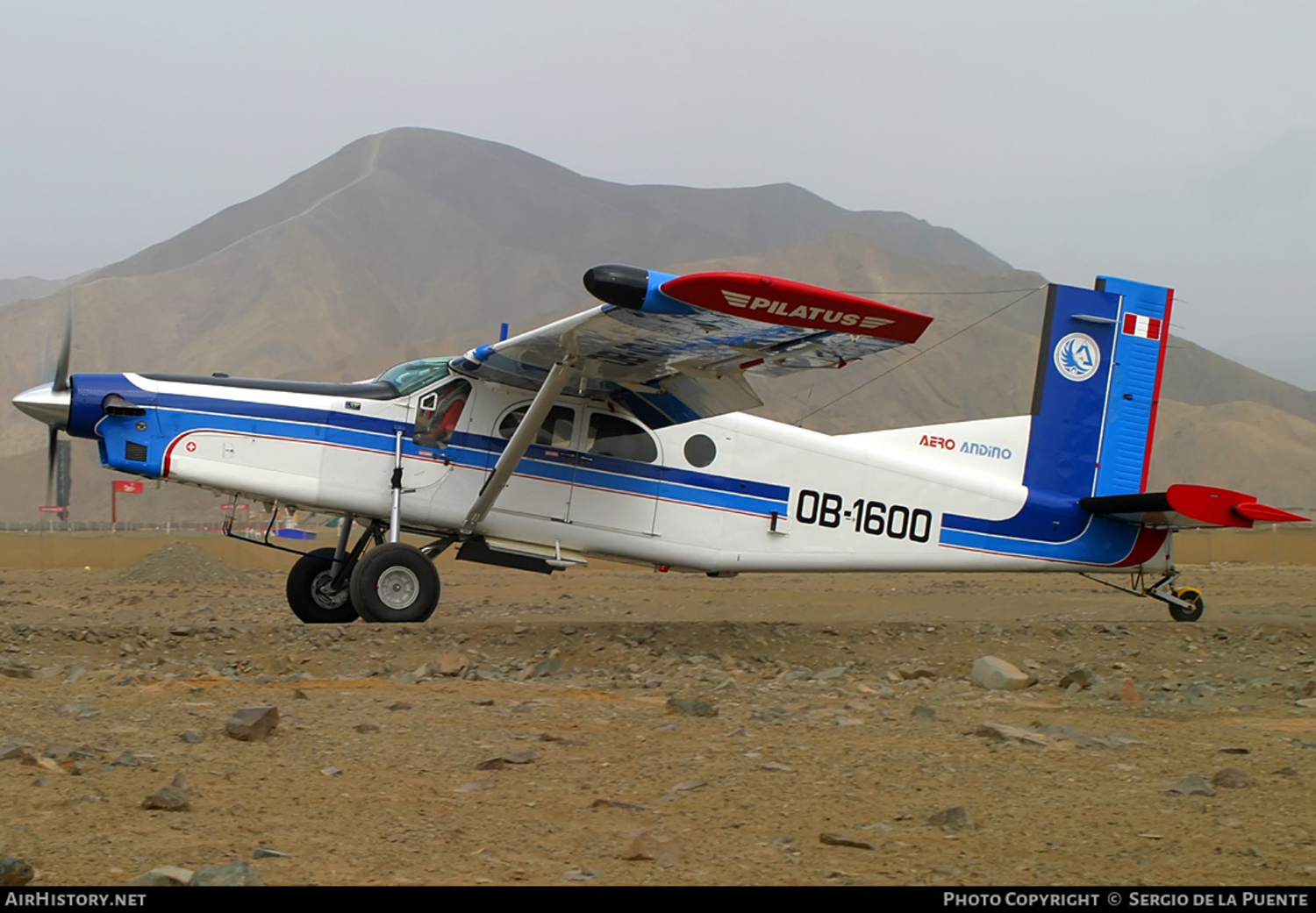
The single engine airplane departed Pucallpa-Captain David Abensur Rengifo Airport around 1000LT on a cargo flight to Breu with two pilots on board. On approach to Breu-Tipishsa Airport, the airplane crashed in unknown circumstances in a wooded area located about 4 km northwest of Breu. The captain was killed and the copilot was injured.

Crash of a Boeing 757-236 in Chattanooga

Date & Time: Oct 4, 2023 at 2347 LT
Type of aircraft:
Operator:
Registration:
N977FD
Flight Type:
Survivors:
Yes
Schedule:
Chattanooga – Memphis
MSN:
24118/163
YOM:
1988
Flight number:
FDX1376
Crew on board:
3
Crew fatalities:
Pax on board:
0
Pax fatalities:
Other fatalities:
Total fatalities:
0
Captain / Total hours on type:
393.00
Copilot / Total hours on type:
1651
Aircraft flight hours:
52468
Circumstances:
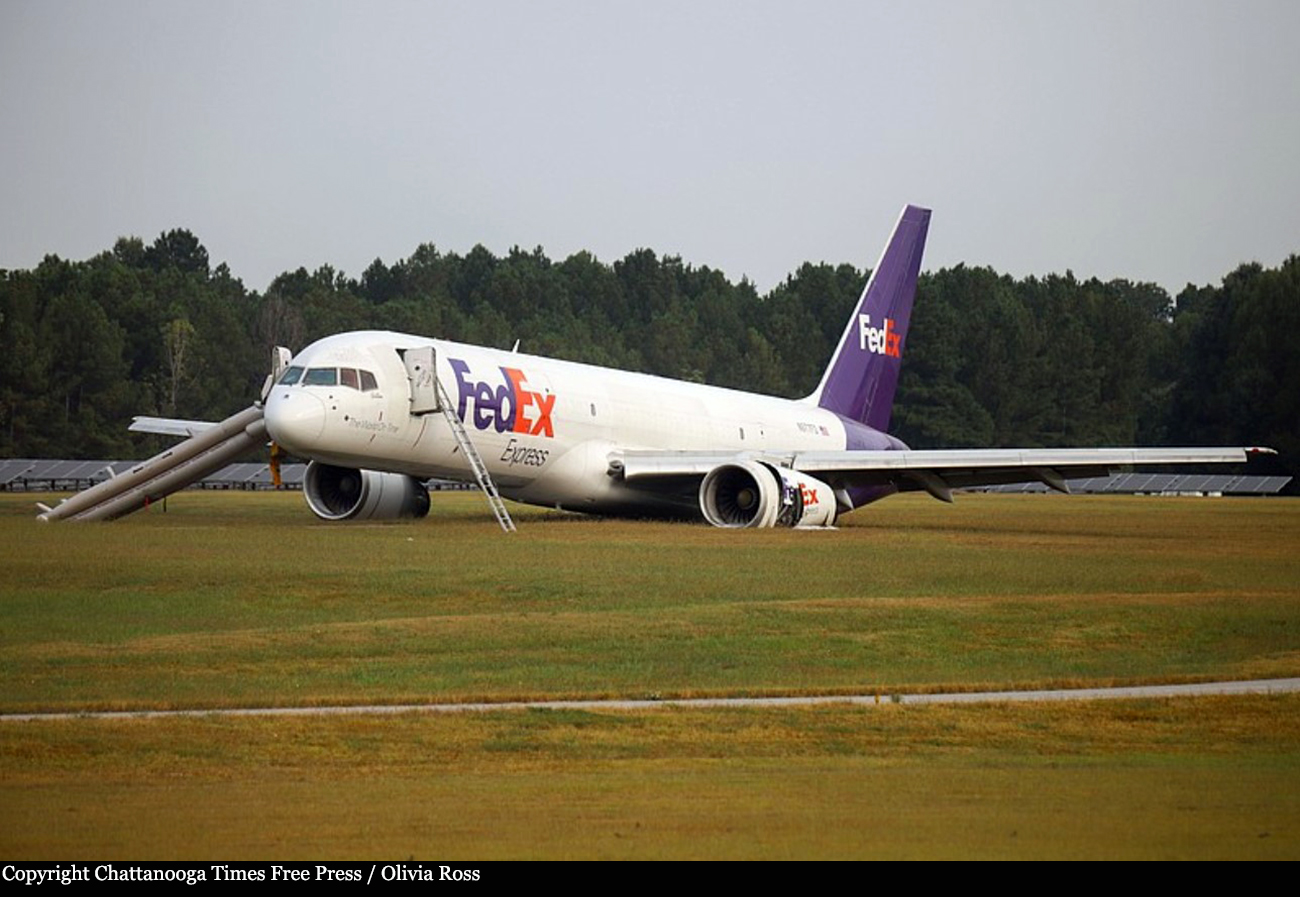
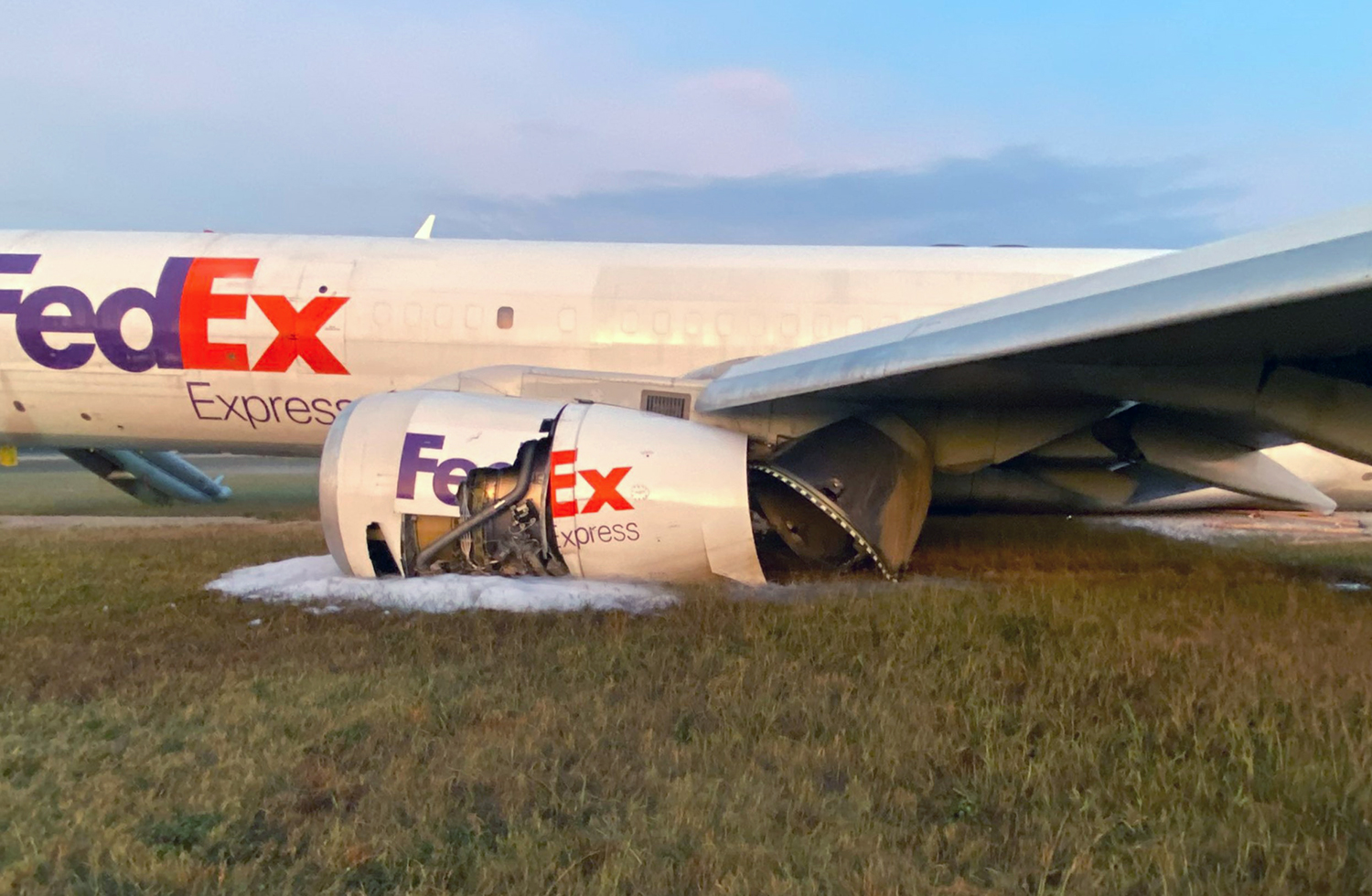
This accident occurred when the flight crew of Federal Express flight 1376, a Boeing 757-236, was unable to extend the landing gear during their approach to Chattanooga Metropolitan Airport-Lovell Field (CHA), Chattanooga, Tennessee. The main landing gear (MLG) and nose landing gear (NLG) are hydraulically retracted and extended under normal conditions by the left hydraulic system. To retract or extend the landing gear, a flight crew member must move the landing gear control lever out of its detent and position it to its up or down position. Lever movement is transmitted through control cables to the landing gear selector valve. Operation of the valve supplies left hydraulic pressure through hydraulic lines to either retract or extend the landing gear and operate the landing gear doors. Shortly after takeoff from CHA, the captain of flight 1376 called for gear up and the first officer (FO) raised the landing gear control lever to retract the landing gear. The flight crew indicated that both the MLG and the NLG retracted to their up and locked position. Digital flight data recorder (DFDR) data showed that 22 seconds after gear retraction the hydraulic fluid quantity and pressure in the left hydraulic system began to decrease. A left hydraulic system low quantity indication and master caution were recorded shortly thereafter. After troubleshooting the hydraulic issue per the procedures in the Quick Reference Handbook (QRH), the flight crew made the decision to return to CHA. While preparing to land, the MLG and NLG did not extend as expected after the landing gear control lever was positioned to its down position. Cockpit voice recorder (CVR) data indicated that a triple chime was audible, and the captain said, “Gear disagree.” The first officer confirmed, “Gear disagree. The gear is not coming down.” The captain contacted air traffic control (ATC) to break off their approach and reported that they had an unsafe gear indication. Following the failed attempt to lower the landing gear, the crew went methodically through the Hydraulic System Pressure checklist of their QRH. Following the procedures, the crew attempted to lower the landing gear using the alternate landing gear extension system. This system uses a dedicated hydraulic circuit within the left hydraulic system to release the uplocks on the landing gear doors and gear when activated. To extend the gear with this system, a flight crew member would move the ALTN GEAR EXTEND switch (a guarded switch) to the down position. Because the checklist indicated that nose wheel steering would be inoperative following the alternate gear extension and the aircraft would not be able to clear the runway on its own, the crew declared an emergency with ATC. The crew performed the alternate gear extension procedure, and the landing gear did not come down. The crew completed the procedure several more times over the next 7 minutes, including re-completing the Hydraulic System Pressure (L only) checklist in full. As the crew set the aircraft up for the final approach, they began following the Gear Disagree checklist. ATC cleared the flight to land. The captain briefed the FO that he was planning to aim close to the runway threshold and the FO verbally updated the captain on wind conditions and airspeeds. They agreed that a jump seat occupant on board the airplane would open the left forward main entry door after they landed. Upon landing on runway 20, the flight crew was unable to stop the airplane, and it slid off the departure end of the runway and impacted localizer antennas before coming to rest about 830 ft beyond the end of the runway. All three crew members evacuated safely and the airplane was damaged beyond repair.
Probable cause:
The failure of the alternate gear extension system, which prevented the landing gear from being lowered. The cause of the system failure was a broken wire, due to tensile overload, between the alternate gear extend switch and the alternate extension power pack (AEPP), preventing the AEPP from energizing and supplying hydraulic fluid to the door lock release actuators for the nose landing gear and main landing gear. Contributing to the accident was the loss of the left hydraulic system due to a ruptured left main gear door actuator hose from fatigue, which prevented normal landing gear operation.
Final Report:

Crash of a Beechcraft C99 Airliner in Lansing

Date & Time: Aug 15, 2023 at 0805 LT
Type of aircraft:
Operator:
Registration:
N261SW
Flight Phase:
Flight Type:
Survivors:
Yes
Schedule:
Lansing – Pellston
MSN:
U-202
YOM:
1983
Flight number:
AMF1304
Crew on board:
1
Crew fatalities:
Pax on board:
0
Pax fatalities:
Other fatalities:
Total fatalities:
0
Captain / Total flying hours:
1218
Captain / Total hours on type:
26.00
Aircraft flight hours:
27642
Circumstances:
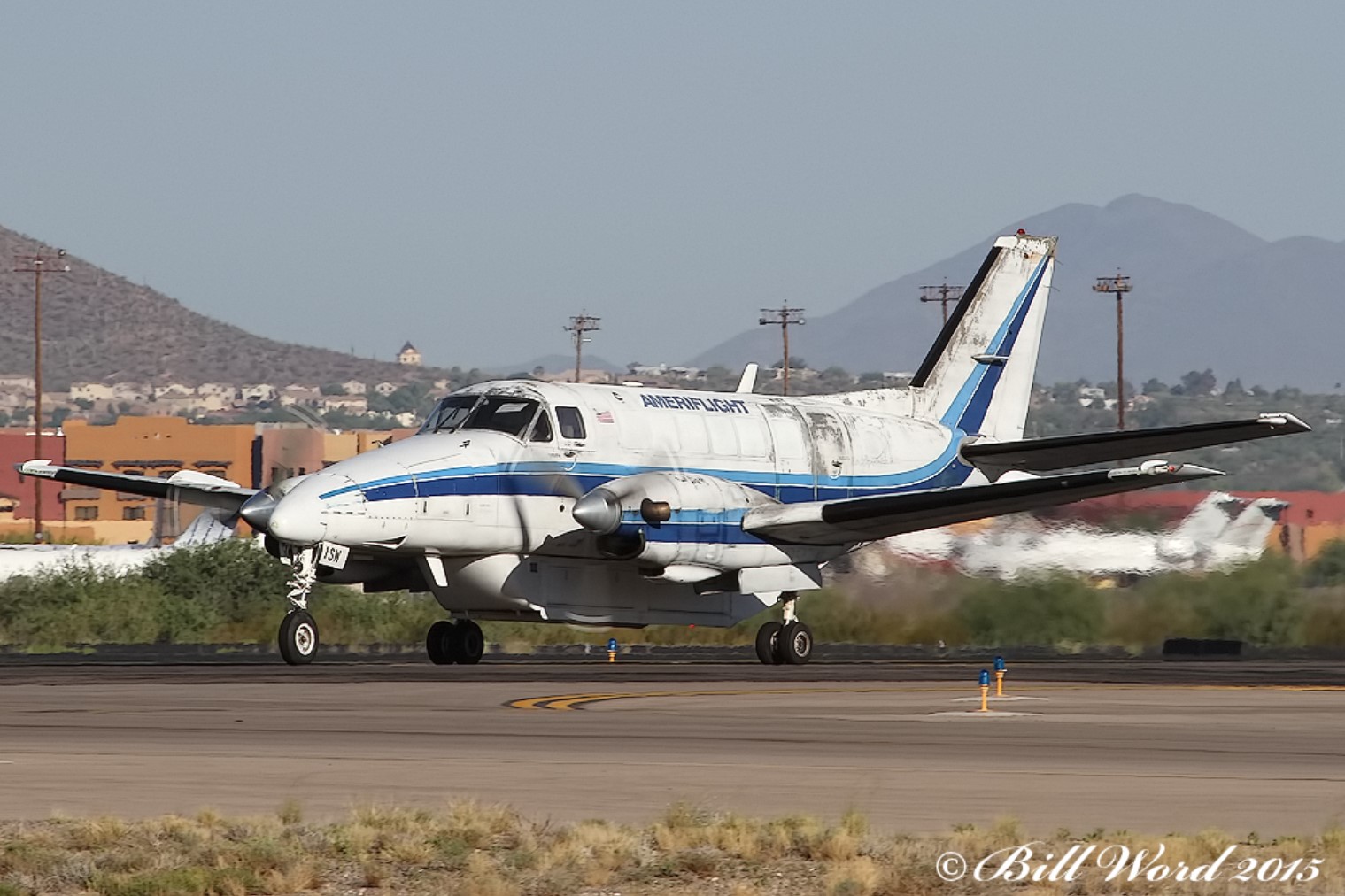
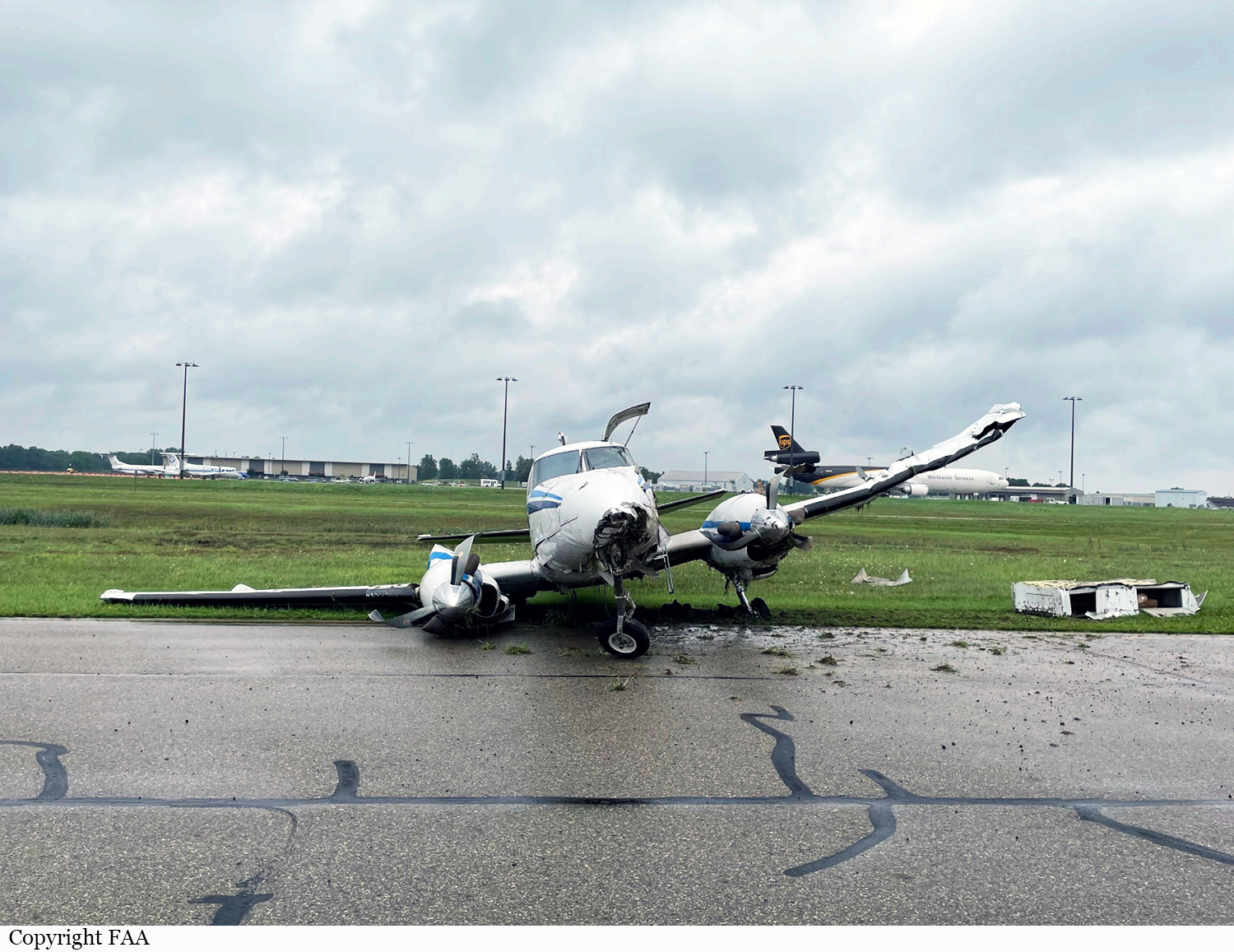
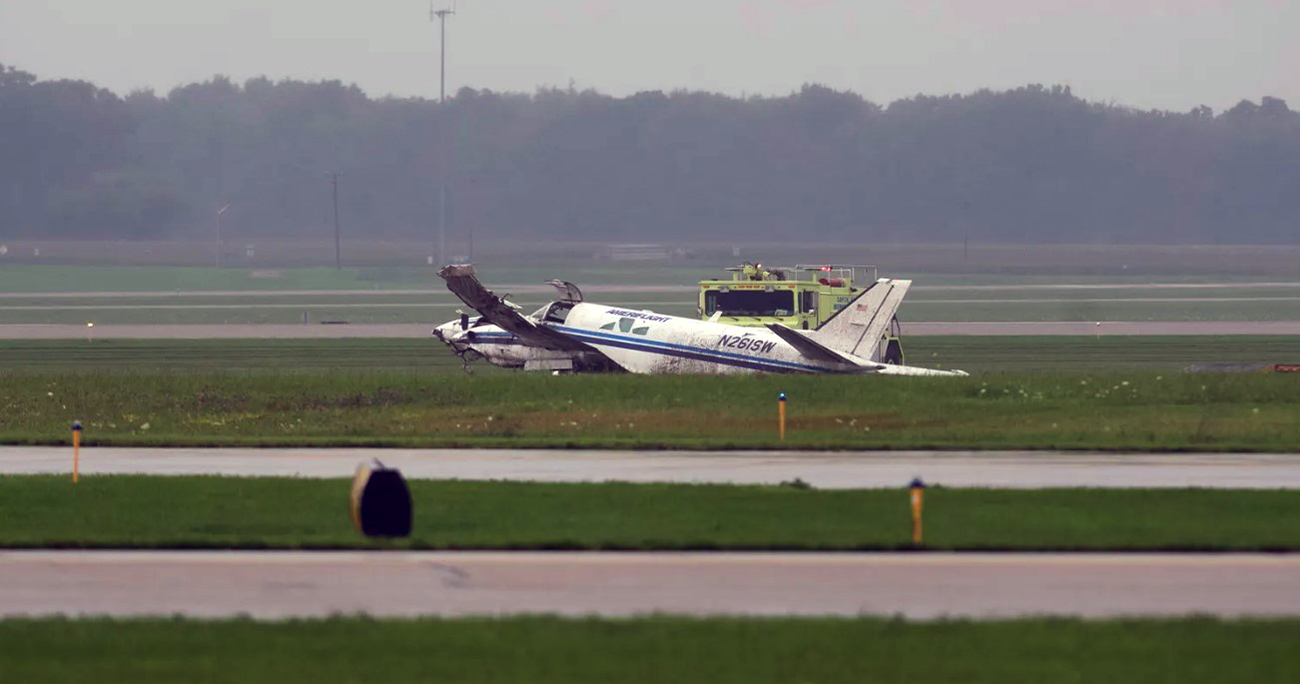
The pilot reported that after a normal start and taxi, the airplane was cleared for takeoff. During the takeoff roll, the airplane drifted right and the pilot corrected with the left rudder. When the airplane reached 100 knots, he rotated the airplane, and about 30 feet in altitude, the airplane experienced a roll to the right. The pilot tried to correct the roll with left rudder but was unable to provide sufficient left rudder. At this point, the airplane had drifted to the right of the runway and over the adjacent parallel taxiway. He was able to regain partial control by reducing engine power and banking the airplane to the left. The pilot attempted to land on the taxiway but was unable to judge his height above ground due to the low visibility, and subsequently impacted terrain to the right of the taxiway. Both wings and the fuselage sustained substantial damage. Prior to exiting the airplane, the pilot noted that the rudder trim was set to the full nose-right position. The pilot reported no preaccident mechanical malfunctions or failures with the airplane that would have precluded normal operation. Prior to the accident, maintenance was completed that consisted of an “Event II & Routine” inspection. The inspection procedure required the rudder trim system to be lubricated, a trim tab free play inspection, and an operational check prior to returning the airplane to service. Review of the maintenance procedures revealed there was no guidance on returning the rudder trim control system back to a neutral position at completion of the inspection.
Probable cause:
The pilot’s failure to properly set the rudder trim position which resulted in a loss of directional control during takeoff. Contributing was the pilot’s inadequate checklist procedures prior to takeoff.
Final Report:

Crash of a Cessna 208B Grand Caravan in Walgak

Date & Time: Jul 17, 2023 at 1500 LT
Type of aircraft:
Registration:
5Y-RNA
Flight Type:
Survivors:
Yes
Schedule:
Juba - Walgak
MSN:
208B-0328
YOM:
1993
Country:
Region:
Crew on board:
2
Crew fatalities:
Pax on board:
3
Pax fatalities:
Other fatalities:
Total fatalities:
0
Circumstances:
The single engine airplane departed Juba Airport at 1400LT on a cargo flight to Walgak, carrying three passengers and two pilots. While on approach, in unclear circumstances, the crew apparently attempted to gain height when the airplane impacted a tree and crashed in an open field. All five occupants were injured and the airplane was damaged beyond repair.

Crash of an Antonov AN-26B in Lisala

Date & Time: Apr 11, 2023 at 1300 LT
Type of aircraft:
Operator:
Registration:
9S-AFP
Flight Type:
Survivors:
Yes
Schedule:
Kinshasa - Lisala
MSN:
106 05
YOM:
1981
Region:
Crew on board:
4
Crew fatalities:
Pax on board:
1
Pax fatalities:
Other fatalities:
Total fatalities:
0
Circumstances:
The airplane departed Kinshasa on cargo flight to Lisala, carrying one passenger, four crew members and a load consisting of medical supplies against Malaria. On approach to Lisala Airfield, weather conditions were poor with strong winds and heavy rain falls. The airplane landed at a speed of 118 knots some 433 metres past the runway 05 threshold (runway 05 is 2,200 metres long). After touchdown, the crew initiated the braking procedure but the airplane was unable to stop within the remaining distance. It overran, lost its nose gear and came to stop in a field 172 metres past the runway end. All five occupants evacuated safely and the airplane was damaged beyond repair.
Probable cause:
It was determined that there was a sudden change of weather characteristics with nimbostratus clouds while the airplane was about 34,5 NM from the destination airport. This sudden change in weather components caused an excessive long rollout distance oof the airplane on the runway.
The following findings were identified:
- The operator (Air Kasai) did not provide the necessary documentation because their air operator's certificate and their insurance policy had been suspended.
- The aircraft's airworthiness certificate ending 23DEC2023 was forged, thus the aircraft was not airworthy.
- The 300 hour maintenance had been performed on the aircraft.
- The flight crew certificates were valid and their type ratings were up to date.
- The aircraft had not been maintained according to the manufacturer's maintenance program.
- The aerodrome's meteorologic station was inoperative due to lack of qualified personnel.
- The runway was not equipped with navigation aids.
- ATC services were not provided.
- The runway was wet and had numerous potholes.

Crash of a Piper PA-31-350 Navajo Chieftain in Hillcrest

Date & Time: Apr 7, 2023 at 0605 LT
Operator:
Registration:
VH-HJE
Flight Type:
Survivors:
Yes
Schedule:
Bankstown – Brisbane
MSN:
31-7852074
YOM:
1978
Country:
Region:
Crew on board:
1
Crew fatalities:
Pax on board:
0
Pax fatalities:
Other fatalities:
Total fatalities:
0
Captain / Total flying hours:
1473
Captain / Total hours on type:
204.00
Circumstances:
On 7 April 2023, the pilot of a Piper Aircraft Corporation PA-31-350 Chieftain (PA-31), registered VH-HJE and operated by Air Link, was conducting a freight charter flight from Archerfield, Queensland. The planned flight included one intermediate stop at Bankstown, New South Wales before returning to Archerfield, and was conducted under the instrument flight rules at night. The aircraft departed Archerfield at about 0024 local time and during the first leg to Bankstown, the pilot reported an intermittent fault with the autopilot, producing uncommanded pitch changes and associated rates of climb and descent of around 1,000 ft/min. As a result, much of the first leg was flown by hand. After landing at Bankstown at about 0248, a defect entry was made on the maintenance release; however, the pilot was confident that they would be able to hand fly the aircraft for the return leg and elected to continue with the planned flight. The aircraft was refueled to its maximum capacity for the return leg after which a small quantity of water was detected in the samples taken from both main fuel tanks. Additional fuel drains were conducted until the fuel sample was free of water. The manifested freight for the return leg was considered a light load and the aircraft was within weight and balance limitations. After taking off at 0351, the pilot climbed to the flight planned altitude of 9,000 ft. Once established in cruise, the pilot changed the left and right fuel selectors from the respective main tank to the auxiliary tank. The pilot advised that, during cruise, they engaged the autopilot and the uncommanded pitch events continued. Consequently, the pilot did not use the autopilot for part of the flight. Approaching top of descent, the pilot recalled conducting their normal flow checks by memory before referring to the checklist. During this time, the pilot completed a number of other tasks not related to the fuel system, such as changing the radio frequency, checking the weather at the destination and briefing themselves on the expected arrival into Archerfield. Shortly after, the pilot remembered changing from the auxiliary fuel tanks back to the main fuel tanks and using the fuel quantity gauges to confirm tank selection. The pilot calculated that 11 minutes of fuel remained in the auxiliary tanks (with an estimated 177 L in each main tank). Around eight minutes after commencing descent and 28 NM (52 km) south of Archerfield (at 0552), the pilot observed the right ‘low fuel flow’ warning light (or ‘low fuel pressure’) illuminate on the annunciator panel. This was followed soon after by a slight reduction in noise from the right engine. As the aircraft descended through approximately 4,700 ft, the ADS-B data showed a moderate deceleration with a gradual deviation right of track. While the power loss produced a minor yaw to the right, the pilot recalled that only a small amount of rudder input was required to counter the adverse yaw once the autopilot was disconnected. Without any sign of rough running or engine surging, they advised that had they not seen the annunciator light, they would not have thought there was a problem. Over the next few minutes, the pilot attempted to troubleshoot and diagnose the problem with the right engine. Immediately following power loss, the pilot reported they:
• switched on both emergency fuel boost pumps
• advanced both mixture levers to RICH
• cycled the throttle to full throttle and then returned it to its previous setting without fully closing the throttle
• moved the right fuel selector from main tank to auxiliary
• disconnected the autopilot and retrimmed the aircraft. This did not alter the abnormal operation of the right engine, and the pilot conducted the engine roughness checklist from the aircraft pilot’s operating handbook noting the following:
• oil temperature, oil pressure, and cylinder head temperature indicated normally
• manifold absolute pressure (MAP) had decreased from 31 in Hg to 27 inHg
• exhaust gas temperature (EGT) indicated in the green range
• fuel flow indicated zero.
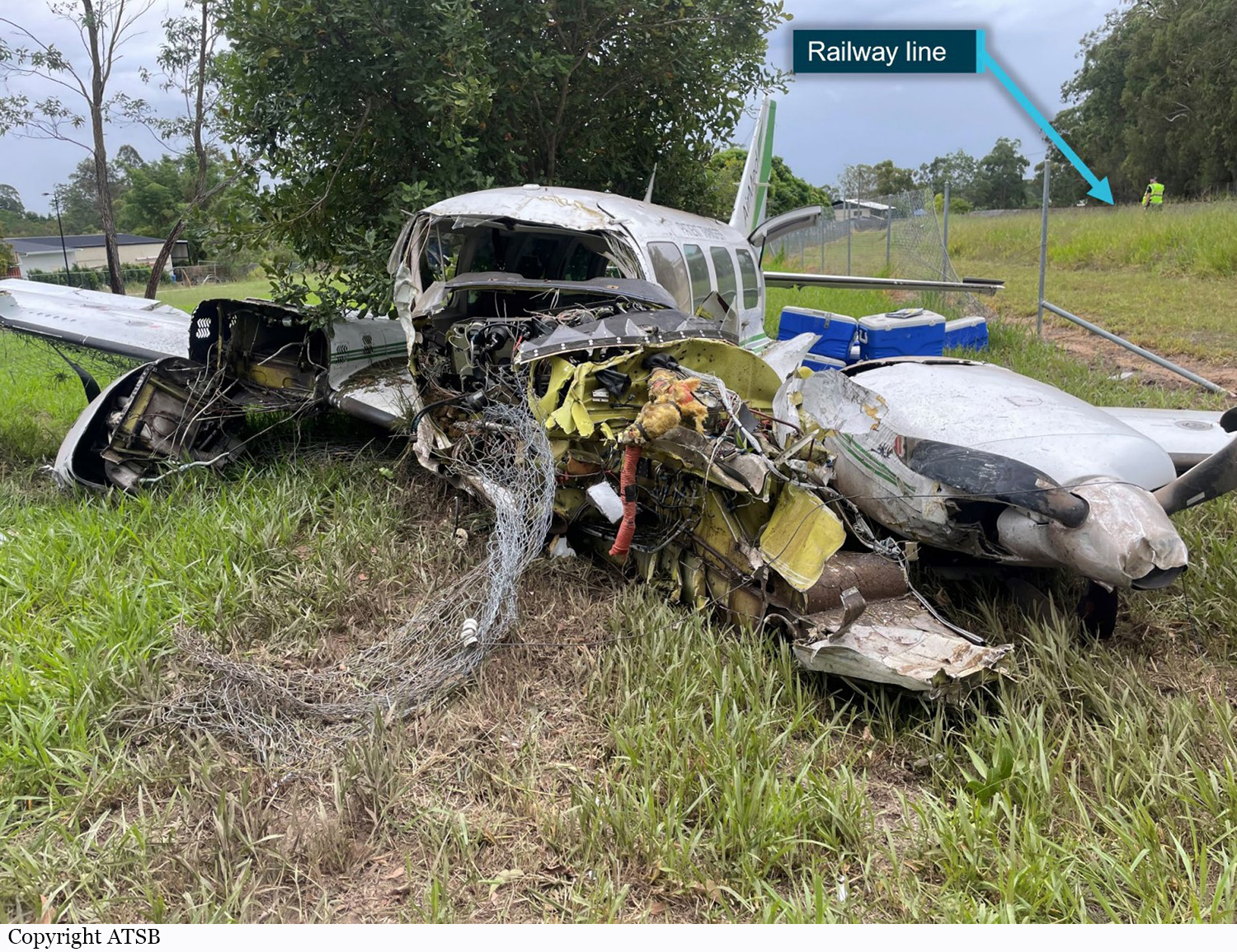
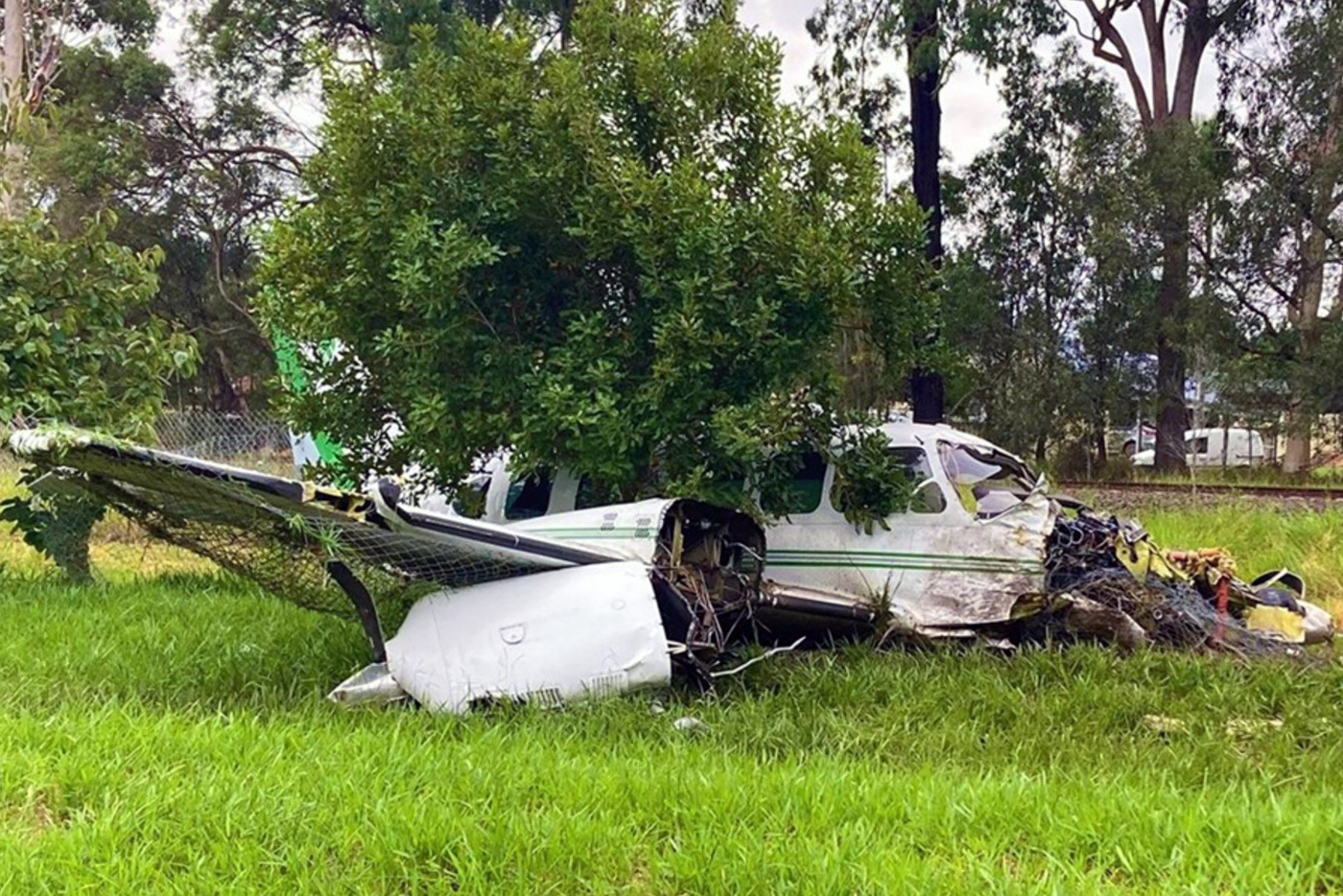
With no indication of mechanical failure, the pilot advised they could not rule out the possibility of fuel contamination and chose not to reselect the main tank for the remainder of the flight. After considering the aircraft’s performance, handling characteristics and engine instrument indications, the pilot assessed that the right engine, while not able to generate normal power, was still producing some power and that this would assist in reaching Archerfield. Based on the partial power loss diagnosis, the pilot decided not to shut down and secure the engine which would have included feathering the propeller. At 0556, at about 20 NM south of Archerfield at approximately 3,300 ft, the pilot advised air traffic control (ATC) that they had experienced an engine malfunction and requested to maintain altitude. With maximum power being set on the fully operating left engine, the aircraft was unable to maintain height and was descending at about 100 ft/min. Even though the aircraft was unable to maintain height, the pilot calculated that the aircraft should have been able to make it to Archerfield and did not declare an emergency at that time. At 0602, about 12 minutes after the power loss on the right engine, the left engine began to run rough and the pilot observed the left low fuel flow warning light illuminate on the annunciator panel. This was followed by severe rough running and surging from the left engine which produced a series of pronounced yawing movements. The pilot did not run through the checklist a second time for the left engine, reporting that they completed the remaining item on the checklist for the left engine by switching the left engine’s fuel supply to the auxiliary tank. The pilot once again elected not to change tank selections back to mains. With both engines malfunctioning and both propellers unfeathered, the rate of descent increased to about 1,500 ft/min. The pilot advised that following the second power loss, it was clear that the aircraft would not be able to make it to Archerfield and their attention shifted from troubleshooting and performance management to finding somewhere to conduct a forced landing. ADS-B data showed the aircraft was at about 1,600 ft when the left engine malfunctioned. The pilot stated that they aimed to stay above the minimum control speed, which for VH-HJE was 72 kt. The aircraft was manoeuvred during the brief search), during which time the ground speed fluctuated from 110 kt to a low of 75 kt. It was calculated that in the prevailing wind, this would have provided an approximate indicated airspeed of 71 kt; equal to the aircraft’s clean configuration stall speed. The pilot declared an emergency and advised ATC that they were unable to make Archerfield Airport and would be conducting an off-airport forced landing. With very limited suitable landing areas available, the pilot elected to leave the flaps and gear retracted to minimize drag to ensure they would be able to make the selected landing area. At about 0605, the aircraft touched down in a rail corridor beside the railway line, and the aircraft’s left wing struck a wire fence. The aircraft hit several trees, sustaining substantial damage to the fuselage and wings. The pilot received only minor injuries in the accident and was able to exit through the rear door of the aircraft.
Probable cause:
The following contributing factors were identified:
- It is likely that the pilot did not action the checklist items relating to the selection of main fuel tanks for descent. The fuel supply in the auxiliary tanks was subsequently consumed resulting in fuel starvation and loss of power from the right then left engine.
- Following the loss of power to the right engine, the pilot misinterpreted the engine instrument indications as a partial power loss and carried out the rough running checklist but did not select the main tanks that contained substantial fuel to restore engine power, or feather the propeller. This reduced the available performance resulting in the aircraft being unable to maintain altitude.
- When the left engine started to surge and run rough, the pilot did not switch to the main tank that contained substantial fuel, necessitating an off‑airport forced landing.
- It is likely that the pilot was experiencing a level of fatigue shown to have an effect on performance.
- As the pilot was maneuvering for the forced landing there was a significant reduction of airspeed. This reduced the margin over the stall speed and increased the risk of loss of control.
- Operator guidance material provided different fuel flow figures in the fuel policy and flight crew operating manual for the PA-31 aircraft type.
- The operator’s fuel monitoring practices did not detect higher fuel burns than what was specified in fuel planning data.
- The forced landing site selected minimized the risk of damage and injury to those on the ground and the controlled touchdown maximized the chances of survivability.
Final Report:

Crash of a Cessna 208B Grand Caravan near Nakina: 2 killed

Date & Time: Feb 28, 2023
Type of aircraft:
Operator:
Registration:
C-GMVB
Flight Phase:
Flight Type:
Survivors:
No
Schedule:
Nakina – Fort Hope
MSN:
208B-0317
YOM:
1992
Location:
Country:
Crew on board:
2
Crew fatalities:
Pax on board:
0
Pax fatalities:
Other fatalities:
Total fatalities:
2
Captain / Total flying hours:
325
Captain / Total hours on type:
103.00
Copilot / Total flying hours:
2570
Copilot / Total hours on type:
662
Aircraft flight hours:
28262
Circumstances:
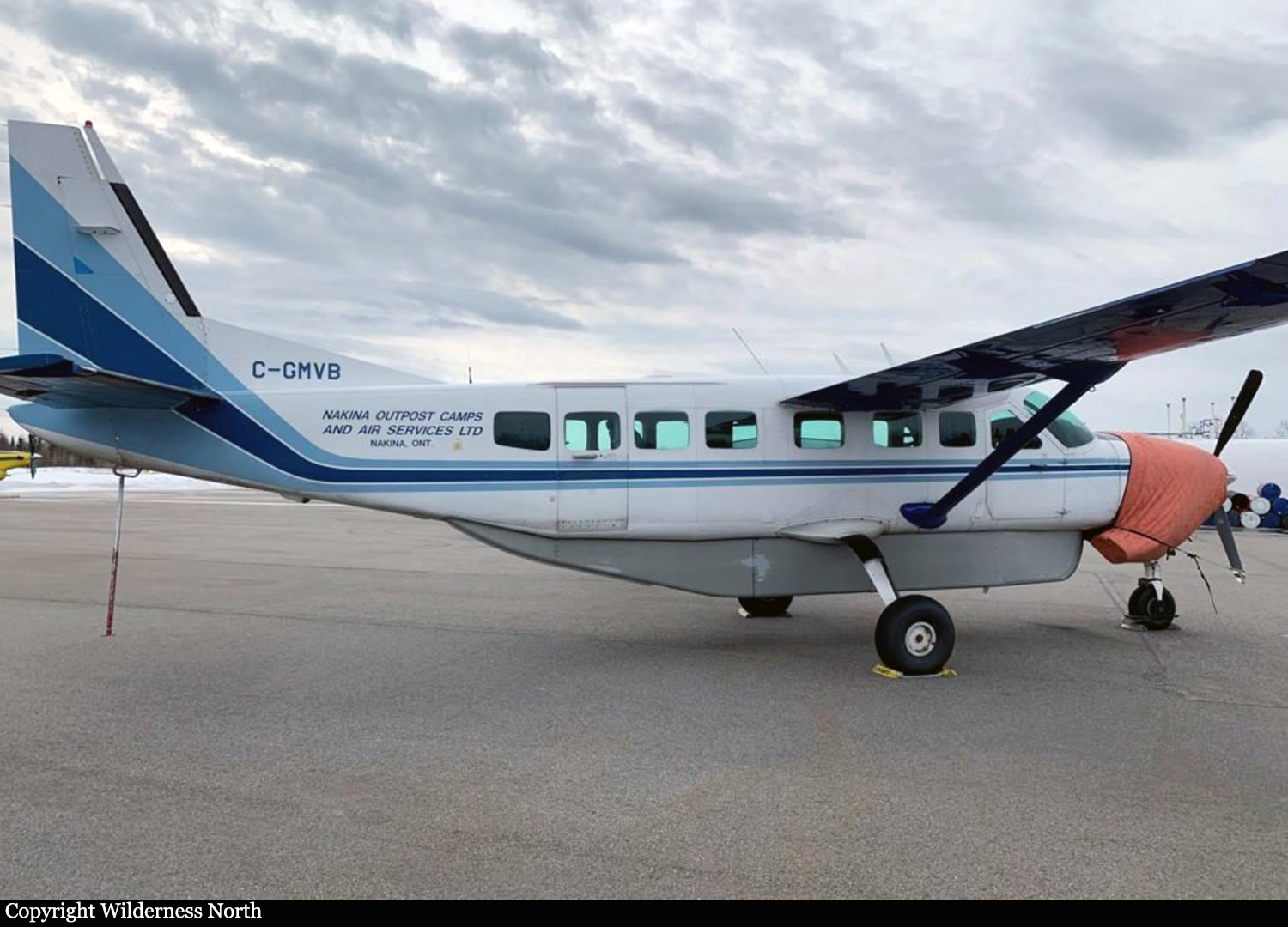
On 28 February 2023, the Cessna 208B Caravan (208B) aircraft (registration C-GMVB) operated by 1401380 Ontario Limited, doing business as Wilderness North Air (WNA), was scheduled for 2 cargo flights from Nakina Airport (CYQN), Ontario, to Fort Hope Airport (CYFH), Ontario. The occurrence pilot, who had recently been promoted to pilot-in-command (PIC) on the 208B aircraft, was scheduled to fly alone in daytime visual flight rules (VFR) conditions. After reviewing the weather information with his colleagues at their morning briefing, he assessed that the weather was satisfactory for the flight and noted that the winds were forecast to be gusty. A pilot who was present at the briefing but was not scheduled for flight duty that day offered to accompany him. For all flights that day, the occurrence pilot would be the PIC and occupy the left seat, and the 2nd pilot went along as an extra crew member without any assigned duties, occupying the right seat. The cargo was loaded onto the aircraft, and the 1st flight of the day departed CYQN at 1020 and landed in CYFH at 1055. After unloading the cargo, they departed CYFH at 1120 and returned to CYQN at 1156. The pilots loaded the aircraft with cargo for their 2nd flight to CYFH. According to the load sheet, there were 3320 pounds of groceries and household goods on board. The pilots refuelled the aircraft and departed from Runway 27 at approximately 1245. A few minutes after departure, it was reported that they made a radio call on the aerodrome traffic frequency, indicating their location and an estimated time of arrival at CYFH of 1330. Approximately 30 minutes after the occurrence flight departed, a 2nd 208B aircraft (registration C-FUYC) operated by WNA departed also from CYQN to CYFH, with cargo for a different customer. The flight crew encountered snow showers en route, and shortly after they arrived at CYFH at 1400, there was a snow squall, which significantly reduced visibility. At that time, 2 customers were waiting at CYFH for their cargo, and it soon became apparent that the occurrence aircraft had not yet arrived. At approximately 1430, WNA personnel at CYQN were informed that the occurrence aircraft had not arrived at 1330 as expected. At 1445, management at WNA notified the Joint Rescue Coordination Centre (JRCC), in Trenton, Ontario, that the aircraft was overdue. WNA began its own aerial search along the flight path using C-FUYC, which departed CYFH at 1510 with 2 crew members on board, flew along the direct route of flight of the missing aircraft, and returned to CYQN at 1546. They refuelled the aircraft and departed on another search flight at 1620, with 2 additional pilots in the back to act as spotters. They searched along the route of flight until 1840 and returned to CYQN. JRCC had initiated its response at 1500, and the first tasked aircraft arrived in the search area at 1700. The search continued over the following 4 days. The occurrence aircraft was found on 04 March 2023, 30.8 nautical miles north-northwest of CYQN along the direct track to CYFH. Both pilots were fatally injured. The aircraft was destroyed by impact forces. There was no post-crash fire. There was no emergency locator transmitter (ELT) on the occurrence aircraft because it had been removed for recertification.
Probable cause:
During the en-route portion of the flight, over a remote area, the pilot lost control of the aircraft for an unknown reason, which resulted in the collision with terrain.
Final Report:

Crash of a Cessna 208A Caravan I in Berisso

Date & Time: Feb 16, 2023 at 0100 LT
Type of aircraft:
Operator:
Registration:
CX-MAX
Flight Phase:
Flight Type:
Survivors:
Yes
Schedule:
Montevideo – Buenos Aires
MSN:
208-0042
YOM:
1985
Country:
Crew on board:
2
Crew fatalities:
Pax on board:
0
Pax fatalities:
Other fatalities:
Total fatalities:
0
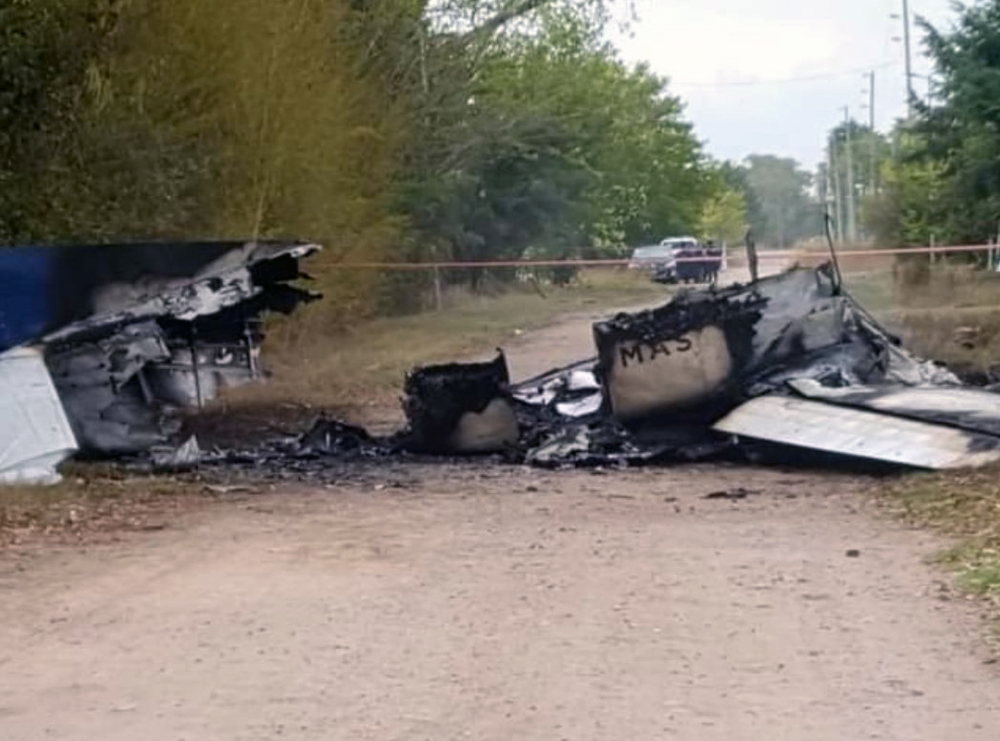
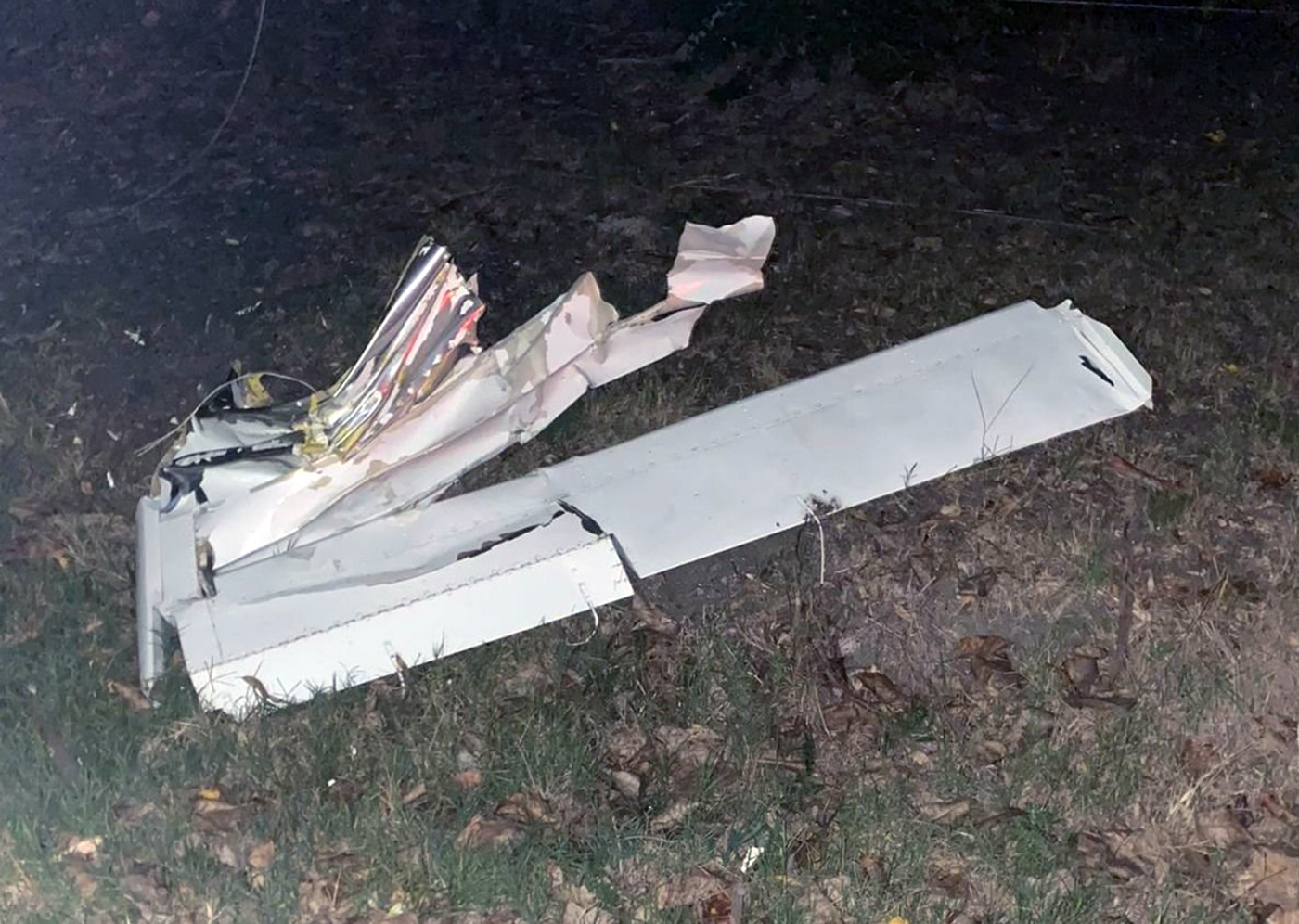
Circumstances:
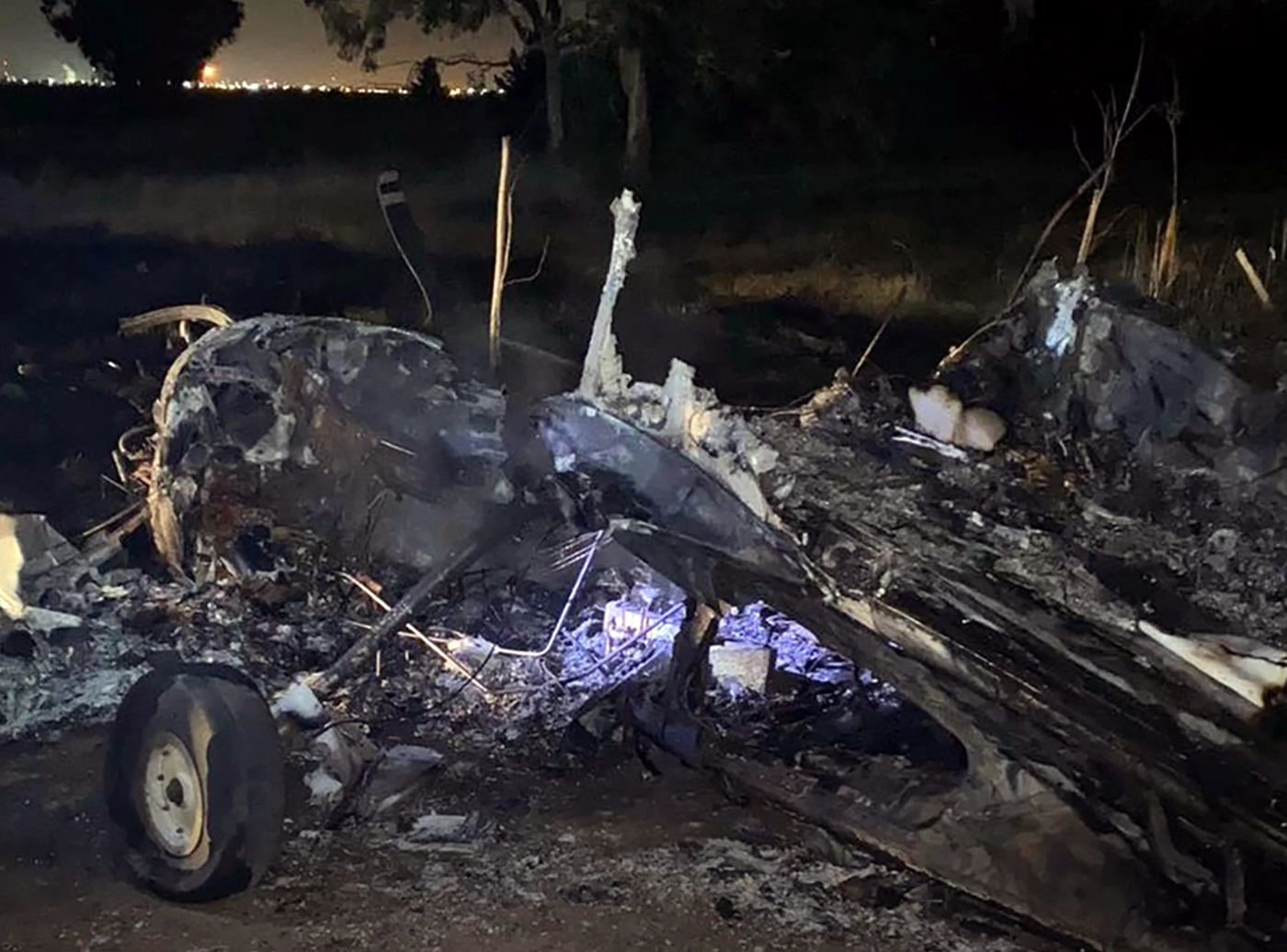
On a cargo flight from Montevideo to Buenos Aires, while cruising at night over the Río de la Plata, the crew encountered engine problems and decided to divert to La Plata Airport located in the Buenos Aires Province. On approach, the crew was forced to attempt an emergency landing when the airplane impacted trees and crashed on a small road located about 5 km northeast of runway 20 threshold, bursting into flames. Both pilots escaped uninjured while the airplane was totally destroyed by a post crash fire.