Zone

Crash of a Cessna 340A in Muskogee

Date & Time: Nov 27, 2024 at 0005 LT
Type of aircraft:
Operator:
Registration:
N5757C
Flight Type:
Survivors:
Yes
Schedule:
Livingston – Muskogee
MSN:
340A-0975
YOM:
1980
Crew on board:
1
Crew fatalities:
Pax on board:
4
Pax fatalities:
Other fatalities:
Total fatalities:
0
Captain / Total flying hours:
756
Captain / Total hours on type:
245.00
Aircraft flight hours:
3163
Circumstances:
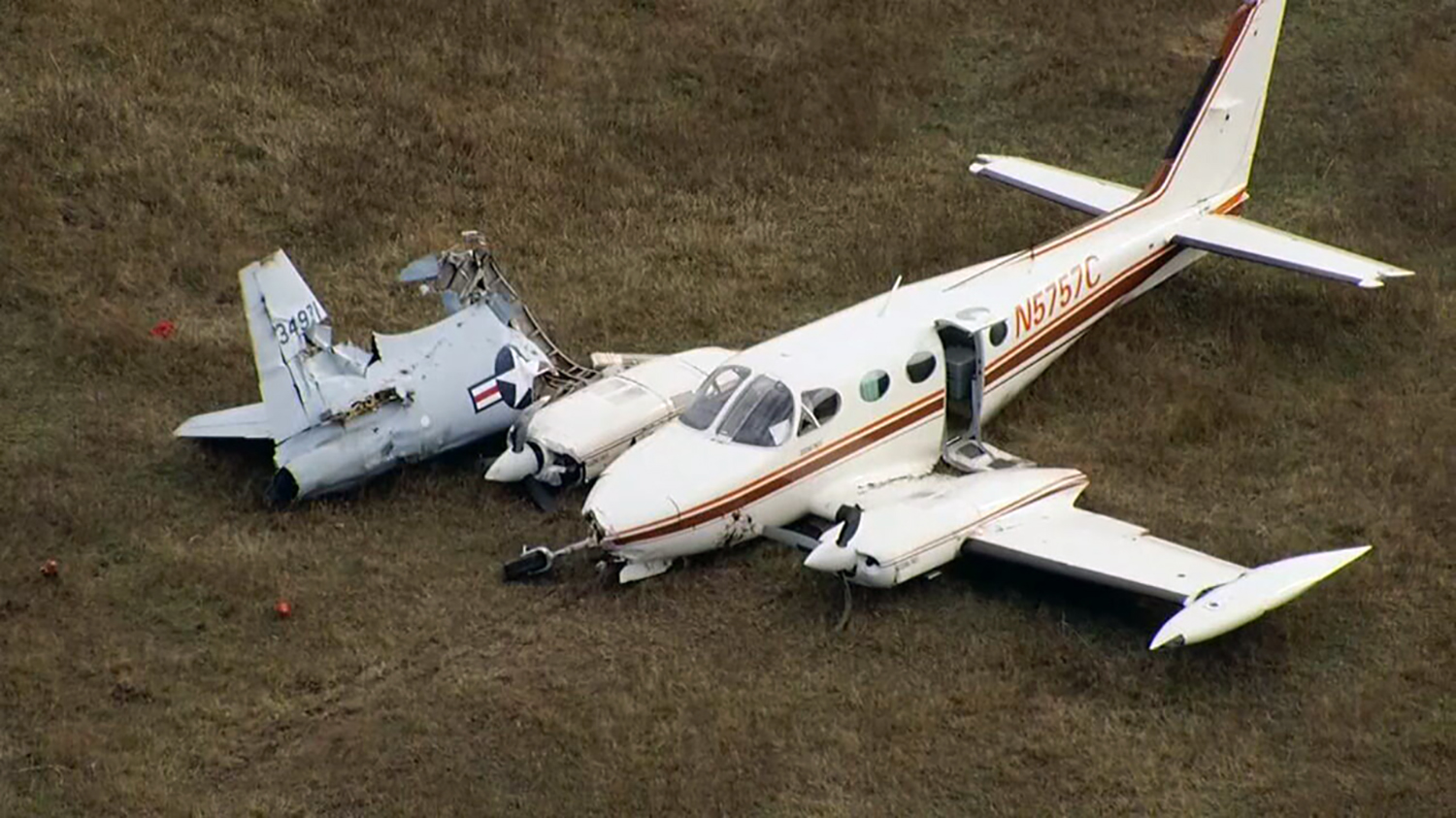
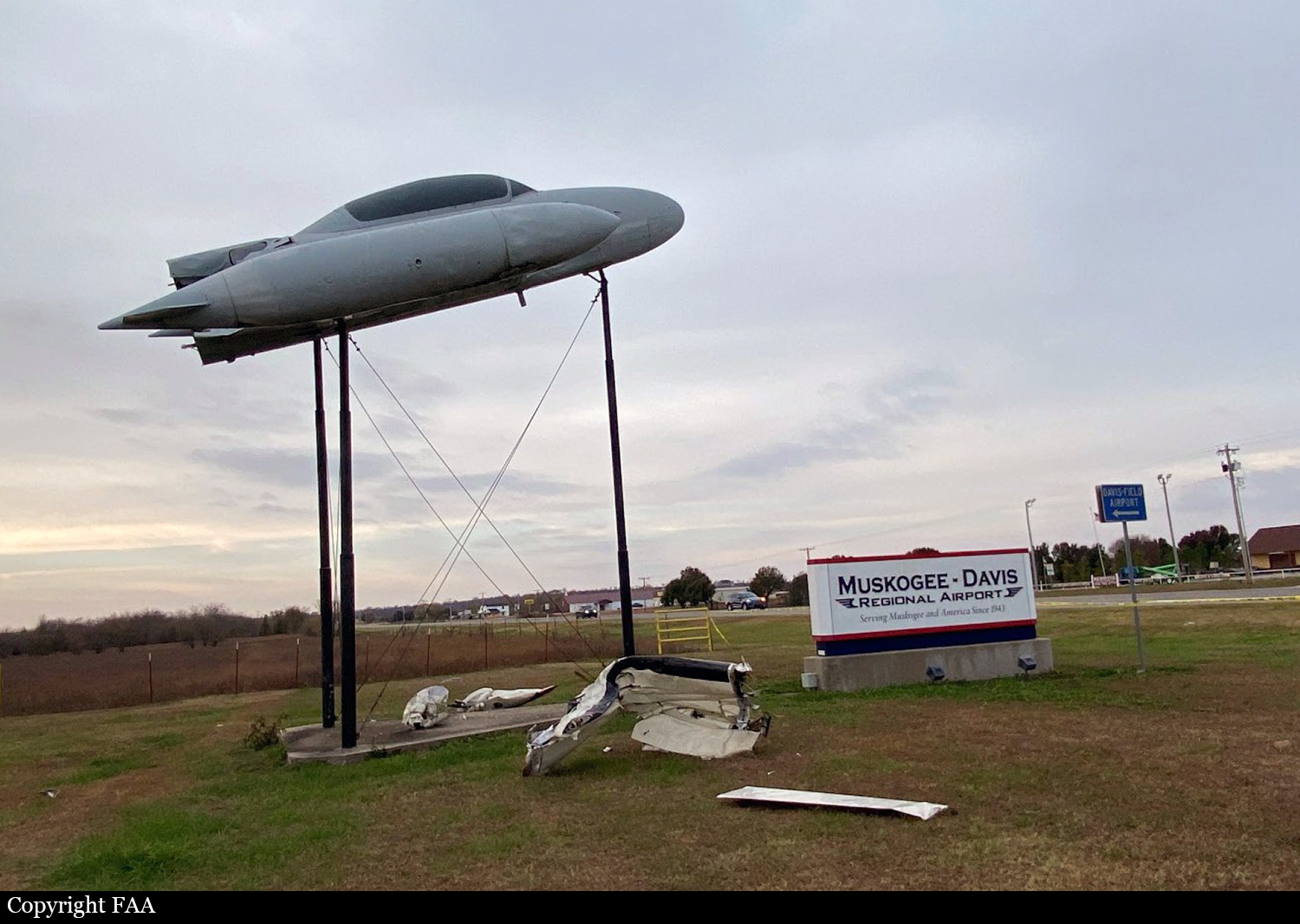
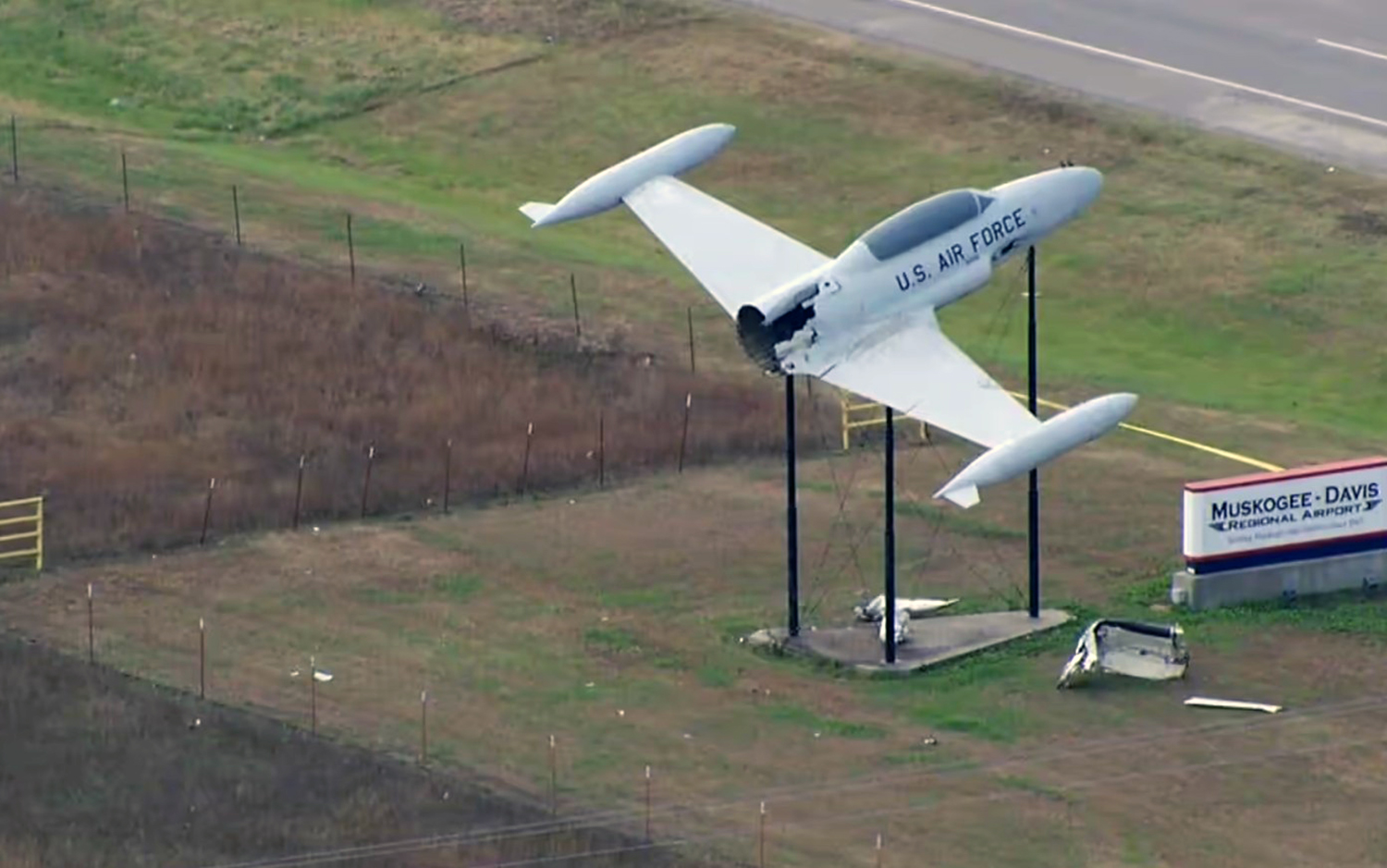
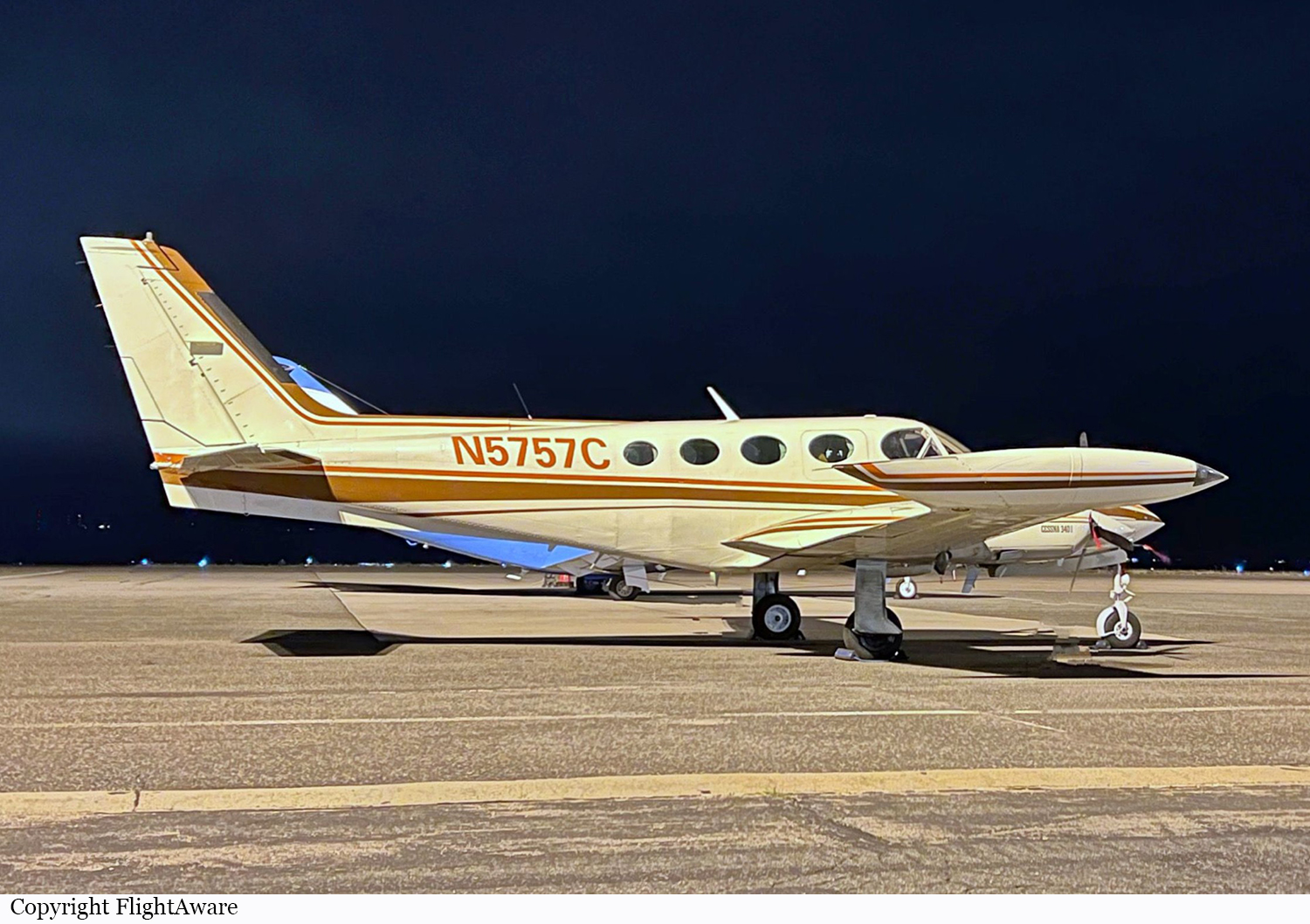
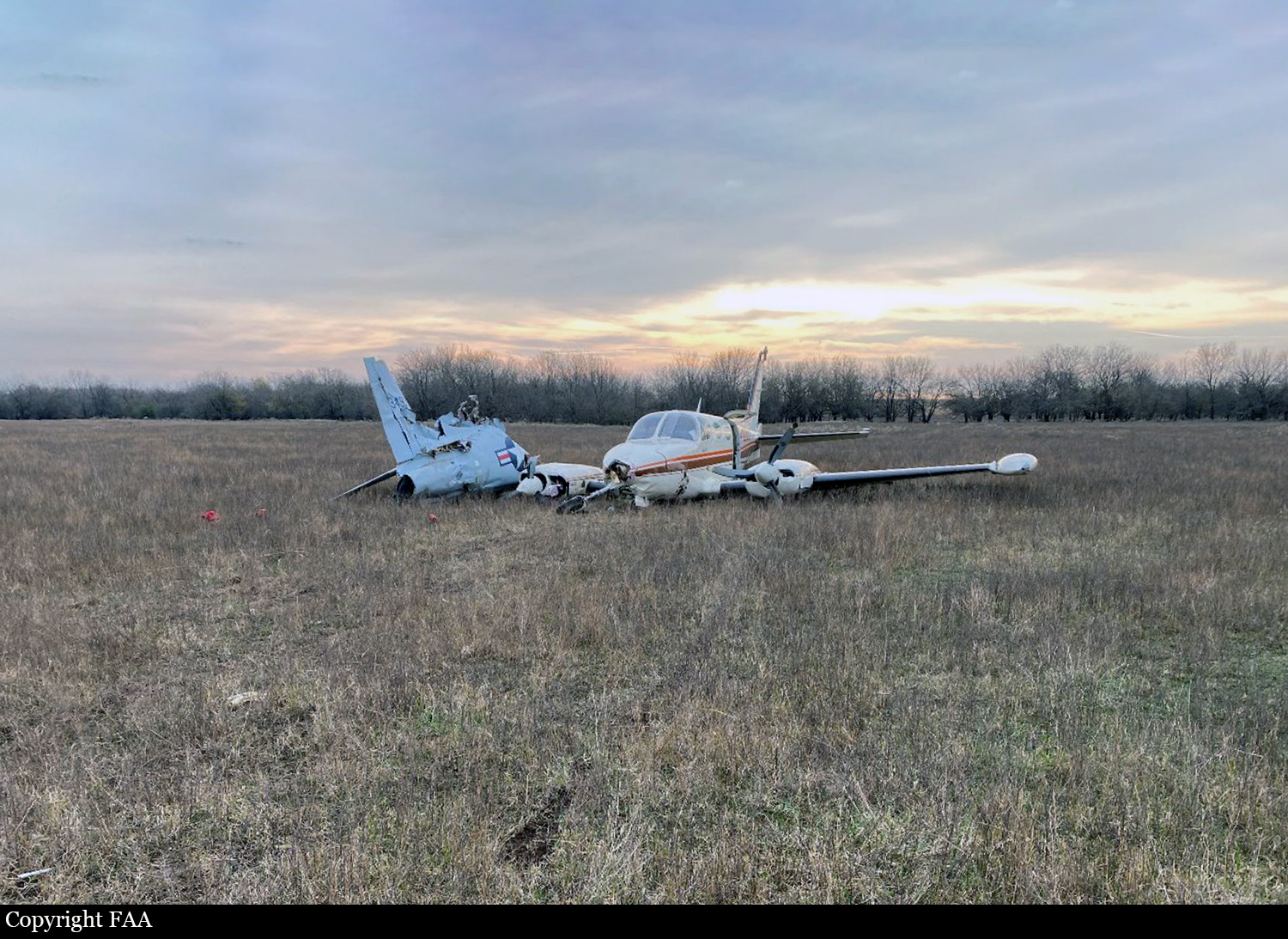
The pilot reported that the airplane was “topped off” with fuel before departing on the night cross-country flight. The pilot performed a preflight inspection, but he did not have his headlamp with him, only his cellular phone. The pilot reported that he typically verified fuel levels at night by feeling inside the fuel tank with his finger, but recalled not verifying the fuel level in the right main fuel tank before departing on the night of the accident flight. The pilot reported that the fuel consumption rate during the first half of the flight was higher than normal due to his operation of the engines slightly rich and his use of the airplane’s heater. While enroute, the pilot transferred fuel from the auxiliary fuel tanks and the left side locker fuel tank to the main fuel tanks. After the “final transfer” was completed, the pilot calculated that there was adequate fuel remaining, including the required reserve fuel, to reach the destination airport; however, he noticed that the indicated fuel remaining levels were less than he expected. Shortly after the pilot was cleared for a visual approach at the destination, the right engine lost total power, followed by the left engine. The pilot reported that, at the time of the initial power loss, gauges indicated that the left side of the airplane had about 30 pounds (about 4.84 gallons) of fuel remaining and the right side had about 30 to 35 pounds (about 4.84 to 5.65 gallons) of fuel remaining. During the subsequent forced landing, the right wing impacted a permanent elevated static display and the airplane came to rest upright on airport property. The airplane sustained substantial damage to the fuselage and the right wing. The pilot and a passenger sustained minor injuries.
Probable cause:
The pilot’s improper fuel planning, which resulted in fuel exhaustion and a total loss of power to both engines.
Final Report:
Crash of a Learjet 55 Longhorn in Livingston

Date & Time: Jan 11, 2024 at 0837 LT
Type of aircraft:
Operator:
Registration:
N558RA
Flight Type:
Survivors:
Yes
Schedule:
Pontiac - Livingston
MSN:
55-086
YOM:
1983
Flight number:
RAX698
Crew on board:
2
Crew fatalities:
Pax on board:
0
Pax fatalities:
Other fatalities:
Total fatalities:
0
Captain / Total flying hours:
31800
Captain / Total hours on type:
800.00
Copilot / Total flying hours:
1726
Copilot / Total hours on type:
9
Aircraft flight hours:
14135
Circumstances:
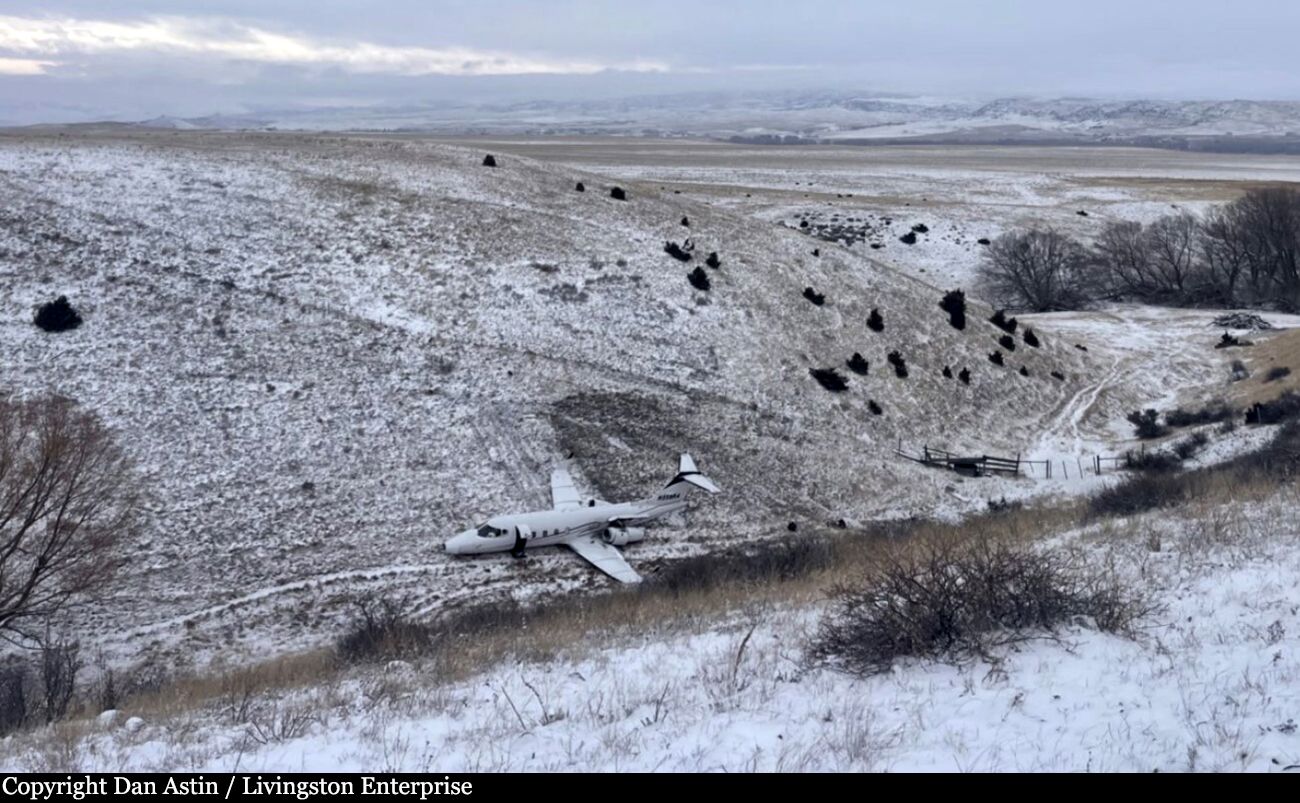
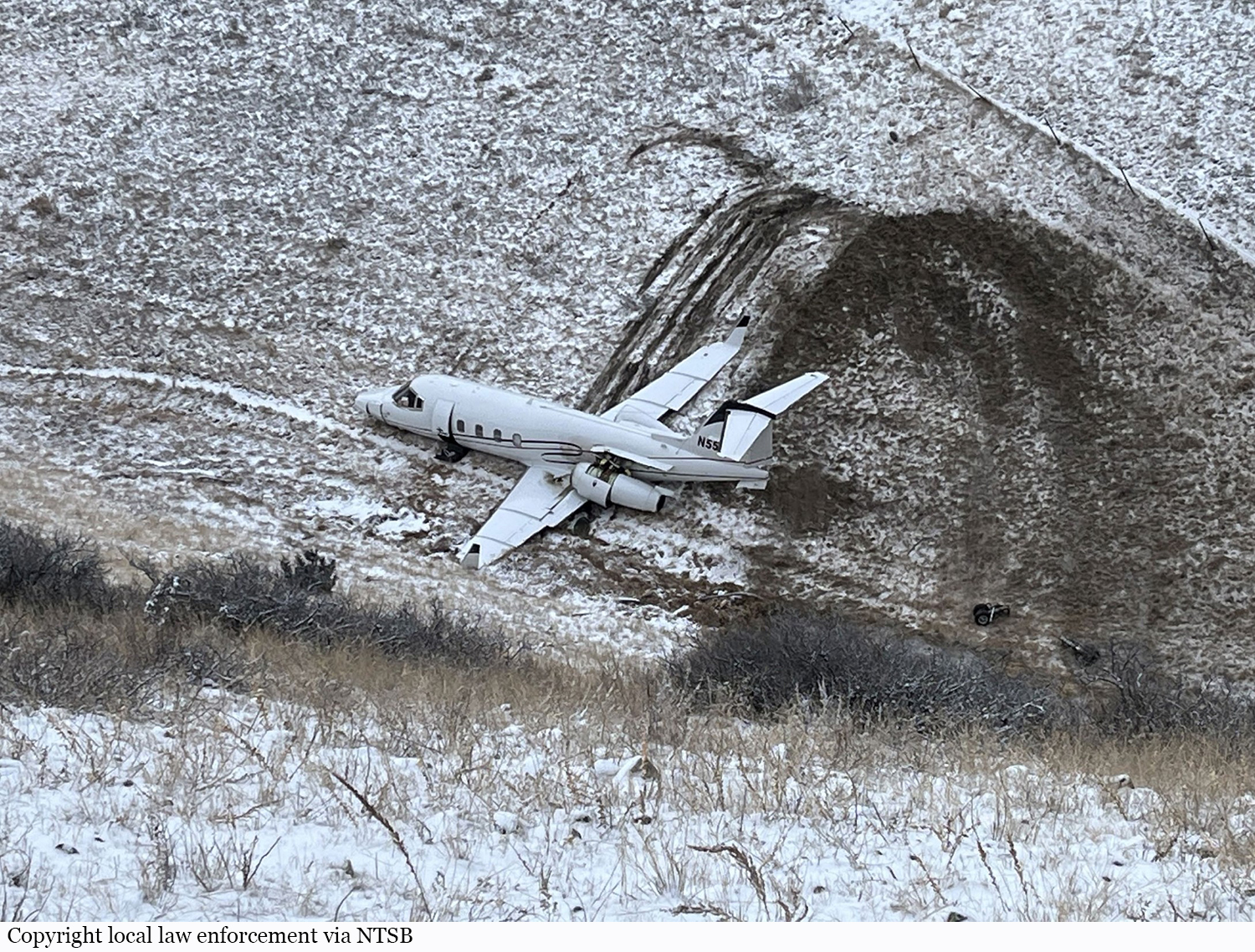
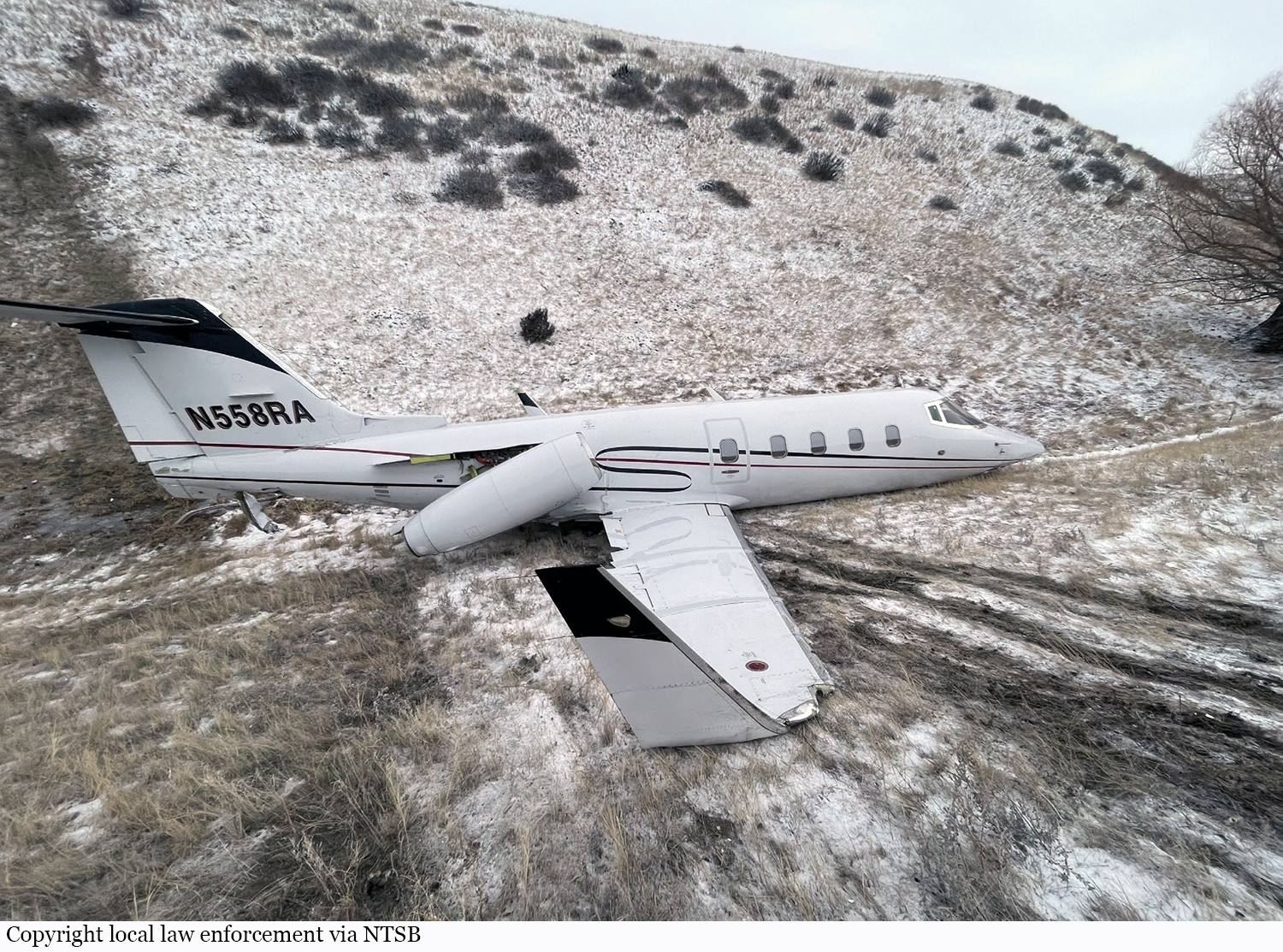
The pilot in command of the airplane reported that, while on an instrument GPS approach, they listened to the automated surface observing system several times and determined that they would be landing with a “light quartering tailwind” on an upsloping runway. Once clear of clouds and with the runway in sight, the pilot canceled the instrument flight rules clearance, announced their position over the airport’s common traffic advisory frequency and received a reply with a report of 1/4 inch of dry snow covering the runway, unplowed. During the landing roll, they applied brakes, extended spoilers, and thrust reversers. Initially the airplane slowed; however, about halfway down the runway, the airplane’s antiskid system was functioning continuously, and the airplane’s rate of deceleration decreased. The pilot was unsure if the thrust reversers deployed, and he cycled the thrust reversers and did not feel any effects. The pilot stated that, in his experience, the airplane’s thrust reversers do not feel very effective. The pilot considered aborting the landing, started to clean up the airplane but thought it was too late. The airplane overran the departure end of the runway, onto a grass covered area and into a deep ravine, resulting in substantial damage to the fuselage and both wings. The pilot reported that there were no preaccident mechanical failures or malfunctions with the airplane that would have precluded normal operation. The automated weather observation station located on the airport reported that, about 44 minutes before the accident, the wind was from 090° at 12 knots. The same automated station reported that, about 16 minutes after the accident, the wind was from 090° at 12 knots. The airplane landed on runway 22. The fixed based operator owner reported that, on the day of the accident, his review of the runway conditions at the airport appeared to be around an inch of snow on the runway surface. Additionally, plowing at the airport so far this year had been “abysmal.” Big windrows and ice chunks have been left; taxiway corners had been built up to the point there could be an occurrence should an airplane be taxiing by. Earlier this year, several departures were delayed due to the runway not being plowed. According to the chairman of the airport board, there is no formal process to conduct runway assessments. However, an airport board member lives in the area and routinely visits the airport to conduct runway assessments. The runway assessments and frequency of the observations are not documented but are conveyed verbally to the airport board via cell phone. To the best of his knowledge, there is no formal snow or ice removal plan. When the runway is required to be cleared, a board member will use county provided equipment to clear the runway. The frequency of the snow removal is not documented. The airport snow removal equipment is limited to clear substance to ½ inch of the runway surface. On the day of the accident, he was not aware of a Notice to Air Misson (NOTAM) issued for the conditions of the runway environment. According to the airplane manufacturer, the estimated landing distance on a dry runway was about 3,350 ft, with loose snow and no tailwind the estimated landing distance was about 6,700 ft, and on loose snow with tailwind, the estimated landing distance was 7,531 ft. According to the Federal Aviation Administration, the airport is not required to have a snow and ice control plan. However, the airport was provided federal funds (grant) to purchase/acquire a snowplow to maintain the airport surfaces during inclement weather conditions. There may be times where issues arise, and action is delayed. In that case it is expected that a NOTAM be issued as outlined in the grant agreement.
Probable cause:
The flight crew’s decision to land on a snow-covered runway with a tailwind, resulting in a runway excursion and subsequent impact with terrain. Contributing to the accident, was the failure of the airport authority to plow the runway.
Final Report:

Crash of a Douglas C-47B-10-DK near Livingston

Date & Time: May 19, 1947
Operator:
Registration:
43-49248
Flight Phase:
Flight Type:
Survivors:
Yes
Site:
MSN:
15064/26509
YOM:
1944
Crew on board:
2
Crew fatalities:
Pax on board:
0
Pax fatalities:
Other fatalities:
Total fatalities:
0
Circumstances:
Enroute, the crew encountered an unexpected situation and decided to abandon the aircraft and to bail out. The aircraft dove into the ground and crashed in a mountainous are located 5 miles southeast of Livingston. Both pilots were found unharmed.