Crash of a De Havilland DH.84 Dragon I in Point Cook: 1 killed

Date & Time: Dec 15, 1979
Type of aircraft:
Operator:
Registration:
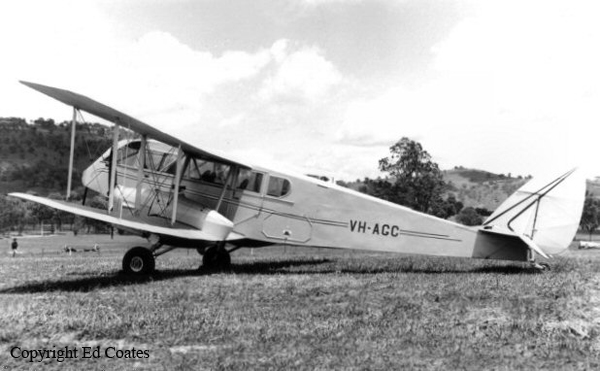
VH-AGC
Flight Phase:
Flight Type:
Survivors:
No
Schedule:
Point Cook - Point Cook
MSN:
2045
YOM:
1943
Country:
Region:
Crew on board:
1
Crew fatalities:
Pax on board:
0
Pax fatalities:
Other fatalities:
Total fatalities:
1
Circumstances:
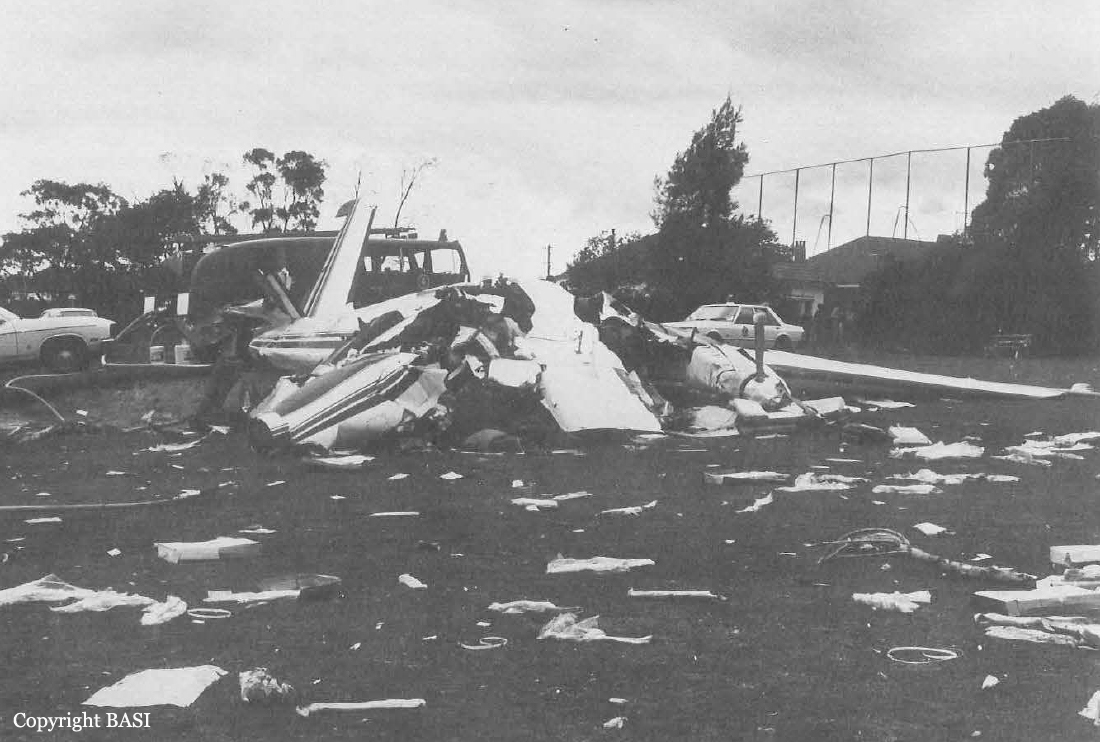
Shortly after takeoff from Point Cook Airport on a local flight, while climbing, the twin engine airplane went out of control and crashed. The pilot, sole on board, was killed.

Crash of a De Havilland DHC-2 Beaver in Captains Flat: 1 killed

Date & Time: Dec 6, 1979
Type of aircraft:
Operator:
Registration:
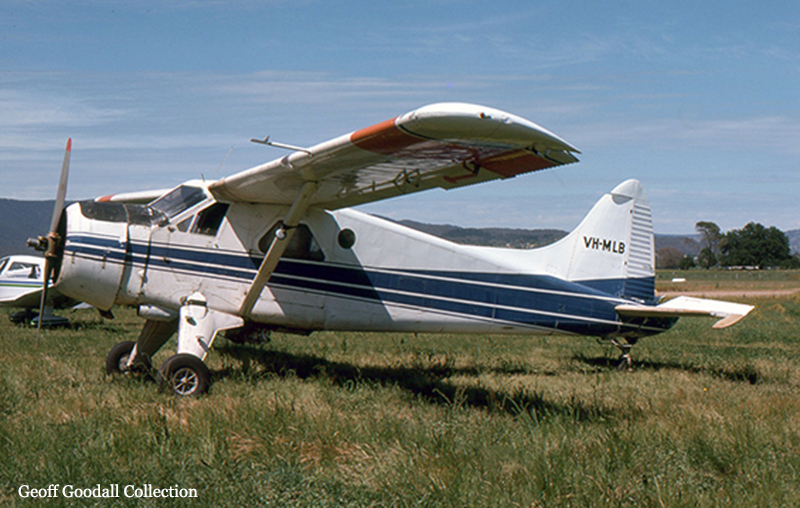
VH-MLB
Flight Phase:
Survivors:
No
Schedule:
Captains Flat - Captains Flat
MSN:
1567
YOM:
1964
Country:
Region:
Crew on board:
1
Crew fatalities:
Pax on board:
0
Pax fatalities:
Other fatalities:
Total fatalities:
1
Circumstances:
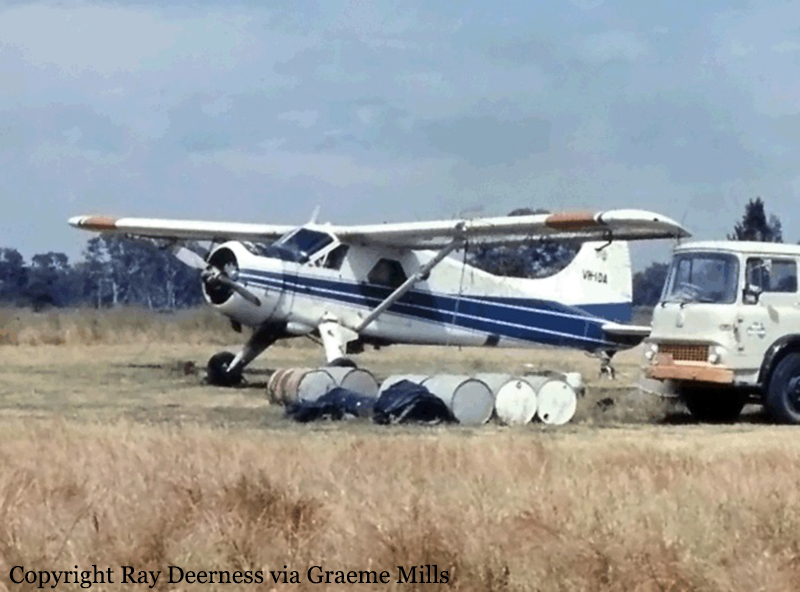
While completing a local topdressing flight, the pilot lost control of the airplane that crashed in a field. The airplane was destroyed and the pilot, sole on board, was killed. It seems that the aircraft was working and part-way through an agricultural procedure turn, pulling probably 2G+ as normal, when the fin attachment bolts failed. The investigation concluded that apparently the fin and rudder had rolled through about 90 degrees and rested (horizontally) on the tailplane and elevator. The pilot would have been immediately deprived of vertical and directional control at that instant. Being at low altitude, there would have been no means of recovering, even if some vertical control could have been achieved. The wreckage was beyond economic repair and the aircraft was written off at that time. However, the investigation did lead to fleet-wide inspection of all fin attachment bolts and some worn/cracked bolts were revealed. An Airworthiness Directive was immediately issued and all the DHC-2 Beavers were grounded until the inspections and bolt replacements had been completed. While the Beaver was built as a rugged bush aircraft, it was subjected to repeated overload operations from rough agricultural airstrips and subjected to high aerodynamic G forces in every day of agricultural operations.
Source: Geoff Goodall.
Probable cause:
Loss of control after the fin attachment bolts failed in flight.

Crash of a Rockwell Shrike Commander 500S in Melbourne: 2 killed

Date & Time: Aug 10, 1979 at 1508 LT
Operator:
Registration:
VH-ALH
Flight Type:
Survivors:
No
Schedule:
Whitemark - Melbourne
MSN:
500-1810-20
YOM:
1968
Country:
Region:
Crew on board:
1
Crew fatalities:
Pax on board:
1
Pax fatalities:
Other fatalities:
Total fatalities:
2
Captain / Total flying hours:
8500
Captain / Total hours on type:
100.00
Circumstances:
During the morning of August 9, 1979, the aircraft was refuelled to capacity and three drums, each with a capacity of 20 litres, were also filled with fuel and placed in the baggage compartment. The aircraft, loaded with freight, subsequently departed Essendon at 1335 hours and proceeded to Cambridge where it arrived at 1536 hours. The freight was unloaded and, at 1621 hours, the aircraft departed for Launceston where it arrived at 1653 hours. It was again loaded with freight and departed Launceston at 1720 hours bound for Flinders Island. The aircraft landed at Flinders Island several minutes after the end of daylight, which was at 1745 hours, and the freight was unloaded. On the following day, the aircraft was again loaded with freight and the pilot subsequently reported departure from Flinders Island at 1329 hours, bound for Essendon. The take-off run was observed to be longer than usual for this type of aircraft and its rate of climb appeared to be less than normal. The IFR flight plan notified by the pilot before departure indicated his intention to cruise at an altitude of 4500 feet but, at 1410 hours, he reported to Melbourne Flight Service Unit "request traffic for a descent to proceed VFE we're getting 50 knot head wind here". On being advised that there was no traffic information, the pilot reported leaving 4500 feet. At 1502 hours, the pilot established communication with Essendon Tower, reported approaching Channel 0 at 1500 feet, and "request expedite clearance". He was issued with a clearance to enter controlled airspace at 1500 feet tracking from Channel 0 to Essendon via Clifton Hill. At 1506 hours he reported at Clifton Hill and, at 1507:38 hours, he advised "I'm sorry have a Mayday appear to have a fuel problem we'll have to land on a golf course". On being asked "which golf course?, the pilot replied "oh right where we are now". No further communications were received from the aircraft. The aircraft was observed by witnesses in the Northcote area initially on a north-westerly heading towards Essendon. E was seen to be descending and the sound of the engines was not normal. After flying over the northern section of the Northcote Municipal Golf Course, the aircraft commenced a descending left turn and [passed over a power transmission line which ran in a north-south direction near the western boundary of the golf course. As the turn continued towards an easterly heading, the aircraft again passed over the power line, at a very low height, and in strong tail wind conditions struck trees bordering a fairway while in a slightly left wing down, nose down, attitude. It struck the ground heavily just beyond the trees and the main wreckage travelled a further 73 metres before it came to rest on the edge of a green in the south-eastern corner of the golf course. Detailed examination of the wreckage of the aircraft revealed no evidence of any defect or malfunction which may have contributed to the accident. There was no significant fuel in the fuel systems of the two engines and there was negligible fuel in those cells of the fuel storage system which were undamaged. There was no fire. The pilot was in full time employment as an airline captain with a major operator. He was also involved financially and managerially in Norfish Pty. Ltd. and both he and the Company had financial difficulties at that time. The flight plan submitted by the pilot before departure from Essendon on August 9 contained false names in respect of both the pilot and the operator. Neither the pilot nor Norfish Pty Ltd held a Charter or Aerial Work Licence. The maximum specified take-off weight for the aircraft was 3357 kg. for VFR operations and 3243 kg. for IFR operations. It has been calculated that the gross weight of the aircraft was 3775 kg. when it departed Essendon for Cambridge on 9.8.79 and 3746 kg. when it departed Launceston for Flinders Island on the same day. The calculated gross weight was 4061 kg. when it departed Flinders Island on the day of the accident. Although fuel was available at Cambridge and Launceston, the aircraft was not refuelled after it 'departed from Essendon. The three 20 litre drums were located in the aircraft wreckage and, although all were damaged, detailed examination indicated that they ruptured under the action of hydraulic shock and that they wert filled at the time of the accident. The total operating time of the aircraft from departure Essendon until the time of the accident was consistent with a fuel endurance which could be expected in the circumstances leading to this accident.
Probable cause:
The cause of the accident was that the aircraft was operated with insufficient fuel to safely complete the flight.
Final Report:

Crash of a De Havilland DHC-2 Beaver in Queanbeyan

Date & Time: Jul 26, 1979
Type of aircraft:
Operator:
Registration:
VH-IDA
Flight Phase:
Survivors:
Yes
MSN:
905
YOM:
1956
Country:
Region:
Crew on board:
1
Crew fatalities:
Pax on board:
0
Pax fatalities:
Other fatalities:
Total fatalities:
0
Circumstances:
Crashed in a field in Queanbeyan while conducting a crop spraying mission. The aircraft was destroyed and the pilot, sole on board, was injured.

Crash of a De Havilland DHC-2 Beaver near Yarrowitch

Date & Time: Jul 25, 1979
Type of aircraft:
Operator:
Registration:
VH-AAH
Flight Phase:
Survivors:
Yes
Schedule:
Yarrowitch - Yarrowitch
MSN:
355
YOM:
1952
Country:
Region:
Crew on board:
1
Crew fatalities:
Pax on board:
0
Pax fatalities:
Other fatalities:
Total fatalities:
0
Circumstances:
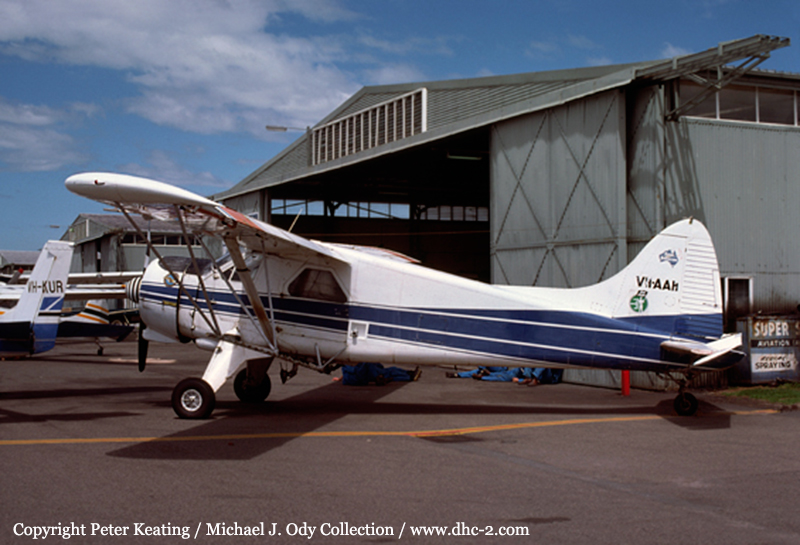
The pilot, sole on board, was completing a crop spraying mission in Yarrowitch when the airplane crashed in unknown circumstances. The pilot was rescued and the aircraft was damaged beyond repair.

Crash of a Cessna 402B in Queenstown

Date & Time: May 30, 1979
Type of aircraft:
Operator:
Registration:
VH-KIB
Survivors:
Yes
Site:
Schedule:
Melbourne – Smithton – Queenstown
MSN:
402B-0518
YOM:
1973
Country:
Region:
Crew on board:
1
Crew fatalities:
Pax on board:
2
Pax fatalities:
Other fatalities:
Total fatalities:
0
Circumstances:
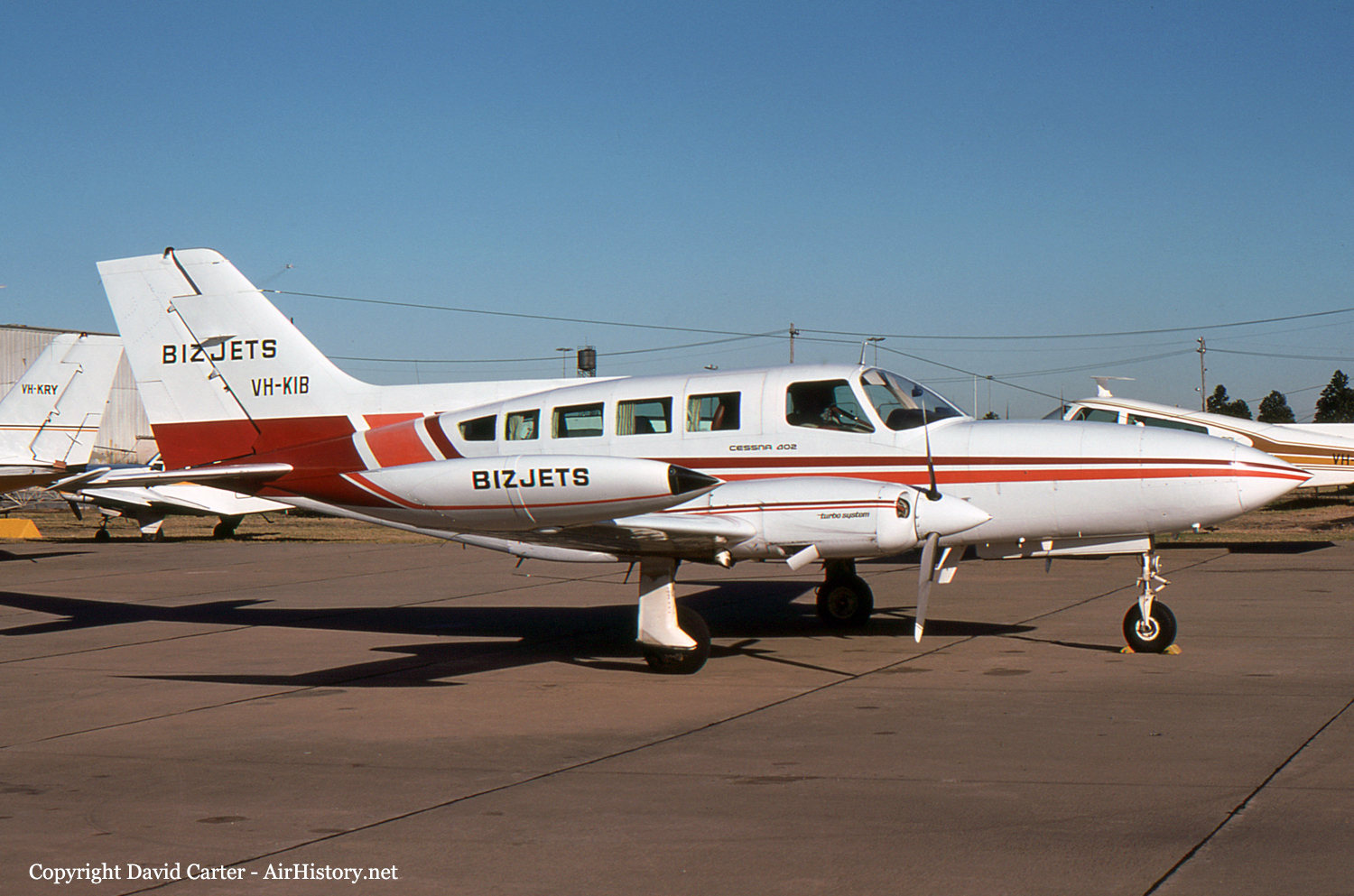
On approach to Queenstown, the twin engine airplane went into clouds. The pilot initiated a go-around when the airplane struck dead trees and crashed on Mt Sorrell. All three occupants were slightly injured and evacuated while the aircraft was damaged beyond repair.

Crash of a Cessna 340A in Goulburn: 1 killed

Date & Time: May 15, 1979 at 1851 LT
Type of aircraft:
Operator:
Registration:
VH-TDU
Flight Phase:
Survivors:
Yes
Schedule:
Melbourne – Ballarat – Bendigo – Albury – Goulburn – Sydney
MSN:
340-0349
YOM:
1974
Country:
Region:
Crew on board:
2
Crew fatalities:
Pax on board:
4
Pax fatalities:
Other fatalities:
Total fatalities:
1
Captain / Total flying hours:
3500
Copilot / Total flying hours:
1060
Copilot / Total hours on type:
3
Circumstances:
The pilot contacted Sydney Flight Service Center at 1849, advised he was taxiing for runway 22 and that he would call again on departure. No further transmissions were received from the aircraft. VH-TDU completed an apparently normal take off and the landing gear was retracted. Shortly after it became airborne, it entered a gradual descending left turn and flew into the ground. The initial impact was on the left wing tip, approximately 1700 metres south of the departure end of Runway 22, at a speed of about 125 knots. The aircraft bounced, rolled inverted and again struck the ground some 100 metres further to the east. It then ;slid across the ground for a further 230 metres. A small fuel-fed fire broke out in the right wing but died out after several minutes. Five occupants were slightly injured while the captain was killed. Examination of the wreckage found no evidence of pre-existing mechanical malfunction or defect, apart from an open circuit in the gyro motor of the pilot's turn co-ordinator instrument. The instrument was not subjected to mechanical damage during impact and it is likely the fault existed prior to the accident. It could not be determined whether the pilot was aware that the instrument was unserviceable. All other instruments, including the primary flight instruments used in aircraft attitude control, were found to be serviceable and calibrated within specified limits. There was no evidence of pilot incapacitation prior to impact. Injuries were such that he was unable to recall details of the final flight. The passengers were not aware of any abnormality until the aircraft struck the ground. The pilot's current log book was not located. Therefore, while it is known that he had considerable experience at flying Cessna 340 aircraft, his hours on this type are unknown.
Probable cause:
There is insufficient evidence to establish the cause of the accident but the most likely explanation is that the pilot, influenced by fatigue, did not adequately refer to the flight instruments during the take-off and initial climb.
Final Report:

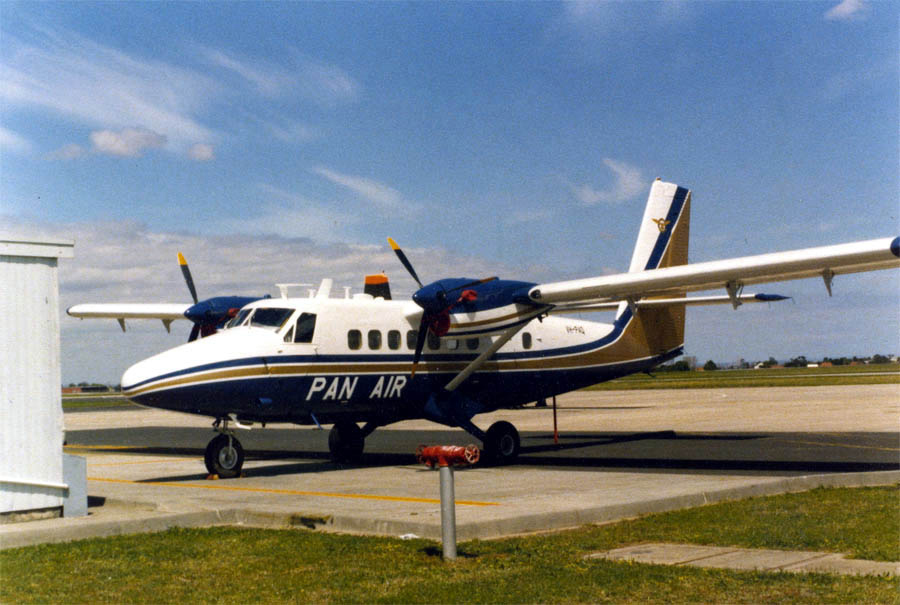
Crash of a De Havilland DHC-6 Twin Otter 200 in Yarra Creek

Date & Time: Feb 13, 1979
Operator:
Registration:
VH-PAQ
Flight Phase:
Flight Type:
Survivors:
Yes
Schedule:
King Island - Wynyard
MSN:
227
YOM:
1969
Country:
Region:
Crew on board:
1
Crew fatalities:
Pax on board:
0
Pax fatalities:
Other fatalities:
Total fatalities:
0
Circumstances:
The airplane departed King Island-Currie Airport on a cargo flight to Wynyard-Burnie Airport, carrying one pilot and a load of meat. Weather conditions worsened and the pilot was unable to locate the destination airport so he decided to divert to Devonport Airfield. Unfortunately, the visibility was too low and he eventually decided to return to King Island. While approaching the coast, both engines failed due to fuel exhaustion. The pilot attempted an emergency landing when the airplane crashed in a prairie located in Yarra Creek, on the east coast of the island. The pilot was injured and the aircraft was destroyed.
Probable cause:
Double engine failure in flight due to fuel exhaustion.

Crash of a Piper PA-61 Aerostar (Ted Smith Aerostar 601) in Charleville

Date & Time: Feb 1, 1979 at 0125 LT
Operator:
Registration:
VH-CPH
Flight Phase:
Flight Type:
Survivors:
Yes
Schedule:
Charleville – Mount Isa
Country:
Region:
Crew on board:
1
Crew fatalities:
Pax on board:
1
Pax fatalities:
Other fatalities:
Total fatalities:
0
Circumstances:
After lift-off at 85 knots, the pilot noted a positive rate of climb before retracting the landing gear and flaps. He then felt the aircraft sink and noted a high indicated rate of descent. Although full power was applied the descent continued until the aircraft struck the runway in a slightly nose-up attitude. The aircraft slid across the overrun area and through a fence before coming to rest. Fire broke out and engulfed the wreckage. At the time of the accident the aircraft weight was more than 200 kg above the maximum allowable and the centre of gravity was 142 mm forward of the forward limit. The pilot had been unable to retain control of the aircraft during the initial climb phase when the flaps were retracted at a relatively low airspeed.
Probable cause:
Overweight at takeoff.
Final Report:

Crash of a Partenavia P.68B in Melbourne: 6 killed

Date & Time: Jul 10, 1978 at 1853 LT
Type of aircraft:
Operator:
Registration:
VH-PNW
Flight Phase:
Flight Type:
Survivors:
No
Site:
Schedule:
Melbourne - Melbourne
MSN:
65
YOM:
1976
Country:
Region:
Crew on board:
2
Crew fatalities:
Pax on board:
1
Pax fatalities:
Other fatalities:
Total fatalities:
6
Captain / Total flying hours:
3512
Captain / Total hours on type:
2.00
Copilot / Total flying hours:
288
Copilot / Total hours on type:
34
Aircraft flight hours:
819
Circumstances:
The twin engine airplane was engaged in a local training flight at MelBourne-Essendon Airport, carrying one instructor, a pilot under supervision and a pilot's friend as passenger. Shortly after takeoff from runway 26, while climbing to a height of 200-250 feet, the pilot-under-supervision selected the wing flaps up and, at about this time, the pilot-in-command simulated an engine failure of one engine by closing a mixture control-believed to have been the starboard engine. The pilot-under-supervision identified the 'failed' engine, exercised the appropriate engine throttle to signify this identification and indicated the essential actions which would be taken in the event of an actual engine failure. The relevant controls were not operated. Following the completion of these actions full engine power was restored by the pilot-in-command. During the course of the simulated engine failure the aircraft assumed a nose down attitude. It then descended straight ahead with full engine power, passed through electric power cables outside the airport boundary at a height of 4.15 metres above terrain, and crashed into houses 286 metres beyond the western end of the runway. All three occupants were seriously injured while six people on the ground were killed, a seventh was injured as well.
Probable cause:
The cause of the accident was that the aircraft became grossly out of trim at a height which did not permit time for the crew to affect recovery. The manner in which the out-of-trim condition occurred has not been determined and the possibility of a trim system malfunction cannot be eliminated. However, the more likely explanation is that the command trim switch was activated unknowingly.
Final Report: