Crash of a Piper PA-31-350 Navajo Chieftain in Portland: 1 killed

Date & Time: Jan 26, 1981 at 1538 LT
Registration:
VH-POC
Flight Phase:
Survivors:
Yes
Schedule:
Portland - Melbourne
MSN:
31-7952087
YOM:
1979
Country:
Region:
Crew on board:
1
Crew fatalities:
Pax on board:
9
Pax fatalities:
Other fatalities:
Total fatalities:
1
Captain / Total flying hours:
815
Captain / Total hours on type:
83.00
Circumstances:
The operator had undertaken to carry out a ship's crew exchange programme that consisted of transporting 16 persons and their baggage from Portland to Essendon and the same number back to Portland. Similar programmes had been carried out previously and it was known that the passengers usually carried considerable baggage. However, only two Piper PA-31-350 aircraft, VH-POC and VH-RNH, were assigned to the task. Prior to departure Essendon, both pilots attended the Briefing Office and prepared flight plans, intended to operate under the Instrument Flight Rules and the pilots calculated it would be necessary to load 208 minutes fuel for the first return flight to Portland. This included an additional 30 minutes fuel for holding, as was required because of forecast thunderstorm activity, with associated reduced visibility in rain, in the Essendon area. Both pilots elected to have their aircraft refuelled to capacity which, they indicated on their flight plans, would give them a total of 280 minutes endurance; 72 minutes more than required. The aircraft proceeded to Portland without known incident, arriving at about 14:00 hours. After a break for refreshments, the pilots returned to their aircraft at about 1500 hours and carried out pre-flight checks. The passengers arrived at the aerodrome in a number of vehicles. Initially the pilots began to weigh the baggage and record the weights on a manifest. The passengers were in a light-hearted mood, however, and with an atmosphere of some confusion, not all of the baggage was weighed, the manifest was not completed and no individual weights were marked on the bags.The baggage was then transported by trolleys to the aircraft and shared between them without consideration of weight. The baggage in the rear baggage area of the cabin of VH-POC was not restrained to prevent movement. The pilots decided that, by inspection, the average baggage weight per passenger was 20 kg. The accepted standard weight of 77 kg per adult passenger was also assumed. Each pilot then completed a load sheet for his aircraft, on the basis of carrying eight passengers. The sheet for VH-POC indicated that the aircraft fuel load was 290 kg. The total weight calculated for VH-POC was 3,080 kg. This was less than the maximum allowable all-up-weight of 3,178 kg. However, an incorrect aircraft operating weight had been used and an arithmetical error had occurred in the calculation. Correcting for these, the aircraft weight should have been recorded as 3,256 kg. When ready to embark, the passengers were only directed towards the two aircraft. No effort was made to split the party into two even groups and in the event, nine passengers boarded VH-POC. On boarding VH-POC, the pilot did not correct the passenger imbalance. He started both engines and proceeded to taxi for a take-off on Runway 22. Pre-take-off checks were carried out as the aircraft taxied. The weather conditions at the time were fine; visibility 15 km, temperature 22° Celsius, sea level barometric pressure 1007 millibars and surface wind from 210° to 220° magnetic, gusting from 25 to 35 knots. In such wind conditions, and because of the location near a coastal headland, there was significant turbulence present. The pilot of VH-POC had operated into Portland on numerous prior occasions and had experienced this common situation previously. The take-off run was commenced and the pilot reported that full power was obtained from both engines. He stated that at 95 kts the aircraft was rotated and, when a positive rate of climb had been established, the landing gear was retracted. Then, at a height of 60 to 70 feet, just after he had reduced power to the climb setting, the left engine suddenly lost power. Ground witnesses who observed the take-off reported that the aircraft appeared slow to accelerate. Once airborne, it maintained a low climb profile and, at one stage, slewed to the right. Irregular engine noise was heard but it was not identified to a particular engine. The pilot reported that he confirmed a left engine failure by closing the left throttle. On fully re-opening the throttle, however, he noted a slight power response and hence he elected not to shut down the engine and feather the left propeller. Several of the passengers were aware of an abnormal situation but none was aware of the nature of the problem nor could confirm which engine was malfunctioning. They reported that the landing gear audio warning was sounding throughout most of the flight, which indicated a throttle was at or near the closed position. The pilot reported that the aircraft began to lose height and, as a forced landing was imminent, he turned to the right to avoid the sea. Control had been difficult in the gusty conditions but he had managed to reduce speed, lower the landing gear and guide the aircraft to a landing in a reasonably suitable area. The aircraft touched down on undulating-, sandy scrub-covered terrain. The landing gear and engines were torn out and the aircraft came to rest after travelling only some 26 metres. The fuselage broke open near the rear door during the ground slide. Some passengers were able to evacuate the cabin without assistance and they rendered help to the pilot and other passengers. A small fire, which had ignited in the vicinity of the left engine as the aircraft came to rest, then suddenly spread and engulfed the fuselage before the final passenger could be extricated. Subsequent examination of the wreckage was hampered by the extensive fire damage. No pre-existing fault was found in those components that were recovered. An inspection of the left propeller found that it had been feathered at ground impact. It was not possible to establish precisely the aircraft's weight and centre of gravity at the time of the accident as the contents of the nose and engine nacelles baggage compartments were destroyed. The available evidence, however, indicated that the aircraft weighed at least 3400 kg and its centre of gravity was probably beyond the aft limit. Piper PA31-350 performance data indicated that, for a new aircraft, the maximum attainable single-engine rate of climb at the limit weight of 3,178 kg was 220 feet per minute. At a weight of 3,400 kg this would be reduced by about 40 percent to 134 feet per minute. At the higher weight, detracting factors such as aircraft age, turbulence and less than optimum airspeed would have precluded the aircraft from achieving a positive rate of climb. The pilot was briefly interviewed in hospital on 27.1.81. At that time he also submitted a written notification of the accident. Subsequently, he has declined, through industrial counsel, to either attend for an interview under procedures of the Air Safety Investigation Branch or to supply answers to written questions. Hence it has not been possible to fully resolve a number of safety aspects of the accident, such as aircraft loading, the nature of the power loss and subsequent aircraft handling considerations.
Probable cause:
The probable cause of the accident was that the aircraft experienced a loss of power from one engine under conditions which precluded a safe continuation of flight. The two most significant conditions were aircraft overloading and turbulence. The nature and cause of the power loss have not been determined.
Final Report:

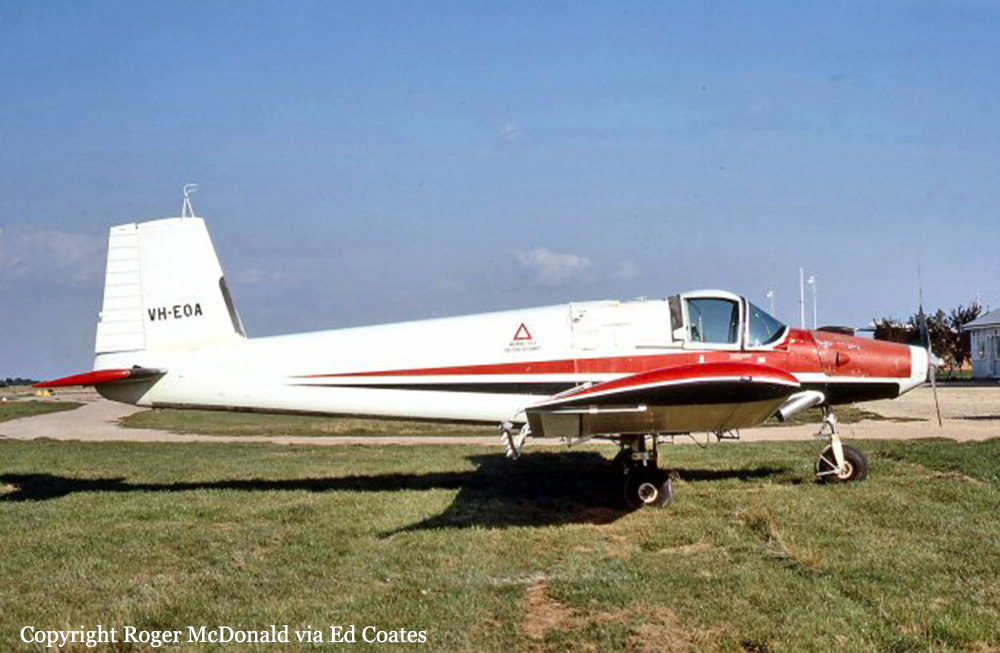
Crash of a Fletcher FU-24 in Yass

Date & Time: Dec 31, 1980
Type of aircraft:
Operator:
Registration:
VH-EOA
Flight Phase:
Survivors:
Yes
MSN:
43
YOM:
1957
Country:
Region:
Crew on board:
1
Crew fatalities:
Pax on board:
0
Pax fatalities:
Other fatalities:
Total fatalities:
0
Circumstances:
Crashed in unknown circumstances in Yass while engaged in a crop spraying mission. The pilot, sole on board, was injured.

Crash of a Partenavia P.68B in Bankstown

Date & Time: Dec 23, 1980
Type of aircraft:
Operator:
Registration:
VH-IYO
Flight Phase:
Flight Type:
Survivors:
Yes
Country:
Region:
Crew on board:
1
Crew fatalities:
Pax on board:
0
Pax fatalities:
Other fatalities:
Total fatalities:
0
Circumstances:
Shortly after takeoff from Bankstown Airport, while climbing, the twin engine airplane stalled and crashed in a camping lot. The pilot, sole on board, was injured. There were no injuries on ground.

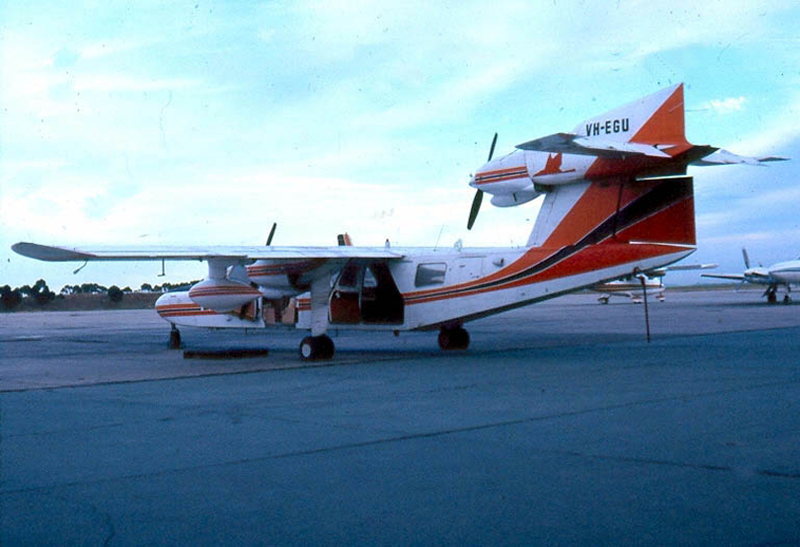
Crash of a Britten-Norman BN-2A Trislander Mk.III-2 near Tumut: 2 killed

Date & Time: Dec 16, 1980
Type of aircraft:
Registration:
VH-EGU
Flight Phase:
Flight Type:
Survivors:
No
Site:
Schedule:
Bankstown - Melbourne
MSN:
1030
YOM:
1976
Country:
Region:
Crew on board:
1
Crew fatalities:
Pax on board:
1
Pax fatalities:
Other fatalities:
Total fatalities:
2
Circumstances:
While flying over the Snowy Mountains on a cargo flight from Bankstown to Melbourne, the pilot reported icing conditions. Shortly later, the three engine airplane went out of control and crashed in a wooded area. The aircraft was destroyed and both occupants were killed. It was later reported that a cold front was coming across the area with low temperatures and icing conditions.
Probable cause:
It is believed that the loss of control was the consequence of an excessive accumulation of ice on airframe as well as on carburetors.

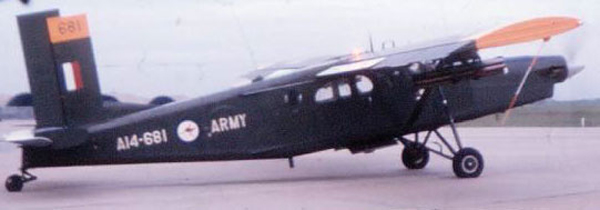
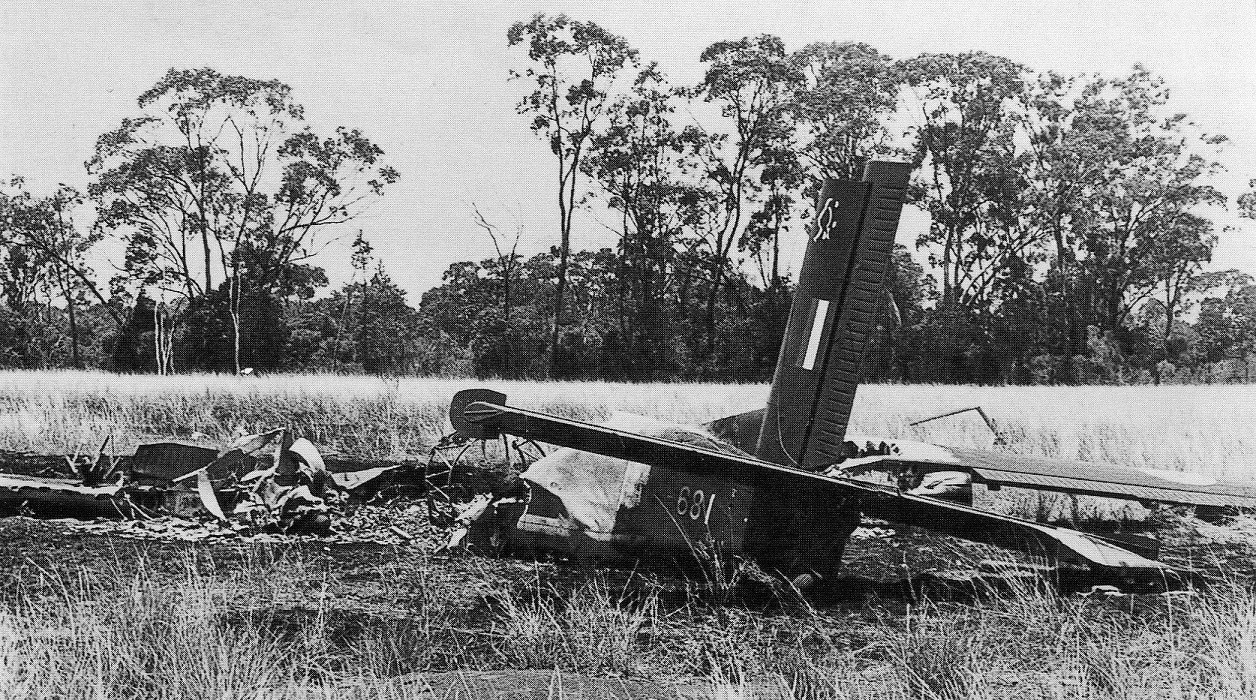
Crash of a Pilatus PC-6/B1-H2 Turbo Porter near Oakey

Date & Time: Nov 28, 1980
Operator:
Registration:
A14-681
Flight Phase:
Flight Type:
Survivors:
Yes
MSN:
681
YOM:
1968
Country:
Region:
Crew on board:
0
Crew fatalities:
Pax on board:
0
Pax fatalities:
Other fatalities:
Total fatalities:
0
Aircraft flight hours:
5840
Circumstances:
While flying at low height, the single engine airplane struck power cables and crashed in an open field, bursting into flames. All occupants escaped with minor injuries while the aircraft was destroyed by fire.

Crash of a Piper PA-61 Aerostar (Ted Smith 601P) in Teutonic Bore: 1 killed

Date & Time: May 28, 1980 at 1137 LT
Operator:
Registration:
VH-KXY
Flight Phase:
Survivors:
Yes
Schedule:
Teutonic Bore – Leonora – Perth
Country:
Region:
Crew on board:
1
Crew fatalities:
Pax on board:
2
Pax fatalities:
Other fatalities:
Total fatalities:
1
Captain / Total flying hours:
2810
Captain / Total hours on type:
149.00
Circumstances:
The aircraft was engaged on the return segment of a flight from Perth to Teutonic Bore, with an intended refuelling stop at Leonora. After embarking the two passengers and their baggage, the pilot started the engines and taxied for a take-off into the north, on the 1350 metre long main strip. The weather conditions were fine with a northerly surface wind of about 7 knots. The initial part of the take-off run was apparently normal but, after travelling some 400 metres and at about the point of rotation, one of the passengers noted an engine power surge. The take-off was continued, the aircraft became airborne and shortly afterwards the landing gear was retracted. After the aircraft had slowly climbed straight ahead to an altitude of about 200-300 feet above ground level, the passenger heard a marked change in the engine noise and felt the aircraft decelerating. The extent of the power loss and the absence of any yawing force indicated both engines had lost power simultaneously. Level flight straight ahead was reportedly maintained for an estimated 10 seconds and then the aircraft entered a descending left turn. At about this time the pilot, in response to a query from the passenger, advised that he intended to return to the airstrip but then stated "we're going down", or words to that effect. The terrain in the area was generally firm and flat. It was lightly covered with scrub and there was occasional small trees but a safe landing with only minimal damage was possible. When VH-KXY struck the ground the gear and flaps were retracted and the rate of descent was high. The aircraft was in a level attitude but yawed approximately 45 degrees to the right. After the initial impact, the aircraft slid across the ground on a track of 220 degrees magnetic for 67 metres before coming to rest. There was no post-impact fire. One passenger was able to exit via the cabin door by his own efforts. The other occupants were trapped in the wreckage and were rescued some 30 minutes later by persons who attended the accident. The pilot died shortly after being removed from the aircraft.
Probable cause:
The probable cause of the accident was that, following a substantial loss of power by both engines, the pilot did not carry out the procedures necessary for a safe forced landing. The cause of the loss of power by both engines has not been determined.
Final Report:

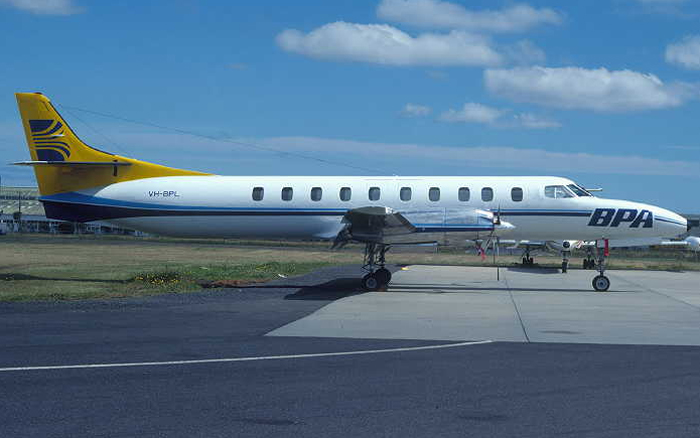
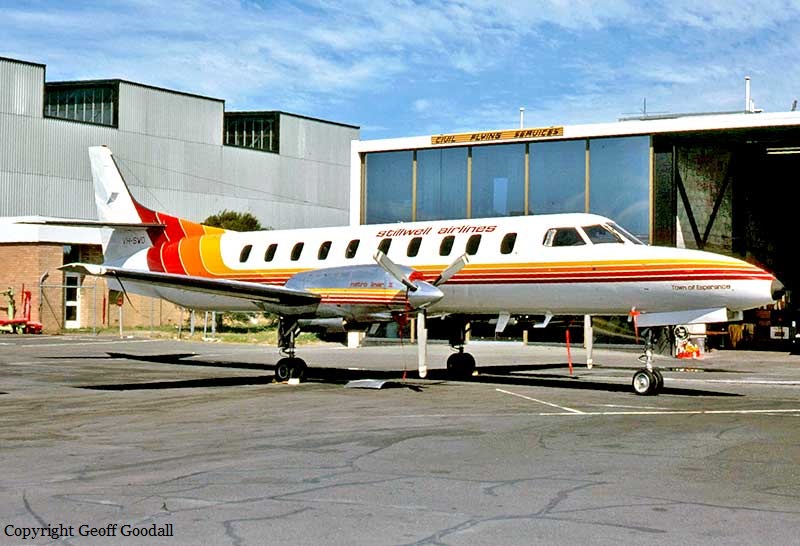
Crash of a Swearingen SA226TC Metro II in Esperance

Date & Time: May 13, 1980 at 0745 LT
Type of aircraft:
Operator:
Registration:
VH-SWO
Survivors:
Yes
Schedule:
Perth - Esperance
MSN:
TC-275
YOM:
1978
Country:
Region:
Crew on board:
1
Crew fatalities:
Pax on board:
11
Pax fatalities:
Other fatalities:
Total fatalities:
0
Captain / Total flying hours:
9010
Captain / Total hours on type:
1155.00
Circumstances:
Weather conditions at Esperance were fine; there was no cloud, visibility was in excess of 30 km and the surface wind was from the northwest at 5 to 10 knots. The aircraft entered the circuit on a left downwind leg for an approach to Runway 29. The flaps were lowered, firstly a quarter and then half-way, on the downwind leg and the landing gear was extended just before the aircraft turned onto a base leg. This configuration, and an airspeed of 133 knots (best single - engine rate of climb speed), was maintained until after the aircraft was straightened onto final approach. At an altitude of 1100 feet, the pilot considered he was at Decision Height and committed to land. He lowered full flaps and reduced the airspeed to 115 knots. At about this time, as he was retarding the power levers, the right engine flamed out. The pilot reported that he promptly sensed the engine failure and checked the engine instruments while re-opening both power levers. He noted both torque and fuel flow indication s for the right engine were zero. He briefly considered retracting the landing gear and flaps but decided to do neither. Left engine power was increased initially to the maximum available of 940°C ITT (Inter-turbine temperature) and then adjusted to the normal maximum limit of 923°C ITT. The right propeller was feathered. During this period the aircraft banked to the right and turned away from the runway. Its airspeed had reduced and the rate of descent increased. The turn had been opposed but the pilot found that the application of full left rudder and aileron would not enable him to maintain runway heading, although the airspeed was above the minimum control airspeed of 94 knots, specified in the aircraft flight manual. It was evident to the pilot that the aircraft would land short of the aerodrome, amongst trees to the right of the runway approach path. He therefore abandoned his efforts to regain the normal approach path and allowed the aircraft to turn further to the right, towards a large, clear paddock. Just before touchdown, he observed a power pole on his selected landing path and he again turned further right to avoid it. During this turn the right wing tip struck the ground. The nosegear then impacted heavily and collapsed . The aircraft slid and bounced across the ground for 188 metres before coming to rest. Fuel from ruptured line s ignite d under the left engine , but the fire was slow to develop and the occupants were able to make an orderly evacuation . By the time the fire brigade arrived from Esperance township, the fire had spread and most of the aircraft was consumed.
Probable cause:
The right engine had flamed out because of fuel starvation, when a spur gear in the fuel control drive train failed. Five teeth of the spur gear had broken off and the remaining teeth were badly worn. The failures and abnormal wear were due to looseness of the torque sensor housing, in which the spur gear was mounted, allowing the gear to move out of its correct alignment. The housing had probably loosened because of vibration, as its natural frequency was close to some frequencies generated by the engine during normal operation. The following contributing factors were reported:
- The natural frequency of the torque sensor housings in the engines fitted to VH-SWO were susceptible to vibration frequencies generated by the engines during normal operation,
- Vibration loosened the torque sensor housing on the right engine, which in turn led to misalignment of a spur gear in the fuel drive train, failure of the gear and fuel starvation
of the engine,
- The engine failed when the aircraft was being operated in a landing configuration which precluded a successful continuation of the landing approach,
- The landing procedure used by the pilot was in accordance with the operator's Company Operations Manual, which did not appreciate the poor performance and handing' difficulties of the Swearingen SA226TC in the event of an engine failure in the landing configuration.
Final Report:

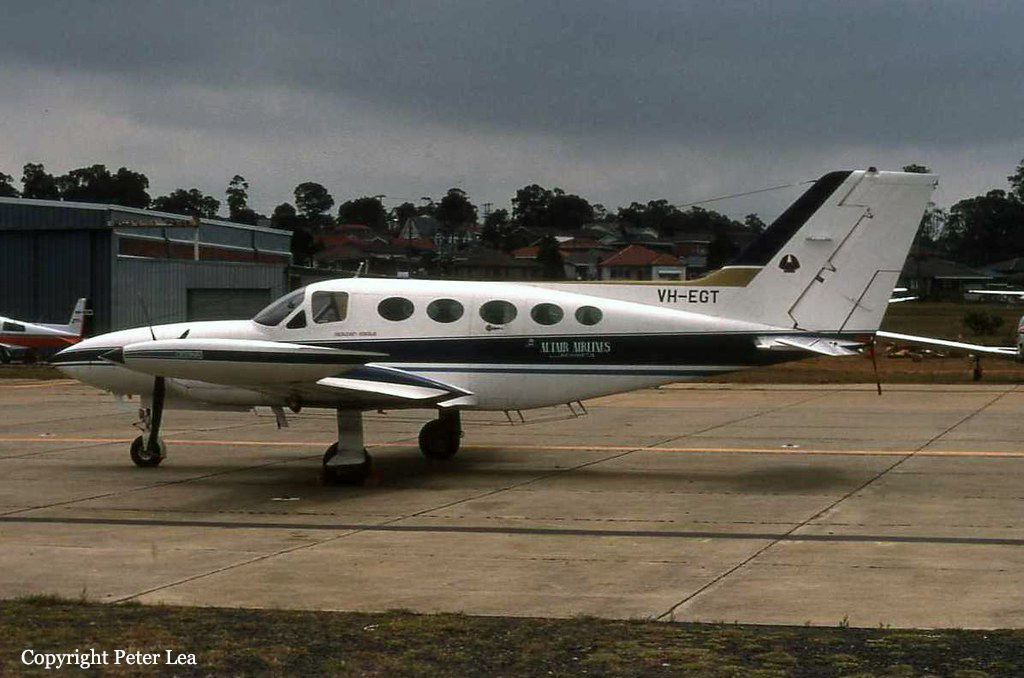
Crash of a Cessna 421B Golden Eagle II in Dysart: 1 killed

Date & Time: Feb 26, 1980
Registration:
VH-EGT
Flight Phase:
Flight Type:
Survivors:
No
MSN:
421B-0933
YOM:
1975
Country:
Region:
Crew on board:
1
Crew fatalities:
Pax on board:
0
Pax fatalities:
Other fatalities:
Total fatalities:
1
Circumstances:
Crashed on takeoff for unknown reasons. The pilot, sole on board, was killed. He was engaged in a positioning flight.

Crash of a Beechcraft 200 Super King Air in Sydney: 13 killed

Date & Time: Feb 21, 1980 at 1909 LT
Operator:
Registration:
VH-AAV
Survivors:
No
Schedule:
Sydney – Temora – Condobolin
MSN:
BB-245
YOM:
1977
Flight number:
DR4210
Country:
Region:
Crew on board:
1
Crew fatalities:
Pax on board:
12
Pax fatalities:
Other fatalities:
Total fatalities:
13
Captain / Total flying hours:
6384
Captain / Total hours on type:
448.00
Aircraft flight hours:
5061
Circumstances:
The aircraft was engaged in a scheduled service, designated Flight DR 4210, from Sydney to Temora and Condobolin, within the State of New South Wales. The scheduled departure time was 1845 hours. At 1844 hours the pilot of VH-AAV contacted Sydney Airport Clearance Delivery by radio and requested his airways clearance. The airways clearance issued was a Standard Instrument Departure (SID), titled '25 Katoomba Two'. That SID specified that radar headings would be assigned after take-off from Runway 25. The pilot correctly acknowledged the airways clearance. At 1848 hours the pilot contacted Sydney Ground Control and requested clearance to· taxi. This was granted and the aircraft was taxied to the holding point for Runway 25. The pilot reported to Sydney Aerodrome Control at 1858 hours that he was ready for take-off. Due to other traffic. the aircraft was not cleared to line up until 1906 hours. VH-AAV then entered Runway 25 and stopped about 50 metres from the threshold. At 1907 hours VH-AAV was cleared to 'maintain runway heading, maintain 3000 (feet), clear for take-off. This was correctly acknowledged and VH-AAV commenced takeoff. The aircraft became airborne and crossed the intersection with Runway 16/34, at a height of about 100 feet above ground level (AGL) at 1908:19 hours. The landing gear was retracted. Observers then noted the aircraft level off at about 150 feet AGL and commence a shallow banked turn to the left. As this was contrary to the departure instructions, Aerodrome Control was about to query the pilot when, at 1908:33 hours. he advised: ' ... we've lost er, the left engine. Request landing, ah, landing on runway three four immediately please.' This was acknowledged and Aerodrome Control cleared VH-AAV for a visual approach to a left base for Runway 34. During these transmissions, VH-AAV continued its left turn through approximately 90 degrees, onto a southerly heading. It had maintained a height of about 150 feet AGL and the left propeller was probably in the process of feathering. At 1908:44 hours, Aerodrome Control queried' ... do you have the seven two seven in sight on short final.' At 1908:49 hours, the pilot of VH-AAV replied, 'Affirmative'. The other aircraft referred to by Aerodrome Control was an Ansett Airlines of Australia Boeing 727, VH-RMO, which was on approach for Runway 34. Shortly after passing over the shore of Botany Bay, VH-AAV entered a steady descent and then levelled off just above the water. The left turn was continued and the aircraft converged towards the western side of the sea wall enclosing the extension of Runway 16/34. At 1908:50 hours, Aerodrome Control asked,' ... will your approach and landing be normal.' The reply, eight seconds later, was 'Alpha Alpha Victor negative'. At 1909:08 hours, Aerodrome Control activated the crash alarm system. In addition, VH-RMO was directed' ... go around, correction, st ... stay on the runway and expedite. We have a landing, er, right behind you ... one engine out.' The initial direction was made prior to visually assessing the Boeing ?27's situation, but when, during the transmission, it was noted that the aircraft was on the ground and well established in its landing roll sequence, the 'expedite' instruction was substituted. At 1909:20 hours, Aerodrome Control cleared VH-AAV to land. This was not acknowledged. The final segment of the flight was at an extremely low altitude and in a nose-high attitude. The right propeller, on at least one occasion, probably contacted the water and the tail either furrowed the water or induced a wake. VH-AAV struck the sea wall in a nose-up attitude, banking to the left and skidding to the right. The left wing of the aircraft disintegrated. The resultant fuel spillage ignited and a 'fire ball' explosion occurred. The right engine and the outboard section or the right wing both separated and were thrown across the ground adjacent to the runway. The remainder of the aircraft bounced over the sea wall, landed inverted on a taxiway and slid backwards. The accident occurred in daylight at 1909:22 hours. The aircraft was totally destroyed by impact forces and a post crash fire and all 13 occupants were killed.
Probable cause:
The cause of the accident has not been determined, but the most likely explanation is that the aircraft was operated in a reduced power configuration which, under the prevailing conditions, rendered its single-engine performance critical in respect to aircraft handling. The following findings were reported:
- At a height of about 100 feet AGL the left engine failed, probably due to the ingestion of water-contaminated fuel,
- The source of water contamination of the left fuel system of VH-AAV was not established but elemental analyses indicated the water had been present in the fuel system for some time,
- It could
not be determined where the water in the left fuel system of VH-AAV had accumulated or by what means it traveled to the left engine,
- It was not established whether or not the pilot had carried out a fuel drain check prior to the accident flight,
- At the time of engine failure, a high cockpit workload situation existed.
Final Report:

Crash of a De Havilland DHC-2 Beaver in Flowerdale: 1 killed

Date & Time: Feb 11, 1980
Type of aircraft:
Operator:
Registration:
VH-IDT
Flight Phase:
Survivors:
No
MSN:
1559
YOM:
1964
Country:
Region:
Crew on board:
1
Crew fatalities:
Pax on board:
0
Pax fatalities:
Other fatalities:
Total fatalities:
1
Circumstances:
Crashed in unknown circumstances while engaged in a crop spraying mission. The pilot, sole on board, was killed.