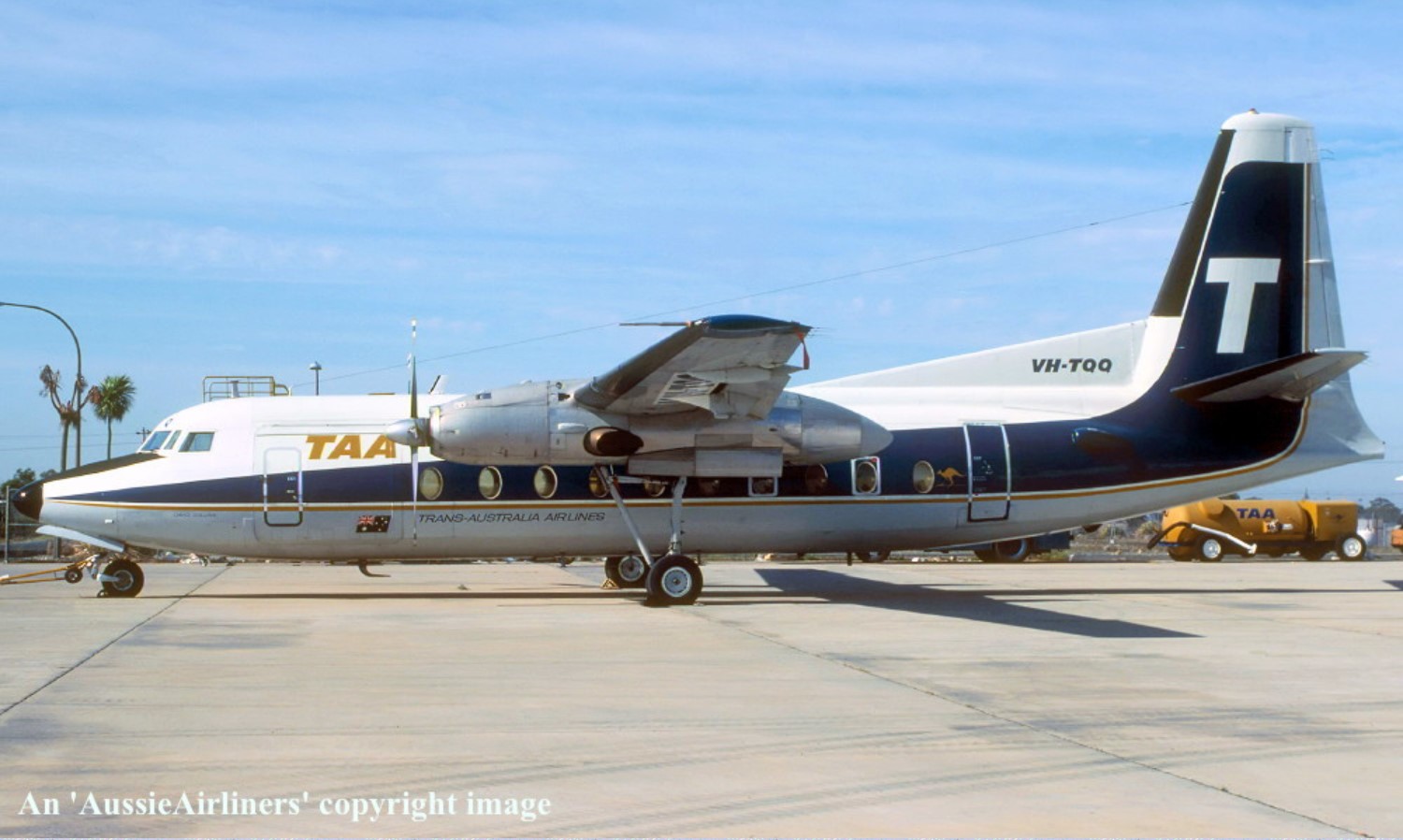
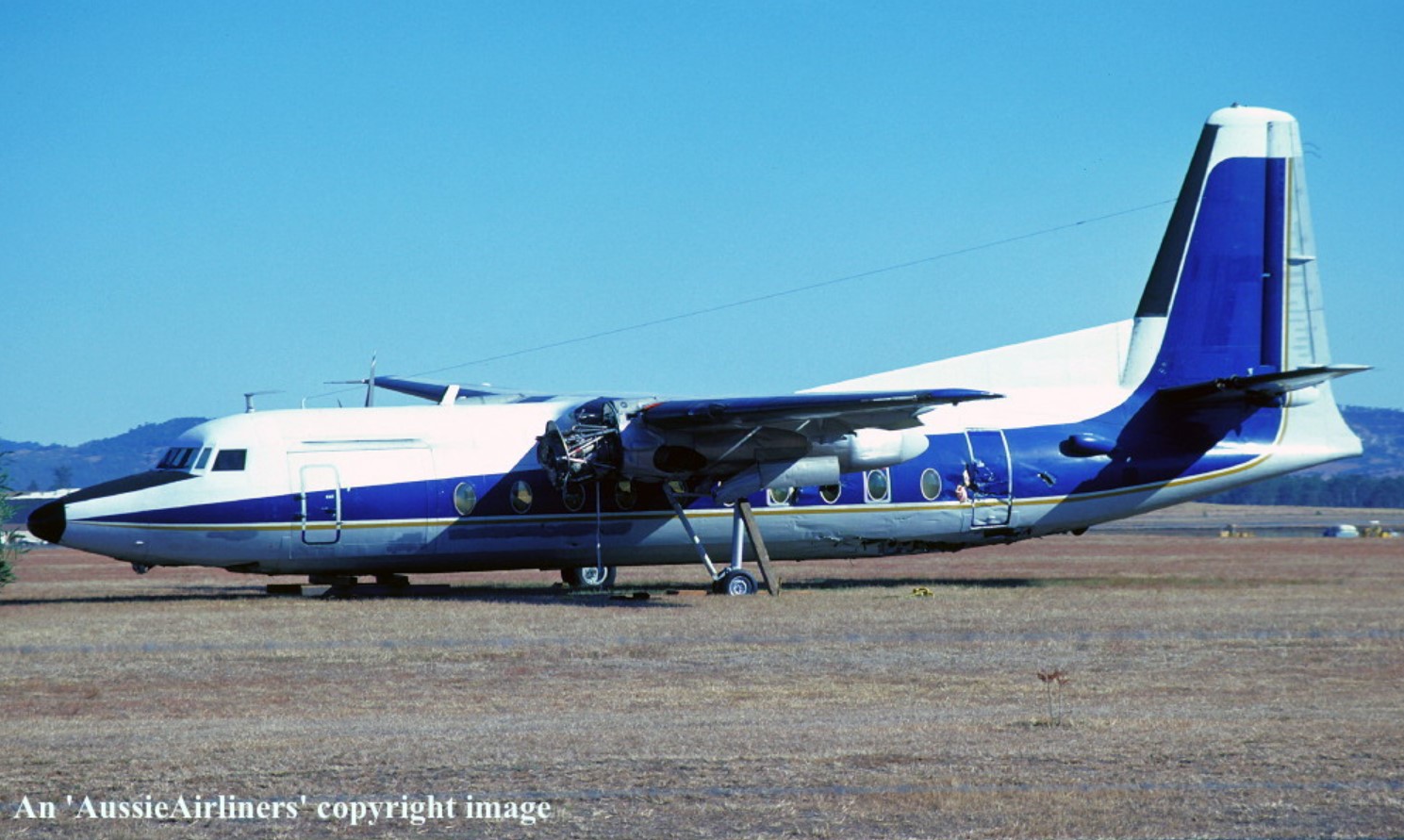
Crash of a Fokker F27 Friendship 600 in Amberley

Date & Time: Jun 9, 1982
Type of aircraft:
Operator:
Registration:
VH-TQQ
Flight Type:
Survivors:
Yes
Schedule:
Amberley - Amberley
MSN:
10388
YOM:
1969
Country:
Region:
Crew on board:
3
Crew fatalities:
Pax on board:
0
Pax fatalities:
Other fatalities:
Total fatalities:
0
Aircraft flight hours:
33311
Aircraft flight cycles:
32482
Circumstances:
The crew as completing a local training flight at Amberley Airport. On final approach, the instructor simulated a left engine failure. The airplane lost height on short final, went into a nose-down attitude and landed hard. The nose gear collapsed and the left engine partially detached. The airplane veered off runway and came to rest. While all three crew members escaped uninjured, the aircraft was damaged beyond repair.
Probable cause:
Power was reduced on the left engine at a lower than approved altitude. Directional control was lost when the trainee applied full power on the right engine.

Crash of a Piper PA-31-310 Navajo in Dysart: 2 killed

Date & Time: Mar 3, 1982 at 0453 LT
Type of aircraft:
Operator:
Registration:
VH-CLU
Flight Type:
Survivors:
No
Schedule:
Rockhampton – Dysart
MSN:
31-588
YOM:
1969
Country:
Region:
Crew on board:
1
Crew fatalities:
Pax on board:
1
Pax fatalities:
Other fatalities:
Total fatalities:
2
Circumstances:
The aircraft was being operated on a regular freight carrying run between Dysart and Rockhampton. On the evening preceding the accident, the aircraft departed Dysart at 2045 hours, arriving at Rockhampton at 2139 hours. At 0222 hours on the following morning the pilot telephoned Brisbane Flight Service Centre to obtain an update on the weather for the return flight to Dysart. The forecast indicated that at the time of arrival at Dysart, light rain with 5 oktas of cloud at 700 feet above ground level, could be expected. The pilot nominated Rockhampton as the alternate for Dysart in the event that weather conditions at the latter aerodrome precluded a safe approach and landing. The aircraft was refuelled to give a total fuel endurance of 290 minutes, and after loading departed Rockhampton at 0354 hours. At 0435 hours, the pilot reported that descent had been commenced into Dysart and because of poor reception on High Frequency radio channels further communications with VH-CLU were relayed by another aircraft in the area, VH-EEF on Very High Frequency channels. After communications with VH-CLU, the pilot of VH-EEF advised Brisbane Flight Service Unit (FSU) at 0453 hours, that the runway lighting was not yet displayed. The runway lighting at Dysart was provided by a number of hand-lit flares. The lighting of these flares was carried out by an employee of the company operating VH-CLU, and normally took about ten minutes. On this occasion the employee had overslept and arrived at the aerodrome at about the same time that the aircraft flew overhead. At 0501 hours further attempts by the pilot of VH-EEF and Brisbane FSU to contact VH-CLU were unsuccessful. The wreckage of the aircraft was later located about 800 metres to the west of the aerodrome. The aircraft had struck trees while heading in a direction aligned with runway 14 but displaced to the west of the runway. It had been destroyed as a result of the impact forces. Witnesses reported that when VH-CLU arrived at Dysart it was not raining, however, low cloud was present. The aircraft was observed to complete three orbits of the aerodrome and at times during these orbits it was obscured by cloud. Both occupants were killed.
Probable cause:
The only fault found with the aircraft during the investigation was a failed fuel pump on the right engine. It was established that the right engine was operating on impact and the failure of the fuel pump is not considered to have substantially affected the operation of the aircraft. The reason the aircraft crashed was not established.
Significant Factors:
1. Low cloud was present at Dysart for the arrival of VH-CLU.
2. The runway lighting had not been illuminated by the time VH-CLU arrived overhead the aerodrome.
3. The pilot attempted to hold in the vicinity of the aerodrome at low level, at night and in marginal weather conditions.
Final Report:

Crash of a Cessna 411 in Brisbane: 5 killed

Date & Time: Jan 5, 1982 at 1201 LT
Type of aircraft:
Operator:
Registration:
VH-AYE
Flight Phase:
Flight Type:
Survivors:
No
Schedule:
Brisbane - Brisbane
MSN:
411-0288
YOM:
1969
Country:
Region:
Crew on board:
1
Crew fatalities:
Pax on board:
0
Pax fatalities:
Other fatalities:
Total fatalities:
5
Captain / Total flying hours:
2128
Captain / Total hours on type:
302.00
Aircraft flight hours:
4500
Circumstances:
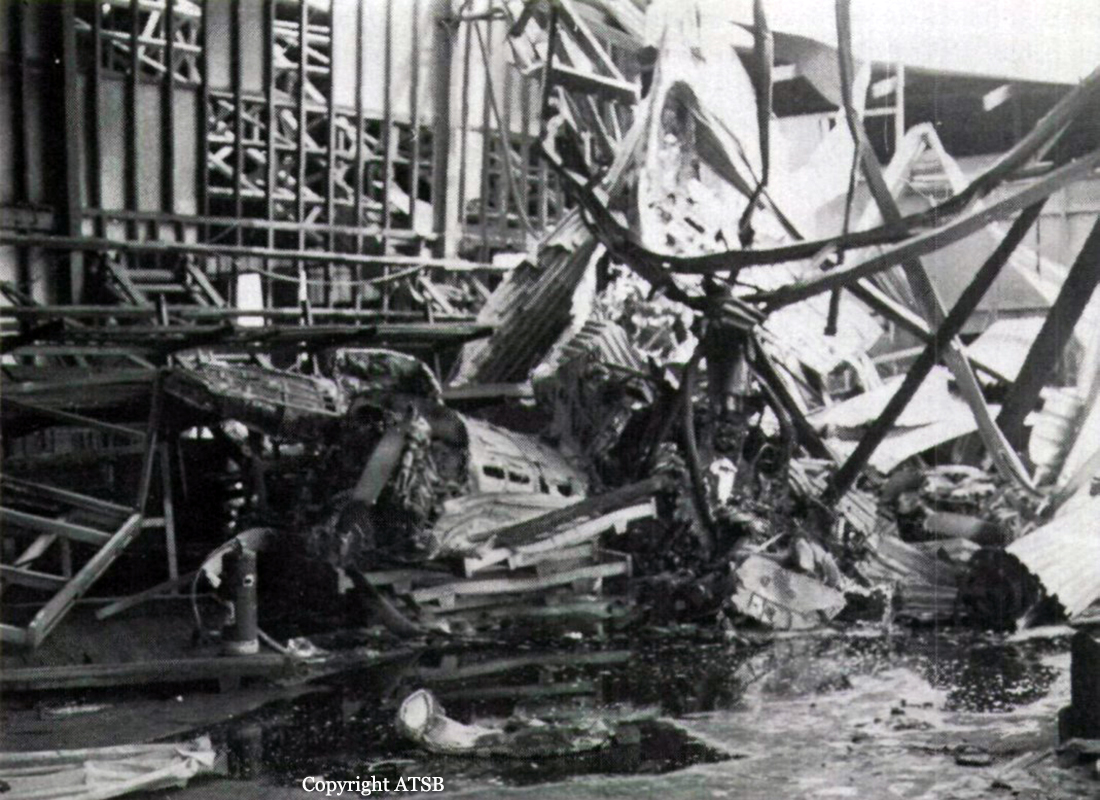
At 1201 EST, shortly after taking off from Runway 10L at Archerfield Airport, the airplane crashed into an annex attached to a Thiess Contractors workshop located in Kerry Road, Archerfield. The accident site was 455 metres east-north-east from the departure end of the runway. The pilot and four workmen taking their lunch break in the annex were killed. The aircraft and the annex were destroyed by impact forces and the following explosion and fire. The accident occurred during a test flight following corrective maintenance. The aircraft had completed a periodic inspection on 23 December 1981 but, during the next 10 days, a problem was experienced with the control of the left hand propeller. Following maintenance on 4 January to rectify the problem, the pilot elected to test fly the aircraft prior to its intended use for endorsement training at 1500 hours on the day of the accident.
Probable cause:
The cause of the accident was that following a reduction of power from the left engine, the pilot failed to maintain flying speed. The cause of the reduction of power was not determined. The accident may have been avoided if the pilot had employed the correct procedures following a reduction of power from the left hand engine.
Final Report:

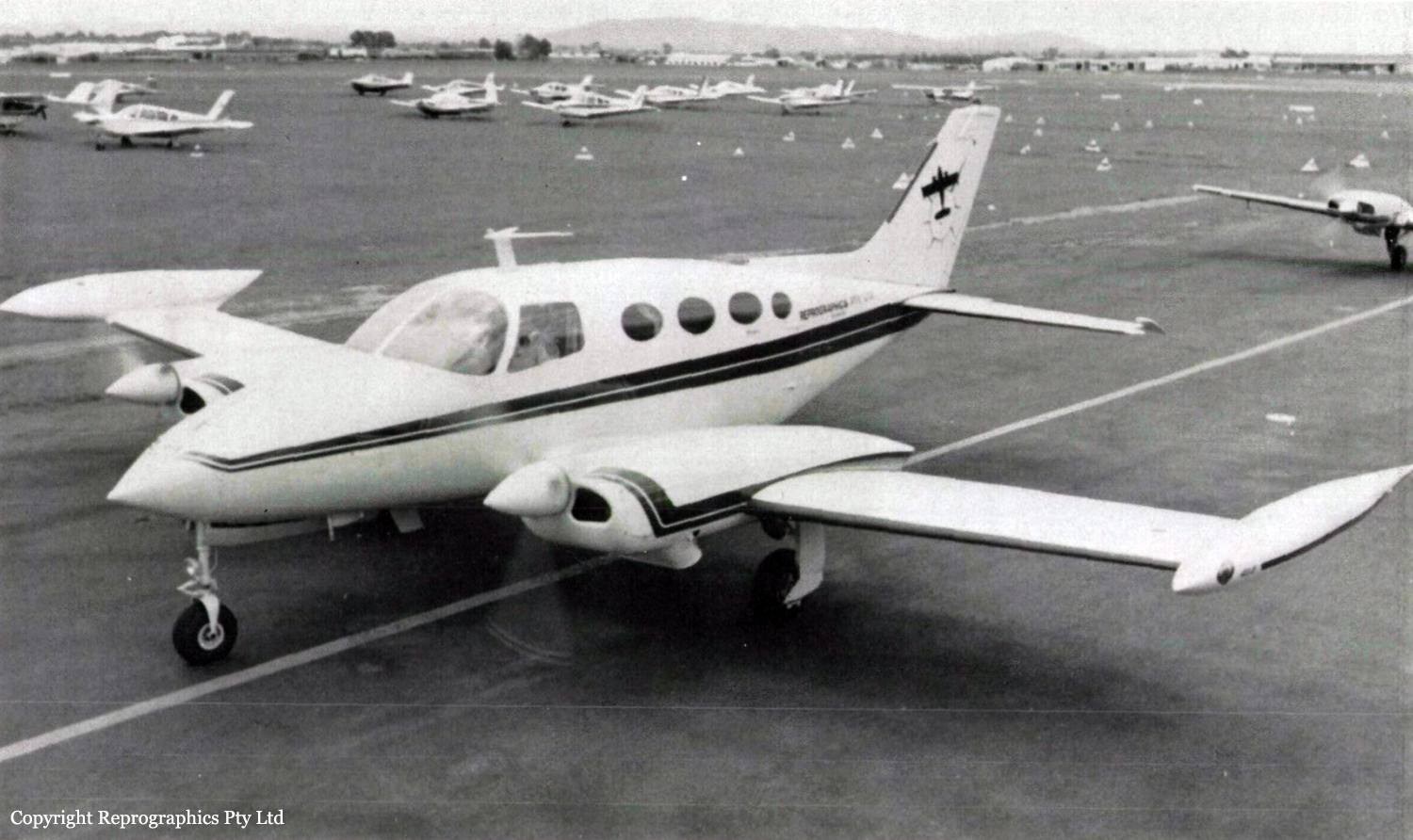
Crash of a Rockwell Shrike Commander 500S in Merimbula: 1 killed

Date & Time: Nov 8, 1981
Operator:
Registration:
VH-TOL
Flight Phase:
Survivors:
No
MSN:
500-3174
YOM:
1973
Country:
Region:
Crew on board:
1
Crew fatalities:
Pax on board:
0
Pax fatalities:
Other fatalities:
Total fatalities:
1
Circumstances:
After takeoff from Merimbula Airport, while climbing, the twin engine airplane went out of control and crashed in the marina of Merimbula. The pilot, sole on board, was killed.

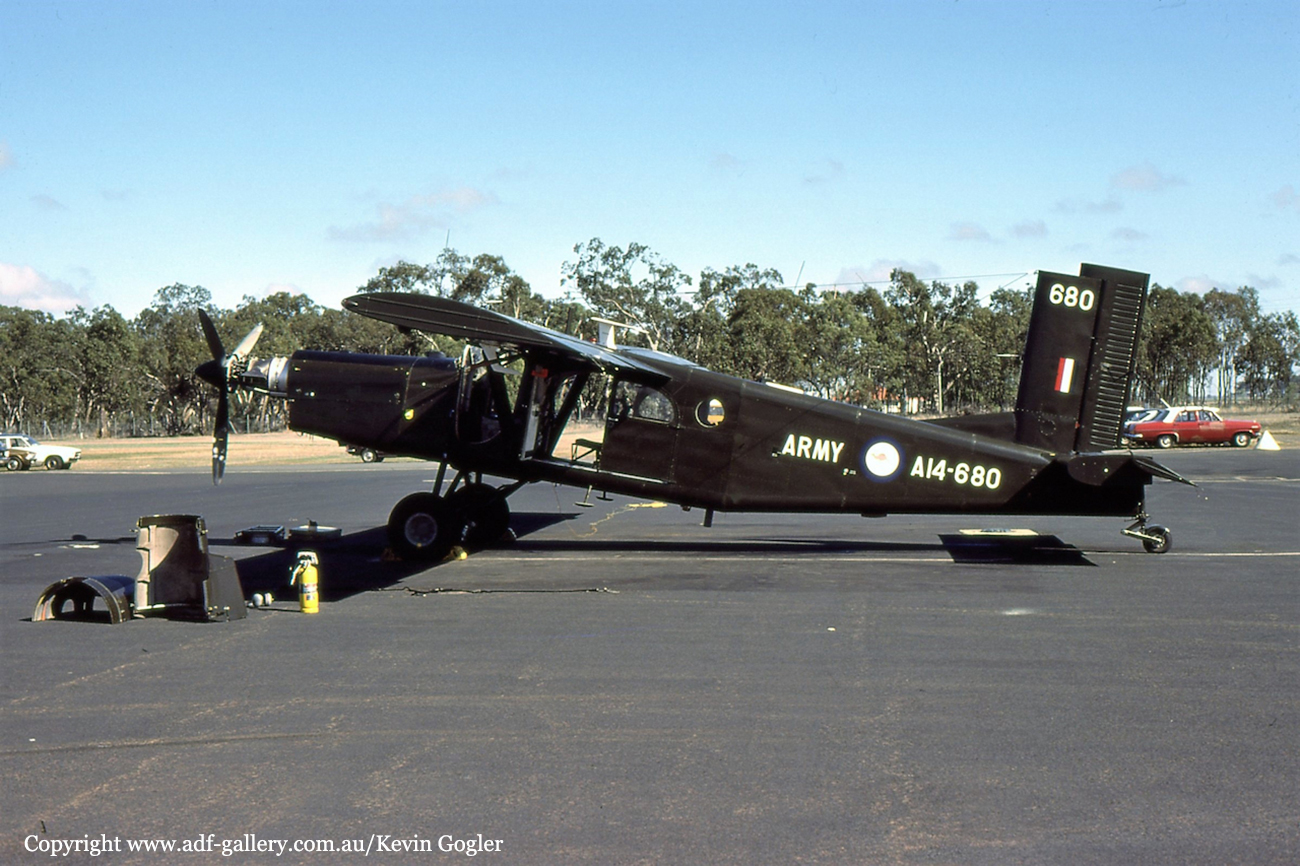
Crash of a Pilatus PC-6/B1-H2 Turbo Porter in Weipa

Date & Time: Sep 21, 1981
Operator:
Registration:
A14-680
Flight Phase:
Flight Type:
Survivors:
Yes
MSN:
680
YOM:
1968
Country:
Region:
Crew on board:
0
Crew fatalities:
Pax on board:
0
Pax fatalities:
Other fatalities:
Total fatalities:
0
Aircraft flight hours:
4433
Circumstances:
During a night takeoff from Weipa Airport, the single engine airplane went out of control, veered off runway and came to rest. There were no casualties.

Crash of a Piper PA-31-310 Navajo in Mount Augustus

Date & Time: Jul 4, 1981
Type of aircraft:
Operator:
Registration:
VH-DEE
Flight Type:
Survivors:
Yes
Schedule:
Carnarvon - Mount Augustus
MSN:
31-8012072
YOM:
1980
Country:
Region:
Crew on board:
1
Crew fatalities:
Pax on board:
1
Pax fatalities:
Other fatalities:
Total fatalities:
0
Circumstances:
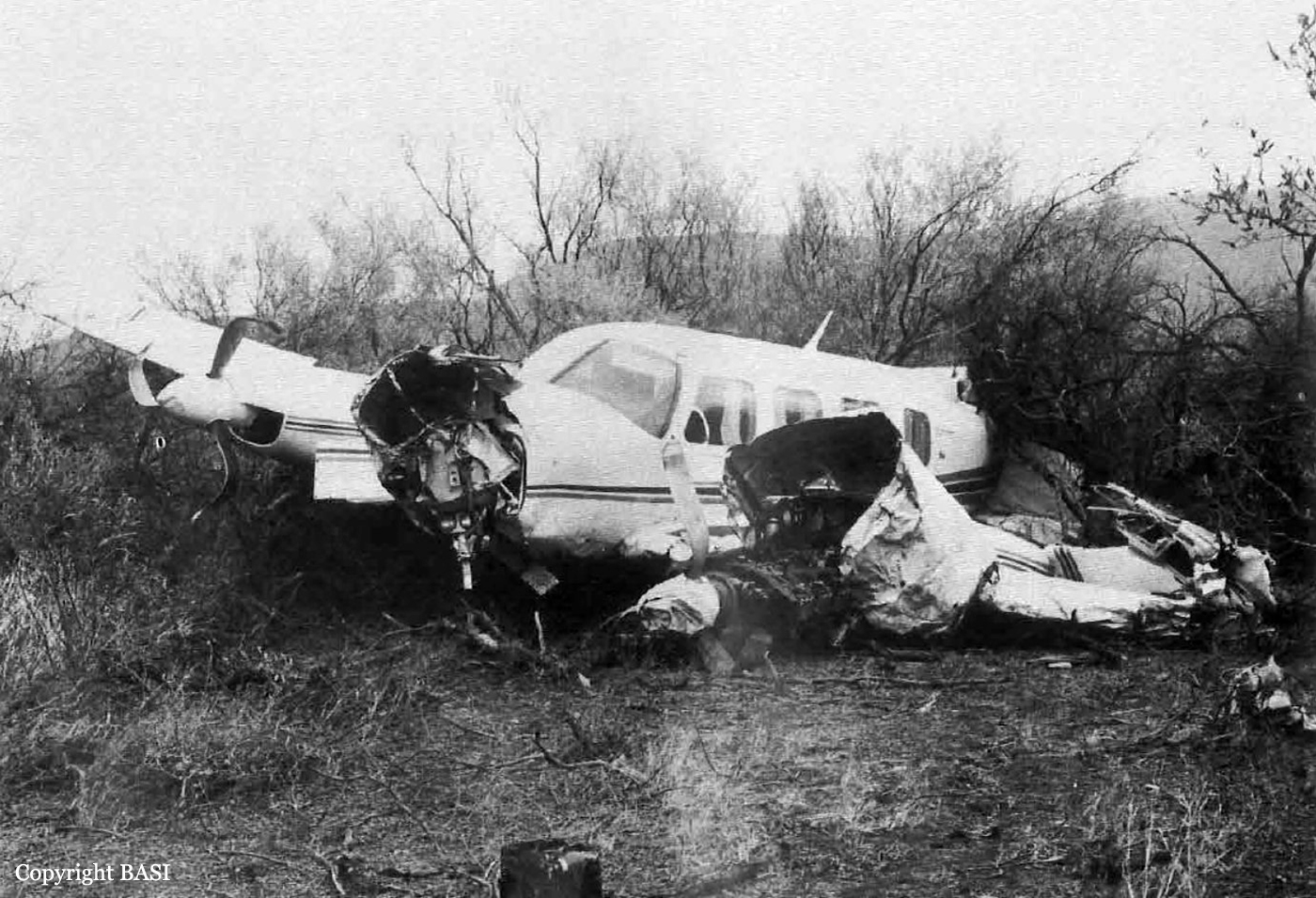
The twin engine airplane departed Carnarvon on an ambulance flight to Mount Augustus to evacuate a sick child. On board were one nurse and one pilot. The approach to Mount Augustus was initiated in limited visibility due to a moonless night and six vehicles were dispatched on the ground with lights on. While turning on final, the airplane was too low, struck trees and crashed. Both occupants were injured and the aircraft was destroyed.

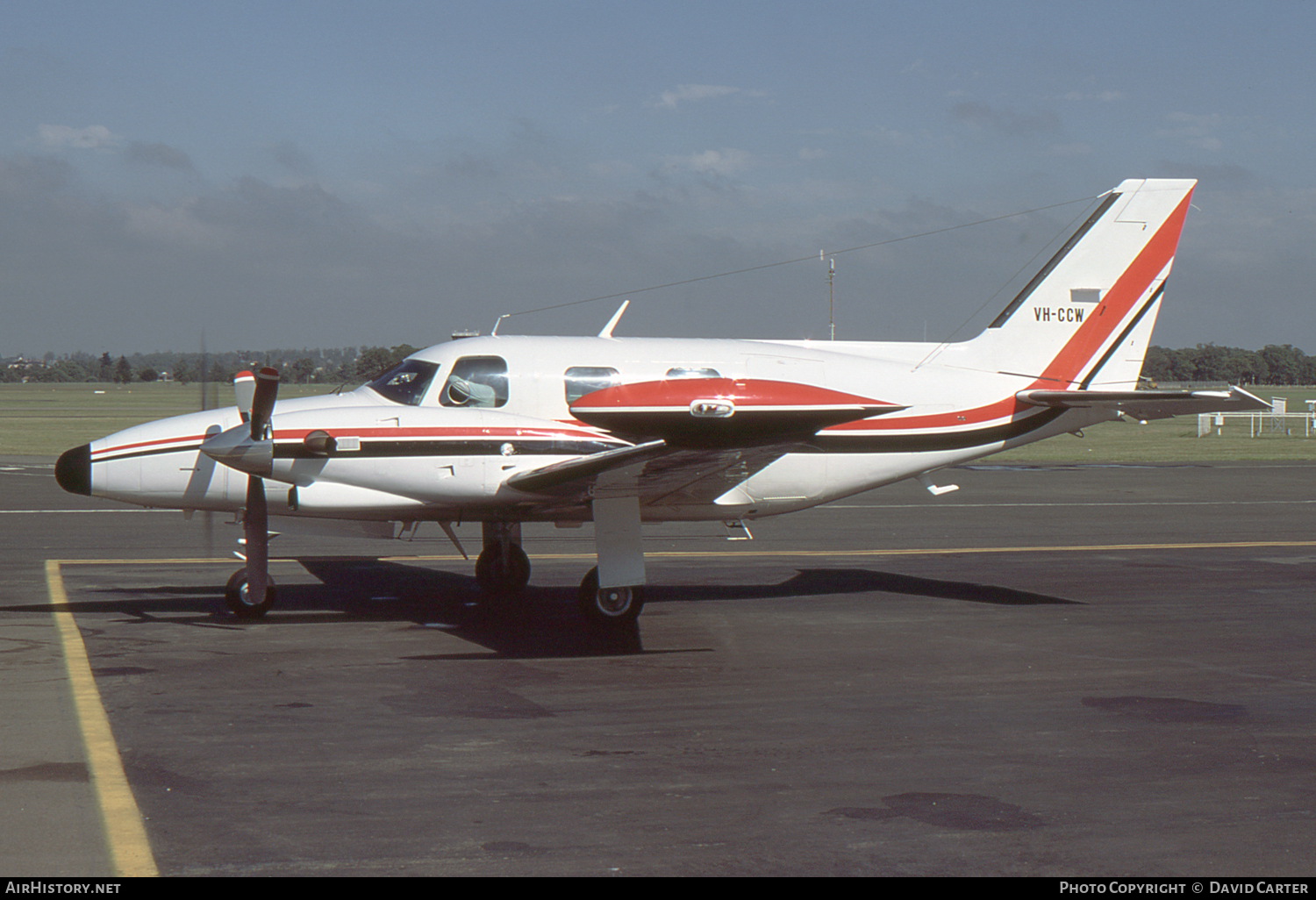
Crash of a Piper PA-31T Cheyenne II in Perth: 1 killed

Date & Time: May 3, 1981 at 1125 LT
Type of aircraft:
Operator:
Registration:
VH-CCW
Flight Type:
Survivors:
No
Site:
Schedule:
Jandakot - Perth
MSN:
31-7720046
YOM:
1977
Country:
Region:
Crew on board:
1
Crew fatalities:
Pax on board:
0
Pax fatalities:
Other fatalities:
Total fatalities:
1
Captain / Total flying hours:
4279
Captain / Total hours on type:
576.00
Circumstances:
The aircraft was flown from Jandakot to Perth at approximately 08:00 hours on 3.5.81. However, the engineer who had agreed to meet the pilot sent a message that he could not attend. At times during the morning, persons observed the aircraft parked at the airport. The engine cowls had been removed and the pilot was seen to be working in the area of the propeller governors. At about 11:00 hours, the pilot started the aircraft's engines, taxied to a clear area and carried out a series of checks" at high power. Then, at 11:09 hours, he contacted Perth Surface Movement Control by radio and requested clearance for an air test at Flight Level 200. This was approved and the aircraft was instructed to taxi to Runway 20. After take-off, the aircraft turned right and tracked to the west on the 270 radial of the VHF omni-directional radio range (VOR), in accordance with departure instructions give n by Perth Tower. When asked for his intentions, the pilot advised that he wished to continue tracking to the west until further notice. Weather conditions in the Perth area were fine; there was no cloud and the surface wind was a light southwesterly. The aircraft as it climbed out appeared to be operating normally , except for a thin smoke trail which was observed coming from the right engine. At 11:19 hours, the pilot advised that his test was completed. He reported he was at 7,000 feet and 10 miles from the airport by distance measuring equipment (DME). During the next five minutes there were a series of routine exchanges between VH-CCW and Perth Tower as the aircraft was cleared to track visually, north of Perth city, to a right base position for Runway 20. During these exchanges the pilot did not indicate that any abnormality or emergency existed and his voice sounded normal. At 11:24 hours, he reported at right base and was cleared to land. The final transmission received from the aircraft was the usual acknowledgement of the landing clearance. The right base position for Runway 20 is over the suburb of Bassendean and local residents are used to aircraft overflying. However, attention was drawn to VH-CCW as it was lower than normal traffic, the engine noise was louder and smoke was trailing from its right engine. Otherwise, it appeared to be operating normally; both propellers were rotating and the landing gear was reported to be retracted. The aircraft had commenced an apparently normal right base turn when it suddenly rolled inverted. The nose of the aircraft may have pitched up just before the sudden roll. The aircraft then began to rotate and rapidly descend. At some stage, it rolled back to the normal upright attitude. After about two turns, the rotation stopped and the aircraft dropped vertically to the ground in the backyard of a private house. The left wing and tailplane struck the roof of the house just prior to ground impact. An intense fire immediately broke out and consumed most of the wreckage. Subsequent examination of the wreckage found no evidence of pre-existing defects or malfunctions, apart from loose attachment nuts on the left side of the propeller governor fitted to the right engine. Oil had leaked from the governor at this position, covering the engine and causing the smoke trail observed by witnesses. Internal inspection of the right engine established that all bearing surfaces were oil-wetted, but it could not be determined how much oil remained in the engine at the time of ground impact as any residual oil had leaked and been consumed by fire. Both engines had been operating at impact. The right engine was at a low power setting, probably idle. The left engine was at a higher power, although the exact power setting could not be determined. The left propeller was at a blade angle consistent with higher power output. The right propeller was at a blade angle outside the normal operating range but consistent with the propeller moving towards the feather position, either as a result of pilot selection or exhaustion of the engine oil supply. It was not possible to determine whether or not the pilot had initiated feathering. The stability augmentation system servo was at the maximum, elevator-down spring tension position. The automatic system would drive the servo to this position when the aircraft was flown at low airspeed. The elevator trim was set at 10 degrees nose-up, also consistent with low-speed flight. The rudder trim was at the full-left rudder position, indicating that the pilot had been operating the aircraft for some time with high power on the left engine and the right engine at a low power setting. The flaps were half extended and the landing gear was down at ground impact. Post-mortem examination found that the pilot had extensive coronary artery disease, such that he may have suffered a sudden incapacitating attack or death. Alternatively, he may have experienced severe chest pain, causing him to unintentionally apply coarse movements to the aircraft controls. The pilot had completed regular medical examinations for the renewal of his pilot's licence, but his condition had not been detected.
Probable cause:
The exact cause of the accident could not be determined with certainty. However, the following defect was discovered: two nuts attaching the propeller governor to the right engine were loose, permitting oil to leak from the governor.
Final Report:

Crash of a Piper PA-31-310 Navajo Chieftain in Kalgoorlie: 4 killed

Date & Time: Apr 30, 1981 at 1844 LT
Type of aircraft:
Operator:
Registration:
VH-KMS
Flight Type:
Survivors:
Yes
Schedule:
Jameson - Kalgoorlie
MSN:
31-7712056
YOM:
1977
Country:
Region:
Crew on board:
1
Crew fatalities:
Pax on board:
4
Pax fatalities:
Other fatalities:
Total fatalities:
4
Captain / Total flying hours:
22655
Captain / Total hours on type:
500.00
Circumstances:
The pilot acted as a relief pilot for the Eastern Goldfields Section of the Royal Flying Doctor Service based in Kalgoorlie. On 30 April 1981 he had been rostered as the duty pilot from 1100 hours to 1700 hours. He was advised by the chief pilot soon after 1100 hours that a flight to Jameson and return was required. The flight was planned to include a refuelling stop at Warburton en-route to Jameson. The pilot expressed concern that the flight might not be completed in daylight, but after discussing the problem with the chief pilot, it was concluded that the flight should return to Kalgoorlie about ten minutes before last light. The aircraft subsequently departed Kalgoorlie at 1221 hours, and the flight proceeded uneventfully. However, delays en-route and in refuelling resulted in the aircraft not departing Jameson until 1609 hours. Based on the flight plan time intervals, the expected arrival time at Kalgoorlie was 1844 hours which was an hour after last light. The pilot did not hold the necessary qualification allowing him to operate a multiengined aircraft at night, although he held such a rating for single-engined aircraft. He elected to proceed as planned, and declared the last section of the flight a Mercy Flight. At 1828 hours, when 55 km from Kalgoorlie, the pilot contacted Kalgoorlie Flight Service Unit and received details of the weather, as recorded thirty minutes earlier. This information included an observation of lightning to the west-south-west and a line of thunderstorms from north-west to south of the aerodrome. At 1840 hours, when about 13 km from Kalgoorlie he advised that he would use runway 28. No further communication was heard from the aircraft. Witnesses at Boulder, 4 km east of Kalgoorlie, subsequently reported that a severe squall entered the area shortly before the aircraft was seen turning on to final approach for the runway. The strong wind had generated dust clouds and the aircraft was seen to enter one of these, whilst executing a number of sudden attitude changes. It then collided with a mineshaft headframe. The left wing was torn from the aircraft which then crashed to the ground nearby. A passenger was seriously injured while four other occupants were killed.
Probable cause:
There is insufficient evidence available to enable the cause of this accident to be determined. It is evident however, that the aircraft encountered severe turbulence at a low height during the approach for landing. No pre-existing defect or malfunction which could have contributed to the accident was found during the examination of the wreckage.
Final Report:

Crash of a Rockwell Shrike Commander 500S off Hobart

Date & Time: Apr 27, 1981 at 1814 LT
Operator:
Registration:
VH-EXQ
Survivors:
Yes
Schedule:
Melbourne – Hobart
MSN:
500-1831-28
YOM:
1968
Location:
Country:
Region:
Crew on board:
1
Crew fatalities:
Pax on board:
5
Pax fatalities:
Other fatalities:
Total fatalities:
0
Captain / Total flying hours:
1925
Captain / Total hours on type:
77.00
Circumstances:
Due to industrial action, normal domestic airline services had been suspended. The pilot hired the aircraft to convey persons stranded by the strike between Hobart and Melbourne. He submitted a flight plan for the proposed return flight to Melbourne that nominated operations under the Instrument Flight Rules, although he did not hold an appropriate Instrument Rating. The flight to Melbourne was completed without known incident. After refuelling the aircraft and engaging five passengers, the return flight was commenced. A fare was paid by each passenger although the pilot did not hold either a Charter Licence or an appropriate pilot licence. There was considerable cloud in the vicinity of Hobart Airport which, at 1800 hours, was recorded as one okta stratus, base 800 feet; five oktas stratocumulus, base 3000 feet; five oktas altocumulus, base 11,000 feet. The surface wind was a light westerly, and the runway in use was Runway 30. There were rain showers in the area and the runway was wet. The end of daylight was at approximately 1748 hours. When the pilot of VH-EXQ contacted Hobart Tower at approximately 1800 hours, he reported on descent to 7000 feet and 50km from the airport. As the aircraft proceeded, the Aerodrome Controller cleared it for further descent in stages, to provide vertical separation from a preceding aircraft. The only Instrument Landing System (ILS) approach at Hobart Airport was aligned with Runway 12 and the tailwind for a landing in that direction was only two or three knots. In order to expedite their arrivals, the Aerodrome Controller offered the pilot s of both approaching aircraft the option of a straight-in ILS approach to Runway 12 instead of a circling approach to the into-wind Runway 30. Both pilots accepted. At 1803 hours, the preceding aircraft was cleared for an ILS approach. The pilot of VH-EXQ was then advised to expect the same clearance but, to ensure continued separation from the other aircraft, was instructed to make one circuit of the holding pattern at Tea Tree Locator, a navigational radio aid west of the airport. The pilot misunderstood this instruction and, on reaching Tea Tree at about 1805 hours, he continued towards the airport. At 1807 hours, the Aerodrome Controller cleared VH-EXQ for an ILS approach. The pilot acknowledged this instruction in the normal manner and did not advise that he had already commenced the approach. In descending towards the airport the pilot had maintained a high airspeed of nearly 200 knots. From overhead Tea Tree he could see the lights of the preceding aircraft and endeavoured to reduce his speed so as to maintain separation. As a result, the aircraft was still very high as it approached the runway. This was noted by the Aerodrome Controller and, at 1810 hours, he asked the pilot whether he would be able to land on Runway 12 or would prefer to make an approach for Runway 30. The pilot chose the latter and was cleared to a right base leg for Runway 30. The approach to Runway 12 was abandoned and the aircraft turned left onto a close right downwind leg for Runway 30. The landing gear, which had been extended, and the flaps, which had been set at 1/4 down, were not moved from these positions. The pilot reported that at some stage of the approach to Runway 30 he moved the throttles forward to increase power and maintain height. In response the aircraft yawed slightly to the right. Both propeller levers were then pushed fully forward, both throttles were fully opened and the mixture controls were checked in the full-rich position. The aircraft again swung to the right. Identifying this as evidence that the right engine had failed, and after checking from the tachometer that the right propeller was windmilling at about 1500 RPM, the pilot feathered the right propeller and selected the landing gear and flaps up. He believed that he carried out the feathering action at a height of about 300 feet and an airspeed of about 100 knots. At this time the aircraft was heading southwest, towards Single Hill (elevation 680 feet) on the shore of Frederick Henry Bay. The pilot reported that the aircraft would not maintain height or airspeed and he therefore turned left to avoid the hill. The wings were then held level until the aircraft touched down in the bay. After the aircraft turned right at a close base leg position, but then straightened on a southwesterly heading instead of continuing the turn onto final approach, the Aerodrome Controller asked the pilot to confirm that he was tracking for Runway 30. This transmission was not answered and the Aerodrome Controller again called the aircraft. The pilot then reported that he was having trouble with the right engine and he was going to feather. This transmission was made as the aircraft was approaching Single Hill, just before it turned left and descended from view. There were no further transmissions from the aircraft despite a number of calls by the Aerodrome Controller. The Distress Phase of Search and Rescue (SAR) procedures was declared at 1815 hours. The appropriate emergency services were alerted including a helicopter that was on standby for SAR operations. All six occupants were rescued while the aircraft sank and was lost.
Probable cause:
The probable cause of the accident was that, following an apparent loss of power by the right engine, the pilot did not operate the aircraft in the configuration and at the airspeed necessary for safe single-engine flight. The pilot's responses may have been Influenced by operating under Instrument Flight Rules conditions, for which he was not qualified. The cause of the reported loss of power by the right engine was not determined. The following defects were discovered:
- General mechanical wear in left engine,
- Left engine fuel injector system outside manufacturer's specifications,
- Slight timing fault in one magneto on right engine.
Final Report:

Crash of a Swearingen SA226TC Metro II in Emerald

Date & Time: Apr 2, 1981
Type of aircraft:
Operator:
Registration:
VH-BPL
Flight Phase:
Flight Type:
Survivors:
Yes
MSN:
TC-272
YOM:
1978
Country:
Region:
Crew on board:
1
Crew fatalities:
Pax on board:
0
Pax fatalities:
Other fatalities:
Total fatalities:
0
Circumstances:
At liftoff, the pilot lost control of the airplane that crashed on runway. The pilot, sole on board, was injured and the aircraft was damaged beyond repair.