Crash of an Antonov AN-2 in the Everglades National Park

Date & Time: Nov 14, 2022 at 1330 LT
Type of aircraft:
Operator:
Registration:
CU-A1885
Flight Phase:
Flight Type:
Survivors:
Yes
Schedule:
Dade-Collier - Miami-Opa Locka
MSN:
1G200-25
YOM:
1982
Crew on board:
2
Crew fatalities:
Pax on board:
0
Pax fatalities:
Other fatalities:
Total fatalities:
0
Captain / Total flying hours:
16000
Captain / Total hours on type:
0.00
Copilot / Total flying hours:
3000
Copilot / Total hours on type:
0
Aircraft flight hours:
7190
Circumstances:
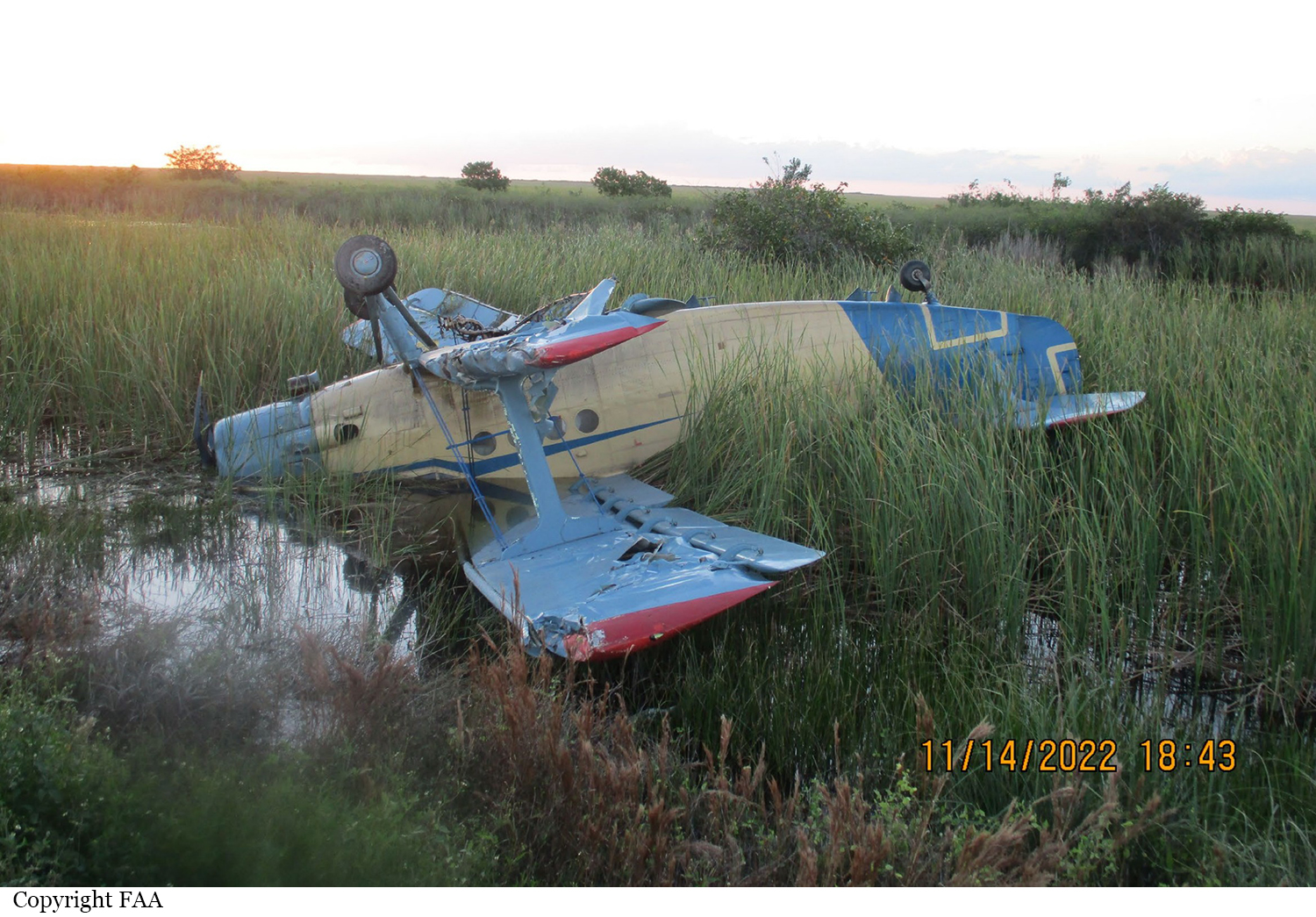
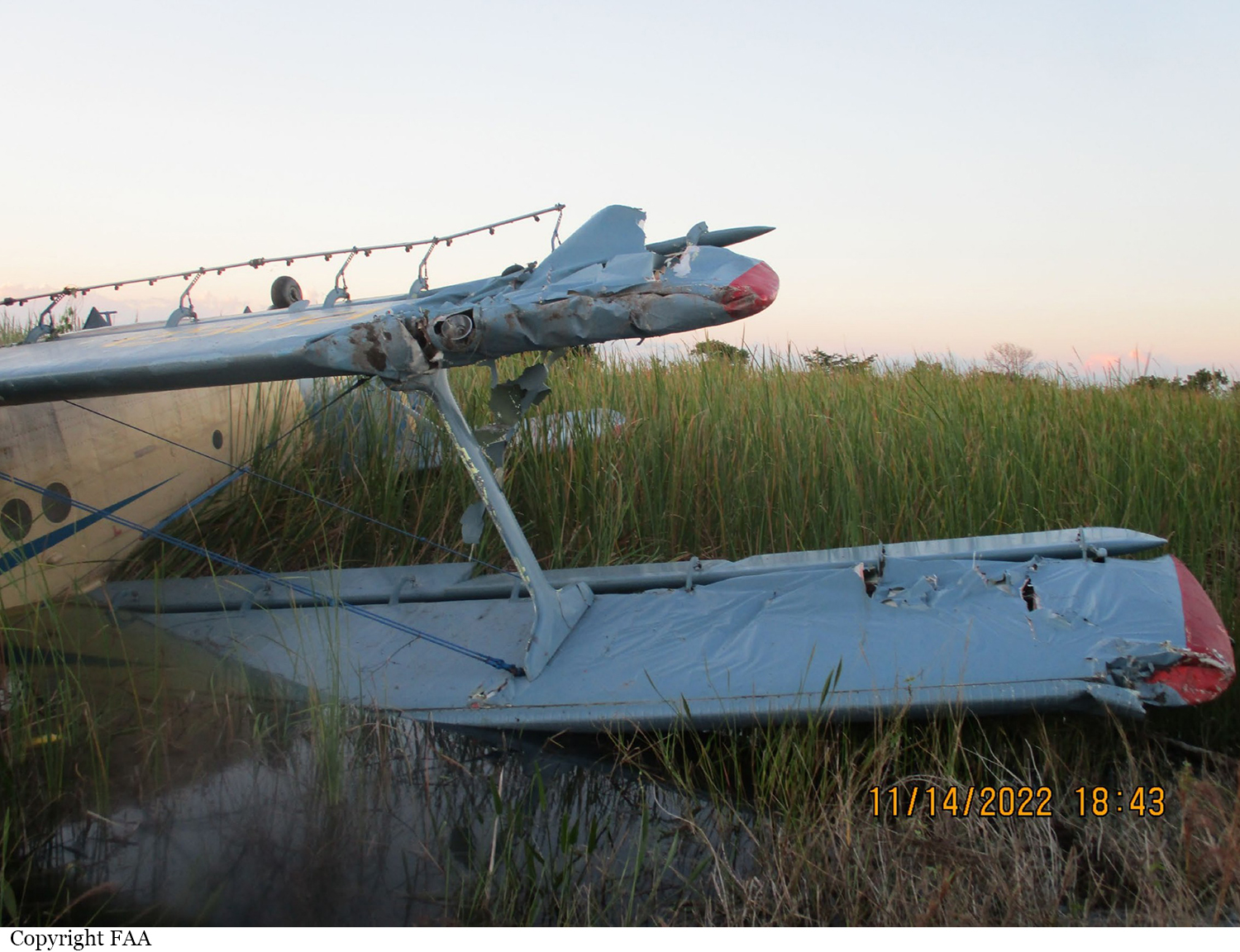
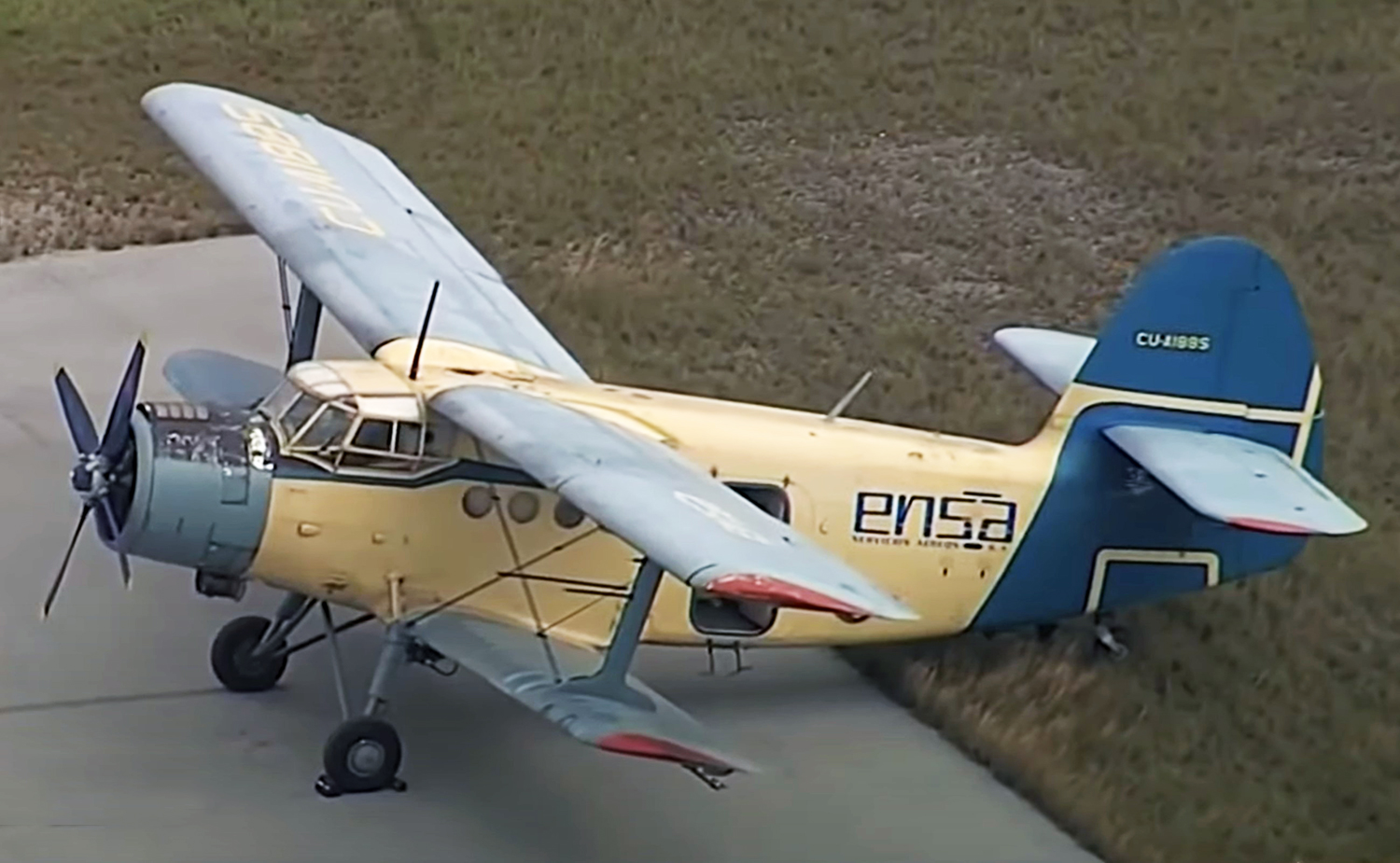
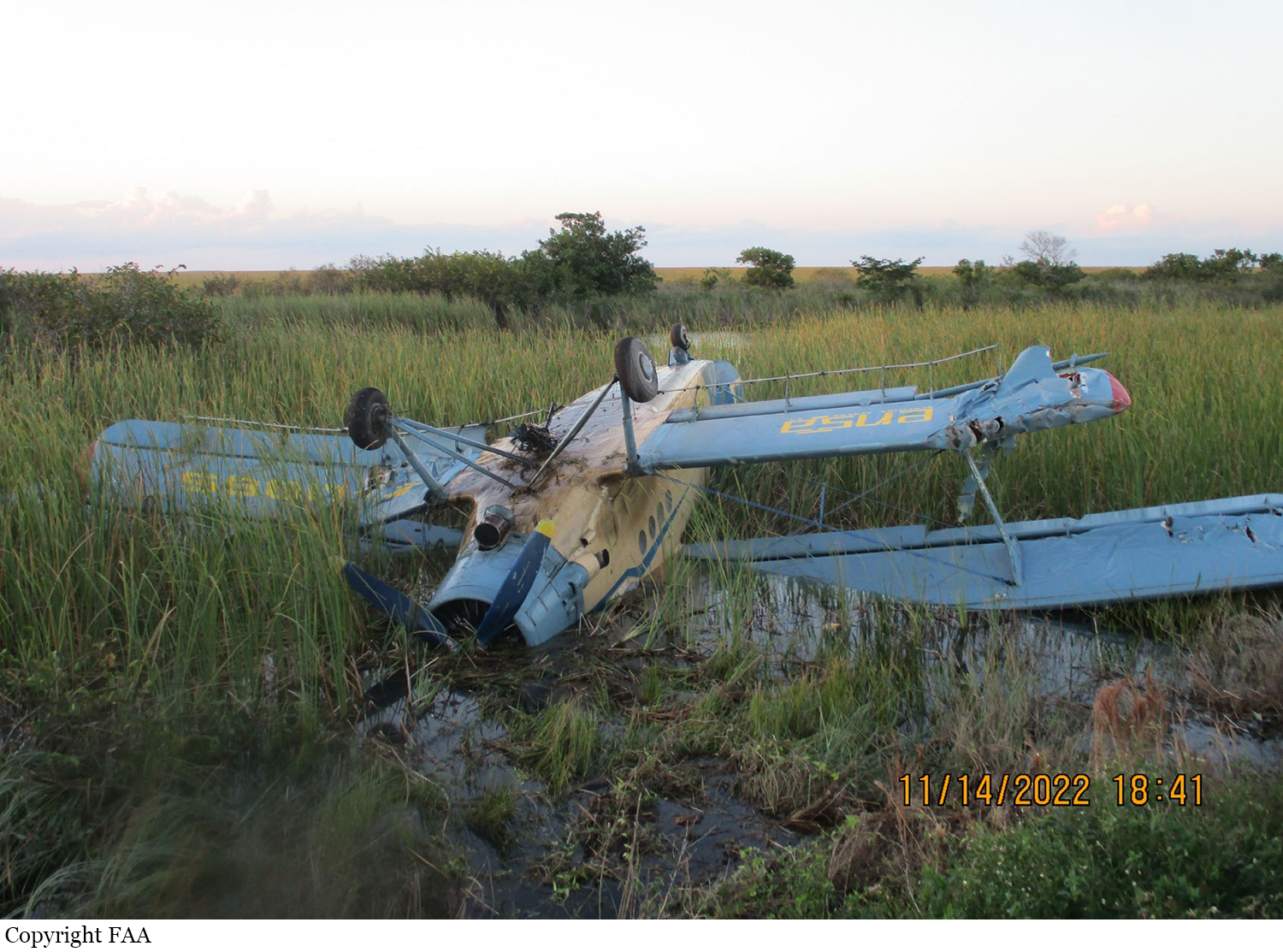
The single engine airplane landed last October at Dade-Collier Airport, in the center of the Everglades National Park, following a flight from Sancti Spíritus, Cuba. The pilot defected Cuba and landed safely in the US. On November 14, the pilot and copilot were hired to relocate the radial engine-equipped biplane as a public flight from Dade-Collier Airport to Miami-Opa Locka. The pilot stated that, while enroute, the airplane began to smoke and the engine lost power. The pilot performed a forced landing to a levee; however, the airplane’s main landing gear were wider than the levee, and after touchdown, the airplane traveled off the left side,
nosed over, and came to rest inverted, resulting in substantial damage. Both crew members were highly experienced but none of them have any flight hours in the accident airplane make and model.
Probable cause:
The pilot's failure to properly configure the cowl flaps and oil cooler shutters, which resulted in a total loss of engine power due to overheating of the engine. Contributing to the accident was the pilot's decision to operate the airplane in with an inoperative cylinder head temperature gauge.
Final Report:
Crash of a Boeing B-17G-95-DL Flying Fortress in Dallas: 5 killed

Date & Time: Nov 12, 2022 at 1322 LT
Operator:
Registration:
N7227C
Flight Phase:
Flight Type:
Survivors:
No
Schedule:
Dallas - Dallas
MSN:
32513
YOM:
1944
Crew on board:
5
Crew fatalities:
Pax on board:
0
Pax fatalities:
Other fatalities:
Total fatalities:
5
Captain / Total flying hours:
28000
Captain / Total hours on type:
500.00
Copilot / Total flying hours:
25300
Copilot / Total hours on type:
90
Aircraft flight hours:
9239
Circumstances:
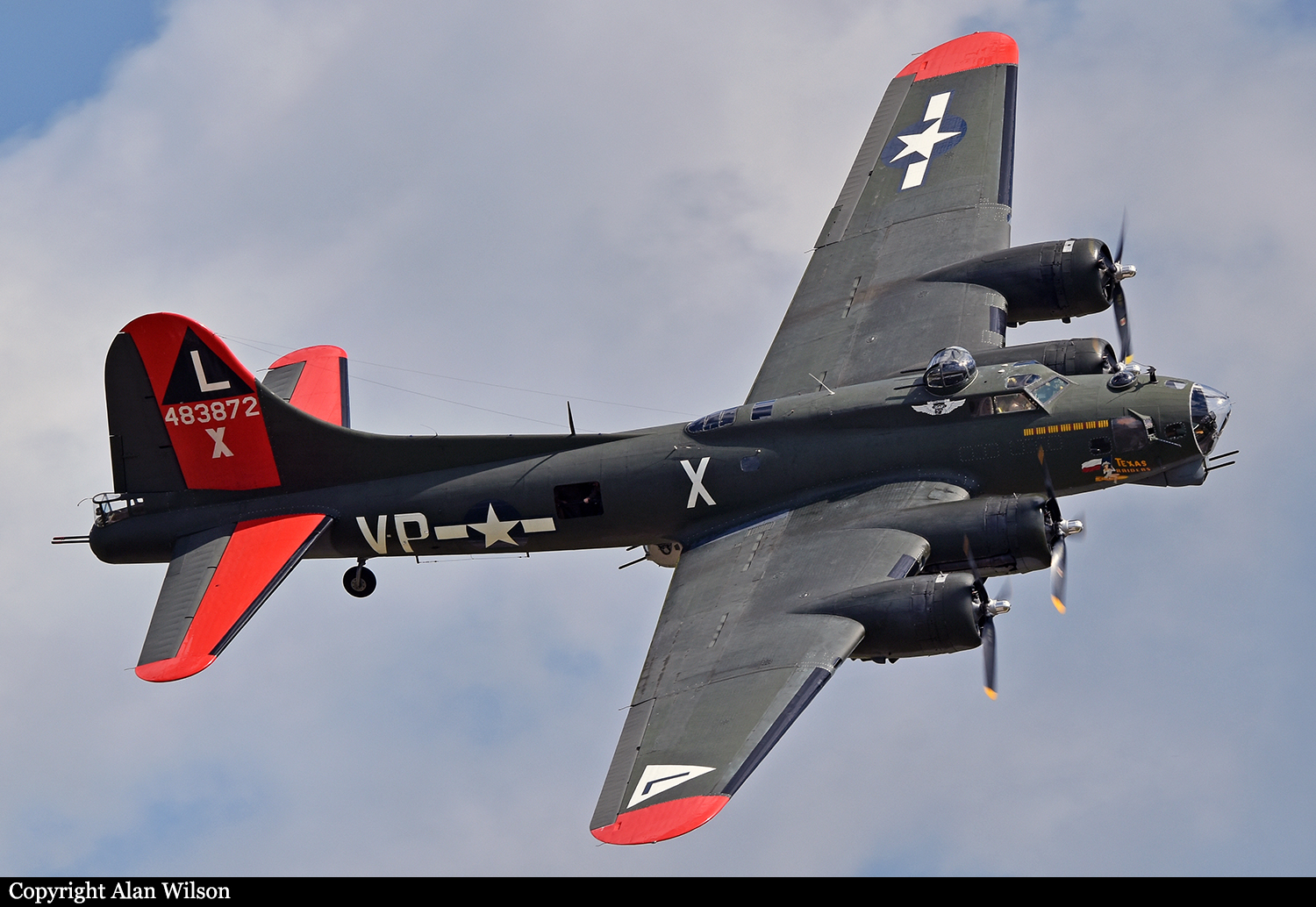
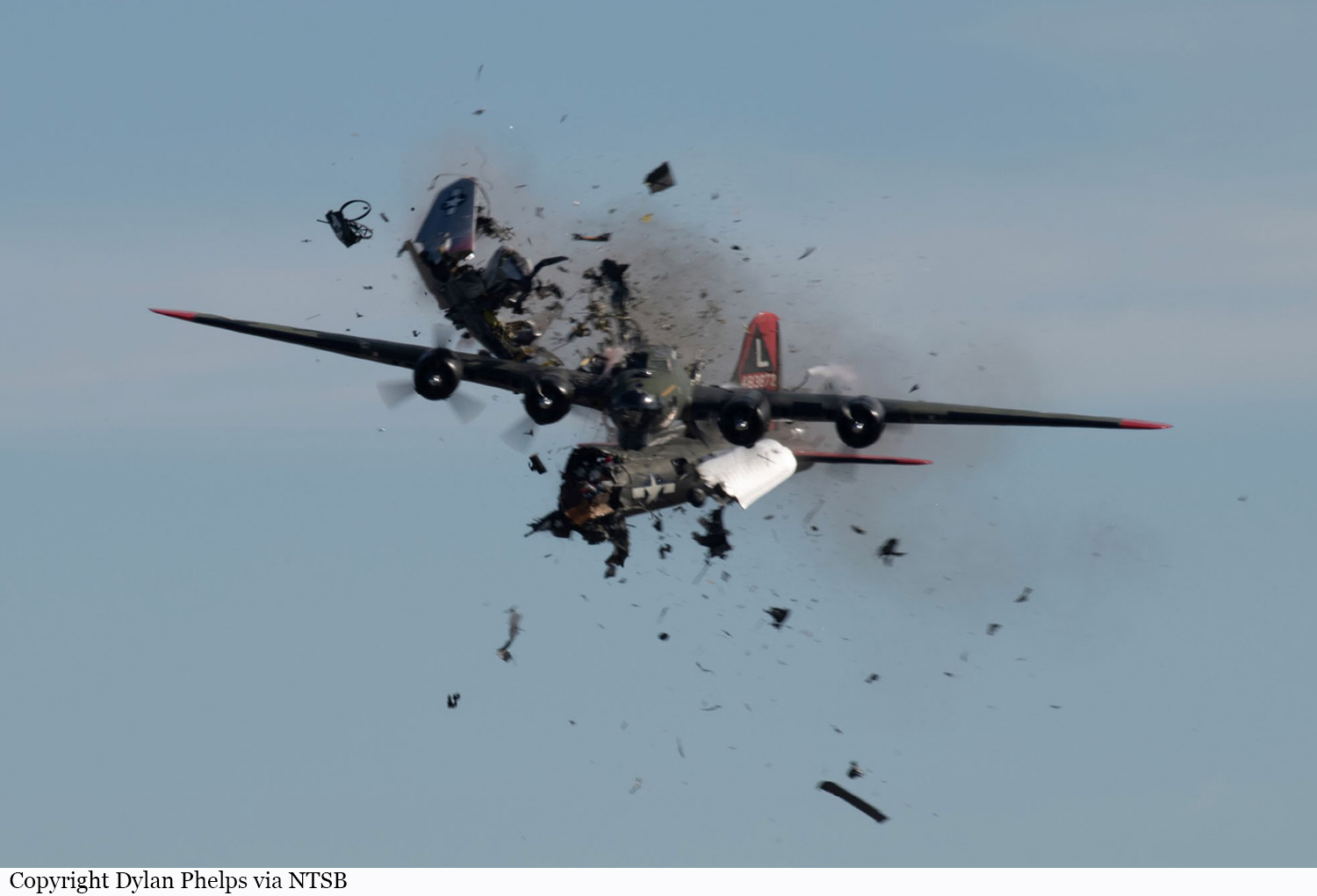
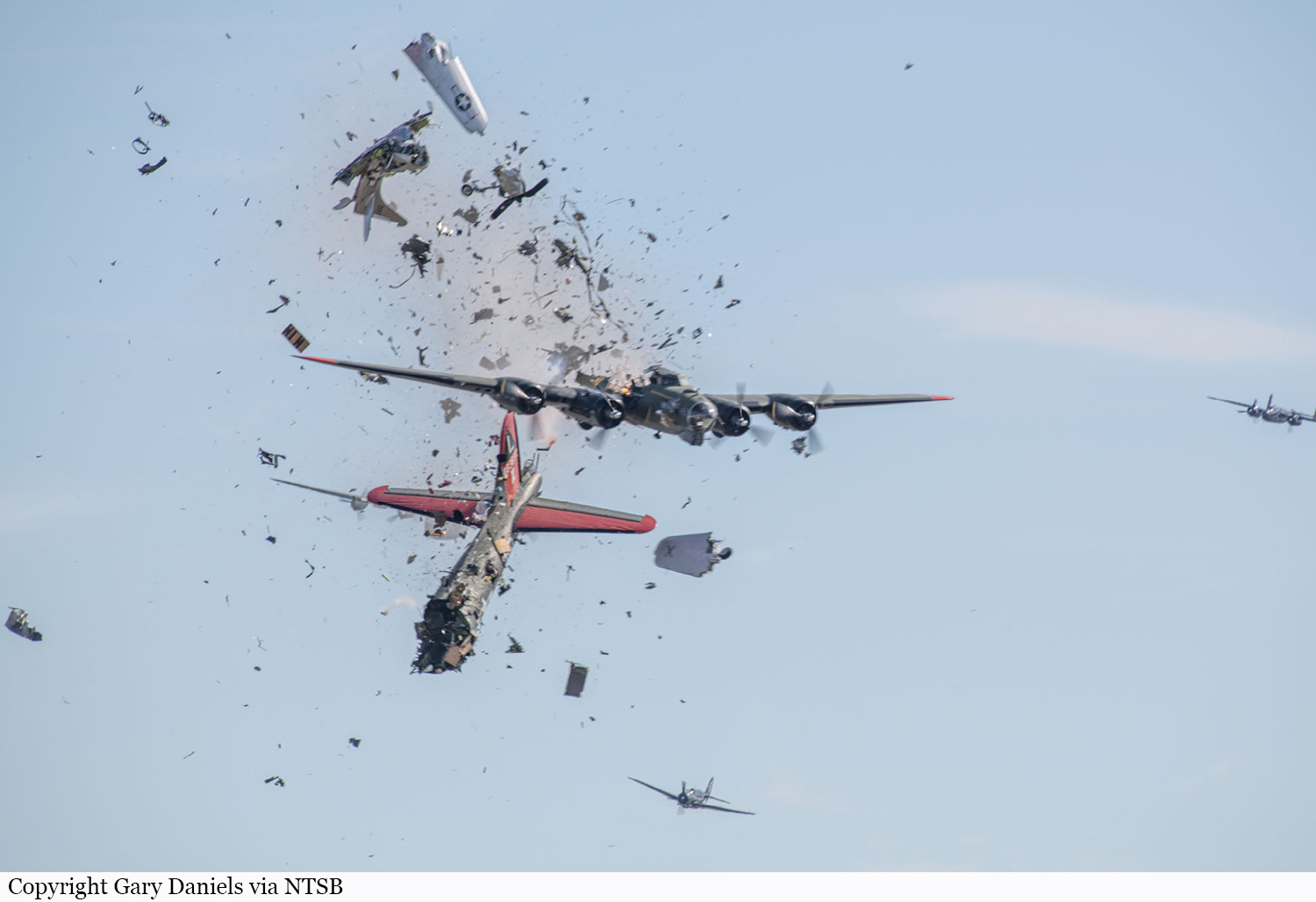
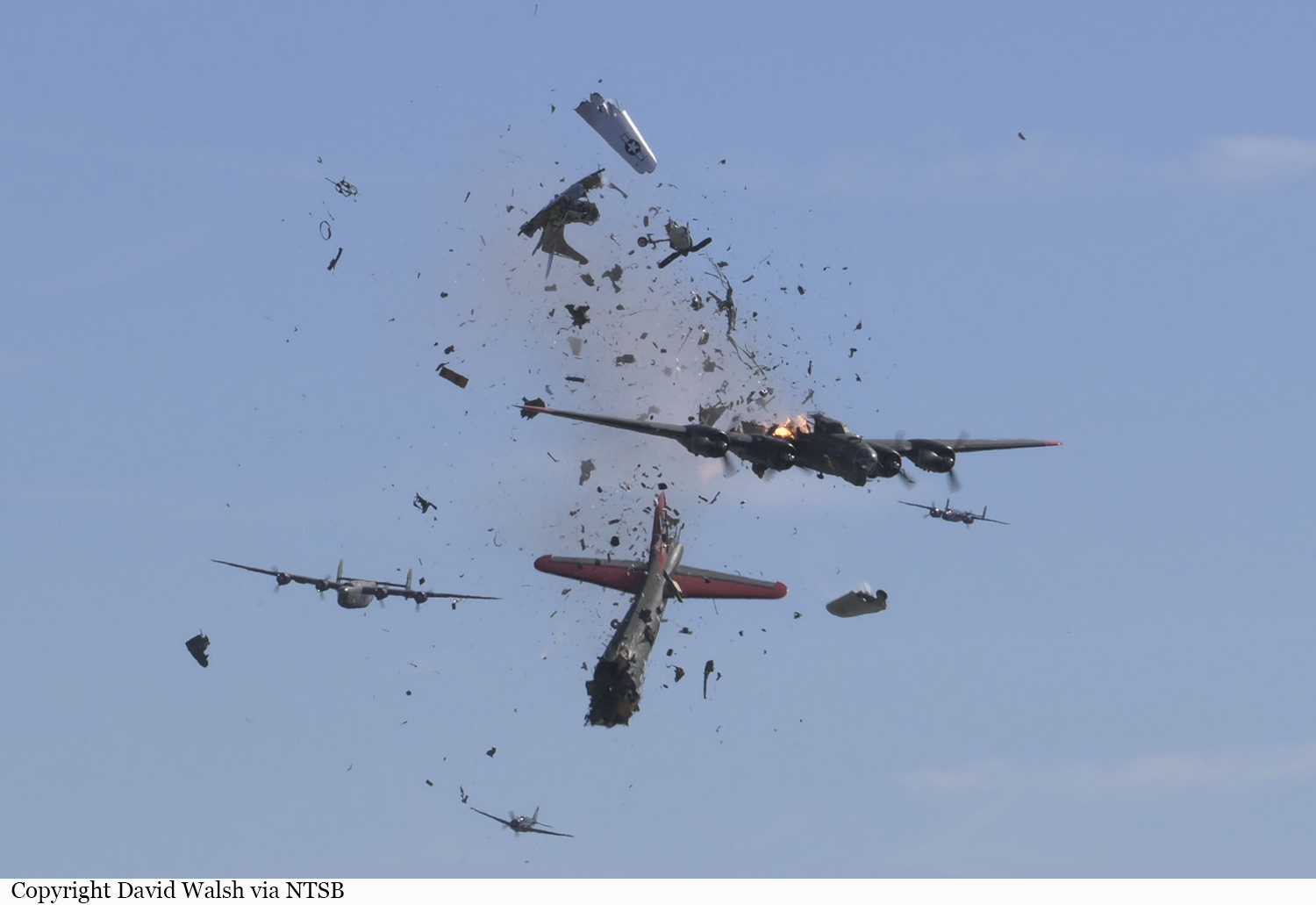
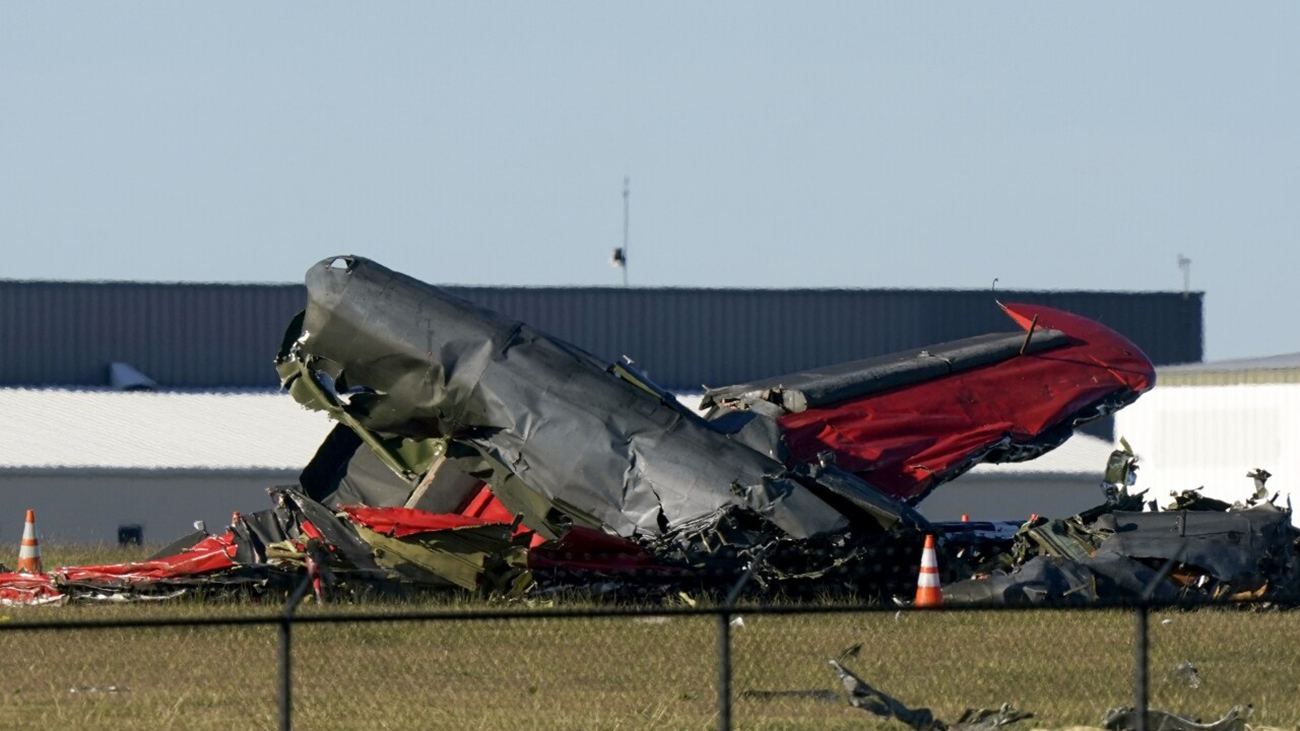
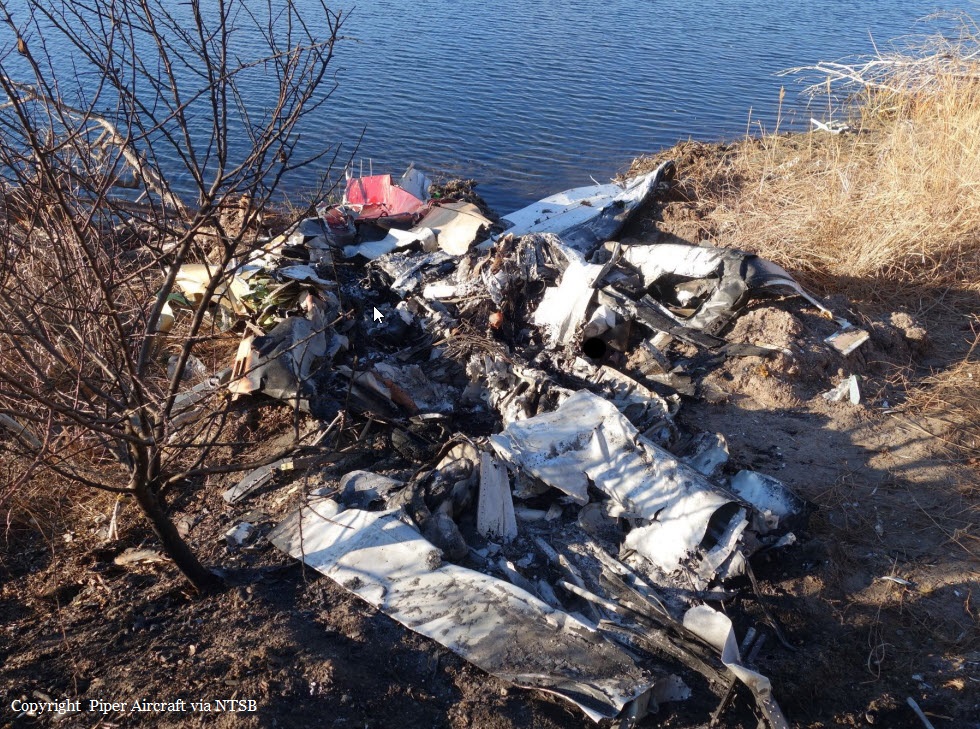
On November 12, 2022, about 1322 central standard time, a Boeing B-17G, N7227C, and a Bell P-63F, N6763, collided in flight during a performance at the Commemorative Air Force’s (CAF) Wings Over Dallas air show at Dallas Executive Airport (KRBD) in Dallas, Texas. The pilot, copilot, flight engineer, and two scanners on board the Boeing B-17G and the pilot of the Bell P-63F were fatally injured, and both airplanes were destroyed. No injuries to persons on the ground were reported. Both accident airplanes (and six other historic, former military airplanes that were airborne as part of the same performance) were operated by the CAF under the provisions of Title 14 Code of Federal Regulations (CFR) Part 91 and a certificate of waiver for the air show. The Boeing B-17G was in the first position of five historic bomber airplanes flying as solo aircraft in trail, and the Bell P-63F was in the last position of three historic fighter airplanes flying in formation. The takeoffs, repositioning turns, and passes of the eight airplanes in the accident performance were directed in real time via radio by the air boss, who had primary responsibility for the control of air show operations. Just before the accident, the bomber group and the fighter formation completed a pass in front of the crowd of spectators from show right to left (that is, right to left from the crowd’s perspective). The airplanes were setting up for the next pass when the accident occurred. This pass was intended to be from show left to right in front of the crowd, and the air boss issued directives for the fighter formation to pass off the left side of the bomber group airplanes and then cross in front of them. The position data showed that the flight path for the fighter lead and position 2 fighter airplanes passed the bomber airplanes off the bombers’ left side before crossing in front of the Boeing B-17G but that the Bell P-63F’s flight path converged with that of the Boeing B-17G. Video and photographic evidence captured by witnesses on the ground showed that the Bell P-63F was in a descending, left-banked turn when it struck the left side of the Boeing B-17G near the trailing edge of the left wing, then both airplanes broke apart in flight.
Probable cause:
The National Transportation Safety Board determines that the probable cause of the accident was the air boss’s and air show event organizer’s lack of an adequate, prebriefed aircraft separation plan for the air show performance, relying instead on the air boss’s real-time deconfliction directives and the see-and-avoid strategy for collision avoidance, which allowed for the loss of separation between the Boeing B-17G and the Bell P-63F airplanes. Also causal was the diminished ability of the accident pilots to see and avoid the other aircraft due to flight path geometry, out-the-window view obscuration by aircraft structures, attention demands associated with the air show performance, and the inherent limitations of human performance that can make it difficult to see another aircraft. Contributing to the accident were the lack of Federal Aviation Administration (FAA) guidance for air bosses and air show event organizers on developing plans and performing risk assessments that ensure the separation of aircraft that are not part of an approved maneuvers package and the lack of FAA requirements and guidance for recurrent evaluations of air bosses and direct surveillance of their performance.
Final Report:
Crash of a Piper PA-46-500TP Malibu Meridian in North Platte: 2 killed

Date & Time: Nov 9, 2022 at 0934 LT
Registration:
N234PM
Flight Type:
Survivors:
No
Schedule:
Lincoln – North Platte
MSN:
46-97200
YOM:
2005
Crew on board:
1
Crew fatalities:
Pax on board:
1
Pax fatalities:
Other fatalities:
Total fatalities:
2
Captain / Total flying hours:
505
Captain / Total hours on type:
24.00
Aircraft flight hours:
649
Circumstances:
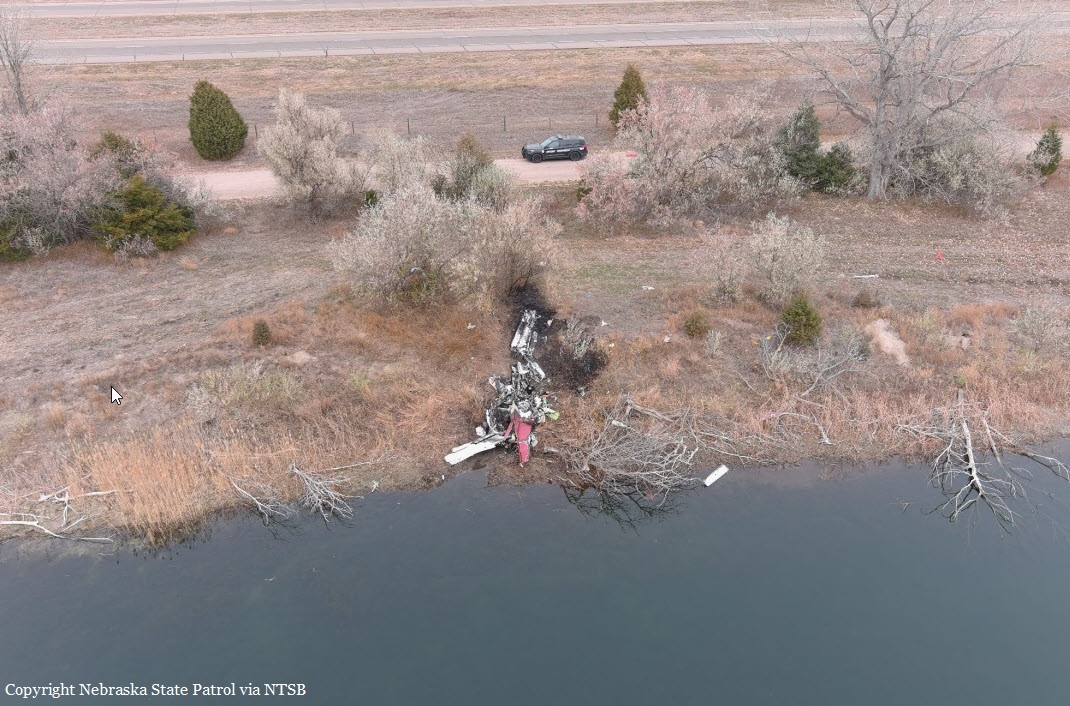
The pilot obtained a preflight weather briefing about 2.5 hours before departing on an instrument flight rules (IFR) cross-country flight. Automatic dependent surveillance-broadcast (ADS-B) and weather data indicated the flight encountered low IFR (LIFR) conditions during the approach to the destination airport. These conditions included low ceilings, low visibility, localized areas of freezing precipitation, low-level turbulence and wind shear. The ADS-B data revealed that during the last minute of data, the airplane’s descent rate increased from 500 ft per minute to 3,000 ft per minute. In the last 30 seconds of the flight the airplane entered a 2,000 ft per minute climb followed by a descent that exceeded 5,000 ft per minute. The last data point was located about 1,000 ft from the accident site. There were no witnesses to the accident. A postaccident examination of the airframe and engine revealed no evidence of mechanical malfunctions or failures that would have precluded normal operation. The airplane’s flight instruments and avionics were destroyed during the accident and were unable to be functionally tested. The rapid ascents and descents near the end of the flight track were consistent with a pilot who was experiencing spatial disorientation, which resulted in a loss of control and high-speed impact with terrain. The pilot purchased the airplane about 3 weeks before the accident and received about 15 hours of transition training in the airplane, including 1 hour of actual instrument conditions during high-altitude training. The pilot’s logbook indicated he had 5.2 hours of actual instrument flight time. At the time of the pilot’s weather briefing, the destination airport was reporting marginal visual flight rules (MVFR) conditions with the terminal area forecast (TAF) in agreement, with MVFR conditions expected to prevail through the period of the accident flight. LIFR conditions were reported about 40 minutes before the airplane’s departure and continued to the time of the accident. Light freezing precipitation was reported intermittently before and after the accident, which was not included in the TAF. The destination airport’s automated surface observing system (ASOS) reported LIFR conditions with overcast ceilings at 300 ft above ground level (agl) and light freezing drizzle at the time of the accident. Low-level turbulence and wind shear were detected, which indicated a high probability of a moderate or greater turbulence layer between 3,600 and 5,500 ft mean sea level (msl) in the clouds. During the approach, the airplane was in instrument meteorological conditions with a high probability of encountering moderate and greater turbulence, with above freezing temperatures. The National Weather Service (NWS) had issued conflicting weather information during the accident time period. The pilot’s weather briefing indicated predominately MVFR conditions reported and forecasted by the TAFs along the route of flight, while both the NWS Aviation Weather Center (AWC) AIRMET (G-AIRMET) and the Graphic Forecast for Aviation (GFA) were depicting IFR conditions over the destination airport at the time of the briefing. The TAFs, GAIRMET, and Current Icing Product (CIP)/Forecast Icing Products (FIP) were not indicating any forecast for icing conditions or freezing precipitation surrounding the accident time. The pilot reviewed the TAF in his briefing, expecting MVFR conditions to prevail at his expected time of arrival. The TAF was amended twice between the period of his briefing and the time of the accident to indicate IFR to LIFR conditions with no mention of any potential freezing precipitation or low-level wind shear (LLWS) during the period. Given the pilot’s low actual instrument experience, minimal amount of flight experience in the accident airplane, and the instrument conditions encountered during the approach with a high probability of moderate or greater turbulence, it is likely that the pilot experienced spatial disorientation and lost control of the airplane.
Probable cause:
The pilot’s flight into low instrument flight rules conditions and turbulence, which resulted in spatial disorientation, loss of control, and an impact with terrain. Contributing to the accident was the pilot’s lack of total instrument experience.
Final Report:

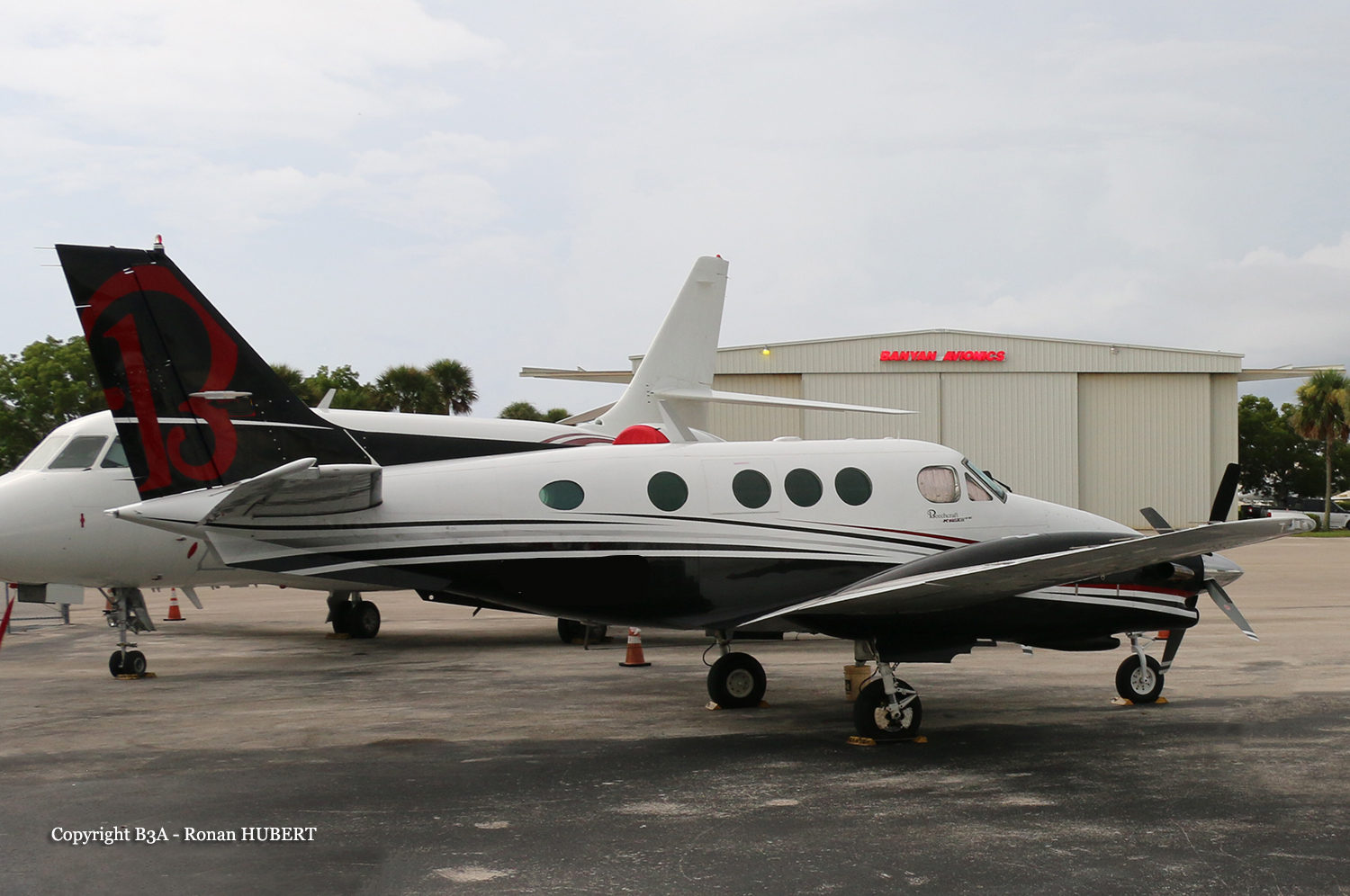
Crash of a Beechcraft E90 King Air in Slidell

Date & Time: Nov 6, 2022 at 2145 LT
Type of aircraft:
Operator:
Registration:
N809DM
Flight Type:
Survivors:
Yes
Schedule:
Nashville – Slidell
MSN:
LW-334
YOM:
1980
Crew on board:
1
Crew fatalities:
Pax on board:
0
Pax fatalities:
Other fatalities:
Total fatalities:
0
Captain / Total flying hours:
4800
Captain / Total hours on type:
325.00
Aircraft flight hours:
7111
Circumstances:
The pilot flew a visual approach to his home airport but did a go-around due to ground fog. After receiving an instrument flight rules clearance, he flew an RNAV/GPS approach that he also discontinued due to ground fog. After executing a missed approach, the pilot flew another RNAV/GPS approach. The pilot reported that during this last approach he lost visual references and initiated a go-around, during which the airplane impacted trees about 800 ft to the right of the runway. The main wreckage came to rest upright and was consumed by a post-impact fire. The postaccident examination revealed no preimpact anomalies that would have precluded normal operation. The pilot reported that he observed the right engine was slower to accelerate than the left engine during the attempted go-around, and that he was distracted looking at the engine indications. He reported that he did not notice if the airplane yaw to the right and, before he could correct for the altitude loss, the airplane descended into and struck the trees.
Probable cause:
The pilot’s failure to maintain airplane control during an attempted go-around in low visibility conditions.
Final Report:

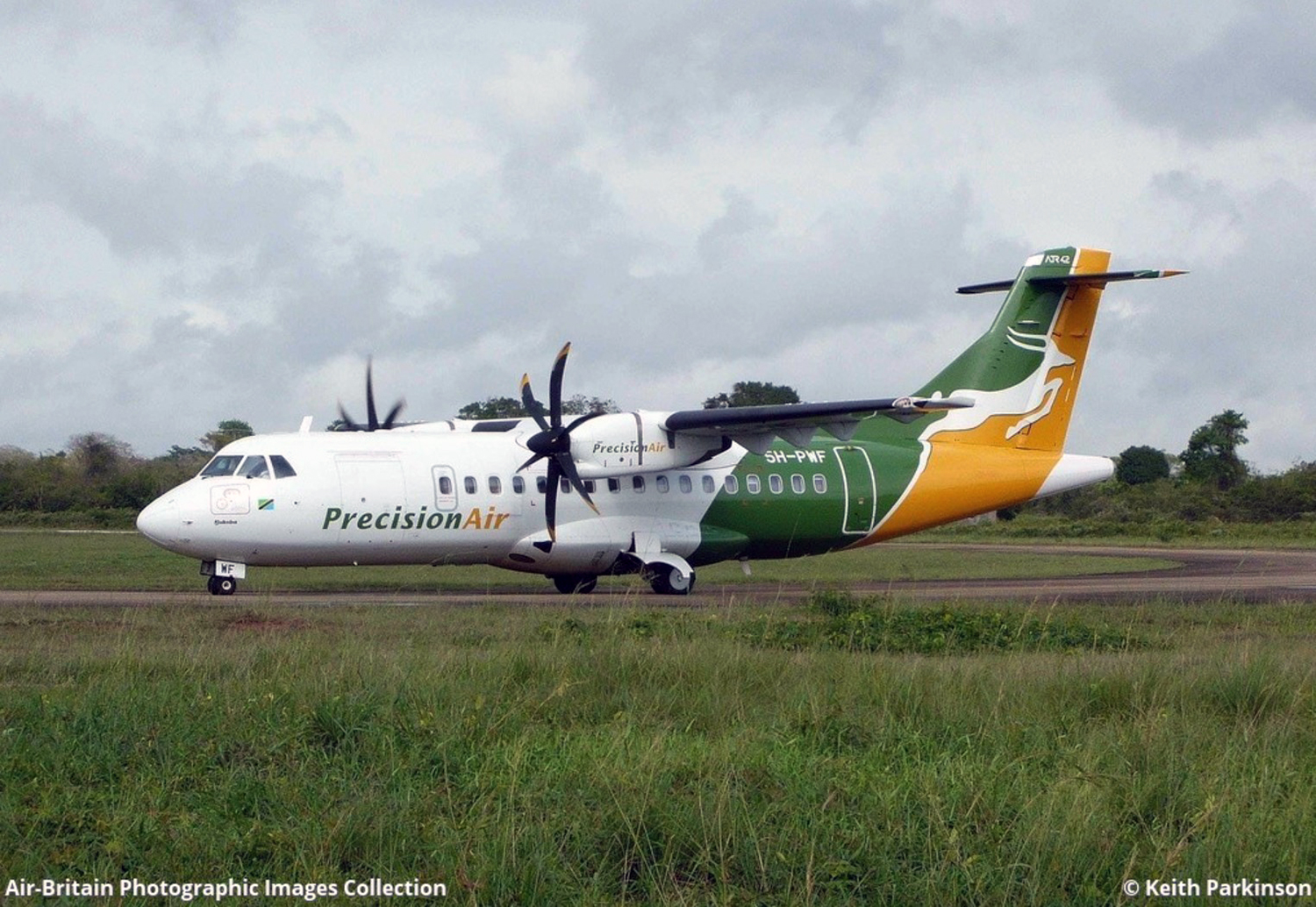
Crash of an ATR42-500 off Bukoba: 19 killed

Date & Time: Nov 6, 2022 at 0843 LT
Type of aircraft:
Operator:
Registration:
5H-PWF
Survivors:
Yes
Schedule:
Dar es-Salaam – Bukoba
MSN:
819
YOM:
2010
Flight number:
PW494
Country:
Region:
Crew on board:
4
Crew fatalities:
Pax on board:
39
Pax fatalities:
Other fatalities:
Total fatalities:
19
Captain / Total flying hours:
23515
Captain / Total hours on type:
11919.00
Copilot / Total flying hours:
2109
Copilot / Total hours on type:
1700
Aircraft flight hours:
16893
Aircraft flight cycles:
16610
Circumstances:
During the approach, the crew encountered heavy rain and thunderstorms with lightning as well as significant crosswind and turbulence. During the final approach, several nose down inputs on the control column increased the descent rate of the aircraft. The EGPWS SINK RATE-SINK RATE alert triggered 15 seconds before the accident. Then the EGPWS PULL-UP warning triggered, followed by flight crew's nose up input on control column, around 2 seconds before the aircraft struck the water surface of Lake Victoria about 500 meters short of runway 31 threshold. The impact with the water caused significant damage to the aircraft fuselage followed by water entering the cabin and flight deck. There was no fire but the aircraft was damaged beyond economic repair. Of the 43 persons on board, 17 passengers and 2 pilots lost their lives while 22 passengers and 2 cabin crew members survived without serious injuries. It is considered that conducting an unstabilized final approach in poor weather conditions that could not allow clear visual contact with the ground was a major factor in this accident.The decision of the Pilot in Command to negotiate his way through the narrow weather window in order to reach the runway,the high crew workload caused by the presence of thunderstorms, the variable cross wind, rain and turbulence as well as the absence of air traffic services at Bukoba airport were contributory factors. The aircraft sank by a depth about 3-4 metres.
Probable cause:
The accident was caused by an unstabilized final approach to runway 31 of Bukoba Airport conducted in poor weather conditions which did not allow clear sight of the terrain. This led the aircraft to strike the water on the lake surface.
The following contributory factors were indentified:
- The decision of the pilot-in-command to proceed with the final approach without the required weather minima in order to reach the runway instead of diverting to Mwanza.
- The gusting crosswind which prevailed at the time of final approach.
- The heavy rain and turbulence at that material time.
- The absence of air traffic services at Bukoba Airport.
- High rate of descent at low altitude.
- No immediate response to the EGPWS warnings.
- High work load to the crew at the critical phase of final approach
Final Report:

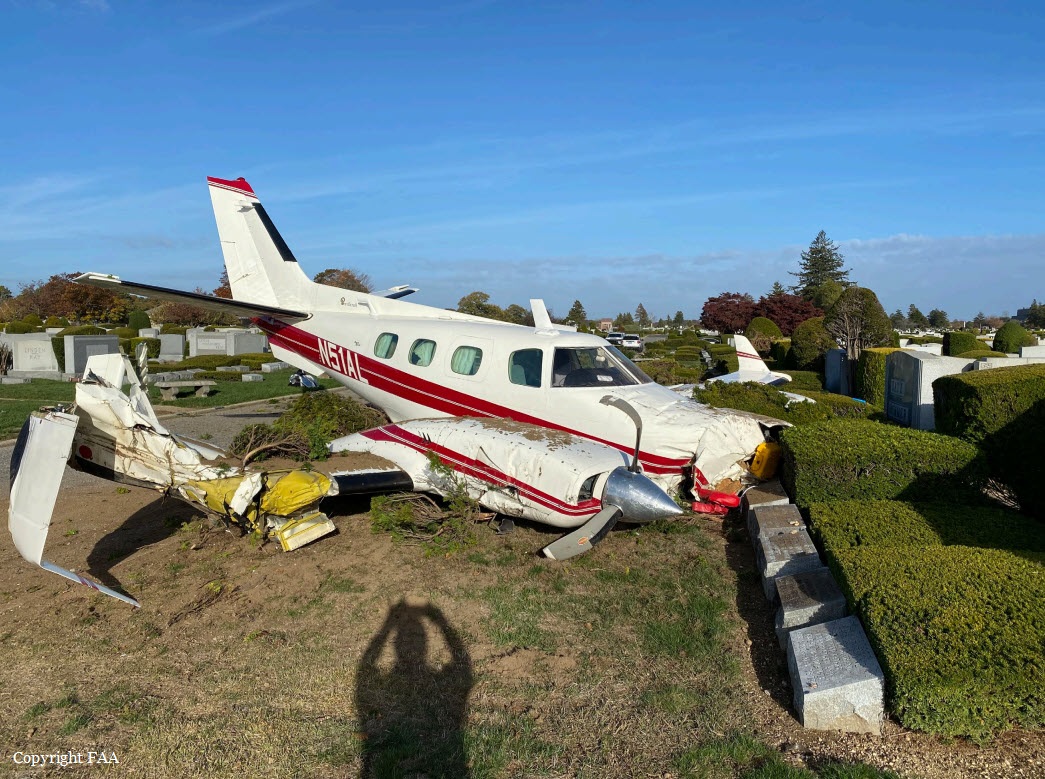
Crash of a Beechcraft B60 Duke in Farmingdale

Date & Time: Nov 5, 2022 at 1351 LT
Type of aircraft:
Operator:
Registration:
N51AL
Flight Type:
Survivors:
Yes
Schedule:
Burlington – Farmingdale
MSN:
P-247
YOM:
1973
Crew on board:
1
Crew fatalities:
Pax on board:
1
Pax fatalities:
Other fatalities:
Total fatalities:
0
Captain / Total flying hours:
4672
Captain / Total hours on type:
173.00
Aircraft flight hours:
7476
Circumstances:
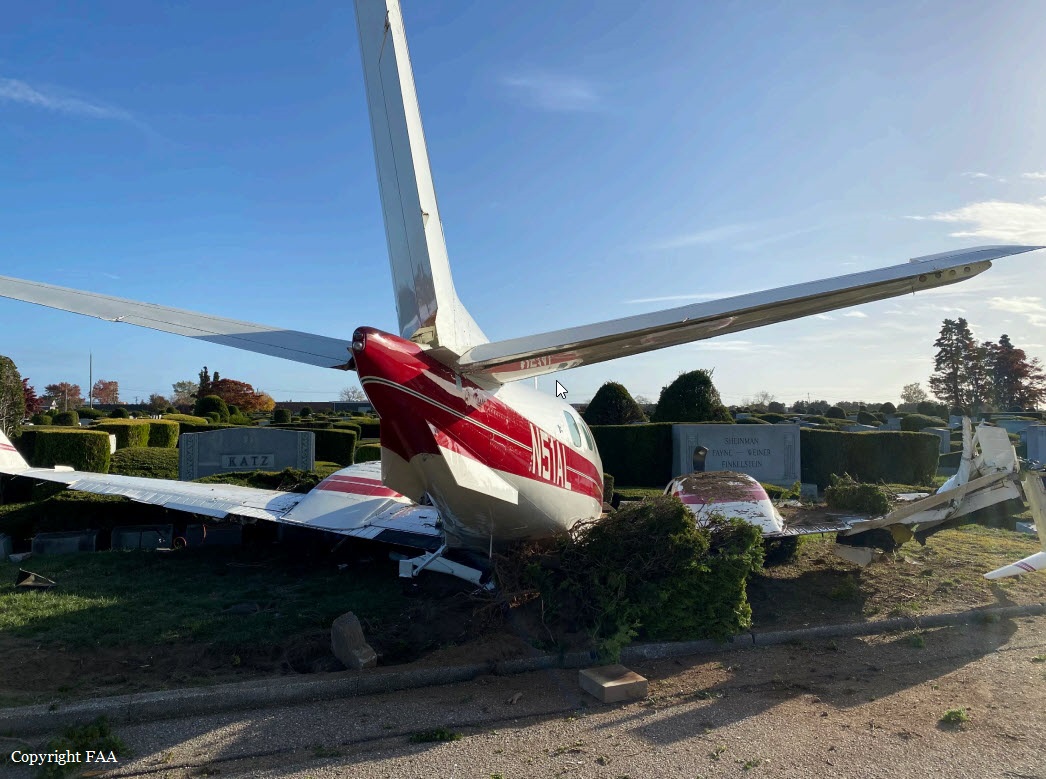
The pilot reported that he was under the impression that his airplane’s inboard fuel tanks had been topped and he had 202 gallons on board prior to departure. He had a “standing order” with the airport’s fixed base operator to top the tanks; however, the fueling was not accomplished and he did not visually check the fuel level prior to departure. He entered 202 gallons in cockpit fuel computer and unknowingly commenced the flight with 61 gallons on board. Prior to reaching his destination, his fuel supply was exhausted, both engines lost all power, and he performed a forced landing in a cemetery about one mile from the airport. The pilot and his passenger had minor injuries. Inspectors with the Federal Aviation Administration examined the wreckage and determined that damage to the wings and fuselage was substantial. The pilot reported that there were no preaccident mechanical malfunctions or failures with the airplane that would have precluded normal operation.
Probable cause:
The pilot’s improper preflight inspection of the airplane’s fuel system, resulting in him commencing the flight with an inadequate fuel supply.
Final Report:
Crash of a Canadair CL-415 near Linguaglossa: 2 killed

Date & Time: Oct 27, 2022
Type of aircraft:
Operator:
Registration:
I-DPCN
Flight Phase:
Flight Type:
Survivors:
No
Site:
Schedule:
Lamezia Terme - Lamezia Terme
MSN:
2070
YOM:
2008
Country:
Region:
Crew on board:
2
Crew fatalities:
Pax on board:
0
Pax fatalities:
Other fatalities:
Total fatalities:
2
Circumstances:
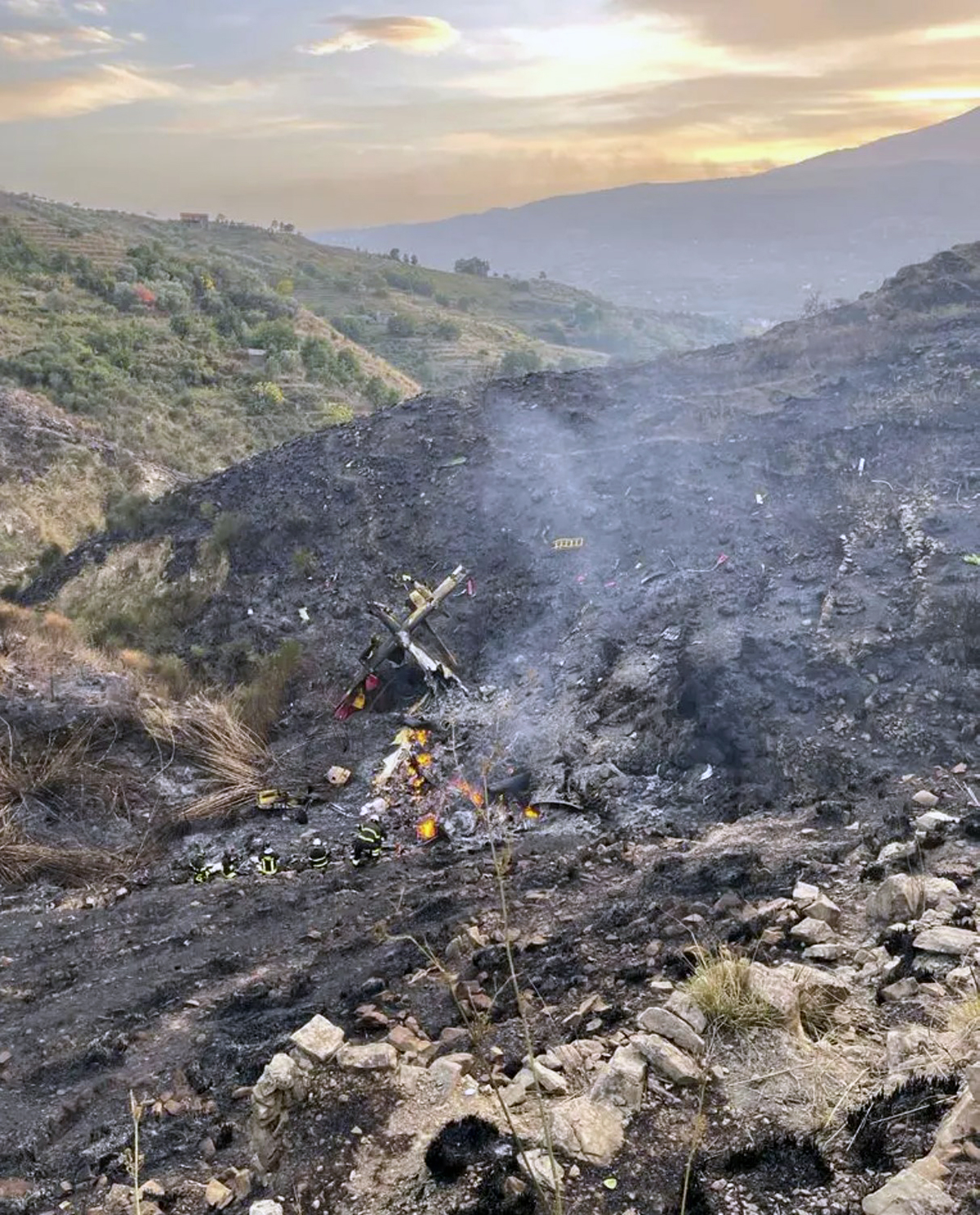
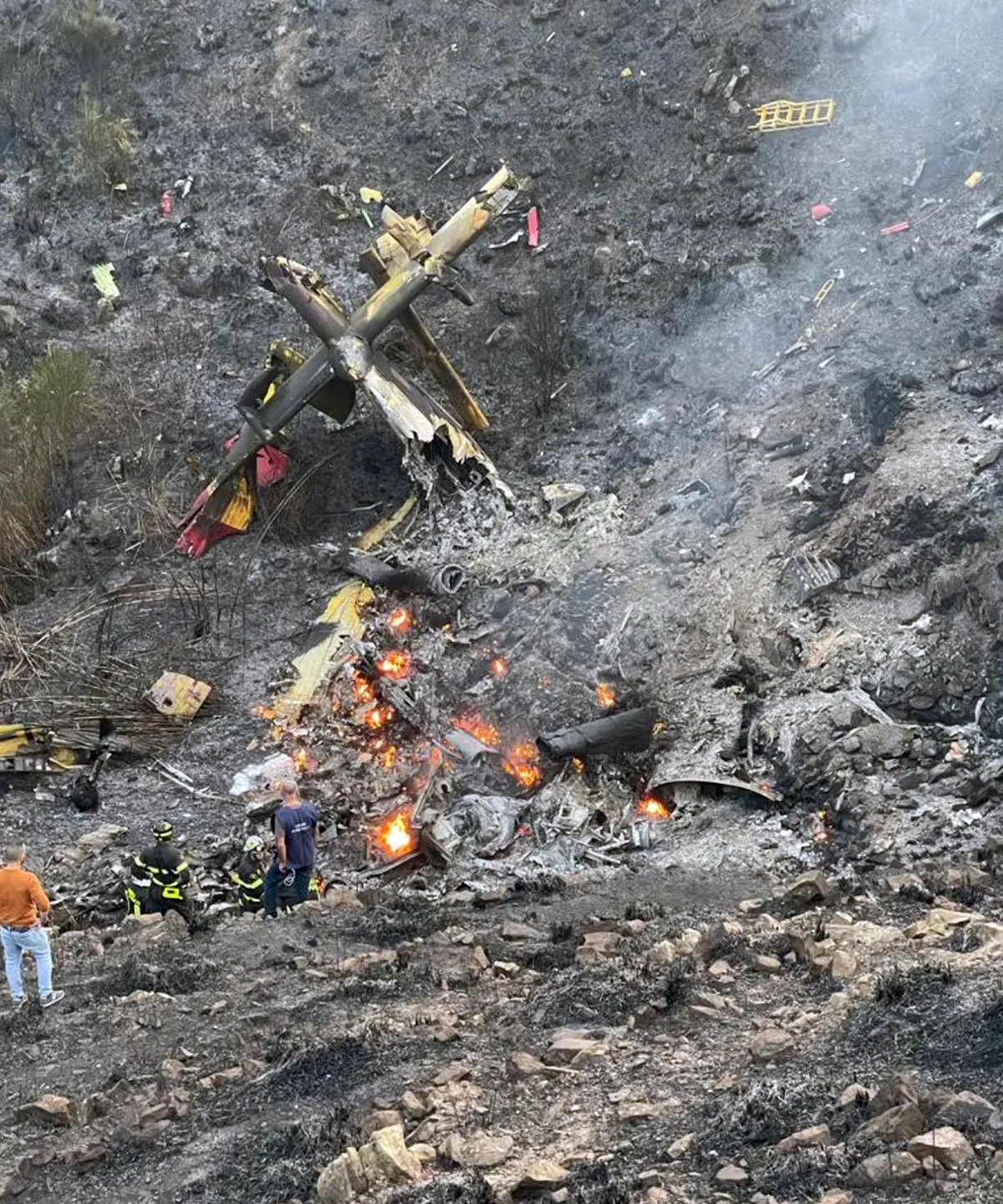
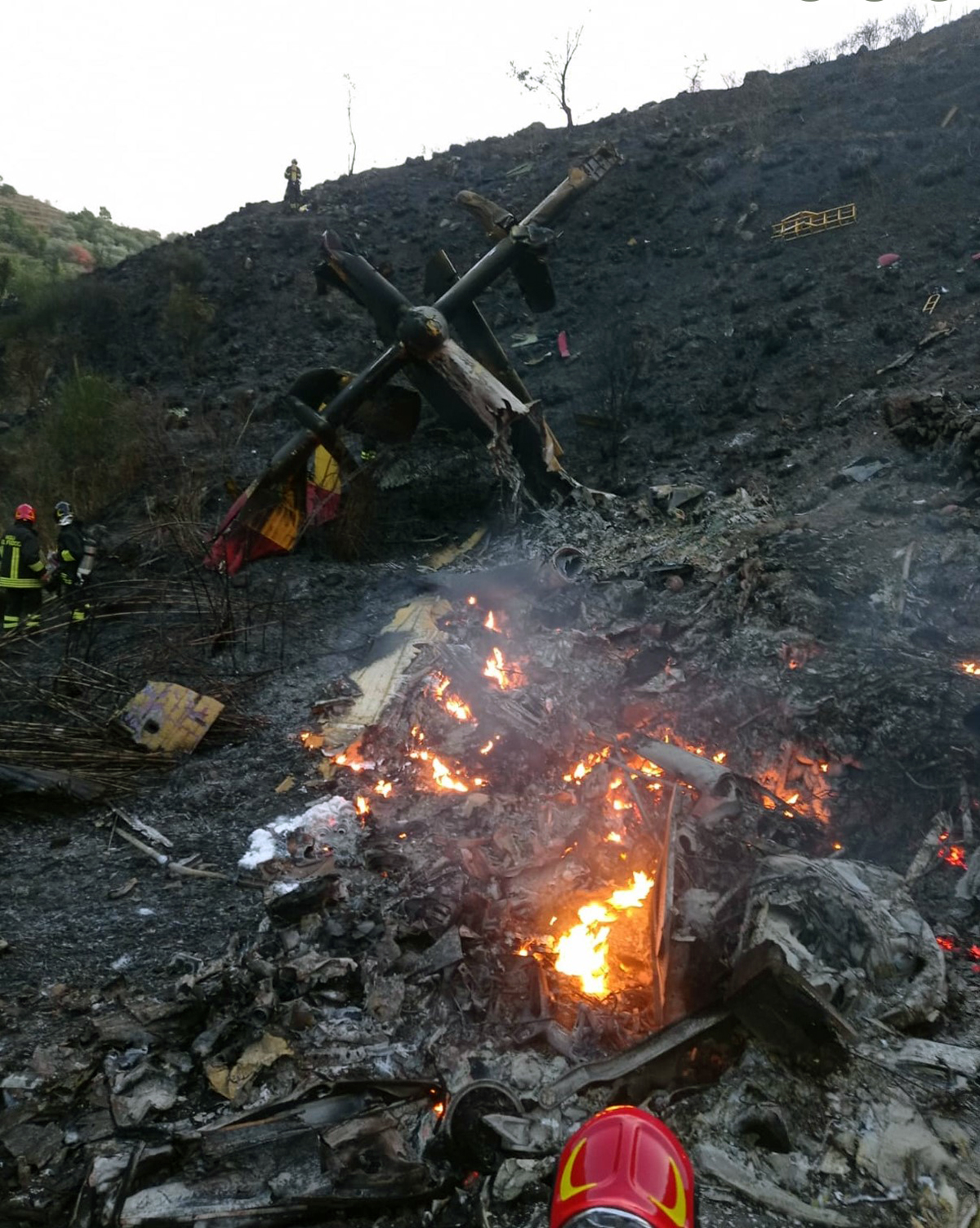
The crew departed Lamezia Terme Airport on a fire fighting mission at the foot of the Etna Volcano, north of Catania. Approaching the area on fire, the crew initiated a right hand turn and while descending to rising terrain, the right wing tip impacted the ground, causing the aircraft to crash, bursting into flames. Both pilots were killed.

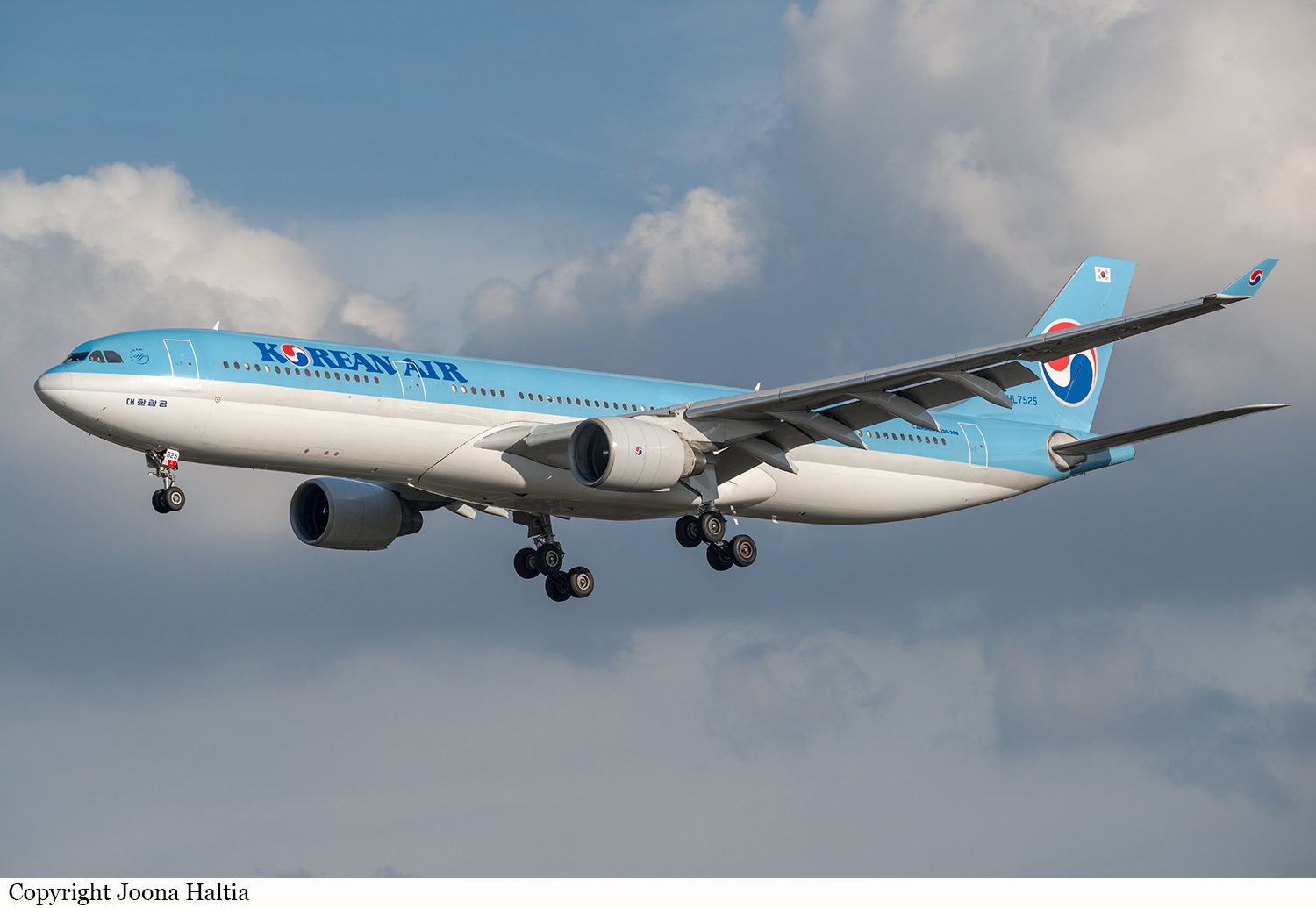
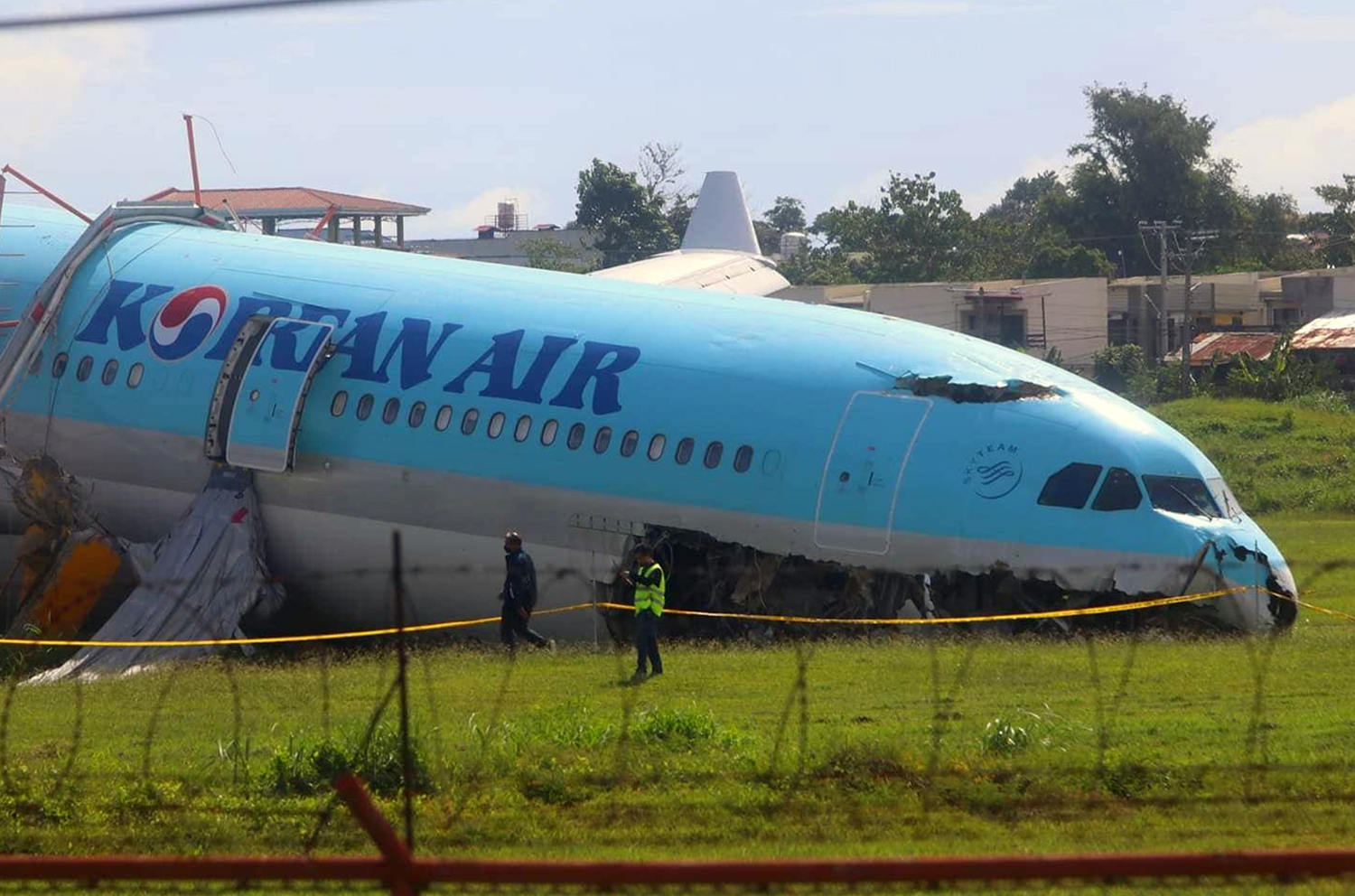
Crash of an Airbus A330-322 in Mactan

Date & Time: Oct 23, 2022 at 2310 LT
Type of aircraft:
Operator:
Registration:
HL7525
Survivors:
Yes
Schedule:
Seoul - Mactan
MSN:
219
YOM:
1998
Flight number:
KE631
Location:
Country:
Region:
Crew on board:
11
Crew fatalities:
Pax on board:
165
Pax fatalities:
Other fatalities:
Total fatalities:
0
Captain / Total flying hours:
13043
Captain / Total hours on type:
9285.00
Copilot / Total flying hours:
1603
Copilot / Total hours on type:
1035
Aircraft flight hours:
78197
Circumstances:
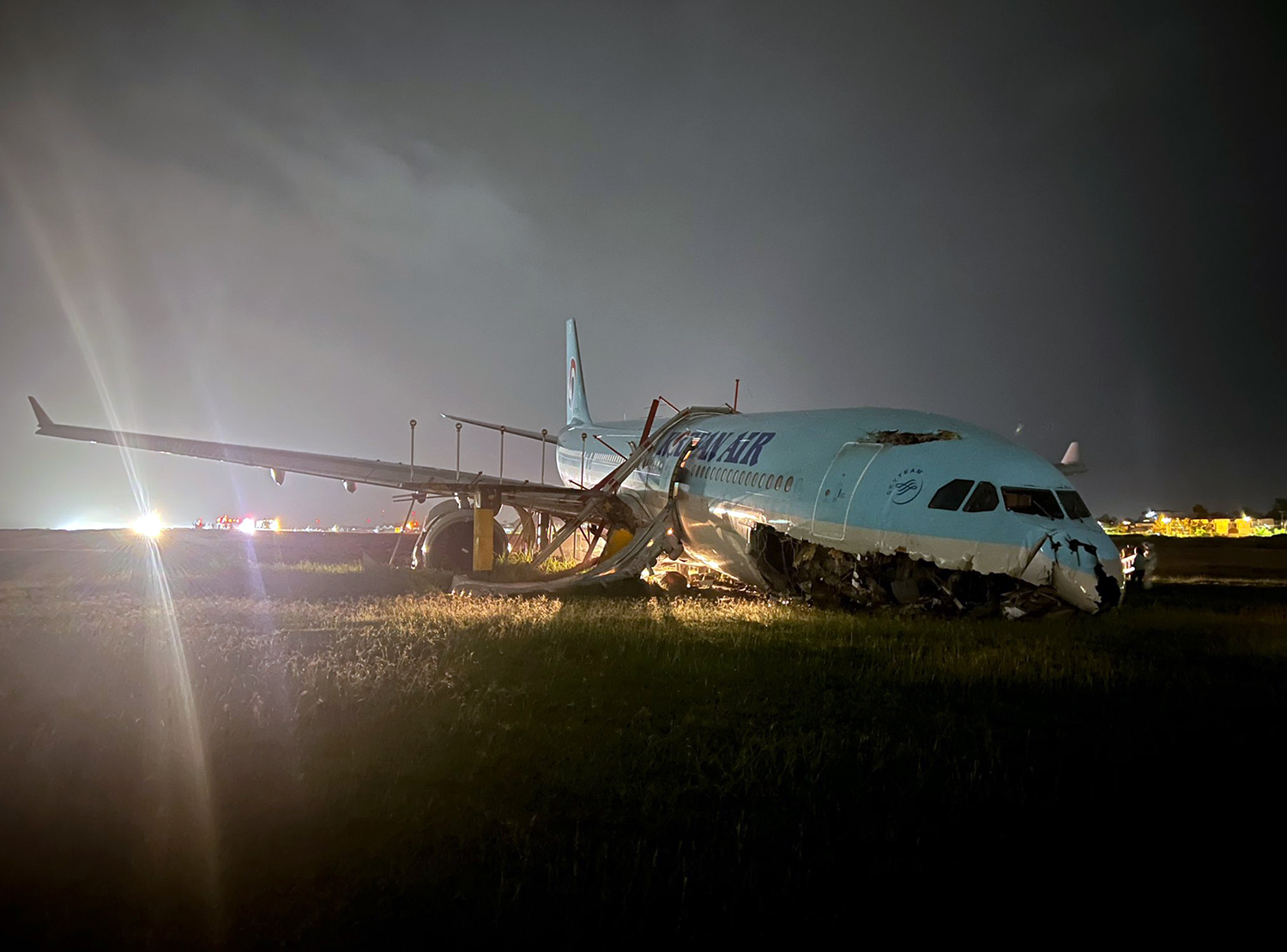
On or about 2310LT (1510 UTC), October 23, 2022, an Airbus 330-322 type of aircraft with registry number HL7525 experienced a runway overrun during landing roll at Runway (RWY) 22 of Mactan-Cebu International Airport (RPVM), Lapu-lapu City, Cebu, Philippines. The aircraft is being operated by Korean Air. One (1) flight crew member, four (4) cabin crew members, and fifteen (15) passengers sustained minor injuries. The aircraft sustained damage and was subsequently destroyed. Instrument Meteorological Conditions (IMC) prevailed at the time of the accident. The flight took off from Incheon International Airport (RKSI), Incheon, Korea. The captain was the pilot flying (PF) when the accident happened. There was a change of runway in use from RWY 04 to RWY 22 as the variable winds shifted direction favorable to RWY 22 during the first approach for landing. While on approach for landing, after descending below the minima, during the interview, the crew encountered heavy rain and elected to go around as they lost runway visibility. A second (2nd) approach was flown, and a second (2nd) go-around at 14:26:23 UTC was performed due to a sudden increase of vertical speed followed by an aural warning “Sink rate.” While initiating the go-around, the aircraft landing gears contacted the ground. An Electronic Centralized Aircraft Monitor (ECAM) message was noted by the crew indicating a landing gear control interface unit (LGCIU) 1 and 2 fault. After reporting the go-around to the air traffic controller (ATC), the crew requested to hold over reporting point ALMAR and performed ECAM actions. While performing ECAM action on the LGCIU 1 and 2 fault, an ECAM message of BRAKES ANTI SKID FAULT was noticed. These two (2) messages were displayed to the flight crew only at 1,500 ft RA (as inhibited below), i.e., 32 seconds after the touchdown, and a third (3rd) approach for landing was decided. While initiating the third (3rd) approach for landing, the crew performed a normal landing gear down procedure in accordance with ECAM actions for LGCIU 1 and 2 faults at 14:44.29 UTC. However, the right main landing gear down-lock indicator was not illuminating on the L/G indicator panel. The crew requested from ATC to cancel the approach clearance and requested again hold over reporting point ALMAR at 14:45.30 UTC to resolve the technical issue. After the crew carried out the QRH procedure for landing with abnormal landing gear, an indication of the HYD B RSVR LO LVL message was displayed. The crew then performed another ECAM action. The flight then continued its approach to RPVM. During landing on the fourth (4th) approach, the aircraft failed to stop and overran the end of the runway. After colliding with the localizer antenna and runway approach lighting system, the aircraft came to a complete stop at the grassy portion about 235 meters from the end of runway 22 at coordinates 10o17’41.8” N 123o57’59.9” E with a final heading of 245°. The passengers evacuated utilizing the L2 and R2 cabin door slide rafts. The crew and passengers were ferried to the airport terminal by shuttle buses. Mactan Cebu International Airport Authority (MCIAA) Rescue and Firefighting Services immediately responded to help secure the aircraft. There was no fire ensued after the accident.
Probable cause:
Primary Cause Factor:
a. The increase of VSI was attributed to the forward pitch control from the captain that resulted in the ground contact before the runway.
b. The increase in vertical wind factor during the aircraft’s descent on the second approach.
c. The right hand MLG hit a 15cm step of the cemented edge of RWY 22 resulting in multiple damage/faults to the said landing gear and consequently the loss of most of the deceleration means, specifically aircraft braking failure resulting in runway overrun.
Contributory Cause Factors:
a. Loss of spoilers and reversers.
b. Aircraft brake system dormant failure.
c. The deficiency in Airbus’s Crew Operating Procedure and Alerting in relation to the A330 Blue Hydraulic Low-Level Fault.
Final Report:
Crash of a De Havilland DHC-3 Otter in Pluto Lake

Date & Time: Oct 13, 2022 at 0929 LT
Type of aircraft:
Operator:
Registration:
C-FDDX
Survivors:
Yes
Schedule:
Mistissini - Pluto Lake
MSN:
165
YOM:
1956
Country:
Crew on board:
1
Crew fatalities:
Pax on board:
0
Pax fatalities:
Other fatalities:
Total fatalities:
0
Captain / Total flying hours:
1938
Captain / Total hours on type:
600.00
Aircraft flight hours:
17489
Circumstances:
On 12 October 2022, the True North Airways Inc. de Havilland DHC-3 Otter aircraft on floats (registration C-FDDX, serial number 165) was conducting a visual flight rules flight, with 1 pilot on board, from Mistissini Water Aerodrome (CSE6), Quebec, to Pluto Lake, Quebec, where it would deliver cargo and pick up passengers. At approximately 0929 Eastern Daylight Time, while manoeuvring for landing on Pluto Lake, the aircraft collided with the surface of the water. The pilot sustained serious injuries. The passengers, who had been waiting near the lake for the aircraft’s arrival, transported the pilot to a nearby cabin from where he was later taken to hospital by a search and rescue helicopter. The emergency locator transmitter activated. There was significant damage to the aircraft.
Probable cause:
3.1 Findings as to causes and contributing factors
These are conditions, acts or safety deficiencies that were found to have caused or contributed to this occurrence.
Due to the visual cues of the landing area that were visible to the pilot, the close proximity of the landing site where passengers were waiting, and the natural tendency to continue a plan under changing conditions, the pilot continued the approach despite visibility in the local area being below the minimum required for visual flight rules flight.
Owing to the reduced visibility, the pilot’s workload, while he was manoeuvring for landing, was high and his attention was focused predominantly outside the aircraft in order to keep the landing area in sight. As a result, a reduction in airspeed went unnoticed.
During the aircraft’s turn from base to final, the increased wing loading, combined with the reduced airspeed, resulted in a stall at an altitude too low to permit recovery.
The pilot was not wearing the shoulder harness while at the controls and operating the aircraft because he found it uncomfortable and other aircraft he flew were not equipped with one. As a result, during impact with the water, the pilot received serious injuries.

3.2 Findings as to risk
These are conditions, unsafe acts or safety deficiencies that were found not to be a factor in this occurrence but could have adverse consequences in future occurrences.
If aircraft stall warning systems do not provide multiple types of alerts warning the pilot of an impending stall, there is an increased risk that a visual stall warning alone will not be salient enough and go undetected when the pilot’s attention is focused outside the aircraft or during periods of high workload.
If aircraft operators do not ensure that their contact information on file with the Canadian Beacon Registry is accurate, there is a risk that search and rescue operations may be delayed.
If companies do not employ robust flight-following procedures, there is a risk that, after an accident, potentially life-saving search and rescue services will be delayed.

3.3 Other findings
These items could enhance safety, resolve an issue of controversy, or provide a data point for future safety studies.
The occurrence aircraft was carrying dangerous goods on board, even though the operator was not authorized to do so on its DHC-3 Otter aircraft.
For unknown reasons, the pilot encountered difficulty inflating his personal flotation device, and because of his proximity to the shore, he removed it to make it easier to swim.
Final Report:
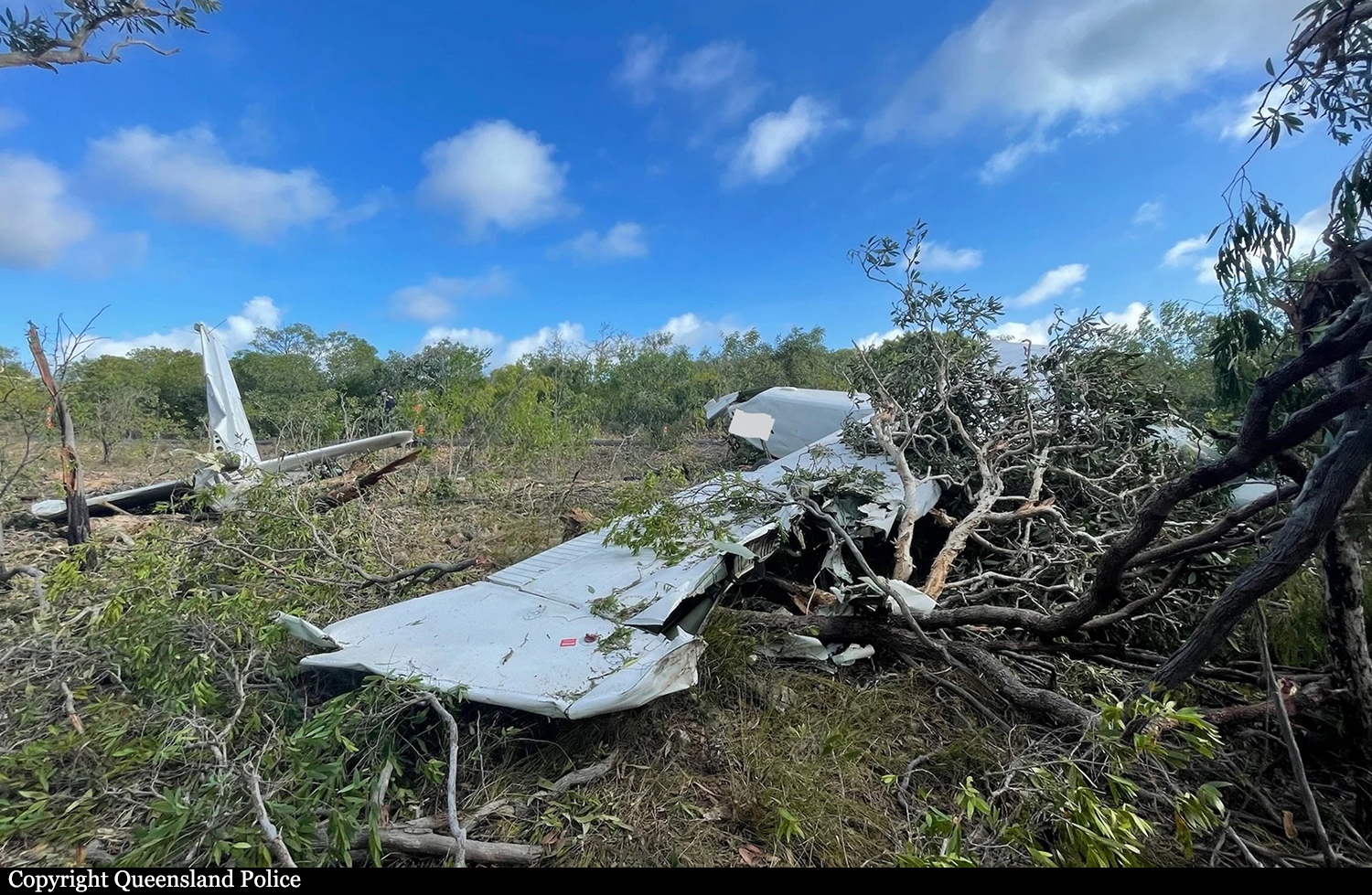
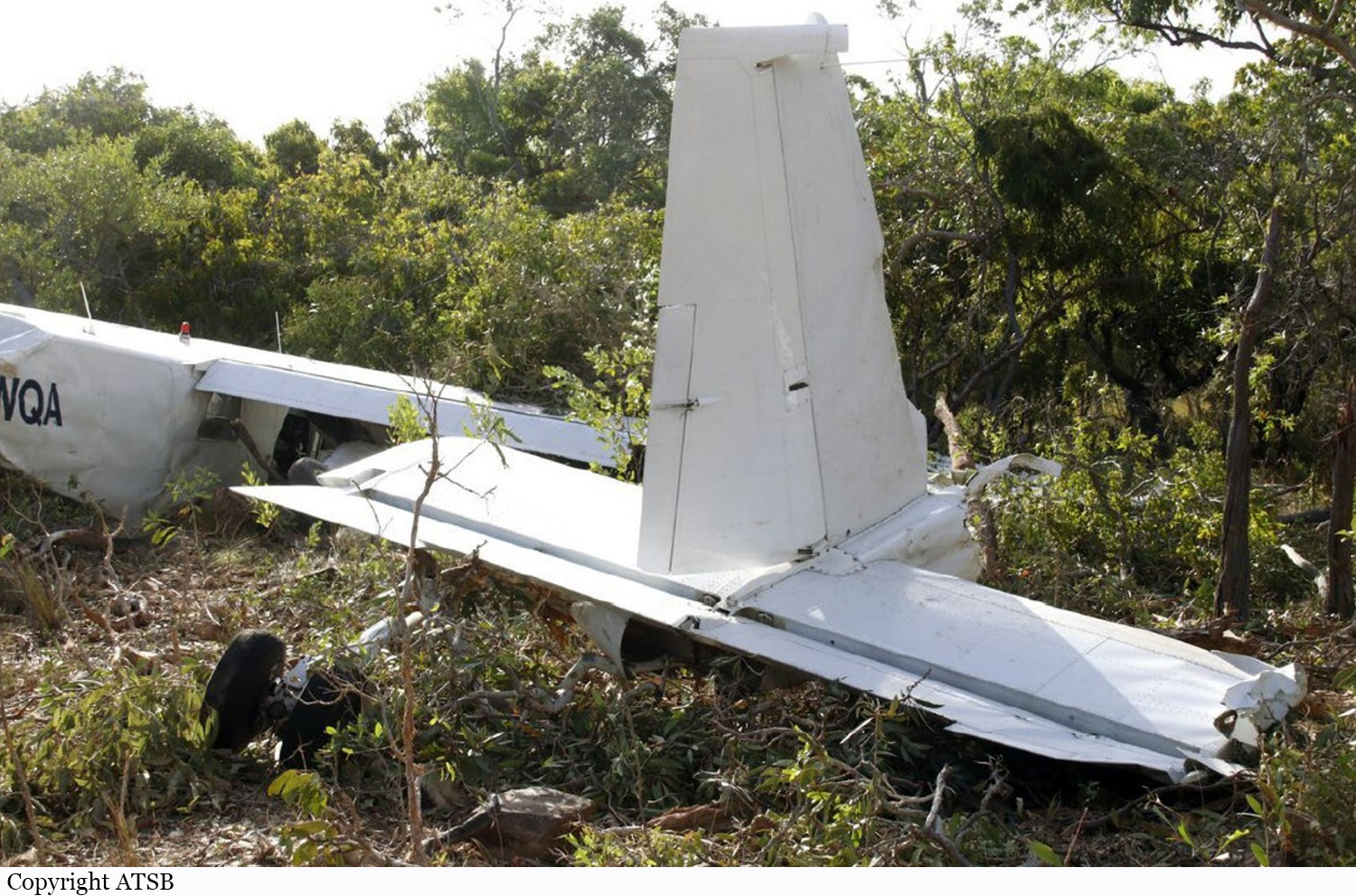
Crash of a Britten-Norman BN-2A-21 Islander on Moa Island

Date & Time: Oct 3, 2022 at 1338 LT
Type of aircraft:
Operator:

Registration:
VH-WQA
Flight Phase:
Survivors:
Yes
Schedule:
Saibai Island - Horn Island
MSN:
494
YOM:
1975
Country:
Region:
Crew on board:
1
Crew fatalities:
Pax on board:
6
Pax fatalities:
Other fatalities:
Total fatalities:
0
Captain / Total flying hours:
2400
Captain / Total hours on type:
250.00
Aircraft flight hours:
14081
Circumstances:
On the afternoon of 3 October 2022, a Pilatus Britten-Norman Islander BN2A-21, registered VHWQA and operated by Torres Strait Air, was conducting a non-scheduled passenger air transport flight from Saibai Island Airport, Queensland (QLD) to Horn Island Airport, QLD. There was 1 pilot and 6 passengers (students) on board. About 19 km NE of Moa Island both engines began to surge. The pilot diverted towards Kubin Airport on Moa Island. As the aircraft passed to the south of the township of Saint Pauls, the pilot determined there was insufficient altitude remaining to reach the airport. As a result, the pilot conducted a forced landing on a road 7 km ENE of Kubin Airport. There were no reported injuries to the pilot or the passengers. The aircraft was substantially damaged.
Probable cause:
The ATSB found that the dual engine speed fluctuations and associated power loss was probably the result of fuel starvation. The mechanism was not conclusively determined, however it was identified that the pilot did not operate the aircraft's fuel system in accordance with the aircraft flight manual, and that the configuration and location of the aircraft’s fuel controls and tank quantity gauges were probably not conducive to rapid and accurate interpretation. The aircraft manufacturer released a service letter in June 2022 that detailed an optional modification to centralize the fuel system controls and gauges, however this modification was not fitted to VH-WQA. The ATSB considered that these factors increased the risk of inadvertent fuel tank selection.
Final Report: