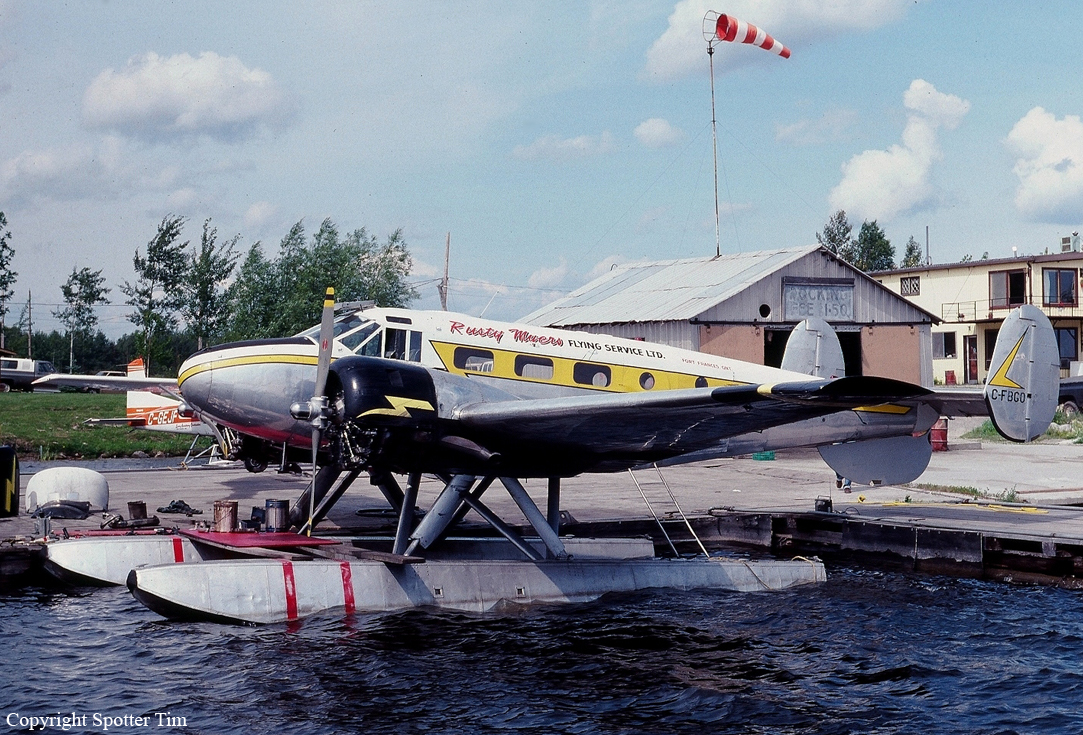
Crash of a Beechcraft D18S near Sioux Lookout

Date & Time: Jul 6, 1996
Type of aircraft:
Operator:
Registration:
C-FBGO
Flight Phase:
Survivors:
Yes
Schedule:
Fort Frances – Granite Lake
MSN:
A-865
YOM:
1952
Country:
Crew on board:
1
Crew fatalities:
Pax on board:
4
Pax fatalities:
Other fatalities:
Total fatalities:
0
Circumstances:
The aircraft departed Fort Frances, Ontario, with the pilot and four passengers on a visual flight rules (VFR) flight to Granite Lake. The weather was overcast with good visibility on departure. However, about one-half of the way to Granite Lake, just north of Ignace, the pilot encountered an area of increasing rain and decreasing visibility. The pilot made several course deviations to find a route through the poor weather, but eventually could find neither a way out of the poor weather nor a lake with suitable conditions for landing. While manoeuvring at low level and with heavy rain obscuring the horizon, the pilot reported that the engines lost partial power because of carburettor icing. The pilot applied carburettor heat but was unable to restore engine power or sustain aircraft altitude. The pilot attempted to keep the aircraft level, and in a matter of seconds, the aircraft descended into the trees. The aircraft travelled approximately 500 feet through the trees; the left wing was torn off and a fuel-fed fire broke out almost immediately. All occupants survived the crash with minor injuries and exited the aircraft. The passenger occupying the copilot seat received burns to his upper body. The crash site was overflown about 15 minutes later by a second company pilot who transmitted a Mayday. The occupants were picked up by helicopter about one hour later
Probable cause:
The pilot continued the flight into adverse weather at low level and force-landed the aircraft into trees when the engines experienced a partial power loss that was probably caused by carburettor icing.
Final Report:

Crash of a Beechcraft 65 Queen Air in Campbellsville

Date & Time: Jun 30, 1996 at 1240 LT
Type of aircraft:
Registration:
N3870C
Flight Phase:
Survivors:
Yes
MSN:
LC-212
YOM:
1966
Crew on board:
1
Crew fatalities:
Pax on board:
3
Pax fatalities:
Other fatalities:
Total fatalities:
0
Captain / Total flying hours:
3500
Captain / Total hours on type:
100.00
Aircraft flight hours:
2549
Circumstances:
According to an FAA inspector, the airplane '...was unable to get airborne...' during the takeoff roll. He stated that after travelling the full length of the 4,997-foot runway, the airplane ran off the departure end of runway 5 and continued approximately 2,257 feet through an open field, a fence, a corn field and into a depression where it impacted terrain and came to rest. The pilot reported that during the takeoff roll he discovered that he had not removed the gust lock from the control column and that his attempts to remove it were unsuccessful. The pilot stated that the aircraft '...went off the end of the runway through a fence and impacted an earthen berm that collapsed the gear [and] blade strikes that stopped the engines.'
Probable cause:
The pilot's inadequate preflight preparation, his failure to remove the control lock, and his failure to abort the takeoff.
Final Report:

Crash of a Yakovlev Yak-40 in Aldan

Date & Time: Jun 28, 1996 at 1910 LT
Type of aircraft:
Operator:
Registration:
RA-87423
Survivors:
Yes
Schedule:
Tynda - Aldan
MSN:
9 42 19 34
YOM:
1974
Country:
Region:
Crew on board:
4
Crew fatalities:
Pax on board:
7
Pax fatalities:
Other fatalities:
Total fatalities:
0
Circumstances:
Twenty-three minutes after takeoff from Tynda Airport, while cruising at an altitude of 5,700 metres, the crew encountered technical problems with the engine n°2 (central engine). Due to an excessive temperature of the turbine, the captain decided to shut this engine down (the engine n°2 is equipped with a thrust reverser system). While descending to Aldan Airport, the aircraft approached in a nose down attitude and struck the ground 90 metres short of runway threshold with a positive acceleration of 4 g. On impact, the nose gear collapsed, the aircraft bounced several times then slid for 800 metres before coming to rest on the runway. All 11 occupants evacuated safely while the aircraft was damaged beyond repair.
Probable cause:
The following findings were reported:
- The crew took the wrong decision to fly to Aldan Airport instead of the alternate,
- The approach was continued with excessive gap related to the approach speed and altitude,
- On final, the aircraft was in an excessive nose down attitude,
- The crew failed to identify and correct the wrong approach configuration.

Crash of a Beechcraft 200 Super King Air near Bouaflé: 3 killed

Date & Time: Jun 28, 1996 at 0900 LT
Operator:
Registration:
TU-TJE
Flight Phase:
Flight Type:
Survivors:
No
Schedule:
Yamoussoukro - Yamoussoukro
MSN:
BB-163
YOM:
1976
Country:
Region:
Crew on board:
3
Crew fatalities:
Pax on board:
0
Pax fatalities:
Other fatalities:
Total fatalities:
3
Circumstances:
The crew was engaged in a local training flight at Yamoussoukro Airport. Following several circuits, the crew was cleared to descend from 3,000 to 1,000 feet for a new instrument approach. In limited visibility due to foggy conditions, the aircraft descended below de MDA then struck trees and crashed in a prairie located near Bouaflé, about 40 km northwest of Yamoussoukro Airport. All three pilots were killed.
Probable cause:
Controlled flight into terrain after the crew descended below MDA in poor visibility.

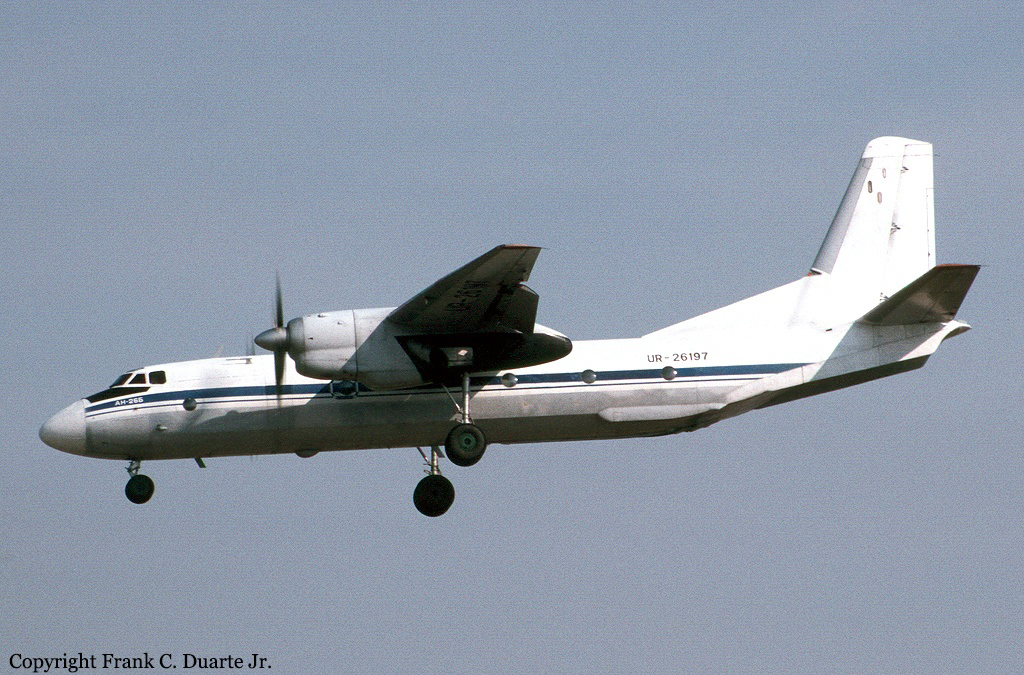
Crash of an Antonov AN-26B in Cafunfo: 4 killed

Date & Time: Jun 24, 1996 at 1635 LT
Type of aircraft:
Registration:
UR-26197
Flight Type:
Survivors:
Yes
Schedule:
Luanda - Cafunfo
MSN:
12609
YOM:
1983
Country:
Region:
Crew on board:
8
Crew fatalities:
Pax on board:
0
Pax fatalities:
Other fatalities:
Total fatalities:
4
Circumstances:
On approach to Cafunfo Airport, following an uneventful cargo flight from Luanda, the crew encountered bad weather conditions with thunderstorm. On short final, the pilot reported a minor technical problem with the left engine and initiated a go-around procedure. Shortly later, the aircraft stalled and crashed short of runway, bursting into flames. Four crew members were killed and four others were injured.
Probable cause:
Loss of control while initiating a go-around procedure due to a stall consecutive to an insufficient speed.

Crash of a Harbin Yunsunji Y-12-II in Shanghai: 2 killed

Date & Time: Jun 21, 1996 at 1704 LT
Type of aircraft:
Operator:
Registration:
B-3822
Survivors:
Yes
Schedule:
Dalian - Shanghai
MSN:
0001
YOM:
1991
Country:
Region:
Crew on board:
3
Crew fatalities:
Pax on board:
9
Pax fatalities:
Other fatalities:
Total fatalities:
2
Circumstances:
Following an uneventful flight from Dalian, the crew started the descent to Shanghai-Hongqiao Airport in limited visibility due to marginal weather conditions. While completing a last turn to join the approach path, the twin engine aircraft crashed on the top of a hill located about 3 km short of runway. A pilot and a passenger were killed while 10 other occupants were injured.
Probable cause:
It was determined that the crew initiated the last turn prematurely, causing the aircraft to descent below the MDA in limited visibility. At the time of the accident, the aircraft deviated 3 km to the right of the approach path. Lack of visibility was a contributing factor.

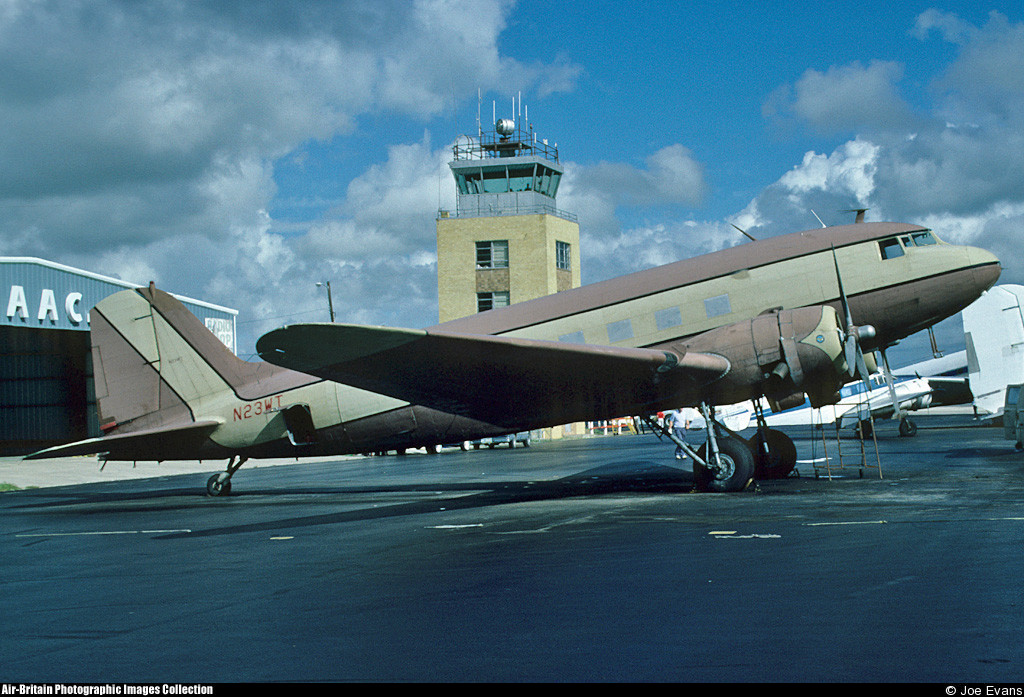
Crash of a Douglas DC-3A-S1C3G in Conroe

Date & Time: Jun 20, 1996 at 1408 LT
Type of aircraft:
Registration:
N23WT
Flight Phase:
Flight Type:
Survivors:
Yes
Schedule:
Conroe - Conroe
MSN:
11650
YOM:
1943
Location:
Crew on board:
3
Crew fatalities:
Pax on board:
0
Pax fatalities:
Other fatalities:
Total fatalities:
0
Captain / Total flying hours:
16500
Captain / Total hours on type:
707.00
Aircraft flight hours:
51307
Circumstances:
During initial takeoff climb the copilot who was manipulating the controls called for METO (maximum except takeoff) power. After the pilot-in-command set METO power, the left engine lost power. The PIC took the controls from the copilot and called for him to feather the left propeller. The copilot did not hear the call to feather the left propeller. Maintaining an indicated airspeed of 90 knots and wings level attitude, the airplane descended into trees and impacted a rural residential paved street. The cockpit area and main fuselage were consumed by a post crash fire. Examination of the throttle quadrant revealed the propeller control levers were forward, the mixture control levers were autorich, the throttle for the right engine was forward, and the throttle for the left engine was at idle. According to a FAA operations inspector maintaining 90 knots with the propeller not feathered would result in the aircraft descending. The pilot and copilot had not completed a proficiency check or flight check for the DC3 type aircraft within the previous 24 months. Examination of the left engine did not disclose any preexisting anomalies.
Probable cause:
The flight instructor's failure to use the single engine best angle of climb airspeed resulting in a loss of control of the aircraft. Factors were the loss of power to the left engine for undetermined reasons, the flight instructor not being qualified to be pilot-in-command in the DC3, his lack of recent experience in the DC3, and the lack of suitable terrain for the forced landing.
Final Report:

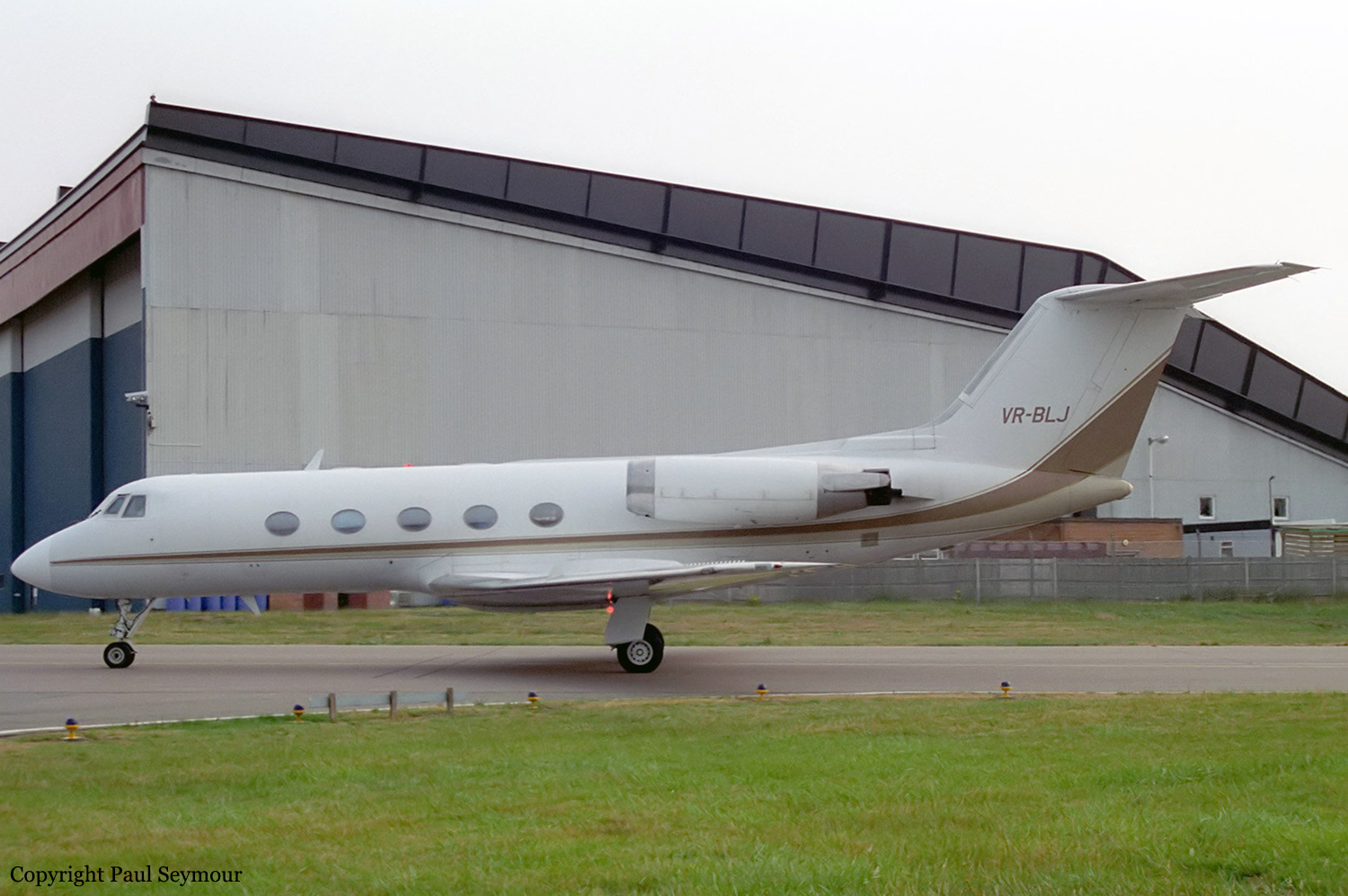
Crash of a Gulfstream GII in Jos: 12 killed

Date & Time: Jun 20, 1996 at 0736 LT
Type of aircraft:
Operator:
Registration:
VR-BLJ
Survivors:
No
Schedule:
Kaduna - Jos
MSN:
40
YOM:
1968
Location:
Country:
Region:
Crew on board:
4
Crew fatalities:
Pax on board:
8
Pax fatalities:
Other fatalities:
Total fatalities:
12
Circumstances:
The crew was completing an executive flight from Kaduna to Jos, carrying four crew members and eight passengers, among them Colonel Mohammed Wase. On approach to Jos Airport, the crew encountered limited visibility due to marginal weather conditions when the aircraft collided with a telecommunication antenna and crashed, bursting into flames. The aircraft was totally destroyed and all 12 occupants were killed.
Probable cause:
The following findings were reported:
- The antenna has been recently installed by the company Nitel in a prohibited area,
- The crew was unable to see and avoid the obstacles due to poor weather conditions,
- The aircraft was not properly aligned on the approach path due to a wrong calibration of the Jos VOR by 10°.

Crash of a Piper PA-31-325 Navajo C/R in Dayton: 1 killed

Date & Time: Jun 19, 1996 at 0810 LT
Type of aircraft:
Operator:
Registration:
N62852
Flight Type:
Survivors:
No
Schedule:
Berrien Springs - Dayton
MSN:
31-7612089
YOM:
1976
Crew on board:
1
Crew fatalities:
Pax on board:
0
Pax fatalities:
Other fatalities:
Total fatalities:
1
Captain / Total flying hours:
1198
Captain / Total hours on type:
701.00
Aircraft flight hours:
3252
Circumstances:
The parents of the pilot/owner stated that he arrived late in the afternoon prior to the accident. They stayed up with their son until approximately 0100 the morning of the accident. They stated that their son was a doctor and kept a busy schedule. The son told the parents that he had to fly back in order to have new fuel cells installed in the airplane and to work at his clinic. The pilot was airborne by 0700. The weather at his destination had low ceilings and fog restricting the visibility. The pilot was cleared by ATC to fly the localizer approach to the runway. The pilot called his position at the outer marker on the unicom frequency and no further transmissions were heard. Witnesses on the airport heard and saw the bottom of the airplane and stated that the airplane's engines sounded normal as it went overhead. Radar data showed that the airplane's altitude fluctuated and ground speed decreased significantly during the missed approach flight path. The airplane impacted the ground in approximately 40- degree nose-low, right wing down attitude. The toxicology report revealed 0.005 ug/ml Tetrahydrocannabinol (Marihuana) in the blood, and 0.013 ug/ml and 0.017 ug/ml Tetrahydrocannabinol Carboxylic Acid (Marihuana) in the blood and kidney fluid respectively.
Probable cause:
The pilot's impairment of judgment and performance due to drugs which led to spatial disorientation and a loss of aircraft control. The weather was a factor.
Final Report:

Crash of a PZL-Mielec AN-2R in Gorkaya Balka: 2 killed

Date & Time: Jun 13, 1996 at 0600 LT
Type of aircraft:
Operator:
Registration:
RA-84744
Flight Phase:
Survivors:
No
Schedule:
Gorkaya Balka - Gorkaya Balka
MSN:
1G202-02
YOM:
1983
Country:
Region:
Crew on board:
2
Crew fatalities:
Pax on board:
0
Pax fatalities:
Other fatalities:
Total fatalities:
2
Aircraft flight hours:
5619
Aircraft flight cycles:
28240
Circumstances:
The crew was completing a spraying mission near the village of Gorkaya Balka, about 10 km northeast of Zelenokumsk, Stavropol krai. While cruising at low height, the aircraft collided with high voltage power line and crashed in a field, bursting into flames. Both pilots were killed.
Probable cause:
It was determined that the captain suffered a renal colic and was distracted from piloting.