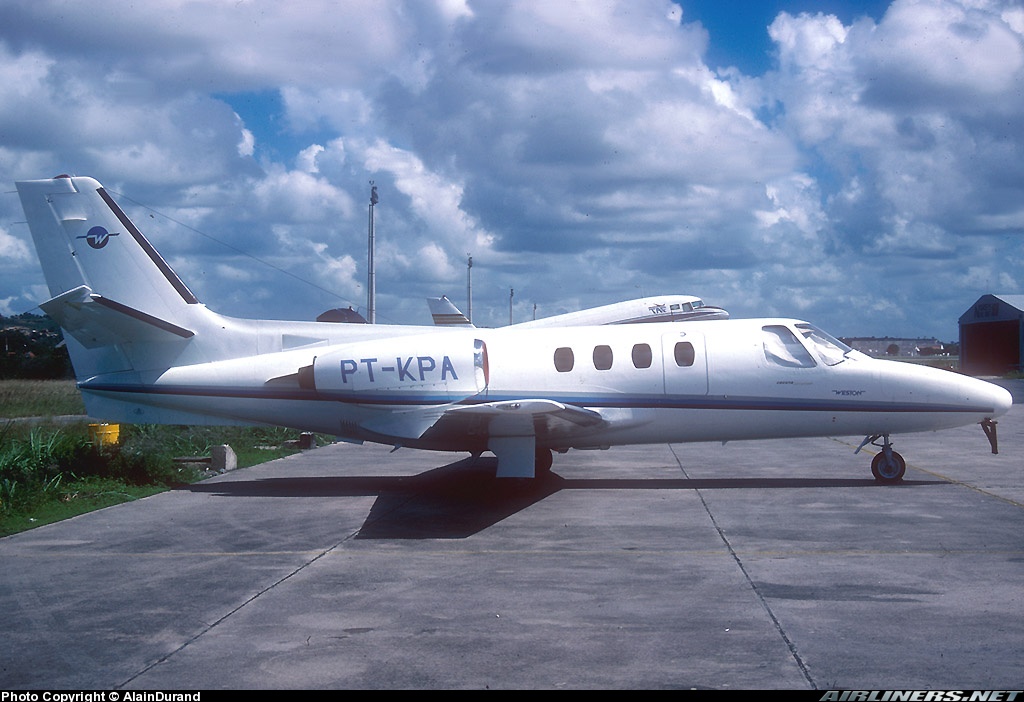
Crash of a Cessna 500 Citation I in Fazenda Matary

Date & Time: Feb 4, 1996 at 1628 LT
Type of aircraft:
Operator:
Registration:
PT-KPA
Flight Type:
Survivors:
Yes
Schedule:
Recife – Imperatriz – Fazenda Matary
MSN:
500-0181
YOM:
1974
Country:
Crew on board:
3
Crew fatalities:
Pax on board:
0
Pax fatalities:
Other fatalities:
Total fatalities:
0
Captain / Total flying hours:
9006
Captain / Total hours on type:
2752.00
Copilot / Total flying hours:
4424
Copilot / Total hours on type:
6
Circumstances:
En route from Imperatriz to Fazenda Matary, the captain informed the copilot he would perform training upon arrival as there are no passengers on board. On descent, he informed ATC he would perform a touch-and-go manoeuvre. With the flaps down at 15°, the aircraft landed at a speed of 125 knots, about 10 knots above the speed reference of 116 knots. After touchdown, the captain changed his mind and decided to perform a complete stop without informing the copilot. The copilot noted that the speed was dropping so he decided to increase engine power to takeoff. Shortly later, the captain reduced power and initiated a braking procedure. Unable to stop within the remaining distance, the aircraft overran and came to rest few dozen metres further, bursting into flames. All three occupants escaped uninjured while the aircraft was destroyed by a post crash fire.
Probable cause:
The following findings were reported:
- There was overconfidence, coupled with an impulsive attitude on the part of the instructor, making him convinced that he could land without problems, even changing the procedure already established and not communicating his decision to the copilot/student.
- The instructor did not properly plan the landing procedure that he decided to carry out, contrary to the briefing.
- There was an error in the instructor's judgment, due to the inadequate assessment of normal landing with 15º flap configuration and speed about 10kt above the predicted, contrary to previous briefing.
- The instructor did not inform the student of his decision to complete the landing, without rush, as well as not responding to the request to start the rush. The student accelerated the engines without the instructor's authorization.
Final Report:
Crash of a Cessna 500 Citation I/SP in Ciudad Alemán: 2 killed

Date & Time: Mar 25, 1994
Type of aircraft:
Registration:
XA-SMH
Flight Type:
Survivors:
No
Schedule:
Veracruz - Ciudad Alemán
MSN:
500-0084
YOM:
1973
Country:
Crew on board:
2
Crew fatalities:
Pax on board:
0
Pax fatalities:
Other fatalities:
Total fatalities:
2
Circumstances:
The crew was completing a positioning flight from Veracruz. After touchdown, the crew encountered difficulties to stop the aircraft within the remaining distance (runway 13/31 is 1,300 metres long). It overran and eventually crashed past the runway end. The aircraft was destroyed and both pilots were killed.
Probable cause:
Apparently following a wrong approach configuration (the aircraft was too high on approach), the crew landed too far down the runway and failed to initiate a go-around procedure. After touchdown, the landing distance available was insufficient.

Crash of a Cessna 500 Citation in San Luis Obispo: 4 killed

Date & Time: Sep 24, 1990 at 0702 LT
Type of aircraft:
Registration:
N79DD
Flight Type:
Survivors:
No
Schedule:
Van Nuys - San Luis Obispo
MSN:
500-0254
YOM:
1975
Crew on board:
2
Crew fatalities:
Pax on board:
2
Pax fatalities:
Other fatalities:
Total fatalities:
4
Captain / Total flying hours:
1021
Captain / Total hours on type:
95.00
Aircraft flight hours:
4197
Circumstances:
The flight was cleared for a loc runway 11 approach. About 3 minutes later, the 2nd-in-command (sic) reported '. . . We don't get the localizer can you see if we're on course.' The LAX ARTCC R-15 controller confirmed the flight was right of course and below the required altitude. The aircraft's mode C indicated an altitude of 1,400 feet; the controller advised the flight crew to maintain at least 2,300 feet until past the final approach fix (faf). The crew then replied that they were in VMC. Radar svc was terminated and a frequency change to tower was approved. Shortly thereafter, the aircraft hit a eucalyptus tree at about 90 feet agl, 2.05 miles from the approach end of the runway and about 195 feet right of the loc. Elevation of the crash site was 101 feet; minimum descent altitude (MDA) for the approach was 640 feet. The 0645 pdt weather was, in part: indefinite ceiling, 100 feet obscured, vis 1/8 mile with fog, wind from 220° at 4 kts. No preimpact part failure or malfunction of the aircraft was found. All four occupants were killed.
Probable cause:
The pilot's improper IFR (instrument) procedure, and his failure to maintain the minimum descent altitude (MDA) for the approach. The adverse weather was a related factor.
Final Report:

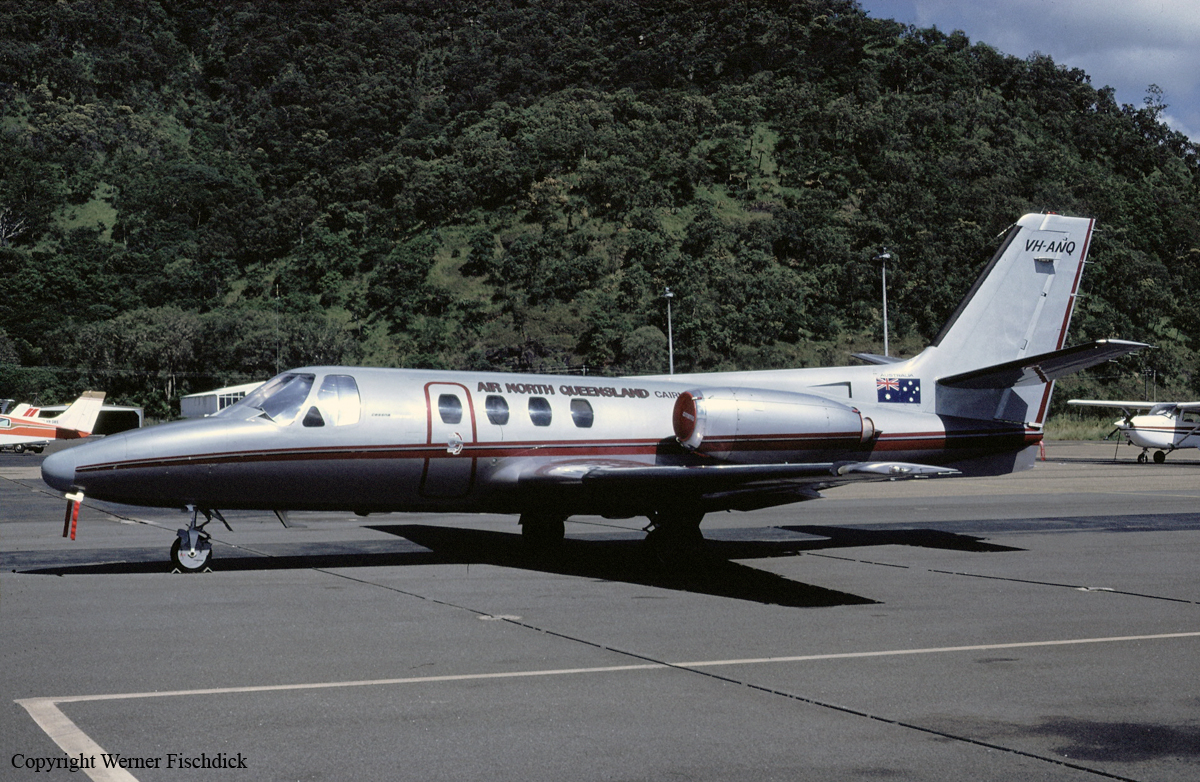
Crash of a Cessna 500 Citation near Mareeba: 11 killed

Date & Time: May 11, 1990 at 1740 LT
Type of aircraft:
Operator:
Registration:
VH-ANQ
Survivors:
No
Site:
Schedule:
Proserpine – Mareeba – Cairns
MSN:
500-0283
YOM:
1975
Country:
Region:
Crew on board:
1
Crew fatalities:
Pax on board:
10
Pax fatalities:
Other fatalities:
Total fatalities:
11
Captain / Total flying hours:
14150
Captain / Total hours on type:
1000.00
Circumstances:
Cessna 500 VH-ANQ was operating the Proserpine to Mareeba leg of a charter flight The aircraft departed Proserpine at 16:35 hours. The charter flight had been organised to transport members of five local government authorities from the Cairns/Atherton Tablelands area to a Local Government Association Conference at Airlie Beach, Queensland. The flight plan indicated that the flight would follow Instrument Flight Rules (IFR) with a planned cruising altitude of FL330. The aircraft was planned to track via overhead Townsville then direct to Mareeba with a flight time interval of 68 minutes. The flight apparently continued normally and at 17:26 the aircraft was cleared to descend to FL170 and instructed to call Cairns Approach. On first contact with Cairns Approach, the pilot advised that the aircraft was tracking for Mareeba via the 163 radial at 41 miles (76 kilometres) DME from Biboohra. (There are no radio navigational aids at Mareeba, the nearest aids for tracking and instrument approach purposes are at Biboohra, about 16 kilometres north of Mareeba). The aircraft was advised to maintain FL170 but a short time later was cleared to descend to FL120. The pilot stated that he would not be closing down the engines at Mareeba and that his estimated departure time was 17:50. At 17:35 hours VH-ANQ was cleared to descend to 10,000 feet and one minute later the pilot advised that the aircraft was "approaching over Mareeba and visual". Cairns Approach advised VH-ANQ that there would be a short delay at 10,000 feet and following a request from the pilot gave approval for the aircraft to circle over Mareeba. At 17:40 hours, Cairns Approach instructed the aircraft to descend to 7,000 feet. This transmission, and other subsequent transmissions to the aircraft, went unanswered. The wreckage of VH-ANQ was ultimately located on the eastern slopes of Mt Emerald, 15 kilometres south of Mareeba Airport, by searching helicopters at 0240 hours on 12 May 1990. The aircraft initially impacted the mountainside with the left wingtip, while travelling on a track of about 340 degrees Magnetic. At the time it was in a wings level attitude at an angle of descent of eight degrees. It then struck the ground just below the apex of a ridge and the wreckage spread in a fan shape, at an angle of 30 degrees, along a centreline track of 350 degrees Magnetic.
Probable cause:
This accident was unusual in that the last report by the pilot indicated that the aircraft was at 10,000 feet and on a track that was 55 kilometres to the east of the accident site. There was no substantiated, and very little circumstantial evidence to suggest what caused the aircraft to descend 6,400 feet and to be displaced a considerable distance to the west of track. As a result the causal factors associated with this accident remain undetermined.
Final Report:

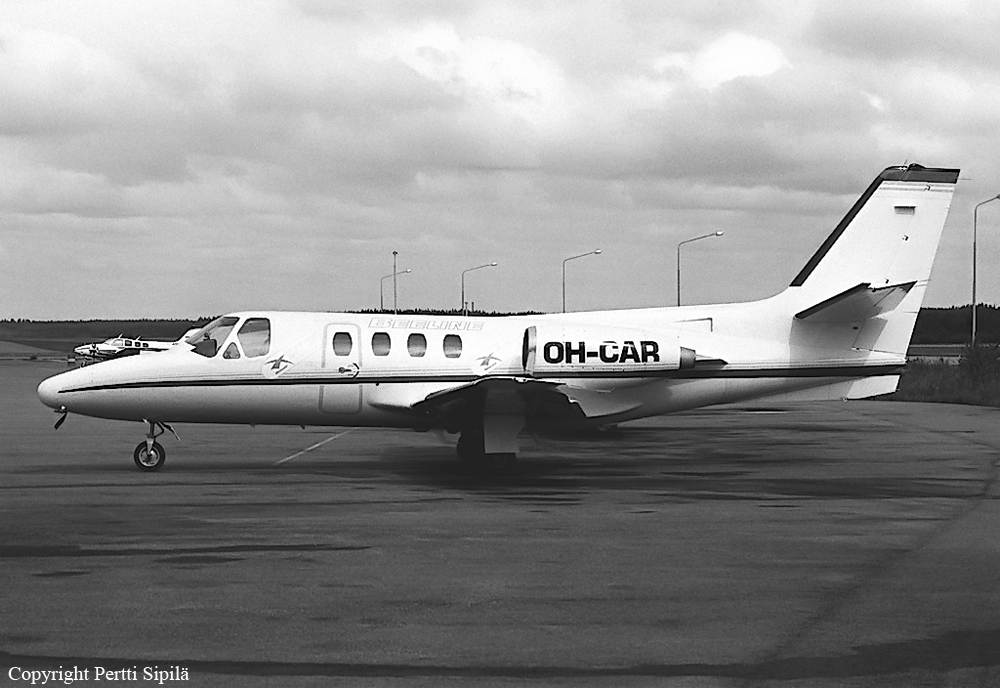
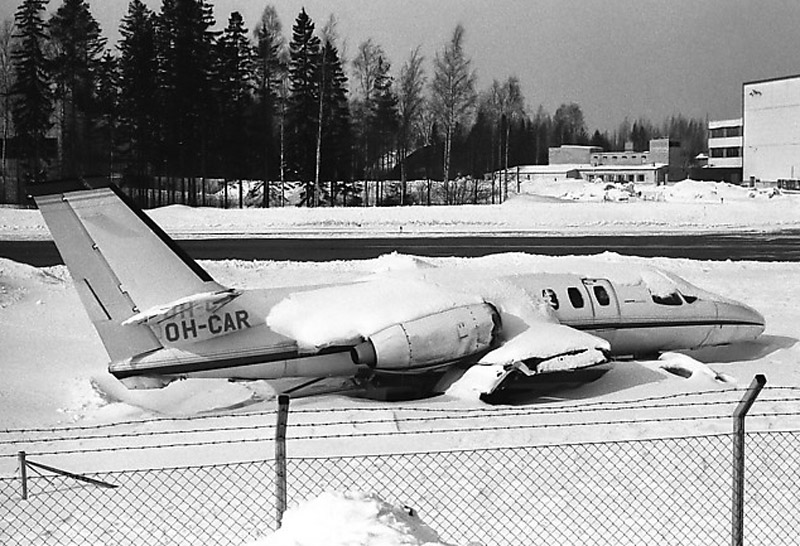
Crash of a Cessna 500 Citation I in Helsinki

Date & Time: Nov 19, 1987
Type of aircraft:
Operator:
Registration:
OH-CAR
Survivors:
Yes
MSN:
500-0144
YOM:
1974
Country:
Region:
Crew on board:
2
Crew fatalities:
Pax on board:
4
Pax fatalities:
Other fatalities:
Total fatalities:
0
Circumstances:
While on a night approach to Helsinki-Vantaa Airport, both engines failed simultaneously. The captain reduced his altitude and attempted an emergency landing in an open field located few km from the airport. The aircraft belly landed in a snow covered field and came to rest, broken in two. All six occupants evacuated the cabin and took refuge in a nearby house before being rescued.
Probable cause:
Double engine failure caused by a fuel exhaustion. It was determined that the crew failed to refuel the aircraft prior to takeoff as they thought the fuel quantity remaining was sufficient for the short flight to Vantaa Airport.

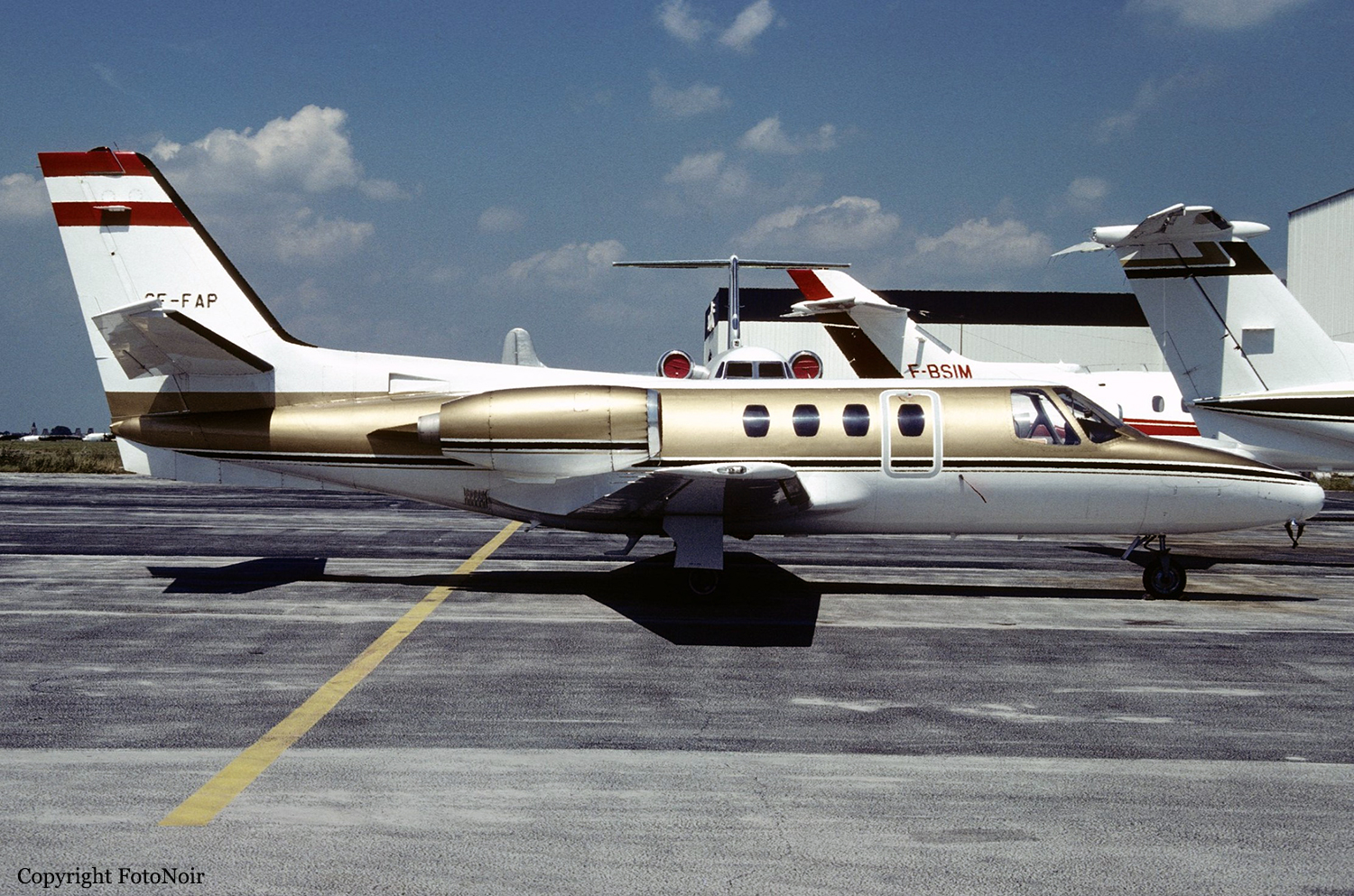
Crash of a Cessna 500 Citation I off Skiathos

Date & Time: Oct 6, 1984
Type of aircraft:
Operator:
Registration:
OE-FAP
Flight Phase:
Survivors:
Yes
Schedule:
Skiathos - Vienna
MSN:
500-0300
YOM:
1975
Country:
Region:
Crew on board:
2
Crew fatalities:
Pax on board:
8
Pax fatalities:
Other fatalities:
Total fatalities:
0
Circumstances:
After takeoff from Skiathos Island Airport, while in initial climb, the aircraft lost height and crashed in the sea. All 10 occupants were rescued while the aircraft was destroyed.

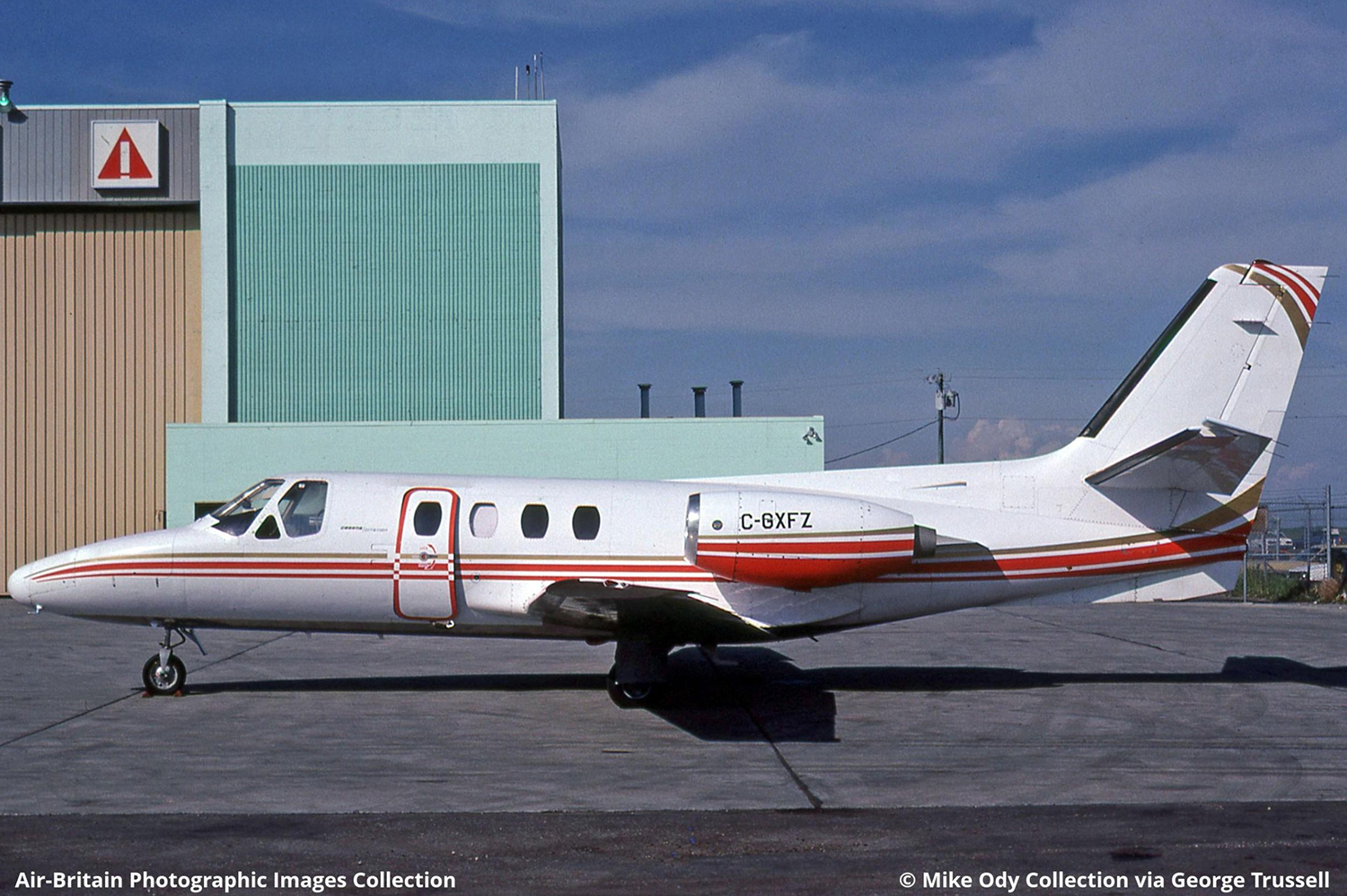
Crash of a Cessna 500 Citation I in Orillia: 2 killed

Date & Time: Sep 26, 1984 at 1155 LT
Type of aircraft:
Operator:
Registration:
C-GXFZ
Flight Phase:
Flight Type:
Survivors:
No
Schedule:
Toronto – Muskoka
MSN:
500-0032
YOM:
1972
Flight number:
DB511
Location:
Country:
Crew on board:
2
Crew fatalities:
Pax on board:
0
Pax fatalities:
Other fatalities:
Total fatalities:
2
Aircraft flight hours:
10996
Circumstances:
The crew departed Toronto-Lester Bowles Pearson Airport at 1107LT on a training flight to Muskoka Airport. En route, while cruising at an altitude of 9,500 feet, the crew was cleared to make a low pass over Orillia Airport. Following a passage at an altitude of about 150-200 feet and a speed of 200 knots, the crew initiated a climb when, at an altitude of 1,000 feet, the aircraft banked right then got inverted and crashed in a near vertical attitude. The aircraft was destroyed and both pilots were killed.
Probable cause:
The exact cause of the accident could not be determined with certainty.

Crash of a Cessna 500 Citation in Proserpine: 2 killed

Date & Time: Feb 20, 1984 at 2016 LT
Type of aircraft:
Operator:
Registration:
VH-FSA
Flight Type:
Survivors:
No
Schedule:
Cairns – Townsville – Proserpine – Brisbane
MSN:
500-0237
YOM:
1974
Country:
Region:
Crew on board:
2
Crew fatalities:
Pax on board:
0
Pax fatalities:
Other fatalities:
Total fatalities:
2
Circumstances:
The aircraft was engaged on a night freighter service from Cairns (CNS) to Brisbane (BNE) with intermediate stops at Townsville (TSV) and Proserpine (PPP). The flight departed Cairns at 18:47 hours. After arriving at Townsville the aircraft was refuelled and additional freight loaded before departing for Proserpine at 19:47 hours. The aircraft was cleared to track direct to Proserpine on climb to FL250. At 20:08 hours the pilot reported that the aircraft had left FL250 on descent into Proserpine and requested a clearance to track to intercept the 310 omni radial inbound for a DME Arrival. This request was approved and a short time later the aircraft reported established on the radial. At 20:16 hours, in answer to a question from Townsville Control, the aircraft reported at 2600 feet and was instructed to call Townsville Flight Service Unit. The aircraft complied with this instruction, and after the initial contact no further transmissions were received from the aircraft. The wreckage was located approximately 4 kilometres north-west of the threshold of runway 11 and in line with that runway. The aircraft had been destroyed by impact forces and the ensuing fire. A witness, who lived near the final approach path of the aircraft, reported that she observed the aircraft when it was on final approach. Analysis of her observations indicated that when she sighted the aircraft it was at a lower height than normal for the type of approach that the pilot reported would be flown. At the time of the sighting she did not notice anything unusual about the operation of the aircraft. Other persons at the Proserpine Aerodrome at the time of the accident reported rainstorms and strong winds in the vicinity.
Probable cause:
An inspection of the aircraft and its systems did not reveal any defect that could have contributed to the accident. Despite the extensive investigation, no evidence could be found to indicate why the aircraft was below the normal glide path during the approach.

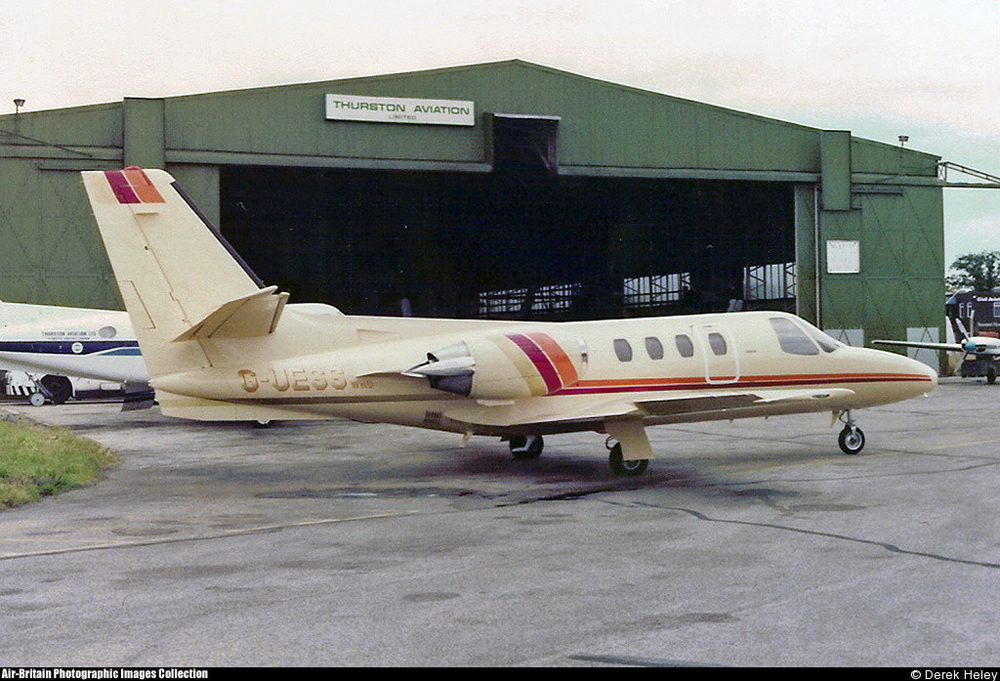
Crash of a Cessna 500 Citation I off Stornoway: 10 killed

Date & Time: Dec 8, 1983 at 1746 LT
Type of aircraft:
Registration:
G-UESS
Survivors:
No
Schedule:
Paris - Liverpool - Stornoway
MSN:
500-0326
YOM:
1976
Region:
Crew on board:
2
Crew fatalities:
Pax on board:
8
Pax fatalities:
Other fatalities:
Total fatalities:
10
Captain / Total flying hours:
3300
Captain / Total hours on type:
350.00
Copilot / Total flying hours:
278
Aircraft flight hours:
1871
Circumstances:
On the day of the accident, the aircraft left Biggin Hill, U.K. on a private flight at 12:51 hrs with full fuel tanks to fly to Paris-Le Bourget, France, carrying a pilot, a pilot's assistant and two passengers. At Le Bourget, two more passengers embarked and the aircraft departed for Liverpool, without refuelling, at approximately 13:55 hrs. It landed at Liverpool at 15:25 hrs, where it was refuelled with 800 litres of turbine fuel, the pilot being seen to mix anti-icing additive to the fuel as it was dispensed. Two more adult passengers and two infants were embarked and the aircraft left Liverpool at 16:32 hrs en route to Stornoway, Outer Hebrides, Scotland. The pilot had submitted an Instrument Flight Rules (IFR) flight plan to fly from Liverpool to Stornoway at Flight Level (FL) 310 via Dean Cross and Glasgow. At 16:53 hrs, when approximately over Dean Cross, he reported to the Scottish Air Traffic Control Centre (ScATCC) that he was at FL280 climbing to FL310. This radio call was heard by the pilot of another aircraft, registration N40GS. This aircraft was a Citation 11, which had been leased by the operating company of G-UESS and was carrying other members of the same private party to which the passengers in G-UESS belonged. N40GS had taken off from Biggin Hill and was also en-route to Stornoway via Dean Cross at FL350. When just north of Dean Cross, the pilot of N40GS saw G-UESS ahead of him and established radio contact with its pilot on the company discrete radio frequency. From that point on, the two aircraft remained in intermittent radio contact on this frequency. After passing Dean Cross, both aircraft were given clearance by ScATCC to route direct to Stornoway. At 17:00 hrs G-UESS was asked to climb to FL330 to avoid crossing traffic. At 17:18 hrs the pilot of N40GS reported that he still had G-UESS in sight and would be ready to descend in 3 minutes. At this time, his aircraft was slowly overtaking G-UESS. At 17:20 hrs ScATCC directed both aircraft to maintain a radar heading of 330° (M) so as to provide lateral separation during descent, and cleared N40GS to descend. Three minutes later, G-UESS was cleared to descend. During the descent, N40GS was cleared progressively to FL65 and G-UESS to FL85. At 17:29 hrs ScATCC released both aircraft from their radar headings, advising them that there was no other air traffic to affect them. ScATCC also advised N40GS that G-UESS was 5 miles to his right and slightly behind him. The pilot of G-UESS responded to this message by reporting that he had the other aircraft in sight. ScATCC then instructed both aircraft to establish radio contact with Stornoway. At 17:34 hrs Stornoway ATC passed details of the present Stornoway weather to both aircraft and asked them to report at 25 miles range from Stornoway. The weather as reported was fine with a light wind, good visibility and one eighth of low cloud. The pilot of G-UESS acknowledged the weather but did not repeat back the QNH. At this time, G-UESS was 49 miles from Stornoway descending through FL140. At 17:38 hrs N40GS reported at 25 miles range, and immediately afterwards G-UESS reported 30 miles from the airfield. N40GS was then cleared to 2,000 feet on the QNH of 1001. At 17:40 hrs the pilot of G-UESS reported that his range was 25 miles and that he had N40GS in sight. He asked for clearance to continue his descent and was cleared by the Stornoway controller to descend at his discretion with the aircraft ahead in sight. A moment later he was asked to report when he had the airfield in sight for a visual approach to runway 01. He acknowledged this message. No further communication was received from the aircraft and at 17:51 hrs, after failing to re-establish contact, the Stornoway controller reported to ScATCC that he had lost radio contact with G-UESS. The pilot of N40GS, who had meanwhile landed safely, stated afterwards that during the descent from FL350 they had passed through some layered stratus cloud and patches of altocumulus and cumulus cloud. The co-pilot in N40GS described a layer of lower cloud over the sea with tops between 3,000 and 4,000 feet, lying across the path of their descent into Stornoway. The pilot of N40GS was tracking directly to Stornoway airfield during the descent, using Omega/VLF area navigation equipment. At 17:45 hrs he reported to Stornoway ATC that he was just breaking cloud at 1,400 feet but stated later that he had cleared the base of the lowest cloud at between 1,100 and 1,000 feet, close to Stornoway. He also stated that the visibility below cloud was very good, even though the night was dark and he could not see the sea beneath him. N40GS experienced no icing and no significant turbulence during the descent. An intensive search was made for G-UESS that night, and two bodies were recovered one mile north-west of the last observed radar position. During the next 4 days, five more bodies and some small pieces of aircraft wreckage were found near the same position. The bodies of two more passengers were recovered from the sea bed on 28 February and 5 June 1984, and that of the pilot's assistant on 18 July 1984. Attempts to recover the main wreckage were not successful.
Probable cause:
The pilot's lack of awareness of his true altitude, which resulted in his allowing his aircraft to descend until it struck the sea. Likely contributory factors were that he was distracted by the need to establish visual contact with another aircraft and that he was misled by false cues from lights on the ground ahead of him.
Final Report:

Crash of a Cessna 500 Citation I in Wichita

Date & Time: Apr 26, 1983 at 1454 LT
Type of aircraft:
Operator:
Registration:
N22FM
Flight Phase:
Survivors:
Yes
Schedule:
Wichita - Chicago
MSN:
500-0229
YOM:
1974
Crew on board:
2
Crew fatalities:
Pax on board:
3
Pax fatalities:
Other fatalities:
Total fatalities:
0
Captain / Total flying hours:
6725
Captain / Total hours on type:
2300.00
Aircraft flight hours:
4112
Circumstances:
The aircraft collided with the ground during takeoff. The fuel tank in the right wing ruptured and the aircraft burned while sliding to a stop. The day before the accident the aircraft was washed and the thrust reverser doors were polished. After the service, the reverser doors circuit breakers which had been pulled were not reset. It was company policy to leave circuit breakers out that were pulled during servicing. Prior to flight, the aircraft was loaded and the engines started. The reversed unlock lights on both reverser annunciator panels illuminated. The pilot discussed the situation with the copilot and elected to go. He pushed the light assemblies which unlatched the light housing and put out the 'unlock' lights. After takeoff while the gear was retracting the aircraft yawed right and impacted the ground. All occupants evacuated and after the fire was put out a Cessna Aircraft investigator observed the two thrust reverser circuit breakers in the 'out', open position and partially covered by a flight chart. Both thrust reversers were deployed.
Probable cause:
Occurrence #1: loss of control - in flight
Phase of operation: takeoff - initial climb
Findings
1. (c) thrust reverser,door - unlocked
2. (c) maintenance - inadequate - company maintenance personnel
3. (c) thrust reverser,door - deployed inadvertently
4. (c) aircraft preflight - inadequate - pilot in command
5. (c) electrical system,circuit breaker - popped/tripped
6. (c) operation with known deficiencies in equipment - attempted - pilot in command
7. (c) annunciator panel light(s) - switched off
8. (c) checklist - not followed - pilot in command
----------
Occurrence #2: in flight collision with terrain/water
Phase of operation: descent - uncontrolled
Final Report: