Country
Crash of a Cessna 500 Citation I in Rawlins
Date & Time:
Jul 24, 1998 at 2208 LT
Operator:

Registration:
C-FSKC
Survivors:
Yes
Schedule:
Winnipeg – Rawlins – Santa Ana
MSN:
500-0018
YOM:
1972
Crew on board:
2
Crew fatalities:
Pax on board:
0
Pax fatalities:
Other fatalities:
Total fatalities:
0
Captain / Total hours on type:
1000.00
Aircraft flight hours:
11163
Circumstances:
The captain said the airplane felt 'sluggish' during the takeoff roll. At V1/Vr, the airplane was rotated for liftoff. It climbed 10 feet, 'shuddered,' and sank. The captain elected to abort the takeoff. He landed the airplane on the runway, applied brakes and deployed the drag chute. The drag chute separated and the airplane went off the runway, down a hill, through a fence, across a road and grassy area, across another road, through a chain link fence, and collided with a power pole. The captain said they had calculated the takeoff performance using inappropriate tables, and failed to consider the wet runway and wind shift. The drag chute riser fractured at a point where it passed through a lightning hole. The lightning hole bore no evidence of a nylon grommet having been installed.
Probable cause:
The captain's use of improper airplane performance data, resulting in inadequate takeoff capability. Factors were his decision to abort the takeoff above V1, the separation of the drag chute, a wet runway, a tailwind, and collision with objects that included two fences and a power pole.
Final Report:
Crash of a Cessna 500 Citation I in Pittsburgh
Date & Time:
Jan 6, 1998 at 1548 LT
Registration:
N1DK
Survivors:
Yes
Schedule:
Statesville - Akron - Pittsburgh
MSN:
500-0175
YOM:
1974
Crew on board:
2
Crew fatalities:
Pax on board:
1
Pax fatalities:
Other fatalities:
Total fatalities:
0
Captain / Total hours on type:
1260.00
Copilot / Total hours on type:
150
Aircraft flight hours:
7124
Circumstances:
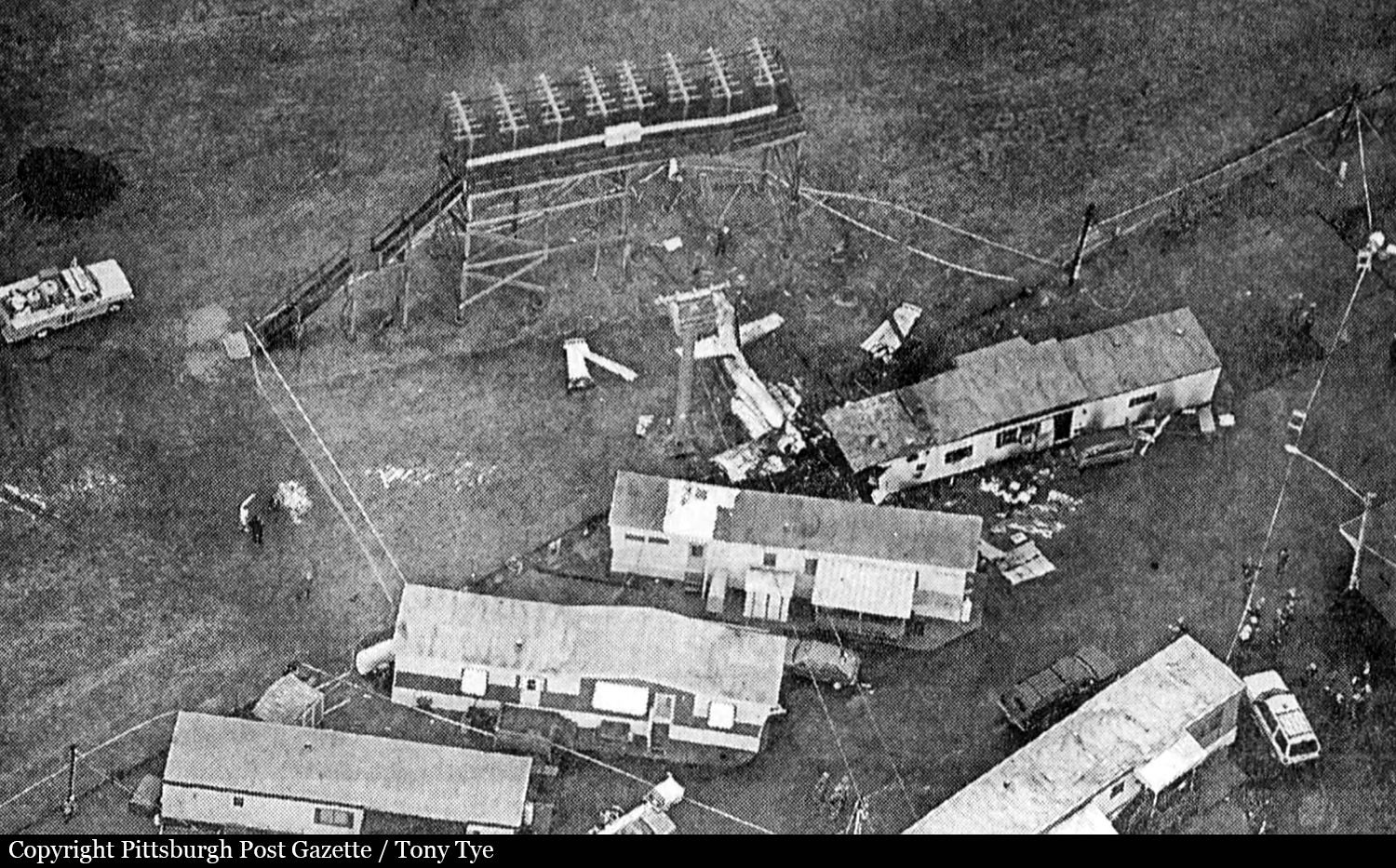
The pilot initiated an ILS approach with rain and fog. Approach flaps were maintained until the runway was sighted, and then landing flaps were set. The airplane landed long, overran the runway, struck the ILS localizer antenna on the departure end of the runway, and came to rest at the edge of a mobile home park. The airplane and two mobile homes were destroyed by fire. Vref had been computed at 110 Kts. The PIC reported a speed on final of 130 Kts, while the SIC said it was 140 Kts. Radar data revealed a 160 knots ground speed from the outer marker until 1.8 miles from touchdown. The airplane passed the control tower, airborne, with 2,500 feet of runway remaining on the 6,500 foot long runway. Performance data revealed that the airplane would require about 2,509 feet on a dry runway, and 5,520 feet on a wet runway. The airplane was not equipped with thrust reversers or anti-skid brakes. The PIC was the company president, and the SIC was a recent hire who had flown with the PIC three previous times. The PIC was qualified for single-pilot operations in the airplane, and had been trained to fly stabilized approaches.
Probable cause:
The failure of the pilot to make a go-around when he failed to achieve a normal touchdown due to excessive speed, and which resulted in an overrun. Factors were the reduced visibility due to fog, and the wet runway.
Final Report:
Crash of a Cessna 500 Citation I in Canela: 3 killed
Date & Time:
Oct 31, 1997 at 1650 LT
Operator:

Registration:
PT-LQG
Survivors:
No
Schedule:
Curitiba - Canela
MSN:
500-0271
YOM:
1975
Crew on board:
2
Crew fatalities:
Pax on board:
1
Pax fatalities:
Other fatalities:
Total fatalities:
3
Circumstances:
The approach to Canela Airport was completed in marginal weather conditions with rain falls and a visibility estimated to be 1,500 - 2,000 metres. The landing was completed with a tail wind component of 15-20 knots and the aircraft landed too far down a wet runway which is 1,250 metres long. Unable to stop within the remaining distance, the aircraft overran, went down an embankment, crossed a road and came to rest against houses, bursting into flames. The aircraft was destroyed and all three occupants were killed.
Probable cause:
The following findings were reported:
- Wrong approach configuration,
- Marginal weather conditions with limited visibility due to rain falls,
- The crew completed the landing with a tailwind component of 15-20 knots,
- The runway surface was wet,
- The runway length was 1,250 metres only,
- The aircraft landed too far down the runway, reducing the landing distance available,
- The braking action was poor because the runway surface was wet,
- The crew failed to initiate a go-around procedure.
- Wrong approach configuration,
- Marginal weather conditions with limited visibility due to rain falls,
- The crew completed the landing with a tailwind component of 15-20 knots,
- The runway surface was wet,
- The runway length was 1,250 metres only,
- The aircraft landed too far down the runway, reducing the landing distance available,
- The braking action was poor because the runway surface was wet,
- The crew failed to initiate a go-around procedure.
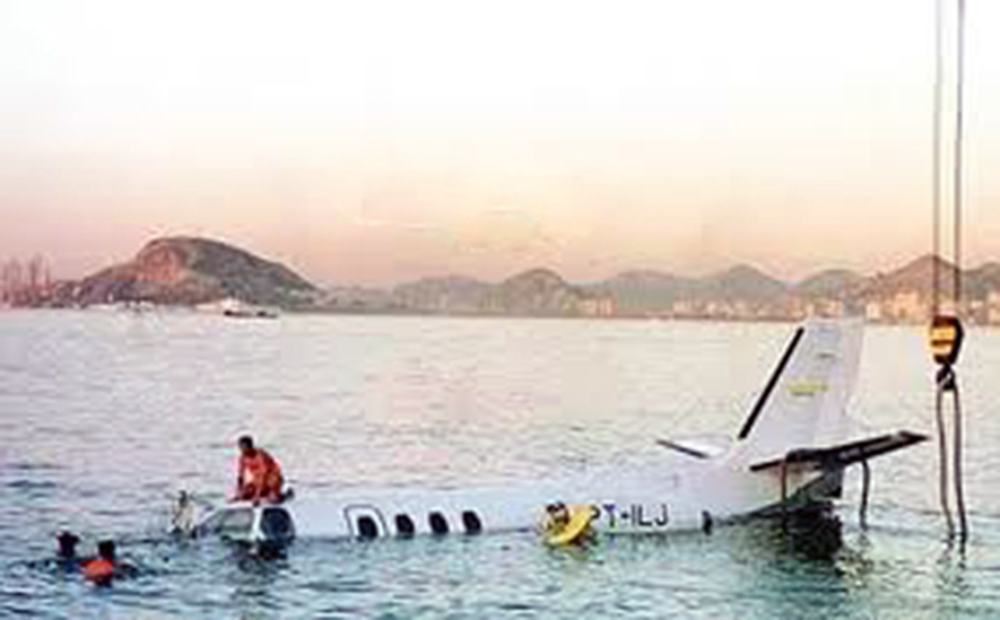
Crash of a Cessna 500 Citation I in Rio de Janeiro
Date & Time:
Jul 3, 1997 at 1000 LT
Operator:

Registration:
PT-ILJ
Survivors:
Yes
Schedule:
Rio de Janeiro – São José dos Campos
MSN:
500-0057
YOM:
1973
Crew on board:
2
Crew fatalities:
Pax on board:
3
Pax fatalities:
Other fatalities:
Total fatalities:
0
Circumstances:
During the takeoff roll at Rio de Janeiro-Santos Dumont Airport, the captain realized that all conditions were not met for a safe takeoff and decided to abort. Unable to stop within the remaining distance, the aircraft overran and came to rest in the Guanabara Bay. All five occupants escaped with minor injuries and the aircraft was damaged beyond repair.