Crash of a Cessna 500 Citation I in Eagle Pass: 4 killed

Date & Time: Apr 1, 1983 at 2000 LT
Type of aircraft:
Registration:
N700CW
Survivors:
No
Schedule:
Corpus Christi - Eagle Pass
MSN:
500-0205
YOM:
1974
Crew on board:
2
Crew fatalities:
Pax on board:
2
Pax fatalities:
Other fatalities:
Total fatalities:
4
Aircraft flight hours:
3440
Circumstances:
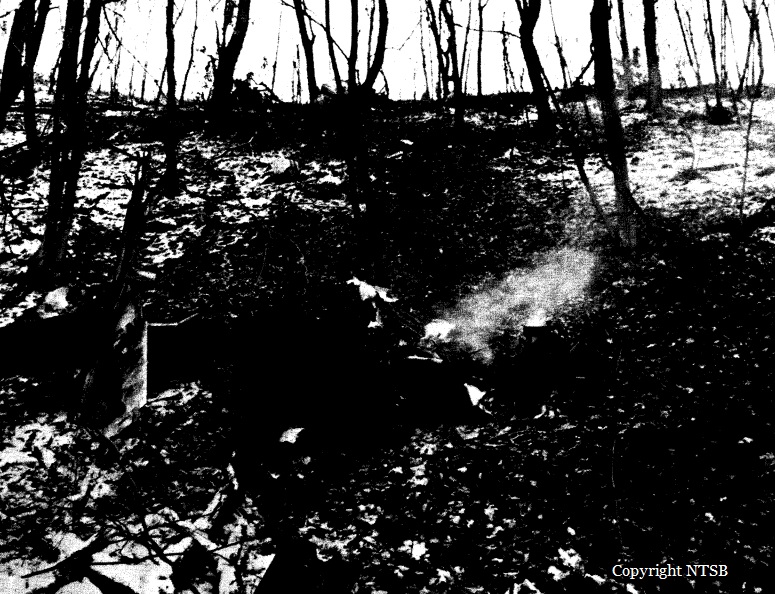
The aircraft was on a flight to a private ranch landing strip at night. The strip had an unlighted windsock at midfield and portable runway edge lights were in use. During arrival, the aircrew estimated the visibility was 3 to 4 miles and reported they would be able to land. Personnel at the ranch heard the aircraft fly over. One of them reported that earlier, the wind had been blowing hard and the air was full of dust, but at the time the aircraft arrived, dust had settled. A deputy sheriff noted that at times, the visibility was good, but at other times, it was poor. The aircraft owner, who was at the ranch, said he could see the aircraft lights at times (in the traffic pattern), but at times, he could not see them. After making two passes, the aircraft crashed in the area where it should have been on a base leg. An exam of the wreckage revealed it was in a left turn during impact. After initial impact, it bounced/slid 663 feet, then hit a tree covered canal levee and burned. No evidence of a preimpact/mechanical malfunction or failure was found. All four occupants were killed.
Probable cause:
Occurrence #1: in flight encounter with weather
Phase of operation: approach
Findings
1. (f) light condition - dark night
2. (f) weather condition - obscuration
3. (c) weather evaluation - poor - pilot in command
----------
Occurrence #2: in flight collision with terrain/water
Phase of operation: approach - VFR pattern - base turn
Findings
4. (c) proper altitude - not maintained - pilot in command
----------
Occurrence #3: on ground/water encounter with terrain/water
Phase of operation: other
Findings
5. (f) terrain condition - dirt bank/rising embankment
Final Report:

Crash of a Cessna 500 Citation I in Bluefield: 5 killed

Date & Time: Jan 21, 1981 at 0844 LT
Type of aircraft:
Operator:
Registration:
N501GP
Survivors:
No
Schedule:
Augusta - Bluefield - Frederick
MSN:
500-0026
YOM:
1972
Crew on board:
2
Crew fatalities:
Pax on board:
3
Pax fatalities:
Other fatalities:
Total fatalities:
5
Captain / Total flying hours:
10463
Captain / Total hours on type:
3642.00
Copilot / Total flying hours:
4748
Copilot / Total hours on type:
1216
Aircraft flight hours:
4439
Circumstances:
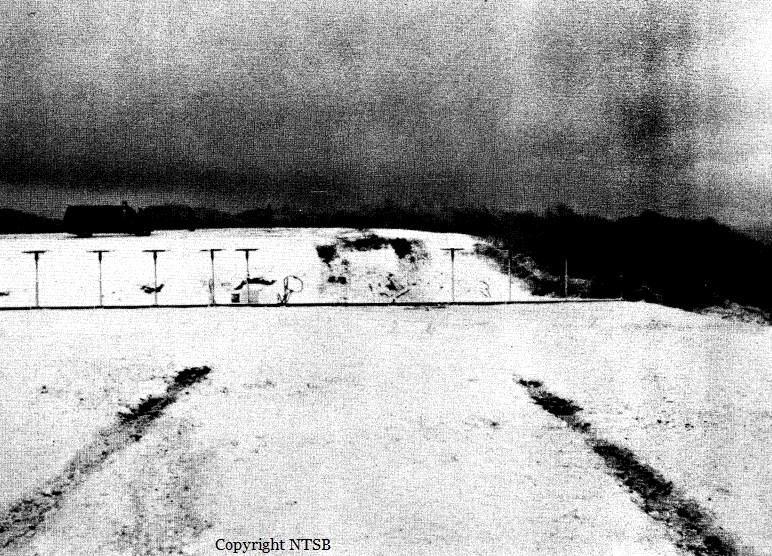
The airplane overran the end of runway 23, following an instrument landing system (ILS) approach, crashed, and burned at the Mercer County Airport, Bluefield, West Virginia. The aircraft touched down between 500 and 2,000 feet on the runway which was covered with wet snow, and it did not decelerate normally. About 1,200 feet from the departure end of the runway, the pilot added engine thrust and rotated the aircraft for liftoff; however, it did not get airborne because of insufficient flying speed. The aircraft overran the end of the runway and struck three localizer antennas and a 10-foot embankment before it plunged down a steep, densely wooded hillside. The five occupants were killed, and the aircraft was destroyed by impact forces and postcrash fire.
Probable cause:
The probable cause of the accident was the pilot's attempt to land on a slush covered runway with insufficient stopping distance available, and his delayed initiation of a go-around which resulted in there being insufficient runway available to complete the maneuver successfully. Contributing to the accident was the lack of adequate emphasis in the manufacturer's aircraft flight manual regarding the required aircraft landing/stop distances under wet and icy runway conditions.
Final Report:

Crash of a Cessna 500 Citation I in Jersey: 1 killed

Date & Time: Oct 1, 1980 at 1902 LT
Type of aircraft:
Registration:
G-BPCP
Flight Type:
Survivors:
No
Schedule:
Cardiff - Jersey
MSN:
500-0403
YOM:
1980
Region:
Crew on board:
1
Crew fatalities:
Pax on board:
0
Pax fatalities:
Other fatalities:
Total fatalities:
1
Captain / Total flying hours:
1787
Captain / Total hours on type:
132.00
Aircraft flight hours:
138
Circumstances:
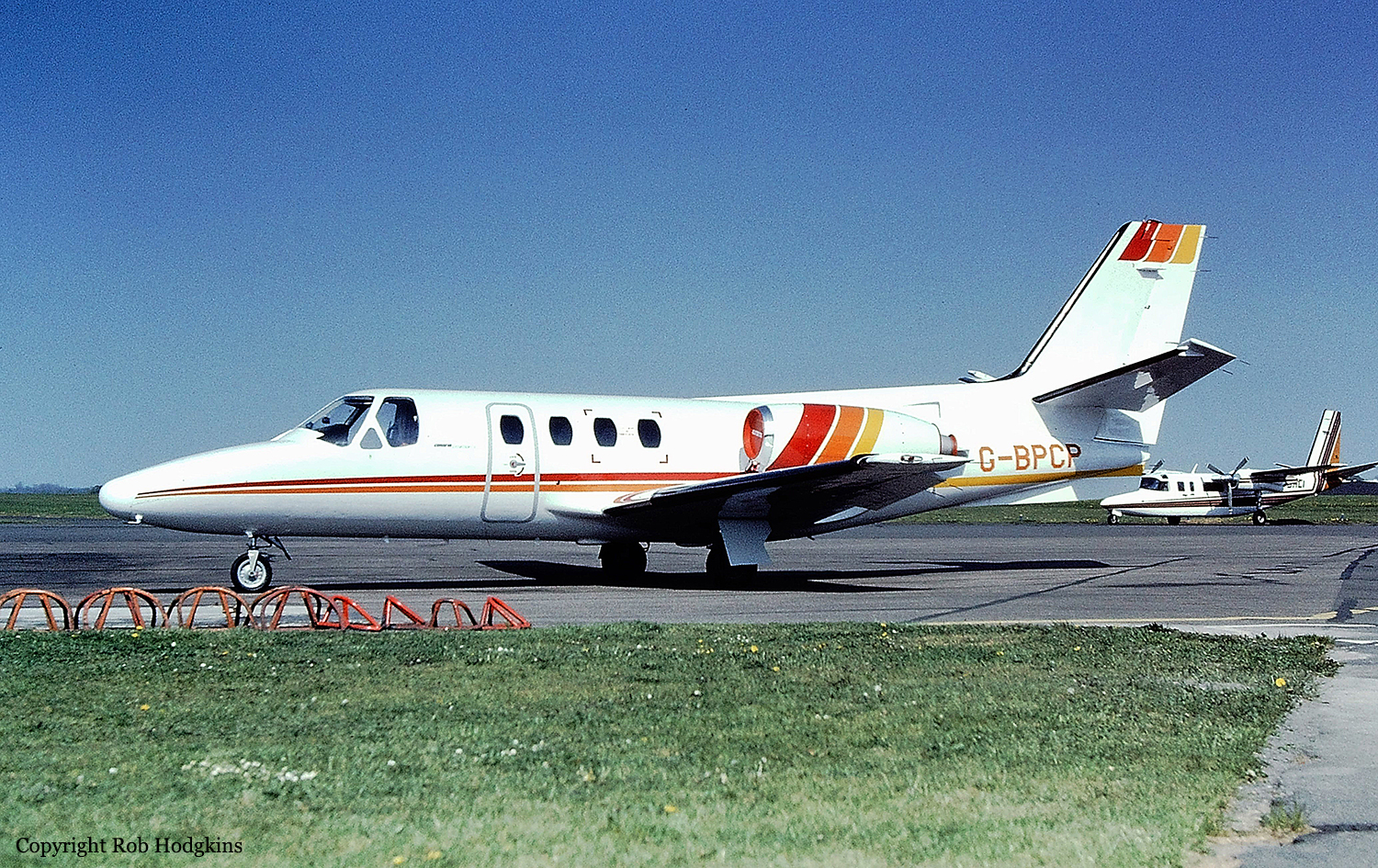
The pilot had completed three flights previous to the accident flight on the same day. He left Jersey at 0729 hrs to fly to Coventry via Cardiff for a day of business meetings in the Midlands and to return, again via Cardiff, to Jersey in the evening. Before leaving Coventry at 1729 hrs he had filed Air Traffic Control (ATC) Flight Plans for the sectors to Cardiff and to Jersey, he also checked the weather conditions at Jersey. The conditions shown in the forecast were of poor weather with low cloud and visibility intermittently falling to 400 metres in drizzle with 7 oktas of cloud below 100 feet. The 1650 hrs weather report for Jersey was noted on the top of his copy of the flight plan, this showed: surface wind 2900 at 11 knots, visibility 6000 metres, cloud 4 oktas at 100 feet, 7 oktas at 200 feet, intermittently becoming 3000 metres visibility in drizzle with 6 oktas cloud at 100 feet. Sufficient fuel for a return flight from Jersey was on-loaded at Cardiff, the pilot remarked, to the Customs Officer, that he might have to return because of the weather at Jersey. The aircraft departed Cardiff for Jersey at 1821 hrs. It could not be established whether the pilot obtained the latest weather reports for Jersey, issued at 1720 hrs and 1750 hrs whilst at Cardiff; or if he availed himself of the in-flight weather broadcast service by London Volmet South, which transmitted the 1820 hrs Jersey weather report whilst en route. Had he done so, he would have been aware of deteriorating landing conditions because the 1820 hrs report for Jersey showed: visibility 300 metres, runway visual range (RVR) 800 metres in drizzle and 8 oktas of cloud below 200 feet. By 1842 hrs the aircraft was descending towards Jersey. The pilot was in radio contact with 'Jersey Zone' ATC, he had received his inbound clearance and had been advised of the latest weather conditions at Jersey. Radar guidance was provided by Jersey Zone, then later, by Jersey Approach Control who also advised that the RVR had fallen to 850 metres and, later, to 650 metres. On receipt of this information the pilot asked for the Guernsey weather. He was informed that the weather at Guernsey had improved to 1800 metres visibility although the cloud base was still below 100 feet. At 1857 hrs, when at 7 miles on the approach to runway 27 at Jersey, the pilot reported that he was established on the Instrument Landing System (lLS). He then contacted Jersey Tower controller who cleared G-BPCP to land. During the final stages of the approach, about 45 seconds before the crash, the Tower controller advised that the RVR had improved to 850 metres. This message was not acknowledged. The approach controller continued to observe the progress of the aircraft towards the runway on his radar screen until it was about one mile from the threshold, at which point it appeared to be on the extended centre line of the runway. The approach controller then left the radar screen and went to the window to watch for the aircraft landing. When the aircraft was half a mile from the runway, it was observed by an eyewitness to be on a normal approach path for runway 27. It was lost to view as it passed behind an adjacent house and almost immediately afterwards there was an increase in engine power. This increase was also heard by a professional pilot who was on the aerodrome, about 500 metres from the end of the runway; he said that the "engines started to spool-up as for an overshoot" and shortly afterwards he saw a flash and heard an explosion. The aircraft struck the roof of a house situated 190 metres to the north of the runway threshold centre line. The house caught fire, the tail of the aircraft lodged in the blazing roof whilst the remaining structure fell into a courtyard where it was destroyed by fire. The four persons occupying the house at the time were able to escape with minor injuries although one, a young girl, was detained in hospital with serious bums. The pilot was killed.
Probable cause:
The accident was caused by the commander failing to execute correctly a missed approach 'go-around' manoeuvre in conditions of poor visibility and low cloud at night. He failed to fly an accurate procedure and allowed the aircraft to continue to descend and turn to the right. It is probable that this resulted from incorrect instrument flying technique but partial physical incapacitation cannot be ruled out. It is also probable that spatial disorientation was a causal factor to the accident.
Final Report:

Crash of a Cessna 500 Citation I near Machiques: 2 killed

Date & Time: Dec 15, 1979
Type of aircraft:
Operator:
Registration:
YV-O-MAC-1
Flight Phase:
Flight Type:
Survivors:
Yes
Site:
Schedule:
La Carlota - La Carlota
MSN:
500-0336
YOM:
1976
Location:
Country:
Crew on board:
2
Crew fatalities:
Pax on board:
3
Pax fatalities:
Other fatalities:
Total fatalities:
2
Circumstances:
The airplane departed La Carlota-General Francisco de Miranda earlier in the day on an inspection flight on behalf of the Venezuelan Ministry of Agriculture and Farming. While flying along the Colombia - Venezuela border, the crew encountered an unexpected situation and was forced to attempt an emergency landing. The aircraft crashed in a mountainous area near Machiques and came to rest in flames. All three passengers, among them Minister Luciano Valero, escaped uninjured while both pilots were killed.

Crash of a Cessna 500 Citation I in Castle Rock: 2 killed

Date & Time: Nov 19, 1979 at 2015 LT
Type of aircraft:
Registration:
N555AJ
Flight Type:
Survivors:
Yes
Schedule:
Albuquerque - Castle Rock
MSN:
500-0007
YOM:
1971
Crew on board:
2
Crew fatalities:
Pax on board:
1
Pax fatalities:
Other fatalities:
Total fatalities:
2
Captain / Total flying hours:
1751
Captain / Total hours on type:
61.00
Circumstances:
The crew was completing a cargo flight from Albuquerque to Castle Rock. On final approach, he encountered poor weather conditions with icing, low ceiling and snow falls, reducing the visibility to one mile in blowing snow. On approach, the airplane crashed in flames few miles short of runway threshold. A pilot was seriously injured while two other occupants were killed.
Probable cause:
Controlled collision with ground during initial approach due to improper IFR operation. The following contributing factors were reported:
- Low ceiling,
- Snow,
- Icing conditions,
- Visibility one mile or less,
- The pilot was upgraded to left seat six days prior to the accident,
- The copilot was certified on type two days prior to the accident,
- Crew inexperience.
Final Report:

Crash of a Cessna 500 Citation I in Rio de Janeiro

Date & Time: Nov 12, 1976 at 2255 LT
Type of aircraft:
Registration:
PT-KIU
Survivors:
Yes
Schedule:
Araçatuba – Rio de Janeiro
MSN:
500-0172
YOM:
1974
Country:
Crew on board:
2
Crew fatalities:
Pax on board:
6
Pax fatalities:
Other fatalities:
Total fatalities:
0
Circumstances:
After landing at Rio de Janeiro-Santos Dumont Airport, the airplane was unable to stop within the remaining distance, overran and came to rest into the Guanabara Bay about 100 metres past the runway end. All eight occupants were quickly rescued and the airplane sank 30 minutes later.

Crash of a Cessna 500 Citation I near Acará: 3 killed

Date & Time: Mar 16, 1975 at 0927 LT
Type of aircraft:
Operator:
Registration:
PT-JXS
Flight Phase:
Flight Type:
Survivors:
No
Schedule:
Belém - Uberlândia
MSN:
500-0162
YOM:
1974
Location:
Country:
Crew on board:
1
Crew fatalities:
Pax on board:
2
Pax fatalities:
Other fatalities:
Total fatalities:
3
Circumstances:
The airplane departed Belém-Val de Cans Airport at 0902LT bound for Uberlândia with two passengers and one pilot on board. About 20 minutes into the flight, the pilot contacted ATC and reported smoke coming from the instrument panel. Due to limited visibility, he elected to return to Belém Airport when control was lost. The airplane crashed into the Acará River near Acará, about 65 km southeast of Belém. The aircraft was destroyed and all three occupants were killed.
Crew:
Carlos Ribeiro, pilot.
Passengers:
Oscar Thompson Filho, ex Minister of Agriculture,
Mr. Ernst Acklimenhofer.

Crash of a Cessna 500 Citation I in Barcelona: 4 killed

Date & Time: Nov 22, 1974
Type of aircraft:
Registration:
EC-CGG
Flight Phase:
Survivors:
No
MSN:
500-0108
YOM:
1973
Country:
Region:
Crew on board:
2
Crew fatalities:
Pax on board:
2
Pax fatalities:
Other fatalities:
Total fatalities:
4
Circumstances:
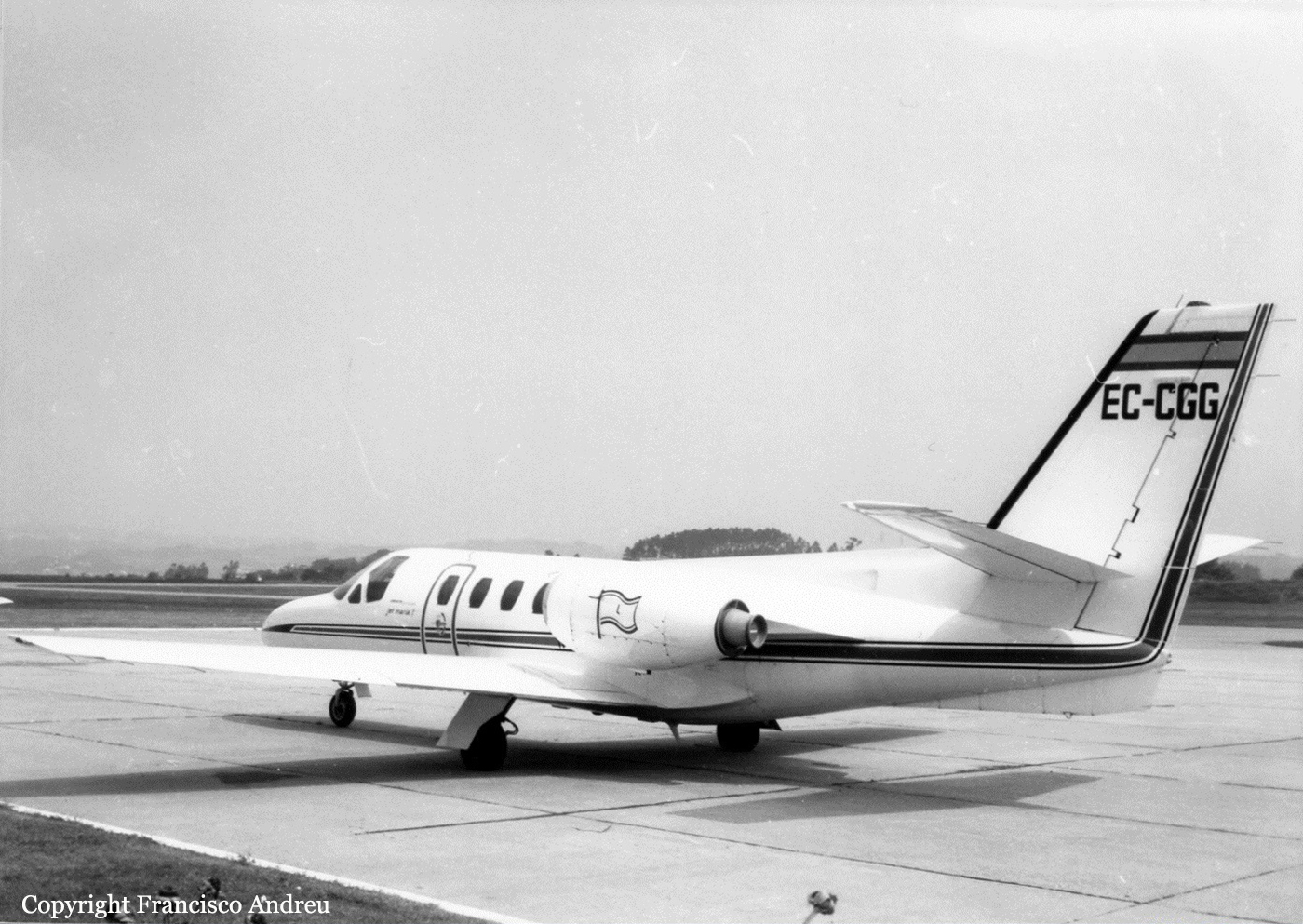
Just after takeoff, the airplane went out of control and crashed in flames near the runway end. The aircraft was destroyed and all four occupants were killed.