Crash of an Airbus A320-232 off Saint-Cyprien: 7 killed

Date & Time: Nov 27, 2008 at 1646 LT
Type of aircraft:
Operator:
Registration:
D-AXLA
Flight Type:
Survivors:
No
Schedule:
Perpignan - Frankfurt
MSN:
2500
YOM:
2005
Flight number:
GXL888T
Country:
Region:
Crew on board:
2
Crew fatalities:
Pax on board:
5
Pax fatalities:
Other fatalities:
Total fatalities:
7
Captain / Total flying hours:
12709
Captain / Total hours on type:
7038.00
Copilot / Total flying hours:
11660
Copilot / Total hours on type:
5529
Aircraft flight hours:
10124
Aircraft flight cycles:
3931
Circumstances:
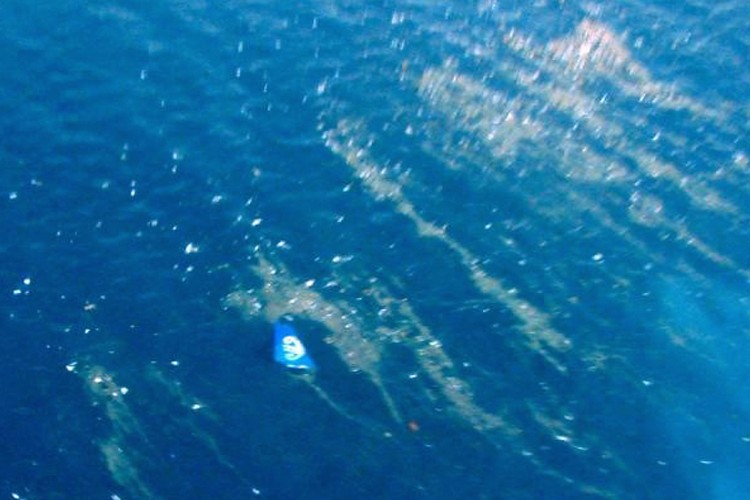
Flight GXL888T from Perpignan-Rivesaltes aerodrome was undertaken in the context of the end of a leasing agreement, before the return of D-AXLA to its owner. The program of planned checks could not be performed in general air traffic, so the flight was shortened. In level flight at FL320, angle of attack sensors 1 and 2 stopped moving and their positions did not change until the end of the flight. After about an hour of flight, the airplane returned to the departure aerodrome airspace and the crew was cleared to carry out an ILS procedure to runway 33, followed by a go around and a departure towards Frankfurt/Main (Germany). Shortly before overflying the initial approach fix, the crew carried out the check on the angle of attack protections in normal law. They lost control of the airplane, which crashed into the sea.
Probable cause:
The accident was caused by the loss of control of the airplane by the crew following the improvised demonstration of the functioning of the angle of attack protections, while the blockage of the angle of attack sensors made it impossible for these protections to trigger. The crew was not aware of the blockage of the angle of attack sensors. They did not take into account the speeds mentioned in the program of checks available to them and consequently did not stop the demonstration before the stall.
The following factors contributed to the accident:
• The decision to carry out the demonstration at a low height
• The crew’s management, during the thrust increase, of the strong increase in the longitudinal pitch, the crew not having identified the pitch-up stop position of the horizontal stabilizer nor acted on the trim wheel to correct it, nor reduced engine thrust
• The crew having to manage the conduct of the flight, follow the program of in-flight checks, adapted during the flight, and the preparation of the following stage, which greatly increased the workload and led the crew to improvise according to the constraints encountered
• The decision to use a flight program developed for crews trained for test flights, which led the crew to undertake checks without knowing their aim
• The absence of a regulatory framework in relation to non-revenue flights in the areas of air traffic management, of operations and of operational aspects
• The absence of consistency in the rinsing task in the airplane cleaning procedure, and in particular the absence of protection of the AOA sensors, during rinsing with water of the airplane three days before the flight. This led to the blockage of the AOA sensors through freezing of the water that was able to penetrate inside the sensor bodies.
The following factors also probably contributed to the accident:
• Inadequate coordination between an atypical team composed of three airline pilots in the cockpit
• The fatigue that may have reduced the crew’s awareness of the various items of information relating to the state of the systems.
Final Report:

Crash of a Gippsland GA8 Airvan in the Buckingham Bay: 1 killed

Date & Time: Oct 16, 2008 at 0945 LT
Type of aircraft:
Registration:
VH-WRT
Flight Phase:
Flight Type:
Survivors:
No
Schedule:
Elcho Island – Mata Mata – Muthamul –Nyinyikay – Rurruwuy – Elcho Island
MSN:
GA8-01-005
YOM:
2001
Country:
Region:
Crew on board:
1
Crew fatalities:
Pax on board:
0
Pax fatalities:
Other fatalities:
Total fatalities:
1
Captain / Total flying hours:
1300
Captain / Total hours on type:
300.00
Aircraft flight hours:
4750
Circumstances:
On the morning of 16 October 2008, a Gippsland Aeronautics GA8 Airvan, registered VH-WRT, was being operated on a freight charter flight from Elcho Island and return, Northern Territory. At about 1230, it was realised that the aircraft was missing. A witness reported seeing the aircraft during the early stages of the flight and, shortly afterwards, a column of dark black smoke rising from the eastern side of the Napier Peninsula. On 17 October 2008, items of wreckage from the aircraft were found in the south-western part of Buckingham Bay. The pilot, who was the sole occupant of the aircraft, and the main wreckage of the aircraft have not been found. After consideration of the available evidence, the investigation was unable to identify any factor that contributed to the accident.
Probable cause:
Following a review of the available evidence covering:
• Witness information,
• The pilot's fatigue and health,
• The airworthiness of the aircraft,
• Aircraft fuel,
• The weather affecting the flight, and
• The aircraft’s loading and weight and balance,
The investigation was unable to identify any factors that may have contributed to the accident. From the evidence available, the following findings are made with respect to the missing aircraft at Buckingham Bay, Northern Territory on 16 October 2008 involving Gippsland Aeronautics GA8 Airvan aircraft, registered VH-WRT. They should not be read as apportioning blame or liability to any organisation or individual. No contributing safety factors were identified.
Other safety factors:
• The main vertical net and the throwover net were not used to restrain the cargo.
• The full jerry cans were not secured in the aircraft cabin.
• At the time of departure, the aircraft’s centre of gravity (c.g) was probably to the rear of the permitted c.g limit that was published in the Aircraft Flight Manual.
• There was no record that the pilot lodged a flight notification for the flight with Airservices Australia.
Final Report:

Crash of a Cessna 208B Grand Caravan off Belize City

Date & Time: Sep 7, 2008 at 0940 LT
Type of aircraft:
Operator:
Registration:
V3-HFQ
Flight Phase:
Survivors:
Yes
Schedule:
Belize City - Belize City
MSN:
208B-0575
YOM:
1996
Country:
Crew on board:
1
Crew fatalities:
Pax on board:
4
Pax fatalities:
Other fatalities:
Total fatalities:
0
Circumstances:
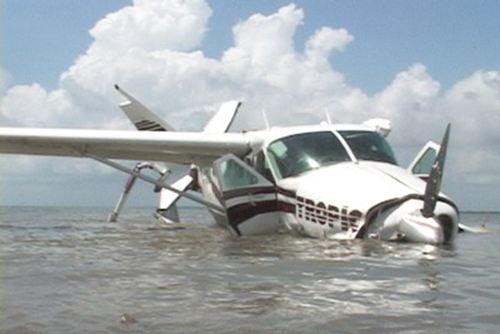
The single engine aircraft departed Belize City-Sir Barry Bowen Municipal Airport on a short flight to the Belize City-Philip S. W. Goldson International Airport with 4 US citizens and one pilot on board. While cruising along the shore, the engine failed. The pilot reduced his altitude and attempted to land on a beach when the aircraft crashed in the sea and came to rest in two feet of water, broken in two. All five occupants escaped with minor injuries.
Probable cause:
Engine failure for unknown reasons.

Crash of a Lockheed L-100-20 Hercules off Davao City: 11 killed

Date & Time: Aug 25, 2008 at 2055 LT
Type of aircraft:
Operator:
Registration:
4593
Flight Phase:
Flight Type:
Survivors:
No
Schedule:
Davao City – Iloilo City
MSN:
4593
YOM:
1975
Country:
Region:
Crew on board:
9
Crew fatalities:
Pax on board:
2
Pax fatalities:
Other fatalities:
Total fatalities:
11
Circumstances:
The four engine aircraft departed Davao City Airport at 2051LT on a flight to Iloilo City where members of the Presidential Security Group should be picked up for Manila. During initial climb, the crew was cleared to climb to 18,000 feet when the aircraft entered an uncontrolled descent and crashed in the sea about 4 minutes after takeoff. The aircraft was destroyed and all 11 occupants were killed.

Crash of a Cessna 501 Citation I/SP off Santo Domingo: 1 killed

Date & Time: Aug 18, 2008 at 2029 LT
Type of aircraft:
Registration:
N223LC
Flight Phase:
Flight Type:
Survivors:
No
Schedule:
Santo Domingo - San Juan
MSN:
501-0055
YOM:
1978
Crew on board:
1
Crew fatalities:
Pax on board:
0
Pax fatalities:
Other fatalities:
Total fatalities:
1
Circumstances:
The aircraft departed Santo Domingo-Las Améericas Airport at 2026LT on a positioning flight to San Juan, Porto Rico. While climbing in night conditions, the pilot lost control of the airplane that crashed in the sea few km offshore. SAR operations were initiated but no trace of the aircraft nor the pilot was found.

Crash of a Cessna 414 Chancellor off San Andrés

Date & Time: Jul 26, 2008 at 1052 LT
Type of aircraft:
Registration:
XB-JBD
Flight Type:
Survivors:
Yes
Schedule:
San Salvador – San Andrés – Barranquilla
MSN:
414-0253
YOM:
1971
Country:
Crew on board:
1
Crew fatalities:
Pax on board:
1
Pax fatalities:
Other fatalities:
Total fatalities:
0
Captain / Total flying hours:
1196
Aircraft flight hours:
4480
Circumstances:
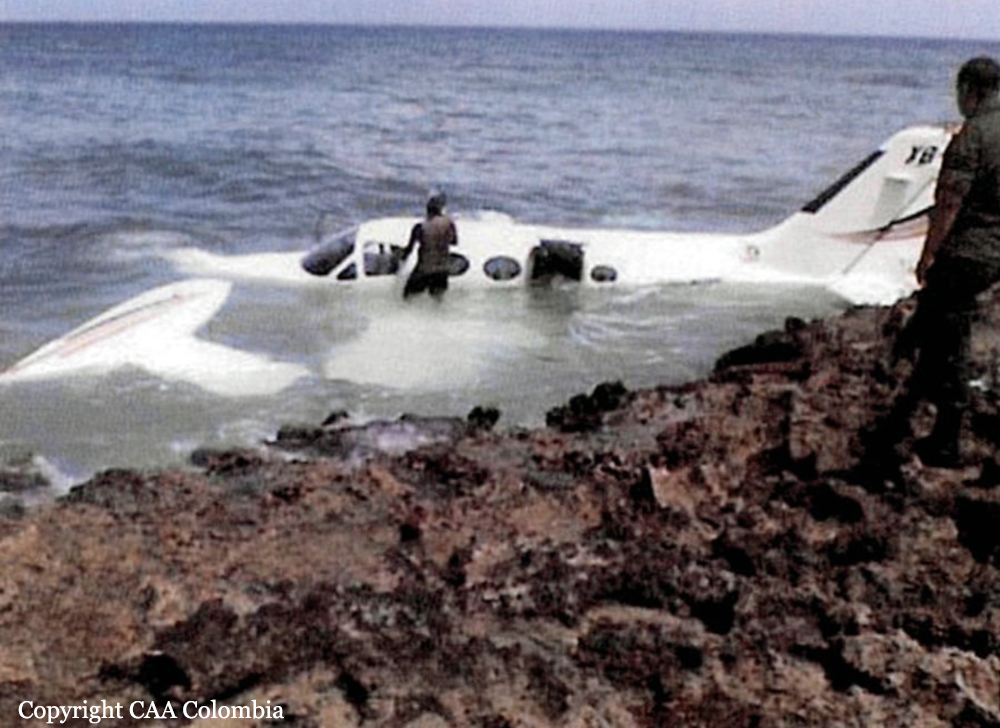
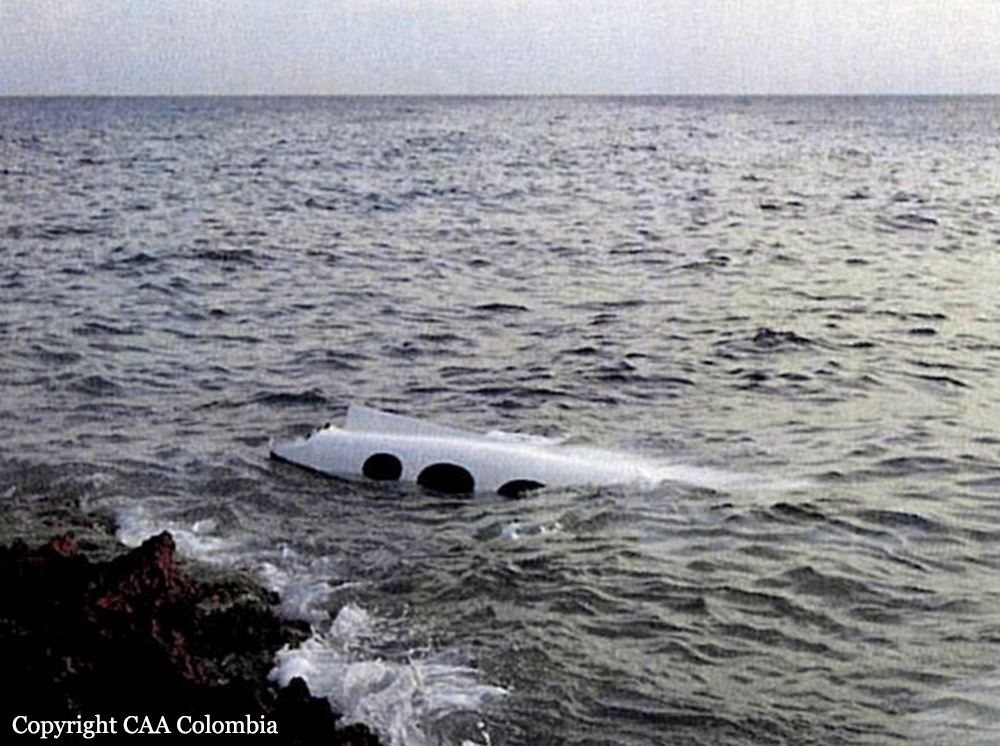
The twin engine aircraft departed San Salvador-Ilopango Airport on a private flight to Barranquilla with an intermediate stop in San Andrés Island, carrying one passenger and one pilot. On final approach to San Andrés-Gustavo Rojas Pinilla Airport runway 06, the left engine failed. The pilot increased power on the right engine but the aircraft continued to lose height. The pilot ditched the aircraft near the coast. Both occupants evacuated safely and were quickly rescued while the aircraft was damaged beyond repair.
Probable cause:
Failure of the left engine on final due to fuel exhaustion. It remained a total of 3 gallons of fuel in the left fuel tank and 23 gallons in the right main tank.
Final Report:

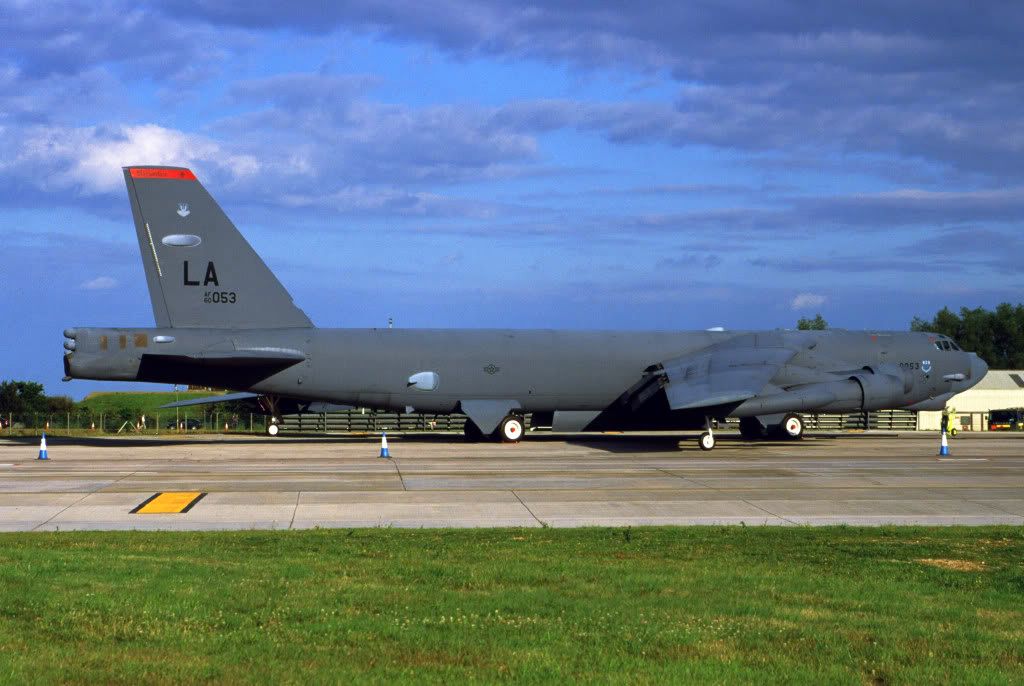
Crash of a Boeing B-52H-155-BW Stratofortress off Guam Island: 6 killed

Date & Time: Jul 21, 2008 at 0945 LT
Type of aircraft:
Operator:
Registration:
60-0053
Flight Phase:
Flight Type:
Survivors:
No
Schedule:
Andersen AFB - Andersen AFB
MSN:
464418
YOM:
1960
Flight number:
Raider 21
Country:
Region:
Crew on board:
6
Crew fatalities:
Pax on board:
0
Pax fatalities:
Other fatalities:
Total fatalities:
6
Circumstances:
The aircraft departed Andersen AFB on a flight around the Guam Island under call sign 'Raider 21' with 6 crew members on board, taking part to the Guam Liberation Day celebrations. About 15 minutes into the flight, while descending from 14,000 to 1,000 feet, the aircraft became uncontrollable and crashed in the sea about 50 km north of Guam Island. The aircraft disintegrated on impact and only few debris were found. All six crew members were killed.
Crew:
Maj Chris Cooper, pilot,
Cpt Michael Dodson, copilot,
1st Lt Robert Gerren, electronic warfare officer,
1st Lt Joshua Shepherd, navigator,
Maj Brent Williams, radar navigator,
Col George Martin, flight surgeon.
Probable cause:
Malfunctioning parts and late recognition of spiraling problems likely led to the fatal crash of a B-52H Stratofortress in July, an Air Force accident investigation board concluded in a report issued Feb. 13. The problem parts, investigators decided, were the bomber’s rear stabilizers — the large horizontal fins at the jet’s tail that help angle the B-52H up or down. Although the inquiry could not determine what led to the stabilizer problem, the board said it believed the stabilizers malfunctioned while the bomber was in a fast descent from 14,000 feet to 1,000 feet. “Even an experienced aircrew could have found it difficult to recognize, assess and recover from the very rapidly developing situation involving the rear stabilizer trim,” board president Brig. Gen. Mark Barrett concluded. The bomber did not carry a flight data recorder, so the investigation team pieced together events leading up to the crash from air traffic control radar information and from parts recovered from the ocean floor by remote-controlled Navy submarines. One recovered part was a component called a jackscrew that helps control the stabilizers. The jackscrew revealed the stabilizer trim was set at 4.5 to 5 degrees nose down, but parts that could have helped determine why the stabilizers were pointed down were not recovered. Based on flight simulations, the investigative team determined the flight was normal until the jet turned left and began to descend about 33 miles west of Guam. As the 48-year-old bomber dove toward the Pacific at a speed of more than 240 mph, the stabilizers suddenly unhinged, putting the jet into a dive with the nose pointed down 30 degrees and more. One of the pilots likely tried to level the stabilizers manually using a control wheel in the cockpit that moves the stabilizer 1 degree every two to three seconds, the report said. However, because the plane was already low, there wasn’t enough time to level the stabilizers. At least three crew members tried to bail out seconds before the plane hit the water, but the plane’s speed, altitude and angle already were past the point where they could survive the ejection.

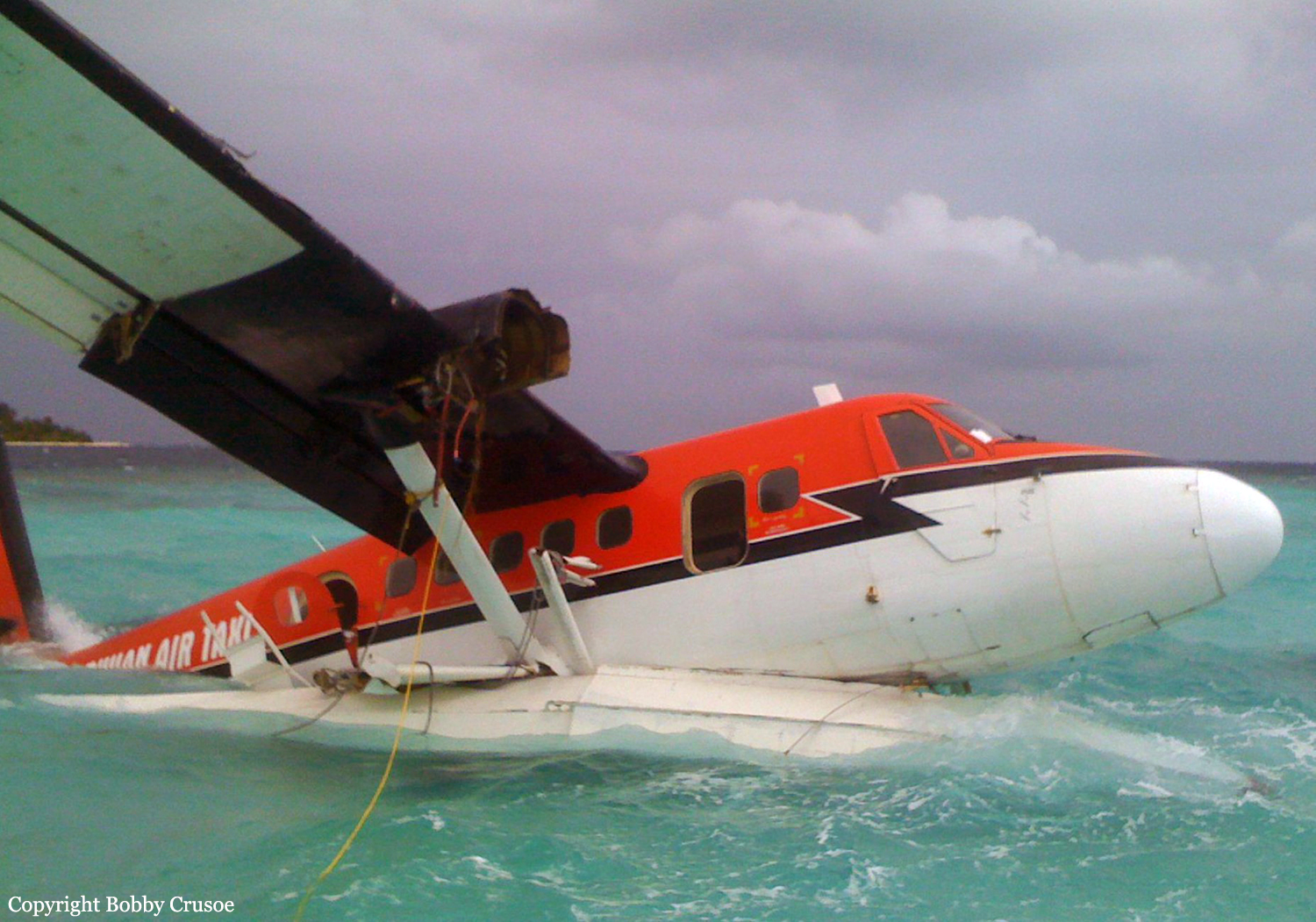
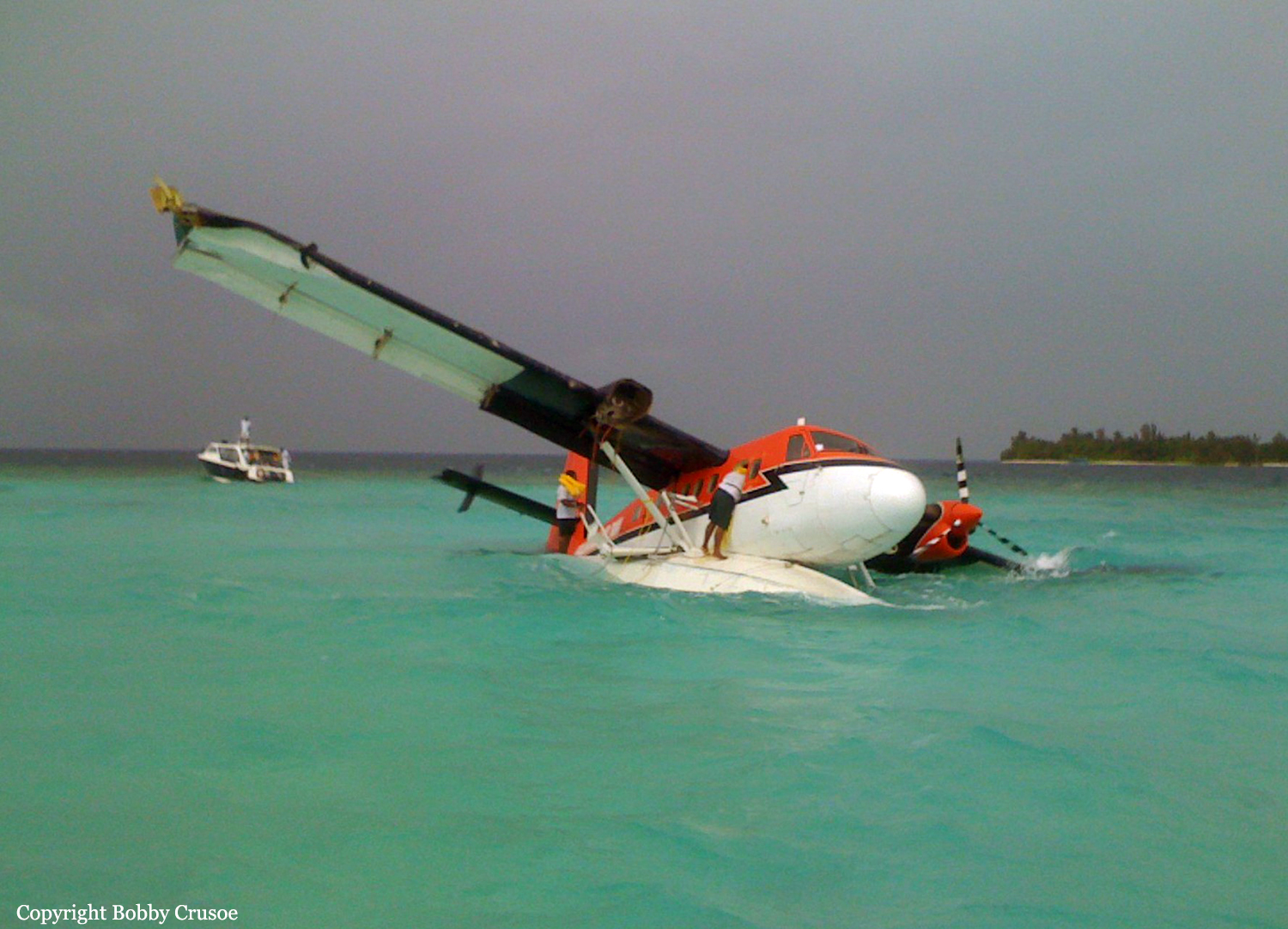
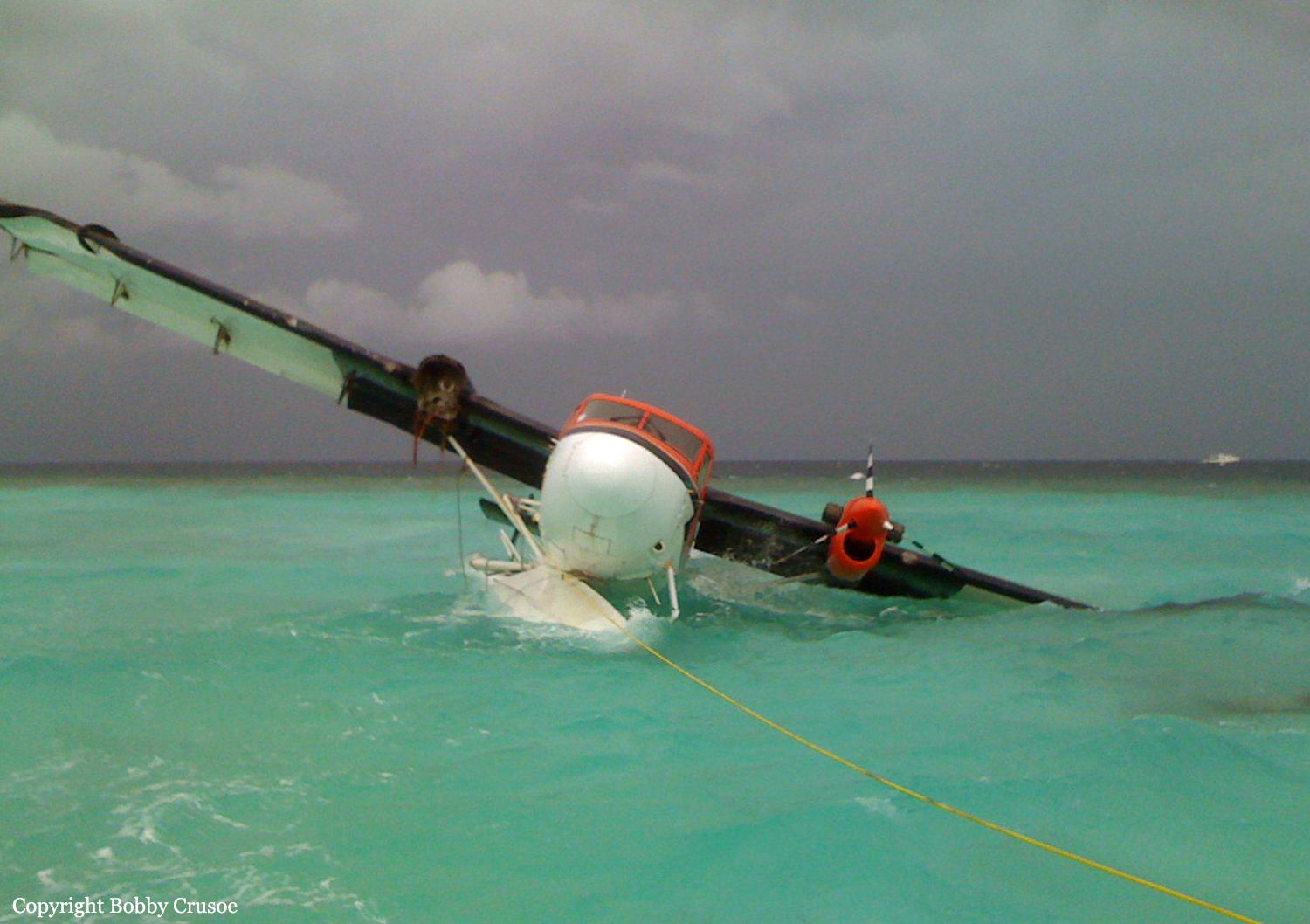
Crash of a De Havilland DHC-6 Twin Otter 300 off North Ari Atoll

Date & Time: Jul 14, 2008 at 1230 LT
Operator:
Registration:
8Q-MAS
Survivors:
Yes
Schedule:
Male - North Ari Atoll
MSN:
445
YOM:
1975
Region:
Crew on board:
3
Crew fatalities:
Pax on board:
14
Pax fatalities:
Other fatalities:
Total fatalities:
0
Captain / Total flying hours:
3150
Captain / Total hours on type:
430.00
Copilot / Total flying hours:
2880
Copilot / Total hours on type:
127
Aircraft flight hours:
49129
Circumstances:
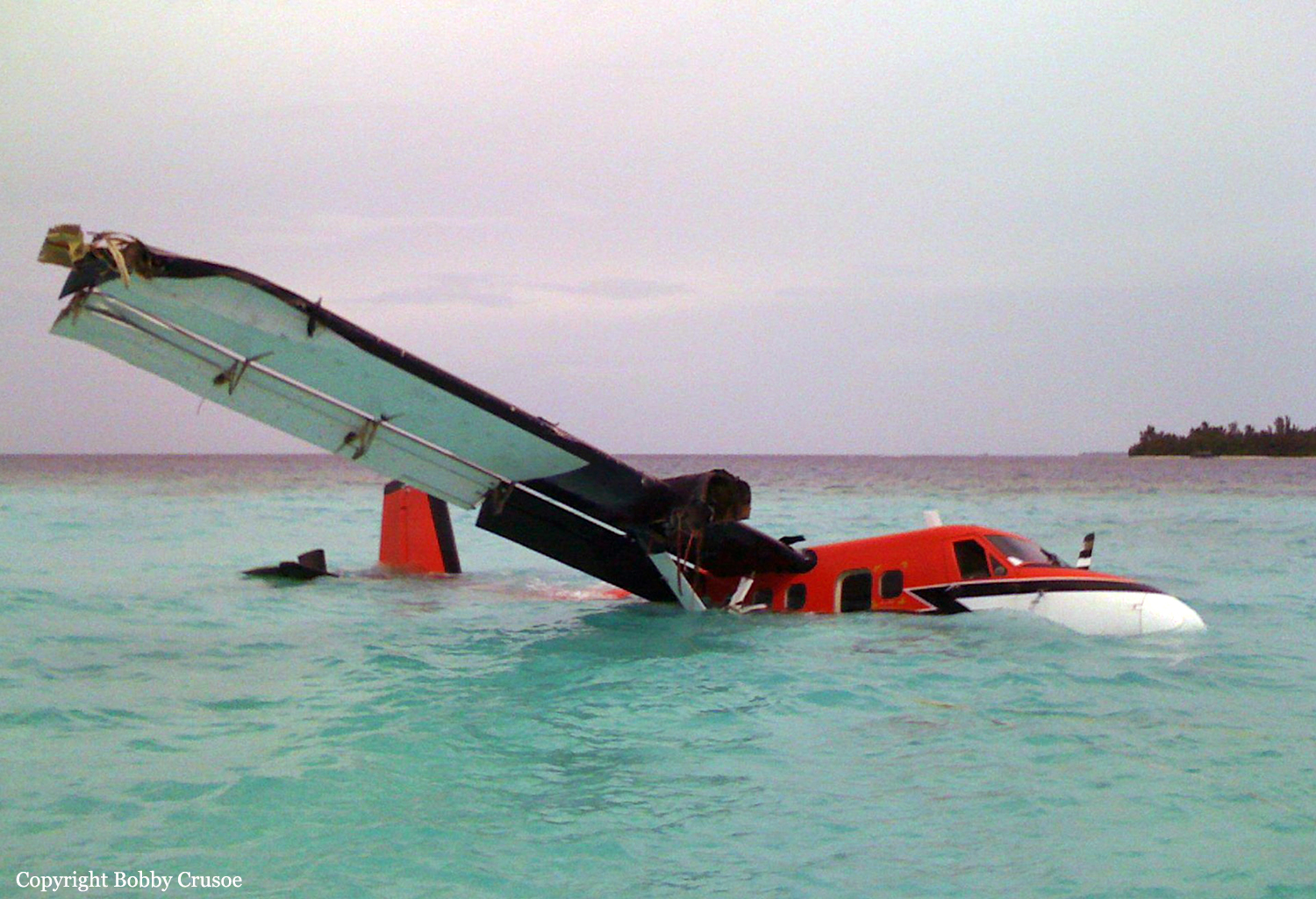
14th July 2008 was a Monday; the busiest day of the week where there is an average of 150-200 movements. 8Q-MAS completed six sectors prior to the accident, with the same flight crew. Sixteen pieces of baggage were loaded, in the aft cabin, with total weight of 458 lbs. The flight manifest signed by Pilot in Command indicated that the aircraft was loaded up to 11874 lbs. The aircraft was boarded with 14 passengers (7 females, 6 males and 1 child) and the flight manifest used approved weights of 77 lbs Child, 181 lbs for male and 141 lbs for female to calculate the aircraft weight. The aircraft had 930 lbs of fuel. This particular aircraft was a short nose twin otter aircraft, with main loading in aft cabin. The MAT seaplane operation was based on a day VFR, non-schedule and a self dispatch system. All pre-flight duties were completed by the crew. The weather was windy and sea was rough. The aircraft departed at 12.11 hrs from MAT dock at Male International Airport, Water Aerodrome to Adaaran Club Bathala with 14 passengers total: 10 passengers to Adaaran Club Bathala, 2 passengers to Nika Maldives and 2 Passengers to W Retreat and Spa (Fesdu). The estimated flight time to destination was 20 minutes. The W Retreat and Spa Maldives Resort’s Speed Boat (Angelina) (a 34 ft Triana Express) was moored at a buoy (located at 04 04’ 43.6” N, 072 56’ 37.1” E) used by MAT to moor the aircrafts for night stops. The floating platform was located (04 04’ 43.5”N, 072 56’ 38.8”E) east of the buoy. The distance between the floating platform and buoy is around 165 feet. Around 12:30 the aircraft approached for landing near the floating platform. The wind was on a westerly direction 20 to 25 knots and the aircraft approached for a westbound landing. The aircraft made an orbit over the lagoon to inspect the water. The aircraft did a touchdown and was cutting the wave tops to find an appropriate location to stop, when it hit a big wave and was airborne. The aircraft veered to the left. The PIC declared to do a go around. The crew action was 10 degree flap, full throttle and Max Prop RPM. On climb the aircraft collided with the Speed Boat and the aircraft veered to the right and PIC was able to land on LH float.
Probable cause:
Causal Factors:
• The crew’s decision to land on rough waters without giving due considerations for a rejected landing and obstacles nearby was a causal factor.
• The Speed Boat moored to a buoy, close to the landing area was also a causal factor.
Final Report:

Crash of a Swearingen SA226T Merlin IIIB off Bergen: 3 killed

Date & Time: Jun 20, 2008 at 1026 LT
Type of aircraft:
Operator:
Registration:
LN-SFT
Flight Phase:
Flight Type:
Survivors:
No
Schedule:
Bergen - Bergen
MSN:
T-342
YOM:
1980
Country:
Region:
Crew on board:
3
Crew fatalities:
Pax on board:
0
Pax fatalities:
Other fatalities:
Total fatalities:
3
Captain / Total flying hours:
15750
Captain / Total hours on type:
12000.00
Copilot / Total flying hours:
6310
Aircraft flight hours:
13551
Aircraft flight cycles:
5732
Circumstances:
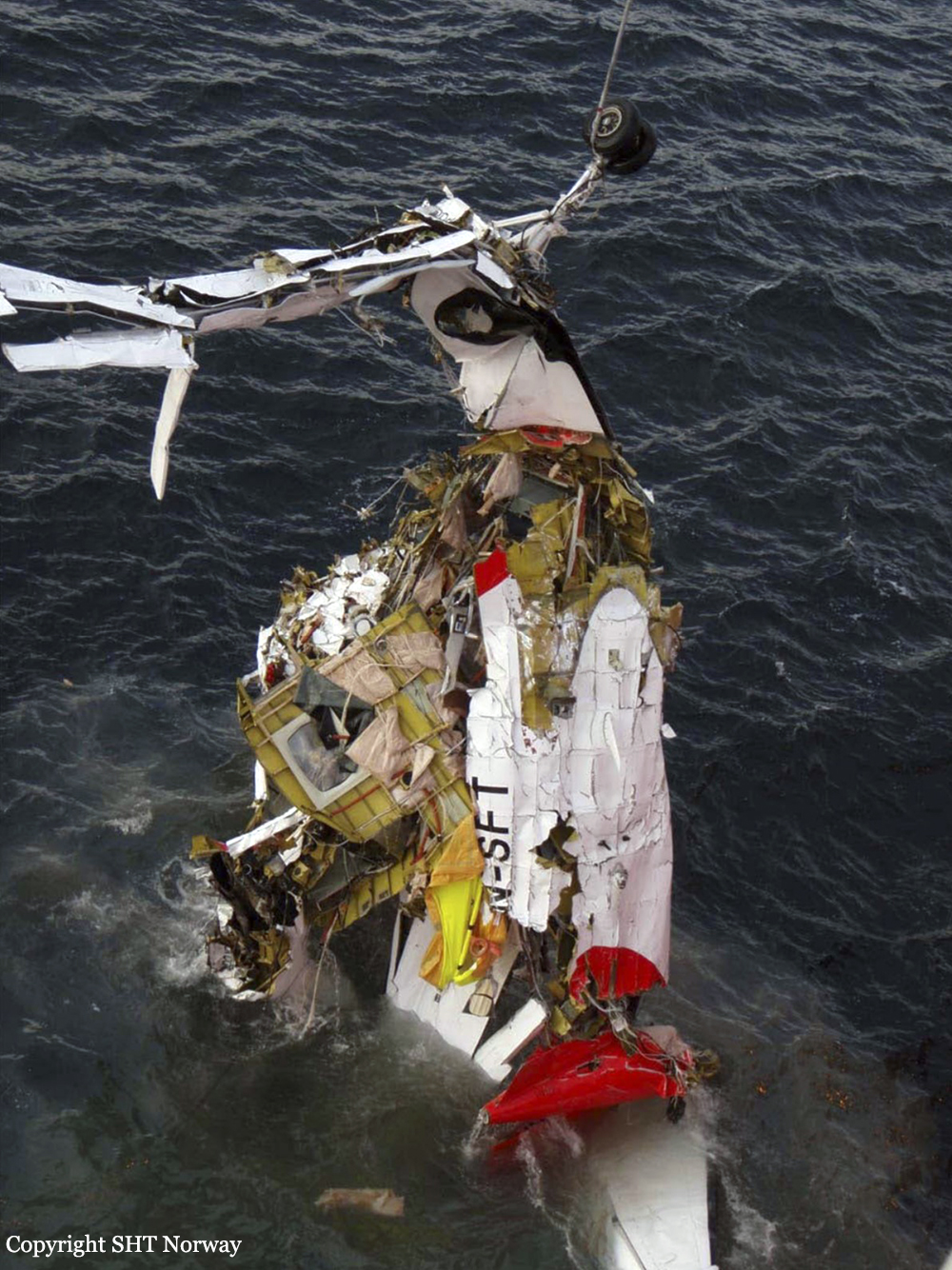
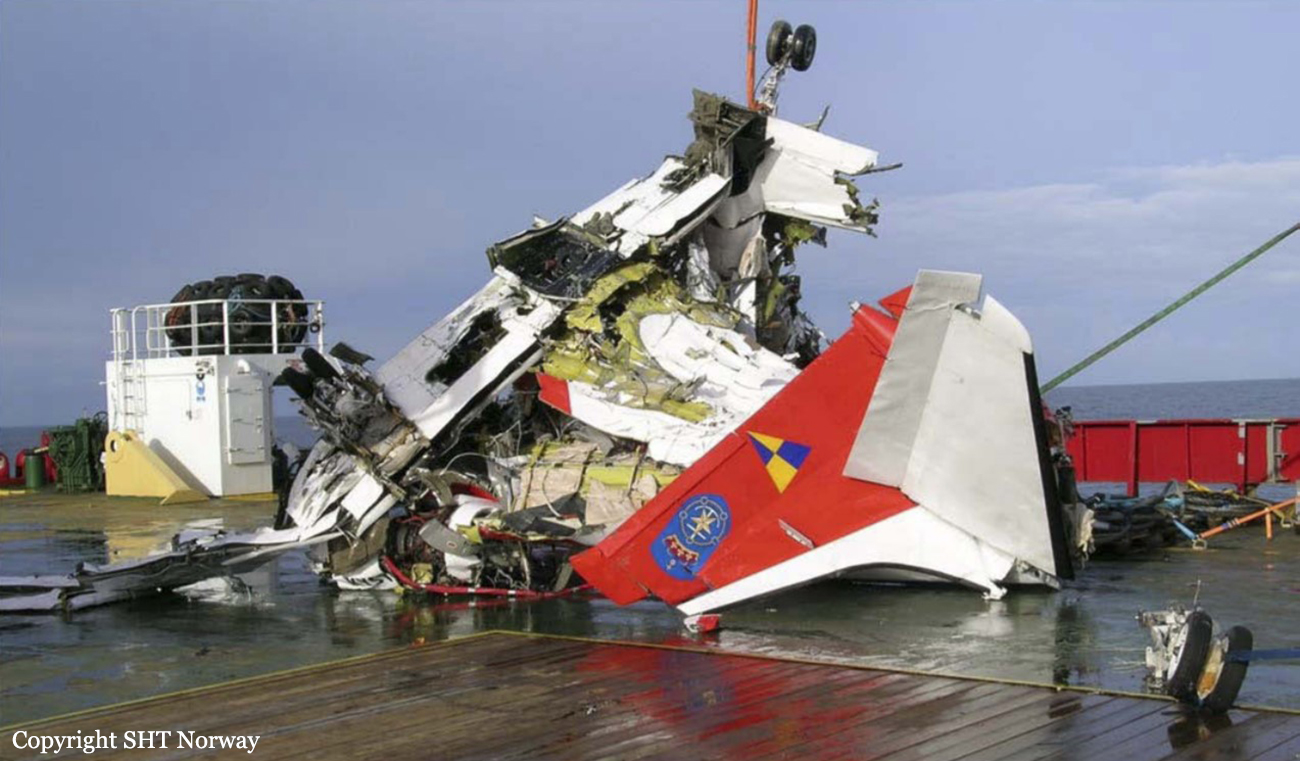
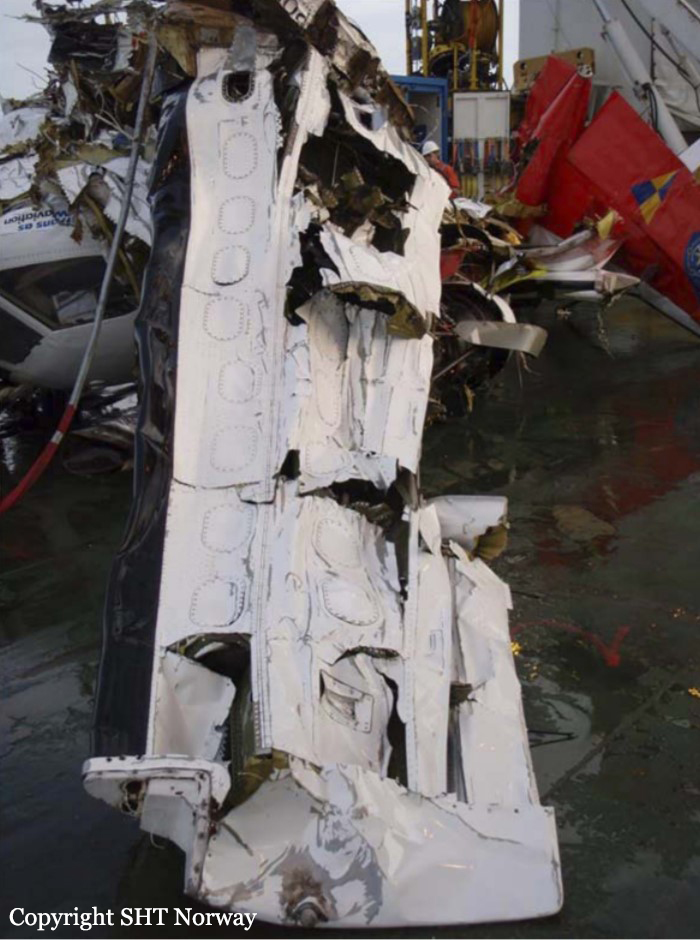
The flight was a skill-test for a candidate that was hired as a first officer on SA226-T(B) Merlins for the operator Helitrans. He was one of two candidates that were employed by the company in early 2008. They underwent ground school and flight training in cooperation with the Swedish Type Rating Training Organisation (TRTO) Trafikkhögskolan. Later it became clear that the Swedish Civil Aviation Authority (CAA) did not accept skill-tests limited to first officer duties on a single pilot certified airplane, as the Norwegian CAA did. The candidates did not possess the skills to act as commanders on the Merlin, and there was a period of uncertainty while the operator and the Norwegian CAA discussed how to conduct the skill-tests, in particular whether to use a simulator or an actual airplane. After several months the issues were resolved and an examiner was appointed. There was a limited slot on a Thursday and a Friday where the examiner, the instructor/commander and the aircraft was available at Bergen Airport Flesland. The first candidate performed the skill-test on Thursday. The weather was not suited for flying skill tests. It was low ceiling, rain showers and winds up to 40 kt and turbulence. Turbulence caused the stick pusher to activate during the demonstration of slow flight. The commander decided to pull the circuit breaker for the Stall Avoidance and Stability Augmentation System (SAS) presumably to avoid nuisance activations of the stick pusher. After the slow flight demonstration, the examiner asked the candidate to demonstrate a stall. The candidate found this exercise frightening as she experienced great difficulties, having to use all her available physical strength to regain normal flight with the engines on full power and in IMC conditions. The weather was similar on Friday with even stronger winds. The SAS circuit breaker was not reset. This was confirmed during the start-up check. The examiner requested a similar program during this skill-test as he did the day before. However, when it came to demonstrating stalls, the examiner asked for a slow flight up to first indication of stall, and not an actual stall. He asked for call outs and a minimum loss of altitude recovery. The commander undertook the tasks of adding power and retracting gear and flaps on the candidate’s request. It was IMC. During this exercise the crew lost control of attitude and airspeed. The stall warning came on, but the airspeed decreased, even with full power applied. Radar data show that the altitude increased 200 – 400 ft during the period where control was lost. Airspeed decreased to about 30 kt and a sink rate of about 10 000 ft/min eventually developed. The airplane hit the sea in a near horizontal attitude about 37 sec. after control was lost. All three on board were fatally injured. The accident aircraft was used for coastguards duties and was modified with external sensors and antennas. The AIBN made a Computational Fluid Dynamics analysis in order to determine whether these installations influenced on stability and flight characteristics in the slow flight and pre-stall regime. It was found that the modifications reduced the overall performance, but did not result in any significant degradation of stability and control in this regime. There was no investigation as to any influence on the characteristics of a fully developed stall. The AIBN is of the opinion that this accident highlights the need for a change in the current training on initial stall recovery techniques, especially the focus on minimum loss of altitude at the expense of breaking the stall by lowering the nose and thus reducing the angle of attack. The AIBN has issued two safety recommendations to the Norwegian CAA; one regarding the conduct of skill-tests for pilots in a multi crew concept on single pilot airplanes, and one suggesting increased focus on flight examiners tasks.
Probable cause:
The following findings were identified:
- Even if the weather on the day of the accident was within the permitted limits, it was not suitable to perform 'airwork' or training exercises,
- The captain thought the weather was not suitable for conducting the skill test for the second candidate. That he nevertheless agreed to take the test may be due to the fact that he felt
a pressure to complete the mission,
- The flight was conducted in challenging conditions and there is reason to believe that atmospheric turbulences may have contributed to the loss of control during the skill flight,
- The flight was completed in clouds, and it can be assumed that the lack of visual references in the clouds contributed to the loss of control.
Final Report:

Crash of a Rockwell Shrike Commander 500S off Alice Town

Date & Time: Jun 9, 2008 at 1401 LT
Operator:
Registration:
N501AP
Flight Type:
Survivors:
Yes
Schedule:
Nassau – Fort Lauderdale
MSN:
500-3224
YOM:
1974
Country:
Crew on board:
1
Crew fatalities:
Pax on board:
0
Pax fatalities:
Other fatalities:
Total fatalities:
0
Circumstances:
On June 9, 2008, about 1401 eastern daylight time, an Aero Commander 500S, N501AP, registered to and operated by Gramar 500, Inc., experienced a loss of engine power in both engines and was ditched in the Atlantic Ocean about 1/2 mile south of North Bimini, Bahamas. Visual meteorological conditions prevailed in the area and a visual flight rules flight plan was filed for the 14 Code of Federal Regulations (CFR) Part 91 personal flight from Nassau International Airport (MYNN), Nassau, Bahamas, to Ft. Lauderdale Executive Airport (FXE), Ft. Lauderdale, Florida. The airplane was destroyed due to salt water immersion, and the airline transport rated pilot, the sole occupant, was not injured. The pilot stated that when the flight was past Bimini, the right engine started running rough and losing power. He turned southeast to enter a left base for runway 09 at South Bimini Airport, and the left engine also began to run rough and lost power. The pilot ditched the aircraft, evacuated into a life raft, and was rescued by a pleasure boater. The pilot also stated that 25 gallons of fuel were added while at MYNN, for a total fuel supply of 90 gallons. Both engines were test run 8 days after the accident using a test propeller. Both engines ran to near maximum RPM. One magneto from each engine was replaced prior to the test run.