Crash of an Antonov AN-74-200 at Barneo Ice Camp

Date & Time: Apr 3, 2015
Type of aircraft:
Registration:
RA-74056
Survivors:
Yes
Schedule:
Longyearbyen – Barneo
MSN:
470 98 951
YOM:
1995
Country:
Region:
Crew on board:
7
Crew fatalities:
Pax on board:
10
Pax fatalities:
Other fatalities:
Total fatalities:
0
Aircraft flight hours:
4883
Aircraft flight cycles:
1690
Circumstances:
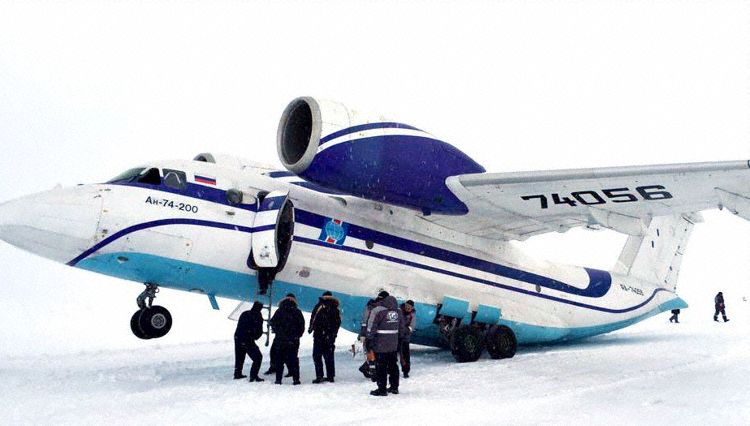
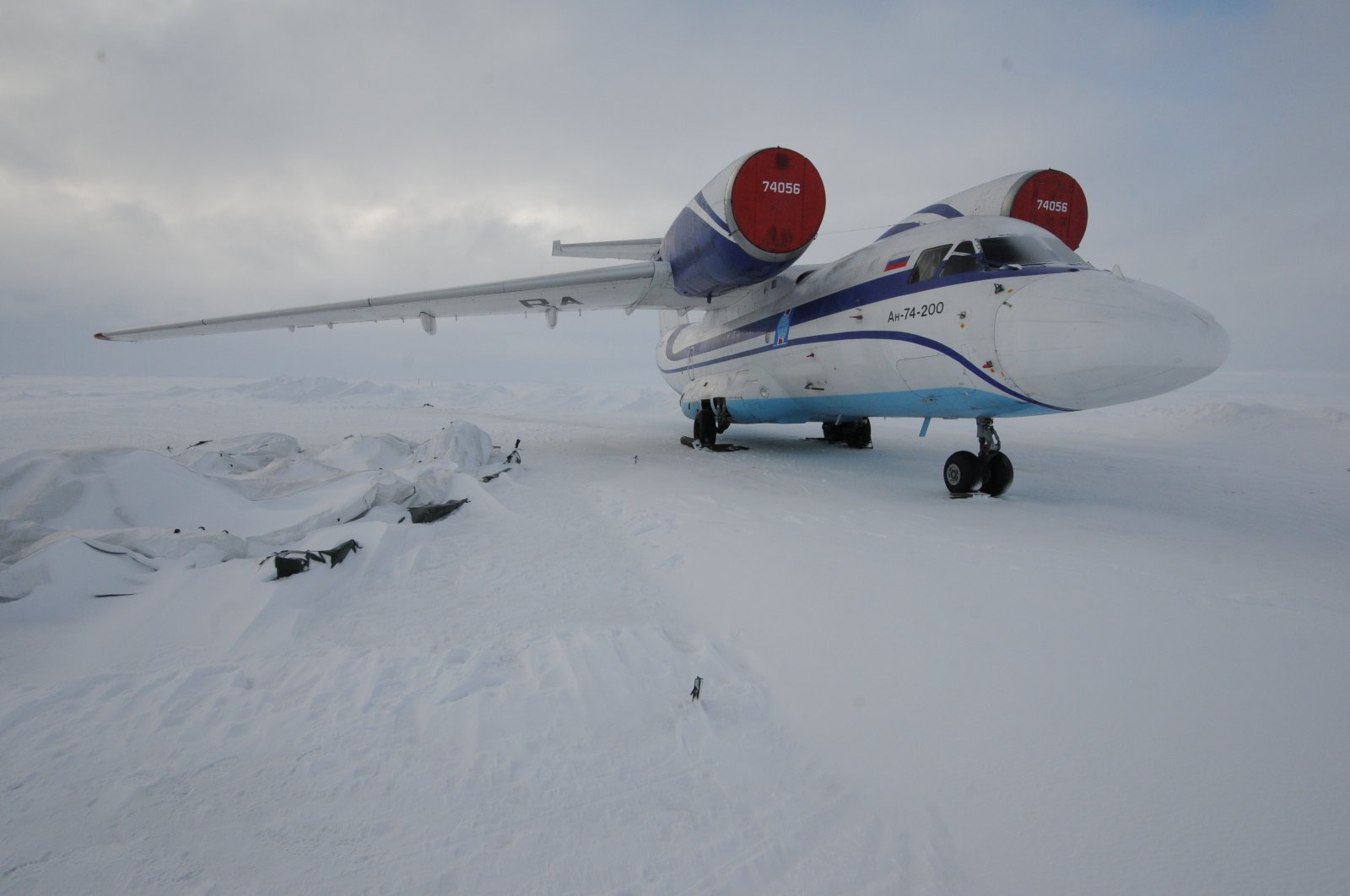
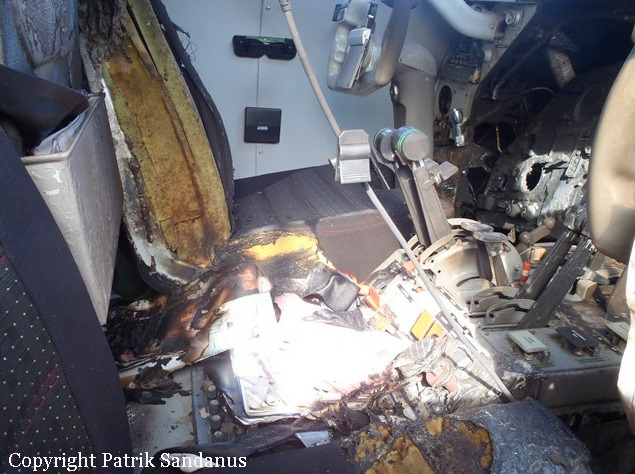
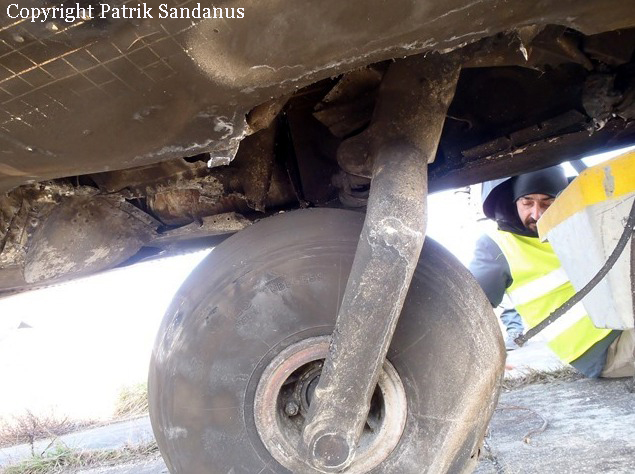
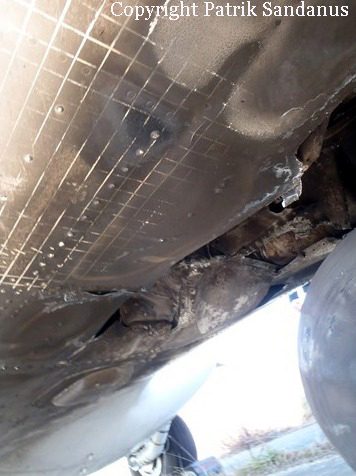
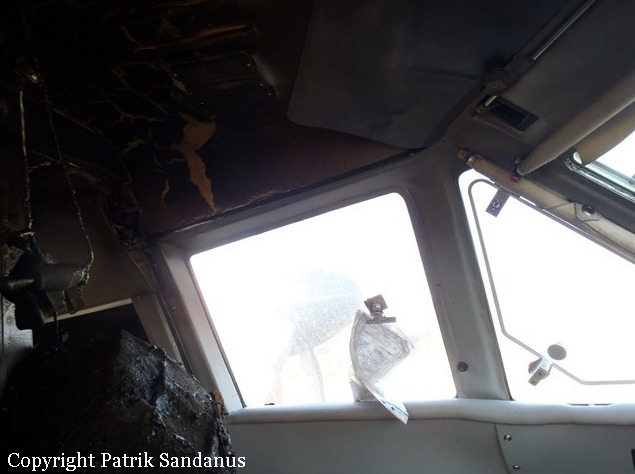
The approach to the Barneo Ice Station was completed in poor weather conditions. In low visibility, the aircraft landed hard with an acceleration of 2,4 g. This caused the right main gear to partially collapse and the aircraft came to rest in a nose up attitude on the icy runway. All 17 occupants evacuated safely and despite the fact the aircraft was slightly damaged, it was decided to abandon the aircraft that would not be repaired. An insurance claim was submitted 24APR2015 and the engines were removed. The aircraft drifted with the ice floe to the west then floe cracked between 26 and 27JUL2015, causing the aircraft to sank in the Arctic Ocean.
Probable cause:
Hard landing after the crew deployed the interceptors too early on approach.

Crash of an Airbus A320-211 in Halifax

Date & Time: Mar 29, 2015 at 0030 LT
Type of aircraft:
Operator:
Registration:
C-FTJP
Survivors:
Yes
Schedule:
Toronto – Halifax
MSN:
233
YOM:
1991
Flight number:
AC624
Country:
Crew on board:
5
Crew fatalities:
Pax on board:
133
Pax fatalities:
Other fatalities:
Total fatalities:
0
Captain / Total flying hours:
11765
Captain / Total hours on type:
5755.00
Copilot / Total flying hours:
11300
Copilot / Total hours on type:
6392
Aircraft flight hours:
75103
Circumstances:
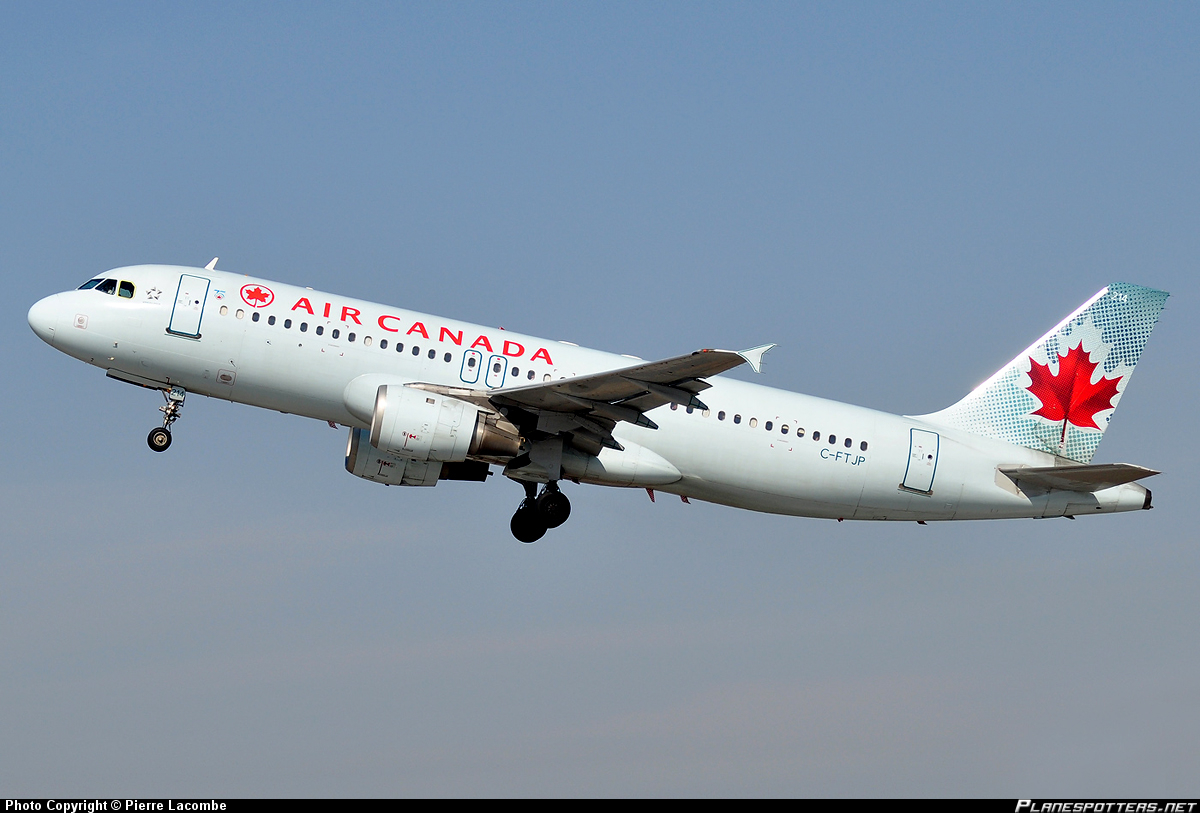
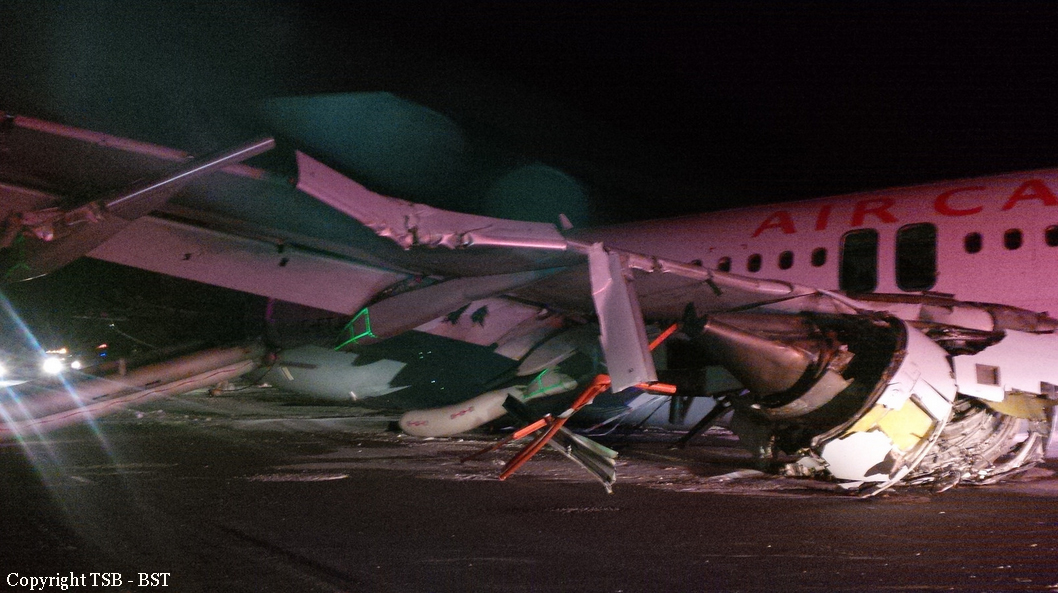
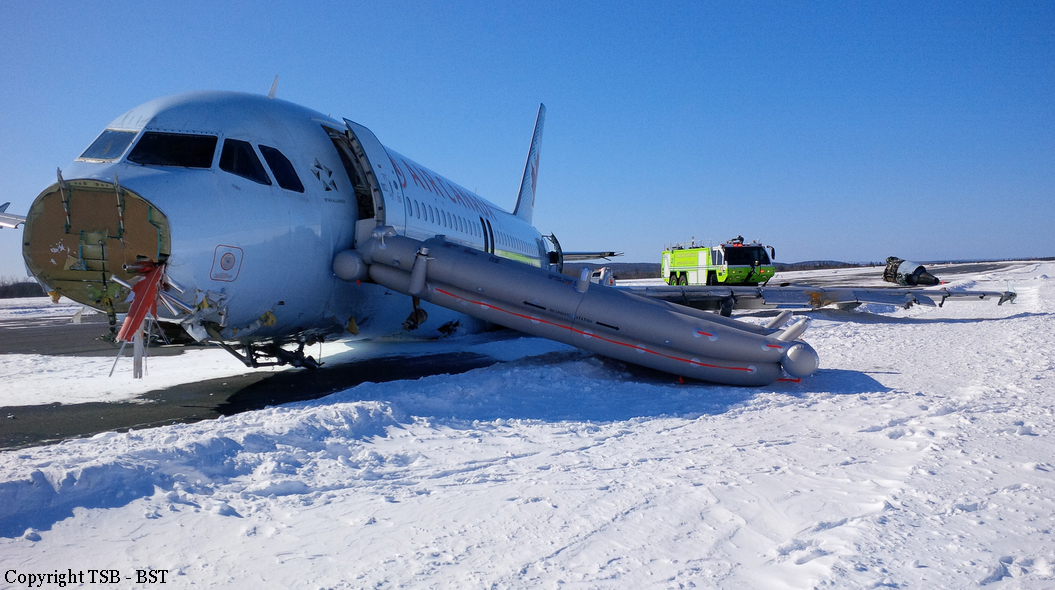
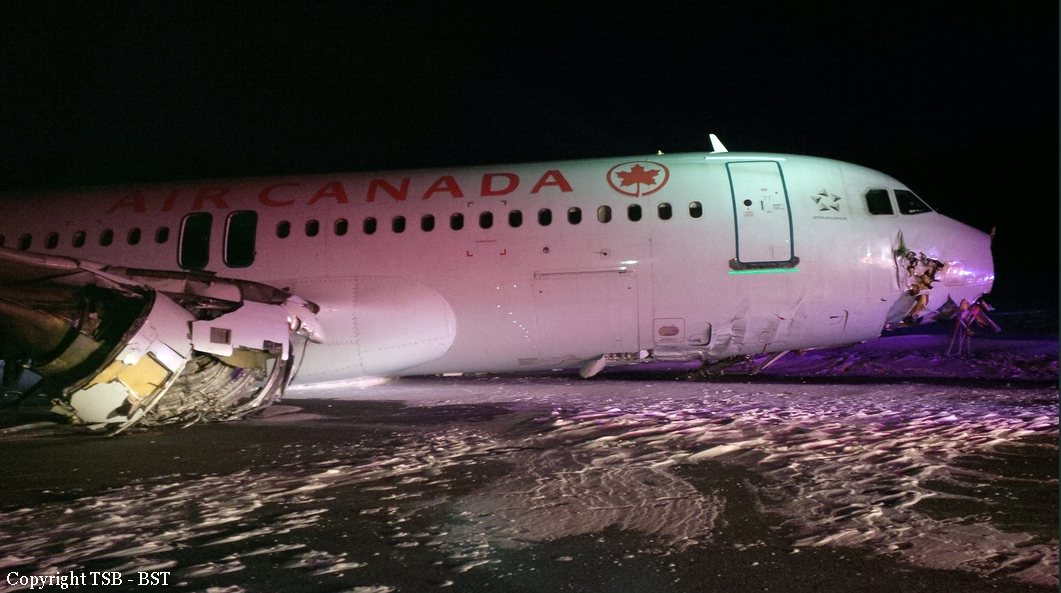
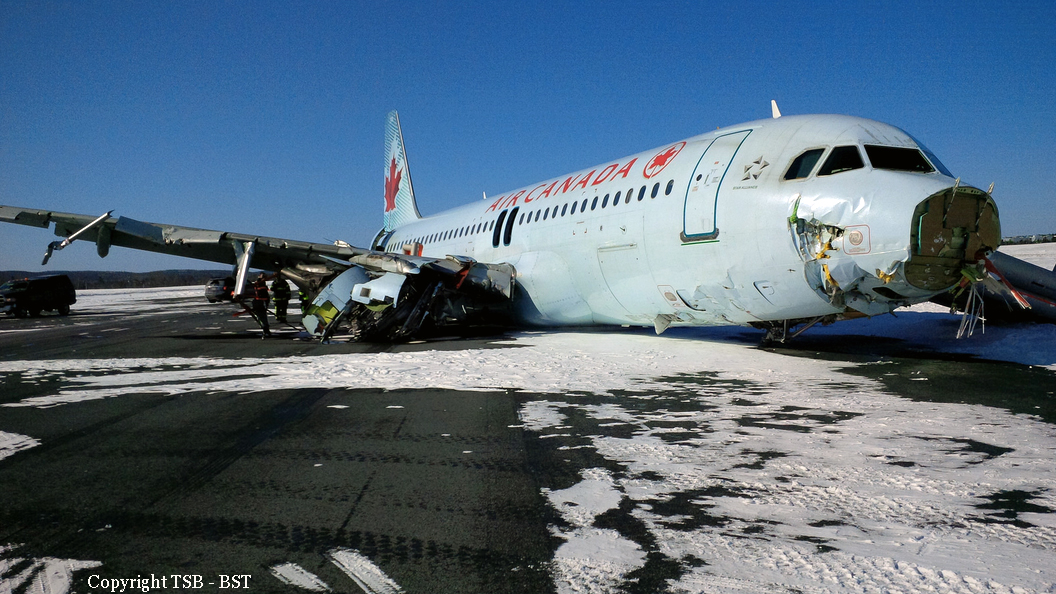
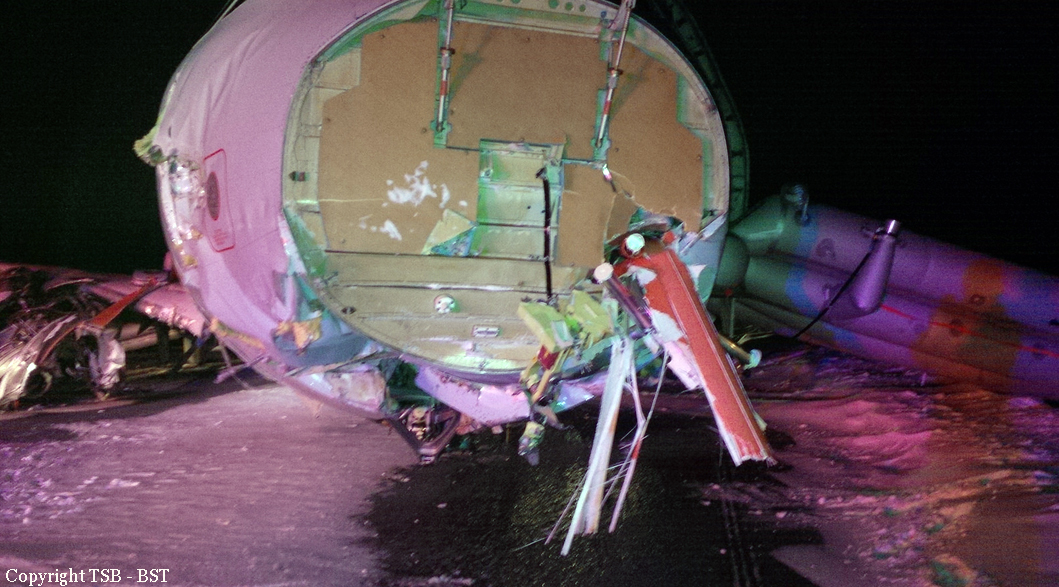
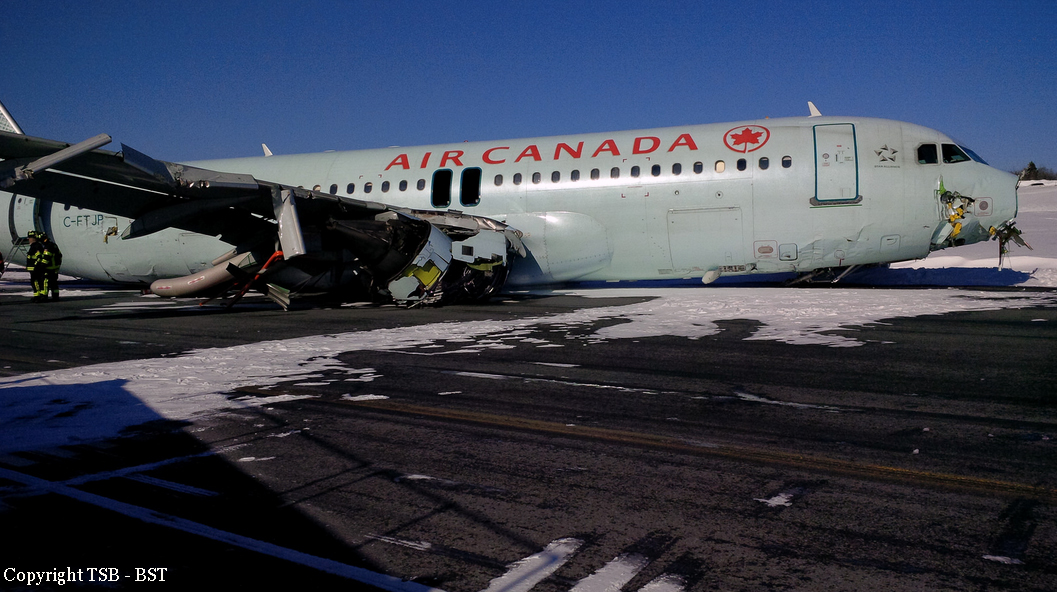
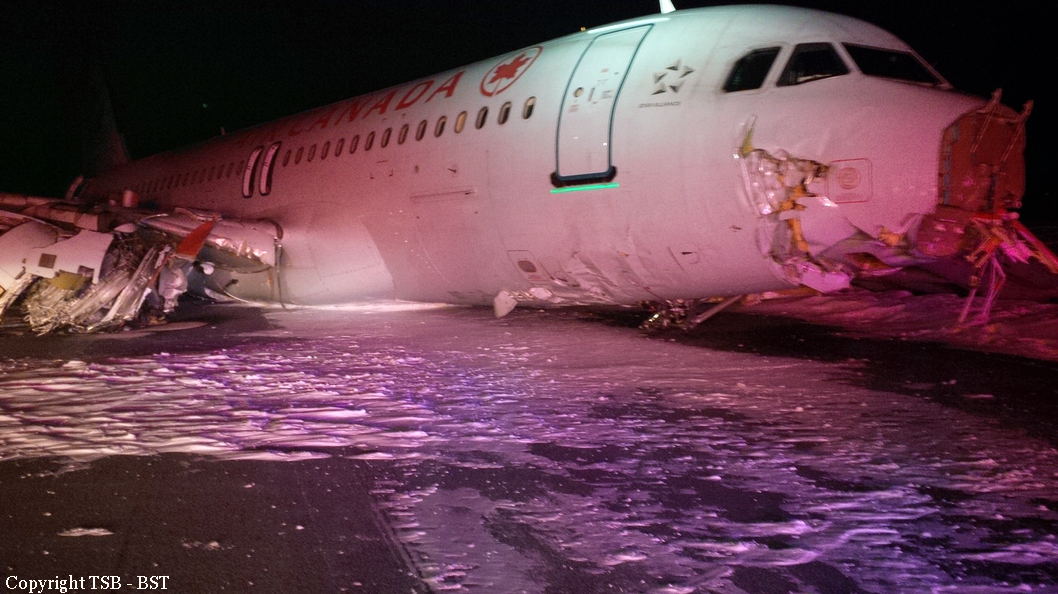
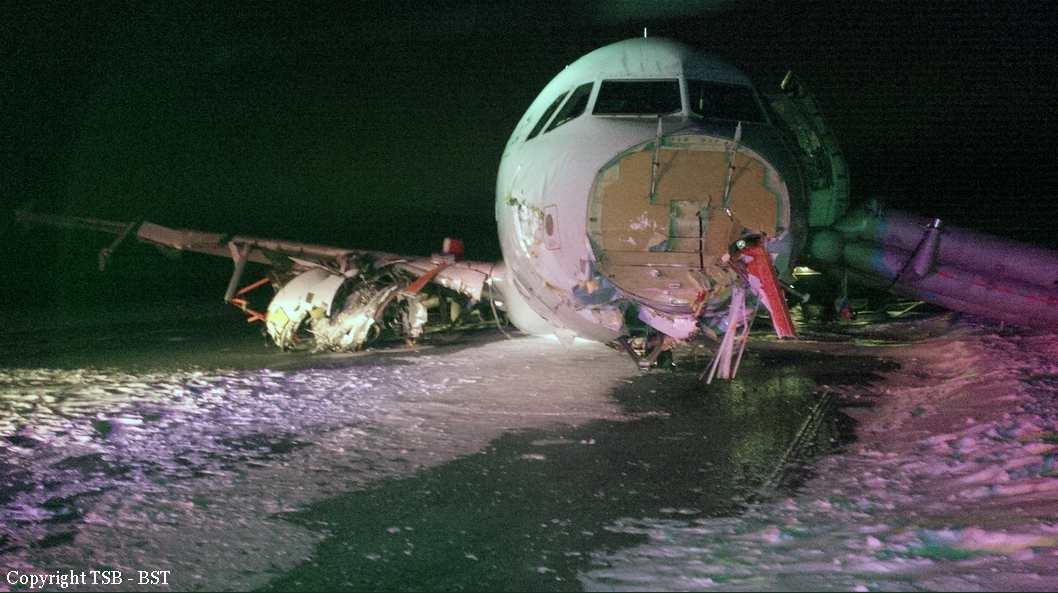
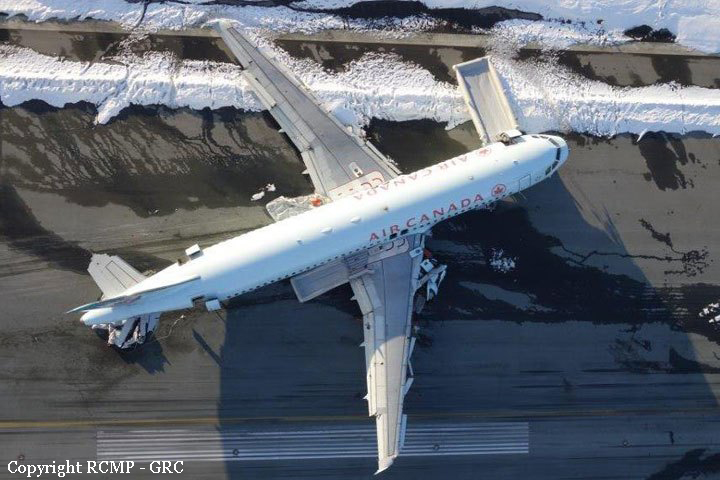
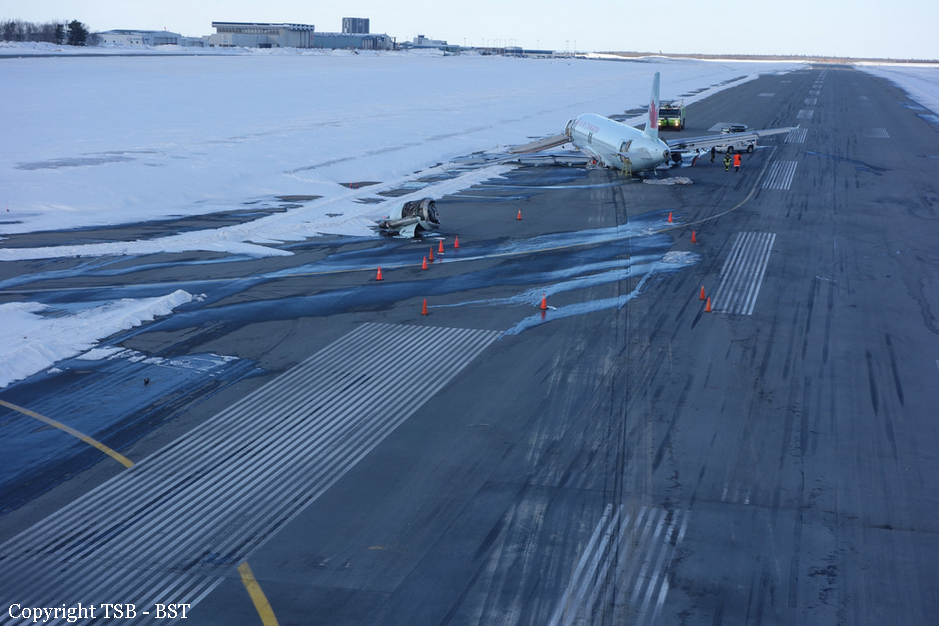
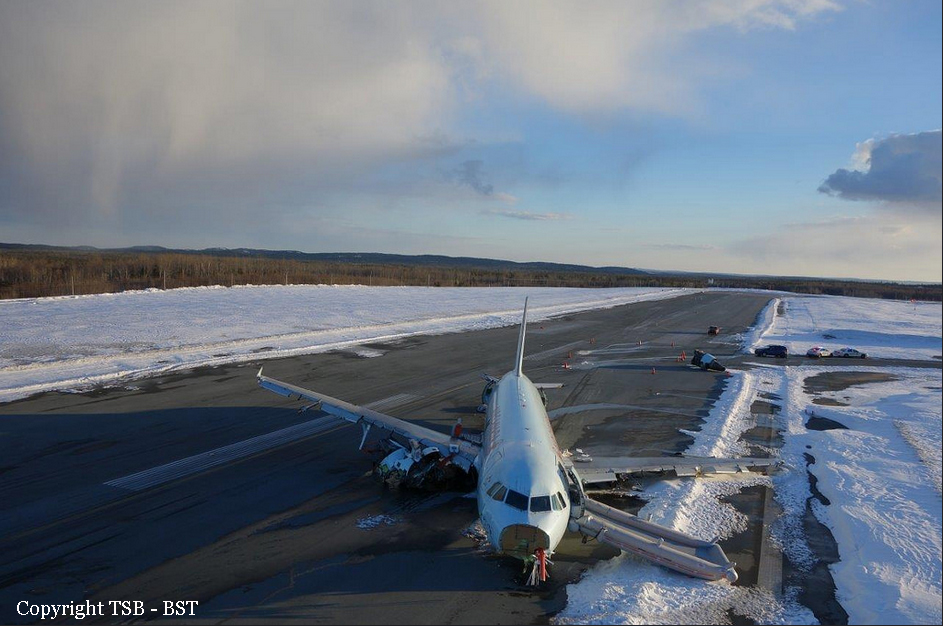
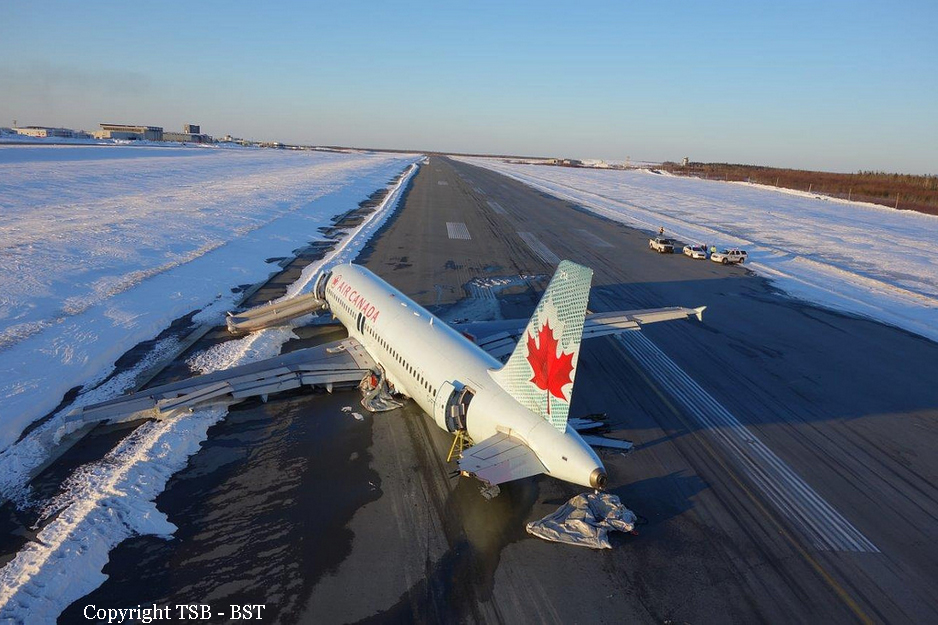
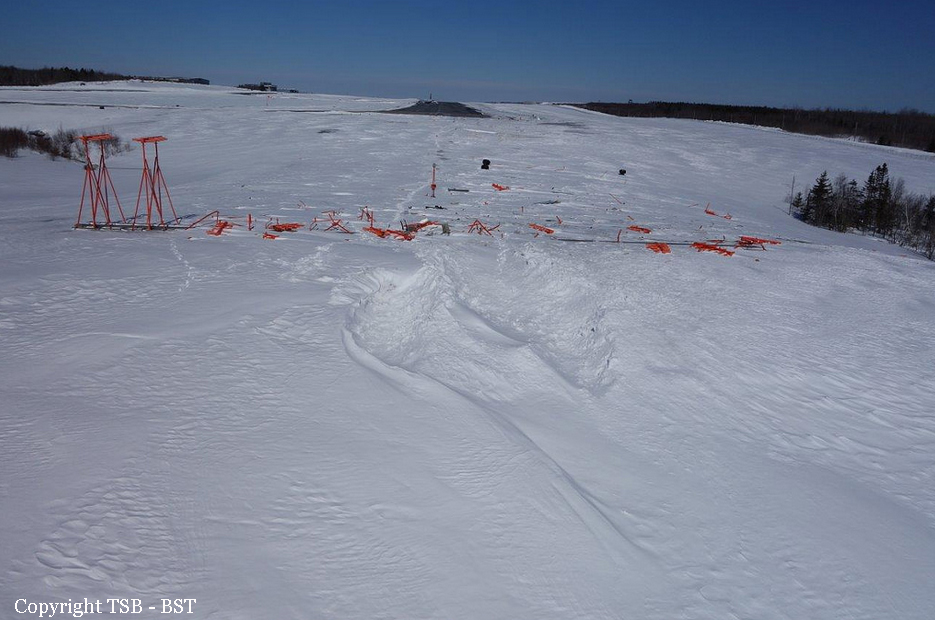
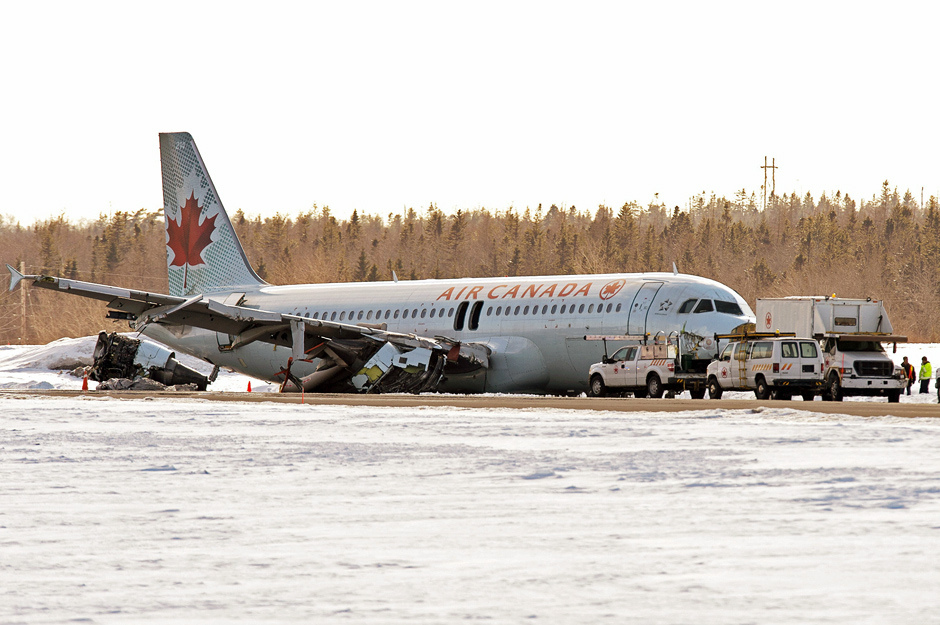
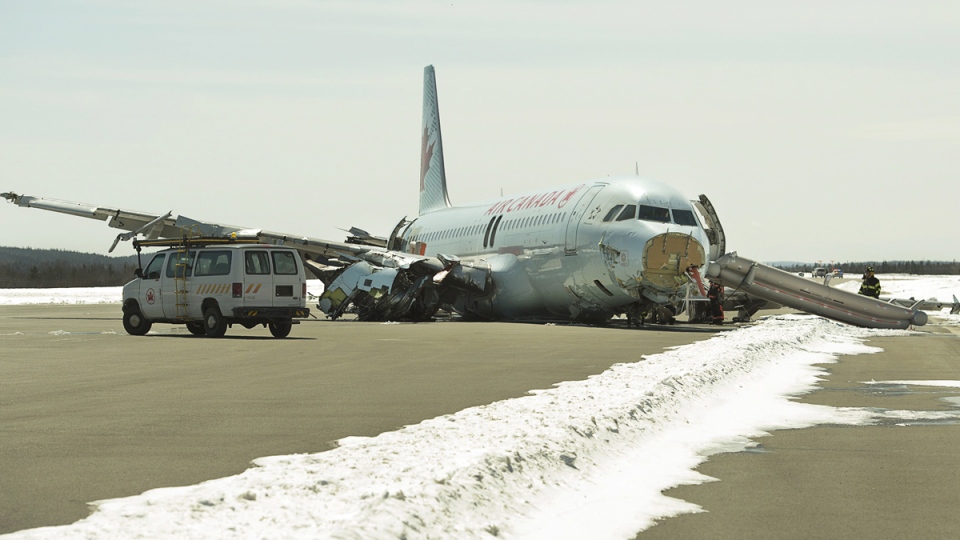
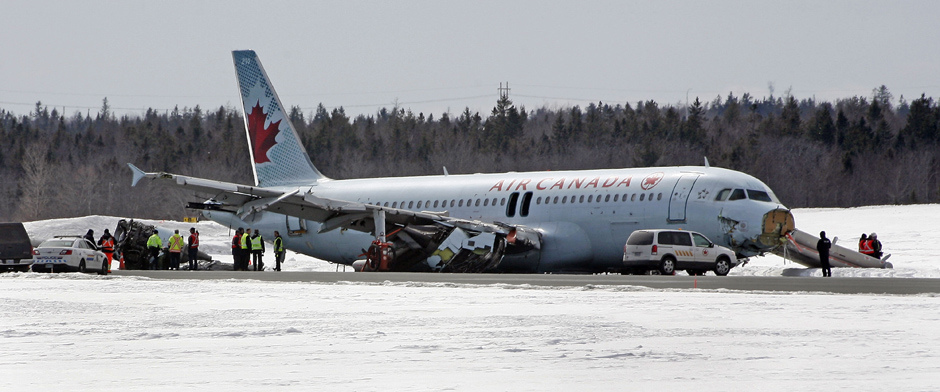
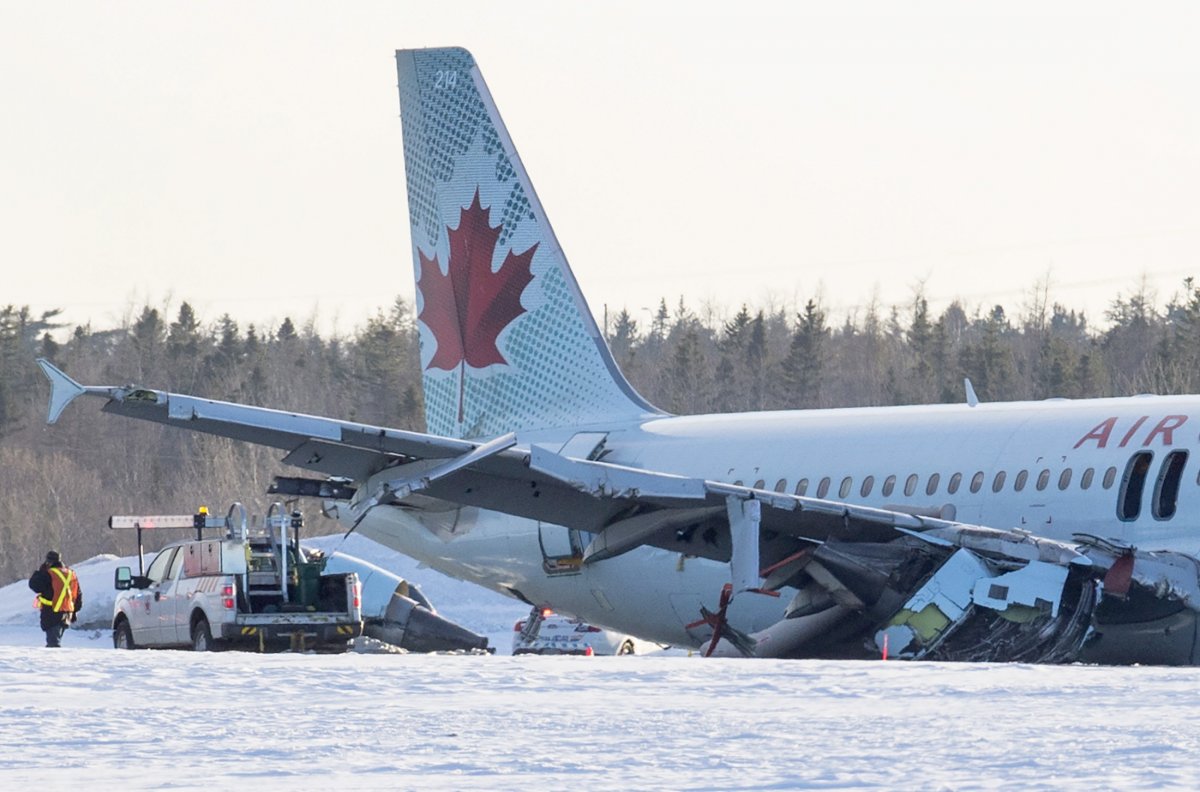
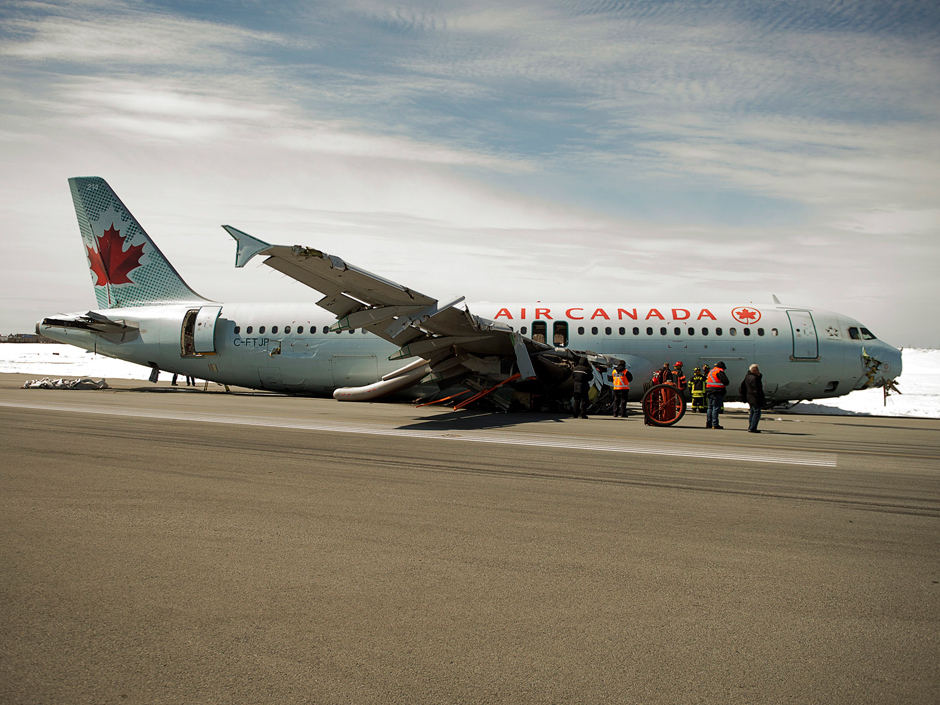
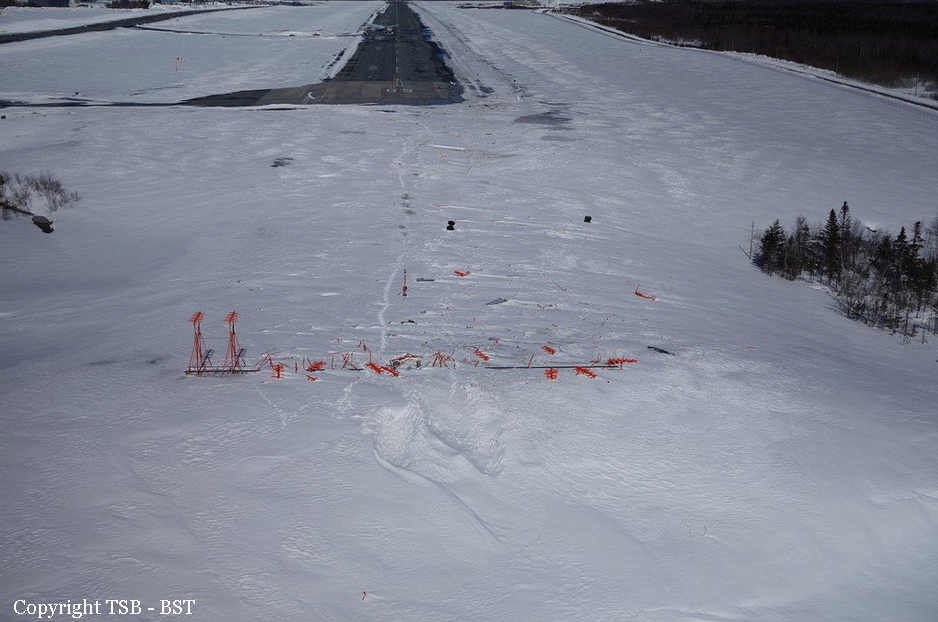
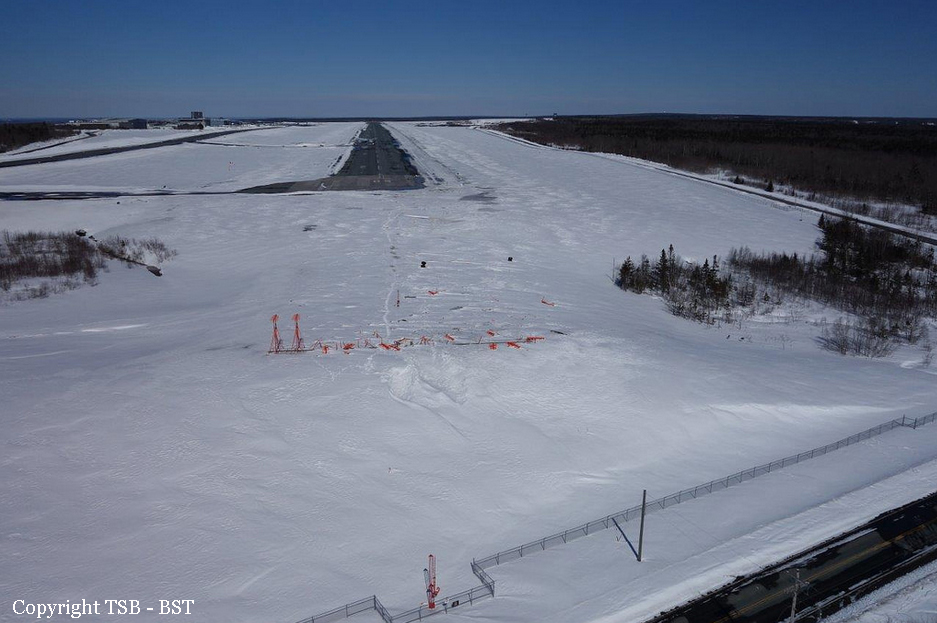
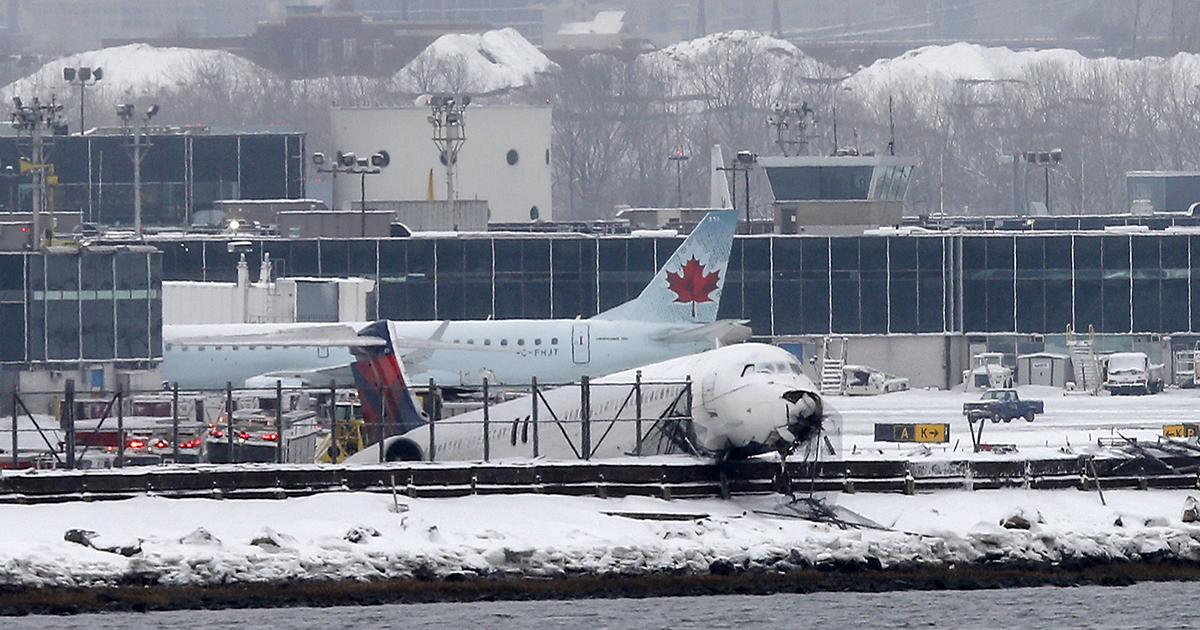
On 29 March 2015, an Air Canada Airbus Industrie A320-211 (registration C-FTJP, serial number 233), operating as Air Canada flight 624, was on a scheduled flight from Toronto/Lester B. Pearson International Airport, Ontario, to Halifax/Stanfield International Airport, Nova Scotia, with 133 passengers and 5 crew members on board. At approximately 0030 Atlantic Daylight Time, while conducting a non-precision approach to Runway 05, the aircraft severed power lines, then struck the snow-covered ground about 740 feet before the runway threshold. The aircraft continued airborne through the localizer antenna array, then struck the ground twice more before sliding along the runway. It came to rest on the left side of the runway, about 1900 feet beyond the threshold. The aircraft was evacuated; 25 people sustained injuries and were taken to local hospitals. The aircraft was destroyed. There was no post-impact fire. The emergency locator transmitter was not activated. The accident occurred during the hours of darkness.
Probable cause:
Findings as to causes and contributing factors:

1. Air Canada’s standard operating procedure (SOP) and practice when flying in flight path angle guidance mode was that, once the aircraft was past the final approach fix, the flight crews were not required to monitor the aircraft’s altitude and distance from the threshold or to make any adjustments to the flight path angle. This practice was not in accordance with the flight crew operating manuals of Air Canada or Airbus.
2. As per Air Canada’s practice, once the flight path angle was selected and the aircraft began to descend, the flight crew did not monitor the altitude and distance from the threshold, nor did they make any adjustments to the flight path angle.
3. The flight crew did not notice that the aircraft had drifted below and diverged from the planned vertical descent angle flight profile, nor were they aware that the aircraft had crossed the minimum descent altitude further back from the threshold.
4. Considering the challenging conditions to acquire and maintain the visual cues, it is likely the flight crew delayed disconnecting the autopilot until beyond the minimum descent altitude because of their reliance on the autopilot system.
5. The approach and runway lights were not changed from setting 4 to setting 5; therefore, these lights were not at their maximum brightness setting during the approach.
6. The system to control the airfield lighting’s preset selections for brightness setting 4 was not in accordance with the NAV CANADA Air Traffic Control Manual of Operations requirement for the omnidirectional approach lighting system to be at its brightest settings.
7. The limited number of visual cues and the short time that they were available to the flight crew, combined with potential visual illusions and the reduced brightness of the approach and runway lights, diminished the flight crew’s ability to detect that the aircraft’s approach path was taking it short of the runway.
8. The flight crew’s recognition that the aircraft was too low during the approach would have been delayed because of plan continuation bias.
9. The aircraft struck terrain approximately 740 feet short of the runway threshold, bounced twice, and then slid along the runway before coming to a rest approximately 1900 feet beyond the runway threshold.
10. At some time during the impact sequence, the captain’s head struck the glare shield because there were insufficient acceleration forces to lock the shoulder harness and prevent movement of his upper body.
11. The first officer sustained a head injury and serious injury to the right eye as a result of striking the glare shield because the automatic locking feature of the right-side shoulder-harness inertia reel was unserviceable.
12. A flight attendant was injured by a coffee brewer that came free of its mounting base because its locking system was not correctly engaged.
13. Because no emergency was expected, the passengers and cabin crew were not in a brace position at the time of the initial impact.
14. Most of the injuries sustained by the passengers were consistent with not adopting a brace position.

Findings as to risk:

1. If aircraft cockpit voice recorder installations do not have an independent power supply, additional, potentially valuable information will not be available for an investigation.
2. If Transport Canada does not consistently follow its protocol for the assessment of aeromedical risk and ongoing surveillance in applicants who suffer from obstructive sleep apnea, some of the safety benefit of medical examinations will be lost, increasing the risk that pilots will fly with a medical condition that poses a risk to safety.
3. If new regulations on the use of child-restraint systems are not implemented, lap-held infants and young children are exposed to undue risk and are not provided with a level of safety equivalent to that for adult passengers.
4. If passengers do not dress appropriately for safe travel, they risk being unprepared for adverse weather conditions during an emergency evacuation.
5. If the type of approach lighting system on a runway is not factored into the minimum visibility required to carry out an approach, in conditions of reduced visibility, the lighting available risks being less than adequate for flight crews to assess the aircraft’s position and decide whether or not to continue the approach to a safe landing.
6. If they do not incorporate a means of absorbing forces along their longitudinal axis, vertically mounted, non-structural beams (channels, tubes, etc.) in cargo compartments could penetrate the cabin floor when the fuselage strikes the water or ground, increasing the risk of aircraft occupants being injured or emergency egress being impaired.
7. If an aircraft manufacturer’s maintenance instructions do not include the component manufacturer’s safety-critical test criteria, the component risks not being maintained in an airworthy condition.
8. If there is a complete loss of electrical and battery power and the passenger address system does not have an independent emergency power supply, the passenger address system will be inoperable, and the initial command to evacuate or to convey other emergency instructions may be delayed, putting the safety of passengers and crew at risk.
9. If passengers retrieve or attempt to retrieve their carry-on baggage during an evacuation, they are putting themselves and other passengers at a greater risk of injury or death.
10. If passengers do not pay attention to the pre-departure safety briefings or review the safety-features cards, they may be unprepared to react appropriately in an accident, increasing their risk of injury or death.
11. If an organization’s emergency response plan does not identify all available transportation resources, there is an increased risk that evacuated passengers and crew will not be moved from an accident site in a timely manner.
12. If organizations do not practise transporting persons from an on-airport accident site, they may be insufficiently prepared to react appropriately to an actual accident, which may increase the time required to evacuate the passengers and crew.

Other findings:

1. The service director assessed the evacuation flow as good and determined that there was therefore no need to open the R1 door.
2. The flight attendants stationed in the rear of the aircraft noted no life-threatening hazards. Because no evacuation order had been given, and deplaned passengers and firefighters were observed walking near the rear of the aircraft in an area where the deployment of the rear slides may have created additional hazards or risks, the flight attendants determined that there was no requirement to open the L2 and R2 doors.
3. Although Transport Canada required the dual-exit drill to be implemented in training, it did not require all cabin crew to receive the training before an organization implemented the 1:50 ratio.
4. At the time of the accident, neither the service director nor the flight attendants had received the dual-exit training, nor were they aware of the requirement for such training in order for Air Canada to operate with the exemption allowing 1 flight attendant for each unit of 50 passengers.
5. Although Transport Canada had reviewed and approved Air Canada’s aircraft operating manual and the standard operating procedures (SOPs), it had not identified the discrepancy between the Air Canada SOPs and the Airbus flight crew operating manual regarding the requirement to monitor the aircraft’s vertical flight path beyond the final approach fix when the flight path angle guidance mode is engaged.
6. A discrepancy in the Halifax International Airport Authority’s standby generators’ control circuitry caused the 2 standby generators to stop producing power.
7. Air Canada’s emergency response plan for Halifax/Stanfield International Airport indicated that the airline was responsible for the transportation of passengers from an accident site.
8. Air Canada’s emergency response plan did not identify the airport’s Park’N Fly minibuses as transportation resources. 9. The Halifax International Airport Authority’s emergency response plan did not identify that the airport Park’N Fly mini-buses could be used to transport the uninjured passengers, nor did it provide instructions on when and how to request and dispatch any transportation resources available at the airport.
10. The Air Canada Flight Operations Manual did not identify that the required visual reference should enable the pilot to assess aircraft position and rate of change of position in order to continue the approach to a landing.
11. In Canada, the minimum visibility that is authorized by the operations specification for non-precision approaches does not take into account the type of approach lighting system installed on the runway.
12. It is likely that, during the emergency, a passenger activated the L1 door gust lock release pushbutton while trying to expedite his or her exit, which allowed the door to move freely.
13. The passenger seatbacks were dislodged because the shear pins had sheared, likely as a result of contact with passengers during the impact sequence or emergency egress.
14. Recovery of the uninjured passengers from the accident site was delayed owing to a number of factors, including the severe weather conditions; the failure of the airport’s 2 standby generators to provide backup power after the loss of utility power; the loss of the airport operations radio network; and the lack of arrangements for the dispatch of transportation vehicles until after emergency response services had advised that all passengers were evacuated and the site was all clear.
15. Given that the captain rarely used continuous positive airway pressure therapy, he would have been at risk of experiencing fatigue related to chronic sleep disruption caused by obstructive sleep apnea. However, there was no indication that fatigue played a causal or contributory role in this occurrence.
Final Report:

Crash of a Raytheon 390 Premier I in Blackpool

Date & Time: Mar 12, 2015 at 1148 LT
Type of aircraft:
Operator:
Registration:
G-OOMC
Survivors:
Yes
Schedule:
Avignon – Blackpool
MSN:
RB-146
YOM:
2005
Region:
Crew on board:
2
Crew fatalities:
Pax on board:
2
Pax fatalities:
Other fatalities:
Total fatalities:
0
Captain / Total flying hours:
3455
Captain / Total hours on type:
408.00
Circumstances:
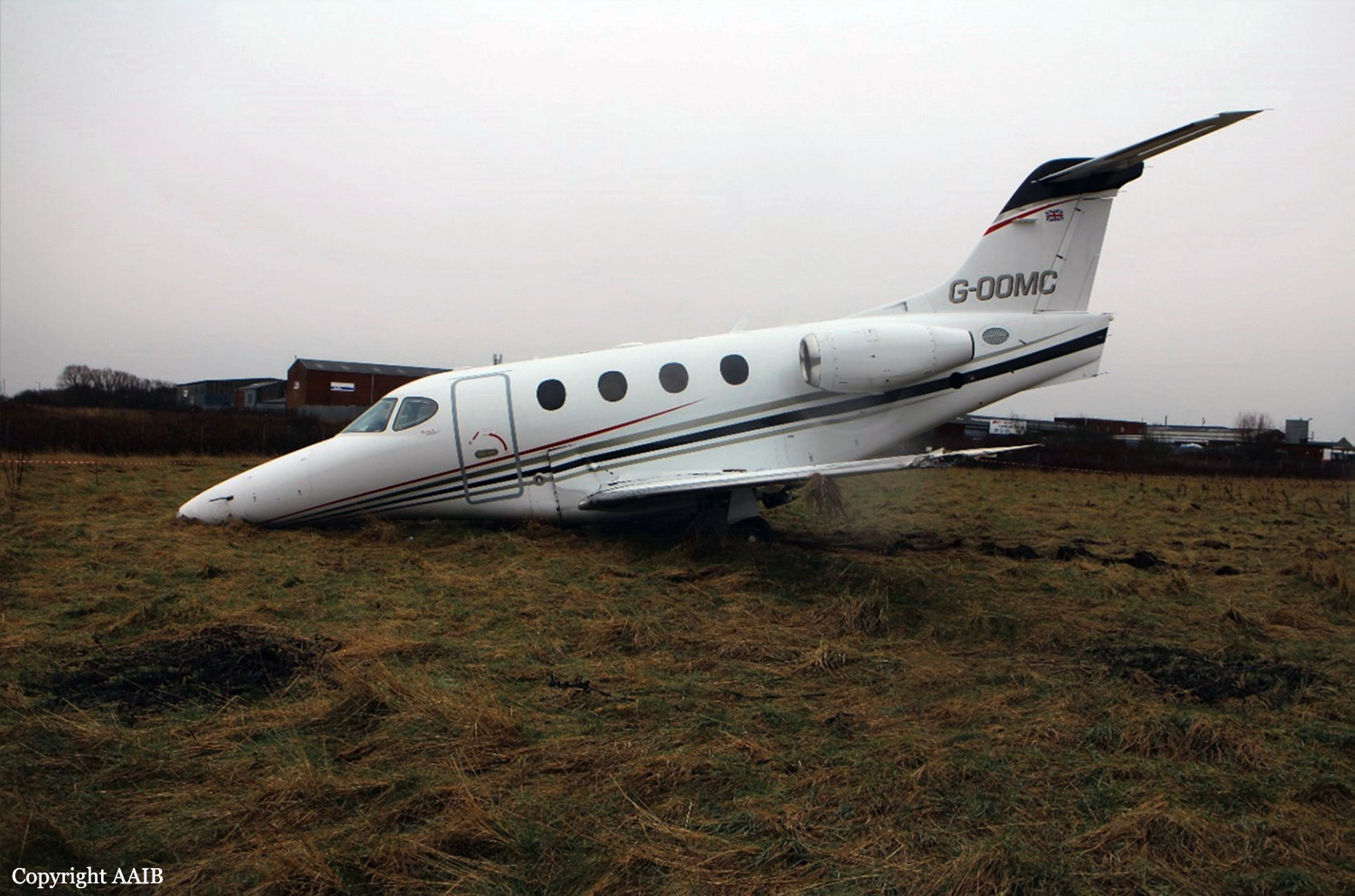
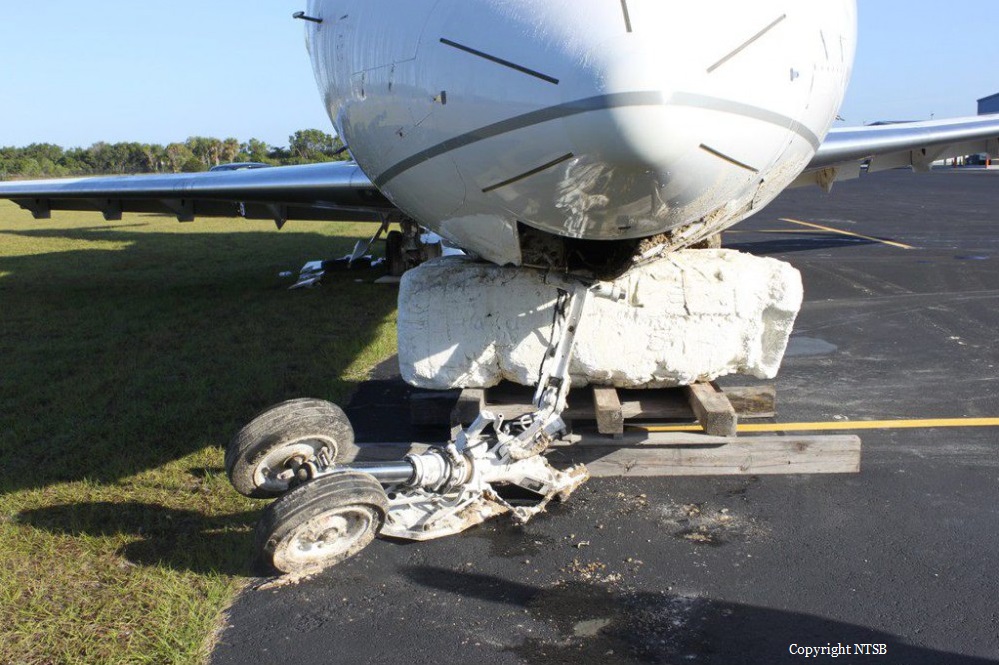
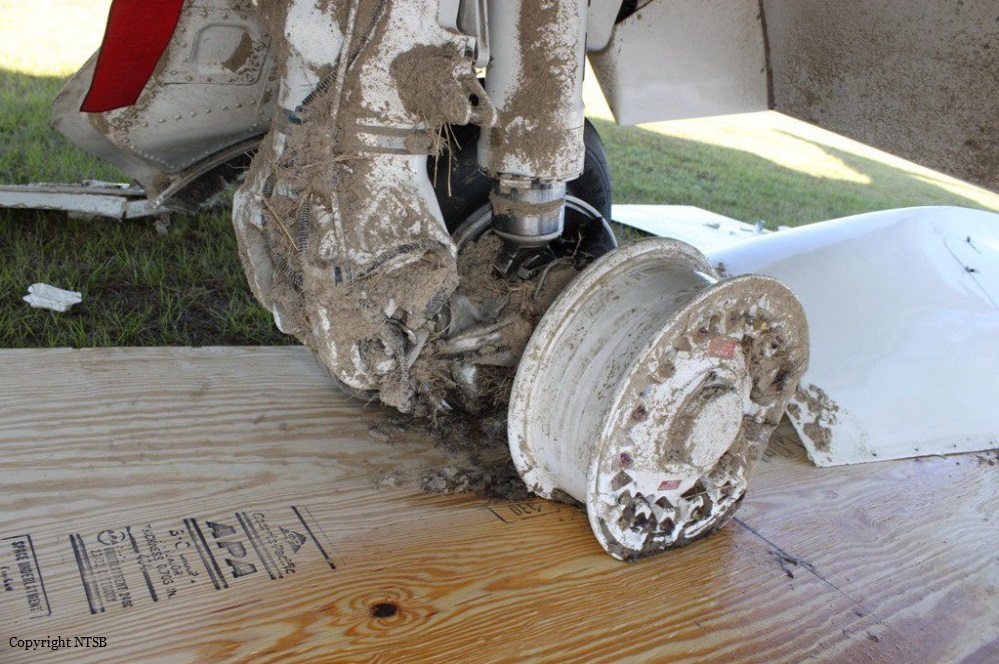
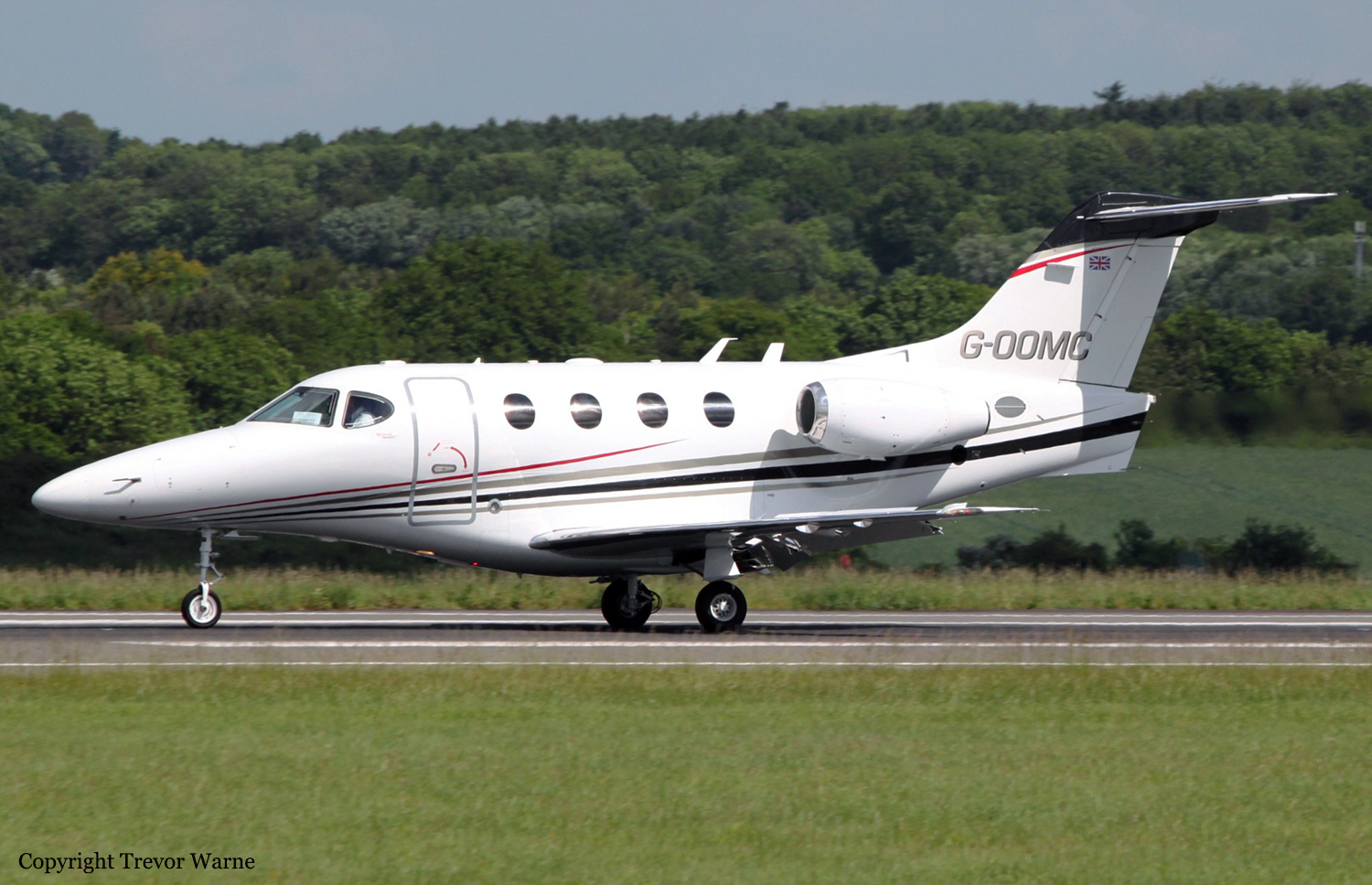
The aircraft planned to fly from Avignon Airport, France to Blackpool Airport, with two flight crew and two passengers. The co-pilot performed the external checks; this included checking the fluid level in the hydraulic reservoir, as stated in the ‘Pilot Checklist’. The aircraft was refuelled to 3,000 lb and, after the passengers boarded, it departed for Blackpool. The commander was the pilot flying (PF). The takeoff and cruise to Blackpool were uneventful. Prior to the descent the crew noted ATIS Information ‘Lima’, which stated: Runway 10, wind from 150° at 18 kt, visibility 9 km, FEW clouds at 2,000 ft aal, temperature 11°C, dew point 8°C, QNH 1021 hPa, runway damp over its whole length. The commander planned and briefed for the NDB approach to Runway 10, which was to be flown with the autopilot engaged. Whilst descending through FL120, the left, followed by the right, hydraulic low pressure cautions illuminated. Upon checking the hydraulic pressure gauge, situated to the left of the commander’s control column, the pressure was noted to be ‘cycling up and down’, but for the majority of the time it indicated about 2,800 psi (in the green arc). During this time the hydraulic low pressure cautions went on and off irregularly, with the left caution being on more often than the right. The co-pilot then actioned the ‘HYDRAULIC SYSTEM - HYDRAULIC PUMP FAILURE’ checklist. It stated that if the hydraulic pressure was a minimum of 2,800 psi, the flight could be continued. Just before the aircraft reached the Blackpool NDB, the commander commented “it’s dropping”, but he could not recall what he was referring to. This was followed by the roll fail and speed brk [brake] fail caution messages illuminating. The co-pilot then actioned the applicable checklists. These stated that the Landing Distances Required (LDR) would increase by approximately 65% and 21%, respectively. As the roll fail LDR increase was greater than that of the speed brk fail, the crew used an LDR increase of 65% which the co-pilot equated to 5,950 ft. Runway 10 at Blackpool has an LDA of 6,131 ft, therefore they elected to continue to Blackpool. The roll fail checklist stated that a ‘FLAPS UP’ landing was required. The co-pilot then calculated the VREF of 132 kt, including a 20 kt increment, as stipulated by the ‘FLAPS UP, 10, OR 20 APPROACH AND LANDING’ checklist. The commander then continued with the approach. At about 4 nm on final approach the co-pilot lowered the landing gear, in response to the commander’s request. About 8 seconds later the commander said “just lost it all”; referring to the general state of the aircraft. This was followed almost immediately by the landing gear unsafe aural warning, as the main landing gear was not indicating down and locked. Whilst descending through 1,000 ft, at just over 3 nm from the threshold, the commander asked the co-pilot to action the ‘ALTERNATE GEAR EXTENSION’ checklist. The commander then discontinued the approach by selecting ALT HOLD, increased engine thrust and selected a 500 ft/min rate of climb on the autopilot. However, a few seconds later, before the co-pilot could action the checklist, the main gear indicated down and locked. The commander disconnected the autopilot and continued the approach. The crew did not consider reviewing the ‘HYDRAULIC SYSTEM - HYDRAULIC PUMP FAILURE’ checklist as they had not recognised the symptoms of loss of hydraulic pressure. When ATC issued the aircraft its landing clearance the wind was from 140° at 17 kt. This equated to a headwind component of about 10 kt and a crosswind of about 12 kt. As the aircraft descended through 500 ft (the Minimum Descent Altitude (MDA) for the approach) at 1.5 nm from the threshold, the commander instructed the co-pilot to advise ATC that they had a hydraulic problem and to request the RFFS to be put on standby. There was a slight delay in transmitting this request, due to another aircraft on frequency, but the request was acknowledged by ATC. The aircraft touched down about 1,500 ft from the start of the paved surface at an airspeed of 132 kt and a groundspeed of 124 kt. When the commander applied the toe (power) brakes he felt no significant retardation. During the landing roll no attempt was made to apply the emergency brakes, as required in the event of a power brake failure. The co-pilot asked if he should try to operate the lift dump, but it failed to function, due to the lack of hydraulic pressure. At some point, while the aircraft was on the runway, the co-pilot transmitted a MAYDAY call to ATC. When an overrun appeared likely, the commander shut down the engines. The aircraft subsequently overran the end of the runway at a groundspeed of about 80 kt. The commander later commented that he was in a “state of panic” during the landing roll and was unsure whether or not he had applied the emergency brake. As the aircraft left the paved surface the commander steered the aircraft slightly right to avoid a shallow downslope to the left of runway’s extended centreline. The aircraft continued across the rough, uneven ground, during which the nose gear collapsed and the wing to fuselage attachments were severely damaged (Figure 1). Once it had come to a stop, he shut down the remaining aircraft systems. The passengers and crew, who were uninjured, vacated the aircraft via the entry/exit door and moved upwind to a safe distance. The RRFS arrived shortly thereafter.
Probable cause:
The crew carried out the reservoir level check procedure in accordance with the checklist prior to the flight and found it to be correct, as indicated by the test light not illuminating. This meant that there was at least 1.2 gals (4.5 litres) of fluid within the reservoir. Evidence of hydraulic leakage was only visible within the left engine nacelle. The crew reported fluctuating hydraulic pressure in the latter stages of the flight and intermittent l hyd press lo then r hyd press lo captions on the annunciator panel, the left more than the right. After they had selected the landing gear down the hydraulic pressure dropped completely. The pressure fluctuations suggest that the left pump in particular was struggling to maintain pressure due to cavitation and leakage. As the fluid in the system was gradually depleting, later shown by the fluid accumulation in the engine bay, the right hydraulic pump was also suffering cavitation, as indicated by the r hyd press lo indications. When the MLG was lowered the fluid taken in by the retraction jacks, which is estimated to be at least 4 pints (2.27 litres), further reduced the volume of hydraulic fluid. This resulted in more severe pump cavitation such that the pumps were not able to produce or maintain useable hydraulic pressure. It is likely that the fluid quantity became unviable as the landing gear reached the full extent of its travel, manifesting itself in a delay in getting the gear down and locked indication and the inboard doors not being able to complete their sequence and remaining open. The parking/emergency brake was not affected by the hydraulic system loss. Had a demand been made on the emergency brakes system during the landing it would have worked normally, albeit without anti-skid and a reduced retardation capability. Pump port cap failure The multiple-origin cracking found in the port cap by the laboratory testing had propagated from a thread root in the bore to the outer surface of the cap. It is not known how long the crack had been propagating for, but it is likely that the crack broke the surface of the cap relatively recently, allowing the leakage of fluid outwards under pressure from within the pump. The excessive pitting at the root of the thread is likely to have initiated the fatigue crack, with the thread root radius as a contributory factor. The load imparted into the thread by the compensator plug fitting places the thread under a constant tensile stress when the pump is operating, leading to the eventual fatigue failure.
Final Report:

Crash of a De Havilland DHC-8-402Q in Hubli

Date & Time: Mar 8, 2015 at 1915 LT
Operator:
Registration:
VT-SUA
Survivors:
Yes
Schedule:
Bangalore – Hubli
MSN:
4373
YOM:
2011
Flight number:
SG1085
Location:
Country:
Region:
Crew on board:
4
Crew fatalities:
Pax on board:
78
Pax fatalities:
Other fatalities:
Total fatalities:
0
Captain / Total flying hours:
7050
Captain / Total hours on type:
1850.00
Copilot / Total flying hours:
1343
Copilot / Total hours on type:
1083
Aircraft flight hours:
10224
Aircraft flight cycles:
9440
Circumstances:
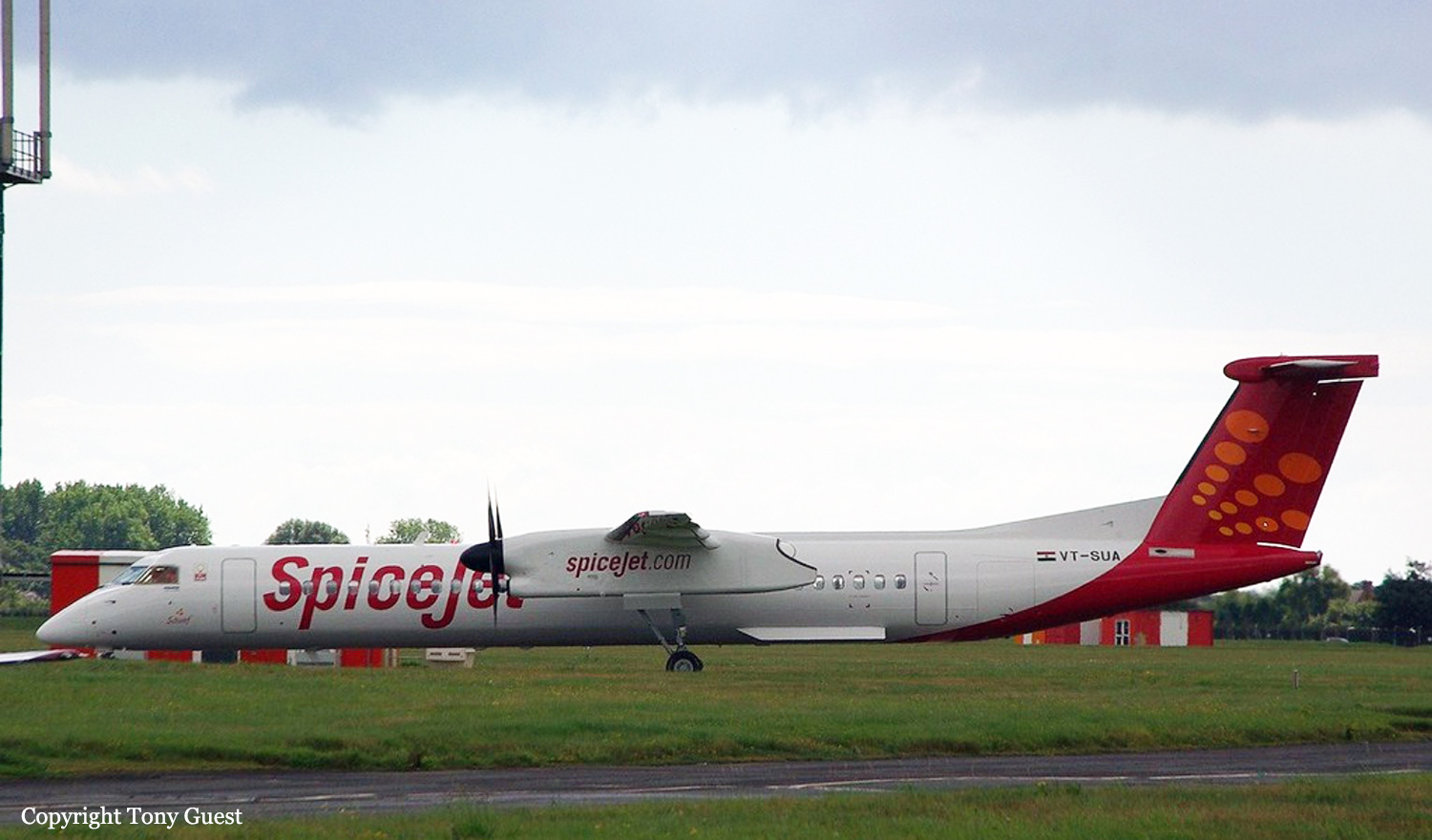
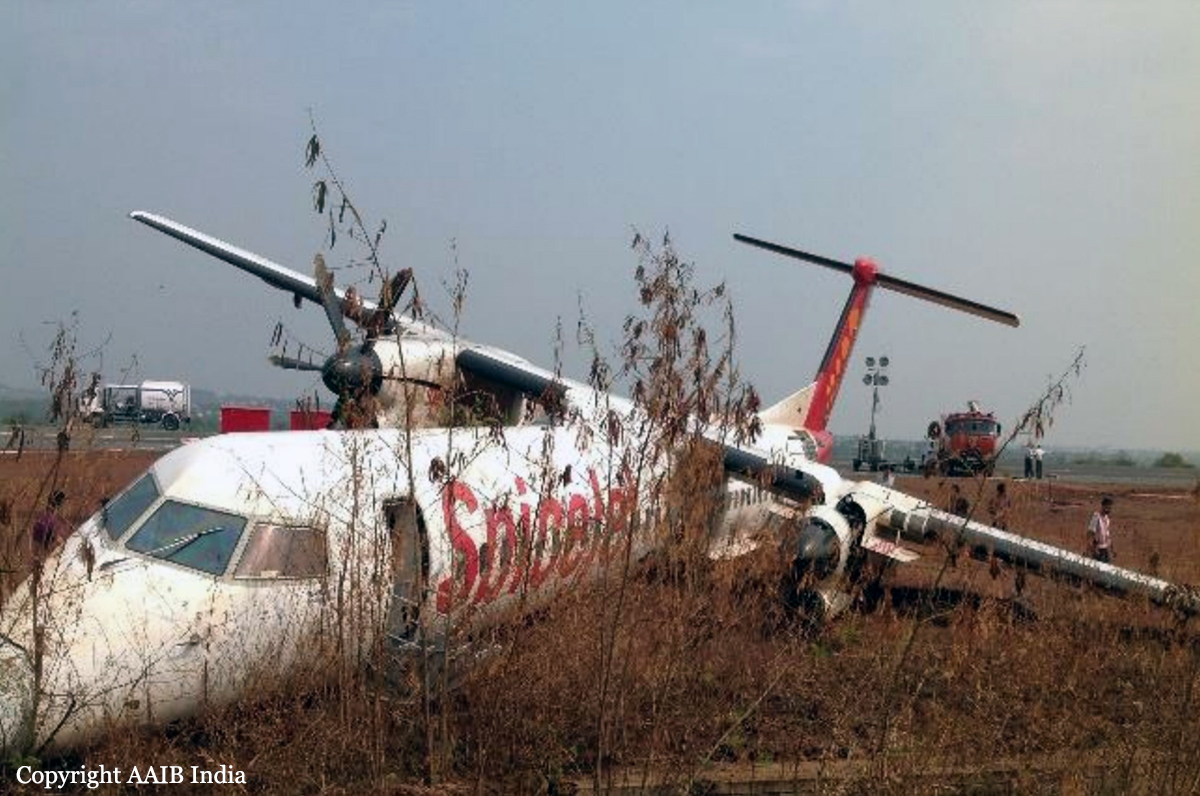
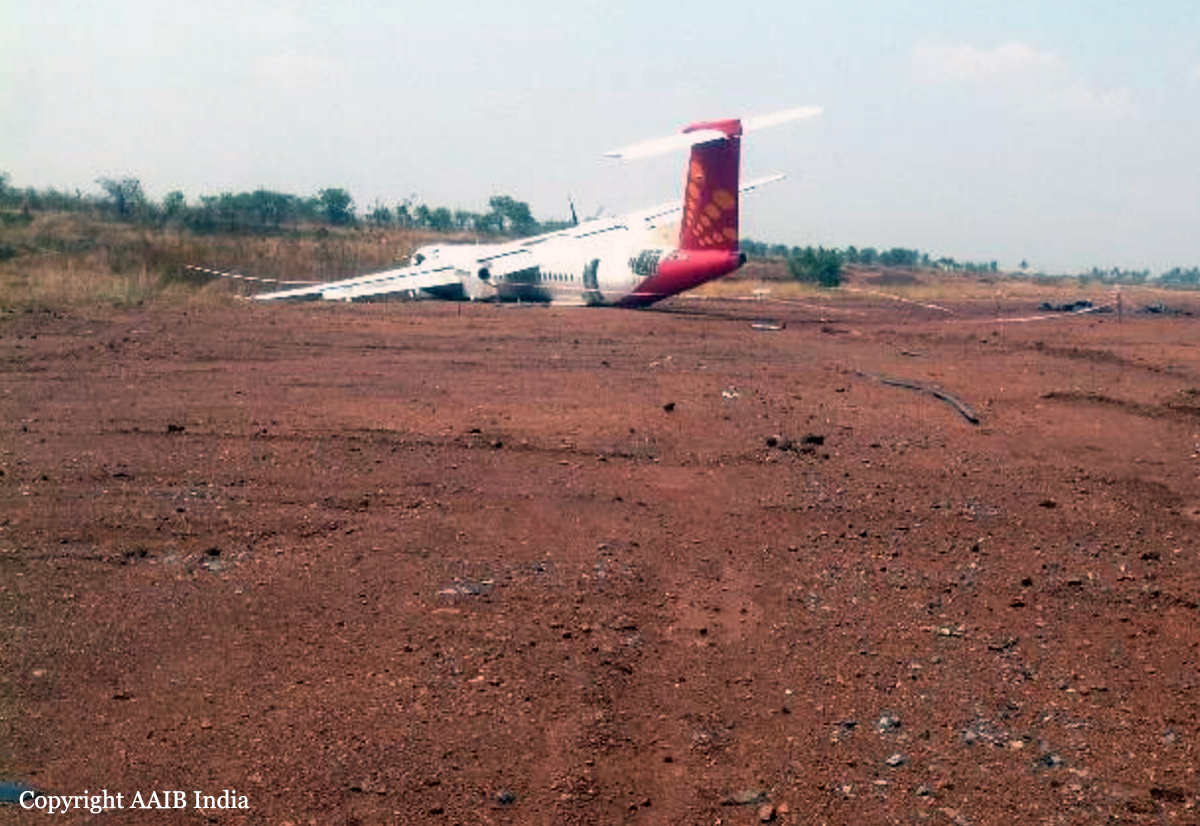
On 08.03.2015 M/s Spice Jet Ltd. Bombardier Q-400 aircraft VT-SUA, was operating a scheduled flight from Bangalore to Hubli under the command of ATPL license holder endorsed on type with duly qualified First Officer on type. There were 78 passengers and 4 crew members on board the aircraft. Previous to the accident flight, the aircraft VT-SUA had operated a flight Chennai – Bangalore with the same PIC. The flight was uneventful and there was no snag reported by the PIC on the completion of the flight. Subsequently the aircraft was scheduled for SG-1085, Bangalore - Hubli on 08.03.2015 at around 13:00 UTC. The aircraft took off from Bangalore at around 1300 UTC and the visibility reported for Hubli was 10 km. When the aircraft came in contact with Mangalore ATC, Mangalore ATC cleared aircraft direct to Hubli and informed heavy rains and thunder showers over Hubli with visibility 3000 m. Since the weather at Hubli had deteriorated, the PIC reduced aircraft speed for reassuring the flight parameters. As there is no refueling facility available at Hubli, the sector is a tankering sector hence the aircraft had enough fuel for holding. While approaching into Hubli the pilot requested latest weather from ATC Hubli. At around 60 nm from Hubli, the weather reported by ATC Hubli was heavy rain and visibility 4000 meters. The ATC cleared aircraft for NDB approach runway 26, however the PIC preferred to carry out VOR DME trial procedure for runway 26. The runway condition was neither asked by the cockpit crew nor intimated by the ATC. The descent was commenced and about 25 nm short of Hubli, ATC again advised visibility has reduced to 3000 m due heavy rain and thunderstorm. Thereafter the crew decided to hold over Hubli until the weather improves. 20 minutes into holding, the ATC again informed that visibility has improved to 4000m in moderate rain. Subsequently descent was requested by the pilot for runway 26. The PIC stated that he had established visual reference with runway at about 6 nm on the final approach course. The crew also selected vipers on short finals to have a better visibility. The aircraft landed normally. The PIC had stated that after touch down and reducing power to DISC, as he was concentrating on the far end of the runway as the runway was wet, he did not realize that the aircraft was drifting to the left of the center line. He further mentioned that he selected full reverse on both the engines to maintain the aircraft on the center line however the aircraft veered toward the left side of the runway and in the process overrun the runway edge light followed by LH landing gear collapsed. After the left landing gear collapsed the left propeller blades hit the runway surface and sheared off from the root attachment. The PIC maneuvered the aircraft however the nose wheel tyre failed under over load conditions and the nose landing gear collapsed and the aircraft belly came in contact with the runway surface. Subsequently, the aircraft exited the runway on the left side on Kutcha and came to the final stop at round 52 meters away from the runway center line. The cockpit crew switched off the engines and the electrical power supply and cockpit door and announced evacuation. The cabin crew opened and the cabin doors on the right for evacuation. The ATC had alerted the fire services and the fire vehicles reached the aircraft after it came to final halt position. The fire personnel also assisted in the safe evacuation of all the passengers from the RH side. There was no injury to any of the occupants on board the aircraft. There was no postaccident fire.
Probable cause:
Loss of visual cues after touch down in inclemental weather conditions resulted in veering of the aircraft towards left of the centerline leading to runway excursion and accident.
Following are the contributory factors:
1. Inappropriate handling technique of the aircraft controls by the PIC to maintain the directional control of the aircraft after landing.
2. Non-standards callouts by the first officer to correct situation after landing.
3. Impact of the landing gear with the non-frangible erected runway edge light resulted in retraction of the same.
4. At the time of the accident DGCA O.M. No. AV.15026/006/92- AS dated 3rd February 1992 was in force, which dictated examiners and instructors of the operators only to carry out trial procedures in VMC and during Daytime only. M/s Spice jet instructions to the flight crew did not reflect the same and allowed flight crew with less experience & below VMC flight conditions to carry out trial procedures. This may have contributed to the accident.
Final Report:

Crash of a Rockwell 500U Shrike Commander in Badu Island

Date & Time: Mar 8, 2015 at 1230 LT
Operator:
Registration:
VH-WZV
Flight Phase:
Survivors:
Yes
Schedule:
Badu Island - Horn Island
MSN:
500-1656-11
YOM:
1966
Country:
Region:
Crew on board:
1
Crew fatalities:
Pax on board:
5
Pax fatalities:
Other fatalities:
Total fatalities:
0
Circumstances:
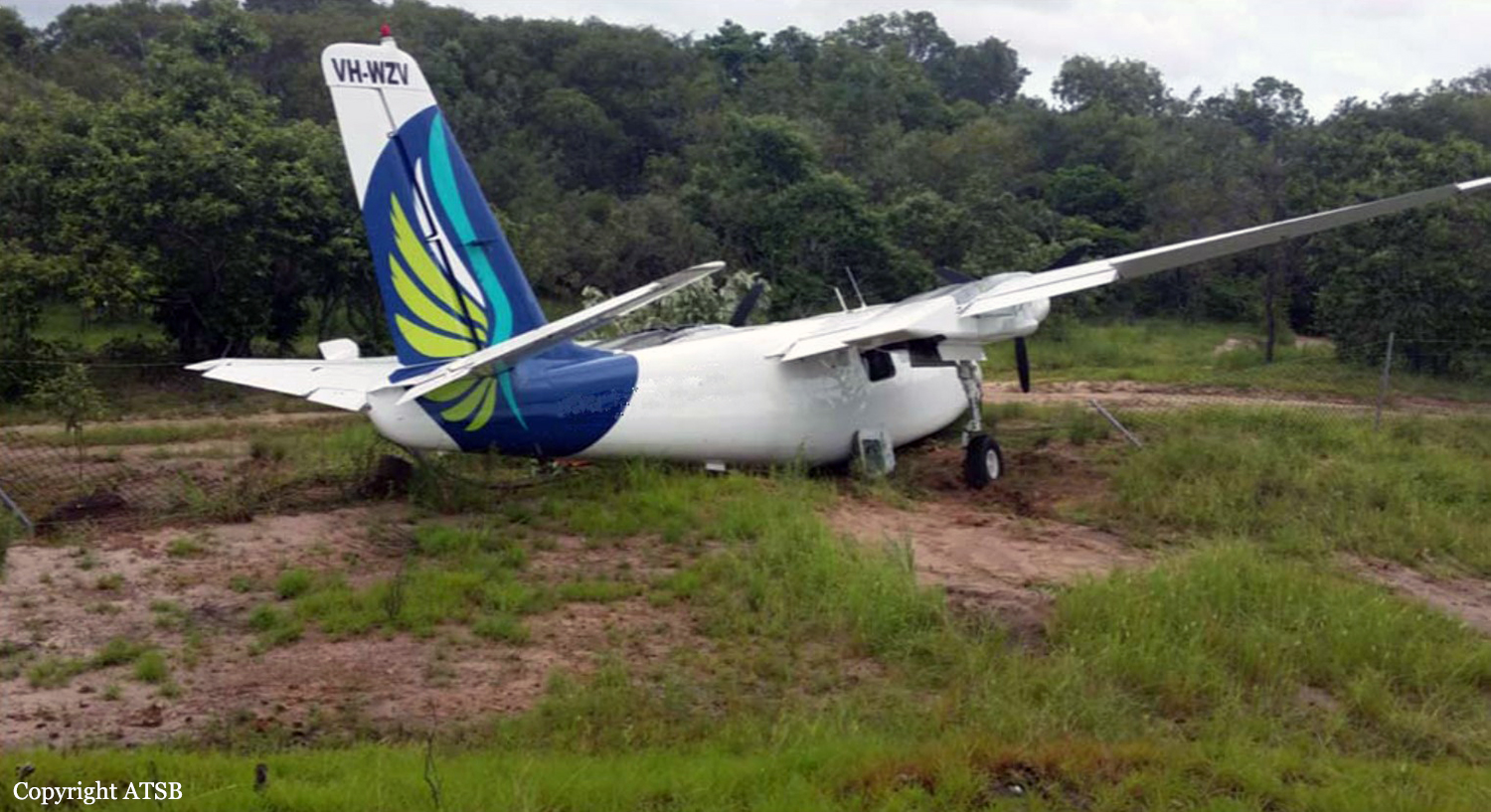
On 8 March 2015, the pilot of an Aero Commander 500 aircraft, registered VH-WZV, prepared to conduct a charter flight from Badu Island to Horn Island, Queensland, with five passengers. The aircraft had been refuelled earlier that day at Horn Island, where the pilot conducted fuel drains with no contaminants found. He had operated the aircraft for about 2 hours prior to landing at Badu Island with no abnormal performance or indications. At about 1330 Eastern Standard Time (EST), the pilot started the engines and conducted the standard checks with all indications normal, obtained the relevant clearances from air traffic control, and taxied for a departure from runway 30. As the pilot lined the aircraft up on the runway centreline at the threshold, he performed a pre-take-off safety self-brief and conducted the pre-takeoff checks. He then applied full power, released the brakes and commenced the take-off run. All engine indications were normal during the taxi and commencement of the take-off run. When the airspeed had increased to about 80 kt, the pilot commenced rotation and the nose and main landing gear lifted off the runway. Just as the main landing gear lifted off, the pilot detected a significant loss of power from the left engine. The aircraft yawed to the left, which the pilot counteracted with right rudder. He heard the left engine noise decrease noticeably and the aircraft dropped back onto the runway. The pilot immediately rejected the take-off; reduced the power to idle, and used rudder and brakes to maintain the runway centreline. The pilot initially assessed that there was sufficient runway remaining to stop on but, due to the wet runway surface, the aircraft did not decelerate as quickly as expected and he anticipated that the aircraft would overrun the runway. As there was a steep slope and trees beyond the end of the runway, he steered the aircraft to the right towards more open and level ground. The aircraft departed the runway to the right, collided with a fence and a bush resulting in substantial damage. The pilot and passengers were not injured.
Final Report:

Crash of a Let L-410UVP-E20 in Ancona

Date & Time: Mar 5, 2015 at 1930 LT
Type of aircraft:
Operator:
Registration:
E7-WDT
Flight Type:
Survivors:
Yes
Schedule:
Sarajevo – Ancona
MSN:
91 26 15
YOM:
1991
Flight number:
RAC9002
Location:
Country:
Region:
Crew on board:
3
Crew fatalities:
Pax on board:
0
Pax fatalities:
Other fatalities:
Total fatalities:
0
Circumstances:
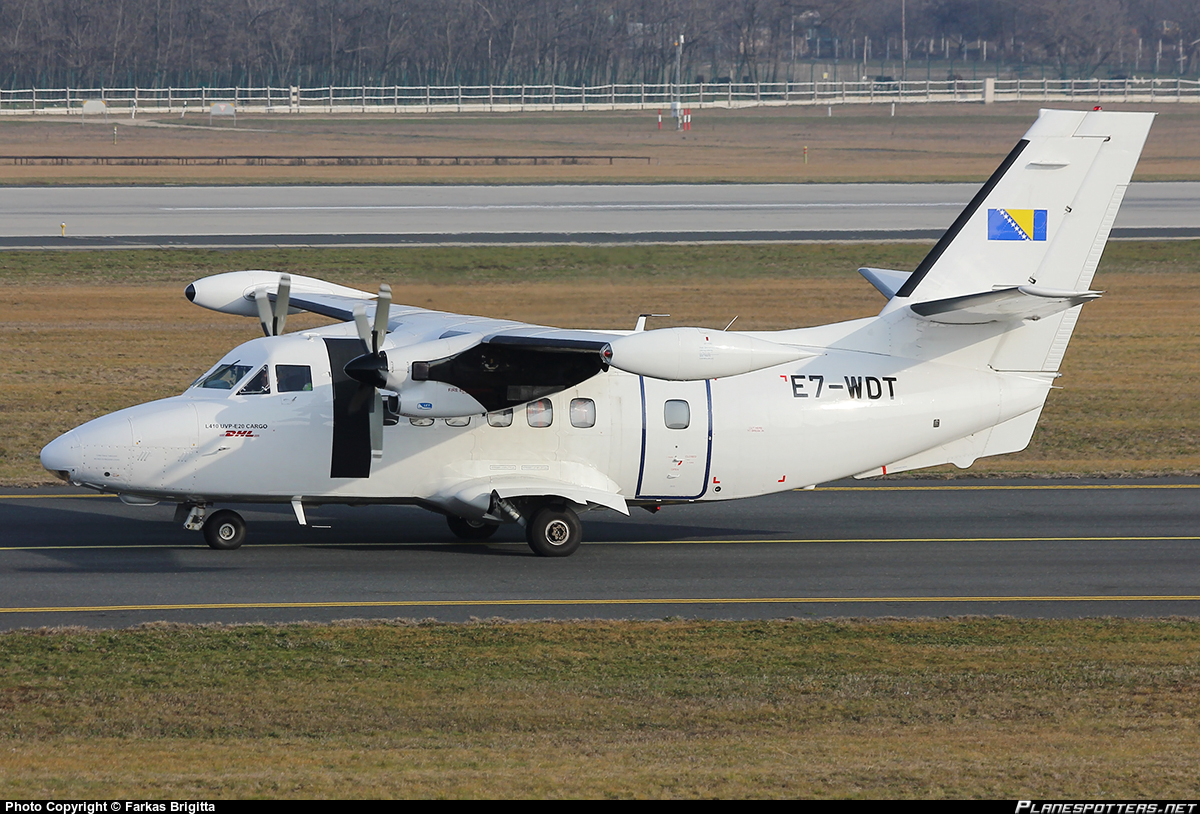
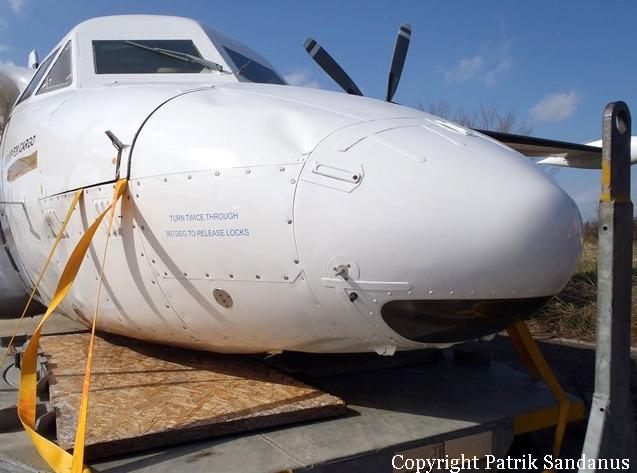
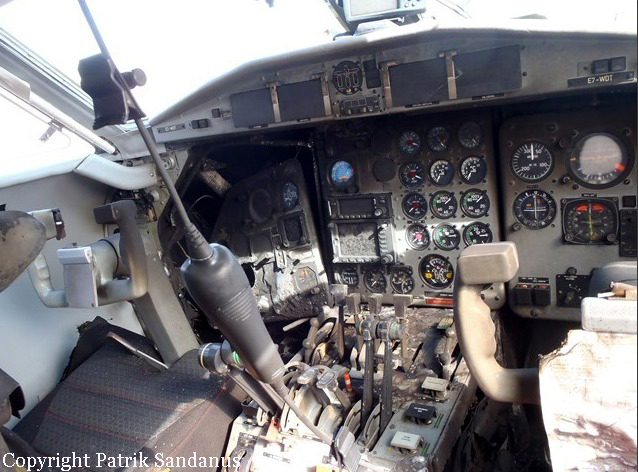
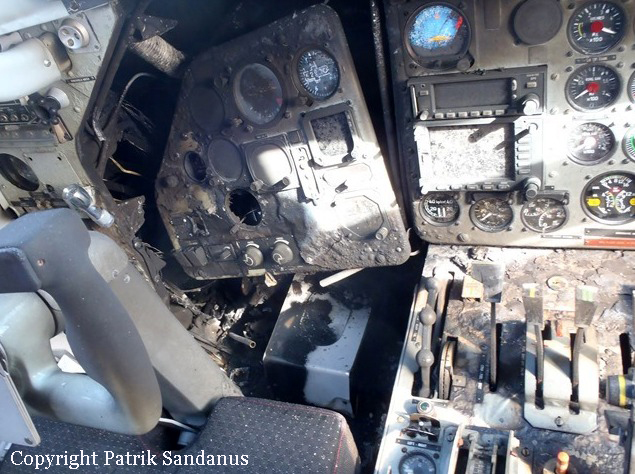
The twin engine aircraft departed Sarajevo Airport on a cargo flight to Ancona, carrying three crew members and a load of various goods. On approach to Ancona-Falconara Airport, the crew encountered strong winds. Upon touchdown on runway 04, the nose gear collapsed. The aircraft skidded for few dozen metres before coming to rest, bursting into flames. All three occupants escaped uninjured while the aircraft was damaged beyond repair due to severe damages in the cockpit area due to fire.

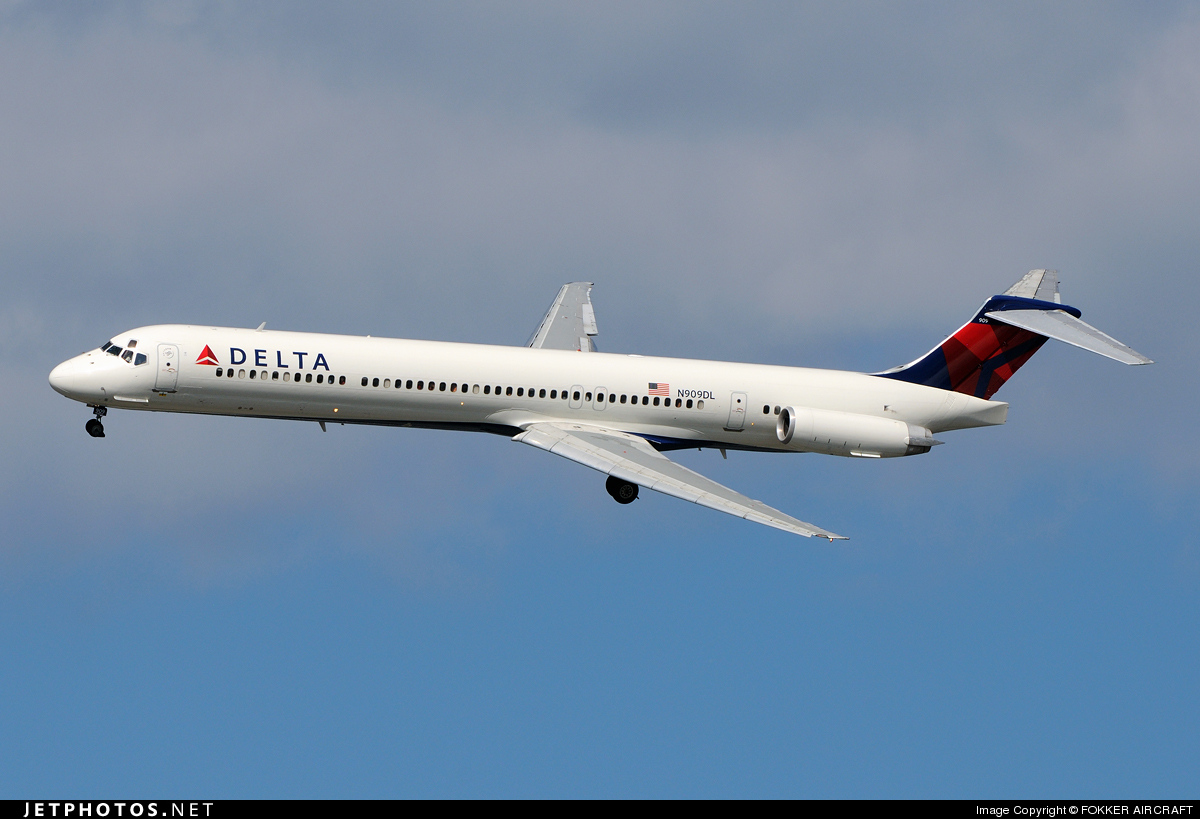
Crash of a McDonnell Douglas MD-88 in LaGuardia

Date & Time: Mar 5, 2015 at 1102 LT
Type of aircraft:
Operator:
Registration:
N909DL
Survivors:
Yes
Schedule:
Atlanta – New York
MSN:
49540/1395
YOM:
1987
Flight number:
DL1086
Crew on board:
5
Crew fatalities:
Pax on board:
125
Pax fatalities:
Other fatalities:
Total fatalities:
0
Captain / Total flying hours:
15200
Captain / Total hours on type:
11000.00
Copilot / Total flying hours:
11000
Copilot / Total hours on type:
3000
Aircraft flight hours:
71196
Aircraft flight cycles:
54865
Circumstances:
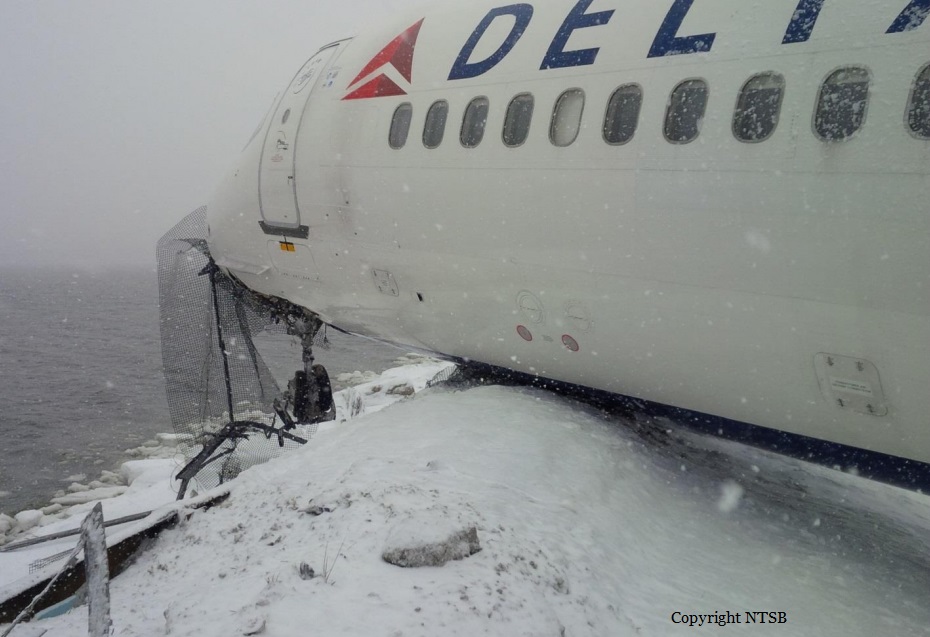
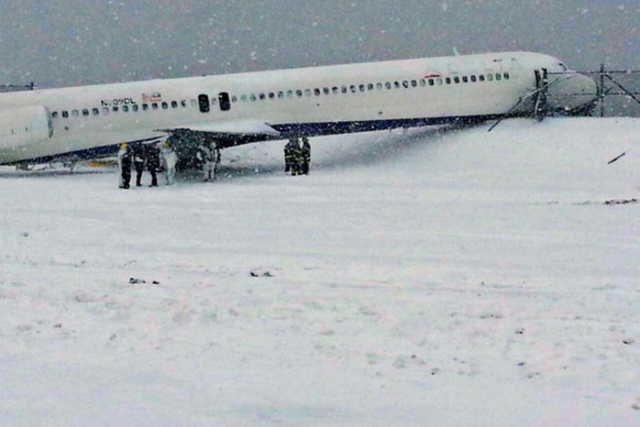
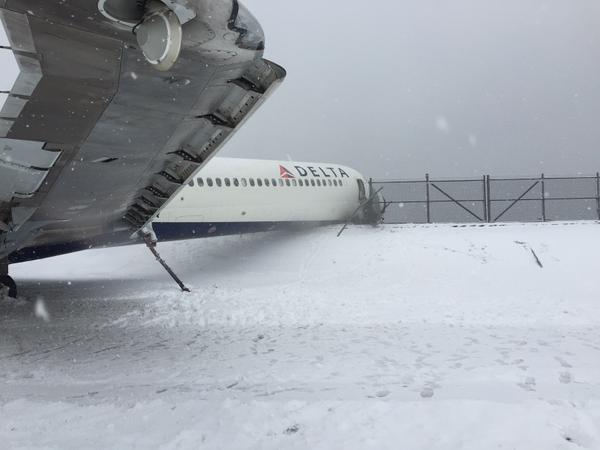
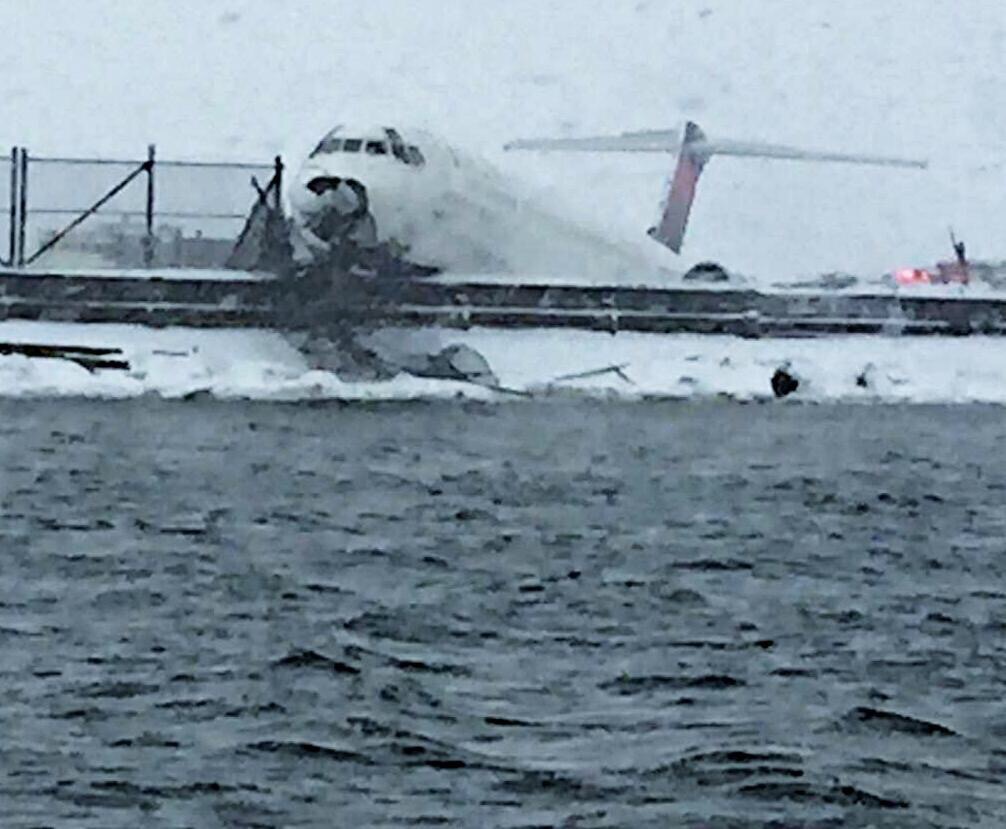
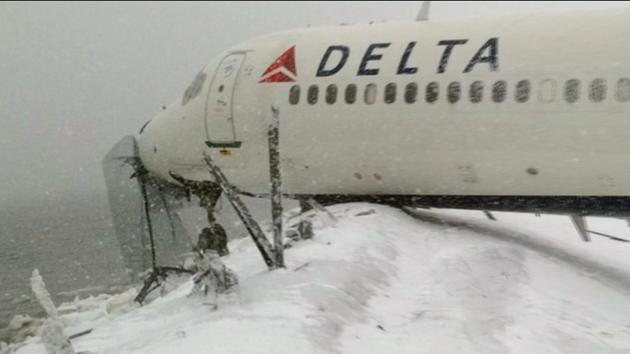
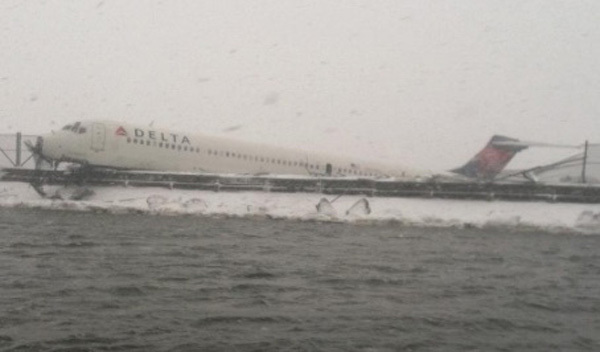
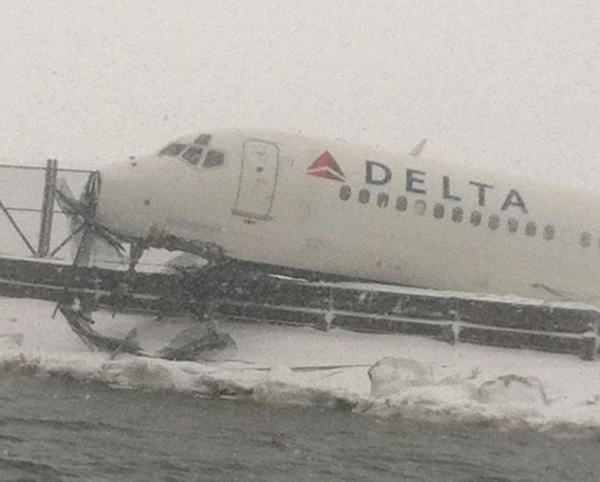
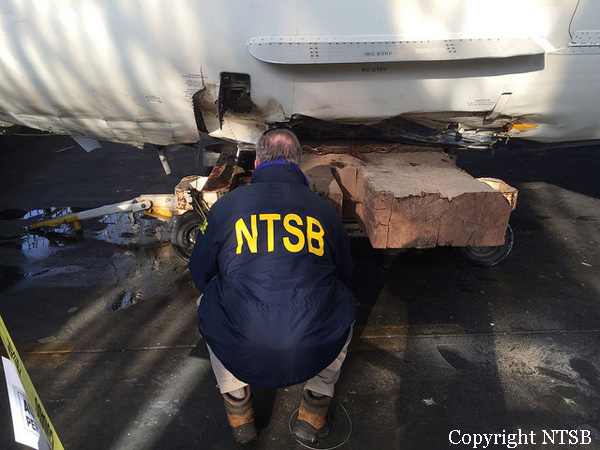
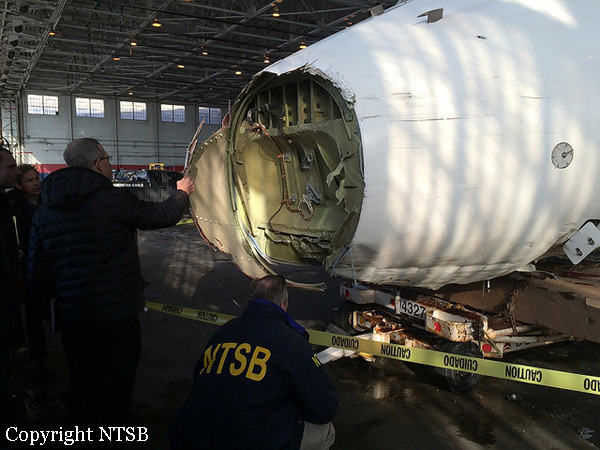
The aircraft was landing on runway 13 at LaGuardia Airport (LGA), New York, New York, when it departed the left side of the runway, contacted the airport perimeter fence, and came to rest with the airplane’s nose on an embankment next to Flushing Bay. The 2 pilots, 3 flight attendants, and 98 of the 127 passengers were not injured; the other 29 passengers received minor injuries. The airplane was substantially damaged. Flight 1086 was a regularly scheduled passenger flight from Hartsfield-Jackson Atlanta International Airport, Atlanta, Georgia, operating under the provisions of 14 Code of Federal Regulations Part 121. An instrument flight rules flight plan had been filed. Instrument meteorological conditions prevailed at the time of the accident. The captain and the first officer were highly experienced MD-88 pilots. The captain had accumulated about 11,000 hours, and the first officer had accumulated about 3,000 hours, on the MD-88/-90. In addition, the captain was previously based at LGA and had made many landings there in winter weather conditions. The flight crew was concerned about the available landing distance on runway 13 and, while en route to LGA, spent considerable time analyzing the airplane’s stopping performance. The flight crew also requested braking action reports about 45 and 35 minutes before landing, but none were available at those times because of runway snow clearing operations. The unavailability of braking actions reports and the uncertainty about the runway’s condition created some situational stress for the captain, who was the pilot flying. After runway 13 became available for arriving airplanes, the flight crews of two preceding airplanes (which landed on the runway about 16 and 8 minutes before the accident landing) reported good braking action on the runway, so the flight crew expected to see at least some of the runway’s surface after the airplane broke out of the clouds. However, the flight crew saw that the runway was covered with snow, which was inconsistent with their expectations based on the braking action reports and the snow clearing operations that had concluded less than 30 minutes before the airplane landed. The snowier-than-expected runway, along with its relatively short length and the presence of Flushing Bay directly off the departure end of the runway, most likely increased the captain’s concerns about his ability to stop the airplane within the available runway distance, which exacerbated his situational stress. The captain made a relatively aggressive reverse thrust input almost immediately after touchdown. Reverse thrust is one of the methods that pilots use to decelerate the airplane during the landing roll. Reverse thrust settings are expressed as engine pressure ratio (EPR) values, which are measurements of engine power (the ratio of the pressure of the gases at the exhaust compared with the pressure of the air entering the inlet). Both pilots were aware that 1.3 EPR was the target setting for contaminated runways.As reverse thrust EPR was rapidly increasing, the captain’s attention was focused on other aspects of the landing, which included steering the airplane to counteract a slide to the left and ensuring that the spoilers had deployed (a necessary action for the autobrakes to engage). The maximum EPR values reached during the landing were 2.07 on the left engine and 1.91 on the right engine, which were much higher than the target setting of 1.3 EPR. These high EPR values likely resulted from a combination of the captain’s stress; his relatively aggressive reverse thrust input; and operational distractions, including the airplane’s continued slide to the left despite the captain’s efforts to steer it away from the snowbanks alongside the runway. All of these factors reduced the captain’s monitoring of EPR indications. The high EPR values caused rudder blanking (which occurs on MD-80 series airplanes when smooth airflow over the rudder is disrupted by high reverse thrust) and a subsequent loss of aerodynamic directional control. Although the captain stowed the thrust reversers and applied substantial right rudder, right nosewheel steering, and right manual braking, the airplane’s departure from the left side of the runway could not be avoided because directional control was regained too late to be effective.
Probable cause:
The National Transportation Safety Board determines that the probable cause of this accident was the captain’s inability to maintain directional control of the airplane due to his application of excessive reverse thrust, which degraded the effectiveness of the rudder in controlling the airplane’s heading. Contributing to the accident were the captain’s:
- situational stress resulting from his concern about stopping performance and
- attentional limitations due to the high workload during the landing, which prevented him from immediately recognizing the use of excessive reverse thrust.
Final Report:

Crash of a BAe ATP-F in Wamena

Date & Time: Mar 4, 2015 at 1515 LT
Type of aircraft:
Operator:
Registration:
PK-DGB
Flight Type:
Survivors:
Yes
Schedule:
Jayapura – Wamena
MSN:
2029
YOM:
1990
Country:
Region:
Crew on board:
2
Crew fatalities:
Pax on board:
0
Pax fatalities:
Other fatalities:
Total fatalities:
0
Captain / Total flying hours:
3912
Captain / Total hours on type:
833.00
Copilot / Total flying hours:
415
Copilot / Total hours on type:
45
Aircraft flight hours:
200845
Aircraft flight cycles:
27921
Circumstances:
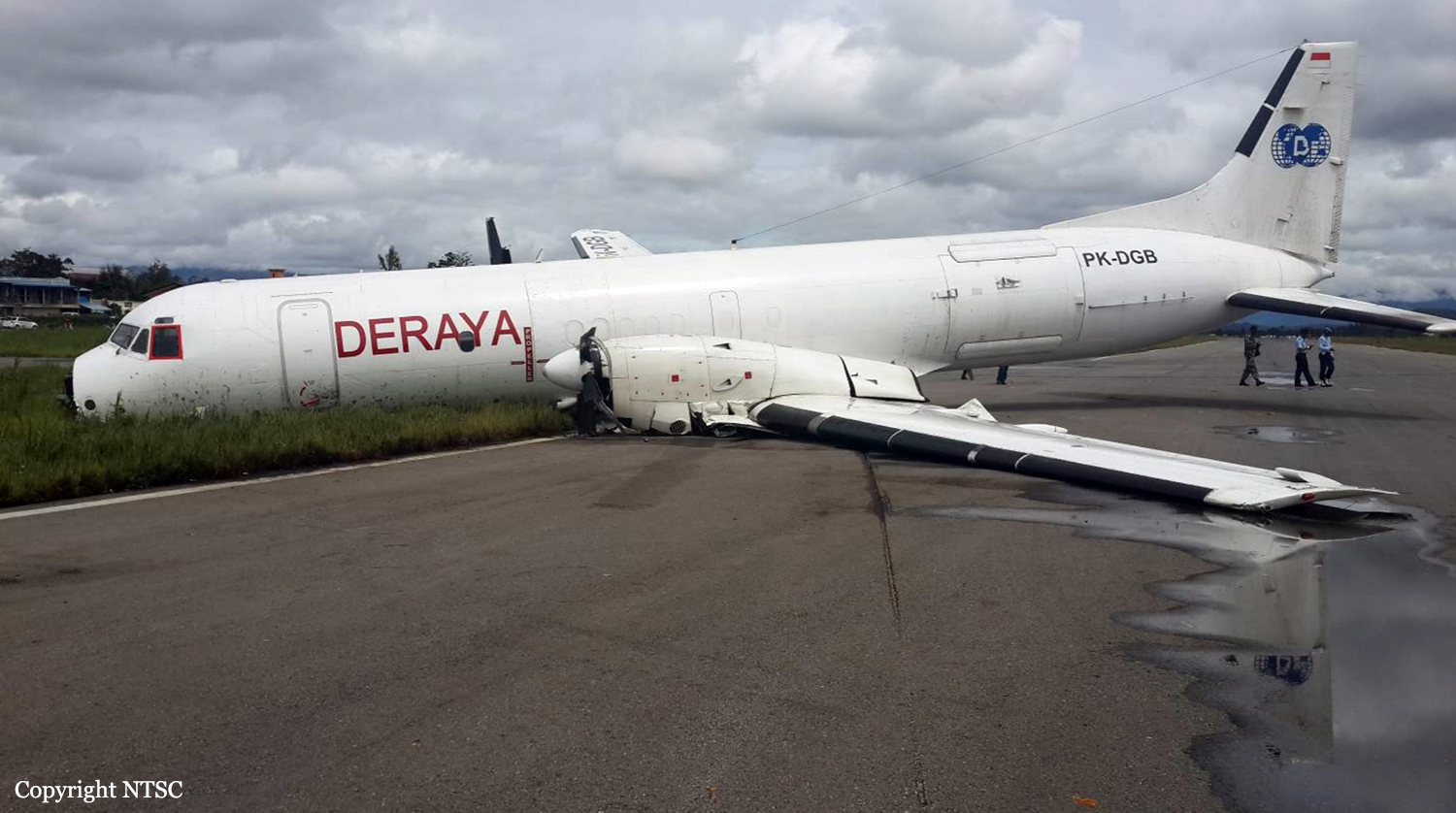
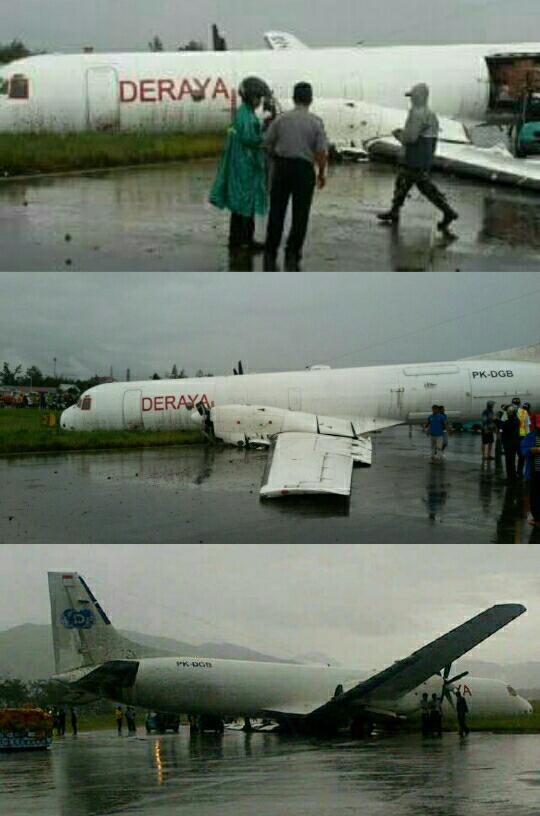
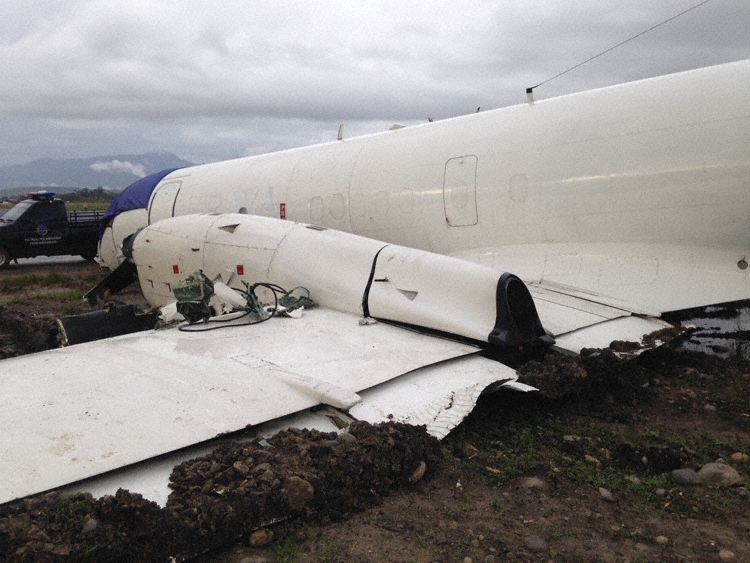
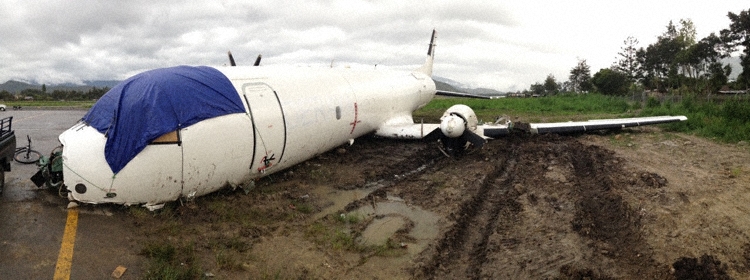
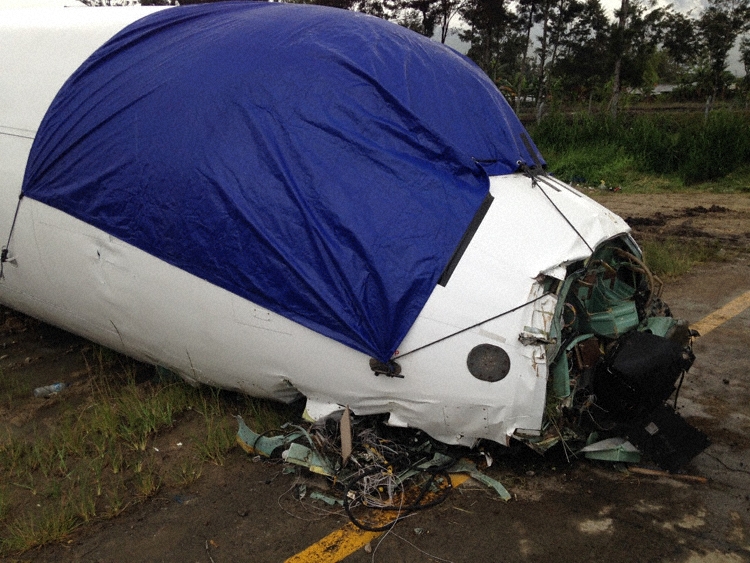
On 4 March 2015 a BAe-ATP registration PK-DGB operated by PT. Deraya Air as scheduled cargo flight from Sentani to Wamena Airport. On board of this flight was two pilots while the Pilot in Command (PIC) acted as pilot flying and First Officer (FO) acted as pilot monitoring. The aircraft departed Sentani at 0524 UTC to Wamena airport. The pilot contacted Wamena Tower controller while position on Jiwika way point at altitude 10,000 feet. Wamena Tower controller instructed to use runway 33 and to proceed to left runway 33. At 0602 UTC the pilot requested to proceed to Pyramid waypoint and to descend to 8,000 feet and made holding due to weather. At 0613, a C-130 pilot that was on approach reported making go around runway 33 and ATC instructed to C-130 pilot to proceed to Pyramid waypoint and hold. At 0619 UTC, Wamena Tower controller informed that the weather reported continuous heavy rain, visibility was reported 2 up to 3 km and wind was from 060° with velocity of 6 knots. The PK-DGB aircraft left Pyramid waypoint for approach runway 33. The aircraft proceed to left downwind and descent to 6,500 feet. During turning base leg, the pilot observed runway insight and continued the approach. At 0620 UTC, the aircraft touched down, thereafter veered off to the right of the runway and skid. The aircraft re-entered the runway at approximately 400 meters from beginning runway 33 and stopped near taxiway Delta at approximately 800 meters from beginning runway 33.

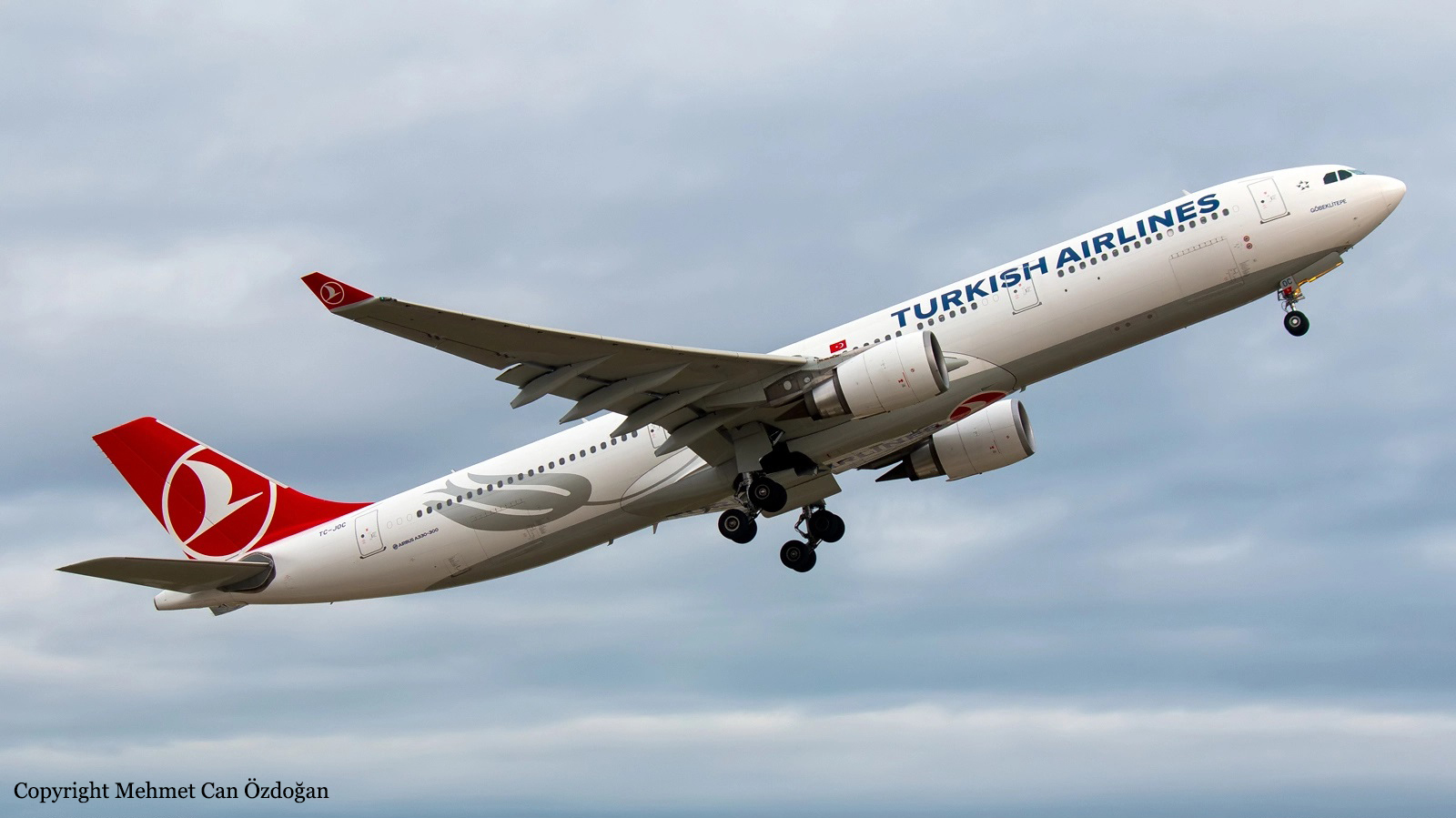
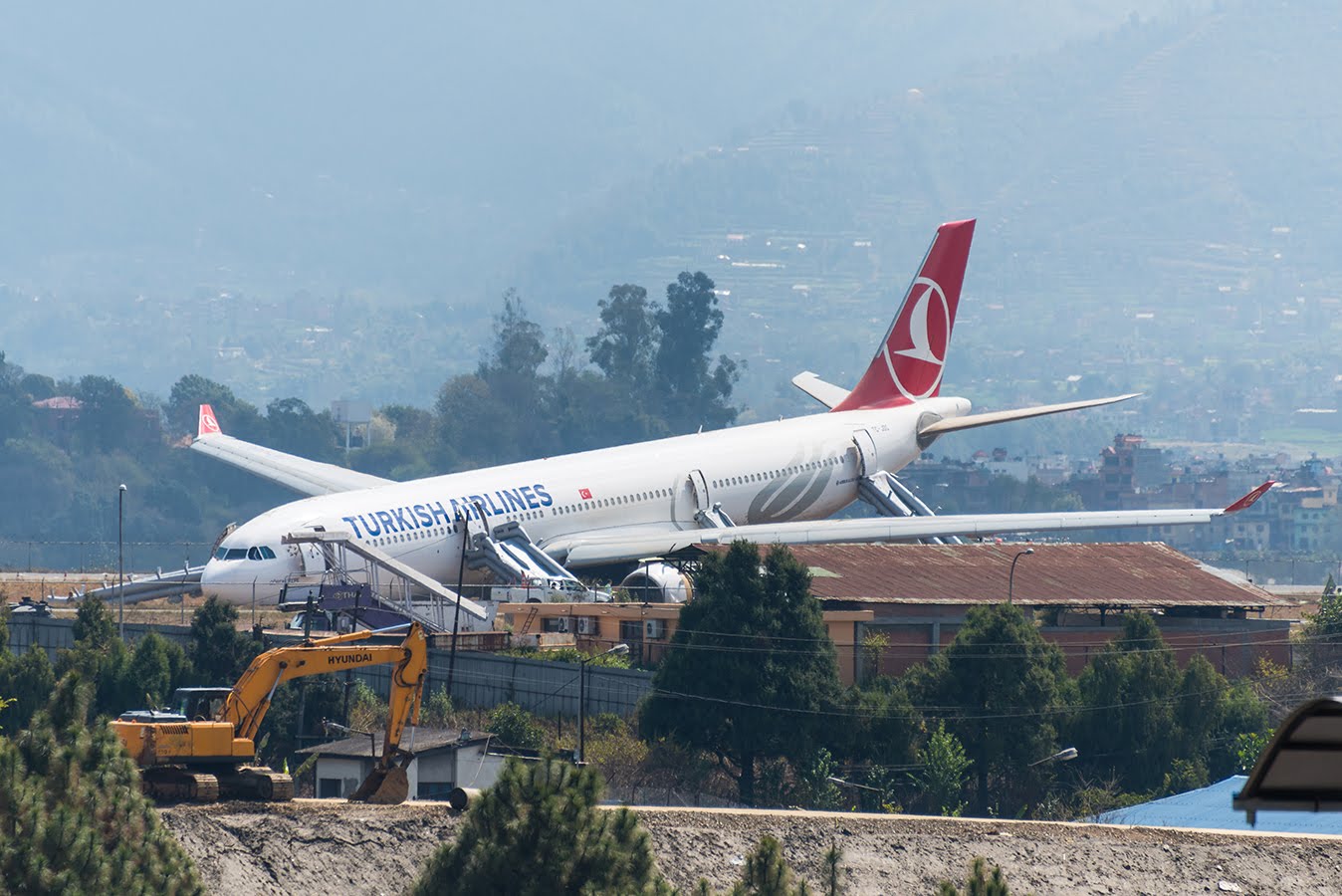
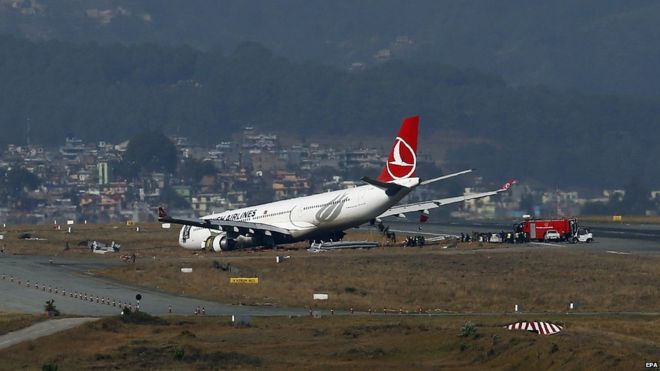
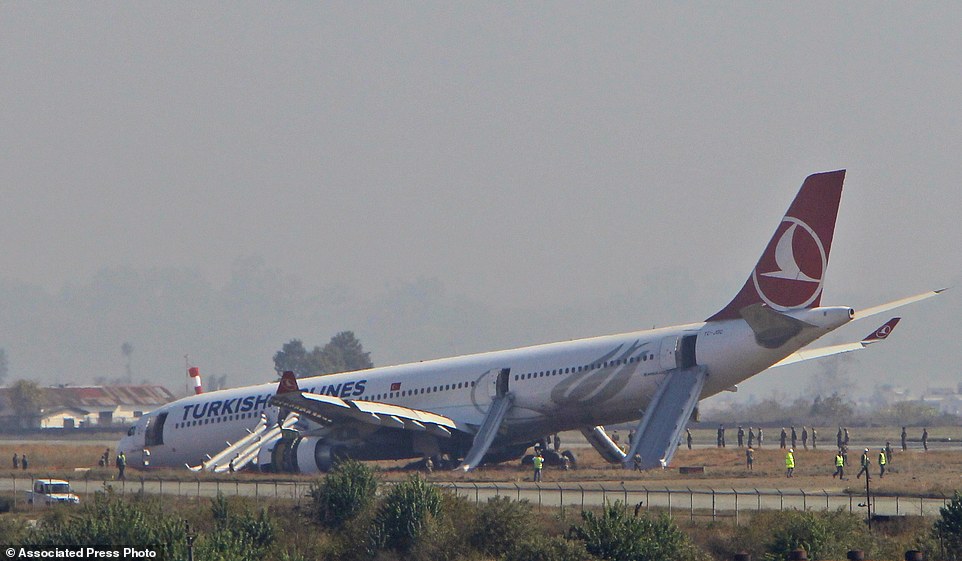
Crash of an Airbus A330-303 in Kathmandu

Date & Time: Mar 4, 2015 at 0744 LT
Type of aircraft:
Operator:
Registration:
TC-JOC
Survivors:
Yes
Schedule:
Istanbul – Kathmandu
MSN:
1522
YOM:
2014
Flight number:
TK726
Country:
Region:
Crew on board:
11
Crew fatalities:
Pax on board:
224
Pax fatalities:
Other fatalities:
Total fatalities:
0
Captain / Total flying hours:
14942
Captain / Total hours on type:
1456.00
Copilot / Total flying hours:
7659
Copilot / Total hours on type:
1269
Aircraft flight hours:
4139
Aircraft flight cycles:
732
Circumstances:
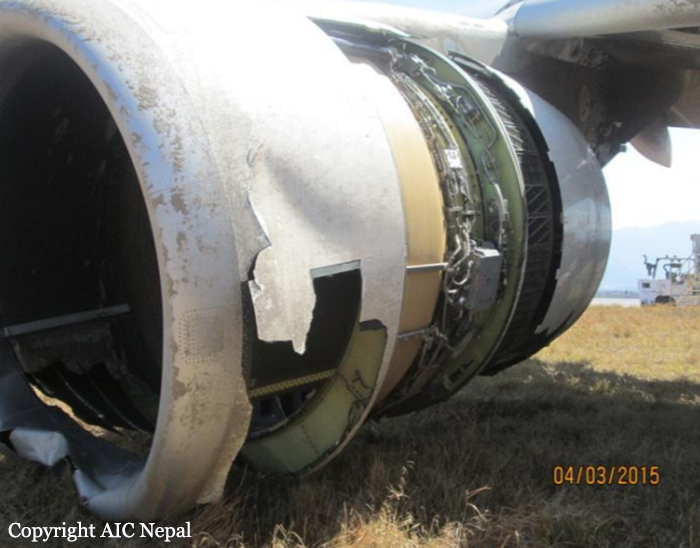
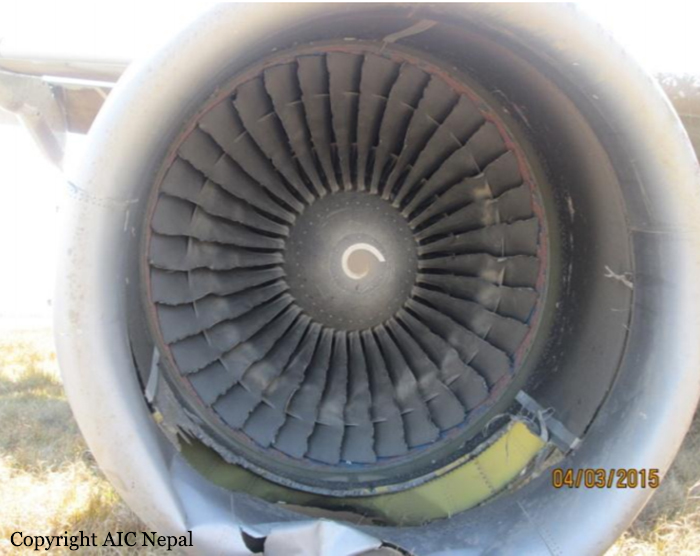
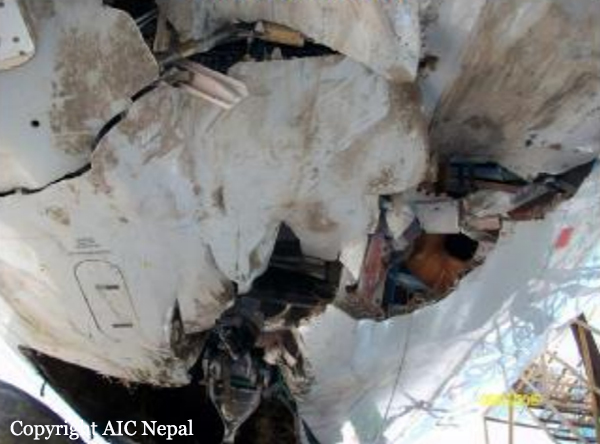
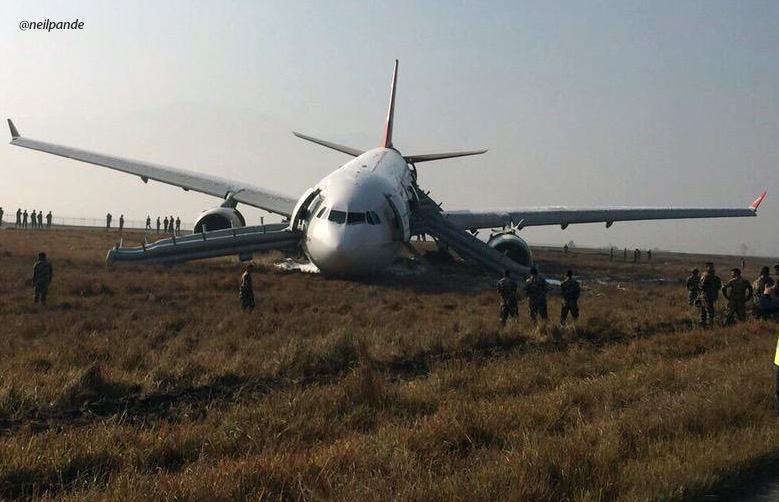
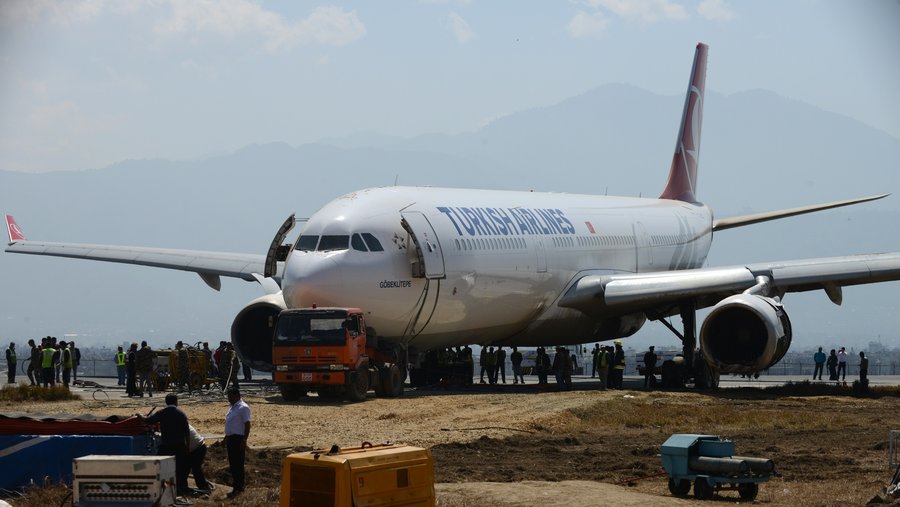
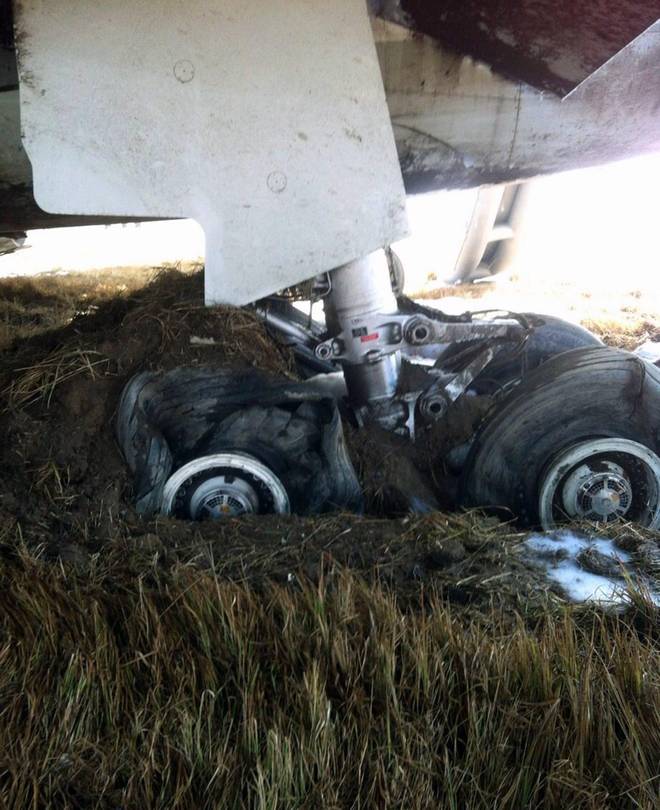
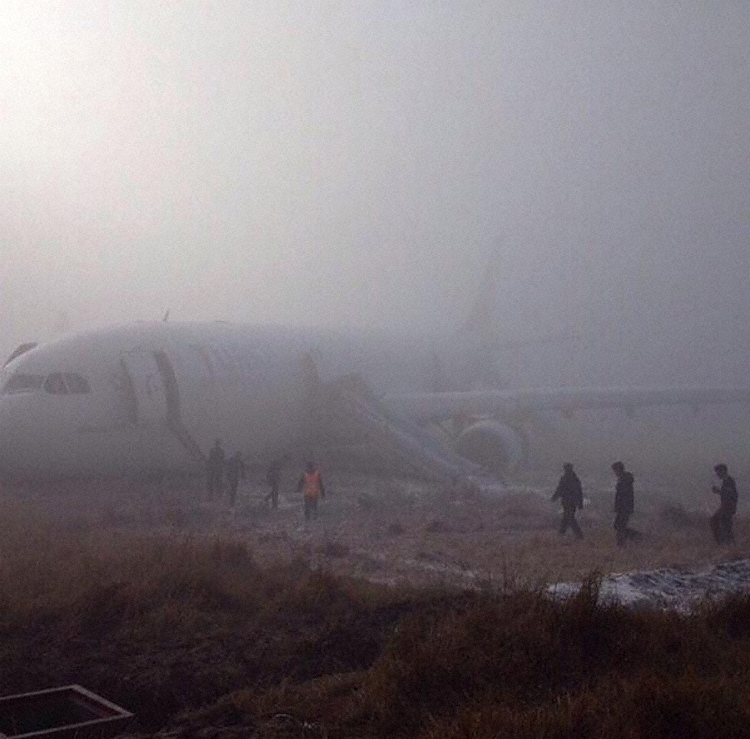
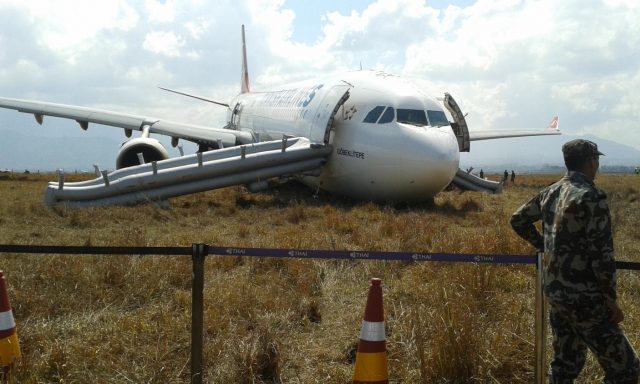
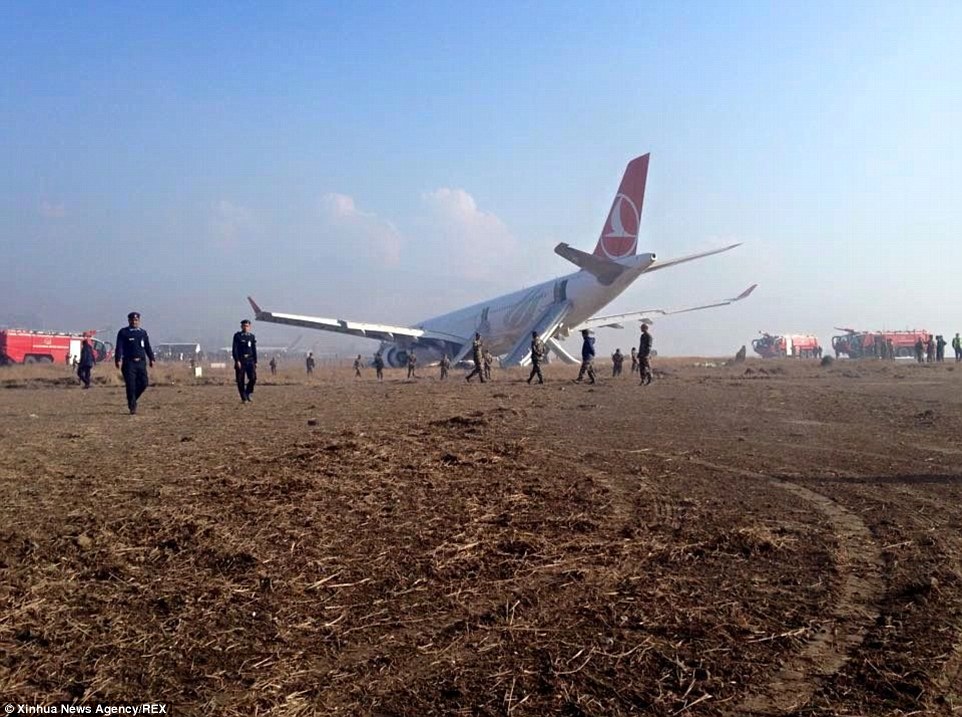
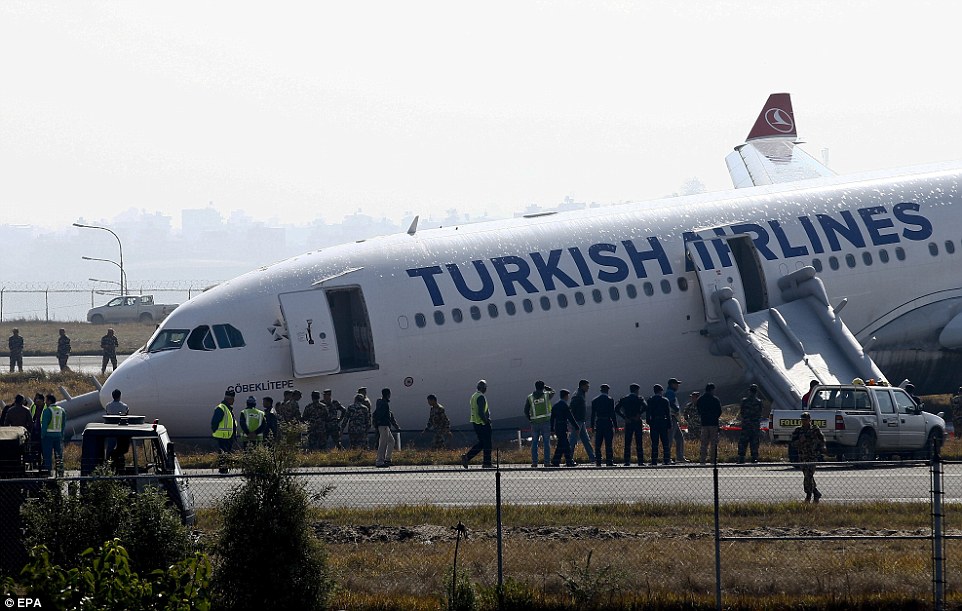
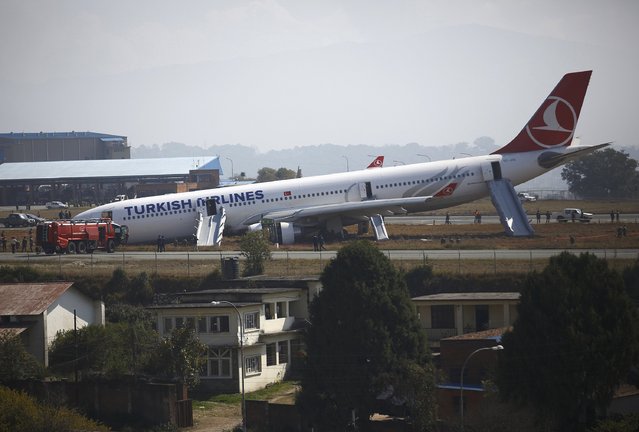
The aircraft departed Istanbul at 1818LT on March 3 on a scheduled flight to Tribhuvan International Airport (TIA), Kathmandu with 11 crew members and 224 passengers .The aircraft started contacting Kathmandu Control from 00:02 hrs to 00:11hrs while the aircraft was under control of Varanasi and descending to FL 250 but there was no response because Kathmandu Control was not yet in operation. The airport opened at its scheduled time of 00:15hrs. The aircraft established its first contact with Kathmandu Approach at 00:17 hrs and reported holding over Parsa at FL 270. Kathmandu Approach reported visibility 100 meters and airport status as closed. At 00:22 hrs the aircraft requested to proceed to Simara due to moderate turbulence. The Kathmandu Approach instructed the aircraft to descend to FL 210 and proceed to Simara and hold. At 01:05 hrs when Kathmandu Approach provided an updated visibility of 1000 meters and asked the flight crew of their intentions, the flight crew reported ready for RNAV (RNP) APCH for runway 02. The aircraft was given clearance to make an RNP AR APCH. At 01:23 hrs when the aircraft reported Dovan, Kathmandu Approach instructed the flight crew to contact Kathmandu Tower. Kathmandu Tower issued a landing clearance at 01:24 hrs and provided wind information of 100° at 03 knots. At 01:27 hrs the aircraft carried out a missed approach due to lack of visual reference. The aircraft was given clearance to proceed to RATAN hold via MANRI climbing to 10500 feet as per the missed approach procedure. During the missed approach the aircraft was instructed to contact Kathmandu Approach. At 01:43 hrs the aircraft requested the latest visibility to which Kathmandu Approach provided visibility 3000 m and Kathmandu Tower observation of 1000 meters towards the south east and few clouds at 1000 ft, SCT 2000 ft and BKN 10,000 feet. When the flight crew reported their intention to continue approach at 01:44 hrs, Kathmandu Approach cleared the aircraft for RNAV RNP APCH runway 02 and instructed to report RATAN. The aircraft reported crossing 6700 ft at 01:55 hrs to Kathmandu Tower. Kathmandu Tower cleared the aircraft to land and provided wind information of 160° at 04 kts. At 01:57 hrs Kathmandu Tower asked the aircraft if the runway was insight. The aircraft responded that they were not able to see the runway but were continuing the approach. The aircraft was at 880 ft AGL at that time. At 783 ft AGL the aircraft asked Kathmandu Tower if the approach lights were on. Kathmandu Tower informed the aircraft that the approach lights were on at full intensity. The auto-pilots remained coupled to the aircraft until 14 ft AGL, when it was disconnected, a flare was attempted. The maximum vertical acceleration recorded on the flight data recorder was approximately 2.7 G. The aircraft pitch at touchdown was 1.8 degree nose up up which is lower than a normal flare attitude for other landings. From physical evidence recorded on the runway and the GPS latitude and longitude coordinate data the aircraft touched down to the left of the runway centerline with the left hand main gear off the paved runway surface. The aircraft crossed taxiways E and D and came to a stop on the grass area between taxiway D and C with the heading of the aircraft on rest position being 345 degrees (North North West) and the position of the aircraft on rest position was at N 27° 41' 46", E 85° 21'29" At 02:00 hrs Kathmandu Tower asked if the aircraft had landed. The aircraft requested medical and fire assistance reporting its position at the end of the runway. At 02:03 hrs the aircraft requested for bridge and stairs to open the door and vacate passengers instead of evacuation. The fire and rescue team opened the left cabin door and requested the cabin attendant as well as to pilot through Kathmandu Tower to deploy the evacuation slides. At 02:10 hrs evacuation signal was given to disembark the passengers. All passengers were evacuated safely and later, the aircraft was declared as damaged beyond repair.
Probable cause:
The probable cause of this accident is the decision of the flight crew to continue approach and landing below the minima with inadequate visual reference and not to perform a missed approach in accordance to the published approach procedure. Other contributing factors of the accident are probable fixation of the flight crew to land at Kathmandu, and the deterioration of weather conditions that resulted in fog over the airport reducing the visibility below the required minima. The following findings were reported:
- On March 2, 2015 i.e. two days before the accident, the crews of the flight to Kathmandu reported through RNP AR MONITORING FORM that all the NAV. accuracy and deviation parameter were perfectly correct at MINIMUM but the real aircraft position was high (PAPI 4 whites) and left offset,
- The airlines as well as crews were unaware of the fact that wrong threshold coordinates were uploaded on FMGS NAV data base of the aircraft,
- The flight crew was unable to get ATIS information on the published frequency because ATIS was not operating. ATIS status was also not included in the Daily Facilities Status check list reporting form of TIA Kathmandu,
- Turkish Airlines Safety Department advised to change the scheduled arrival time at Kathmandu Airport,
- It was the first flight of the Captain to Kathmandu airport and third flight but first RNAV (RNP) approach of the Copilot,
- Both approaches were flown with the auto-pilots coupled,
- Crew comments on the CVR during approach could be an indication that they (crews) were tempted to continue to descend below the decision height despite lack of adequate visual reference condition contrary to State published Standard Instrument Arrival and company Standard Operating procedures with the expectation of getting visual contact with the ground,
- The flight crew were not visual with the runway or approach light at MDA,
- The MET Office did not disseminate SPECI representing deterioration in visibility according to Annex 3,
- The Approach Control and the Kathmandu Tower did not update the aircraft with its observation representing a sudden deterioration in visibility condition due to moving fog,
- The Air Traffic Control Officers are not provided with refresher training at regular interval,
- CAAN did not take into account for the AIRAC cycle 04-2015 from 05 Feb 2015 to 04 March 2015 while cancelling AIP supplement,
- The auto-pilots remained coupled to the aircraft until 14ft AGL when it was disconnected and a flare was attempted,
- The crews were not fully following the standard procedure of KTM RNAV (RNP) Approach and company Standard Operating procedures.
Final Report:

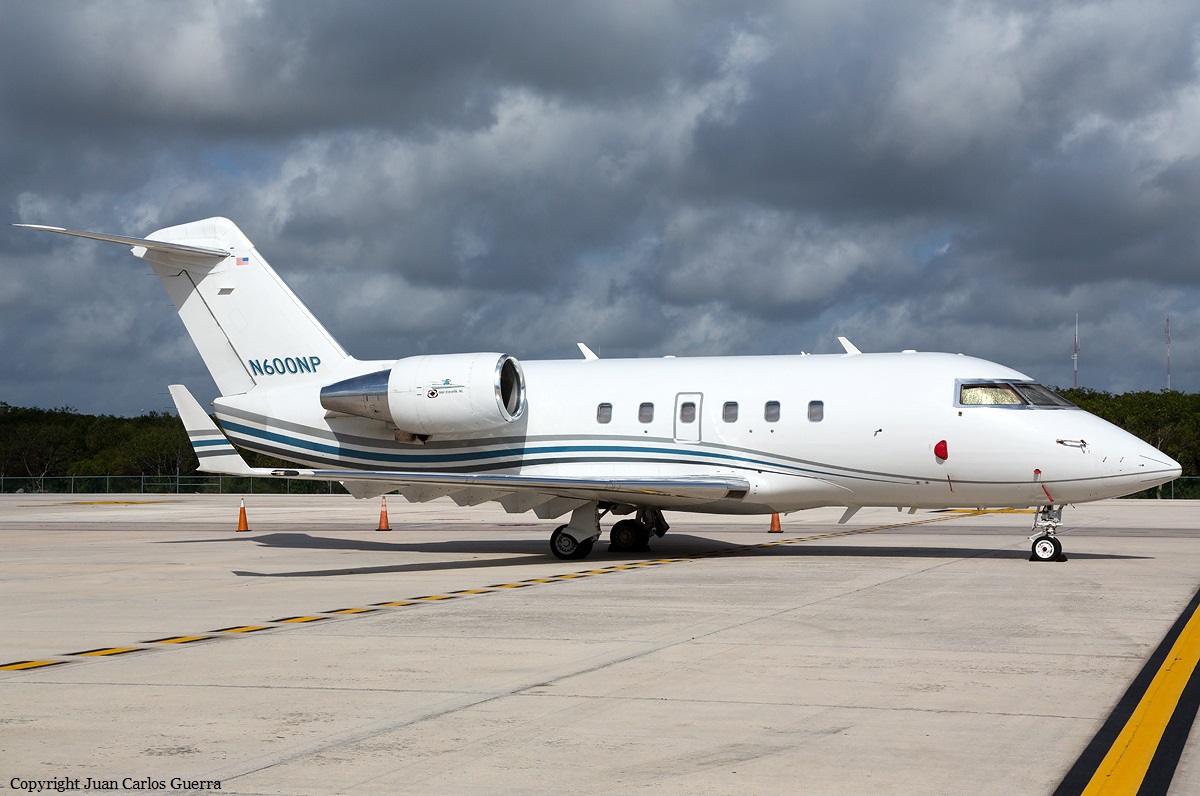
Crash of a Canadair CL-601-3A Challenger in Marco Island

Date & Time: Mar 1, 2015 at 1615 LT
Type of aircraft:
Operator:
Registration:
N600NP
Survivors:
Yes
Schedule:
Marathon – Marco Island
MSN:
3002
YOM:
1983
Crew on board:
3
Crew fatalities:
Pax on board:
6
Pax fatalities:
Other fatalities:
Total fatalities:
0
Captain / Total flying hours:
8988
Captain / Total hours on type:
844.00
Copilot / Total flying hours:
18500
Copilot / Total hours on type:
1500
Aircraft flight hours:
15771
Circumstances:
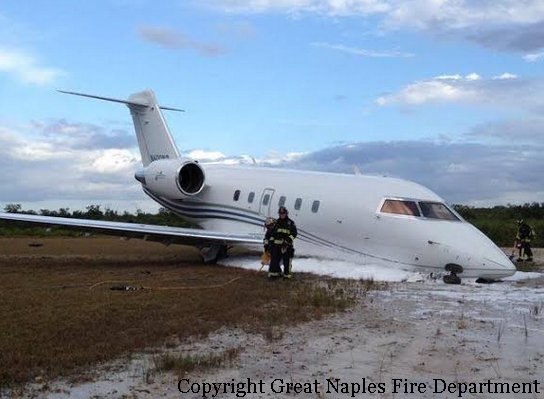
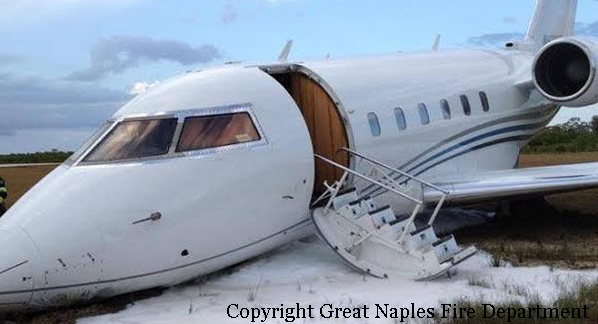
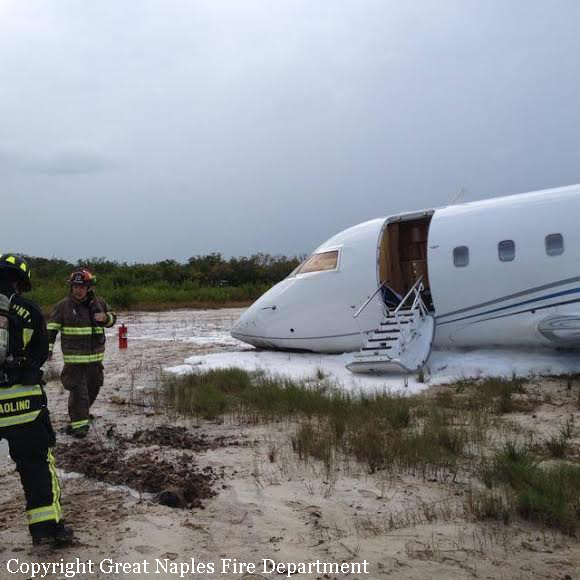
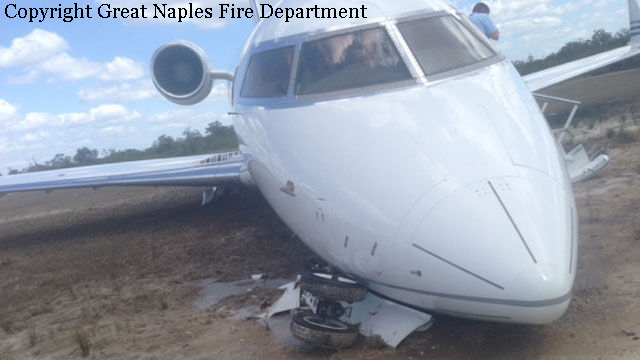
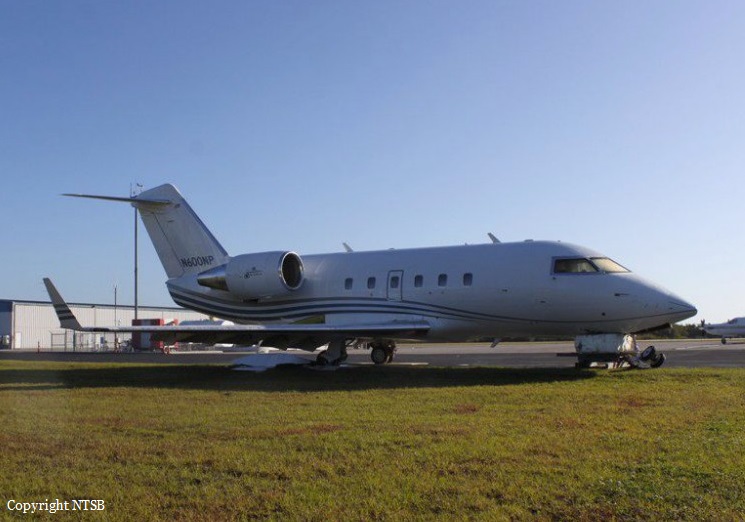
Earlier on the day of the accident, the pilot-in-command (PIC) and second-in-command (SIC) had landed the airplane on a 5,008-ft-long, asphalt-grooved runway. After touchdown with the flaps fully extended, the ground spoilers and thrust reversers were deployed, and normal braking occurred. The PIC, who was the flying pilot, and the SIC subsequently departed on an executive/corporate flight with a flight attendant, the airplane owner, and five passengers onboard. The PIC reported that he flew a visual approach to the dry, 5,000-ft-long runway while maintaining a normal glidepath at Vref plus 4 or 5 knots at the runway threshold with the flaps fully extended. He added that the touchdown was "firm" and between about 300 to 500 ft beyond the aiming point marking. After touchdown, the PIC tried unsuccessfully to deploy the ground spoilers. He applied "moderate" brake pressure when the nose landing gear (NLG) contacted the runway, but felt no deceleration. He also attempted to deploy the thrust reversers without success. The PIC then informed the SIC that there was no braking energy, released the brakes, and turned off the antiskid system. He then reapplied heavy braking but did not feel any deceleration, and he again tried to deploy the thrust reversers without success. He maintained directional control using the nosewheel steering and manually modulated the brakes. However, the airplane did not slow as expected. While approaching the runway end and realizing that he was not going to be able to stop the airplane on the runway, the PIC intentionally veered the airplane right to avoid water ahead. However, the airplane exited the runway end into sand, and the NLG collapsed. The airplane then came to rest about 250 ft past the departure end of the runway. The passengers exited the airplane, and shortly after, airport personnel arrived and rendered assistance. The airplane owner, who was a passenger in the cabin, stated that he left his seat and moved toward the cabin door when he realized that the airplane would not stop on the runway, and he sustained serious injuries. Examination of the airplane revealed that there was minimal pressure at the No. 2 (left inboard) brake due to failure of a spring in the upper brake control valve (BCV), and the coupling subassembly of the No. 1 wheel speed sensor (WSS) was fractured. A representative from the airplane manufacturer reported that, during certification of the brake system, the failure of the BCV spring was considered acceptably low and would be evident to flight crewmembers within five landings of the failure. Because the airplane did not pull while braking during the previous landing earlier that day to a similar length runway, the spring likely failed during the accident landing. Although the PIC was unable to manually deploy the ground spoilers and thrust reversers during the landing roll, they functioned normally during the landing earlier that day and during postaccident operational testing and examination, with no systems failures or malfunctions noted. Additionally, there were no malfunctions or failures with the weight-onwheels system found during postaccident examinations that would have precluded normal operation. Therefore, the PIC's unsuccessful attempts to deploy the ground spoilers and thrust reversers were likely due to errors made while multitasking when presented with an unexpected situation (inadequate deceleration) with little runway remaining. Airplane stopping distance calculations based on the airplane's reported weight, weather conditions, calculated and PIC-reported Vref speed, flap extension, and estimated touchdown point (300 to 500 ft beyond the aiming point marking as reported by the PIC and SIC and corroborated by security camera footage) and assuming the nonuse of the ground spoilers and thrust reversers, operational antiskid and steering systems, and the loss of one brake per side (symmetric half braking) showed that the airplane would have required 690 ft of additional runway; under the same conditions but with thrust reversers used, the airplane still would have required 27 ft of additional runway. Even though there were no antiskid failure annunciations, the PIC switched off the antiskid system, which led to the rupture of the Nos. 1, 3, and 4 tires and likely fractured the No. 1 WSS's coupling subassembly, both of which would have further contributed to the loss of braking action. Therefore, the combination of the failure of a spring in the No. 2 brake's upper BCV and the fracture of the coupling subassembly of the No. 1 WSS, the pilot's failure to attain the proper touchdown point, the slightly excess speed, and the subsequent failure of three of the tires resulted in there being insufficient runway remaining to avoid a runway overrun. Although the BCV manufacturer reported that there was 1 previous case involving a failed BCV spring and 43 instances of units with relaxed springs within the BCVs, none of these failed or relaxed springs would have been detected by maintenance personnel because a focused inspection of the BCV was not required.

Probable cause:
The failure of a spring inside the No. 2 brake's upper brake control valve and the fracture of the coupling subassembly of the No. 1 wheel speed sensor during landing, which resulted in the loss of braking action, and the pilot-in-command's (PIC) deactivation of the antiskid system even though there were no antiskid failure annunciations, which resulted in the rupture of the Nos. 1, 3, and 4 tires, further loss of braking action, and subsequent landing overrun. Contributing to accident were the PIC's improper landing flare, which resulted in landing several hundred feet beyond the aiming point marking, and his unsuccessful attempts to deploy the thrust reversers for reasons that could not be determined because postaccident operational testing did not reveal any anomalies that would have precluded normal operation. Contributing to the passenger's injury was his leaving his seat intentionally while the airplane was in motion.
Final Report: