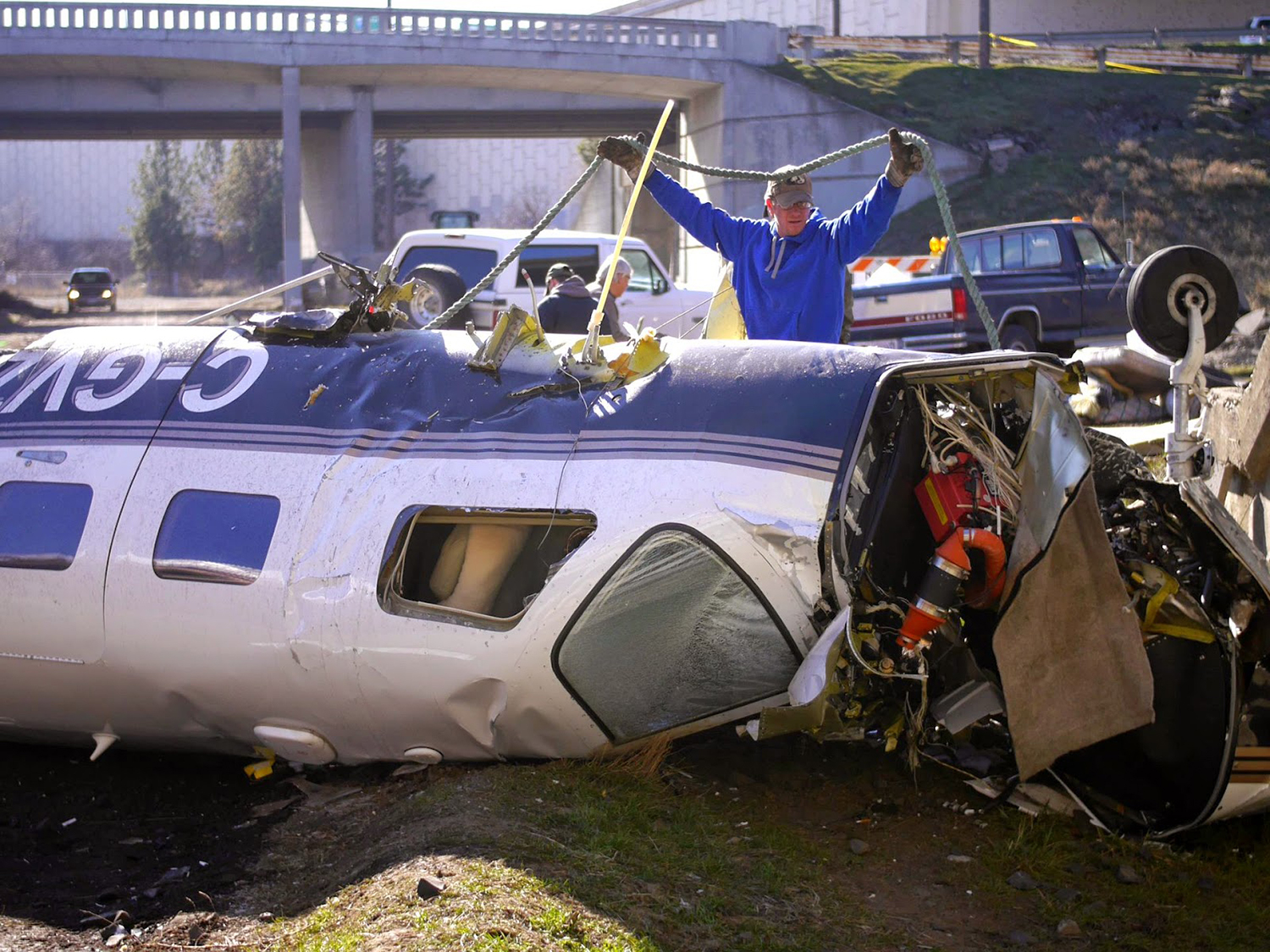
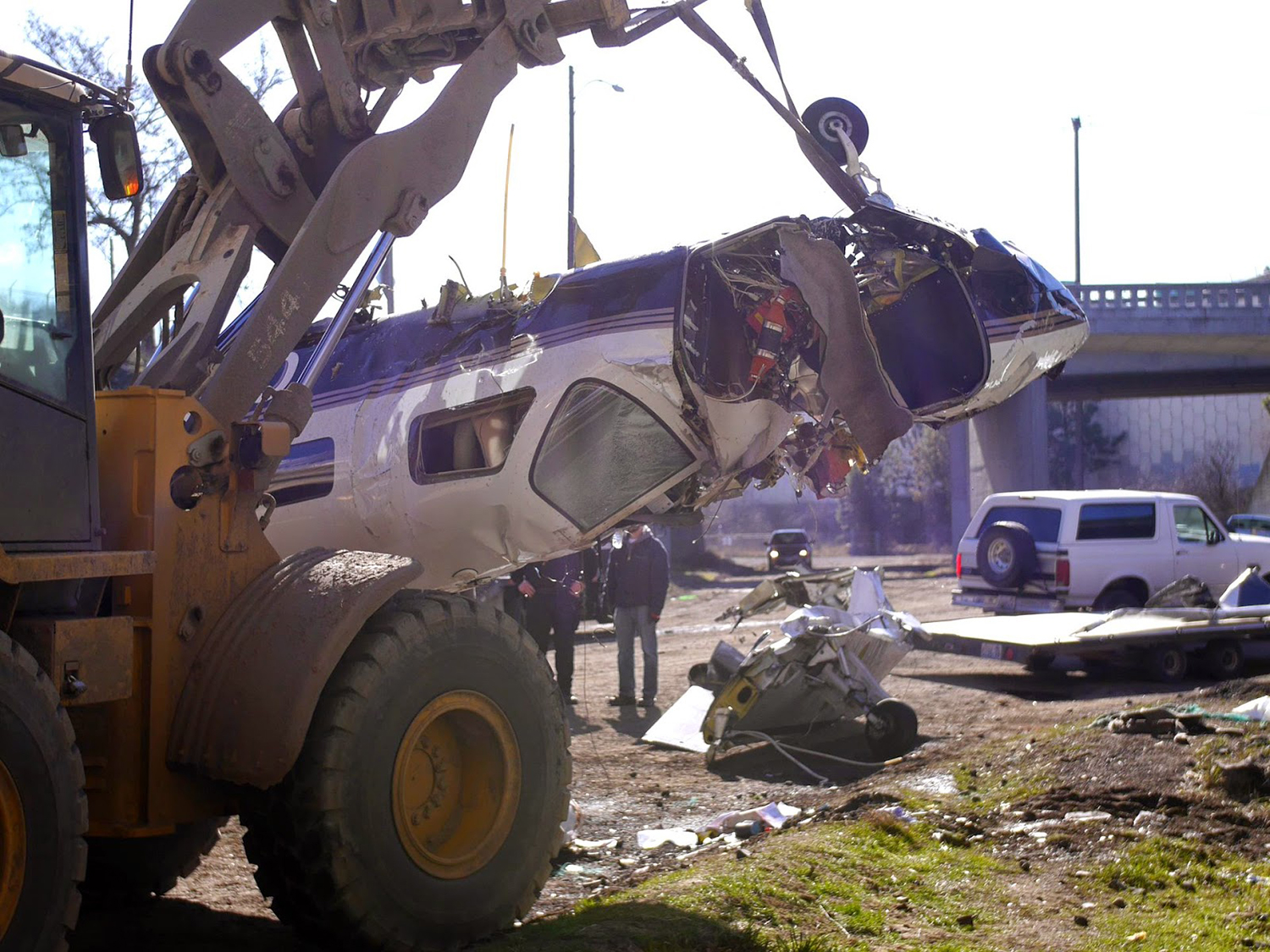
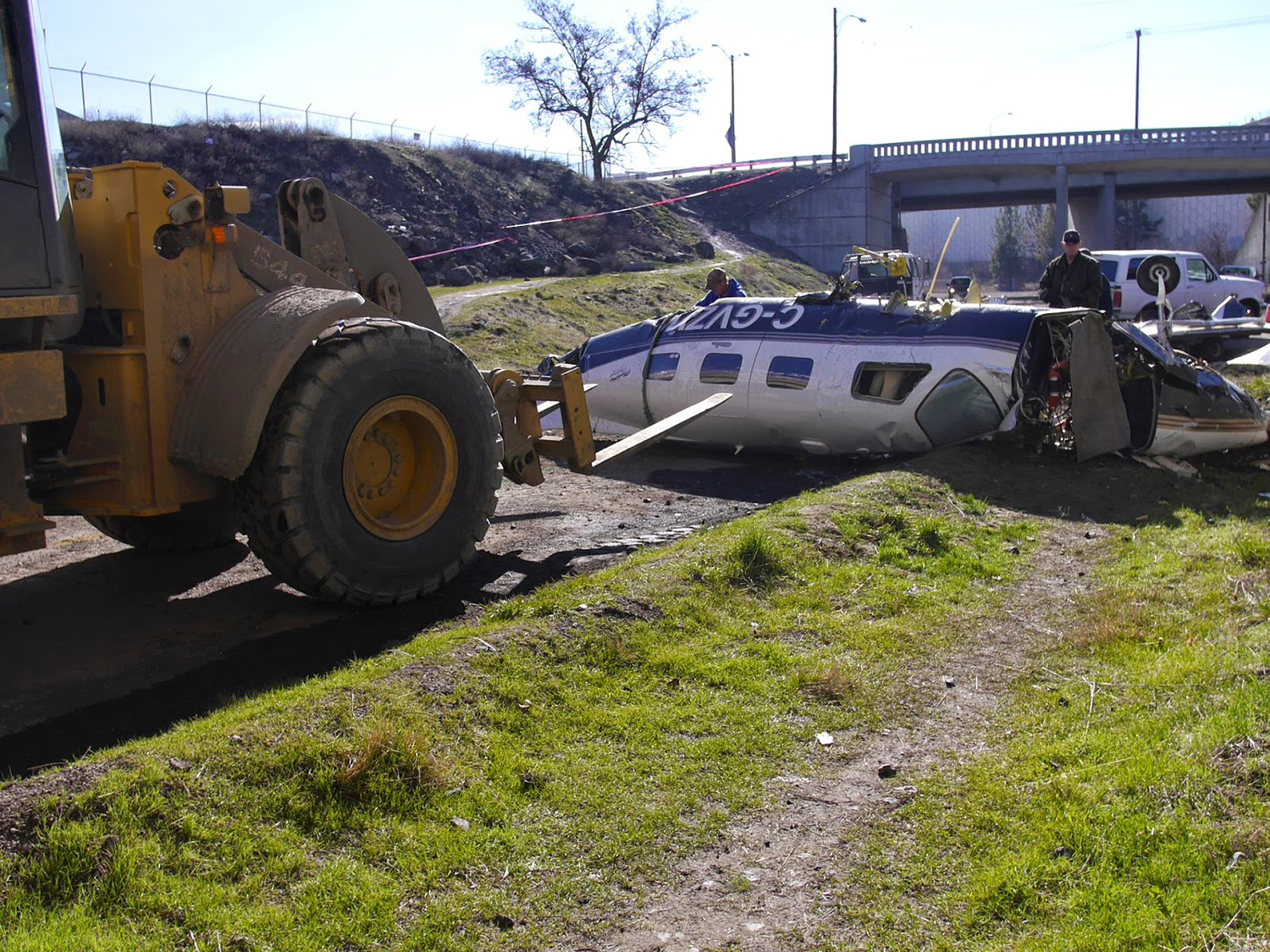
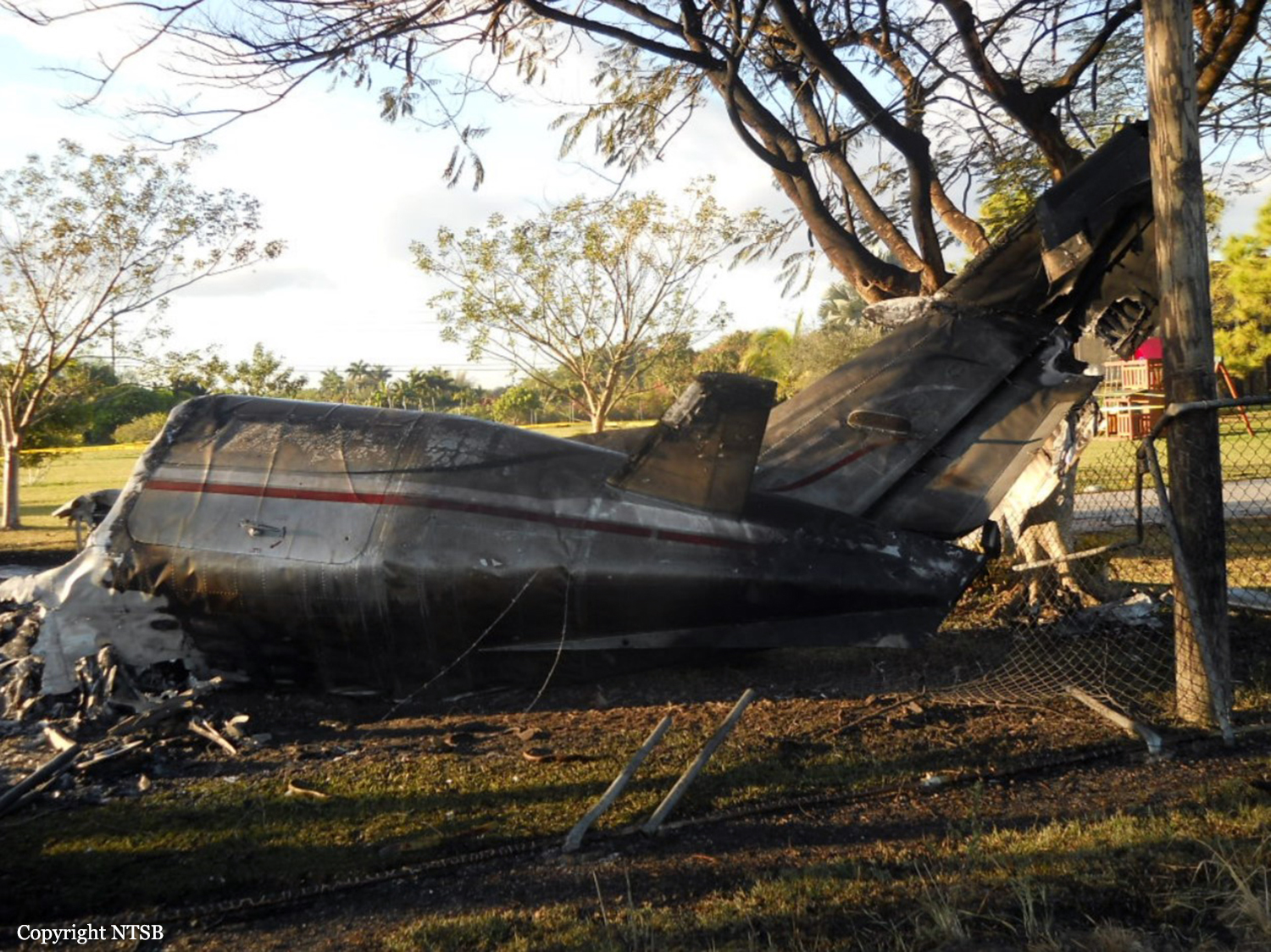
Crash of a Piper PA-46-350P Malibu Mirage in Spokane: 1 killed

Date & Time: Feb 22, 2015 at 1405 LT
Registration:
C-GVZW
Flight Phase:
Flight Type:
Survivors:
No
Schedule:
Villeneuve – Spokane – Stockton
MSN:
46-36281
YOM:
2000
Crew on board:
1
Crew fatalities:
Pax on board:
0
Pax fatalities:
Other fatalities:
Total fatalities:
1
Captain / Total flying hours:
667
Captain / Total hours on type:
63.00
Aircraft flight hours:
2388
Circumstances:
The pilot was conducting a cross-country flight from Canada to California and had landed to clear customs into the United States and to refuel his airplane. The pilot then departed to continue the flight. During the initial climb after takeoff, the engine experienced a total loss of power, and the pilot attempted to make an off-airport forced landing. The right wing struck railroad tracks at the top of a hill, and the airplane continued down an embankment, where it came to rest adjacent to the bottom of a railroad bridge. Postaccident interviews revealed that, when requesting fuel from the fixed-base operator (FBO), the pilot did not specify a grade of fuel to be used to service the airplane. The refueler mistakenly identified the airplane as requiring Jet A fuel, even though the fuel filler ports were placarded "AVGAS (aviation gasoline) ONLY." The fueler subsequently fueled the airplane with Jet A instead of aviation gasoline. Additionally, the fueling nozzle installed on the fuel truck at the time of the refueling was not the proper type of nozzle. Jet A and AvGas fueling nozzles are different designs in order to prevent fueling an airplane with the wrong type of fuel. Following the fueling, the pilot returned to the FBO and signed a receipt, which indicated that the airplane had been serviced with Jet A. There were no witnesses to the pilot's preflight activities, and it is unknown if the pilot visually inspected or obtained a fuel sample before takeoff; however, had the pilot done this, it would have been apparent that the airplane had been improperly fueled.
Probable cause:
A total loss of engine power due to the refueler's incorrect refueling of the airplane. Contributing to the accident was the fixed-base operator's improper fueling nozzle, which facilitated the use of an incorrect fuel, and the pilot's inadequate preflight inspection.
Final Report:

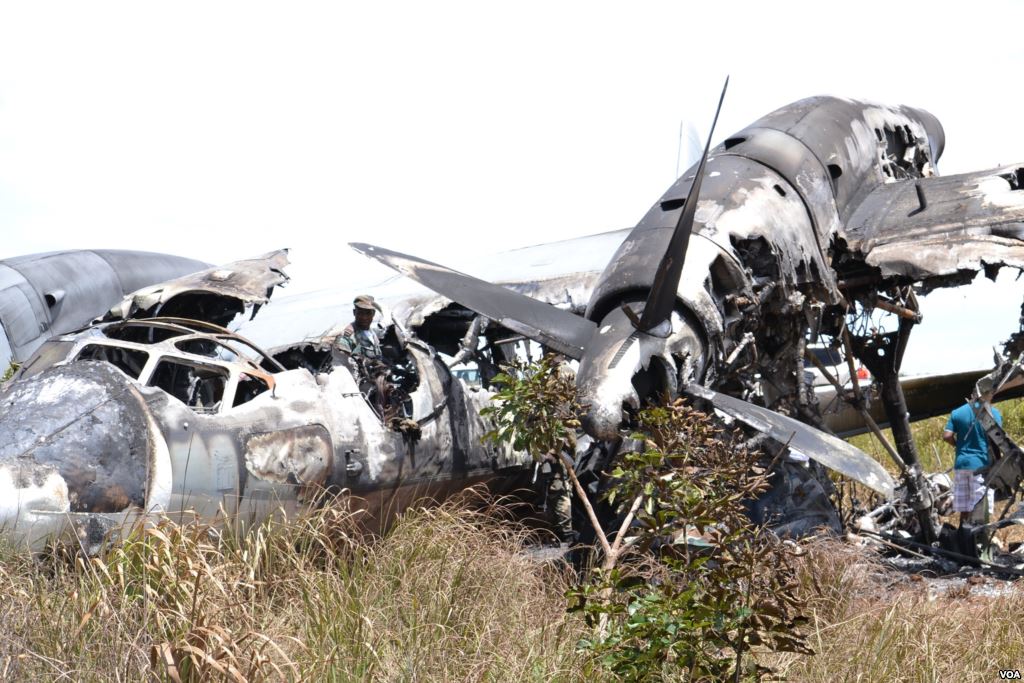
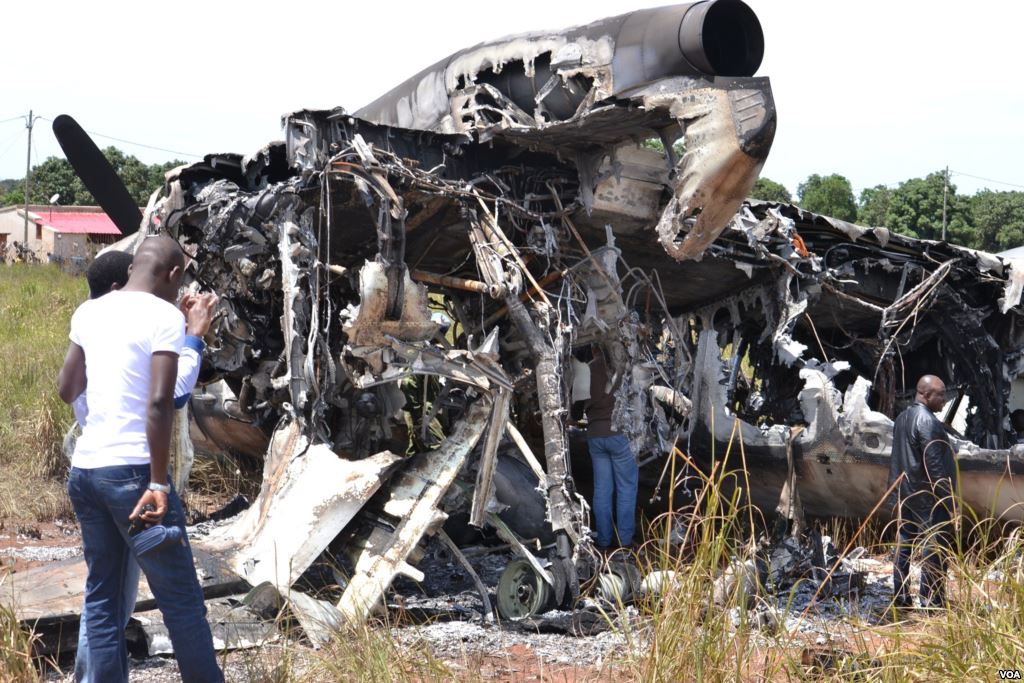
Crash of an Antonov AN-32 in Malanje

Date & Time: Feb 14, 2015 at 2058 LT
Type of aircraft:
Operator:
Registration:
T-256
Flight Type:
Survivors:
Yes
Schedule:
Saurimo - Luanda
MSN:
21 08
YOM:
1989
Location:
Country:
Region:
Crew on board:
3
Crew fatalities:
Pax on board:
47
Pax fatalities:
Other fatalities:
Total fatalities:
0
Circumstances:
En route from Saurimo to Luanda, the crew encountered technical problems and was cleared to divert to Malanje Airport for an emergency landing. Upon landing on an unlit runway, the aircraft veered off runway and came to rest, bursting into flames. All 50 occupants escaped uninjured and the aircraft was totally destroyed by a post crash fire. The exact cause of the technical failure remains unknown.

Crash of an Antonov AN-26 in Quelimane

Date & Time: Feb 14, 2015 at 1530 LT
Type of aircraft:
Operator:
Registration:
FA312
Flight Phase:
Flight Type:
Survivors:
Yes
Schedule:
Quelimane – Mocuba
MSN:
116 03
YOM:
1981
Country:
Region:
Crew on board:
6
Crew fatalities:
Pax on board:
0
Pax fatalities:
Other fatalities:
Total fatalities:
0
Circumstances:
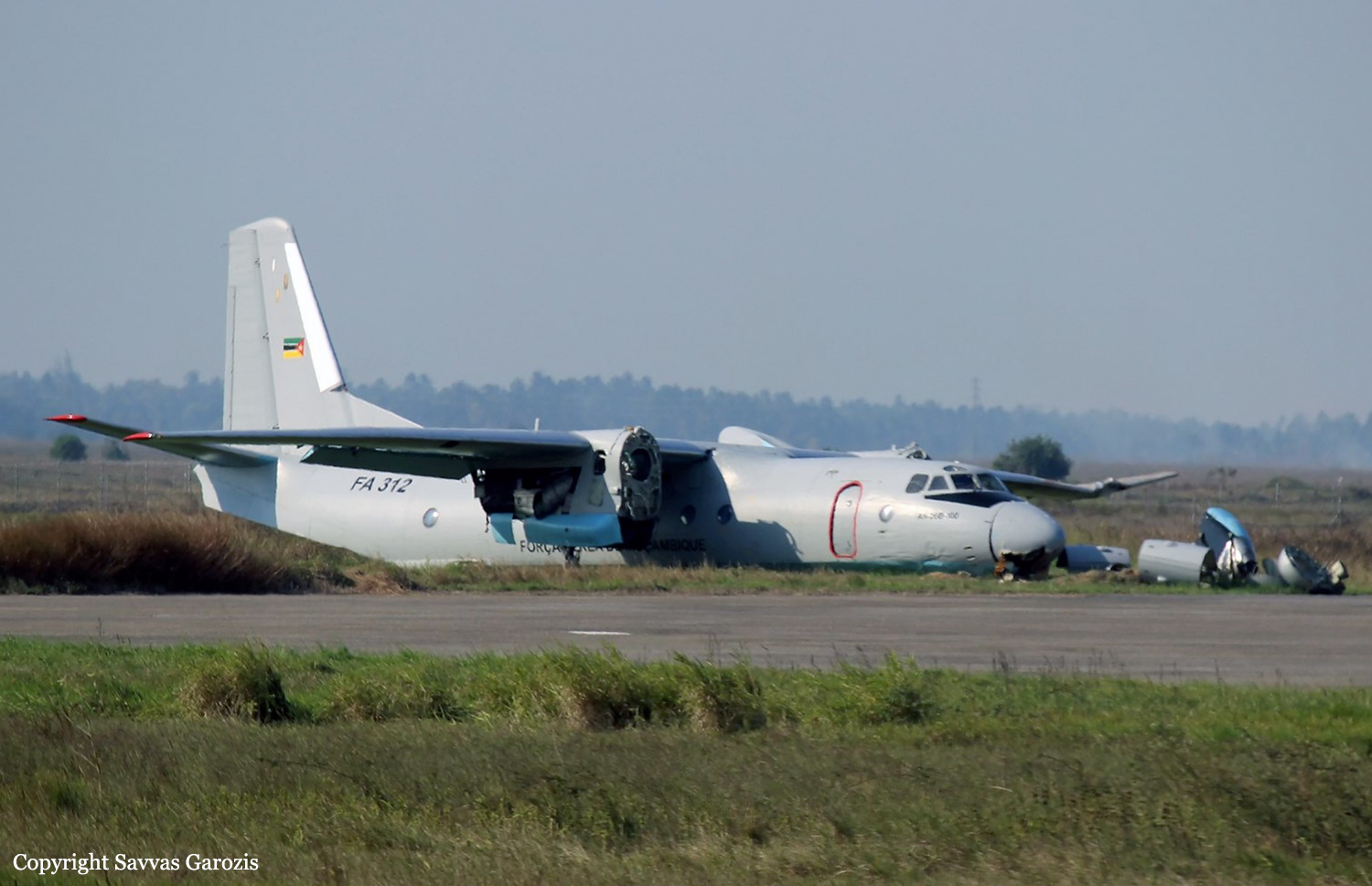
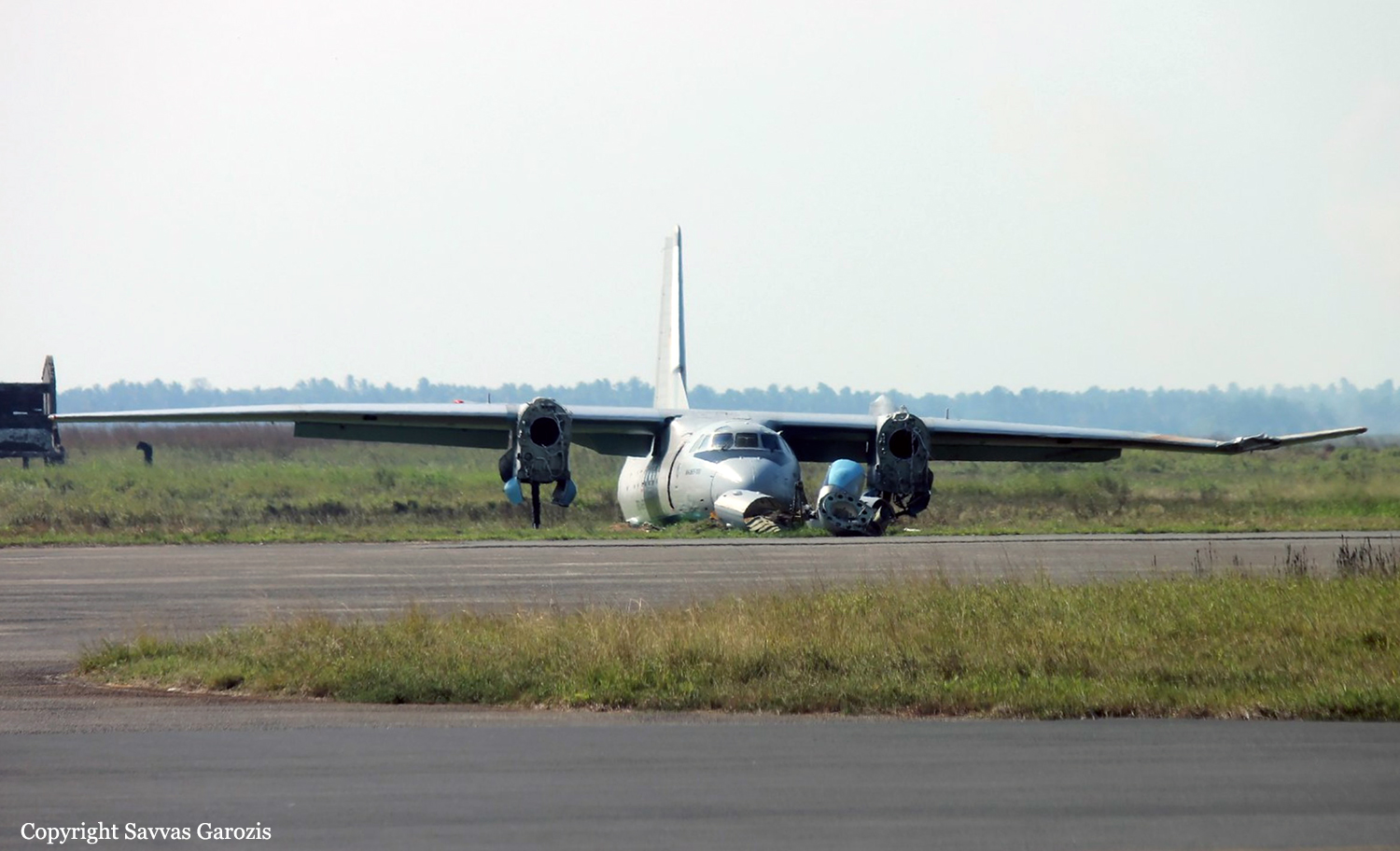
The aircraft departed Quelimane on a cargo/military/supply mission to Mocuba, carrying six crew members and a load of equipment for the victims of the recent flood in northern Mozambique. Shortly after takeoff, one of the engines failed. The crew attempted an emergency landing when the aircraft crash landed in a field and came to rest about 150 metres past the runway end. All six occupants escaped uninjured and the aircraft was damaged beyond repair.

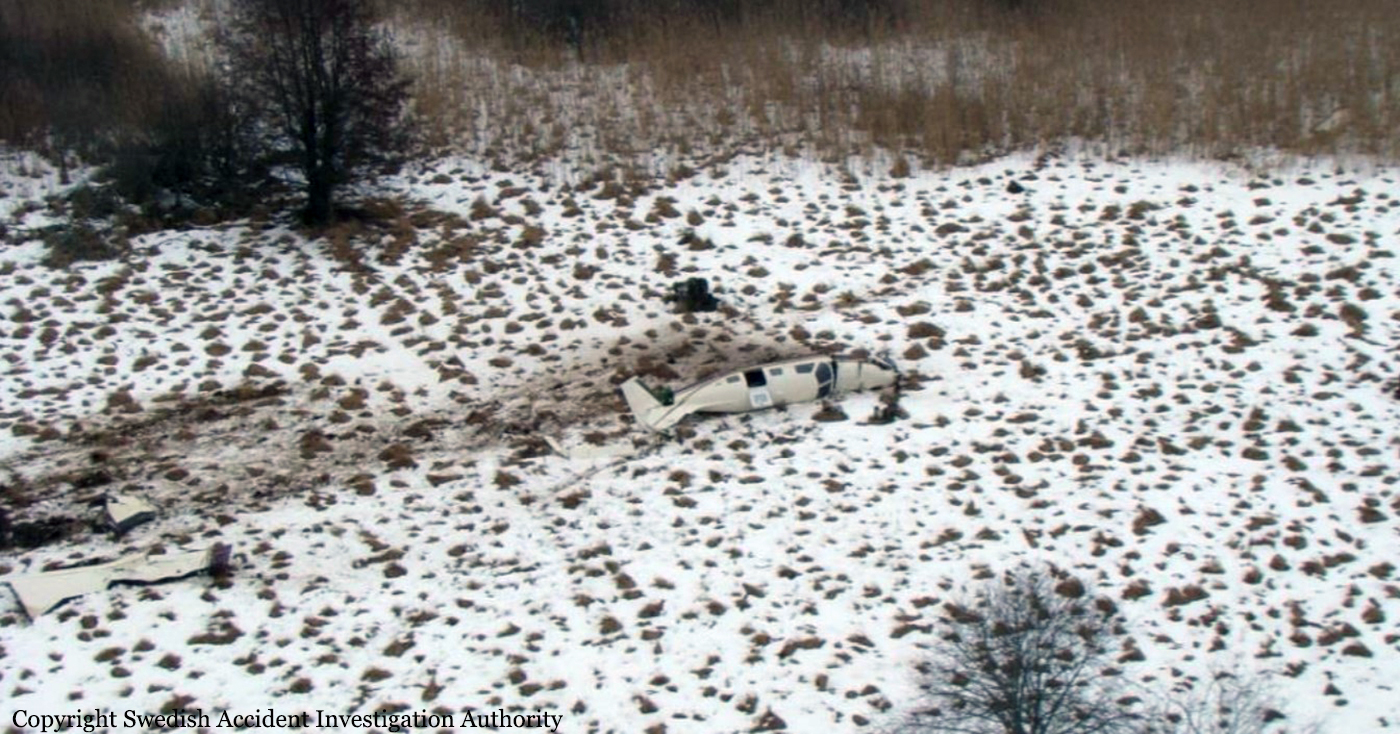
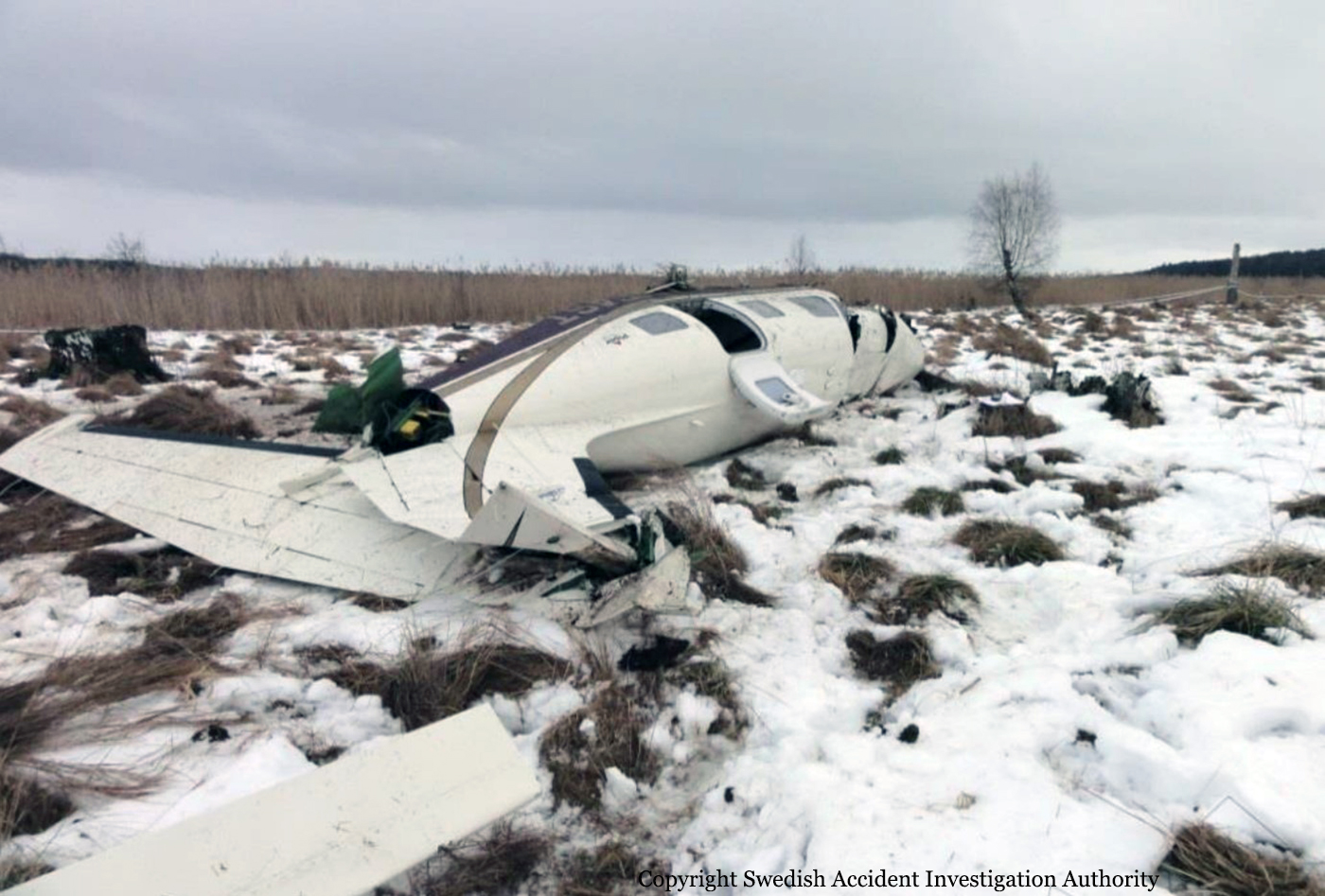
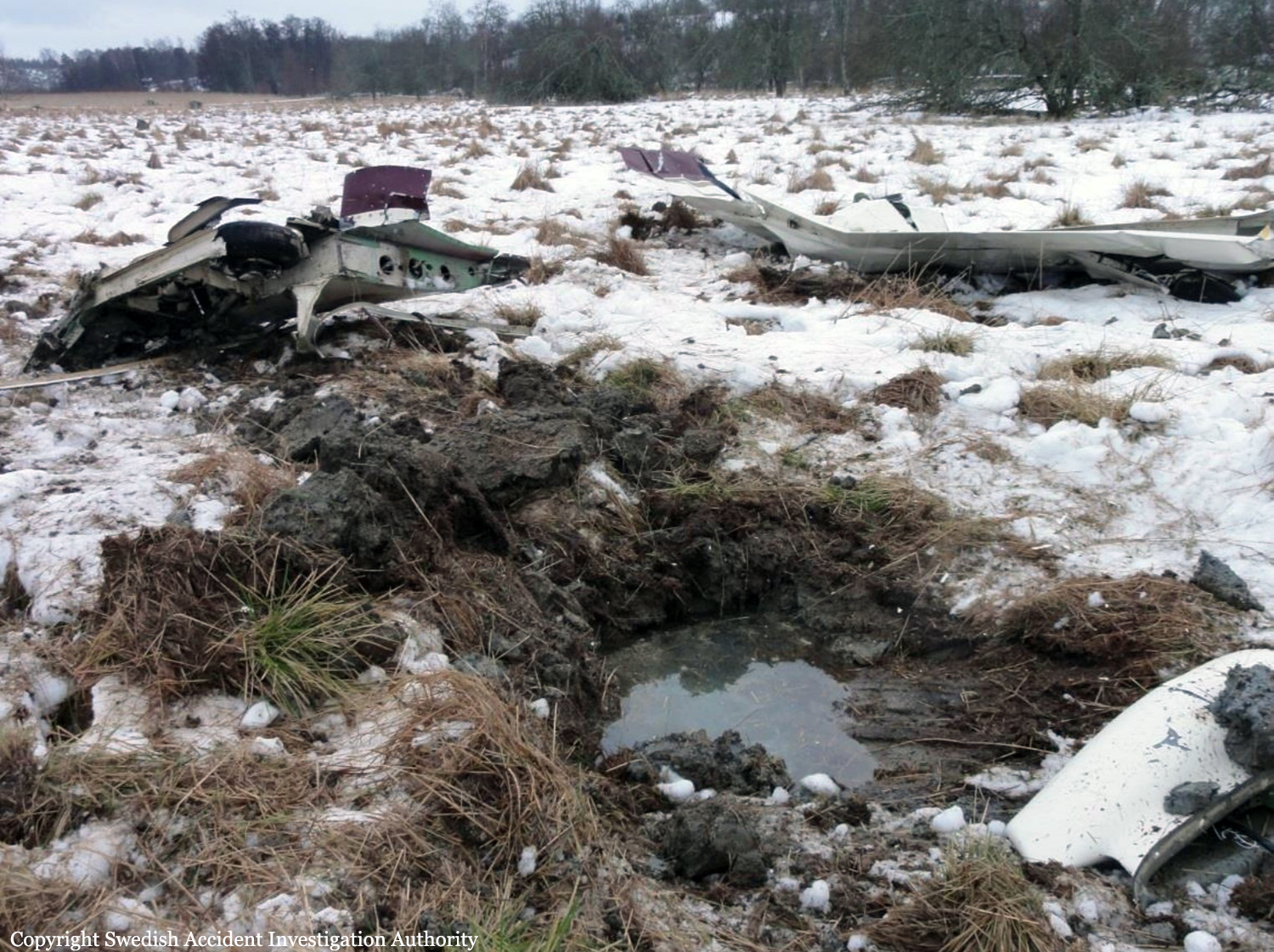
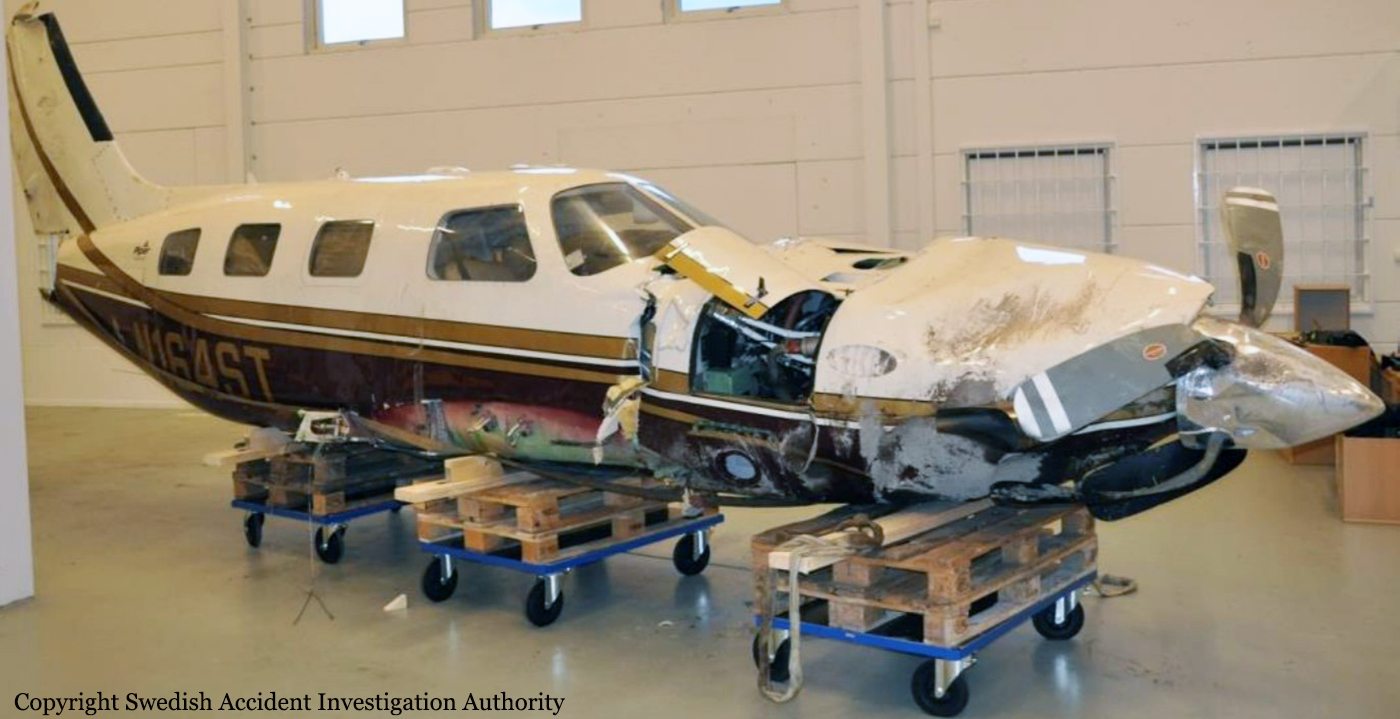
Crash of a Piper PA-46-500TP Malibu Meridian in Västerås

Date & Time: Feb 13, 2015 at 1203 LT
Registration:
N164ST
Flight Phase:
Flight Type:
Survivors:
Yes
Schedule:
Västerås – Prague
MSN:
46-97064
YOM:
2001
Country:
Region:
Crew on board:
1
Crew fatalities:
Pax on board:
2
Pax fatalities:
Other fatalities:
Total fatalities:
0
Captain / Total flying hours:
674
Captain / Total hours on type:
184.00
Aircraft flight hours:
2767
Circumstances:
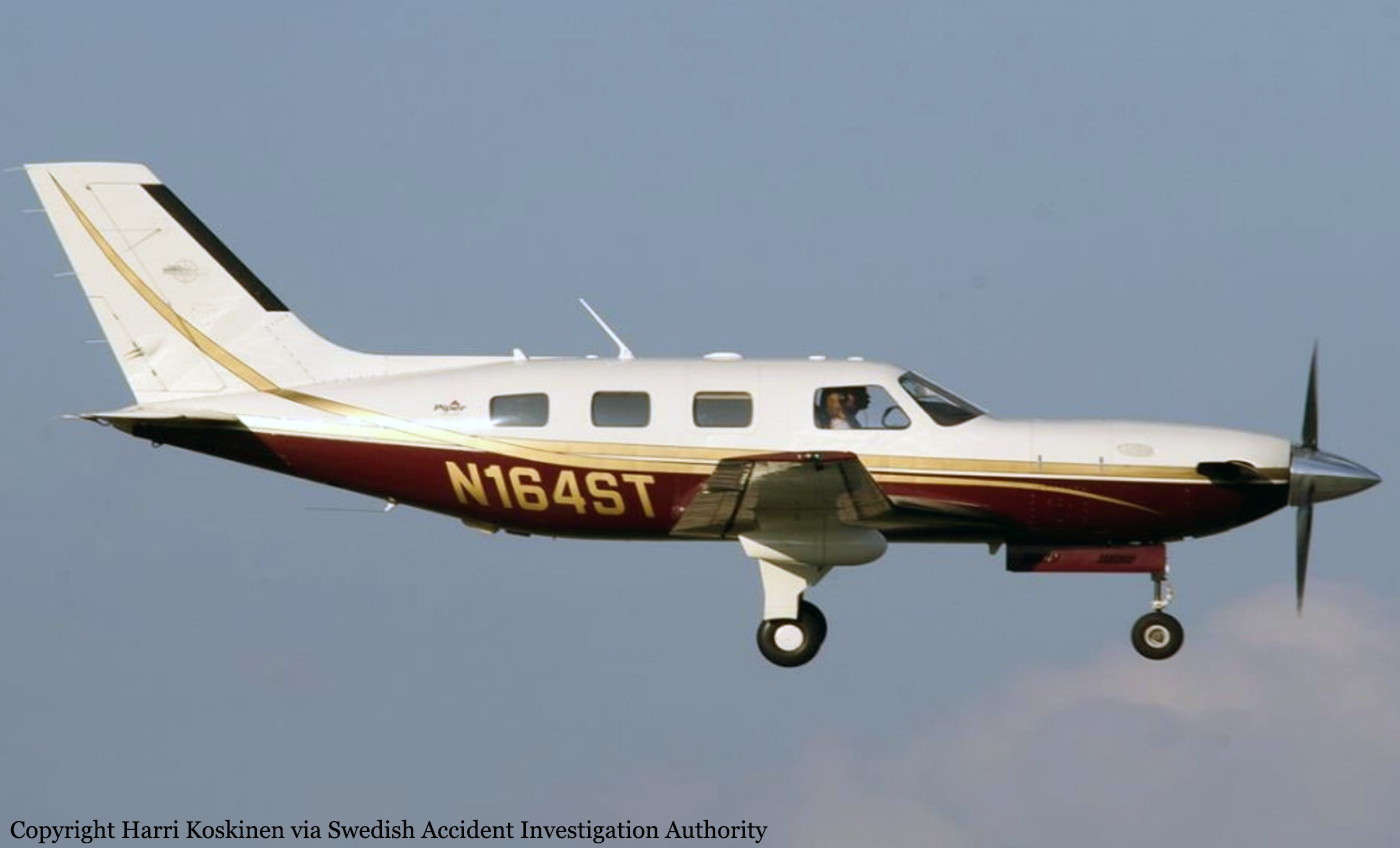
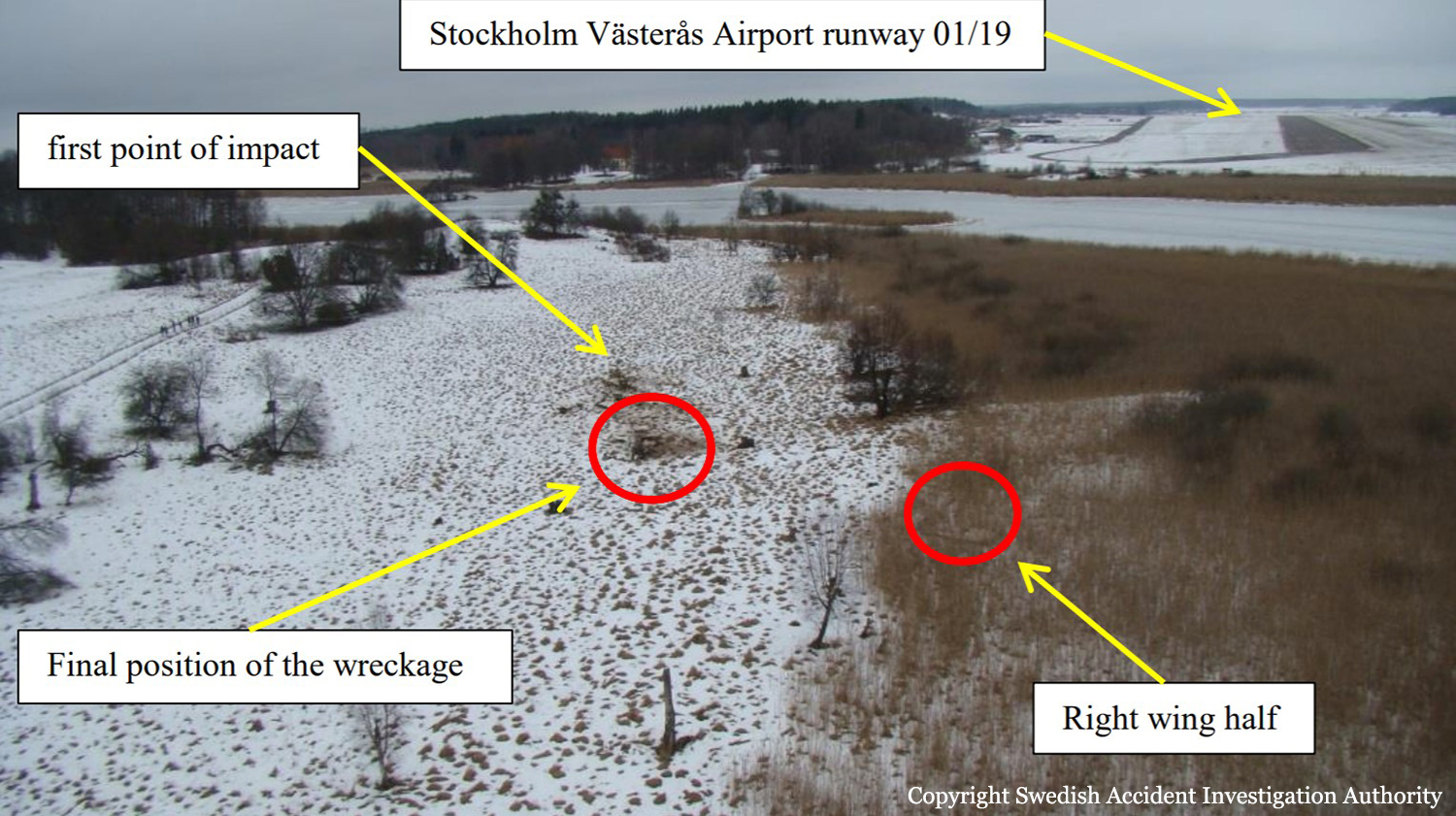
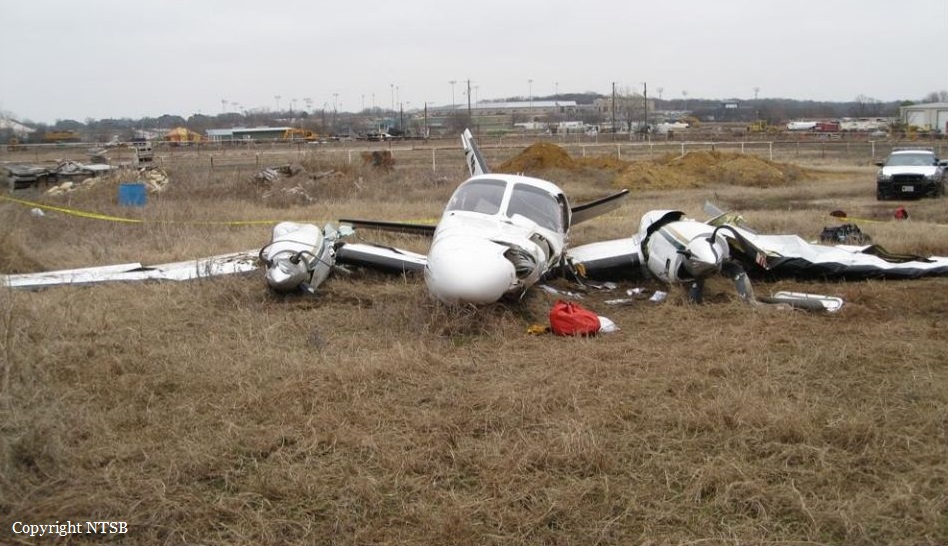
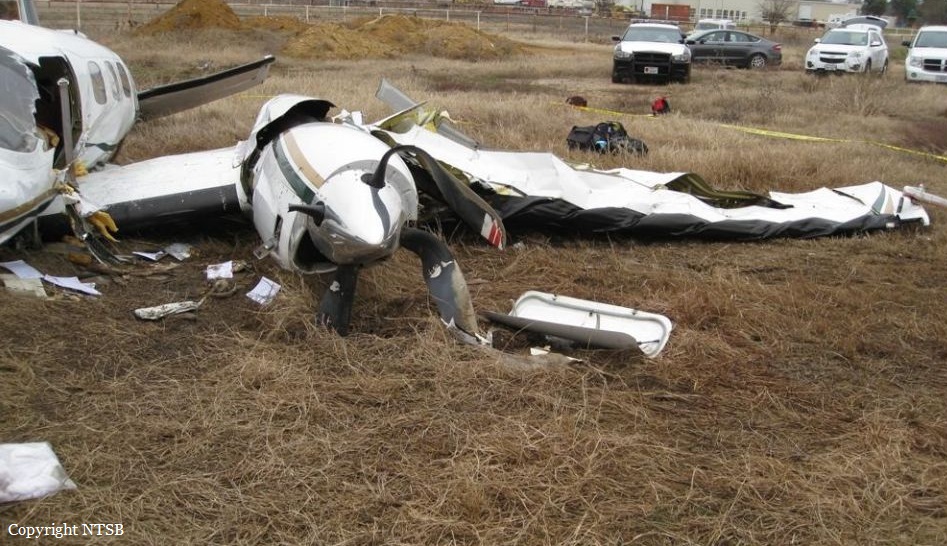
The aircraft, a Piper PA46-500TP Malibu Meridian, should carry out a private flight from Västeras airport to Prague. On board were a pilot and two passengers. Shortly after take-off an engine failure occurred and the pilot decided to make an emergency landing on Björnö Island, situated slightly to the right in the flight direction. The aircraft hit the ground with the left wing first and then rolled a number of times before it came to a final stop. During the accident both wings and parts of the tail separated from the aircraft. The fuselage remained relatively undamaged during the crash course. All three occupants escaped with minor injuries. A special study of the sequence of events shows that the impact, with the left wing first, caused the airplane's wings to act as shock absorbers, which greatly contributed to that the occupants only received minor injuries. During the accident - which occurred next to a secondary protection zone for water supply to the city of Västerås – a significant amount of fuel leaked out from the wreckage. The accident site was decontaminated after the accident. Examination undertaken in the area after the accident has not showed any trace of residual contamination in the soil.
Probable cause:
The engine failure was caused by damage to the engine's power turbine section. Most likely, the damage has been initiated in a labyrinth seal to the power turbine. The cause of the initial damage of the seal has not been established. The technical failure can not be assessed to be in a risk category where the risk of repeated failures of the same type is high. The accident was caused by damage to the power turbine which occurred over time, and that could not be identified by the engine's maintenance program.
Final Report:

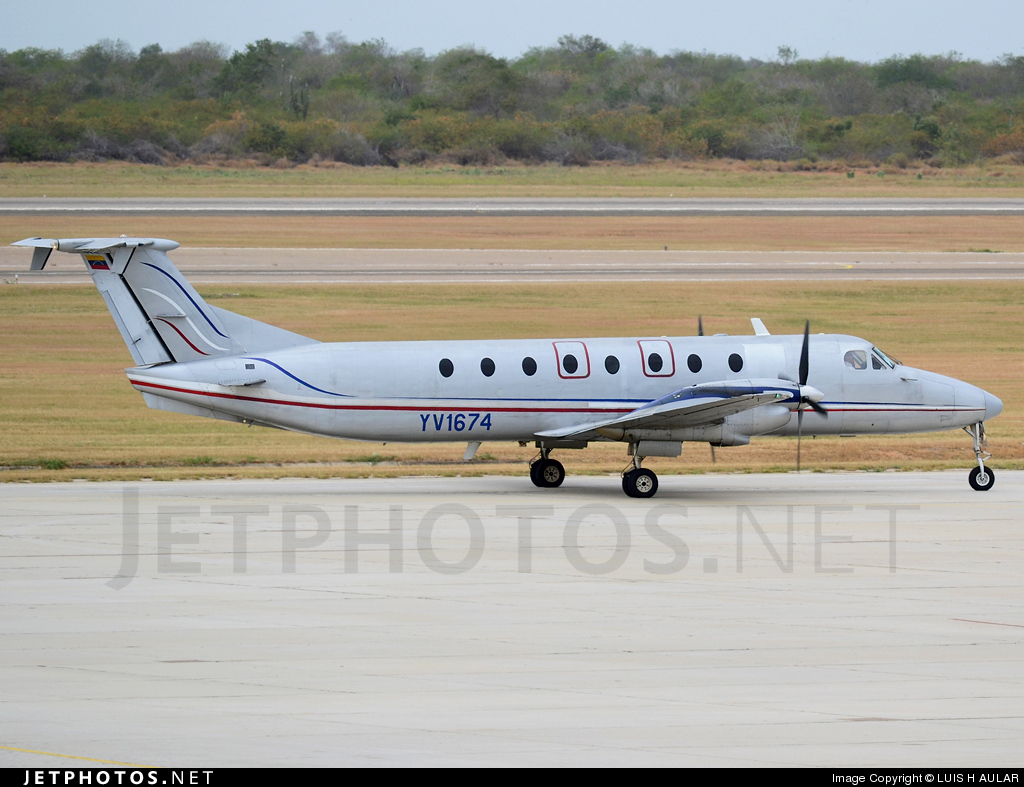
Crash of a Beechcraft 1900C in Kendall: 4 killed

Date & Time: Feb 11, 2015 at 1439 LT
Type of aircraft:
Registration:
YV1674
Flight Phase:
Flight Type:
Survivors:
No
Schedule:
Kendall - Procidenciales
MSN:
UC-47
YOM:
1988
Crew on board:
2
Crew fatalities:
Pax on board:
2
Pax fatalities:
Other fatalities:
Total fatalities:
4
Captain / Total flying hours:
19053
Captain / Total hours on type:
1476.00
Copilot / Total flying hours:
9529
Copilot / Total hours on type:
152
Aircraft flight hours:
35373
Circumstances:
The accident flight was a repositioning flight being operated by two airline transport pilots, and it was the multiengine turboprop airplane's first flight after an aviation maintenance technician (AMT) had replaced the left engine propeller with an overhauled propeller. The AMT subsequently performed an engine run, which included verifying correct power settings and corresponding blade angles. A review of flight data recorder (FDR) data revealed that, about 2 seconds after rotation, the left engine propeller rpm decreased to 60 percent, and the left engine torque increased off-scale (beyond 5,000 ft lbs), which is consistent with the left propeller traveling to the feathered position and the engine torque increasing in an attempt to maintain propeller rpm. About 30 seconds later, the flight crew shut down the left engine and attempted to return to the departure airport. Postaccident examination of the rudder trim actuator revealed that the rudder trim was at its full-right limit, which would have occurred to counteract the left engine drag before its shutdown. Based on this evidence, it is likely that the flight crew did not readjust the trim when the drag was alleviated, which resulted in the airplane being operated in a crosscontrolled attitude for about 50 seconds with a left bank and full-right rudder trim. Although the airplane should have been able to climb about 500 ft per minute with one engine operating, it slowed and descended from 300 ft in the cross-controlled attitude until it stalled, as indicated by a stall warning recorded by the cockpit voice recorder, and subsequently impacted terrain. Examination of the wreckage, including teardown examination of the left engine and propeller, did not reveal any preimpact mechanical anomalies. Review of the airplane maintenance manual revealed instructions to check the propeller reversing linkage on the front end of the engine, which controlled the beta valve, for proper rigging during propeller installation. The manual also contained a warning that misadjustment of the beta valve can cause unplanned feathering of the propeller and result in a possible hazard to airplane operation and over torque damage to the engine; however, the beta valve rigging could not be verified postaccident due to impact damage. Additionally, the ground/flight idle solenoid energizes when weight becomes off wheels and further opens the beta valve, which could exacerbate an existing misrigged condition as soon as the airplane becomes airborne, which is when the airplane experienced the uncommanded propeller feathering. The FDR data were consistent with the flight crew not performing the Before Takeoff (Runup) checklist. One of the items on that checklist was a low-pitch solenoid test, which would have energized the solenoid and possibly driven the left propeller uncommanded to feather during ground operations rather than in flight. A similar test during the post maintenance engine-run would have had the same results.
Probable cause:
The left engine propeller's uncommanded travel to the feathered position during takeoff for reasons that could not be determined due to impact damage. Contributing to the accident was the flight crew's failure to establish a coordinated climb once the left engine was shut down and the left propeller was in the feathered position.
Final Report:
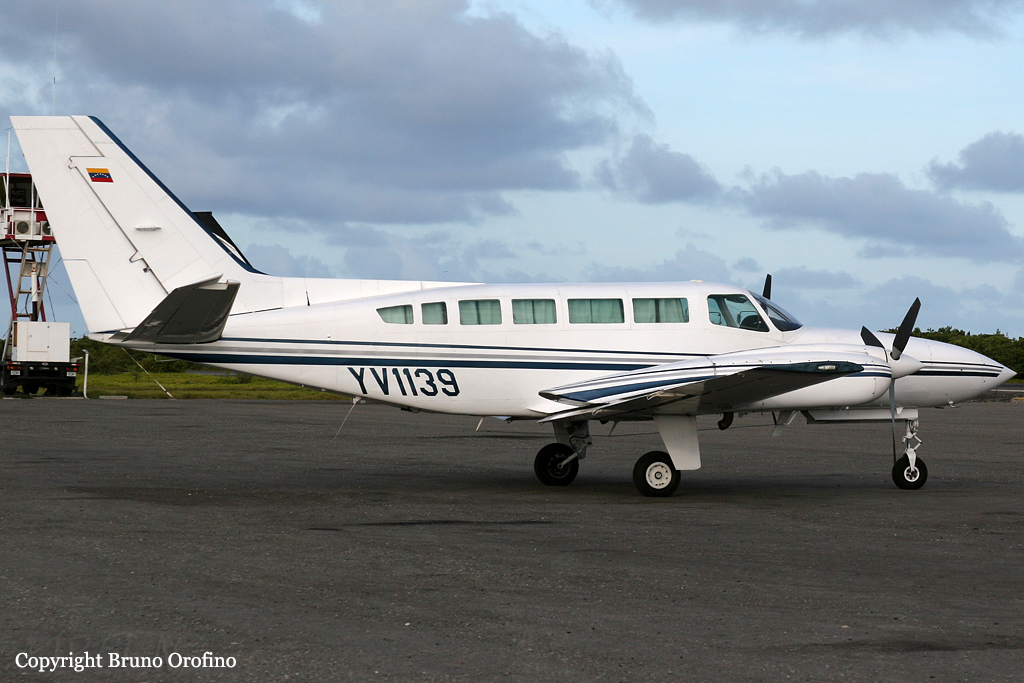
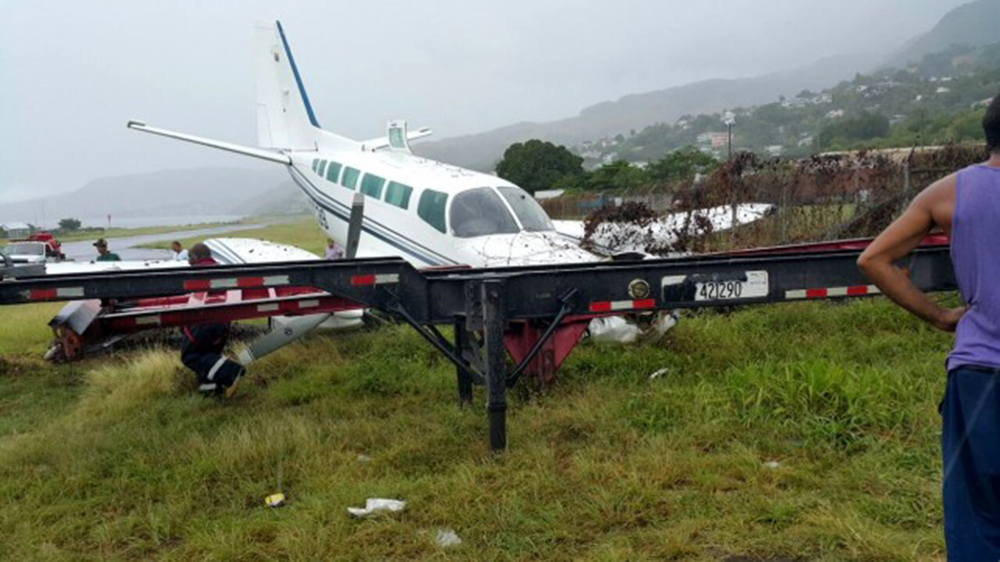
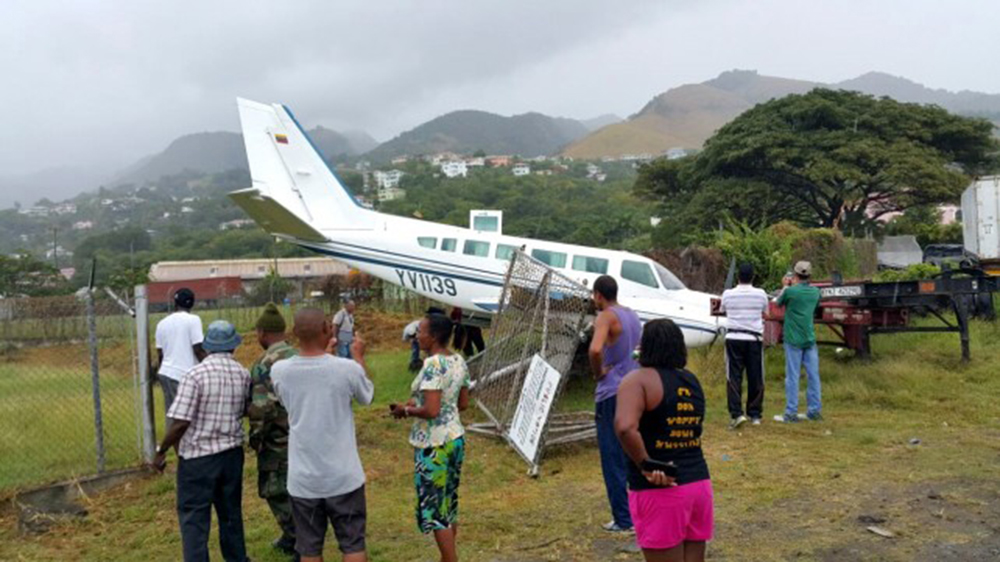
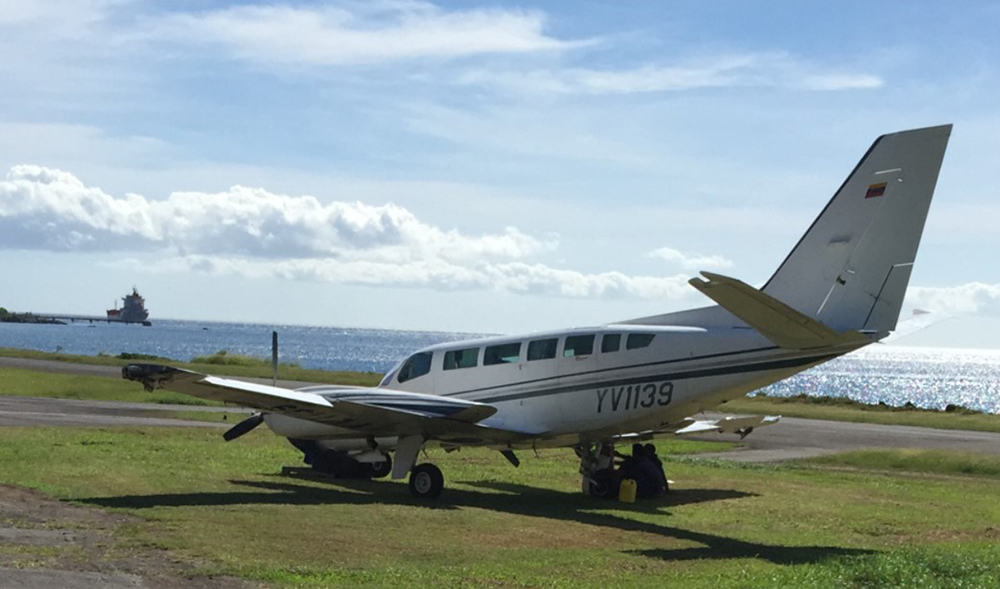
Crash of a Cessna 404 Titan II on Roseau

Date & Time: Feb 8, 2015
Type of aircraft:
Operator:
Registration:
YV1139
Flight Type:
Survivors:
Yes
MSN:
404-628
YOM:
1980
Country:
Crew on board:
1
Crew fatalities:
Pax on board:
6
Pax fatalities:
Other fatalities:
Total fatalities:
0
Circumstances:
After landing at Roseau-Canefield, the pilot encountered difficulties to stop the aircraft that overran. It collided with a fence and came to rest against various obstacles. All seven occupants evacuated safely and the aircraft was damaged beyond repair.

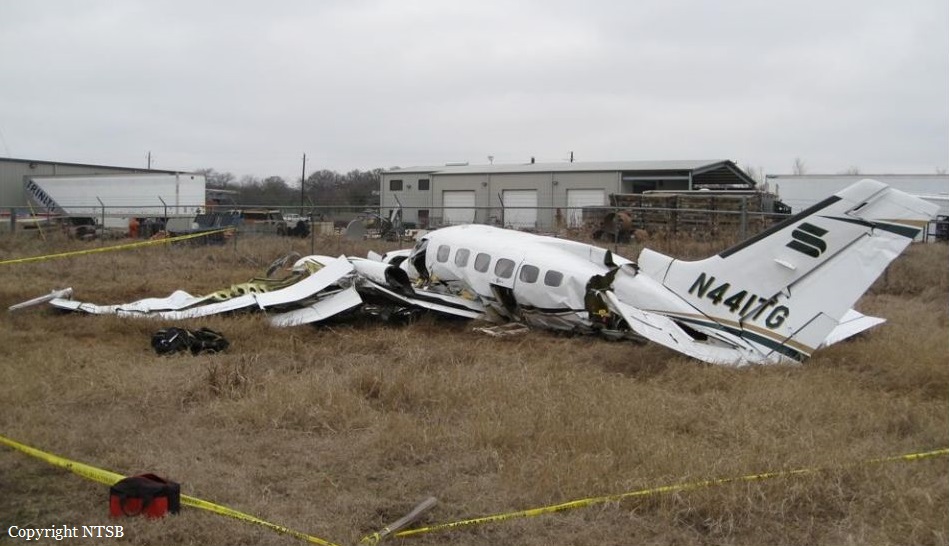
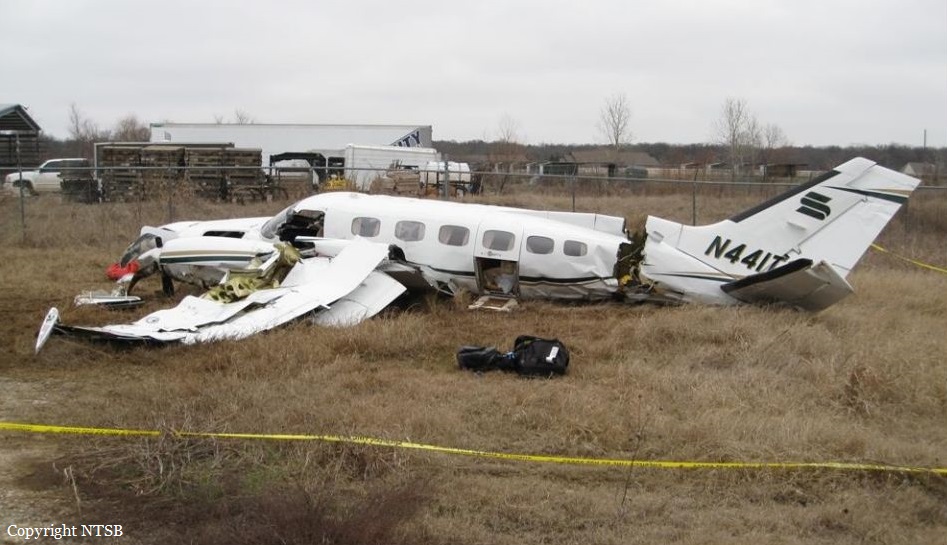
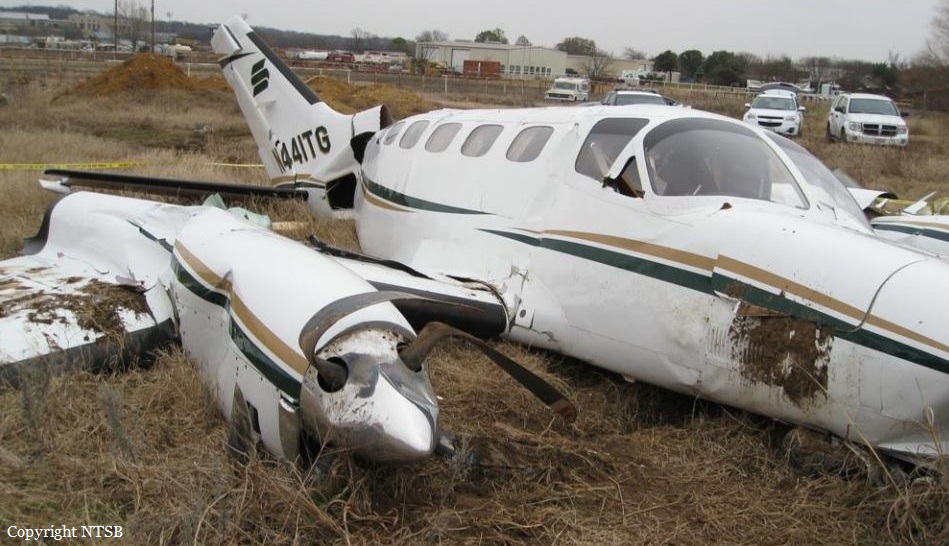
Crash of a Cessna 441 Conquest II in Denton: 1 killed

Date & Time: Feb 4, 2015 at 2109 LT
Type of aircraft:
Registration:
N441TG
Flight Type:
Survivors:
No
Schedule:
Willmar - Denton
MSN:
441-200
YOM:
1981
Location:
Crew on board:
1
Crew fatalities:
Pax on board:
0
Pax fatalities:
Other fatalities:
Total fatalities:
1
Captain / Total flying hours:
4935
Aircraft flight hours:
3830
Circumstances:
The instrument-rated commercial pilot was approaching the destination airport after a cross country flight in night instrument meteorological conditions. According to radar track data and air traffic control communications, while receiving radar vectors to the final approach course, the pilot did not always immediately comply with assigned headings and, on several occasions, allowed the airplane to descend below assigned altitudes. According to airplane performance calculations based on radar track and GPS data, the pilot made an engine power reduction about 2.5 minutes before the accident as he maneuvered toward the final approach fix. Following the engine power reduction, the airplane's airspeed decreased from 162 to 75 knots calibrated airspeed, and the angle of attack increased from 2.7° to 14°. About 4 miles from the final approach fix, the airplane descended below the specified minimum altitude for that segment of the instrument approach. The tower controller subsequently alerted the pilot of the airplane's low altitude, and the pilot replied that he would climb. At the time of the altitude alert, the airplane was 500 ft below the specified minimum altitude of 2,000 ft mean sea level. According to airplane performance calculations, 5 seconds after the tower controller told the pilot to check his altitude, the pilot made an abrupt elevator-up input that further decreased airspeed, and the airplane entered an aerodynamic stall. A witness saw the airplane abruptly transition from a straight-and-level flight attitude to a nose-down, steep left bank, vertical descent toward the ground, consistent with the stall. Additionally, a review of security camera footage established that the airplane had transitioned from a wings-level descent to a near vertical spiraling descent. A post accident examination of the airplane did not reveal any anomalies that would have precluded normal operation during the accident flight. Although the pilot had monocular vision following a childhood injury that resulted in very limited vision in his left eye, he had passed a medical flight test and received a Statement of Demonstrated Ability. The pilot had flown for several decades with monocular vision and, as such, his lack of binocular depth perception likely did not impede his ability to monitor the cockpit instrumentation during the accident flight. The pilot had recently purchased the airplane, and records indicated that he had obtained make and model specific training about 1 month before the accident and had flown the airplane about 10 hours before the accident flight. The pilot's instrument proficiency and night currency could not be determined from the available records; therefore, it could not be determined whether a lack of recent instrument or night experience contributed to the pilot's difficulty in maintaining control of the airplane.
Probable cause:
The pilot's failure to maintain adequate airspeed during the instrument approach in night instrument meteorological conditions, which resulted in the airplane exceeding its critical angle of attack and an aerodynamic stall/spin at a low altitude.
Final Report:
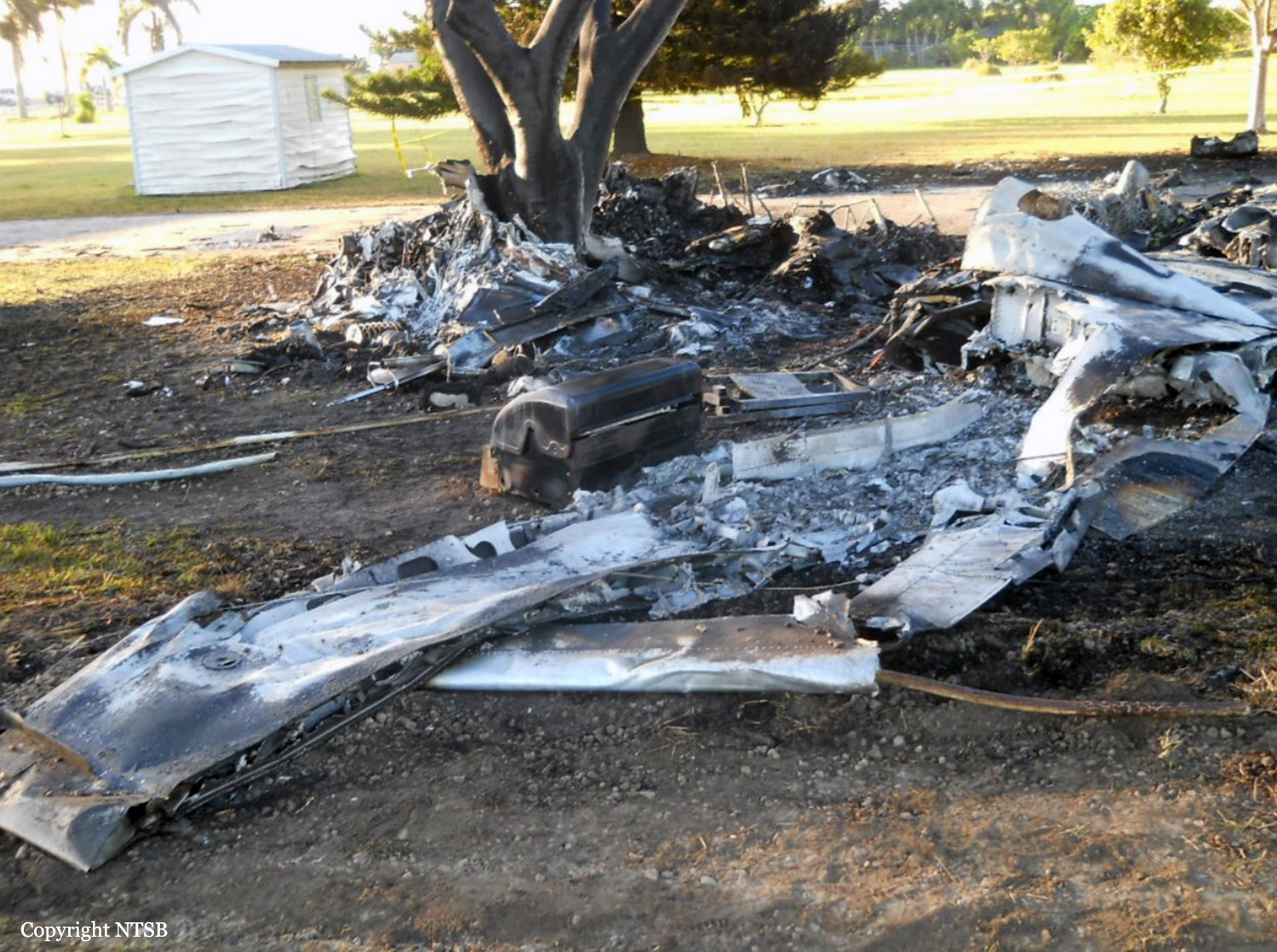
Crash of a Piper PA-46-500TP Malibu Meridian in Lubbock: 1 killed

Date & Time: Feb 4, 2015 at 1930 LT
Operator:
Registration:
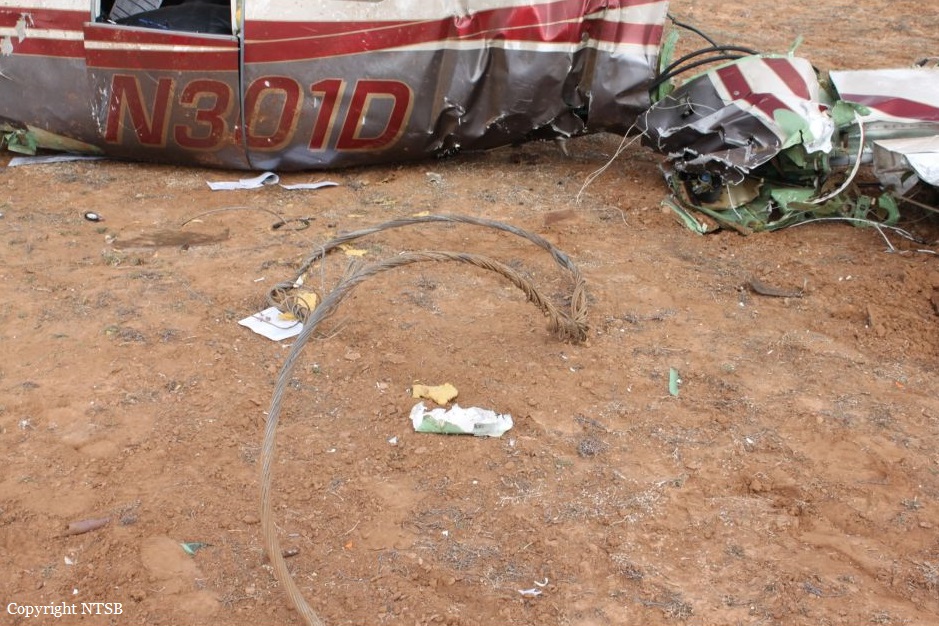
N301D
Flight Type:
Survivors:
No
Schedule:
Carlsbad – Lubbock
MSN:
46-97043
YOM:
2001
Location:
Crew on board:
1
Crew fatalities:
Pax on board:
0
Pax fatalities:
Other fatalities:
Total fatalities:
1
Captain / Total flying hours:
1073
Aircraft flight hours:
1378
Circumstances:
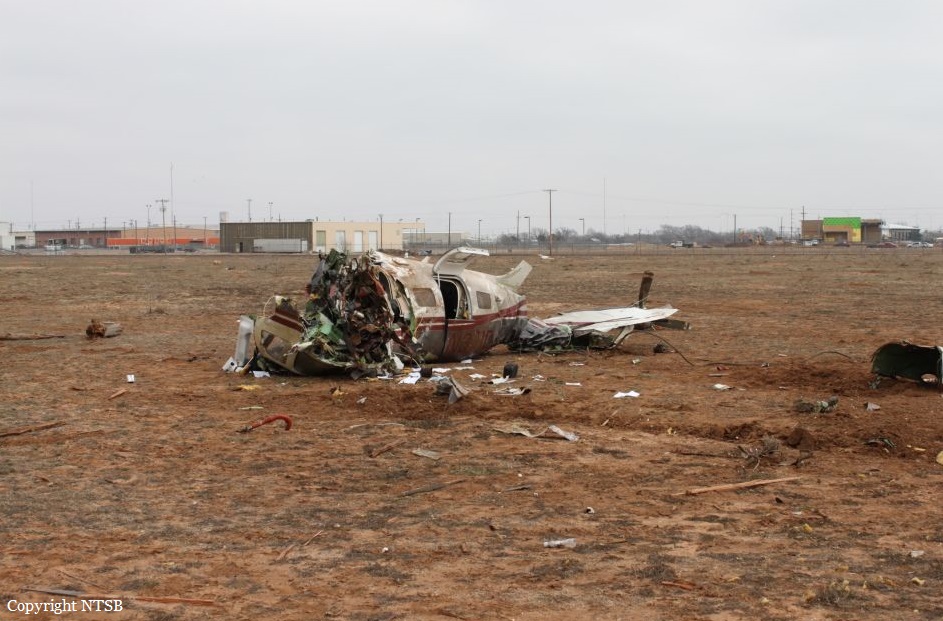
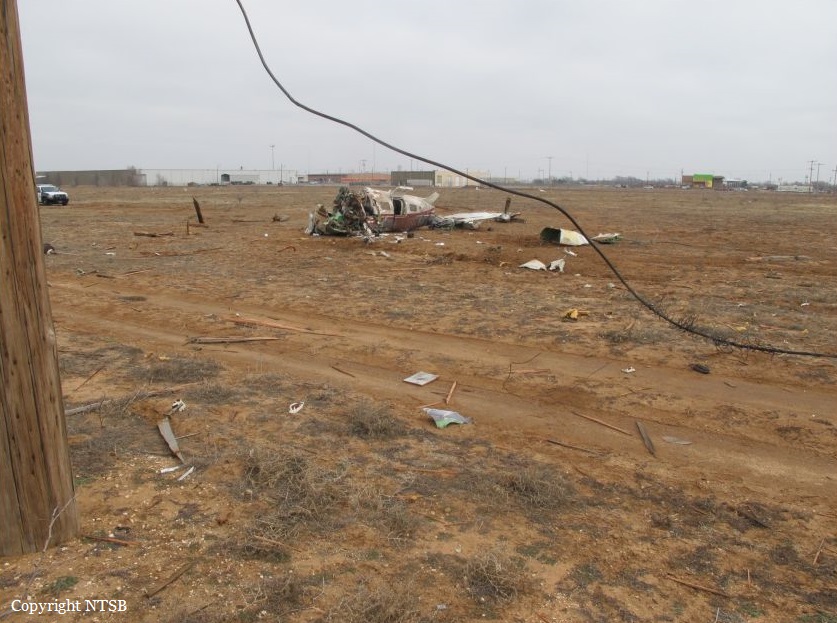
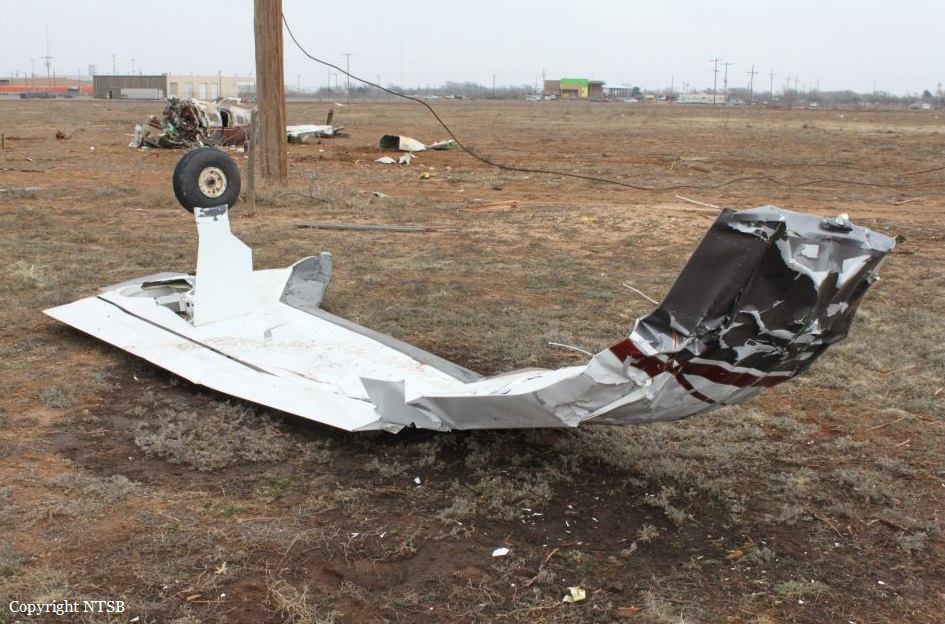
The instrument-rated private pilot was conducting a personal cross-country flight in the airplane. A review of the air traffic control transcripts and radar data revealed that the pilot was executing the RNAV GPS Y instrument approach to the runway. The air traffic controller then canceled the pilot's approach clearance and issued a heading change off of the approach course to provide spacing between a preceding aircraft. The pilot acknowledged the heading assignment. Radar data indicated that, after the controller cancelled the approach, the airplane began a left climbing turn from 5,600 to 5,800 ft, continued the left turn through the assigned 270 heading, and then descended rapidly. At that point, the airplane was no longer visible on the controller's radar display, and contact with the pilot was lost. The final recorded radar return showed the airplane at 5,100 ft. The airplane impacted a television tower guy wire, several power lines, and terrain, and then came to rest in an open field about 800 ft from the tower. A postaccident examination of the airplane and engine revealed no anomalies that would have precluded normal operation. A postaccident examination of the engine revealed rotational signatures on the first stage compressor blades and light rotational signatures in the compressor and power turbines, and debris was found in the engine's gas path, all of which are consistent with engine rotation at impact. A witness in the parking lot next to the television tower stated that he heard the accident airplane overhead, saw a large flash of light that filled his field of view, and then observed the television tower collapse on top of itself. Surveillance videos located 1.5 miles north-northeast and 0.3 mile north-northwest of the accident site showed the airplane in a left descending turn near the television tower. After it passed the television tower, multiple bright flashes of light were observed, which were consistent with the airplane impacting the television tower guy wire and then the power lines. Further, the radar track and accident wreckage were consistent with a rapid, descending left turn to impact. Weather conditions were conducive to the accumulation of ice at the destination airport about the time that the pilot initiated the left turn. It is likely that the airplane accumulated at least light structural icing during the descent and that this affected the airplane's controllability. Also, the airplane likely encountered wind gusting up to 31 knots as it was turning; this also could have affected the airplane's controllability. The night, instrument meteorological conditions at the time of the accident were conducive to the development of spatial disorientation, and the airplane's rapid, descending left turn to impact is consistent with the pilot's loss of airplane control due to spatial disorientation. Therefore, based on the available evidence, it is likely that, while initiating the climbing left turn, the pilot became spatially disoriented, which resulted in his loss of airplane control and his failure to see and avoid the tower guy wire, and that light ice accumulation on the airplane and the gusting wind negatively affected the airplane's controllability.
Probable cause:
The pilot's loss of airplane control due to spatial disorientation and light ice accumulation while operating in night, instrument meteorological conditions with gusting wind.
Final Report:
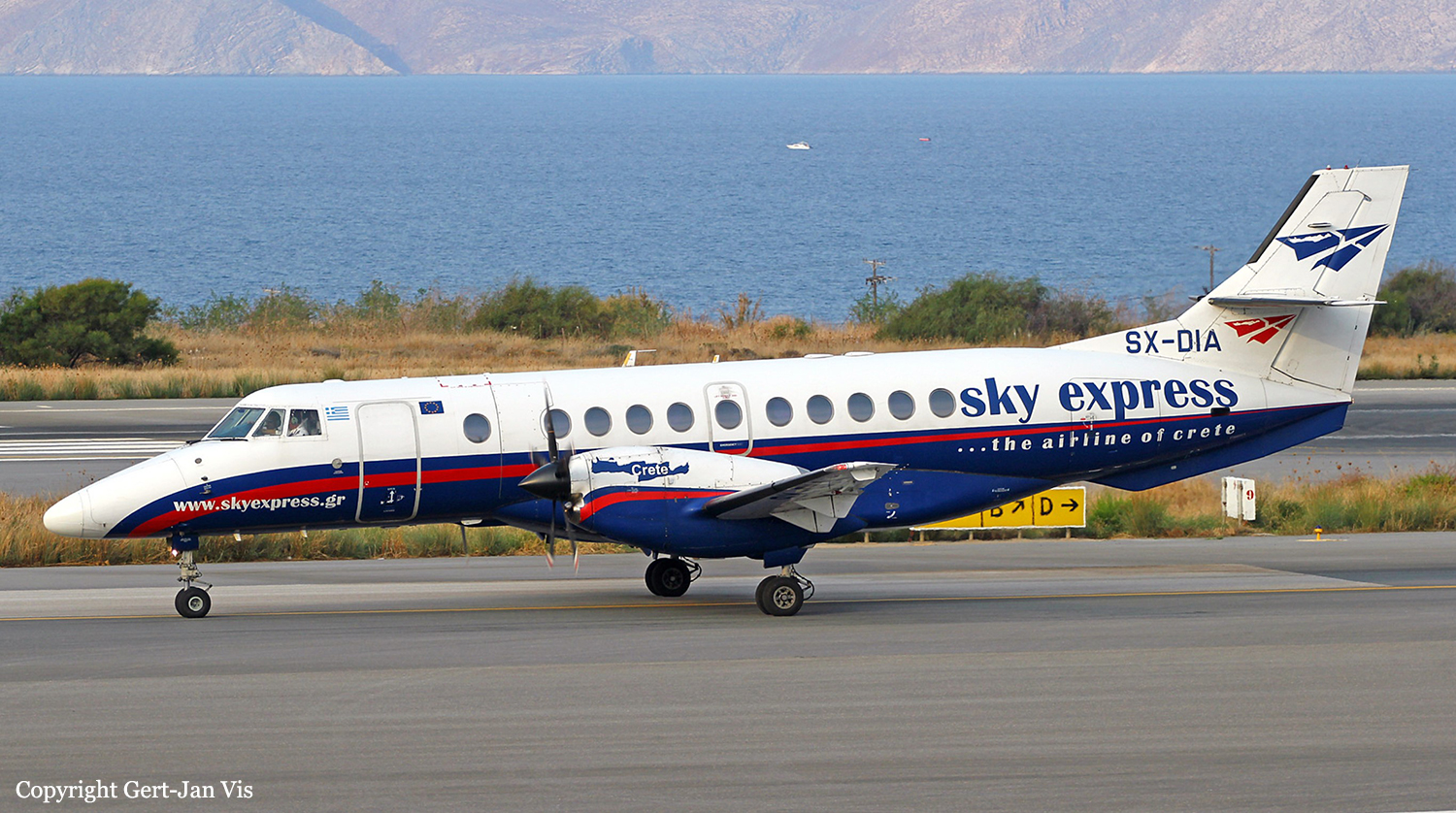
Crash of a BAe 4100 Jetstream 41 in Rhodes

Date & Time: Feb 2, 2015 at 0736 LT
Type of aircraft:
Operator:
Registration:
SX-DIA
Survivors:
Yes
Schedule:
Heraklion – Rhodes
MSN:
41075
YOM:
1995
Flight number:
SEH100
Country:
Region:
Crew on board:
3
Crew fatalities:
Pax on board:
16
Pax fatalities:
Other fatalities:
Total fatalities:
0
Captain / Total flying hours:
11117
Captain / Total hours on type:
3574.00
Copilot / Total flying hours:
3834
Copilot / Total hours on type:
1334
Aircraft flight hours:
28327
Circumstances:
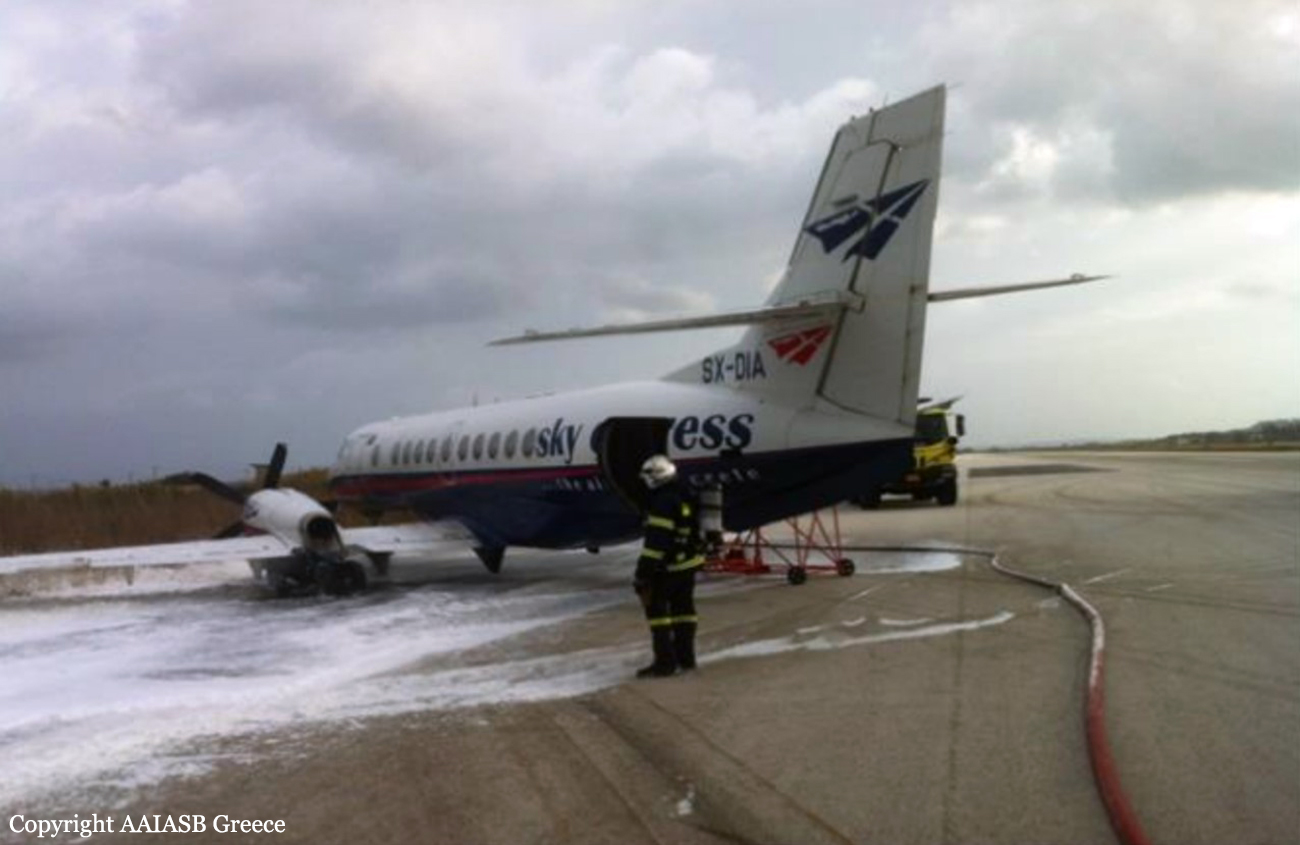
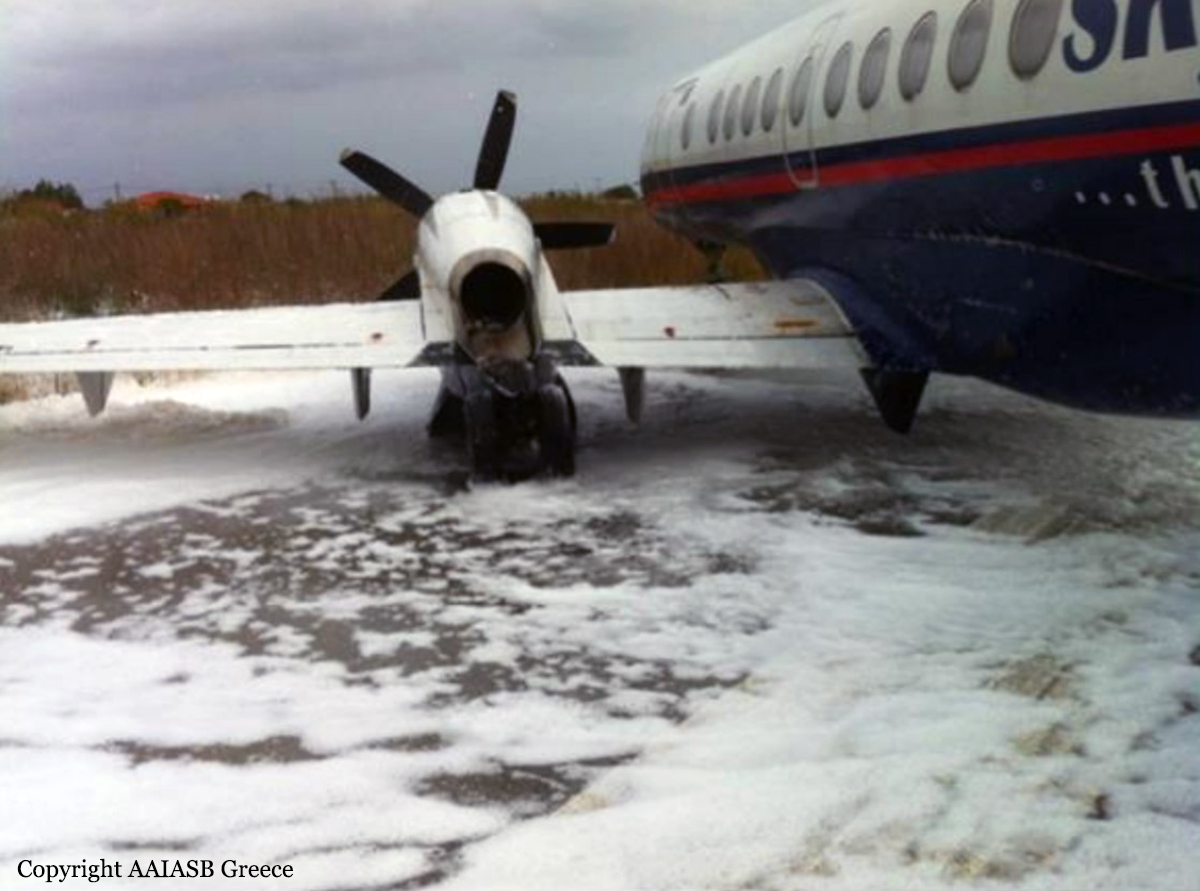
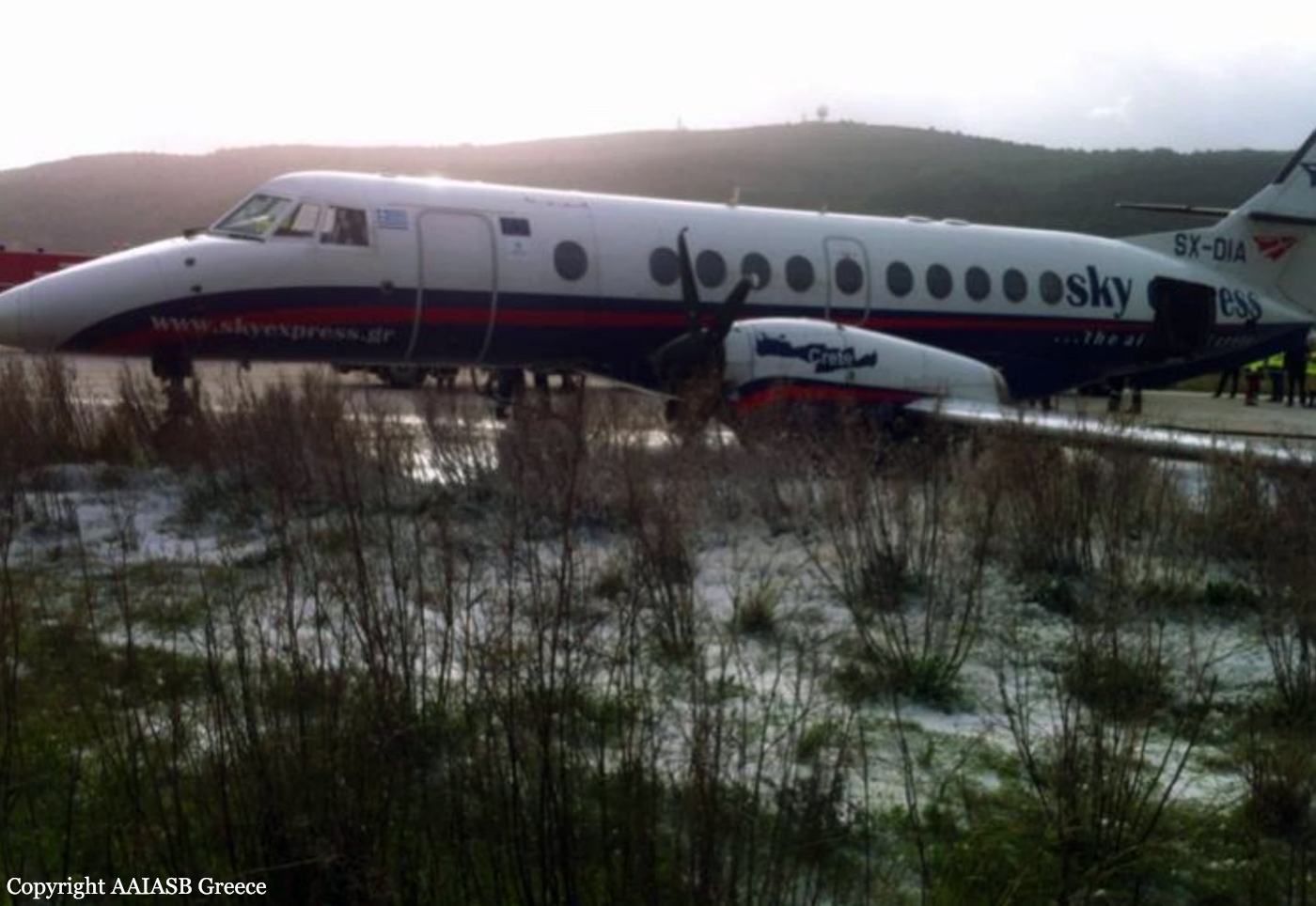
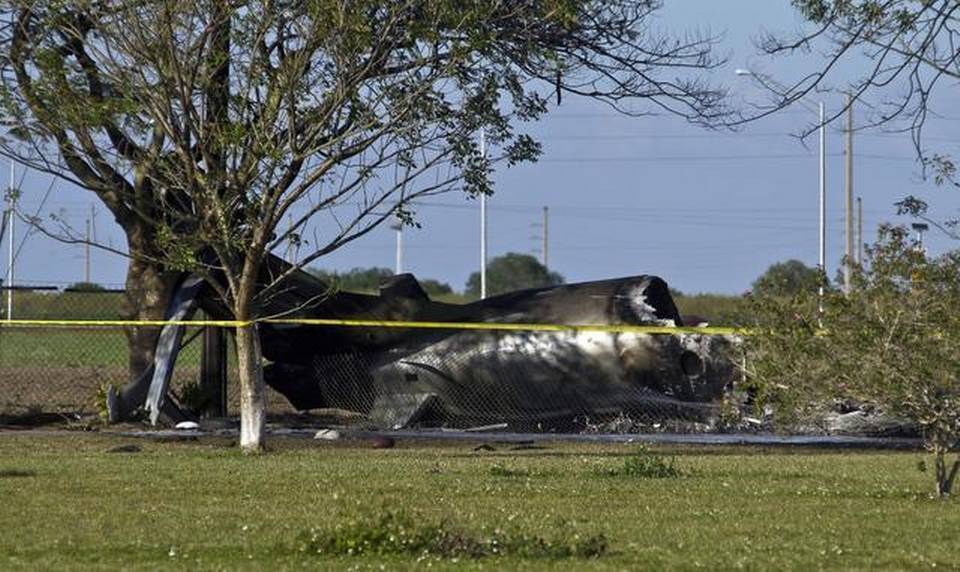
The Jetstream 41 aircraft, with registration number SX-DIA, operated by “SKY EXPRESS”, took off on 2nd February 2015 at 07:00 hrs. local time from the Airport of Heraklion ‘N. Kazantzakis’, performing the scheduled flight No. ‘SEH100’, the first in the day, destined for the Airport of Rhodes ‘Diagoras’. Pre-flight checks were completed with no findings and in this flight the Captain was designated as the Pilot Flying. A 3-member crew and 16 passengers were onboard. The flight crew reported for duty one hour prior to the time of flight and proceeded with all actions as laid down in the Company manual. The flight crew was also briefed that in the area of the Airport of Rhodes the winds were S-SE at 17 kt with Wind Gust 36 kt. At 07:23:54 hrs., approximately 12 min prior to landing, in the first contact of the flight crew with the Control Tower of the Airport of Rhodes, the flight crew was briefed by the Air Traffic Controller (ATC) with respect to the weather conditions at the area of the airport, variable winds prevailing with a direction from 20° to 160°, average wind direction from 110°, wind velocity 20 kt gusting 38 kt. As laid down in the airport procedures, ATC, given the weather conditions, alerted the fire service vehicles to be stationed in readiness at their designated positions on the taxiways. At 07:24:43 hrs. Rhodes ATC contacted the flight crew wishing to remind that as a result of the strong wind shear and turbulence, landing at the airport is not recommended under the circumstances. At 07:29:34 hrs. Rhodes ATC contacted again the flight crew informing that the wind is shifting from 40° to 260°, average wind direction from 120°, mean wind velocity 20 kt and wind gust 32 kt. At 07:32:36 hrs., at about 8nm to the airport, the ATC contacting again the flight crew informed that wind in the last ten minutes is shifting in all directions, with mean wind velocity 16 kt and wind gust 37 kt; ATC also reminded that under these conditions landing is not recommended. At 07:34:04 hrs., at about 4 nm to the airport, Rhodes ATC contacted again the flight crew informing that wind is shifting from 60° to 200°, mean wind velocity 15 kt, wind gust 32 kt and that runway 07 is free for landing. At 07:35:08 hrs. ATC again reports wind direction from 110°, 17kt. Communication between ATC and the flight crew was smooth without any problem, with the flight crew each time acknowledging the information provided by ATC. Given the prevailing winds, landing with 9° flaps and an airspeed of about 129 kt was selected. With the flight crew having performed all pre-landing checks prescribed in the manual and with the indicator lights for the ‘Down and Lock’ landing system being illuminated green, at about 07:36 hrs. the aircraft landed, with the right main landing gear touching down first. During deceleration immediately after touchdown, with the flight crew having performed all checks specified in the a/c manual and after ATC directed the aircraft to vacate the runway via taxiway ‘C’, the aircraft veered to the left and came to rest at the left edge of the runway without exiting the runway, with an eastward direction. With the fire service vehicle approaching the aircraft, the flight crew contacted the Control Tower of the airport stating that everything is ok, and then reporting inability to taxi when asked whether the aircraft is able to taxi; when asked whether a tire was burst, the flight crew confirmed that this is the case. At 07:37:49 hrs. the Fire Service advises the Control Tower of the airport that the fire truck sprays foam due to fuel leakage. At 07:41:08 hrs. the Control Tower, when so asked by the ‘follow me’ vehicle, inquired of the flight crew whether passengers could be disembarked and the answer was that getting off from the passenger door (forward left) would not be feasible given the presence of the fire-fighting foam on the runway, and that the rear right door (Emergency Exit) would be used instead. As reported by the Air Traffic Controller passengers were disembarked 15 minutes after the incident, and the process lasted approximately 10 minutes. Upon a first visual inspection at the accident site and before the left wing of the aircraft was raised on jacks, it appeared that the left main landing gear folded back resulting in the aircraft’s left side dragging the runway (the left main landing gear and its housing into contact with the runway) and stopping at the left edge of the runway facing to the east.
Probable cause:
- The decision to perform a landing following a non-stabilized approach.
- Landing with a strong and variable wind, the speed and the crosswind component of which were in excess of the values specified by the standard operating procedures, the aircraft manufacturer and the recommendations for the said aerodrome in AIP GREECE.
- The failure to adhere to CRM principles.
Final Report:
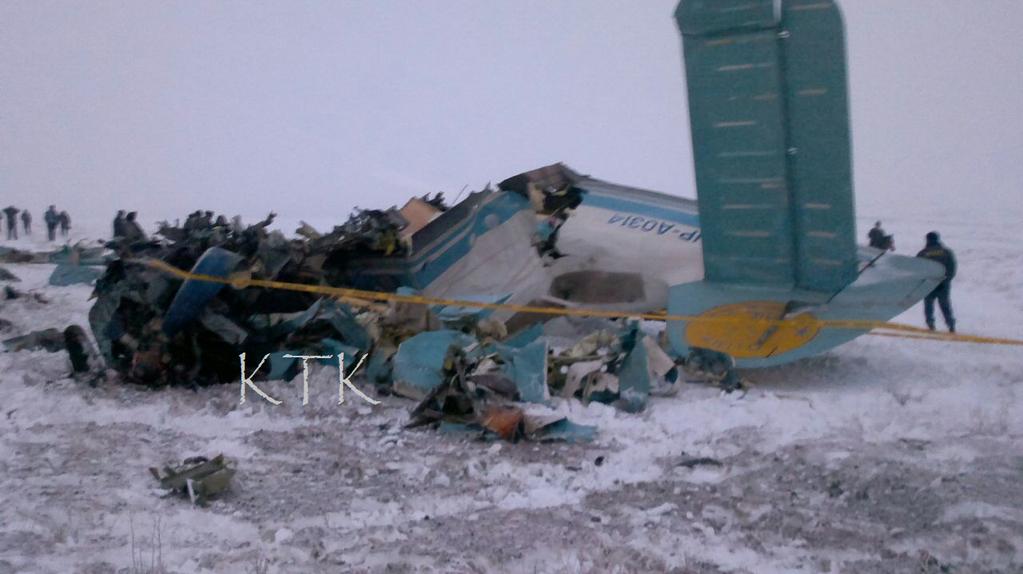
Crash of a PZL-Mielec AN-2P in Shatyrkul: 6 killed

Date & Time: Jan 20, 2015 at 1540 LT
Type of aircraft:
Operator:
Registration:
UP-A0314
Survivors:
Yes
Schedule:
Karaganda – Balkhach – Shatyrkul
MSN:
1G149-70
YOM:
1973
Country:
Region:
Crew on board:
3
Crew fatalities:
Pax on board:
4
Pax fatalities:
Other fatalities:
Total fatalities:
6
Aircraft flight hours:
13227
Circumstances:
The single engine aircraft was approaching Shatyrkul in foggy conditions when it crashed in a snow covered field located 1,2 km south of the landing zone area, some 20 km north of Shatyrkul. SAR arrived on scene at 1701LT. A female passenger was seriously injured and was evacuated to a local hospital while six other occupants were killed. The four passengers were employees of the Kazakhmys Mining Company. At the time of the accident, the visibility was poor due to fog.
Probable cause:
The crew descended without visual contact to the ground and without having fed the air pressure of the airstrip into the barometric altimeter, causing the aircraft to impact the ground on final approach.