Crash of a Boeing 307 Stratoliner B-1 in Battambang: 19 killed

Date & Time: Jun 27, 1974
Type of aircraft:
Registration:
XW-TFR
Flight Phase:
Survivors:
Yes
Schedule:
Battambang - Phnom Penh
MSN:
1999
YOM:
1940
Country:
Region:
Crew on board:
6
Crew fatalities:
Pax on board:
33
Pax fatalities:
Other fatalities:
Total fatalities:
19
Circumstances:
Just after liftoff, while in initial climb, the airplane stalled and crashed in flames shortly after the runway end. Two crew members and 17 passengers were killed while 20 others were injured. The aircraft was destroyed.
Probable cause:
Simultaneous loss of power on engine n°1, 2 and 3 due to poor maintenance.

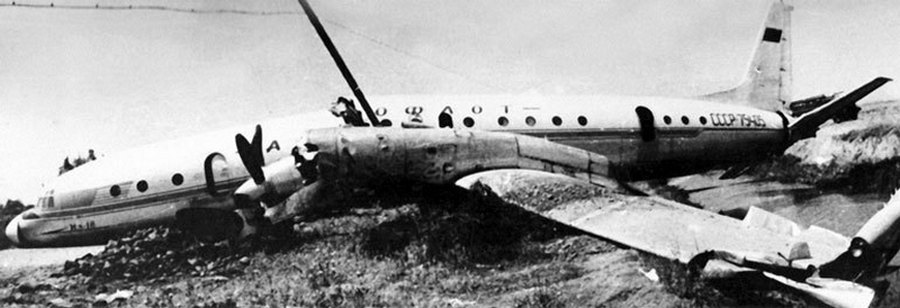
Crash of an Ilyushin II-18 in Tashkent: 1 killed

Date & Time: Jun 24, 1974 at 1705 LT
Type of aircraft:
Operator:
Registration:
CCCP-75405
Flight Phase:
Survivors:
Yes
Schedule:
Samarkand - Tashkent - Leningrad
MSN:
186 0090 05
YOM:
1966
Flight number:
SU5139
Country:
Region:
Crew on board:
8
Crew fatalities:
Pax on board:
106
Pax fatalities:
Other fatalities:
Total fatalities:
1
Aircraft flight hours:
19030
Aircraft flight cycles:
6427
Circumstances:
During the takeoff roll, at a speed of 230 km/h, the engine n°4 failed. The captain decided to abandon the takeoff procedure and started an emergency braking maneuver. Unable to stop within the remaining distance, the airplane overran at a speed of 100 km/h, went through a road and a ditch before coming to rest, broken in two. 20 passengers were injured, three of them seriously as they were not wearing their seat belt. Few hours later, one of them died.
Probable cause:
It was determined that the engine n°4 failed after colliding with birds during the takeoff roll, causing the high pressure turbine to fail. Several errors on part of the flying crew contributed to the accident, such as a wrong decision on part of the captain, his lack of knowledge about the time needed between the engine full power mode and the activation of the reverse mode. Also, the thrust reverse systems were activated on both left engines only as the flight engineer failed to activate the thrust reverse system on engine n°3.

Crash of a Cessna 402B in Petersburg: 2 killed

Date & Time: Jun 22, 1974 at 1225 LT
Type of aircraft:
Registration:
N69379
Flight Type:
Survivors:
No
Schedule:
Richmond - Petersburg
MSN:
402B-0523
YOM:
1973
Crew on board:
2
Crew fatalities:
Pax on board:
0
Pax fatalities:
Other fatalities:
Total fatalities:
2
Captain / Total flying hours:
1600
Captain / Total hours on type:
29.00
Circumstances:
The crew (an instructor and a student pilot) departed Richmond, Virginia, on a training flight to Petersburg, Virginia. After several touch-and-go maneuvers, the twin engine airplane was landing when on touchdown, it struck the runway surface and the pilot elected to make a go-around. Out of control, the airplane veered off runway and came to rest in flames. The aircraft was destroyed and both occupants were killed.
Probable cause:
The aircraft went out of control upon landing after the crew failed to extend the landing gear. The following contributing factors were reported:
- Failed to maintain flying speed,
- Diverted attention from operation of aircraft,
- Examination of runway revealed prop slash marks right and left of runway centerline,
- Right propeller damaged, one blade broken, left propeller damaged.
Final Report:

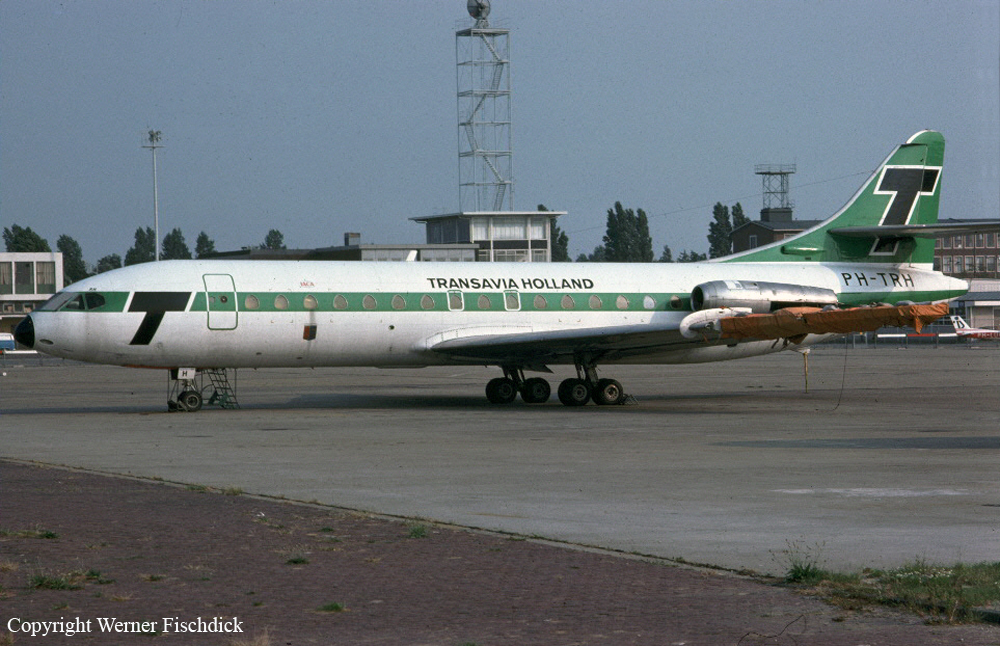
Ground accident of a Sud Aviation SE-210 Caravelle VI-R in Amsterdam

Date & Time: Jun 22, 1974
Operator:
Registration:
PH-TRH
Flight Phase:
Survivors:
Yes
MSN:
96
YOM:
1961
Country:
Region:
Crew on board:
0
Crew fatalities:
Pax on board:
0
Pax fatalities:
Other fatalities:
Total fatalities:
0
Circumstances:
During the takeoff roll at Amsterdam-Schiphol Airport, the captain decided to abandon the takeoff procedure. While returning to the apron via a taxiway, the airplane struck a blast fence with its left wing that was partially torn off. There were no injuries while the aircraft was damaged beyond repair.

Crash of an Antonov AN-2 in Kyzyl

Date & Time: Jun 20, 1974
Type of aircraft:
Operator:
Registration:
CCCP-33162
MSN:
1 144 473 19
YOM:
1960
Country:
Region:
Crew on board:
0
Crew fatalities:
Pax on board:
0
Pax fatalities:
Other fatalities:
Total fatalities:
0
Circumstances:
Crashed near Kyzyl Airport following an engine failure.
Probable cause:
Engine failure.

Crash of a Piper PA-60 Aerostar (Ted Smith Aerostar 600) in Perkasie: 3 killed

Date & Time: Jun 15, 1974 at 0750 LT
Operator:
Registration:
N14ES
Flight Phase:
Flight Type:
Survivors:
No
Schedule:
Perkasie – Williamsport
MSN:
60-0036-79
YOM:
1970
Crew on board:
1
Crew fatalities:
Pax on board:
2
Pax fatalities:
Other fatalities:
Total fatalities:
3
Circumstances:
Just after takeoff from Perkasie-Pennbridge Airport, while climbing, the twin engine airplane entered a nose down attitude then plunged into the earth and crashed in flames in a wooded area. The aircraft was totally destroyed and all three occupants were killed.
Probable cause:
The exact cause of the accident could not be determined. The aircraft was observed pitch down into wooded area. Loss of pitch control for undetermined reasons. Cockpit area destroyed.
Final Report:

Crash of a Rockwell Aero Commander 500 in Grand Central

Date & Time: Jun 13, 1974
Operator:
Registration:
ZS-HMR
Flight Type:
Survivors:
Yes
MSN:
500-654-14
YOM:
1968
Country:
Region:
Crew on board:
1
Crew fatalities:
Pax on board:
1
Pax fatalities:
Other fatalities:
Total fatalities:
0
Circumstances:
On final approach to Grand Central Airport, the aircraft suffered an engine failure. It lost speed, stalled and crashed short of runway threshold. Both occupants were injured and the aircraft was destroyed.
Probable cause:
Engine failure on final approach.

Crash of a PZL-Mielec AN-2 in Vladivostok

Date & Time: Jun 10, 1974
Type of aircraft:
Operator:
Registration:
CCCP-49337
Flight Phase:
Survivors:
Yes
MSN:
1G12-21
YOM:
1961
Country:
Region:
Crew on board:
0
Crew fatalities:
Pax on board:
0
Pax fatalities:
Other fatalities:
Total fatalities:
0
Circumstances:
While taxiing at high speed, the single engine airplane went out of control and crashed. There were no injuries.

Crash of a Rockwell Aero Commander 520 in Santee: 2 killed

Date & Time: Jun 7, 1974 at 1118 LT
Registration:
N719Z
Flight Phase:
Flight Type:
Survivors:
No
Schedule:
Santee - Calexico
MSN:
520-41
YOM:
1953
Crew on board:
1
Crew fatalities:
Pax on board:
1
Pax fatalities:
Other fatalities:
Total fatalities:
2
Captain / Total flying hours:
2000
Circumstances:
Shortly after takeoff from Santee-Gillespie Field, while climbing, the twin engine airplane flew into clouds. The pilot lost control of the airplane that entered a dive and crashed in flames. Both occupants were killed.
Probable cause:
The pilot continued VFR into adverse weather conditions when he suffered a spatial disorientation. The following factors were reported:
- Low ceiling.
Final Report:

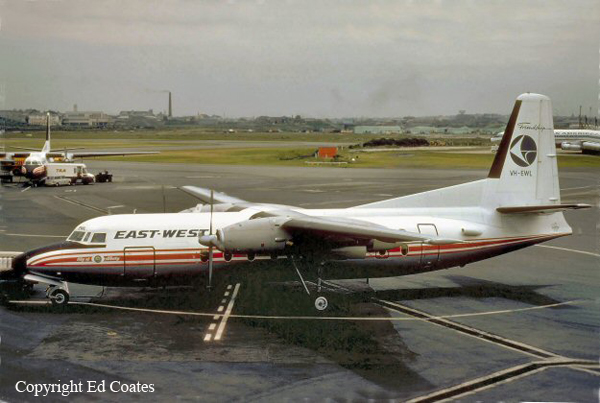
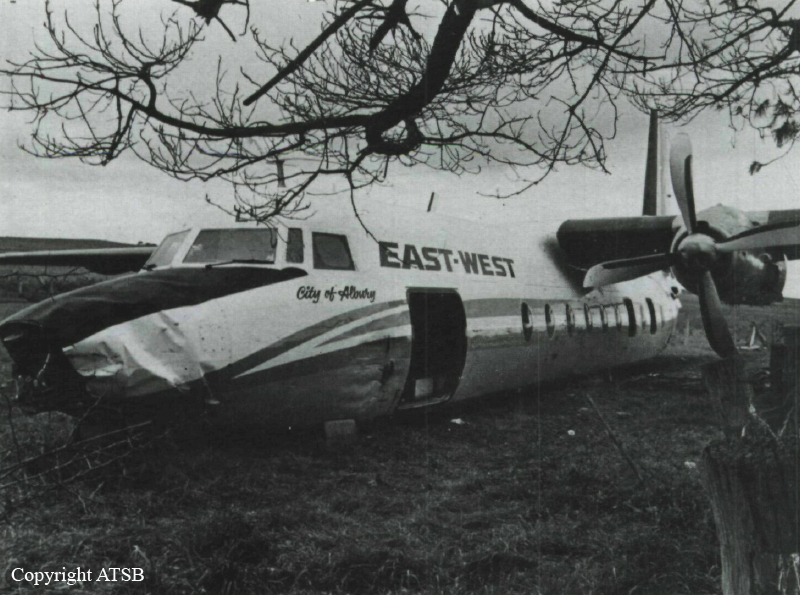
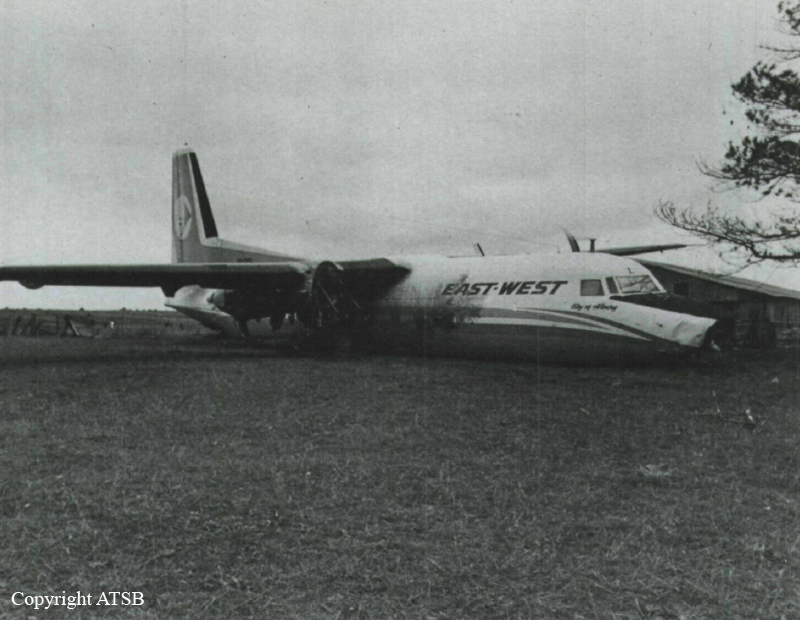
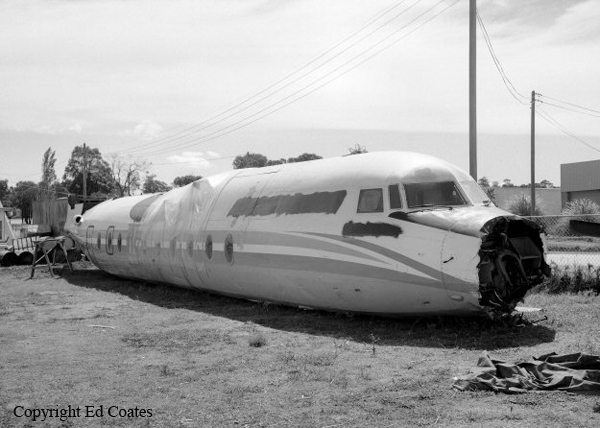
Crash of a Fokker F27 Friendship 100 in Bathurst

Date & Time: May 31, 1974 at 1822 LT
Type of aircraft:
Operator:
Registration:
VH-EWL
Survivors:
Yes
Schedule:
Sydney - Orange - Bathurst
MSN:
10344
YOM:
1967
Flight number:
EW752
Country:
Region:
Crew on board:
4
Crew fatalities:
Pax on board:
30
Pax fatalities:
Other fatalities:
Total fatalities:
0
Captain / Total flying hours:
8067
Captain / Total hours on type:
6000.00
Copilot / Total flying hours:
5420
Copilot / Total hours on type:
514
Aircraft flight hours:
17210
Aircraft flight cycles:
20462
Circumstances:
Fokker F-27, registered VH-EWL, was operating as East-West Airlines Flight 752/753 from Sydney (SYD) to Orange, Bathurst and back to Sydney. The flight departed from Sydney at 17:06 hours and proceeded to Orange without incident. The flight then departed from Orange at 18:10 hours and, flown by the First Officer, the aircraft cruised at an altitude of 5250 feet which is the lowest safe altitude for the route. There was no cloud below the aircraft and the visibility was unrestricted. At Bathurst the weather was reported as a five knot wind from the north-east and the altimeter setting was 1021 millibars. The crew commenced the descent from a position about 5.5 km west of the aerodrome, in visual conditions, with the lights of the city of Bathurst and the runway lights clearly visible. Initially, it was intended to overfly the aerodrome and then make a left-hand circuit preparatory to landing on runway 17, but when the captain saw what appeared to be a light rain shower slightly east of the runway 35 threshold, and which might have involved penetration during a left-hand circuit to runway 17, he decided to land on runway 35 instead. At 1817:30 hours the captain called Sydney Flight Service reporting that the aircraft had arrived in the Bathurst circuit area. The aircraft, which was still being flown by the First Officer, was turned some 90 degrees to the right and it joined the left downwind leg of the traffic circuit for a landing on runway 35. The aircraft proceeded downwind a little further than is usual then turned onto base leg of the circuit by which time all cockpit checks had been completed except for setting the engine fuel trims to 'full increase'. The captain states that whilst the aircraft was on the base leg he checked that the water methanol lights were on, and that the fuel trim indicators were at 'full increase'. The aircraft was turned onto final approach for landing, at which time the landing gear was down, 26.5 degrees of wing flap had been extended, it was aligned with the runway centre-line and no drift was evident. Flight conditions were smooth. Light rain was then encountered and the windscreen wipers were switched on to operate at slow speed. The flight path appeared to be normal at an airspeed of 110 knots reducing to 100 knots with the rate of descent stabilised at some 700 ft/min. At about this time the aircraft passed over the Great Western Highway (730 metres south of the runway 35 threshold) and at the normal height of about 300 feet above terrain; two or three noticeable turbulence bumps were then encountered and the aircraft commenced to drift to the left of the runway alignment. The aircraft heading was altered a few degrees to the right and the approach was continued in light to moderate turbulence with the rain intensity increasing to heavy as the aircraft approached the runway threshold; the windscreen wipers were then selected to operate at high speed. At approximately 200-250 feet above terrain and prior to reaching the runway threshold, on the command of the Captain, the First Officer initiated a go-around because the aircraft had drifted too far to the left of the runway centre-line to safely effect a landing. The First Officer placed the power levers in the position for maximum power and he rotated the aircraft, by reference to the flight instruments, to the normal body attitude of 8 to 9 degrees for initial climb. The response of the engines appeared normal to the crew and they believed that full 'wet' power was being developed. Immediately after the engine power increased the captain raised the wing flaps from the setting of 26.5 degrees to 16.5 degrees, and he retracted the landing gear. At the commencement of the go-around the aircraft was still in conditions of turbulence and heavy rain and that, initially, the aircraft maintained its altitude; the indicated airspeed then decayed rapidly to 73 knots at which time the aircraft was estimated to be 80-100 feet above the runway. As the indicated airspeed decreased the First Officer lowered the nose of the aircraft slightly but still maintained a climbing attitude. At about this time the captain took hold of his control wheel but the First Officer continued to fly the aircraft by reference to his flight instruments. The indicated airspeed remained at 73 knots for a few seconds then rapidly increased to about 80-85 knots; it was not fluctuating and the turbulence had ceased. The rear fuselage of the aircraft then impacted the ground heavily just outside the boundary of the flight strip, at a point 1240 metres north of the runway 35 threshold, 48 metres to the right of the runway centre-line. The aircraft slid along on the fuselage for a distance of 625 metres during which the starboard engine was torn out of the wing. Cockpit impact drill was initiated by the flight crew during the ground slide and completed when the aircraft came to rest. The crew and passengers evacuated the aircraft at which time there was little or no rain at their location and there was a light breeze from a southerly direction.
Probable cause:
During the climb performance of the aircraft was adversely affected by an unpredictable encounter with a large change in the horizontal wind component, and an associated downdraft, at a height too low to effect recovery.