Crash of a Fokker 50 in Aweil

Date & Time: Nov 15, 2012 at 1700 LT
Type of aircraft:
Operator:
Registration:
5Y-CAN
Survivors:
Yes
Schedule:
Khartoum - Aweil
MSN:
20175
YOM:
1990
Country:
Region:
Crew on board:
4
Crew fatalities:
Pax on board:
53
Pax fatalities:
Other fatalities:
Total fatalities:
0
Circumstances:
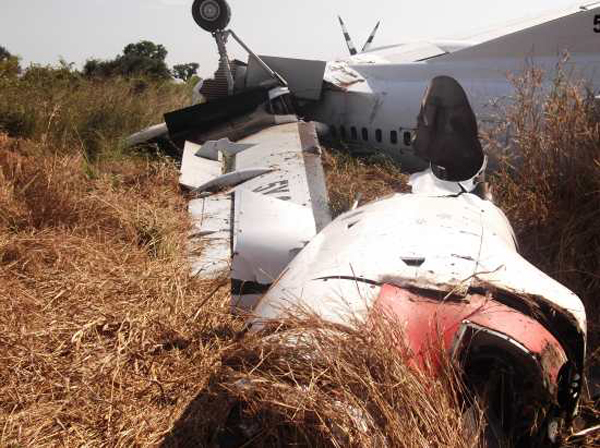
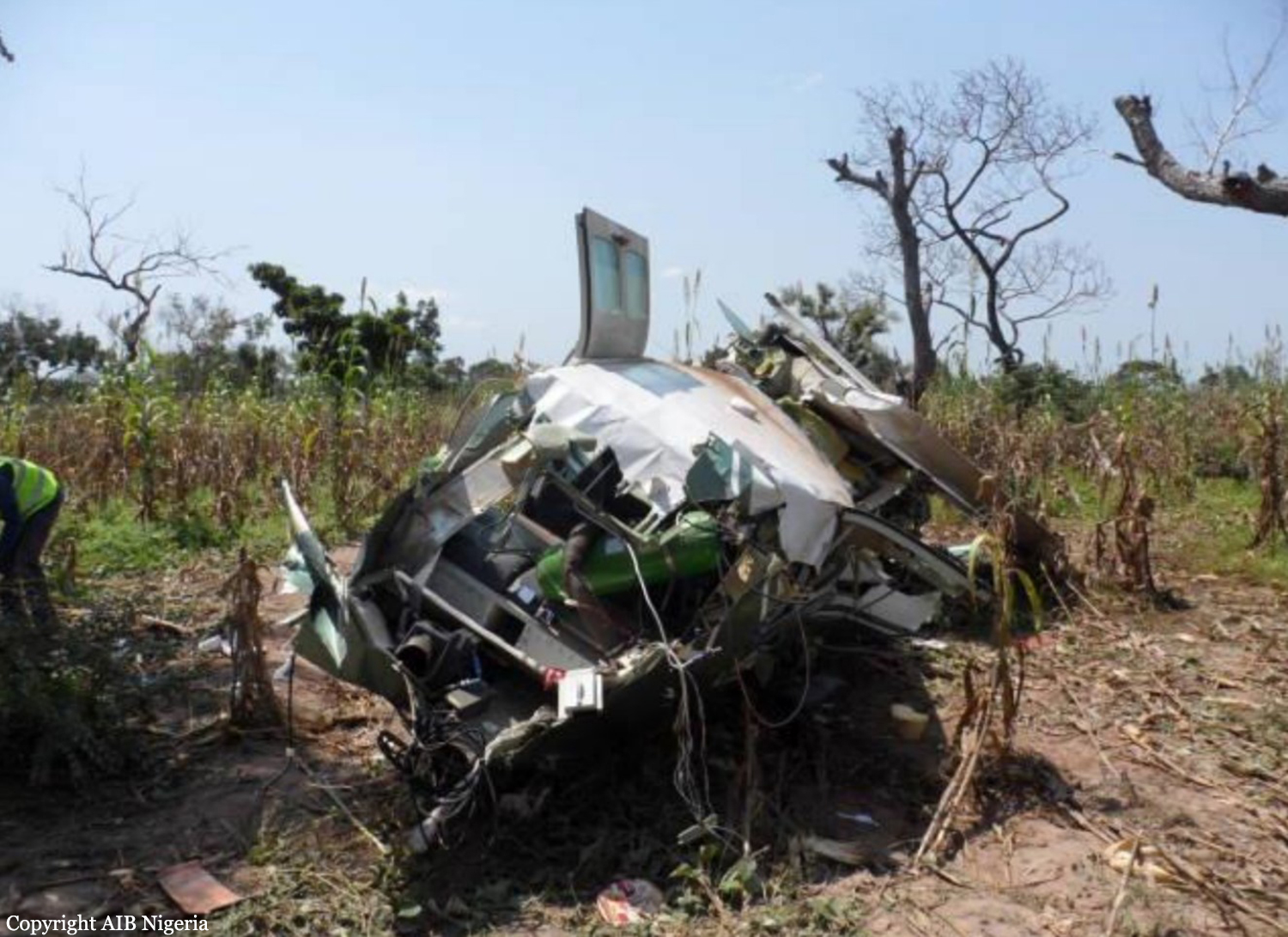
After touchdown at Aweil Airport, the left main gear collapsed. The aircraft veered off runway to the left, slid on soft ground for few dozen metres before coming to rest in bushes with its left wing torn off. There was no fire. All 57 occupants evacuated safely, only one passenger suffered minor injuries. The aircraft was damaged beyond repair. The plane was contracted by the International Organization for Migration (IOM) and the Government of South Sudan to airlift South Sudanese refugees back to Aweil.

Crash of a Cessna 525B Citation CJ3 in São Paulo

Date & Time: Nov 11, 2012 at 1721 LT
Operator:
Registration:
PR-MRG
Survivors:
Yes
Schedule:
Florianópolis – São Paulo
MSN:
525B-0187
YOM:
2008
Country:
Crew on board:
2
Crew fatalities:
Pax on board:
1
Pax fatalities:
Other fatalities:
Total fatalities:
0
Captain / Total flying hours:
4048
Captain / Total hours on type:
521.00
Copilot / Total flying hours:
648
Copilot / Total hours on type:
189
Circumstances:
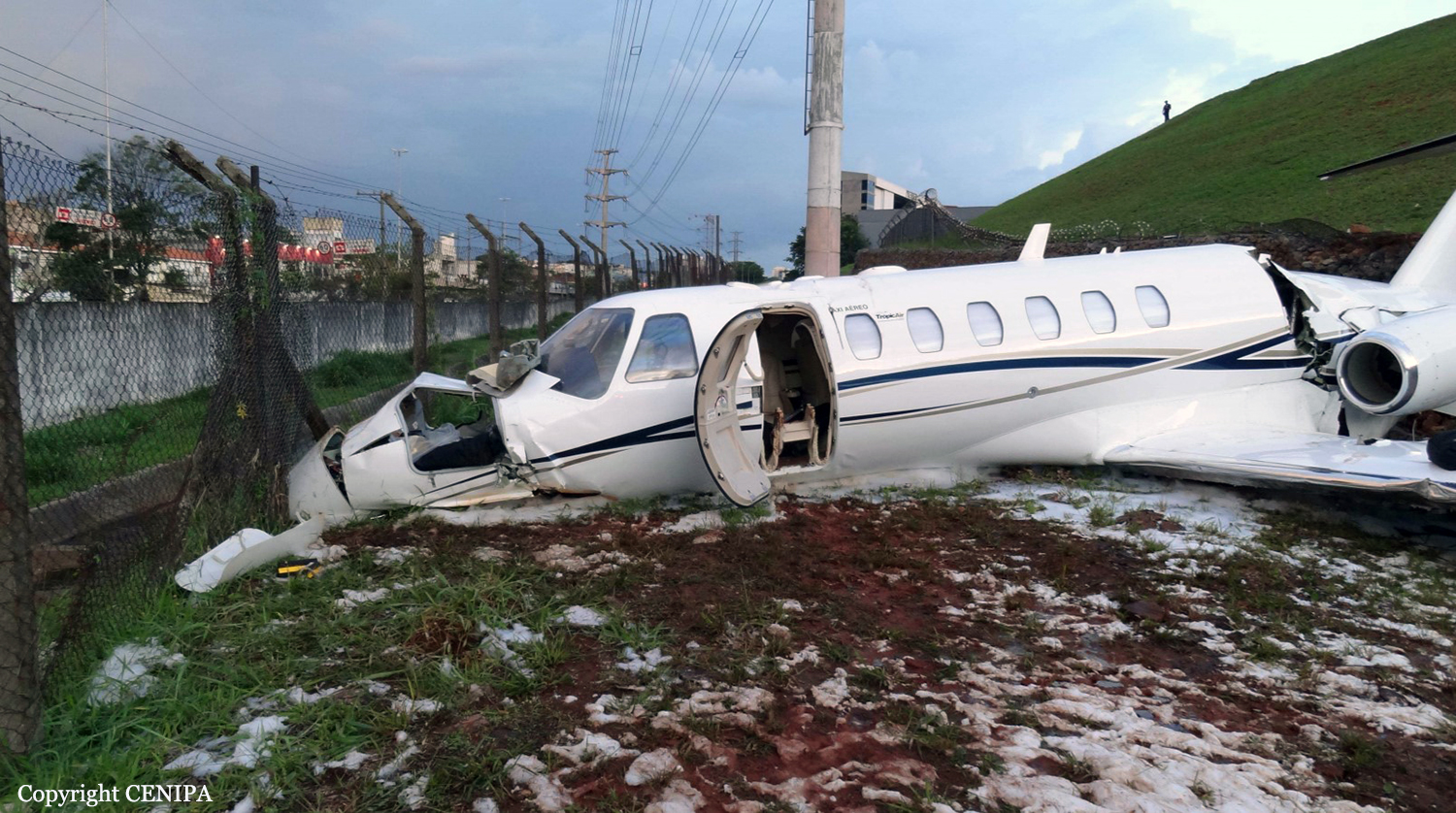
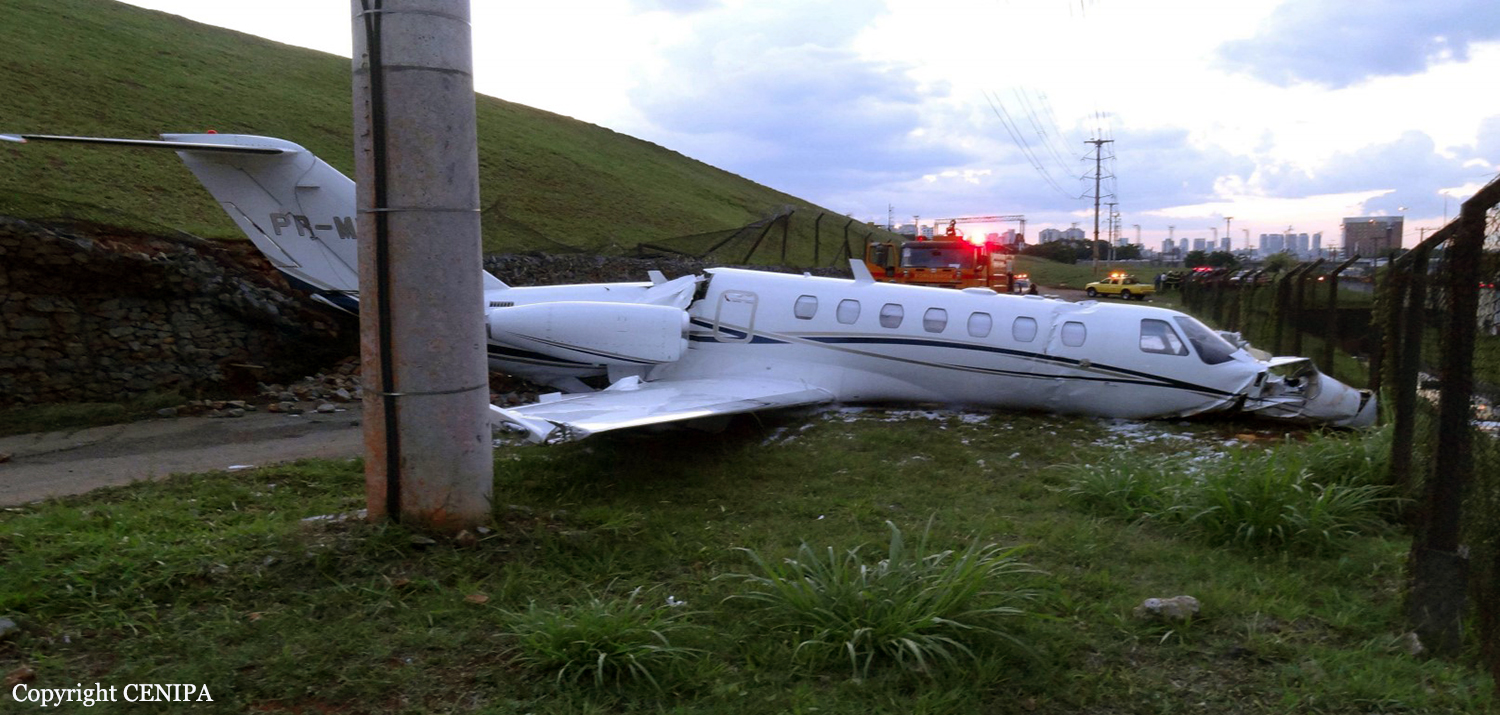
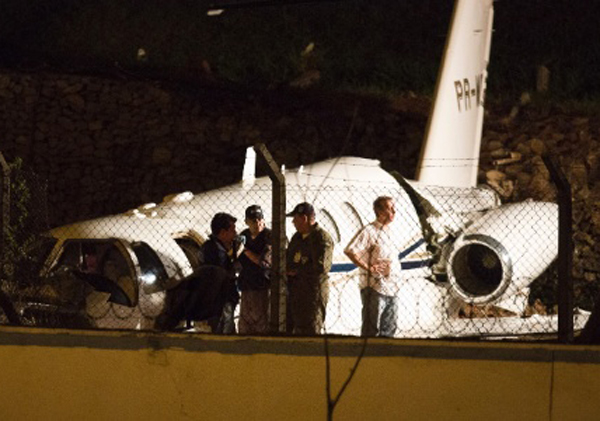
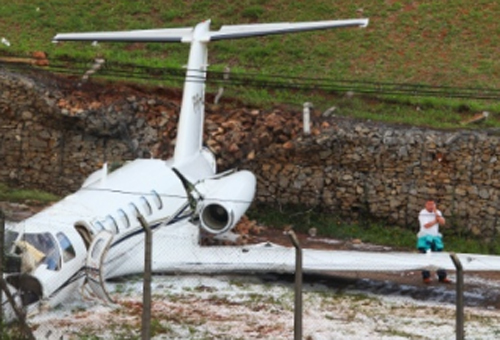
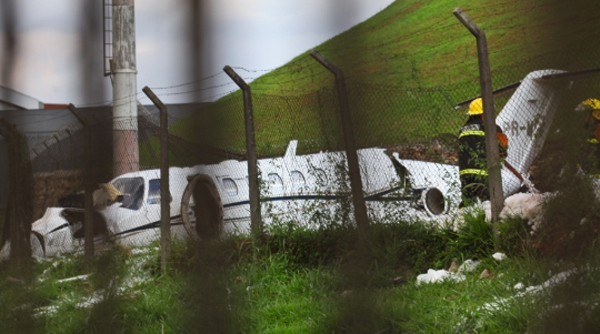
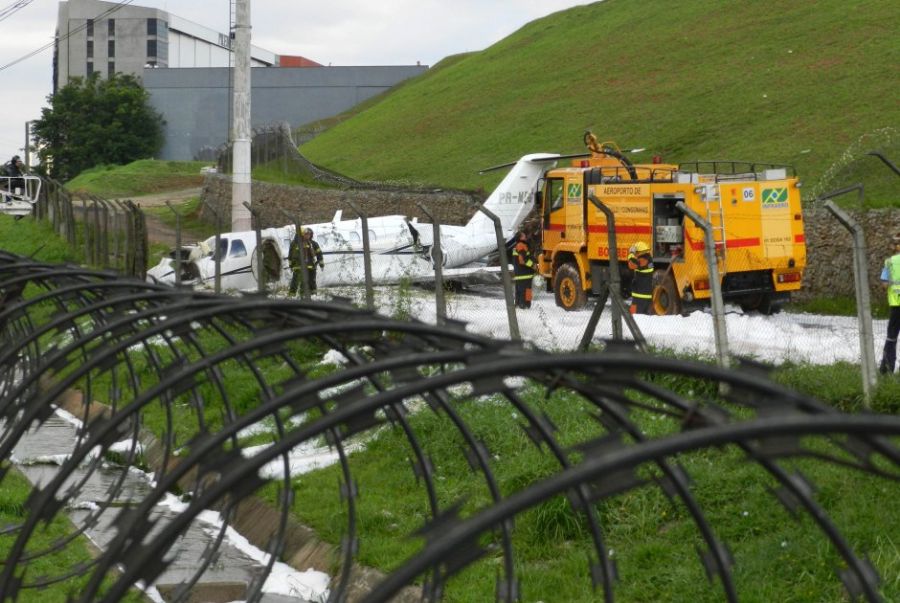
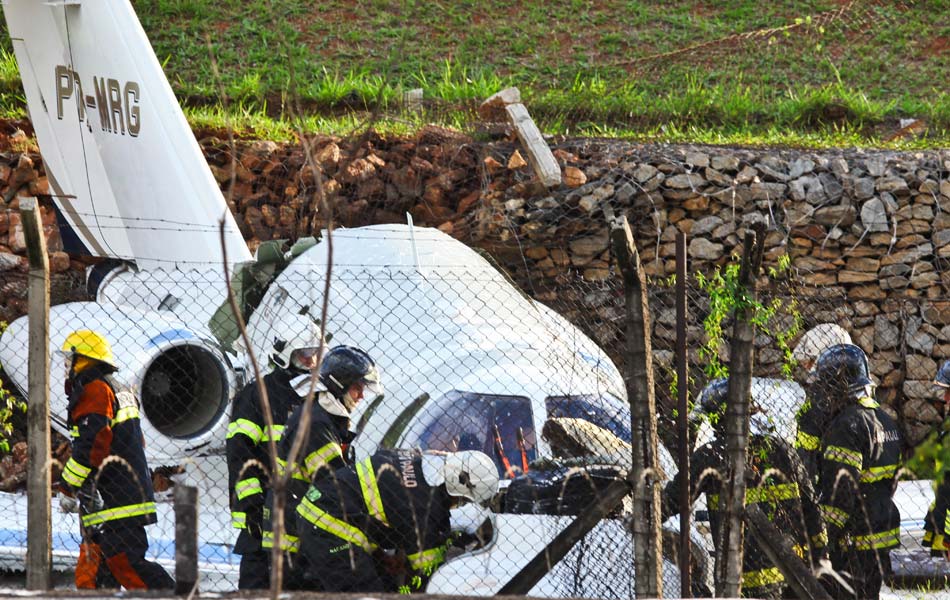
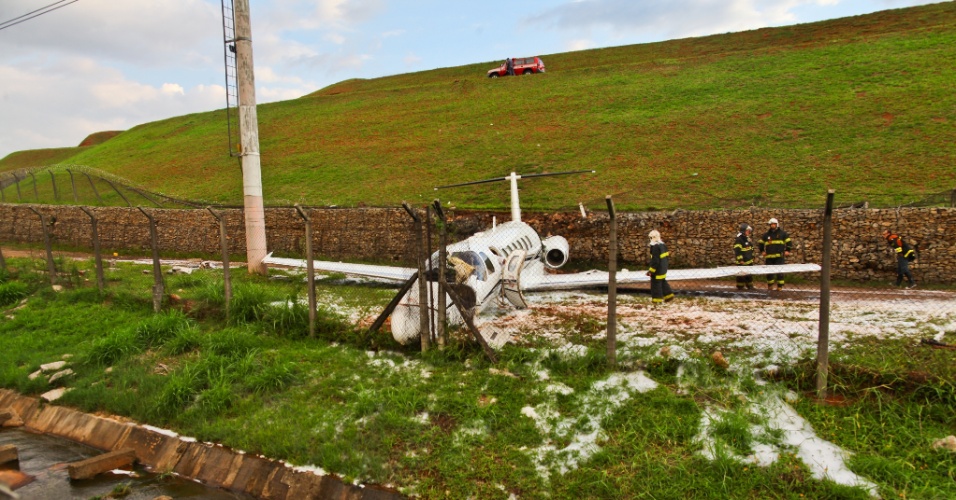
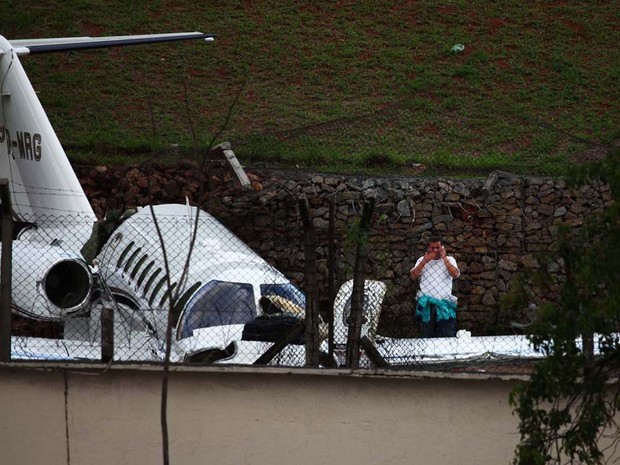
Following an uneventful flight from Florianópolis, the crew started the approach to São Paulo-Congonhas Airport Runway 35R. After touchdown, the airplane was unable to stop within the remaining distance. It overran, went down an embankment and came to rest against a fence, broken in two. The passenger and the copilot were slightly injured and captain was seriously injured. The aircraft was destroyed.
Probable cause:
The following findings were identified:
- The commander was overconfident in himself and the aircraft which led him to lose the critical capacity to discern the risks involved in the procedure that was adopting. Corroborating was the fact that the pilot judged he had much knowledge in this operation and knew exactly how the aircraft responded. It can be inferred there was complacency by the copilot on the actions of the commander, during the approach at high speed, because even feeling uncomfortable, he did not make an incisive interference because he believed in the idea that the commander had done this kind of approach, with high speed, and so knowing what he was doing.
- The pilot failed to identify the location of touch down during landing and not knowing how much runway was remaining, he decided he should not rush, thus demonstrating low situational awareness and lack of awareness, impacting the proper reaction time for the situation (Rush), which was not performed , leading the occurrence in question.
- The crew failed to properly assess the information available like speed and the runway length for the realization of a safe landing, which led to a poor judgment of the situation at hand, making the decision not to adopt the missed approach procedure.
- The distance between the crew, caused unconsciously by the commander's position with excess knowledge in the operation and the aircraft, and the insecurity of the copilot in considering new and inexperienced, resulted in a lack of assertiveness of the copilot to inform, with little emphasis, the commander of his perception of excessive airspeed.
- The crew did not adopt good crew resource management, failing to communicate with assertiveness and share critical information in time prior to landing, allowing the speeding remained present until the touchdown.
- Despite having adequate experience and training, the commander did not use the resources available, such as speed brakes to reduce the aircraft approach speed.
- The variable wind direction and predominantly tail intensity equal to or greater than 10 knots, allowed excessive speed during landing.
- The crew did not adopt good crew resource management, allowing the high speed to remain present until the touchdown.
- The commander thought he would be able to perform the approach and landing with the speed above the expected.
Final Report:

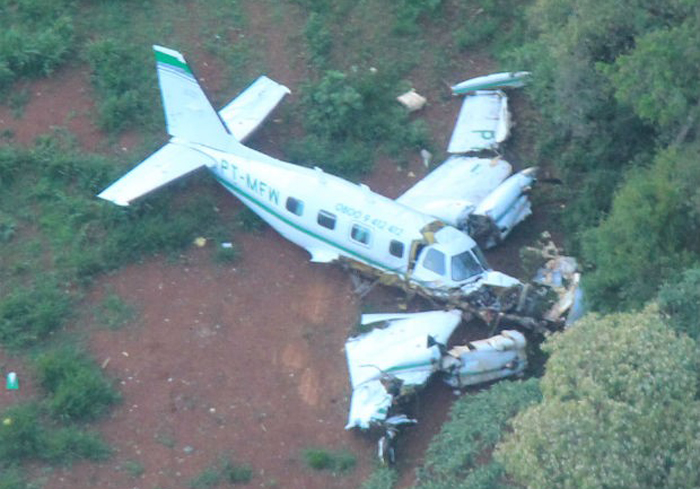
Crash of a Piper PA-31T2 Cheyenne II XL in Curitiba: 4 killed

Date & Time: Nov 6, 2012 at 1725 LT
Type of aircraft:
Operator:
Registration:
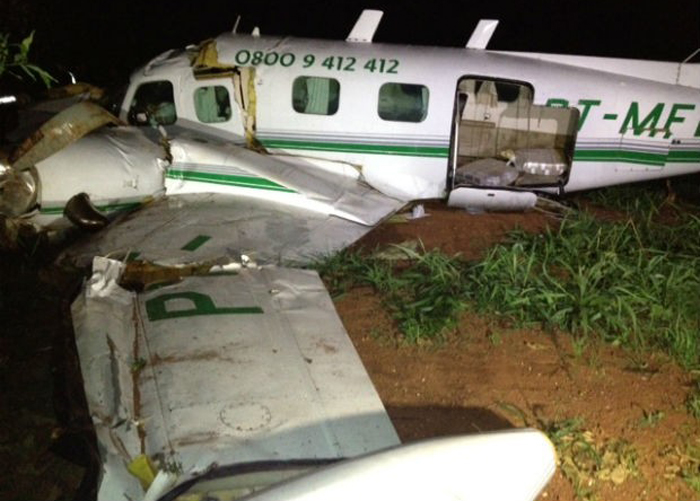
PT-MFW
Survivors:
No
Schedule:
Dourados – Curitiba
MSN:
31-8166067
YOM:
1981
Country:
Crew on board:
2
Crew fatalities:
Pax on board:
2
Pax fatalities:
Other fatalities:
Total fatalities:
4
Captain / Total flying hours:
11088
Captain / Total hours on type:
618.00
Copilot / Total flying hours:
771
Copilot / Total hours on type:
16
Circumstances:
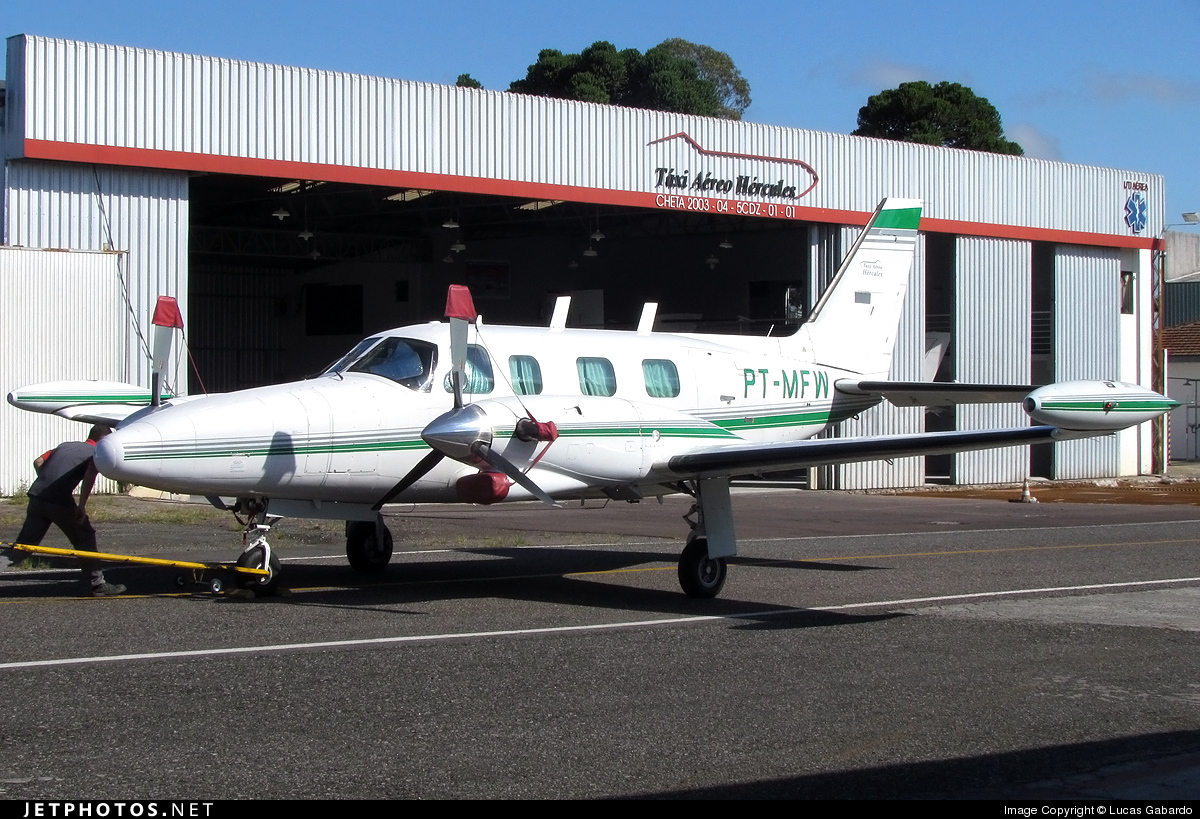
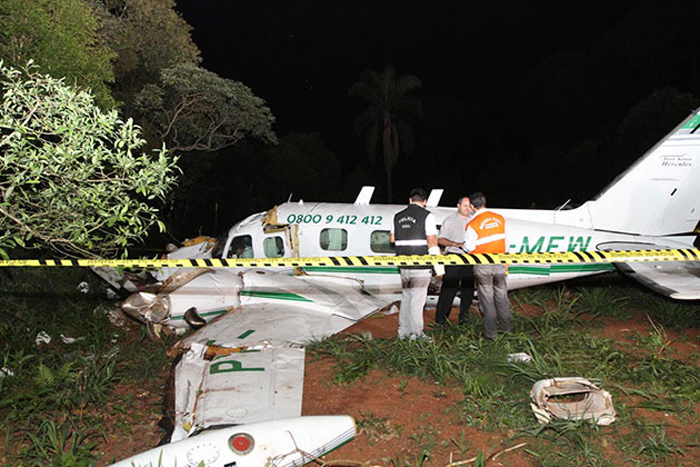
The twin engine aircraft departed Dourados-Francisco de Matos Pereira Airport on an on-demand flight to Curitiba, carrying two passengers, two pilots and a load consisting of valuables. On final approach to Curitiba-Bacacheri Airport, both engines failed simultaneously. The crew attempted an emergency landing when the aircraft crashed in a field and came to rest near trees. A passenger was seriously injured while three other occupants were killed. The following day, the only survivor died from his injuries.
Probable cause:
The following findings were identified:
- Fatigue is likely to have occurred, since there are reports of high workload, capable of affecting the perception, judgment, and decision making of the crew.
- In view of the fact that the captain displayed an attitude of gratefulness toward the company which hired him, working for consecutive hours and many times more than was prescribed for his daily routine, it is possible that such high motivation may have been present in the accident flight, harming his capacity to evaluate the conditions required for a safe flight.
- The crew neither gathered nor properly evaluated the available pieces of information for the correct refueling of the aircraft, something that led to their decision of not refueling the aircraft in SBDO.
- The company crews did not usually keep fuel records, and made approximate calculations based on the fuel remaining from previous flights, whose control parameters were not dependable. Such attitudes reflected a work-group culture that became apparent in this accident.
- The pilots were presumably undergoing a condition of stress on account of the company flight routine, in which they flew every day, with little time dedicated to rest or even holidays. Under such condition, the pilots may have had their cognitive processes affected, weakening their performance in flight.
- The flights had the objective of transporting valuables, causing concern in relation to security issues involving the aircraft on the ground. Thus, it is suspected that decisions made by the pilots may have been affected by this complexity, such as, for example, deciding not to refuel the aircraft on certain locations.
- The way the work was structured in the company was giving rise to overload due to the routine of many flights and few periods of rest or holidays. This situation may have affected the crew’s performance, interfering in the analysis of the conditions necessary for a safe flight.
- The company did not monitor the performance of its pilots for the identification of contingent deviations from standard procedures, such as non-compliance with the MGO.
- Failures in the application of operational norms, as well as in the communication between the crew members, may have occurred on account of inadequate management of tasks by each individual, such as, for example, the use of the checklist and the filling out of control forms relative to fuel consumption contained in the company MGO.
- The crew judged that the amount of fuel existing in the aircraft was sufficient for the flight in question.
- The fact that the fuel gauges were not indicating the correct quantity of fuel had direct influence on the flight outcome, since the planning factors and the pilots’ situational awareness were affected.
- The crew did not analyze appropriately the amount of fuel necessary for the flight leg between SBDO and SBBI. The Mission Order did not establish the minimum amount of fuel necessary for the flight legs, and the crew had to take responsibility for the decision.
- The company was not rigorous with the filling out of aircraft logbooks and cargo manifestos, resulting that it did not have control over the operational procedures performed by the crews, and this may have contributed to the aircraft taking off with an amount of fuel that was insufficient for the flight. Although the MGO had parameters established for calculating the endurance necessary for VFR/IFR flights, the company did not define the fuel necessary in the Mission Orders, transferring the responsibility for the decision to the aircraft captain.
Final Report:

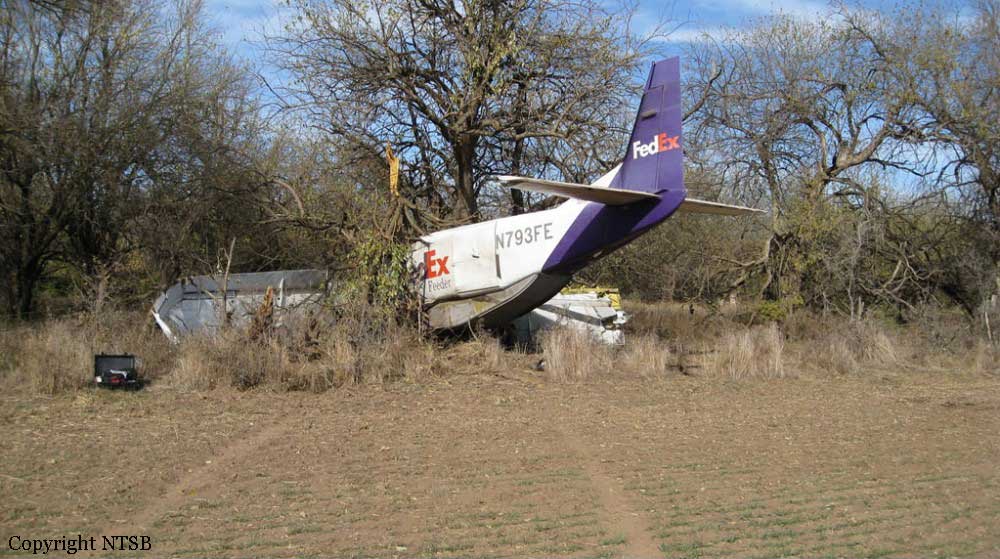
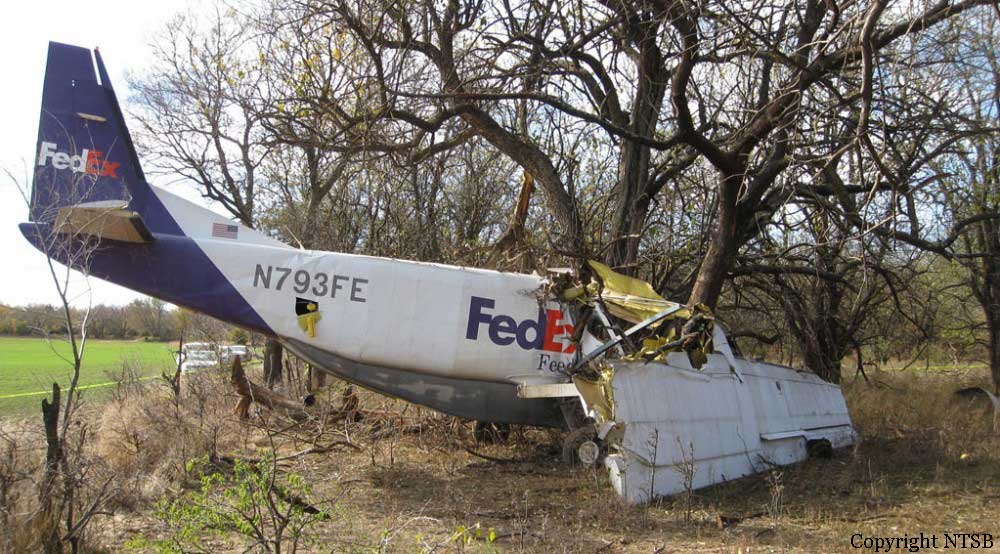
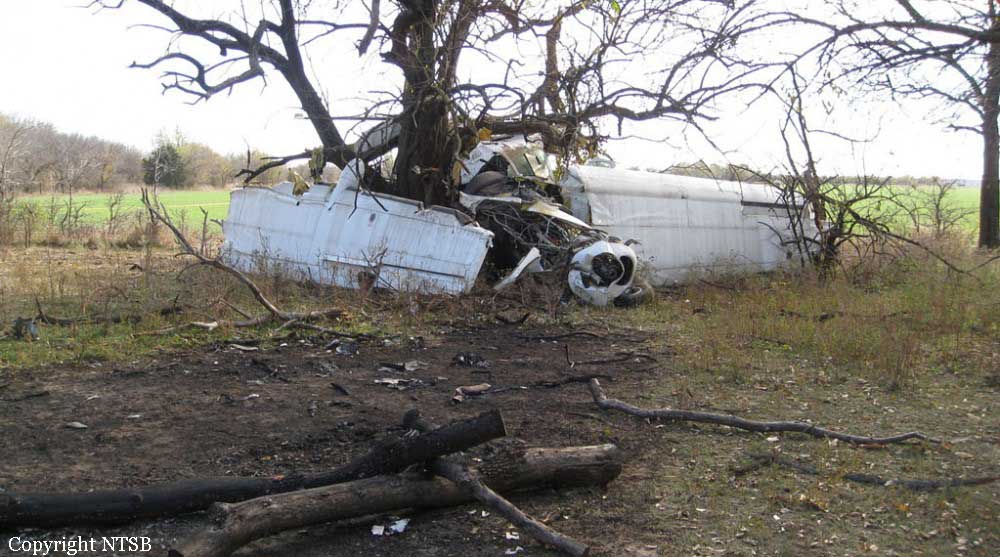
Crash of a Cessna 208B Super Cargomaster in Wichita: 1 killed

Date & Time: Nov 6, 2012 at 0745 LT
Type of aircraft:
Operator:
Registration:
N793FE
Flight Type:
Survivors:
No
Schedule:
Wichita - Garden City
MSN:
208B-0291
YOM:
1991
Flight number:
FDX8588
Crew on board:
1
Crew fatalities:
Pax on board:
0
Pax fatalities:
Other fatalities:
Total fatalities:
1
Captain / Total flying hours:
15200
Aircraft flight hours:
10852
Circumstances:
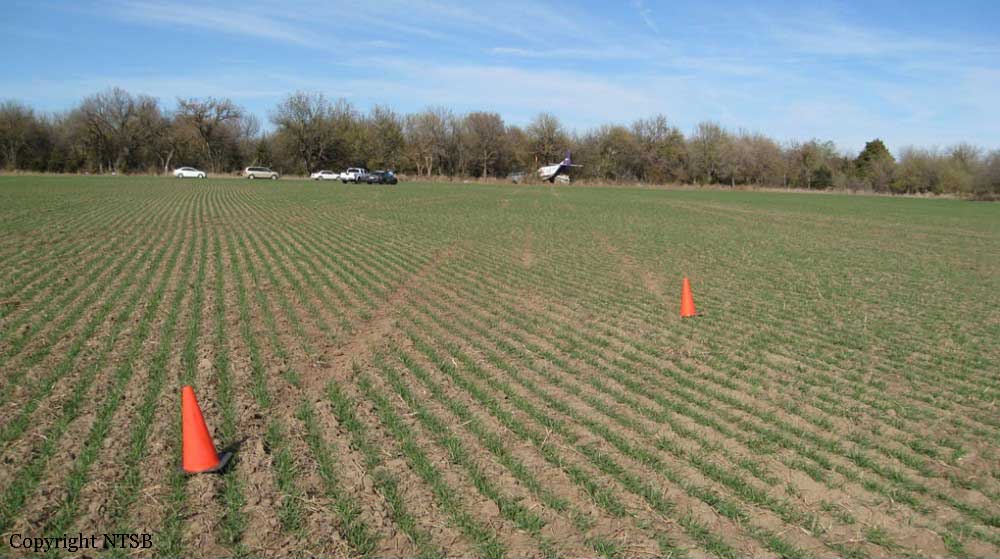
The aircraft was substantially damaged when it collided with a hedgerow during a forced landing following a loss of engine power near Wichita, Kansas. The loss of engine power occurred about 4-1/2 minutes after departing Wichita Mid-Continent Airport (ICT), Wichita, Kansas. The commercial pilot, who was the sole occupant, was fatally injured. The airplane was registered to the Federal Express Corporation and operated by Baron Aviation Services Incorporated, under the provisions of 14 Code of Federal Regulations Part 135 while on an instrument flight plan. Day visual meteorological conditions prevailed for the cargo flight that had the intended destination of Garden City Regional Airport (GCK), Garden City, Kansas. According to air traffic control transmissions, at 0734:35 (hhmm:ss), the pilot requested an instrument flight rules clearance from ICT to GCK. Radar track data indicated that the airplane departed runway 19R approximately 0737:45. At 0738:18, the tower controller told the pilot to change to the departure control frequency. The departure controller then cleared the flight to proceed direct to GCK and to climb to 8,000 ft mean sea level (msl). The airplane continued to climb on a westerly heading until 0742:02, at which time the airplane began a left 180-degree turn back toward the departure airport. According to radar data, the airplane had reached 4,700 ft msl when it began the left turn. At 0742:13, the pilot transmitted that his airplane had experienced a loss of engine power and that he was attempting to return to the departure airport. At 0742:31, the pilot asked if there were any nearby airports because he was unable to reach ICT. The departure controller provided vectors toward an airstrip that was approximately 2.5 miles southeast of the airplane's position. At 0743:46, the pilot advised that he could not see the airstrip because the airplane's windshield was contaminated with oil. At 0744:57, the pilot's final transmission was that he was landing in a grass field. The airplane was located about 2.2 miles south of ICT at 1,600 feet msl, about 300 feet above ground level (agl) at the time of the last transmission. The radar data continued northeast another 1/2 mile before radar contact was lost at 0745:15. A witness to the accident reported that he was outside his residence when he observed the accident airplane overfly his position. He recalled that the airplane's propeller was not rotating and that he did not hear the sound of the engine operating. He stated that the airplane landed in a nearby agricultural field on a northeast heading. He reported that during the landing rollout the airplane impacted a hedgerow located at the northern edge of the field. The witness indicated that the pilot was unresponsive when he arrived at the accident site and that there was a small grass fire located 8 to 10 feet in front of the main wreckage.
Probable cause:
The total loss of engine power as a result of a fractured compressor turbine blade due to high-cycle fatigue.
Final Report:

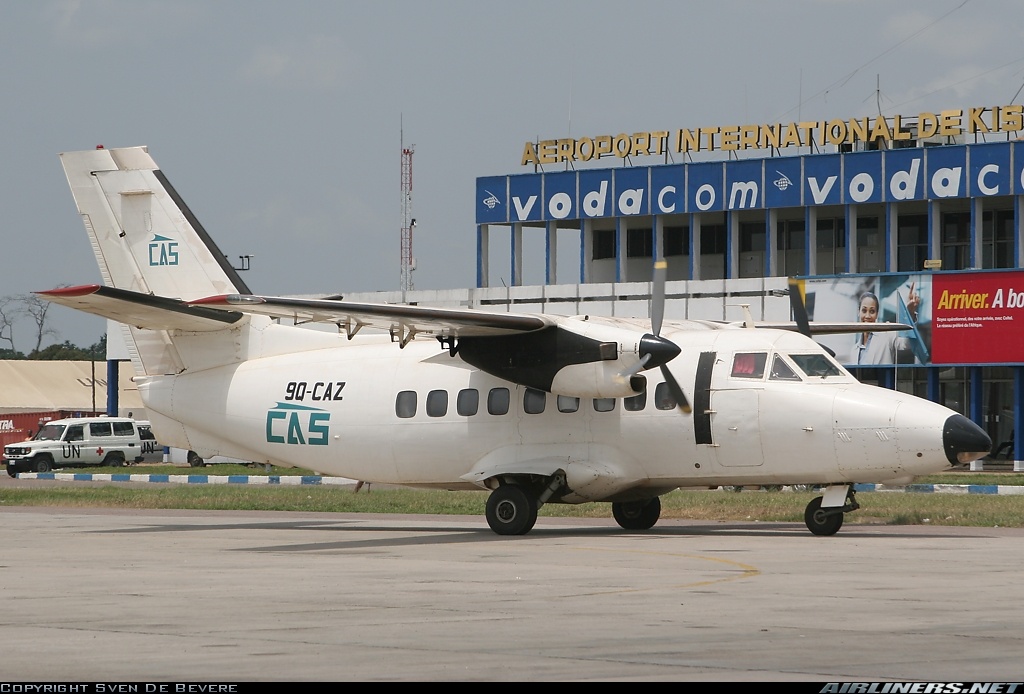
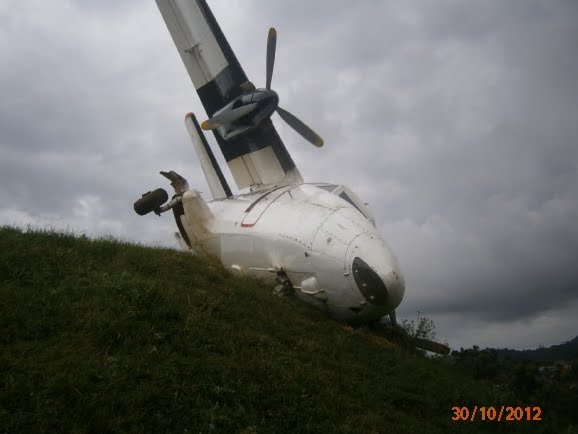
Crash of a Let L-410UVP in Butembo

Date & Time: Oct 30, 2012 at 1500 LT
Type of aircraft:
Operator:
Registration:
9Q-CAZ
Survivors:
Yes
Schedule:
Goma - Butembo
MSN:
79 02 05
YOM:
1979
Region:
Crew on board:
3
Crew fatalities:
Pax on board:
15
Pax fatalities:
Other fatalities:
Total fatalities:
0
Circumstances:
Following an uneventful flight from Goma, the twin engine airplane landed on runway 14/32 which is 770 metres long. After touchdown, the aircraft was unable to stop within the remaining distance. It overran, lost its left main gear and came to rest down an embankment with its left wing damaged. All 18 occupants escaped uninjured while the aircraft was damaged beyond repair.

Crash of a Cessna 560 Citation V in Edmonton

Date & Time: Oct 30, 2012 at 0633 LT
Type of aircraft:
Operator:
Registration:
C-FBCW
Flight Type:
Survivors:
Yes
Schedule:
Edmonton - Edmonton
MSN:
560-0191
YOM:
1992
Country:
Crew on board:
2
Crew fatalities:
Pax on board:
0
Pax fatalities:
Other fatalities:
Total fatalities:
0
Circumstances:
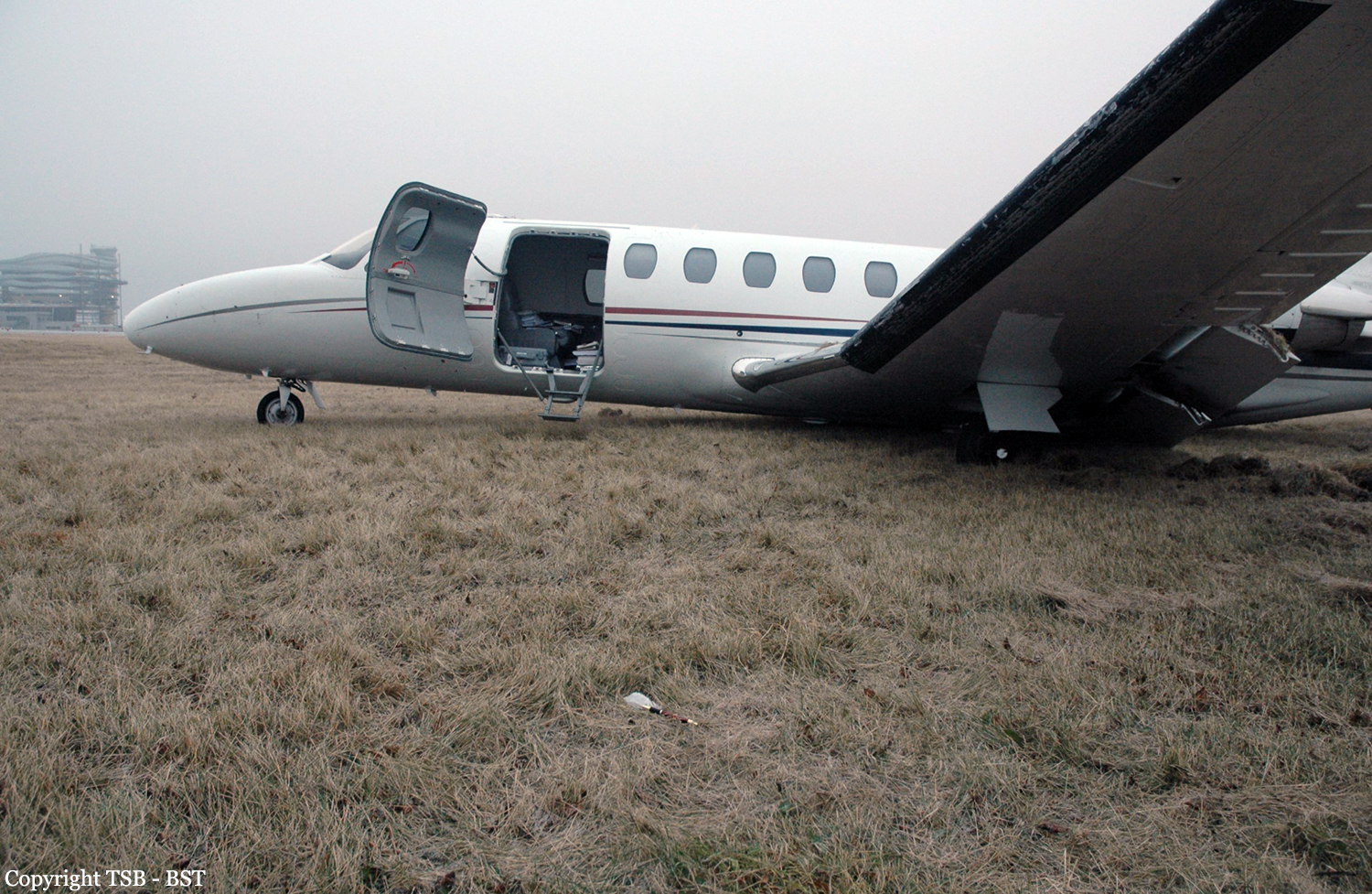
The aircraft departed Edmonton-City Centre Airport in the early morning on a positioning flight to Edmonton-Intl, carrying two pilots. En route, the crew encountered IMC conditions with moderate icing and the deicing systems were activated. For unknown reasons, the aircraft landed hard on runway 02, causing the right main gear to collapse. The aircraft veered off runway to the right and came to rest in a grassy area. Both pilots escaped with minor injuries and the aircraft was damaged beyond repair.

Crash of a Beechcraft 1900D in Bir Kalait

Date & Time: Oct 28, 2012
Type of aircraft:
Registration:
TT-ABB
Flight Type:
Survivors:
Yes
Schedule:
N'Djamena - Bir Kalait
MSN:
UE-406
YOM:
2000
Country:
Region:
Crew on board:
2
Crew fatalities:
Pax on board:
15
Pax fatalities:
Other fatalities:
Total fatalities:
0
Circumstances:
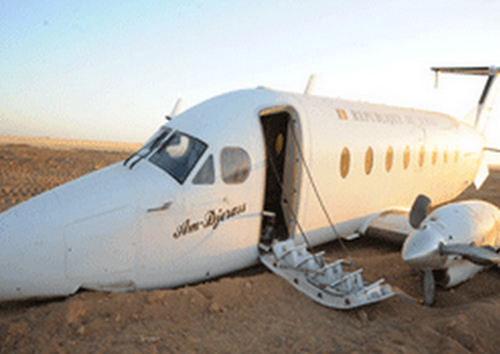
The twin engine aircraft departed N'Djamena on a flight to Bir Kalait, carrying 15 passengers and two pilots, among them a delegation of the Presidency. On short final, the aircraft named 'Am Djerass' was too low and struck the ground short of runway threshold. Upon impact, the undercarriage were torn off. The aircraft slid on its belly for about 200 metres before coming to rest in a sandy area with all propeller blades separated. The aircraft was damaged beyond repair but all 17 occupants escaped uninjured, among the Idriss Déby, President of the Tchad Republic who was flying to Bir Kalait to take part to the Peace and Development Forum for the Borku-Ennedi-Tibesti Region.

Crash of a Cessna 208B Grand Caravan in Yola

Date & Time: Oct 25, 2012 at 1830 LT
Type of aircraft:
Operator:
Registration:
5N-BMJ
Flight Type:
Survivors:
Yes
Schedule:
Jalingo – Yola
MSN:
208B-2098
YOM:
2009
Location:
Country:
Region:
Crew on board:
1
Crew fatalities:
Pax on board:
3
Pax fatalities:
Other fatalities:
Total fatalities:
0
Aircraft flight hours:
999
Circumstances:
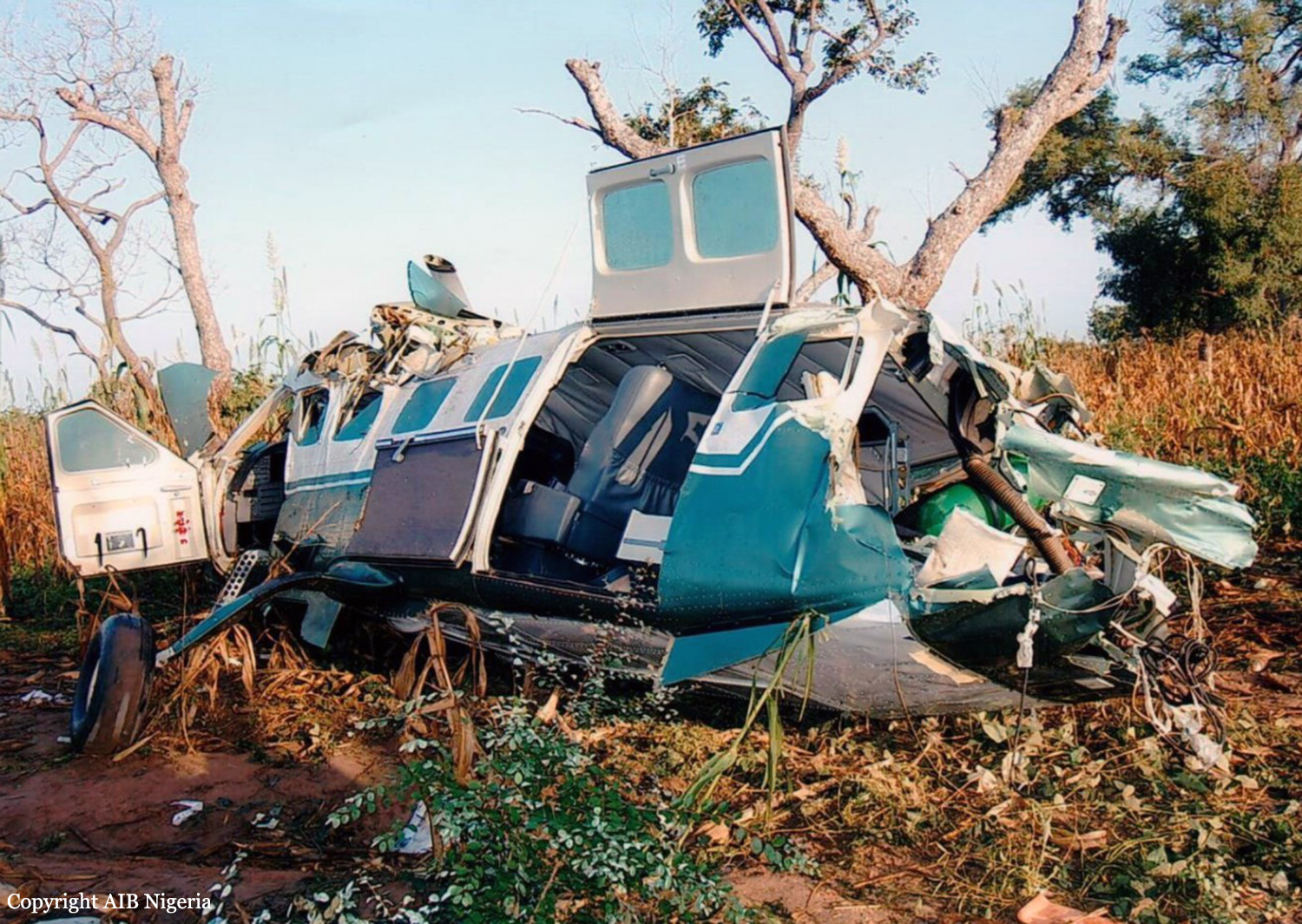
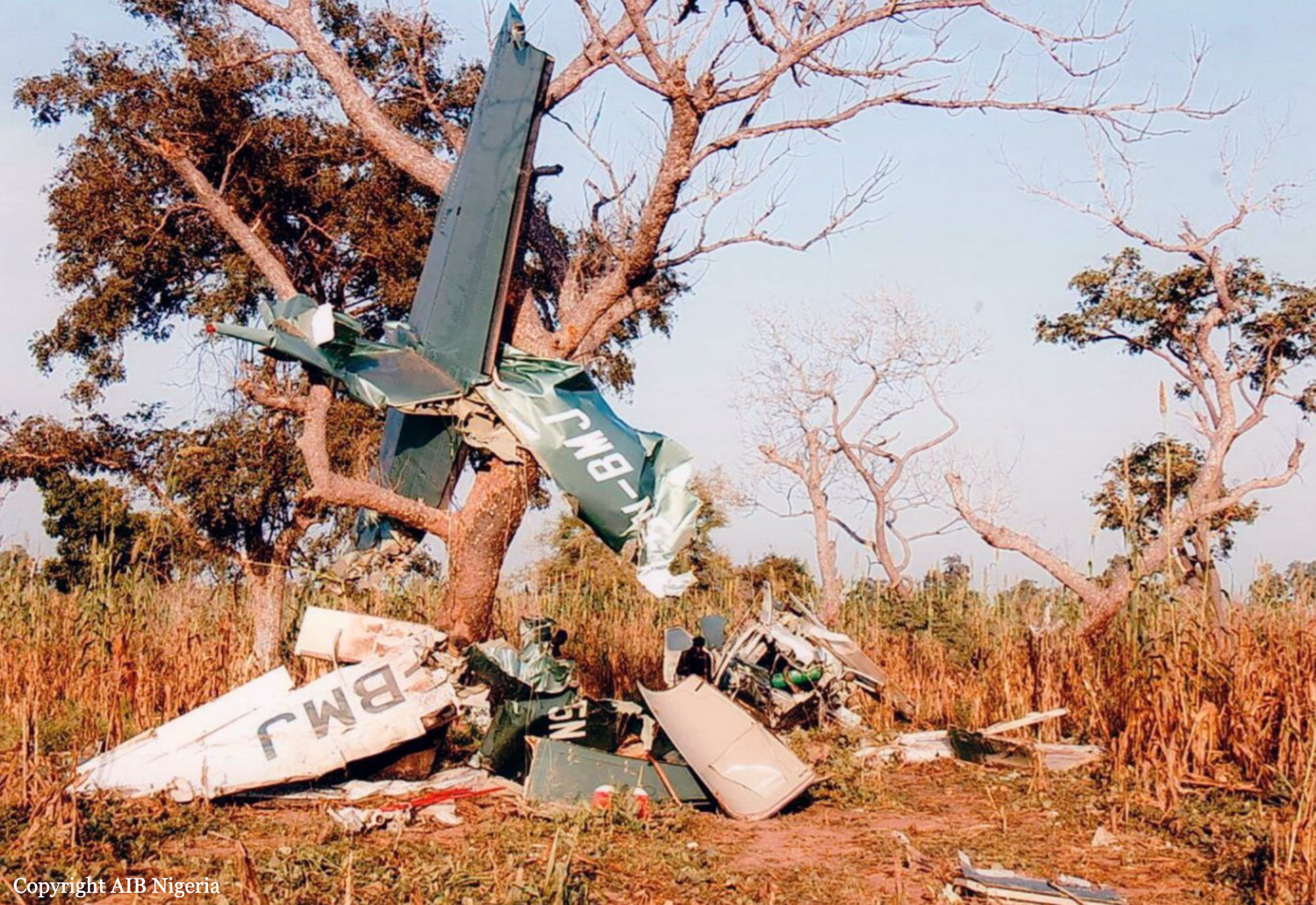
On the 25th of October, 2012 at 17: 48 h, a Cessna Caravan 208B, 5N-BMJ, departed Jalingo for Yola on a Visual Flight Rules (VFR) flight plan with four Persons-On-Board (one crew and three passengers). At 18:00 h, the Airport Manager stationed at Jalingo by Taraba State Government, called Yola Control Tower (CT) by phone to advise that the aircraft had departed Jalingo for Yola. At 18:25 h the pilot reported field in sight. CT then advised him to “continue approach and report final, wind calm” and the pilot acknowledged “will continue approach, to report final”. At 18:27 h CT had the aircraft in sight and advised the pilot to report “final, wind calm”, the pilot acknowledged. At 18:30 h, CT lost visual contact with 5N-BMJ and tried to raise her on radio but there was no response. At 18:37 h, information was received from witnesses, regarding a possible plane crash at Yola-Numan road close to Nigerian National Petroleum Corporation (NNPC) depot. This information was subsequently passed to the fire watch room. Rescue team and other security personnel were mobilized to the location of the crash. However, before the arrival of the rescue team from the airport, the locals had rescued the occupants from the wreckage. The occupants were subsequently taken to Federal Medical Centre (FMC), Yola for medical treatment. The accident occurred at dusk. The aircraft was destroyed.
Probable cause:
The Bureau could not conclusively determine the cause of this accident; however, the investigation identified the following factors:
- The pilot was not certified, qualified and not competent to fly the aircraft.
- The decision of the pilot to operate a VFR flight after sunset.
- Inadequate oversight by the Regulatory Authority.
Final Report:

Crash of a Beechcraft B90 King Air in Sturtevant

Date & Time: Oct 22, 2012 at 1830 LT
Type of aircraft:
Registration:
N821DA
Flight Type:
Survivors:
Yes
Schedule:
Jackson - Sturtevant
MSN:
LJ-406
YOM:
1968
Crew on board:
1
Crew fatalities:
Pax on board:
1
Pax fatalities:
Other fatalities:
Total fatalities:
0
Captain / Total flying hours:
2331
Captain / Total hours on type:
1425.00
Aircraft flight hours:
12637
Circumstances:
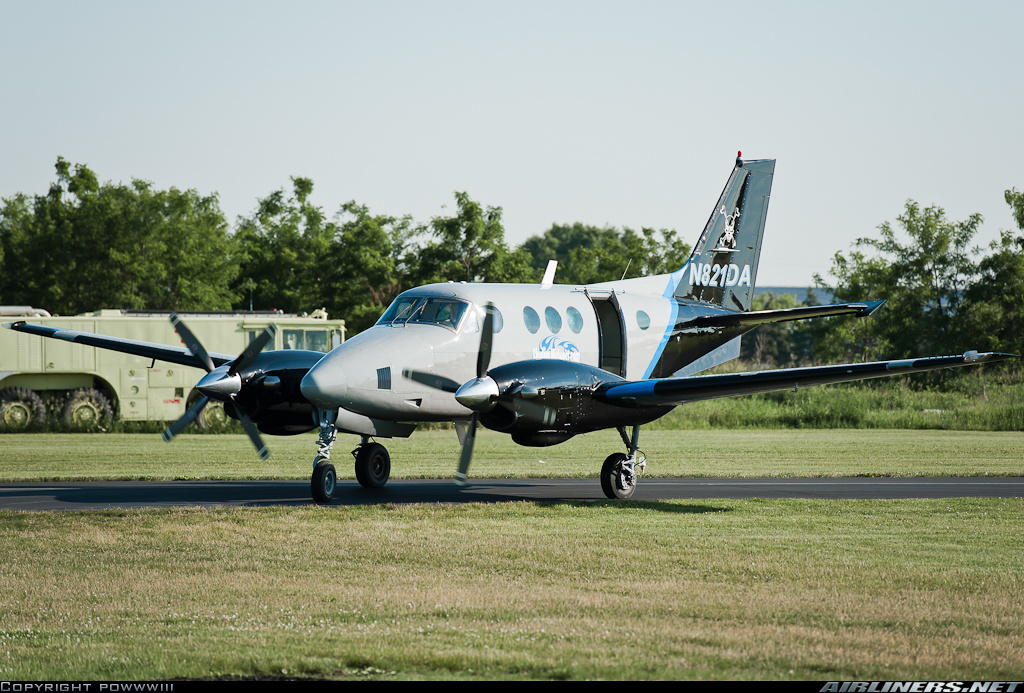
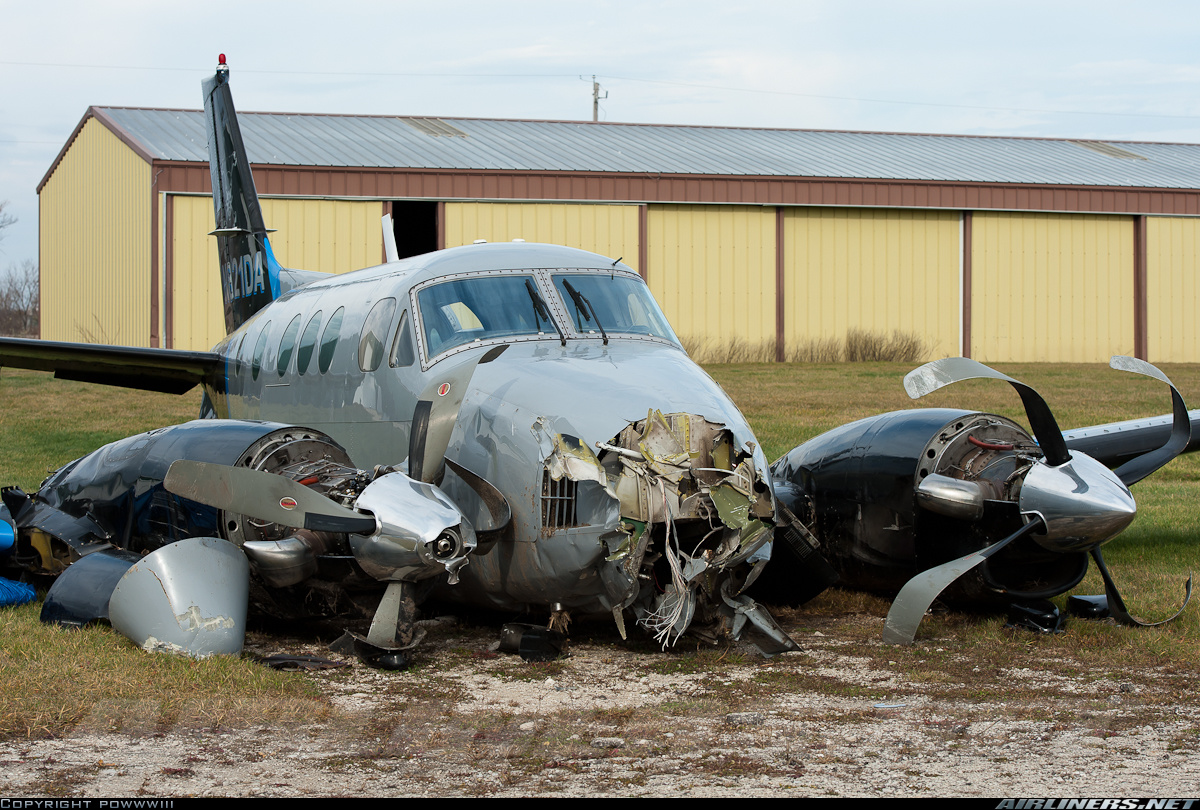
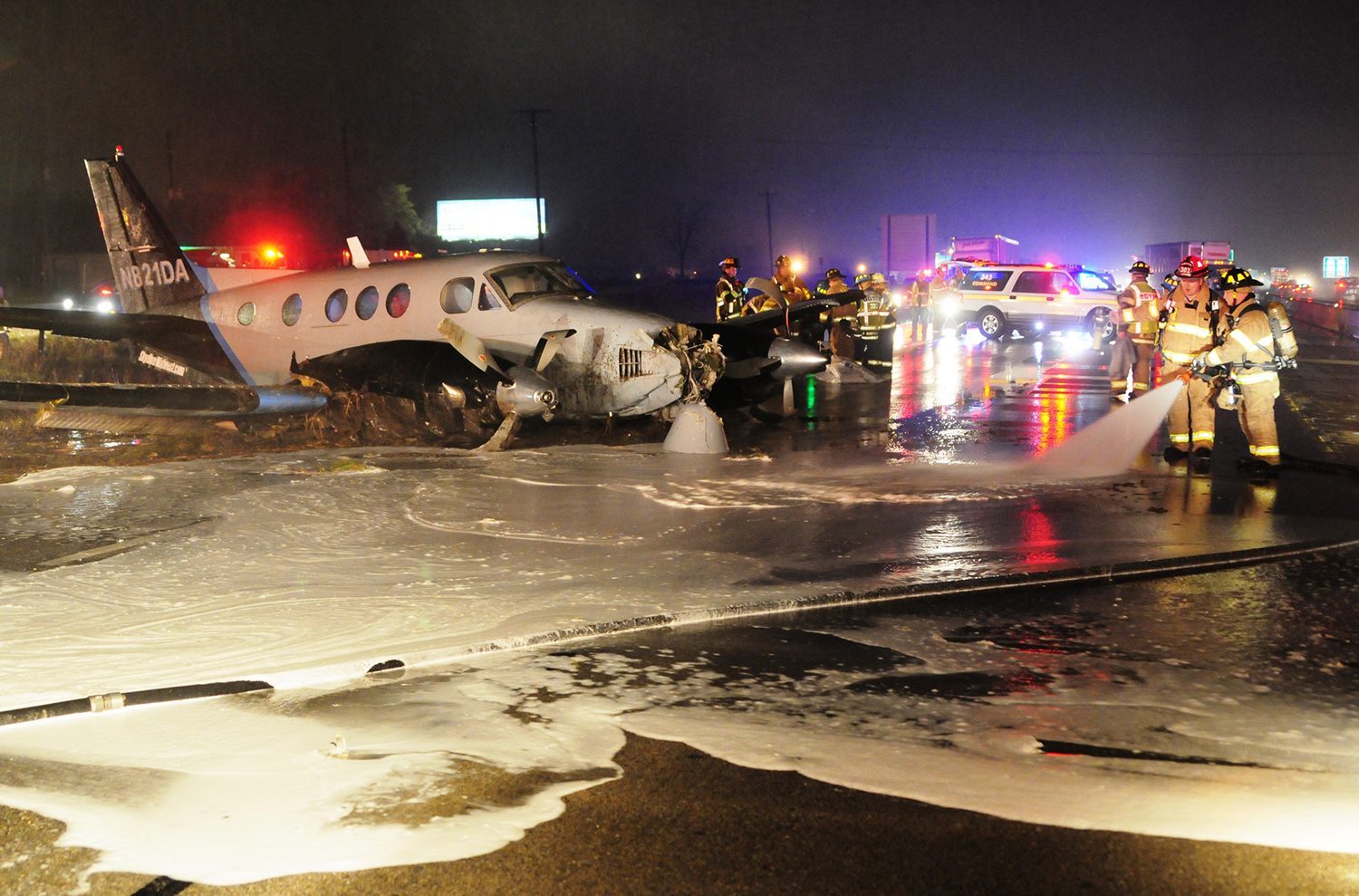
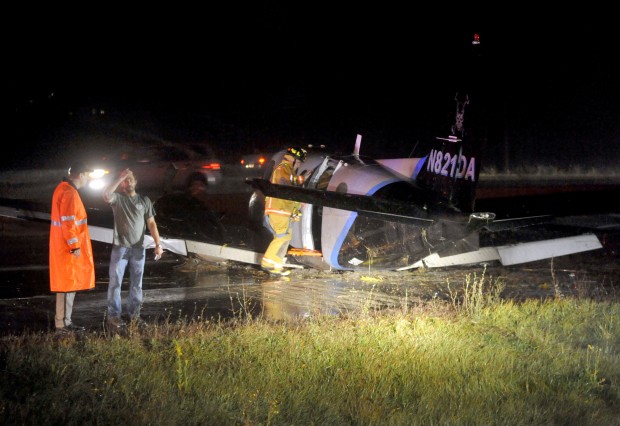
The aircraft collided with a fence and a ditch when it overran runway 8R (2,272 feet by 38 feet, asphalt) while landing at the Sylvania Airport (C89), Sturtevant, Wisconsin. The commercial pilot was not injured and his passenger received minor injuries. The airplane sustained damage to its fuselage and both wings. The airplane was registered to Direct Action Aviation LLC, and was operated by Skydive Midwest. The accident flight was conducted under the provisions of 14 Code of Federal Regulations Part 91 as a personal flight. Instrument meteorological conditions prevailed for the flight, which was not operated on a flight plan. The flight originated from the Jackson County Airport-Reynolds Field (JXN), Jackson, Michigan, about 1800. The pilot reported that the landing approach was normal and when the airplane crossed the runway threshold it floated and he pulled the engine power levers to the stops. He stated that although he did not remember the airplane bouncing, his passenger told him that it had. He pulled the power levers to reverse, but there was no immediate reverse thrust. He applied brakes and felt the airplane accelerate. He recognized that he would not be able to stop the airplane on the remaining runway and attempted to steer it to the north. The airplane left the runway, impacted two ditches and came to rest on a highway. The pilot stated that he should have recognized that braking action would be significantly reduced with the possibility of hydroplaning, that pulling the power levers to the stops before touchdown induced a lag in realization of reverse thrust, and that he should have executed a go-around when the airplane floated before landing. The pilot reported no mechanical failures or malfunctions of the airplane. At 1853, weather conditions reported at the Kenosha regional Airport (ENW), located 6 miles south of the accident site, included heavy rain.
Probable cause:
The pilot's decision to continue the landing after touching down long and on a wet runway that reduced the airplane’s braking capability, which resulted in an overrun.
Final Report:

Crash of an Antonov AN-12TB in Shindand

Date & Time: Oct 19, 2012 at 1800 LT
Type of aircraft:
Operator:
Registration:
EK-12112
Flight Type:
Survivors:
Yes
MSN:
01 347 907
YOM:
1971
Location:
Country:
Region:
Crew on board:
6
Crew fatalities:
Pax on board:
0
Pax fatalities:
Other fatalities:
Total fatalities:
0
Circumstances:
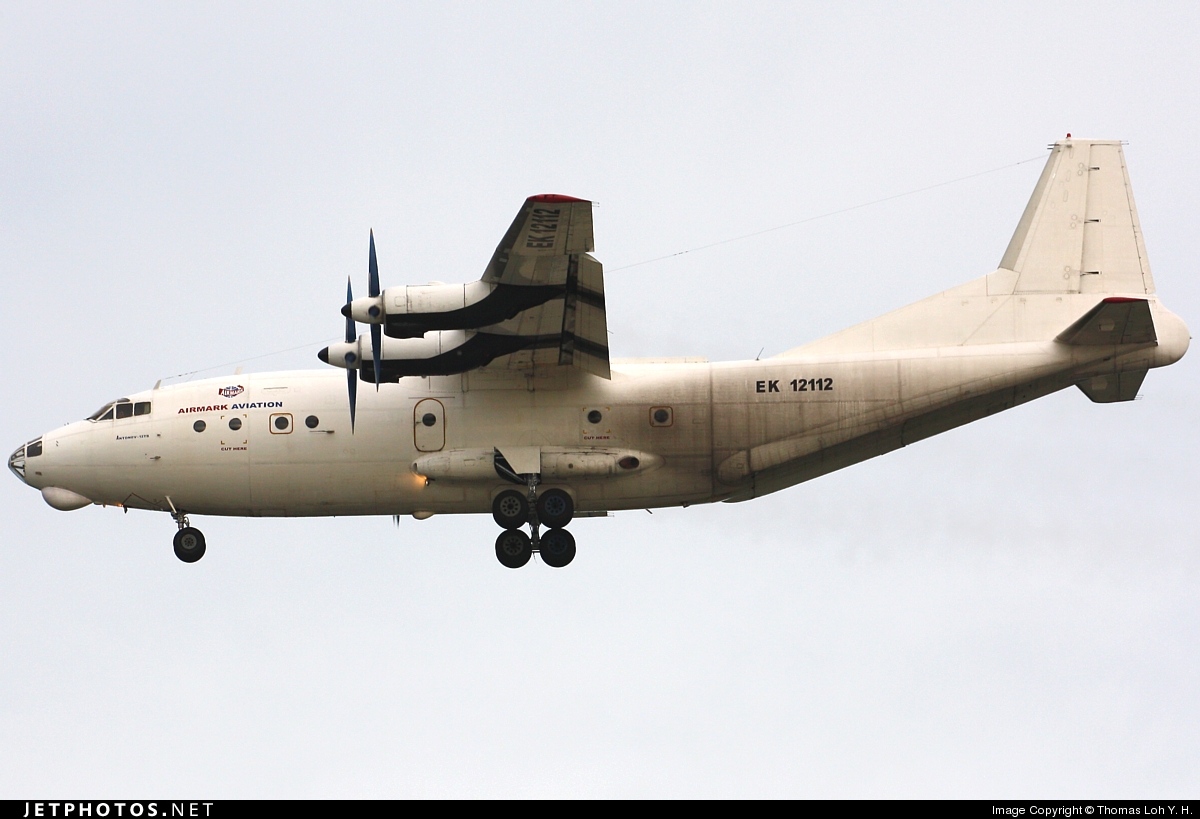
The four engine aircraft was completing a cargo flight to the Shindand AFB, carrying a load of 4'700 pounds of voting documents intended to the US soldiers based at Shindand AFB. For unknown reasons, the aircraft landed hard and bounced. On the second touchdown, the left main gear was torn off. The aircraft slid for about 1,750 metres then veered off runway to the left and came to rest in a drainage ditch. While all six occupants escaped uninjured, the aircraft was destroyed by impact and a post impact fire. US Federal Voting Assistance Program published a notice on 24OCT2012, informing that mail consisted of voting documents for US soldiers covering the US Presidential Election of 06NOV2012.