Crash of a GAF Nomad N.22C off Cagayancillo: 14 killed

Date & Time: Jul 2, 2000 at 1050 LT
Type of aircraft:
Operator:
Registration:
86
Flight Type:
Survivors:
Yes
Schedule:
Cagayancillo – Puerto Princesa
MSN:
86
YOM:
1979
Country:
Region:
Crew on board:
4
Crew fatalities:
Pax on board:
11
Pax fatalities:
Other fatalities:
Total fatalities:
14
Circumstances:
Few minutes after takeoff from Cagayancillo Airport, the pilot reported engine problems and was cleared to return for an emergency landing. On final approach, the aircraft was not properly aligned so the captain increased engine power and initiated a go-around. The aircraft lost height and crashed in the sea about 2 km offshore. A passenger was rescued while 14 other occupants were killed, among them General Santiago Madrid, Chief of the southwestern military command.
Probable cause:
Engine failure for unknown reasons.


Crash of a Douglas B-26C-25-DT Invader in Grande Prairie

Date & Time: Jun 29, 2000 at 2219 LT
Type of aircraft:
Operator:
Registration:
CF-EZX
Flight Type:
Survivors:
Yes
Schedule:
Loon River - La Biche Lake - Grand Prairie
MSN:
18807
YOM:
1943
Country:
Crew on board:
1
Crew fatalities:
Pax on board:
0
Pax fatalities:
Other fatalities:
Total fatalities:
0
Circumstances:
The pilot, sole on board, departed Loon River Airport on a fire fighting mission to La Biche Lake under callsign Tanker 3. While returning to Grand Prairie Airport, on final approach to runway 25, both engines failed almost simultaneously. The pilot attempted an emergency landing when the aircraft crashed 3 km short of runway. The pilot was injured and the aircraft was damaged beyond repair.
Probable cause:
Double engine failure on final approach due to a fuel exhaustion.

Crash of a Cessna 402A in Kamina: 1 killed

Date & Time: Jun 29, 2000
Type of aircraft:
Operator:
Registration:
P2-SAV
Flight Type:
Survivors:
No
Site:
Schedule:
Kerema - Kamina
MSN:
402A-0069
YOM:
1969
Location:
Region:
Crew on board:
1
Crew fatalities:
Pax on board:
0
Pax fatalities:
Other fatalities:
Total fatalities:
1
Circumstances:
While descending to Kamina Airport, the twin engine aircraft struck a mountain and crashed. The pilot, sole on board, was killed.

Crash of a Boeing 737-2R4C in Khartoum

Date & Time: Jun 26, 2000
Type of aircraft:
Operator:
Registration:
7O-ACQ
Flight Type:
Survivors:
Yes
Schedule:
Sana'a - Khartoum
MSN:
23129
YOM:
1984
Flight number:
IY626
Country:
Region:
Crew on board:
5
Crew fatalities:
Pax on board:
0
Pax fatalities:
Other fatalities:
Total fatalities:
0
Circumstances:
Following an uneventful flight from Sana'a, the crew was cleared for an approach to runway 18. Weather conditions were poor with a sandstorm upon arrival. For unknown reasons, the captain decided to perform a straight-in approach to runway 36. After touchdown, The aircraft went out of control, veered off runway and collided with small concrete blocks, causing the nose gear to collapse. All five crew members escaped uninjured and the aircraft was damaged beyond repair.

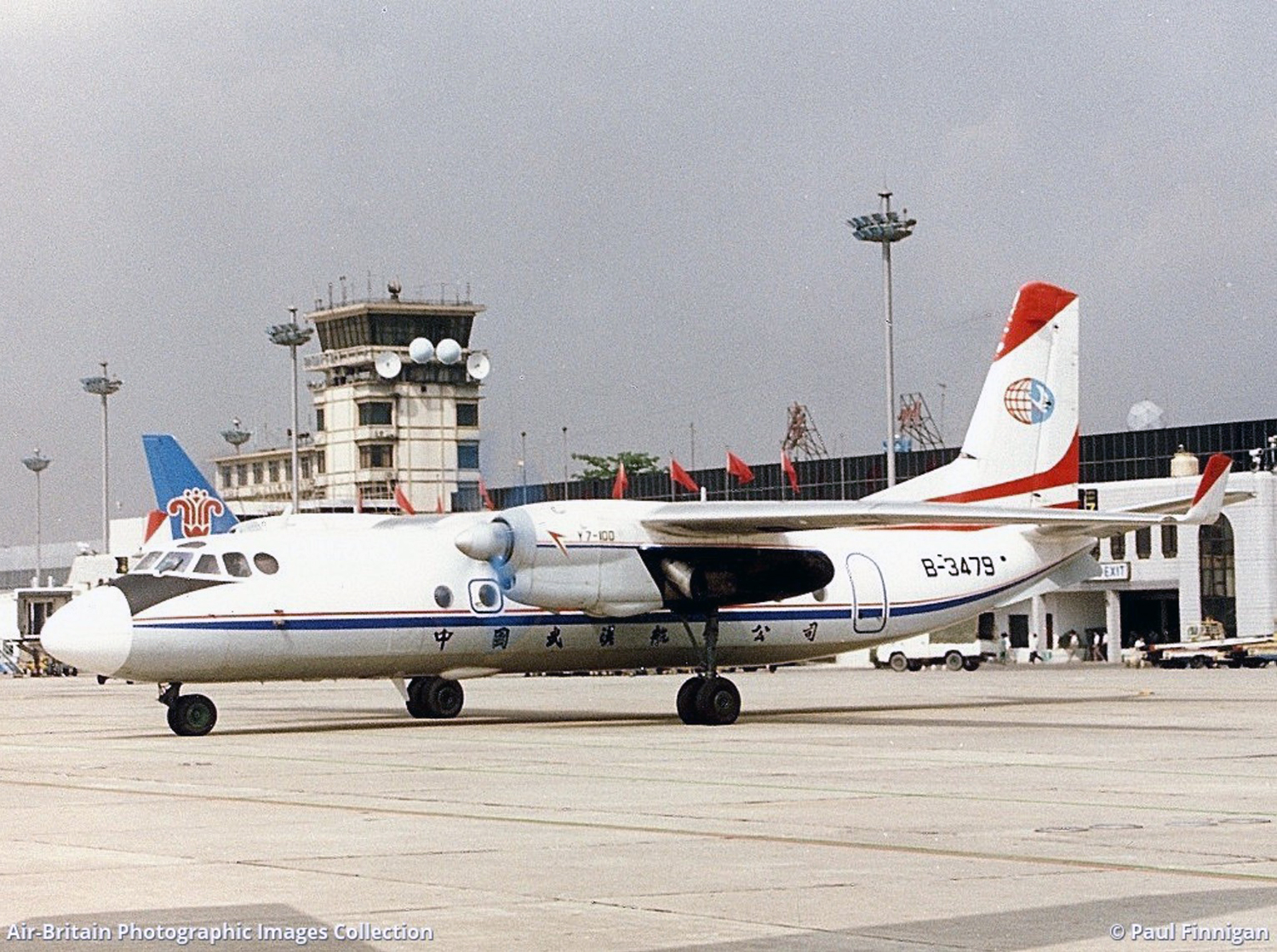
Crash of a Xian Yunsunji Y-7-100C near Wuhan: 49 killed

Date & Time: Jun 22, 2000 at 1451 LT
Type of aircraft:
Operator:
Registration:
B-3479
Survivors:
No
Schedule:
Enshi - Wuhan
MSN:
06 7 08
YOM:
1988
Flight number:
CWU343
Location:
Country:
Region:
Crew on board:
4
Crew fatalities:
Pax on board:
38
Pax fatalities:
Other fatalities:
Total fatalities:
49
Aircraft flight hours:
13811
Aircraft flight cycles:
11724
Circumstances:
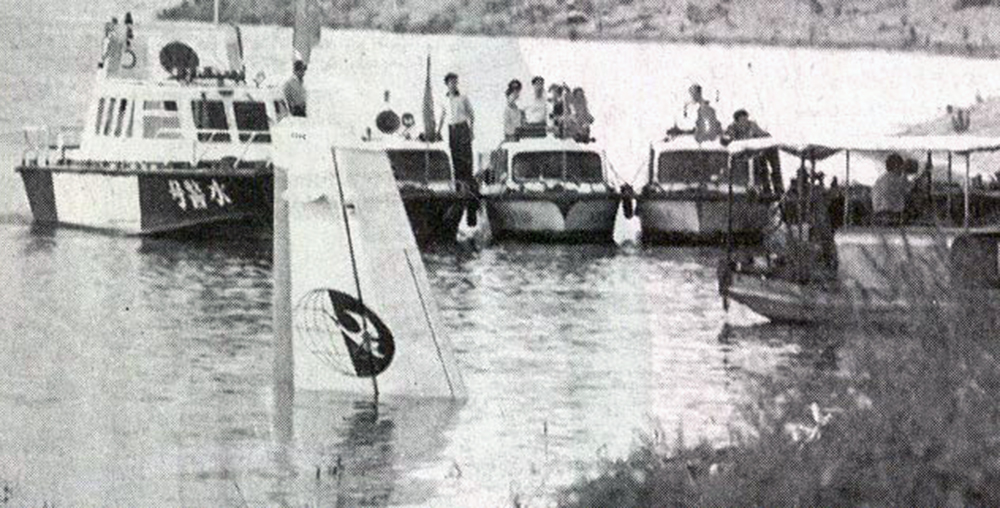
Wuhan Airlines flight 343 departed Enshi for a flight to Wuhan. The aircraft entered an area of poor weather; rain and thunderstorm with associated windshear. The crew reportedly circled Wuhan for about 30 minutes to wait for the storm to pass. Wuhan's weather bureau recorded 451 thunderclaps in a 10-minute period as the plane circled. During the approach the first officer proposed to land at an alternate airport, but the captain decided to continue to Wuhan. The plane was caught by windshear and crashed near Sitai Village, Yongfeng Township. Half of the plane plunged into a farmhouse and the other half came to rest on a dike of the Han River. Sitai is located about 20 to 30 kilometers (12 to 18 miles) from Wuhan. Seven workers who were installing generators on a vessel were killed when the plane hit.
Probable cause:
Loss of control due to severe atmospheric turbulences.

Crash of an Ilyushin II-76MD at Privolzhskiy AFB

Date & Time: Jun 20, 2000 at 1750 LT
Type of aircraft:
Operator:
Registration:
RA-76723
Flight Type:
Survivors:
Yes
Schedule:
Makhatchkala – Privolzhskiy – Vozzhayevka – Khabarovsk
MSN:
00734 75245
YOM:
1987
Country:
Region:
Crew on board:
7
Crew fatalities:
Pax on board:
221
Pax fatalities:
Other fatalities:
Total fatalities:
0
Circumstances:
The aircraft departed Makhachkala on a flight to Khabarovsk with intermediate stops at Privolzhskiy AFB and Vozzhayevka AFB, carrying 221 passengers and a crew of seven on behalf of the Russian Ministry of Defense. Some 23 minutes after takeoff from Privolzhskiy AFB, while cruising at an altitude of 6,100 metres, the crew encountered technical problems with the fuel system and was cleared to return for an emergency landing. While descending to Privolzhskiy AFB, the flaps could not be lowered and a fire erupted in the left wing. After touchdown, the aircraft was unable to stop within the remaining distance, overran, lost its undercarriage and came to rest 200 metres further, bursting into flames. All 232 occupants evacuated safely while the aircraft was destroyed by a post crash fire.
Probable cause:
An in-flight fire occurred in the area between the second and third flap tracks on the left wing, which led to a failure of the fuel lines, hydraulic systems and flap control systems. The most likely cause of the fire was a production flaw, causing electric wires to touch the hydraulic system pipeline, which led to a chafing of the insulation of the wires, their short circuit with subsequent piercing of the pipeline and ignition. The unsuitability of fire extinguishing means and the unpreparedness of the fire brigade of the Privolzhskiy AFB to extinguish fires on aircraft with a flight mass of more than 50 tons led to the destruction by fire of the aircraft on the ground.

Crash of a Piper PA-31-350 Navajo Chieftain off Liverpool: 5 killed

Date & Time: Jun 14, 2000 at 0950 LT
Operator:
Registration:
G-BMBC
Flight Type:
Survivors:
No
Schedule:
Douglas - Liverpool
MSN:
31-7952172
YOM:
1979
Region:
Crew on board:
1
Crew fatalities:
Pax on board:
4
Pax fatalities:
Other fatalities:
Total fatalities:
5
Captain / Total flying hours:
18000
Circumstances:
The aircraft, operated by an Air Operator's Certificate holder, was engaged on an air ambulance operation from Ronaldsway in the Isle of Man to Liverpool. Having flown under VFR on a direct track to the Seaforth dock area of Liverpool the pilot flew by visual reference along the northern coast of the Mersey Estuary to carry out a visual approach to Runway 09 at Liverpool. During the turn on to the final approach, when approximately 0.8 nm from the threshold and 0.38 nm south of the extended centreline, the aircraft flew into the sea and disappeared. All five occupants were killed.
Probable cause:
The investigation concluded that the pilot lost control of the aircraft at a late stage of the approach due either to disorientation, distraction, incapacitation, or a combination of these conditions.
Final Report:

Crash of a Dassault Falcon 20E in Peterborough

Date & Time: Jun 13, 2000 at 2250 LT
Type of aircraft:
Operator:
Registration:
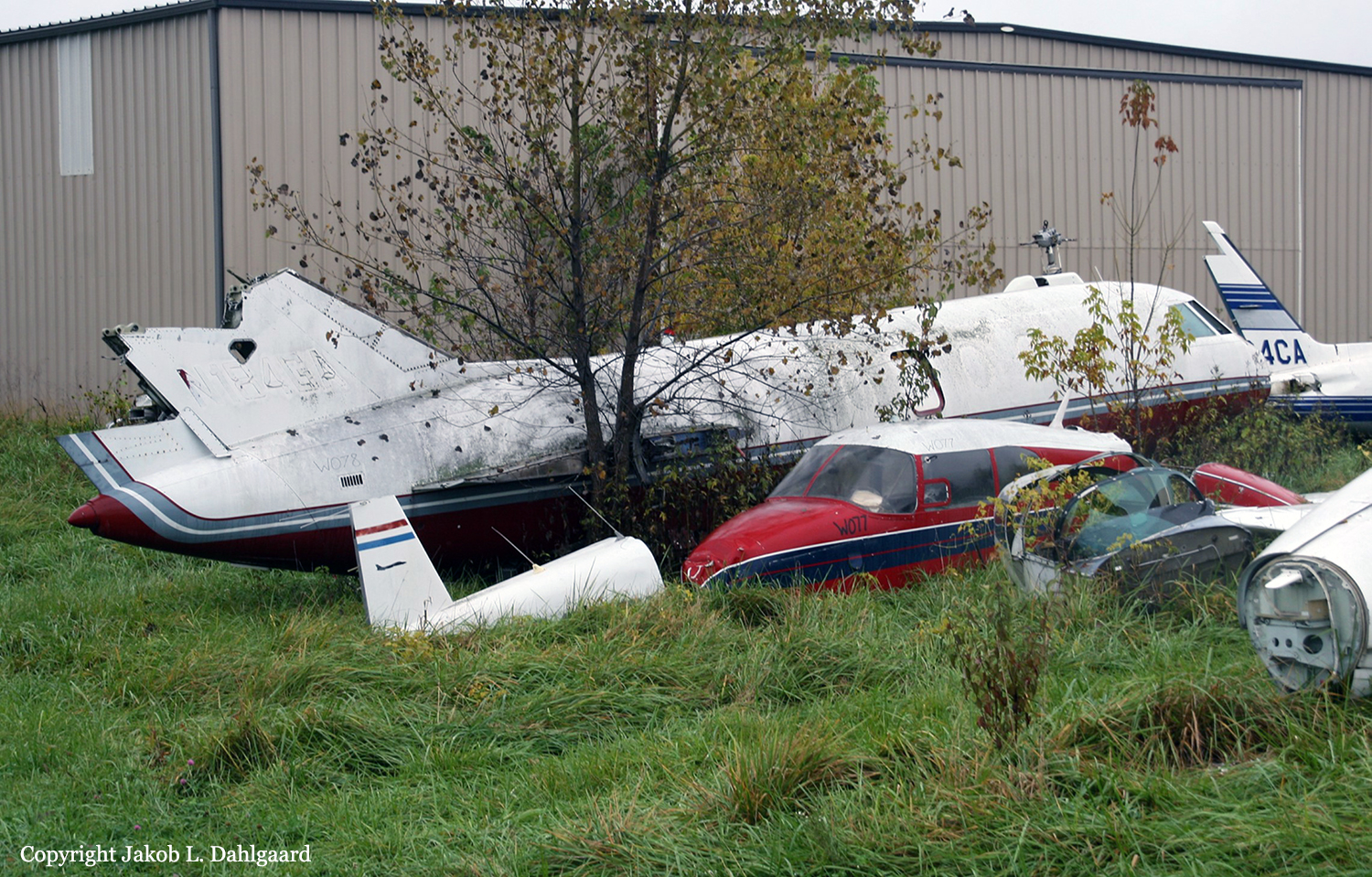
N184GA
Flight Type:
Survivors:
Yes
Schedule:
Louisville – Marion – Detroit – Peterborough
MSN:
266
YOM:
1972
Flight number:
GAE184
Country:
Crew on board:
2
Crew fatalities:
Pax on board:
0
Pax fatalities:
Other fatalities:
Total fatalities:
0
Captain / Total flying hours:
11800
Captain / Total hours on type:
9400.00
Copilot / Total flying hours:
2300
Copilot / Total hours on type:
150
Aircraft flight hours:
15798
Circumstances:
The Dassault-Breguet Falcon 20E aircraft was on an unscheduled charter cargo flight from Detroit Willow Run, Michigan, USA, to Peterborough, Ontario. The flight was being conducted at night and under instrument flight rules in instrument meteorological conditions. Nearing the destination, the flight crew received a clearance to conduct a non-directional beacon runway 09 approach at Peterborough Airport. The flight crew did not acquire the runway environment during this approach and conducted a missed approach procedure. They obtained another clearance for the same approach from Toronto Area Control Centre. During this approach, the flight crew acquired the runway environment and manoeuvred the aircraft for landing on runway 09. The aircraft touched down near the runway midpoint, and the captain, who was the pilot flying, elected to abort the landing. The captain then conducted a left visual circuit to attempt another landing. As the aircraft was turning onto the final leg, the approach became unstabilized, and the flight crew elected to overshoot; however, the aircraft pitched nose-down, banked left, and struck terrain. As it travelled 400 feet through a ploughed farm field, the aircraft struck a tree line and came to rest about 2000 feet before the threshold of runway 09, facing the opposite direction. The aircraft was substantially damaged. No serious injuries occurred.
Probable cause:
Findings as to Causes and Contributing Factors:
1. The captain's attempt to continue the landing during the second approach was contrary to company standard operating procedures and Federal Aviation Regulations, in that the approach was unstable and the aircraft was not in a position to land safely.
2. Following the aborted landing, the flight crew proceeded to conduct a circling approach to runway 09, rather than the missed approach procedure as briefed.
3. The pilot lost situational awareness during the overshoot after the third failed attempt to land, likely when he was subjected to somatogravic illusion.
4. Breakdown in crew coordination after the aborted landing, lack of planning and briefing for the subsequent approach, operating in a dark, instrument meteorological conditions environment with limited visual cues, and inadequate monitoring of flight instruments contributed to the loss of situational awareness.
Final Report:

Crash of a Pilatus PC-6/C1-H2 Turbo Porter in Bremgarten

Date & Time: Jun 13, 2000 at 1330 LT
Registration:
D-FDHM
Flight Type:
Survivors:
Yes
Schedule:
Ailertchen – Bremgarten
MSN:
688
YOM:
1969
Country:
Region:
Crew on board:
1
Crew fatalities:
Pax on board:
2
Pax fatalities:
Other fatalities:
Total fatalities:
0
Circumstances:
Upon landing, the single engine aircraft went out of control, bounced several time and veered off runway before colliding with trees. All three occupants were injured and the aircraft wa damaged beyond repair. It is believed that the loss of control occurred while the pilot-in-command was initiating a go-around procedure.

Crash of a Cessna 402B in Palma de Mallorca

Date & Time: Jun 11, 2000
Type of aircraft:
Operator:
Registration:
EC-EPK
Survivors:
Yes
MSN:
402B-1036
YOM:
1975
Country:
Region:
Crew on board:
0
Crew fatalities:
Pax on board:
0
Pax fatalities:
Other fatalities:
Total fatalities:
0
Circumstances:
During the last segment, while completing the flare, the twin engine aircraft landed hard. Upon impact, the undercarriage were torn off and the aircraft slid on its belly for few dozen metres before coming to rest. There were no casualties but the aircraft was damaged beyond repair.