Crash of a Cessna 207 Skywagon in Milford Sound: 7 killed

Date & Time: Dec 30, 1989 at 1532 LT
Operator:

Registration:
ZK-DQF
Flight Phase:
Survivors:
No
Site:
Schedule:
Milford Sound - Queenstown
MSN:
207-0053
YOM:
1969
Country:
Region:
Crew on board:
1
Crew fatalities:
Pax on board:
6
Pax fatalities:
Other fatalities:
Total fatalities:
7
Captain / Total flying hours:
455
Captain / Total hours on type:
4.00
Circumstances:
Two Cessna 207 Skywagon of Air Fiordland (ZK-DQF) and Milford Sound Scenic Flights (ZK-DAX) were engaged in a charter flight from Milford Sound to Queenstown, carrying Japanese tourists. On board ZK-DQF were six passengers and one pilot and four passengers and one pilot on board ZK-DAX. En route, while cruising over the Milford Sound area, both aircraft collided. While the pilot of ZK-DAX was able to perform an emergency landing, ZK-DQF entered a dive and crashed, killing all seven occupants. All five people on board ZK-DAX were rescued but both aircraft were destroyed.
Probable cause:
The mid-air collision occurred because neither pilot saw the other aircraft in time. Causal factors were the pilot's restricted cockpit vision, a lack of pilot awareness to maintain an effective look-out; the unnecessarily high density of traffic and the unplanned merging of two streams of aircraft after a weather deterioration necessitated a change in route after departure.
Final Report:


Crash of a Cessna 207 Skywagon in Milford Sound

Date & Time: Dec 30, 1989 at 1532 LT
Operator:
Registration:
ZK-DAX
Flight Phase:
Survivors:
Yes
Site:
Schedule:
Milford Sound - Queenstown
MSN:
207-0131
YOM:
1969
Country:
Region:
Crew on board:
1
Crew fatalities:
Pax on board:
4
Pax fatalities:
Other fatalities:
Total fatalities:
0
Captain / Total flying hours:
1120
Captain / Total hours on type:
718.00
Circumstances:
Two Cessna 207 Skywagon of Air Fiordland (ZK-DQF) and Milford Sound Scenic Flights (ZK-DAX) were engaged in a charter flight from Milford Sound to Queenstown, carrying Japanese tourists. On board ZK-DQF were six passengers and one pilot and four passengers and one pilot on board ZK-DAX. En route, while cruising over the Milford Sound area, both aircraft collided. While the pilot of ZK-DAX was able to perform an emergency landing, ZK-DQF entered a dive and crashed, killing all seven occupants. All five people on board ZK-DAX were rescued but both aircraft were destroyed.
Probable cause:
The mid-air collision occurred because neither pilot saw the other aircraft in time. Causal factors were the pilot's restricted cockpit vision, a lack of pilot awareness to maintain an effective look-out; the unnecessarily high density of traffic and the unplanned merging of two streams of aircraft after a weather deterioration necessitated a change in route after departure.
Final Report:
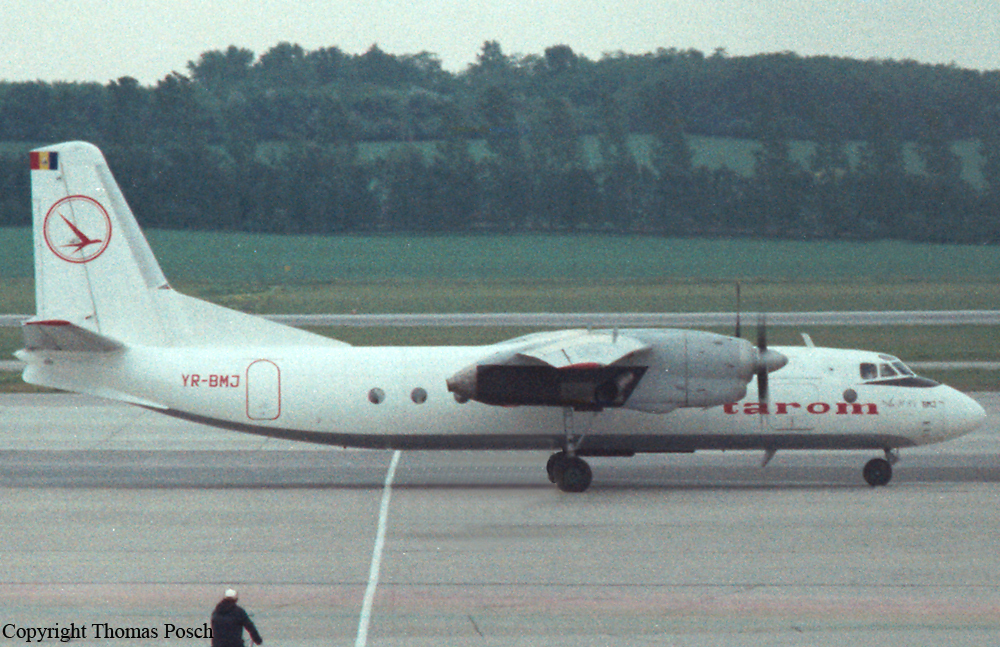
Crash of an Antonov AN-24RV in Vişina: 7 killed

Date & Time: Dec 28, 1989
Type of aircraft:
Operator:
Registration:
YR-BMJ
Flight Phase:
Flight Type:
Survivors:
No
Schedule:
Bucharest - Belgrade
MSN:
77310801
YOM:
1977
Location:
Country:
Region:
Crew on board:
6
Crew fatalities:
Pax on board:
1
Pax fatalities:
Other fatalities:
Total fatalities:
7
Circumstances:
The aircraft departed Bucharest-Otopeni on a special flight to Belgrade to collect humanitarian supplies. While in cruising altitude, the aircraft entered an uncontrolled descent and crashed near Vişina. All seven occupants were killed, among them the British photographer and journalist Ian Parry who was covering the Romanian Revolution.
Probable cause:
The probable cause which determined the crash of the AN-24 aircraft registered YR-BMJ in the day of 28th of December, 1989 near the Vişina village, Dimbovita county is the action of a force outside the aircraft, including the possibility of the impact with a foreign object located outside of it and in its flight trajectory, in the area of the left horizontal stabilizer, which is appreciated to have weakened the structure of the left horizontal stabilizer, to have caused an uncommanded and sudden trim of the horizontal stabilizer and a jam in this position, causing the aircraft to enter a dive and the impossibility of the flight crew to actuate the flight controls [in such a manner] to regain control of the flight trajectory, due to reasons independent of the aircraft as well as the will and actions of the crew.

Crash of a PZL-Mielec AN-2P in Kedrovy

Date & Time: Dec 22, 1989
Type of aircraft:
Operator:
Registration:
CCCP-70269
Flight Phase:
Survivors:
Yes
MSN:
1G139-28
YOM:
1972
Country:
Region:
Crew on board:
0
Crew fatalities:
Pax on board:
0
Pax fatalities:
Other fatalities:
Total fatalities:
0
Circumstances:
Crashed following an engine failure. There were no casualties.
Probable cause:
Engine failure for unknown reasons.

Crash of a Piper PA-60 Aerostar (Ted Smith 602P) in Frenchtown: 1 killed

Date & Time: Dec 21, 1989 at 1035 LT
Registration:
N6894Y
Flight Phase:
Survivors:
No
Schedule:
Teterboro – Reading
MSN:
62-0909-8165036
YOM:
1981
Crew on board:
1
Crew fatalities:
Pax on board:
0
Pax fatalities:
Other fatalities:
Total fatalities:
1
Captain / Total flying hours:
2061
Captain / Total hours on type:
312.00
Circumstances:
On January 16, 1989, Machen nacelle mounted induction air intercoolers were installed on N6894Y. On December 14, 1989, an annual inspection was performed, and a Machen superstar i-680 kit was installed. On December 21, 1989, N6894Y was at 6,000 feet when the pilot reported a problem with the right engine. The pilot reported a fire in the right engine. A couple of minutes later, he radioed he could not shut down the right engine. At 1034:37 the pilot advised his 'right engine just tore off' and that he was 'in a spin heading down.' The exhaust tailpipe of the left turbocharger on the right engine was found to have separated. Metallurgical examination revealed the tailpipe failed due to fatigue cracking. Records showed that part I of piper service bulletin 920 (engine tailpipe inspection) had been completed, while part II (addition of fire detection system) had not been accomplished due to the lack of available kits. The pilot, sole on board, was killed.
Probable cause:
The inadequate maintenance and inspection of the turbocharger tailpipe exhaust stack on the right engine by the mechanic(s). The failure of the tailpipe permitted heat from the exhaust to weaken the main spar of the right wing resulting in a catastrophic failure.
Final Report:

Crash of a Grumman S-2F Tracker off Sakom: 4 killed

Date & Time: Dec 7, 1989
Type of aircraft:
Operator:
Flight Phase:
Survivors:
No
Country:
Region:
Crew on board:
4
Crew fatalities:
Pax on board:
0
Pax fatalities:
Other fatalities:
Total fatalities:
4
Circumstances:
Crashed in unknown circumstances in the sea 2 km off the Sakom beach. All four crew members were killed.

Crash of a Douglas C-47 near Tepic: 5 killed

Date & Time: Dec 6, 1989
Operator:
Flight Phase:
Flight Type:
Survivors:
No
Site:
Location:
Country:
Crew on board:
5
Crew fatalities:
Pax on board:
0
Pax fatalities:
Other fatalities:
Total fatalities:
5
Circumstances:
Crashed on the Mt Sangangüey located 11 km east of Tepic Airport. The wreckage was found two days later. All five crew members were killed.

Crash of a Douglas DC-6B off George Town

Date & Time: Dec 2, 1989
Type of aircraft:
Registration:
N371
Flight Phase:
Flight Type:
Survivors:
Yes
MSN:
44057
YOM:
1953
Country:
Crew on board:
0
Crew fatalities:
Pax on board:
0
Pax fatalities:
Other fatalities:
Total fatalities:
0
Circumstances:
Crashed in unknown circumstances in the sea off George Town. The crew was rescued and the aircraft sank and was lost.

Crash of a Convair CV-440 Metropolitan near Toluca

Date & Time: Nov 30, 1989
Registration:
XA-NAU
Flight Phase:
Flight Type:
Survivors:
Yes
MSN:
411
YOM:
1957
Location:
Country:
Crew on board:
2
Crew fatalities:
Pax on board:
0
Pax fatalities:
Other fatalities:
Total fatalities:
0
Circumstances:
An engine failed en route, forcing the crew to attempt an emergency landing. The aircraft crash landed in an open field near Toluca and was damaged beyond repair. Both occupants escaped uninjured. The exact date of the mishap remains unknown, somewhere in November 1989.
Probable cause:
Engine failure for unknown reasons.

Crash of a Fletcher FU24-950 in Frogmore: 1 killed

Date & Time: Nov 29, 1989 at 1150 LT
Type of aircraft:
Operator:
Registration:
VH-HTB
Flight Phase:
Survivors:
No
Schedule:
Frogmore - Frogmore
MSN:
174
YOM:
1971
Country:
Region:
Crew on board:
1
Crew fatalities:
Pax on board:
0
Pax fatalities:
Other fatalities:
Total fatalities:
1
Circumstances:
The aircraft was engaged in superphosphate spreading operations. An aerial survey of the property had been conducted by the pilot in company with the property owner. Power poles in the valley ahead and to the left of the airstrip were marked. When operations started the wind was a light north-easterly and ambient temperature was 16° Celsius. By the time the aircraft had refuelled and was ready for the thirty-sixth flight of the day, the ambient temperature had increased to 28° Celsius and the wind direction had changed to a south-westerly. Shortly after takeoff, the aircraft was observed to sink after overflying the high-voltage power lines between the marked poles. On the next flight the aircraft was observed to make a tight left turn and fly down the valley adjacent to the left marked powerpole. On the next and final flight, the aircraft was apparently attempting to follow the track of the previous flight. While crossing the power lines south-west of the marked power pole, the aircraft's landing gear and left wing tip struck the powerlines. With the broken powerline jammed behind the left aileron washout plate, the aircraft impacted the ground 100 metres beyond the powerpole. Ground impact forces destroyed the aircraft and reduced the cockpit area to non-survivable dimensions.
Probable cause:
On-site examination of the aircraft and subsequent laboratory examination and testing of components did not reveal any pre-existing mechanical defects or abnormalities which could be considered as factors in, or contributory to, this accident. Powerline impact marks on the aircraft were consistent with the aircraft being in a left banked attitude when it struck the wire. The investigation revealed that the loader driver's truck bucket load gauge had no conversion/calibration chart, and that the aircraft was being operated in excess of the maximum allowable weight for takeoff. It is considered probable that the pilot had elected to fly down the valley, (thus taking advantage of the downslope), to compensate for a degradation of aircraft performance whilst operating overweight in the changed ambient conditions. The absence of a superphosphate trail before wire impact indicates that the pilot did not dump any of the load and was either unaware
of, or had forgotten about, the existence of powerlines to the south-west of the marked powerpole.
The following factors were considered relevant to the development of the accident:
1. The aircraft was being operated in an overweight configuration for takeoff.
2. The pilot did not adjust the takeoff weight of the aircraft to give an acceptable climb performance.
3. The pilot was unaware of, or had forgotten about, the powerlines to the south-west of the marked pole; or,
4. the pilot misjudged the clearance between the powerlines and the aircraft whilst trying to overfly them.
Final Report: