Crash of a Cessna 402C off Treasure Cay: 2 killed

Date & Time: Jul 13, 2003 at 1530 LT
Type of aircraft:
Operator:
Registration:
N314AB
Survivors:
Yes
Schedule:
Fort Lauderdale – Treasure Cay
MSN:
402C-0413
YOM:
1980
Flight number:
RSI502
Country:
Crew on board:
1
Crew fatalities:
Pax on board:
9
Pax fatalities:
Other fatalities:
Total fatalities:
2
Captain / Total flying hours:
7904
Captain / Total hours on type:
4964.00
Aircraft flight hours:
17589
Circumstances:
On July 13, 2003, about 1530 eastern daylight time, Air Sunshine, Inc. (doing business as Tropical Aviation Services, Inc.), flight 527, a Cessna 402C, N314AB, was ditched in the Atlantic Ocean about 7.35 nautical miles west-northwest of Treasure Cay Airport (MYAT), Treasure Cay, Great Abaco Island, Bahamas, following the in-flight failure of the right engine. Four of the nine passengers sustained no injuries, three passengers and the pilot sustained minor injuries, and one adult and one child passenger died after they evacuated the airplane. The airplane sustained substantial damage. The airplane was being operated under the provisions of 14 Code of Federal Regulations Part 135 as a scheduled international passenger commuter flight from Fort Lauderdale/Hollywood International Airport, Fort Lauderdale, Florida, to MYAT. Visual meteorological conditions prevailed for the flight, which operated on a visual flight rules flight plan.
Probable cause:
The in-flight failure of the right engine and the pilotís failure to adequately manage the airplaneís performance after the engine failed. The right engine failure resulted from inadequate maintenance that was performed by Air Sunshine's maintenance personnel during undocumented maintenance. Contributing to the passenger fatalities was the pilotís failure to provide an emergency briefing after the right engine failed.
Final Report:
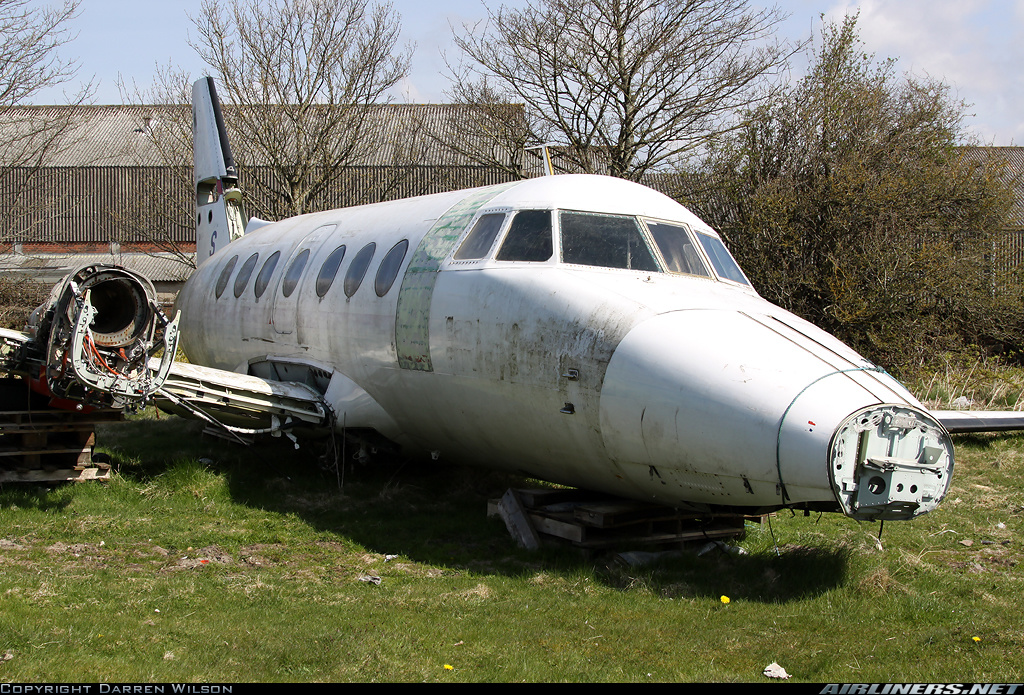
Crash of a Boeing 737-2J8C in Port Sudan: 116 killed

Date & Time: Jul 8, 2003 at 0417 LT
Type of aircraft:
Operator:
Registration:
ST-AFK
Survivors:
Yes
Schedule:
Port Sudan - Khartoum
MSN:
21169
YOM:
1975
Flight number:
SD139
Country:
Region:
Crew on board:
11
Crew fatalities:
Pax on board:
106
Pax fatalities:
Other fatalities:
Total fatalities:
116
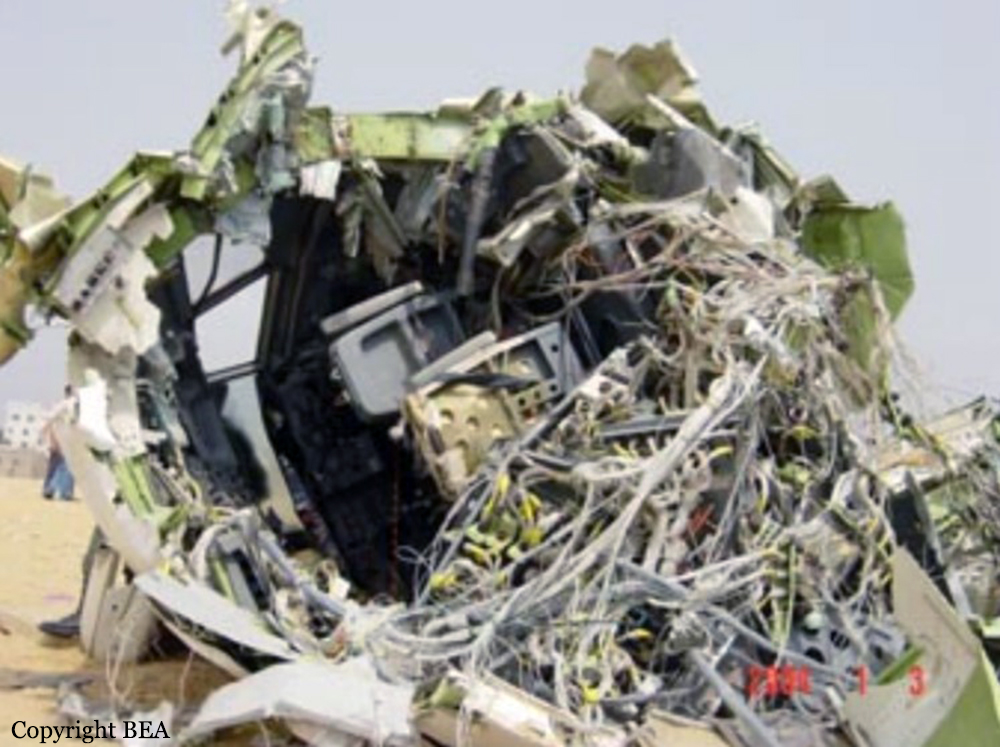
Circumstances:
The aircraft departed Port Sudan Airport at 0407LT on a schedule service to Khartoum with 105 passengers and 11 crew members on board. During climbout, the crew informed ATC about technical problems and was cleared to return for an emergency landing on runway 33. On final approach in limited visibility, the aircraft struck the ground and crashed about 5 km from the runway threshold. The aircraft was totally destroyed by impact forces. A boy aged two was injured while 116 other occupants were killed, among them eight EU citizens and one high ranking officer of the Sudan Army.
Probable cause:
Failure of one engine during initial climb for unknown reasons.

Crash of a Canadair RegionalJet CRJ-100ER in Brest: 1 killed

Date & Time: Jun 22, 2003 at 2351 LT
Operator:
Registration:
F-GRJS
Survivors:
Yes
Schedule:
Nantes - Brest
MSN:
7377
YOM:
2000
Flight number:
AF5672
Country:
Region:
Crew on board:
3
Crew fatalities:
Pax on board:
21
Pax fatalities:
Other fatalities:
Total fatalities:
1
Captain / Total flying hours:
16000
Captain / Total hours on type:
5300.00
Copilot / Total flying hours:
4800
Copilot / Total hours on type:
650
Aircraft flight hours:
6649
Aircraft flight cycles:
6552
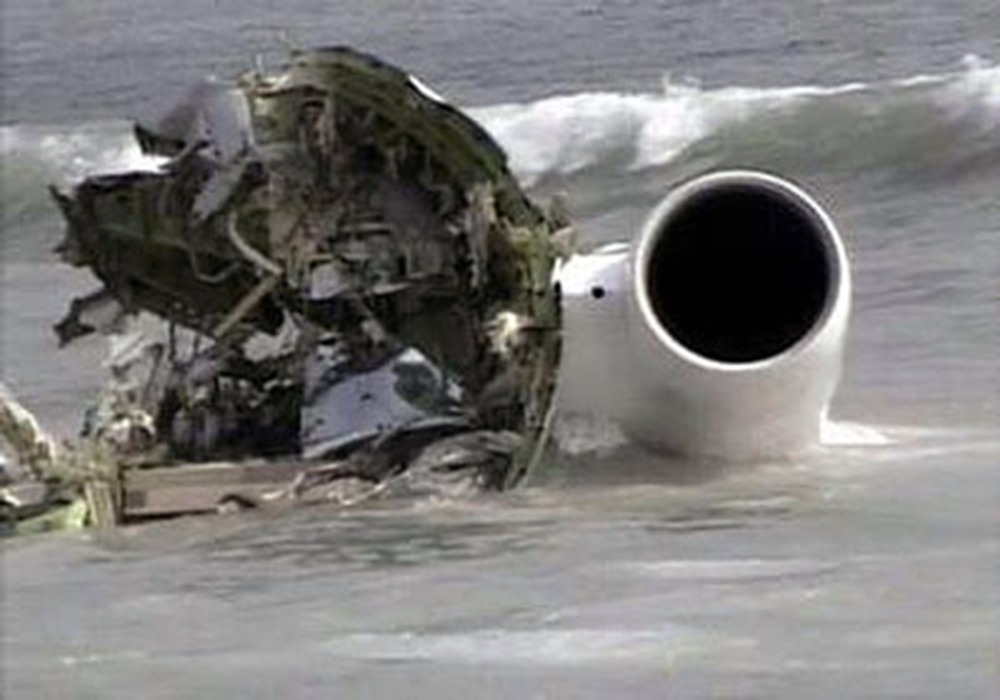
Circumstances:
On Sunday 22 June 2003, the CRJ-100 registered F-GRJS was operating as scheduled flight AF 5672 between Nantes Atlantique and Brest-Guipavas aerodromes (France) under an IFR flight plan. The flight represented the last leg of a Brest – Nantes – Strasbourg – Nantes – Brest rotation. The aeroplane was operated by Brit Air on behalf of Air France. The Captain was pilot flying (PF). The crew also included another pilot (the co-pilot), and one cabin crew. The aeroplane took off at 21 h 16 (2) with twenty-one passengers. The flight was approximately fifty minutes late, due to a delay in the first flight of the day that had affected the subsequent flights. During the flight, with the authorisation of the control centre, the crew passed northeast of the planned track in order to avoid cumulonimbus formations. At Brest Guipavas, the 21 h 00 ATIS indicated visibility of eight hundred meters with some fog and a cloud base at two hundred feet with the presence of cumulonimbus. The runway in use was 26 Left with an ILS approach. Runway use was temporarily restricted to Cat I due to presence of works. At 21 h 36 min 27 s, the flight (radio call sign BZ 672 EC) was cleared by the enroute controller to descend to Flight Level 150 then, at 21 h 39 min 10 s, to Flight Level 70. At 21 h 39 min 23 s, the crew announced that they were descending to Flight Level 70 towards BODIL, the initial approach fix, avoiding storms. At 21 h 39 min 31 s, the Brest approach controller transmitted "Descend four thousand feet QNH one thousand and eight, number two on approach, plan a holding pattern at Golf Uniform". At 21 h 44 min 21 s, the controller cleared descent to three thousand feet and added "and perform a holding pattern". The aeroplane was approximately 20 NM DME from BG. At 21 h 47 min 40 s, that is, approximately one-and-a-half-minutes before the planned start of the hold, the controller cleared descent to two thousand feet QNH. At 21 h 48 min 01 s, the controller announced "Echo Charlie, preceding aeroplane has landed, continue the approach, report at Outer Marker". Four seconds later, at 9.4 NM DME, the autopilot "Heading" and "Vertical Speed" modes became active and the aeroplane adopted a heading of 257°. The Brest ILS frequency was displayed on the VOR 1 and the VOR navigation source was selected. At 21 h 48 min 21 s, the controller called back "Are you ready for the approach?". The crew confirmed and the controller asked "Report at Outer Marker". The Copilot read this back. At the Captain’s request, the Co-pilot extended the flaps to 20° then the landing gear. The aeroplane stabilized at two thousand feet QNH on autopilot, still in Heading mode, at about 7 NM DME. Simultaneously, the wind, which had started to veer northwest during the descent, caused the aeroplane to drift towards the left. The flight crew did not notice this drift. At 21 h 49 min, the co-pilot extended the flaps to 30° then to 45° and the crew performed the pre-landing checklist. At 21 h 49 min 35 s, the controller cleared the landing for runway 26 Left and indicated a cloud base of less than one hundred feet. At 21 h 49 min 40 s, the aeroplane, in level flight, passed under then above the glide slope. At 21 h 50 min, the aeroplane passed the GU beacon, slightly to the left, with a track deviating to the left in relation to the localizer centreline. At that moment, the wind calculated by the Flight Management System (FMS) was 300° / 20 kt. A short time later, the aeroplane began its descent. The aeroplane continued to drift to the left of the localizer centreline. At 21 h 50 min 45 s the aeroplane again passed through the glide slope, and the Captain said "Approach selected, LOC and Glide"; the Co-pilot confirmed. The autopilot "heading" and "vertical speed" modes remained active. The aeroplane thereafter remained below the glide slope for the remainder of the flight. Between 21 h 50 min 58 s and 21 h 51 min 02 s, the GPWS announced, successively, "Five hundred", "Glide slope" then "Sink rate". At 21 h 51 min 01 s, the aeroplane began a turn to the right. By this time, the aeroplane was 4.68 points to the left of the localizer centreline. At 21 h 51 min 04 s, the Captain disengaged the autopilot. At 21 h 51 min 05 s, the GPWS announced "Three hundred". Between 21 h 51 min 07 s and 21 h 51 min 14 s, seven "Glide slope" alarms sounded. During this time, the Co-pilot said "come right" on two occasions and the aeroplane attitude changed from - 5° to 0°. At 21 h 51 min 15 s, the GPWS announced "One hundred". At 21 h 51 min 16 s, with the aeroplane at 529 feet QNH and 93 feet on the radio altimeter, the Co-pilot said "I’ve got nothing in front", then the Captain said "Go around". Simultaneously, the engine thrust increased significantly. The aeroplane attitude returned to - 5 in four seconds. At 21 h 51 min 19 s, the Co-pilot said "Go around". At 21 h 51 min 20 s, the GPWS announced "Sink rate" then "Pull up". The Co-pilot said "Go around" again at 21 h 51 min 22. The first sounds of the impact were recorded by the CVR at 21 h 51 min 22 s, and the recording stopped at 21 h 51 min 24. s. The aeroplane, which touched the ground without any great force, rolled, struck several obstacles and ended up 450 meters left of the extended runway centreline, 2,150 meters from the runway threshold. The Captain was killed. The rest of the crew and the passengers managed to evacuate the aeroplane, which was destroyed by fire.
Probable cause:
The causes of the accident are as follows:
• neglecting to select the APPR mode at the start of the approach, which led to non-capture of the localizer then of the glide slope;
• partial detection of flight path deviations, due to the crew’s focusing on vertical navigation then on horizontal navigation;
• continuing a non-stabilised approach down to the decision altitude.
Lack of communication and coordination in the cockpit, and a change of strategy on the part of the Controller in managing the flight were contributing factors.
Final Report:
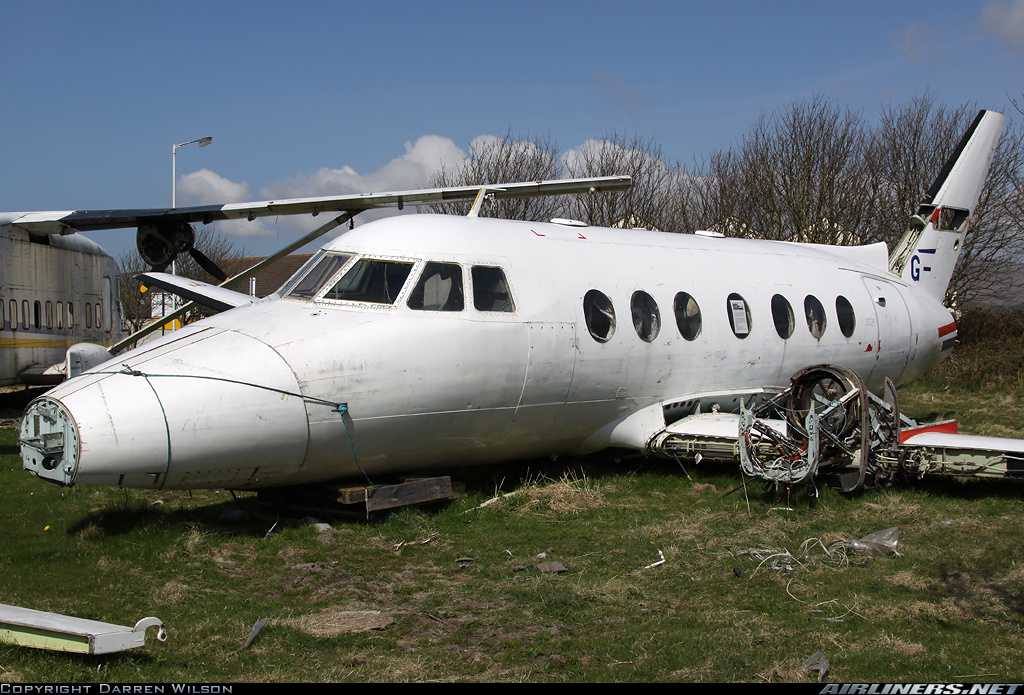
Crash of a Fokker 50 in Adar Yeil

Date & Time: Jun 16, 2003 at 0630 LT
Type of aircraft:
Operator:
Registration:
ST-ARA
Survivors:
Yes
Schedule:
Khartoum - Adar Yeil
MSN:
20154
YOM:
1989
Country:
Region:
Crew on board:
3
Crew fatalities:
Pax on board:
42
Pax fatalities:
Other fatalities:
Total fatalities:
0
Circumstances:
After landing on a gravel runway at Adar Yeil Airport, the aircraft collided with a flock of birds, damaging the left engine. The aircraft went out of control and veered to the left, causing the left propeller to struck the ground. The propeller blades separated, punctured the fuselage and injured three passengers. The aircraft came to a halt and all occupants evacuated. The aircraft was damaged beyond repair.
Probable cause:
Loss of control after landing following a collision with a flock of birds.

Crash of an Antonov AN-24RV in Nueva Gerona

Date & Time: Jun 14, 2003 at 1605 LT
Type of aircraft:
Operator:
Registration:
CU-T1295
Survivors:
Yes
Schedule:
Nueva Gerona - Havana
MSN:
2 73 075 08
YOM:
1972
Country:
Crew on board:
4
Crew fatalities:
Pax on board:
48
Pax fatalities:
Other fatalities:
Total fatalities:
0
Circumstances:
After takeoff from Nueva Gerona-Rafael Cabrera Airport runway 23, the crew elected to climb to an altitude of 1,000 feet he encountered technical problems. He contacted ATC and was cleared for an immediate return. Following a 180 turn, the crew completed a flapless approach to runway 05. After landing, the aircraft rolled for about 2,500 metres then overran and came to rest in an artificial lake. All 52 occupants evacuated safely while the aircraft was damaged beyond repair.
Probable cause:
Failure of the hydraulic systems after takeoff for unknown reasons.

Crash of an Antonov AN-3T near Sangar

Date & Time: May 16, 2003 at 1321 LT
Type of aircraft:
Operator:
Registration:
RA-05881
Flight Phase:
Survivors:
Yes
Schedule:
Sangar – Yakutsk
MSN:
2218-18-01
YOM:
2002
Country:
Region:
Crew on board:
2
Crew fatalities:
Pax on board:
11
Pax fatalities:
Other fatalities:
Total fatalities:
0
Circumstances:
En route from Sangar to Yakutsk-Magan Airport, while cruising at an altitude of 1,000 metres in snow falls, the engine failed. The aircraft lost height and the crew attempted an emergency landing when the aircraft struck trees and crashed in a swampy and wooded area located 45 km from Sangar. All 13 occupants were injured and the aircraft was damaged beyond repair.
Probable cause:
Failure of the engine in flight after melted snow and ice entered the engine air intake. The following contributing factors were identified:
- The crew failed to feather the propeller after the engine failed, causing high drag,
- The crew modified his route and continued the prescribed altitude,
- Weather conditions were poor and did not allow to fly under VFR mode,
- Lack of ATC assistance.

Crash of a De Havilland DHC-6 Twin Otter 300 in Mulia

Date & Time: Apr 28, 2003 at 0730 LT
Operator:
Registration:
PK-WAR
Survivors:
Yes
Schedule:
Wamena - Mulia
MSN:
313
YOM:
1971
Country:
Region:
Crew on board:
3
Crew fatalities:
Pax on board:
1
Pax fatalities:
Other fatalities:
Total fatalities:
0
Circumstances:
On final approach to Mulia Airport, the twin engine aircraft struck the ground and crashed few km short o runway. All four occupants were injured and the aircraft was damaged beyond repair.

Crash of a Yakovlev Yak-40 in Dnipropetrovsk

Date & Time: Apr 28, 2003
Type of aircraft:
Operator:
Registration:
UR-87918
Survivors:
Yes
MSN:
9 73 08 55
YOM:
1977
Country:
Region:
Crew on board:
4
Crew fatalities:
Pax on board:
13
Pax fatalities:
Other fatalities:
Total fatalities:
0
Circumstances:
On flare, the aircraft was unstable and rolled from right to left. When landing firmly on runway 09/27, the aircraft was not properly aligned and ran off runway to the right at a speed of 115 km/h. It eventually collided with a dike located 100 metres further. All 17 occupants escaped uninjured while the aircraft was damaged beyond repair.

Crash of a Beechcraft 99A Airliner in Prince Albert

Date & Time: Apr 23, 2003 at 1802 LT
Type of aircraft:
Operator:
Registration:
C-FDYF
Survivors:
Yes
Schedule:
Saskatoon – Prince Albert
MSN:
U-110
YOM:
1969
Flight number:
TW602
Country:
Crew on board:
2
Crew fatalities:
Pax on board:
4
Pax fatalities:
Other fatalities:
Total fatalities:
0
Circumstances:
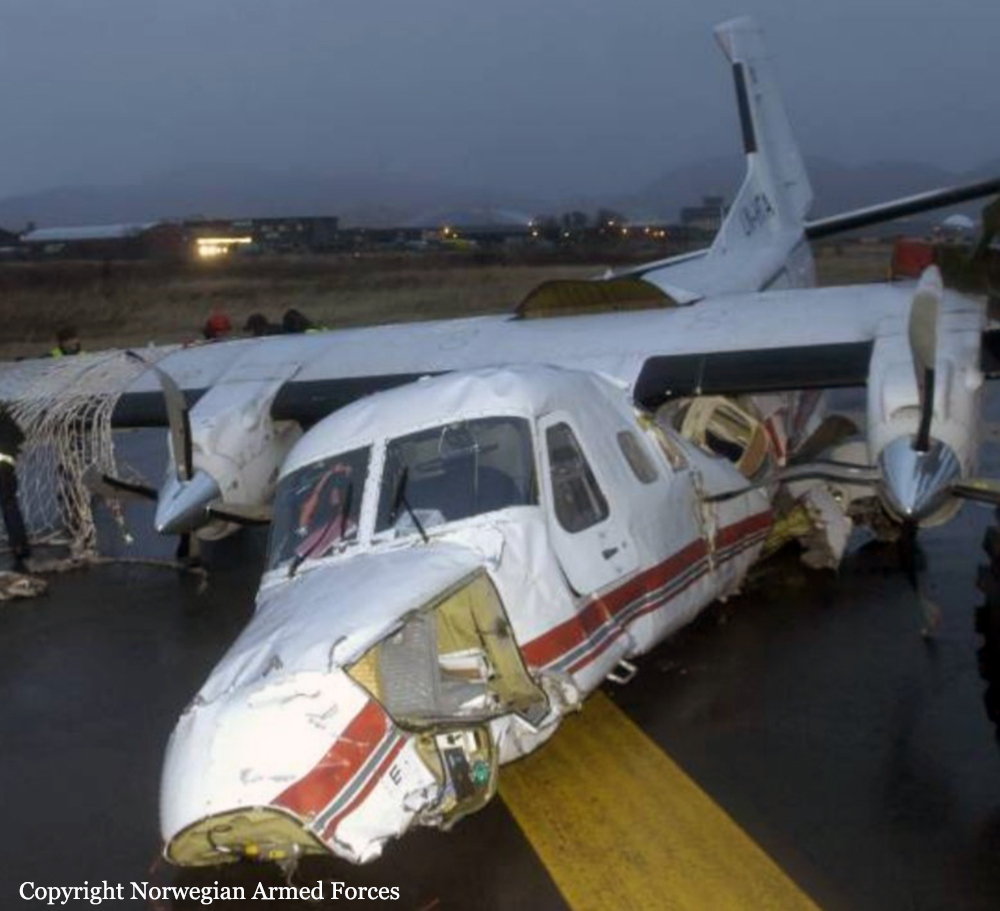
The aircraft was on a scheduled flight from Saskatoon, Saskatchewan, to Prince Albert, Saskatchewan, with two pilots and four passengers on board. The aircraft was approximately 4000 feet above sea level when the crew selected the flaps for the approach to Prince Albert. A bang was heard from the rear of the fuselage. The aircraft commenced an uncommanded pitch-up to a near-vertical attitude, then stalled, nosed over, and began a spin to the left. The crew countered the spin but the aircraft continued to descend in a near-vertical dive. Through the application of full-up elevator and the manipulation of power settings, the pilots were able to bring the aircraft to a near-horizontal attitude. The crew extended the landing gear and issued a Mayday call, indicating that they were conducting a forced landing. The aircraft struck a knoll, tearing away the belly cargo pod and the landing gear. The aircraft bounced into the air and travelled approximately 180 metres, then contacted a barbed-wire fence and slid to a stop approximately 600 metres from the initial impact point. The crew and passengers suffered serious but non-life-threatening injuries. All of the occupants exited through the main cabin door at the rear of the aircraft. The accident occurred during daylight hours at 1802 central standard time.
Probable cause:
Findings as to Causes and Contributing Factors:
1. During flight, the horizontal stabilizer trim actuator worked free of the mounting structure, and as a result, the flight crew lost pitch control of the aircraft.
2. During replacement of the horizontal stabilizer trim actuator, the upper attachment bolts were inserted through the airframe structure but did not pass through the upper mounting lugs of the
trim actuator.
3. The improperly installed bolts trapped the actuator mounting lug assemblies, suspending the weight of the actuator and giving the false impression that the bolts had been correctly installed.
4. Dual inspections, ground testing, and flight testing did not reveal the faulty attachment.
Findings as to Risk:
1. The nature of the installation presents a risk that qualified persons may inadvertently install Beech 99 and Beech 100 horizontal stabilizer trim actuators incorrectly. There are no published warnings to advise installers that there is a potential to install the actuator incorrectly.
Final Report:

Crash of a Yakovlev Yak-40 in Urganch

Date & Time: Apr 9, 2003
Type of aircraft:
Operator:
Registration:
UK-87367
Flight Phase:
Survivors:
Yes
MSN:
9341731
YOM:
1973
Country:
Region:
Crew on board:
0
Crew fatalities:
Pax on board:
0
Pax fatalities:
Other fatalities:
Total fatalities:
0
Circumstances:
During takeoff roll on runway 13/31, the crew noticed a loss of power on the left engine and decided to abort. The aircraft could not be stopped within the remaining distance and overran. It lost its right main gear and came to rest few dozen metres further. All occupants escaped uninjured while the aircraft was damaged beyond repair.