Crash of a Boeing 737-3Y0 in Libreville

Date & Time: Dec 19, 2003 at 1844 LT
Type of aircraft:
Operator:
Registration:
TR-LFZ
Survivors:
Yes
Schedule:
Franceville – Libreville
MSN:
23750
YOM:
1987
Flight number:
GN471
Country:
Region:
Crew on board:
6
Crew fatalities:
Pax on board:
125
Pax fatalities:
Other fatalities:
Total fatalities:
0
Circumstances:
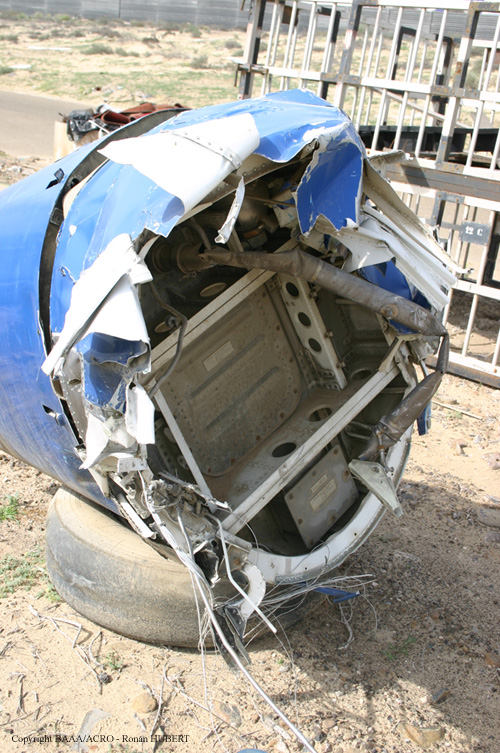
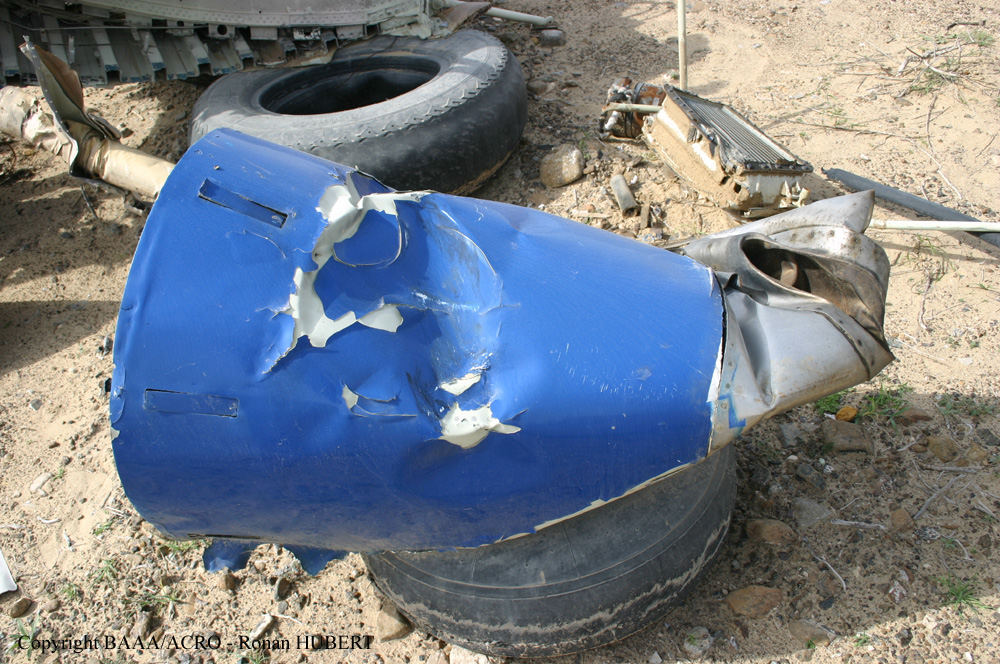
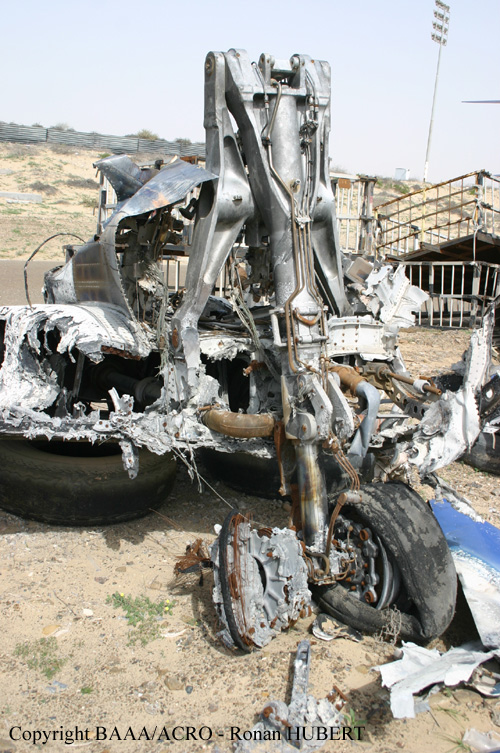
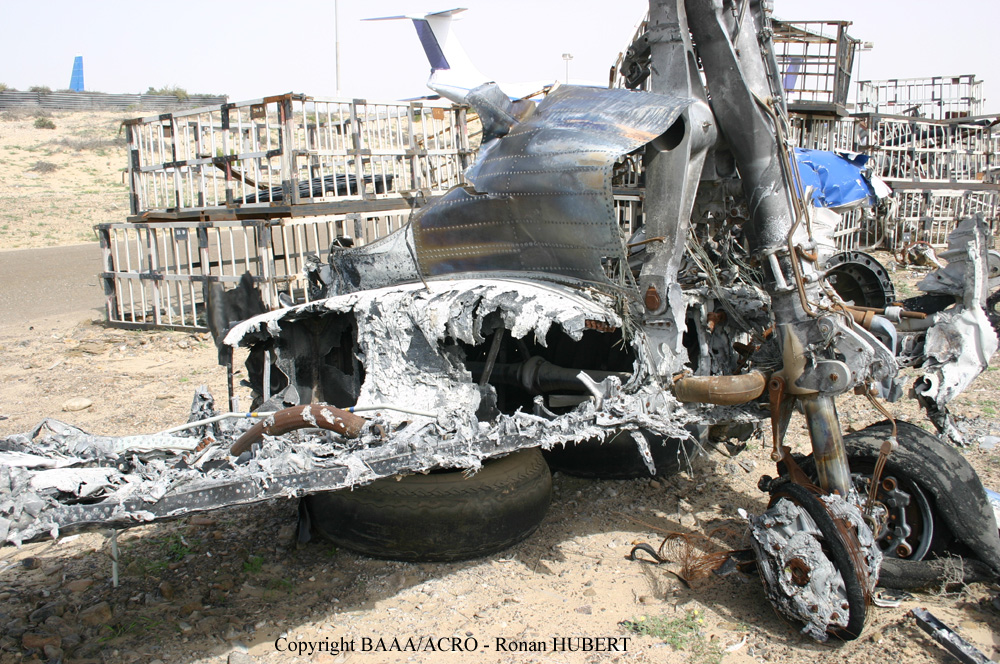
While descending to Libreville-Léon Mba Airport, the crew encountered poor weather conditions. Due to low visibility caused by heavy rain falls, a landing was not possible and the crew followed a holding pattern of about 30 minutes for weather improvement. After landing on runway 16 (3,000 metres long), the aircraft was unable to stop within the remaining distance. It overran at a speed of 100 knots, collided with a fence and came to rest 100 metres further. All 131 occupants evacuated safely while the aircraft was damaged beyond repair. It was reported that the left engine throttle lever was in a full forward position after touchdown while the right engine throttle lever was in the reverse position. The braking action was poor because the runway surface was poor and the crew did not initiate a go-around procedure.

Crash of a Boeing 737-200 in Lima

Date & Time: Dec 13, 2003 at 2248 LT
Type of aircraft:
Operator:
Registration:
OB-1544-P
Survivors:
Yes
Schedule:
Caracas - Lima
MSN:
20956
YOM:
1974
Flight number:
ACQ341
Country:
Crew on board:
6
Crew fatalities:
Pax on board:
94
Pax fatalities:
Other fatalities:
Total fatalities:
0
Captain / Total flying hours:
25502
Copilot / Total flying hours:
2229
Aircraft flight hours:
62716
Aircraft flight cycles:
62162
Circumstances:
Following an uneventful flight from Caracas, the crew started the approach to Lima-Callao-Jorge Chávez Airport when the crew noted an asymmetric warning with the flaps. The crew decided to continue the approach but failed to lower the undercarriage. The aircraft belly landed at a speed of 190 knots and slid on runway 15 for 2,347 metres before coming to rest. All 100 occupants escaped uninjured while the aircraft was damaged beyond repair.
Probable cause:
Failure of the crew to verify and check the Non Normal Checklist of the Quick Reference Handbook (QRH) due to technical problems at the time of approach and landing, causing the omission of the extension of the gear and subsequent contact of the aircraft with the runway with landing gear retracted. The following findings were identified:
- During the approach, an indication of flap asymmetry presented.
- Due to the tightness of the itinerary programmed by the company, the total flight hours and the flight's working day were within the limits of the maximum allowed by the RAP, which could have influenced (due to fatigue) the poor performance by the crew.
- The lack of recording of some parameters of the flight recorders (FDR and CVR) prevented the resolution of some important and useful details for the investigation.
- The flap asymmetry indication, due to an indication fault in the Flap Position Indicator caused by high electrical resistance originating from the winding inside the synchro transmitter of the right side Flap Position Transmitter.
- The omission of the use in the approach phase of the procedures described in the QRH for this type of abnormal situations.
- The lack of decision to carry out a Go Around, taking into account that the period of time to carry out the QRH procedures for this abnormal situation was not going to be enough.
- Overconfidence (complacency) during the approach phase under abnormal conditions (indication of flap asymmetry).
- Lack of Crew Resource Management during the approach and landing phases, especially under abnormal conditions.
- Lack of leadership during the abnormal situation presented.
- Lack of communication with the Control Tower about the abnormal conditions in which the approach and landing were to be carried out.
- Itinerary very adjusted to the limits of flight hours and working hours, established by the RAP.
Final Report:

Crash of a Fokker F28 Fellowship 4000 in Lokichoggio

Date & Time: Dec 7, 2003 at 1337 LT
Type of aircraft:
Operator:
Registration:
5Y-NNN
Survivors:
Yes
Schedule:
Nairobi – Lokichogio
MSN:
11231
YOM:
1986
Flight number:
HSA812
Country:
Region:
Crew on board:
4
Crew fatalities:
Pax on board:
23
Pax fatalities:
Other fatalities:
Total fatalities:
0
Circumstances:
After touchdown at Lokichogio Airport, the crew started the braking procedure when the tyre n°1 on the nose gear burst. Unable to stop within the remaining distance, the airplane overran, collided with a fence and came to rest in a ditch with its nose gear torn off. All 27 occupants evacuated safely while the aircraft was damaged beyond repair.

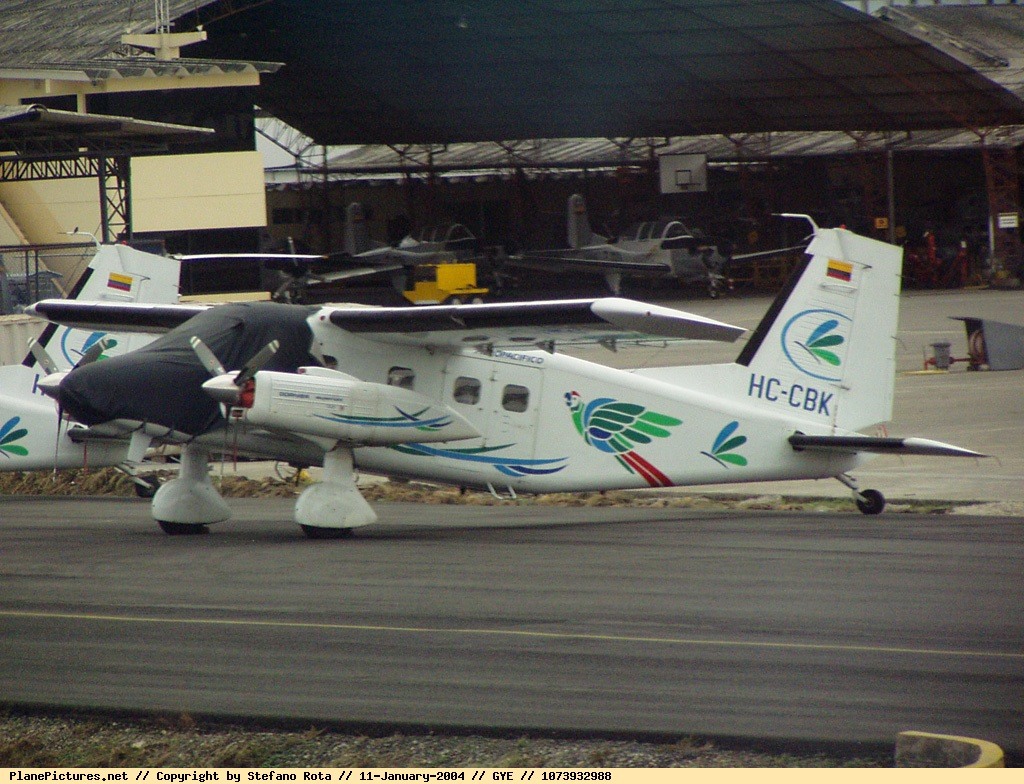
Crash of a Dornier DO228-202 in Bodø

Date & Time: Dec 4, 2003 at 0909 LT
Type of aircraft:
Operator:
Registration:
LN-HTA
Survivors:
Yes
Schedule:
Røst – Bodø
MSN:
8127
YOM:
1987
Flight number:
KAT603
Location:
Country:
Region:
Crew on board:
2
Crew fatalities:
Pax on board:
2
Pax fatalities:
Other fatalities:
Total fatalities:
0
Captain / Total flying hours:
6400
Captain / Total hours on type:
700.00
Copilot / Total flying hours:
1450
Copilot / Total hours on type:
260
Aircraft flight hours:
11069
Circumstances:
Kato Airline flight KAT603, an aircraft of the type Dornier 228-202 with registration LN-HTA, was to fly a regular scheduled flight from Røst airport (ENRS) to Bodø airport (ENBO). There were two passengers and two pilots on board. There was a strong westerly wind, and when the plane approached Bodø extensive lightning activity developed quickly. The aircraft was struck by a very powerful lightning. The lightning struck the aircraft’s nose area and passed to the tail. Boundings between the fuselage and tail surface and a wire between the tail surface and the elevator were burned off. A powerful electric energy passed through the elevator rod in the tail section. A rod end came loose, resulting in a breach in the control rod. Thus the only connection between the control column in the cockpit and the elevator was lost. This aircraft type has electric pitch trim which adjusts the tail surface angle of attack and after a period the pilots regained limited control of the aircraft’s nose position by using this. When the lightning struck the aircraft, the pilots were blinded for approximately 30 seconds. They lost control of the aircraft for a period and the aircraft came very close to stalling. The pilots declared an emergency. The aircraft’s remaining systems were intact and the pilots succeeded in bringing the plane in for landing. During the first landing attempt the airspeed was somewhat high. The aircraft hit the ground in an approximate three-point position and bounced into the air. The pilots concluded that the landing was uncontrollable because the elevator was not working. The landing was aborted and the aircraft circled for a new attempt. Wind conditions were difficult and the next attempt was also unstable in terms of height and speed. At short final the aircraft nosed down and the pilots barely managed to flare a little before the aircraft hit the ground. The point of impact was a few metres before the runway and the aircraft slid onto the runway. Emergency services quickly arrived at the scene. The two pilots were seriously injured while both passengers suffered only minor physical injuries. No fuel leakage or fire occurred. The aircraft was written off.
Probable cause:
Significant investigation results:
a) The air traffic control service did not have equipment for integrated weather presentation on the radar display.
b) The aircraft’s weather radar did not indicate precipitation cells and was therefore not functioning correctly.
c) Up to 30% of the wires on individual bondings between the fuselage, horizontal stabilizer and elevator may have been broken before the lightning struck.
d) The aircraft was hit by lightning containing a very large amount of energy. The aircraft’s bondings were not able to conduct the electric energy from the lightning and the transfer rod from the cockpit to the elevator was broken.
e) As a result of the reduced control of the aircraft’s pitch and difficult wind conditions, the sink rate was not sufficiently stabilized on short final. The crew were unable to prevent the aircraft from hitting the ground.
Final Report:

Crash of a Fokker F27 Friendship 600 in Tarauacá

Date & Time: Oct 20, 2003 at 1132 LT
Type of aircraft:
Operator:
Registration:
PT-TVA
Survivors:
Yes
Schedule:
Cruzeiro do Sul – Tarauacá – Rio Branco
MSN:
10334
YOM:
1967
Flight number:
TVJ6167
Location:
Country:
Crew on board:
3
Crew fatalities:
Pax on board:
20
Pax fatalities:
Other fatalities:
Total fatalities:
0
Captain / Total flying hours:
12000
Captain / Total hours on type:
3797.00
Copilot / Total hours on type:
2682
Aircraft flight hours:
55725
Aircraft flight cycles:
60270
Circumstances:
After landing at Tarauacá Airport, the crew started the braking procedure when control was lost. The aircraft veered off runway, collided with several obstacles and came to rest in a ditch. All 23 occupants escaped uninjured while the aircraft was damaged beyond repair.
Probable cause:
Loss of control after landing after the crew selected the power levers on 'ground fine pitch', combined with the failure of the antiskid system due to poor maintenance. The operator was facing enormous financial difficulties which affected the motivation of the maintenance, flight and cabin crew, which was considered as a contributing factor.
Final Report:

Crash of a BAe 3102 Jetstream 31 in Wick

Date & Time: Sep 17, 2003 at 1447 LT
Type of aircraft:
Operator:
Registration:
G-EEST
Survivors:
Yes
Schedule:
Aberdeen – Wick
MSN:
781
YOM:
1987
Location:
Region:
Crew on board:
3
Crew fatalities:
Pax on board:
4
Pax fatalities:
Other fatalities:
Total fatalities:
0
Captain / Total flying hours:
7885
Captain / Total hours on type:
1195.00
Copilot / Total flying hours:
6800
Copilot / Total hours on type:
1000
Aircraft flight hours:
17845
Aircraft flight cycles:
20730
Circumstances:
The aircraft was landing on Runway 31 at Wick Airport. It crossed the threshold at 130 kt which was 21 kt faster than the correct threshold speed. After the co-pilot closed the power levers the aircraft floated about six feet above the runway surface. The aircraft touched down and bounced before touching down a second time more heavily, cracking a wing spar and flexing the aircraft structure sufficient to allow the right propeller to contact the runway. The aircraft bounced again before touching down for the third and final time. The investigation determined that just before the first touchdown, one or both power levers were moved aft of the flight idle position. It was concluded that both the commander and co-pilot were making inputs on the flying controls from that moment onwards until after the second, heavy touchdown. There was no evidence of any technical fault on the aircraft and the weather conditions were well within the limitations set for the aircraft. No safety recommendations were made.
Probable cause:
It is reasonable to conclude that the manoeuvres conducted by G-EEST during the landing were the result of combined control inputs made by the commander and co-pilot. The evidence indicates that this period of combined control started at least 0.28 seconds before the first touchdown and finished at some stage after the second and damaging touchdown. After the first touchdown the aircraft became airborne in a high-drag, low-lift configuration which was intended for ground operation only and a 5.6g impact ensued on the second touchdown. There was no evidence of any technical fault on the aircraft that could have been a factor and the meteorological conditions were within the limitations set for the aircraft. A more complete understanding of the accident might have been possible with additional flight data parameters such as engine performance, aircraft pitch, and power lever position.
Final Report:

Crash of a Cessna 208B Grand Caravan near Summer Beaver: 8 killed

Date & Time: Sep 11, 2003 at 2130 LT
Type of aircraft:
Operator:
Registration:
C-FKAB
Survivors:
No
Schedule:
Pickle Lake - Summer Beaver
MSN:
208B-0305
YOM:
1992
Flight number:
WSG125
Country:
Crew on board:
1
Crew fatalities:
Pax on board:
7
Pax fatalities:
Other fatalities:
Total fatalities:
8
Captain / Total flying hours:
2351
Captain / Total hours on type:
946.00
Aircraft flight hours:
16770
Circumstances:
The aircraft departed Pickle Lake to Summer Beaver, Ontario, on a charter flight with seven passengers and one crew member. The flight proceeded on a direct routing to destination at 3500 feet above sea level under night visual flight conditions. On approaching Summer Beaver, the aircraft joined the circuit on a downwind leg for a landing on Runway 17. When the aircraft did not land, personnel at Summer Beaver contacted the Pickle Lake flight dispatch to inquire about the flight. The aircraft was declared missing following an unsuccessful radio search by the Pickle Lake flight dispatch staff. Search and rescue personnel found the wreckage in a wooded area three nautical miles northwest of Summer Beaver. The aircraft had been nearly consumed by a post-crash fire. All eight people on board had been fatally injured.
Probable cause:
Findings as to Causes and Contributing Factors:
The aircraft departed controlled flight and struck terrain for undetermined reasons.
Findings as to Risk:
The company's flight-following procedures for flights operating in remote areas were impractical and were not consistently applied; this could compromise timely search and rescue operations following an accident.
Other Findings:
The aircraft did not carry flight recorders. Lack of information about the cause of this accident affects TSB's ability to identify related safety deficiencies and to issue safety communications intended to prevent accidents that could occur under similar circumstances.
Final Report:

Crash of a Let L-410UVP-E3 in Cap Haïtien: 21 killed

Date & Time: Aug 24, 2003 at 0457 LT
Type of aircraft:
Operator:
Registration:
HH-PRV
Flight Phase:
Survivors:
No
Schedule:
Cap Haïtien - Port-de-Paix
MSN:
87 20 01
YOM:
1987
Flight number:
TBG1301
Country:
Crew on board:
2
Crew fatalities:
Pax on board:
19
Pax fatalities:
Other fatalities:
Total fatalities:
21
Captain / Total flying hours:
8863
Captain / Total hours on type:
701.00
Copilot / Total flying hours:
500
Copilot / Total hours on type:
275
Aircraft flight hours:
2982
Aircraft flight cycles:
4154
Circumstances:
Shortly after a night takeoff from runway 05 at Cap Haïtien Airport, while in initial climb, the crew reported technical problems, declared an emergency and was cleared to return. While on base leg, the aircraft lost height and crashed in a sugar cane field located 2 km from the airport, bursting into flames. All 21 occupants were killed. It was later reported that the door of the forward baggage hold opened during takeoff.
Probable cause:
The accident was the consequence of a stall during approach while on the downwind leg base due to a loss of VMC at low altitude.
The following contributing factors were identified:
- Failure of the crew to manage the approach procedure (poor CRM),
- Use of maximum flaps (42°),
- Insufficient altitude,
- Lack of coordination between crew members,
- A possible state of fatigue of the captain,
- A possible overweight aircraft,
- The opening of the forward baggage hold door during takeoff.
Final Report:

Crash of a Cessna F406 Caravan II off Barrow: 2 killed

Date & Time: Aug 17, 2003 at 1256 LT
Type of aircraft:
Operator:
Registration:
N6591L
Flight Phase:
Survivors:
No
Schedule:
Barrow - Wainwright
MSN:
406-0053
YOM:
1990
Location:
Crew on board:
1
Crew fatalities:
Pax on board:
1
Pax fatalities:
Other fatalities:
Total fatalities:
2
Captain / Total flying hours:
7000
Captain / Total hours on type:
1000.00
Aircraft flight hours:
7675
Circumstances:
The certificated airline transport pilot, with one non-revenue passenger, departed in the twin engine turboprop airplane from a rural airport on a CFR Part 135, VFR cargo flight over ocean waters. The flight did not reach its destination, and was reported overdue. Search personnel searched along the airplane's anticipated route of flight, over ocean waters. Shortly after initiation of the search, airborne search personnel reported sighting floating debris, consisting of what appeared to be aircraft seats, cardboard boxes, and small portions of aircraft wreckage, about 30.5 miles southwest of the flight's departure airport, and about 10 miles from shore. The airplane is presumed to have sunk in ocean waters estimated to be between 50 and 70 feet deep. Underwater search and recovery efforts were unsuccessful, and the airplane, pilot, and passenger remain missing. A review of archived radar data disclosed that as the accident airplane approached an area about 30.5 miles southwest of the departure airport, it descended to 500 feet msl, and then entered a right turn. As the turn progressed, the airplane continued to descend to 400 feet msl, with a radar-derived ground speed of 180 knots. The last radar return was recorded with the same radar-derived groundspeed, on an approximate heading of 200 degrees. A pilot who is familiar with geographical locations in the area reported that migrating whales are commonly sighted in the area where the radar depicted a descending right turn.
Probable cause:
An in-flight collision with ocean waters while maneuvering for an undetermined reason.
Final Report:

Crash of a Cessna 208B Grand Caravan in Tocomita: 1 killed

Date & Time: Aug 8, 2003 at 0932 LT
Type of aircraft:
Operator:
Registration:
YV-1069C
Survivors:
Yes
Schedule:
Porlamar - Canaima
MSN:
208B-0713
YOM:
1998
Country:
Crew on board:
2
Crew fatalities:
Pax on board:
14
Pax fatalities:
Other fatalities:
Total fatalities:
1
Circumstances:
En route from Porlamar to Canaima, the crew informed ATC about engine problems and was cleared to divert to Tocomita for an emergency landing. On final approach, the aircraft stalled and crashed into trees 100 meters short of runway. A passenger was killed while 15 other occupants were injured. The aircraft was destroyed.