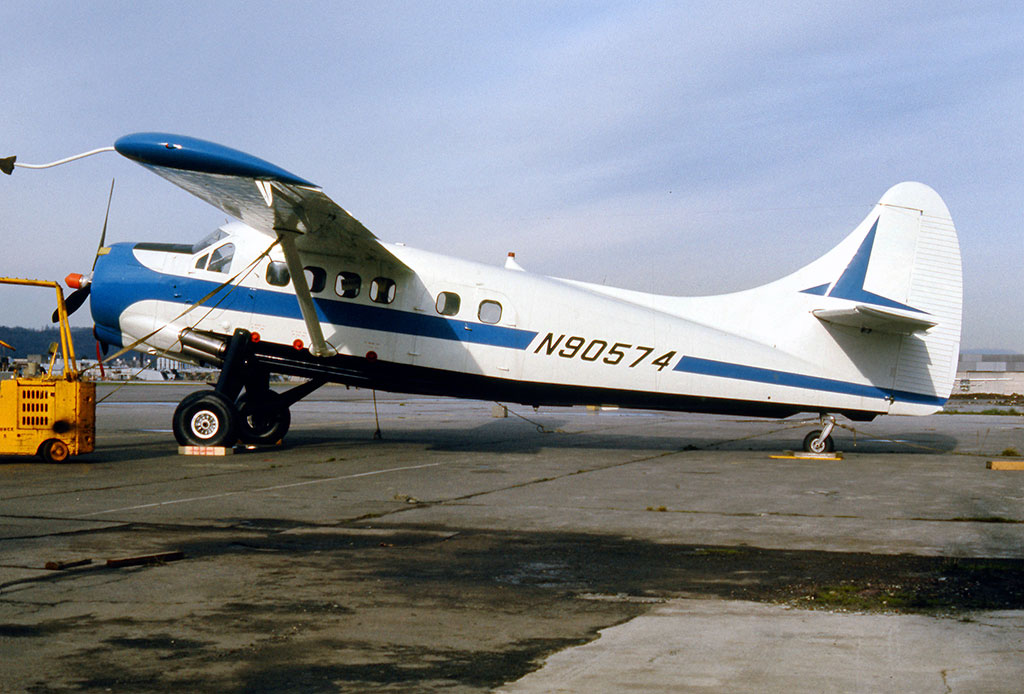
Crash of a De Havilland DHC-3 Otter in Anchorage: 1 killed

Date & Time: May 21, 1975 at 0905 LT
Type of aircraft:
Operator:
Registration:
N90574
Flight Phase:
Flight Type:
Survivors:
No
Schedule:
Anchorage - Aniak
MSN:
174
YOM:
1956
Crew on board:
1
Crew fatalities:
Pax on board:
0
Pax fatalities:
Other fatalities:
Total fatalities:
1
Captain / Total flying hours:
2768
Captain / Total hours on type:
20.00
Circumstances:
After takeoff from the gravel airstrip at Anchorage-Lake Hood, the single engine airplane encountered difficulties to gain height. It struck a lumber stack, a fence and crashed in flames onto a parking lot where five cars were damaged. The pilot, sole on board, was killed. He was en route to Aniak on a cargo flight.
Probable cause:
Inadequate preflight preparation on part of the pilot. The following contributing factors were reported:
- Failed to maintain flying speed,
- Lack of familiarity with aircraft,
- Improperly loaded aircraft,
- Incorrect trim setting,
- Aircraft at least 484 lbs over max gross weight.
Final Report:
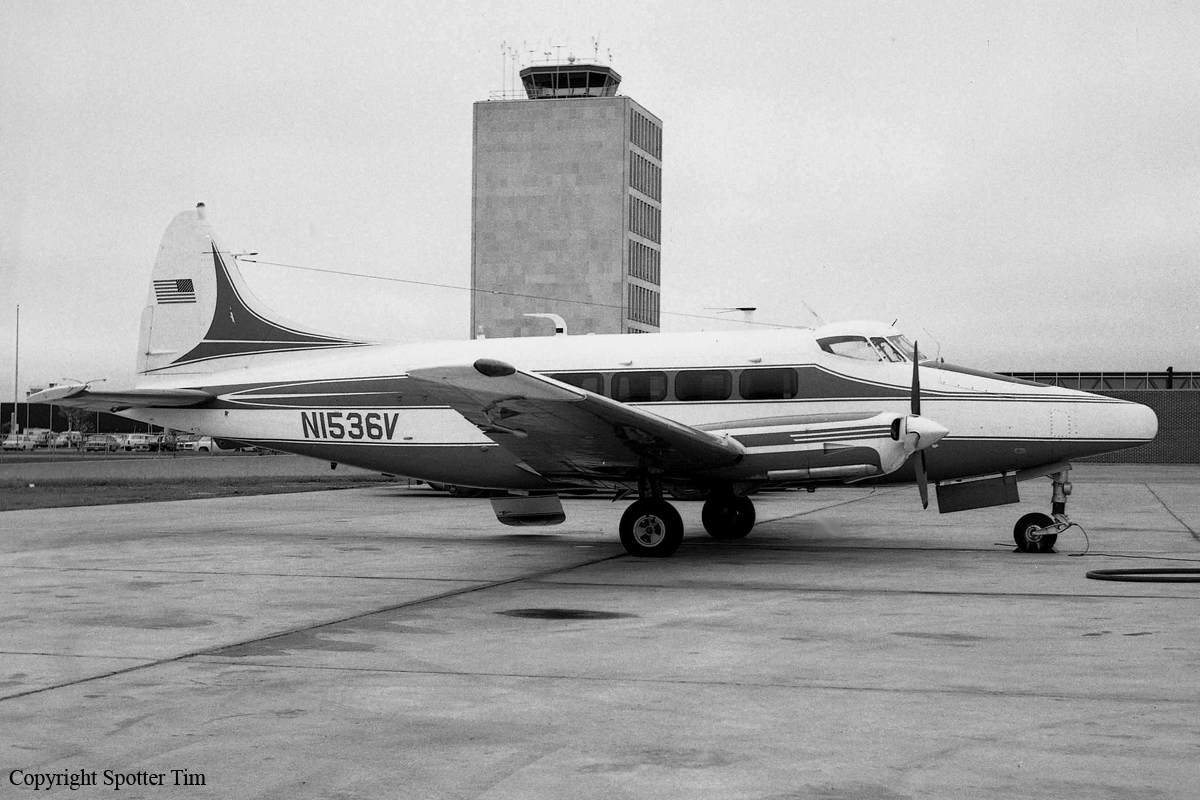
Crash of a De Havilland DH.104 Dove off Chicago: 1 killed

Date & Time: May 20, 1975 at 1139 LT
Type of aircraft:
Operator:
Registration:
N1536V
Flight Phase:
Flight Type:
Survivors:
No
Schedule:
Chicago - Chicago
MSN:
04355
YOM:
1952
Crew on board:
1
Crew fatalities:
Pax on board:
0
Pax fatalities:
Other fatalities:
Total fatalities:
1
Captain / Total flying hours:
6650
Captain / Total hours on type:
22.00
Circumstances:
After takeoff from Chicago-Merrill C. Meigs, while climbing, both engines failed simultaneously. The pilot lost control of the airplane that stalled and crashed into Lake Michigan. The aircraft was lost and the pilot, sole on board, was killed.
Probable cause:
Complete failure of both engines due to fuel exhaustion. The following contributing factors were reported:
- Inadequate preflight preparation,
- Mismanagement of fuel,
- Fuel exhaustion,
- Failure of both engines,
- Improper operations of flight controls,
- Fuel drained total less than two gallons from each wing,
- Right wing hit first and aircraft cartwheeled.
Final Report:

Crash of a Cessna 411 in Memphis

Date & Time: May 15, 1975 at 1000 LT
Type of aircraft:
Operator:
Registration:
N617JC
Flight Phase:
Survivors:
Yes
Schedule:
Memphis - Baton Rouge
MSN:
411-0096
YOM:
1965
Crew on board:
1
Crew fatalities:
Pax on board:
5
Pax fatalities:
Other fatalities:
Total fatalities:
0
Captain / Total flying hours:
4070
Captain / Total hours on type:
800.00
Circumstances:
After takeoff from Memphi Airport, while climbing, the right engine malfunctioned. The pilot elected to return but as he was unable to feather the propeller, he attempted an emergency landing in an open field located few miles from the airport. The aircraft belly landed and slid for dozen yards before coming to rest. All six occupants were injured, three of them seriously. The aircraft was written off.
Probable cause:
Engine malfunction after a failure of the propeller governor control system. The following contributing factors were reported:
- Material failure,
- Propeller control P/N 5000009-10 broken at swaged on fitting, pilot secured the engine but was unable to return to the airport due to windmilling propeller.
Final Report:

Crash of a Beechcraft E18S in Salisbury: 1 killed

Date & Time: May 15, 1975 at 0007 LT
Type of aircraft:
Operator:
Registration:
N23XY
Flight Phase:
Flight Type:
Survivors:
Yes
Schedule:
Salisbury - Fort Lauderdale - Port-au-Prince
MSN:
BA-118
YOM:
1956
Crew on board:
1
Crew fatalities:
Pax on board:
4
Pax fatalities:
Other fatalities:
Total fatalities:
1
Captain / Total flying hours:
2395
Captain / Total hours on type:
85.00
Circumstances:
While taking off by night from Salisbury Airport, one of the engine lost power. The pilot lost control of the airplane that crashed by the runway. A passenger was killed while four other occupants were injured. The aircraft was destroyed.
Probable cause:
Engine malfunction for undetermined reason. The following contributing factors were reported:
- Failed to follow approved procedures,
- Failed to obtain/maintain flying speed,
- Inadequate preflight preparation,
- Improperly loaded aircraft,
- Did not use fuel boost pumps for takeoff,
- Aircraft about 400 lbs over gross weight.
Final Report:

Crash of a Rockwell T-39A-1-NA Sabreliner near Richmond: 3 killed

Date & Time: May 14, 1975
Type of aircraft:
Operator:
Registration:
61-0646
Flight Phase:
Flight Type:
Survivors:
No
Schedule:
Andrews - Andrews
MSN:
265-49
YOM:
1962
Crew on board:
3
Crew fatalities:
Pax on board:
0
Pax fatalities:
Other fatalities:
Total fatalities:
3
Circumstances:
The crew departed Andrews AFB on a test flight. While cruising over Virginia and while completing various manoeuvres, the crew lost control of the airplane that crashed in flames in an open field located in the region of Richmond. All three crew members were killed.

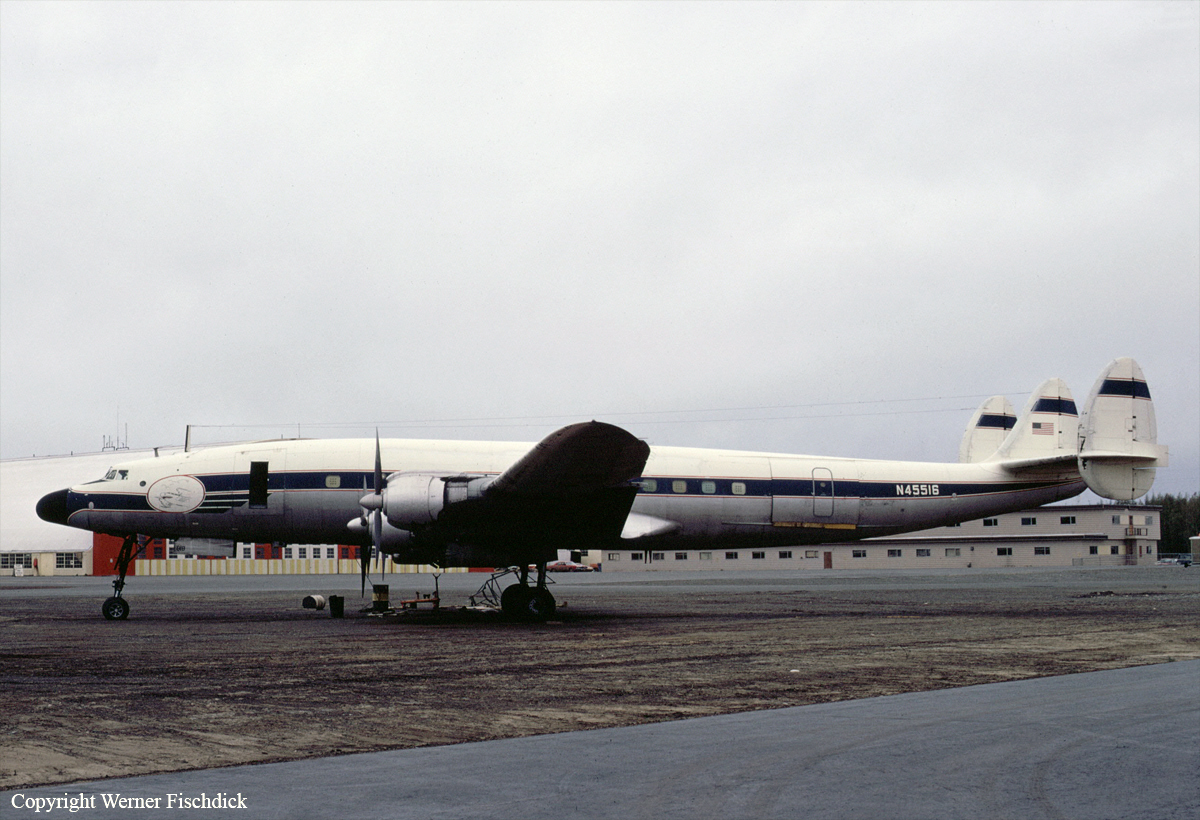
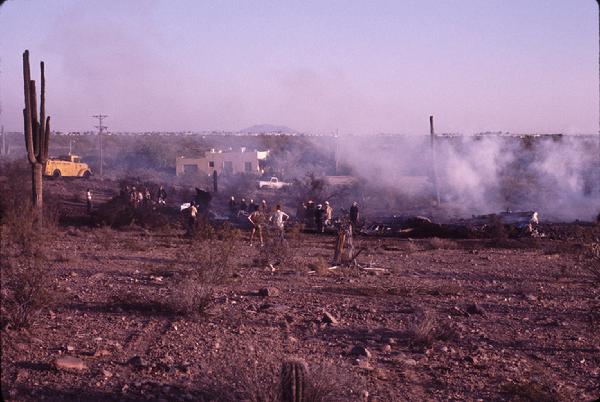
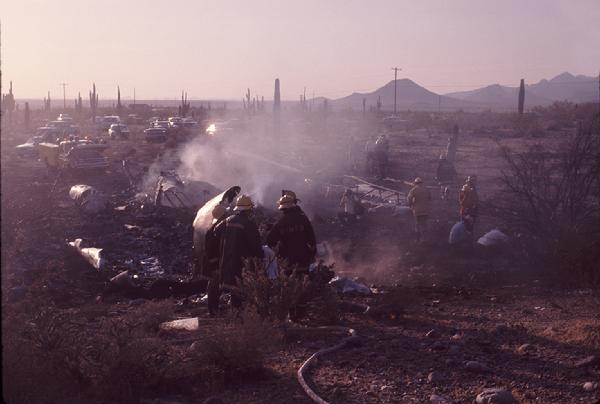
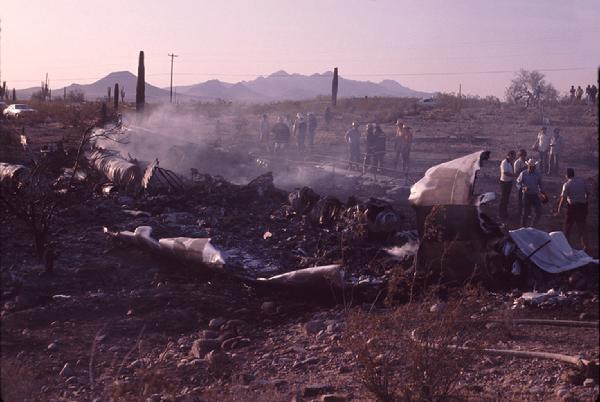
Crash of a Lockheed L-1049H Super Constellation in Mesa: 6 killed

Date & Time: May 11, 1975 at 1640 LT
Registration:
N45516
Flight Phase:
Flight Type:
Survivors:
No
Schedule:
Mesa - Kansas City
MSN:
4840
YOM:
1958
Crew on board:
3
Crew fatalities:
Pax on board:
3
Pax fatalities:
Other fatalities:
Total fatalities:
6
Captain / Total flying hours:
12300
Captain / Total hours on type:
170.00
Circumstances:
Just after liftoff, while in initial climb, all four engines lost power. The captain attempted an emergency landing in a desert area when the airplane struck trees and crashed in flames few miles from the airport. The aircraft was totally destroyed by a post crash fire and all six occupants were killed. They were on their way to Kansas City to deliver the aircraft.
Probable cause:
Inadequate preflight preparation on part of the pilot-in-command. The following contributing factors were reported:
- Inadequate supervision of flight,
- Collision with trees,
- Engine structure and powerplant denotation,
- High obstructions,
- Overheated,
- Ran out of ADI fluid,
- All engines damaged internally.
Final Report:

Crash of a Lockheed L-188A Electra in Deadhorse

Date & Time: Apr 30, 1975 at 2015 LT
Type of aircraft:
Operator:
Registration:
N283F
Flight Type:
Survivors:
Yes
Schedule:
Fairbanks - Deadhorse
MSN:
1089
YOM:
1959
Crew on board:
3
Crew fatalities:
Pax on board:
0
Pax fatalities:
Other fatalities:
Total fatalities:
0
Captain / Total flying hours:
6438
Captain / Total hours on type:
1563.00
Circumstances:
On approach to Deadhorse Airport, the crew encountered poor weather conditions when the airplane struck the runway surface 1,000 feet past its threshold. After initial impact, the left wing was torn off and the airplane went out of control. On a snow and ice covered runway, the airplane veered off runway to the left before coming to rest in flames few hundred yards further. All three crew members escaped uninjured while the aircraft was destroyed.
Probable cause:
Improper level off on part of the copilot who was in command. The following contributing factors were reported:
- Failed to initiate go-around,
- Inadequate supervision of flight,
- Low ceiling,
- Fog,
- Snow,
- Blowing snow,
- Landed hard 1,000 feet down runway,
- Left wing separated from aircraft,
- Runway covered by snow and ice.
Final Report:

Crash of a Lockheed PV-2D Harpoon in Addison

Date & Time: Apr 28, 1975 at 1534 LT
Type of aircraft:
Registration:
N230Z
Flight Type:
Survivors:
Yes
Schedule:
Addison - Addison
MSN:
15-1603
YOM:
1945
Location:
Crew on board:
2
Crew fatalities:
Pax on board:
0
Pax fatalities:
Other fatalities:
Total fatalities:
0
Captain / Total flying hours:
2178
Captain / Total hours on type:
199.00
Circumstances:
Following a fire control mission, the crew was returning to Addison Airport. On final approach, a malfunction on the left engine forced the crew to feather its propeller when control was lost. The airplane banked left and crashed about 300 yards short of runway threshold. Both pilots were injured while the aircraft was destroyed.
Probable cause:
Stalled on final approach after the crew failed to follow the approved procedures and failed to maintain flying speed. The following contributing factors were reported:
- Poorly planned approach,
- The pilot feathered the left propeller due to low level engine oil, proved to be erroneous.
Final Report:

Crash of a Beechcraft A100 King Air in Hilton Head: 6 killed

Date & Time: Apr 26, 1975 at 2055 LT
Type of aircraft:
Registration:
N700SP
Flight Phase:
Survivors:
Yes
Schedule:
Savannah - Hilton Head - Jackson
MSN:
B-92
YOM:
1972
Crew on board:
1
Crew fatalities:
Pax on board:
8
Pax fatalities:
Other fatalities:
Total fatalities:
6
Captain / Total flying hours:
15657
Captain / Total hours on type:
549.00
Circumstances:
The aircraft was ferried from Savannah, Georgia, to Hilton Head Island, South Carolina, for a corporate flight to Jackson, Mississippi. The aircraft was owned and operated by Stribling-Puckett, Inc. The flight to Hilton Head Island was completed without incident. The pilot of N700SP loaded the passenger baggage; a witness to the loading indicated that the pilot loaded the baggage carefully in the baggage compartment in the aft end of the cabin. At 21:45, the eight passengers boarded the aircraft with one passenger seated in the copilot's seat. The engines were started and the aircraft was taxied to runway 3 for takeoff. The aircraft was taxied onto the 300-foot overrun on the south end of the runway, turned 180° on the runway, and made a "running" takeoff. Two pilots, one inside the terminal and another outside, stated that they did not believe the engines were developing full power during the takeoff. However, there were no unusual sounds, and the engines were operating "smoothly." Both of these pilots believed that the takeoff run was excessively long. The aircraft used about 3,900 feet of pavement to takeoff including most of the 300-foot overrun where the takeoff began. After takeoff, the aircraft was leveled off and was flown straight and level for about 1,200 feet. There it struck the top of a tree which was 40 to 50 feet above the ground. After impact with the trees, the aircraft continued 1,200 to 1,300 feet and struck several other trees before it came to rest right side up. Fire erupted some distance behind the aircraft, but progressed toward the aircraft slowly. The slow progression of the fire allowed the three survivors time to escape through a hole in the left front side of the fuselage. Roger W. Stribling, Jr., Vice President of the Stribling-Puckett, Inc, was killed in the crash. Company President Ben Puckett suffered a broken back in the accident.
Those killed were:
Roger Stribling Jr.,
Max Williams,
Henry Clements,
Clark Boyce Sr.,
Eddie Stanton,
Gordon Ellison.
Probable cause:
The failure of the pilot to maintain a positive rate of climb after a takeoff toward an unlighted area in night, visual meteorological conditions. The failure to maintain a positive rate of climb resulted in a collision with trees in the departure path. An overweight condition of the aircraft may have contributed to the pilot's actions. Investigation showed that the aircraft would have been 436 lbs over the maximum gross takeoff weight, with the center of gravity near the aft limit.
Final Report:

Crash of a Beechcraft U-21A Ute in Fort Stockton: 5 killed

Date & Time: Apr 26, 1975 at 1800 LT
Type of aircraft:
Operator:
Registration:
66-18039
Flight Phase:
Flight Type:
Survivors:
No
Schedule:
Fort Stockton - Ford Hood
MSN:
LM-40
YOM:
1967
Crew on board:
2
Crew fatalities:
Pax on board:
3
Pax fatalities:
Other fatalities:
Total fatalities:
5
Circumstances:
Shortly after takeoff from Fort Stockton Airport, while in initial climb, the airplane bank left then rolled inverted and crashed in flames about half a mile past the runway end. The aircraft was destroyed and all five occupants were killed.
Probable cause:
Loss of control during initial climb following a loss of power on the left engine for undetermined reason.