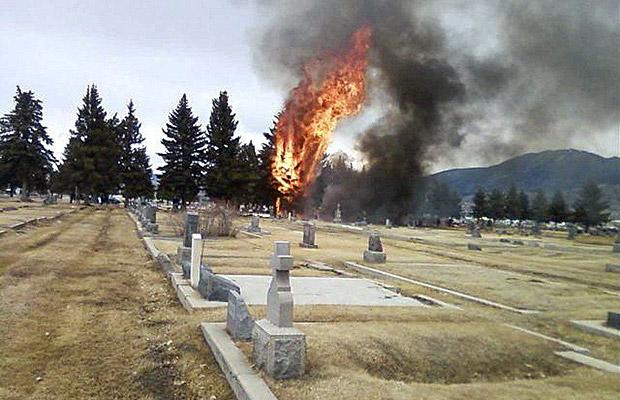
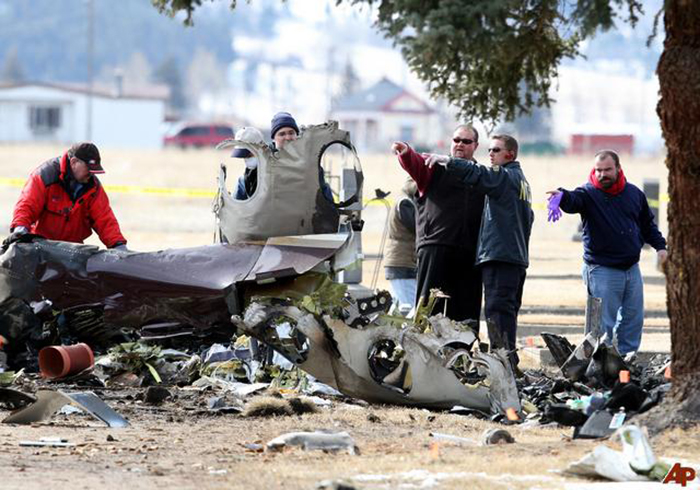
Crash of a Piper PA-46-350P Malibu Mirage near Saint George: 1 killed

Date & Time: Jun 30, 2009 at 0708 LT
Registration:
N927GL
Flight Phase:
Flight Type:
Survivors:
No
Site:
Schedule:
North Las Vegas – Cedar City
MSN:
46-36400
YOM:
2006
Crew on board:
1
Crew fatalities:
Pax on board:
0
Pax fatalities:
Other fatalities:
Total fatalities:
1
Captain / Total flying hours:
782
Circumstances:
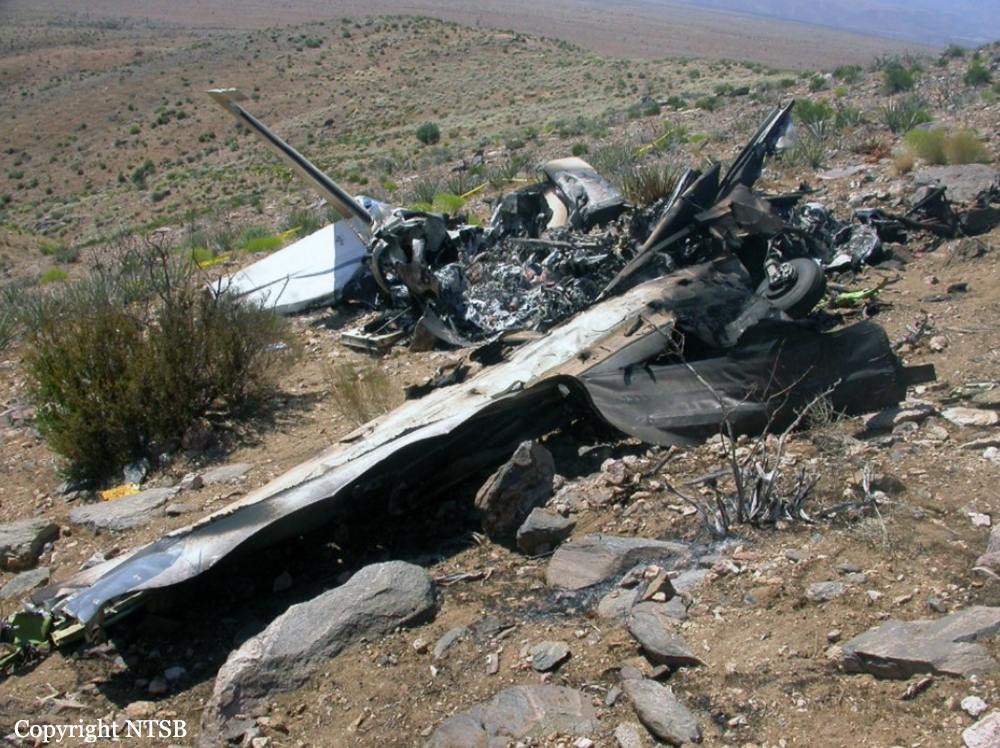
Radar data indicated that the airplane departed for a cross-country flight, climbed to a cruise altitude of 9,700 feet msl, and maintained a northeasterly course of 050 degrees magnetic direct to its destination. About 11 minutes after takeoff, the airplane entered a 1,000 foot-per-minute descent. The airplane continued to descend at this rate until it impacted terrain at an elevation of 4,734 feet. Examination of the accident site revealed that the airplane was still on its northeasterly course towards the destination at impact. Ground scars at the initial point of impact were consistent with the airplane being wings level in a slight nose-down pitch attitude. No mechanical anomalies with the airplane or engine were identified during the airplane wreckage examination. A postimpact fire destroyed all cockpit instrumentation, and no recorded or stored flight data could be recovered. Weather conditions at the time were clear, and light winds. The pilot had some moderate heart disease that was noted during the autopsy. He also had a history of stress and insomnia, which was documented in his FAA medical records. Toxicology findings noted the use of a sedating and impairing over-the-counter medication (chlorpheniramine) that was taken at some undetermined time prior to the accident. The investigation could not conclusively determine whether the pilot’s conditions or medication use were related to the accident. The reason for the airplane’s descent to ground impact could not be determined.
Probable cause:
The pilot's failure to maintain terrain clearance during descent for undetermined reasons.
Final Report:

Ground accident of a Learjet 40 in Fort Worth

Date & Time: Jun 18, 2009
Type of aircraft:
Operator:
Registration:
N998AL
Flight Phase:
Flight Type:
Survivors:
Yes
MSN:
45-2029
YOM:
2005
Crew on board:
2
Crew fatalities:
Pax on board:
0
Pax fatalities:
Other fatalities:
Total fatalities:
0
Circumstances:
The Learjet 40 was being operated by two A&P mechanics for the purpose to taxi out for an engine test run on the n°1 engine. During taxi it was necessary to stop the aircraft for motor vehicle traffic. The mechanic advanced the throttles for taxi and to climb a 15 to 20 foot hill. When the mechanic attempted to reduce the throttles only the n° 2 engine could be retarded. The n°1 engine was at a high power setting and could not be reduced. The aircraft left 4 skid marks as the main tires were locked for approximately the length of a little more than a football field. The mechanics could not shut down the n°1 engine. Control of the aircraft was lost with the n°1 engine at a high power setting. The right wing impacted the corner of a hanger. The nose gear broke and an embankment stopped the aircraft. The mechanics were then able to shut down both engines and exited the aircraft with no injuries.
Probable cause:
The NTSB did not proceed to any investigation on this event.

Crash of a Cessna 207 Skywagon in Crooked Creek

Date & Time: Jun 16, 2009 at 1620 LT
Operator:
Registration:
N1623U
Survivors:
Yes
Schedule:
Aniak – Sleetmute – Crooked Creek
MSN:
207-0223
YOM:
1973
Crew on board:
1
Crew fatalities:
Pax on board:
2
Pax fatalities:
Other fatalities:
Total fatalities:
0
Captain / Total flying hours:
1388
Captain / Total hours on type:
486.00
Aircraft flight hours:
9089
Circumstances:
The commercial pilot was on a Title 14, CFR Part 91, other work use flight when the accident occurred. As he approached his destination airport, he said he saw a large rain squall moving over the airport, and he elected to remain south of the airport to allow time for it to move. He reported that while maneuvering the airplane at 1,000 feet msl, all engine power was lost. Unable to restore engine power, the pilot selected a marshy tree-covered area as a forced landing site. The airplane sustained substantial damage to the fuselage during the forced landing. The NTSB discovered no mechanical problems with the engine during a postaccident teardown and examination.
Probable cause:
A total loss of engine power for an undetermined reason.
Final Report:

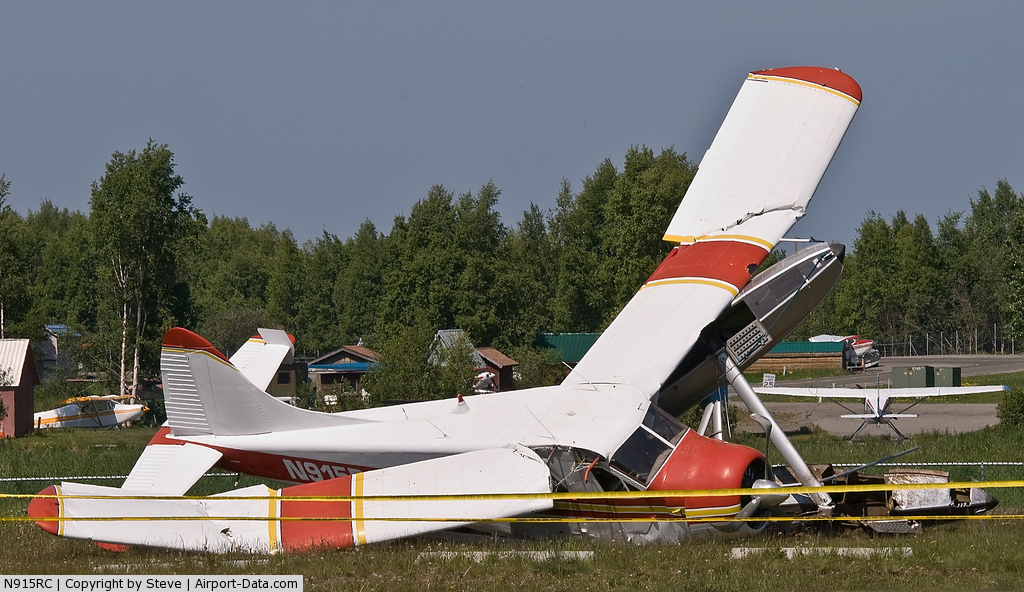
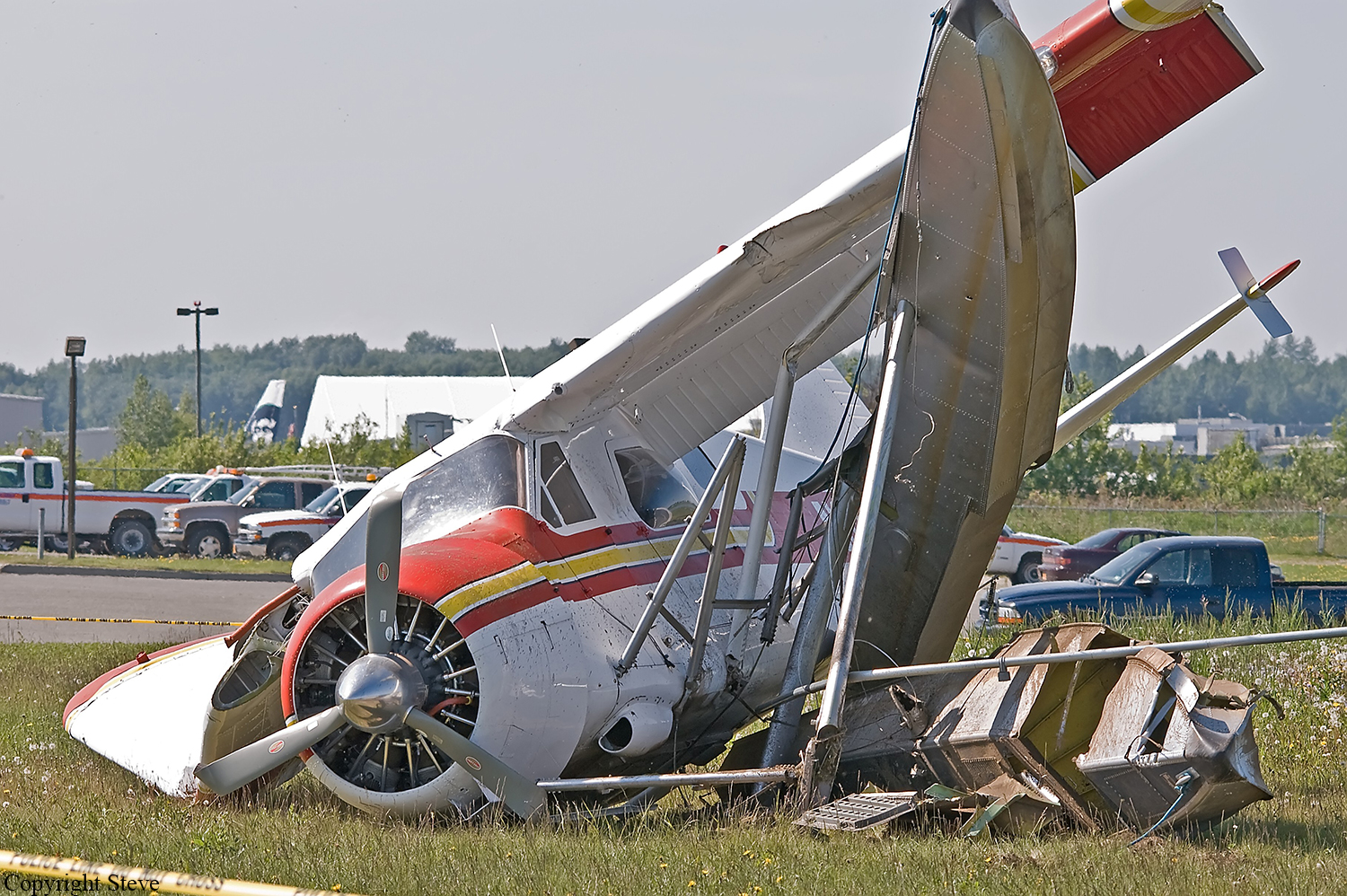
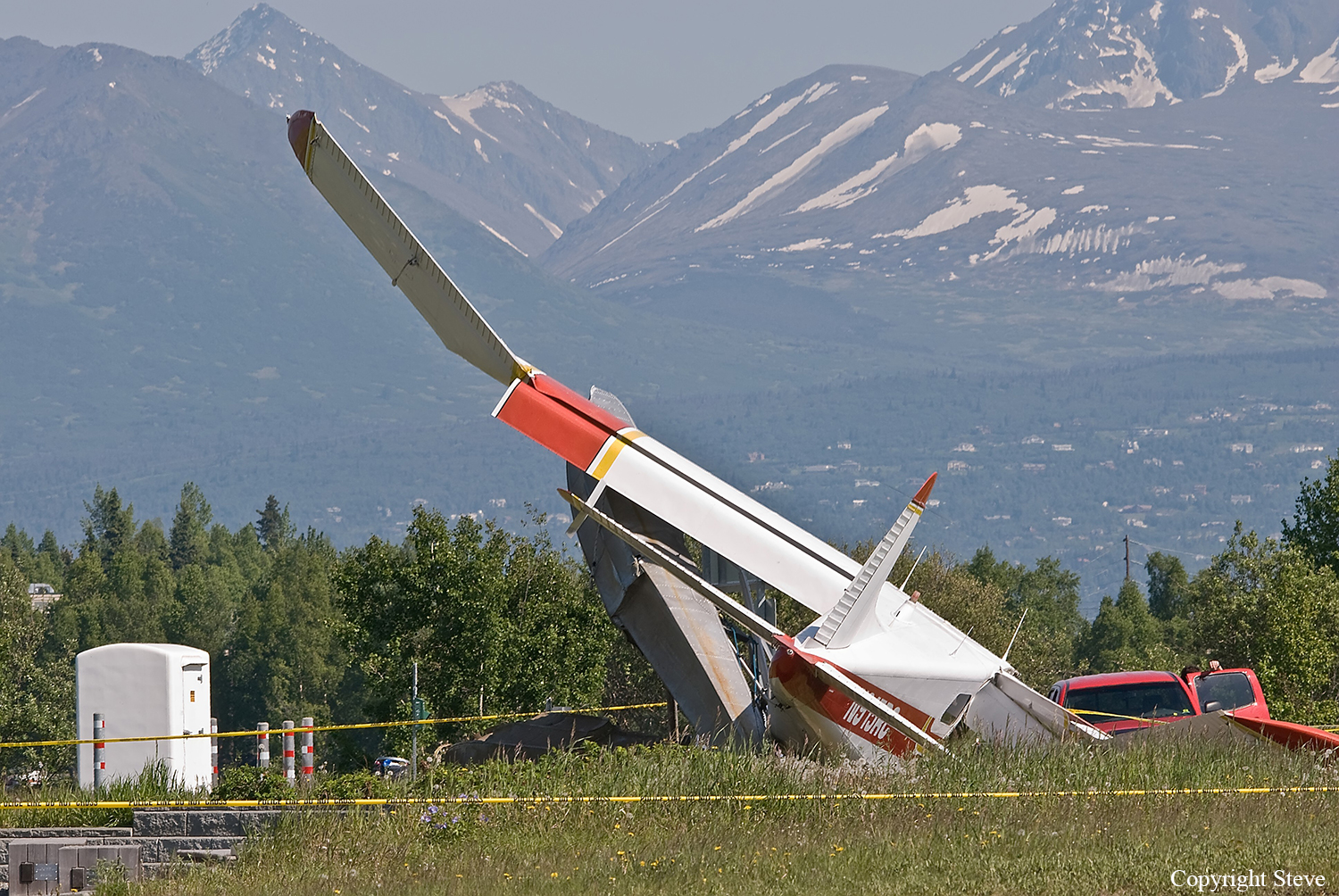
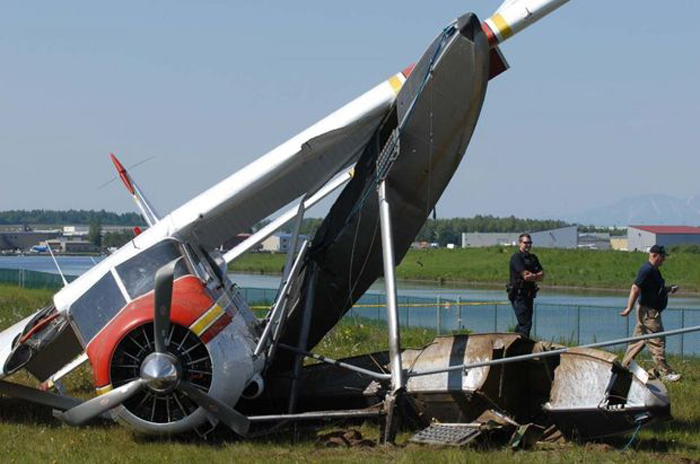
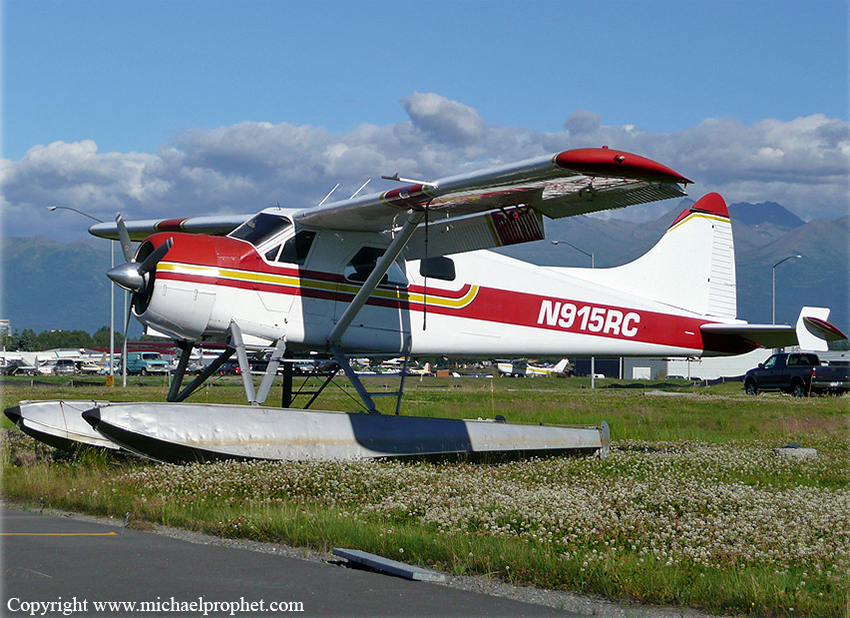
Crash of a De Havilland DHC-2 Beaver in Anchorage

Date & Time: Jun 7, 2009 at 1350 LT
Type of aircraft:
Operator:
Registration:
N915RC
Flight Phase:
Flight Type:
Survivors:
Yes
Schedule:
Anchorage - Bulchitna Lake
MSN:
70
YOM:
1950
Crew on board:
1
Crew fatalities:
Pax on board:
3
Pax fatalities:
Other fatalities:
Total fatalities:
0
Captain / Total flying hours:
512
Captain / Total hours on type:
21.00
Aircraft flight hours:
2350
Circumstances:
The private pilot was taking off in the float plane from the lake's west waterway. The airplane was on step, gaining airspeed, and the takeoff run seemed normal to the pilot. The airplane was nearing takeoff speed, and proceeding directly down the waterway, when it encountered a right quartering tailwind gust that lifted up the right wing and float. The airplane veered to the left toward a steep bank, and the pilot was unable to correct the deviation with the rudder. He did not feel that he could reduce power as he would slam into the bank. The airplane lifted off, but the float collided with the top of the bank. The airplane cartwheeled about 160 degrees to the left before coming to rest on its right side. It sustained substantial damage to the wings, fuselage, and floats. The pilot reported that there were no mechanical malfunctions or failures. Reported wind at the airport approximately 3 minutes after the accident was from 020 degrees magnetic at 3 knots, with no recorded gusts.
Probable cause:
The pilot’s failure to maintain directional control during takeoff.
Final Report:

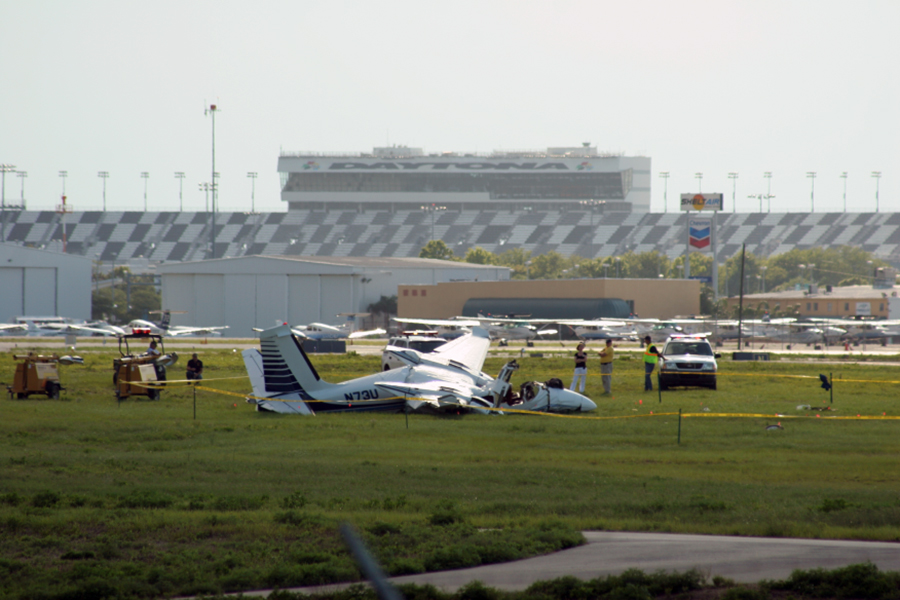
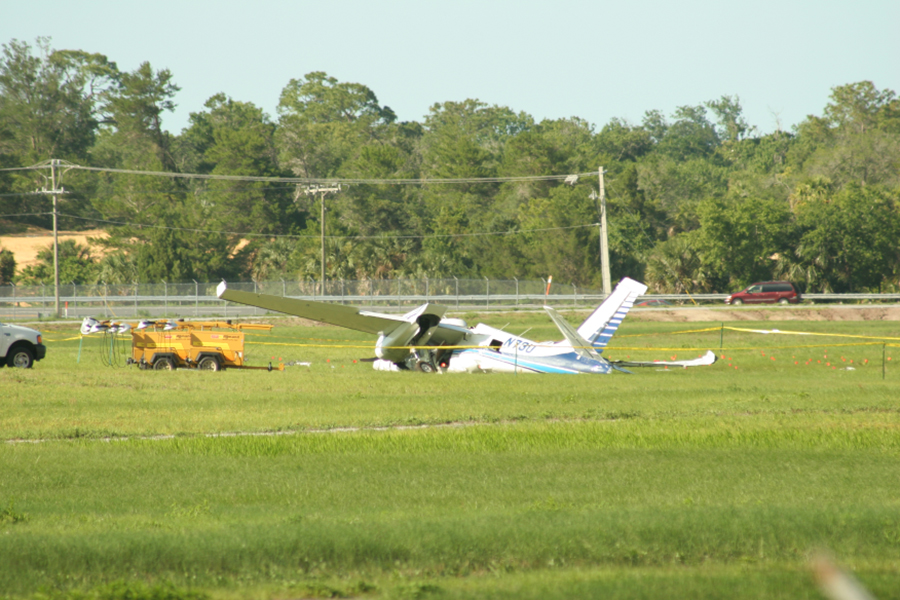
Crash of a Rockwell Shrike Commander 500S in Daytona Beach: 1 killed

Date & Time: May 25, 2009 at 0846 LT
Registration:
N73U
Flight Type:
Survivors:
Yes
Schedule:
Daytona Beach - New Smyrna Beach
MSN:
500-3162
YOM:
1963
Crew on board:
1
Crew fatalities:
Pax on board:
1
Pax fatalities:
Other fatalities:
Total fatalities:
1
Captain / Total flying hours:
1470
Captain / Total hours on type:
574.00
Aircraft flight hours:
3360
Circumstances:
The pilot departed in the twin-engine airplane with an unknown quantity of fuel and a fuel quantity indicating system that was known to be inaccurate. Immediately after takeoff, approximately 1/2 mile beyond the departure end of the runway, witnesses reported the engine noise from the accident airplane as "surging" as the airplane passed overhead, and one witness described a "radical" turn back to the airport. Two witnesses stated that only one engine was running, and added that it was "revving," and would then stop before revving up again. During the descent to the airport, radar data showed the airplane at 93 knots 700 feet and 1 mile from the runway, and at 90 knots at 500 feet and 1/2 mile from the runway, but the airplane crashed prior to the approach end of the runway. Post accident examination of the wreckage revealed no evidence of a pre accident mechanical malfunction. The fuel system had a capacity of 226 gallons, was serviced through a single port on top of the left wing, and the tanks were interconnected to a center fuel sump that fed both engines. The fuel cells were opened through access panels and each was intact and contained only trace amounts of fuel. The airplane was leveled, the drain petcock was opened at the center fuel cell sump, and 1 quart of fuel was drained.
Probable cause:
A total loss of engine power due to fuel exhaustion as a result of the pilot’s inadequate preflight inspection.
Final Report:

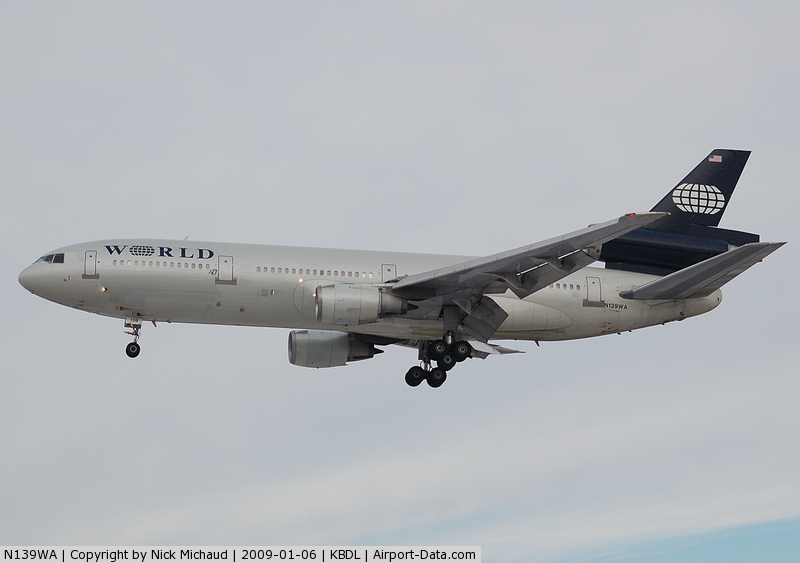
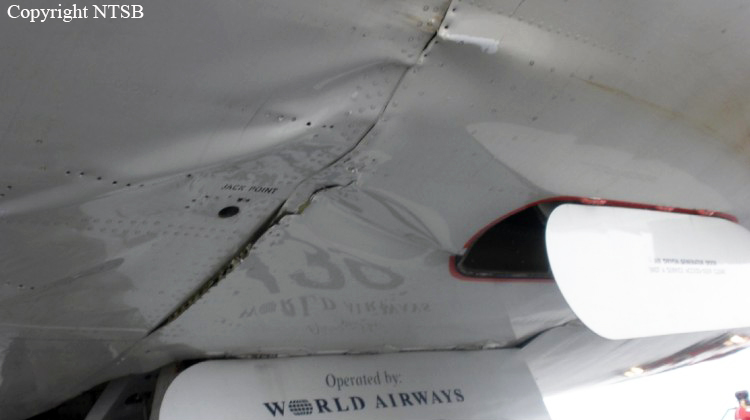
Crash of a Douglas DC-10-30ER in Baltimore

Date & Time: May 6, 2009 at 1302 LT
Type of aircraft:
Operator:
Registration:
N139WA
Survivors:
Yes
Schedule:
Leipzig – Baltimore
MSN:
46583/292
YOM:
1979
Flight number:
WOA8535
Crew on board:
12
Crew fatalities:
Pax on board:
168
Pax fatalities:
Other fatalities:
Total fatalities:
0
Captain / Total flying hours:
6500
Captain / Total hours on type:
193.00
Copilot / Total flying hours:
6300
Copilot / Total hours on type:
373
Aircraft flight hours:
107814
Circumstances:
The flight was conducting a straight-in approach during visual meteorological conditions. The approach was backed up by an ILS and was stable at 500 feet above touchdown. The initial touchdown was firm and main landing gear rebounded, possibly bouncing slightly off the runway. Control column input and possibly momentum from the touchdown resulted in a rapid pitch down and hard nose gear impact with the runway. Wing spoilers likely did not deploy due to the main gear bounce and/or throttle position. Following the nose gear impact, the airplane pitched up as expected and the column was held in a slightly forward position. Airspeed rapidly decayed, and engine power began to increase as the airplane pitch reversed to a downward motion for a second time. One of the crew, likely the FO, called “flare flare” and the column recorded a rapid nose up input, followed by a rapid nose down input, and the nose gear again struck the runway very hard, likely causing the majority of the damage at that point. Following the second nose gear impact, column inputs stabilized at a slightly nose up command, power was set on all three engines, and the go-around was successfully executed. A slight lag in the power increase on engine number 3 may have contributed to the nose down motion leading to the second nose gear impact, although the large forward (airplane nose down) column movement appears to be a much more significant contributor. It is unclear why the engine was slower to increase. Throttle lever angle was not recorded, but the engine operated as expected for all other phases of the flight, including after the impact, therefore it is possible the pilot did not advance the number 3 throttle concurrently with the others. The captain’s flight and duty schedule complied with Federal Aviation regulations, but he experienced a demanding 10-day trip schedule prior to the incident involving multiple time zone crossings and several long duty periods, and reported difficulties sleeping prior to the accident leg. The captain was likely further affected by a digestive system upset during the accident flight. It is likely that the captain’s performance was degraded by fatigue and some degree of physical discomfort brought on by a short-term illness. The captain had recently completed upgrade training to DC-10, having previously been flying as an MD-11 first officer. The training program was fragmented over approximately ten months, and while in accordance with FAA regulations, may have adversely affected his consolidation of skills and experience.
Probable cause:
The captain’s inappropriate control inputs following a firm landing, resulting in two hard nose-gear impacts before executing a go-around. Contributing to the inappropriate control inputs was the captain’s fatigue and physical discomfort; and a possible lack of practical consolidation of skills and experience due to a protracted and fragmented training period.
Final Report:

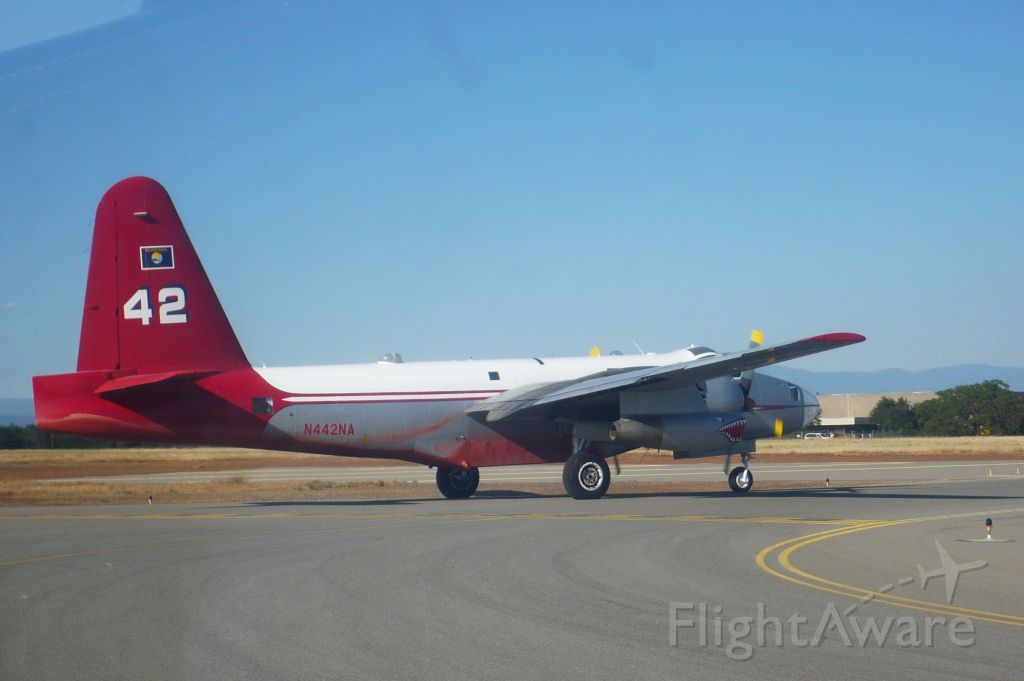
Crash of a Lockheed P2V-7 near Stockton: 3 killed

Date & Time: Apr 25, 2009 at 1004 LT
Type of aircraft:
Operator:
Registration:
N442NA
Flight Phase:
Flight Type:
Survivors:
No
Site:
Schedule:
Missoula - Alamogordo
MSN:
726-7286
YOM:
1958
Flight number:
Tanker 42
Location:
Crew on board:
3
Crew fatalities:
Pax on board:
0
Pax fatalities:
Other fatalities:
Total fatalities:
3
Captain / Total flying hours:
7334
Captain / Total hours on type:
916.00
Copilot / Total flying hours:
15075
Copilot / Total hours on type:
350
Aircraft flight hours:
3554
Circumstances:
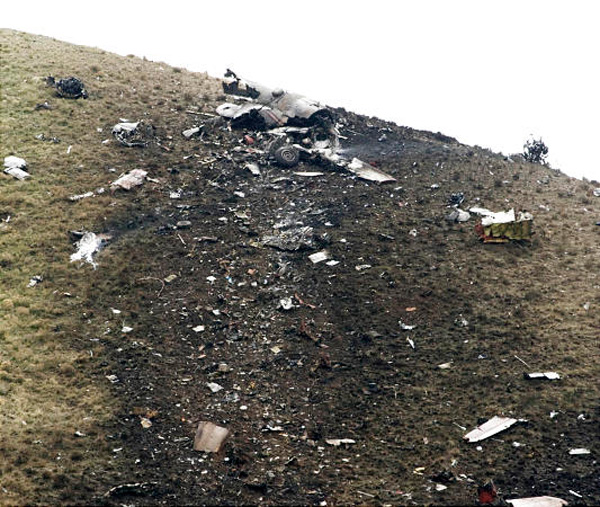
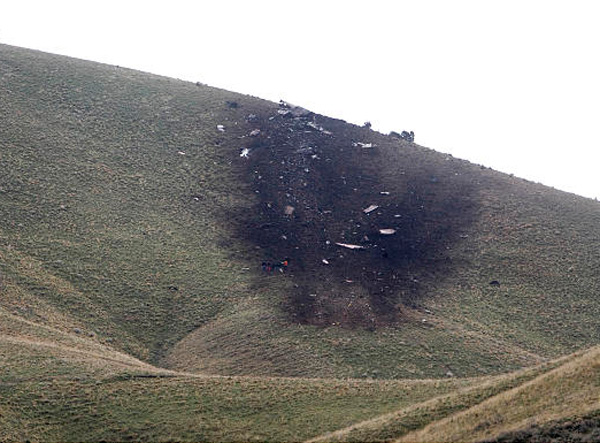
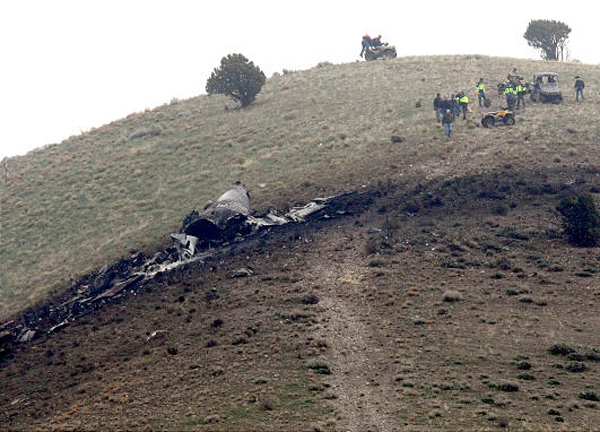
The multi-engine fire bomber, which was not carrying retardant, was established at its cruise altitude while en route to a fire base where it would be used as part of the effort to fight a local fire. While en route, the flight crew encountered a forecast area of instrument meteorological conditions, whereupon they began a series of descents to lower altitudes in order to stay in visual flight rules (VFR) conditions beneath the clouds. During the last few minutes of their flight, the flight crew had descended to an altitude that was less than 1,300 feet above ground level (agl) over nearly level terrain. As they approached rapidly rising terrain at the end of the broad open valley they had been flying over, they inadvertently entered instrument meteorological conditions (IMC). Soon thereafter, while still in a nearly wings-level attitude, the airplane impacted a ridge about 240 feet below its top. The First Officer, who was flying at the time, had asked the Captain about ten minutes prior to the impact if their altitude was high enough to clear the upcoming terrain, but the Captain did not respond, and the First Officer did not challenge the Captain about the issue. Witnesses in the area reported low clouds with ceilings about 200 feet above ground level with a visibility of one-quarter mile or less, with rain and fog. One of the witnesses reported momentarily viewing the airplane flying "very low," while the others reported only being able to hear the airplane.
Probable cause:
The flight crew's failure to maintain terrain clearance during low altitude flight in low ceiling and visibility conditions. Contributing to the accident was the flight crew's failure to adequately monitor their location with respect to the rising terrain environment ahead, and, their lack of crew resource management communication as a crew.
Final Report:

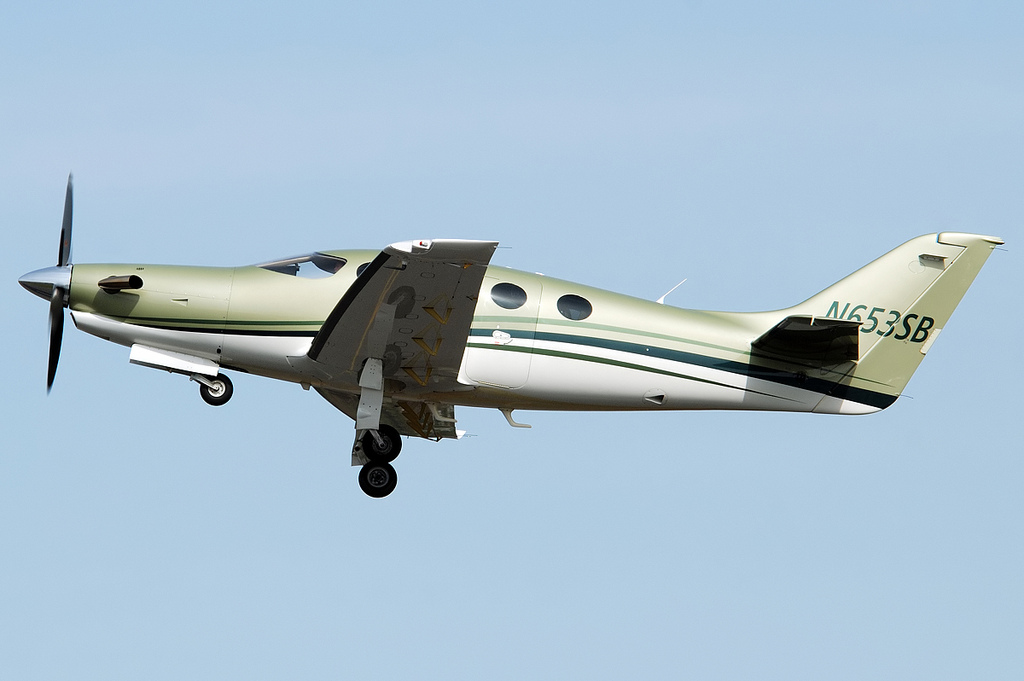
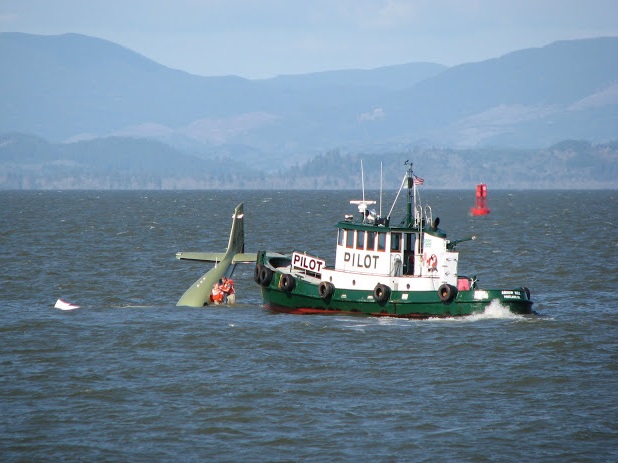
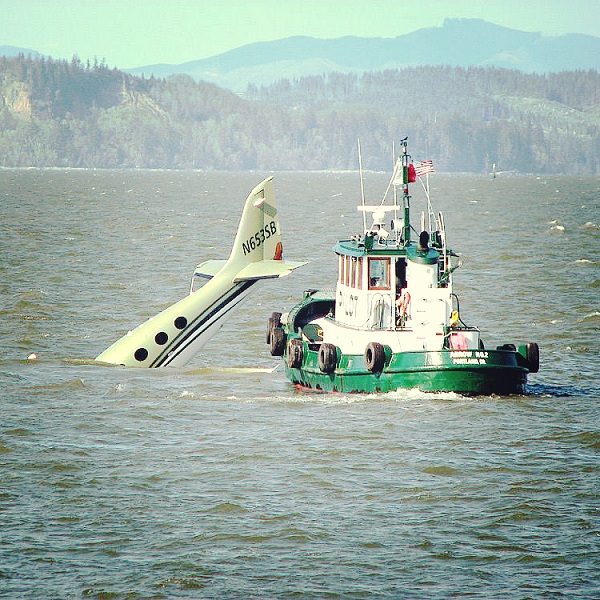
Crash of an Epic LT off Astoria

Date & Time: Apr 24, 2009 at 1645 LT
Type of aircraft:
Registration:
N653SB
Flight Phase:
Flight Type:
Survivors:
Yes
Schedule:
Astoria – Seattle
MSN:
025
YOM:
2008
Location:
Crew on board:
1
Crew fatalities:
Pax on board:
1
Pax fatalities:
Other fatalities:
Total fatalities:
0
Captain / Total flying hours:
1550
Captain / Total hours on type:
75.00
Aircraft flight hours:
72
Circumstances:
The single engine aircraft departed Astoria Airport at 1637LT on a private flight to Seattle-Boeing Field, carrying one passenger (a female passenger aged 84) and one pilot. During a climb to en route cruise, the airplane's engine lost almost all power, and the pilot elected to ditch the airplane into the Columbia River off Astoria. The airplane crash landed eight minutes later, nosed down in water and came to rest partially submerged. Both occupants were quickly rescued and were uninjured. The aircraft was damaged beyond repair.
Probable cause:
The partial loss of engine power during climb to cruise due to the failure of the engine's fuel control unit. Contributing to the accident was the incorrect machining of an internal component of the fuel control unit, and the failure of the assembling technician to correctly inspect the unit's assembly.
Final Report:

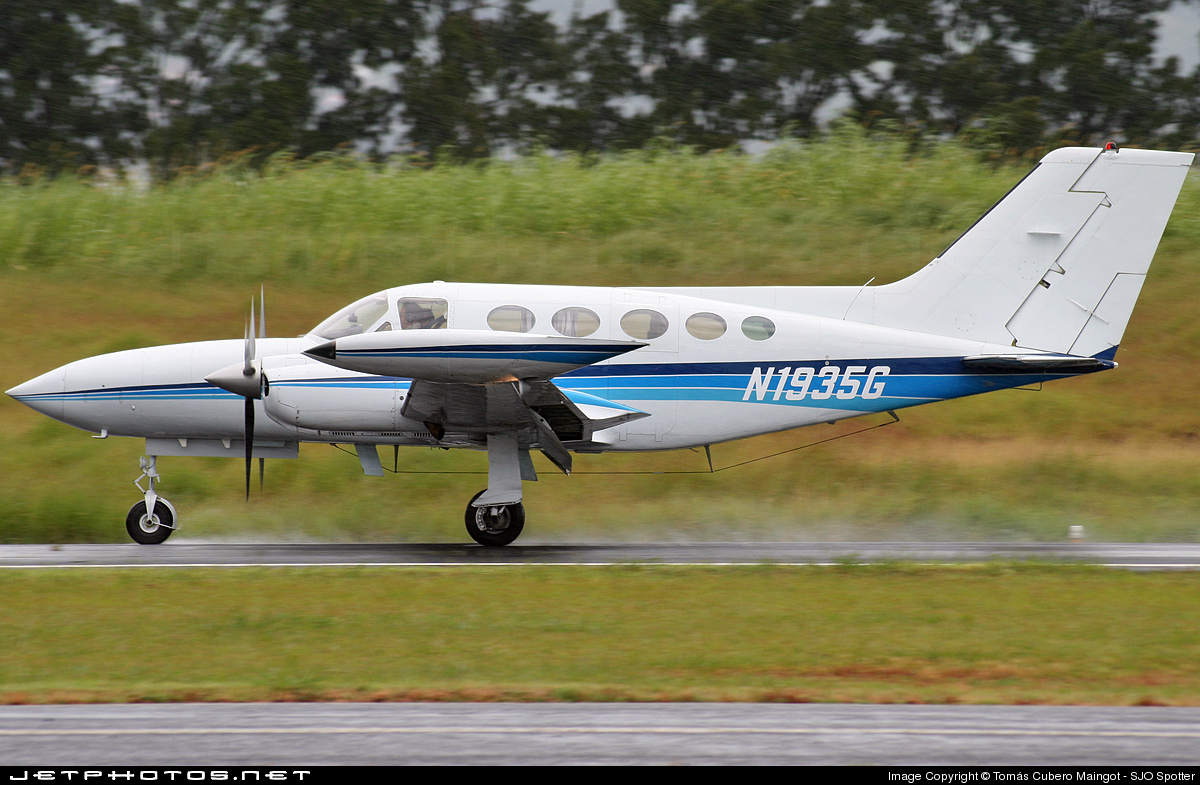
Crash of a Cessna 421B Golden Eagle II in Fort Lauderdale: 1 killed

Date & Time: Apr 17, 2009 at 1115 LT
Operator:
Registration:
N1935G
Flight Phase:
Flight Type:
Survivors:
No
Site:
Schedule:
Fort Lauderdale - Fernandina Beach
MSN:
421B-0836
YOM:
1974
Crew on board:
1
Crew fatalities:
Pax on board:
0
Pax fatalities:
Other fatalities:
Total fatalities:
1
Captain / Total flying hours:
23000
Captain / Total hours on type:
5000.00
Circumstances:
Prior to the accident flight witnesses observed the pilot "haphazardly" pouring oil into the right engine. The pilot then ran the engines at mid-range power for approximately 20 minutes. The airplane subsequently taxied out of the ramp area and departed. Fire was observed emanating from the right engine after rotation. The airplane continued in a shallow climb from the runway, flying low, with the right engine on fire. The airplane then banked right to return to the airport and descended into a residential area. Examination of the right engine revealed an exhaust leak at the No. 4 cylinder exhaust riser flange. Additionally, one of the flange boltholes was elongated, most likely from the resulting vibration. The fuel nozzle and B-nut were secure in the No. 4 cylinder; however, its respective fuel line was separated about 8 inches from the nozzle. No determination could be made as to when the fuel line separated (preimpact or postimpact) due to the impact and postcrash fire damage. Examination of the right engine turbocharger revealed that the compressor wheel exhibited uniform deposits of an aluminum alloy mixture, consistent with ingestion during operation, and most likely from the melting of the aluminum fresh air duct. Additionally, the right propeller was found near the low pitch position, which was contrary to the owner's manual emergency procedure to secure the engine and feather the propeller in the event of an engine fire.
Probable cause:
The pilot's failure to maintain aircraft control and secure the right engine during an emergency return to the airport after takeoff. Contributing to the accident was an in-flight fire of the right engine for undetermined reasons.
Final Report:
Crash of a Pilatus PC-12/45 in Butte: 14 killed

Date & Time: Mar 22, 2009 at 1430 LT
Type of aircraft:
Registration:
N128CM
Flight Type:
Survivors:
No
Schedule:
Oroville - Bozeman
MSN:
403
YOM:
2001
Location:
Crew on board:
1
Crew fatalities:
Pax on board:
13
Pax fatalities:
Other fatalities:
Total fatalities:
14
Captain / Total flying hours:
8840
Captain / Total hours on type:
1760.00
Aircraft flight hours:
1916
Circumstances:
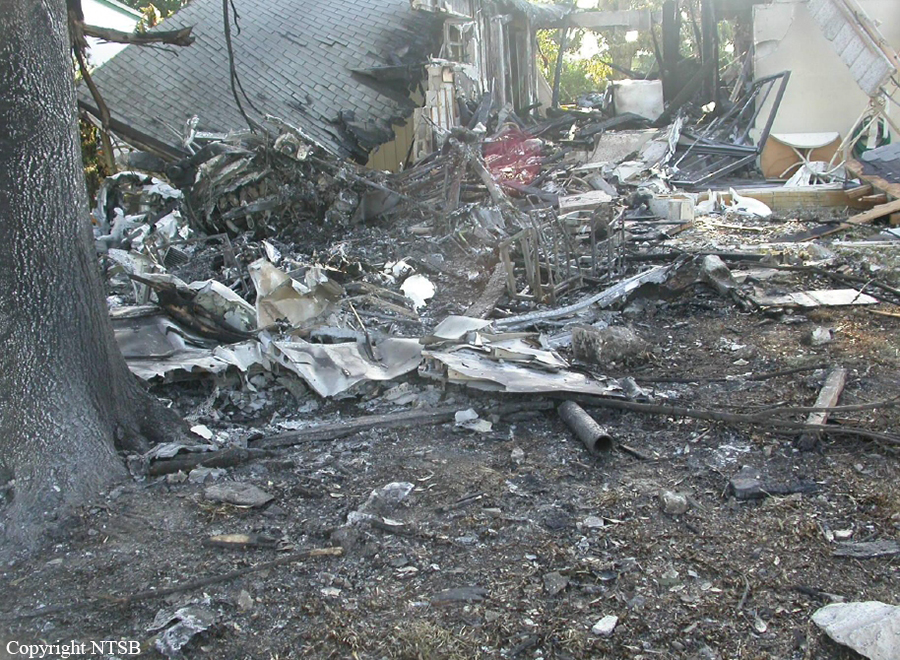
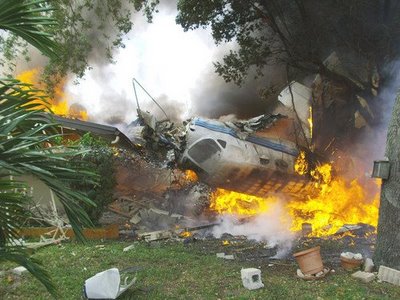
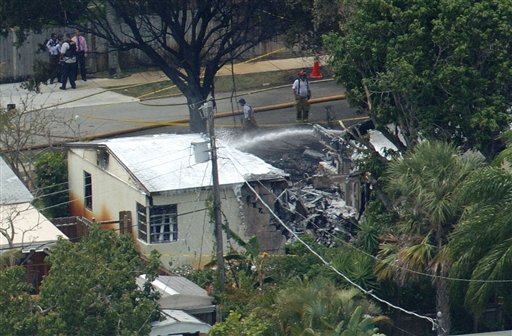
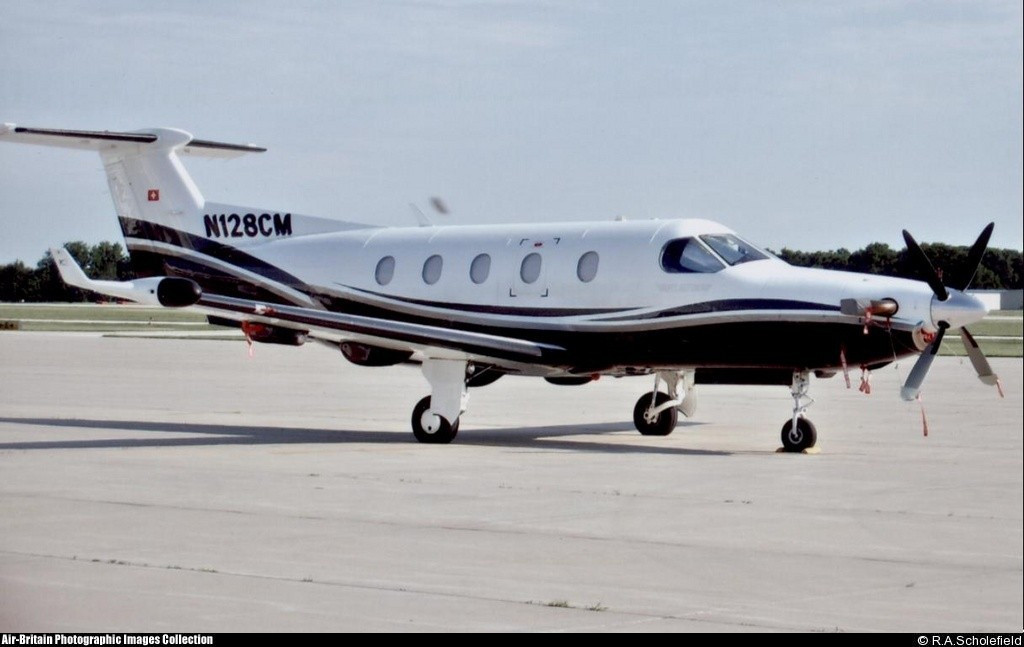
On March 22, 2009, about 1432 mountain daylight time, a Pilatus PC-12/45, N128CM, was diverting to Bert Mooney Airport (BTM), Butte, Montana, when it crashed about 2,100 feet west of runway 33 at BTM. The pilot and the 13 airplane passengers were fatally injured, and the airplane was substantially damaged by impact forces and a post crash fire. The airplane was owned by Eagle Cap Leasing of Enterprise, Oregon, and was operating as a personal flight under the provisions of 14 Code of Federal Regulations Part 91. The flight departed Oroville Municipal Airport, Oroville, California, on an instrument flight rules flight plan with a destination of Gallatin Field, Bozeman, Montana. Visual meteorological conditions prevailed at the time of the accident.
Probable cause:
(1) the pilot’s failure to ensure that a fuel system icing inhibitor was added to the fuel before the flights on the day of the accident;
(2) his failure to take appropriate remedial actions after a low fuel pressure state (resulting from icing within the fuel system) and a lateral fuel imbalance developed, including diverting to a suitable airport before the fuel imbalance became extreme; and
(3) a loss of control while the pilot was maneuvering the left-wing-heavy airplane near the approach end of the runway.
Final Report: