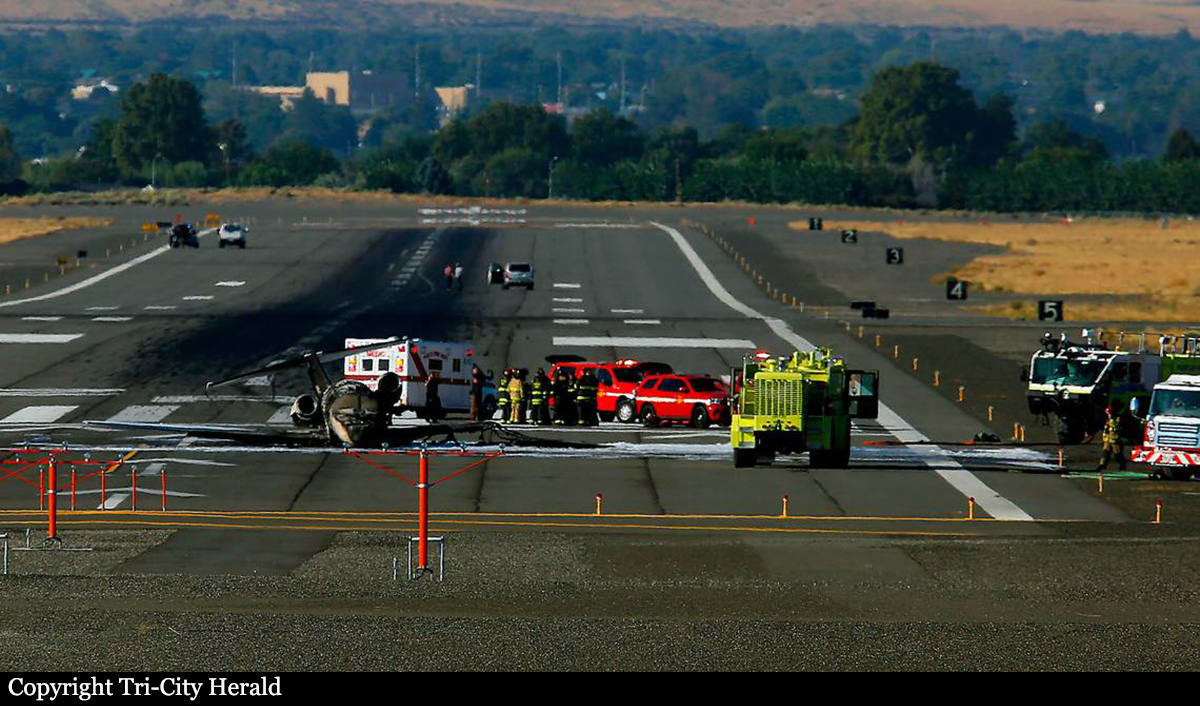
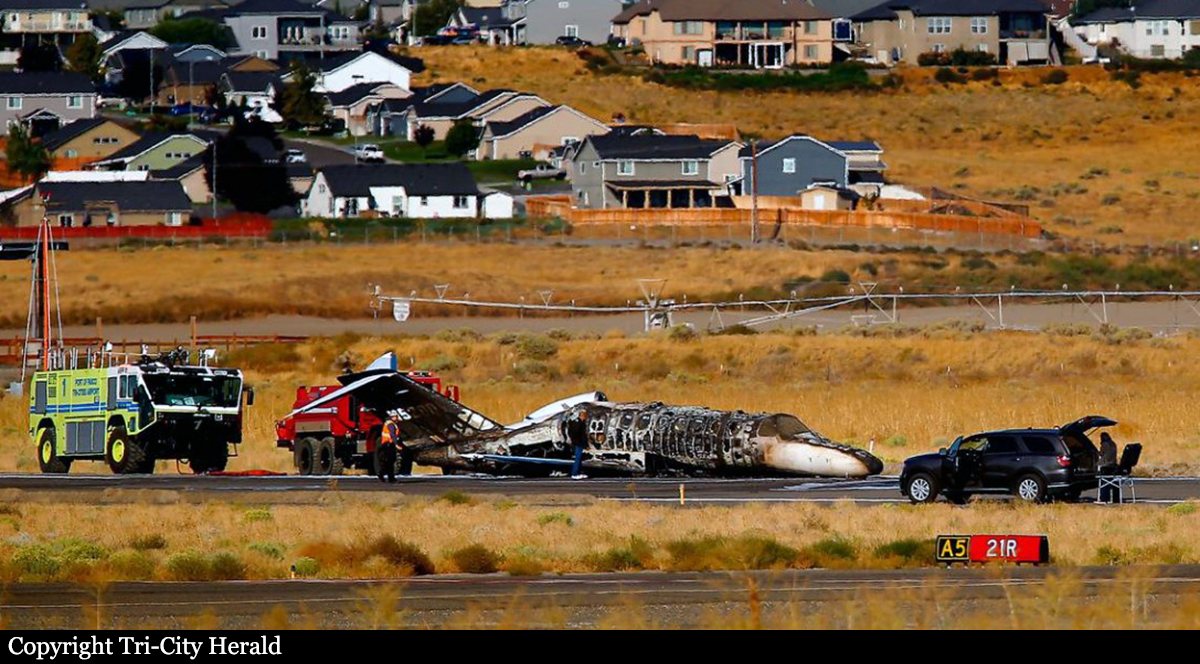
Crash of a Cessna 525B Citation CJ3 in Pasco

Date & Time: Sep 20, 2022 at 0709 LT
Operator:

Registration:
N528DV
Survivors:
Yes
Schedule:
Chehalis - Pasco
MSN:
525B-0329
YOM:
2009
Crew on board:
1
Crew fatalities:
Pax on board:
9
Pax fatalities:
Other fatalities:
Total fatalities:
0
Captain / Total flying hours:
9800
Captain / Total hours on type:
2150.00
Aircraft flight hours:
3252
Circumstances:
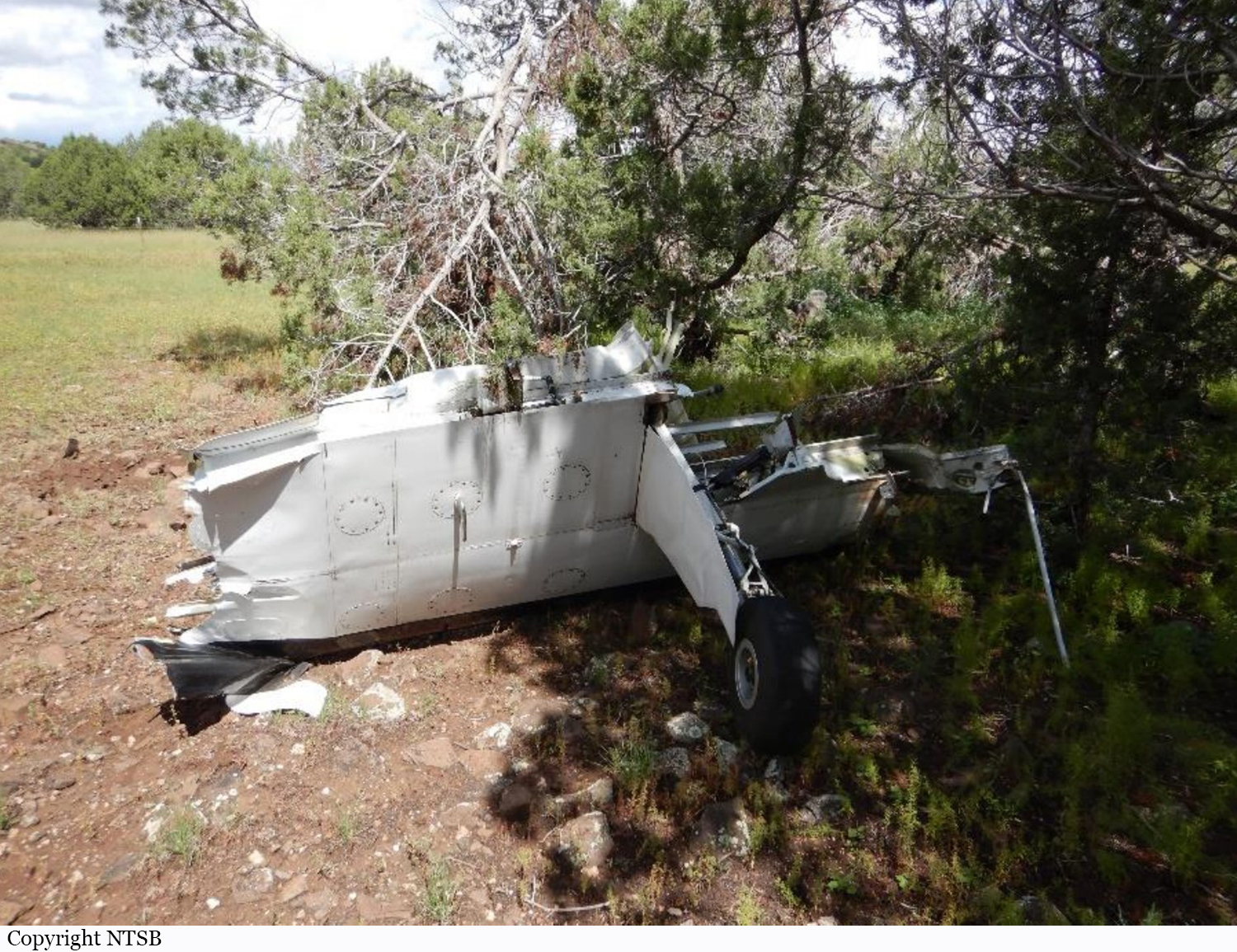
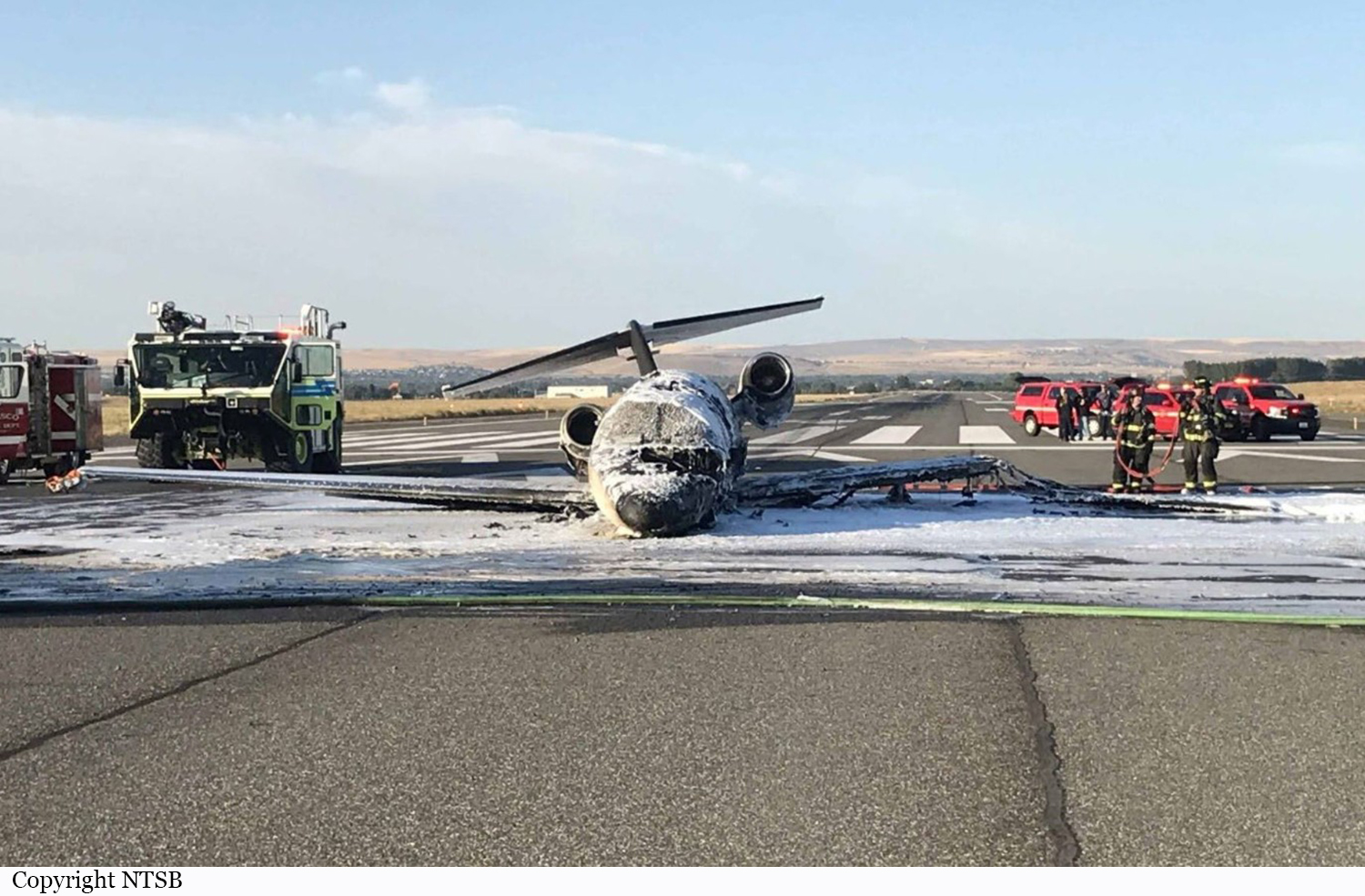
After an uneventful flight, a jet airplane on a business flight was landing at its destination. The pilot reported to the tower controller that the airport was in sight and requested to land. The pilot further reported that, while on left base, he started to lower the flaps and extended the gear handle. He did not recall confirming whether the gear was down and locked but reported that there were no landing caution annunciations or aural warnings. Before making contact with the runway, the pilot noticed that the airplane floated longer than expected and upon touchdown realized that the landing gear was not extended. The airplane skidded down the runway and came to a stop just past the departure end of the runway. The pilot secured the engines and assisted the passengers out of the airplane. During the evacuation, the pilot reported that the airplane was on fire near the right engine. Shortly thereafter, the airplane was engulfed in flames. When the airplane was raised for recovery, all three-landing gear were free from their uplocks and dropped down to the extended position. Post accident examination confirmed the main landing gear uplocks were in the gear release (unlocked) position. In addition, the left main landing gear door was also partially extended on the airplane after it came to rest. The landing gear handle was observed in the down (extended) position during the examination. Accounting for the position of the landing gear uplocks, the landing gear door upon landing, and the witnesses’ observation of the airplane not having its landing gear extended, it is likely that the pilot positioned the landing gear handle to the down (extended) position just before or during landing. Nevertheless, the pilot failed to ensure that the landing gear was down and locked before landing. Examination of the landing gear handle and landing gear circuit cards revealed no anomalies. A review of the ADS-B data revealed that the airplane’s airspeed was fast on the approach and landing. The airplane’s ground speed was about 143 knots as it passed over the runway threshold, which was above the airspeed that the landing gear not extended warning system would activate (130 knots). Additionally, the airplane’s flaps were likely configured in the takeoff/approach setting (15°), which would not activate the landing gear not extended warning system. Stabilized approach criteria for airspeed and configuration were not maintained on the approach and landing.
Probable cause:
The failure of the pilot to ensure the landing gear was extended before landing. Contributing was the pilot’s failure to fly a stabilized approach, and his configuration of the airplane that prevented activation of the landing gear not extended warning system on final approach.
Final Report:

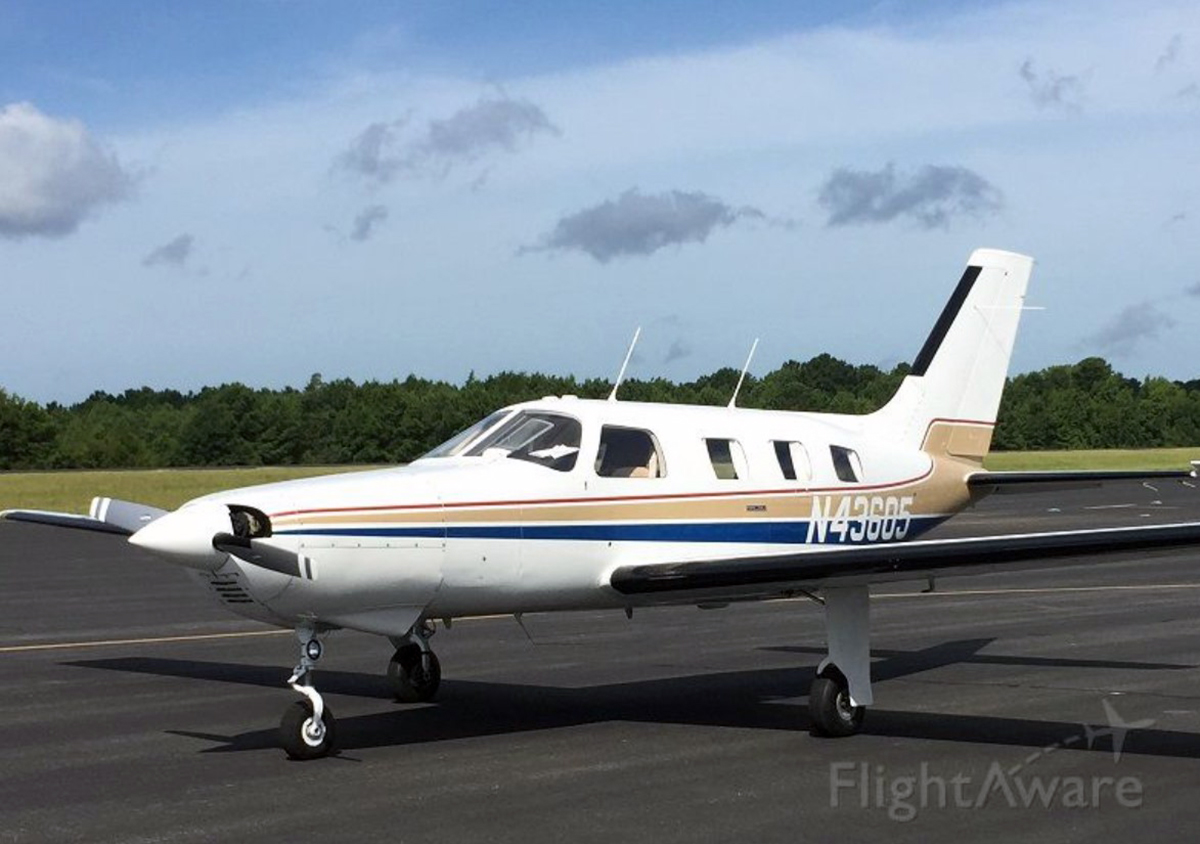
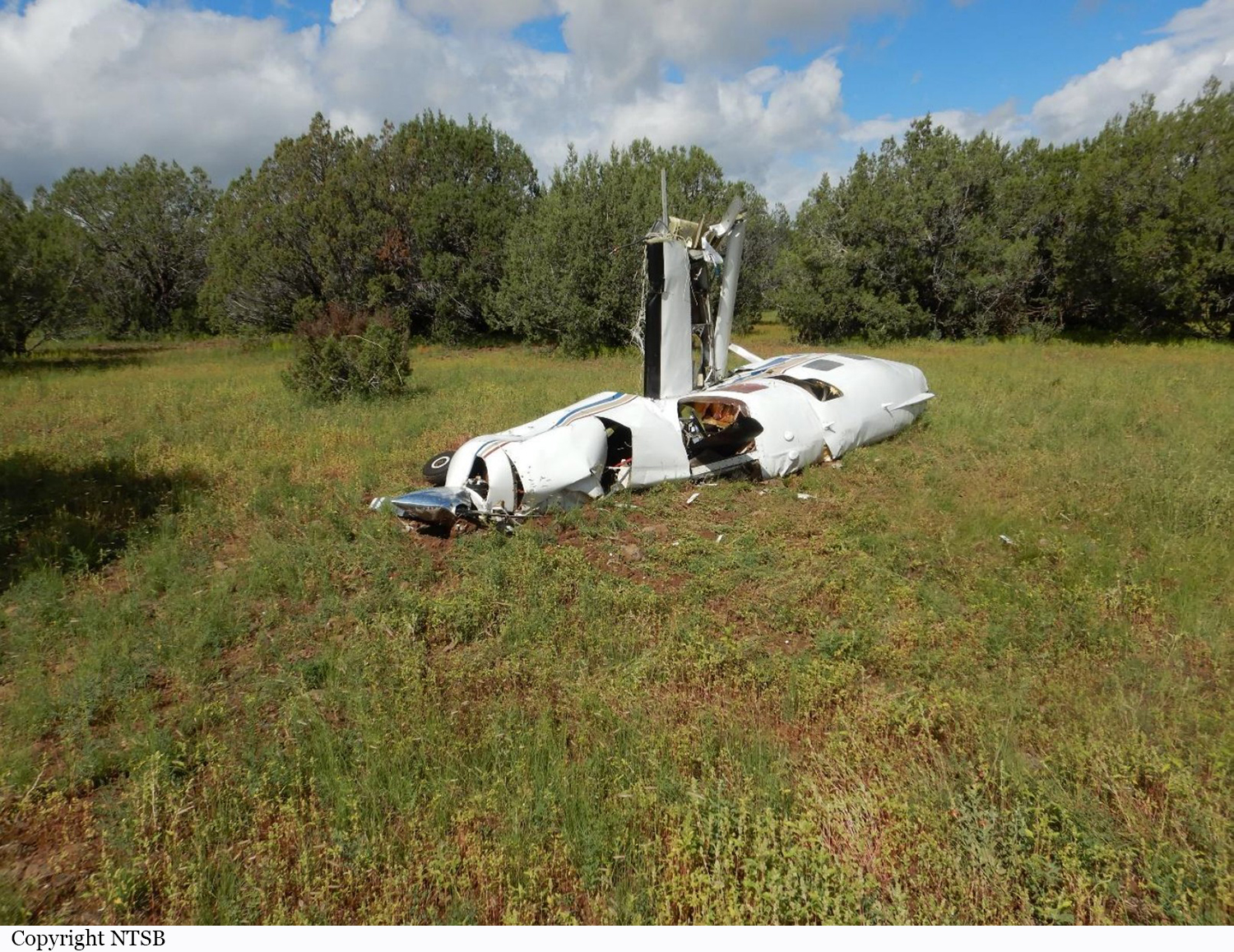
Crash of a Piper PA-46-310P Malibu near Seligman: 2 killed

Date & Time: Sep 13, 2022 at 1100 LT
Registration:
N43605
Flight Phase:
Flight Type:
Survivors:
No
Schedule:
Albuquerque – Henderson
MSN:
46-8408052
YOM:
1984
Crew on board:
1
Crew fatalities:
Pax on board:
1
Pax fatalities:
Other fatalities:
Total fatalities:
2
Captain / Total flying hours:
47
Circumstances:
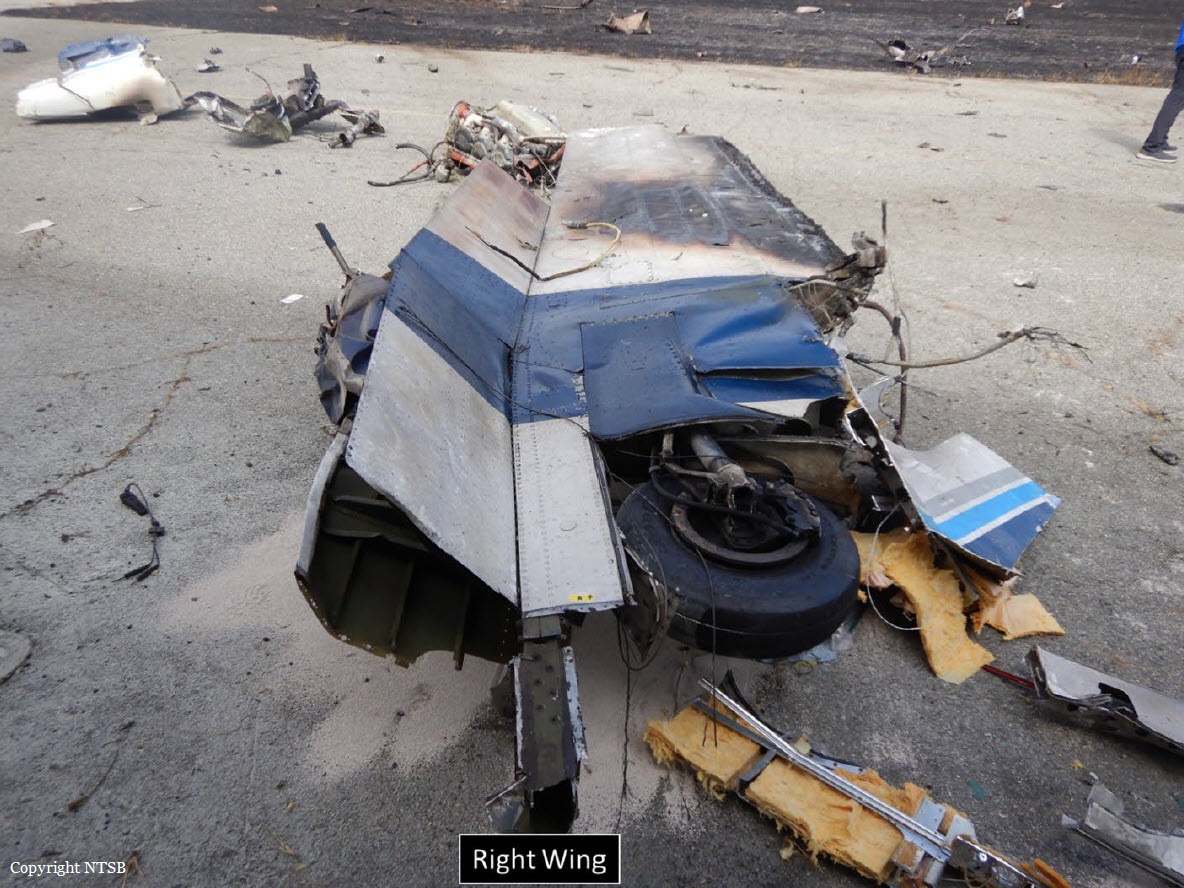
The student pilot was enroute at an altitude about 17,700 ft mean sea level (msl) on a crosscountry flight with a passenger in his high-performance airplane. The pilot was receiving visual flight rules flight following services from air traffic control, who advised him of an area of moderate to heavy precipitation at the airplane’s 12 o’clock position. The pilot replied that he had been able to “dodge” the areas of precipitation, but that they were getting bigger. There were no further communications from the pilot. Shortly thereafter, the airplane entered a left turn that continued through 180° before the airplane began a descent from its cruise altitude. The flight track ended in an area of moderate to extreme reflectivity as depicted on weather radar and indicated that the airplane was in a rapidly descending right turn at 13,900 ft when tracking information was lost. The wreckage was scattered across a debris field about 2 miles long. Examination of the wreckage revealed lateral crushing along the left side of the fuselage and the separation of both wings and the empennage. Wing spar signatures and empennage and wing impact marks suggested positive wing loading before the wing separation and in-flight breakup. The area of the accident site was included in a Convective SIGMET advisory for thunderstorms, hail, and wind gusts of up to 50 kts. A model atmospheric sounding near the accident site indicated clouds between about 15,000 ft and 27,000 ft, as well as the potential for light rime icing from 15,500 ft to 23,000 ft. Review of the pilot’s logbook revealed that he had about 47 total hours of flight experience, with about 4 hours of instruction in simulated instrument conditions. A previous flight instructor reported that the pilot displayed attitudes of “anti-authority” and “impulsivity.” Ethanol was detected in two postmortem tissue specimens; however, based on the distribution and amount detected, the ethanol may have been from postmortem production, and it is unlikely to have contributed to the crash. Fluoxetine, trazodone, and phentermine were also detected in the pilot’s postmortem toxicology specimens. The pilot had reported his use of fluoxetine for anger and irritability. Anger and irritability are nonspecific symptoms that may or may not be associated with mental health conditions, including depression, certain personality disorders, and bipolar disorder. These conditions may be associated with impulsive behavior, increased risk taking, lack of planning, not appreciating consequences of actions, and substance use disorders. Both trazodone and phentermine have the potential for impairing effects; however, an unimpaired pilot with the pilot’s relative inexperience would have been likely to lose aircraft control during an encounter with instrument meteorological conditions (IMC). It is therefore unlikely that the pilot’s use of trazodone and phentermine affected his handling of the airplane in a way that contributed to the crash. Based on review of the pilot’s Federal Aviation Administration (FAA) medical certification file, no specific conclusion can be drawn regarding any underlying psychiatric condition that may have contributed to his decision to attempt and continue the flight into IMC, as that decision was consistent with his previous pattern of risk-tolerant behavior. The pilot had not formally been diagnosed with a mental health disorder in his personal medical records reviewed other than substance use disorders. The psychological and psychiatric evaluations reviewed were not for diagnostic and treatment purposes, but for evaluation for FAA medical certification, and therefore did not generate diagnoses. There is evidence that the pilot had a pattern of poor decision-making, high-risk tolerance, and impulsive behavior. The circumstances of the accident are consistent with the student pilot’s decision to continue into an area of deteriorating weather conditions, his encounter with instrument meteorological conditions and convective activity, and loss of visual references, which resulted in spatial disorientation and a loss of aircraft control. During the descent, the airplane exceeded its design limitations, resulting in structural failure and an in-flight breakup.
Probable cause:
The student pilot’s continued visual flight into instrument meteorological conditions, which resulted in spatial disorientation, a loss of control, exceedance of the airplane’s design limitations, and in-flight breakup.
Final Report:
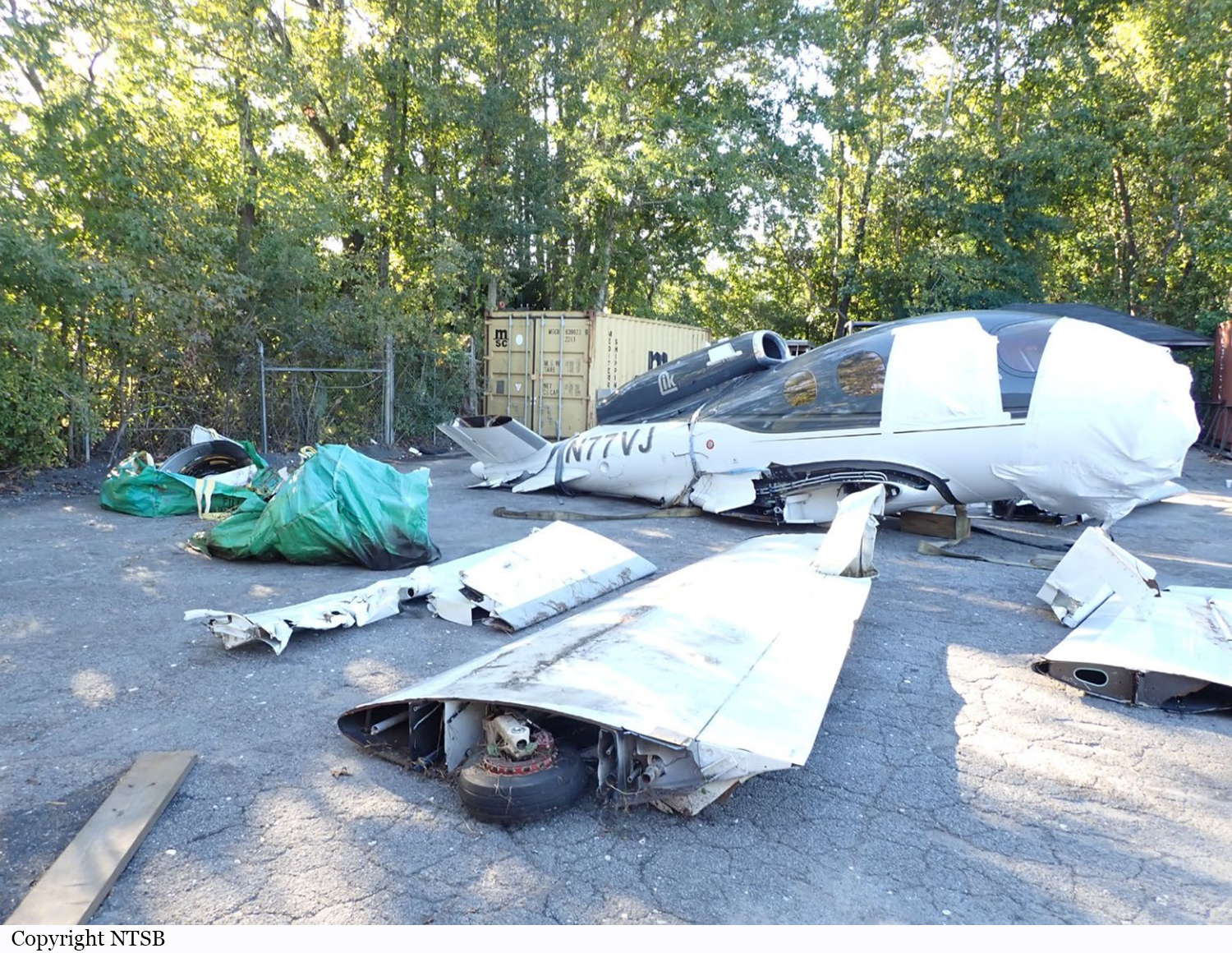
Crash of a Cirrus Vision SF50 in Kissimmee

Date & Time: Sep 9, 2022 at 1502 LT
Type of aircraft:
Operator:
Registration:
N77VJ
Flight Type:
Survivors:
Yes
Schedule:
Miami - Kissimmee
MSN:
88
YOM:
2018
Crew on board:
1
Crew fatalities:
Pax on board:
2
Pax fatalities:
Other fatalities:
Total fatalities:
0
Captain / Total flying hours:
982
Captain / Total hours on type:
325.00
Aircraft flight hours:
645
Circumstances:
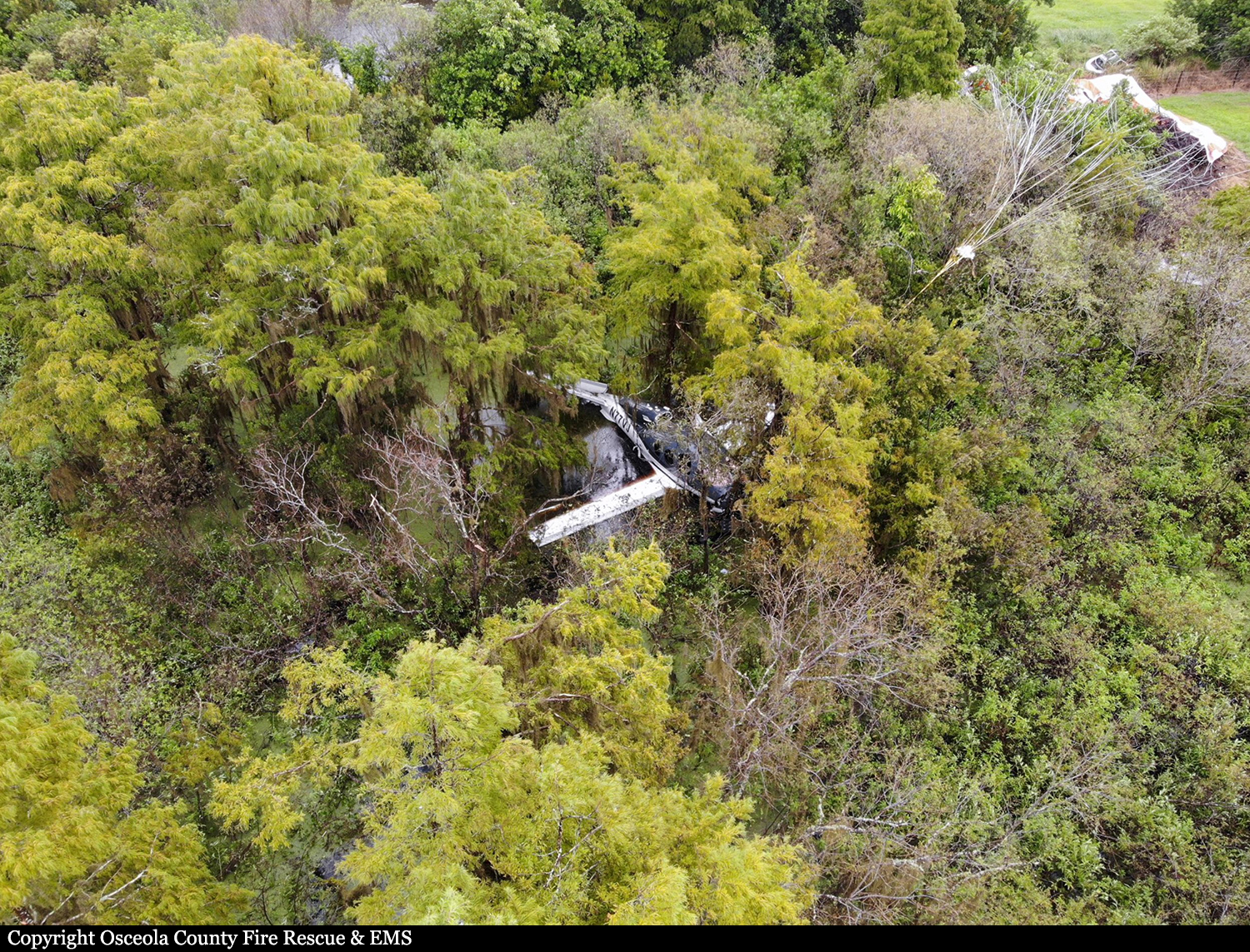
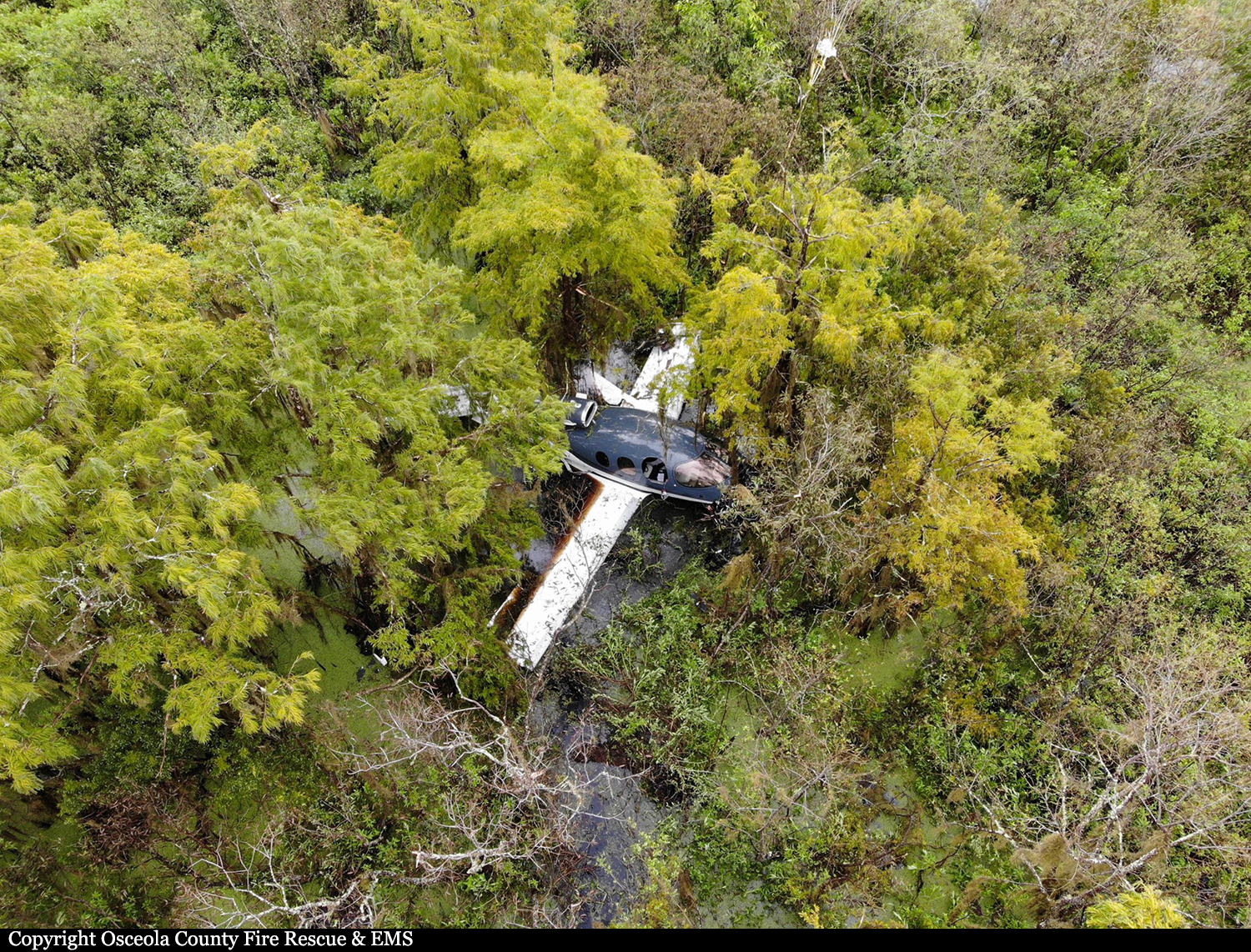
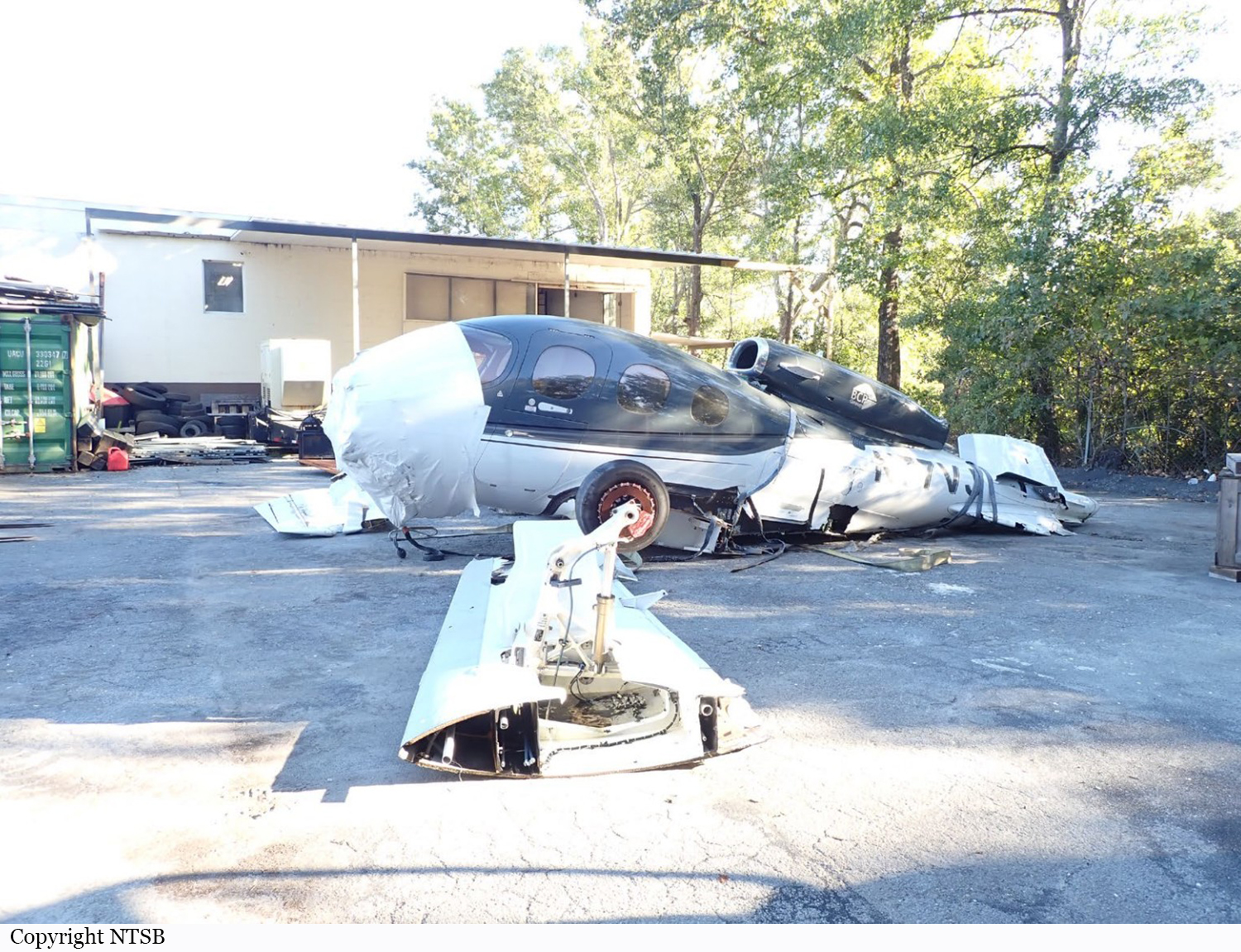
The pilot obtained multiple preflight weather briefings that resulted in him delaying the flight’s departure until the afternoon. After departure, while near his intended destination, the pilot was twice advised by air traffic controllers of adverse weather, including heavy to extreme precipitation along the intended final approach. While in visual meteorological conditions the pilot requested an RNAV approach to his destination airport. While flying towards the final approach fix at a low thrust setting the autopilot attempted to maintain 2,000 ft while pitching up and slowing to about 100 knots, causing an airspeed aural warning. The pilot applied partial thrust and while in instrument meteorological conditions the flight encountered extreme precipitation and turbulence associated with the previously reported thunderstorm. The pilot turned off the autopilot; the airplane then climbed at a rate that was well beyond the performance capability of the airplane, likely caused by updrafts from the mature thunderstorm and application of takeoff thrust. The High Electronic Stability & Protection (ESP) engaged, pitching the airplane nose-down coupled with the pilot pushing the control stick forward. The airplane then began descending followed by pitching up and climbing again. The pilot pulled the Cirrus Airframe Parachute System (CAPS) and descended under canopy into a marsh but the airplane was dragged a short distance from wind that inflated the CAPS canopy. Post accident examination of the recovered airplane revealed substantial damage to the front pressure bulkhead and to both sides of the fuselage immediately behind the front pressure bulkhead. There was no evidence of preimpact failure or malfunction of the flight controls for roll, pitch, or yaw. Data downloaded from the Recoverable Data Module (RDM) revealed no faults with the autopilot or stability protection systems until the CAPS system was activated, when those recorded faults would have been expected. Further, there were no discrepancies with the engine. Although the pilot perceived a malfunction of the autopilot at several times during the final portion of the flight, the perceived autopilot discrepancies were likely normal system responses based on the autopilot mode changes.
Probable cause:
The pilot’s continuation of the instrument approach into known extreme precipitation and turbulence associated with a thunderstorm, resulting in excessive altitude deviations that required him to activate the Cirrus Airframe Parachute System.
Final Report:
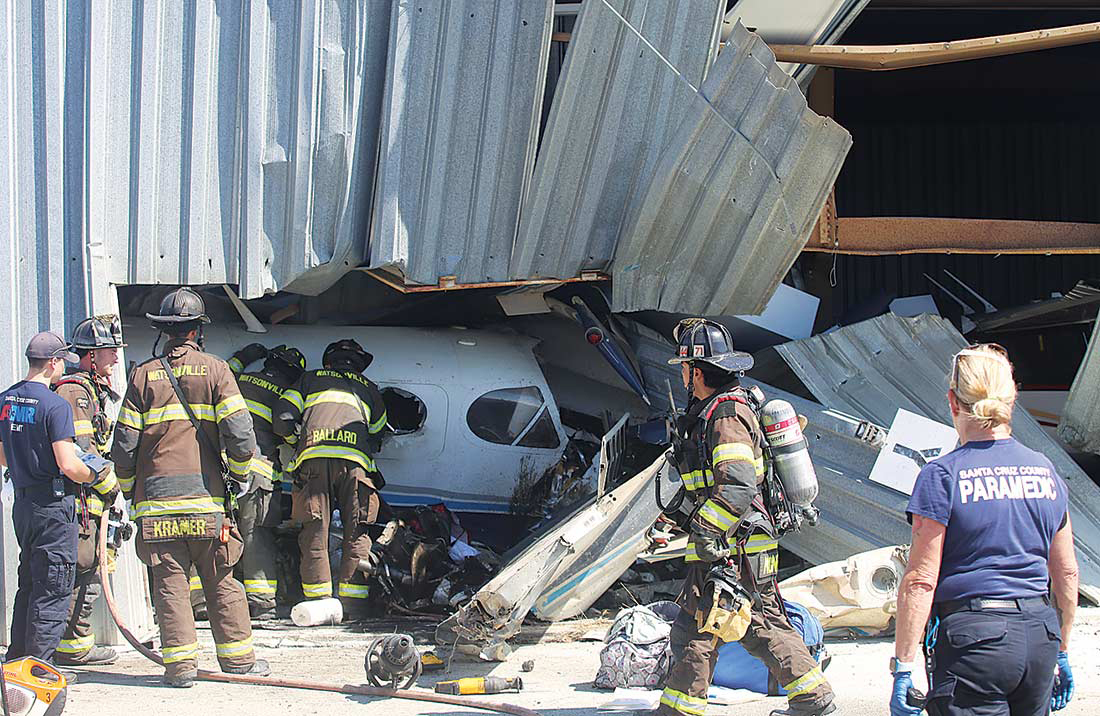
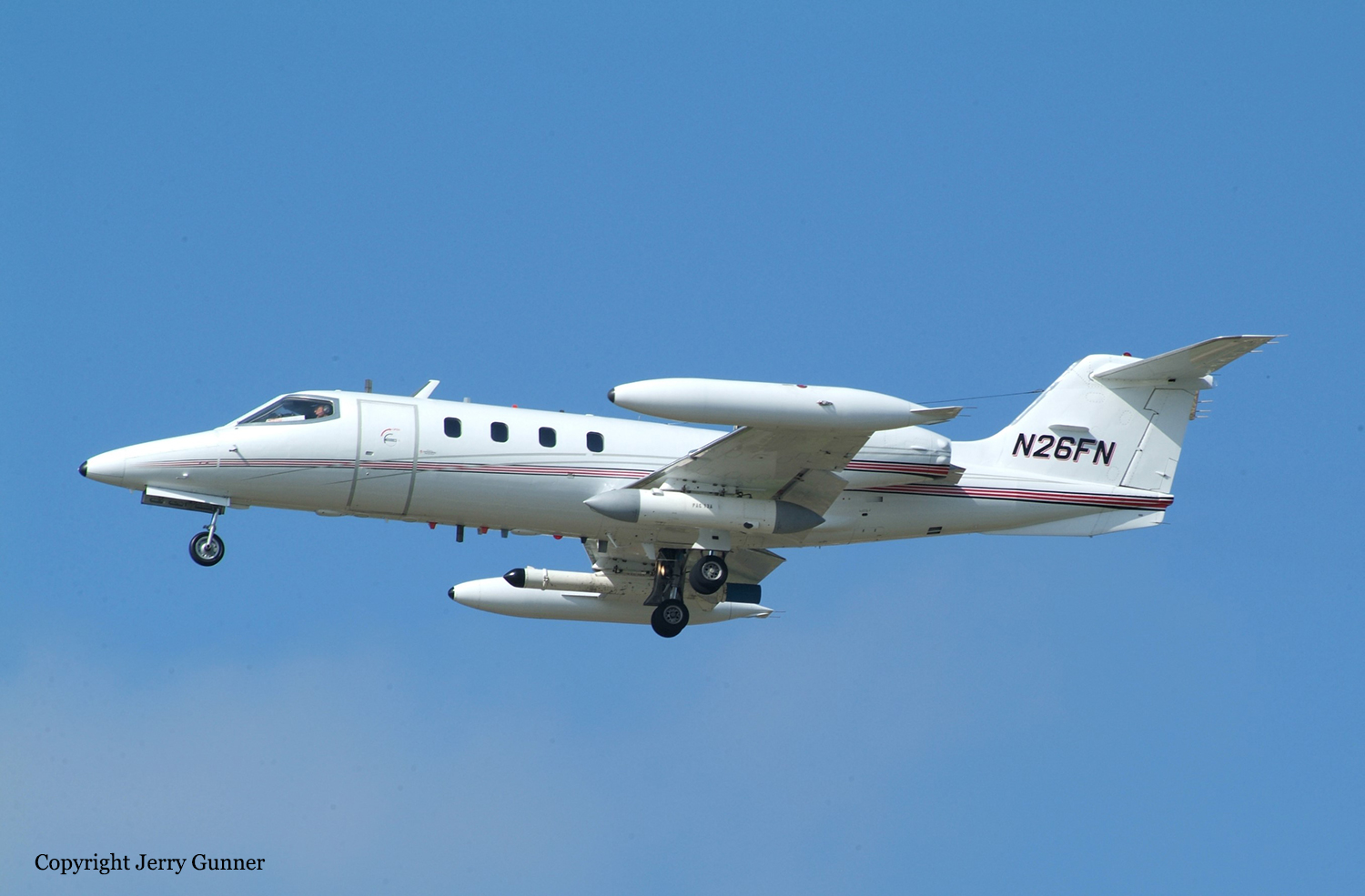
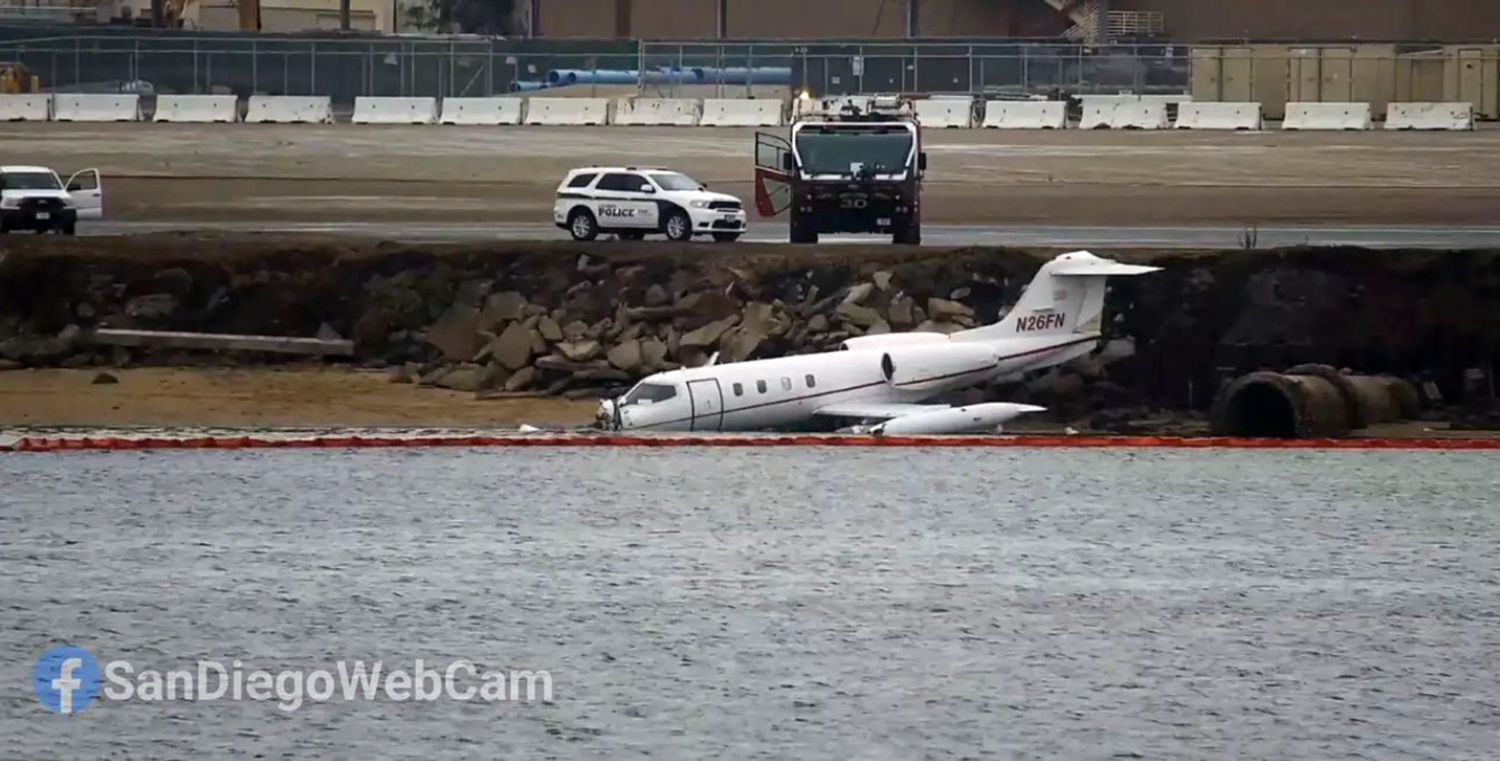
Crash of a Learjet 36 at North Island NAS

Date & Time: Sep 9, 2022 at 1314 LT
Type of aircraft:
Registration:
N26FN
Flight Type:
Survivors:
Yes
Schedule:
North Island - North Island
MSN:
36-011
YOM:
1975
Flight number:
FST26
Crew on board:
2
Crew fatalities:
Pax on board:
0
Pax fatalities:
Other fatalities:
Total fatalities:
0
Captain / Total flying hours:
7200
Captain / Total hours on type:
5250.00
Copilot / Total flying hours:
18288
Copilot / Total hours on type:
165
Aircraft flight hours:
17024
Circumstances:
The flight crew was supporting a United States Navy (USN) training mission and ended the flight early due to icing conditions. The flight crew calculated a landing reference speed (Vref) of 140 knots (kts) indicated airspeed (KIAS) and landing distance required of 4,200 ft for a wet runway and a flap setting of 20°. Due to underwing-mounted external storage, the landing flaps were limited to a maximum extension of 20°. The flight crew configured the airplane with 20° flaps and reported that the airplane touched down at 140 kts. Although the runway was 8,001 ft long, an arresting cable was located 1,701 ft from the runway threshold, resulting in a runway distance available of about 6,300 ft. After landing, the second in command (SIC) reported that the pilot-in-command (PIC) deployed the spoilers and brakes, then announced that the airplane was not slowing down. The PIC stated that the airplane did not decelerate normally, that the brake anti-skid system was active, and that the airplane seemed to be hydroplaning. He cycled the brakes, which had no effect.The airplane subsequently overran the departure end of the runway, breached an ocean sea wall and came to rest in a nose-down attitude on a sandbar. The airport weather observation system recorded that 0.06 inches of liquid equivalent precipitation fell between 18 and 9 minutes before the accident. In the 4 hours before the accident, the airport received 0.31 inches of liquid equivalent precipitation. A landing performance study conducted by the airplane manufacturer modeled a variety of landing scenarios considered during the investigation. The modeling used factual information provided by the investigation, including ADS-B data, as well as manufacturer-provided airplane performance data specific to the airplane. The study considered the effect on landing distance of both a wet and dry runway, a contaminated runway, both full and intermittent hydroplaning, a localized tailwind (which was not present in the weather data), and an inboard brake failure. The study showed that the most likely scenario, based on the available data, was that the airplane touched down with a ground speed well in excess of the 140 kts Vref speed reported by the crew, and that subsequent to the touchdown encountered full hydroplaning at speeds above 104 kts. The airplane sat overnight on the sandbar and was submerged in saltwater before the airplane was recovered. As a result, the airplane’s braking system could not be functionally tested. However, the physical evidence from the brakes as found post accident, combined with the results of the landing distance modeling, did not indicate that a brake failure occurred. Similarly, ADS-B data did not support the presence of a localized tailwind when such a landing was modeled in the study. Thus, it’s likely that the flight crew landed too fast and then encountered hydroplaning during the landing roll as a result of a recent heavy rain shower, which diminished the calculated stopping distance.
Probable cause:
The flight crew’s fast landing on a wet runway, which resulted in the airplane hydroplaning during the landing roll and subsequently overrunning the runway.
Final Report:

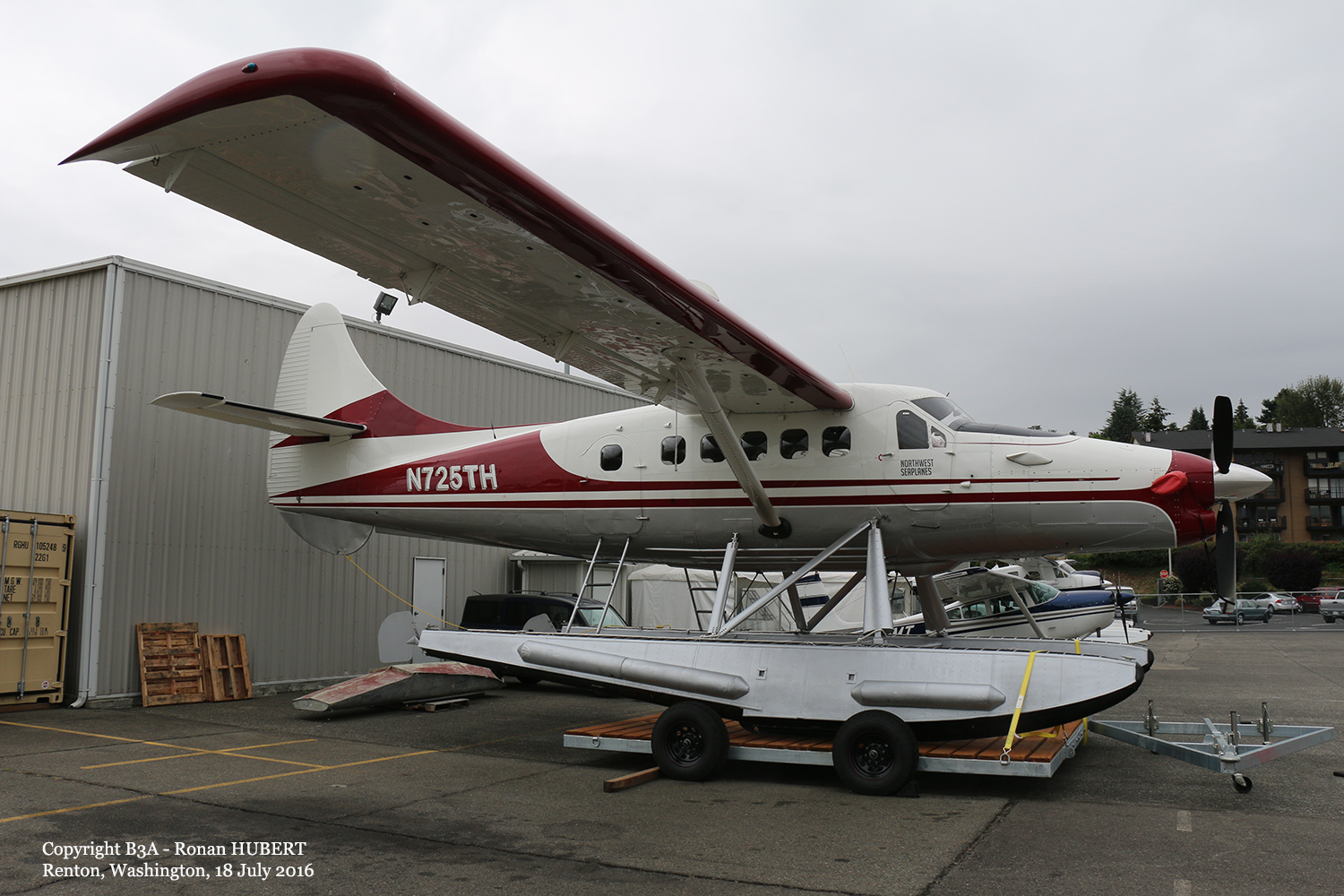
Crash of a De Havilland DHC-3T Otter into the Mutiny Bay: 10 killed

Date & Time: Sep 4, 2022 at 1509 LT
Type of aircraft:
Operator:
Registration:
N725TH
Flight Phase:
Survivors:
No
Schedule:
Friday Harbor – Renton
MSN:
466
YOM:
1967
Crew on board:
1
Crew fatalities:
Pax on board:
9
Pax fatalities:
Other fatalities:
Total fatalities:
10
Captain / Total flying hours:
3686
Captain / Total hours on type:
1300.00
Aircraft flight hours:
24430
Circumstances:
On September 4, 2022, about 1509 Pacific daylight time, a float-equipped de Havilland DHC-3 (Otter), N725TH, was destroyed when it impacted the water in Mutiny Bay, near Freeland, Washington, and sank. The pilot and nine passengers were fatally injured. The airplane was owned by Northwest Seaplanes, Inc., and operated as a Title 14 Code of Federal Regulations (CFR) Part 135 scheduled passenger flight by West Isle Air dba Friday Harbor Seaplanes. The flight originated at Friday Harbor Seaplane Base (W33), Friday Harbor, Washington, with an intended destination of Will Rogers Wiley Post Memorial Seaplane Base (W36), Renton, Washington. Visual meteorological conditions prevailed at the time of the accident. The accident pilot was scheduled to fly the accident airplane on three multiple leg roundtrips on the day of the accident. The first roundtrip flight was uneventful; it departed from W36 about 0930, made four stops, and returned about 1215. The accident occurred during the pilot’s second trip of the day. A review of recorded automatic dependent surveillance–broadcast (ADS-B) data revealed that the second roundtrip departed 36 about 1253 and arrived at Lopez Seaplane Base, (W81), Lopez Island, Washington, about 1328.2 The data showed that the flight then departed W81 and landed at Roche Harbor Seaplane Base (W39) about 1356. The airplane departed W39 about 1432, arrived at W33 about 1438, and departed about 1450. According to ADS-B data, after the airplane departed W33, it flew a southerly heading before turning south-southeast. The en route altitude was between 600 and 1,000 ft above mean sea level (msl), and the groundspeed was between 115 and 135 knots. At 1508:40, the altitude was 1,000 ft msl, and the groundspeed had decreased to 111 knots. Based on performance calculations, at 1508:43, the airplane pitched up about 8° and then abruptly pitched down about 58°. The data ended at 1508:51, when the airplane’s altitude was 600 ft msl and the estimated descent rate was more than 9,500 ft per minute (the flightpath of the airplane is depicted in figure. Witnesses near the accident site reported, and security camera video confirmed, the airplane was in level flight before it entered a slight climb and then pitched down. One witness described the descent as “near vertical” and estimated the airplane was in an 85° nose-down attitude before impact with the water. Several witnesses described the airplane as “spinning,” “rotating,” or “spiraling” during portions of the steep descent. One witness reported hearing the engine/propeller and noted that he did not hear any “pitch change” in the sounds. The airplane continued in a nose-low, near-vertical descent until it impacted water in Mutiny Bay.
Probable cause:
It was determined that the probable cause of this accident was the in-flight unthreading of the clamp nut from the horizontal stabilizer trim actuator barrel due to a missing lock ring, which resulted in the horizontal stabilizer moving to an extreme trailing-edge-down position rendering the airplane’s pitch uncontrollable.
Final Report:
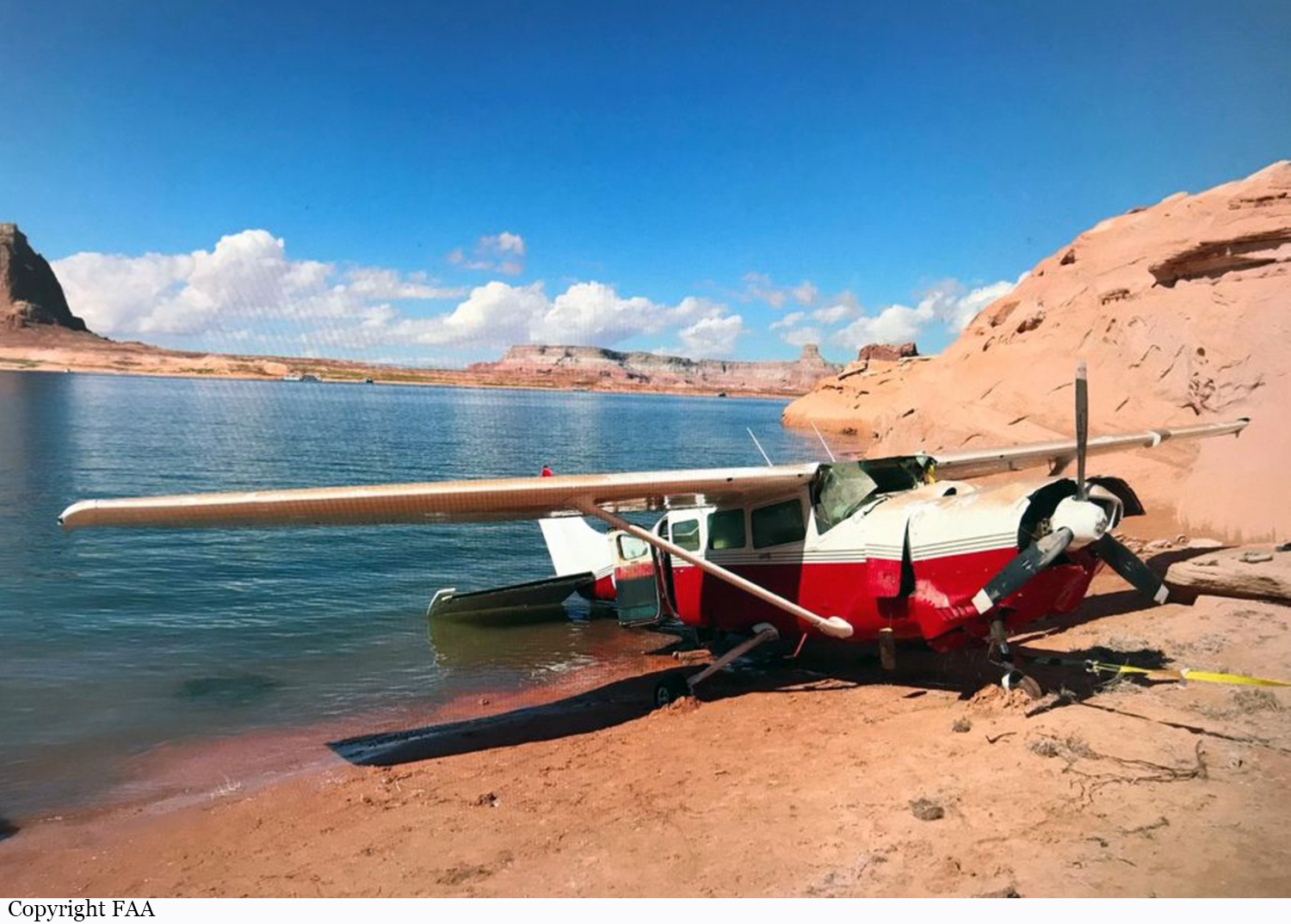
Crash of a Beechcraft C90A King Air in Gravestown

Date & Time: Sep 3, 2022 at 1021 LT
Type of aircraft:
Registration:
N342ER
Flight Phase:
Flight Type:
Survivors:
Yes
Schedule:
Tupelo - Tupelo
MSN:
LJ-1156
YOM:
1987
Crew on board:
1
Crew fatalities:
Pax on board:
0
Pax fatalities:
Other fatalities:
Total fatalities:
0
Captain / Total flying hours:
31
Circumstances:
The uncertificated pilot stole the accident airplane at Tupelo Airport with the intent of crashing it into a department store located 2 miles southeast of the airport. However, he continued to fly the airplane in the area for several hours until he performed an off-airport landing in a field 32 miles northwest of the departure airport that resulted in substantial damage to the airplane’s fuselage.
Probable cause:
The uncertificated pilot’s criminal act of stealing the airplane and later performing an off-airport landing that resulted in an impact with terrain.
Final Report:

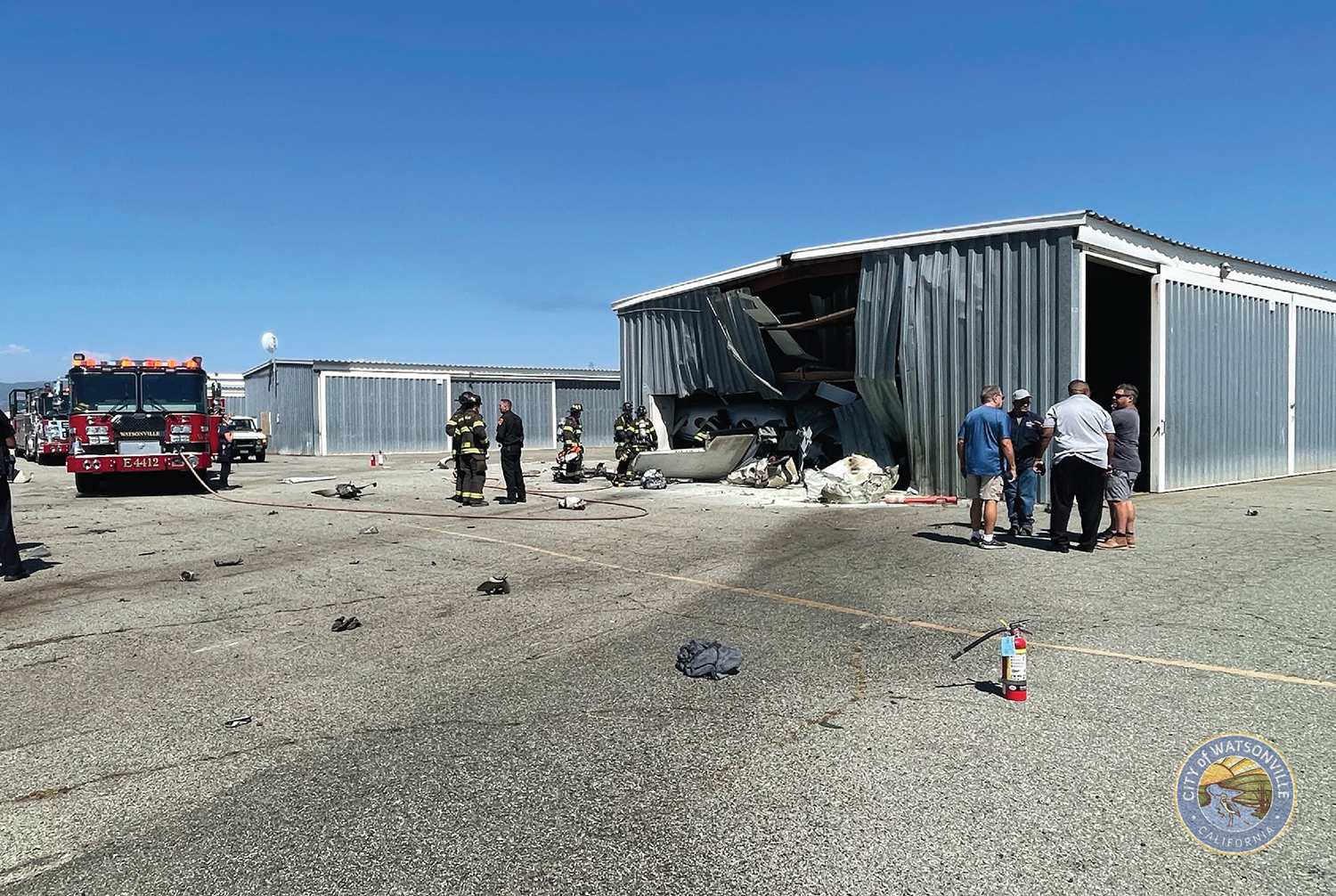
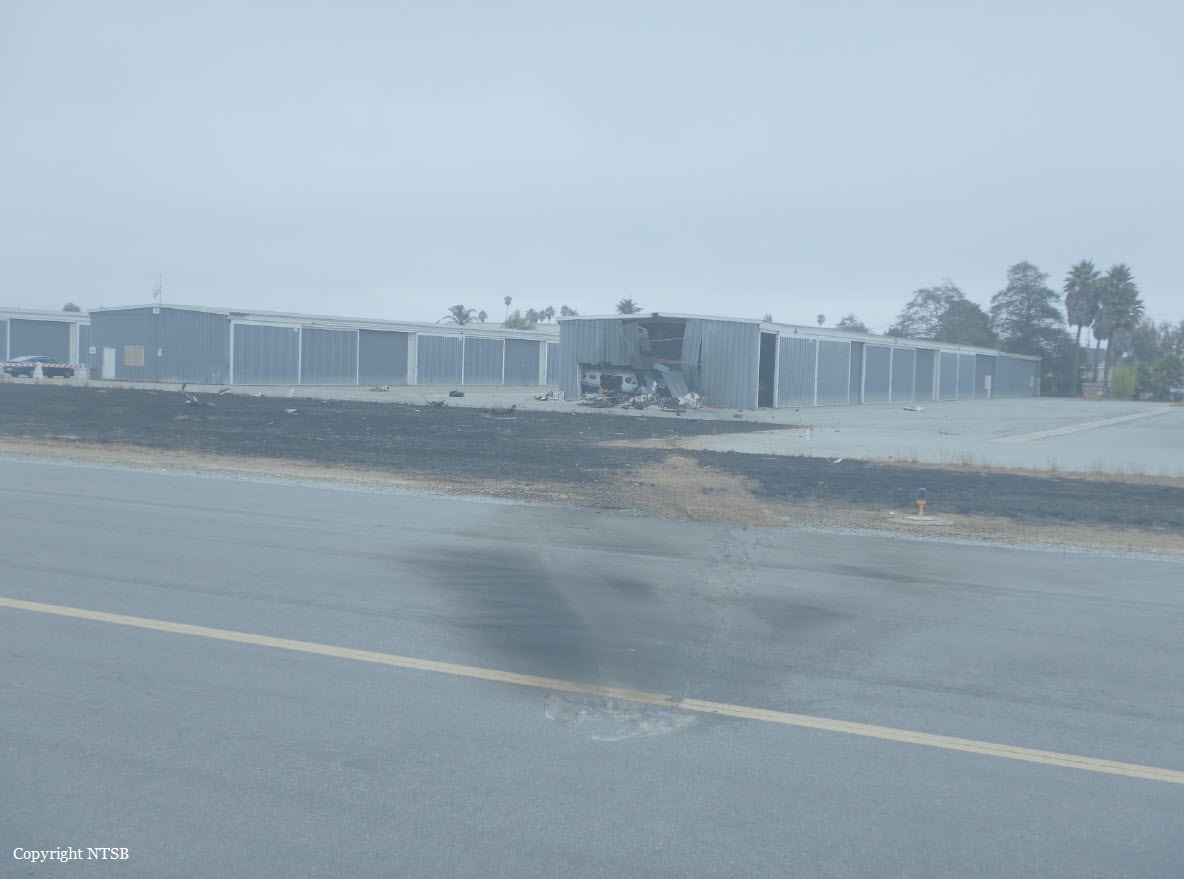
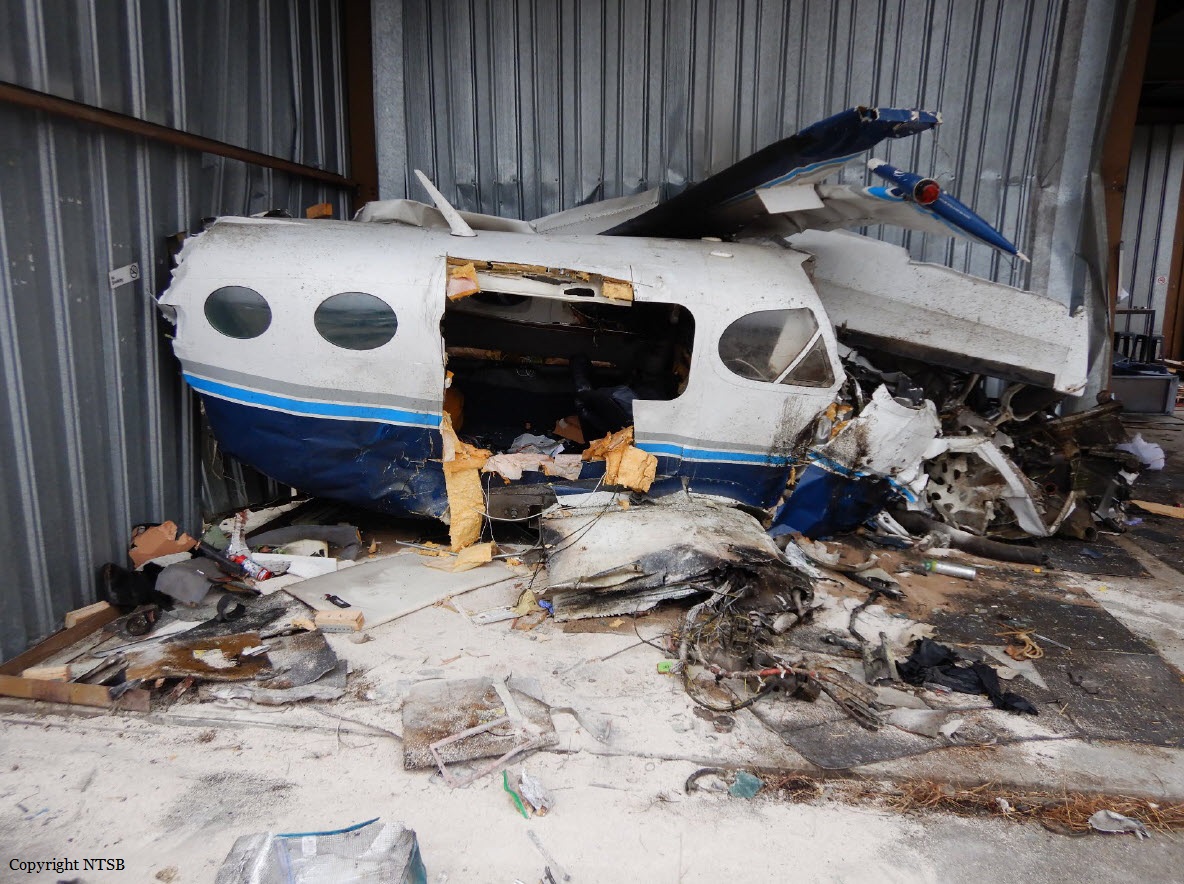
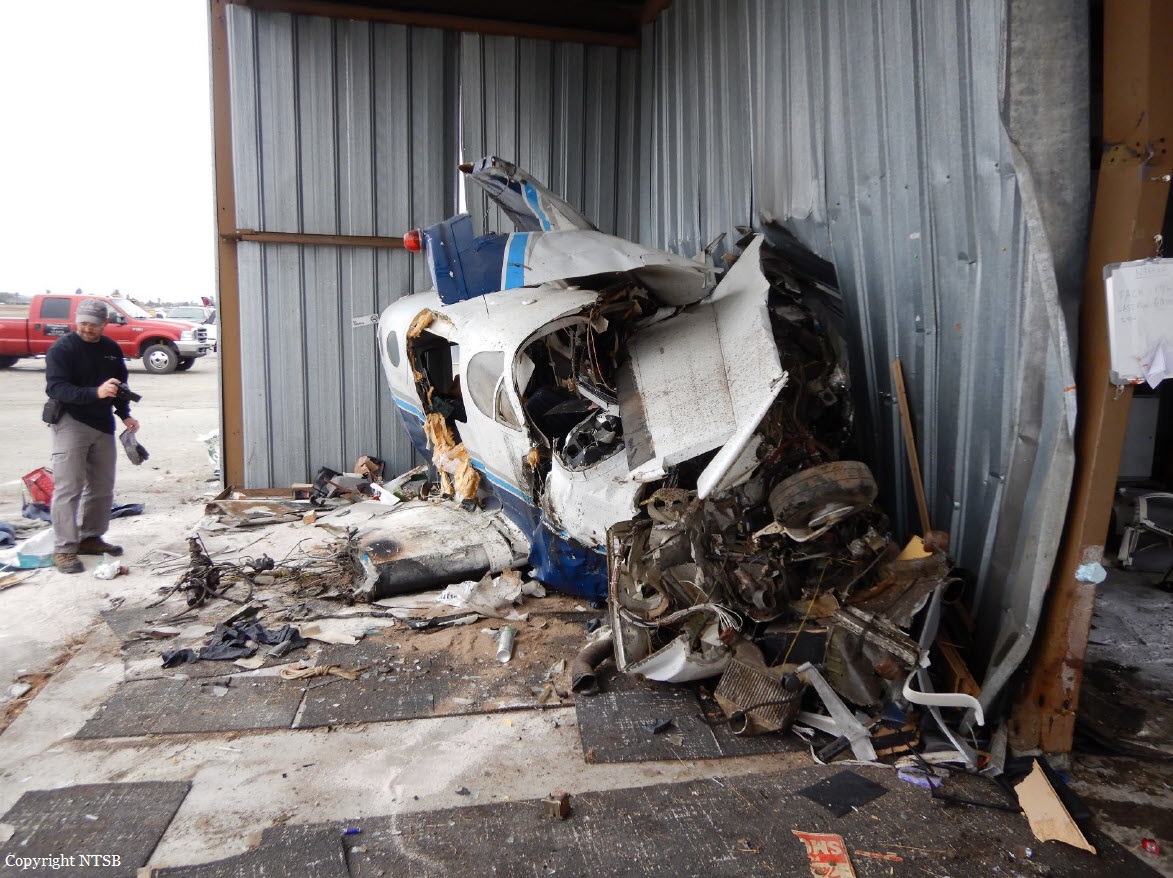
Crash of a Cessna 340A in Watsonville: 2 killed

Date & Time: Aug 18, 2022 at 1455 LT
Type of aircraft:
Operator:
Registration:
N740WJ
Flight Type:
Survivors:
No
Schedule:
Turlock – Watsonville
MSN:
340A-0740
YOM:
1979
Crew on board:
2
Crew fatalities:
Pax on board:
0
Pax fatalities:
Other fatalities:
Total fatalities:
2
Captain / Total flying hours:
111
Captain / Total hours on type:
77.00
Copilot / Total flying hours:
1200
Copilot / Total hours on type:
744
Circumstances:
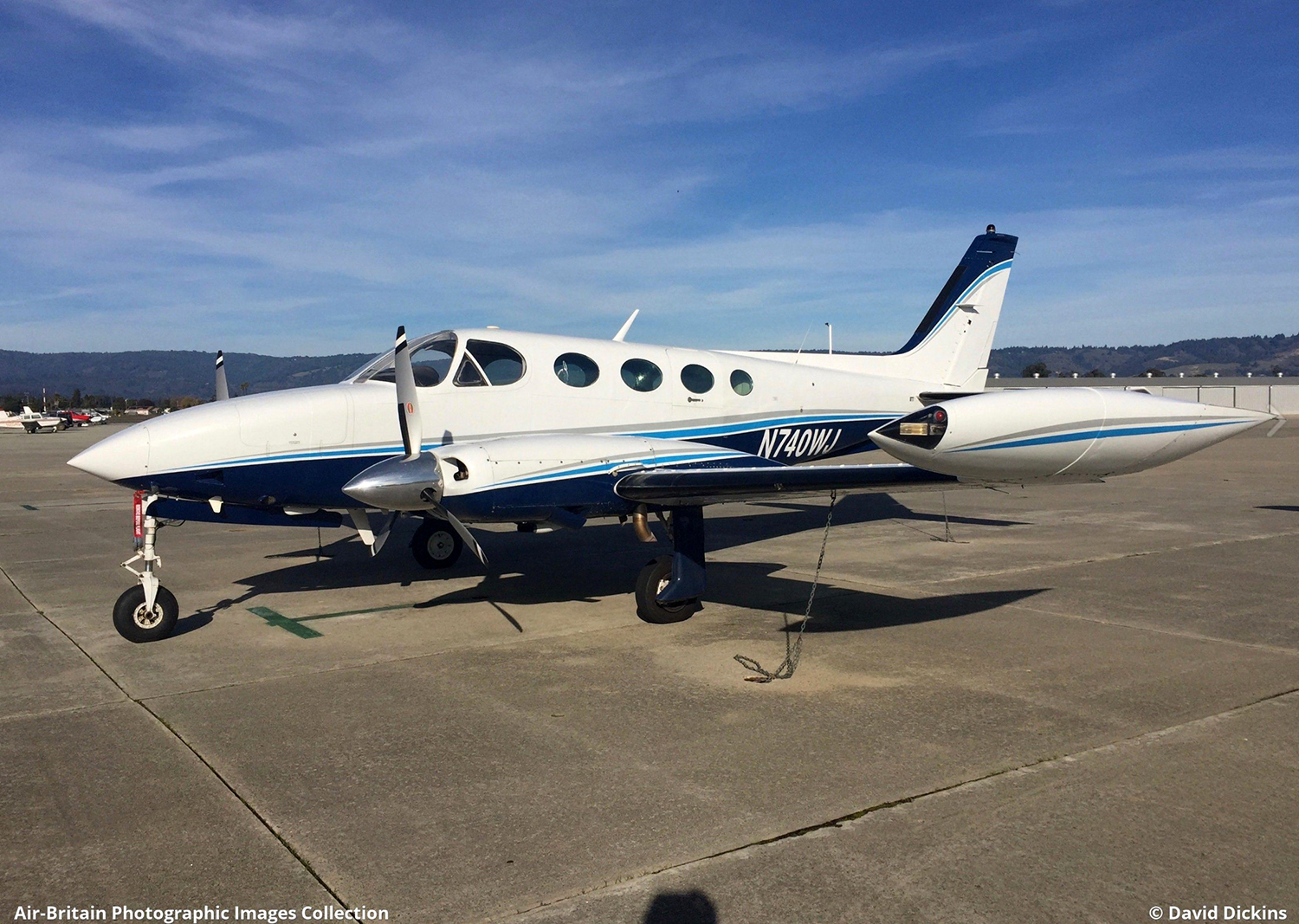
The pilot of the single-engine airplane was operating in the airport traffic pattern and had been making position reports on the airport’s common traffic advisory frequency (CTAF). The pilot of the multi-engine airplane made an initial radio call on the CTAF 10 miles from the airport, announcing his intention to perform a straight-in approach for landing. Both pilots continued to make appropriate position reports, but did not communicate with each other until the multi engine airplane was about one mile from the airport and the single-engine airplane had turned onto the base leg of the traffic pattern for landing. Realizing that the multi-engine airplane was converging upon him, the pilot of the single-engine airplane announced a go-around, and the airplanes collided on final approach for the runway about 150 ft above ground level (agl). Examination of the airplanes revealed no evidence of mechanical malfunctions or anomalies that would have precluded normal operation. The multi-engine airplane’s wing flaps and landing gear were both retracted at the accident site, consistent with the pilot’s failure to configure the airplane for landing, and flight track information indicated that the pilot maintained a ground speed of about 180 knots throughout the approach until the collision occurred, which may have reduced the time available for him to see and avoid the single engine airplane. The toxicology report for the pilot of the single-engine airplane revealed THC, metabolites for THC, metabolites for cocaine, and ketamine; the low amounts of each drug were not considered causal to the accident. The toxicology report for the multi-engine airplane pilot revealed THC, and metabolites of THC; the low amounts of each drug were not considered causal to the accident.
Probable cause:
The failure of the pilot of the multi-engine airplane to see and avoid the single-engine airplane while performing a straight-in approach for landing.
Final Report:
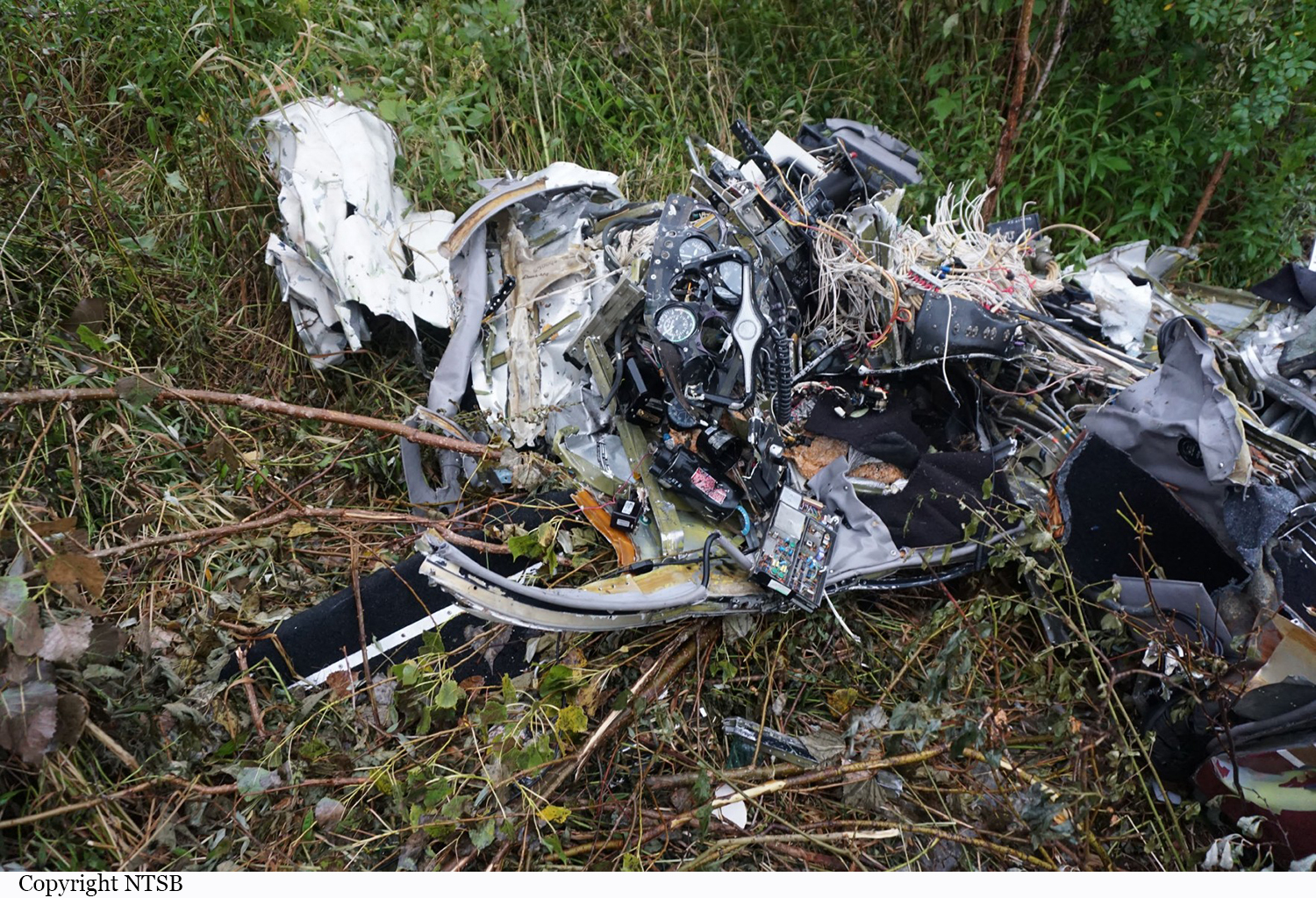
Crash of a Cessna 207A Turbo Stationair 8 into Lake Powell: 2 killed

Date & Time: Aug 13, 2022 at 1619 LT
Operator:
Registration:
N9582M
Flight Phase:
Survivors:
Yes
Schedule:
Page - Page
MSN:
207-0705
YOM:
1981
Crew on board:
1
Crew fatalities:
Pax on board:
6
Pax fatalities:
Other fatalities:
Total fatalities:
2
Captain / Total flying hours:
550
Captain / Total hours on type:
35.00
Aircraft flight hours:
17307
Circumstances:
On August 13, 2022, about 1619 mountain standard time, a Cessna T207A airplane, N9582M, was substantially damaged when it was involved in an accident near Page, Arizona. The pilot received minor injuries, two passengers were fatally injured, two passengers were seriously injured, and one passenger received minor injuries. The airplane was operated as a Title 14 Code of Federal Regulations Part 91 air tour flight. According to witnesses, the accident airplane was the first airplane in a flight of 5 airplanes on a scenic tour of the Lake Powell area at a cruise altitude of about 1,000 ft to 2,000 ft above ground level. After nearly 30 minutes of flight and after making a turn back towards the airport, the accident pilot made a distress call and reported his engine lost power and he was ditching the airplane in Lake Powell. The airplane became submerged in the water and the two passengers who were fatally injured did not exit the airplane. National Park Service boats, several nearby private boats, and a few helicopters responded to the accident site, which was located about 13 miles northeast of the Page Municipal Airport, (PGA), Page, Arizona. The boats assisted the survivors in the water. Once aboard a boat that recovered the survivors, witnesses overheard the pilot on the phone discussing that he had experienced an engine failure. An underwater remote observation vehicle surveyed the accident site a couple of days after the accident. All major components of the airplane were observed, and the airplane came to rest upright at the lake bottom about 100 ft below the surface.
Probable cause:
The total loss of engine power for undetermined reasons during low altitude cruise flight, which resulted in a water ditching. Contributing to the severity of the accident was the pilot’s failure to extend the flaps during the ditching, which increased the impact forces to the occupants.
Final Report:
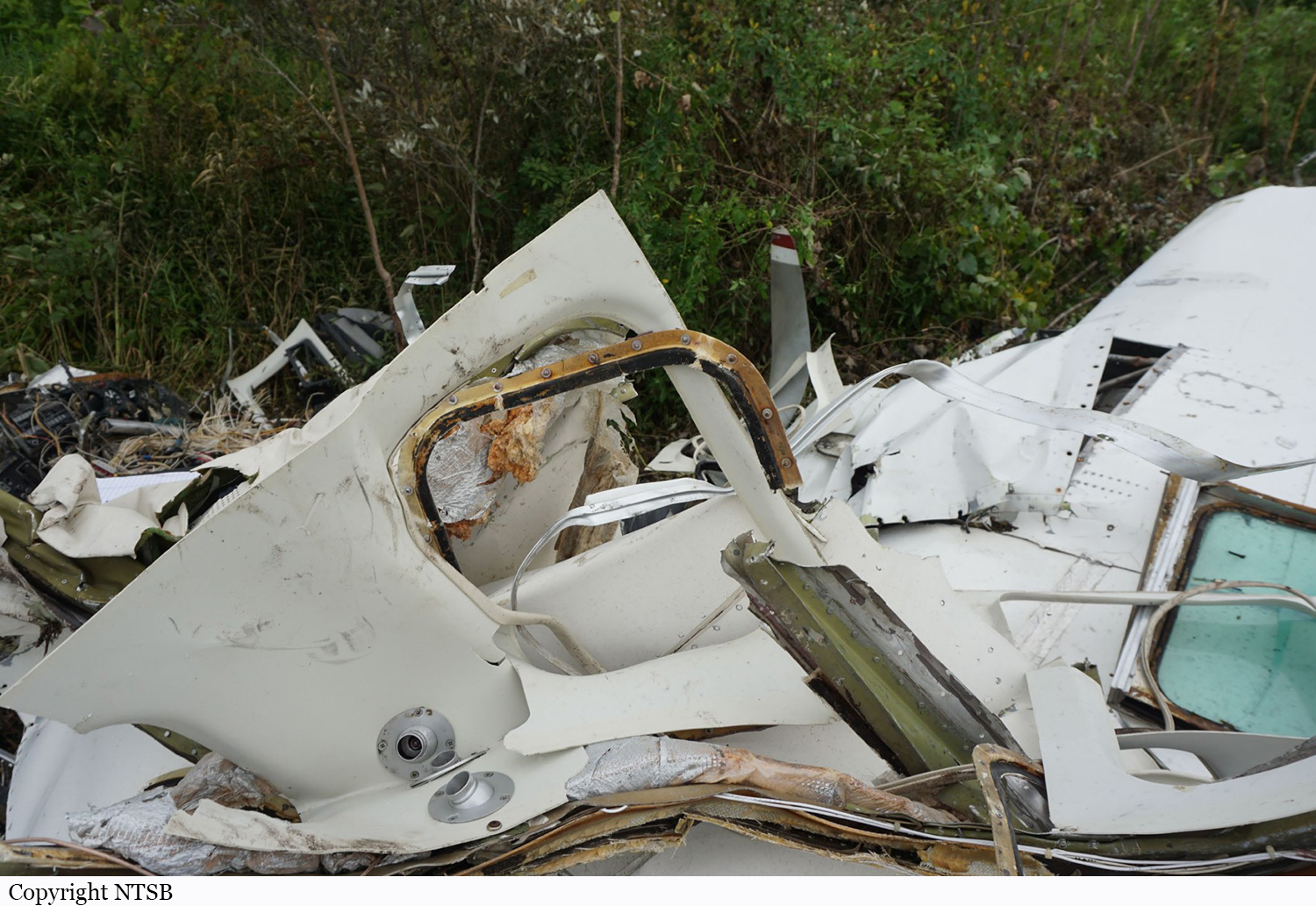
Crash of a Piper PA-60 Aerostar (Ted Smith 600) in South Haven: 2 killed

Date & Time: Aug 2, 2022 at 1030 LT
Registration:
N9784Q
Flight Phase:
Flight Type:
Survivors:
No
Schedule:
South Haven - South Haven
MSN:
60-0416-143
YOM:
1977
Crew on board:
2
Crew fatalities:
Pax on board:
0
Pax fatalities:
Other fatalities:
Total fatalities:
2
Captain / Total flying hours:
3250
Copilot / Total flying hours:
28500
Copilot / Total hours on type:
0
Aircraft flight hours:
11197
Circumstances:
A friend of the copilot reported this was the multiengine airplane’s first flight since the (single engine-rated) copilot purchased it five years before the accident. He stated that the purpose of the flight was to conduct touch-and-go landings. Another (multiengine-rated) pilot was flying in the left seat, with the copilot flying in the right seat. On the day of the accident, when the friend arrived at the airport, he noticed that the airplane was not in the traffic pattern. After a few hours, he became concerned and reported the airplane missing to local authorities, and it was found the next morning in a heavily wooded area about one mile away from the airport. There were no witnesses to the accident. Post accident examination of the wreckage revealed that the airplane’s left propeller displayed signatures indicative of low rotational speed at impact, suggesting that the airplane’s left engine may have lost at least partial power. The right propeller showed signatures consistent with high rotational speed/power settings at the time of impact. Examination of the left engine’s fuel servo revealed that it was heavily contaminated with sediment and that the fuel pump had weak suction and compression. Either or both of these conditions could have reduced the left engine’s performance during the flight. Additionally, the airplane was found with its wing flaps extended, the landing gear not retracted, and the left engine’s propeller was not feathered. A representative from the airplane’s type certificate holder stated that, depending on the airplane’s takeoff weight, it generally could not maintain level flight during an engine-out condition unless the flaps and landing gear were up and the failed engine’s propeller was feathered. While there were no witnesses to the accident or other recorded data to suggest what flight regime the airplane was in when the loss of engine power occurred, given the stated purpose of the flight and the findings of the post accident examination of the wreckage, it is likely that, while maneuvering the airplane in the airport traffic pattern, the airplane’s left engine lost power and the airplane subsequently impacted trees and terrain. Given the configuration of the wing flaps and landing gear and the unfeathered position of the left propeller, it is likely that the airplane’s single-engine performance was degraded.
Probable cause:
A loss of power to the left engine due to contamination of the fuel system. Contributing to the accident was the pilots’ failure to properly configure the airplane for flight with one engine inoperative.
Final Report:

Crash of a De Havilland DHC-2 Beaver I in Anchorage

Date & Time: Jul 26, 2022 at 0915 LT
Type of aircraft:
Operator:
Registration:
N9776R
Flight Phase:
Survivors:
Yes
Schedule:
Anchorage - King Salmon
MSN:
1126
YOM:
1957
Crew on board:
1
Crew fatalities:
Pax on board:
6
Pax fatalities:
Other fatalities:
Total fatalities:
0
Captain / Total flying hours:
1709
Captain / Total hours on type:
142.00
Aircraft flight hours:
16072
Circumstances:
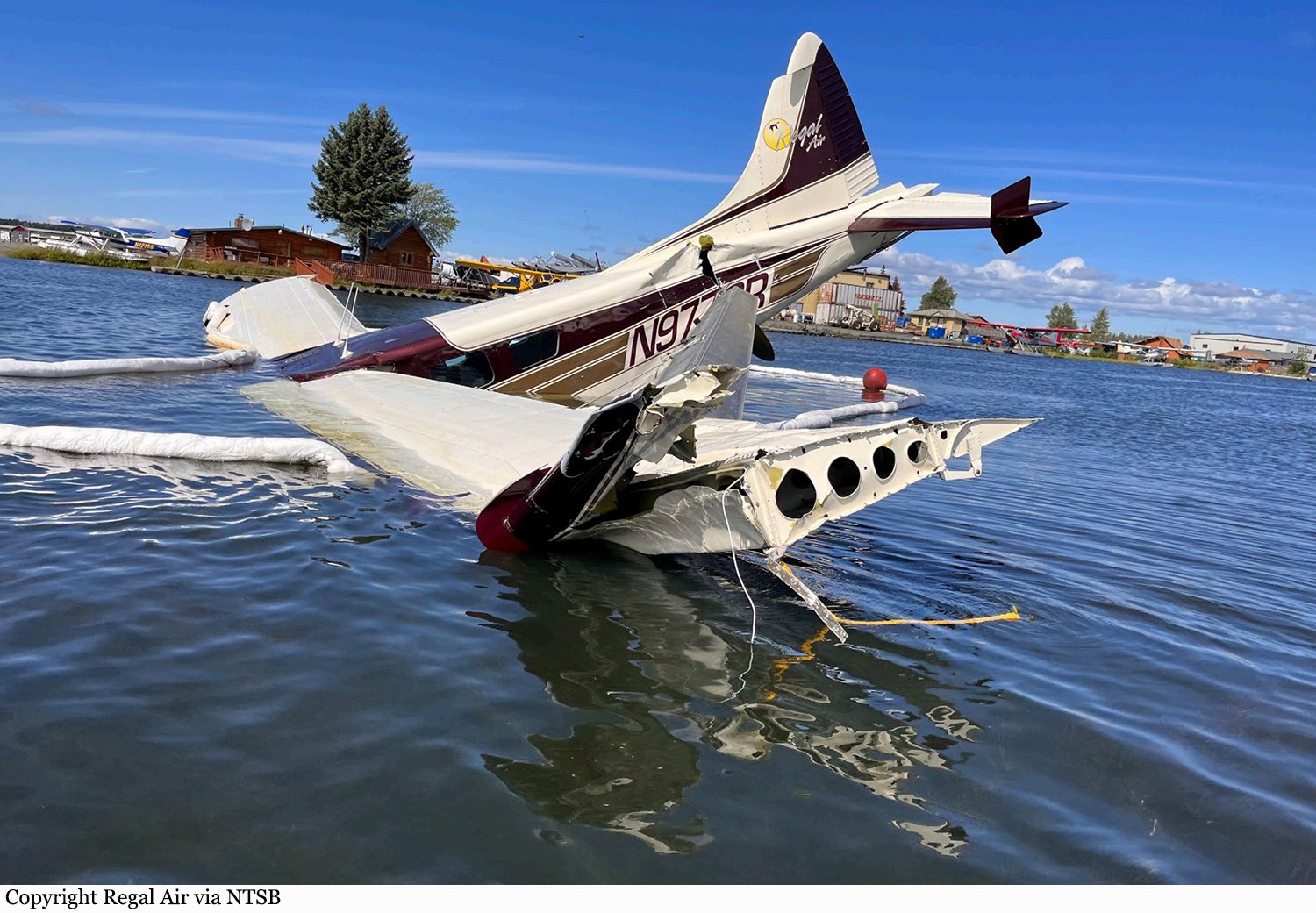
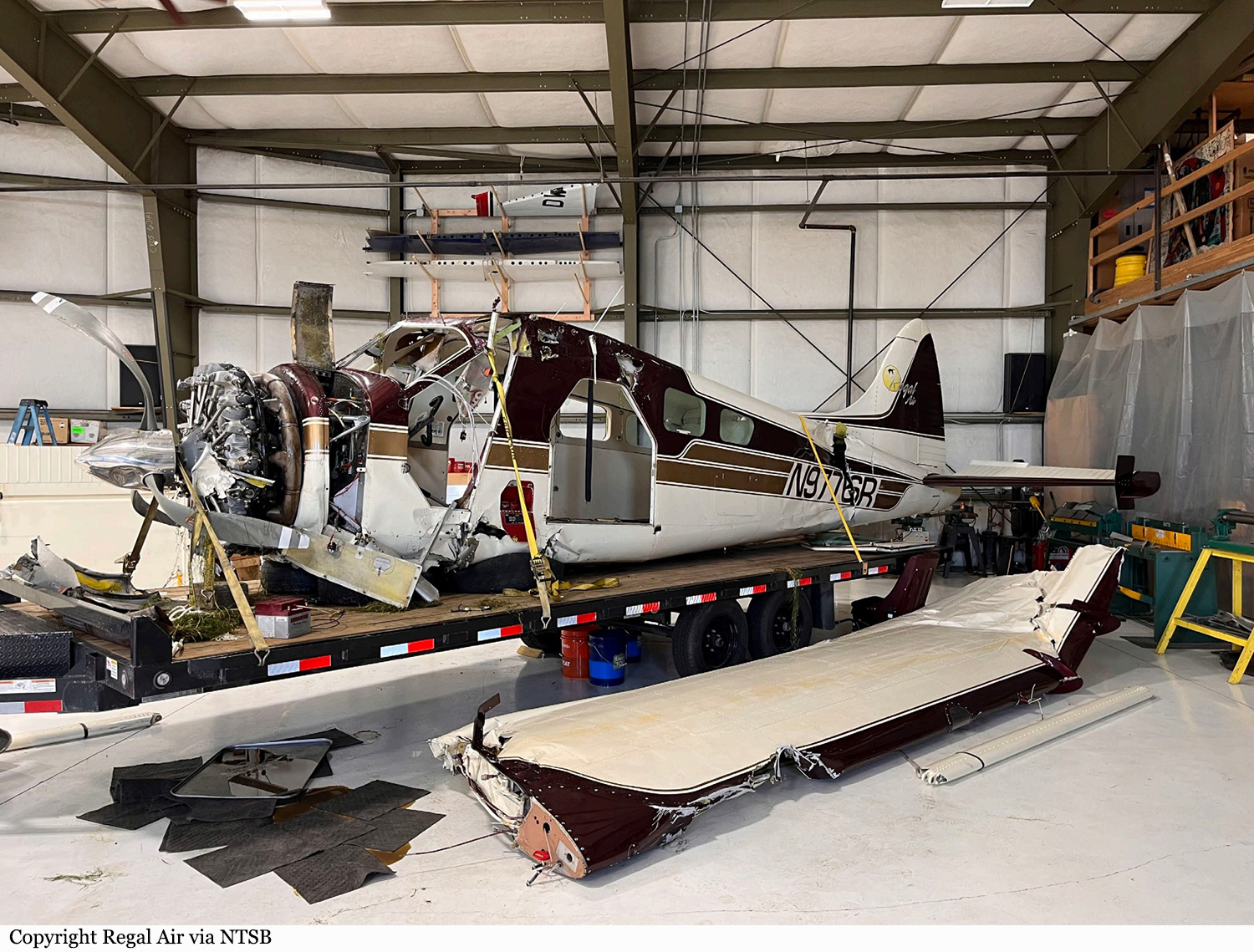
The pilot reported that, he was departing in the float-equipped airplane in strong gusty wind conditions. After accelerating on the water for about 3 seconds, the airplane suddenly became airborne and crabbed into the wind about 60° to 90° from the intended takeoff path and started to climb as it continued to track away from the intended flight path. As the climb continued, the airplane stalled and impacted the water in a nose low attitude which resulted in substantial damage to the wings and fuselage. The pilot reported that there were no preaccident mechanical malfunctions or anomalies that would have precluded normal operation.
Probable cause:
The pilot’s failure to maintain directional control during takeoff in gusting wind conditions which resulted in the wing exceeding its critical angle of attack, a loss of control and impact with the water.
Final Report: