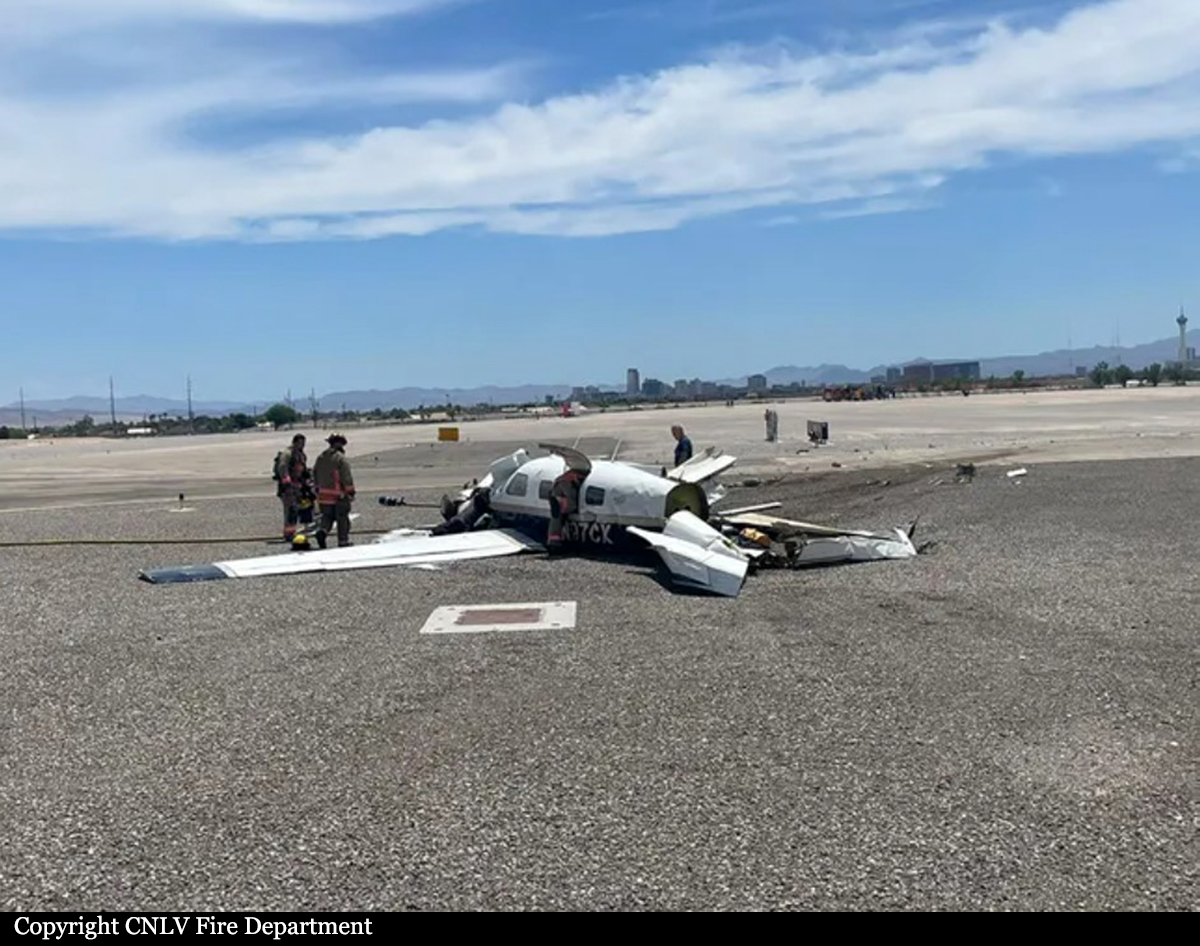
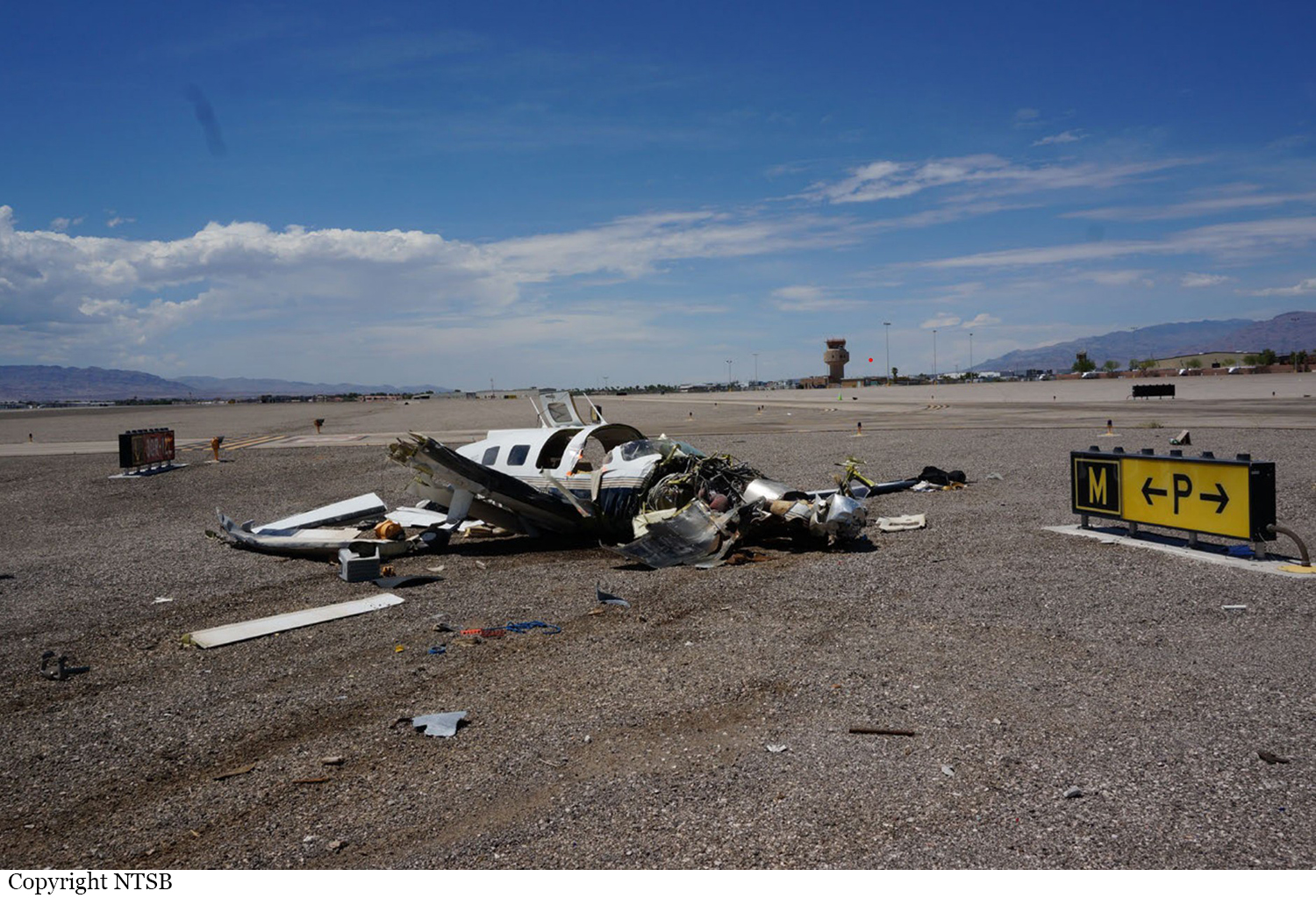
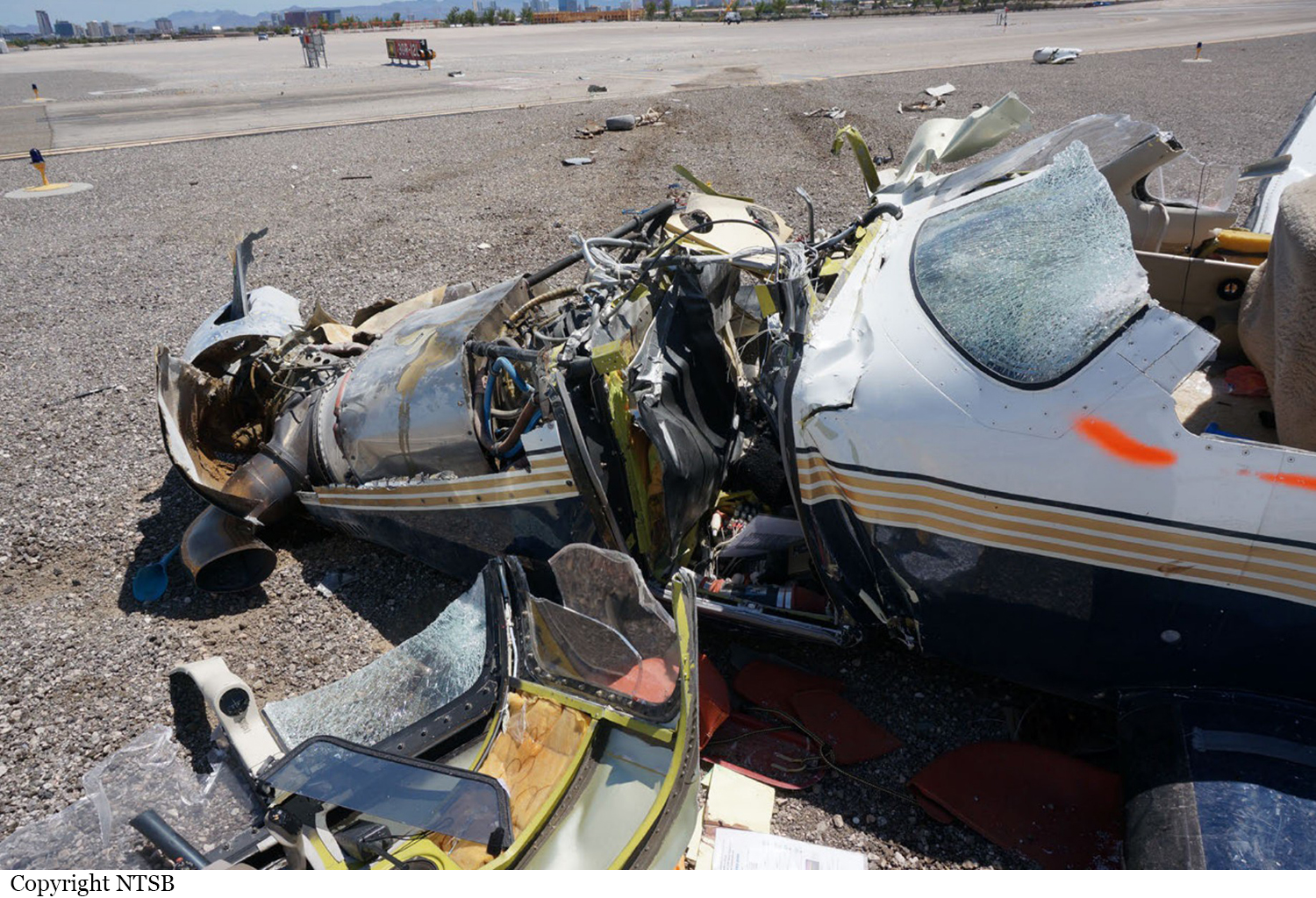
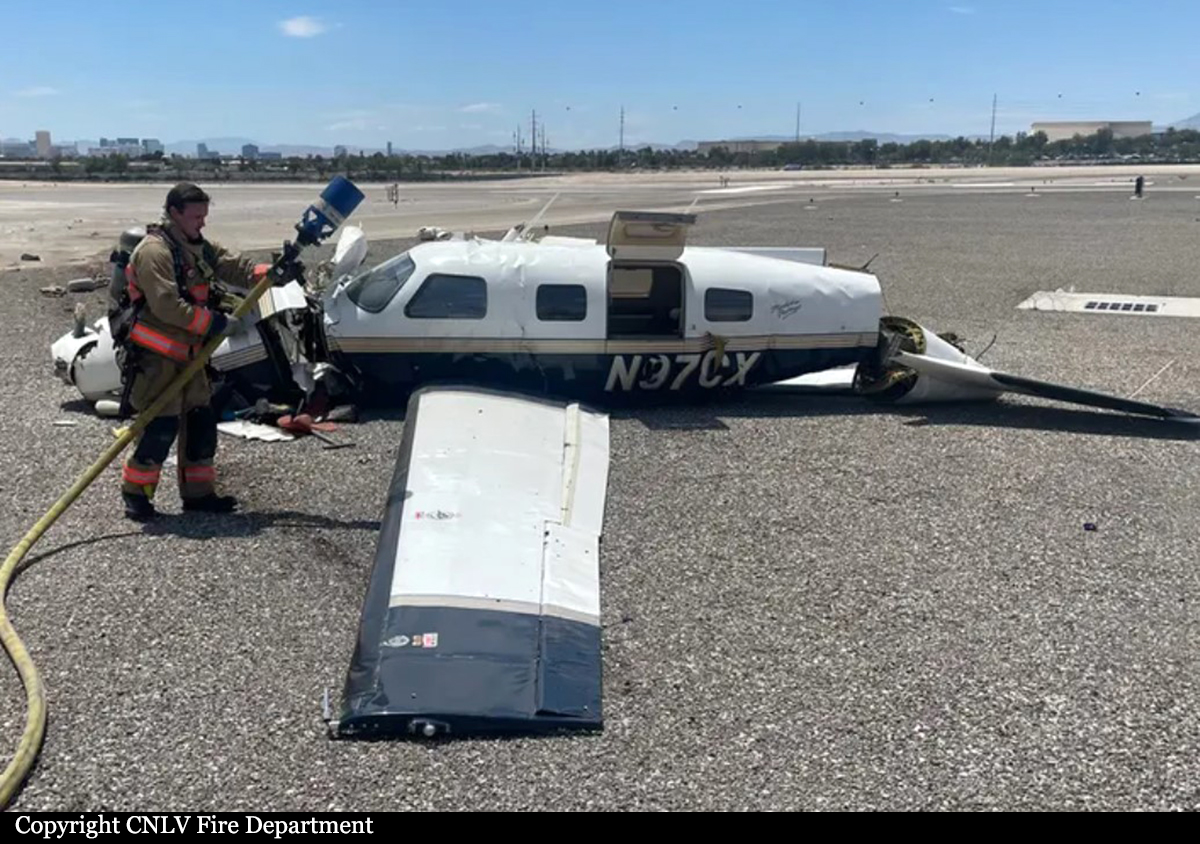
Crash of a Piper PA-46-350P Malibu Mirage in North Las Vegas: 2 killed

Date & Time: Jul 17, 2022 at 1203 LT
Registration:
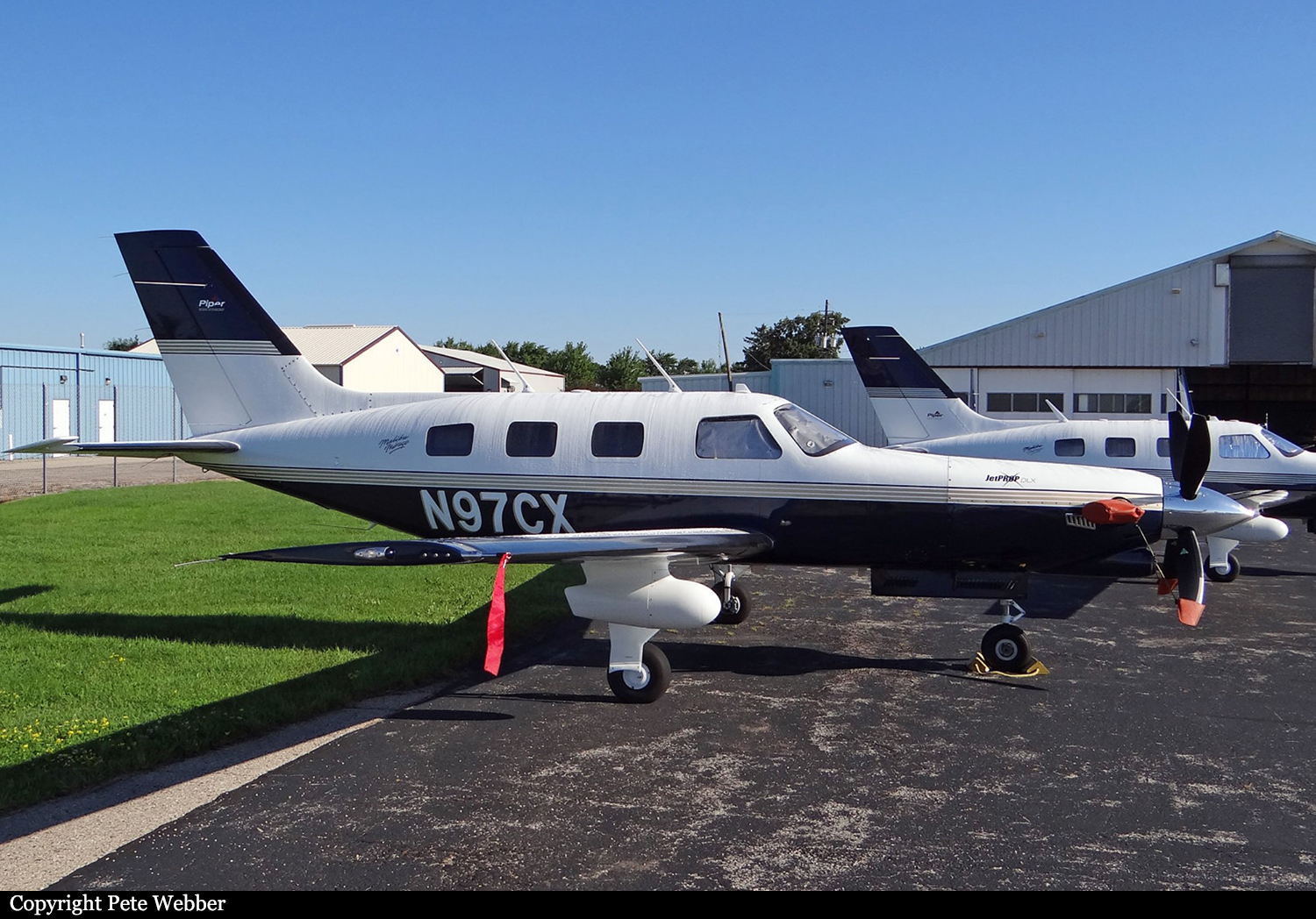
N97CX
Flight Type:
Survivors:
No
Schedule:
Cœur d’Alene – North Las Vegas
MSN:
46-36128
YOM:
1997
Crew on board:
2
Crew fatalities:
Pax on board:
0
Pax fatalities:
Other fatalities:
Total fatalities:
2
Captain / Total flying hours:
6643
Copilot / Total flying hours:
1536
Copilot / Total hours on type:
280
Aircraft flight hours:
3212
Circumstances:
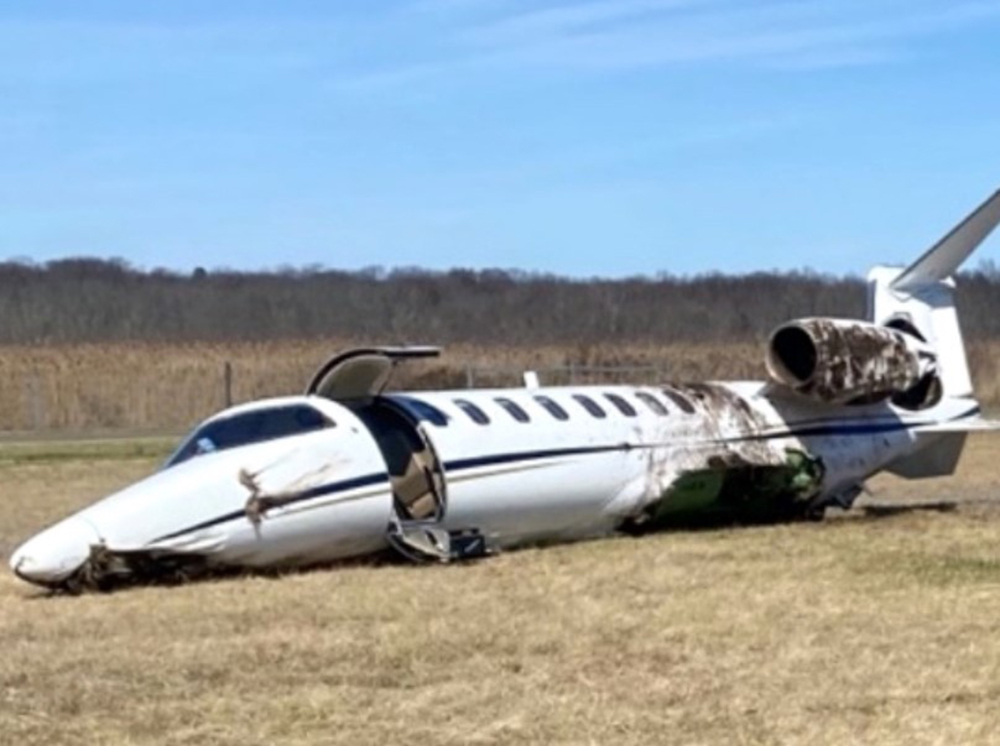
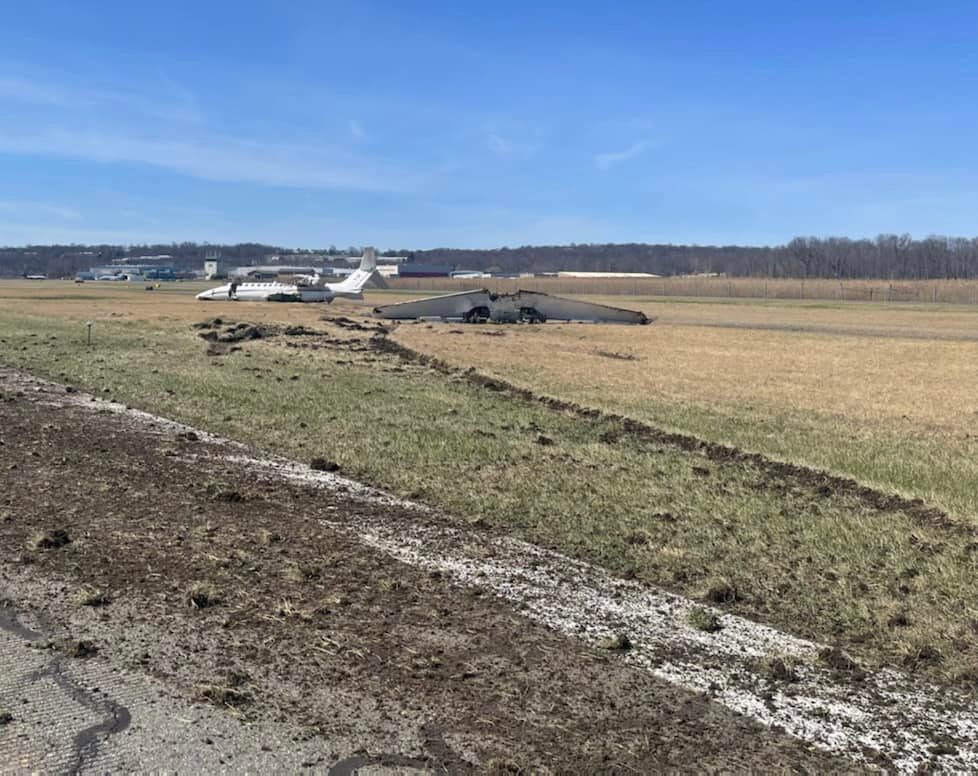
The commercial pilot and private-rated copilot on board the low-wing airplane were performing a visual approach to their home airport at the end of an instrument-flight-rules flight. They were instructed by the approach controller to cross the destination airport over midfield and enter the left downwind leg of the traffic pattern for landing on runway 30L. Meanwhile, the flight instructor and student pilot on board the high-wing airplane were conducting takeoffs and landings in the right traffic pattern for runway 30R and were cleared to conduct a short approach for landing on runway 30R. Upon contacting the airport tower controller, the crew of the low-wing airplane was instructed to proceed to runway 30L, and the copilot acknowledged. The controller subsequently confirmed the landing approach to runway 30L, and the copilot again acknowledged with a correct readback of the landing clearance. Automatic Dependent Surveillance-Broadcast (ADS-B) flight track data indicated that, after crossing over the runway, the low-wing airplane performed a continuous, descending turn through the final approach path for runway 30L and rolled out aligned with the final approach path for runway 30R. The airplanes collided about ¼ nautical mile from the approach end of the runway. Although day visual meteorological conditions prevailed at the airport at the time of the accident, a visibility study determined that it would have been difficult for the pilots of the two airplanes to see and avoid one another given the size of each airplane in the other’s windscreen and the complex backgrounds against which they would have appeared. The pilot of the low-wing airplane would likely have had to move his head position in the cockpit (e.g., by leaning forward) in order to see the approach ends of the runways during most of the turn. If looking in the direction of the runways, he would have been looking away from the direction of the oncoming high-wing airplane, which was also obscured from view by aircraft structure during a portion of the turn, likely including the final seconds before the collision. The visibility study indicated that sun glare was not likely a factor. The high-wing airplane was not equipped with a cockpit display of traffic information (CDTI). The low-wing airplane was equipped with a CDTI, which may have generated a visual and aural traffic alert concerning the high-wing airplane before the collision; however, this may not have provoked concern from the flight crew, since other aircraft are to be expected while operating in the airport traffic pattern environment. The circumstances of this accident underscored the difficulty in seeing airborne traffic (the foundation of the “see and avoid” concept in visual meteorological conditions), even when pilots might be alerted to traffic in the vicinity by equipment such as CDTI. Given the low-wing airplane pilots’ familiarity with the airport, it is unlikely that they misidentified the intended landing runway; however, it is possible that they were unfamiliar with their issued instructions to overfly the airport and join the traffic pattern, as this was a fairly new air traffic control procedure for routing inbound traffic to the airport that had been implemented on a test basis, for a period of about one week, about two months before the accident. Their lack of familiarity with the maneuver may have resulted in a miscalculation that resulted in the airplane rolling out of turn farther to the right of runway 30L than expected. A performance study indicated that, during the turn to final approach, the airplane was between 38 knots (kts) and 21 kts faster than its nominal landing approach speed of 85 kts. This excess speed may have contributed to the pilots’ alignment with runway 30R instead of runway 30L. Analysis of the turn radius required to align the airplane with runway 30L indicated a required roll angle of between 32° and 37° at the speeds flown; at 85 kts. While the wrong runway line up by the low-wing airplane may have been the crew’s misidentification of the runway to which they were cleared to land, it may also have been a miscalculation in performing a maneuver that was relatively new and that they may have never conducted before. Thus, resulting in a fast, short, and tight continuous descending turn to final that rolled them out farther right than expected. The high-wing configuration of the Cessna in a right turn to final, and the low-wing configuration of the Piper in a left turn to final, only exacerbated the conflict by reducing the ability of the pilots to see the other aircraft. The pilot of the low-wing airplane had cardiovascular disease that increased his risk of experiencing an impairing or incapacitating medical event, such as arrhythmia or stroke. Although such an event does not leave reliable autopsy evidence if it occurs just before death, given that the airplane was in controlled flight until the collision, and had two pilots on board, one of whom was communicating with air traffic control, it is unlikely that an incapacitating medical event occurred. The pilot also had advanced hearing impairment, which may have made it more difficult for him to discern speech; however, the circumstances of the accident are not consistent with a pilot comprehension problem; the crew correctly read back the instruction to land on runway 30L. Whether the pilot’s hearing loss impacted his ability to detect cues such as the high-wing airplane’s landing clearance to the parallel runway or a possible CDTI aural alert could not be determined based on the available information. Although both the pilot and copilot’s ages and medical conditions were risk factors for cognitive impairment, there was no specific evidence available to suggest that either of the pilots on board the low-wing airplane had cognitive impairment that contributed to the accident. Autopsy of the flight instructor on board the high-wing airplane identified some dilation of his heart ventricles; while this may have been associated with increased risk of an impairing or incapacitating cardiovascular event, given the circumstances of the accident, it is unlikely that such an event occurred. The instructor also had hydronephrosis of the left kidney, with stones in the left renal pelvis. This may have been asymptomatic (kidney stone pain typically is associated with passage of a stone through the ureter, not with stones in the renal pelvis). The instructor’s vitreous creatinine and potassium elevation cannot be clearly attributed to hydronephrosis of a single kidney. Additionally, the instructor was producing urine and had no elevation of vitreous urea nitrogen. The vitreous chemistry results should be interpreted cautiously given the extent of thermal injury. The instructor’s heart and kidney issues are unlikely to have affected his ability to see and avoid the other airplane. The student pilot on board the high-wing airplane also had heart disease identified at autopsy, including moderate coronary artery disease and an enlarged heart with dilated ventricles. While his heart disease was associated with increased risk of an impairing or incapacitating cardiovascular event, given the circumstances of the accident, it is unlikely that such an event occurred. The student pilot’s vitreous chemistry test indicated hyponatremic dehydration; however, it is unlikely that dehydration contributed to the accident. The controller did not issue traffic advisory information to either of the airplanes involved in the collision at any time during their respective approaches for landing, even though the lowing airplane crossed about 500 ft over the high-wing airplane as it descended over the airport toward the downwind leg of the traffic pattern. His reasoning for not providing advisories to the airplanes as they entered opposing base legs was that he expected the high-wing airplane to be over the runway numbers before the low-wing airplane would be able to visually acquire it; however, this was a flawed expectation that did not account for the differences in airplane performance characteristics. After clearing both airplanes for landing, he communicated with two uninvolved aircraft and did not monitor the progress of the accident airplanes to the two closely-spaced parallel runways. This showed poor judgement, particularly given that in the months before the accident, there had been a series of events at the airport in which pilots had mistakenly aligned with, landed on, or taken off from an incorrect runway. Interviews with personnel at the air traffic control tower indicated that staffing was deficient, and most staff were required to work mandatory overtime shifts, reaching an annual average of 400 to 500 hours of overtime per controller. According to the air traffic manager (ATM), the inadequate staffing had resulted in reduced training discissions, and the management team was unable to appropriately monitor employee performance. The ATM stated that everyone on the team was exhausted, and that work/life balance was non-existent. It is likely that the cumulative effects of continued deficient staffing, excessive overtime, reduced training, and inadequate recovery time between shifts took a considerable toll on the control tower workforce.
Probable cause:
The low-wing airplane pilot’s failure to ensure that the airplane was aligned with the correct runway, which resulted in a collision with the high-wing airplane on final approach. Contributing to the accident was the controller’s failure to provide timely and adequate traffic information to either airplane and his failure to recognize the developing conflict and to act in a timely manner. Also contributing was the Federal Aviation Administration’s insufficient staffing of the facility, which required excessive overtime that did not allow for proper controller training or adequate recovery time between shifts.
Final Report:
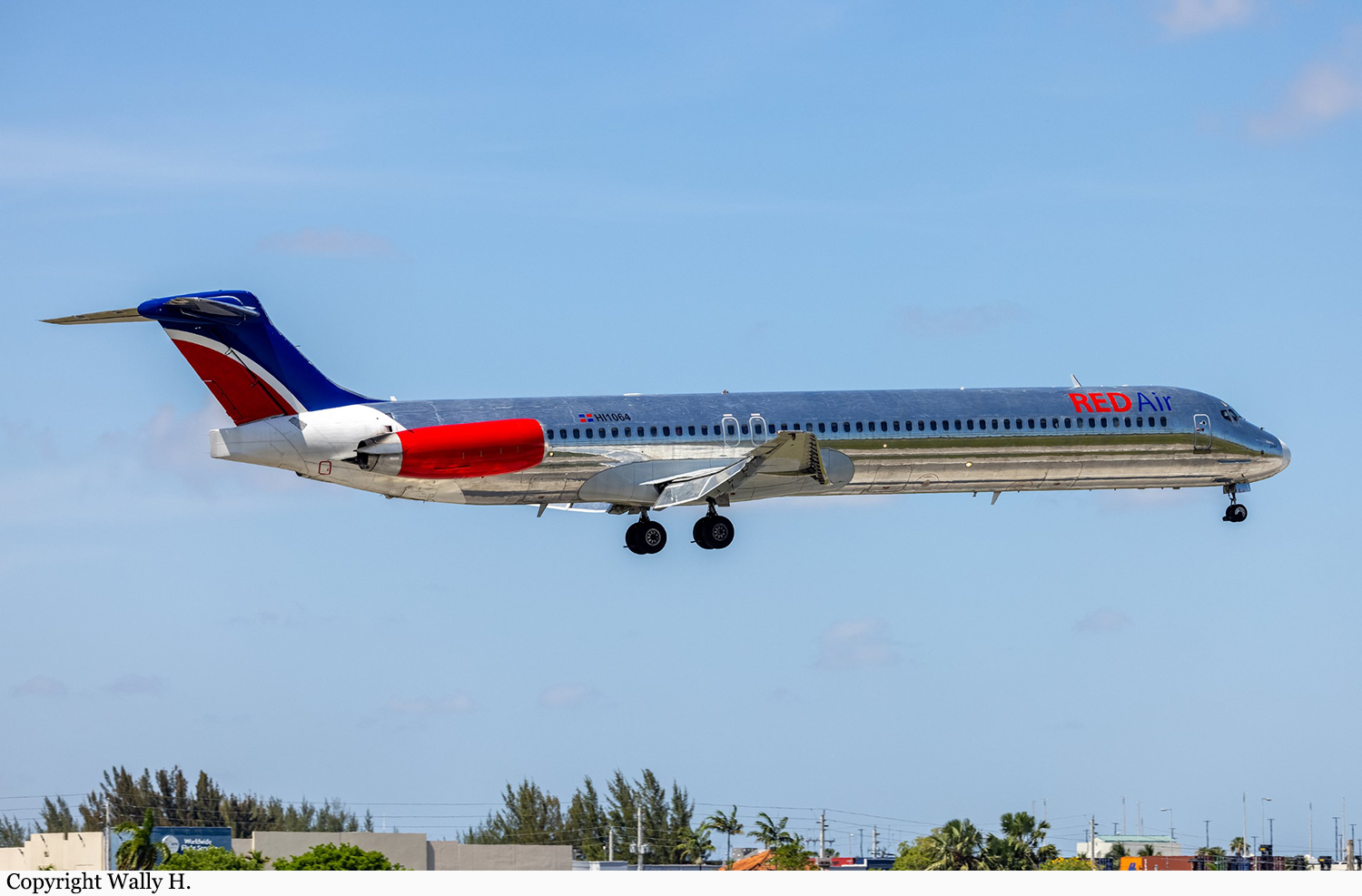
Crash of a McDonnell Douglas MD-82 in Miami

Date & Time: Jun 21, 2022 at 1738 LT
Type of aircraft:
Operator:
Registration:
HI1064
Survivors:
Yes
Schedule:
Santo Domingo - Miami
MSN:
53027/1805
YOM:
1990
Flight number:
L5203
Crew on board:
10
Crew fatalities:
Pax on board:
130
Pax fatalities:
Other fatalities:
Total fatalities:
0
Captain / Total flying hours:
14388
Captain / Total hours on type:
1400.00
Copilot / Total flying hours:
822
Copilot / Total hours on type:
269
Aircraft flight hours:
69838
Aircraft flight cycles:
36990
Circumstances:
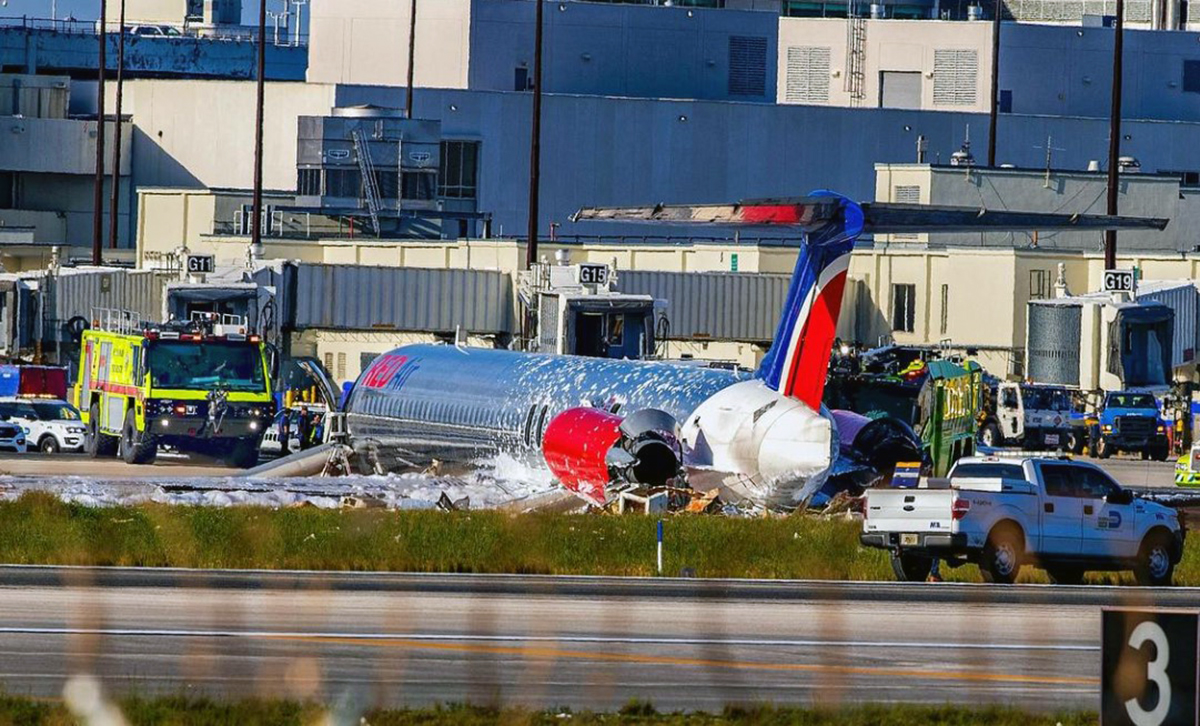
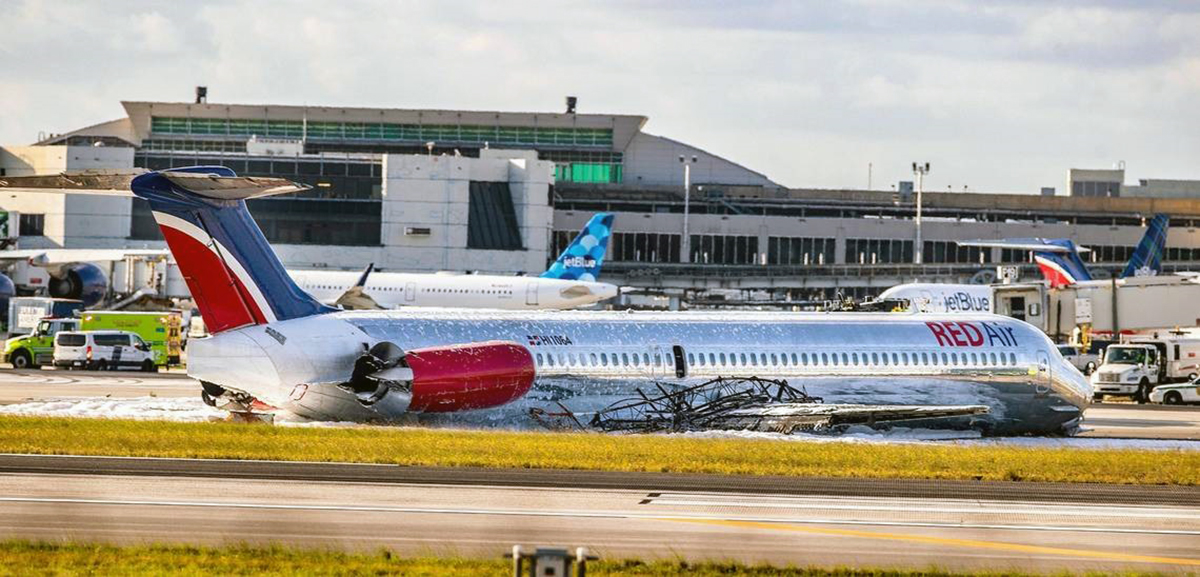
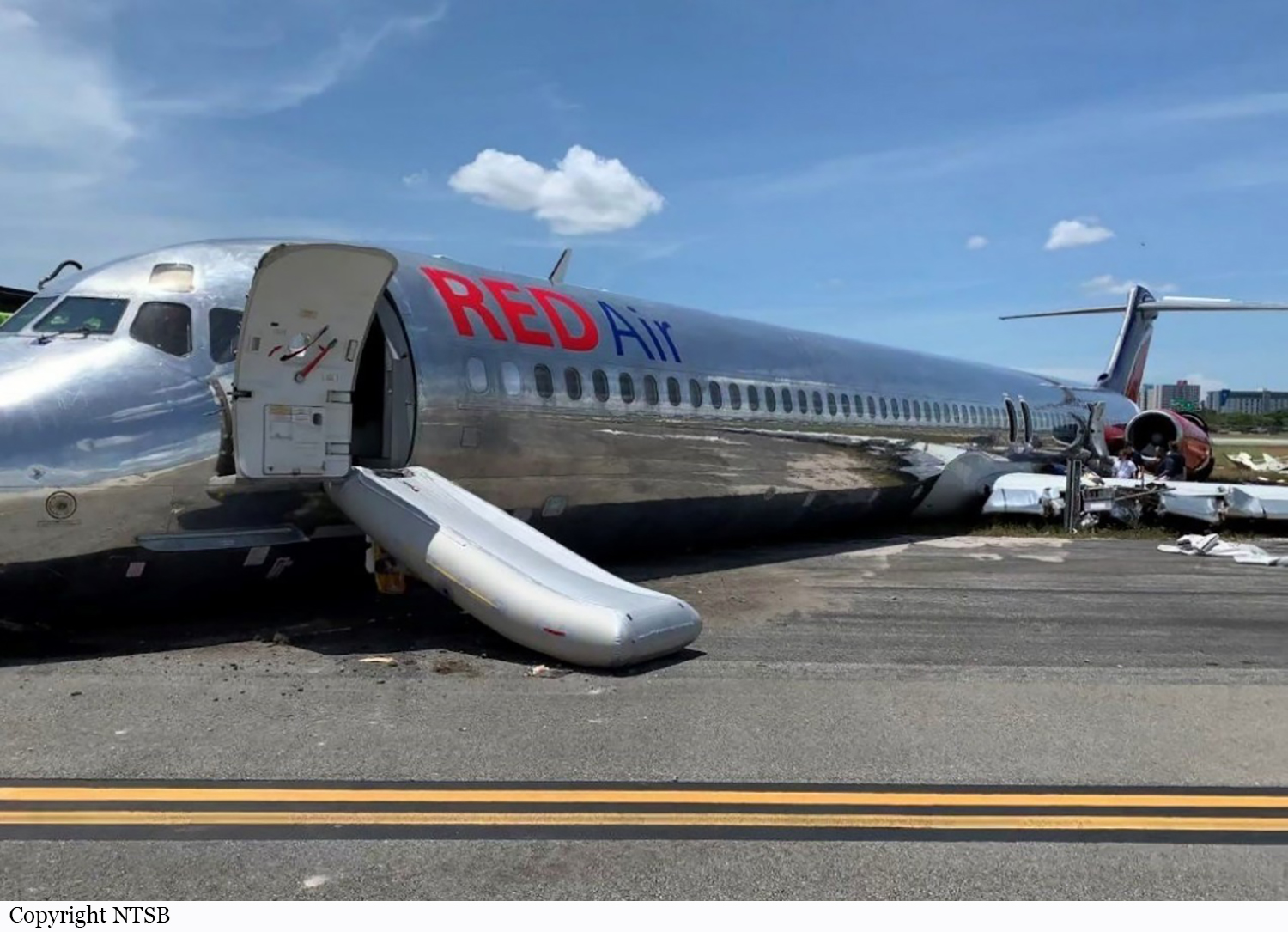
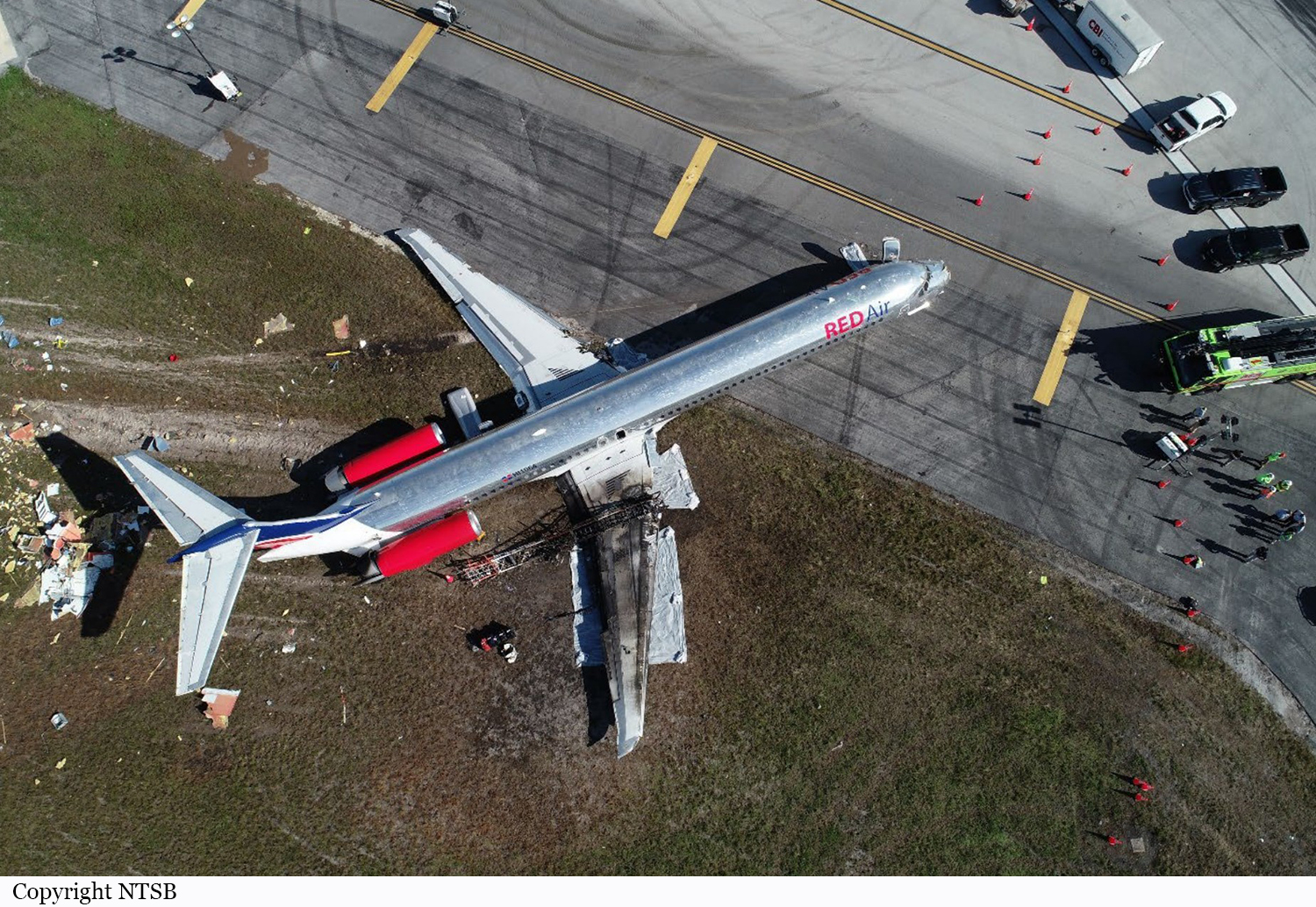
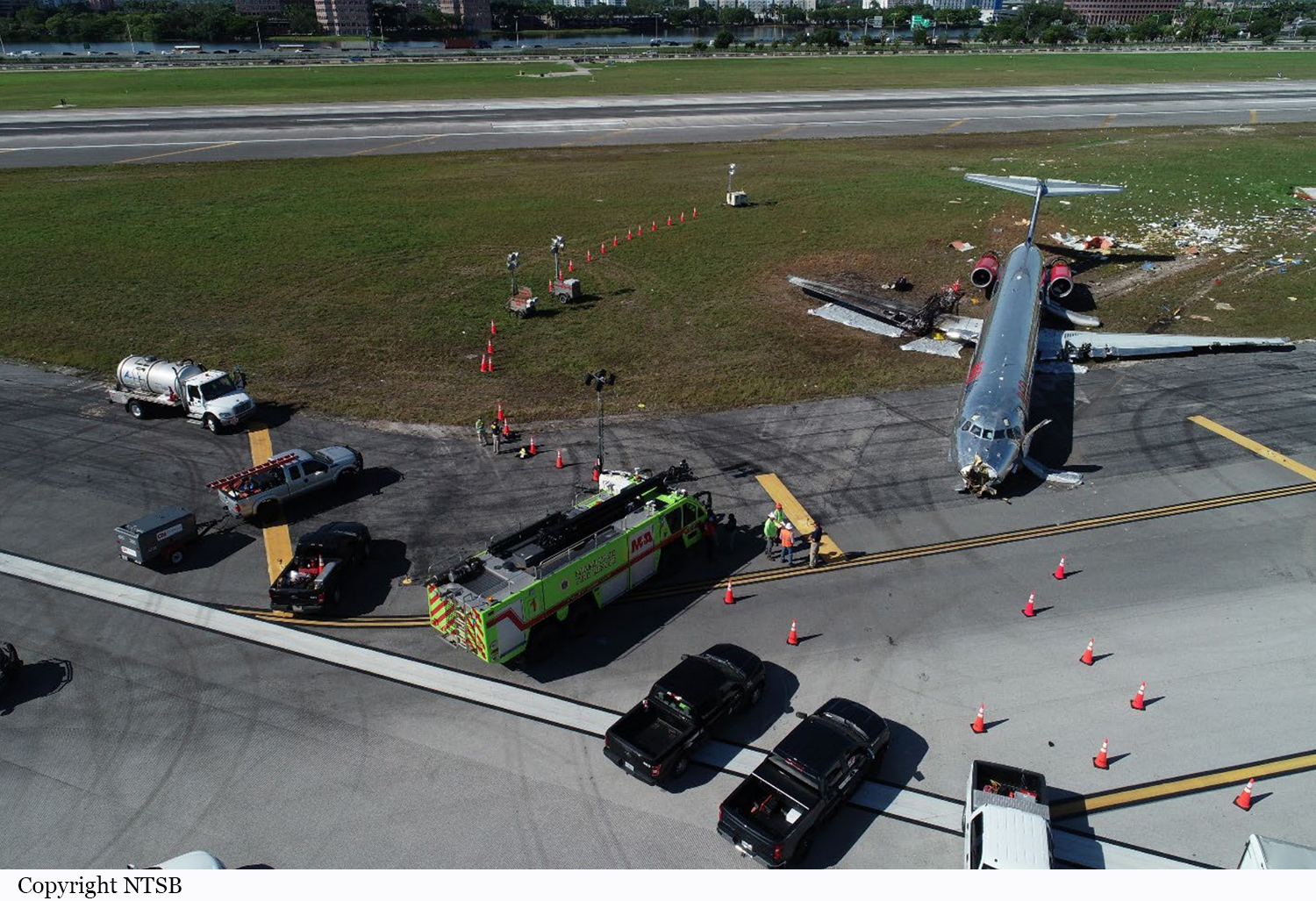
Following an uneventful flight from Santo Domingo-Las Américas Airport, the crew was cleared to land on runway 09 at Miami-Intl Airport. The first officer recalled that the airplane touched down smoothly on the right and then the left main landing gear and that the airplane was slightly to the right of the centerline, which he corrected after touching down. Shortly afterward, the flight crew felt a vibration on the left side of the airplane. The vibration increased, and the airplane veered to the left despite the crew’s efforts to maintain the airplane on the runway centerline. The airplane subsequently departed the paved runway surface and impacted the glideslope equipment building for runway 30, which was located to the left of runway 09, causing the nose landing gear and the right main landing gear to collapse. A post crash fire began on the right wing after the fuel tank on that wing was breached, after which the airplane came to a stop. Nevertheless, fire was quickly extinguished and all 140 occupants evacuated safely, among them four passengers were taken to Jackson Hospital.
Probable cause:
The collapse of the left main landing gear during the landing roll resulted in a runway excursion due to a loss of controllability on the runway, during which the aircraft impacted a small equipment building, breaching the right-wing fuel tank and causing a post-crash fire. The performance of the crew was thoroughly evaluated during this investigation and found to be appropriate for the circumstances of the accident.
The focus of this analysis is the cause of the left main landing gear collapse. Particularly
(1) the left shimmy damper’s failure to adequately dampen vibration during landing and
(2) the failure of the left main gear downlock mechanism due to excessive vibration.
The structural failure of the left main landing gear downlock following ineffective shimmy dampening during the landing roll which caused the collapse of the left main landing gear, resulting in a runway excursion and post-flight fire.
Final Report:

Crash of a Cessna 208B Grand Caravan in Oceanside: 1 killed

Date & Time: Jun 3, 2022 at 1347 LT
Type of aircraft:
Operator:
Registration:
N7581F
Survivors:
Yes
Schedule:
Oceanside - Oceanside
MSN:
208B-0389
YOM:
1994
Crew on board:
2
Crew fatalities:
Pax on board:
0
Pax fatalities:
Other fatalities:
Total fatalities:
1
Captain / Total flying hours:
6880
Captain / Total hours on type:
161.00
Copilot / Total flying hours:
805
Copilot / Total hours on type:
25
Aircraft flight hours:
13379
Circumstances:
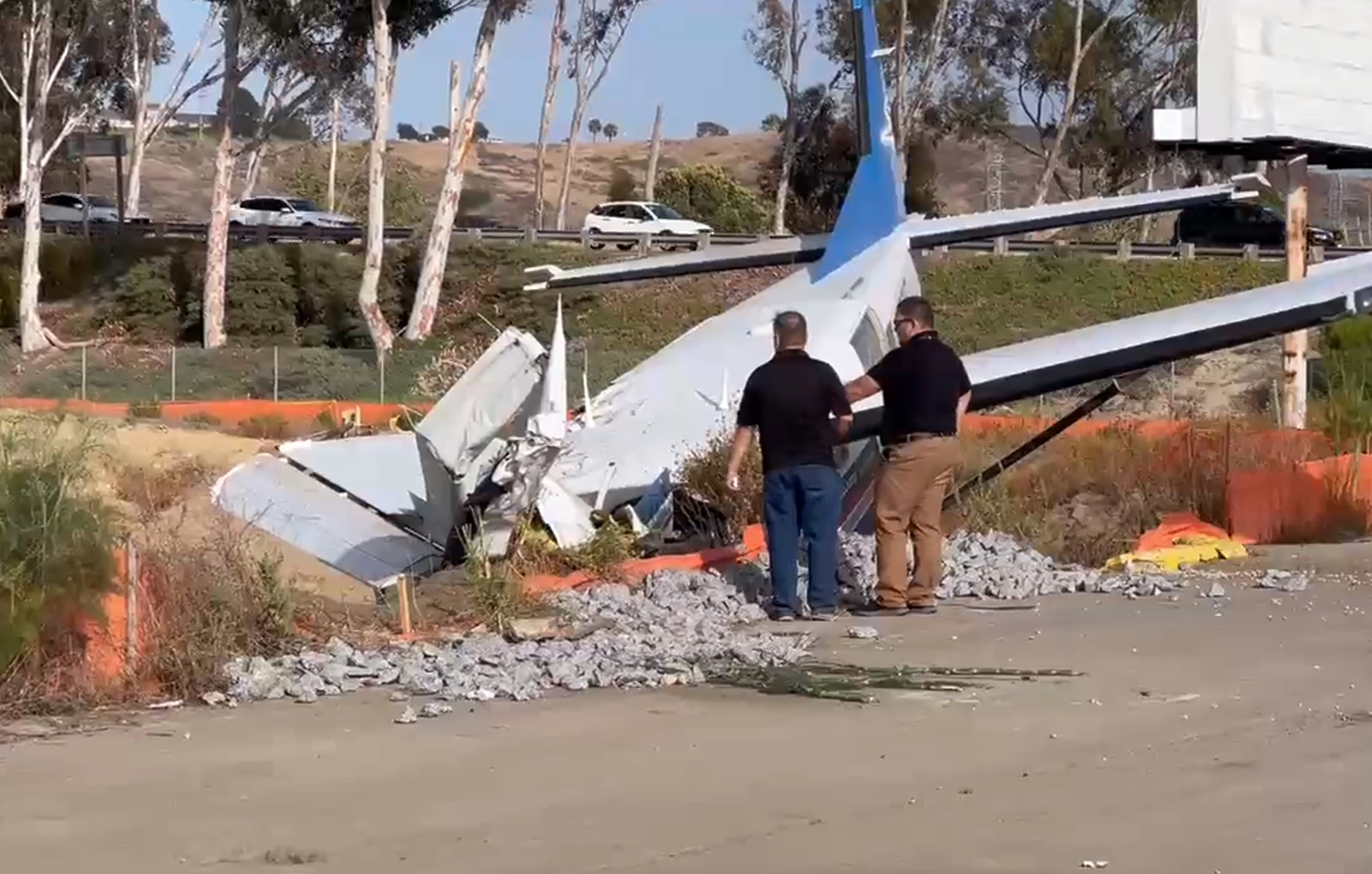
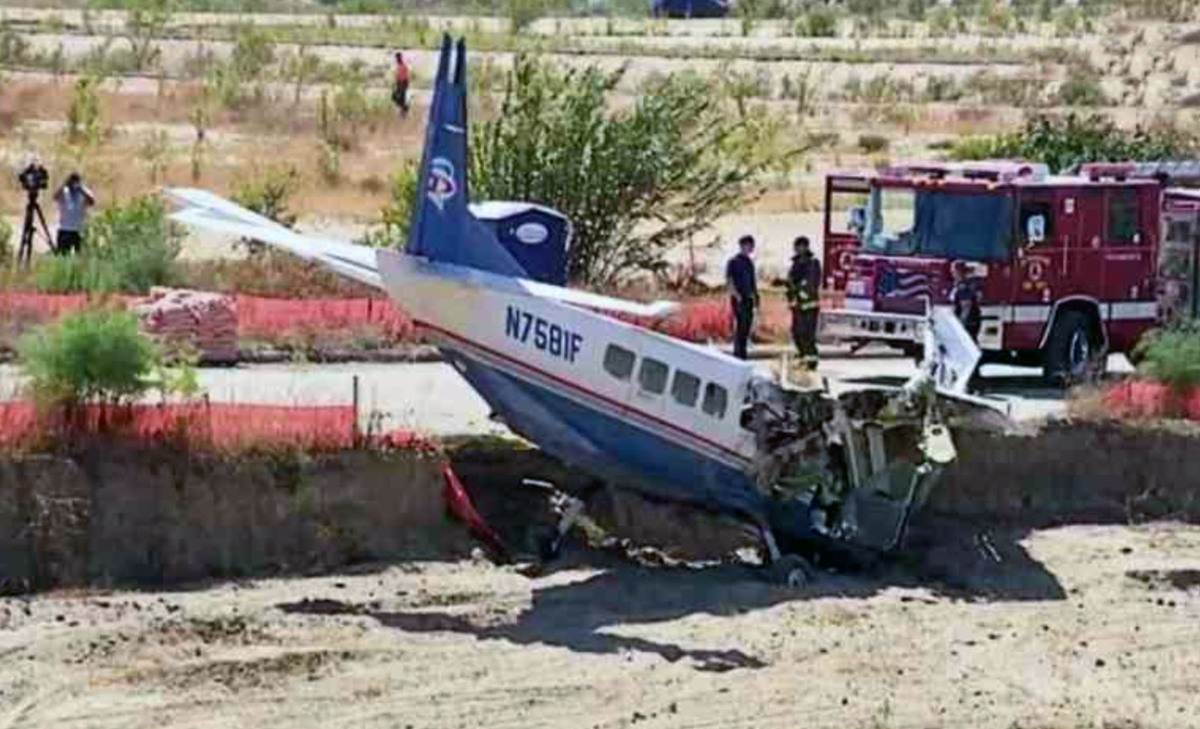
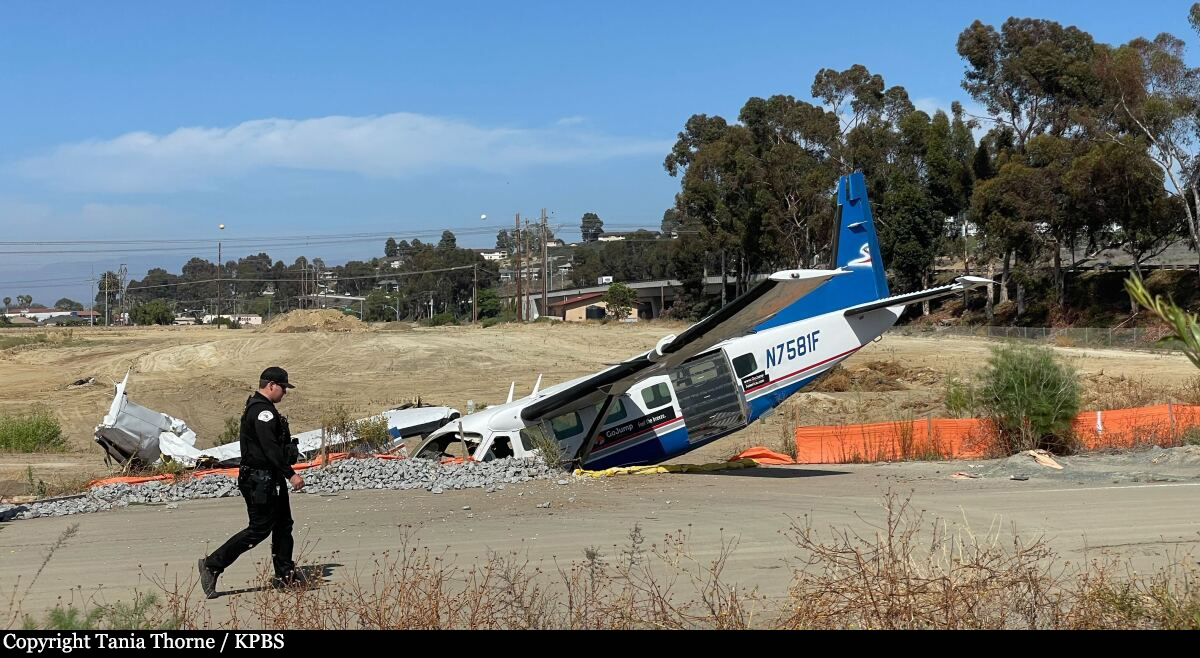
The pilots were performing skydiving flights while the right-seated pilot was training the left-seated pilot on the operation. The pilots completed six flights without incident and completed the drop of the skydivers on the accident flight normally. The right-seated pilot could not completely recollect the minutes leading up to the accident due to his injuries. He did recall that airplane was descending as expected with the power at idle. The recorded ADS-B data revealed that after turning onto final approach, the airplane then completed a right 360° turn presumably because the altitude was too high. The right-seated pilot attempted to increase the power by slightly nudging the throttle forward and thought the engine power did not increase as expected. A performance study revealed that in the last 70 seconds of recorded data, the airplane underwent a series of speed and thrust oscillations consistent with a pilot increasing and then decreasing the power lever. The right seat pilot recalls aiming for an open dirt field and observing a berm in the immediate flight path. In an effort to avoid the berm, he maneuvered the airplane into a right turn. The airplane landed short of the runway, resulting in a collision with the berm. The engine was producing power at the time of impact. Postaccident examination of the airplane revealed no evidence of mechanical malfunctions or failures that would have precluded normal operation. The right-seated pilot was in the process of training the left-seated pilot and stated that he took over the controls during the final approach. It is unknown when he took over the controls, so it is unknown which pilot was at the controls during the speed oscillations. The right-seated pilot likely took over the controls too late and the airplane impacted the terrain. The left-seated pilot’s ability to hear the changes in engine power might have been hindered because she was listening to music through her headset at an elevated decibel level. The airplane was modified by a Supplemental Type Certificate that replaces the original Pratt & Whitney PT-6 turbine engine with a Honeywell TPE331 turbine engine. The TPE331 engine’s characteristics are such that if the airplane is on final approach with the power near idle, the throttle sensitivity (change in thrust per unit of power lever movement) increases around the transition between the propellergoverning and underspeed-governing modes of the engine, which corresponds to a zero-thrust condition. Near this transition point, small movements of the power lever (about ¼ to ½ inch of deflection) can result in relatively large thrust changes that can surprise pilots inexperienced with this behavior and result in pilot-induced oscillations (PIO). Given the thrust oscillations observed shortly before the end of the ADS-B data, it is likely that the left-seated pilot was at the controls and experienced such a PIO on a short final approach to land.
Probable cause:
The right-seated pilot’s failure to correct the left-seated pilot’s mismanagement of the engine thrust, which resulted in undesired speed and thrust oscillations during the final approach and a subsequent descent into terrain.
Final Report:

Crash of a De Havilland DHC-3 Otter in Dry Bay

Date & Time: May 24, 2022 at 1510 LT
Type of aircraft:
Operator:
Registration:
N703TH
Survivors:
Yes
Schedule:
Yakutat – Dry Bay
MSN:
456
YOM:
1965
Location:
Crew on board:
1
Crew fatalities:
Pax on board:
3
Pax fatalities:
Other fatalities:
Total fatalities:
0
Captain / Total flying hours:
24000
Captain / Total hours on type:
6100.00
Circumstances:
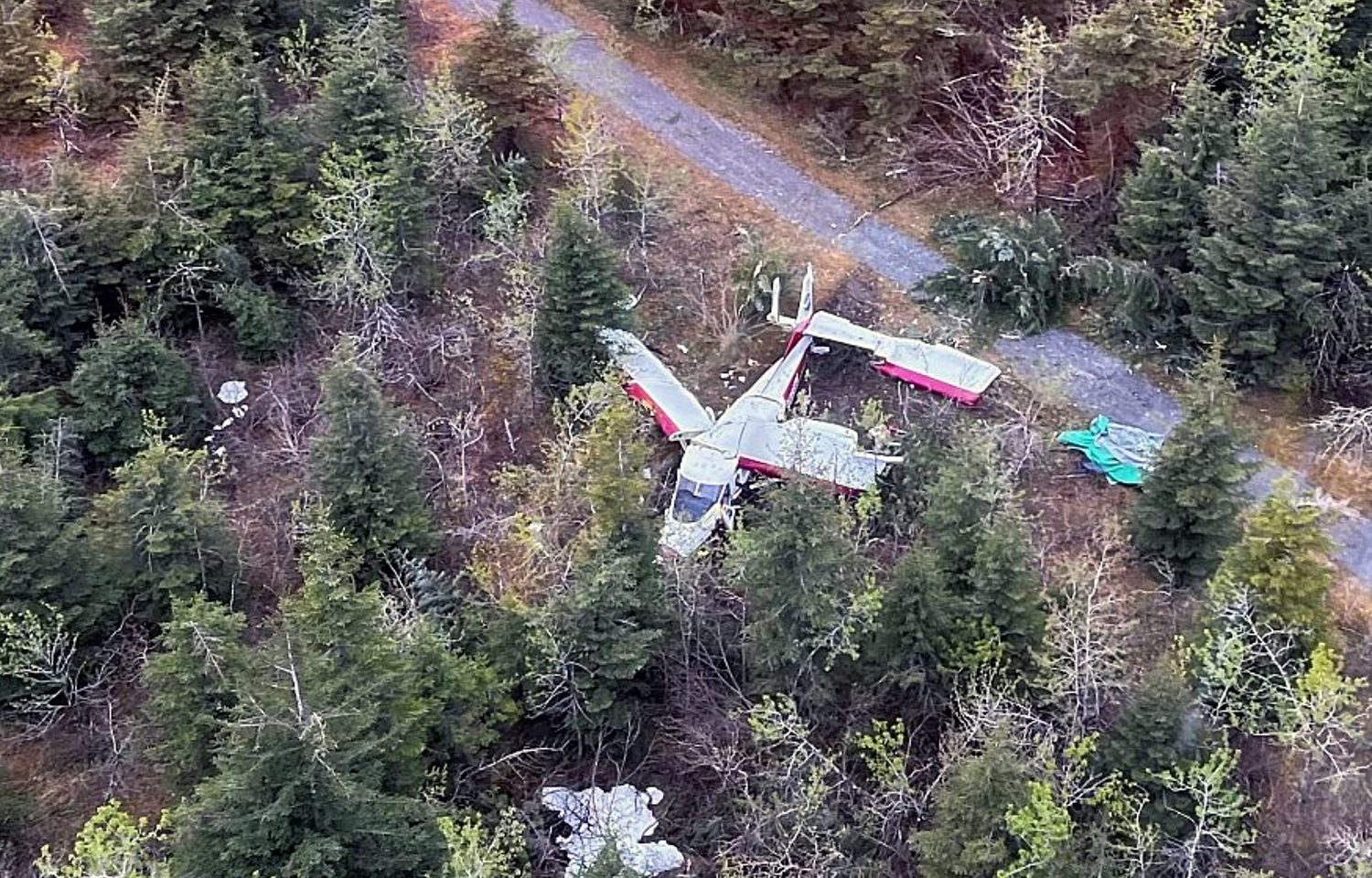
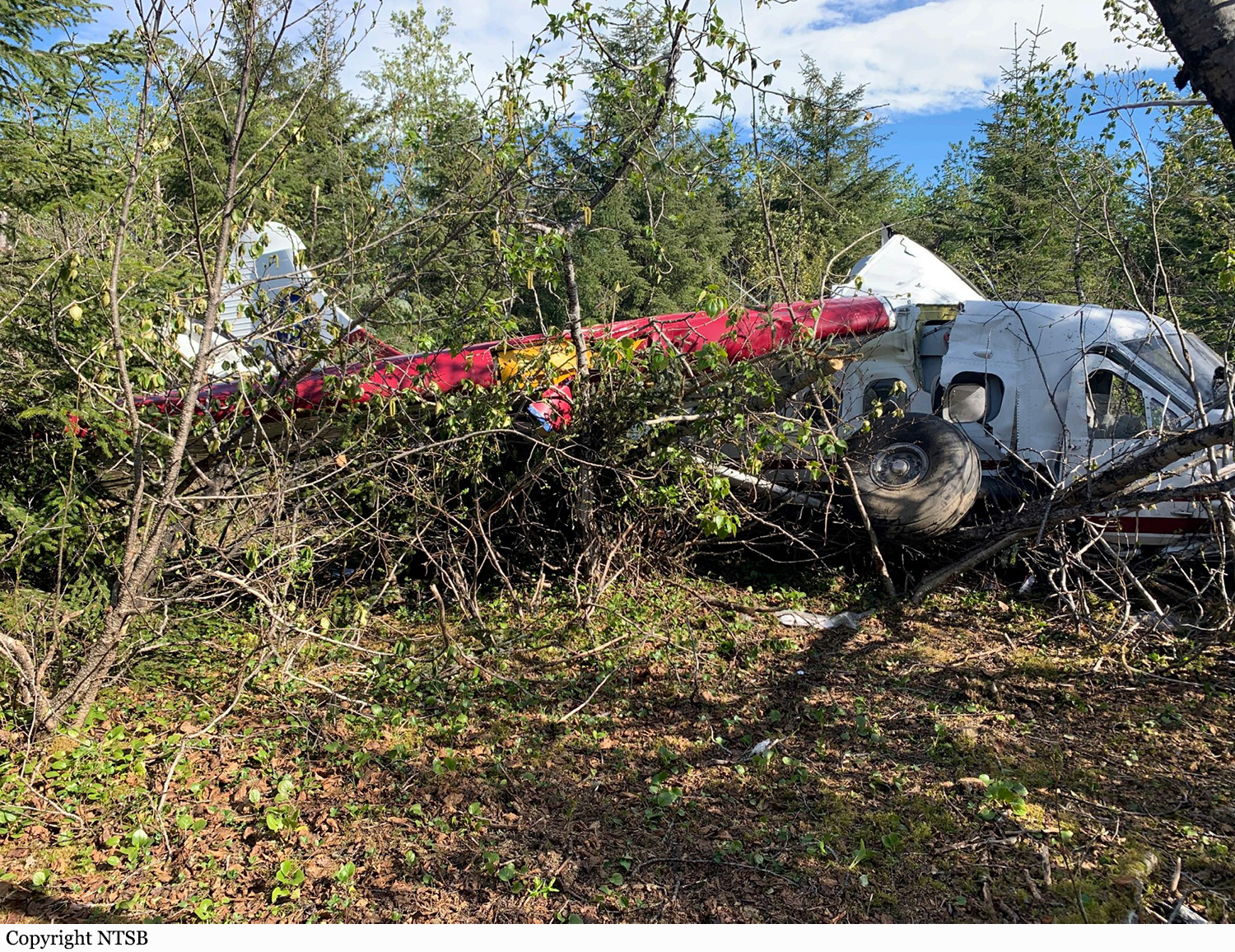
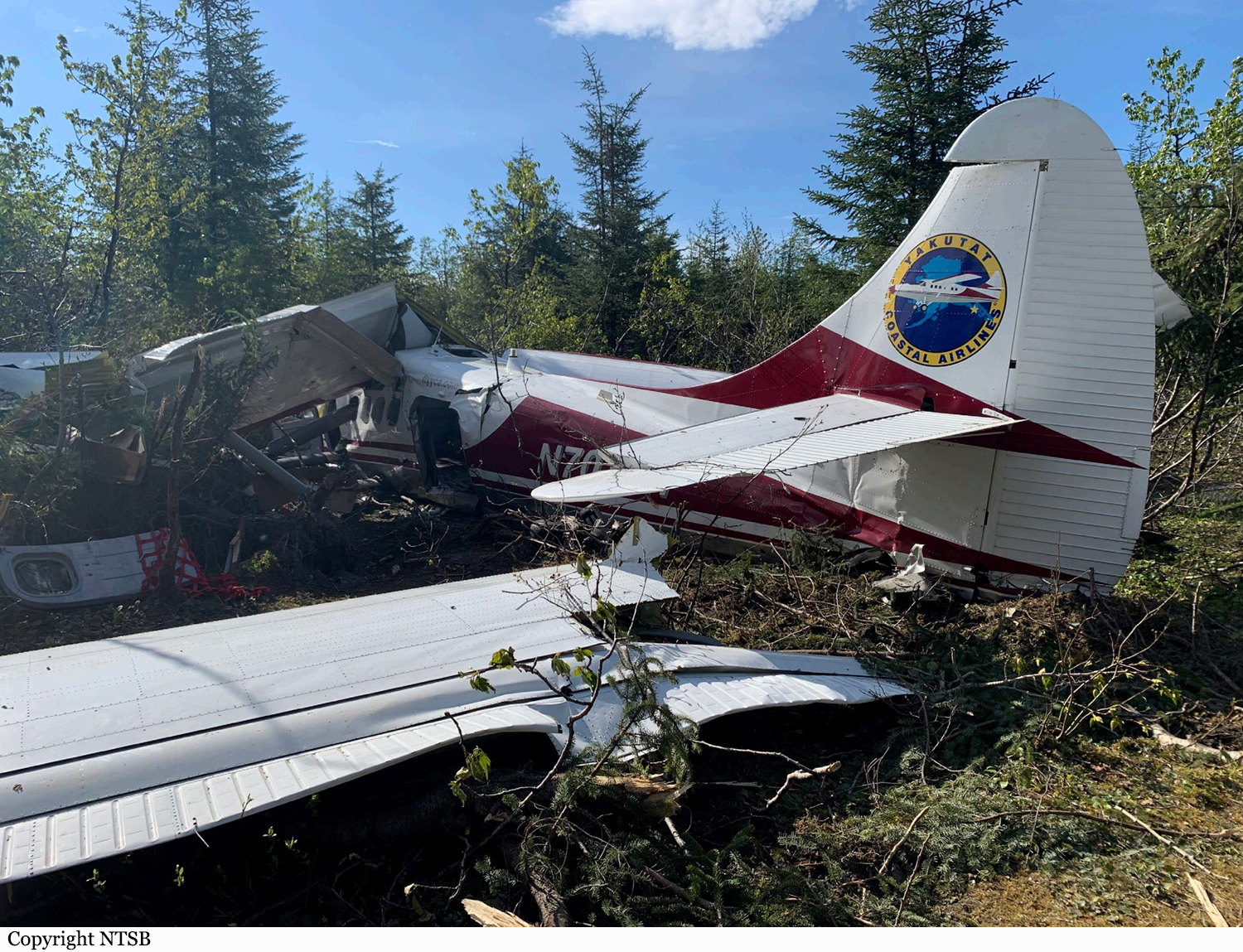
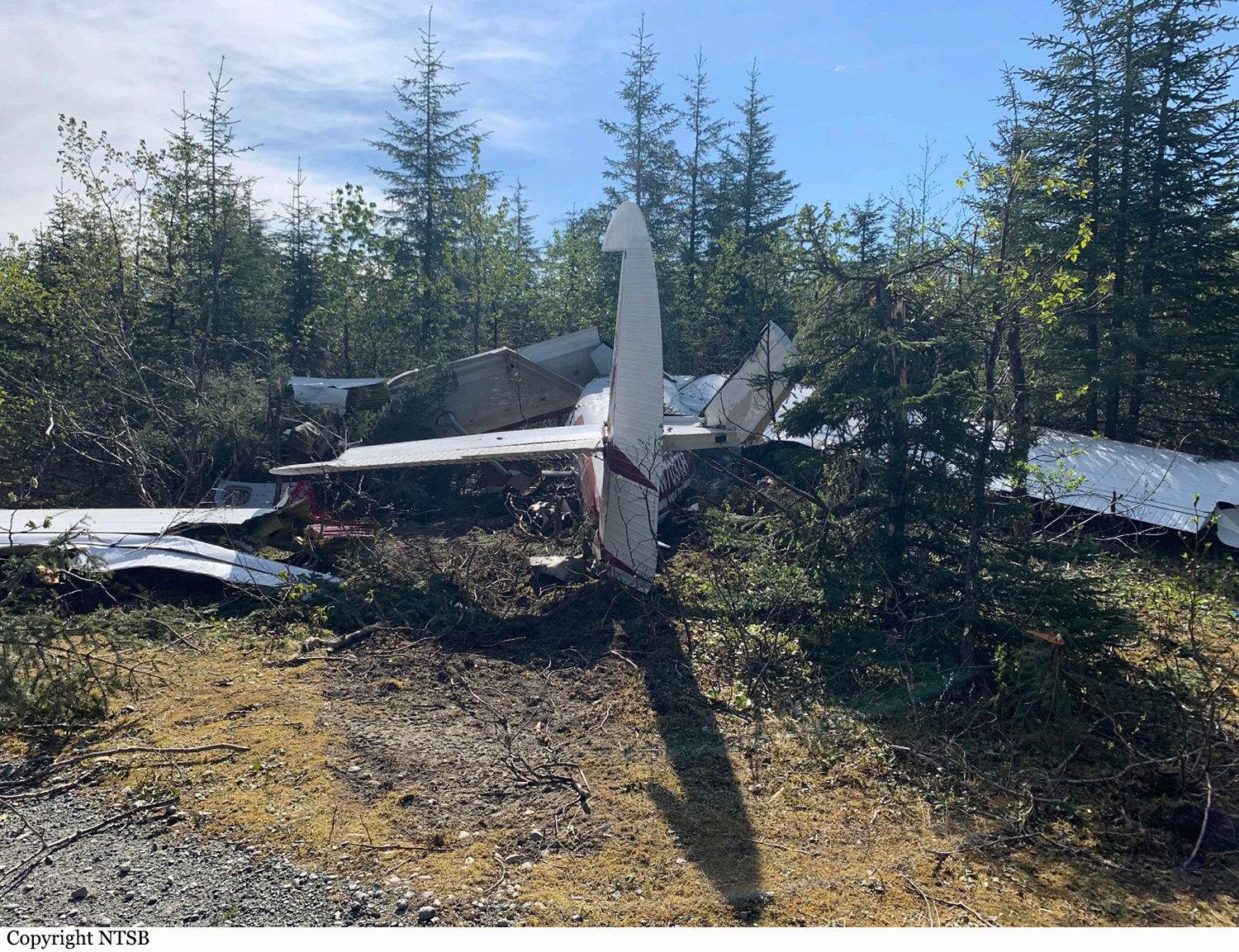
The purpose of the flight was to transport three passengers and cargo. The pilot reported that, during takeoff, the airplane’s tail came up slightly lowered to the runway when he attempted to raise the tail by applying forward elevator. He stated that he thought this was unusual and attributed it to an aft-loaded airplane. He applied additional nose-down trim and departed without incident. While en route, the tail of the airplane seemed to move up and down, which the pilot attributed to turbulence. Upon arrival at his destination, the pilot entered a left downwind, reduced the power and extended the flaps to 10° abeam the end of the runway. He turned onto the base leg about ½ mile from the approach end of the runway and slowed the airplane to 80 mph. Turning final, he noticed the airplane seemed to pitch up, so he applied full nose-down pitch trim and extended the flaps an additional 10°. On short final he applied full flaps, and the airplane abruptly pitched up to about a 45° angle. He stated that he applied full nose-down elevator, verified the pitch trim, and reduced the power to idle. When the airplane was about 300 ft above ground level, the airplane stalled, the left wing dropped slightly, and the airplane entered about a 45° nose-down dive. After allowing the airplane to gain airspeed, the pilot applied full back elevator. The airplane impacted forested terrain near the approach end of runway 23 at an elevation of about 18 ft. A postaccident examination of the airframe and engine revealed no evidence of preaccident mechanical malfunctions or failures that would have precluded normal operation. Elevator and rudder control continuity was confirmed from the cockpit to the respective control surfaces. The airplane's estimated gross weight at the time of the accident was about 7,796 lbs and the airplane's estimated center of gravity was about 3.2 to 5.6 inches beyond the approved aft limit. Maximum gross weight for the airplane is 8,000 lbs.
Probable cause:
The pilot’s failure to determine the actual weight and balance of the airplane before departure, which resulted in the airplane being operated outside of the aft center of gravity limits and the subsequent aerodynamic stall on final approach. Contributing to the accident was the Federal Aviation Administration's failure to require weight and balance documentation for 14 Code of Federal Regulations Part 135 single-engine operations.
Final Report:

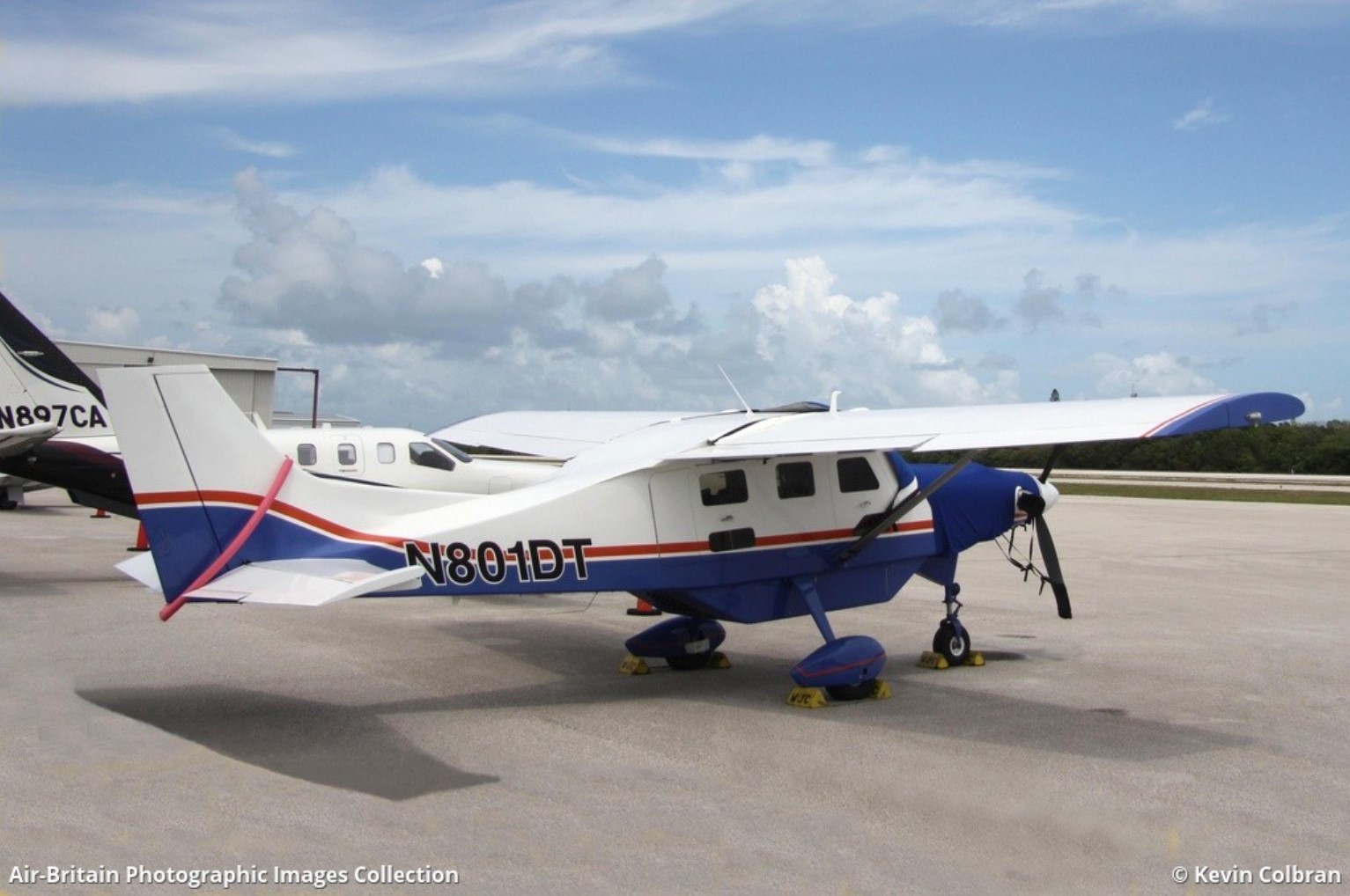
Crash of a Comp Air CA-8 in Grasmere: 2 killed

Date & Time: May 8, 2022 at 1419 LT
Type of aircraft:
Registration:
N801DT
Flight Phase:
Flight Type:
Survivors:
No
Schedule:
Boulder City – Boise
MSN:
027078SS52T03
YOM:
2007
Location:
Crew on board:
1
Crew fatalities:
Pax on board:
1
Pax fatalities:
Other fatalities:
Total fatalities:
2
Captain / Total flying hours:
1350
Aircraft flight hours:
685
Circumstances:
The pilot and passenger departed on a cross-country flight. Automatic dependent surveillance – broadcast (ADS-B) data indicated that the airplane flew at a cruise altitude between 11,000 ft and 13,000 ft mean sea level (msl) on a north to northeast heading consistent with its planned destination for most of the flight. About 30 minutes before the end of the flight, the airplane began a descent and then turned east. Shortly thereafter, the pilot of the airplane declared minimum fuel with air traffic control (ATC). A few minutes later the pilot declared critical fuel due to a fuel leak. The pilot stated in his last communication that he would attempt to make a nearby airport. Subsequently, the airplane impacted hilly, desert terrain at an elevation of about 5,780 ft and on a heading of about 034°. An acquaintance of the pilot who was a flight instructor stated that, on the two previous flights he had flown with the pilot, the left wing of the airplane felt heavy. The accident pilot thought it was because of a fuel imbalance. The postaccident examination revealed that the left tank fuel valve was positioned ON and the right tank valve was positioned OFF, consistent with the pilot balancing the fuel by feeding from the left-wing fuel tank. It is possible that when the pilot noticed the minimum fuel status, he failed to recall that he had previously selected the rightside fuel tank OFF, and thus did not have this fuel available. Given that the cruise altitudes on the accident flight were similar to what the previous owner used to make his fuel range and duration estimates, even with about a 20% reduction in fuel due to the pilot allowing 2 inches from the top of the fuel tanks during refueling, the airplane should have had adequate fuel to make its destination. A strong smell of fuel and fuel staining were also observed at the accident site. Page 2 of 11 WPR22FA173 A review of radar imagery from Boise, Idaho, revealed that the airplane flew through several areas of light to moderate intensity echoes as it proceeded northward, and then after turning eastward, the airplane’s fight track was through an area of moderate to heavy intensity echoes. The accident site was located on the southeast edge of the echo. Light-to-moderate icing conditions in the clouds with clear to mixed type icing below 12,000 ft msl were expected. Thus, it is likely that the airplane, which was not certified for flight in icing, encountered icing in the final portion of the flight. The pilot was flying with insulin-dependent diabetes, having type 1 diabetes mellitus. Given the urine glucose level of 29mg/dL, no detectable glucose in vitreous fluid, and ongoing verbal communication, it is unlikely that the pilot was experiencing significant metabolic disturbance from high blood glucose. Whether he was experiencing less severe effects of high blood sugar could not be determined. Whether he had symptoms of low blood glucose, such as diminished concentration or increased nervousness, is unknown. The pilot’s use of diphenhydramine (Benadryl), which can cause sleepiness, was likely not a factor due to fact that it was detected only in the urine and not in the blood. Thus, it is unlikely that effects of the pilot’s diphenhydramine use contributed to the accident. Accident site signatures and a review of the weather were consistent with a loss of control of the airplane. In addition, an examination of the airframe and engine revealed no evidence of any preimpact mechanical failures or malfunctions that would have precluded normal operation. It is likely that, while maneuvering to an alternate airport due to a critical fuel situation, in icing conditions, the pilot failed to maintain the proper airspeed, which resulted in the exceedance of the airplane’s critical angle of attack and the airplane experiencing an aerodynamic stall.
Probable cause:
The pilot’s failure to maintain proper airspeed and his exceedance of the airplane’s critical angle of attack, which resulted in an aerodynamic stall.
Final Report:
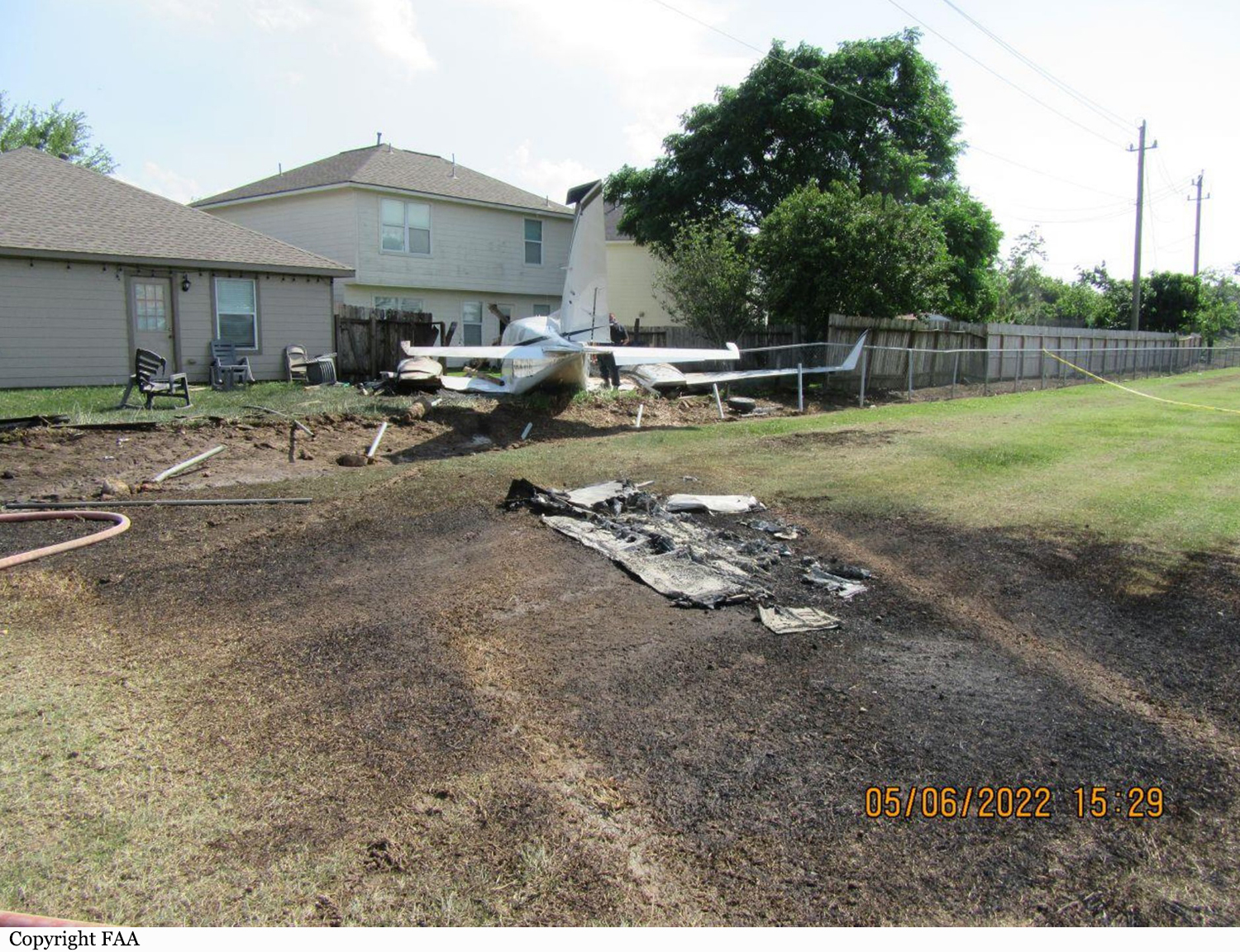
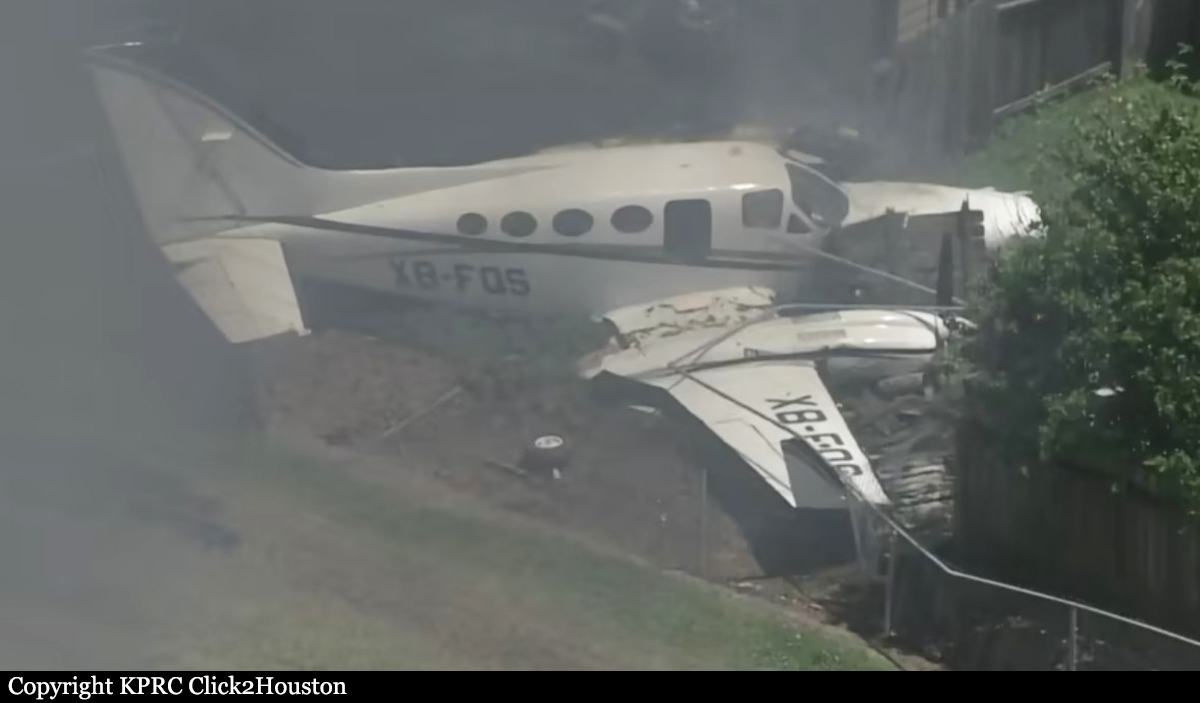
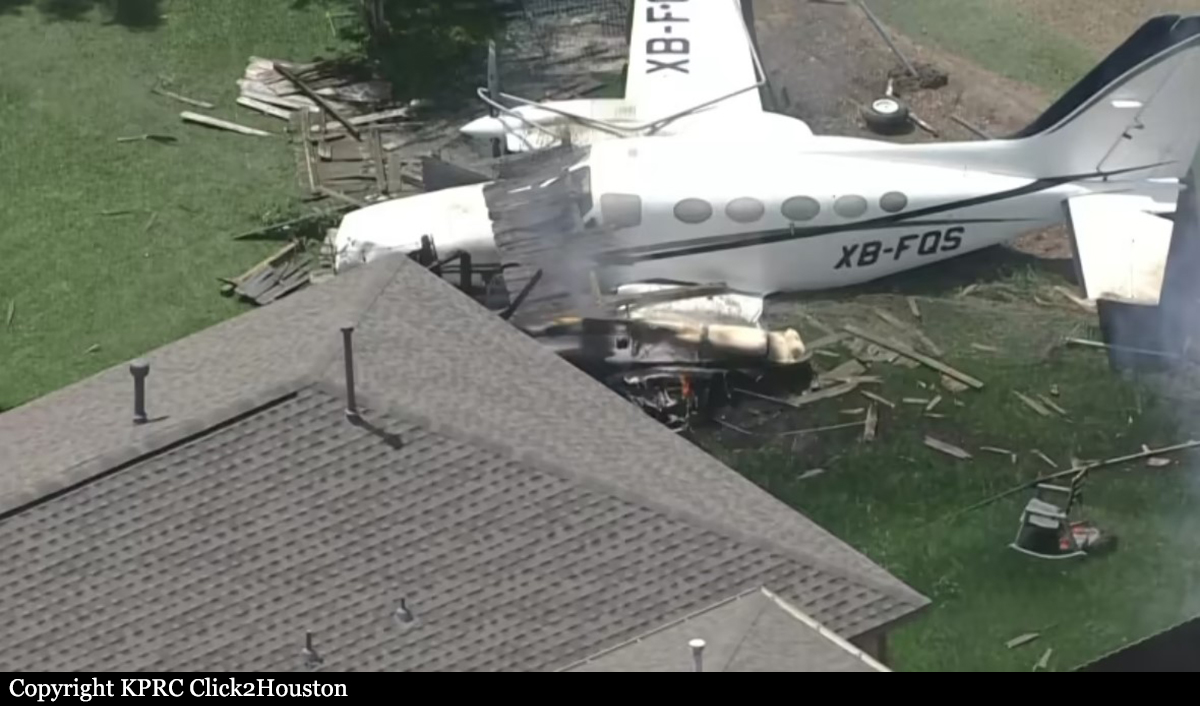
Crash of a Cessna 421C Golden Eagle III in Houston

Date & Time: May 6, 2022 at 1418 LT
Operator:
Registration:
XB-FQS
Flight Phase:
Flight Type:
Survivors:
Yes
Schedule:
Houston – San Antonio
MSN:
421C-0085
YOM:
1976
Crew on board:
1
Crew fatalities:
Pax on board:
3
Pax fatalities:
Other fatalities:
Total fatalities:
0
Captain / Total flying hours:
4025
Captain / Total hours on type:
951.00
Aircraft flight hours:
5197
Circumstances:
The pilot reported that, before the flight, the airplane was fueled with 140 gallons of Jet A fuel. Shortly after takeoff, both engines lost total power. Because the airplane had insufficient altitude to return to the airport, the pilot executed a forced landing to a field and the left wing sustained substantial damage. A postcrash fire ensued. The investigation determined that the airplane was inadvertently fueled with Jet A fuel rather than AVGAS, which was required for the airplane’s reciprocating engines. The line service worker who fueled the airplane reported that there were no decals at the airplane fuel ports; however, postaccident examination of the airplane found that a decal specifying AVGAS was present at the right-wing fuel port. The investigation could not determine whether the same or a similar decal was present at the left-wing fuel port because the left wing was partially consumed during the postimpact fire.
Probable cause:
The fixed-base operator’s incorrect fueling of the airplane, which resulted in a total loss of power in both engines.
Final Report:
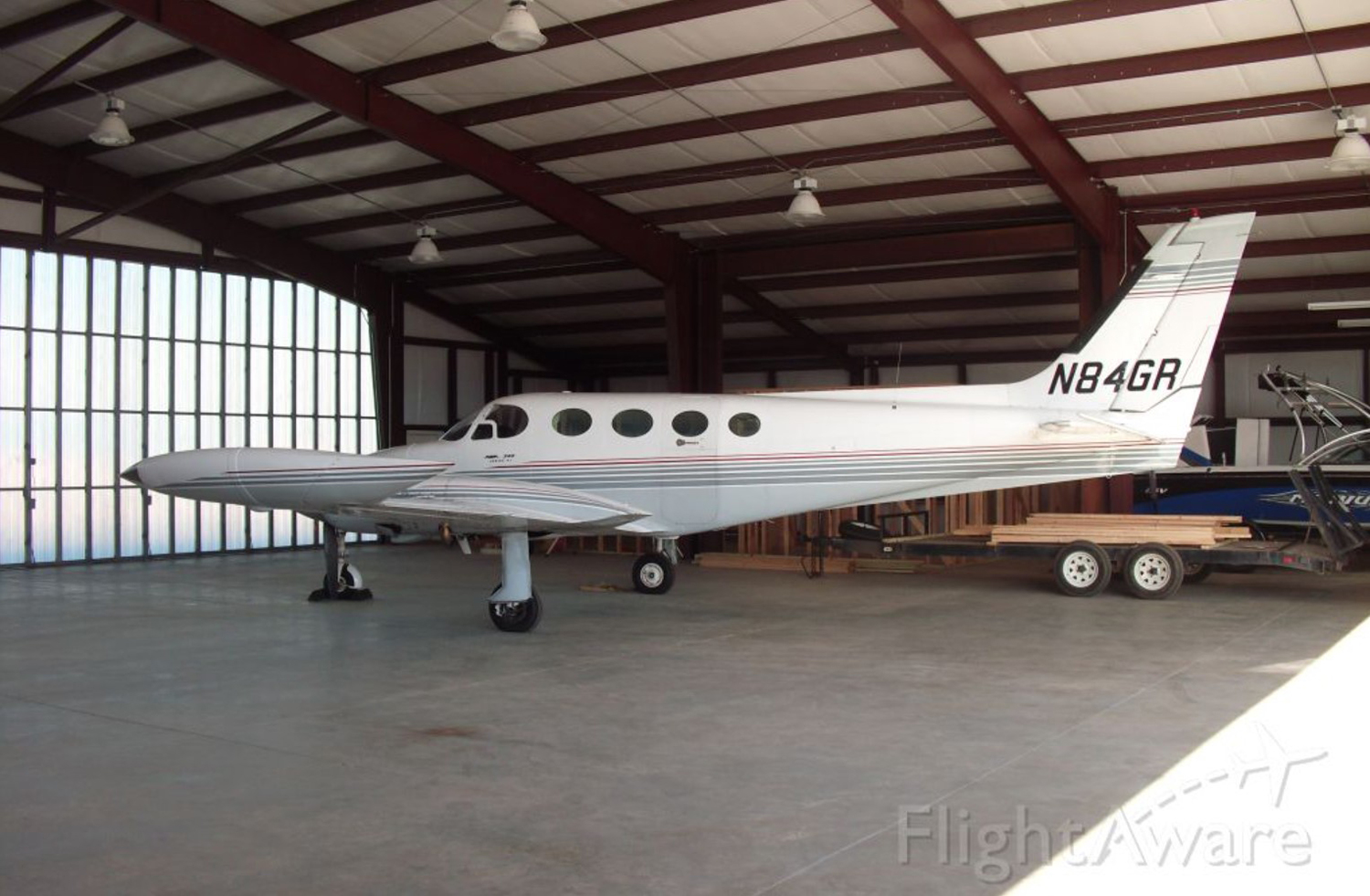
Crash of a Cessna 340 in Covington: 2 killed

Date & Time: Apr 21, 2022 at 1844 LT
Type of aircraft:
Operator:
Registration:
N84GR
Flight Phase:
Flight Type:
Survivors:
No
Site:
Schedule:
Covington - Covington
MSN:
340-0178
YOM:
1973
Crew on board:
2
Crew fatalities:
Pax on board:
0
Pax fatalities:
Other fatalities:
Total fatalities:
2
Captain / Total flying hours:
0
Captain / Total hours on type:
0.00
Copilot / Total flying hours:
3148
Copilot / Total hours on type:
0
Aircraft flight hours:
7581
Circumstances:
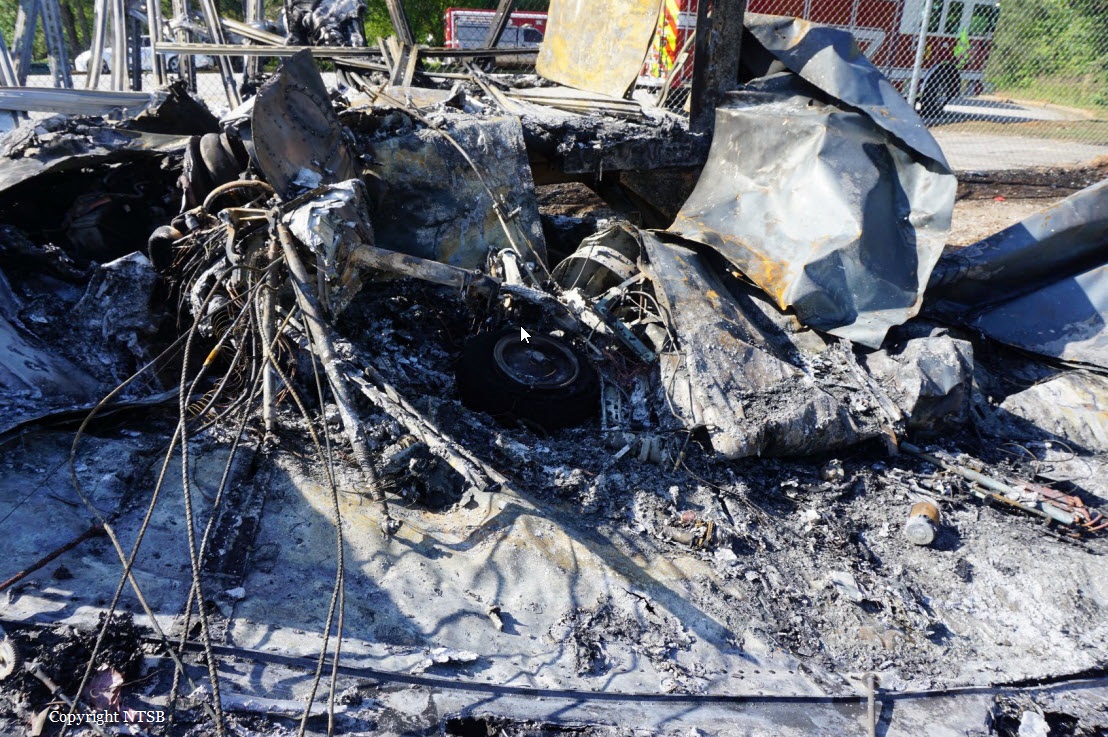
The student pilot, who was the new owner of the multi-engine airplane, and a private pilot flew commercially to Lubbock, Texas, utilized a ride-hailing service to drive to Portales, New Mexico; they met with the former owner of the airplane to finalize the purchase of the airplane and flew it back to Georgia the same day. The next day, the student pilot commenced flight training with the private pilot who offered to provide flight instruction to the student pilot in the student pilot’s newly acquired multi-engine airplane, even though he did not possess a flight instructor’s rating or a multi-engine airplane rating. Radar data showed that the track of the accident airplane's route consisted of their departure airport, a midway stop, and the third leg of the flight, where it crashed during the approach to their destination airport. Witnesses observed a sharp right turn before the airplane’s spiraling descent and impact with terrain and unoccupied semi-trailers. Surveillance footage from a parking lot security camera captured the airplane in a right spiral turn just before the accident. The airplane was destroyed by impact forces and the postimpact fire. The postaccident examination of the airframe, engines, and propellers revealed no anomalies that would preclude normal engine and airplane performance. Additionally, a review of the maintenance logbook revealed that the airplane was overdue for its annual maintenance inspection; no special flight permit (ferry permit) was obtained from the Federal Aviation Administration (FAA) for its return flight to Georgia. Toxicological testing of the student pilot revealed the presence amphetamine, a prescription Schedule II controlled substance that may result in cognitive deficits that pose a risk to aviation safety; however, its effect, if any on the accident flight could not be determined. It is likely that the private pilot’s failure to maintain aircraft control was exacerbated by his lack of a multi-engine airplane rating, his lack of a flight instructor rating, and his poor decision making.
Probable cause:
The private pilot’s loss of control in flight, which resulted in a collision with terrain. Contributing to the accident was the student pilot’s decision to obtain flight instruction from the private pilot and the private pilot's insufficient qualifications to fly or to provide flight instruction in a multi-engine airplane.
Final Report:
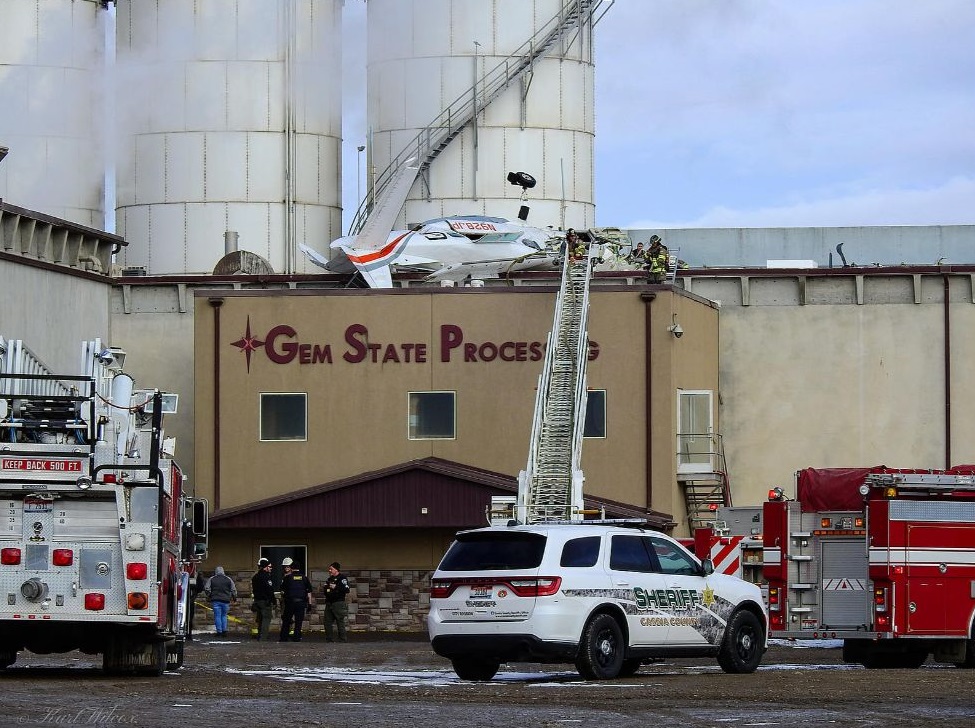
Crash of a Cessna 208B Grand Caravan in Heyburn: 1 killed

Date & Time: Apr 13, 2022 at 0832 LT
Type of aircraft:
Operator:
Registration:
N928JP
Flight Type:
Survivors:
No
Site:
Schedule:
Salt Lake City – Burley
MSN:
208B-2428
YOM:
2013
Location:
Crew on board:
1
Crew fatalities:
Pax on board:
0
Pax fatalities:
Other fatalities:
Total fatalities:
1
Captain / Total flying hours:
1380
Captain / Total hours on type:
193.00
Aircraft flight hours:
5116
Circumstances:
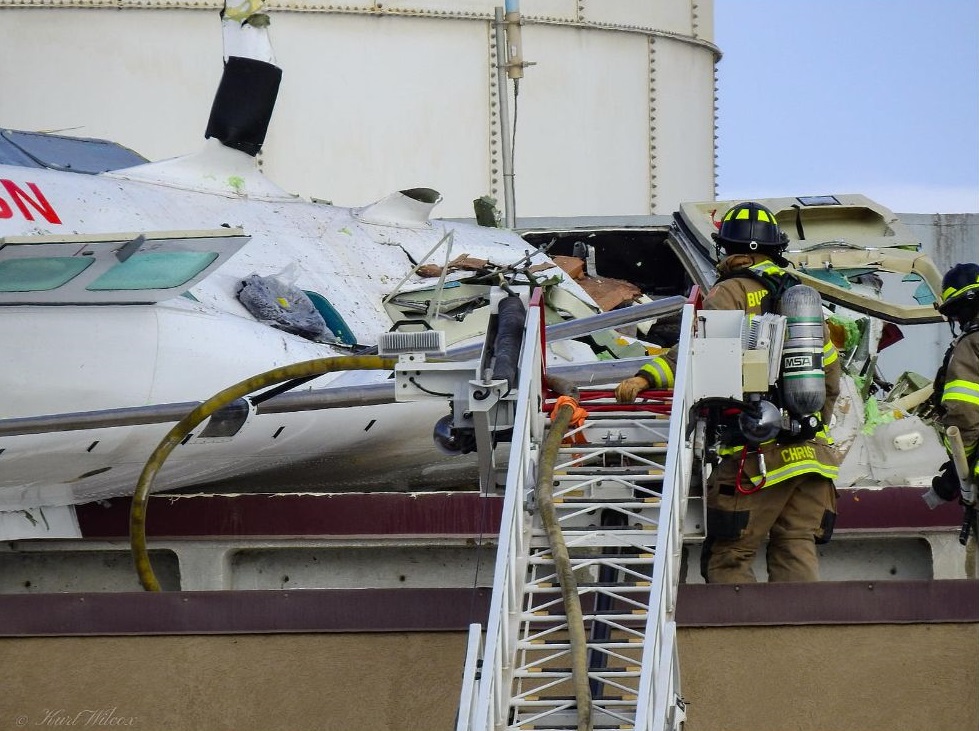
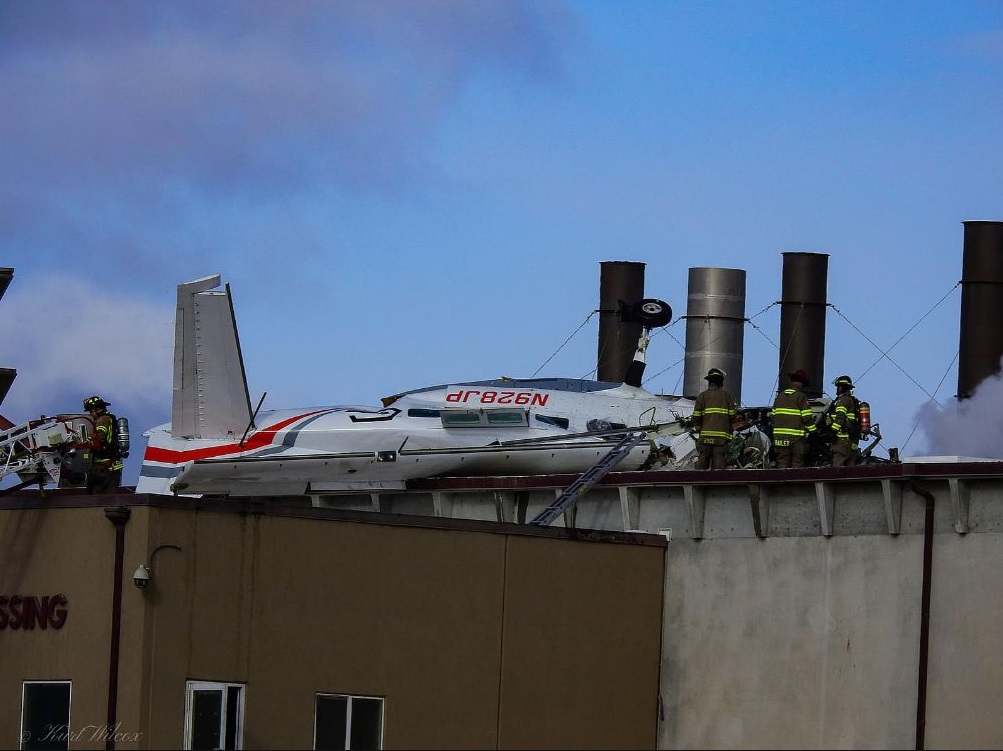
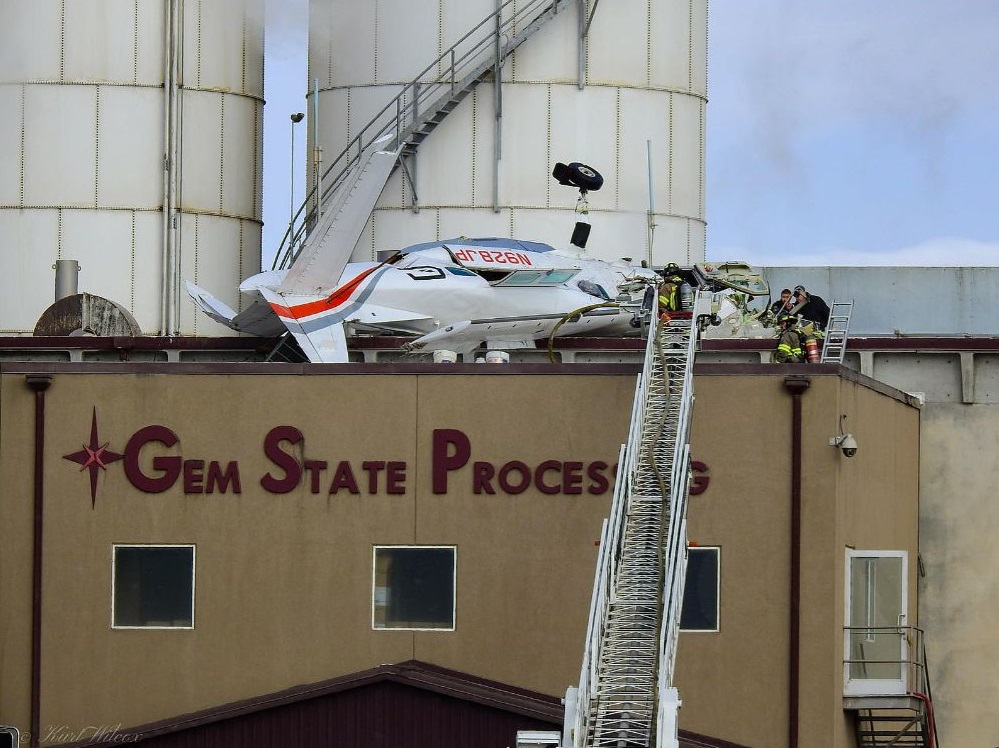
The pilot flew two RNAV (GPS) runway 20 instrument approaches at the Burley Municipal Airport, Burley, Idaho in instrument meteorological conditions (IMC). The accident occurred during the second approach. For the first instrument approach, the pilot configured the airplane with flaps up and flew the final approach segment at speeds above the operator’s training standard of 120 knots indicated airspeed (KIAS).The pilot flew a low pass over the runway, most likely to assess the landing conditions in accordance with company policy, determined the conditions were acceptable, initiated the missed approach and requested to return flying the same approach. The pilot elected to not use flaps during the second approach but slowed the approach speed during the final approach leg. Reported weather had improved and visibility had increased to about 2.5 miles. During this approach, the airplane intercepted and remained on the glide path to the stepdown fix. The last automatic dependent surveillance - broadcast (ADS-B) equipment plot recorded the airplane about a mile past this fix, or about 0.6 nautical miles (nm) from the displaced threshold, on the glide path, and at an estimated 85 knots calibrated airspeed (KCAS), which was slower than the airplane’s 95-knot minimum speed for flaps up in icing conditions. Shortly afterward, the airplane descended about 130 ft below the glide path, striking an agglomerate stack atop a potato processing plant, fatally injuring the pilot and substantially damaging the airplane. A witness reported seeing the airplane come out of the clouds and immediately enter a steam cloud coming from six other stacks before striking the accident stack. A security camera at the processing plant captured the last moments of the airplane’s flight as it came into view in a wings-level, flaps-up, nose-high descent and just before it impacted the stack. While snow and visible moisture were present, the agglomerate stack was always in clear view during the Page 2 of 24 WPR22FA151 video, with only partial sections obscured. The witness’s account of hearing the engine noise increase and then the nose lift-up may have been the pilot’s attempt to avoid the obstacle. The Federal Aviation Administration’s (FAA) Aeronautical Information Manual advises pilots to avoid overflight of exhaust stacks; however, the accident stack was directly underneath the instrument approach course and overflight would be expected. Postaccident examination of the airplane, conducted hours after the accident, revealed no structural icing on the wings and empennage. Examination of the airframe and powerplant revealed no mechanical malfunctions or failures that would have precluded normal operation. The flaps were up, and a review of the manifest revealed the airplane was loaded within the specifications of the manifest and within the center of gravity limits. Between 2016 and 2017, the FAA conducted two aeronautical studies regarding the stack structures. In the first study, the FAA determined that many of the stack structures were a hazard to air navigation that required mitigation by the processing plant. As an interim measure, the FAA placed the runway 20 visual approach slope indicator (VASI) out of service because the stacks penetrated the obstruction clearance surface and were deemed hazardous to aviation. After determining that they needed to increase the height of the stacks, the plant then modified their proposal; the proposed height increase necessitated a second study. The second study determined the agglomerate stack and the row-of-six stacks exceeded the Code of Federal Regulations (CFR) section 77 standards and provided mitigating actions that included painting the stacks with high visibility white and aviation orange paint and equipping the stacks with red flashing warning lights. The control measures also included the permanent removal of the VASI. On the day of the accident, the agglomerate stack and row-of-six stacks had not been painted to the standard required by the FAA. The warning lights had been installed, and five of the row-of-six stacks were equipped with flashing red lights. The agglomerate stack warning light was stolen following the accident, so an accurate determination of its operating status could not be made. The existing paint scheme and the visible moisture emitted by the stacks provided a low contrast to the environmental background. This low contrast and the lack of a visual glide slope indicator may have caused difficulty for the pilot in maintaining a safe altitude during the visual portion of the approach to the runway. A white and aviation orange paint scheme, as identified in the regulations, may have offered a higher contrast and thus an adequate warning once the pilot transitioned to visual conditions.
Probable cause:
The pilot’s failure to maintain altitude during an instrument approach, which resulted in a descent below the approach path and impact with a vent stack. Also causal was the failure of the processing plant to correctly paint the vent stacks, which had been determined by the FAA to be a hazard to navigation due to their proximity to the landing approach path. Contributing to the accident was the likely distraction/illusion/obscuration created by steam from the processing plant, which intermittently obscured the runway.
Final Report:
Crash of a Learjet 75 in Morristown

Date & Time: Apr 2, 2022 at 1119 LT
Type of aircraft:
Operator:
Registration:
N877W
Survivors:
Yes
Schedule:
Atlanta – Morristown
MSN:
45-496
YOM:
2014
Crew on board:
2
Crew fatalities:
Pax on board:
2
Pax fatalities:
Other fatalities:
Total fatalities:
0
Captain / Total flying hours:
8834
Captain / Total hours on type:
1599.00
Copilot / Total flying hours:
9582
Copilot / Total hours on type:
5146
Aircraft flight hours:
3290
Circumstances:
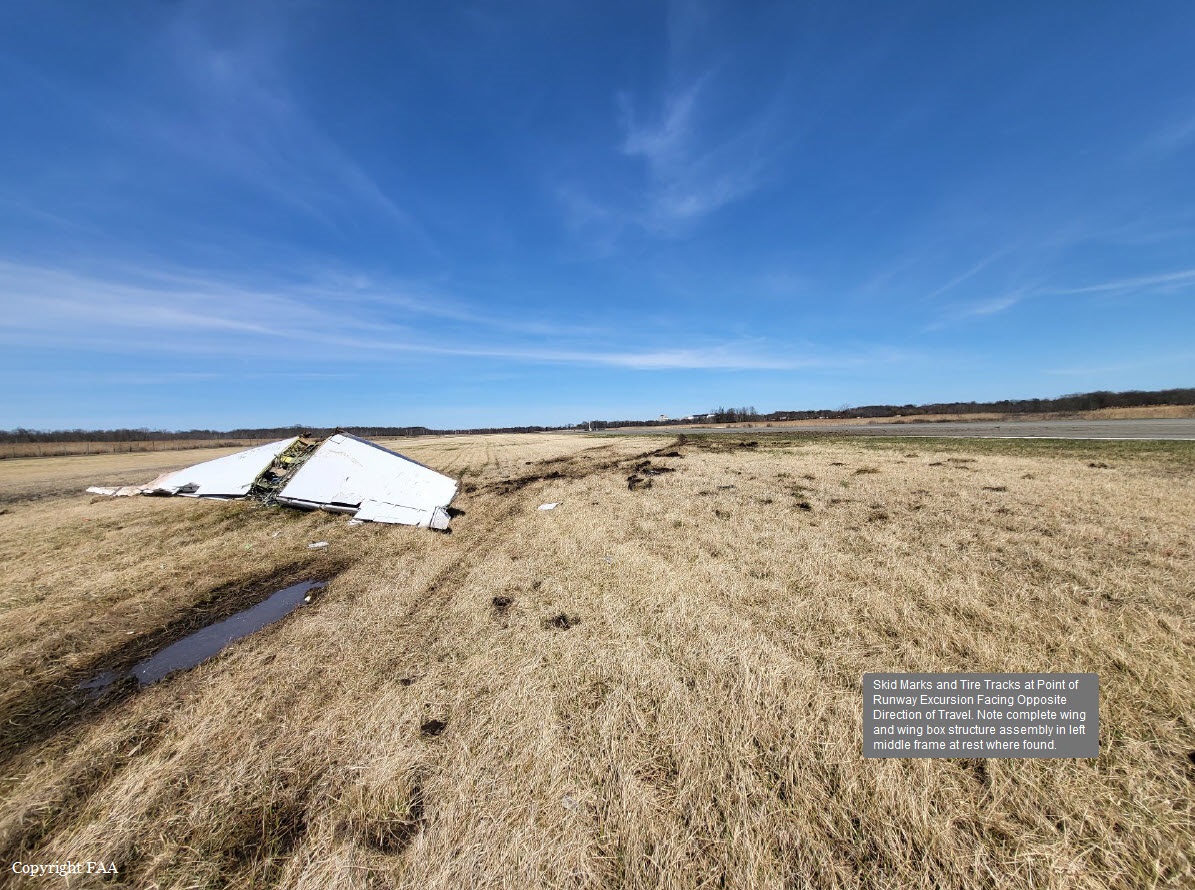
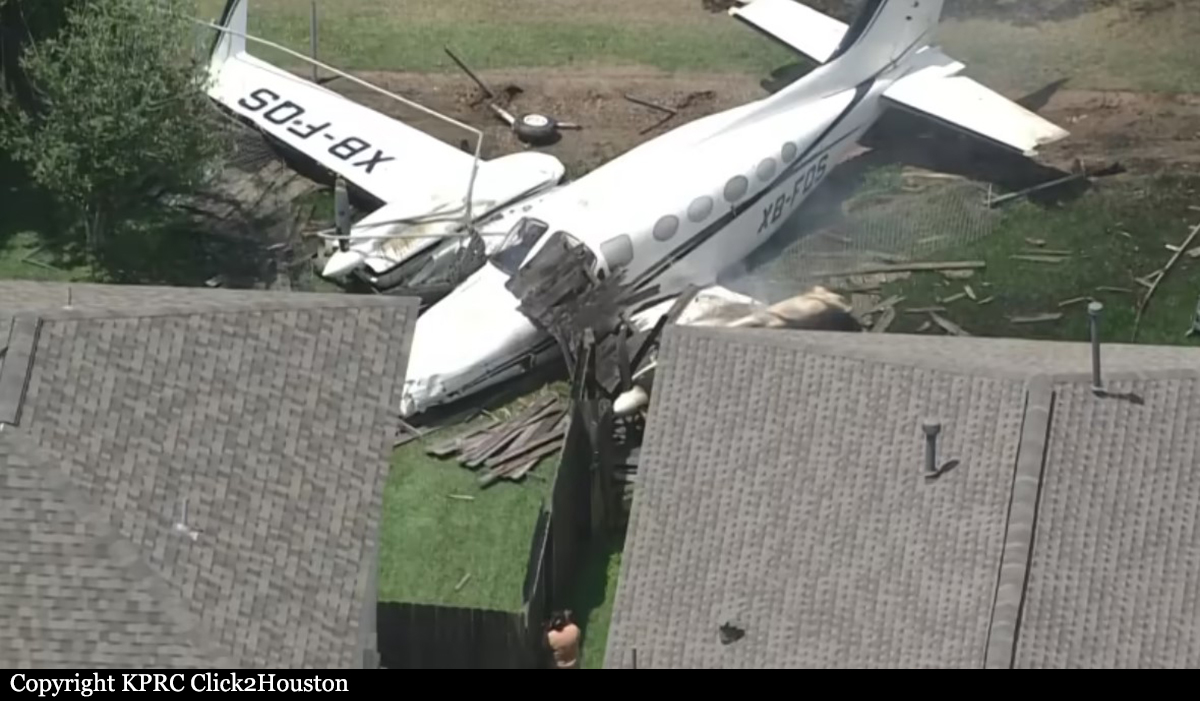
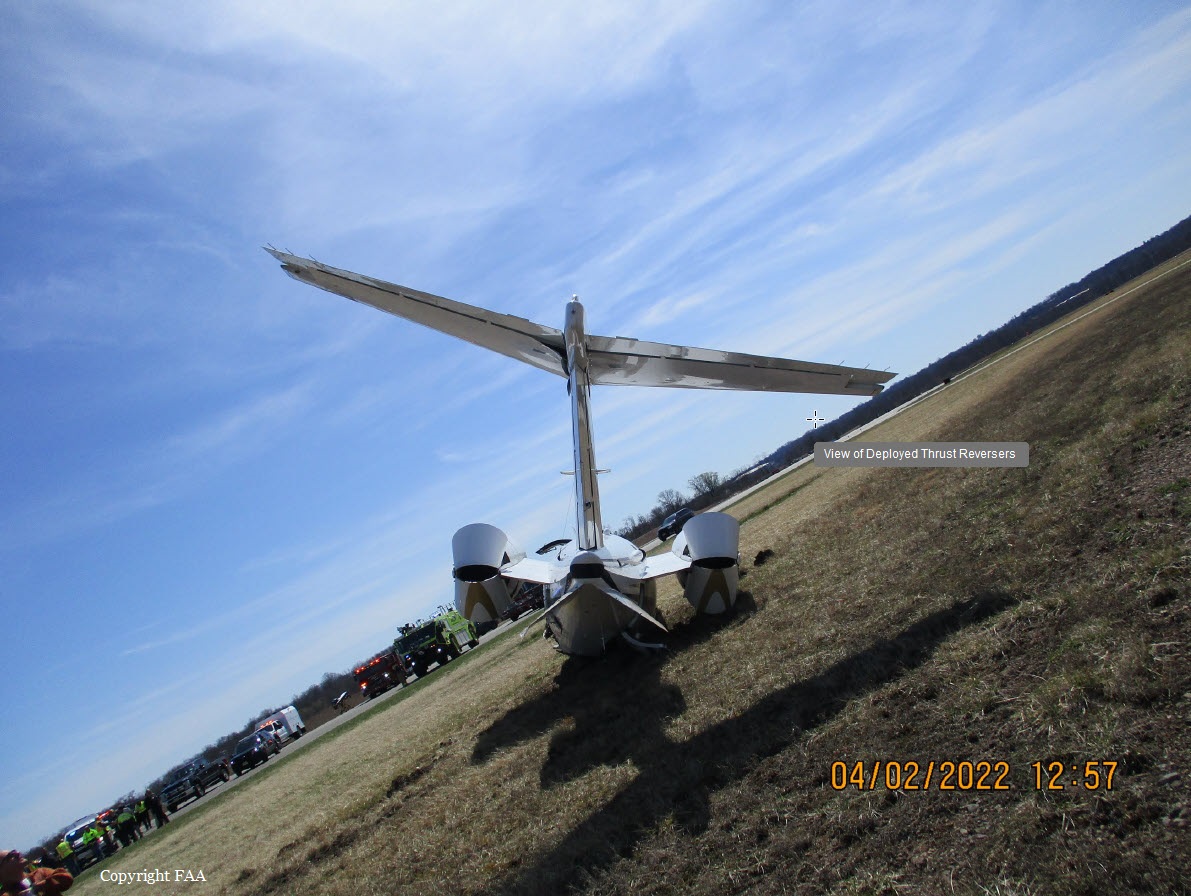
The flight crew of the jet obtained weather information for the destination airport, which indicated quartering tailwind conditions for the runway in use at the time, with wind at 3 knots gusting to 16 knots. The crew determined the wind to be within limitations. The cockpit voice recorder transcript and airport surveillance video indicated that the landing approach was normal. The captain, who was the pilot flying, stated that, after touchdown, the thrust reversers were deployed and the airplane turned “sharply to the right.” He reported that remedial control inputs were ineffective in maintaining directional control. Airport surveillance video footage of the landing roll and accident sequence showed that, about 9 seconds into the landing roll, the airplane turned sharply to its right. The airplane departed the runway, its left wingtip struck the ground, the entire wing structure (left wing/right wing/wingbox) separated from the airplane as one assembly, and the fuselage continued a short distance before it came to rest upright. The thrust reversers on each engine were deployed and their extended positions were about equal. A windsock could be seen in the surveillance video footage nearly parallel to the ground, indicating nearly a direct crosswind to the landing runway that would have been towards the airplane’s right side. Recorded wind shortly after the accident was consistent with a 90° right crosswind for the landing runway at 6 knots with gusts to 14 knots. A detailed examination of the airplane and system components revealed that all flight control, steering, and braking systems and their actuator components operated as designed. Although the copilot's yaw force sensor did not meet manufacturer acceptance testing during post accident examination, this would not have affected the directional controllability of the airplane. Based on the available information, it is likely that the pilot’s compensation for the crosswind conditions was inadequate, which resulted in a loss of directional control and runway excursion.
Probable cause:
The captain’s inadequate compensation for crosswind conditions, which resulted in a loss of directional control.
Final Report:

Crash of a Grumman E-2D Hawkeye in the Chincoteague Bay: 1 killed

Date & Time: Mar 30, 2022 at 1930 LT
Type of aircraft:
Operator:
Registration:
169065
Flight Phase:
Flight Type:
Survivors:
Yes
Schedule:
Norfolk - Norfolk
MSN:
AA31
Crew on board:
3
Crew fatalities:
Pax on board:
0
Pax fatalities:
Other fatalities:
Total fatalities:
1
Circumstances:
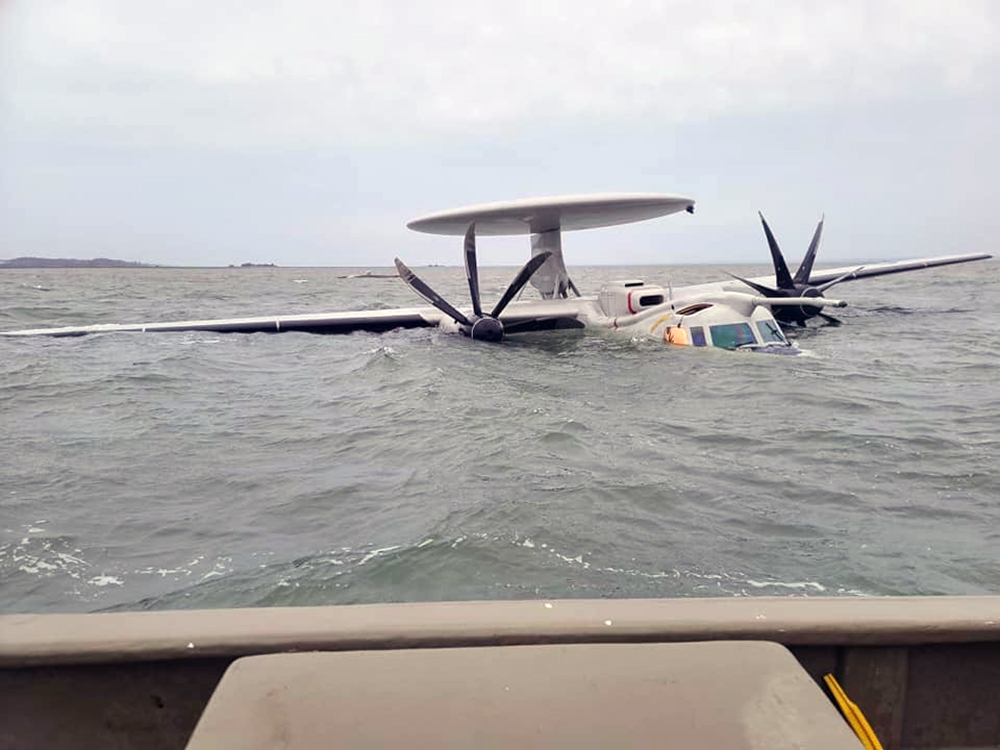
The crew departed Norfolk-Chambers Field NAS on a local mission. En route, the airplane crashed in unknown circumstances in the Chincoteague Bay, off Wallops Island. The aircraft came to rest partially submerged in shallow waters. Two crew members were rescued while the pilot Lt Hyrum Hanlon was killed.