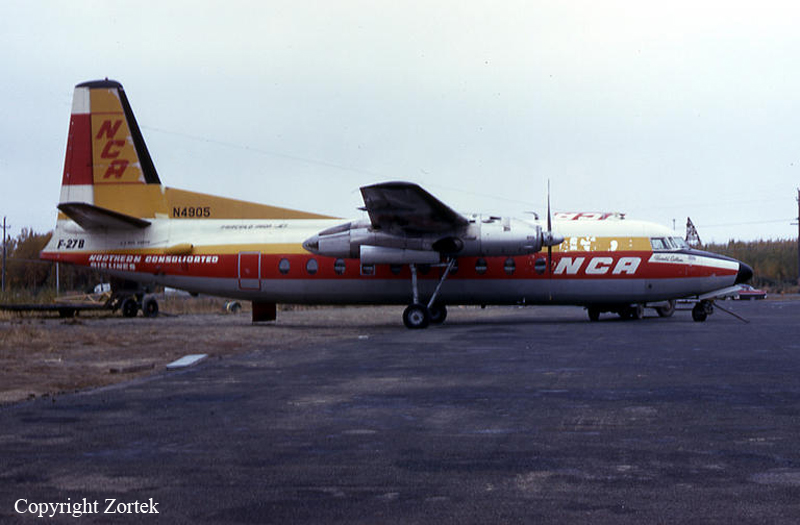
Crash of a Fairchild F27B in Pedro Bay: 39 killed

Date & Time: Dec 2, 1968 at 0936 LT
Type of aircraft:
Operator:
Registration:
N4905
Flight Phase:
Survivors:
No
Schedule:
Anchorage – Iliamna – Big Mountain – King Salmon – Dillingham
MSN:
49
YOM:
1959
Flight number:
WC055
Crew on board:
3
Crew fatalities:
Pax on board:
36
Pax fatalities:
Other fatalities:
Total fatalities:
39
Captain / Total flying hours:
10557
Captain / Total hours on type:
5357.00
Copilot / Total flying hours:
12087
Aircraft flight hours:
17194
Circumstances:
A Wien Consolidated Airlines Fairchild F-27B, N4905, crashed at Pedro Bay, Alaska. The 36 passengers and three crew members were killed in the accident and the aircraft was destroyed by in-flight breakup and ground impact. The aircraft was being operated as Flight 55 in scheduled domestic passenger service between Anchorage International Airport, AK (ANC) and Dillingham Municipal Airport, AK (DLG) with en route stops at Iliamna Airport, AK (ILI), Big Mountain Airport, AK (BMX), and King Salmon Airport, AK (AKN). Flight 55 departed from Anchorage at 08:46 on an instrument flight plan for Iliamna. The flight was cleared to cruise at 16,000 feet. The weather at Iliamna was reported to be clear, and the visibility was 15 miles at the time of the flight's departure from Anchorage. The flight proceeded toward Iliamna without reported difficulty, and at 09:25, the first officer requested a clearance for an approach to Iliamna. This request was approved. No further communication was received from the crew. Ground witnesses in and around the Pedro Bay area reported that they saw a fireball and a large cloud of black smoke which appeared to be behind the wing of the aircraft. The aircraft appeared to continue on course for a short period of time, then pieces of the aircraft were seen falling, and the aircraft entered a spinning descent. The major portion of the wreckage was located on the southern shore of Foxies Lake at an elevation of approximately 220 feet.
Probable cause:
The Board determines that the probable cause of this accident was an in-flight structural failure caused by an encounter with severe to extreme turbulence. This turbulence was not forecast and its presence was not known to the flight crew. The failure occurred in an area of the right wing (WS 197) which had been weakened to an indeterminate degree by pre-existing fatigue cracks.
Final Report:

Crash of a Rockwell Aero Commander 500A in Paducah

Date & Time: Nov 27, 1968 at 1802 LT
Operator:
Registration:
N9381R
Flight Type:
Survivors:
Yes
MSN:
500-896-5
YOM:
1960
Crew on board:
2
Crew fatalities:
Pax on board:
0
Pax fatalities:
Other fatalities:
Total fatalities:
0
Captain / Total flying hours:
1190
Captain / Total hours on type:
300.00
Circumstances:
On final approach to Paducah-Barkley Airport, the crew encountered poor weather conditions with low ceiling, rain and fog. Too low, the twin engine airplane struck trees and crashed few dozen yards short of runway threshold. Both pilots were slightly injured and the aircraft was destroyed.
Probable cause:
The accident was probably caused by the combination of the following factors:
- Improper IFR operation,
- The pilot-in-command exercised poor judgement,
- Low ceiling, rain and fog,
- Visibility 3/4 mile or less,
- The crew continued an instrument approach below landing minimums.
Final Report:

Crash of a De Havilland DHC-6 Twin Otter 200 in Santa Ana: 9 killed

Date & Time: Nov 23, 1968 at 1959 LT
Operator:
Registration:
N7666
Survivors:
No
Schedule:
Los Angeles - Santa Ana
MSN:
148
YOM:
1968
Crew on board:
2
Crew fatalities:
Pax on board:
7
Pax fatalities:
Other fatalities:
Total fatalities:
9
Captain / Total flying hours:
12276
Captain / Total hours on type:
234.00
Circumstances:
Following an uneventful flight from Los Angeles, the crew started the descent to Santa Ana Airport when he encountered poor visibility due low clouds and fog. On short final, the crew failed to realize his altitude was insufficient when the airplane struck a 30 feet steel light pole located along the Costa Mesa Freeway. Out of control, the airplane dove into the ground and crashed in flames 1,8 mile short of runway 20R threshold. The aircraft was totally destroyed and none of the nine occupants survived the crash.
Probable cause:
The accident was probably caused by the combination of the following factors:
- Improper IFR operation,
- The pilot-in-command misjudged altitude,
- Low ceiling and foggy conditions,
- Visibility limited to 3/4 mile or less.
Final Report:

Crash of a Rockwell Aero Commander 680 in Barrow: 7 killed

Date & Time: Nov 21, 1968 at 0954 LT
Registration:
N3810C
Flight Phase:
Survivors:
Yes
MSN:
680-750-40
YOM:
1959
Location:
Crew on board:
1
Crew fatalities:
Pax on board:
7
Pax fatalities:
Other fatalities:
Total fatalities:
7
Captain / Total flying hours:
13262
Captain / Total hours on type:
41.00
Circumstances:
Shortly after takeoff from Barrow Airport, while in initial climb, the right engine failed. The pilot lost control of the airplane that stalled and crashed in flames. A passenger was seriously injured while seven other occupants were killed.
Probable cause:
The accident was probably caused by the combination of the following factors:
- Failure of the right engine for undetermined reason,
- Improper operation of flight controls,
- Improper operation of powerplant,
- Improper emergency procedures,
- Inadequate preflight preparation,
- Improperly loaded aircraft-weight and CofG,
- Aircraft allowed to enter condition of asymmetrical thrust,
- Aircraft overloaded by 475 lbs.
Final Report:

Crash of a Piper PA-31-310 Navajo in Nederland: 5 killed

Date & Time: Nov 20, 1968 at 1702 LT
Type of aircraft:
Registration:
N9174Y
Flight Type:
Survivors:
No
Schedule:
Nederland - Nederland
MSN:
31-231
YOM:
1968
Location:
Crew on board:
1
Crew fatalities:
Pax on board:
4
Pax fatalities:
Other fatalities:
Total fatalities:
5
Captain / Total flying hours:
932
Captain / Total hours on type:
232.00
Circumstances:
The pilot and his four passengers were engaged in a local post maintenance test flight. Following a local circuit, the pilot initiated an approach to Nederland-Jefferson County Airport when on final, the airplane stalled and crashed in a huge explosion. All five occupants were killed.
Probable cause:
The aircraft stalled on final approach during a steep bank at low altitude probably due to an error on part of the pilot who failed to maintain flying speed. A mechanical discrepancy is also suspected.
Final Report:

Crash of a Beechcraft D18S in Inkster

Date & Time: Nov 18, 1968 at 1855 LT
Type of aircraft:
Operator:
Registration:
N629B
Flight Phase:
Flight Type:
Survivors:
Yes
MSN:
A-461
YOM:
1948
Crew on board:
2
Crew fatalities:
Pax on board:
2
Pax fatalities:
Other fatalities:
Total fatalities:
0
Captain / Total flying hours:
2418
Captain / Total hours on type:
339.00
Circumstances:
Shortly after takeoff from Detroit-Wayne County Airport, while in initial climb, the crew encountered serious difficulties with the aircraft that was unstable and failed to gain sufficient altitude. The airplane then stalled and crashed in Inkster, north of the airfield. All four occupants were seriously injured and the airplane was destroyed.
Probable cause:
The accident was caused by the combination of the following factors:
- Inadequate supervision of flight crew,
- Failure to provide adequate directives, manual and equipments,
- Deficiency in company maintained equipment, services, regulations,
- Inadequate preflight preparation and/or planning,
- Improperly loaded aircraft-weight and/or CofG,
- Inadequate supervision of flight on behalf of the pilot-in-command,
- Unable to reduce the angle of attack to obtain V2 speed during initial climb as the total weight was 1,727 lbs above gross weight and the CofG was 9,26 inches after the max CofG limits.
Final Report:

Crash of a Beechcraft Queen Air 65 in Albany: 2 killed

Date & Time: Nov 18, 1968 at 1745 LT
Type of aircraft:
Registration:
N1401M
Survivors:
Yes
MSN:
LC-73
YOM:
1961
Location:
Crew on board:
2
Crew fatalities:
Pax on board:
4
Pax fatalities:
Other fatalities:
Total fatalities:
2
Captain / Total flying hours:
8100
Captain / Total hours on type:
350.00
Circumstances:
On final approach to runway 19 at Albany Airport, the crew encountered poor visibility due to low ceiling, rain and fog. On short final, the airplane was too low and crashed into the Mohawk River located about 1,2 mile short of runway threshold. Two passengers were killed while four other occupants were injured.
Probable cause:
The accident was the result of an improper IFR operation on part of the flying crew who descended below the published approach minimums. Limited visibility due to low clouds, rain and fog was considered as a contributing factor.
Final Report:

Crash of a Convair CV-580 in Santa Barbara

Date & Time: Nov 12, 1968 at 1728 LT
Type of aircraft:
Registration:
N73135
Flight Type:
Survivors:
Yes
Schedule:
Santa Barbara - Santa Barbara
MSN:
85
YOM:
1968
Crew on board:
3
Crew fatalities:
Pax on board:
1
Pax fatalities:
Other fatalities:
Total fatalities:
0
Captain / Total flying hours:
4741
Captain / Total hours on type:
866.00
Circumstances:
Following an uneventful training flight in the region of Santa Barbara Airport, the aircraft belly landed, slid for few dozen yards and came to rest on the runway. All four occupants escaped uninjured while the aircraft was damaged beyond repair.
Probable cause:
The accident was caused by the combination of the following factors:
- The student pilot failed to extend the landing gear on approach,
- Inadequate supervision of flight on part of the pilot-in-command,
- The crew failed to use the approach checklist,
- The landing gear warning horn was inoperative for undetermined reason.
Final Report:

Crash of a Beechcraft Queen Air A65-8200 in Wichita: 1 killed

Date & Time: Nov 7, 1968 at 1631 LT
Type of aircraft:
Operator:
Registration:
F-BRAR
Flight Phase:
Flight Type:
Survivors:
No
Schedule:
Wichita - Wichita
MSN:
LC-313
YOM:
1968
Crew on board:
1
Crew fatalities:
Pax on board:
0
Pax fatalities:
Other fatalities:
Total fatalities:
1
Captain / Total flying hours:
6700
Captain / Total hours on type:
150.00
Circumstances:
At liftoff, the twin engine aircraft stalled and crashed in flames by the runway. The aircraft was destroyed and the pilot, sole on board, was killed. He was engaged in a local test flight at Wichita-Beechcraft Field before the aircraft should be delivered to the French operator Flo Air.
Probable cause:
The loss of control on takeoff was probably the consequence of an insufficient speed.
Final Report:

Crash of a Cessna 402 in Allentown: 1 killed

Date & Time: Nov 7, 1968 at 0457 LT
Type of aircraft:
Registration:
N8419F
Flight Type:
Survivors:
No
Crew on board:
1
Crew fatalities:
Pax on board:
0
Pax fatalities:
Other fatalities:
Total fatalities:
1
Captain / Total flying hours:
1181
Captain / Total hours on type:
92.00
Circumstances:
On final approach to Allentown Airport, while on a night cargo flight, the twin engine airplane became unstable, went into a spin and crashed short of runway. The aircraft was destroyed and the pilot, sole on board, was killed.
Probable cause:
The accident was probably caused by the combination of the following factors:
- Inadequate preflight preparation and/or planning,
- Improperly loaded aircraft-weight and/or CofG,
- The cargo shifted during final approach, resulting in pitch and lateral control problems,
- Witnesses stated that the cargo net was not used,
- Aircraft CofG caused stall when power was reduced for emergency landing.
Final Report: