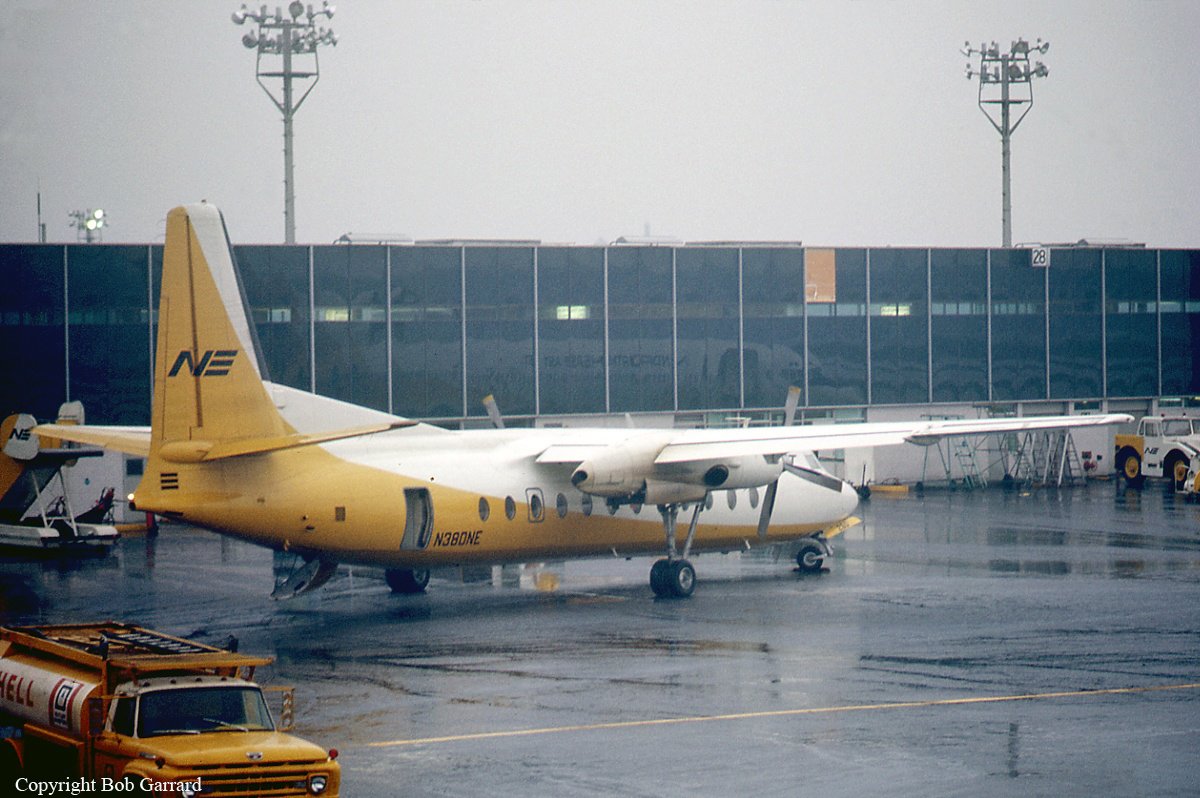
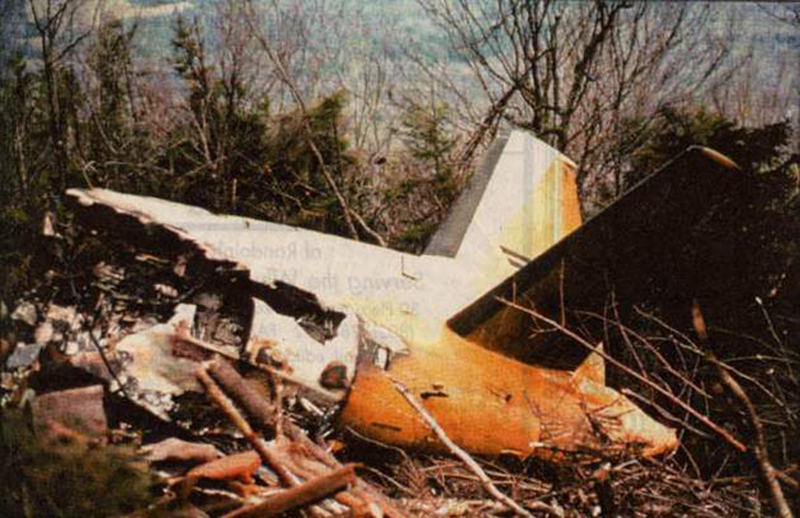
Crash of a Fairchild-Hiller FH-227C in Lebanon: 32 killed

Date & Time: Oct 25, 1968 at 1717 LT
Type of aircraft:
Operator:
Registration:
N380NE
Survivors:
Yes
Site:
Schedule:
Boston – Lebanon – Montpelier
MSN:
517
YOM:
1966
Flight number:
NE946
Crew on board:
3
Crew fatalities:
Pax on board:
39
Pax fatalities:
Other fatalities:
Total fatalities:
32
Captain / Total flying hours:
14700
Captain / Total hours on type:
1181.00
Copilot / Total flying hours:
2499
Copilot / Total hours on type:
281
Aircraft flight hours:
3828
Circumstances:
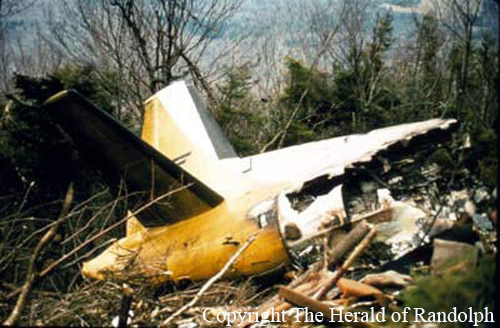
Northeast Airlines Flight 946 departed Boston 17:42 for a flight to Lebanon, NH and Montpelier, VT. The Fairchild climbed to a cruising altitude of 8000 feet. At 18:08 the crew were cleared for an approach to the Lebanon Airport to cruise at 5,000 feet and report leaving 6,000 feet. At 18:10:45, the controller advised the crew that radar service had been terminated and the flight was cleared to contact the Lebanon Flight Service Station (FSS). One minute later the FSS told the crew that the weather was an estimated ceiling of 2,000 feet overcast; visibility was 10 miles; there were breaks in the overcast; the altimeter setting was 29:55; and the wind was calm. The flight did not perform the published instrument approach procedure but executed an abbreviated approach by making a right turn from their northwesterly heading and then a left turn back to intercept the inbound radial to the VOR station. The inbound radial was intercepted at approximately 8 to 10 miles northeast of the VOR station where it passed through an altitude of about 4500 feet. The crew began the descent but did not level off at 2,800 feet m.s.l., the minimum altitude inbound to the VOR. During the approach to runway 25 the airplane contacted trees on the cloud-shrouded side of a steep, rocky, heavily wooded mountain 57 feet below the summit at 2,237 feet m.s.l. The aircraft cut a swath trough the trees broke up and caught fire. Two crew members and 30 passengers were killed while 10 others were injured.
Probable cause:
The premature initiation of a descent towards the Minimum Descent Altitude, based on navigational instrument indications of an impending station passage in an area of course roughness. The crew was not able to determine accurately its position at this time because they had performed a non standard instrument approach and there were no supplement navigational aids available for their use.
Crash of a Douglas EC-47Q in Klawock

Date & Time: Oct 25, 1968
Operator:
Registration:
42-24304
Flight Type:
Survivors:
Yes
MSN:
10166
YOM:
1943
Location:
Crew on board:
0
Crew fatalities:
Pax on board:
0
Pax fatalities:
Other fatalities:
Total fatalities:
0
Circumstances:
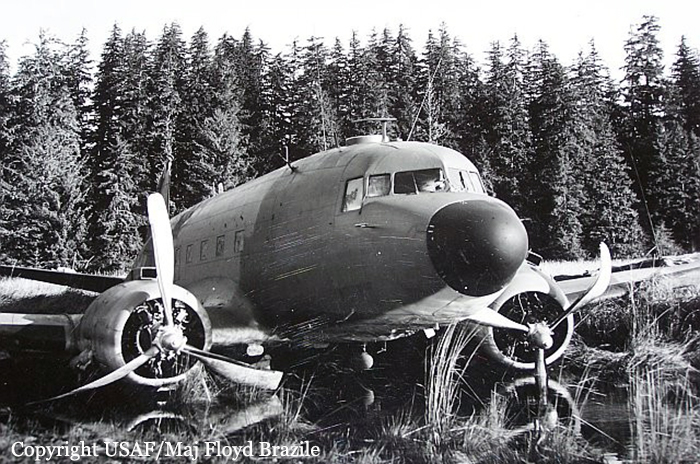
The crew was transferring the aircraft to Vietnam. While approaching Klawock Airstrip located in south Alaska, the airplane crashed in unknown circumstances in a swampy area. There were no casualties but the aircraft was written off.

Crash of a Cessna 401 in Hopewell

Date & Time: Oct 24, 1968 at 0850 LT
Type of aircraft:
Operator:
Registration:
N348E
Survivors:
Yes
Crew on board:
1
Crew fatalities:
Pax on board:
4
Pax fatalities:
Other fatalities:
Total fatalities:
0
Captain / Total flying hours:
6976
Captain / Total hours on type:
169.00
Circumstances:
On final approach to Hopewell Airport, the pilot encountered poor visibility and was unable to locate the runway lights. He failed to execute a missed approach and continued to descend until the airplane struck trees and crashed in flames in a wooded area. All five occupants were injured and the airplane was destroyed by a post crash fire.
Probable cause:
The accident was the result of improper IFR operation on part of the pilot. The following factors were considered as contributing:
- Low ceiling,
- Obstruction to vision,
- The pilot did not execute a missed approach when runway was not in sight,
- The visibility was reduced due to smoke from a local factory and fog.
Final Report:

Crash of a Beechcraft Queen Air 80 off Houghton: 3 killed

Date & Time: Oct 23, 1968 at 1340 LT
Type of aircraft:
Registration:
N303D
Flight Phase:
Survivors:
No
MSN:
LD-139
YOM:
1963
Crew on board:
3
Crew fatalities:
Pax on board:
0
Pax fatalities:
Other fatalities:
Total fatalities:
3
Captain / Total flying hours:
7100
Captain / Total hours on type:
140.00
Circumstances:
The aircraft was engaged in a mission consisting of atmospheric research. En route, in unknown circumstances, the airplane went out of control and crashed into a lake located in the region of Houghton, Michigan. SAR operations were conducted but eventually suspended few days later as no trace of the aircraft nor the three occupants was found.
Probable cause:
Due to lack of evidences, the cause of the accident could not be determined.
Final Report:

Crash of a Beechcraft King Air A90 in Cleveland: 7 killed

Date & Time: Oct 18, 1968 at 1621 LT
Type of aircraft:
Registration:
N703WC
Flight Type:
Survivors:
No
MSN:
LJ-188
YOM:
1967
Crew on board:
1
Crew fatalities:
Pax on board:
6
Pax fatalities:
Other fatalities:
Total fatalities:
7
Captain / Total flying hours:
2000
Captain / Total hours on type:
100.00
Circumstances:
During the final approach to Cleveland-Hopkins Airport, while in marginal weather conditions (low ceiling and fog), the twin engine aircraft went out of control and crashed few miles short of runway. The aircraft was destroyed upon impact and all seven occupants were killed.
Probable cause:
Failure of the right engine for undetermined reason.
Final Report:

Crash of a Rockwell Aero Commander 680 in Tin City

Date & Time: Oct 12, 1968 at 1110 LT
Operator:
Registration:
N401M
Flight Phase:
Survivors:
Yes
MSN:
680-338-31
YOM:
1956
Location:
Crew on board:
1
Crew fatalities:
Pax on board:
1
Pax fatalities:
Other fatalities:
Total fatalities:
0
Captain / Total flying hours:
5219
Captain / Total hours on type:
1897.00
Circumstances:
After takeoff from Tin City, the right engine malfunctioned. The pilot lost control of the airplane that crashed by the runway. Both occupants were seriously injured and the airplane was destroyed.
Probable cause:
The accident was probably caused by the combination of the following factors:
- Engine failure or malfunction caused by carbon deposit, ignition system, spark plugs,
- Stall during initial climb,
- The pilot attempted operation with known deficiencies in equipment,
- The pilot failed to abort the takeoff procedure,
- The pilot failed to obtain/maintain flying speed,
- Witnesses stated that the right engine backfired,
- The pilot continued the takeoff procedure and climbed in a steep attitude,
- Two previous takeoff were aborted.
Final Report:

Crash of a De Havilland DH.104 Dove 6BA in Las Vegas: 4 killed

Date & Time: Oct 8, 1968 at 0335 LT
Type of aircraft:
Operator:
Registration:
N4040B
Flight Phase:
Survivors:
No
MSN:
04328
YOM:
1952
Crew on board:
2
Crew fatalities:
Pax on board:
2
Pax fatalities:
Other fatalities:
Total fatalities:
4
Captain / Total flying hours:
17091
Captain / Total hours on type:
348.00
Circumstances:
Shortly after a night takeoff from Las Vegas-McCarran Airport, while in initial climb, the airplane went out of control and crashed in flames near the runway end. The aircraft was destroyed by impact forces and a post crash fire and all four occupants were killed.
Probable cause:
The exact cause of the accident could not be determined. However, it was reported that the aircraft caught fire during initial climb and crashed following an uncontrolled descent. It is believed that the fire of undetermined origin beneath cockpit floorboard.
Final Report:

Crash of a Boeing B-52H-145-BW Stratofortress near Minot AFB: 4 killed

Date & Time: Oct 4, 1968 at 0400 LT
Type of aircraft:
Operator:
Registration:
60-0027
Flight Type:
Survivors:
Yes
Schedule:
Minot - Minot
MSN:
464392
YOM:
1960
Crew on board:
6
Crew fatalities:
Pax on board:
0
Pax fatalities:
Other fatalities:
Total fatalities:
4
Circumstances:
Following an uneventful training mission of seven hours, the crew was returning to Minot AFB, North Dakota. On final approach by night, the crew encountered technical problems with the engines. Apparently due to low speed, the airplane stalled when four crew members managed to bail out. The aircraft crashed in an open field located eight miles from the airbase and was destroyed. Two crew members were rescued while four others were killed. The pilot ejected but was hit by a falling hatch after ejection and fatally injured. Sgt Blazina bailed out low and hit the ground before his chute opened.
Those killed were:
Lt Col Poole,
Maj McGuirk,
Sgt Cole,
Sgt Blazina.
Probable cause:
Fuel mismanagement on approach caused multiple flame‑out on engines number 1, 2, 3 and 4. Also, it is believed the approach speed was low at that time, causing the aircraft to stall.

Crash of a Grumman G-21A Goose off Avalon: 1 killed

Date & Time: Sep 29, 1968 at 1400 LT
Type of aircraft:
Registration:
N325
Flight Phase:
Flight Type:
Survivors:
No
MSN:
B127
YOM:
1945
Crew on board:
1
Crew fatalities:
Pax on board:
0
Pax fatalities:
Other fatalities:
Total fatalities:
1
Captain / Total flying hours:
14000
Captain / Total hours on type:
3000.00
Circumstances:
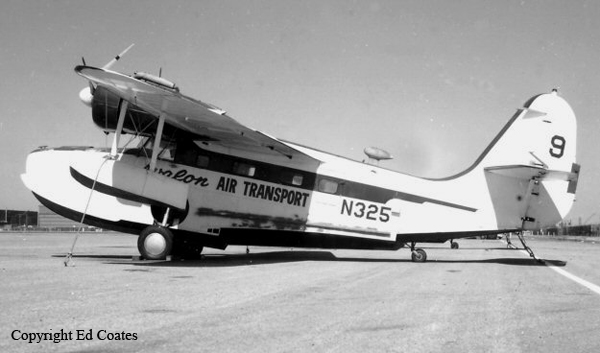
While flying at low height, the pilot lost control of the seaplane that crashed into the sea few dozen yards off Avalon. Few debris were found floating on water but the pilot's body was never found.
Probable cause:
Due to lack of evidences, the cause of the accident could not be determined.
Final Report:

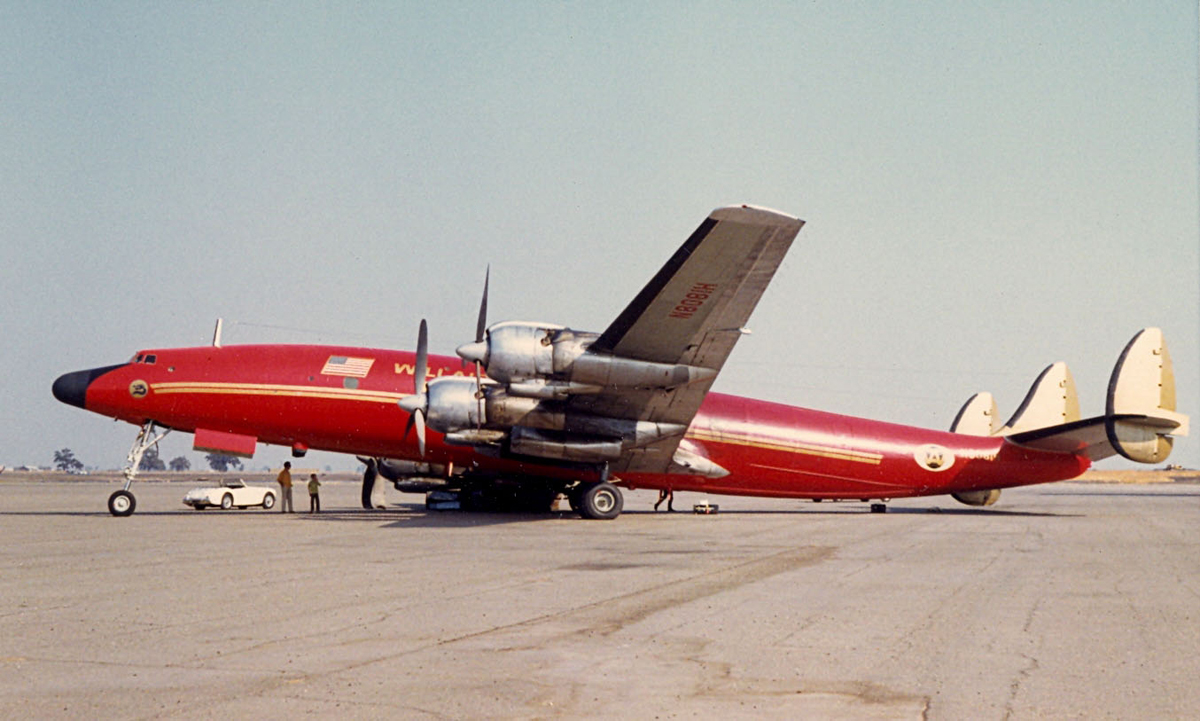
Crash of a Lockheed L-1649A Starliner in Stockton

Date & Time: Sep 28, 1968 at 1613 LT
Type of aircraft:
Registration:
N8081H
Flight Type:
Survivors:
Yes
Schedule:
Stockton - Stockton
MSN:
1026
YOM:
1958
Crew on board:
3
Crew fatalities:
Pax on board:
8
Pax fatalities:
Other fatalities:
Total fatalities:
0
Circumstances:
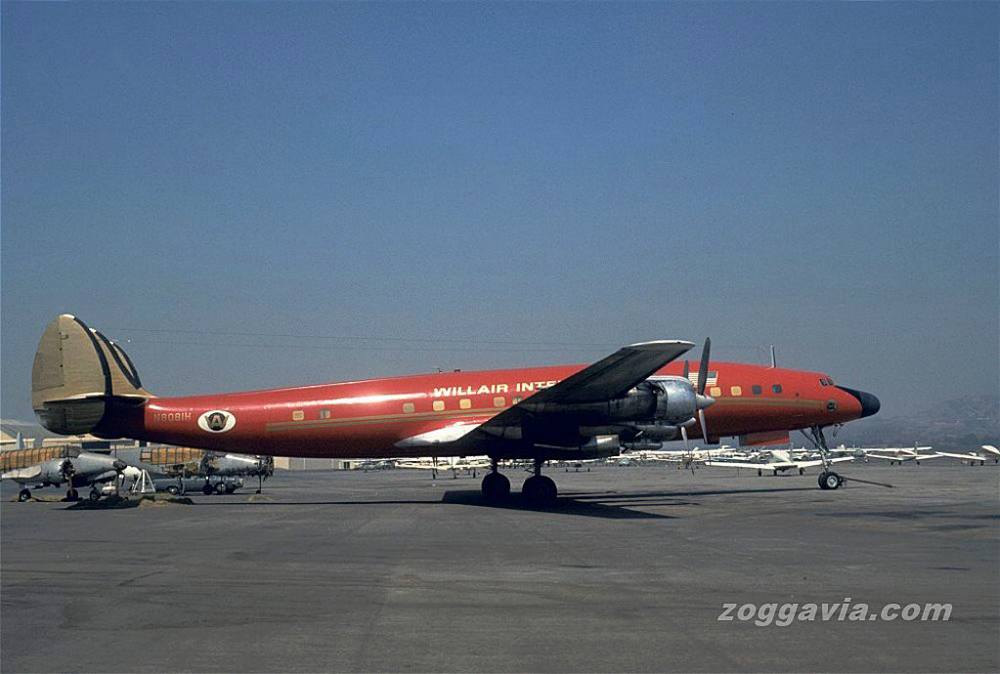
The crew was completing a local training flight at Stockton Airport, California. Following several uneventful circuits, the crew initiated a new approach. On final, the crew failed to realize his altitude was too low when the right main gear struck a blast pad located 102 feet short of the runway threshold and was torn off. The airplane partially belly landed and slid for dozen yards before coming to rest. While all 11 occupants escaped uninjured, the aircraft was damaged beyond repair.
Probable cause:
The student pilot misjudged the distance and altitude on final and the pilot-in-command failed to supervise the flight adequately.
Final Report: