Crash of a Rockwell Aero Commander 500 in Glendive: 1 killed

Date & Time: Dec 18, 1968 at 0718 LT
Operator:

Registration:
N6281X
Flight Phase:
Survivors:
Yes
Schedule:
Glendive – Hilger
MSN:
500-1150-82
YOM:
1962
Crew on board:
1
Crew fatalities:
Pax on board:
6
Pax fatalities:
Other fatalities:
Total fatalities:
1
Captain / Total flying hours:
3379
Captain / Total hours on type:
302.00
Circumstances:
During the takeoff roll at Glendive-Dawson County Airport, the pilot encountered engine trouble and decided to abandon the takeoff procedure and attempted an emergency braking manoeuvre. On a runway covered with two inches of snow, the aircraft was unable to stop within the remaining distance, overran and came to rest down a bank. Six occupants were injured and a passenger was killed.
Probable cause:
The probable cause of the accident was the combination of the following factors:
- Engine failure caused by the malfunction of the ignition system which was improperly secured,
- Engine structure, valve assemblies,
- Improper alignment/adjustment,
- Inadequate maintenance and inspection,
- Runway covered by two inches of snow,
- The pilot knew that the left magneto was inoperative and attempted operation with known deficiencies in equipment,
- Number 4 cylinder exhaust valve failed during takeoff.
Final Report:

Crash of a Rockwell Aero Commander 500B near Imnaha: 1 killed

Date & Time: Dec 18, 1968 at 0254 LT
Operator:
Registration:
N5080
Flight Phase:
Flight Type:
Survivors:
No
Site:
MSN:
500-1537
YOM:
1965
Location:
Crew on board:
1
Crew fatalities:
Pax on board:
0
Pax fatalities:
Other fatalities:
Total fatalities:
1
Captain / Total flying hours:
5000
Captain / Total hours on type:
120.00
Circumstances:
While on a night mail flight, the pilot encountered poor weather conditions when both engines stopped simultaneously. The pilot attempted an emergency landing when control was lost and the airplane crashed on a 40° slope mountain. SAR operations were conducted but eventually suspended few days later as no trace of the aircraft nor the pilot was found. Mountaineers found the wreckage on March 21, 1969 near Imnaha.
Probable cause:
The probable cause of the accident was the combination of the following factors:
- Inadequate preflight preparation on part of the pilot,
- Fuel system; vents, drains, tank caps improperly secured,
- Fuel exhaustion,
- Complete failure of both engines in flight,
- Fuel siphoned from loose cap.
Final Report:

Crash of a Grumman G-44 Widgeon on Sanak Island

Date & Time: Dec 15, 1968 at 1310 LT
Type of aircraft:
Operator:
Registration:
N148M
Flight Phase:
Survivors:
Yes
MSN:
1220
YOM:
1942
Crew on board:
1
Crew fatalities:
Pax on board:
3
Pax fatalities:
Other fatalities:
Total fatalities:
0
Captain / Total flying hours:
11500
Captain / Total hours on type:
3000.00
Circumstances:
While taking off from a lagoon off Sanak Island, the airplane failed to get airborne, struck the shore and crashed. All four occupants were injured, two of them seriously. The aircraft was written off.
Probable cause:
The accident was probably caused by the combination of the following factors:
- The pilot failed to obtain/maintain flying speed,
- Sudden windshift,
- Quartering tailwind up to 30 knots,
- The pilot attempted to takeoff from a lagoon at low tide.
Final Report:

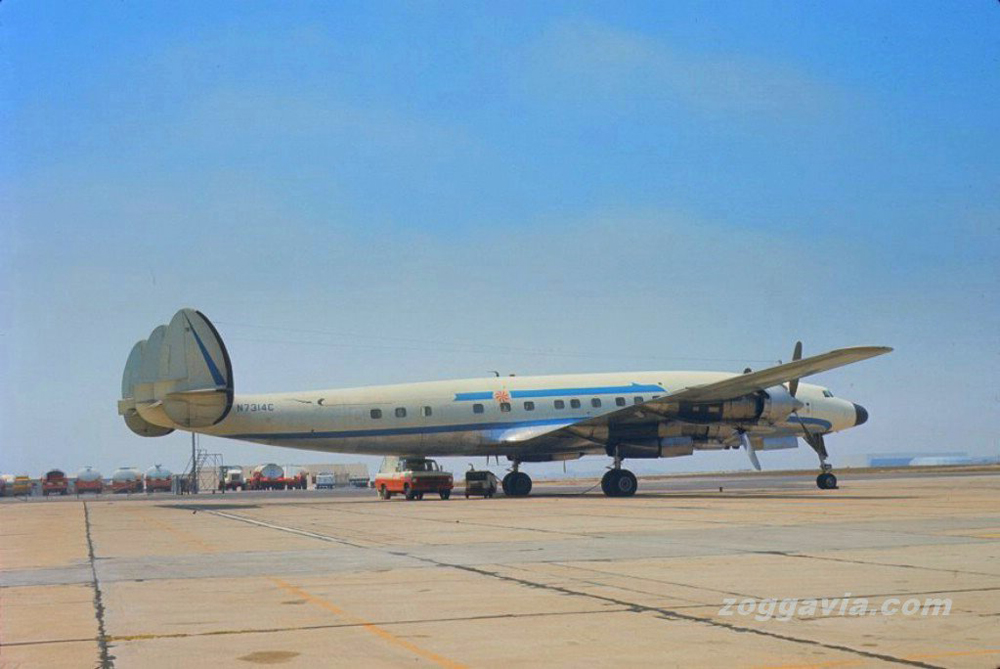
Crash of a Lockheed L-1649 Starliner in Las Vegas

Date & Time: Dec 9, 1968 at 1830 LT
Type of aircraft:
Registration:
N7314C
Flight Phase:
Survivors:
Yes
MSN:
1016
YOM:
1957
Crew on board:
8
Crew fatalities:
Pax on board:
96
Pax fatalities:
Other fatalities:
Total fatalities:
0
Captain / Total flying hours:
19250
Captain / Total hours on type:
1700.00
Circumstances:
After liftoff at McCarran Airport, while in initial climb, the crew raised the landing gear when two engines suffered a simultaneous loss of power. The captain initiated an immediate landing and the airplane belly landed on the runway and slid for few dozen yards before coming to rest. All 104 occupants were evacuated safely while the aircraft was damaged beyond repair.
Probable cause:
The accident was probably caused by the combination of the following factors:
- Aircraft improperly serviced by ground crew,
- Fuel contamination, improper fuel grade,
- Premature liftoff,
- Intentional wheels-up landing,
- Suspected mechanical discrepancy,
- Erroneously serviced with jet fuel,
- Aircraft airborne prior to V2 speed.
Final Report:

Crash of a Rockwell Aero Commander 560F near Wolf Creek: 3 killed

Date & Time: Dec 8, 1968 at 1055 LT
Registration:
N6257X
Flight Phase:
Survivors:
No
Schedule:
Great Falls - Missoula
MSN:
560-1115-33
YOM:
1961
Crew on board:
1
Crew fatalities:
Pax on board:
2
Pax fatalities:
Other fatalities:
Total fatalities:
3
Captain / Total flying hours:
7157
Captain / Total hours on type:
107.00
Circumstances:
While in cruising altitude, the pilot encountered poor weather conditions with thunderstorm activity, turbulences, high winds and freezing rain. Under VFR mode, he lost control of the airplane that dove into the ground and crashed. All three occupants were killed.
Probable cause:
The accident was probably caused by the combination of the following factors:
- The pilot continued under VFR mode into adverse weather conditions,
- Loss of control for undetermined reason,
- Icing conditions including sleet and freezing rain,
- Turbulences associated with clouds and thunderstorms,
- Flew into known turbulences.
Final Report:

Crash of a Cessna 411 in Houston: 1 killed

Date & Time: Dec 7, 1968 at 1117 LT
Type of aircraft:
Operator:
Registration:
N7392U
Flight Phase:
Survivors:
No
MSN:
411-0092
YOM:
1965
Crew on board:
1
Crew fatalities:
Pax on board:
0
Pax fatalities:
Other fatalities:
Total fatalities:
1
Captain / Total flying hours:
3500
Captain / Total hours on type:
300.00
Circumstances:
After takeoff, while climbing, the left engine failed. The pilot lost control of the airplane that crashed near the runway. The aircraft was destroyed and the pilot was killed.
Probable cause:
The accident was probably caused by the combination of the following factors:
- Failure of the left engine during initial climb,
- Failure of the fuel system, loose parts/fitting, leak/leakage,
- Lack of lubrication on specific part,
- Powerplant scored,
- Fuel starvation,
- Inadequate maintenance and inspection,
- Improper emergency procedures,
- The pilot failed to obtain/maintain flying speed,
- Complete engine failure,
- Leaking fitting in engine driven fuel pump,
- Bearing dry, armature scored in auxiliary fuel pump on left engine.
Final Report:

Crash of a Cessna 411 in Teterboro

Date & Time: Dec 6, 1968 at 1702 LT
Type of aircraft:
Operator:
Registration:
N162A
Flight Phase:
Flight Type:
Survivors:
Yes
MSN:
411-0219
YOM:
1966
Crew on board:
1
Crew fatalities:
Pax on board:
0
Pax fatalities:
Other fatalities:
Total fatalities:
0
Captain / Total flying hours:
4900
Captain / Total hours on type:
150.00
Circumstances:
Shortly after takeoff from Teterboro Airport, while in initial climb, one of the engine failed. The pilot lost control of the airplane that crashed in a huge explosion on the apron. The pilot was seriously injured while the Cessna 411 was destroyed by a post crash fire as well as five other aircraft, a Piper PA-28 (N6416W), two Beechcraft 33 (N8822H & N5715V), a Beechcraft 35 (N9575Q) and a fifth aircraft registered N7167N. A sixth airplane registered N8390N was seriously damaged.
Probable cause:
Powerplant failure for undetermined reasons. The following factors were reported:
- The pilot failed to obtain/maintain flying speed,
- Improper emergency procedures,
- Improper single engine procedure.
Final Report:

Crash of a Beechcraft UC-45B Mk.3T in Seattle

Date & Time: Dec 5, 1968 at 1410 LT
Type of aircraft:
Registration:
CF-RQL
Flight Type:
Survivors:
Yes
MSN:
5980
YOM:
1943
Crew on board:
1
Crew fatalities:
Pax on board:
0
Pax fatalities:
Other fatalities:
Total fatalities:
0
Captain / Total flying hours:
4207
Captain / Total hours on type:
30.00
Circumstances:
On final approach to Seattle-Boeing Field, both engine failed. The airplane lost height, struck electrical wires and crashed in flames in a parking lot. The pilot was injured and the aircraft was destroyed as well as seven cars.
Probable cause:
The probable causes were:
- Engine failure,
- Mismanagement of fuel,
- Fuel starvation,
- Checklist not followed,
- Fuel selector on nose tank.
Final Report:

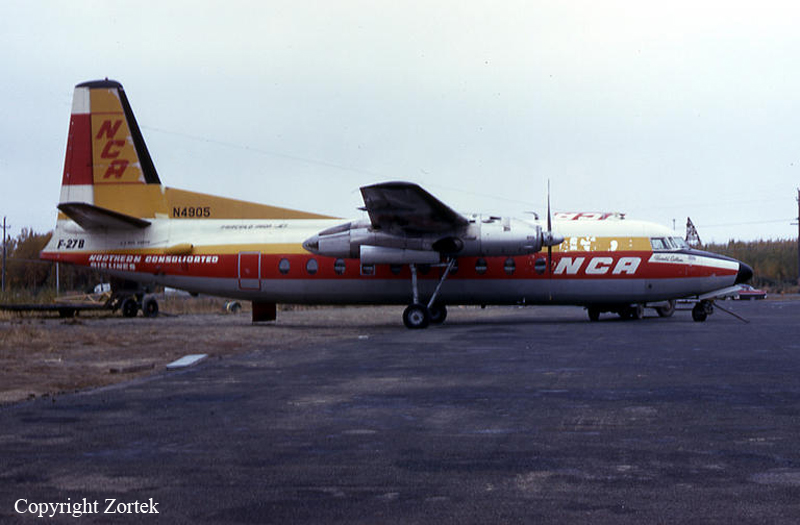
Crash of a Fairchild F27B in Pedro Bay: 39 killed

Date & Time: Dec 2, 1968 at 0936 LT
Type of aircraft:
Operator:
Registration:
N4905
Flight Phase:
Survivors:
No
Schedule:
Anchorage – Iliamna – Big Mountain – King Salmon – Dillingham
MSN:
49
YOM:
1959
Flight number:
WC055
Crew on board:
3
Crew fatalities:
Pax on board:
36
Pax fatalities:
Other fatalities:
Total fatalities:
39
Captain / Total flying hours:
10557
Captain / Total hours on type:
5357.00
Copilot / Total flying hours:
12087
Aircraft flight hours:
17194
Circumstances:
A Wien Consolidated Airlines Fairchild F-27B, N4905, crashed at Pedro Bay, Alaska. The 36 passengers and three crew members were killed in the accident and the aircraft was destroyed by in-flight breakup and ground impact. The aircraft was being operated as Flight 55 in scheduled domestic passenger service between Anchorage International Airport, AK (ANC) and Dillingham Municipal Airport, AK (DLG) with en route stops at Iliamna Airport, AK (ILI), Big Mountain Airport, AK (BMX), and King Salmon Airport, AK (AKN). Flight 55 departed from Anchorage at 08:46 on an instrument flight plan for Iliamna. The flight was cleared to cruise at 16,000 feet. The weather at Iliamna was reported to be clear, and the visibility was 15 miles at the time of the flight's departure from Anchorage. The flight proceeded toward Iliamna without reported difficulty, and at 09:25, the first officer requested a clearance for an approach to Iliamna. This request was approved. No further communication was received from the crew. Ground witnesses in and around the Pedro Bay area reported that they saw a fireball and a large cloud of black smoke which appeared to be behind the wing of the aircraft. The aircraft appeared to continue on course for a short period of time, then pieces of the aircraft were seen falling, and the aircraft entered a spinning descent. The major portion of the wreckage was located on the southern shore of Foxies Lake at an elevation of approximately 220 feet.
Probable cause:
The Board determines that the probable cause of this accident was an in-flight structural failure caused by an encounter with severe to extreme turbulence. This turbulence was not forecast and its presence was not known to the flight crew. The failure occurred in an area of the right wing (WS 197) which had been weakened to an indeterminate degree by pre-existing fatigue cracks.
Final Report:

Crash of a Rockwell Aero Commander 500A in Paducah

Date & Time: Nov 27, 1968 at 1802 LT
Operator:
Registration:
N9381R
Flight Type:
Survivors:
Yes
MSN:
500-896-5
YOM:
1960
Crew on board:
2
Crew fatalities:
Pax on board:
0
Pax fatalities:
Other fatalities:
Total fatalities:
0
Captain / Total flying hours:
1190
Captain / Total hours on type:
300.00
Circumstances:
On final approach to Paducah-Barkley Airport, the crew encountered poor weather conditions with low ceiling, rain and fog. Too low, the twin engine airplane struck trees and crashed few dozen yards short of runway threshold. Both pilots were slightly injured and the aircraft was destroyed.
Probable cause:
The accident was probably caused by the combination of the following factors:
- Improper IFR operation,
- The pilot-in-command exercised poor judgement,
- Low ceiling, rain and fog,
- Visibility 3/4 mile or less,
- The crew continued an instrument approach below landing minimums.
Final Report: