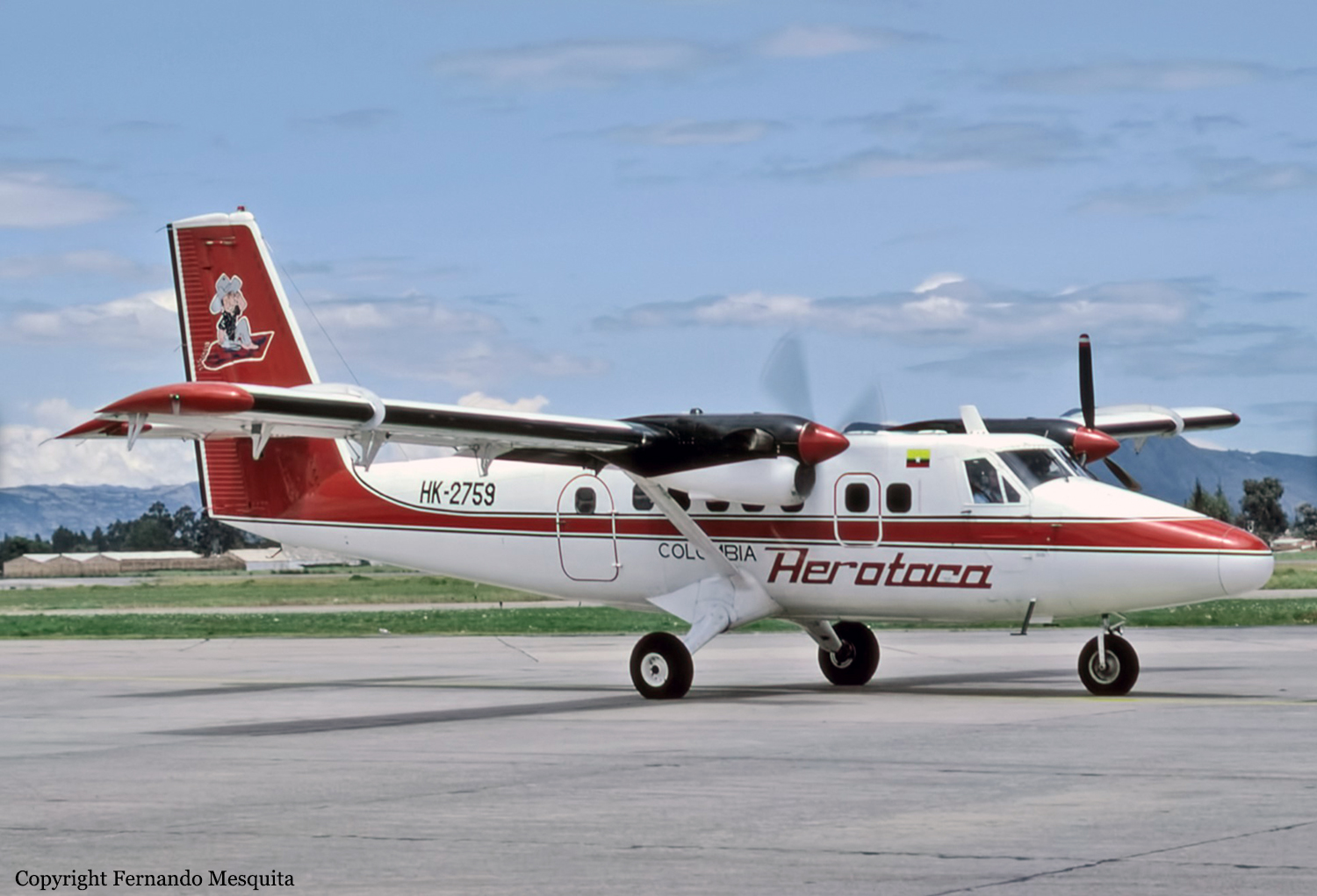
Crash of a De Havilland DHC-6 Twin Otter 300 in Yopal: 2 killed

Date & Time: Jun 6, 1993 at 1330 LT
Operator:

Registration:
HK-2759
Flight Type:
Survivors:
No
Schedule:
Bogotá - Yopal
MSN:
771
YOM:
1981
Location:
Country:
Crew on board:
2
Crew fatalities:
Pax on board:
0
Pax fatalities:
Other fatalities:
Total fatalities:
2
Circumstances:
The crew was completing a cargo flight from Bogotá-El Dorado Airport to Yopal. On final approach in good weather conditions, the crew failed to realize his altitude was too low when the aircraft struck the slope of a mountain (900 metres high) located 5 km short of runway. The aircraft was destroyed upon impact and both pilots were killed.
Probable cause:
It was determined that the mountain was shrouded in light mist and the crew was approaching Yopal Airport below the minimum prescribed altitude for unknown reasons.

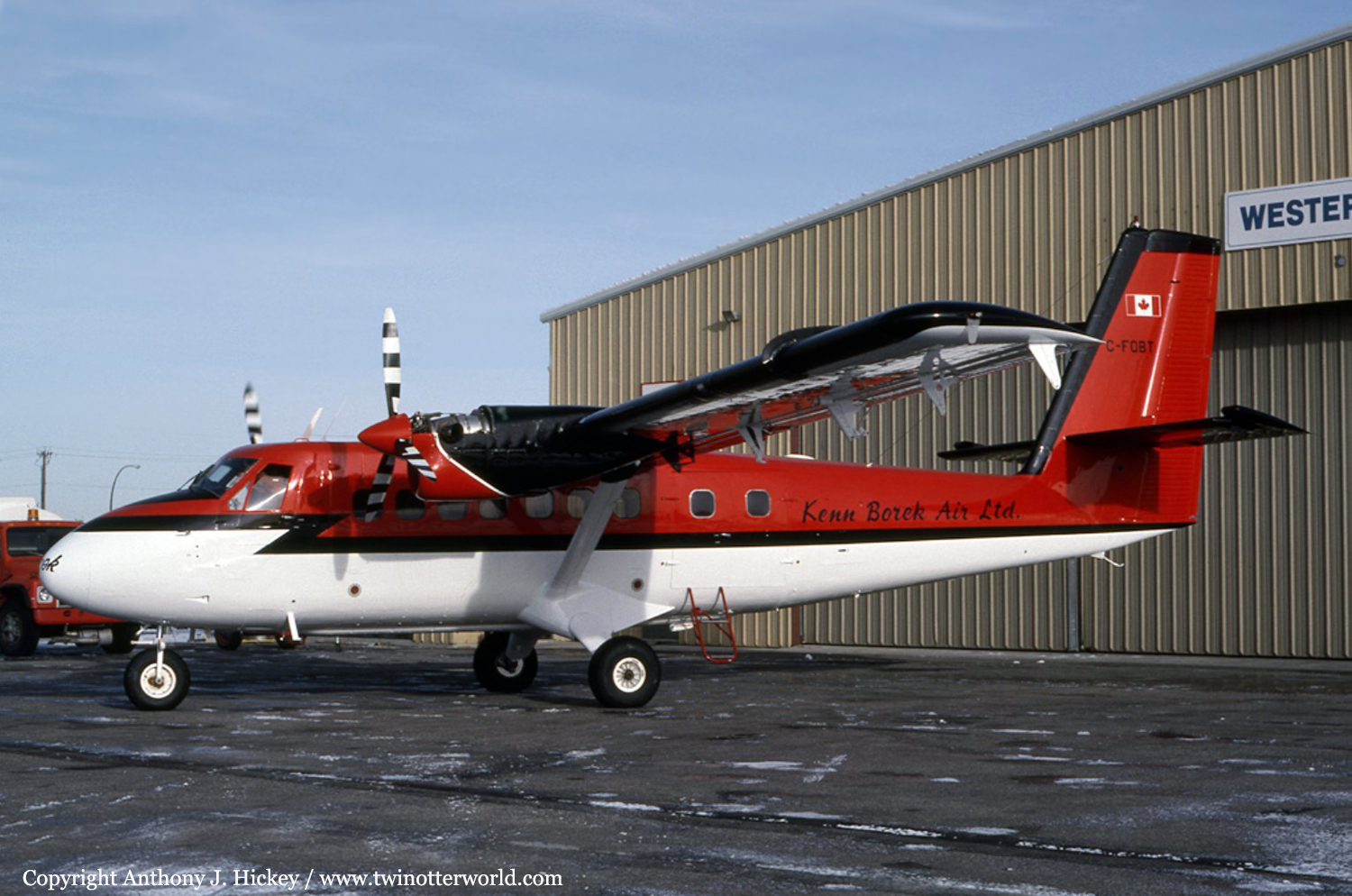
Crash of a De Havilland DHC-6 Twin Otter 100 on Baffin Island

Date & Time: Mar 6, 1993
Operator:
Registration:
C-FQBT
Flight Phase:
Flight Type:
Survivors:
Yes
MSN:
95
YOM:
1968
Country:
Crew on board:
2
Crew fatalities:
Pax on board:
0
Pax fatalities:
Other fatalities:
Total fatalities:
0
Circumstances:
While taking off from an icy lake, the nose gear struck an ice ridge. The aircraft went out of control and collided with the river bank before coming to rest. Both pilots were slightly injured and the aircraft was damaged beyond repair. The accident occurred at 69°58'00.0"N 76°59'00.0"W.

Crash of a De Havilland DHC-6 Twin Otter 200 in Sierra Grande

Date & Time: Dec 31, 1992
Operator:
Registration:
T-83
Flight Phase:
Flight Type:
Survivors:
Yes
MSN:
179
YOM:
1968
Country:
Crew on board:
0
Crew fatalities:
Pax on board:
0
Pax fatalities:
Other fatalities:
Total fatalities:
0
Circumstances:
While taking off from Sierra Grande Airport, the twin engine aircraft was caught by strong crosswinds, went out of control and crashed. There were no casualties but the aircraft was damaged beyond repair. The accident occurred somewhere during 1992 (exact date unknown).

Crash of a De Havilland DHC-6 Twin Otter 100 in Pogapa

Date & Time: Dec 8, 1992
Operator:
Registration:
PK-YPG
Flight Phase:
Flight Type:
Survivors:
Yes
MSN:
49
YOM:
1967
Country:
Region:
Crew on board:
2
Crew fatalities:
Pax on board:
0
Pax fatalities:
Other fatalities:
Total fatalities:
0
Circumstances:
During the takeoff roll at Pogapa Airfield, the aircraft deviated to the right then went out of control. It veered off runway, went down an embankment and came to rest in a ravine. Both pilots escaped uninjured while the aircraft was damaged beyond repair.
Probable cause:
The crew failed to prepare the flight according to published procedures and failed to follow the pre-takeoff checklist as the takeoff maneuver was initiated with the parking brake still engaged.

Crash of a De Havilland DHC-6 Twin Otter 300 in Lake Caballococha: 8 killed

Date & Time: Oct 21, 1992
Operator:
Registration:
OB-1155
Flight Phase:
Survivors:
Yes
MSN:
379
YOM:
1973
Country:
Crew on board:
3
Crew fatalities:
Pax on board:
8
Pax fatalities:
Other fatalities:
Total fatalities:
8
Circumstances:
While approaching Caballococha, the seaplane suffered an engine failure. The crew attempted an emergency landing when the aircraft crashed in Lake Caballococha. Three occupants were injured and eight others killed.
Probable cause:
Engine failure for unknown reasons.

Crash of a De Havilland DHC-6 Twin Otter 300 near El Estrecho: 8 killed

Date & Time: Aug 27, 1992
Operator:
Registration:
OB-1153
Flight Phase:
Survivors:
Yes
Schedule:
Iquitos – El Estrecho
MSN:
316
YOM:
1971
Country:
Crew on board:
3
Crew fatalities:
Pax on board:
18
Pax fatalities:
Other fatalities:
Total fatalities:
8
Circumstances:
En route from Iquitos to El Estrecho, the crew encountered engine problems and elected to make an emergency landing on the Río Algodón when the aircraft struck trees and crashed in a dense wooded area, about 22 km south of El Estrecho. Both pilots and six passengers were killed while 13 other occupants were injured.

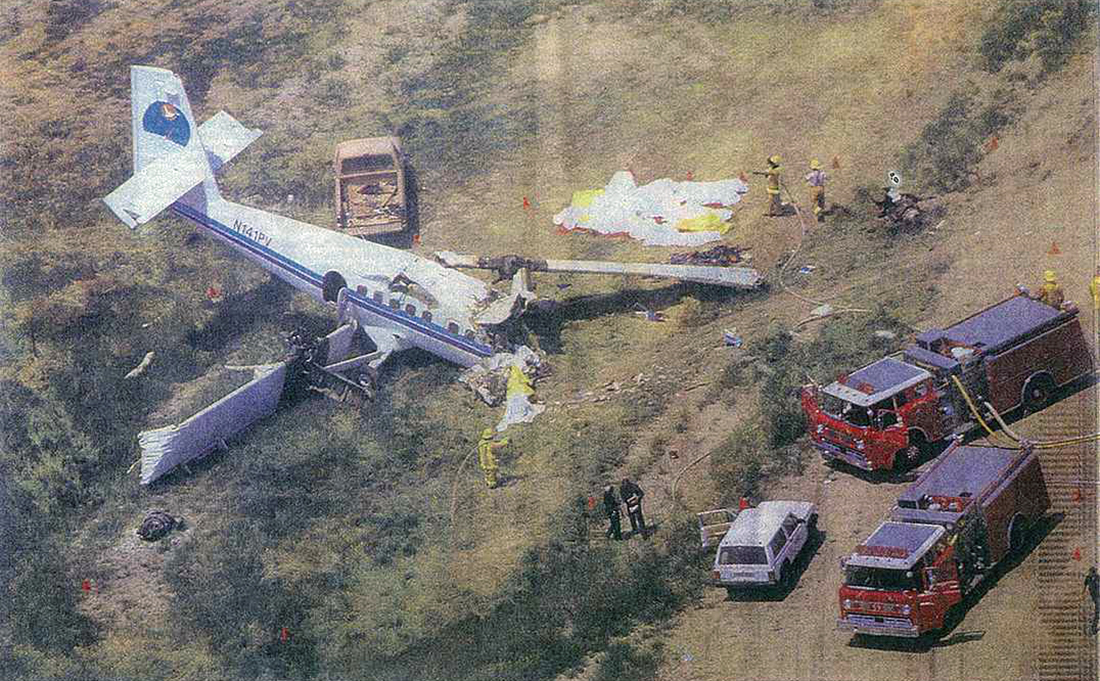
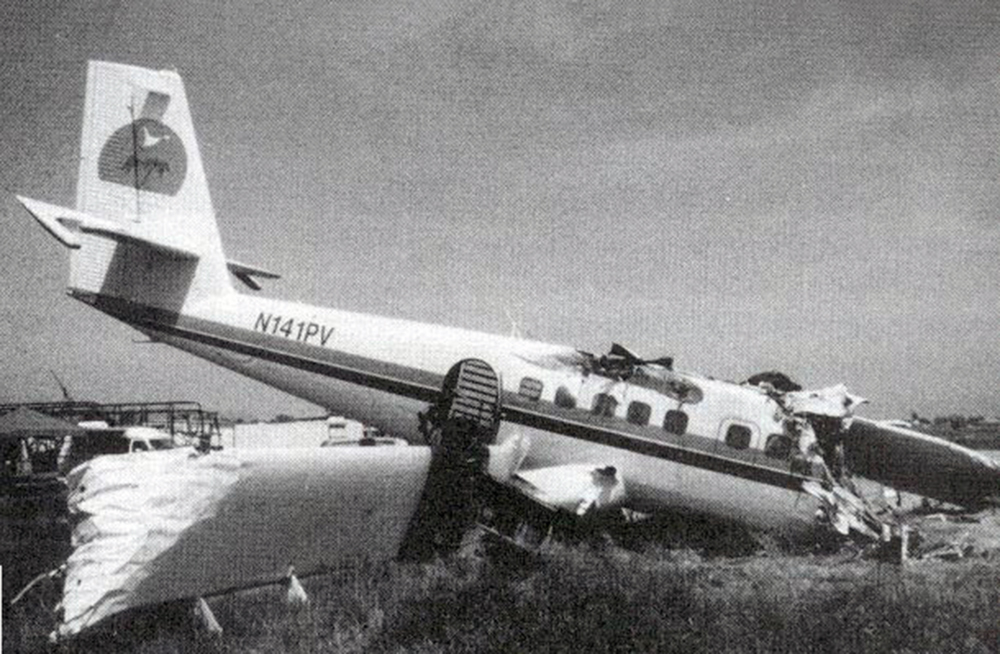
Crash of a De Havilland DHC-6 Twin Otter 200 in Perris Valley: 16 killed

Date & Time: Apr 22, 1992 at 1109 LT
Operator:
Registration:
N141PV
Flight Phase:
Survivors:
Yes
Schedule:
Perris Valley - Perris Valley
MSN:
141
YOM:
1968
Crew on board:
2
Crew fatalities:
Pax on board:
20
Pax fatalities:
Other fatalities:
Total fatalities:
16
Captain / Total flying hours:
4300
Captain / Total hours on type:
100.00
Aircraft flight hours:
29391
Circumstances:
The ground loader had fueled the airplane from the airport fuel truck. He stated that the flight crew did not sump the fuel tanks after they were fueled. Immediately after takeoff the right engine lost power, the right wing lowered to about 90°, and the airplane impacted the ground adjacent to the runway. Then forward fuel tank, which provides fuel to the right engine, was found to contain about 8 gallons of a heavily contaminated mixture composed of water, an emulsifying agent, and bacterial growth. The fuel from the airport fuel truck and main underground tank contained the same mixture. Fuel had been transferred from the underground tank to the truck on the evening preceding the accident. The left propeller control was found seized in the feather position; left propeller blades in the near feather position. Six skydivers were injured while 16 other occupants including both pilots were killed.
Probable cause:
The pilot-in-command's inadvertent feathering of the wrong propeller following an engine power loss, and the failure of the operator to assure that the pilot was provided with adequate training in the airplane. Factors related to the accident were: water contamination of fuel in the airport storage tanks, the operator's lack of fuel quality control procedures, improper fuel servicing, improper preflight by the pilot(s), and exceeding the gross weight/forward cg limits of the airplane.
Final Report:

Crash of a De Havilland DHC-6 Twin Otter 300 in Etsouali: 3 killed

Date & Time: Mar 12, 1992
Operator:
Registration:
TN-ACX
Flight Phase:
Survivors:
Yes
Schedule:
Owando - Brazzaville
MSN:
452
YOM:
1975
Country:
Region:
Crew on board:
3
Crew fatalities:
Pax on board:
5
Pax fatalities:
Other fatalities:
Total fatalities:
3
Circumstances:
En route from Owando to Brazzaville, while in cruising altitude, the crew encountered stormy weather when the aircraft lost height and crashed in a prairie. All five passengers were seriously injured and all three crew members were killed. The loss of control occurred in thunderstorm activity.

Crash of a De Havilland DHC-6 Twin Otter 200 in Poste-Montagnais

Date & Time: Jan 20, 1992 at 1510 LT
Operator:
Registration:
C-FHNM
Flight Phase:
Flight Type:
Survivors:
Yes
Schedule:
Poste-Montagnais - Seven Islands
MSN:
127
YOM:
1968
Country:
Crew on board:
2
Crew fatalities:
Pax on board:
0
Pax fatalities:
Other fatalities:
Total fatalities:
0
Circumstances:
During the takeoff roll on icy runway 18, the aircraft deviated to the left but the crew continued the takeoff procedure. At liftoff, the aircraft struck a 1,2 metre snowdrift and crashed, coming to rest upside down. Both pilots escaped uninjured and the aircraft was damaged beyond repair and later transferred to Norway on static display.

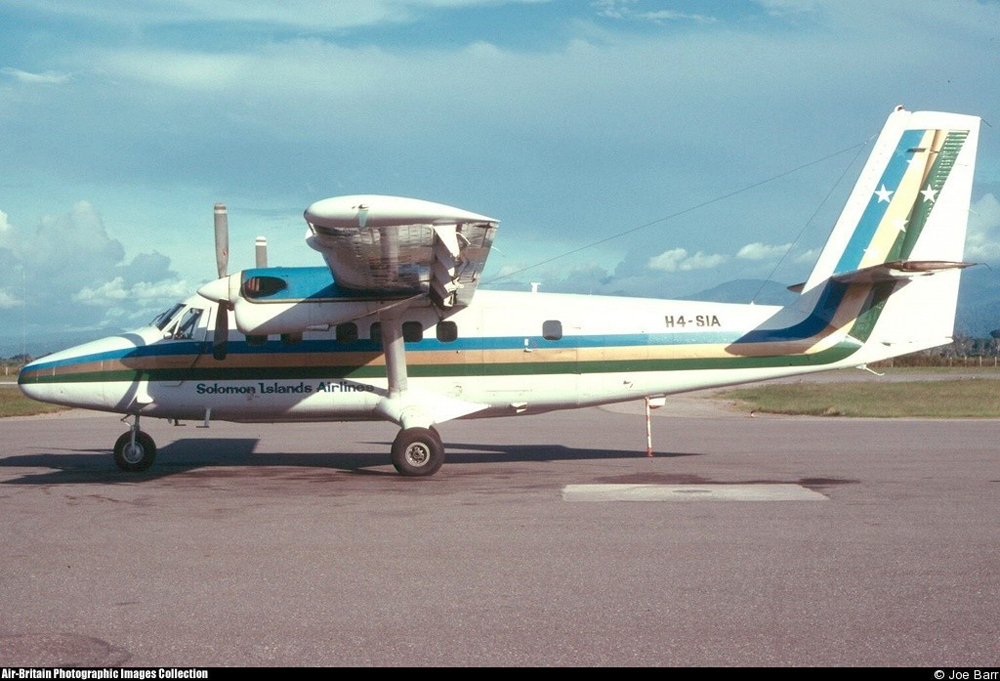
Crash of a De Havilland DHC-6 Twin Otter 300 on Mt Nasuha: 15 killed

Date & Time: Sep 27, 1991
Operator:
Registration:
H4-SIA
Flight Phase:
Survivors:
No
Site:
Schedule:
Honiara - Kirakira
MSN:
271
YOM:
1969
Region:
Crew on board:
2
Crew fatalities:
Pax on board:
13
Pax fatalities:
Other fatalities:
Total fatalities:
15
Circumstances:
The aircraft departed Honiara-Henderson Airport on a flight to Kirakira, carrying 13 passengers and two pilots. En route, the crew encountered poor weather conditions and while cruising at an altitude of 4,100 feet in poor visibility, the aircraft struck the southern slope of Mt Nasuha located in the southeast part of the Guadalcanal Island. The wreckage was found three days later in an isolated area and all 15 occupants were killed. It was reported that a local DME system was out of service at the time of the accident due to maintenance and the crew was flying under VFR mode in IMC conditions.
Probable cause:
Controlled flight into terrain.