


Country
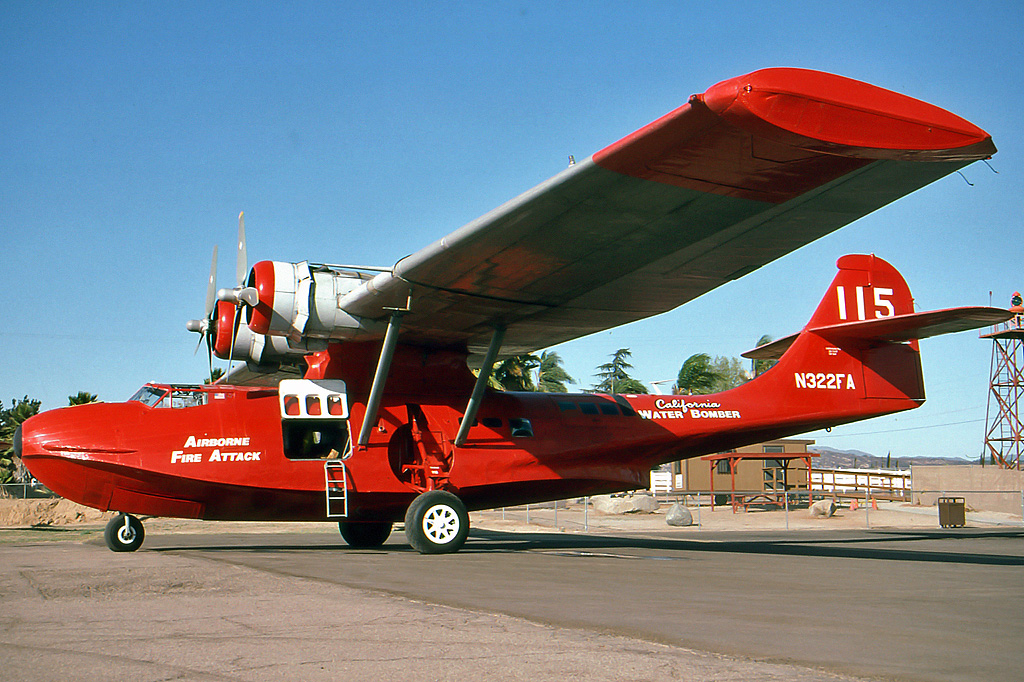
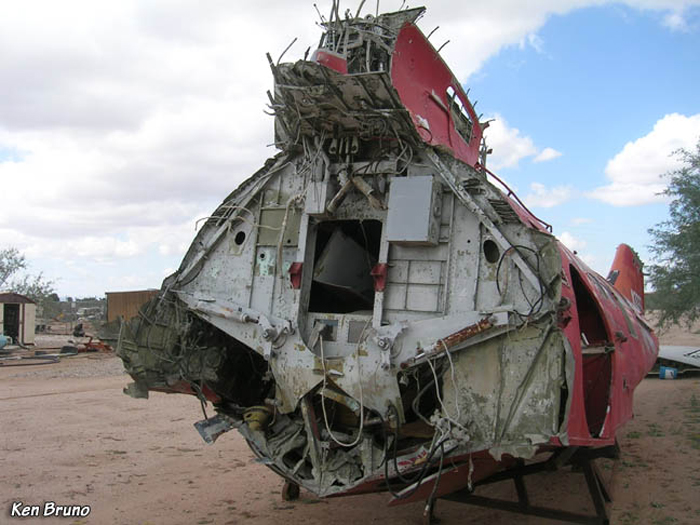
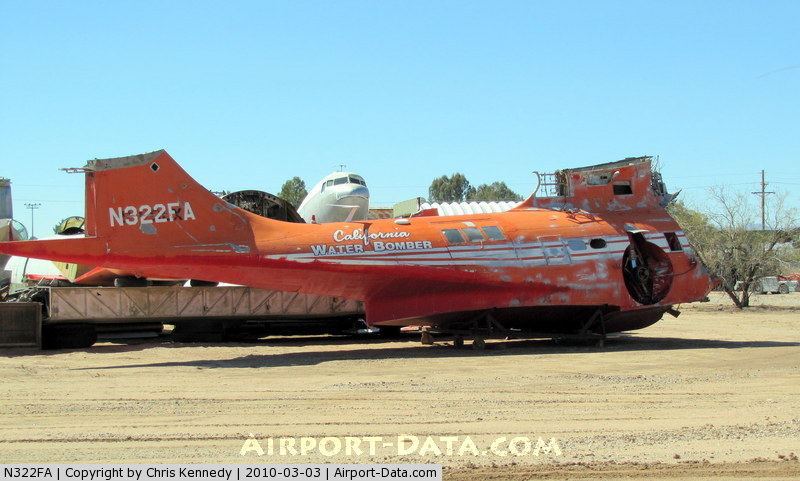
Crash of a Canadian Vickers PBV-1A Canso A in the San Vicente Reservoir
Date & Time:
Aug 1, 1997 at 1500 LT
Registration:
N322FA
Survivors:
Yes
Schedule:
Santa Ana - Santa Ana
MSN:
CV-560
YOM:
1944
Crew on board:
2
Crew fatalities:
Pax on board:
0
Pax fatalities:
Other fatalities:
Total fatalities:
0
Captain / Total hours on type:
160.00
Aircraft flight hours:
17427
Circumstances:
After touching down to scoop another load of water, the pilot added power and the aircraft pitched forward. The pilot heard a pop and felt a sudden decelerative force. When the nose began to bowsuck, he applied more back pressure but the aircraft did not respond. The floor split open and water began rushing into the cockpit. The left nose gear door locking pin was found separated from its hydraulic actuator. It displayed a bend that corresponded to its retracted position in the pin guide. The deformation prevented investigators from reinserting the damaged pin back through the guide. The left mycarta block remained attached to the door and did not exhibit any damage.
Probable cause:
The implosion of the unlocked left nose gear door which resulted in the hydraulic disintegration of the forward fuselage. The cause of the locking pin actuator malfunction was not determined.
Final Report:
Crash of a Canadian Vickers PBV-1A Canso in Lac-Caché: 1 killed
Date & Time:
Jul 18, 1987
Registration:
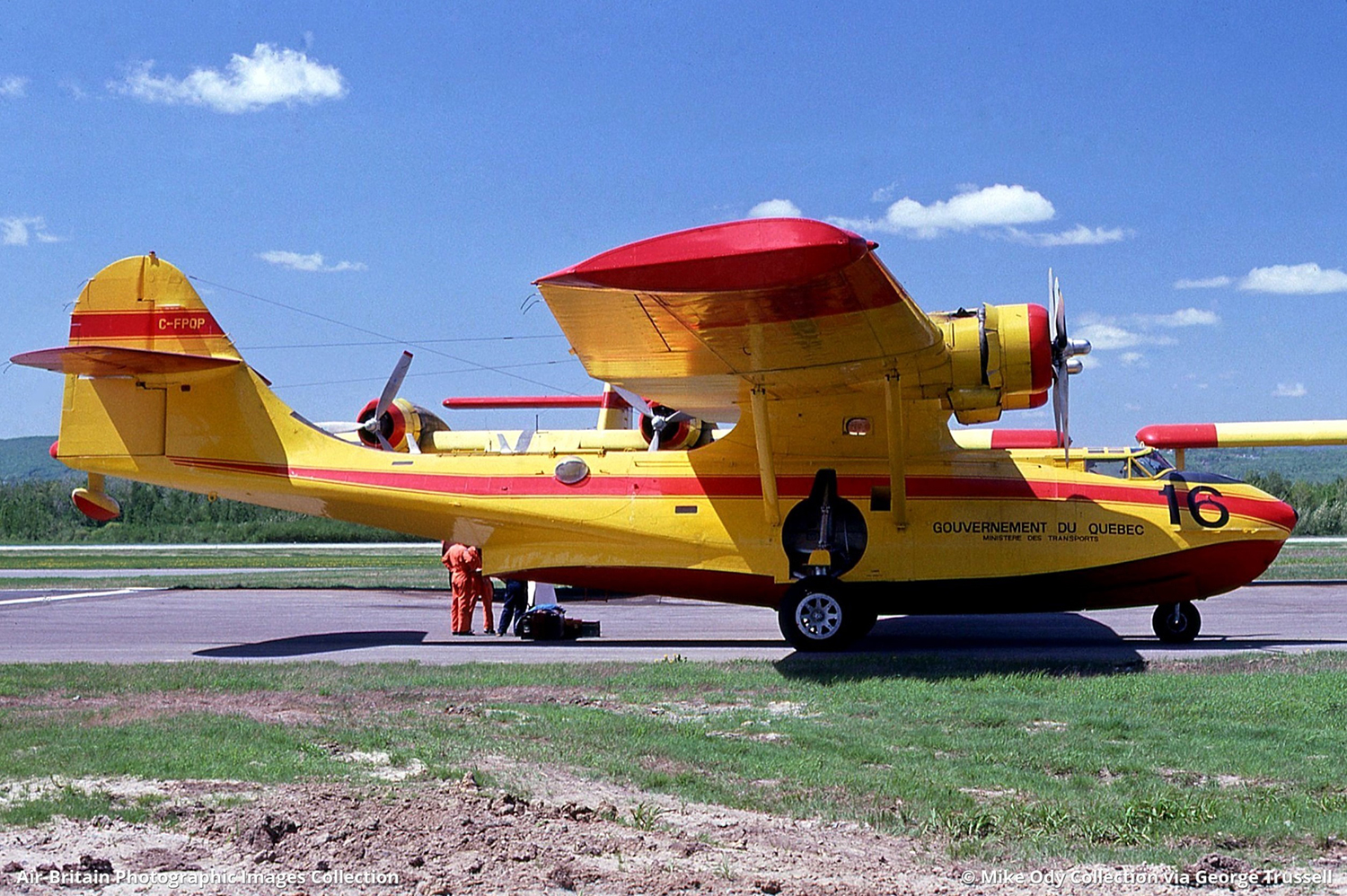
C-FPQP
Survivors:
Yes
Schedule:
Lac-Caché - Lac-Caché
MSN:
CV-407
YOM:
1944
Flight number:
Tanker 16
Crew on board:
2
Crew fatalities:
Pax on board:
0
Pax fatalities:
Other fatalities:
Total fatalities:
1
Circumstances:
The crew was completing a training mission at Lac-Caché, consisting of touch-and-go and scooping maneuvers. For unknown reasons, the seaplane landed hard, overturned and sank. The pilot Benoît Samson was killed and the second was injured. The airplane was operated under callsign Tanker 16/Quebec 716.
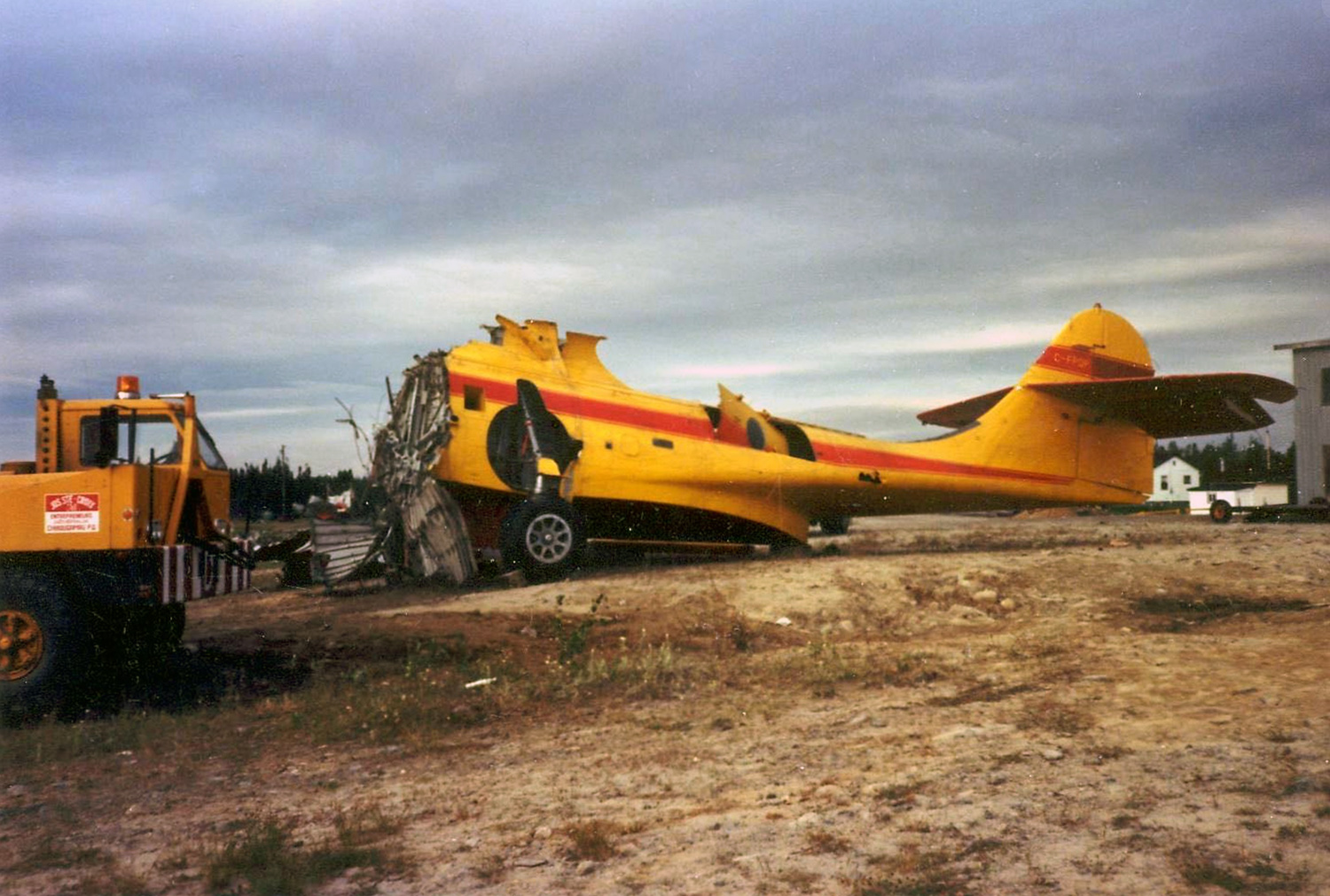
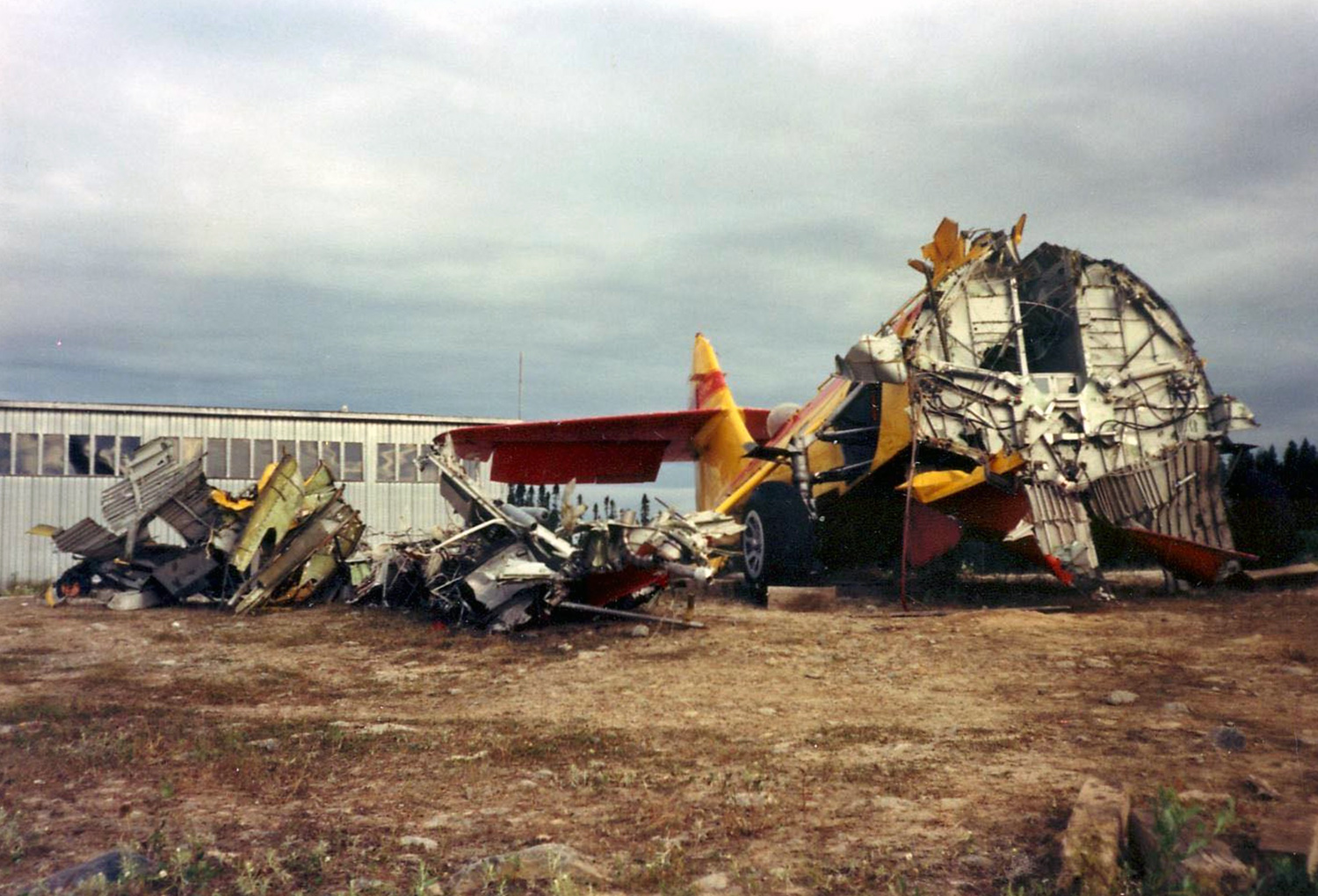
Crash of a Canadian Vickers PBV-1A Canso in Thunder Bay
Date & Time:
May 14, 1984
Registration:
C-GFFD
Survivors:
Yes
Schedule:
Thunder Bay - Thunder Bay
MSN:
CV-441
YOM:
1944
Flight number:
Tanker 5
Crew on board:
2
Crew fatalities:
Pax on board:
0
Pax fatalities:
Other fatalities:
Total fatalities:
0
Circumstances:
After takeoff from Thunder Bay, while climbing, the right engine failed while the left engine lost power. The aircraft descended, struck obstacles and eventually crashed in a prairie. Both pilots were injured and the aircraft was destroyed.
Probable cause:
Failure of both engines during initial climb because the fuel was contaminated by water.
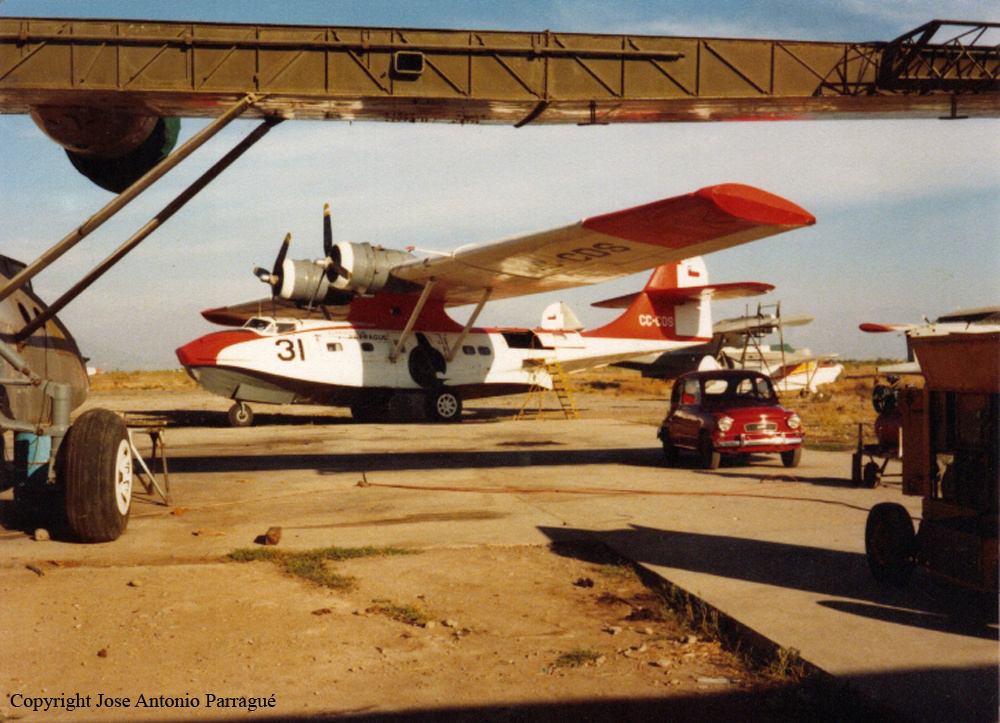
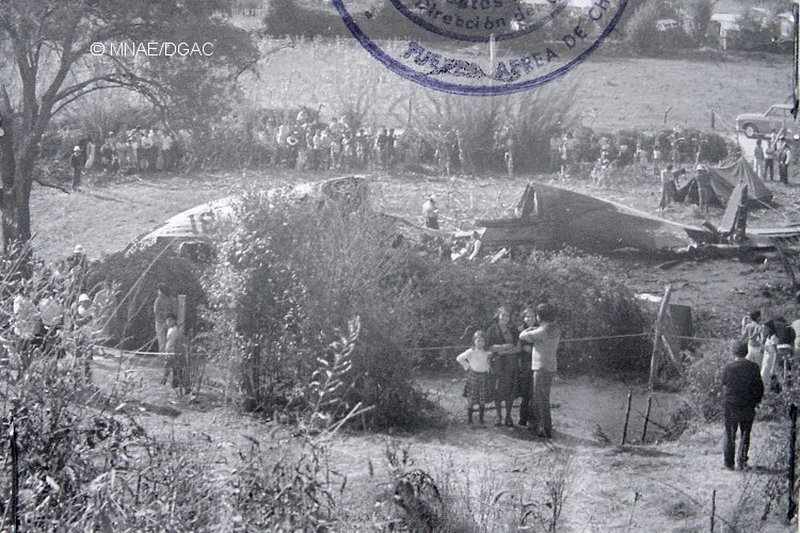
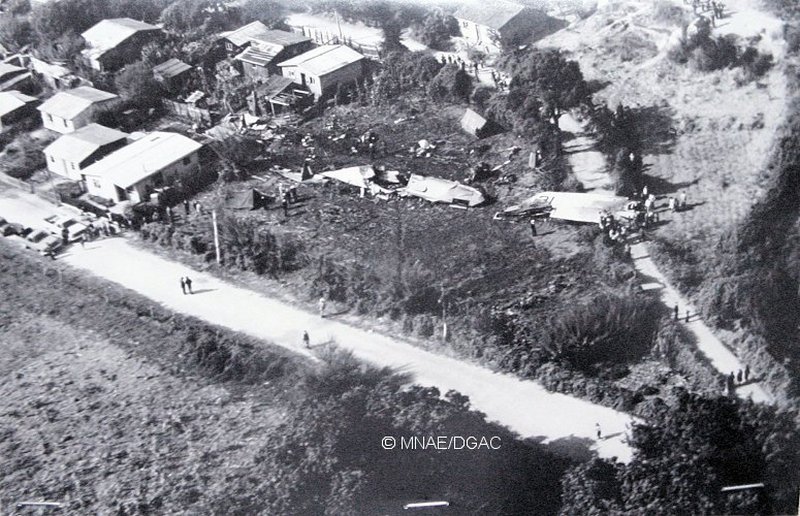
Crash of a Canadian Vickers PBV-1A Canso A in Chiguayante: 3 killed
Date & Time:
Apr 18, 1979 at 1520 LT
Registration:
CC-CDS
Survivors:
No
MSN:
CV-281
YOM:
1941
Flight number:
Canso 31
Crew on board:
3
Crew fatalities:
Pax on board:
0
Pax fatalities:
Other fatalities:
Total fatalities:
3
Circumstances:
The crew was engaged in a fire fighting mission under callsign 'Canso 31'. While approaching the fire zone at low height and ready to drop 5,000 liters of water, the airplane struck a pine tree with its left wing. Out of control, it crashed in a garden located in the district of Manquimávida, northeast of Chiguayante. Both pilots were killed instantly while the third occupant was seriously injured. He died while being transferred to the hospital.
Crew:
Carlos Paris Maldonado, pilot,
Rolf Taucher, copilot,
Jaime López Morales, observer.
Crew:
Carlos Paris Maldonado, pilot,
Rolf Taucher, copilot,
Jaime López Morales, observer.
Probable cause:
Poor judgement on part of the flying crew who failed to see and avoid obstacles while flying at low height.
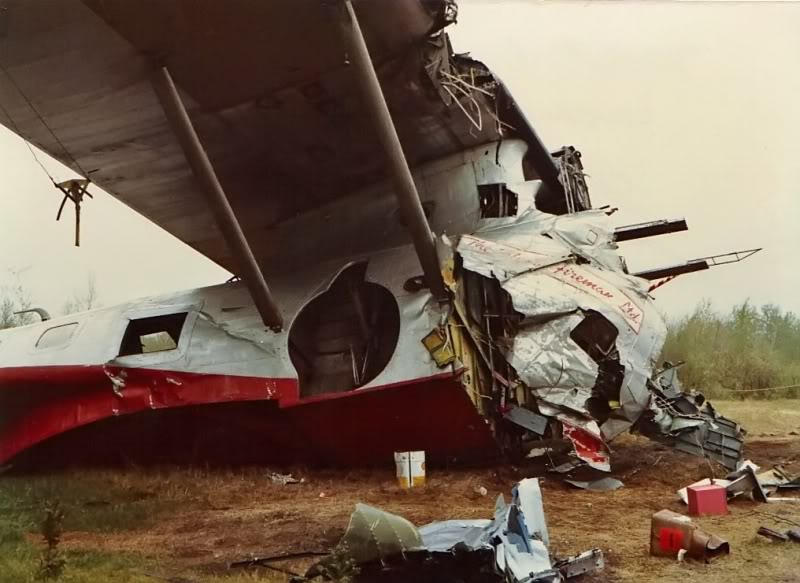
Crash of a Canadian Vickers PBV-1A Canso near Snow Lake: 2 killed
Date & Time:
May 21, 1978
Registration:
CF-NTL
Survivors:
No
MSN:
CV-383
YOM:
1944
Crew on board:
2
Crew fatalities:
Pax on board:
0
Pax fatalities:
Other fatalities:
Total fatalities:
2
Circumstances:
The crew was flying at low altitude while completing a firefighting mission when the right engine partially failed. The airplane lost height and crashed, killing both occupants.
Probable cause:
it is believed that the right engine malfunction was probably caused by a momentary fuel starvation due to an asymmetric fuel load.
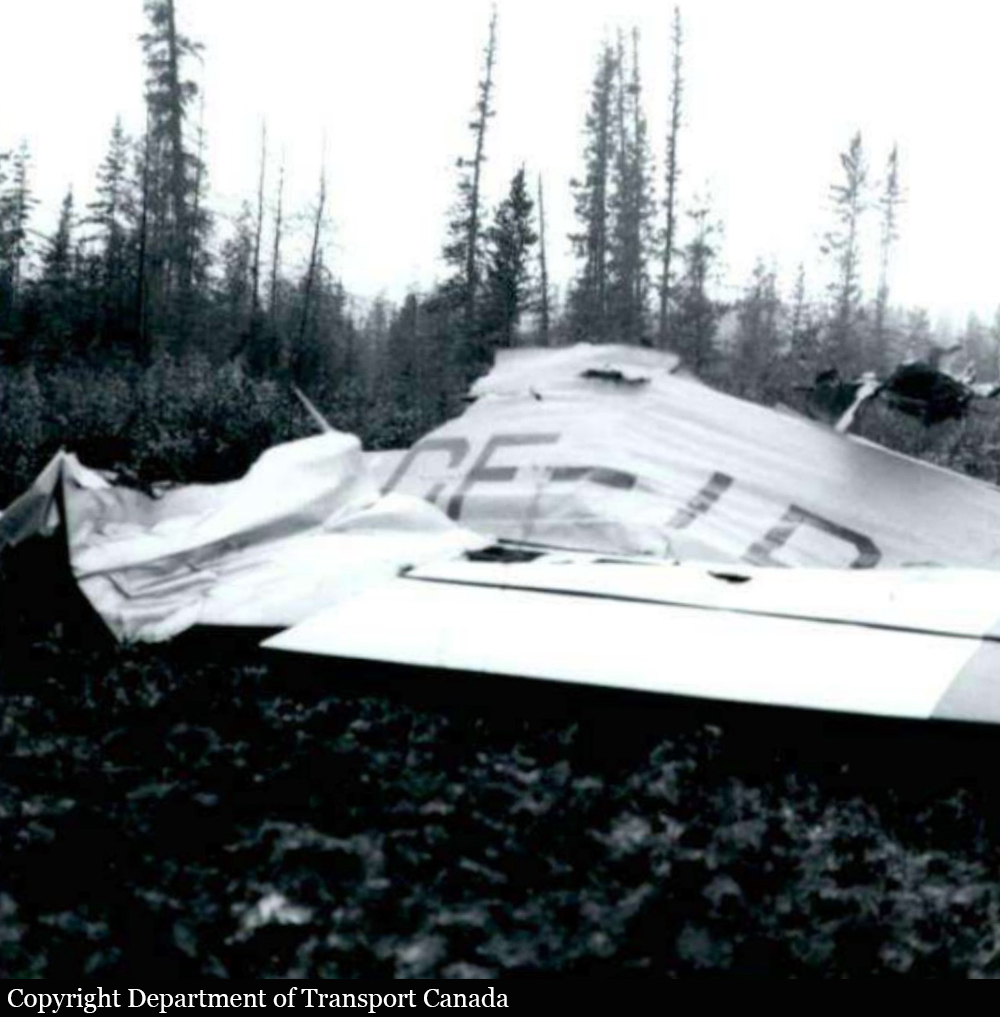
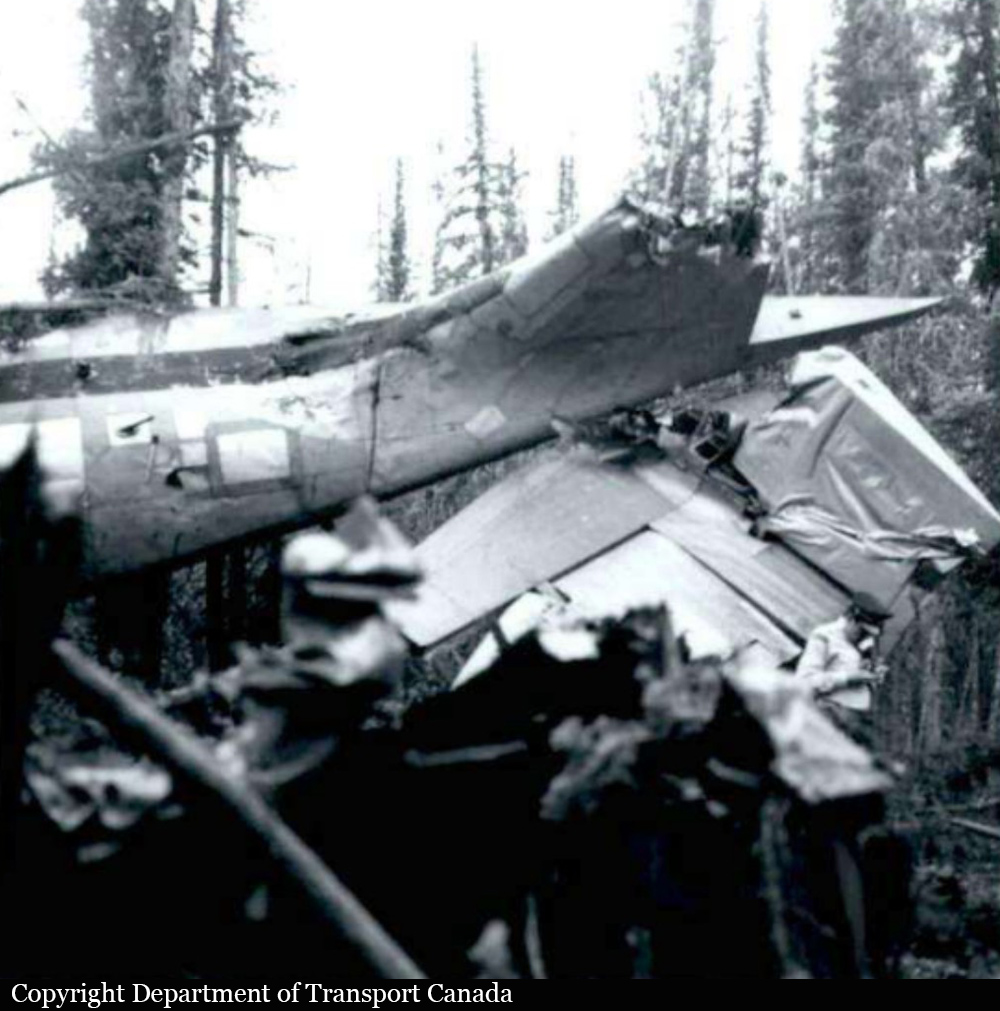
Crash of a Canadian Vickers PBV-1A Canso in Pine Point: 2 killed
Date & Time:
Sep 3, 1971 at 1445 LT
Operator:

Registration:
CF-IDS
Survivors:
No
Schedule:
Fort Smith - Fort Smith
MSN:
CV-311
YOM:
1943
Crew on board:
2
Crew fatalities:
Pax on board:
0
Pax fatalities:
Other fatalities:
Total fatalities:
2
Captain / Total hours on type:
990.00
Copilot / Total hours on type:
193
Circumstances:
The airplane registered CF-HTN had completed a water drop on a fire at 60° 33' N and 113° 03' W and after completion of the drop flew to the vicinity of a helicopter which had crashed earlier that day, approximately 1,5 mile west of the fire being bombed. CF-HTN circled the wreckage to the right and reported the crash on VHF radio to Fort Smith aeradio on a frequency of 122.2. CF-HTN continued to circle around the crashed helicopter to the right. The circle was widened to the northwest on the last circuit and the flight path of the aircraft changed for a near direct path over the helicopter from the north when CF-HTN collided with CF-IDS, a Canadian Vickers PBV-1A Canso operated by North Canada Air (Norcanair). This airplane was also engaged in water bombing the same fire location as was CF-HTN. It approached the fire from a southerly direction and dropped its load of water on the fire. After the drop the aircraft went into a climbing left turn. During this turn, CF-IDS collided with CF-HTN. Physical evidence at the scene showed collision contact to be the left wing of CF-HTN and the right wing of CF-IDS. Collision contact broke off one half of the right wing of CF-IDS. Loss of this portion of wing caused the aircraft to roll to the right and crash. Collision contact broke off the outer one-third of the left wing of CF-HTN. In addition, the float and tip portion of the wing of CF-IDS struck the left stabilizer and elevator of CF-HTN breaking these controls off the aircraft. CF-HTN rolled to the left and crashed. There is no evidence of any evasive action nor that either crew saw anything of the other aircraft. Both airplanes were destroyed and all four crew members were killed.
Crew:
William Koshylanyk, pilot,
Peter John Willms, copilot.
Crew:
William Koshylanyk, pilot,
Peter John Willms, copilot.
Probable cause:
There was no malfunction in either aircraft. This conclusion cannot be proven by physical evidence but is based on a lack of any radio messages indicating any problems, corroborated to the extent possible by evidence of witnesses. None of the witnesses reported anything which would tend to indicate an apparent malfunction prior to the collision. The investigators considered the possibility of malfunction and carried out some technical investigation of each aircraft. It was considered that there was sufficient evidence to exclude malfunction as a likely factor. The technical investigation was not detailed except to determine how the collision occurred. Concern for an injured helicopter pilot caused one bomber to alter his circuit in the fire area. Subsequently, the two bombers were on converging paths. None of the crew members saw the other bomber in sufficient time to take effective evasive action. The collision occurred at a time when all four crew members would be busy.
To obtain the final report, please refer to the CF-HTN file.
To obtain the final report, please refer to the CF-HTN file.
Crash of a Canadian Vickers PBV-1A Canso in Rhinelander: 2 killed
Date & Time:
Oct 15, 1970 at 0940 LT
Registration:
N610FF
Survivors:
Yes
Schedule:
Rhinelander - Rhinelander
MSN:
CV-399
YOM:
1941
Crew on board:
3
Crew fatalities:
Pax on board:
2
Pax fatalities:
Other fatalities:
Total fatalities:
4
Captain / Total hours on type:
3507.00
Circumstances:
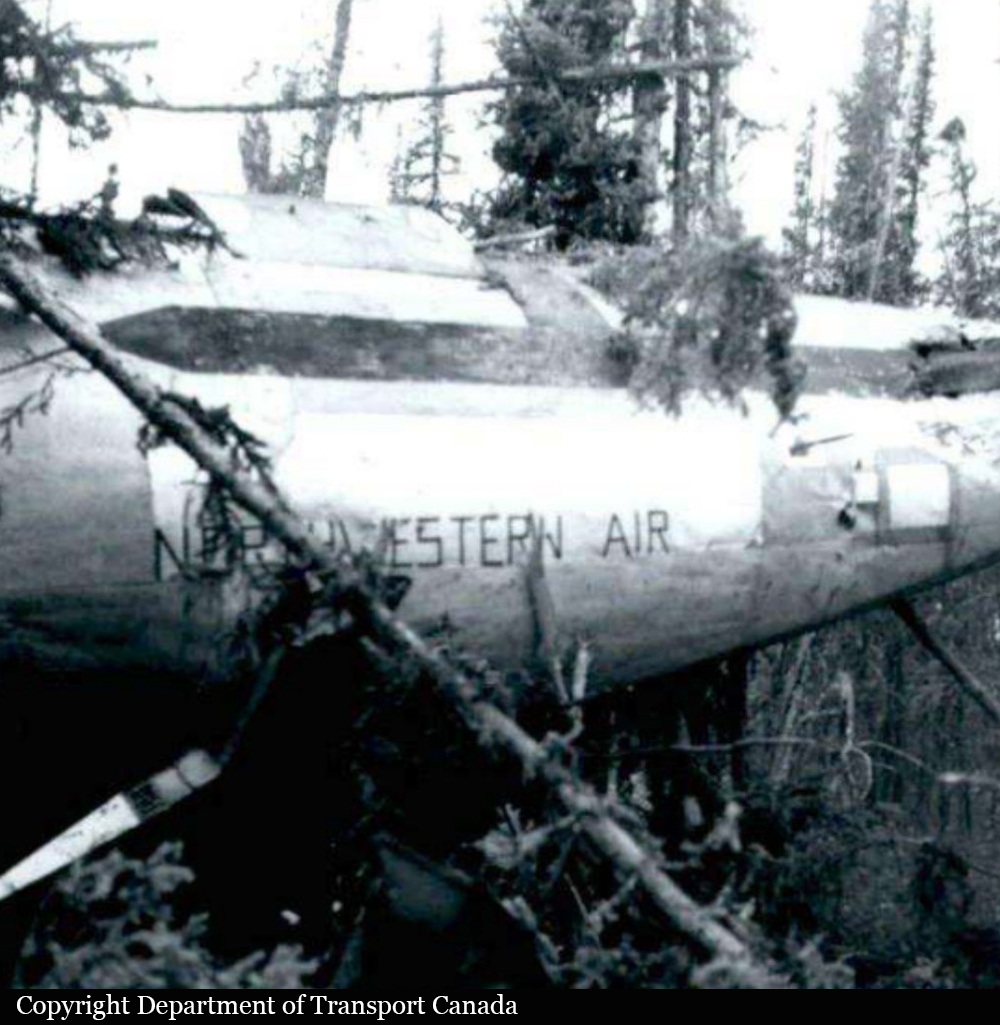
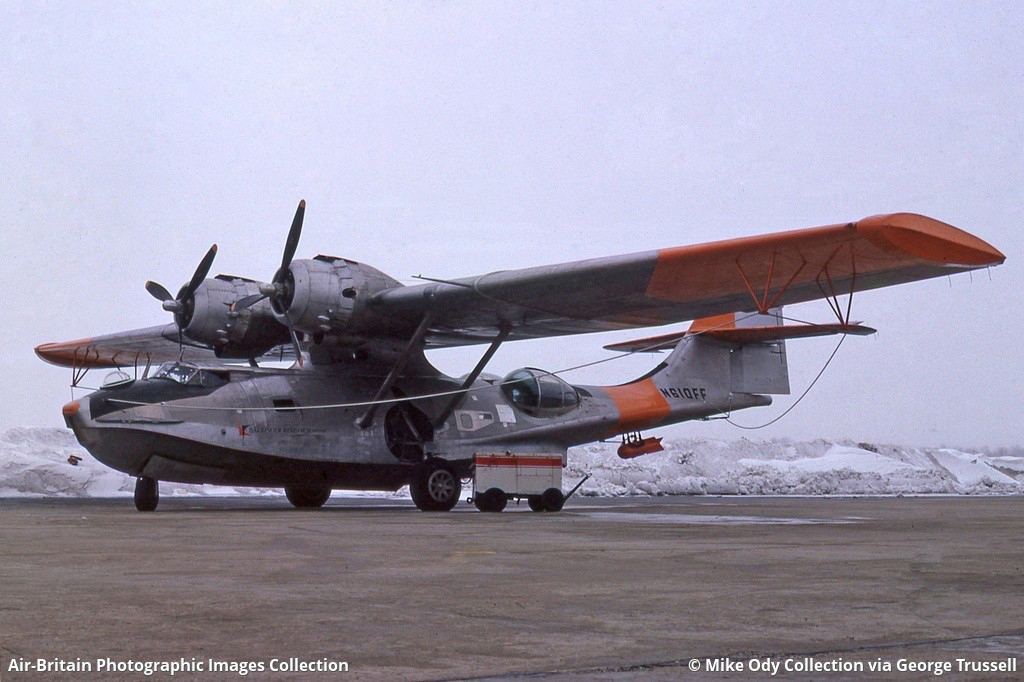
The crew (pilots and technicians) were engaged in a local test flight consisting of an electric equipment post maintenance check. After liftoff, while in initial climb, the seaplane encountered difficulties to gain height, stalled and crashed in flames in an open field. Both pilots were killed while three other occupants were seriously injured. The aircraft was destroyed.
Probable cause:
Inadequate preflight preparation on part of the crew who failed to obtain/maintain flying speed at takeoff. It was determined that the airplane stalled due to an excessive accumulation of ice on airframe. At the time of the accident, approximately 50% of frost accumulated on aircraft that was not de-iced prior to takeoff. Mineral research and electric test flight.
Final Report:
Crash of a Canadian Vickers PBV-1A Canso A off Gilleleje: 1 killed
Date & Time:
Dec 11, 1969 at 1348 LT
Operator:

Registration:
L-853
Survivors:
Yes
Schedule:
Værløse - Værløse
MSN:
CV-316
YOM:
1944
Crew on board:
5
Crew fatalities:
Pax on board:
3
Pax fatalities:
Other fatalities:
Total fatalities:
1
Circumstances:
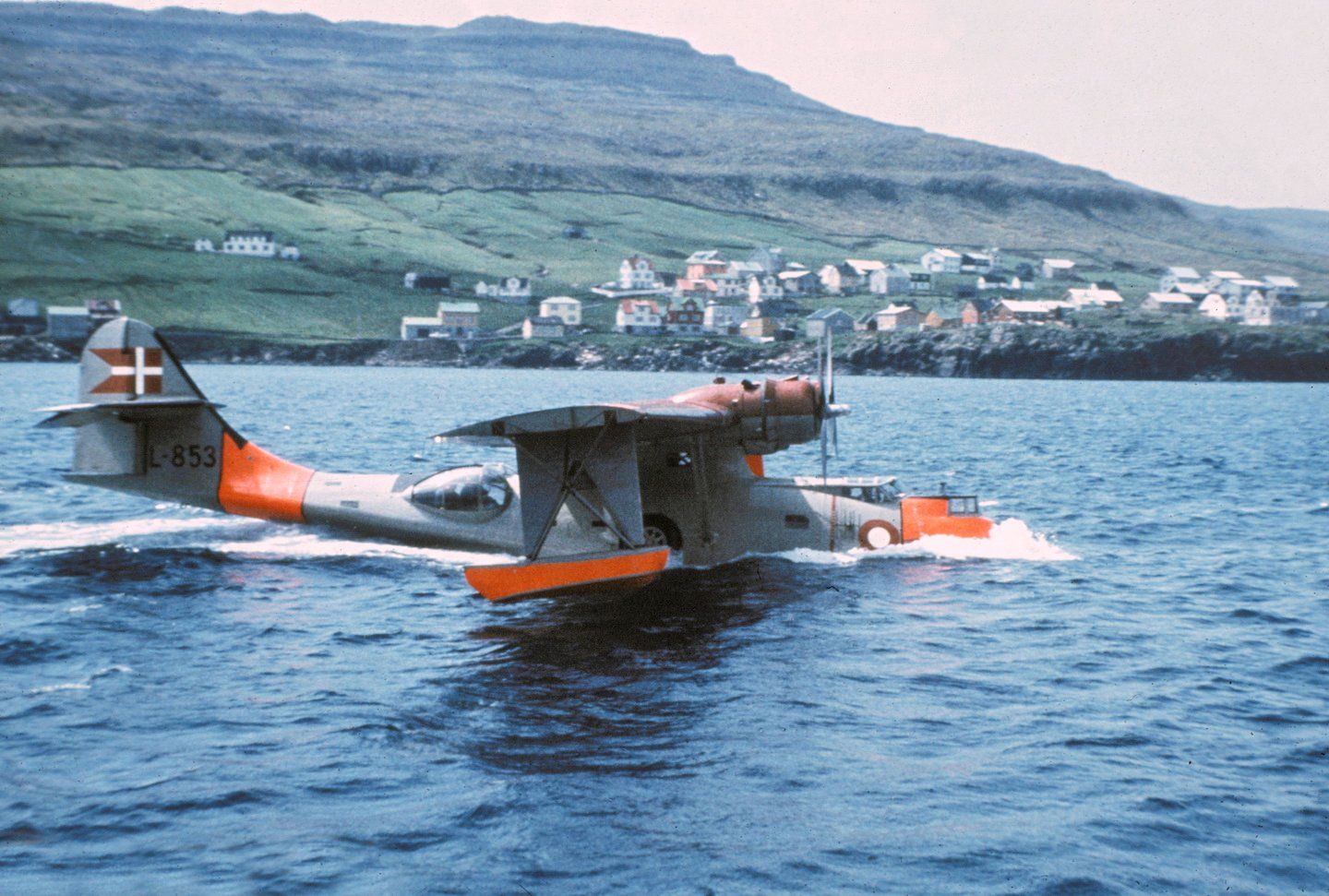
The seaplane aircraft departed Værløse AFB on a training flight with three passengers and a crew of five on board. After completing landings into the sea off Gilleleje, the crew prepared for a second landing when the airplane struck the water surface in a nose-down attitude, plunged into the sea and sank by a depth of 12 meters, some 4,6 km offshore. A crew member was killed while seven other occupants were rescued.
Crash of a Canadian Vickers PBV-1A Canso A off Canutama: 4 killed
Date & Time:
Oct 17, 1968 at 1405 LT
Operator:

Registration:
PP-PCW
Survivors:
Yes
MSN:
CV-429
YOM:
1944
Crew on board:
5
Crew fatalities:
Pax on board:
9
Pax fatalities:
Other fatalities:
Total fatalities:
4
Circumstances:
Upon landing on the Rio Purus off Canutama, the seaplane was apparently in a wrong attitude, nosed down and came to rest partially submerged. Four passengers were killed while 10 other occupants were rescued.

