


Date & Time:
Sep 3, 1971 at 1445 LT
Type of aircraft:
Canadian Vickers PBV-1 Canso (OA-10 Canso)
Operator:

Registration:
CF-IDS
Flight Phase:
Flight
Flight Type:
Fire fighting
Survivors:
No
Site:
Plain, Valley
Schedule:
Fort Smith - Fort Smith
MSN:
CV-311
YOM:
1943
Country:
Canada
Region:
North America
Crew on board:
2
Crew fatalities:
2
Pax on board:
0
Pax fatalities:
0
Other fatalities:
0
Total fatalities:
2
Captain / Total hours on type:
990
Copilot / Total hours on type:
193
Circumstances:
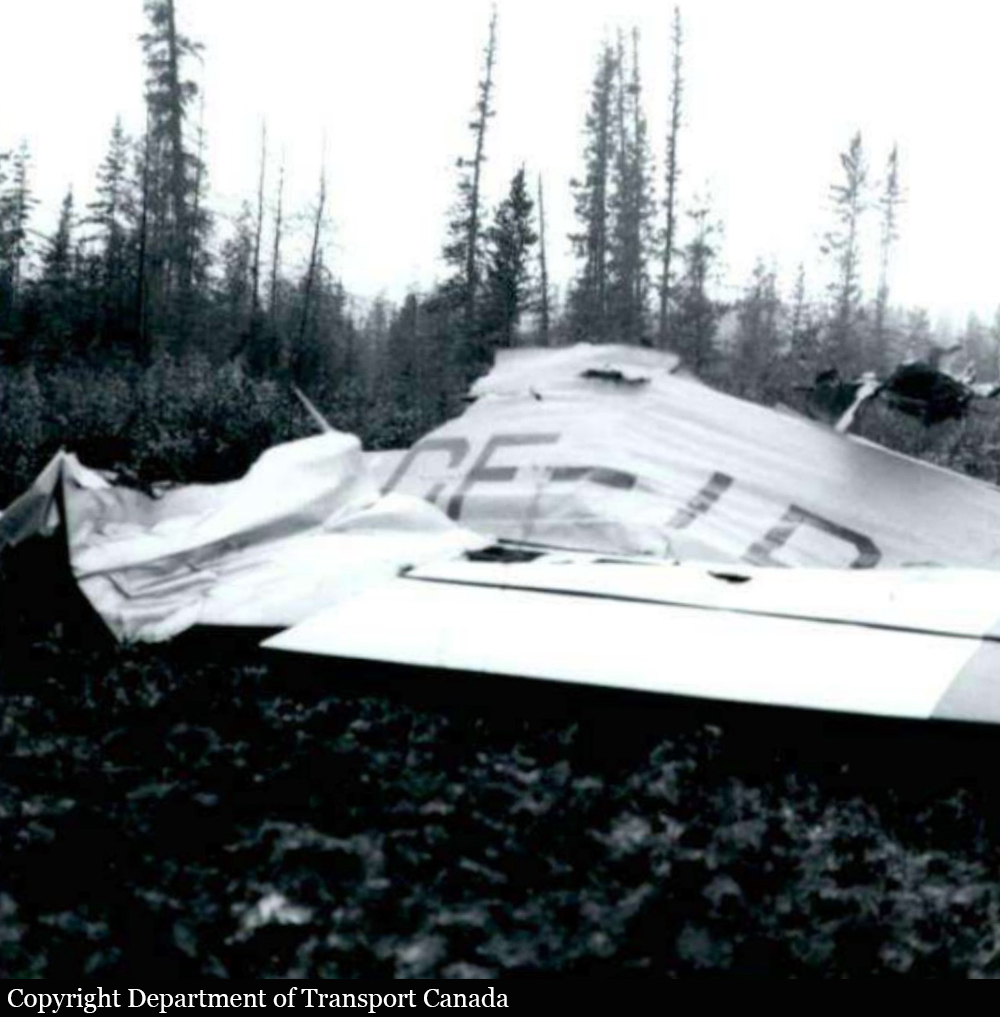
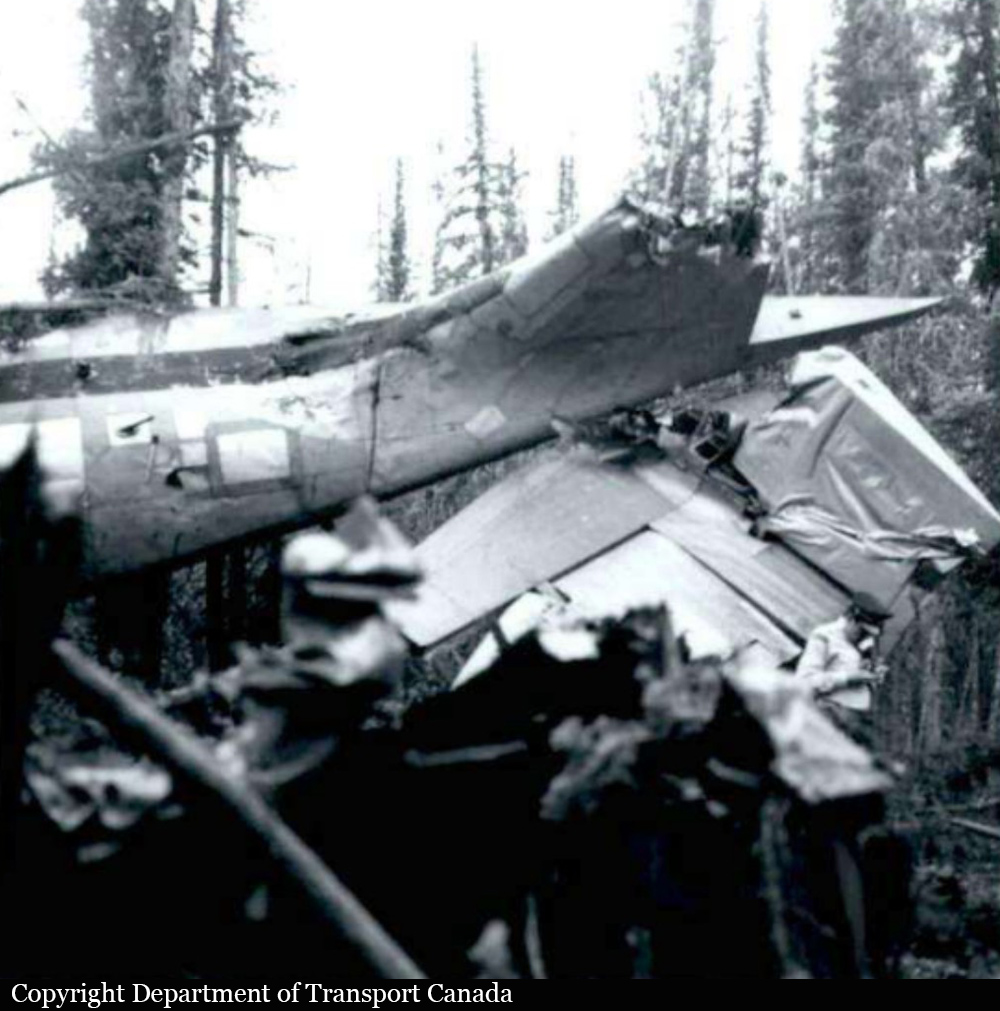
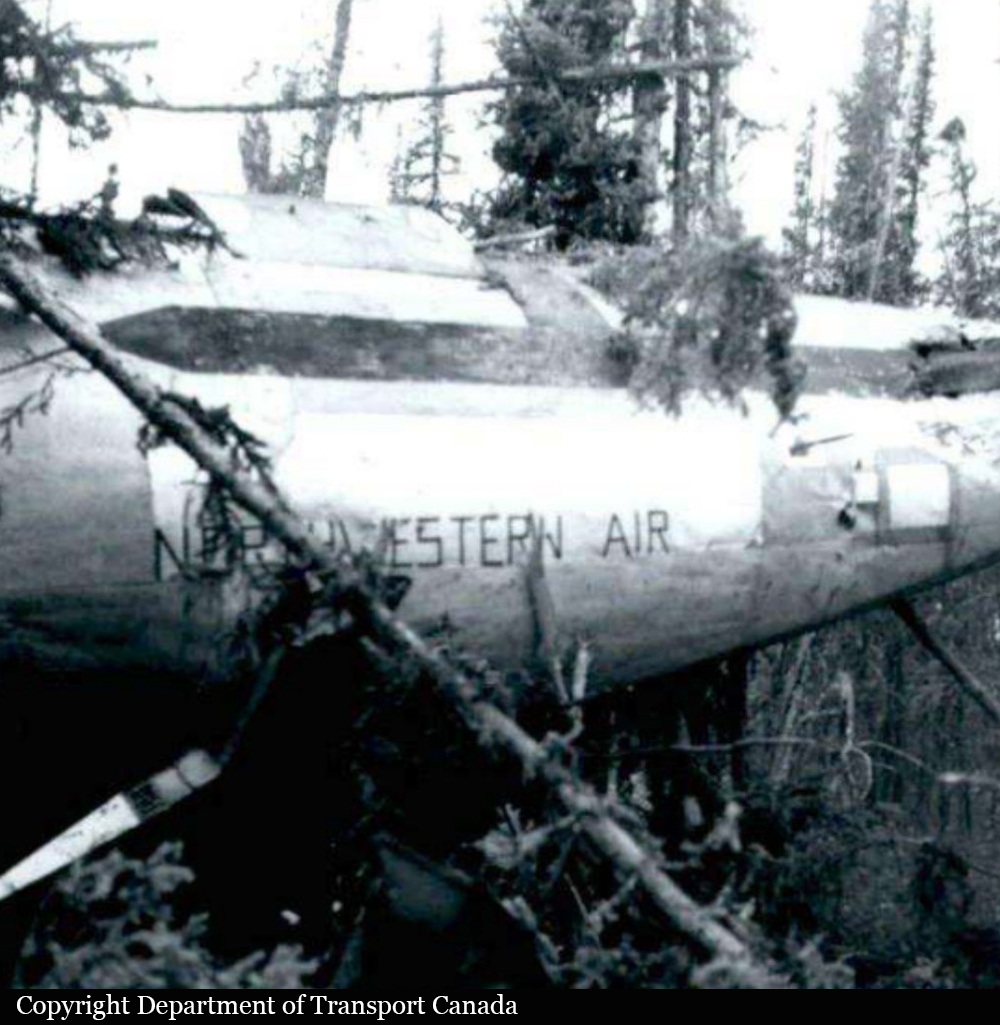
The airplane registered CF-HTN had completed a water drop on a fire at 60° 33' N and 113° 03' W and after completion of the drop flew to the vicinity of a helicopter which had crashed earlier that day, approximately 1,5 mile west of the fire being bombed. CF-HTN circled the wreckage to the right and reported the crash on VHF radio to Fort Smith aeradio on a frequency of 122.2. CF-HTN continued to circle around the crashed helicopter to the right. The circle was widened to the northwest on the last circuit and the flight path of the aircraft changed for a near direct path over the helicopter from the north when CF-HTN collided with CF-IDS, a Canadian Vickers PBV-1A Canso operated by North Canada Air (Norcanair). This airplane was also engaged in water bombing the same fire location as was CF-HTN. It approached the fire from a southerly direction and dropped its load of water on the fire. After the drop the aircraft went into a climbing left turn. During this turn, CF-IDS collided with CF-HTN. Physical evidence at the scene showed collision contact to be the left wing of CF-HTN and the right wing of CF-IDS. Collision contact broke off one half of the right wing of CF-IDS. Loss of this portion of wing caused the aircraft to roll to the right and crash. Collision contact broke off the outer one-third of the left wing of CF-HTN. In addition, the float and tip portion of the wing of CF-IDS struck the left stabilizer and elevator of CF-HTN breaking these controls off the aircraft. CF-HTN rolled to the left and crashed. There is no evidence of any evasive action nor that either crew saw anything of the other aircraft. Both airplanes were destroyed and all four crew members were killed.
Crew:
William Koshylanyk, pilot,
Peter John Willms, copilot.
Crew:
William Koshylanyk, pilot,
Peter John Willms, copilot.
Probable cause:
There was no malfunction in either aircraft. This conclusion cannot be proven by physical evidence but is based on a lack of any radio messages indicating any problems, corroborated to the extent possible by evidence of witnesses. None of the witnesses reported anything which would tend to indicate an apparent malfunction prior to the collision. The investigators considered the possibility of malfunction and carried out some technical investigation of each aircraft. It was considered that there was sufficient evidence to exclude malfunction as a likely factor. The technical investigation was not detailed except to determine how the collision occurred. Concern for an injured helicopter pilot caused one bomber to alter his circuit in the fire area. Subsequently, the two bombers were on converging paths. None of the crew members saw the other bomber in sufficient time to take effective evasive action. The collision occurred at a time when all four crew members would be busy.
To obtain the final report, please refer to the CF-HTN file.
To obtain the final report, please refer to the CF-HTN file.

