Crash of a Let L-410UVP-E in Aldan: 24 killed

Date & Time: Aug 26, 1993
Type of aircraft:
Operator:
Registration:
RA-67656
Survivors:
No
Schedule:
Yakutsk - Aldan
MSN:
90 25 09
YOM:
1990
Flight number:
SVT301
Country:
Region:
Crew on board:
2
Crew fatalities:
Pax on board:
22
Pax fatalities:
Other fatalities:
Total fatalities:
24
Circumstances:
On final approach to Aldan Airport, at a speed of 196 km/h, the crew extended the flaps to 42° when the aircraft adopted a 42,5° nose-up attitude. The crew elected to go-around but, as the speed dropped to 52 km/h, the aircraft stalled and crashed 273 metres short of runway and 160 metres to the left of its extended centreline. The aircraft was destroyed by impact forces and all 24 occupants were killed.
Probable cause:
It was determined that the total weight of the aircraft was 623 kilos above MTOW while departing Yakutsk Airport and 550 kilos above the max landing weight upon arrival at Aldan Airport. More than 400 kilos of bagages were placed in the rear compartment, causing the CofG to be out of permissible limits.


Crash of an Antonov AN-12TB in Slavgorod

Date & Time: Aug 20, 1993 at 1851 LT
Type of aircraft:
Operator:
Registration:
RA-11375
Flight Phase:
Flight Type:
Survivors:
Yes
Schedule:
Slavgorod - Samara
MSN:
4 024 05
YOM:
1965
Flight number:
OG9117
Country:
Region:
Crew on board:
6
Crew fatalities:
Pax on board:
0
Pax fatalities:
Other fatalities:
Total fatalities:
0
Aircraft flight hours:
30840
Aircraft flight cycles:
13112
Circumstances:
The aircraft was completing a cargo flight from Slavgorod to Samara, carrying six crew members and a load of 10,8 tons of hydraulic fluids in barrels. After takeoff, while climbing to a height of about 50 metres, both engines n°2 & 4 failed simultaneously. The crew declared an emergency and was cleared to return. The captain realized this would not be possible and attempted an emergency landing in an open field located 8,6 km from the airport. The aircraft landed in a flapless and gear up configuration. Upon touchdown, the tail separated and the aircraft slid for few dozen metres before coming to rest, bursting into flames. All six occupants were injured, four of them seriously.
Probable cause:
It was determined that a flock of birds just flew away from a wheat field when the aircraft was climbing. Several birds collided with both engines n°2 & 4 that failed immediately.

Crash of a Douglas DC-8-61F at Guantánamo Bay NAS

Date & Time: Aug 18, 1993 at 1656 LT
Type of aircraft:
Operator:
Registration:
N814CK
Flight Type:
Survivors:
Yes
Schedule:
Norfolk – Guantánamo Bay
MSN:
46127
YOM:
1969
Flight number:
CB808
Country:
Crew on board:
3
Crew fatalities:
Pax on board:
0
Pax fatalities:
Other fatalities:
Total fatalities:
0
Captain / Total flying hours:
20727
Captain / Total hours on type:
1527.00
Copilot / Total flying hours:
15350
Copilot / Total hours on type:
492
Aircraft flight hours:
43947
Aircraft flight cycles:
18829
Circumstances:
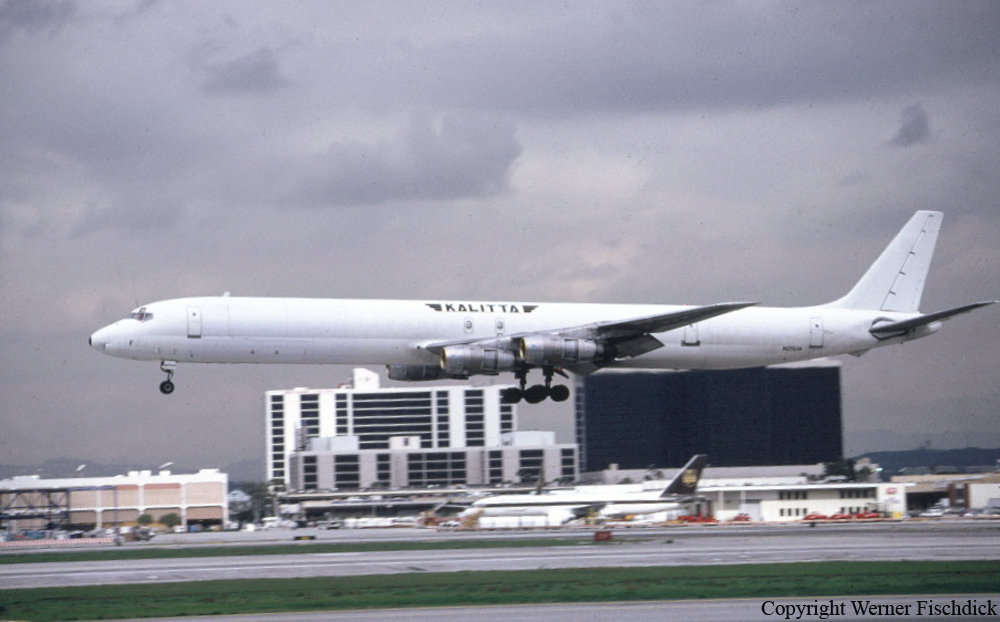
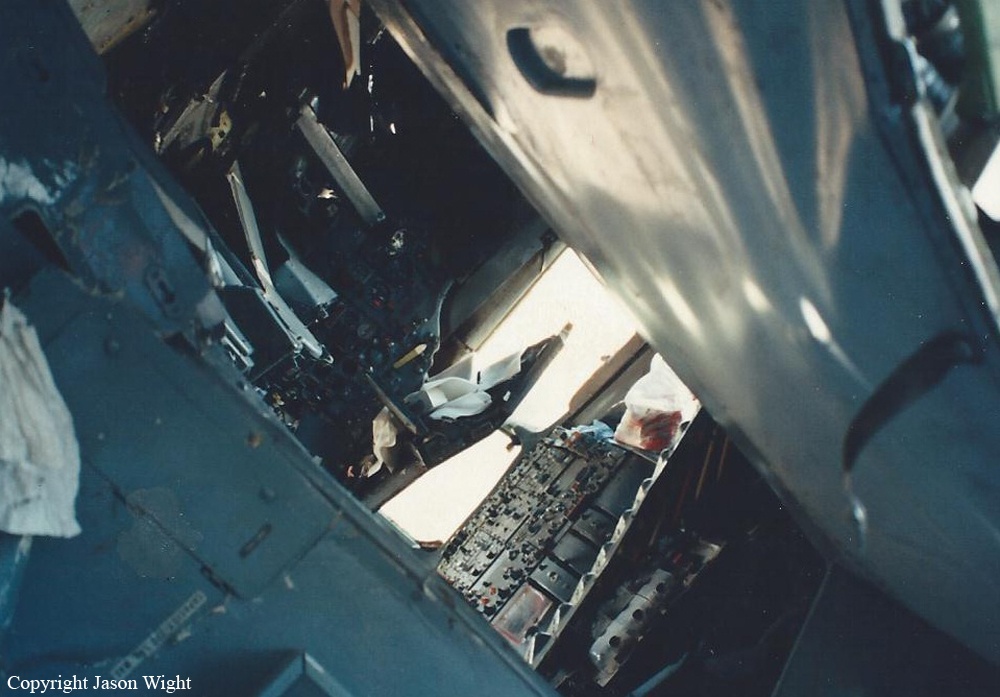
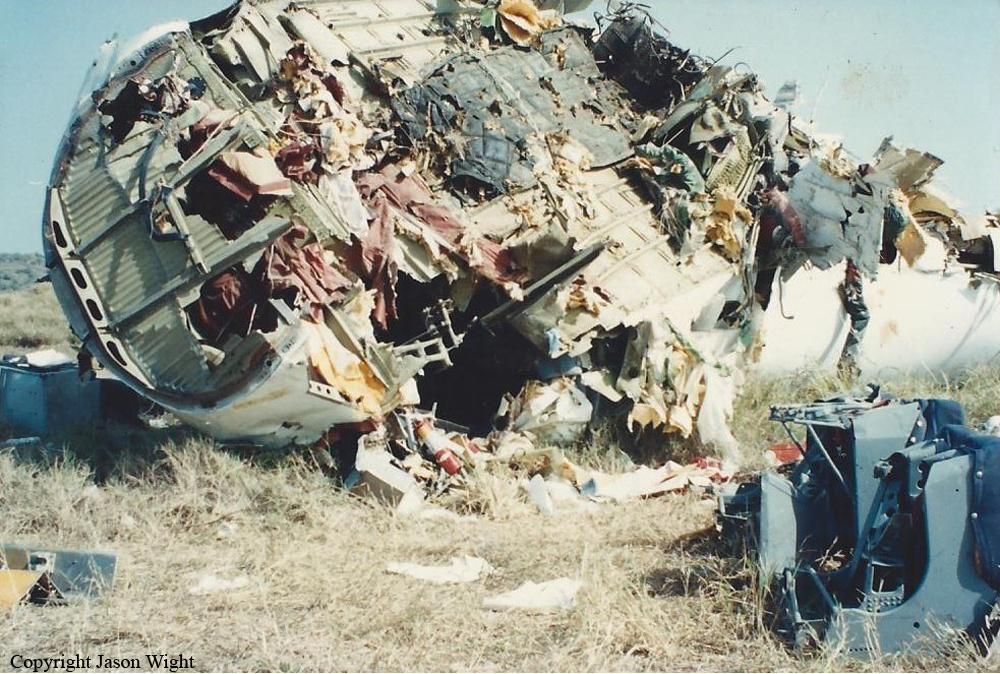
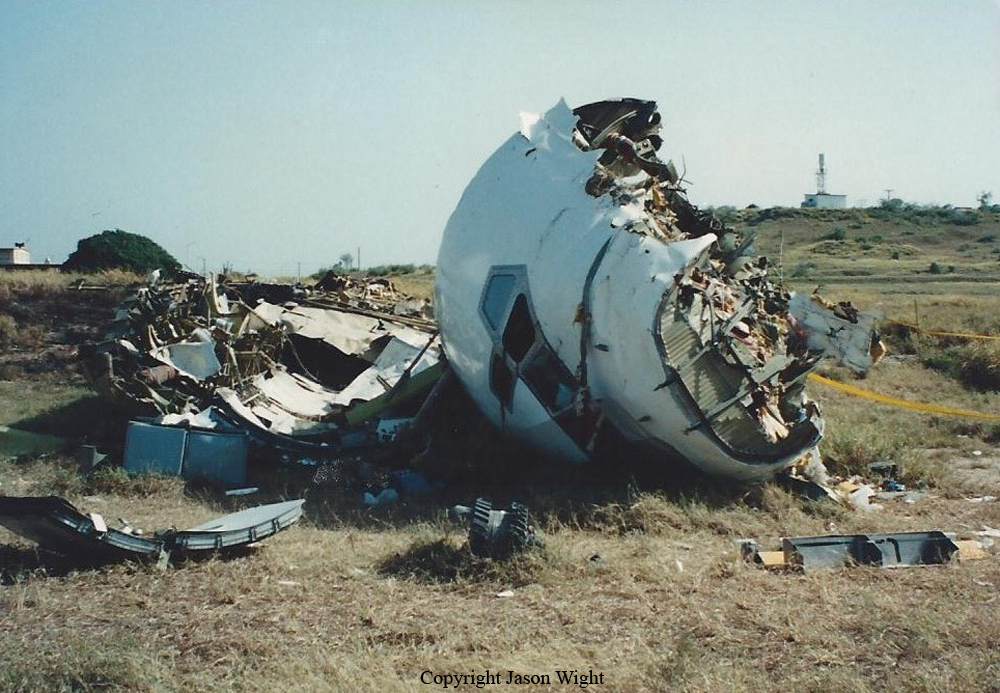
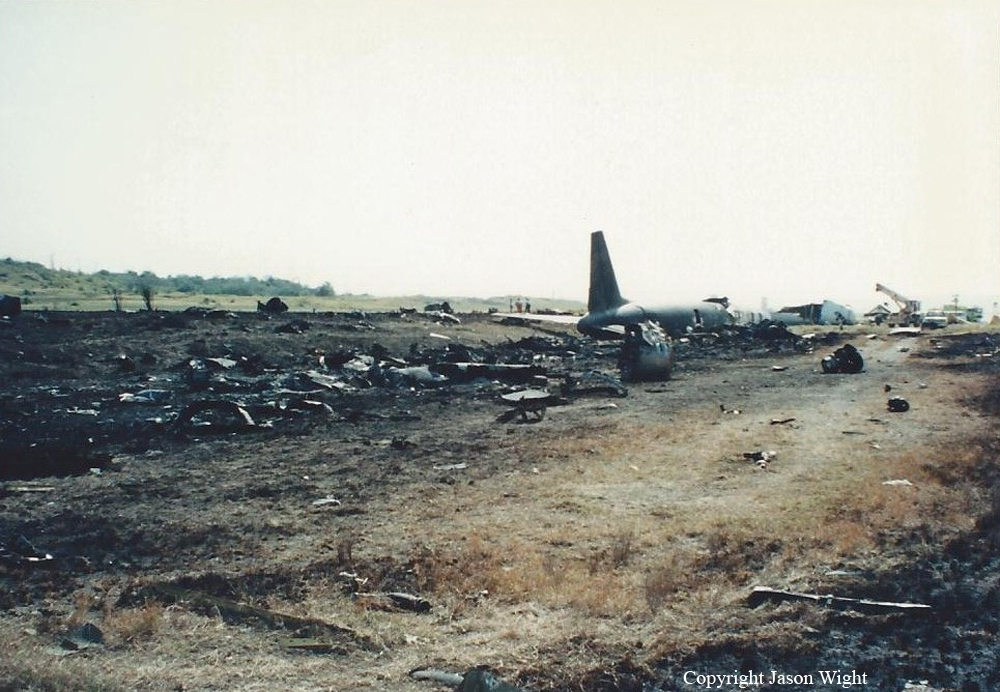
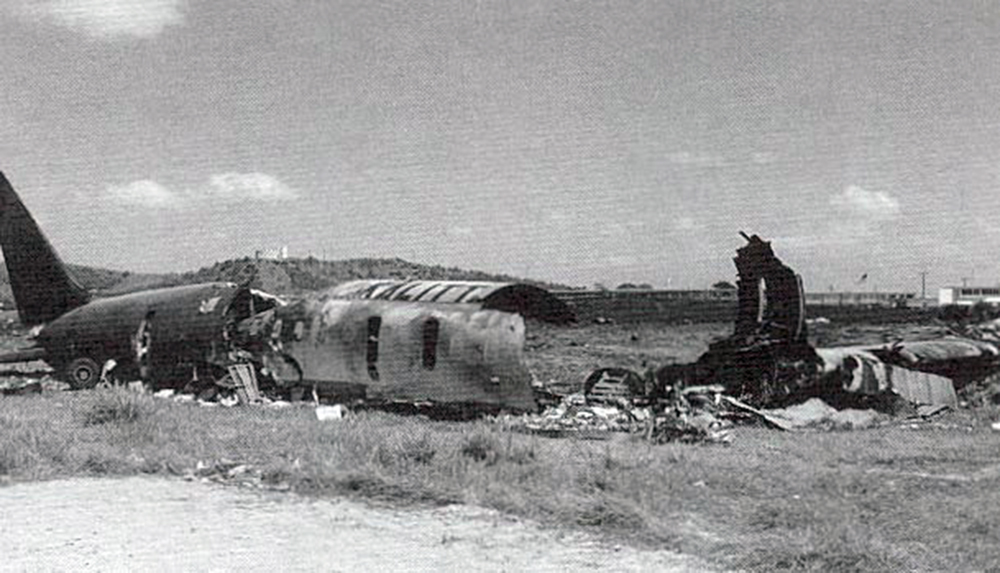
Flight 808 took off from Norfolk at 14:13 for a cargo flight to Guantánamo Bay. The flight and arrival into the Guantánamo terminal area was uneventful. At 16:34, while the flight was descending from FL320, radio contact was established with the Guantánamo radar controller. The radar controller instructed flight 808 to maintain VFR 12 miles off the Cuban coast and report at East Point. The runway in use was runway 10. The flight crew then requested a runway 28 approach, but changed this back to a runway 10 approach a couple of minutes later. Clearance was given at 16:46 with wind reported at 200°/7 knots. The runway 10 threshold was located 0,75 mile East of Cuban airspace, designated by a strobe light, mounted on a Marine Corps guard tower, located at the corner of the Cuban border and the shoreline. On the day of the accident, the strobe light was not operational (both controller and flight crew were not aware of this). The aircraft was approached from the south and was making a right turn for runway 10 with an increasing angle of bank in order to align with the runway. At 200-300 feet agl the wings started to rock towards wings level and the nose pitched up. The right wing appeared to stall, the aircraft rolled to 90deg. angle of bank and the nose pitched down. The aircraft then struck level terrain 1400 feet west of the approach end of the runway and 200 feet north of the extended centreline.
Probable cause:
The impaired judgement, decision-making, and flying abilities of the captain and flight crew due to the effects of fatigue; the captain's failure to properly assess the conditions for landing and maintaining vigilant situational awareness of the airplane while manoeuvring onto final approach; his failure to prevent the loss of airspeed and avoid a stall while in the steep bank turn; and his failure to execute immediate action to recover from a stall. Additional factors contributing to the cause were the inadequacy of the flight and duty time regulations applied to 14 CFR, Part 121, Supplemental Air Carrier, international operations, and the circumstances that resulted in the extended flight/duty hours and fatigue of the flight crew members. Also contributing were the inadequate crew resource management training and the inadequate training and guidance by American International Airways, Inc., to the flight crew for operations at special airports such as Guantanamo Bay; and the Navy's failure to provide a system that would assure that local tower controller was aware of the inoperative strobe light so as to provide the flight crew with such information.
Final Report:

Crash of a Swearingen SA226AC Metro II in Hartford: 2 killed

Date & Time: Aug 17, 1993 at 0225 LT
Type of aircraft:
Registration:
N220KC
Flight Type:
Survivors:
No
Schedule:
Farmingdale - Hartford
MSN:
AC-231
YOM:
1977
Crew on board:
2
Crew fatalities:
Pax on board:
0
Pax fatalities:
Other fatalities:
Total fatalities:
2
Captain / Total flying hours:
4200
Captain / Total hours on type:
600.00
Aircraft flight hours:
16710
Circumstances:
On an approach to land at the destination, the second-in-command (sic) was flying the airplane. The plane touched down with the landing gear retracted, and the propeller blades contacted the runway. The sic initiated a go-around (aborted landing). Witnesses saw the airplane in a steep left bank just before impact in a river next to the airport. Propeller strikes on the runway extended 380 feet, indicating a touchdown speed of 96 knots. The last propeller strikes on the right side indicated a speed of 86 knots. The last strikes on the left side indicated a slowing propeller. Published VMC for the airplane was 94 knots. The CVR tape revealed the crew completed a descent arrival check, performed an incomplete approach briefing, and did not perform a before landing check. The CVR revealed no sound of a gear warning horn. Company personnel stated that the circuit breaker for the warning horn had been found pulled at the completion of previous flights by other crew; this was to prevent a warning horn from sounding during a high rate of descent. Both pilots were killed.
Probable cause:
Failure of the copilot (second-in-command) to follow the checklist, assure the gear was extended for landing and attain or maintain adequate airspeed (VMC); and failure of the pilot-in-command (pic) to properly supervise the flight and take sufficient remedial action.
Final Report:

Crash of an Antonov AN-2 in Yegoryevsk: 2 killed

Date & Time: Aug 16, 1993
Type of aircraft:
Operator:
Flight Phase:
Flight Type:
Survivors:
No
Schedule:
Yegoryevsk - Yegoryevsk
Country:
Region:
Crew on board:
2
Crew fatalities:
Pax on board:
0
Pax fatalities:
Other fatalities:
Total fatalities:
2
Circumstances:
Two pilots, one German pilot under supervision and one instructor took place on board the aircraft for a local training flight out from Yegoryevsk. After takeoff, while in initial climb, the crew initiated a left turn when the aircraft struck trees and crashed on a military parking lot, bursting into flames. Both occupants were killed.

Crash of a Rockwell Grand Commander 690 in Camacho

Date & Time: Aug 9, 1993
Registration:
CP-1016
Survivors:
Yes
Schedule:
La Paz - Camacho
MSN:
690-11053
YOM:
1973
Location:
Country:
Crew on board:
2
Crew fatalities:
Pax on board:
5
Pax fatalities:
Other fatalities:
Total fatalities:
0
Circumstances:
After landing, the single engine aircraft deviated to the right, causing the right main gear to struck a ditch and to be torn off. The aircraft came to rest on its belly and was damaged beyond repair. All seven occupants escaped with minor injuries.

Crash of a Travel Air 4000 in Marlboro: 2 killed

Date & Time: Aug 7, 1993 at 1850 LT
Type of aircraft:
Registration:
NC365M
Flight Phase:
Flight Type:
Survivors:
Yes
Schedule:
Marlboro - Marlboro
MSN:
1297
Crew on board:
1
Crew fatalities:
Pax on board:
2
Pax fatalities:
Other fatalities:
Total fatalities:
2
Captain / Total flying hours:
2636
Captain / Total hours on type:
336.00
Aircraft flight hours:
6276
Circumstances:
This flight was the ninth sightseeing flight of the day for this airplane and pilot. No problems had been reported on the earlier flights. After takeoff and at an altitude of approximately 150 feet, the engine lost power and it began to sputter. The pilot initiated a left turn to land on a field north of the airport. During this turn, the pilot lost control of the airplane, and it impacted the ground in a nose low attitude. A post-impact fire destroyed the airplane and severely burned the engine. An examination of the engine revealed no discrepancies. The pilot was seriously injured while both passengers were killed.
Probable cause:
The loss of engine power for undetermined reasons, and the pilot's failure to maintain adequate airspeed, which resulted in an inadvertent stall and inflight collision with the terrain.
Final Report:

Crash of a Beechcraft C90 King Air in Augusta: 4 killed

Date & Time: Aug 7, 1993 at 1515 LT
Type of aircraft:
Operator:
Registration:
N90BP
Flight Type:
Survivors:
No
Schedule:
Adel - Augusta
MSN:
LJ-718
YOM:
1977
Crew on board:
1
Crew fatalities:
Pax on board:
3
Pax fatalities:
Other fatalities:
Total fatalities:
4
Captain / Total flying hours:
1875
Captain / Total hours on type:
300.00
Aircraft flight hours:
3301
Circumstances:
The instrument flight was cleared for an ILS approach to the destination airport. While maneuvering for the final approach course, the flight encountered convective activity (thunderstorms). The pilot was questioned by the tower concerning his position on the approach course. The tower radar placed the flight's position 1/4 to 1/2 mile east of the final approach course. The pilot stated that he was on the localizer. Subsequent functional checks of the ils system by air ways facilities, failed to reveal a problem with the ils approach system. The airplane collided with trees about one and one half miles northeast of the airport and one half mile east of the approach course. Weather reports recorded level four thunderstorm activity within the immediate vicinity of the destination airport. Wreckage examination failed to disclose any mechanical problems with the airplane. The air traffic controllers provided the pilot with current weather conditions at the airport throughout the final minutes of the flight, therefore the pilot was aware of the thunderstorm activity near and at the airport. All four occupants were killed.
Probable cause:
Was the pilot's failure to adequately evaluate inflight weather conditions which resulted in a loss of control when the airplane encountered a thunderstorm.
Final Report:

Crash of a Rockwell Grand Commander 690A in Norfolk: 4 killed

Date & Time: Jul 30, 1993 at 1700 LT
Registration:
N707BP
Survivors:
No
Schedule:
Mountain Home - Norfolk
MSN:
690-11326
YOM:
1976
Crew on board:
1
Crew fatalities:
Pax on board:
3
Pax fatalities:
Other fatalities:
Total fatalities:
4
Captain / Total flying hours:
17770
Captain / Total hours on type:
414.00
Circumstances:
The Rockwell 690A, N707BP, was flying a straight-in entry to a downwind leg for runway 19 at the non-controlled airport. The only radio call heard from the Rockwell was a request for an airport advisory when it was about 20 miles southeast. The Piper PA-28R, N33056, had departed from runway 19. No radio calls were heard from the Piper. Witnesses observed the Rockwell heading north and the Piper heading east moments before the collision. The witnesses stated the Piper pitched up and banked steeply moments before the collision. The collision occurred approximately 2 miles east-southeast of the airport. On-scene investigation showed that the Piper's left main landing gear tire had made an imprint on the bottom of the Rockwell's outboard left wing. Paint color from the Rockwell had transferred to the Piper's left wing skin. All six people in both aircraft were killed.
Probable cause:
The failure of the pilots of the Rockwell 690A, N707BP, and the Piper PA28R, N33056, to see and avoid each other. A factor which contributed to the accident was the failure of both pilot's to follow recommended communication procedures contained in the airman's information manual for operating at an airport without an operating control tower.
Final Report:

Crash of a Convair CV-240 in Boise

Date & Time: Jul 27, 1993 at 1317 LT
Type of aircraft:
Registration:
N156PA
Flight Type:
Survivors:
Yes
Schedule:
Boise - Boise
MSN:
324
YOM:
1953
Location:
Crew on board:
3
Crew fatalities:
Pax on board:
0
Pax fatalities:
Other fatalities:
Total fatalities:
0
Captain / Total flying hours:
2128
Captain / Total hours on type:
1400.00
Copilot / Total hours on type:
1
Circumstances:
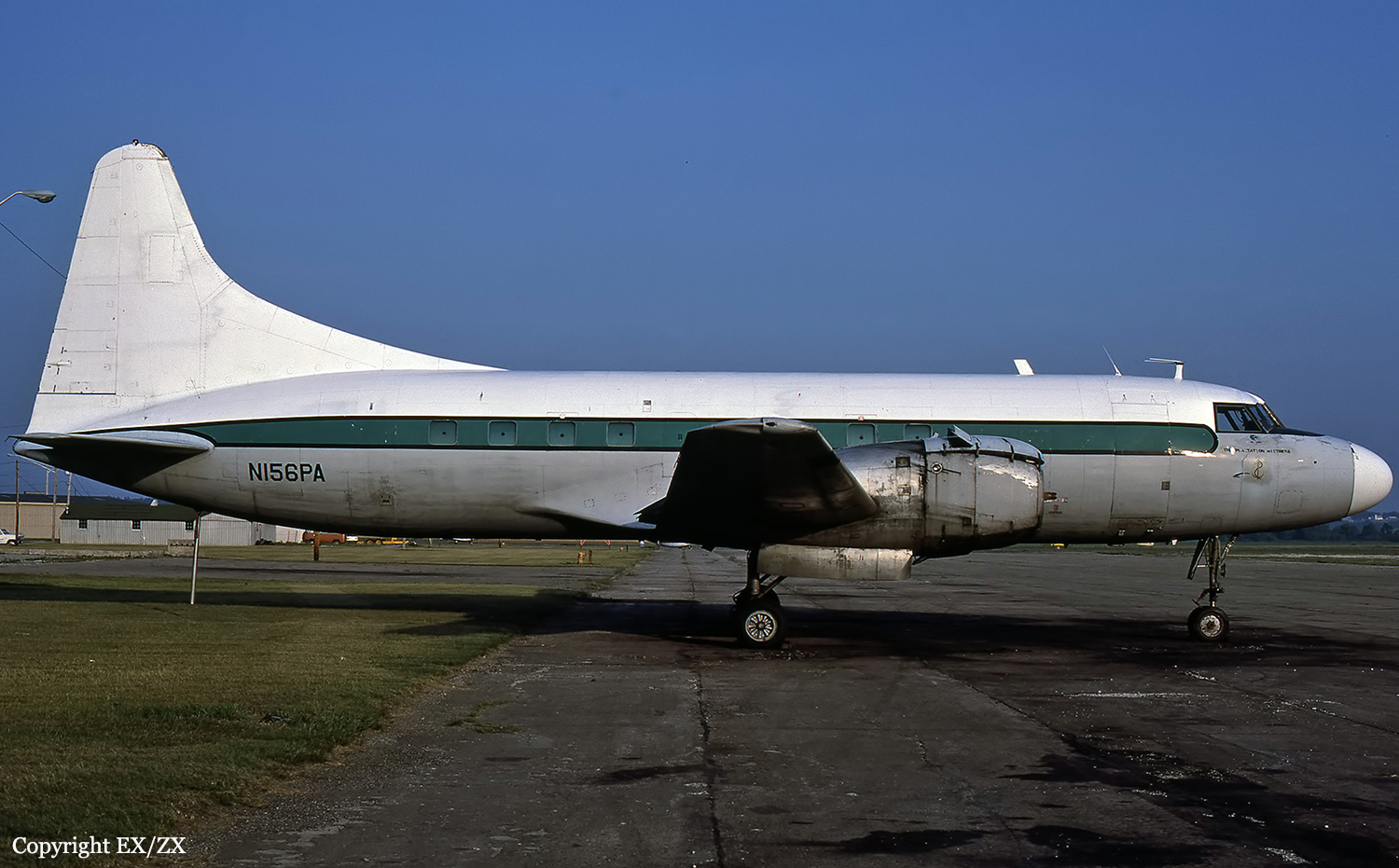
Left seat pilot was receiving a flight check for ATP and CV-240 type rating; right seat pilot was FAA OPS inspector. Following a simulated single-engine approach the airplane landed wheels up. Left seat pilot had received a total of 1.4 hrs left seat training in CV-240 prior to this flight; log book not endorsed.
Probable cause:
The pilot's failure to extend the landing gear, and the check pilot's inadequate supervision. A factor in the accident was the pilot's inadequate upgrade training by the company.
Final Report: