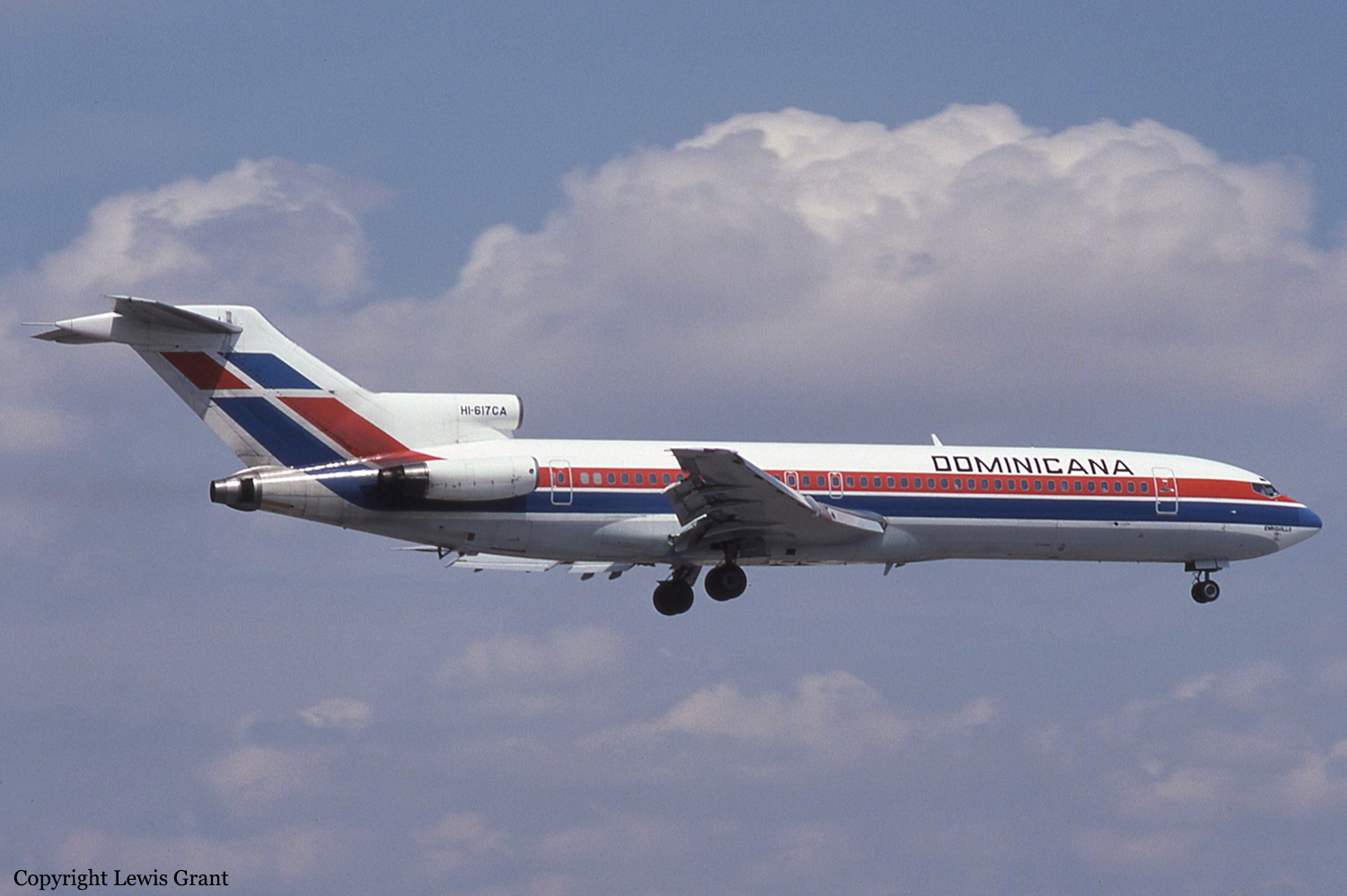
Ground fire of a Boeing 727-281 in Santo Domingo

Date & Time: Sep 5, 1993
Type of aircraft:
Operator:
Registration:
HI-617CA
Survivors:
Yes
Schedule:
San Juan - Santo Domingo
MSN:
20726
YOM:
1973
Crew on board:
7
Crew fatalities:
Pax on board:
98
Pax fatalities:
Other fatalities:
Total fatalities:
0
Circumstances:
Twenty minutes after takeoff from San Juan-Luis Muñoz Marin Airport, while in cruising altitude, a steward noticed smoke in the lavatory and informed the crew accordingly. In the meantime, the crew noticed a fire alarm in the cockpit, declared an emergency and became number one for landing at Santo Domingo-Las Américas Airport. Following a normal approach and landing, the crew vacated the runway and parked the aircraft at gate A6. While the passengers was disemmarking, smoke spread in the cabin and fire erupted, destroying the airplane.
Probable cause:
It was determined that a fire broke out in the rear lavatory after an engine used to drain the toilet overheated.

Crash of a Rockwell Sabreliner 40A in Buenos Aires

Date & Time: Sep 3, 1993 at 2155 LT
Type of aircraft:
Operator:
Registration:
OB-1319
Survivors:
Yes
Schedule:
Neuquén – Buenos Aires
MSN:
282-127
YOM:
1973
Country:
Crew on board:
2
Crew fatalities:
Pax on board:
2
Pax fatalities:
Other fatalities:
Total fatalities:
0
Circumstances:
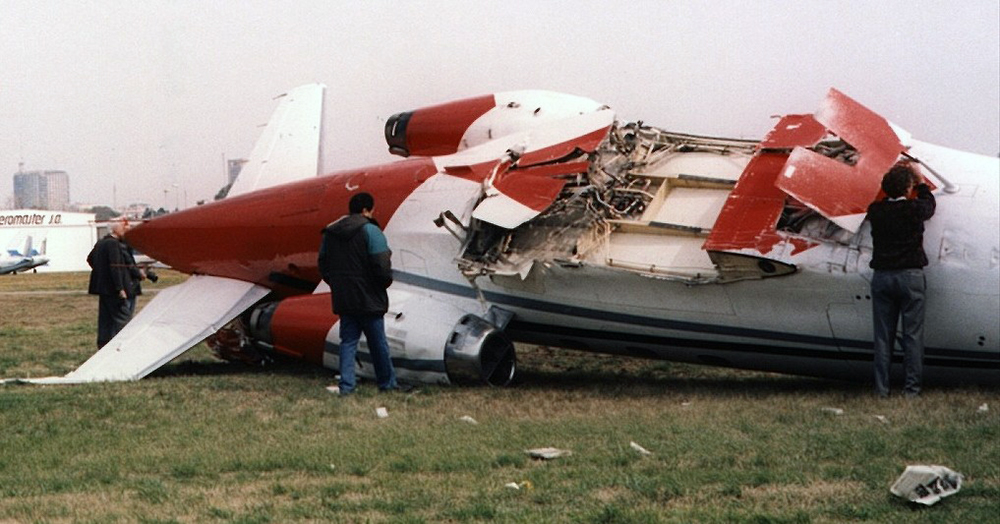
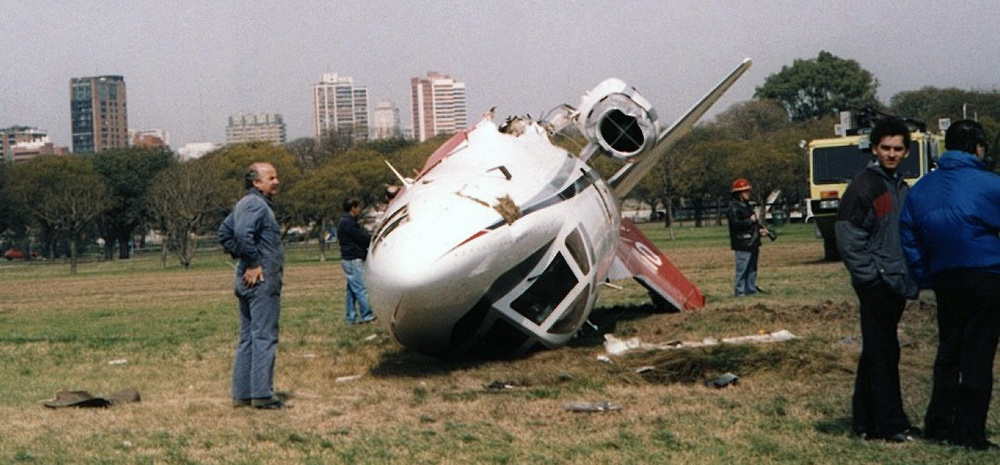
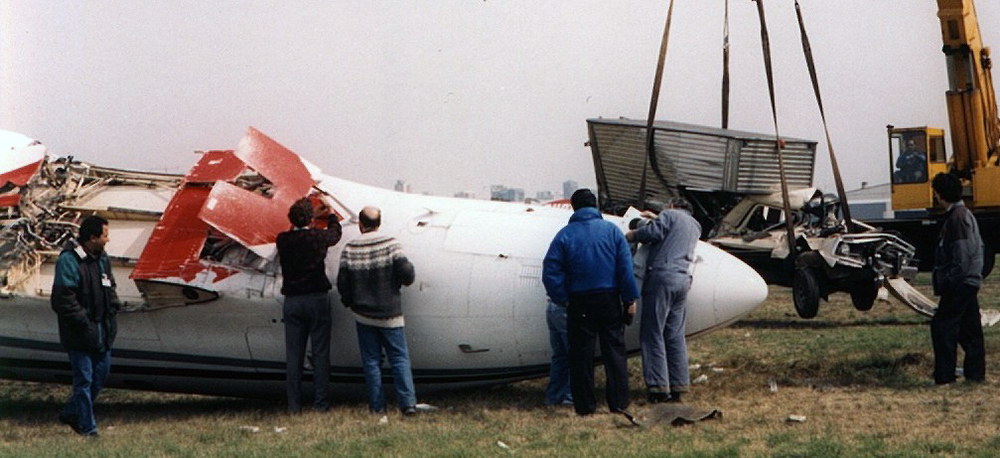
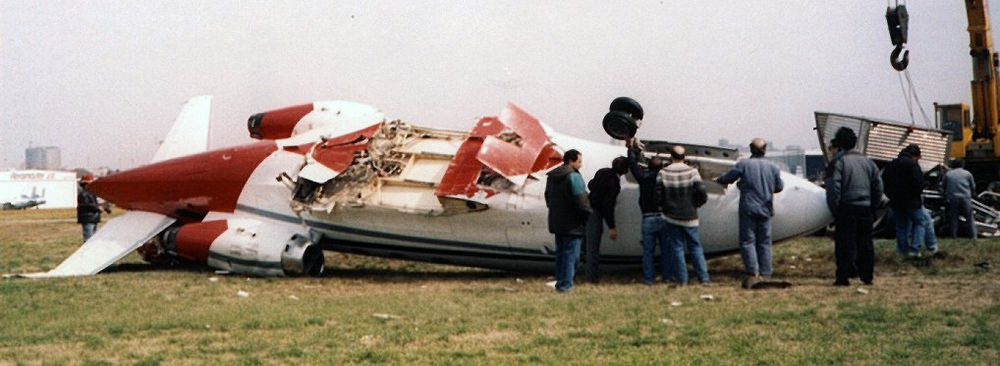
After landing at Buenos Aires-Aeroparque-Jorge Newbury Airport, the crew started the braking procedure and activated the reverse thrust that failed to deploy. The crew used the emergency brakes but the aircraft failed to stop within the remaining distance, overran and collided with a support vehicle (pick up) that was parked outside the safety zone. The aircraft lost its undercarriage and both wings and all four occupants were injured.
Probable cause:
The brakes and reverse thrust systems were unserviceable following a failure of the primary hydraulic system. The auxiliary braking system was also unserviceable. For unknown reasons, the problem has not been identified by the flying crew neither the maintenance personnel.

Crash of a Learjet 25D in Tijuana

Date & Time: Sep 2, 1993
Type of aircraft:
Operator:
Registration:
XA-NOG
Survivors:
Yes
Schedule:
Mexico City – Tijuana
MSN:
25-349
YOM:
1981
Country:
Crew on board:
2
Crew fatalities:
Pax on board:
4
Pax fatalities:
Other fatalities:
Total fatalities:
0
Circumstances:
The approach to Tijuana-General Abelardo L. Rodríguez Airport was completed in poor weather conditions with clouds down to 180 metres. On short final, the captain realized his position was not correct and made several correction but inefficiently. The aircraft landed hard, right main gear first. On impact, both tires on the right main gear burst. The aircraft went out of control, veered to right and came to rest. All six occupants escaped uninjured while the aircraft was damaged beyond repair.
Probable cause:
The crew completed a landing procedure following an unstabilized approach and failed to initiate a go-around.

Crash of a De Havilland DHC-2 Beaver in Iliamna: 3 killed

Date & Time: Aug 31, 1993 at 1105 LT
Type of aircraft:
Operator:
Registration:
N64273
Flight Phase:
Survivors:
Yes
Schedule:
Iliamna - Stayhok River
MSN:
897
YOM:
1956
Location:
Crew on board:
1
Crew fatalities:
Pax on board:
5
Pax fatalities:
Other fatalities:
Total fatalities:
3
Captain / Total flying hours:
1100
Captain / Total hours on type:
900.00
Aircraft flight hours:
5518
Circumstances:
While maneuvering at low altitude to observe moose, the airplane stalled into the ground. The lodge's senior pilot stated that the lodge had no recurrent training program. Three passengers were killed while three other occupants including the pilot were seriously injured.
Probable cause:
The pilot's failure to maintain airspeed resulting in an inadvertent stall. A factor in the accident was the inadequate recurrent training of the pilot by the operator/management.
Final Report:

Crash of a Cessna 406 Caravan in Nairobi

Date & Time: Aug 31, 1993
Type of aircraft:
Operator:
Registration:
F-GJLH
Flight Phase:
Flight Type:
Survivors:
Yes
MSN:
406-0056
YOM:
1990
Country:
Region:
Crew on board:
1
Crew fatalities:
Pax on board:
0
Pax fatalities:
Other fatalities:
Total fatalities:
0
Circumstances:
Shortly after takeoff from Nairobi-Wilson Airport, while in initial climb, the front cargo door opened. The pilot landed back on runway but was unable to stop the airplane within the remaining distance. The aircraft overran and eventually came to rest. The pilot was unhurt and the aircraft was damaged beyond repair. Sole on board, the pilot was completing a cargo flight.

Crash of a Mitsubishi MU-2B-40 Marquise in South Charleston

Date & Time: Aug 29, 1993 at 1550 LT
Type of aircraft:
Operator:
Registration:
N965MA
Survivors:
Yes
Schedule:
Rochester - Roanoke
MSN:
404
YOM:
1979
Crew on board:
1
Crew fatalities:
Pax on board:
2
Pax fatalities:
Other fatalities:
Total fatalities:
0
Captain / Total flying hours:
6370
Captain / Total hours on type:
2500.00
Aircraft flight hours:
2739
Circumstances:
The pilot reported the right engine failed, followed by the left engine approximately one minute later while he was in cruise at 25,000 feet. He said he initiated a steep descent to get below 18,000 feet, and attempts at restarting the left engine were unsuccessful. The pilot landed 500 feet down a 1,900 feet long runway and ran off the departure end, 300 feet, into a wooded area. Post accident investigation found 130 gallons of fuel onboard in the main tanks. The fuel was tested and found to be free of water. The fuel lines were free of obstructions and the fuel pumps worked. A failed torque sensor was found on the left engine which would disconnect the left engine driven fuel pump. The right engine was test run satisfactorily.
Probable cause:
Improper emergency procedures by the pilot which resulted in the shutdown of an operative engine, following a power loss due to a failed torque sensor in the other engine, which resulted in a total power loss approach, landing, and overrun.

Crash of an Antonov AN-26 in Donetsk

Date & Time: Aug 29, 1993 at 0131 LT
Type of aircraft:
Registration:
RA-26549
Flight Type:
Survivors:
Yes
Schedule:
Khmelnytskyi – Donetsk – Samara
MSN:
57302907
YOM:
1975
Flight number:
MP9437
Country:
Region:
Crew on board:
5
Crew fatalities:
Pax on board:
0
Pax fatalities:
Other fatalities:
Total fatalities:
0
Circumstances:
The crew was completing a cargo service from Khmelnytskyi to Samara with an intermediate stop in Donetsk. The approach was completed by night and limited visibility due to thunderstorm activity and heavy rain falls. On final, the crew failed to realize the aircraft was not properly aligned and continued the approach when the aircraft landed hard 80 metres to the left of the runway. Out of control, it rolled for few dozen metres and eventually collided with a building. The aircraft was destroyed and all five occupants were seriously injured.
Probable cause:
Poor approach planning and landing configuration on part of the crew. The aircraft was not properly aligned and its rate of descent was excessive during the last segment. This led the aircraft to land with a positive acceleration of 5,8 g.

Crash of a PZL-Mielec AN-28 in Weston-on-the-Green

Date & Time: Aug 28, 1993 at 1620 LT
Type of aircraft:
Registration:
HA-LAJ
Flight Phase:
Survivors:
Yes
Schedule:
Weston-on-the-Green - Weston-on-the-Green
MSN:
1AJ005-11
YOM:
1988
Region:
Crew on board:
2
Crew fatalities:
Pax on board:
17
Pax fatalities:
Other fatalities:
Total fatalities:
0
Captain / Total flying hours:
9400
Captain / Total hours on type:
1200.00
Copilot / Total flying hours:
2310
Copilot / Total hours on type:
510
Aircraft flight hours:
1616
Aircraft flight cycles:
1384
Circumstances:
The twin engine aircraft was engaged in a local skydiving mission, carrying 17 skydivers and two pilots. After takeoff, while climbing, both engines simultaneously suffered a total power loss. The commander reported that the simultaneous failure did not induce any yaw and that the only two warning lights which illuminated in the cockpit were those indicative of double engine failure. Following the power loss, the aircraft's speed decayed rapidly leading the commander to suspect that the automatic outboard wing spoilers had also deployed. Realising that a forced landing was the only option available to him, he initiated a steep descent to maintain airspeed and a turn through 90° to the right to position the aircraft for a forced landing in a large field of corn stubble. The aircraft landed heavily in a slightly nose up attitude, banked slightly to the right, at an estimated speed of 170 km/h (92 knots) and slid to rest with substantial damage to the fuselage, landing gear, wing struts, propellers and wings. All 19 occupants evacuated the cabin and were uninjured.
Probable cause:
The following findings were reported:
- A latent defect in the electrical system caused a simultaneous total power loss as the flaps were retracted at 500 feet agl on climb out, with automatic operation of both asymmetric spoiler systems.
- The latent defect had been caused by progressive loosening of a single earthing screw, which provided a common earth point for the flap electric signalling and propeller auto feathering systems. This induced a high resistance to earth at this point and caused feathering of both propellers when flap retraction was selected, in addition to automatic closure of both engine fuel shut-off valves (within the fuel control units) and extension of both outboard spoilers.
- At manufacture in Poland a single earthing point had been installed which was not in accordance with the design requirements for this aircraft type as issued by the Antonov Design Bureau, which had required dual combined earthing terminals for the flap signalling and propeller auto feathering systems.
- The Antonov Design Bureau had never cleared this type of aircraft for flight with the aft clam-shell doors removed, or for parachute training.
- This aircraft had been incorrectly granted an Aerial Work Permit for parachuting operations in the UK by the Department of Transport, assisted by the CAA, as a result of implicit reliance upon submitted documentation which was subsequently proven invalid.
Final Report:

Crash of a Yakovlev Yak-40 in Khorugh: 82 killed

Date & Time: Aug 28, 1993 at 1046 LT
Type of aircraft:
Operator:
Registration:
EY-87995
Flight Phase:
Survivors:
Yes
Schedule:
Khorugh - Dushanbe
MSN:
9 54 19 44
YOM:
1975
Country:
Region:
Crew on board:
5
Crew fatalities:
Pax on board:
81
Pax fatalities:
Other fatalities:
Total fatalities:
82
Circumstances:
During takeoff roll at Khorugh Airport, at Vr speed, the crew started the rotation but the aircraft failed to respond and did not lift off. It continued at high speed, overran, collided with a concrete wall located 150 metres past the runway end and eventually crashed in the Pyanj River. Four passengers were rescued while 82 other occupants were killed, most of them woman, children and soldiers.
Probable cause:
The accident occurred during the Tajik Civil War. It was determined that soldiers forced the crew to embark as many passengers as possible while the Yak-40 is certified fox max 32 passengers. At the time of the accident were 81 passengers on board. As the total weight of the aircraft was 3 tons above MTOW, it was impossible to take off in such conditions.

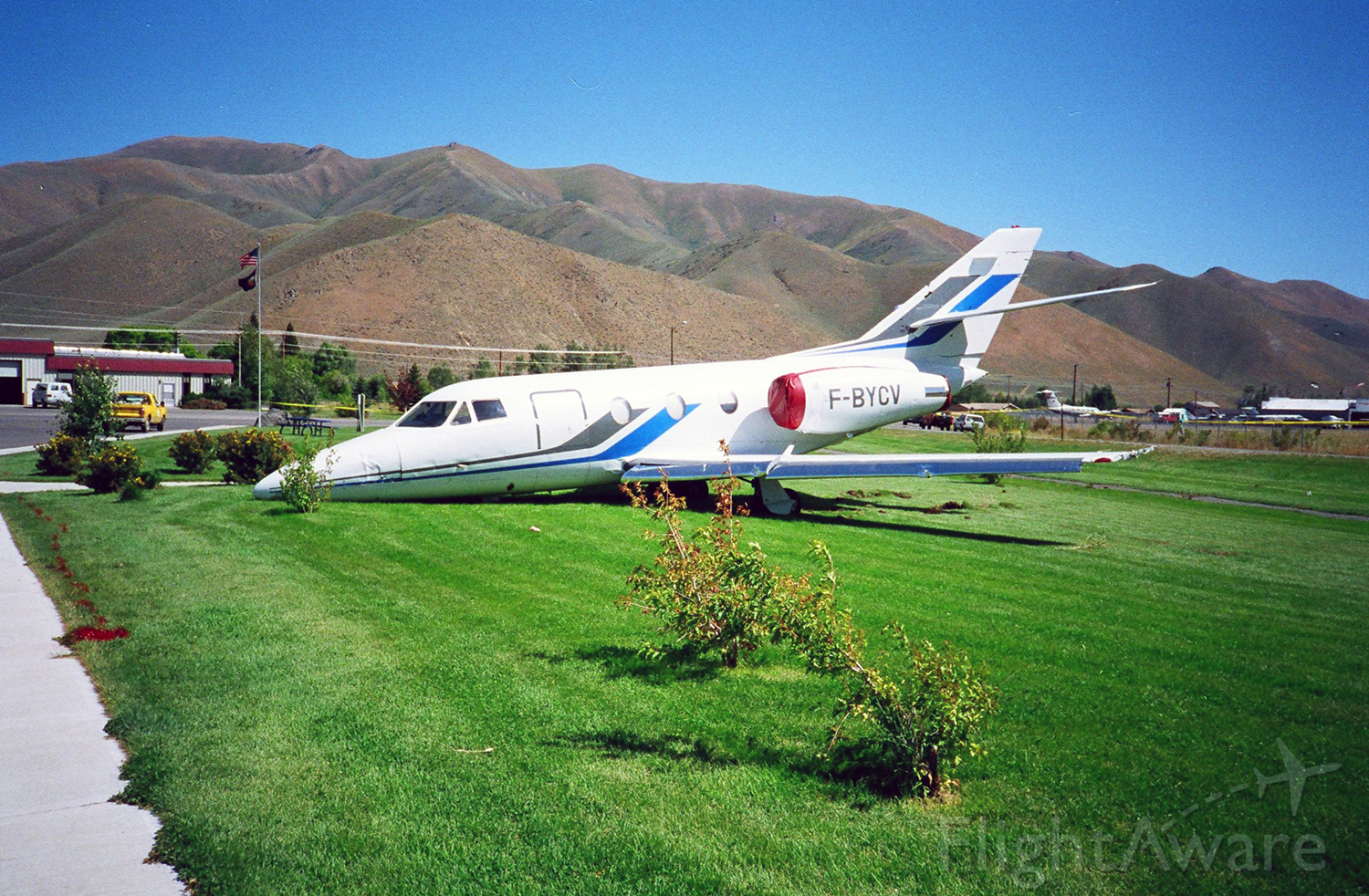
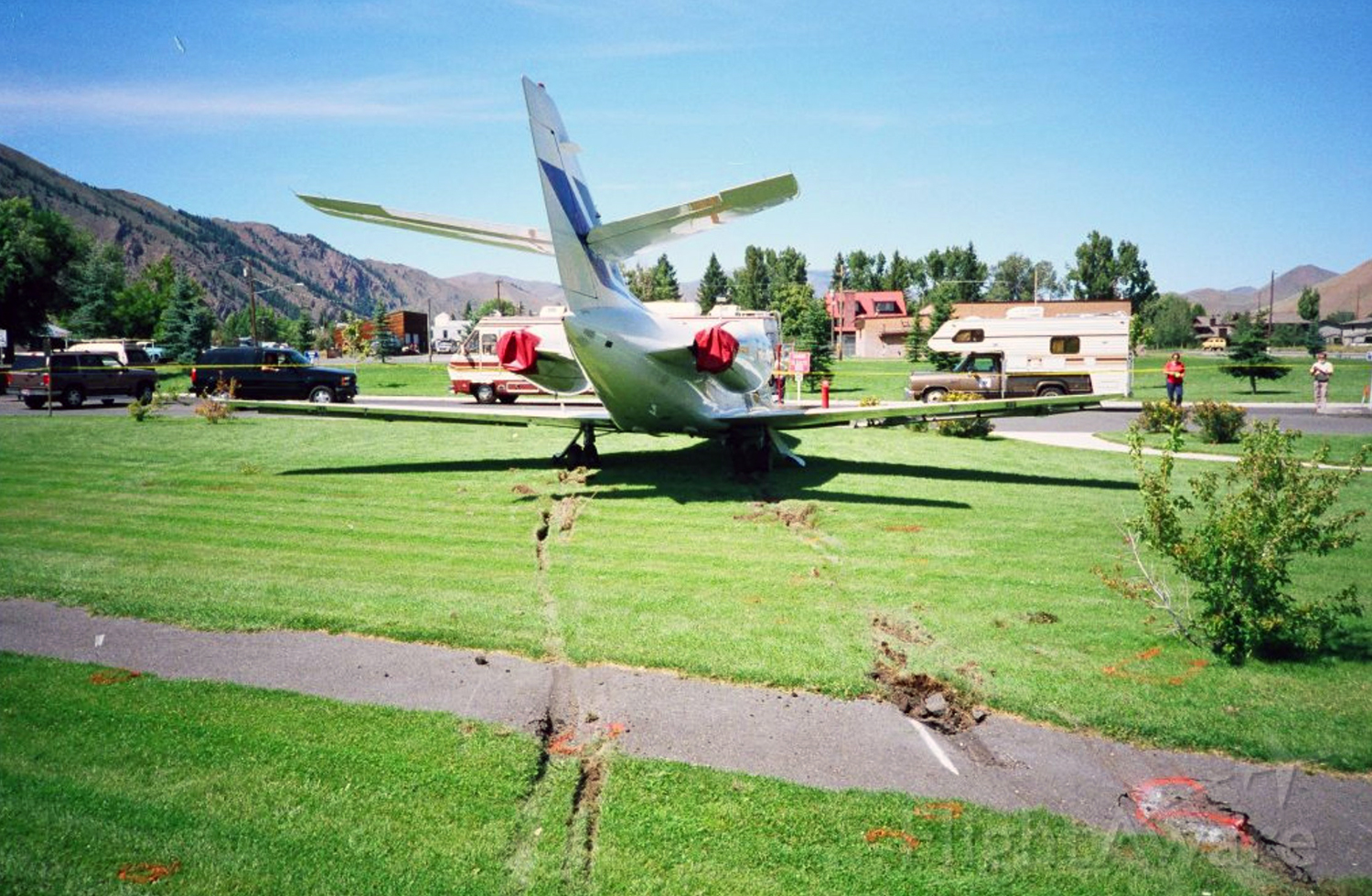
Crash of a Dassault Falcon 10 in Hailey

Date & Time: Aug 26, 1993 at 1430 LT
Type of aircraft:
Operator:
Registration:
F-BYCV
Flight Type:
Survivors:
Yes
Schedule:
Saskatoon – Great Falls – Hailey
MSN:
93
YOM:
1976
Crew on board:
2
Crew fatalities:
Pax on board:
0
Pax fatalities:
Other fatalities:
Total fatalities:
0
Captain / Total flying hours:
3440
Captain / Total hours on type:
40.00
Aircraft flight hours:
8607
Circumstances:
Because of the failure of the thrust reverser relay circuit board, the thrust reversers failed to deploy when selected by the pilot. Because the reversers failed to deploy, the 'reversers in transition' lights, and the 'reversers deployed' lights did not illuminate. Even though the aircraft flight manual warns against moving the reverser throttle levers into the power range without the illumination of these lights, the pilot did so anyway. The pilot continued to select reverse power even after the activation of the throttle mismatch warning horn, resulting in an increase in forward thrust while attempting to stop. During this sequence of events the second-in-command moved the parking brake lever to full override, locking the main wheel brakes and overriding the antiskid system.
Probable cause:
The pilot-in-command's improper procedures. Factors include failure of an electrical relay, inoperative thrust reverser, poor crew coordination, and the second-in-command's improper procedures.
Final Report: