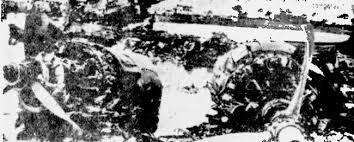
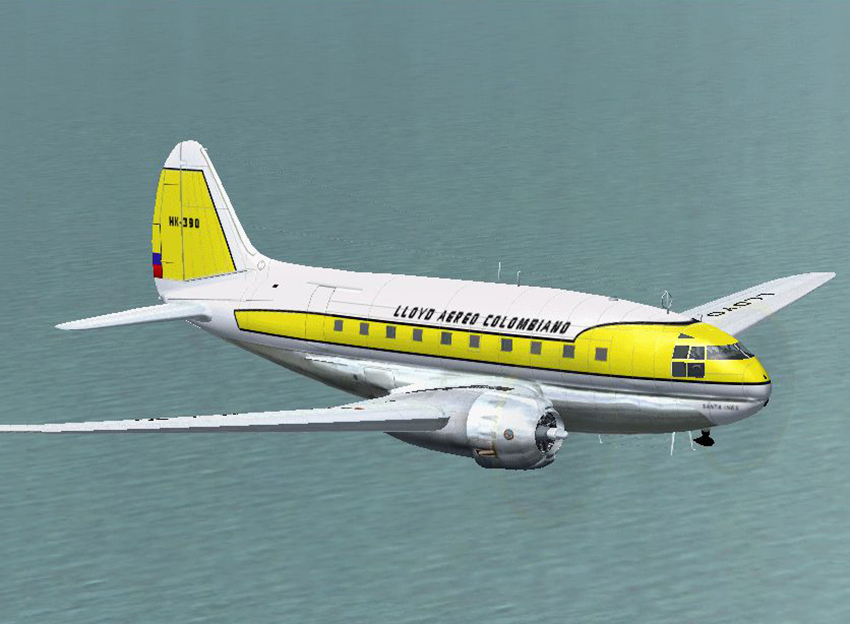
Crash of a Curtiss C-46D-10-CU Commando in Bogotá: 37 killed

Date & Time: Apr 19, 1960 at 1908 LT
Type of aircraft:
Operator:
Registration:
HK-390
Survivors:
Yes
Schedule:
Miami – Barranquilla – Medellín – Bogotá
MSN:
32954
YOM:
1944
Flight number:
LL503
Country:
Crew on board:
7
Crew fatalities:
Pax on board:
44
Pax fatalities:
Other fatalities:
Total fatalities:
37
Aircraft flight hours:
8289
Circumstances:
While on final approach to El Dorado Airport in Bogotá, the airplane stalled and crashed few km short of runway 12. Fourteen people were evacuated while 37 others, among them six crew members, were killed.
Probable cause:
The pilot failed to take proper action to counteract the loss of speed and height in the final approach turn. The following factors contributed to the accident:
- Lack of operational control by the airlines concerned,
- The pilot in command lacked experience as a transport pilot,
- It is probable that the report from the control tower at Eldorado that the runway was restricted because another aircraft had crashed in the safety zone had a psychological effect on the pilot.

Crash of a Curtiss C-46A-60-CS Commando near Planeta Rica: 25 killed

Date & Time: Mar 19, 1960 at 1610 LT
Type of aircraft:
Operator:
Registration:
HK-516
Survivors:
Yes
Site:
Schedule:
San Andrés – Medellín
MSN:
00384
YOM:
1945
Flight number:
MM901
Country:
Crew on board:
4
Crew fatalities:
Pax on board:
42
Pax fatalities:
Other fatalities:
Total fatalities:
25
Aircraft flight hours:
15876
Circumstances:
En route from San Andrés Island to Medellín, while cruising in bad weather conditions, the pilot informed ATC about technical problems on the left engine and elected to divert to Planeta Rica. On approach, the aircraft struck the slope of Mt Los Mellos located about 11 km from the airfield. Three crew members and 22 passengers were killed while 21 other occupants were injured.
Probable cause:
The accident was attributed to an error of judgement in that the pilot decided to land at an airport which was closed and where no radio aid was available at the time when he was in visual flight at an adequate altitude and close to several airports offering good characteristics and suitable weather conditions. In addition, the pilot underestimated the malfunction that at the time had developed in the left engine. The following contributing factors intervened:
- Malfunction in the carburetor of the left engine resulting in intermittent overspeeding and slight coughing,
- Adverse weather conditions (namely thick mist, rain, hail and electric storm) which prevailed in the area and in the vicinity of Planeta Rica Airport at the time of the accident,
- The lack of communications which prevented the pilot from being briefed on the weather conditions at Planeta Rica Airport and from being informed of the absence of tower or radio facility services owing to the time-table in force at the airport.

Crash of a Consolidated PBY-5A Catalina in El Refugio: 6 killed

Date & Time: Mar 15, 1960
Type of aircraft:
Operator:
Registration:
HK-1001E
Flight Phase:
Survivors:
Yes
Schedule:
Araracuara – Villavicencio
Location:
Country:
Crew on board:
3
Crew fatalities:
Pax on board:
10
Pax fatalities:
Other fatalities:
Total fatalities:
6
Circumstances:
Crashed in the jungle while en route from Araracuara to Villavicencio. Two crew members and four passengers were killed and seven other occupants were rescued.

Crash of a Lockheed L-1049E-55 Super Constellation in Montego Bay: 37 killed

Date & Time: Jan 21, 1960
Operator:
Registration:
HK-177
Survivors:
Yes
Schedule:
New York – Montego Bay – Barranquilla – Bogotá
MSN:
4556
YOM:
1954
Flight number:
AV671
Country:
Crew on board:
7
Crew fatalities:
Pax on board:
39
Pax fatalities:
Other fatalities:
Total fatalities:
37
Circumstances:
Avianca Flight 671, a Lockheed Super Constellation, took off from New York-Idlewild for a flight to Bogotá via Montego Bay and Barranquilla. En route to Montego Bay, the no. 3 engine malfunctioned and was stopped. The flight diverted to Miami, arriving there at 16:57. A replacement propeller governor was fitted, but during pre-flight checks a further defect in the no. 2 engine was found. This was rectified and the flight departed Miami at 00:12, the copilot being the pilot flying. Upon arrival near Montego Bay, clearance was given for a standard instrument approach. The airfield was sighted following the procedure turn at 2,000 feet and the approach was continued visually. Following a heavy touchdown, the plane bounced and landed back on the runway and skidded down the runway in flames, coming to rest inverted, 1,900 feet from the runway threshold and 200 feet to the left. Five crew members and four passengers survived while 37 other occupants were killed. The airplane was destroyed by fire.
Probable cause:
The adoption of a final approach path resulting in a heavy landing during which a major structural failure occurred in the port wing in the immediate vicinity of Station 80 joint caused by the transmission of stresses through the undercarriage in excess of those which would be encountered if the rate of sink of the aircraft at the time of impact had been controlled within the designed maximum of 10 feet per second. The primary responsibility for the safety of an aircraft and its complement is vested in the captain. However, there is evidence of mitigating circumstances in that the errors of judgement that precipitated the disaster reflect some deficiency of knowledge which should have been instilled in the training and flight proficiency checking of the pilots of HK-177. A measure of responsibility for the accident must, therefore, devolve on the supervisory and advisory authorities for the overall conduct of the operation.

Crash of a Curtiss C-46A-40-CU Commando into the Caribbean Sea: 45 killed

Date & Time: Dec 8, 1959 at 1200 LT
Type of aircraft:
Operator:
Registration:
HK-515
Flight Phase:
Survivors:
No
Schedule:
San Andrés – Cartagena – Medellín
MSN:
26941
YOM:
1944
Country:
Region:
Crew on board:
3
Crew fatalities:
Pax on board:
42
Pax fatalities:
Other fatalities:
Total fatalities:
45
Circumstances:
Twenty minutes after his departure from San Andrés Island, while cruising at an altitude of 9,500 feet, the captain informed ATC about his position vertical to PC-2 beacon in good weather conditions. This was the last radio transmission. SAR operations were conducted but eventually suspended three days later as no trace of the aircraft nor the 45 occupants was found. Eight days later, some equipment of the right main gear were found on a beach of the Moron Island in Panama.
Probable cause:
Due to the lack of evidence, investigations were unable to determine the exact cause of the accident.

Crash of a Douglas DC-4 on Cerro Baco: 14 killed

Date & Time: Jun 23, 1959 at 1930 LT
Type of aircraft:
Operator:
Registration:
HK-135
Flight Phase:
Survivors:
No
Site:
Schedule:
Bogotá – Quito – Lima
MSN:
10418
YOM:
1944
Flight number:
AV667
Country:
Crew on board:
4
Crew fatalities:
Pax on board:
10
Pax fatalities:
Other fatalities:
Total fatalities:
14
Circumstances:
The four engine aircraft departed Quito Airport at 1548LT bound for Lima, Peru. At 1845LT, the crew reported his position and gave his ETA at Lima Airport at 2011LT. While cruising at an altitude of 9,200 feet, the airplane struck the slope of Cerro Baco located about 12 km northwest of Huaricanga. The wreckage was found few hours later and all 14 occupants have been killed.
Probable cause:
The aircraft was not following the assigned route at the time of the accident, maybe due to a navigation error or a malfunction of one or more instruments.

Crash of a Noorduyn Norseman near Barrancabermeja: 1 killed

Date & Time: Jun 19, 1959 at 1230 LT
Type of aircraft:
Registration:
HK-454
Flight Phase:
Survivors:
Yes
Schedule:
Aguas Claras – Barrancabermeja
MSN:
323
YOM:
1944
Country:
Crew on board:
1
Crew fatalities:
Pax on board:
7
Pax fatalities:
Other fatalities:
Total fatalities:
1
Circumstances:
While approaching Barrancabermeja on a flight from Aguas Claras, the engine caught fire. The pilot attempted to make an emergency landing when the airplane hit a tree and crashed in flames. All seven passengers were injured while the pilot and owner of the company, Walter Trujillo Villegas , was killed.
Probable cause:
Engine fire in flight.

Crash of a De Havilland DHC-2 Beaver in Ocaña

Date & Time: Nov 27, 1958
Type of aircraft:
Operator:
Registration:
HK-183
Survivors:
Yes
Site:
MSN:
755
YOM:
1955
Country:
Crew on board:
1
Crew fatalities:
Pax on board:
2
Pax fatalities:
Other fatalities:
Total fatalities:
0
Circumstances:
While approaching Ocaña-Aguas Claras Airport, the single engine aircraft was too low, struck a hill and crashed. All three occupants were seriously injured and the aircraft was destroyed.

Crash of a Rockwell Aero Commander 680 in Puerto Salgar: 2 killed

Date & Time: Nov 5, 1958
Operator:
Registration:
FAC-552
Flight Type:
Survivors:
No
Schedule:
Palanquero – Puerto Salgar
MSN:
680-453-123
YOM:
1958
Country:
Crew on board:
2
Crew fatalities:
Pax on board:
0
Pax fatalities:
Other fatalities:
Total fatalities:
2
Circumstances:
On final approach to Puerto Salgar-Capitan Germán Olano Moreno Airport, the twin engine aircraft went out of control and crashed into the Río Magdalena. Both crew members were killed.

Crash of a Curtiss C-46A-45-CU Commando in Medellín

Date & Time: Sep 16, 1958 at 0800 LT
Type of aircraft:
Operator:
Registration:
HK-514
Flight Phase:
Flight Type:
Survivors:
Yes
Schedule:
Medellín – Bogotá
MSN:
30363
YOM:
1944
Country:
Crew on board:
2
Crew fatalities:
Pax on board:
0
Pax fatalities:
Other fatalities:
Total fatalities:
0
Circumstances:
Shortly after takeoff from Medellín-Enrique Olaya Herrera Airport runway 02, while in initial climb, the airplane suffered an engine failure. The crew attempted an emergency landing in a wasteland where the airplane crash landed. Both crew members were uninjured while the C-46 was damaged beyond repair.
Probable cause:
Engine failure.