Crash of a Beechcraft B60 Duke in Atlanta:1 killed

Date & Time: Aug 18, 2000 at 2244 LT
Type of aircraft:
Operator:
Registration:
N8WD
Flight Type:
Survivors:
No
Schedule:
Houston – Atlanta-DeKalb-Peachtree
MSN:
P-258
YOM:
1974
Crew on board:
1
Crew fatalities:
Pax on board:
0
Pax fatalities:
Other fatalities:
Total fatalities:
1
Captain / Total flying hours:
1800
Aircraft flight hours:
2665
Circumstances:
The pilot had experienced engine problems during a flight and requested maintenance assistance from the local maintenance repair station. Before the maintenance personnel signed off and completed the repairs, the pilot refueled the airplane, and attempted an instrument flight back to the originating airport. While enroute, the pilot reported a low fuel situation, and deviated to a closer airport. During the approach, the airplane lost engine power on both engines, collided with trees, and subsequently the ground, about a half of a mile short of the intended runway. There was no fuel found in the fuel system at the accident site. No mechanical problems were discovered with the airplane during the post-accident examination. This accident was the second time the pilot had exhausted the fuel supply in this airplane.
Probable cause:
The pilot's failure to preflight plan adequate fuel for the flight that resulted in fuel exhaustion and the subsequent loss of engine power.
Final Report:

Crash of a Piper PA-31-350 Navajo Chieftain in Hazlehurst: 3 killed

Date & Time: Aug 15, 2000 at 0825 LT
Operator:
Registration:
N801MW
Survivors:
No
Schedule:
Dothan - Hazlehurst
MSN:
31-8152136
YOM:
1981
Crew on board:
1
Crew fatalities:
Pax on board:
2
Pax fatalities:
Other fatalities:
Total fatalities:
3
Captain / Total flying hours:
6400
Circumstances:
The flight was cleared for an NDB or GPS runway 14 instrument approach. The pilot was instructed to report procedure turn. Center radar reported the airplane's altitude was last observed at 200 feet. A witness observed the airplane as it collided with trees and the ground and, subsequently burst into flames. No mechanical problem with the airplane was reported by the pilot or discovered during the wreckage examination. Weather minimums for the approach are 800 feet an one mile. Low clouds were reported in the area at the time of the accident.
Probable cause:
Pilot's failure to follow instrument procedures and descended below approach minimums and collided with trees. A factor was low clouds.
Final Report:

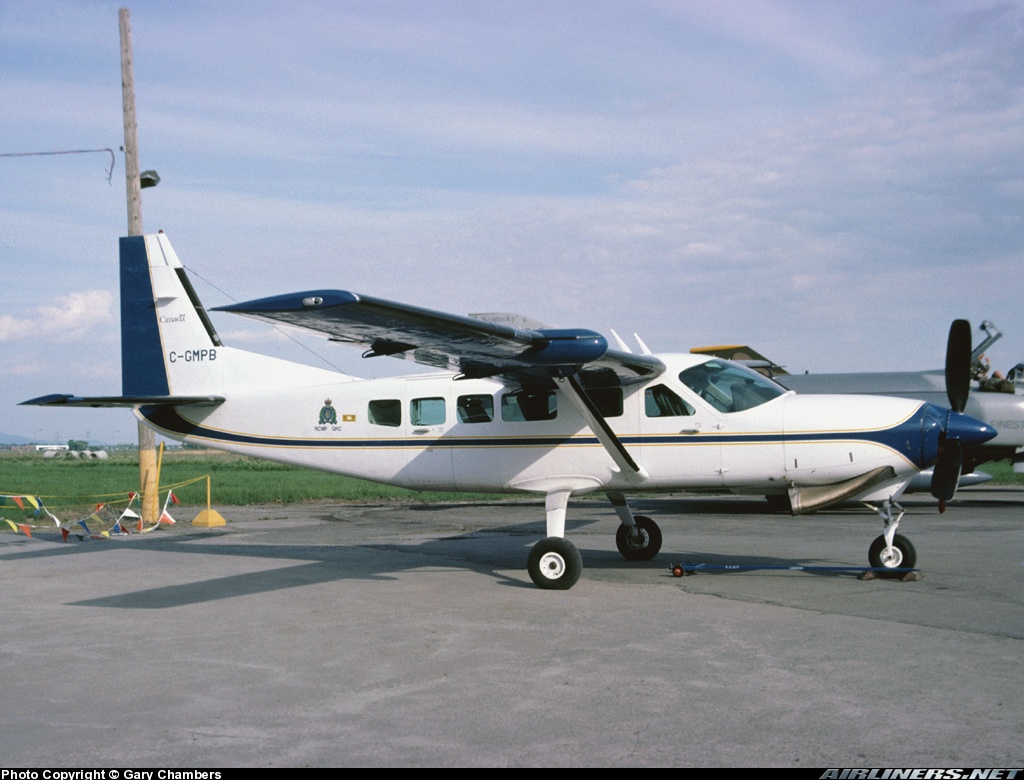
Crash of a Cessna 208 Caravan I in Lake Teslin: 2 killed

Date & Time: Aug 14, 2000 at 2357 LT
Type of aircraft:
Operator:
Registration:
C-GMPB
Flight Phase:
Flight Type:
Survivors:
No
Schedule:
Prince Rupert – Teslin Lake – Dease Lake
MSN:
208-0082
YOM:
1986
Country:
Crew on board:
2
Crew fatalities:
Pax on board:
0
Pax fatalities:
Other fatalities:
Total fatalities:
2
Captain / Total flying hours:
3768
Captain / Total hours on type:
282.00
Circumstances:
A Cessna 208 Caravan I on amphibious floats, C-GMPB, serial number 20800082, was ferrying members of the Royal Canadian Mounted Police (RCMP) Emergency Response Team from Teslin, Yukon, to a site on the south end of Teslin Lake, British Columbia. At about 1645 Pacific daylight time, three team members, two dogs, and gear were unloaded on a gravel bar across from the mouth of the Jennings River. The aircraft departed for the Teslin airport at about 2355 with the pilot and one RCMP engineer on board. Shortly after take-off, the aircraft was seen to pitch up into a steep climb, stall, then descend at a steep angle into the water. The aircraft was destroyed, and the pilot and the passenger were fatally injured.
Probable cause:
Findings as to Causes and Contributing Factors:
1. The pilot's decision to depart from the unlit location was likely the result of the many psychological and physiological stressors encountered during the day.
2. The pilot most likely experienced spatial disorientation-precipitated by local geographic and environmental conditions-and lost control of the aircraft.
Findings as to Risk:
1. Without a safety management program that routinely disseminates safety information, RCMP pilots may be inadequately sensitized to the limitations of decision making and judgement.
2. The RCMP had no current, concise standard operating procedures (SOPs) for its non-604 operations. Without useable SOPs, the pilots in some instances operate without clearly established limits and outside of acceptable tolerances.
Final Report:

Crash of a Rockwell Sabreliner 75A in Iron Wood: 2 killed

Date & Time: Aug 14, 2000 at 1822 LT
Type of aircraft:
Operator:
Registration:
N85DW
Survivors:
Yes
Schedule:
Brainerd – Flint
MSN:
380-27
YOM:
1975
Crew on board:
2
Crew fatalities:
Pax on board:
2
Pax fatalities:
Other fatalities:
Total fatalities:
2
Captain / Total flying hours:
13037
Captain / Total hours on type:
2560.00
Aircraft flight hours:
7185
Circumstances:
The airplane impacted heavily wooded terrain after experiencing a dual engine failure due to a reported lightning strike. The pilot received a weather brief that included information concerning a Convective Sigmet and a Severe Weather Watch. The weather briefer informed the pilot that a route to the southeast would keep the flight out of the heavy weather, and that, "... you'll get clobbered if you go due east." After departure, the pilot requested a turn to the northeast to stay clear of weather. While in the climb, the flight was advised of a Weather Watch that covered the area of their flight. The CVR revealed that Continuous Ignition was not selected prior to encountering turbulence. About 23 minutes after takeoff, the airplane was climbing at about 30,800 feet msl when the pilot reported a dual engine failure due to a lightning strike. The CVR indicated one engine quit and the second quit about two seconds later. The copilot established a 170 kts descent airspeed for "best glide." The airplane was vectored near a level 5 thunderstorm during the emergency descent. Two air starts were attempted when the airplane's altitude was outside of the air start envelope. Two more air starts were attempted within the air start envelope but were unsuccessful. The minimum airspeed for an air restart is 160 kts and the maximum speed for air start is 358 kts. The CVR indicated that the pilots did not call for the airplane's checklist, and no challenge and response checklists were used during the emergency descent. The CVR indicated the pilots did not discuss load shedding any of the electrical components on the airplane. The CVR indicated the hydraulic system cycled twice during the emergency descent and the landing gear was lowered using the hydraulic system during descent. During the descent the pilots reported they had lost use of their navigation equipment. The airplane impacted the terrain located about 166 nautical miles from the departure airport on a bearing of 083 degrees. No preexisting engines or airframe anomalies were found.
Probable cause:
The pilot's improper in-flight decision, the pilot's continued flight into known adverse weather, the pilot's failure to turn on the continuous ignition in turbulence, and the pilot's failure to follow the procedures for an airstart. Factors included the thunderstorms, the lightning strike, and the woods.
Final Report:

Crash of a Piper PA-31-350 Navajo Chieftain in Burlington: 9 killed

Date & Time: Aug 9, 2000 at 0752 LT
Registration:
N27944
Flight Phase:
Survivors:
No
Site:
Schedule:
Lakehurst - Patuxent
MSN:
31-7952056
YOM:
1979
Crew on board:
2
Crew fatalities:
Pax on board:
7
Pax fatalities:
Other fatalities:
Total fatalities:
9
Captain / Total flying hours:
3968
Captain / Total hours on type:
1418.00
Circumstances:
A Piper PA-31-350 Navajo Chieftain, N27944, operated by Patuxent Airways, Inc., Hollywood, Maryland, and a Piper PA-44-180 Seminole, N2225G, operated by Hortman Aviation Services, Inc., Philadelphia, Pennsylvania, were destroyed when they collided in flight over Burlington Township, New Jersey. The airline transport pilot, commercial pilot, and seven passengers aboard the Navajo Chieftain were killed, as were the flight instructor and the private pilot aboard the Seminole. Day visual meteorological conditions existed at the time of the accident, and both airplanes were operating under visual flight rules when the collision occurred. The flight crews of both airplanes were properly certificated and qualified in accordance with applicable Federal regulations. None of these individuals was experiencing any personal problems or rest anomalies that would have affected their performance. The airplanes had undergone the required inspections. Examination of their maintenance documents revealed that both airplanes complied with all appropriate airworthiness directives. Evidence gathered from the wreckage indicated that neither airplane had experienced an in-flight fire, bird strike, or structural or mechanical failure. Tissue samples revealed that the pilot of the Seminole had taken doxylamine sometime before the accident. (Doxylamine is a sedating antihistamine that has substantial adverse effects on performance.) However, the amount of blood available for analysis was insufficient for determining exactly when the pilot may have ingested the medication or whether his performance was impaired by the effects of doxylamine. A partial cockpit visibility study revealed that the Seminole would have been visible to the pilots in the Chieftain for at least the 60 seconds before the collision. No stereo photographs from a Seminole cockpit were available to determine precise obstruction angles. However, because of the relative viewing angle, the Chieftain would have been visible to the pilots in the Seminole for most of the last 60 seconds. The study further revealed that about 4 seconds before impact, or about .11 nm separation, the angular width of each airplane in each pilot's field of vision would have been approximately 0.5 to 0.6 degrees or about 1/4 inch apparent size at the windscreen.
Probable cause:
The failure of the pilots of the two airplanes to see and avoid each other and maintain proper airspace separation during visual flight rules flight.
Final Report:

Crash of a Douglas DC-9 in Greensboro

Date & Time: Aug 8, 2000 at 1544 LT
Type of aircraft:
Operator:
Registration:
N838AT
Survivors:
Yes
Schedule:
Greensboro - Atlanta
MSN:
47442/524
YOM:
1970
Flight number:
FL913
Crew on board:
5
Crew fatalities:
Pax on board:
58
Pax fatalities:
Other fatalities:
Total fatalities:
0
Captain / Total flying hours:
22000
Captain / Total hours on type:
15000.00
Copilot / Total flying hours:
8000
Copilot / Total hours on type:
2000
Circumstances:
Examination of the area of the fire origin revealed that relay R2-53, the left heat exchanger cooling fan relay, was severely heat damaged, as were R2-54 and the other relays in this area. However, the R2-53 relay also exhibited loose terminal studs and several holes that had burned through the relay housing that the other relays did not exhibit. The wire bundles that run immediately below the left and right heat exchanger cooling fans and the ground service tie relays exhibited heat damage to the wire insulation, with the greatest damage located just below the R2-53 relay. The unique damage observed on the R2-53 relay and the wire damage directly below it indicates that fire initiation was caused by an internal failure of the R2-53 relay. Disassembly of the relay revealed that the R2-53 relay had been repaired but not to the manufacturer's standards. According to the manufacturer, the damage to the relay housing was consistent with a phase-to-phase arc between terminals A2 and B2 of the relay. During the on-scene portion of the investigation, three of the four circuit breakers in the left heat exchanger cooling fan were found in the tripped position. To determine why only three of the four circuit breakers tripped, all four were submitted to the Materials Integrity Branch at Wright-Patterson Air Force Base, Dayton, Ohio, for further examination. The circuit breakers were visually examined and were subjected to an insulation resistance measurement, a contact resistance test, a voltage drop test, and a calibration test (which measured minimum and maximum ultimate trip times). Testing and examination determined that the circuit breaker that did not trip exhibited no anomalies that would prevent normal operation, met all specifications required for the selected tests, and operated properly during the calibration test. Although this circuit breaker appeared to have functioned properly during testing, the lab report noted that, as a thermal device, the circuit breaker is designed to trip when a sustained current overload exists and that it is possible during the event that intermittent arcing or a resistive short occurred or that the circuit opened before the breaker reached a temperature sufficient to trip the device.
Probable cause:
A phase-to-phase arc in the left heat exchanger cooling fan relay, which ignited the surrounding wire insulation and other combustible materials within the electrical power center panel. Contributing to the left heat exchanger fan relay malfunction was the unauthorized repair that was not to the manufacturer's standards and the circuit breakers' failure to recognize an arc-fault.
Final Report:

Crash of a Piper PA-46-350P Malibu Mirage in Augusta: 3 killed

Date & Time: Aug 4, 2000 at 0745 LT
Registration:
N198PM
Flight Phase:
Survivors:
No
Schedule:
Augusta – Atlantic City
MSN:
46-36133
YOM:
1998
Crew on board:
1
Crew fatalities:
Pax on board:
2
Pax fatalities:
Other fatalities:
Total fatalities:
3
Captain / Total flying hours:
6000
Captain / Total hours on type:
80.00
Aircraft flight hours:
451
Circumstances:
Witness's reported that the airplane took off from runway 05, which has an up slope of 1.2 degrees. The airplane was observed at approximately 10 feet above ground level, in a nose high attitude traveling parallel to the ground and not climbing. The airplane narrowly cleared a 6- foot fence off the departure end of runway 05. Shortly thereafter, the airplane impacted a utility pole, the roof of a bus stop, which was followed by a brick wall. At the time of the accident runway 23, which has a 1.2-degree down slope and has a clear-cut area on the departure end, was available for use. The basic empty weight for this airplane is 3,097 pounds; the useful load is 1,201.7 pounds. The actual load at the time of the accident was in excess of the useful load. There is no record of the pilot completing a weight and balance computation prior to take-off. The toxicology examinations were negative for carbon monoxide, cyanide, drugs and alcohol. The toxicology examination revealed that 1175(mg/dl) glucose was detected in the urine. Examination of the airplane and subsystems failed to disclose any mechanical or component failures.
Probable cause:
Improper preflight planning/preparation by the pilot, which resulted in taking off with the airplane exceeding the weight and balance limitations. Factors to the accident were the improper loading of the airplane, taking off from a short, up sloping runway and the pilot's elevated glucose level.
Final Report:

Crash of a De Havilland DHC-3 Otter in Lake Stevens

Date & Time: Aug 2, 2000
Type of aircraft:
Operator:
Registration:
C-FMAJ
Flight Phase:
Survivors:
Yes
MSN:
383
YOM:
1960
Country:
Crew on board:
1
Crew fatalities:
Pax on board:
2
Pax fatalities:
Other fatalities:
Total fatalities:
0
Circumstances:
A DHC-3 and a Cessna 185 (both float equipped aircraft) had been chartered to move equipment from an outpost camp which was being threatened by forest fires in the Tadoule Lake (Lac Brochet, MB) area. Takeoff was conducted in a westerly direction into light winds estimated to be 5 to 8 knots. Besides the pilot there were two passengers (the camp owner and his son), two 45 gallon drums of #2 gas, a propane cylinder, battery chargers plus other sundry items. It was reported that once the aircraft was airborne, a windshift occurred which may have resulted in rollover and a downdraft situation. The aircraft began to descend, despite the application of full engine power, and settled into the trees with little forward speed and the wings in a near level attitude. The aircraft was then consumed by fire, the pilot and his two passengers were able to escape with minor scrapes and bruises. The pilot of the Cessna 185 witnessed the accident while airborne and he then returned and landed and rendered assistance to the three occupants. The local temperature was 27 degrees C, and the aircraft was near its maximum gross weight. It was reported that the aircraft had a headwind in proximity to the forest fire on takeoff, and that it flew into the area of a tailwind during initial climb.

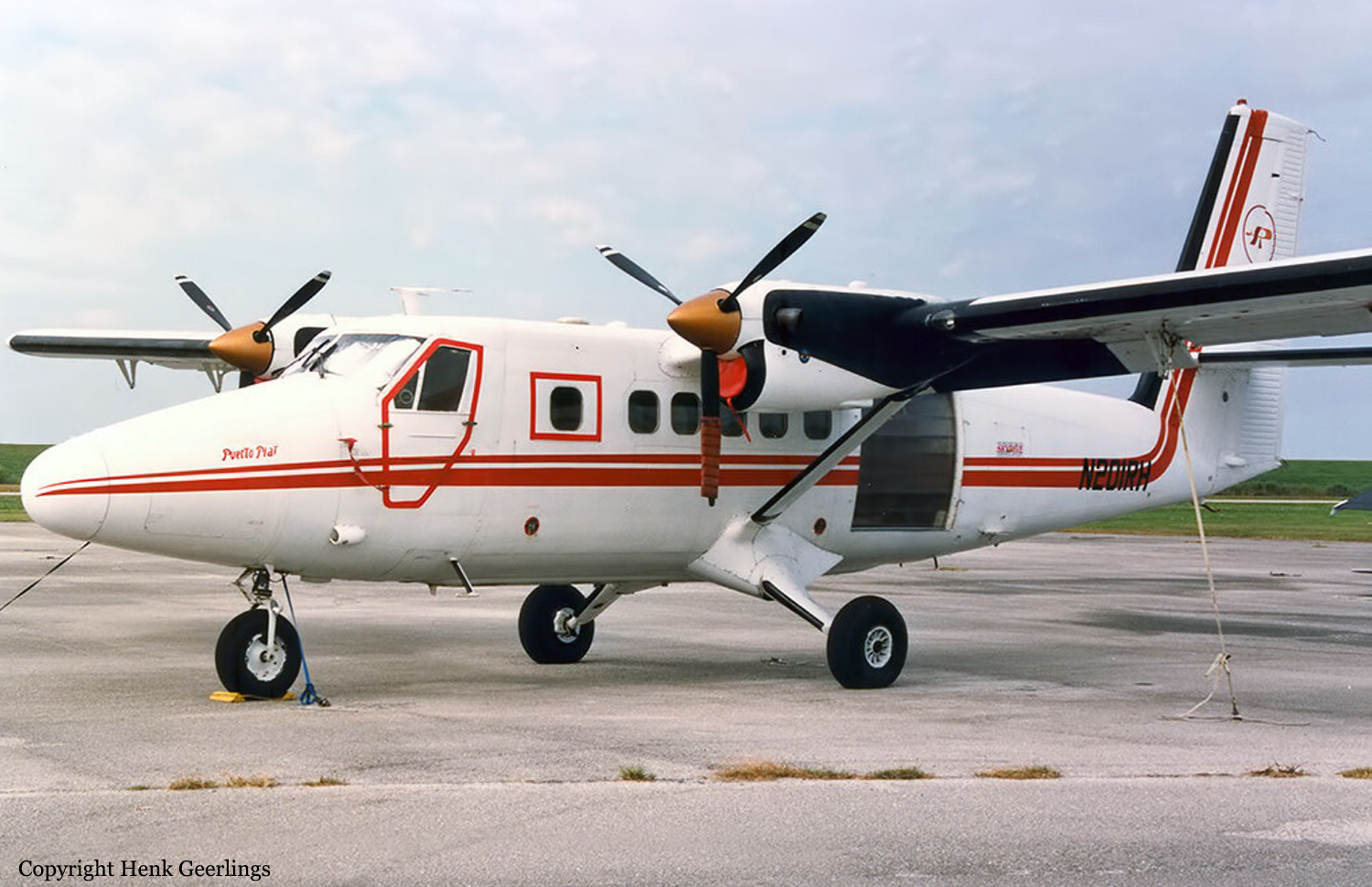
Crash of a De Havilland DHC-6 Twin Otter 200 in Raleigh: 1 killed

Date & Time: Jul 31, 2000 at 0034 LT
Operator:
Registration:
N201RH
Flight Type:
Survivors:
Yes
Schedule:
Hinckley - Louisburg
MSN:
163
YOM:
1968
Crew on board:
1
Crew fatalities:
Pax on board:
2
Pax fatalities:
Other fatalities:
Total fatalities:
1
Captain / Total flying hours:
1725
Captain / Total hours on type:
147.00
Aircraft flight hours:
28711
Circumstances:
The flight had proceeded without incident until a visual approach was made to the destination airport, but a landing was not completed because of poor visibility due to ground fog. The pilot then requested vectors to another airport, and was advised by ATC that he was below radar coverage, and he could not be radar identified. The pilot stated he would proceed to a third airport; he was given a heading, instructed to proceed direct to the airport, and report the field in sight. He was told to over-fly the airport, and might be able to descend through a clearing in the clouds. An inbound air carrier flight reported instrument meteorological conditions on the final approach to a parallel runway. At a location of 1.13 miles east of the airport, the flight, for no apparent reason, turned south, away from the airport. The last radio contact with pilot was after ATC told him his heading was taking him away from the airport and he said he was turning back. The last known position of N201RH was 1.95 miles southeast of the airport, at 500 feet MSL. According to the statement of the passenger that was sitting in the co-pilot's seat, "...all we could see were city lights and darkness underneath us. We were in a right turn, when I saw the trees and subsequently hit it." According to the pilot's log book and FAA records revealed a limitation on his commercial pilot certificate prohibited him from carrying passengers for hire at night and on cross-country flights of more than 50 nautical miles. The records did not show any instrument rating. As per the entries in his personal flight logbook, he had accumulated a total of 1,725.2 total flight hours, 1,550.9 total single engine flight hours, and 184.3 total flight hours in multi-engine aircraft of which 145.6 hours were in this make and model airplane. In addition, the logbooks showed that he had a total of 487.3 cross country flight hours, 61.9 total night flight hours, and 21.6 simulated instrument flight hours.
Probable cause:
The pilot's continued VFR flight into IMC conditions, by failing to maintain altitude, and descending from VFR conditions into IMC, which resulted in him subsequently impacting with trees. Factors in this accident were: reduced visibility due to dark night and fog. An additional factor was the pilot was not certified for instrument flight.
Final Report:

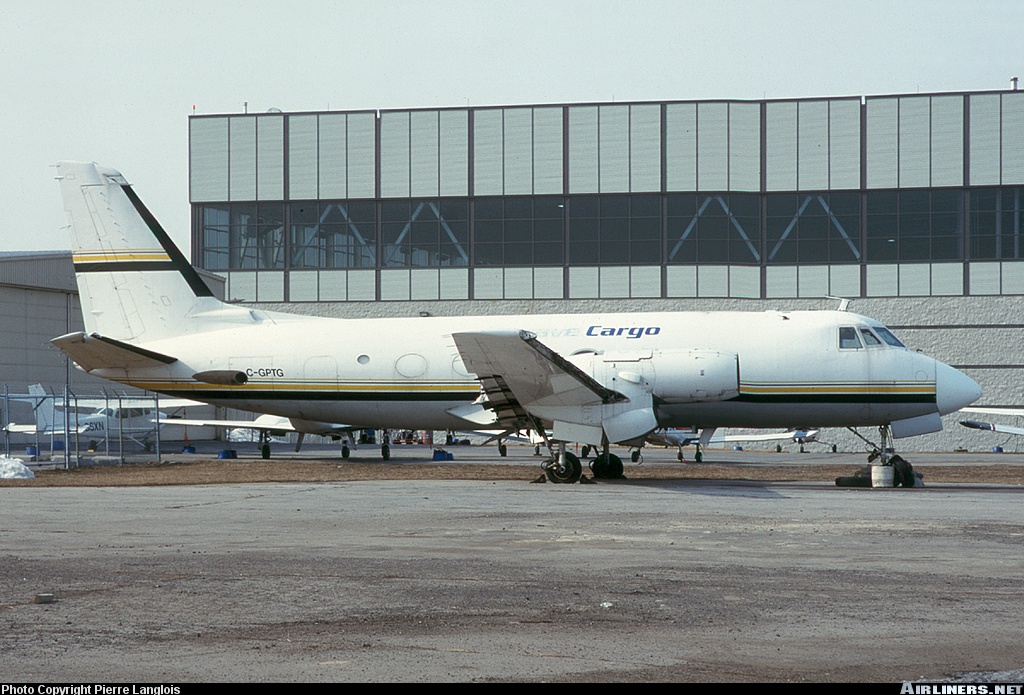
Crash of a Grumman G-159 Gulfstream I in Montreal

Date & Time: Jul 27, 2000 at 2350 LT
Type of aircraft:
Registration:
C-GPTG
Flight Type:
Survivors:
Yes
Schedule:
Toronto - Montreal
MSN:
189
YOM:
1968
Country:
Crew on board:
2
Crew fatalities:
Pax on board:
0
Pax fatalities:
Other fatalities:
Total fatalities:
0
Circumstances:
Airwave flight 9806, a G-159 Gulfstream I, was flying IFR from Toronto (YYZ) to Montreal-Dorval (YUL). When it was on final for runway 06R, the pilot reported a problem with the landing gear. The crew recycled the gear and performed the emergency extension procedure unsuccessfully before trying various flight manoeuvres to free the gear. They then circled Montreal until minimum fuel was reached, declared an emergency and landed. On landing, the aircraft veered to the left and came to a halt 60 feet from the runway. Both pilots escaped uninjured and the aircraft was damaged beyond repair.
Probable cause:
Preliminary investigation revealed that an apprentice AME moved a line in the landing gear well prior to the flight. The work was neither scheduled nor required. The apprentice left the work unfinished when he went to do something else, then forgot that a fastener was not in place. There was no flag or note to inform the other technicians or the crew that the aircraft was not in an airworthy state. The apprentice has two years experience with this company. The management was satisfied with the quality of his work. Two other licensed AMEs were working in the hangar with the apprentice. He was the only apprentice they had to supervise. The apprentice attended a type training course for this aircraft.