Crash of a Cessna 208B Super Cargomaster in Greenville

Date & Time: Sep 23, 2000 at 1950 LT
Type of aircraft:
Operator:
Registration:
N590TA
Flight Type:
Survivors:
Yes
Schedule:
Bangor - Greenville
MSN:
208B-0590
YOM:
1997
Crew on board:
1
Crew fatalities:
Pax on board:
0
Pax fatalities:
Other fatalities:
Total fatalities:
0
Captain / Total flying hours:
5350
Captain / Total hours on type:
2000.00
Aircraft flight hours:
2671
Circumstances:
According to the pilot, he was conducting a GPS approach during occasional low ceilings, reduced visibility and rain. At the minimum descent altitude, the ground was 'occasionally' visible through fog and rain. Near the missed approach point, the runway lights were visible, so he continued the descent. He lost visual contact with the runway, and began a missed approach, but collided with trees. The accident site was 2 miles prior to the runway, on rising terrain, 200 feet below the runway elevation. The missed approach point was over the approach end of the runway.
Probable cause:
The pilot's improper in-flight decision to continue his descent without visual contact with the runway, and his inattention to his altitude, in relation to the airport elevation.
Final Report:

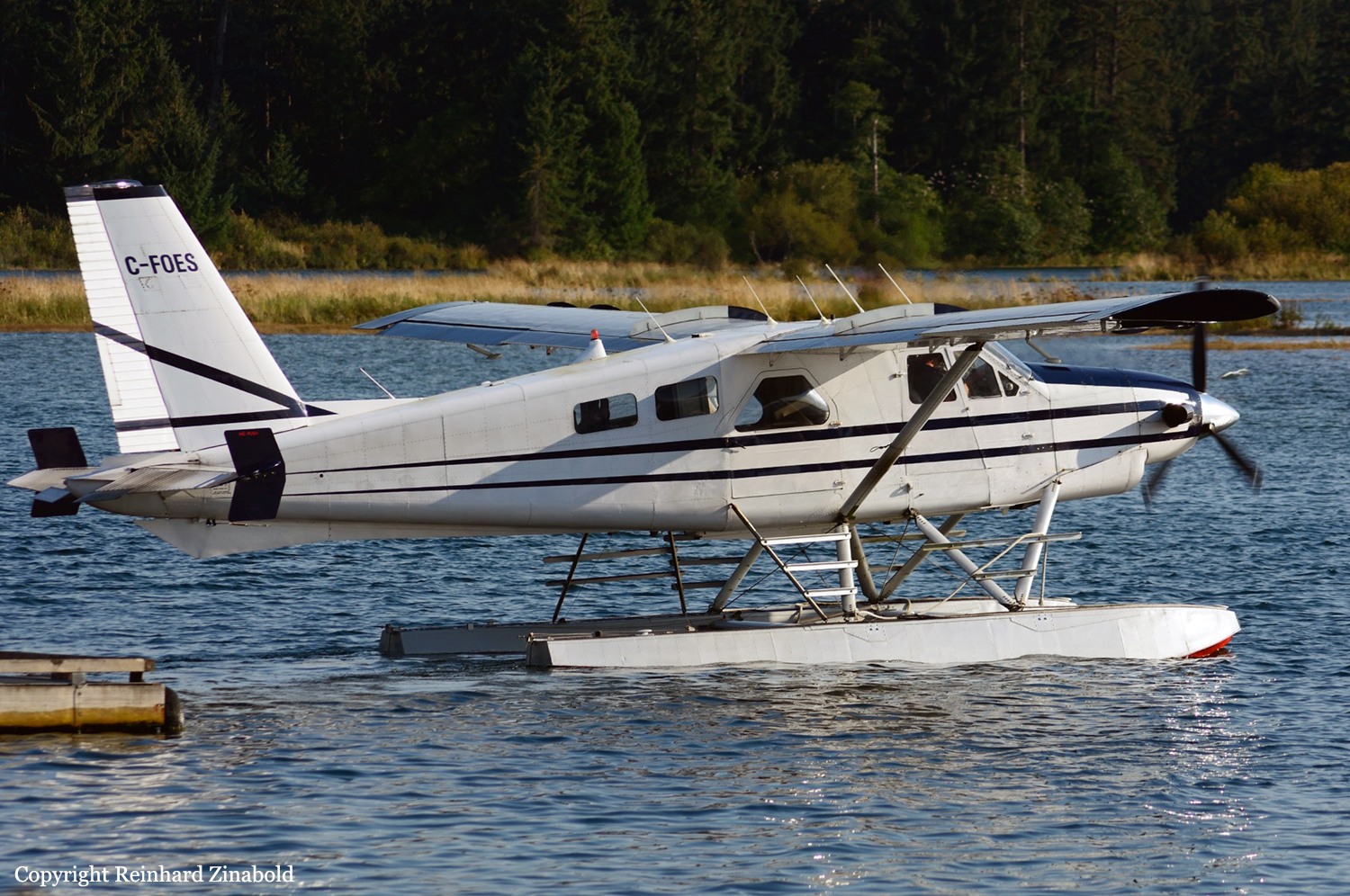
Crash of a De Havilland DHC-2 Turbo Beaver near Clearwater

Date & Time: Sep 22, 2000 at 1320 LT
Type of aircraft:
Operator:
Registration:
C-FOES
Flight Phase:
Survivors:
Yes
Schedule:
Clearwater - Clearwater
MSN:
1673
YOM:
1967
Country:
Crew on board:
1
Crew fatalities:
Pax on board:
1
Pax fatalities:
Other fatalities:
Total fatalities:
0
Captain / Total flying hours:
5000
Captain / Total hours on type:
900.00
Circumstances:
The de Havilland DHC-2T Beaver floatplane, serial number 1673TB43, was engaged in aerial application of fish fry to several lakes near Clearwater, British Columbia. The pilot and one other person were on board. The aircraft took off from Clearwater at about 1230 Pacific daylight time (PDT) to begin a planned series of drops to nearby lakes. The aircraft had dropped fish in four lakes before proceeding to Broken Hook Lake.When the aircraft was on approach to the northwestern end of Broken Hook Lake, the pilot reportedly advanced the power lever, but the engine did not respond. At this time, the aircraft was about 100 feet above ground level and struck several treetops. Within seconds, the aircraft descended, struck the terrain, and crashed into trees. The two occupants were seriously injured, and the aircraft was destroyed. There was no fire. The accident occurred at 1320 PDT.
Probable cause:
Findings as to Causes and Contributing Factors:
1. The pilot did not avoid the trees that obstructed his immediate flight path on descent to the lake.
2. The damage to the aircraft from the tree-strike seriously compromised the pilot's ability to control the aircraft, to the point where continued flight was impossible.
3. The pilot and the passenger suffered serious injuries. It is highly likely that proper use of a passenger restraint system would have lessened the injuries to both persons.
Findings as to Risk:
1. Canadian regulations regarding the use of seats and seat restraint systems are not sufficiently clear about high-risk, aerial work operations, such as aerial application.
2. Transport Canada was not advised of the fish-dropping operations and was unaware that the passenger in the cabin was unrestrained during high-risk operations.
3. Canadian regulations do not require specific training in aerial application techniques, such as fish-dropping.
4. The installation of the fish-hopper equipment constituted an aircraft modification, which had not been approved by Transport Canada.
Other Findings:
1. The operator did not maintain a proper logbook.
Final Report:

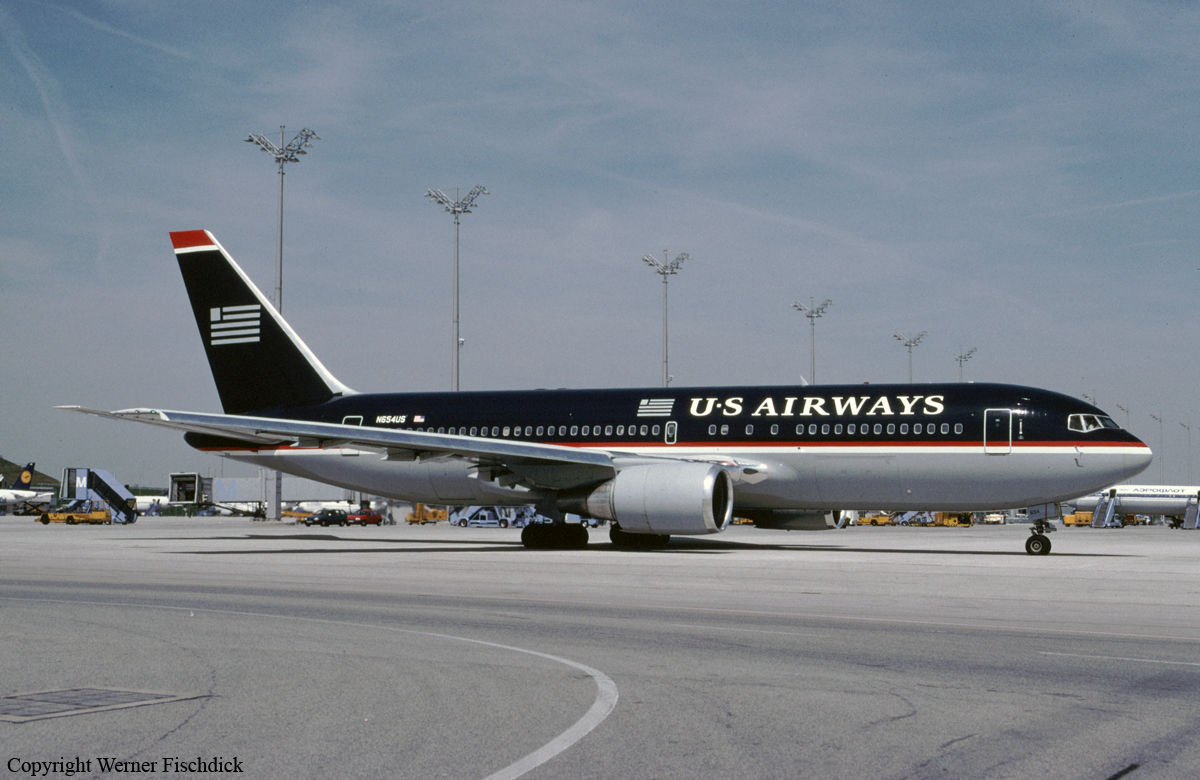
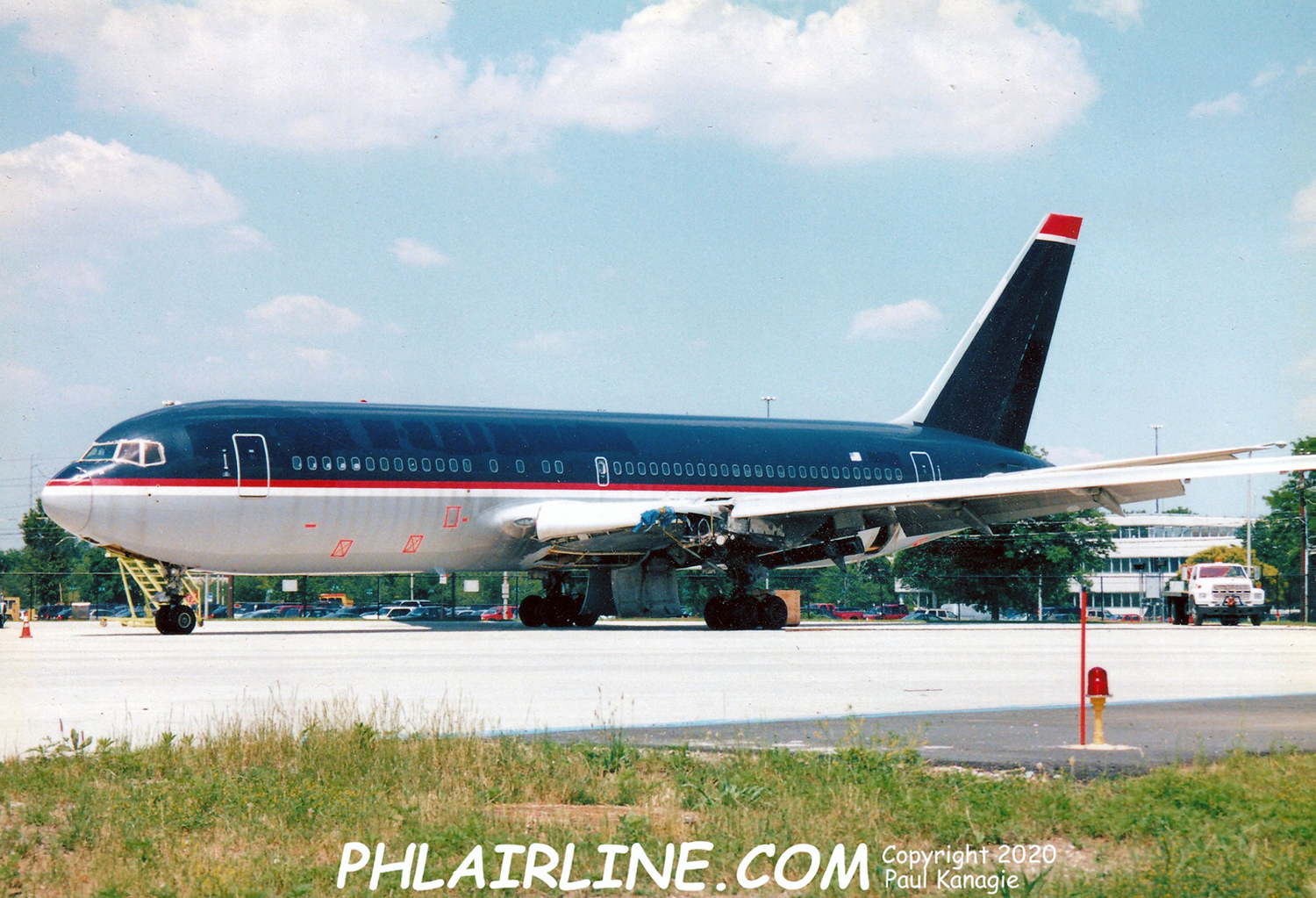
Ground fire of a Boeing 767-2B7ER in Philadelphia

Date & Time: Sep 22, 2000
Type of aircraft:
Operator:
Registration:
N654US
Flight Phase:
Flight Type:
Survivors:
Yes
MSN:
25225/375
YOM:
1991
Crew on board:
3
Crew fatalities:
Pax on board:
0
Pax fatalities:
Other fatalities:
Total fatalities:
0
Circumstances:
The aircraft experienced an uncontained failure of the high pressure turbine stage 1 disk in the No. 1 engine during a high-power ground run for maintenance. Because of a report of an in-flight loss of oil, US Airways mechanics had replaced a seal on the n°1 engine’s integral drive generator and were performing the high-power engine run to check for any oil leakage. For the maintenance check, the mechanics had taxied the airplane to a remote taxiway on the airport and had performed three runups for which no anomalies were noted. During the fourth excursion to high power, at around 93 percent N1 rpm, there was a loud explosion followed by a fire under the left wing of the airplane. The mechanics shut down the engines, discharged both fire bottles into the No. 1 engine nacelle, and evacuated the airplane. Although both fire bottles were discharged, the fire continued until it was extinguished by airport fire department personnel. The aircraft was damaged beyond repair.

Crash of a Piper PA-31-325 Navajo in Jeffersonville

Date & Time: Sep 20, 2000 at 1930 LT
Type of aircraft:
Registration:
N63706
Survivors:
Yes
Schedule:
Elizabethtown - Jeffersonville
MSN:
31-7712035
YOM:
1977
Crew on board:
1
Crew fatalities:
Pax on board:
0
Pax fatalities:
Other fatalities:
Total fatalities:
0
Captain / Total flying hours:
2117
Captain / Total hours on type:
889.00
Aircraft flight hours:
3910
Circumstances:
The pilot said that he 'landed properly' on the runway, touching down at about 700 feet from the approach end. He said that he 'applied brakes, which had no effect, ran out of runway, and turned to the right to avoid trees. [The] Grassy field should have worked out, except for the drainage ditch.' The pilot said that later he was told that there was a tail wind estimated at 45 knots, when he landed. Examination of the airplane revealed no anomalies. Approximately 34 minutes before the accident, the weather observation at Louisville, Kentucky, 11 miles south of the accident site, reported winds of 320 degrees at 16 knots, with gusts to 20 knots.
Probable cause:
The pilot's inadequate normal braking and the pilot's inability to stop the airplane on the runway. Factors relating to this accident were the hydroplaning conditions, wet runway, the tailwind, the trees, and the ravine.
Final Report:

Crash of a Cessna 207 Skywagon in 47 Mile Creek: 1 killed

Date & Time: Sep 20, 2000 at 0615 LT
Operator:
Registration:
N42472
Flight Phase:
Flight Type:
Survivors:
No
Schedule:
47 Mile Creek – Aniak
MSN:
207-0148
YOM:
1970
Crew on board:
1
Crew fatalities:
Pax on board:
0
Pax fatalities:
Other fatalities:
Total fatalities:
1
Captain / Total flying hours:
1788
Captain / Total hours on type:
900.00
Circumstances:
The air taxi pilot had flown to a remote airstrip and lodge in a company airplane to go hunting. He was scheduled the next morning for a flight from his company's base of operations, his original departure airport. According to a hunting guide at the lodge, the pilot departed the lodge's airstrip about 0608, with a load of revenue cargo. A few minutes later, the guide heard the sound of an airplane, and then a loud impact. The guide could not see the wreckage because it was too dark outside. He departed in his own airplane, but entered clouds shortly after takeoff, and had to return. The guide commented he thought the accident pilot was trying to return to the lodge airstrip because of the poor weather and darkness. The wreckage was located on a nearby mountain in daylight hours after the cloud cover had dissipated. Post accident inspection disclosed no evidence of any preimpact mechanical anomalies with the airplane. Official sunrise was 0813; official civil twilight was 0730. The time of the accident was approximately 0615.
Probable cause:
The pilot's decision to initiate visual flight into dark night instrument meteorological conditions. Factors associated with the accident are a low ceiling, a dark night, the pilot's failure to follow regulatory procedures and directives, and his self-induced pressure to return to base to take another flight.
Final Report:

Crash of a Piper PA-31T3-T1040 Cheyenne in Nuiqsut: 5 killed

Date & Time: Sep 18, 2000 at 1510 LT
Type of aircraft:
Operator:
Registration:
N220CS
Survivors:
Yes
Schedule:
Deadhorse – Nuiqsut
MSN:
31-8275013
YOM:
1982
Flight number:
6C181
Location:
Crew on board:
1
Crew fatalities:
Pax on board:
9
Pax fatalities:
Other fatalities:
Total fatalities:
5
Captain / Total flying hours:
2517
Captain / Total hours on type:
165.00
Aircraft flight hours:
10157
Circumstances:
The airline transport certificated pilot was landing at a remote village on a scheduled domestic commuter flight with nine passengers. The accident airplane, a twin-engine turboprop certified for single-pilot operations, was equipped with a fuselage-mounted belly cargo pod. Witnesses saw the airplane touch down on the gravel runway with the landing gear retracted. The belly pod lightly scraped the runway for about 40 feet before the airplane transitioned to a climb. The propeller tips did not contact the runway. As the airplane began climbing away from the runway, the landing gear was extended. The airplane climbed to about 100 to 150 feet above the ground, and then began a descending left turn, colliding with tundra-covered terrain. A postcrash fire destroyed the fuselage, right wing, and the right engine. The flaps were found extended to 40 degrees. The balked landing procedure for the airplane states, in part: "power levers to maximum, flaps to 15 degrees, landing gear up, and then retract the flaps." Five passengers seated in the rear of the airplane survived the crash. The survivors did not recall hearing a gear warning horn before ground contact. The airplane was landed gear-up eight months before the accident. The airplane was nearly landed gear-up four months before the accident. Each time, a landing gear warning horn was not heard by the pilot or passengers. A postcrash examination of the airplane and engines did not locate any preimpact mechanical malfunction. The FAA's Fairbanks, Alaska, FSDO conducted an inspection of the operator six months before the accident, and recommended the operator utilize two pilots in the accident airplane. Following the accident, the Fairbanks FSDO required the operator to utilize two pilots for passenger flights in the accident airplane make and model.
Probable cause:
The pilot's failure to extend the landing gear, his improper aborted landing procedure, and inadvertent stall/mush. Factors in the accident were an improper adjustment of the landing gear warning horn system by company maintenance personnel, and the failure of the pilot to utilize the pre-landing checklist.
Final Report:

Crash of a Piper PA-61P Aerostar (Ted Smith 601) in Northampton

Date & Time: Sep 7, 2000 at 0755 LT
Registration:
N601WK
Flight Phase:
Flight Type:
Survivors:
Yes
Schedule:
Northampton – Poughkeepsie
MSN:
61-0792-8063404
YOM:
1980
Crew on board:
1
Crew fatalities:
Pax on board:
1
Pax fatalities:
Other fatalities:
Total fatalities:
0
Captain / Total flying hours:
4280
Captain / Total hours on type:
2641.00
Aircraft flight hours:
3595
Circumstances:
The airport consisted of a single runway oriented on a heading of 140/320 degrees. A taxiway oriented on a 120 degree heading intersected the runway at its midpoint. The pilot reported that the visibility was 500-1,000 feet with fog at the time of departure. Before he took off, the pilot asked his passenger to walk the length of the runway to observe any obstructions, due to the reduced visibility. The pilot then taxied to the run-up pad, set the heading of his HSI to 120 degrees, and initiated the takeoff. When the airspeed reached 80 knots, the pilot realized he had initiated the takeoff on the taxiway instead of the runway. He aborted the takeoff and attempted to maneuver the airplane to the runway. The airplane crossed the runway, impacted a tree, and came to rest upright in a cornfield. The weather reported at the time of the accident at an airport 9 miles away was: wind from 320 degrees at 2 knots; visibility 1/16 mile with fog; sky partially obscured; ceiling 200 feet overcast.
Probable cause:
The pilot's improper preflight planning which resulted in an attempted takeoff from a taxiway. A factor in the accident was the fog.
Final Report:

Crash of a Piper PA-46-310P Malibu in South Lake Tahoe: 4 killed

Date & Time: Sep 1, 2000 at 1550 LT
Registration:
N88AM
Flight Phase:
Flight Type:
Survivors:
No
Schedule:
South Lake Tahoe – San Diego
MSN:
46-8508056
YOM:
1985
Crew on board:
1
Crew fatalities:
Pax on board:
3
Pax fatalities:
Other fatalities:
Total fatalities:
4
Captain / Total flying hours:
2500
Aircraft flight hours:
2845
Circumstances:
The airplane took off from the airport on a left downwind departure and after reaching an altitude of approximately 300 feet, banked steeply and dove into the ground. Witness statements indicated that the takeoff ground roll extended to midfield of the runway, a distance of 4,850 feet before the airplane lifted off. According to the Airplane Flight Manual performance charts, the normal ground roll should have been about 2,100 feet. While turning crosswind, the airplane steepened its bank and continued toward the downwind. As the angle of bank approached 90 degrees, the nose dropped and the airplane descended to impact with trees and the ground. Several trees were struck before the airplane came to rest on the underlying terrain in the backyard of a residence. The airplane was thermally destroyed in the impact sequence and post crash fire. Calculations of the airplane weight and balance data put it at least 251 pounds over maximum allowable gross takeoff weight. Remaining wreckage not consumed in the ground fire was examined and the engine was sent to the manufacturer for inspection. No discrepancies were found. Cockpit instrumentation and all autopilot components were thermally destroyed. Flaps and landing gear were found in the retracted position and the elevator trim surface was slightly nose up from the takeoff setting. The autopilot had a reported history of malfunction and the electric elevator trim system was scheduled for repair a week before the accident, but the owner took the airplane prior to the work being performed. The airplane had been modified with the addition of several Supplemental Type Certificates, one of which was a wing spoiler system. The controls and
many of the actuating linkages for the spoiler system were destroyed in the fire.
Probable cause:
The pilot's in-flight loss of control in the takeoff initial climb for undetermined reasons.
Final Report:

Crash of a Piper PA-31-350 Navajo Chieftain off Hilo: 1 killed

Date & Time: Aug 25, 2000 at 1735 LT
Operator:
Registration:
N923BA
Survivors:
Yes
Schedule:
Kona – Kona
MSN:
31-8252024
YOM:
1982
Flight number:
BIA057
Location:
Crew on board:
1
Crew fatalities:
Pax on board:
8
Pax fatalities:
Other fatalities:
Total fatalities:
1
Captain / Total flying hours:
2067
Captain / Total hours on type:
465.00
Aircraft flight hours:
3492
Circumstances:
The pilot ditched the twin engine airplane in the Pacific ocean after experiencing a loss of engine power and an in-flight engine fire while in cruise flight. The flight was operating at 1,000 feet msl, when the pilot noticed a loss of engine power in the right engine. At the same time the pilot was noticing the power loss, passengers noted a fire coming from the right engine cowling. The pilot secured the right engine and feathered the propeller. He attempted to land the airplane at a nearby airport; however, when he realized that the airplane was unable to maintain altitude he elected to ditch the airplane in the ocean. Prior to executing the forced landing, the pilot instructed the passengers to don their life jackets and assume the crash position. After touchdown, all but one passenger exited the airplane through the main cabin and pilot doors. It was reported that the remaining passenger was frightened, and could not swim. One survivor saw the remaining passenger sitting in the seat with the seat belt still secured and the life vest inflated. The pilot and passengers were then rescued from the ocean via rescue helicopter and boat. Postaccident examination of the airplane revealed that the right engine's oil converter plate gasket had deteriorated and extruded from behind the converter plate, allowing oil to spray in the accessory section and resulting in the subsequent engine fire. The engine manufacturer had previously issued a mandatory service bulletin (MSB) requiring inspection of the gasket every 50 hours for evidence of gasket extrusion around the cover plate or oil leakage. Maintenance records revealed that the inspection had been conducted 18.3 hours prior to the accident. At the time of the accident, the right engine had accumulated 386.8 hours since its last overhaul, and gasket replacement. The MSB was issued one month prior to the accident, after the manufacturer received reports of certain oil filter converter plate gaskets extruding around the oil filter converter plate. The protruding or swelling of the gasket allowed oil to leak and spray from between the plate and the accessory housing. A series of tests were conducted on exemplar gaskets by submerging them in engine oil heated to 245 degrees F; after about 290 hours, the gasket material displayed signs of deterioration similar to that of the accident gasket. A subsequent investigation revealed that the engine manufacturer had recently changed gasket suppliers, which resulted in a shipment of gaskets getting into the supply chain that did not meet specifications. As a result of this accident, the engine manufacturer revised the MSB to require the replacement of the gasket every 50 hours. The FAA followed suit and issued an airworthiness directive to mandate the replacement of the gasket every 50 hours.
Probable cause:
Deterioration and failure of the oil filter converter plate gasket, which resulted in a loss of engine power and a subsequent in-flight fire.
Final Report:

Crash of a Cessna 421C Golden Eagle III in Hunt: 1 killed

Date & Time: Aug 24, 2000 at 1549 LT
Registration:
N421NT
Flight Type:
Survivors:
No
Schedule:
Pecos – San Antonio
MSN:
421C-1098
YOM:
1981
Location:
Crew on board:
1
Crew fatalities:
Pax on board:
0
Pax fatalities:
Other fatalities:
Total fatalities:
1
Captain / Total flying hours:
18185
Aircraft flight hours:
4499
Circumstances:
Approximately 8 months prior to the accident, during a cross country flight, the owner shutdown the left engine due to low oil pressure and diverted from his intended destination to a nearby airport. During descent, the right alternator failed, and the owner performed the emergency gear extension procedure. Following an emergency gear extension, the landing gear of this model airplane cannot be retracted until the system has been ground serviced. A mechanic reported that about 7 months prior to the accident, with the owner present, he removed the oil filter from the left engine, found it packed with metal shavings and told the owner that the engine needed overhaul. Two other mechanics reported that approximately three weeks before the accident, they installed an oil filter on the left engine, changed the oil, and cleaned the oil pressure regulator. They ground ran both engines with no discrepancies noted. One of the mechanics reported that following the engine run, the left engine oil filter was removed, examined, and no metal was found. The landing gear was not serviced. According to the owner, the pilot was "hired" by one of the two mechanics to ferry the airplane with the gear extended to a location where the gear could be serviced. While en route, the pilot reported a loss of power on the left engine, that he was having trouble feathering the engine, that the airplane would not maintain altitude and he was looking for a place to land. Witnesses observed the airplane flying low, wheels down and losing altitude. They further observed it roll into a steep left bank, hit trees and a fence, catch fire, come to rest inverted on a road and burn. Post accident examination of the left engine revealed a hole in the right crankcase half over the #3 cylinder attach point. Disassembly of the left engine revealed that the #3 connecting rod was separated from the crankshaft, and the rod bolts, rod cap, and top of the rod were deformed. The #5 piston pin had one cap missing. Scoring was noted on the crankshaft journals, and the main bearings exhibited discoloration and deformation consistent with oil starvation. The cylinders exhibited deformation, scoring in the barrels, and deposits on the domes. The camshaft exhibited discoloration and scoring on the camshaft lobes. Disassembly of the left propeller revealed that it was in the vicinity of low pitch/latch position and not rotating at impact. The disassembly of the right engine and propeller did not reveal any discrepancies that would have precluded operation prior to impact. Estimates of the airplane's climb performance indicated that with the landing gear down and the left propeller stopped, it was not capable of sustained flight.
Probable cause:
The loss of left engine power as a result of the owner's failure to overhaul the engine before further flight after the lubrication system was found contaminated with metal. Contributing factors were the pilot's decision to fly the aircraft with a non-operating landing gear system, which resulted in a forced landing, and the lack of suitable terrain for the forced landing.
Final Report: