Crash of a De Havilland DH.104 Dove 1 in Egypt: 9 killed

Date & Time: Apr 11, 1968
Type of aircraft:
Operator:
Registration:
900
Flight Phase:
Flight Type:
Survivors:
No
Site:
Schedule:
Al-Bahariya - Cairo
MSN:
04090
YOM:
1947
Location:
Country:
Region:
Crew on board:
2
Crew fatalities:
Pax on board:
7
Pax fatalities:
Other fatalities:
Total fatalities:
9
Circumstances:
The twin engine airplane departed the oasis of Al-Bahariya on a flight to Cairo, carrying a crew of two and seven passengers, among them one child. En route, weather conditions worsened and the pilot apparently lost his orientation. In such conditions, the crew decided to reduce his altitude and attempted an emergency landing. The airplane belly landed in a desert area located approximately 100 km northeast of Al-Bahariya. The aircraft was damaged beyond repair while all nine occupants survived the accident. Rescue teams were unable to localize the airplane and all nine occupants died of thirst few days later. The wreckage was eventually found by camels more than three years later, on June 1st 1978.
Probable cause:
It is believed the crew lost his orientation following the in-flight failure of several instruments.

Crash of a De Havilland U-6A Beaver near Bent: 3 killed

Date & Time: Apr 8, 1968 at 1430 LT
Type of aircraft:
Operator:
Flight Phase:
Survivors:
No
Site:
Schedule:
Holloman - Holloman
Location:
Crew on board:
3
Crew fatalities:
Pax on board:
0
Pax fatalities:
Other fatalities:
Total fatalities:
3
Circumstances:
The crew was searching for a test balloon when the single engine aircraft crashed in unknown circumstances in a mountainous area located six miles southeast of Bent. All three crew members were killed.

Crash of a Lockheed P-3A-35-LO Orion into the Pacific Ocean: 8 killed

Date & Time: Apr 5, 1968 at 0310 LT
Type of aircraft:
Operator:
Registration:
151350
Flight Phase:
Survivors:
Yes
Schedule:
Kadena - Kadena
MSN:
185-5063
YOM:
1963
Country:
Region:
Crew on board:
12
Crew fatalities:
Pax on board:
0
Pax fatalities:
Other fatalities:
Total fatalities:
8
Circumstances:
The airplane departed Kadena AFB on a night patrol flight over the Pacific Ocean. While cruising at low height in a flat attitude some 320 km east of Okinawa, the aircraft struck the water surface, crashed and broke in three pieces that sank by a depth of 1,600 meters. Four crew members were found alive while eight others were killed.
Probable cause:
The exact cause of the accident could not be determined with certainty. However, it is believed the accident may have been caused by an accidental disconnection of the automatic pilot system.

Crash of a Lockheed P-3B-90-LO Orion off Đảo Phú Quốc Island: 12 killed

Date & Time: Apr 1, 1968
Type of aircraft:
Operator:
Registration:
153445
Flight Phase:
Survivors:
No
Schedule:
U-Tapao - U-Tapao
MSN:
185-5241
YOM:
1967
Country:
Region:
Crew on board:
12
Crew fatalities:
Pax on board:
0
Pax fatalities:
Other fatalities:
Total fatalities:
12
Circumstances:
While cruising over the Gulf of Thailand on a maritime patrol flight at the border between Thailand and South Vietnam, the airplane was hit by enemy fire and the right wing caught fire. The crew informed ground about his situation and elected to divert to the nearest airport when the airplane went out of control and crashed into the sea off Đảo Phú Quốc Island. All 12 crew members were killed.
Crew:
Lt(jg) Frank E. Hand,
Lt(jg) Stuart L. McLellan,
Lt(jg) Brian J. Mathison,
Lt(jg) Michael J. Purcell,
AME2 Donald W. Burnside,
ATI Kenneth L. Crist,
A02 William S. Cutting,
AXC Donald E. Kulacz,
AX3 Delmar L. Lawrence,
AE1 Donald F. Wood,
ADJ2 Edward O. Wynder,
AX1 Alvin G. Yoximer.
Probable cause:
Shot down by enemy fire.

Crash of a Havilland U-6A Beaver in Hsinchu: 1 killed

Date & Time: Mar 31, 1968
Type of aircraft:
Operator:
Flight Phase:
Flight Type:
Survivors:
No
Schedule:
Taipei – Ching Chuan Kang
Country:
Region:
Crew on board:
1
Crew fatalities:
Pax on board:
0
Pax fatalities:
Other fatalities:
Total fatalities:
1
Circumstances:
The pilot departed Taipei Airport on a flight to the Ching Chuan Kang Airbase located in Taichung. En route, the single engine aircraft crashed in unknown circumstances near Hsinchu. The pilot Maj John J. Ahern, sole on board, was killed.

Crash of a Fairchild C-123K Provider near Đức Phổ: 2 killed

Date & Time: Mar 31, 1968
Type of aircraft:
Operator:
Registration:
54-0653
Flight Phase:
Flight Type:
Survivors:
Yes
MSN:
20102
YOM:
1954
Country:
Region:
Crew on board:
4
Crew fatalities:
Pax on board:
0
Pax fatalities:
Other fatalities:
Total fatalities:
2
Circumstances:
According to the testimony of John R. Young, there was a sudden loss of power. The aircraft came down fast and hard. The captain tried to belly land when the plane broke up below cockpit and became a giant plow. Two occupants (pilot and taskmaster) were fatally injured and other occupants were injured, some seriously. There were few troops and locals on board at the time of the accident.

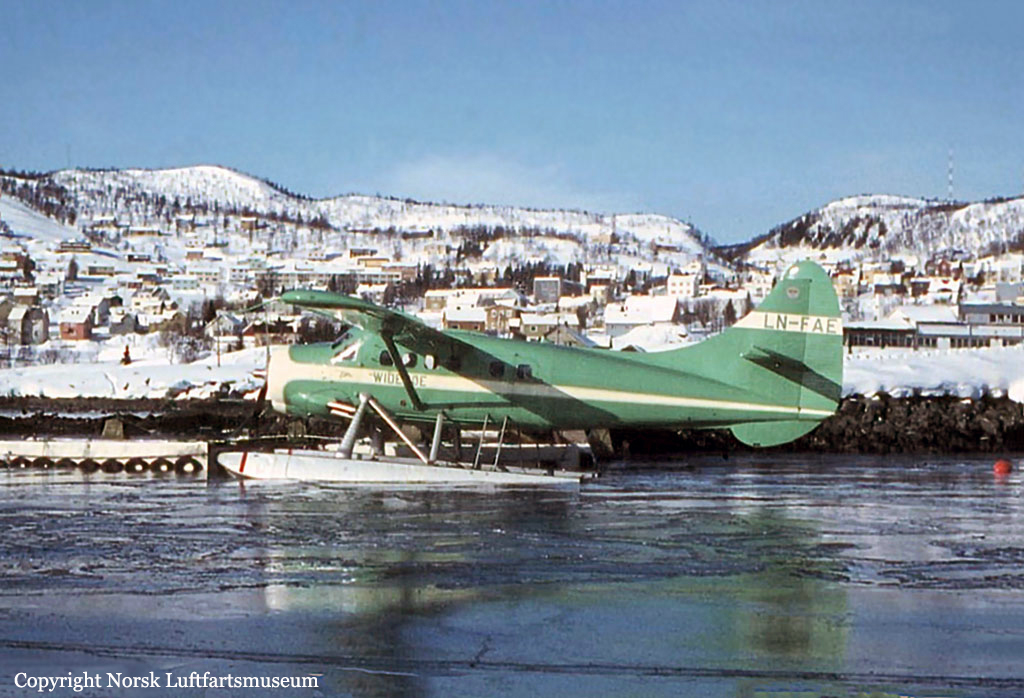
Crash of a De Havilland DHC-3 Otter in Rossfjordstraumen

Date & Time: Mar 28, 1968
Type of aircraft:
Operator:
Registration:
LN-FAE
Flight Phase:
Survivors:
Yes
Schedule:
Tromsø – Harstad
MSN:
18
YOM:
1953
Country:
Region:
Crew on board:
1
Crew fatalities:
Pax on board:
4
Pax fatalities:
Other fatalities:
Total fatalities:
0
Circumstances:
The aircraft on amphibious floats departed from Tromso at 1015 hours for a scheduled flight to Harstad. In addition to the pilot, a company mechanic was on board as an assistant and there were three passengers. The weather was not good, with low cloud, heavy snow showers and reduced visibility. Due to the conditions, the pilot elected to divert from the track laid out in the company's route manual. This change of route however was not reported to air traffic control because of poor radio coverage at low altitude. This is a very rugged coastal area with numerous fjords and inlets amidst mountains rising to four thousand feet. As the Otter flew in on the west side of Rossfjord, some 45 kilometres south-west of Tromso, visibility dropped and the pilot said to his assistant “We'll cut across here, I know this area” and started a right turn. Eye witness reports put the aircraft at this time at between 100 feet and 25 feet above the ice-covered fjord, although the pilot was later to claim he was flying at 500 feet. Immediately after starting the turn, the right wingtip and float made contact with the ground. The aircraft was thrown to the left at the first impact and crashed at a 35 degree angle to its direction of travel. It caught fire and was burnt to destruction. All five occupants survived the crash but one passenger and the pilot's assistant suffered severe burns and were flown by helicopter to hospital in Tromso.
Source: https://www.dhc-3archive.com
Probable cause:
The Accident investigation Board was not able to determine whether the pilot meant to make a 180 degree turn and fly back out of the fjord, or initiate a climb to get across a low mountain ridge and out into the next fjord to the west. The Board concluded that the accident was caused by the pilot’s decision to turn towards higher terrain. If the purpose was to exit the fjord, it should have been made to the left over the fjord. If it was to climb across the ridge, it would not have been possible to clear the terrain, given the aircraft’s weight and performance.

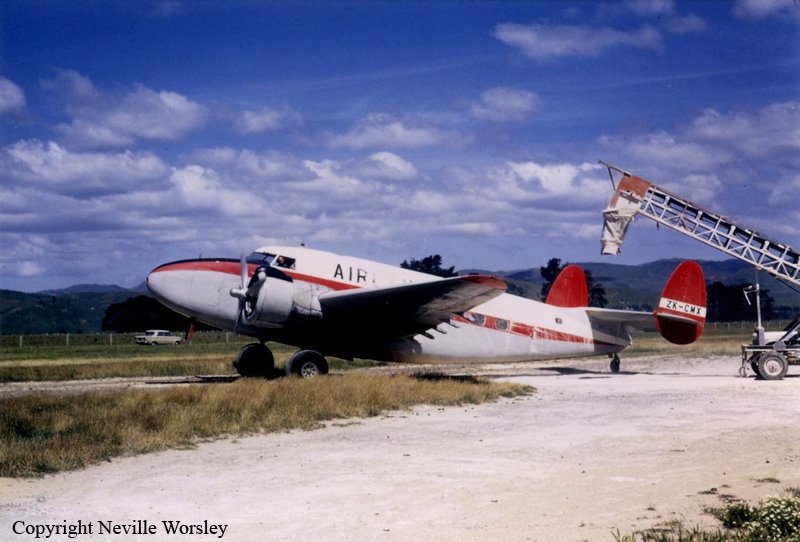
Crash of a Lockheed 18-56-23 LodeStar on Mt Waewaepa: 1 killed

Date & Time: Mar 26, 1968 at 0805 LT
Type of aircraft:
Operator:
Registration:
ZK-CMX
Flight Phase:
Survivors:
No
Site:
Schedule:
Oringi - Oringi
MSN:
2595
YOM:
1943
Country:
Region:
Crew on board:
1
Crew fatalities:
Pax on board:
0
Pax fatalities:
Other fatalities:
Total fatalities:
1
Aircraft flight hours:
7364
Circumstances:
The aircraft was engaged in an operation involving the aerial sowing of bulk fertiliser. The Lodestar had made a straight sowing run after which it was seen to cross a ridge. It turned slightly to starboard and followed the line of the ridge before entering a comparatively steep left-hand turn apparently initiated to bring it back toward a suitable position from which another sowing run could be started. When about two-thirds of the turn had been completed, the aircraft was seen to flick suddenly into a left-hand spin which continued very rapidly for one and a half to two and a half turns until the aircraft impacted on bush-clad terrain near the top of the ridge it had formerly crossed, exploded, disintegrated and burned.
Probable cause:
The accident resulted from irretrievable loss of control occasioned by the unintentional incurrence of a stall and spin in conditions of turbulence and at a height which did not permit recovery before the aircraft struck the ground.

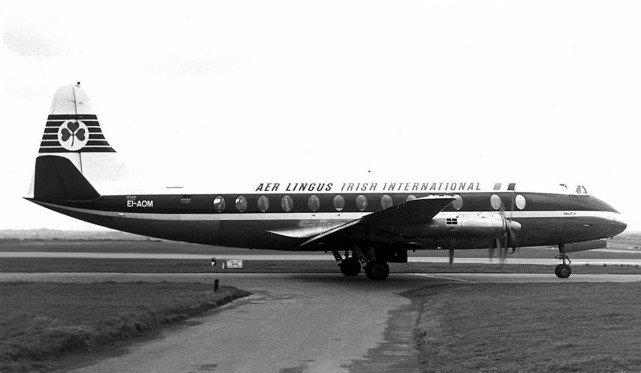
Crash of a Vickers 803 Viscount off Wexford: 61 killed

Date & Time: Mar 24, 1968 at 1058 LT
Type of aircraft:
Operator:
Registration:
EI-AOM
Flight Phase:
Survivors:
No
Schedule:
Cork - London-Heathrow
MSN:
178
YOM:
1957
Flight number:
EI712
Country:
Region:
Crew on board:
4
Crew fatalities:
Pax on board:
57
Pax fatalities:
Other fatalities:
Total fatalities:
61
Captain / Total flying hours:
6683
Captain / Total hours on type:
1679.00
Copilot / Total flying hours:
1139
Copilot / Total hours on type:
900
Aircraft flight hours:
18806
Aircraft flight cycles:
16923
Circumstances:
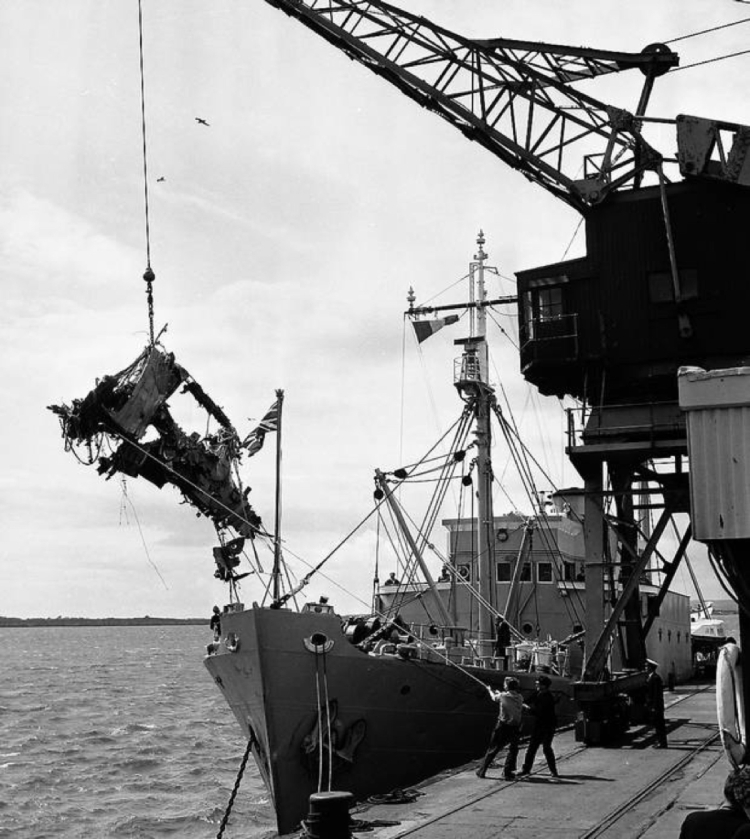
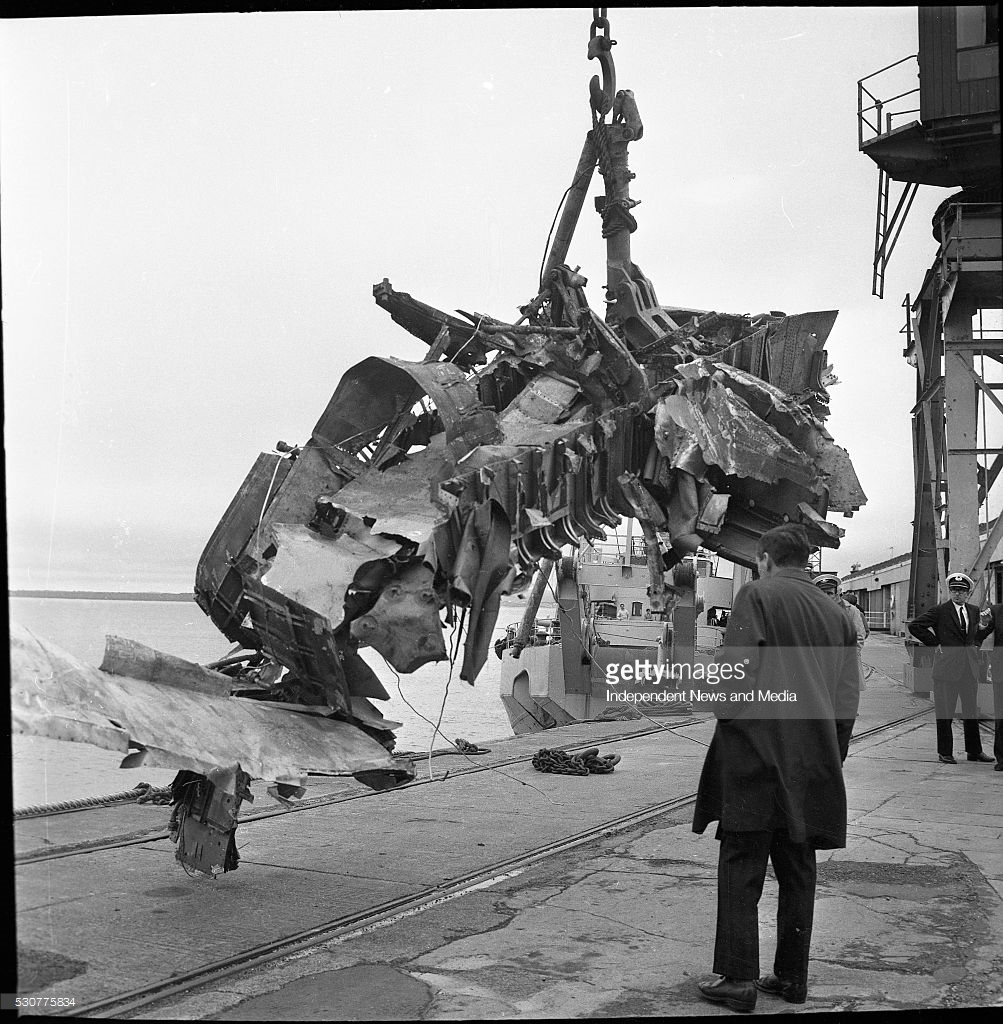
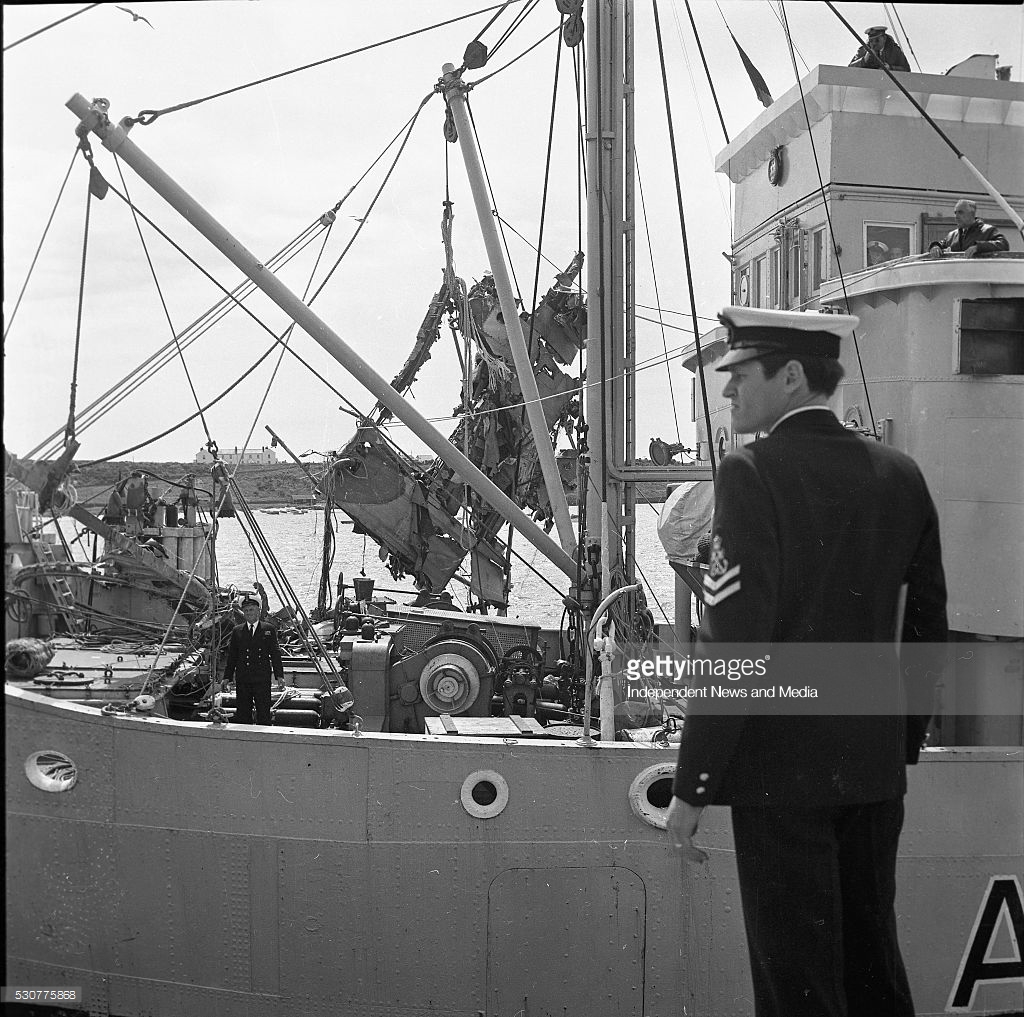
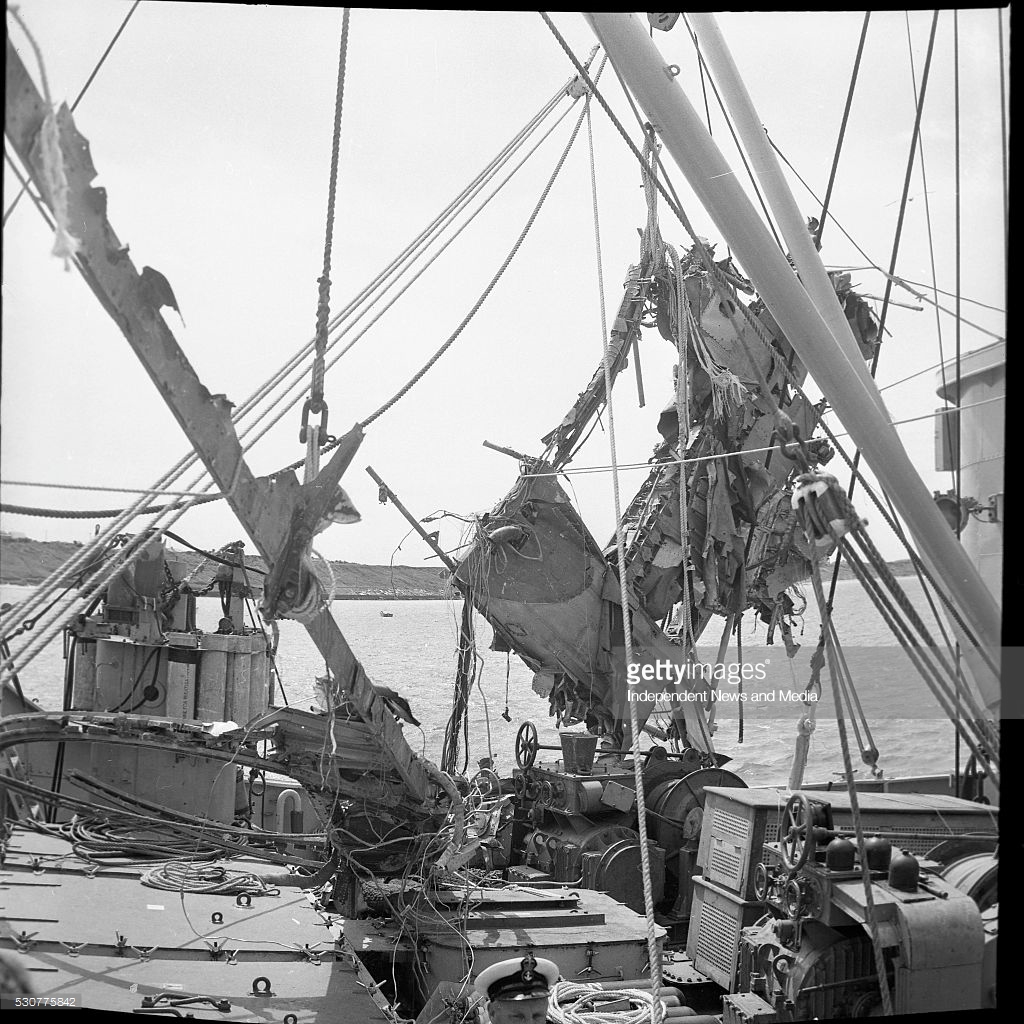
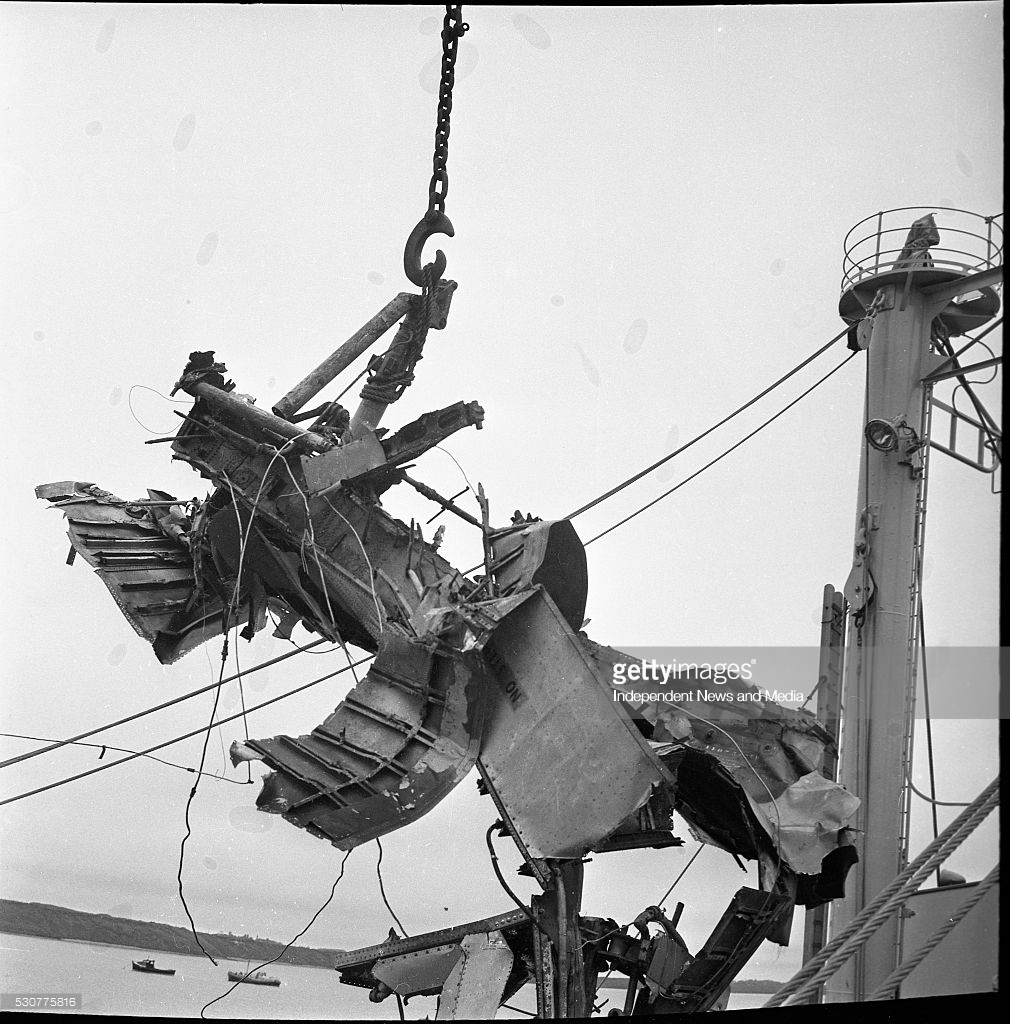
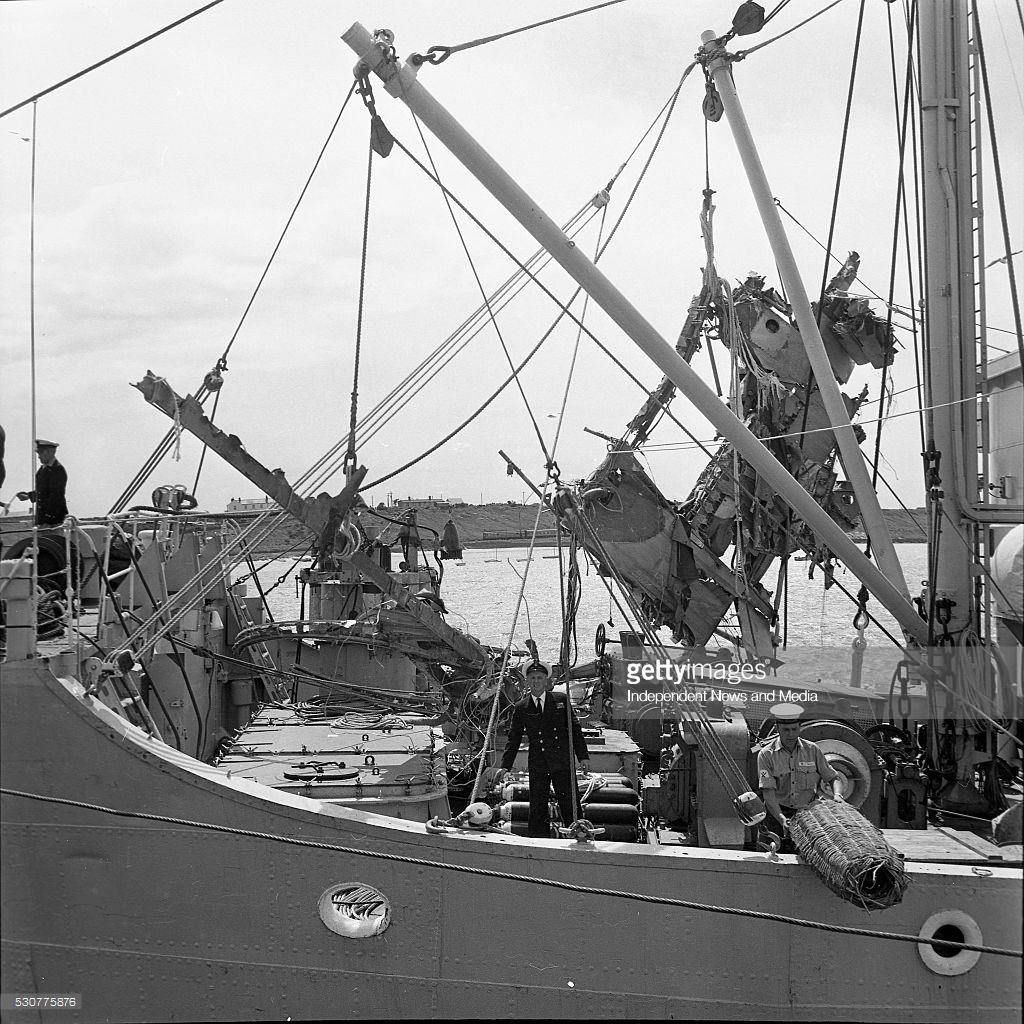
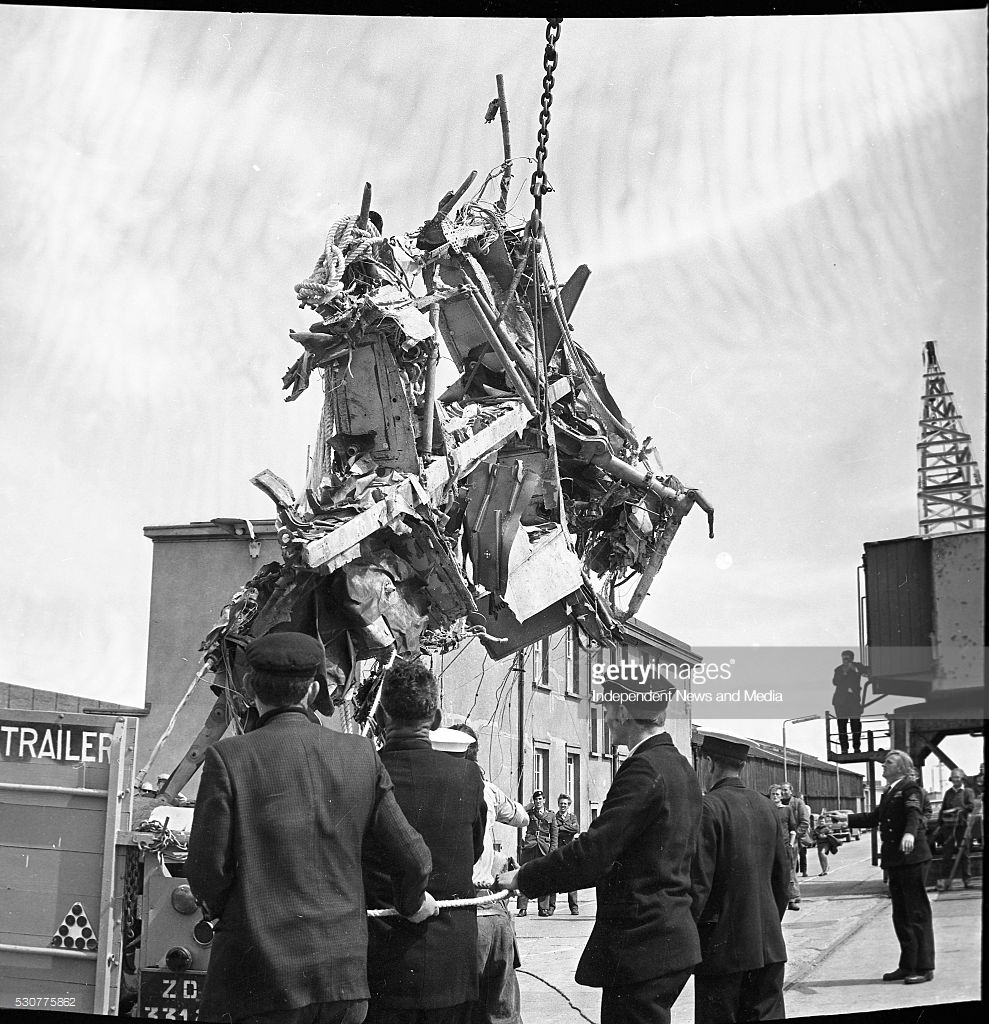
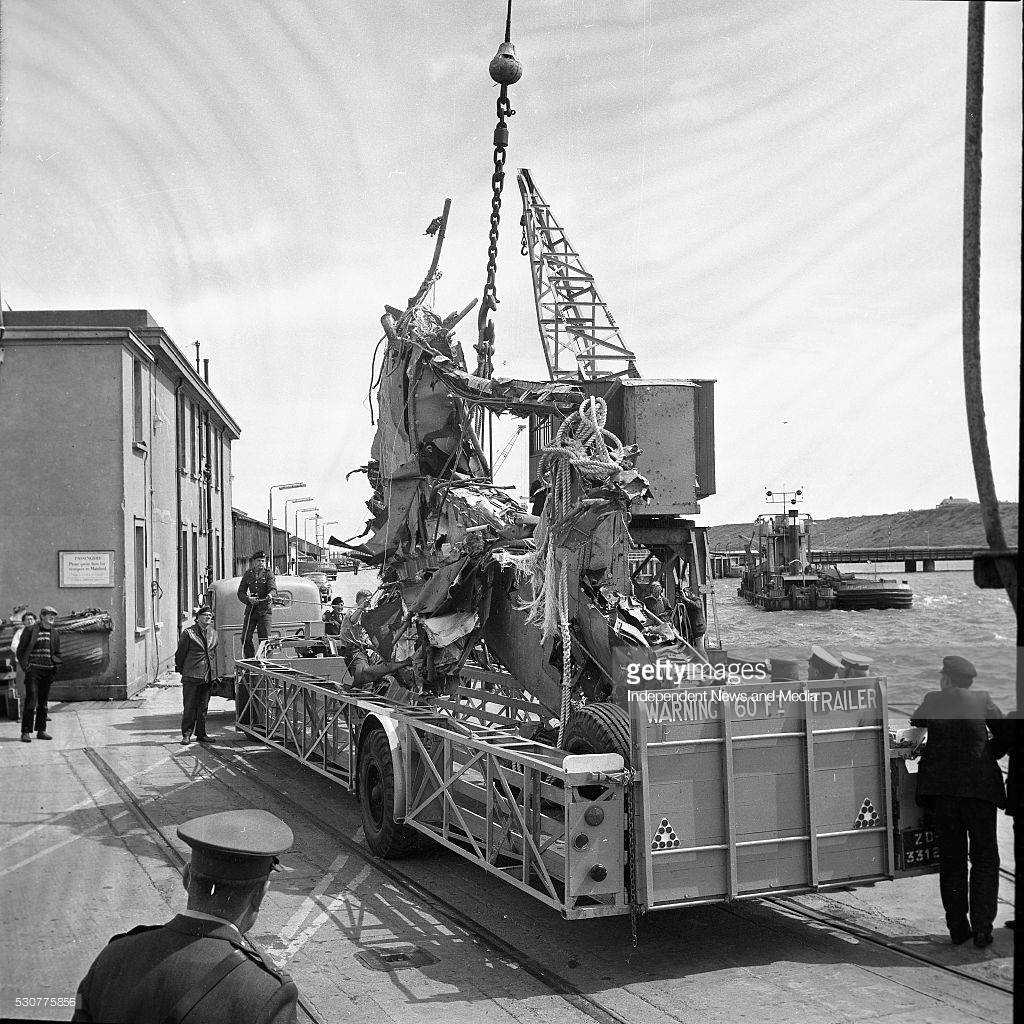
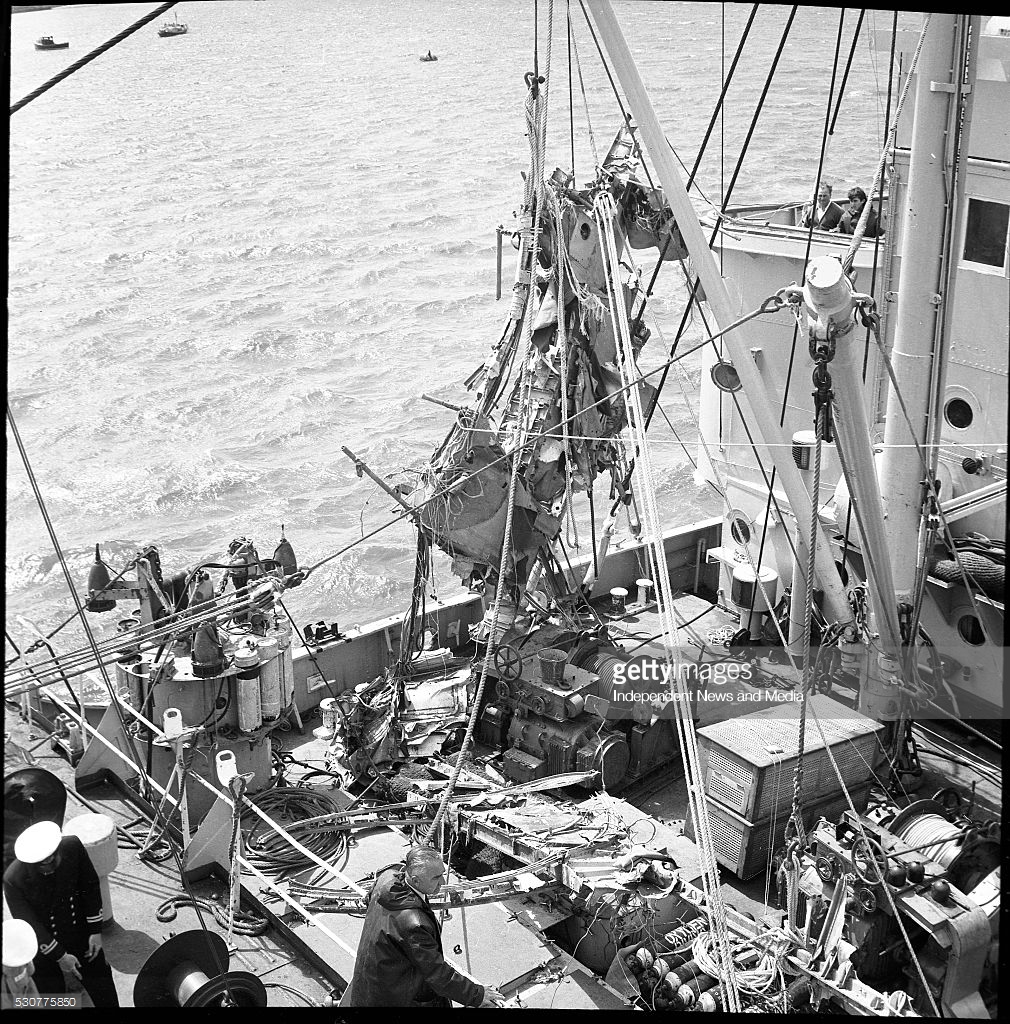
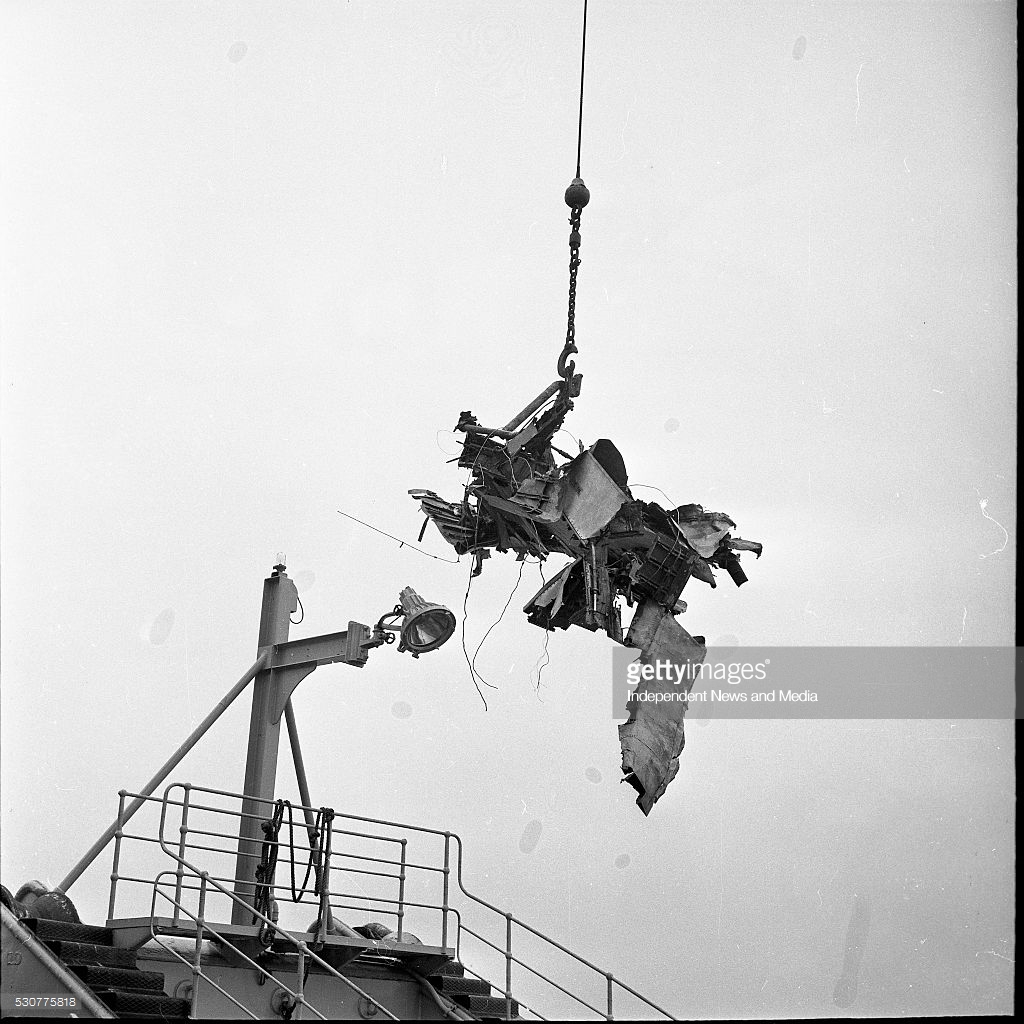
Viscount aeroplane type 803, registration: EI-AOM departed from Cork Airport at 10.32 hours en route for London operating as Aer Lingus Flight 712. The take-off was normal. The flight was cleared by Air Traffic Control to proceed via Airways Blue 10, Green 1 at flight level 170 (17,000'). At 10.38, when the aeroplane had passed through 7,000', clearance on course to Tuskar was given. At 10.40, after the flight had reported it was by Youghal at 7,500' climbing to 17,000', ATC Cork suggested that if desired, the flight could route direct to Strumble. No direct acceptance of this suggestion was received. At 10.57.07 the flight reported "by Bannow (a reporting point on the route at 51º 68' N - 06º 12' W) level 170 (17,000') estimating Strumble at 03". The flight was instructed to change to the London Airways frequency of 131.2, and this was acknowledged by the reply "131.2". The time of this call was 10.57.29. At 10.58.02, London Radar intercepted a call (garbled and simultaneous with another call) which appeared to be, and was later confirmed as "Echo India Alpha Oscar Mike with you", and eight (8) seconds later, a call was intercepted which was interpreted as "Five thousand feet descending spinning rapidly". This call was also heard by another Aer Lingus aircraft en route Dublin-Bristol (The word "Five" was later, after repeated acoustic analysis, interpreted as more likely to be the word "twelve".) This was the last call received from the aircraft. At 11.10, London ATC advised Shannon ATC that they had no radio contact with EI-AOM. At 11.13 London advised Shannon that they had requested Aer Lingus Flight EI 362 (Dublin-Bristol) to search west of Strumble. This flight descended to 500' in good visibility, but saw nothing. Between 11.13 and 11.25, efforts were made to make radio contact with the flight, with no result, and at 11.25 a full alert was declared. At 12.36 a report from the U.K. was received by Haulbowline that wreckage had been sighted in position 51º 57' N, 06º 10' W Rosslare Lifeboat was proceeding, but two surface vessels within 4 nautical miles of this position saw nothing. At 12.52 hours the Air Corps reported that they had dispatched a Dove aeroplane and a helicopter to search. At 13.10 hours there were ten aircraft from the U.K. in the search area. At 15.30 hours the reported sighting of wreckage was cancelled. Nothing positive was discovered on this day. On 25 March 1968, at 06.15 hours, the search was resumed by aircraft and ships from the U.K., and at 12.41 hours, wreckage was sighted and bodies recovered from a position 6 nautical miles north-east of Tuskar Rock. More floating wreckage was reported scattered for a further 6 nautical miles north-west of this point. The Irish Naval Service ship, L.E. Macha, which had been on patrol off the north-west coast, joined in the search on 26 March 1968, and took over duty as Search Controller. A total of 13 bodies was eventually recovered in the search during the next few days, together with a quantity of light floating wreckage-mostly cabin furnishings, and some baggage, seat cushions, and the wheels and inner cylinder from the port main landing gear. One additional body was recovered later. The position of the main wreckage remained obscure in spite of prolonged and diligent search by sonar equipped ships of the British Navy and trawling by Irish trawlers-"Glendalough" from Kilmore Quay and "Cu na Mara" of the Irish Fisheries Board (An Bord Iascaigh Mhara). Eventually, on 5 June 1968 "Glendalough" hauled in position 1.72 nautical miles from Tuskar Rock with Tuskar bearing 280º, in 39 fathoms and brought up a quantity of positively identifiable wreckage. The "Cu na Mara" in the same location also brought up wreckage. On the following day more wreckage was brought up by these trawlers, and divers from H.M.S. Reclaim confirmed a mass of wreckage "like a scrap yard" in this position. Subsequent salvage operations confirmed that a major portion of the aircraft at least was located here. Two eyewitnesses, one a sailor on a coastal vessel, who thought he had seen an aircraft crash into the sea but did not report it at the time, and another witness on shore, who saw a splash in the sea near the Tuskar Rock, gave the time as between 11.10 and 11.15. The position lines of these two witnesses approximately cross the location where the main wreckage was eventually found. The aircraft was totally demolished by violent impact with the sea. The bulk of the wreckage was found in 39 fathoms of water with all parts lying in close proximity. About 60-65% of the aircraft (by weight) was recovered, and included the major parts of three engines, a few parts of the fourth, and all four propellers, the almost complete primary structure of the wings from tip to tip, and the fin and rudder. None of the wreckage displayed any evidence of fire or explosion. No part of the tail planes or elevators were recovered, with the exception of small portions of the spring tab and trim tab. The recovered wreckage revealed extensive damage to the whole structure, which virtually disintegrated.
Probable cause:
There is not enough evidence available on which to reach a conclusion of reasonable probability as to the initial cause of this accident. The probable cause of the final impact with the sea was impairment of the controllability of the aircraft in the fore and aft (pitching) plane. Speculation continued since the time of the accident, prompted by a hypothesis posed in the report, that the Viscount may have been initially upset by the possible presence of another airborne object, drone or missile in its vicinity at the time. On the 30th anniversary of the accident, following newspaper articles and television programmes focusing on the possible involvement of U.K ships and missile ranges on the Welsh Coast in the downing of the aircraft, it was decided that Irish and U.K. officials would review all files held relating to the accident to see if the cause of the accident could be established. It was a.o. concluded that "the possibility of a cause other than a (near) collision with another airborne object being the initial cause of the upset ... does not appear to have been adequately examined in the 1970 Report." Following the review, in July 2000, the Irish Minister for Public Enterprise commissioned an independent study of the accident circumstances. The International Study Team published their findings in December 2001:
- An initial event, which cannot be clearly identified, disturbed the air flow around the horizontal tail surfaces and the pitch control of the aircraft. In the light of what was observed by non-skilled people there was a strong indication that structural fatigue, flutter, corrosion or bird strike could have been involved,
- It is possible that the sensitivity of the engine fuel control units to negative accelerations imposed during the initial upset, had an adverse effect on the subsequent flight path of the aircraft,
- The severe manoeuvres of the aircraft following the initial upset and the subsequent flight would have been outside the airworthiness certification envelope and may have resulted in some deformation of the structure,
- A number of possible causes for an impairment of pitch control were examined and it is considered very possible that excessive spring tab free play resulted in the fatigue failure of a component in the tab operating mechanism thus inducing a tailplane-elevator tab free flutter condition,
- The loads induced by the flutter condition would be of sufficient magnitude and frequency to cause a fatigue failure of the port tailplane within the timescale estimated for EI-AOM,
- There was no involvement of any other aircraft or missile.
Final Report:

Crash of a Beechcraft G18S in Weston: 7 killed

Date & Time: Mar 19, 1968 at 0955 LT
Type of aircraft:
Registration:
N172S
Flight Phase:
Survivors:
No
Site:
MSN:
BA-541
YOM:
1960
Location:
Crew on board:
2
Crew fatalities:
Pax on board:
5
Pax fatalities:
Other fatalities:
Total fatalities:
7
Captain / Total flying hours:
6221
Captain / Total hours on type:
711.00
Circumstances:
While cruising under VFR mode in foggy conditions, the crew failed to realize his altitude was insufficient when the airplane struck the slope of a mountain shrouded in clouds and located in the region of Weston. The aircraft was destroyed and all seven occupants have been killed.
Probable cause:
The crew continued under VFR mode in adverse weather conditions and became lost and disoriented. The crew attempted an IFR flight with know defective directional gyro.
Final Report: