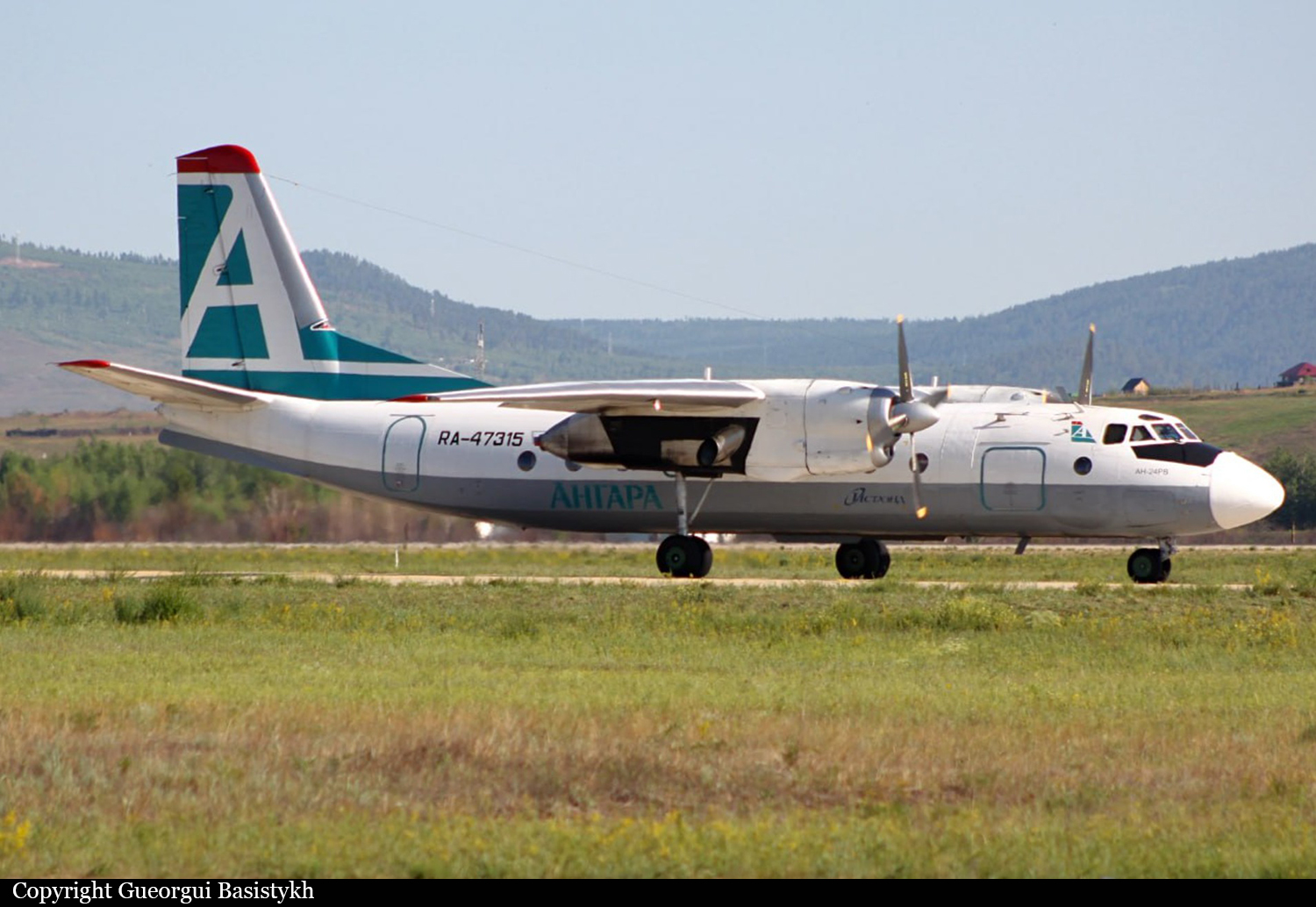
Crash of an Antonov AN-24RV near Tynda: 48 killed

Date & Time: Jul 24, 2025 at 1256 LT
Type of aircraft:
Operator:
Registration:
RA-47315
Survivors:
No
Schedule:
Khabarovsk – Blagoveshchensk – Tynda
MSN:
6 73 105 02
YOM:
1976
Flight number:
AGU2311
Country:
Region:
Crew on board:
6
Crew fatalities:
Pax on board:
42
Pax fatalities:
Other fatalities:
Total fatalities:
48
Captain / Total flying hours:
11240
Captain / Total hours on type:
5942.00
Copilot / Total flying hours:
2974
Copilot / Total hours on type:
1939
Aircraft flight hours:
58014
Aircraft flight cycles:
38529
Circumstances:
The airplane departed Khabarovsk on a schedule service to Tynda (flight 2G/AGU2311) with an intermediate stop in Blagoveshchensk, carrying 42 passengers (including five children) and six crew members. It departed Ignatyevo Airport at 1121LT on the second leg to Tynda. After the crew started the descent to the destination airport, he was cleared for a NDB approach via LMM and a landing on runway 06. Weather at destination was marginal with the base of scattered clouds at 210 metres. After the altimeters were set, the crew continued the approach when the radio altimeter alarm sounded. Three seconds later, the airplane collided with trees and crashed in a wooded area located 14 southwest of the airport, bursting into flames. The airplane was destroyed and all 48 occupants were killed.
Probable cause:
The accident resulted from a discrepancy between the altitude reference level based on the QNH pressure actually set on the barometric altimeters and the reference level used by the crew for assigned flight altitudes (based on QFE). This led to the aircraft flying approximately 600 meters below the assigned altitude, colliding with treetops and the ground.
The accident was the result of a combination of the following factors:
- The crew’s actual lack of preparedness to operate to aerodromes that had transitioned to QNH, which led to errors in the use of aerodrome pressure values (QNH/QFE) at Tynda aerodrome.
- The controller transmitting the QNH value, expressed in millimeters of mercury, without a request from the crew.
- The crew’s failure to monitor the consistency between the barometric pressure settings used and the assigned altitude values.
- The inability of ATC to monitor the aircraft’s flight altitude instrumentally due to inoperative secondary radar equipment at Tynda aerodrome.
- The crew’s deactivation of the aural Ground Proximity Warning System (GPWS) alert.
Final Report:
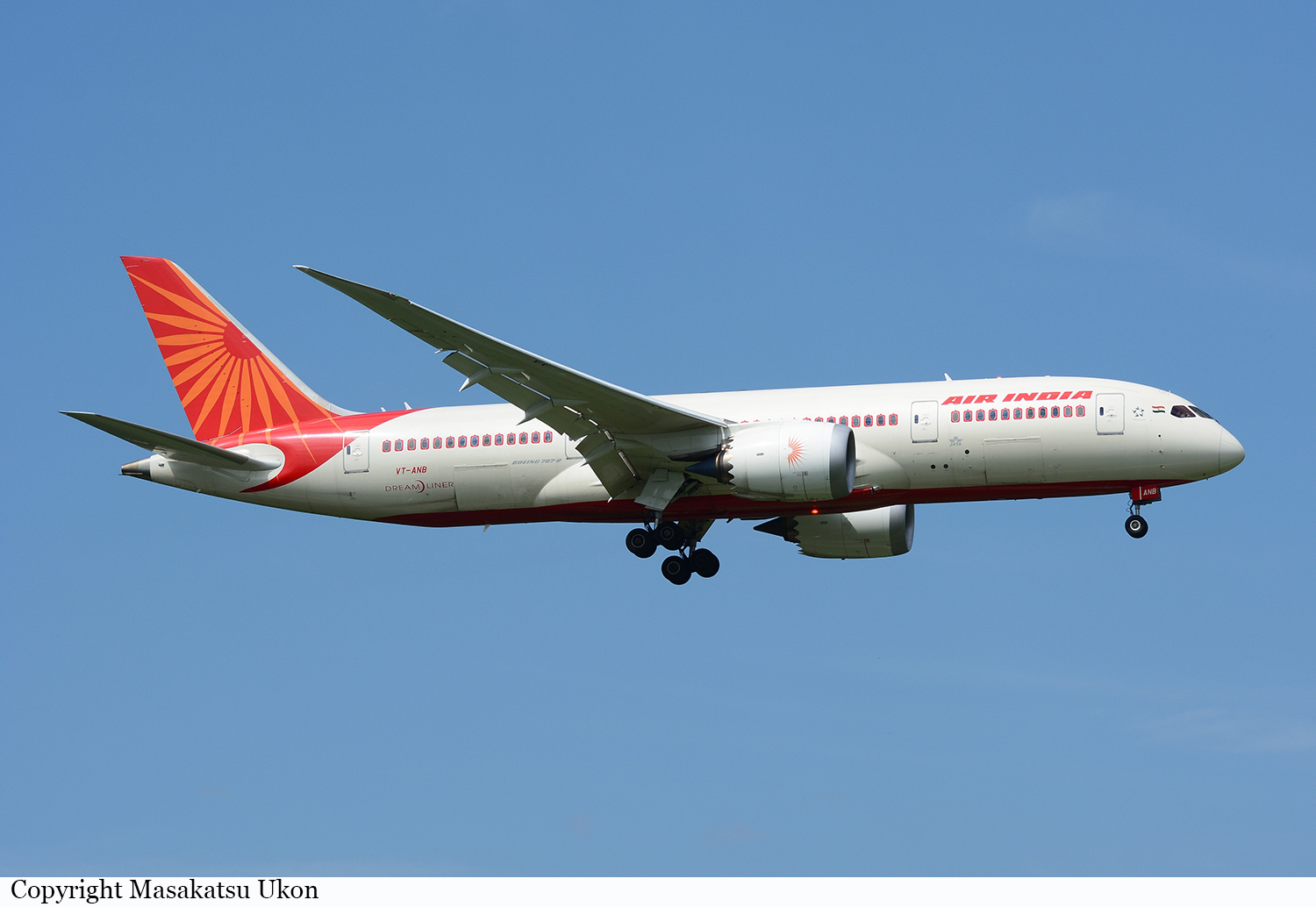
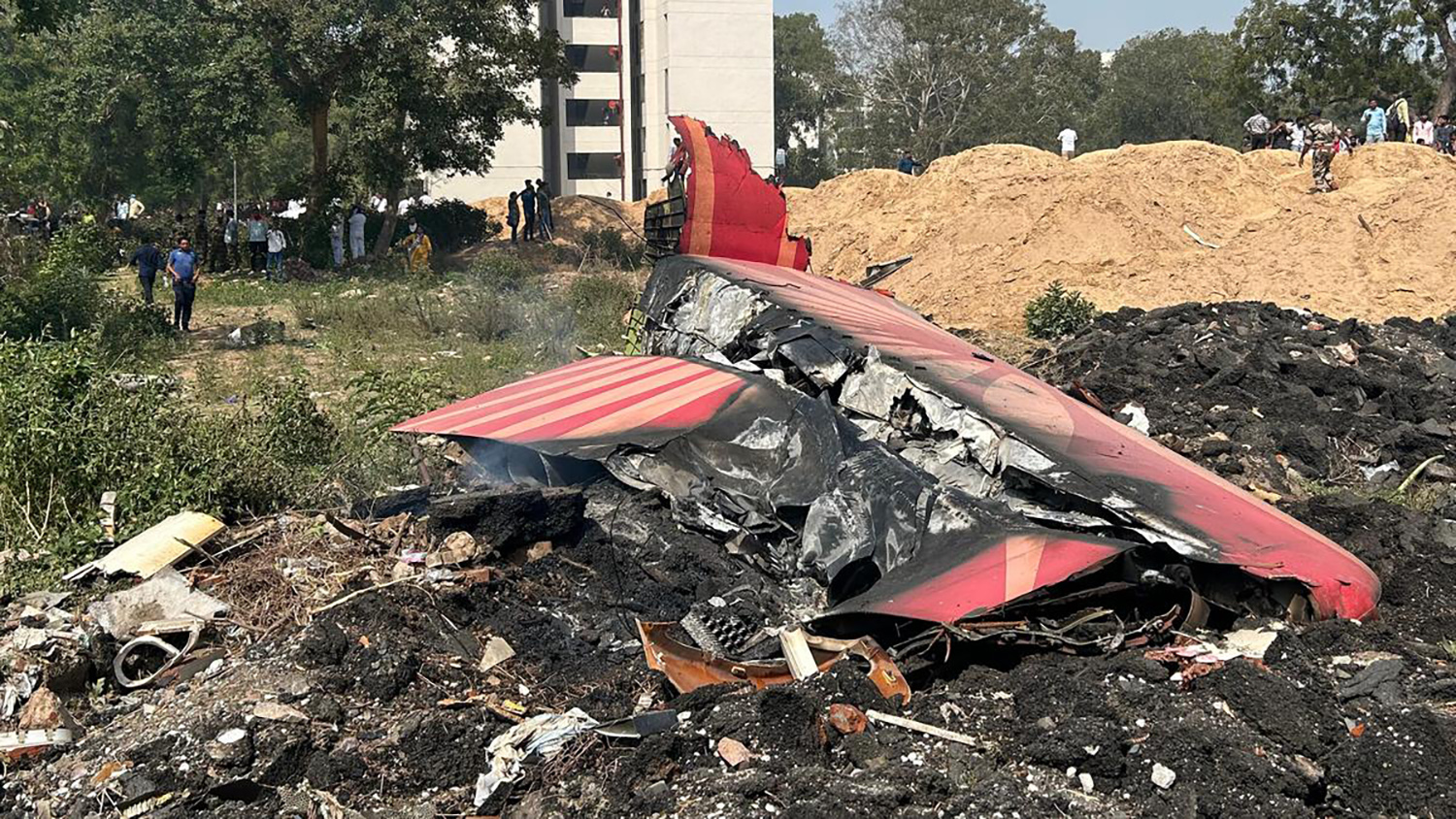
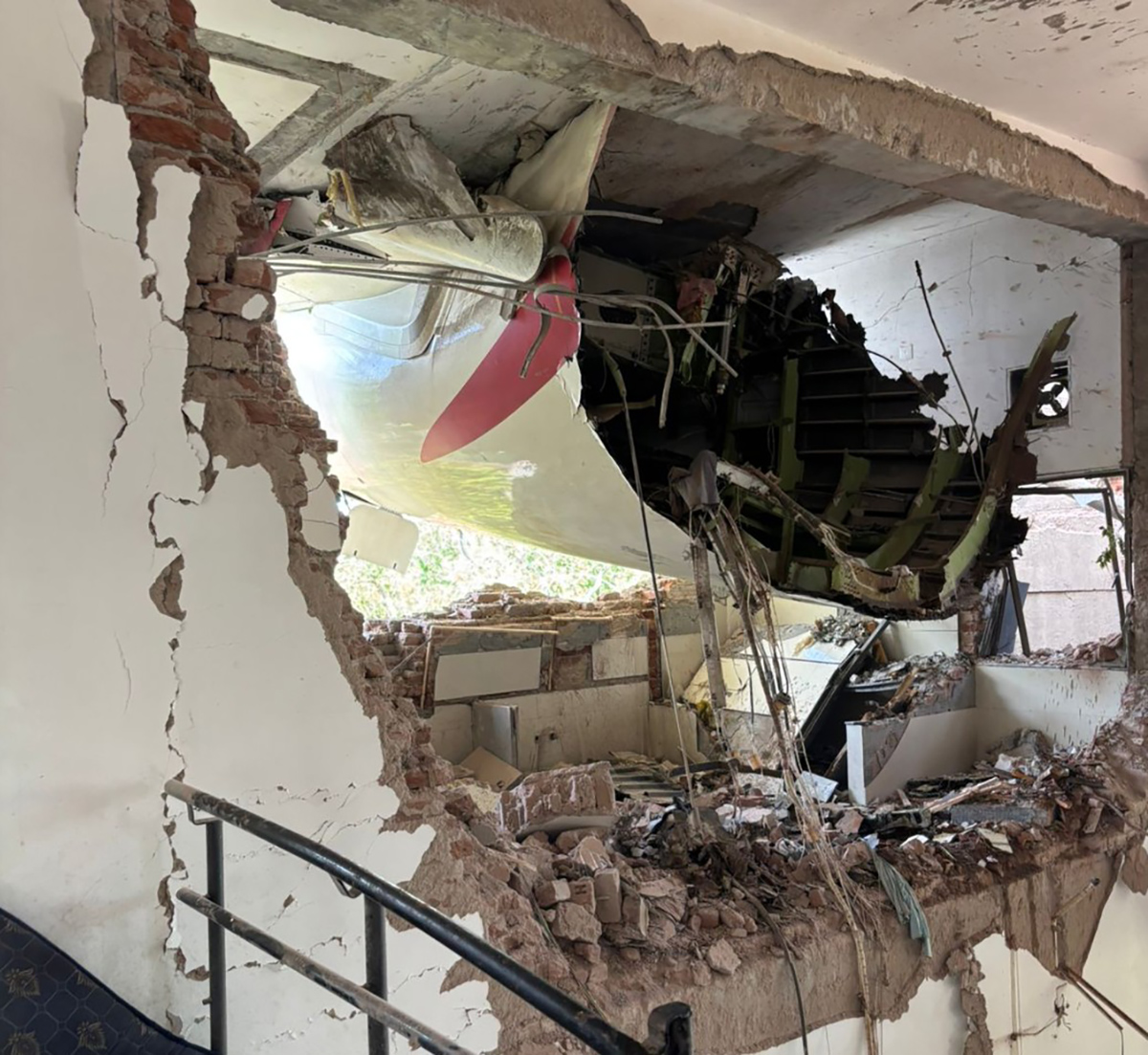
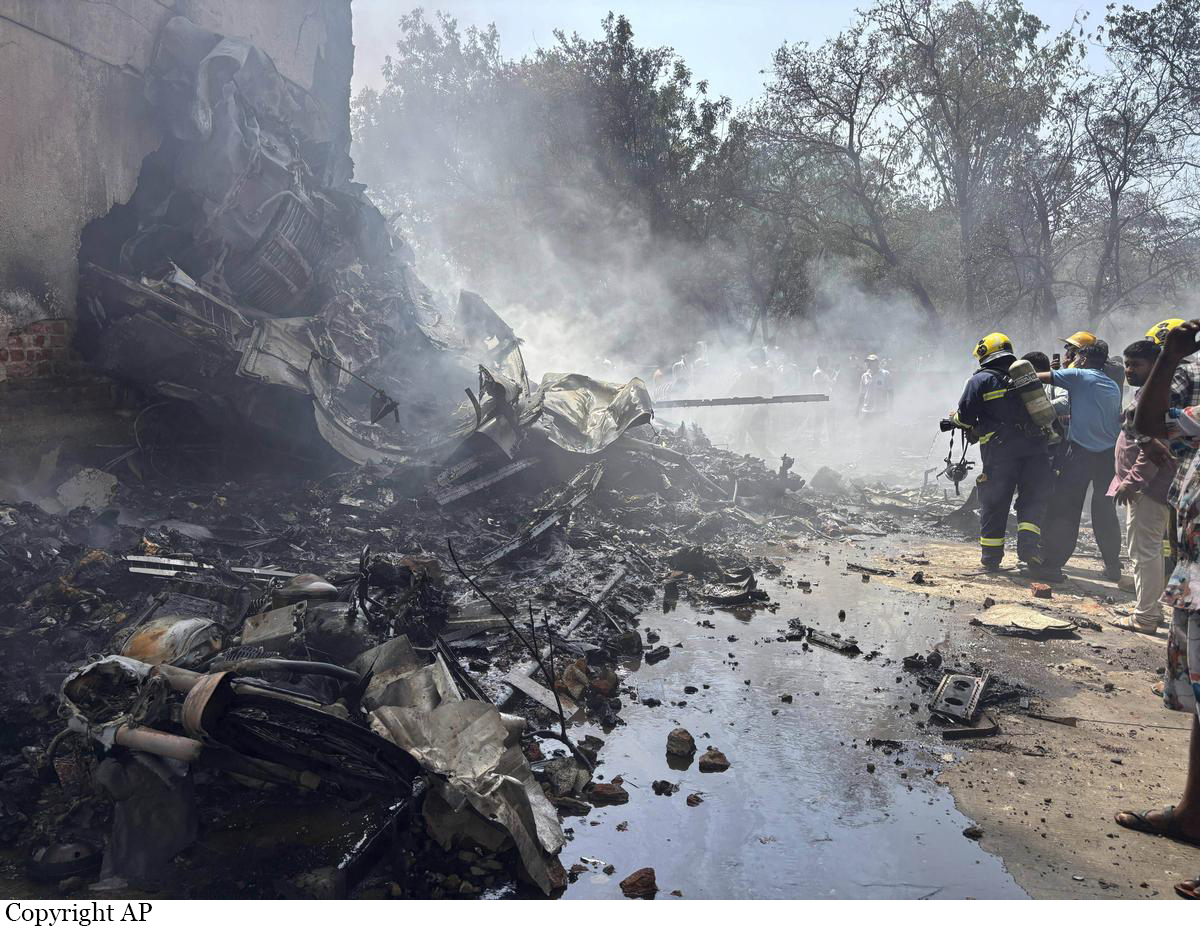
Crash of a Boeing 787-8 Dreamliner in Ahmedabad: 279 killed

Date & Time: Jun 12, 2025 at 1338 LT
Type of aircraft:
Operator:
Registration:
VT-ANB
Flight Phase:
Survivors:
Yes
Site:
Schedule:
Ahmedabad - London
MSN:
36279/26
YOM:
2013
Flight number:
AI171
Country:
Region:
Crew on board:
12
Crew fatalities:
Pax on board:
230
Pax fatalities:
Other fatalities:
Total fatalities:
260
Captain / Total flying hours:
15638
Captain / Total hours on type:
8596.00
Copilot / Total flying hours:
3403
Copilot / Total hours on type:
1128
Circumstances:
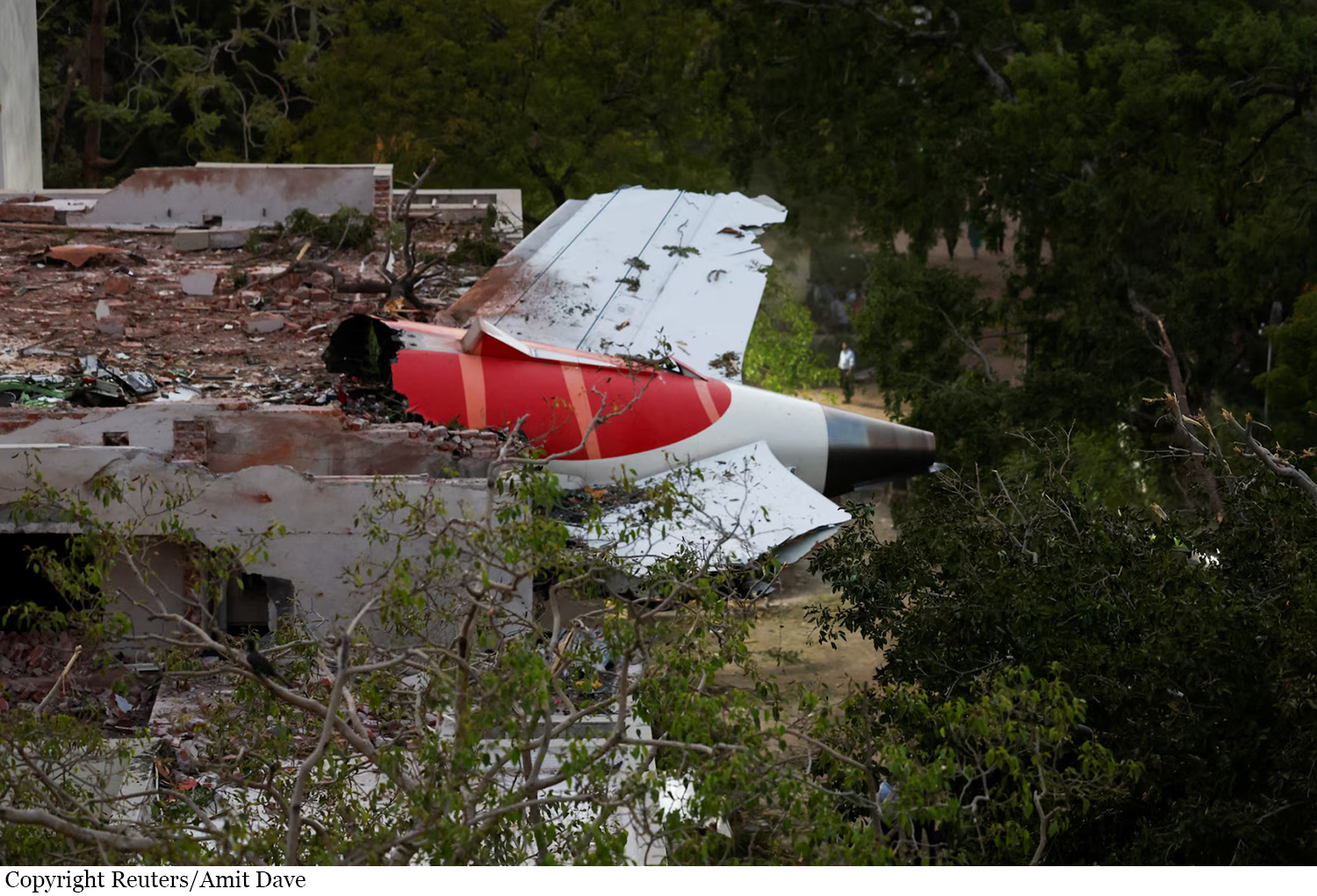
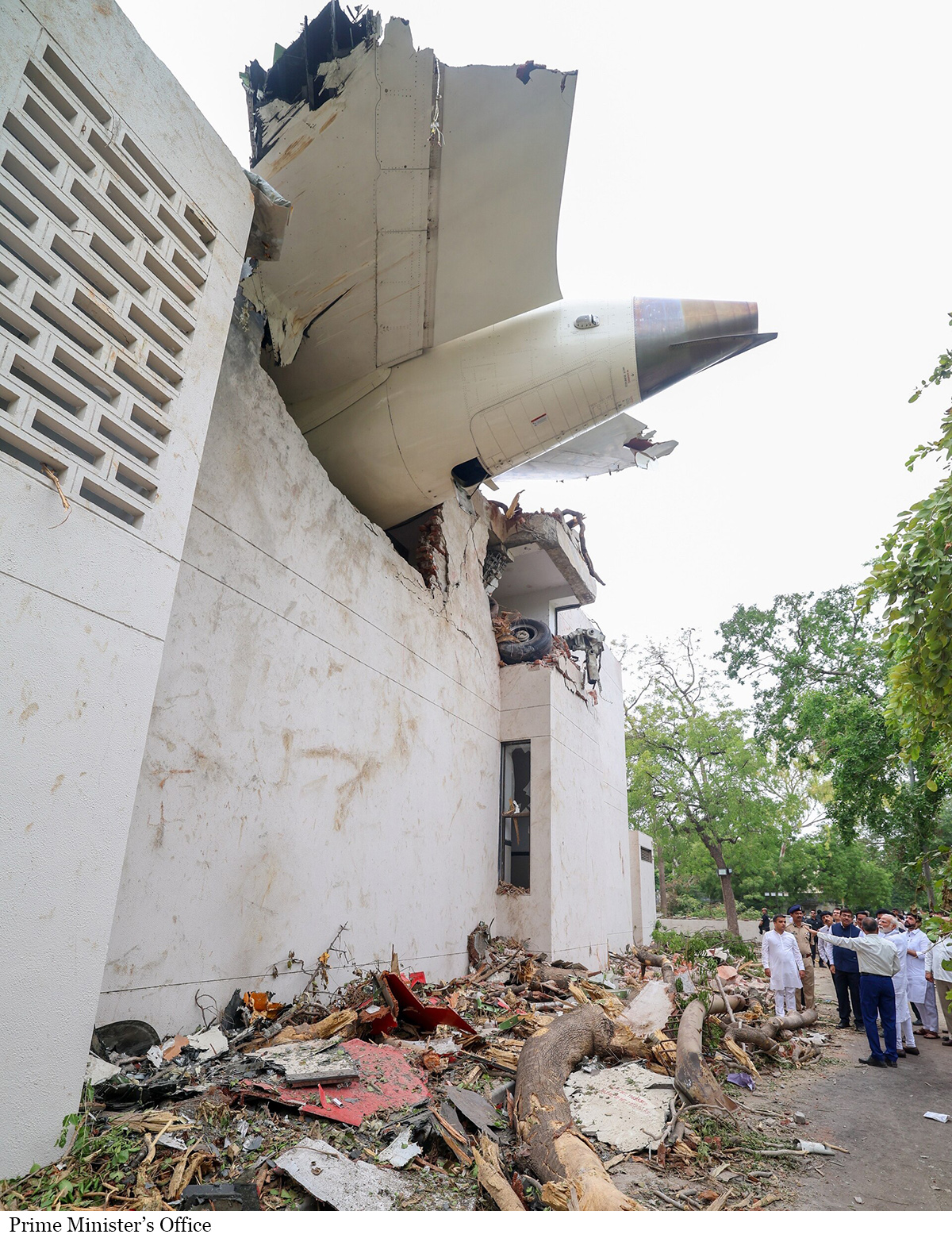
The airplane, a Boeing 787-8 Dreamliner, flight AI171, departed Ahmedabad-Sardar Vallabhbhai Patel International Airport on a regular schedule service to London-Gatwick, carrying 230 passengers and 12 crew members. After takeoff from runway 23, the airplane climbed to an altitude of 625 feet with the undercarriage still down. Then it started to descend, first in a relative flat attitude, then nosed up (increasing the angle of attack) until it collided with several residential buildings located near Ghoda Camp Road, some 1,500 metres from the runway end, bursting into flames. The airplane was totally destroyed by impact forces and a post crash fire. Weather conditions at the time of the accident were considered as good. It appears that the crew issued a mayday call shortly after liftoff. Few hours after the crash, local authorities confirmed that one passenger survived while 241 other occupants were killed as well as 19 people on the ground. 67 other people on the ground were injured. Runway 23 is 3'600 metres long and it seems that the rotation was completed very late. An analysis of the Airport CCTV shows that the airplane ceased to climb about 12 seconds after rotation, and that the final impact occurred some 30 seconds after liftoff. It appears that the RAM Air Turbine (RAT) was deployed at the time of the accident, suggesting issues with engines.
Probable cause:
In the below preliminary report, its is reported that the aircraft achieved the maximum recorded airspeed of 180 Knots IAS at about 08:08:42 UTC and immediately thereafter, the Engine 1 and Engine 2 fuel cutoff switches transitioned from RUN to CUTOFF position one after another with a time gap of 01 sec. The Engine N1 and N2 began to decrease from their take-off values as the fuel supply to the engines was cut off. In the cockpit voice recording, one of the pilots is heard asking the other why did he cutoff. The other pilot responded that he did not do so.
Final Report:

Crash of a Fokker 50 in Bocas del Toro

Date & Time: May 16, 2025 at 2059 LT
Type of aircraft:
Operator:
Registration:
HP-1899PST
Survivors:
Yes
Schedule:
Panama City - Bocas del Toro
MSN:
20306
YOM:
1994
Flight number:
PST982
Country:
Crew on board:
3
Crew fatalities:
Pax on board:
32
Pax fatalities:
Other fatalities:
Total fatalities:
0
Captain / Total flying hours:
17472
Captain / Total hours on type:
2472.00
Copilot / Total flying hours:
8384
Copilot / Total hours on type:
486
Aircraft flight hours:
40621
Aircraft flight cycles:
56297
Circumstances:
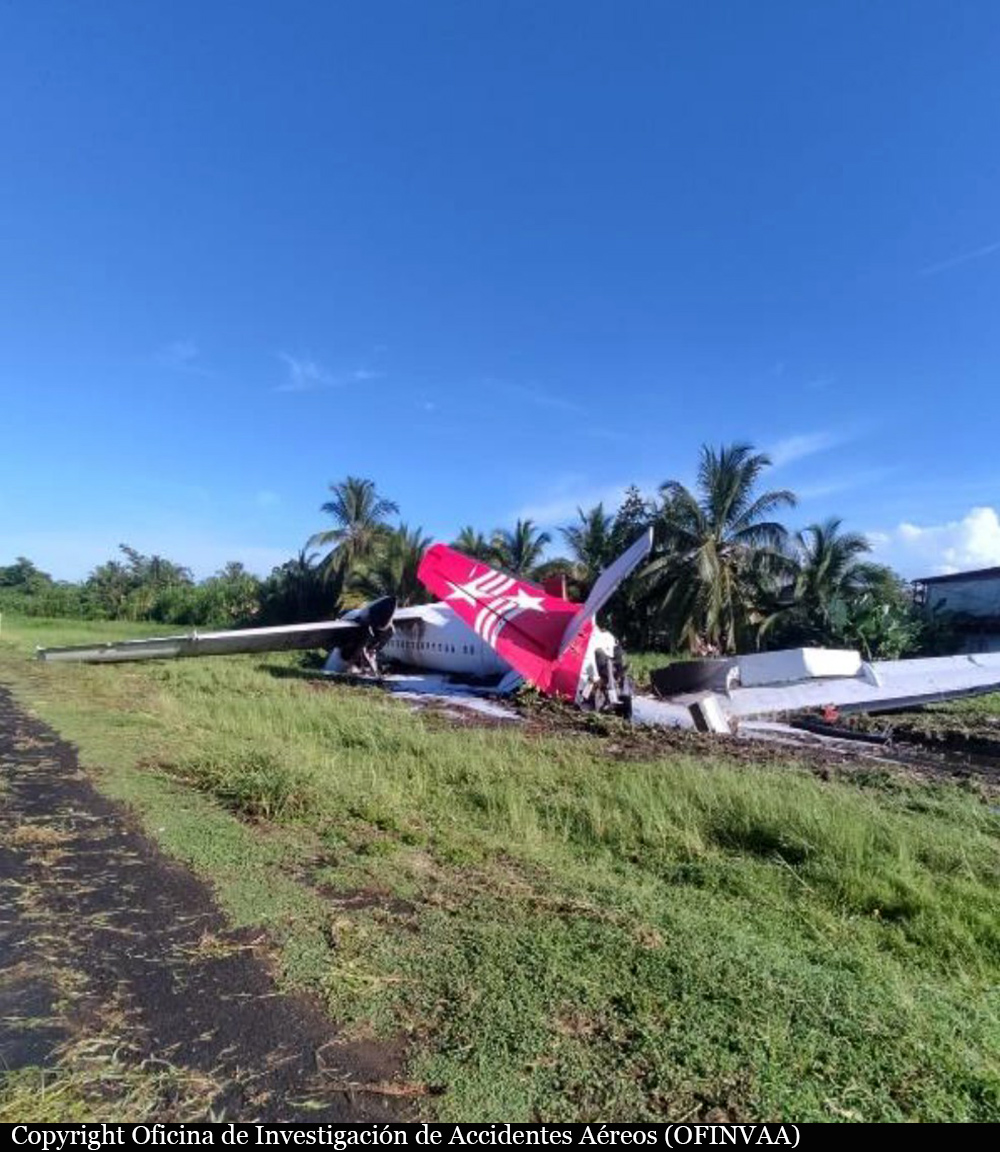
The airplane departed Panama City-Marcos A. Gelabert Airport at 2012LT on a regular schedule service (flight PST982) to Bocas del Toro-Capitán José Ezequiel Hall Airport, carrying 32 passengers and three crew members. Ten minutes prior to arrival, the crew was informed about the weather conditions at destination with moderate rain, wind calm and a wet runway. Two minutes before landing, the copilot confirmed the runway in sight and the crew was cleared to land on runway 27. After touchdown, the airplane started to veer to the right, entered a grassy and soft ground, lost its undercarriage and collided with a concrete wall, causing the right wing to be sheared off. Out of control, the airplane slid for few metres and came to rest 13 metres to the right of the runway and 720 metres from the runway 27 threshold. All 38 occupants were rescued, among them one crew member was seriously injured. The airplane was destroyed.
Probable cause:
The aircraft veered to the right of the runway centerline during the approach; after it made contact with the ground, it lost control, resulting in a runway excursion (RE) on that same side.
The following findings and contributing factors were identified:
- The flight dispatch did not provide sufficient accurate meteorological information to conduct the flight.
- The approach to Runway 27 was conducted using unauthorized RNP procedures.
- A possible sedative effect from medication taken by a flight crew member may have affected his performance.
- Data from the FDR indicate a slight deviation to the right and a correction in the final seconds.
- FDR data from the final moments of the flight demonstrate abnormal or uncontrolled operation.
- Oscillations and extreme values in the control column also confirm a struggle to maintain control or a response to unusual aerodynamic or impact forces.
- While the flap configuration and speed management during the final 200 feet could be consistent with an attempt at a controlled
landing, the flight dynamics reflected in the FDR data during the final seconds of the approach demonstrate that the aircraft was
being operated outside the limits and procedures established in the manual for safe and controlled operation.
- Failure to comply with procedures outlined by flight dispatch to obtain accurate weather information for the flight.
- Lack of supervision and control over the aircraft’s ground handling.
- The crew’s decision to continue the flight.
- The pilot-in-command did not take control of the aircraft for landing.
- Poor visual conditions on the runway (dark surface, visibility reduced by rain).
- Approach deviated to the right of the runway centerline and unstable landing.
- The left engine throttle was found at Ground Idle while the right engine throttle was at Takeoff Power. The left fuel lever (LH) was found in the Shut-off position, and the right fuel lever (RH) in the Start position. Flap lever was in UP position.
Final Report:
Crash of a Cessna 208B Grand Caravan in Las Palomas

Date & Time: May 2, 2025 at 0718 LT
Type of aircraft:
Operator:
Registration:
XA-UJF
Flight Phase:
Survivors:
Yes
Schedule:
Guerrero Negro - Hermosillo
MSN:
208B-1300
YOM:
2007
Country:
Crew on board:
1
Crew fatalities:
Pax on board:
5
Pax fatalities:
Other fatalities:
Total fatalities:
0
Circumstances:
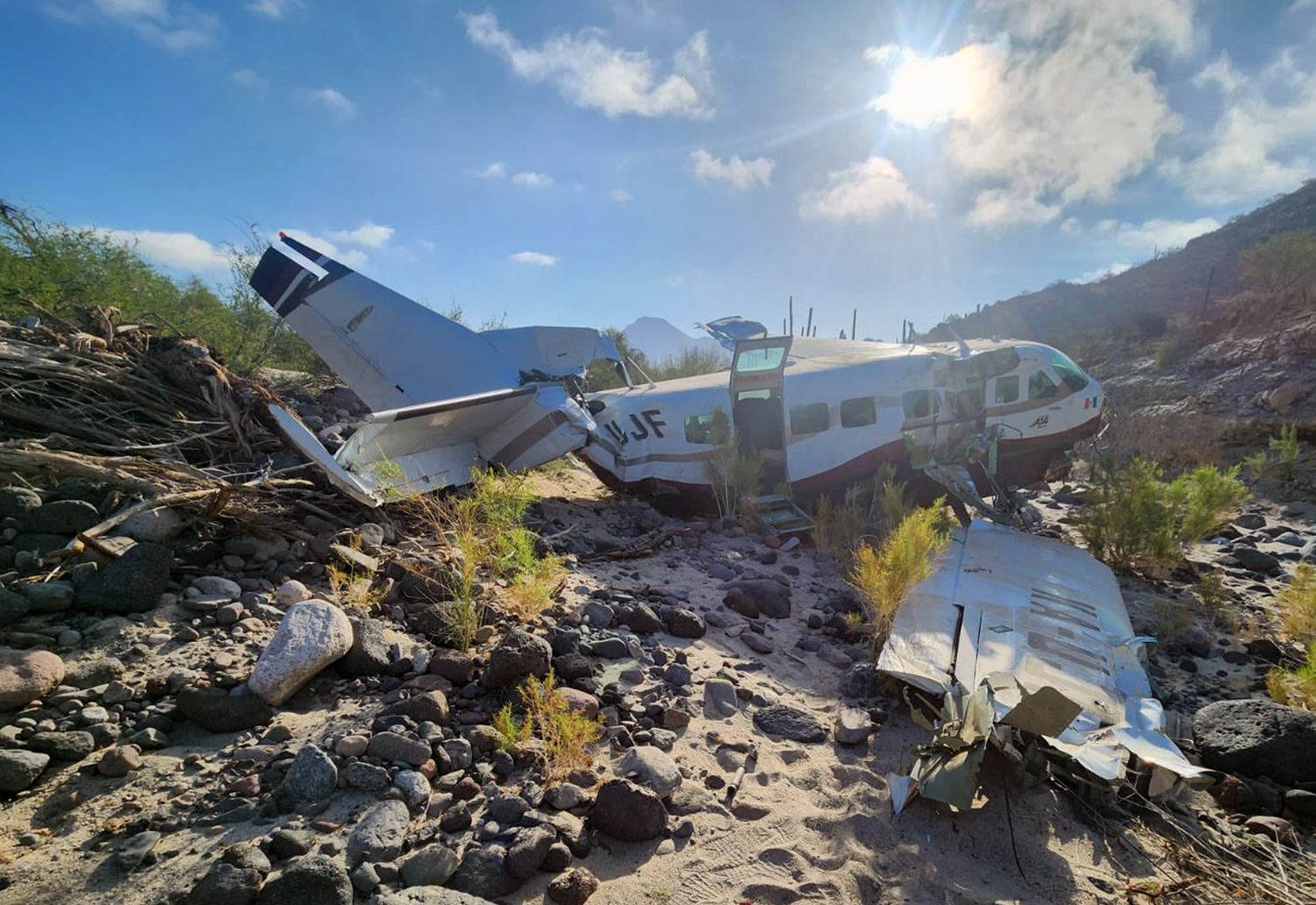
The single engine airplane departed Guerrero Negro Airport Runway 30 at 0658LT on a flight to Hermosillo, carrying five passengers and one pilot. About 15 minutes into the flight, the pilot encountered an unexpected situation, reduced his altitude and attempted an emergency landing. The airplane crash landed in an uninhabited and rocky area located in Las Palomas, some 20 minutes after takeoff. All six occupants escaped unhurt while the airplane was destroyed.

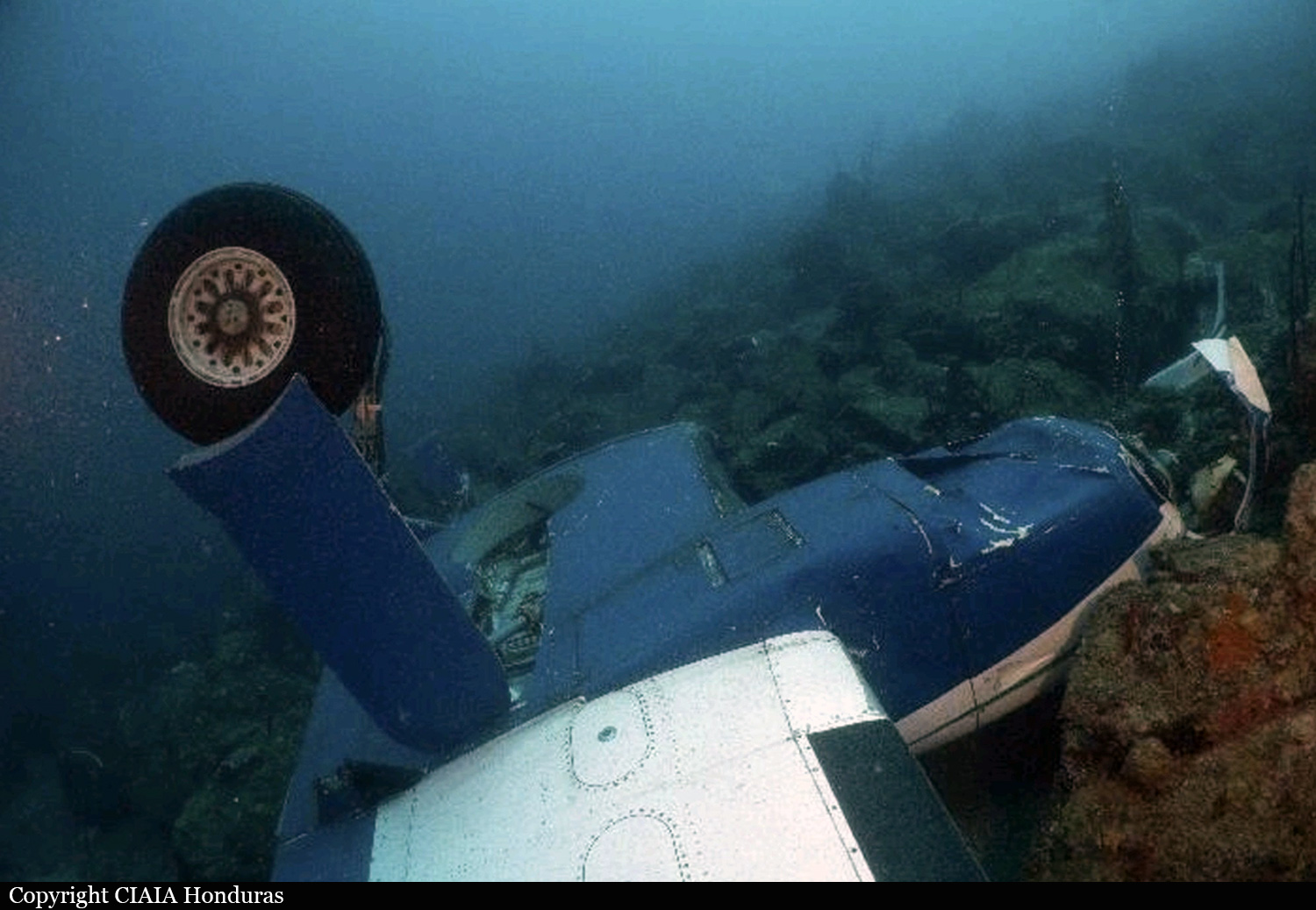
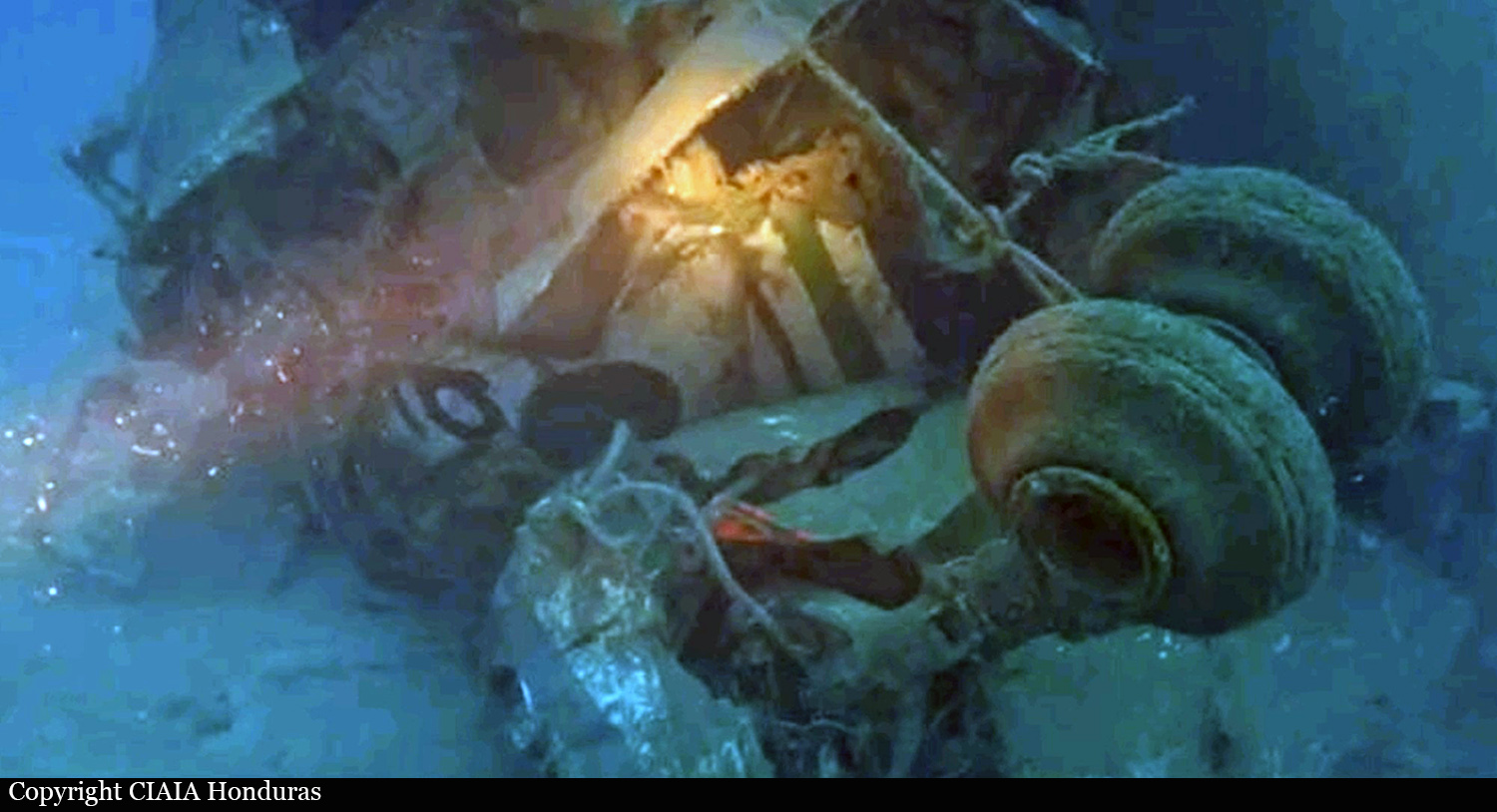
Crash of a BAe 3212 Jetstream 31 off Roatán: 12 killed

Date & Time: Mar 17, 2025 at 1818 LT
Type of aircraft:
Operator:
Registration:
HR-AYW
Flight Phase:
Survivors:
Yes
Schedule:
Roatán – La Ceiba
MSN:
863
YOM:
1990
Flight number:
LNH018
Country:
Crew on board:
3
Crew fatalities:
Pax on board:
14
Pax fatalities:
Other fatalities:
Total fatalities:
12
Circumstances:
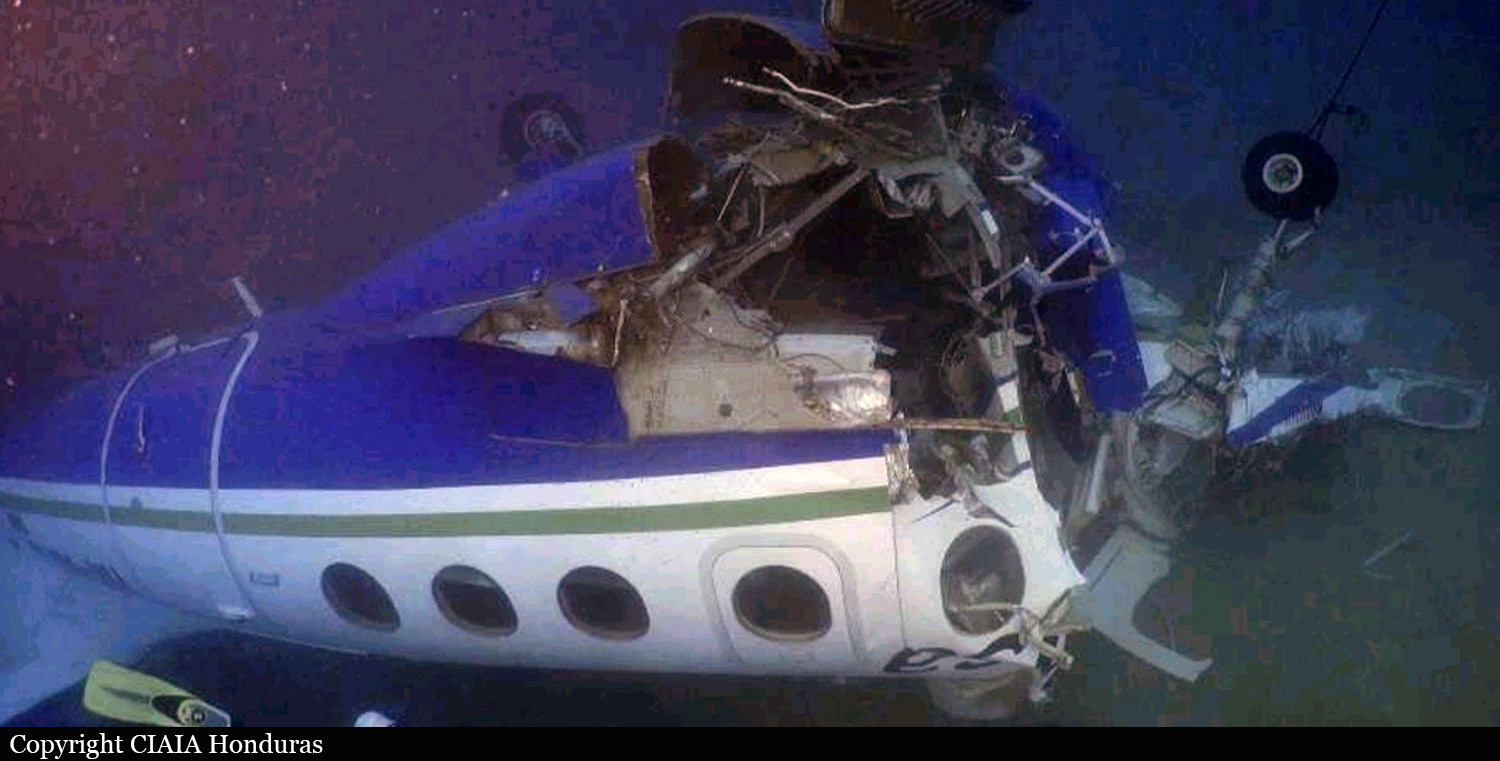
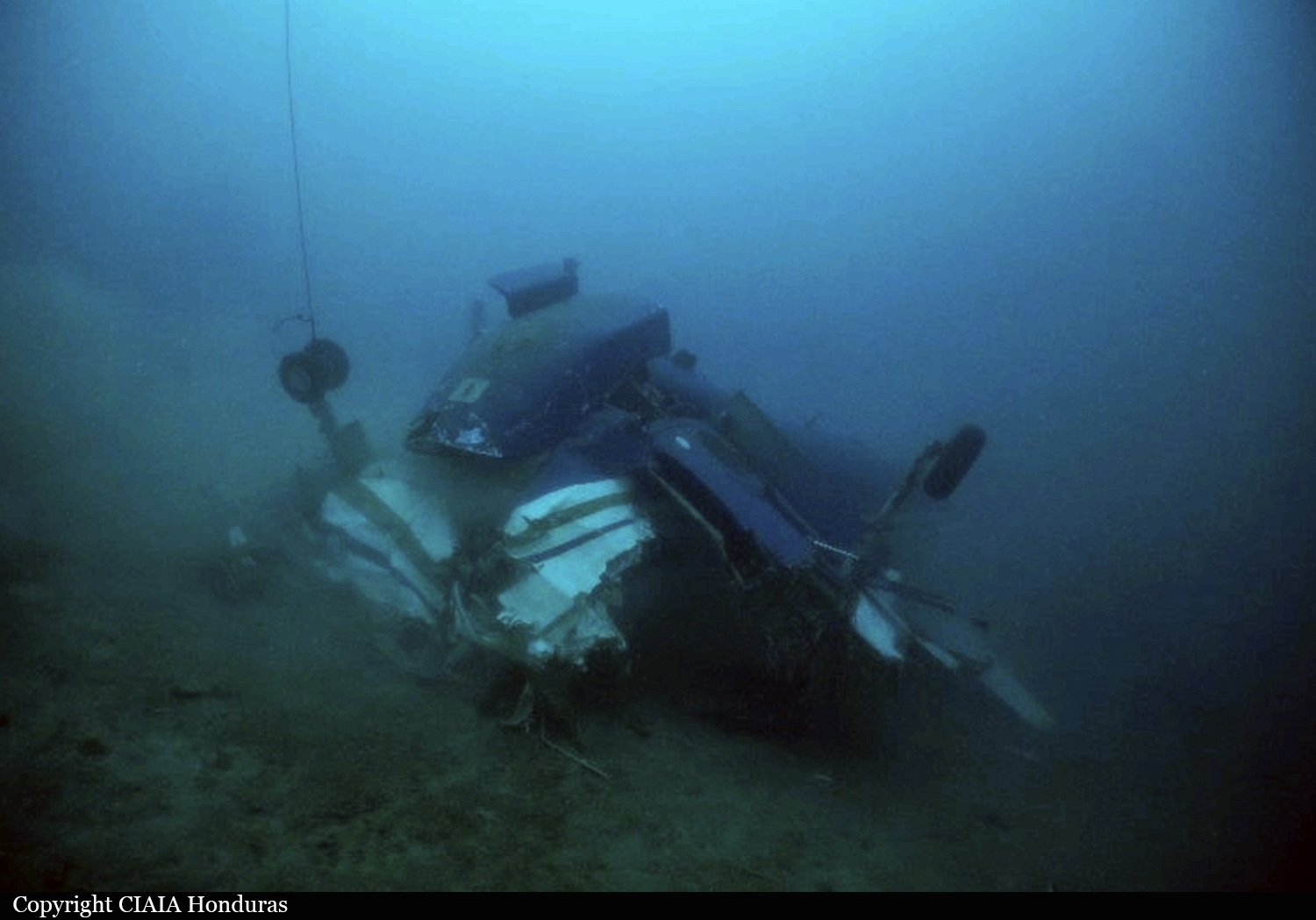
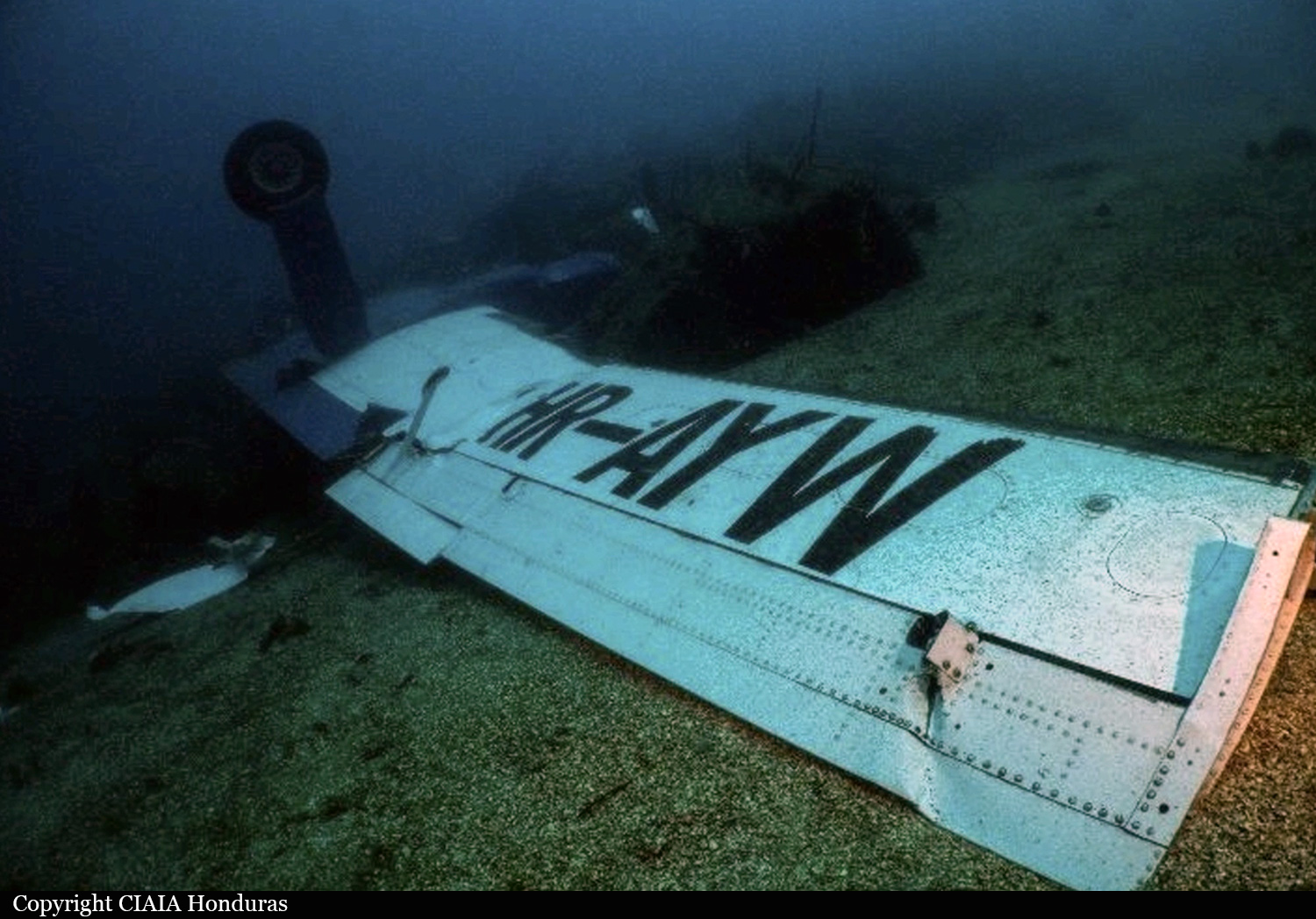
The twin engine airplane took off from Roatán-Juan Manuel Gálvez Airport Runway 07 shortly after sunset. While in initial climb, it entered an uncontrolled descent and crashed into the sea about one km offshore. Twelve occupants were killed and five others were rescued. It is believed that the crew encountered mechanical problems after takeoff.

Crash of a BAe 3201 Jetstream 32EP in Güeppí

Date & Time: Mar 4, 2025 at 0954 LT
Type of aircraft:
Operator:
Registration:
OB-2178
Survivors:
Yes
Schedule:
Iquitos - Güeppí
MSN:
861
YOM:
1989
Location:
Country:
Crew on board:
2
Crew fatalities:
Pax on board:
11
Pax fatalities:
Other fatalities:
Total fatalities:
0
Circumstances:
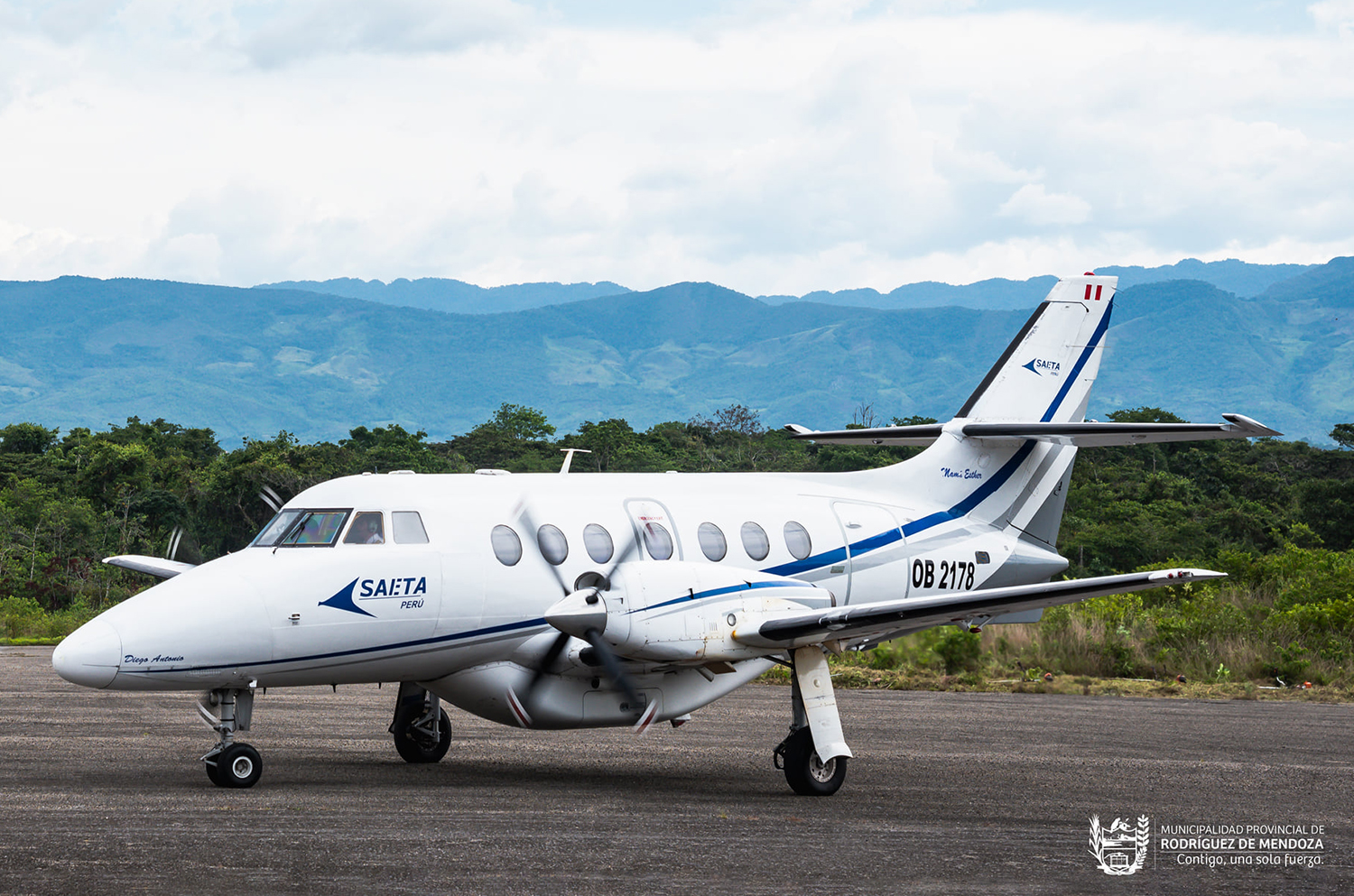
After landing on runway 05 at Güeppí Airport, the twin engine airplane was unable to stop within the remaining distance. It overran, rolled for about 50 metres then collided with trees and ended up in a dense wooded area. All 13 occupants evacuated safely, some with minor injuries. The aircraft was destroyed.

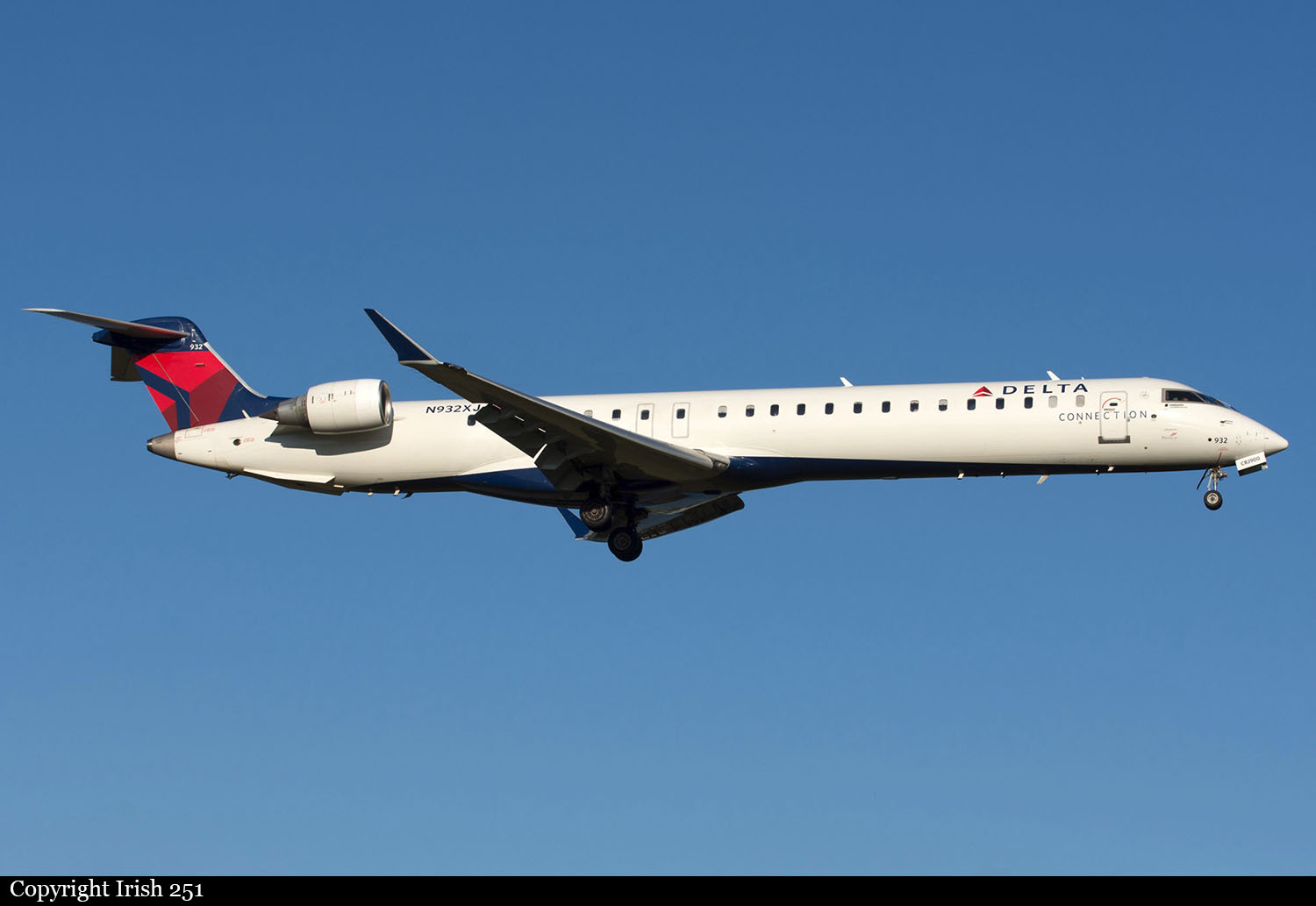
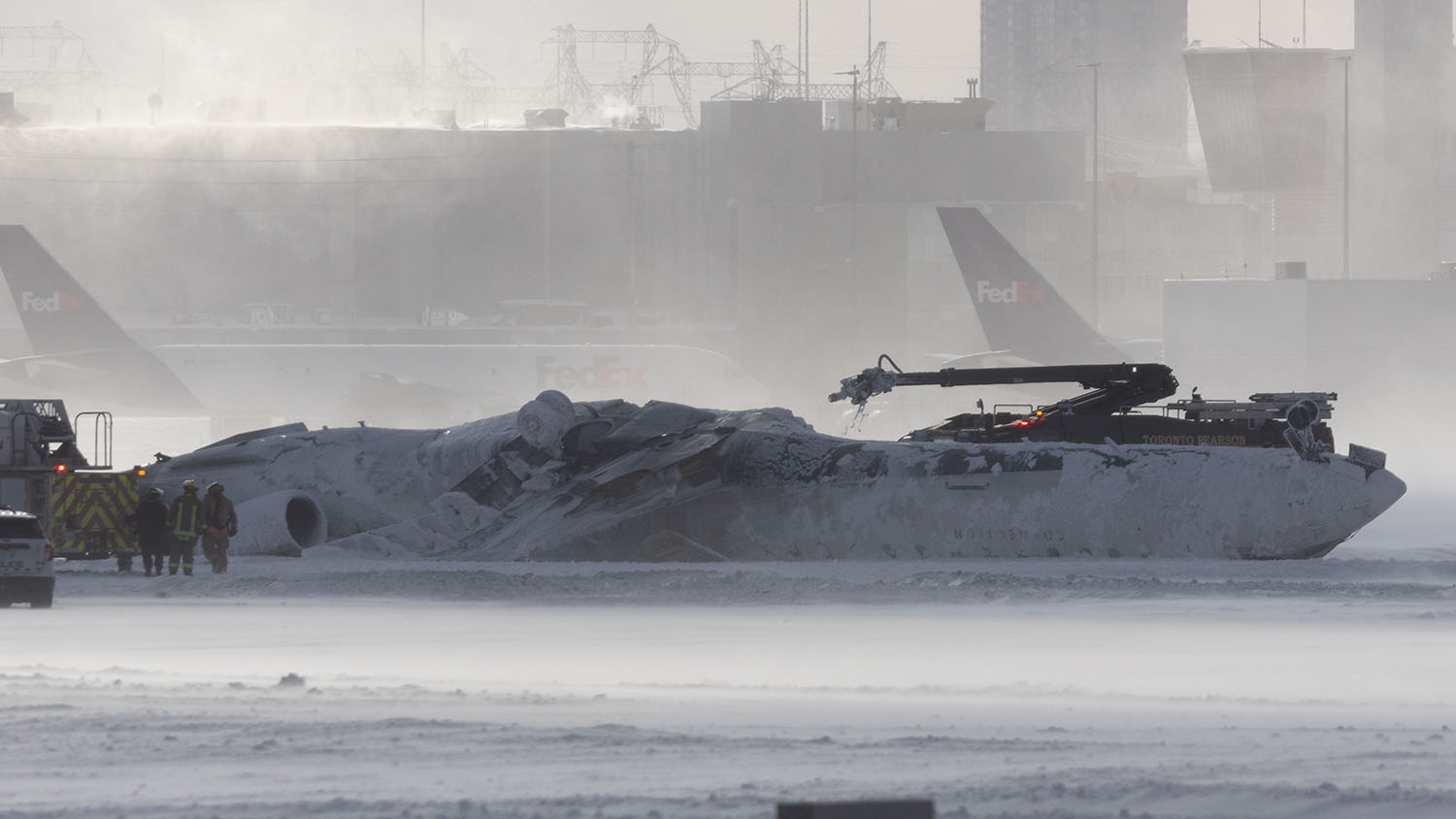
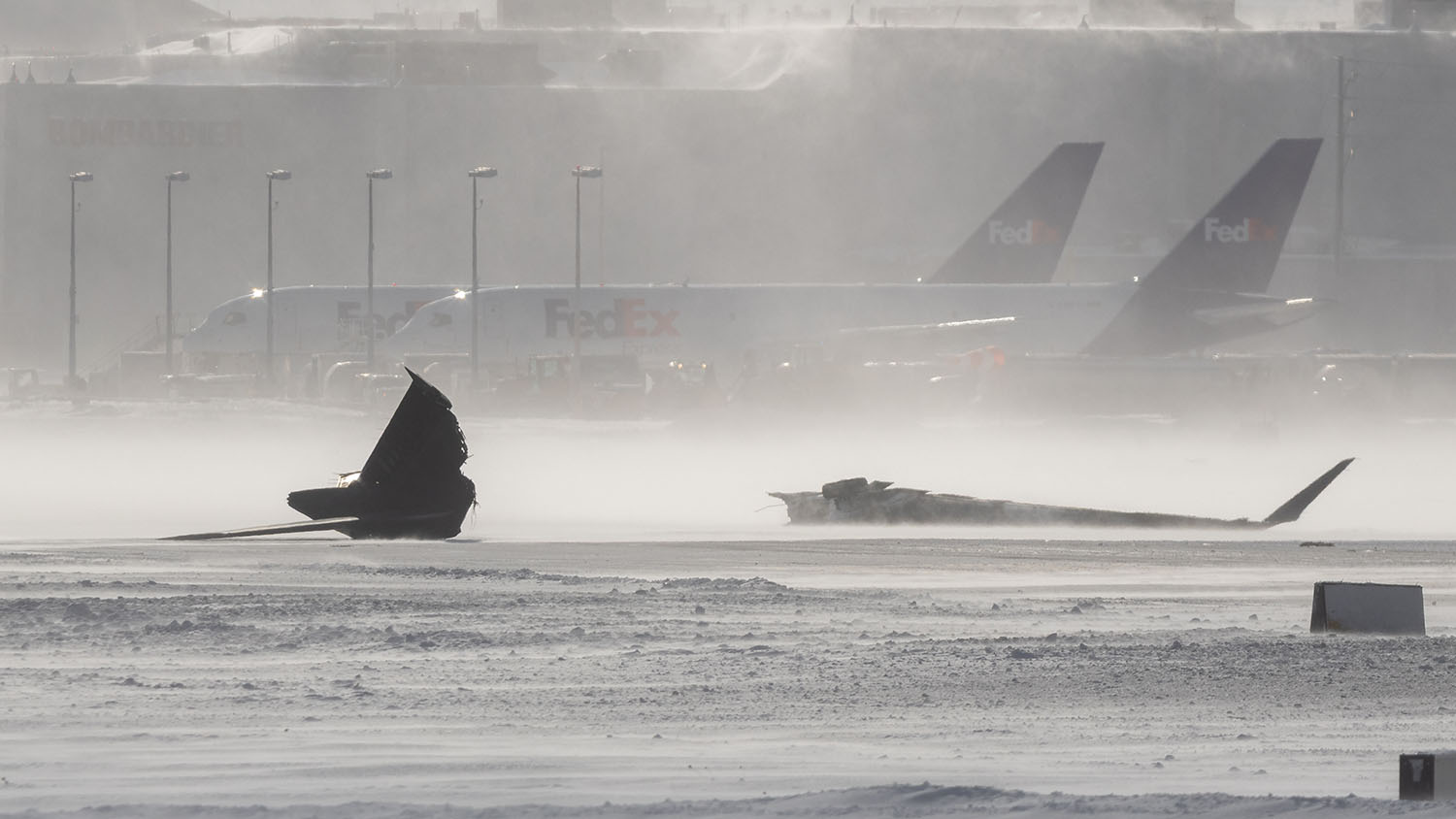
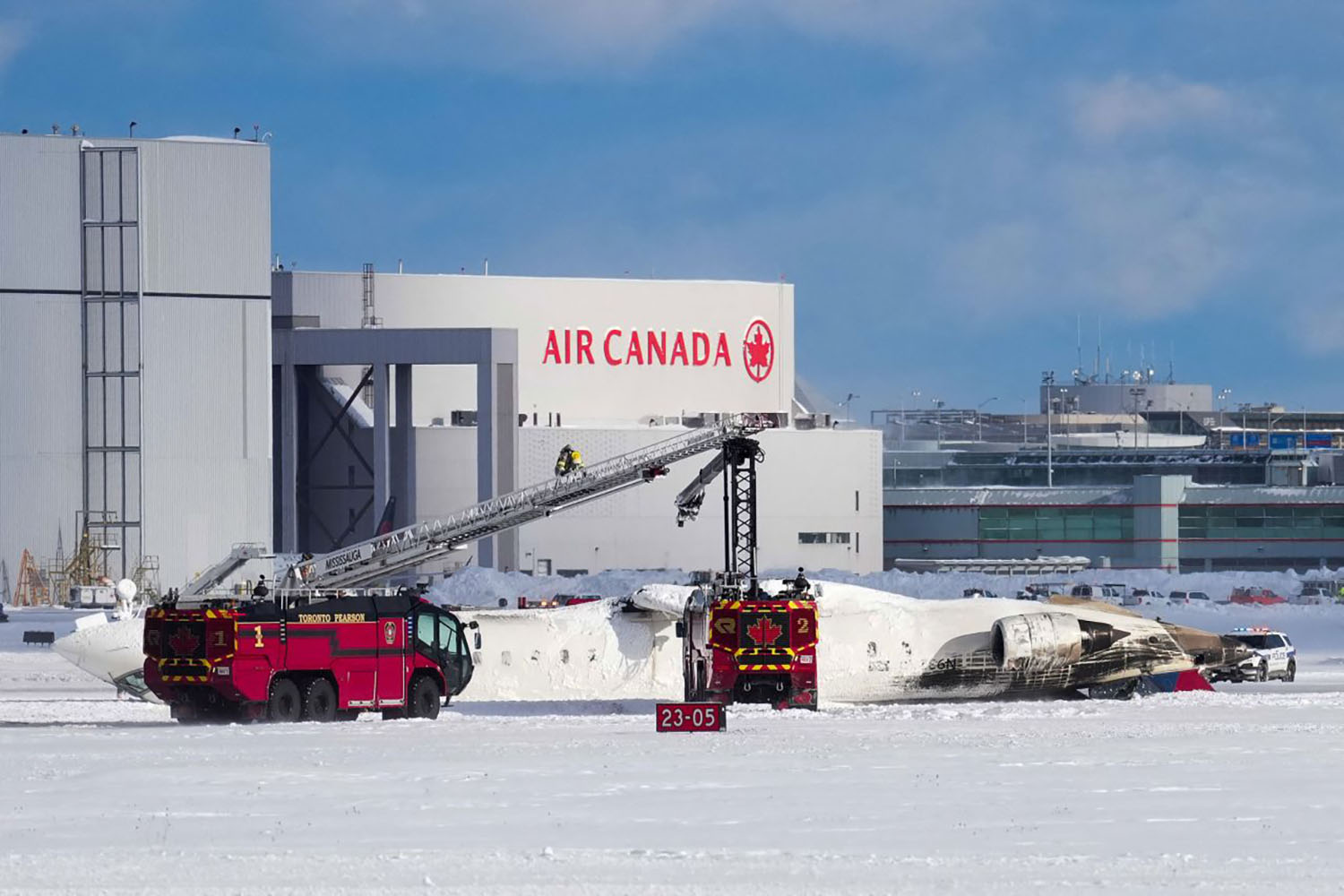
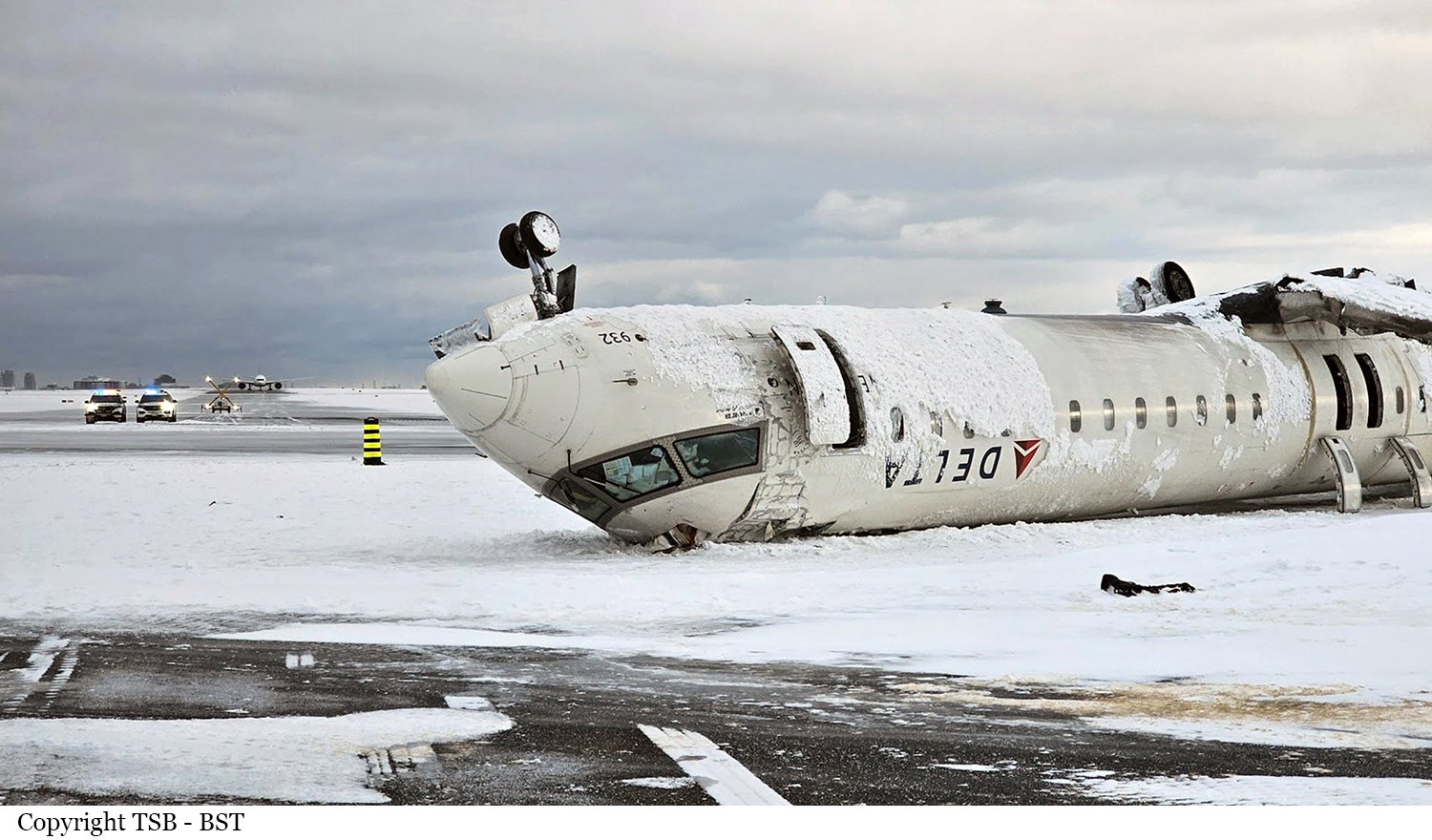
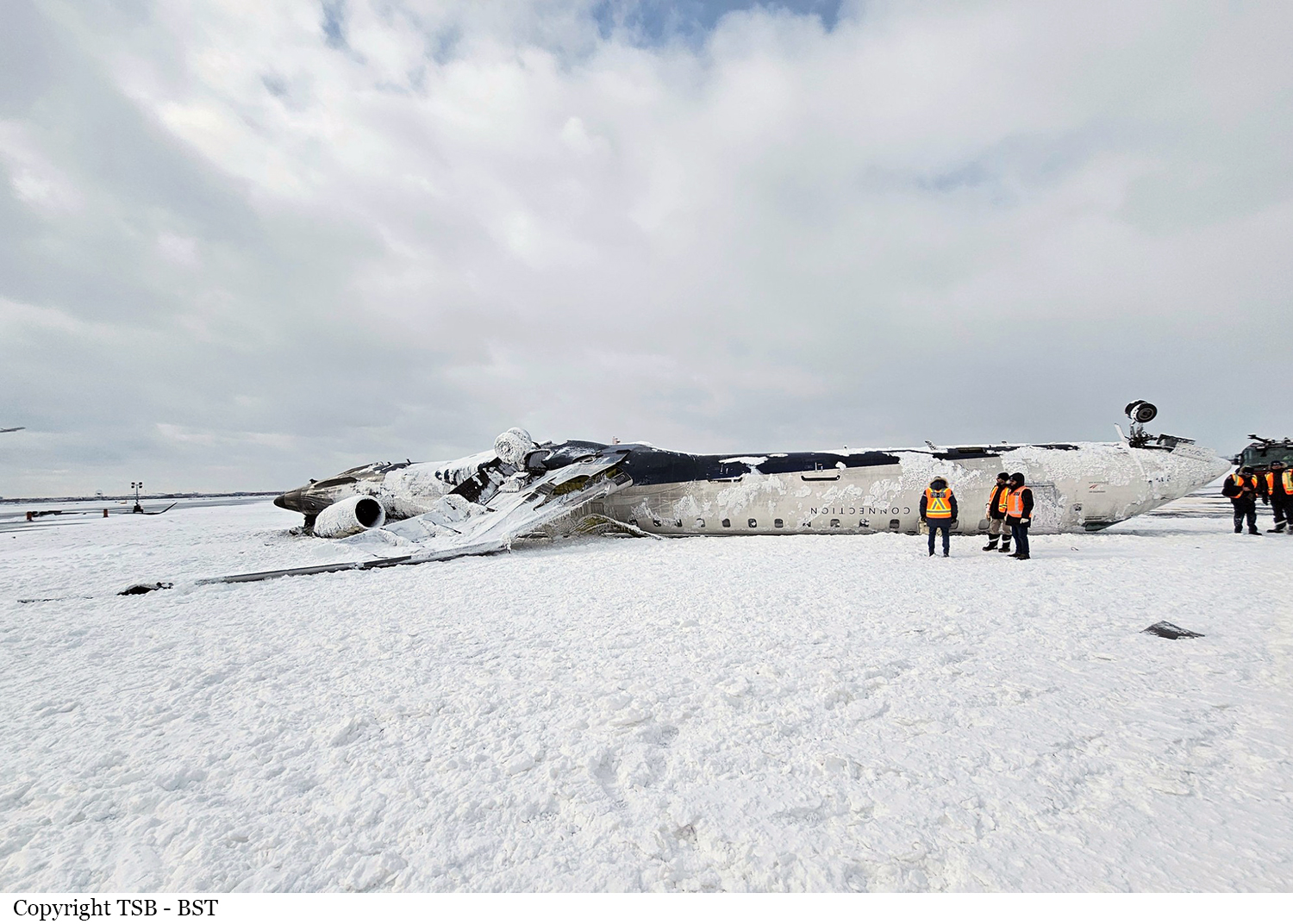
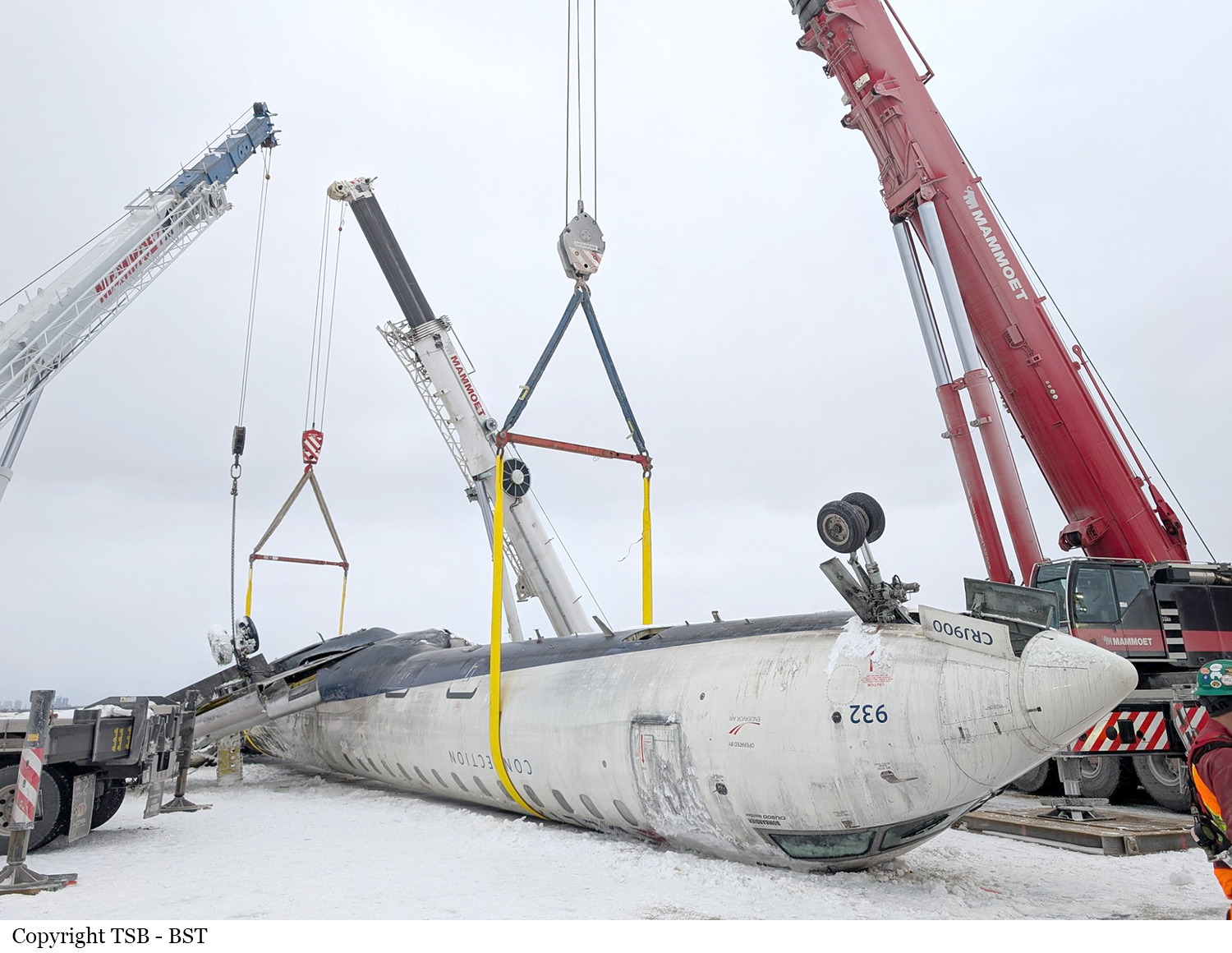
Crash of a Canadair RegionalJet CRJ-900LR in Toronto

Date & Time: Feb 17, 2025 at 1412 LT
Operator:
Registration:
N932XJ
Survivors:
Yes
Schedule:
Minneapolis – Toronto
MSN:
15194
YOM:
2008
Flight number:
DL4819
Country:
Crew on board:
4
Crew fatalities:
Pax on board:
76
Pax fatalities:
Other fatalities:
Total fatalities:
0
Circumstances:
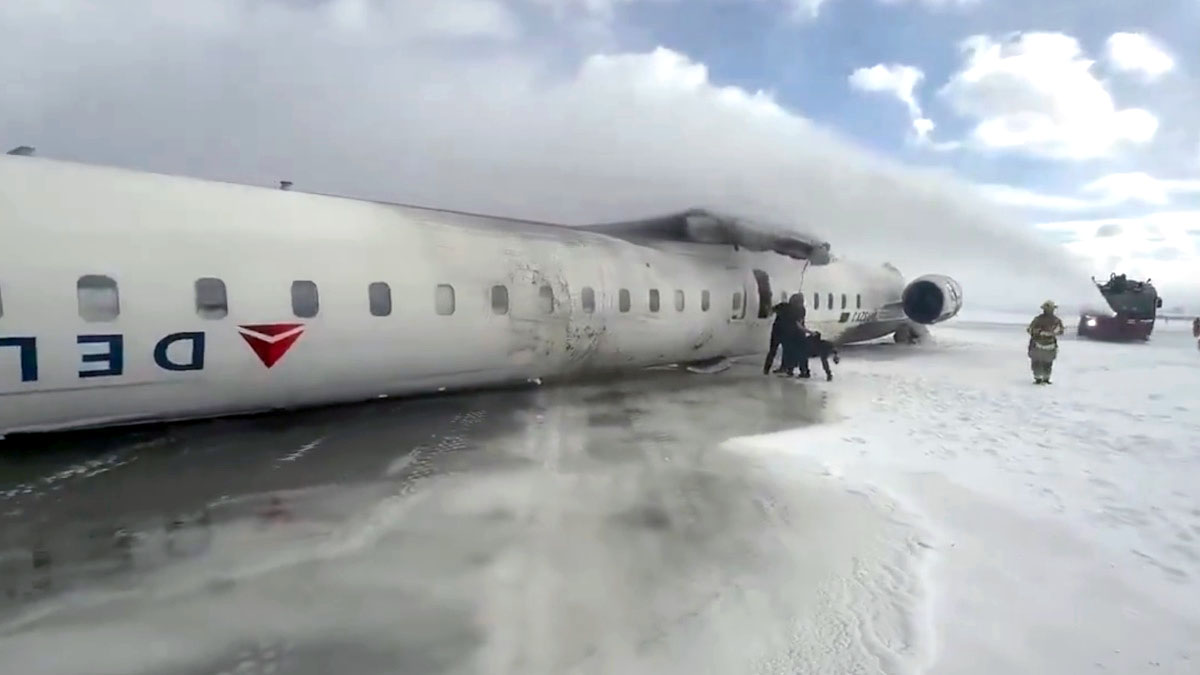
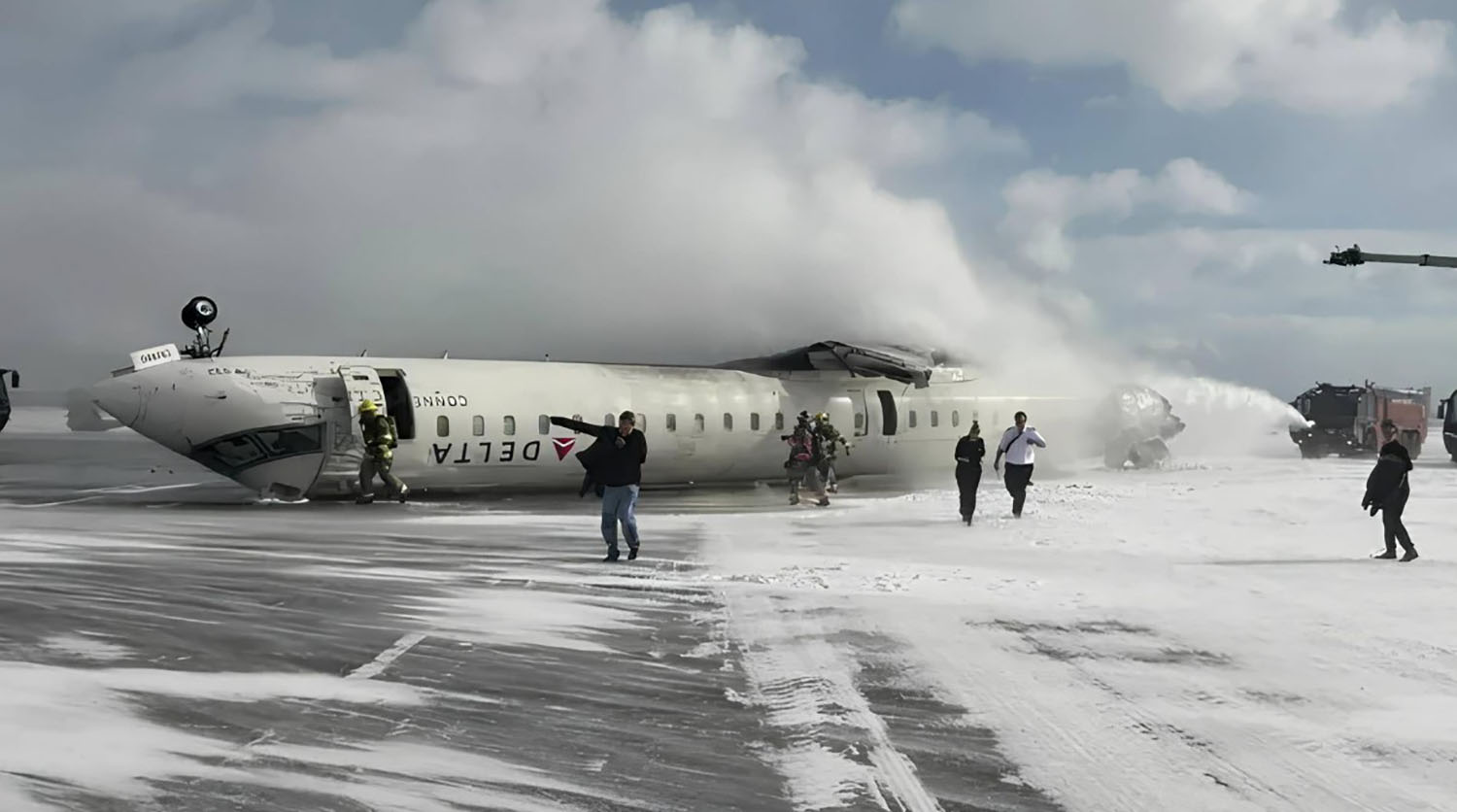
The airplane departed Minneapolis-Saint Paul Airport Runway 30R at 1147LT on a schedule service (flight DL4819) to Toronto, carrying 76 passengers and a crew of four. After departure, the airplane continued to the southeast and reached this assigned altitude of 29,000 feet before starting the descent to Toronto. The approach was performed in marginal weather conditions with wind from 270 at 28 knots, gusting 35 knots, a 6 miles surface visibility and blowing snow. Upon touchdown, the airplane went out of control, lost its empennage, both wings and both main landing gear before coming to rest upside down. All 80 occupants were rescued, among them 8 were injured, 3 seriously. First CRJ-900 destroyed in an accident.

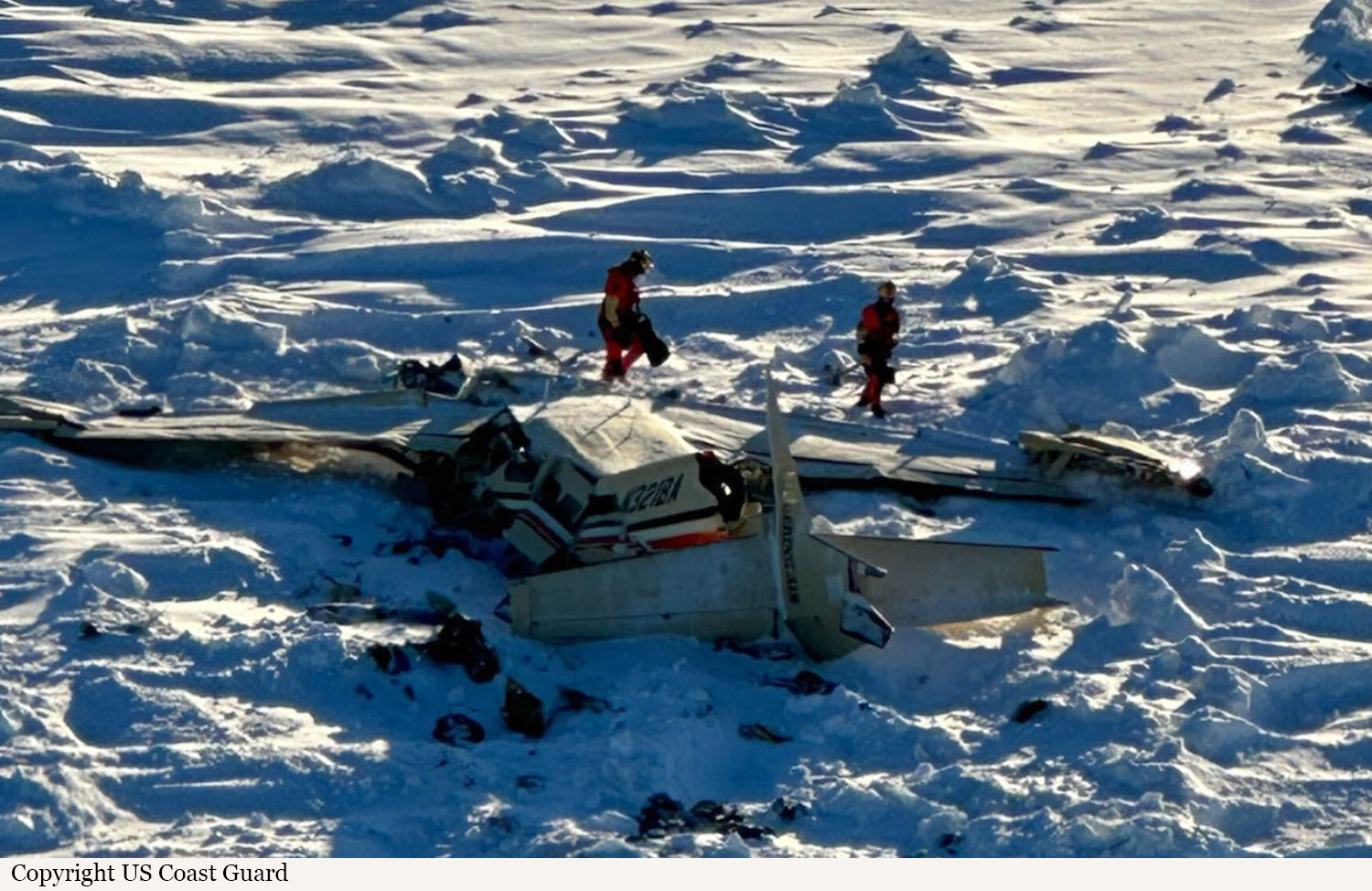
Crash of a Cessna 208B Grand Caravan EX into the Norton Sound: 10 killed

Date & Time: Feb 6, 2025 at 1516 LT
Type of aircraft:
Operator:
Registration:
N321BA
Flight Phase:
Survivors:
No
Schedule:
Unalakleet - Nome
MSN:
208B-5613
YOM:
2020
Flight number:
BRG445
Crew on board:
1
Crew fatalities:
Pax on board:
9
Pax fatalities:
Other fatalities:
Total fatalities:
10
Circumstances:
The single engine airplane departed Unalakleet Airport Runway 33 at 1538LT on a regular service (flight BRG445) to Nome, carrying nine passengers and one pilot. The airplane continued at an altitude of 7,700 feet for about 30 minutes then the pilot reduced his altitude to 5,300 feet when radar contact was lost at 1516LT. At this time, the airplane was about 70 km from the destination airport. The wreckage was found a day later on sea ice in the Norton Sound approximately 34 miles (54,7 km) southeast of Nome. There are no survivors.

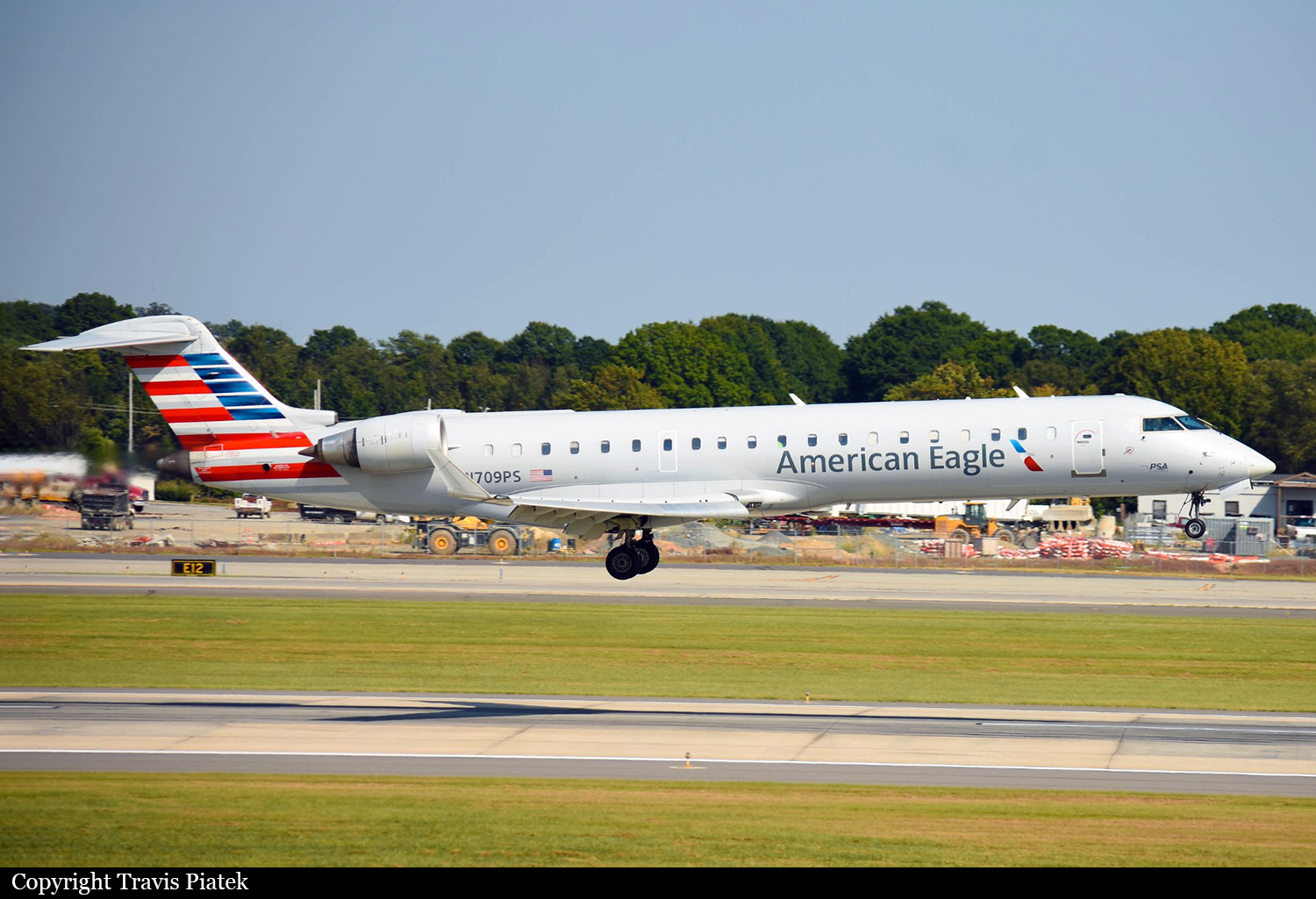
Crash of a Canadair CRJ-701ER in Washington DC: 64 killed

Date & Time: Jan 29, 2025 at 2048 LT
Operator:
Registration:
N709PS
Survivors:
No
Schedule:
Wichita - Washington DC
MSN:
10165
YOM:
2004
Flight number:
AA5342
Crew on board:
4
Crew fatalities:
Pax on board:
60
Pax fatalities:
Other fatalities:
Total fatalities:
64
Captain / Total flying hours:
3950
Captain / Total hours on type:
3024.00
Copilot / Total flying hours:
2469
Copilot / Total hours on type:
965
Circumstances:
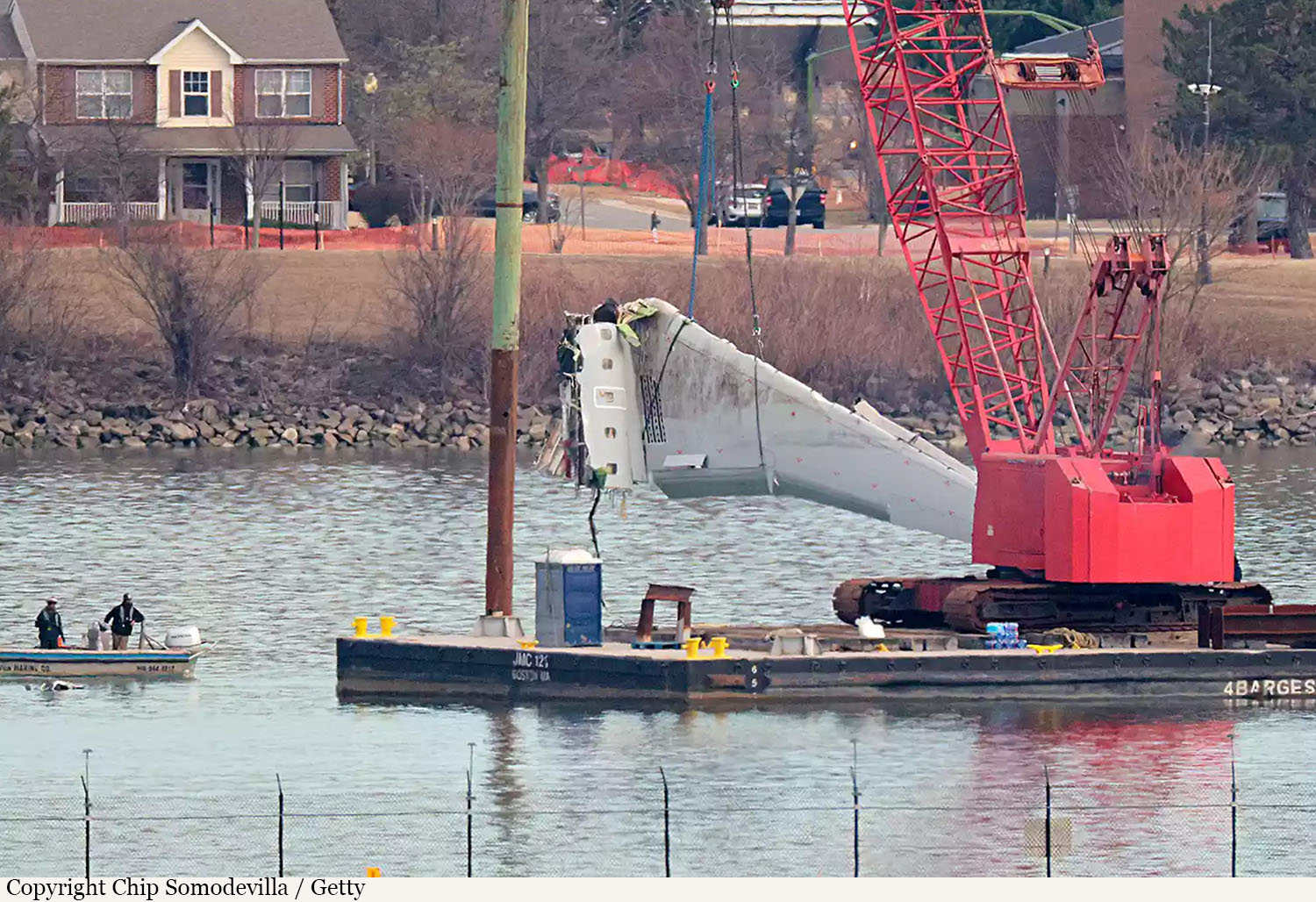
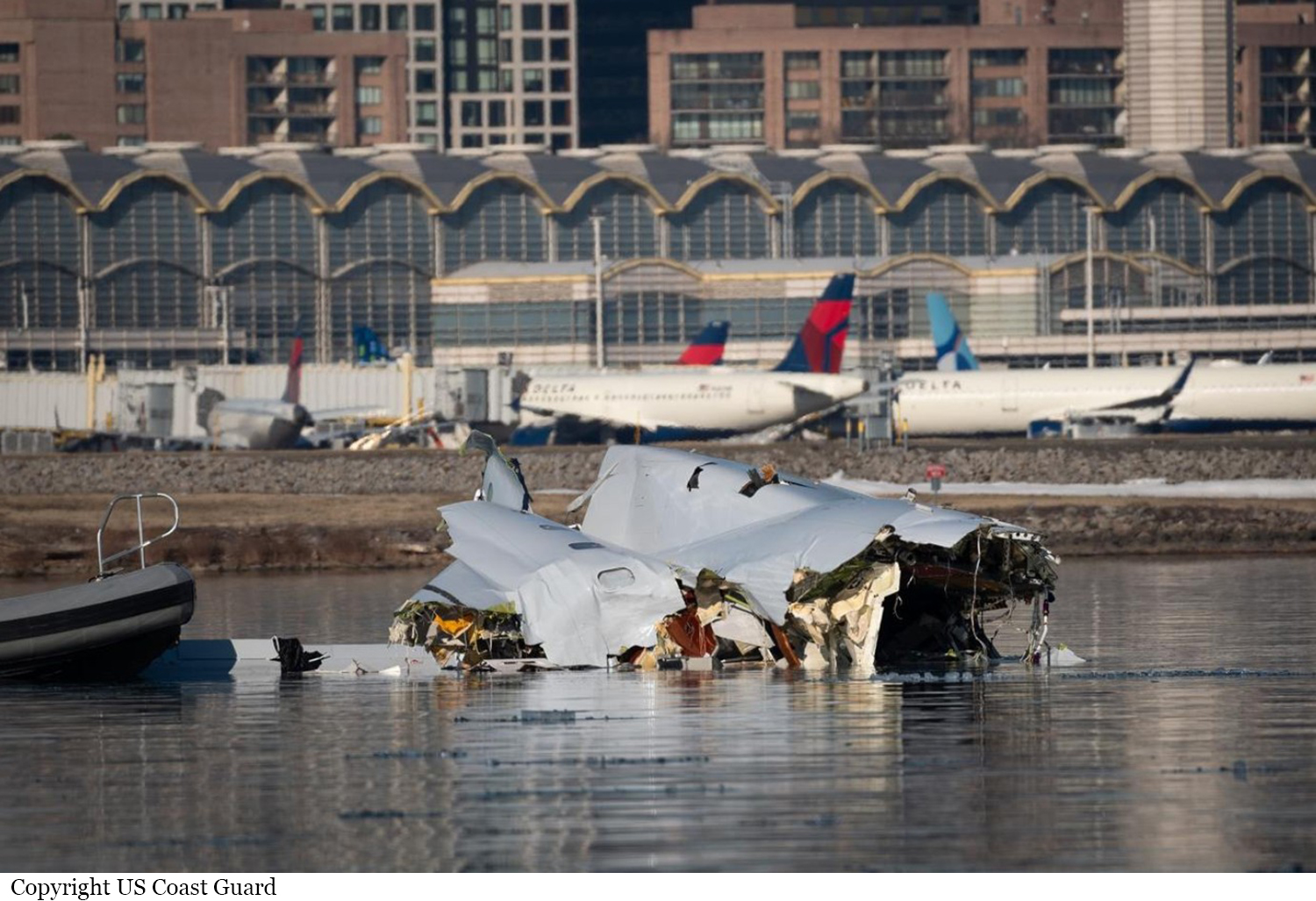
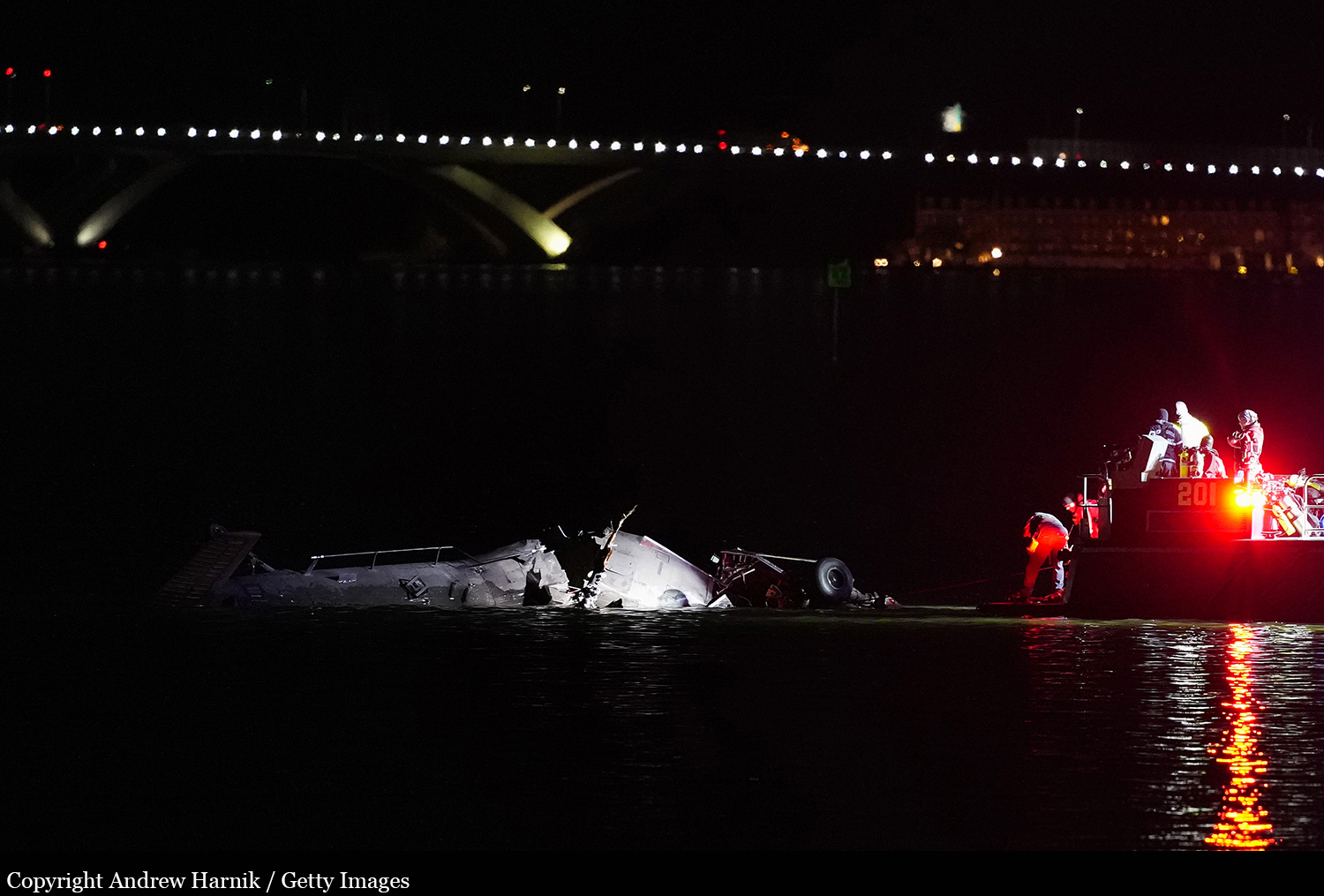
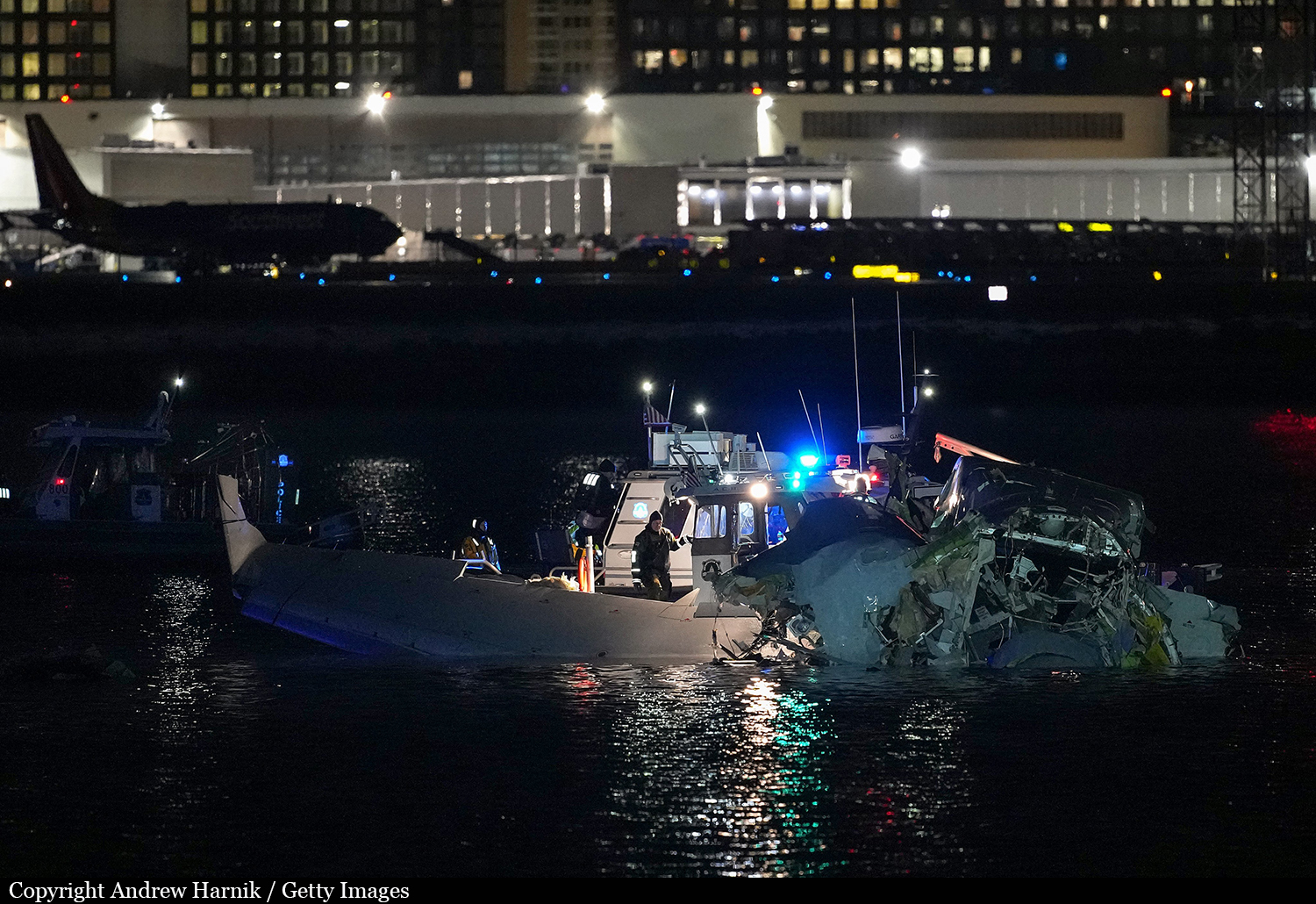
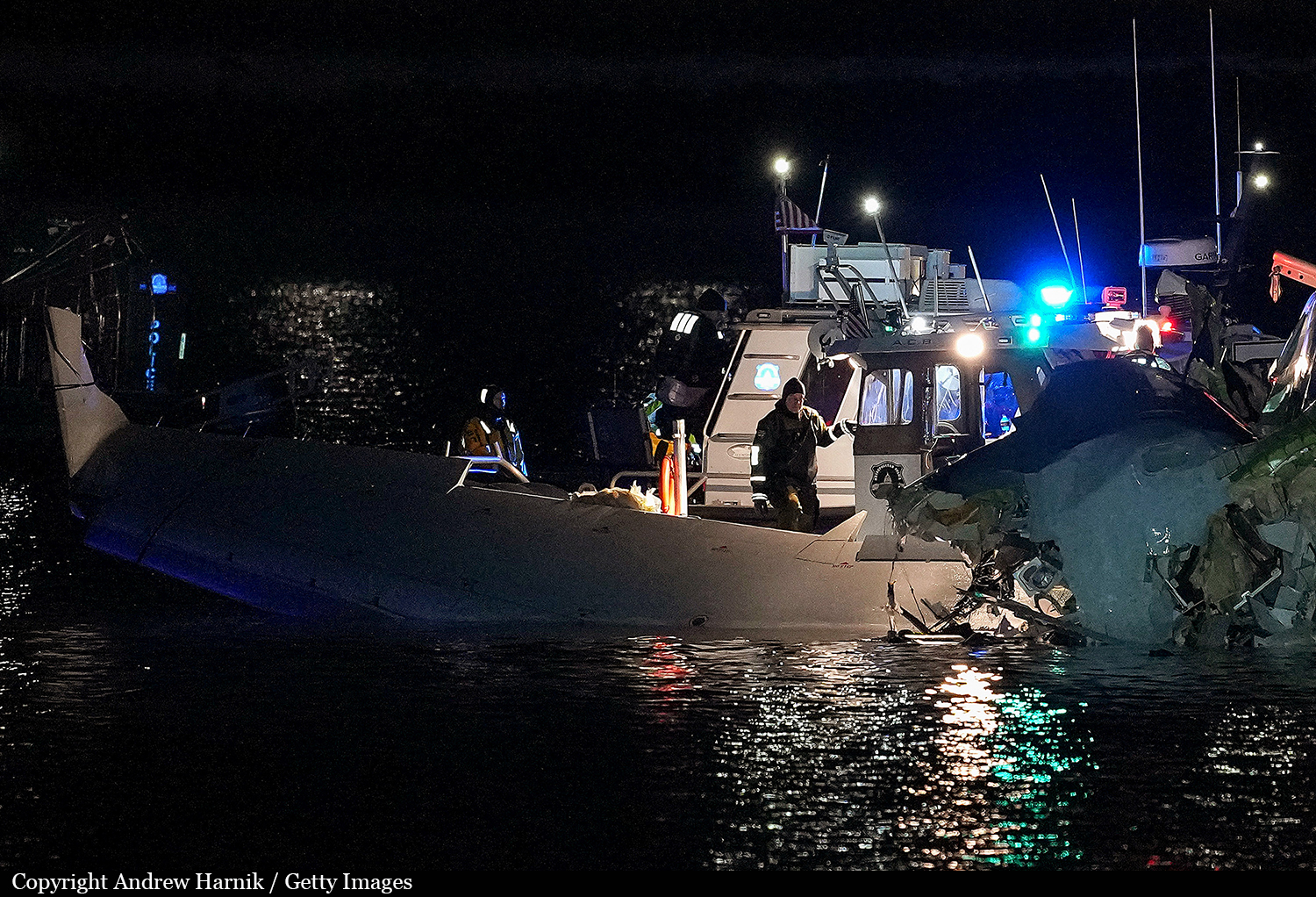
On January 29, 2025, about 2048 eastern standard time (EST), a Sikorsky UH-60L, operated by the US Army under the callsign PAT25 (Priority Air Transport Flight 25), and an MHI (Mitsubishi Heavy Industries) RJ Aviation (formerly Bombardier) CL-600-2C10 (CRJ700), N709PS, operated by PSA Airlines as American Airlines flight 5342, collided in flight about 0.5 miles southeast of Ronald Reagan Washington National Airport (DCA), Arlington, Virginia, and impacted the Potomac River in southwest Washington, DC. The 2 pilots, 2 flight attendants, and 60 passengers on board the airplane and all 3 crew members on board the helicopter died. Both aircraft were destroyed as a result of the accident. Flight 5342 was operating under the provisions of Title 14 Code of Federal Regulations Part 121 as a scheduled domestic passenger flight from Wichita Dwight D. Eisenhower National Airport, Wichita, Kansas, to DCA. PAT25 originated from Davison Army Airfield (DAA), Fort Belvoir, Virginia, for the purpose of the pilot’s annual standardization evaluation flight with the use of night vision goggles (NVGs). Night visual meteorological conditions prevailed in the area of DCA at the time of the accident. PAT25 departed DAA and landed at sites in Virginia and Maryland before the crew turned south toward Washington, DC, and was cleared by the DCA tower controller (who was working combined local control and helicopter control positions) to transition the DCA airspace via helicopter Routes 1 and 4 before proceeding back to DAA. The helicopter joined Route 1 near Cabin John, Maryland, and followed the Potomac River southbound at low altitude, passing the Key Bridge, Memorial Bridge, Tidal Basin, and Hains Point before continuing onto Route 4. At the same time, flight 5342 was approaching DCA on an instrument flight rules flight that had been uneventful during departure, cruise, and initial descent. The airplane was inbound from the south on a visual approach to runway 1 when the DCA tower controller asked the flight crew if they could accept runway 33 instead. After confirming landing performance, the crew accepted a circling approach to runway 33 and maneuvered the airplane to align with the runway 33 final approach path. While PAT25 was transitioning from Route 1 to Route 4 and flight 5342 was circling to land, the controller issued a traffic advisory to the helicopter crew about the airplane, which was south of the Woodrow Wilson Bridge. At this time, the airplane was about 6.5 nautical miles (about 7.5 statute miles) south of the helicopter’s position, and its exterior lights would have been visible in the dark among those of several other airplanes, which were on approach to runway 1 from the south. The instructor pilot onboard PAT25 stated that they had the traffic in sight and requested visual separation, which the controller approved. As the aircraft flightpaths converged near the runway 33 approach corridor about 1 1/2 minutes later (20 seconds before impact), the controller asked the helicopter crew whether they had the airplane in sight and instructed PAT25 to pass behind it; however, one of the helicopter pilots pressed the radio push-to-talk switch for 0.8 seconds while the controller was speaking, and this brief radio transmission blocked the helicopter crew from receiving the “pass behind” portion of the controller’s instruction. The instructor pilot onboard PAT25 again indicated that they had the airplane in sight and requested visual separation, which the controller approved. PAT25 continued southbound along Route 4 while flight 5342 descended on final approach for runway 33, and the aircraft collided over the Potomac River at an altitude about 278 ft above mean sea level (msl).
Probable cause:
We determined that the probable cause of this accident was the FAA’s placement of a helicopter route in close proximity to a runway approach path; their failure to regularly review and evaluate helicopter routes and available data, and their failure to act on recommendations to mitigate the risk of a midair collision near Ronald Reagan Washington National Airport; as well as the air traffic system’s overreliance on visual separation in order to promote efficient traffic flow without consideration for the limitations of the see-and-avoid concept. Also causal was the lack of effective pilot-applied visual separation by the helicopter crew, which resulted in a midair collision. Additional causal factors were the tower team’s loss of situation awareness and degraded performance due to the high workload of the combined helicopter and local control positions and the absence of a risk assessment process to identify and mitigate real-time operational risk factors, which resulted in misprioritization of duties, inadequate traffic advisories, and the lack of safety alerts to both flight crews. Also causal was the Army’s failure to ensure pilots were aware of the effects of error tolerances on barometric altimeters in their helicopters, which resulted in the crew flying above the maximum published helicopter route altitude. Contributing factors included:
• the limitations of the traffic awareness and collision alerting systems on both aircraft, which precluded effective alerting of the impending collision to the flight crews;
• an unsustainable airport arrival rate, increasing traffic volume with a changing fleet mix, and airline scheduling practices at DCA, which regularly strained the DCA ATCT workforce and degraded safety over time;
• the Army’s lack of a fully implemented safety management system, which should have identified and addressed hazards associated with altitude exceedances on the Washington, DC, helicopter routes;
• the FAA’s failure across multiple organizations to implement previous NTSB recommendations, including ADS-B In, and to follow and fully integrate its established safety management system, which should have led to several organizational and operational changes based on previously identified risks that were known to management; and
• the absence of effective data sharing and analysis among the FAA, aircraft operators, and other relevant organizations.
Final Report:
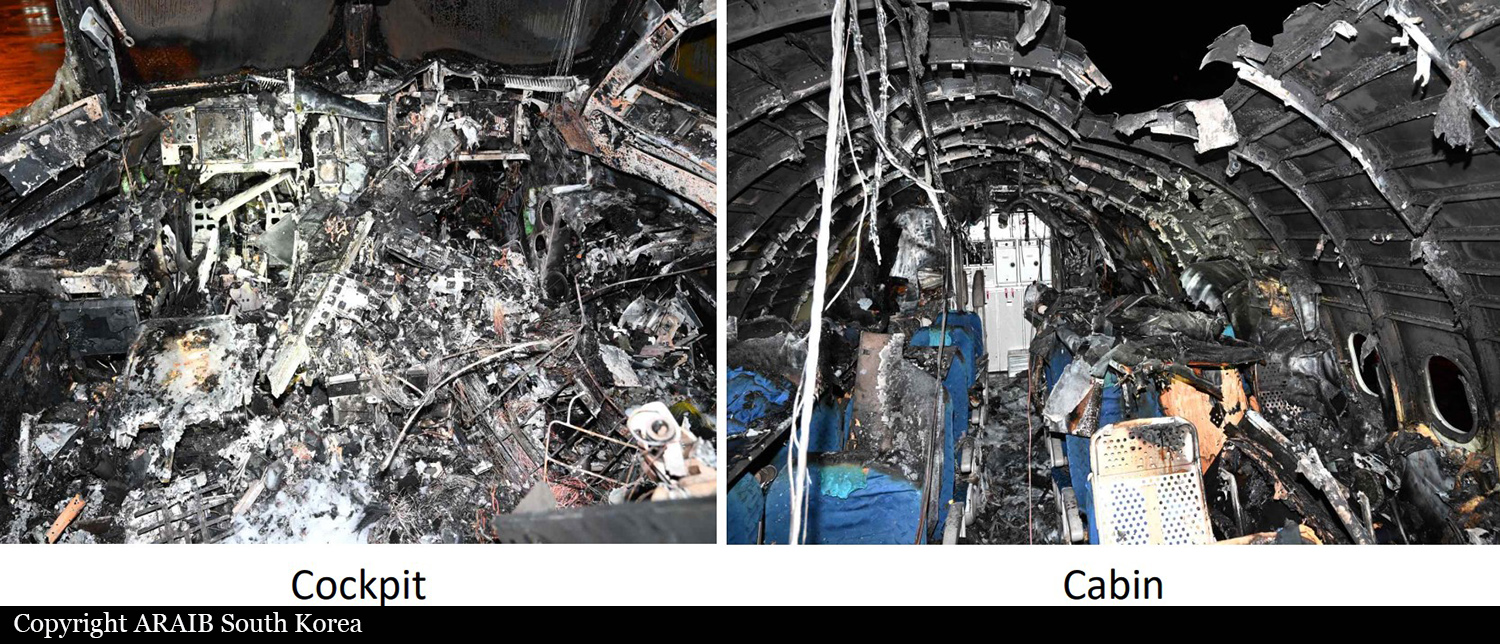
Ground fire of an Airbus A321 in Busan

Date & Time: Jan 28, 2025 at 2226 LT
Type of aircraft:
Operator:
Registration:
HL7763
Flight Phase:
Survivors:
Yes
Schedule:
Busan - Hong Kong
MSN:
3297
YOM:
2007
Flight number:
BX391
Country:
Region:
Crew on board:
6
Crew fatalities:
Pax on board:
170
Pax fatalities:
Other fatalities:
Total fatalities:
0
Captain / Total flying hours:
6552
Captain / Total hours on type:
5510.00
Copilot / Total flying hours:
3278
Copilot / Total hours on type:
2859
Circumstances:
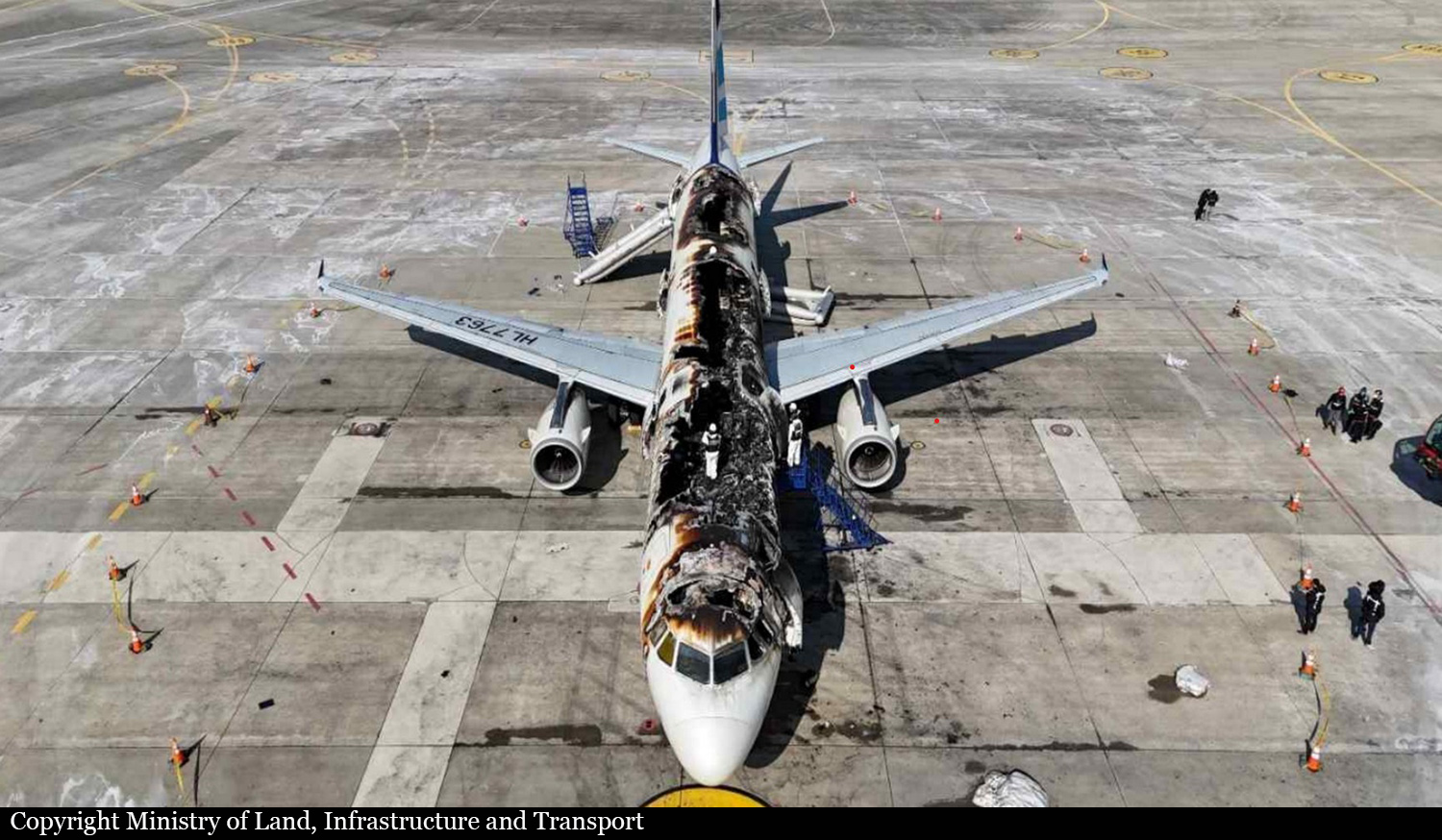
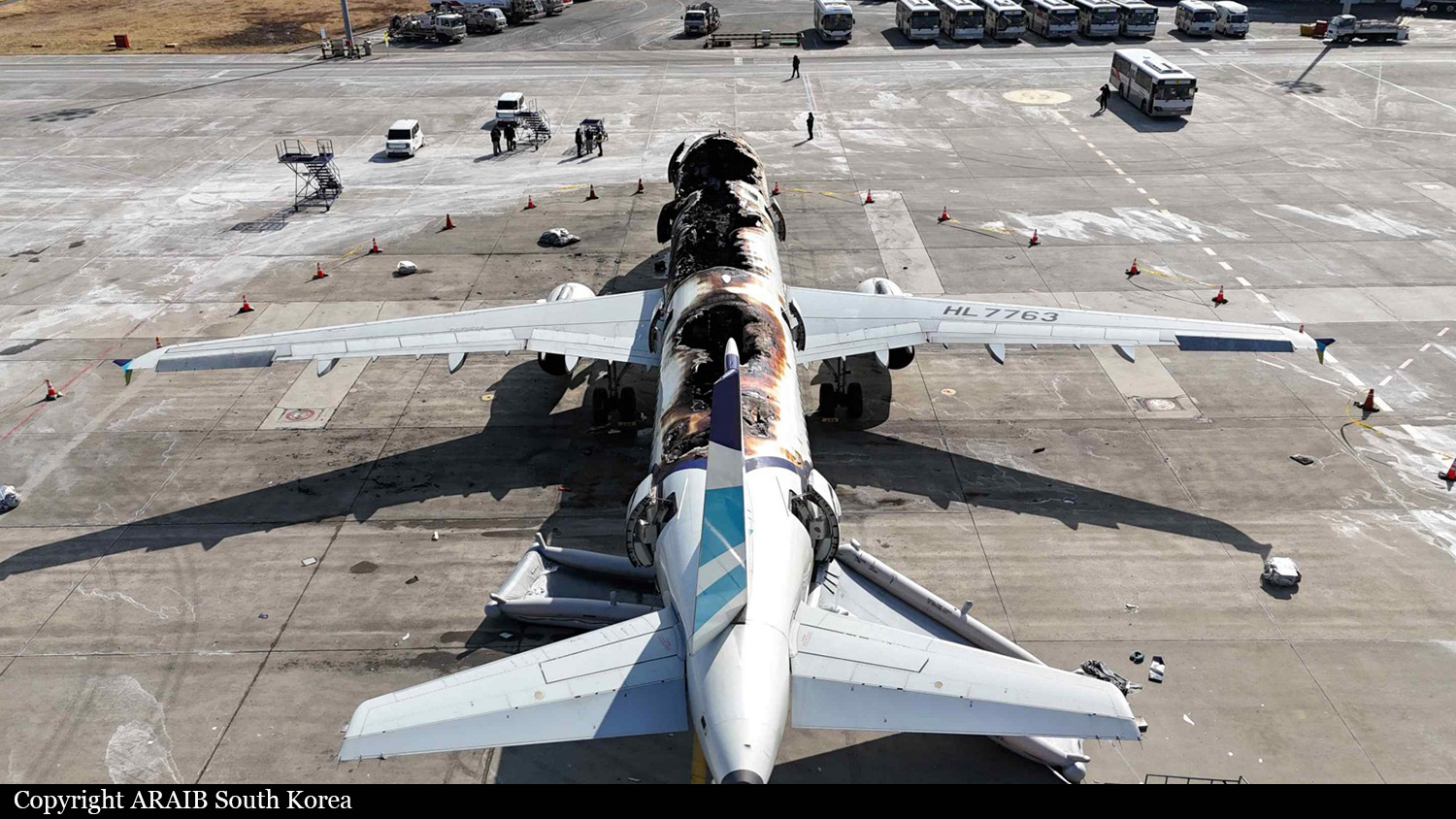
Parked at stand 55L at Busan-Gimhae Airport, the airplane was ready for departure to Hong Kong (flight BX391) when a fire broke out in the rear overhead cabin. Boarding was completed and all doors closed. As the smoke and flame rapidly spread after the fire was first acknowledged, the crew members performed an emergency evacuation of all 176 occupants. Emergency evacuation was performed using seven emergency slides deployed from each door, except for the R1 door. Three passengers escaped with serious injured and 24 others with minor injuries. The airplane was partially destroyed by fire.
Probable cause:
Interim investigation results indicate that the fire may have started because insulation inside a power bank battery had broken down.