Date & Time:
Jul 24, 2025 at 1256 LT
Type of aircraft:
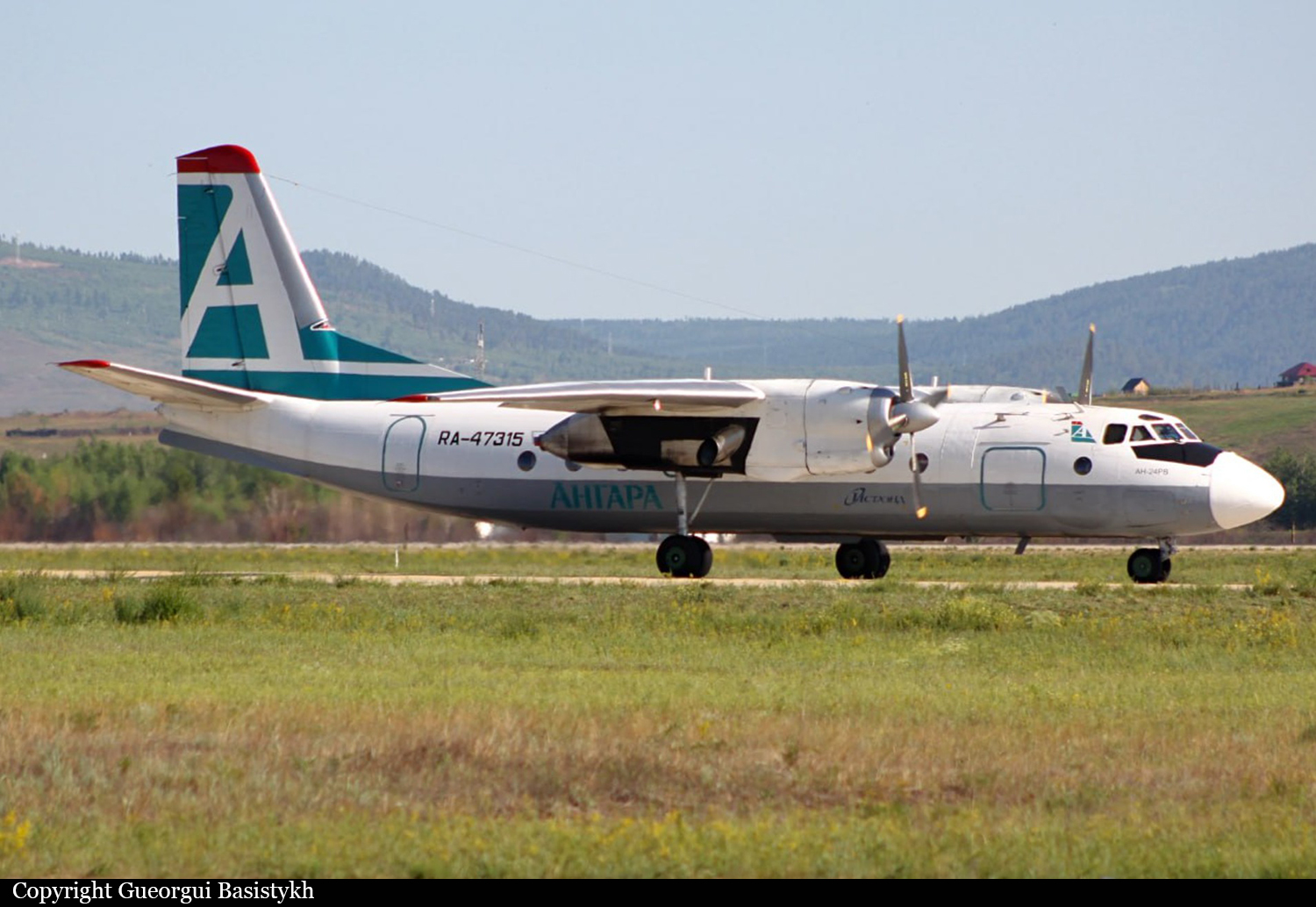
Antonov AN-24
Operator:

Registration:
RA-47315
Flight Phase:
Landing (descent or approach)
Flight Type:
Scheduled Revenue Flight
Survivors:
No
Site:
Plain, Valley
Schedule:
Khabarovsk – Blagoveshchensk – Tynda
MSN:
6 73 105 02
YOM:
1976
Flight number:
AGU2311
Country:
Russia
Region:
Asia
Crew on board:
6
Crew fatalities:
6
Pax on board:
42
Pax fatalities:
42
Other fatalities:
0
Total fatalities:
48
Captain / Total hours on type:
5942
Copilot / Total hours on type:
1939
Aircraft flight hours:
58014
Aircraft flight cycles:
38529
Circumstances:
The airplane departed Khabarovsk on a schedule service to Tynda (flight 2G/AGU2311) with an intermediate stop in Blagoveshchensk, carrying 42 passengers (including five children) and six crew members. It departed Ignatyevo Airport at 1121LT on the second leg to Tynda. After the crew started the descent to the destination airport, he was cleared for a NDB approach via LMM and a landing on runway 06. Weather at destination was marginal with the base of scattered clouds at 210 metres. After the altimeters were set, the crew continued the approach when the radio altimeter alarm sounded. Three seconds later, the airplane collided with trees and crashed in a wooded area located 14 southwest of the airport, bursting into flames. The airplane was destroyed and all 48 occupants were killed.
Probable cause:
The accident resulted from a discrepancy between the altitude reference level based on the QNH pressure actually set on the barometric altimeters and the reference level used by the crew for assigned flight altitudes (based on QFE). This led to the aircraft flying approximately 600 meters below the assigned altitude, colliding with treetops and the ground.
The accident was the result of a combination of the following factors:
- The crew’s actual lack of preparedness to operate to aerodromes that had transitioned to QNH, which led to errors in the use of aerodrome pressure values (QNH/QFE) at Tynda aerodrome.
- The controller transmitting the QNH value, expressed in millimeters of mercury, without a request from the crew.
- The crew’s failure to monitor the consistency between the barometric pressure settings used and the assigned altitude values.
- The inability of ATC to monitor the aircraft’s flight altitude instrumentally due to inoperative secondary radar equipment at Tynda aerodrome.
- The crew’s deactivation of the aural Ground Proximity Warning System (GPWS) alert.
The accident was the result of a combination of the following factors:
- The crew’s actual lack of preparedness to operate to aerodromes that had transitioned to QNH, which led to errors in the use of aerodrome pressure values (QNH/QFE) at Tynda aerodrome.
- The controller transmitting the QNH value, expressed in millimeters of mercury, without a request from the crew.
- The crew’s failure to monitor the consistency between the barometric pressure settings used and the assigned altitude values.
- The inability of ATC to monitor the aircraft’s flight altitude instrumentally due to inoperative secondary radar equipment at Tynda aerodrome.
- The crew’s deactivation of the aural Ground Proximity Warning System (GPWS) alert.
Final Report:
RA-47315.pdf2.92 MB