Country

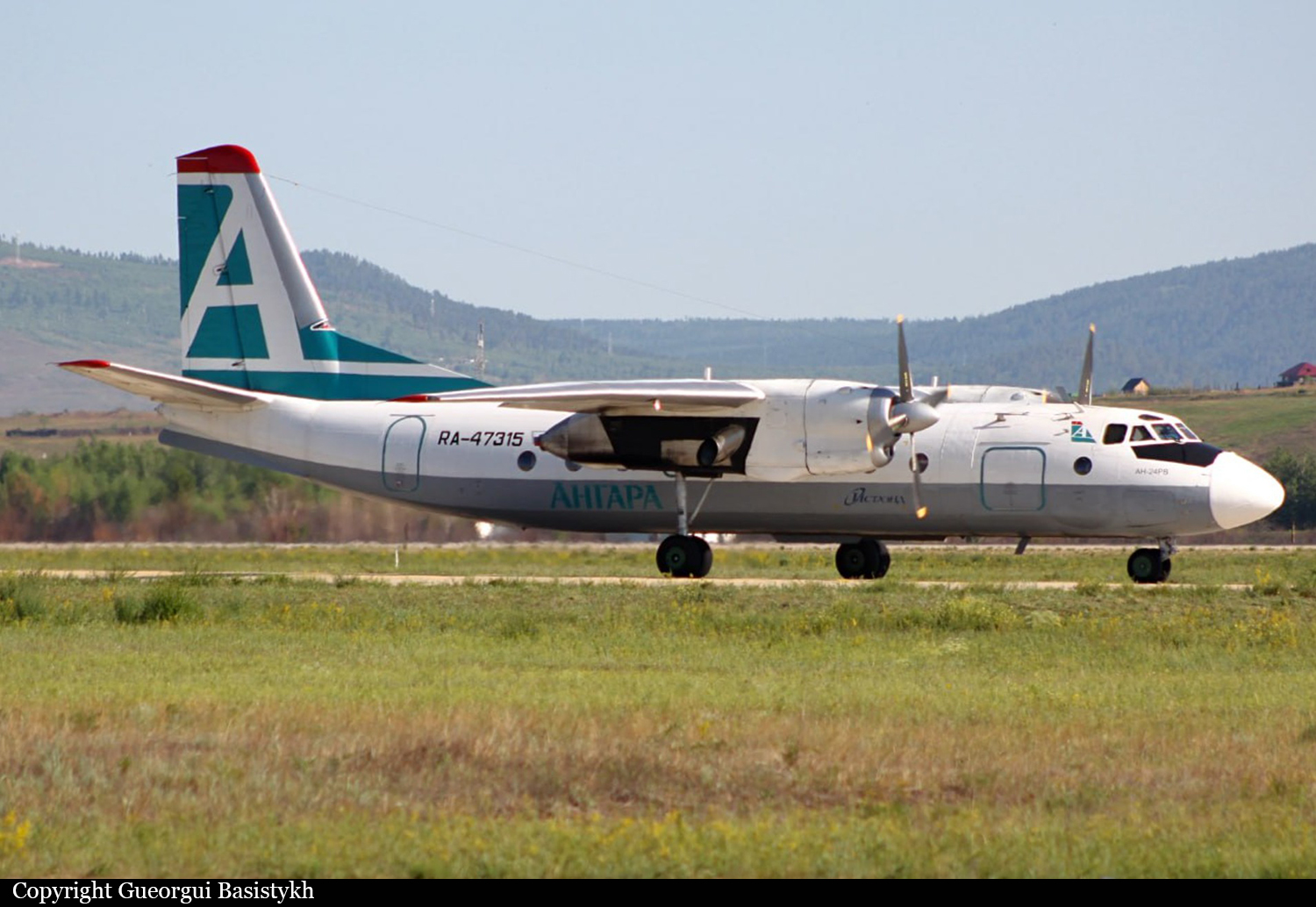
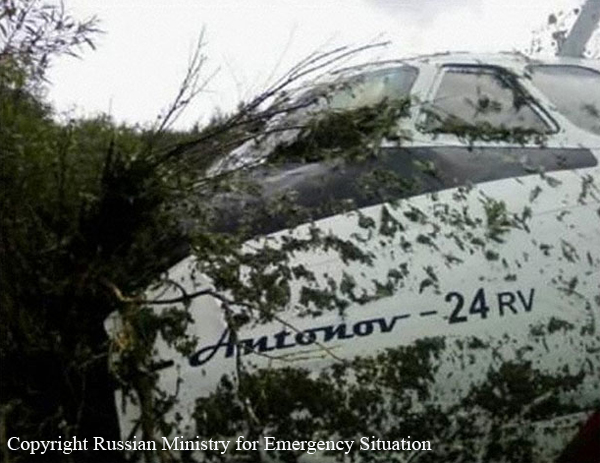
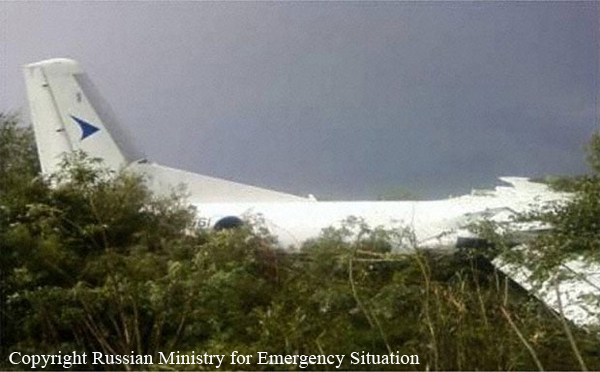
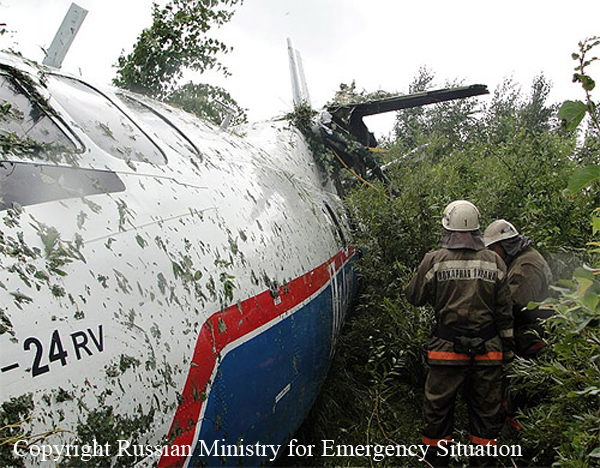
Crash of an Antonov AN-24RV near Tynda: 48 killed

Date & Time: Jul 24, 2025 at 1258 LT
Type of aircraft:
Operator:
Registration:
RA-47315
Survivors:
No
Schedule:
Khabarovsk – Blagoveshchensk – Tynda
MSN:
6 73 105 02
YOM:
1976
Flight number:
AGU2311
Country:
Region:
Crew on board:
6
Crew fatalities:
Pax on board:
42
Pax fatalities:
Other fatalities:
Total fatalities:
48
Circumstances:
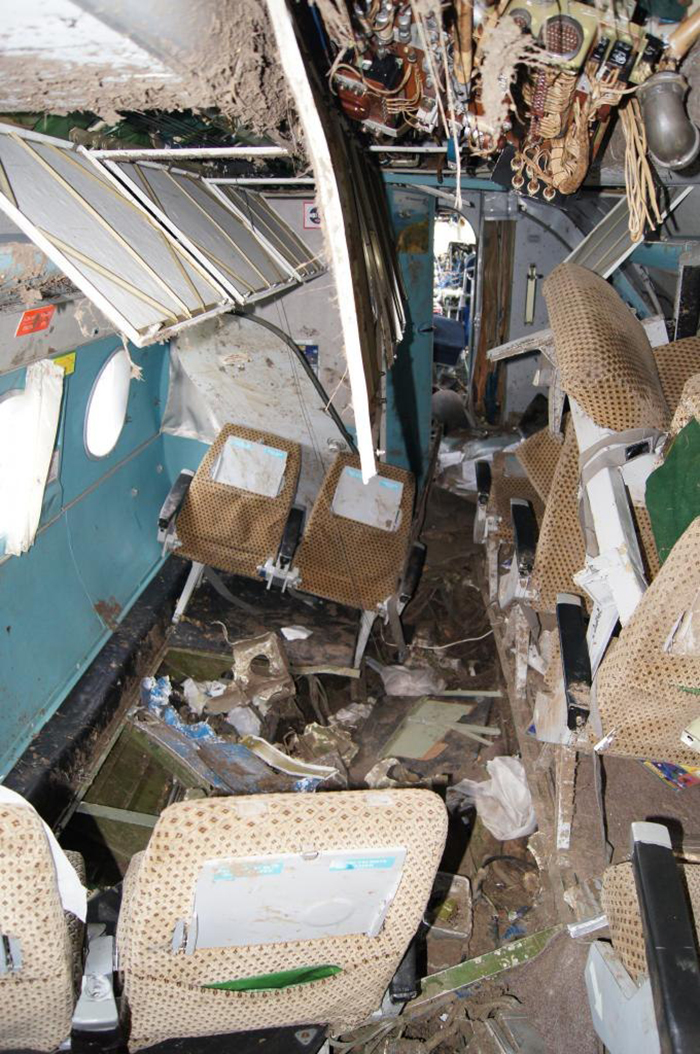
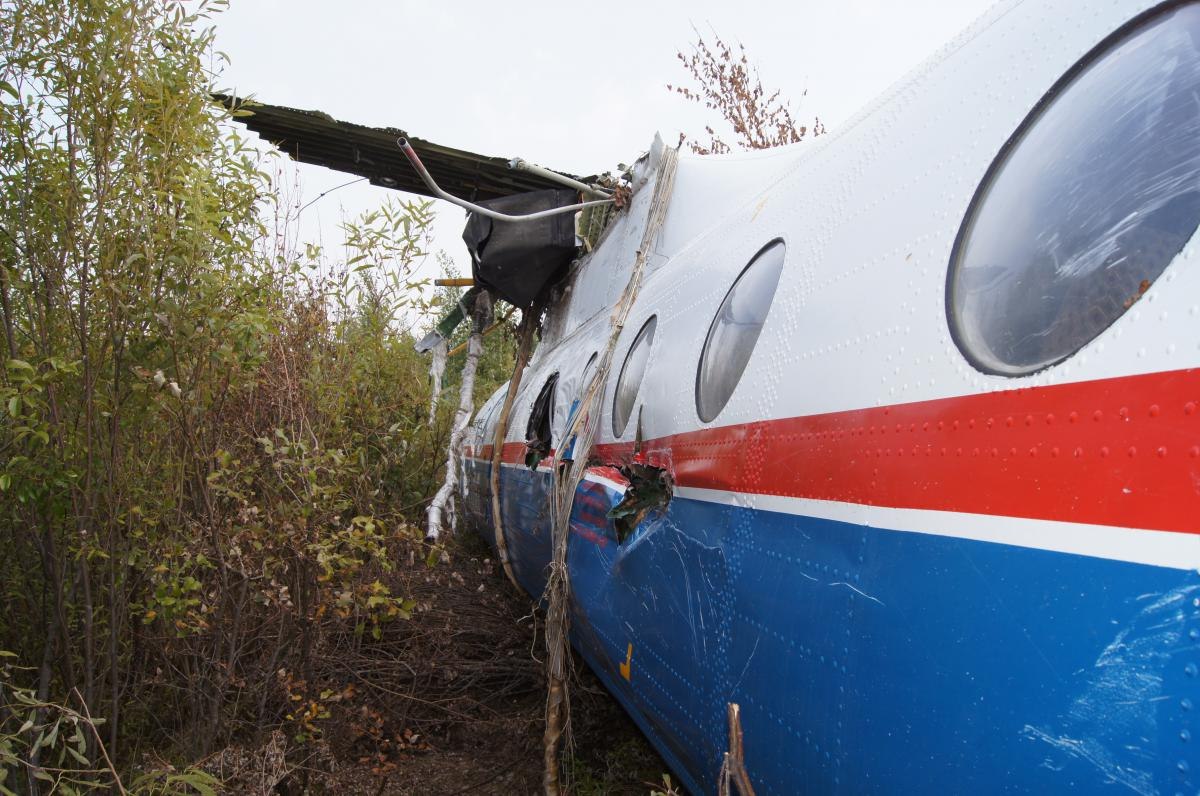
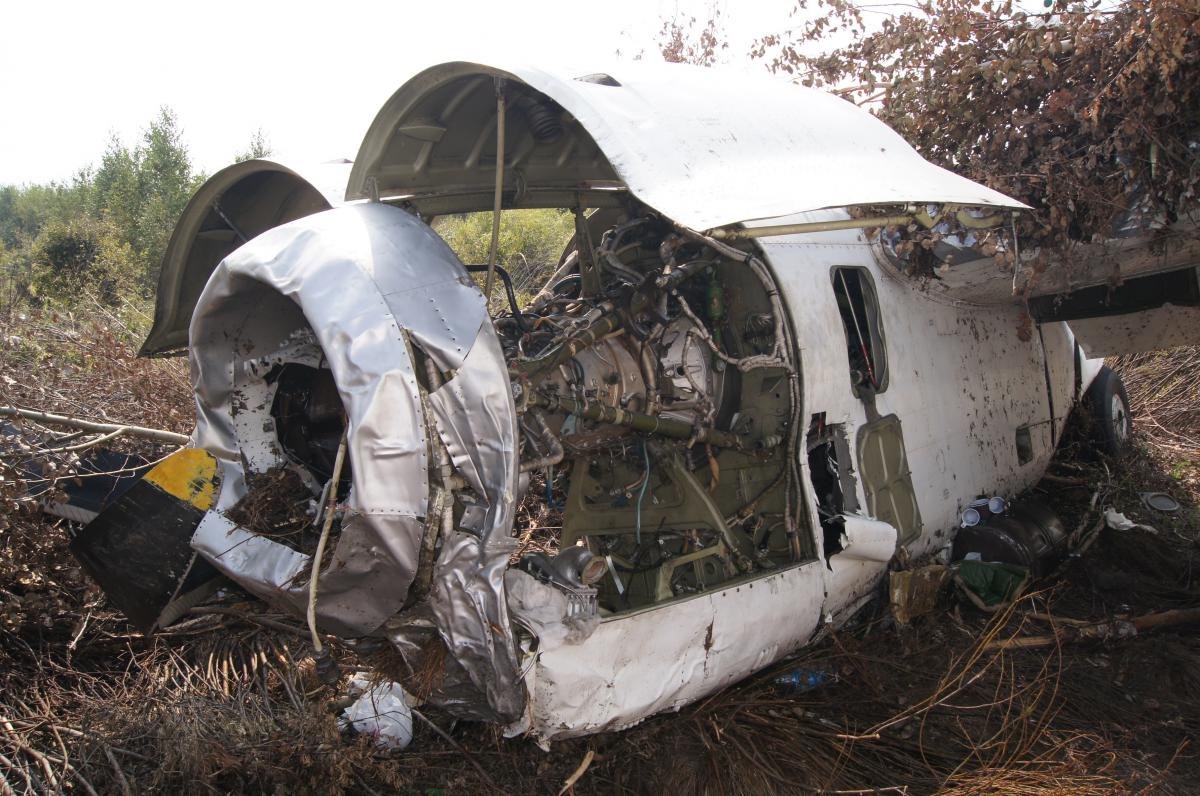
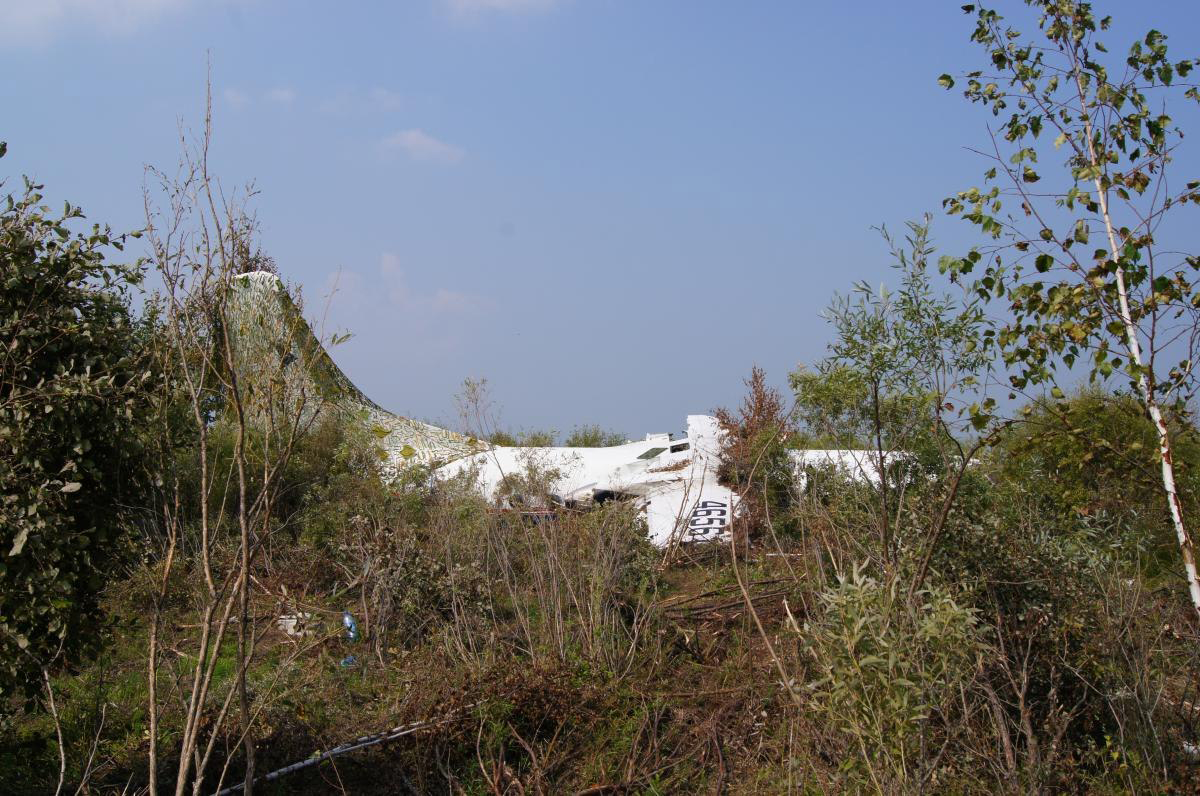
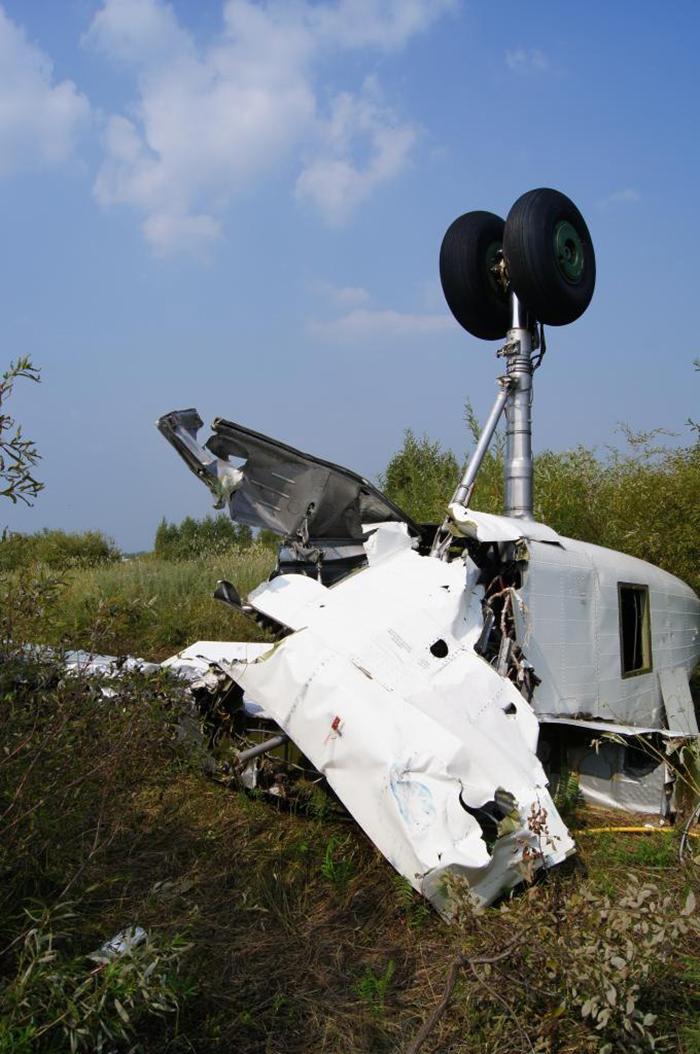
The airplane departed Khabarovsk on a schedule service to Tynda (flight 2G/AGU2311) with an intermediate stop in Blagoveshchensk, carrying 42 passengers (including five children) and six passengers. It departed Ignatyevo Airport at 1121LT on the second leg to Tynda. While descending to Tynda Airport, it appears that the crew encountered marginal weather conditions with reduced visibility due to low ceiling. On approach, the airplane impacted trees and crashed in a wooded area located about 15 km from the airport. The airplane was destroyed and all 48 occupants were killed. Apparently, the crew was attempting a second approach when the accident occurred. At the time of the accident, weather conditions were as follow: light rain, few CB's at 210 metres and cloudy at 600 metres.

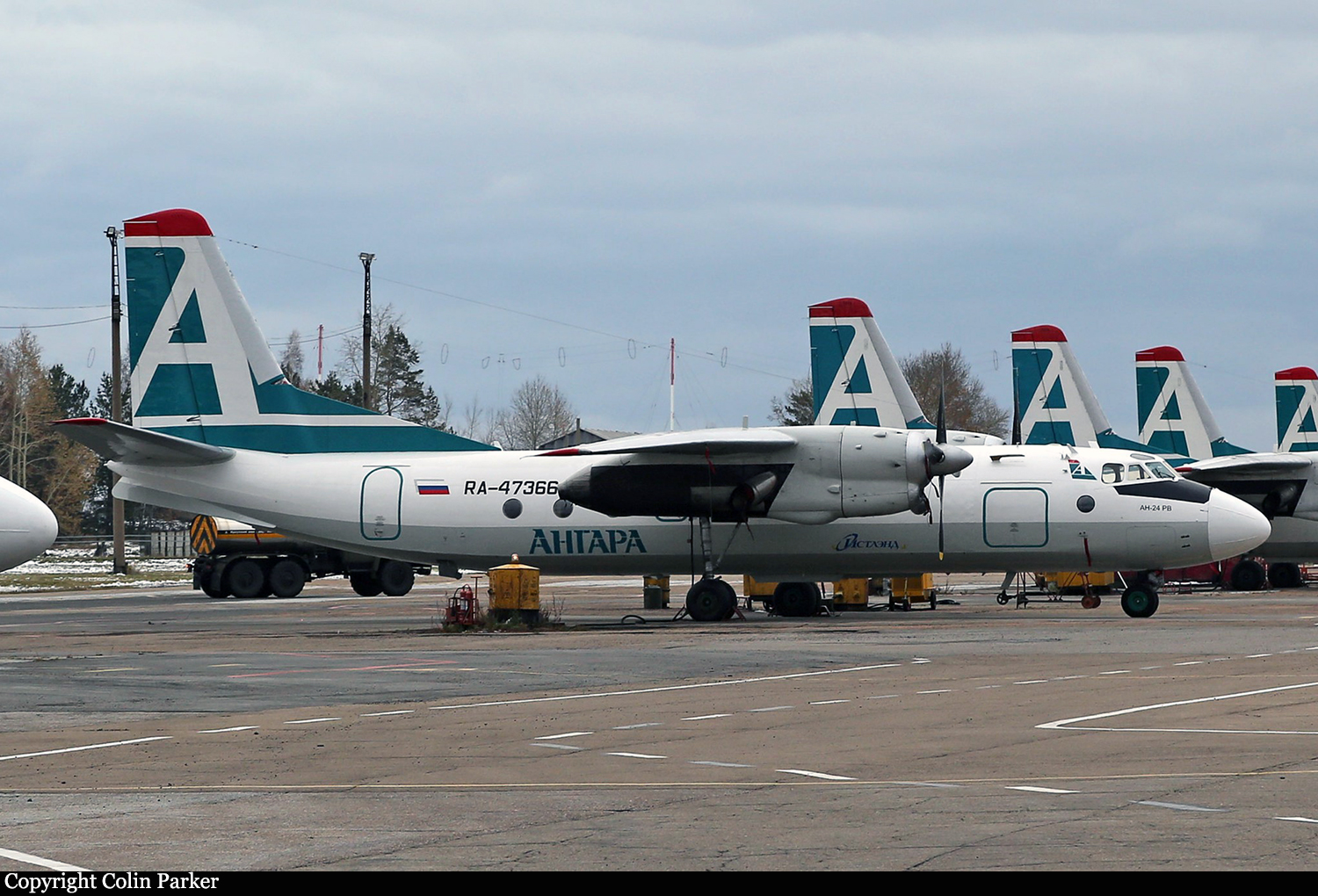
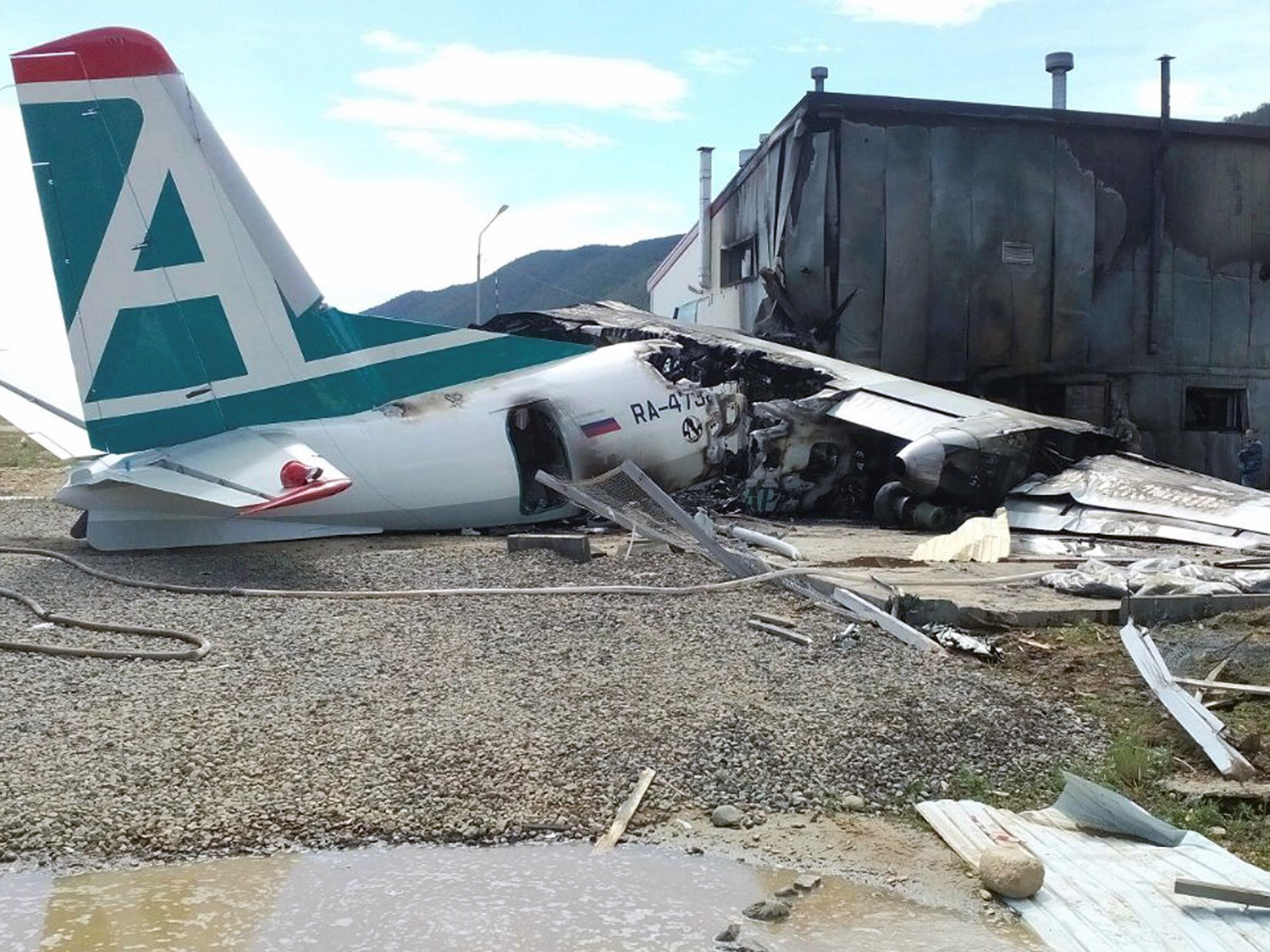
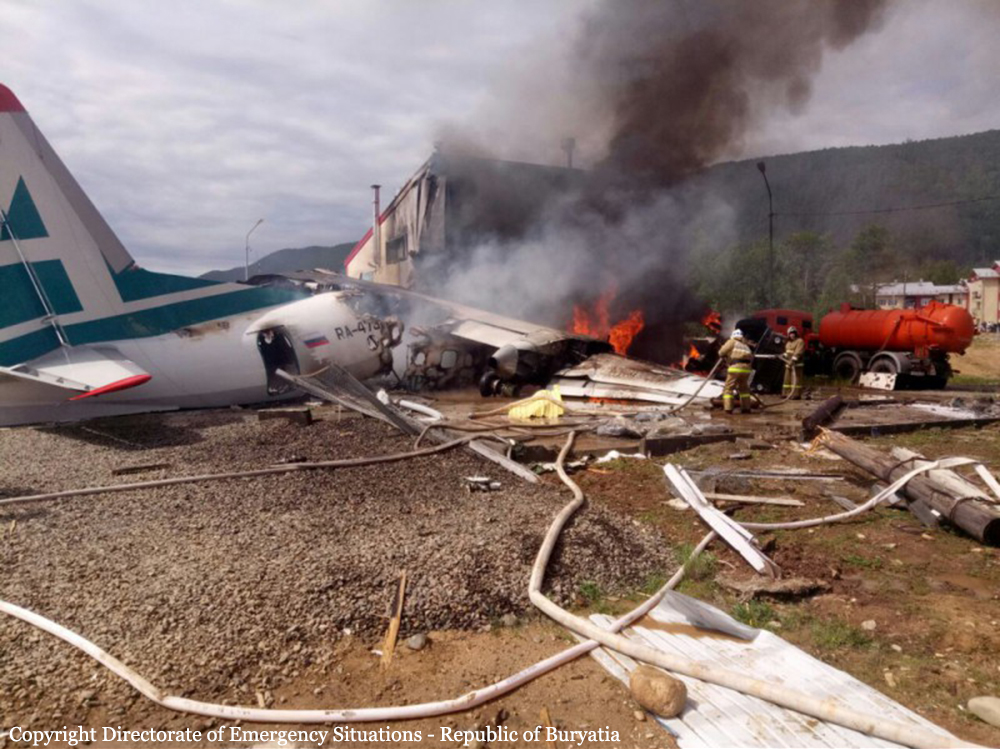
Crash of an Antonov AN-24RV in Nizhneangarsk: 2 killed

Date & Time: Jun 27, 2019 at 1025 LT
Type of aircraft:
Operator:
Registration:
RA-47366
Survivors:
Yes
Schedule:
Ulan-Ude - Nizhneangarsk
MSN:
7 73 108 04
YOM:
1977
Flight number:
AGU200
Country:
Region:
Crew on board:
4
Crew fatalities:
Pax on board:
43
Pax fatalities:
Other fatalities:
Total fatalities:
2
Captain / Total flying hours:
15167
Captain / Total hours on type:
10667.00
Copilot / Total flying hours:
6012
Copilot / Total hours on type:
1325
Aircraft flight hours:
38014
Aircraft flight cycles:
18584
Circumstances:
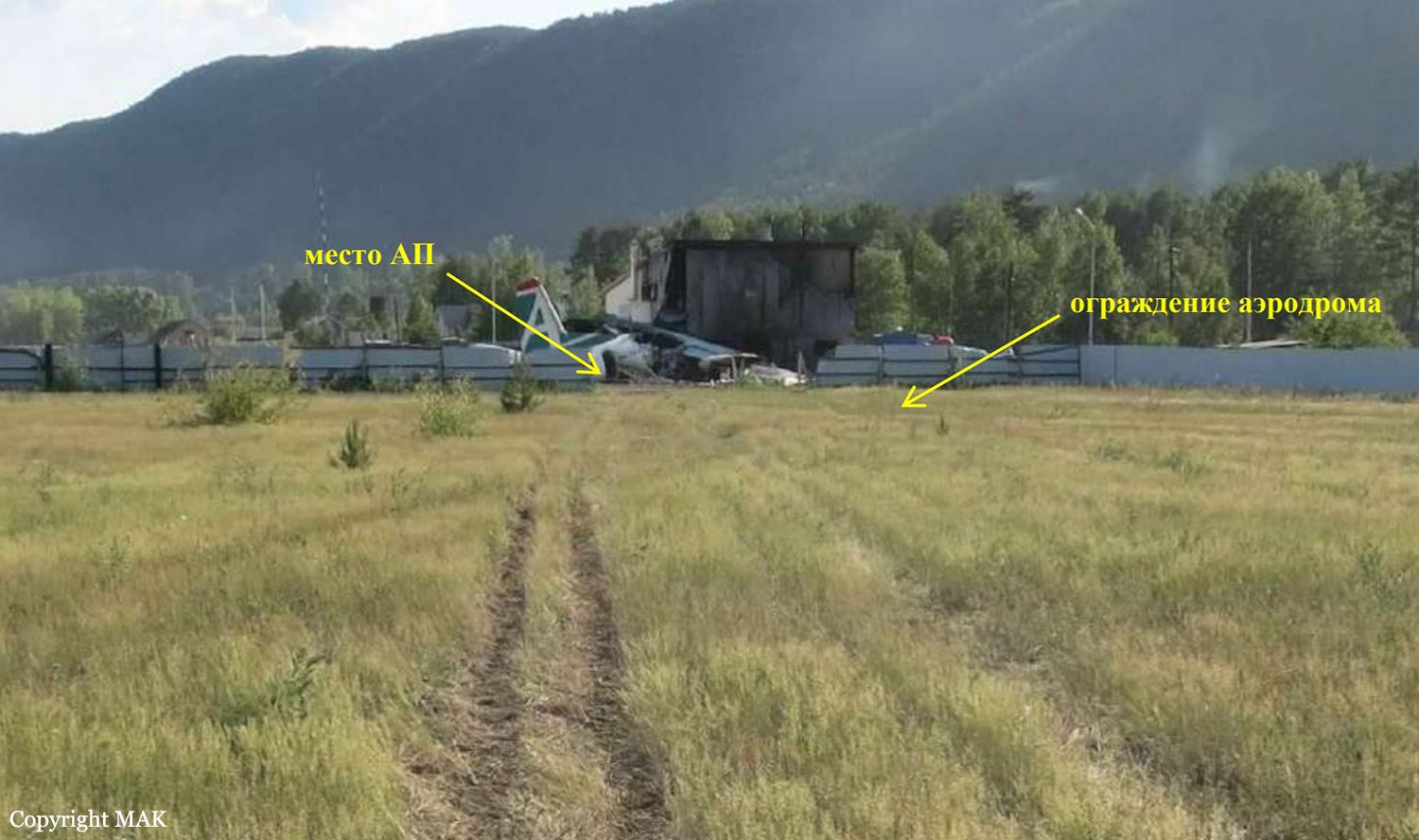
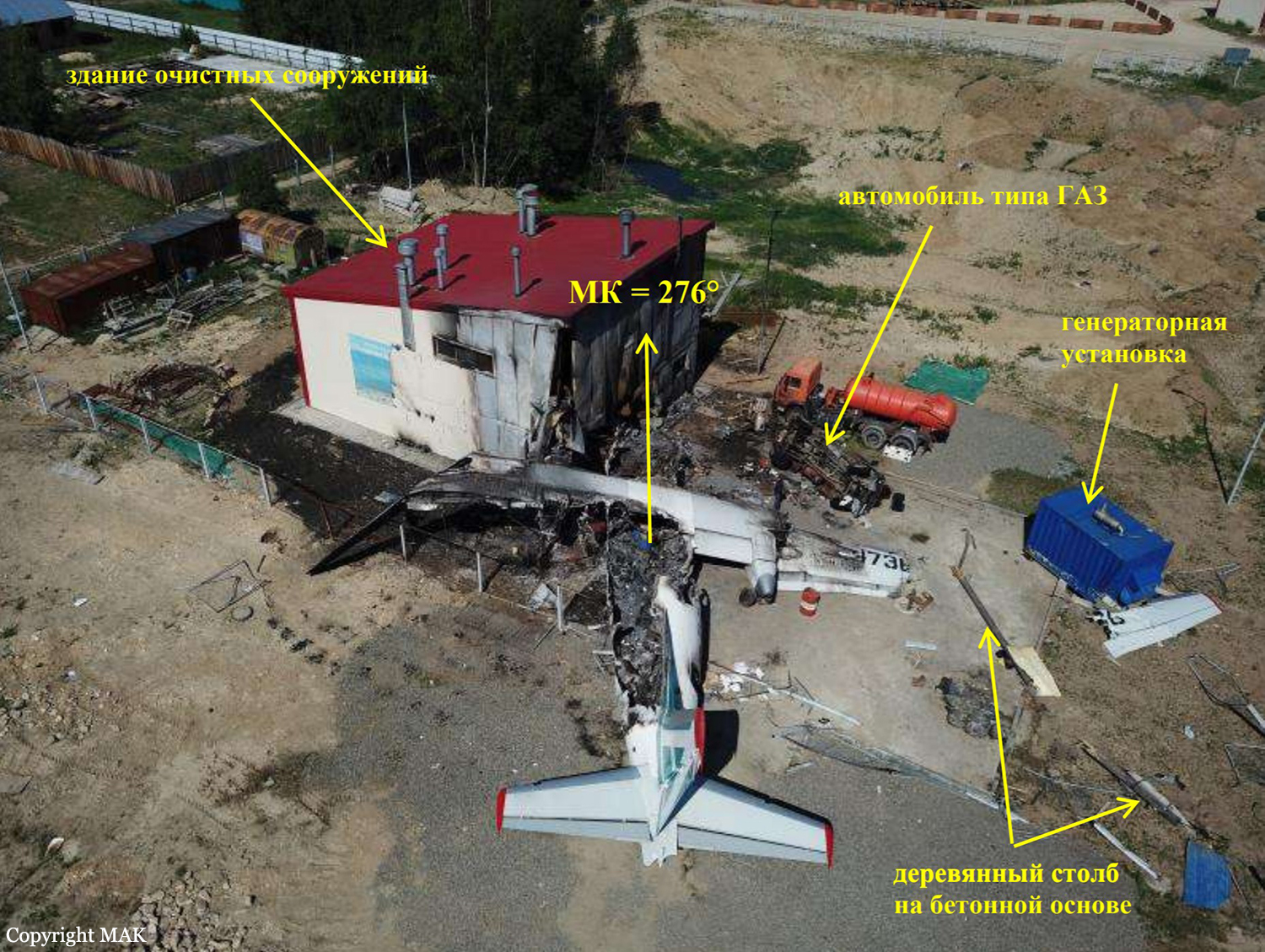
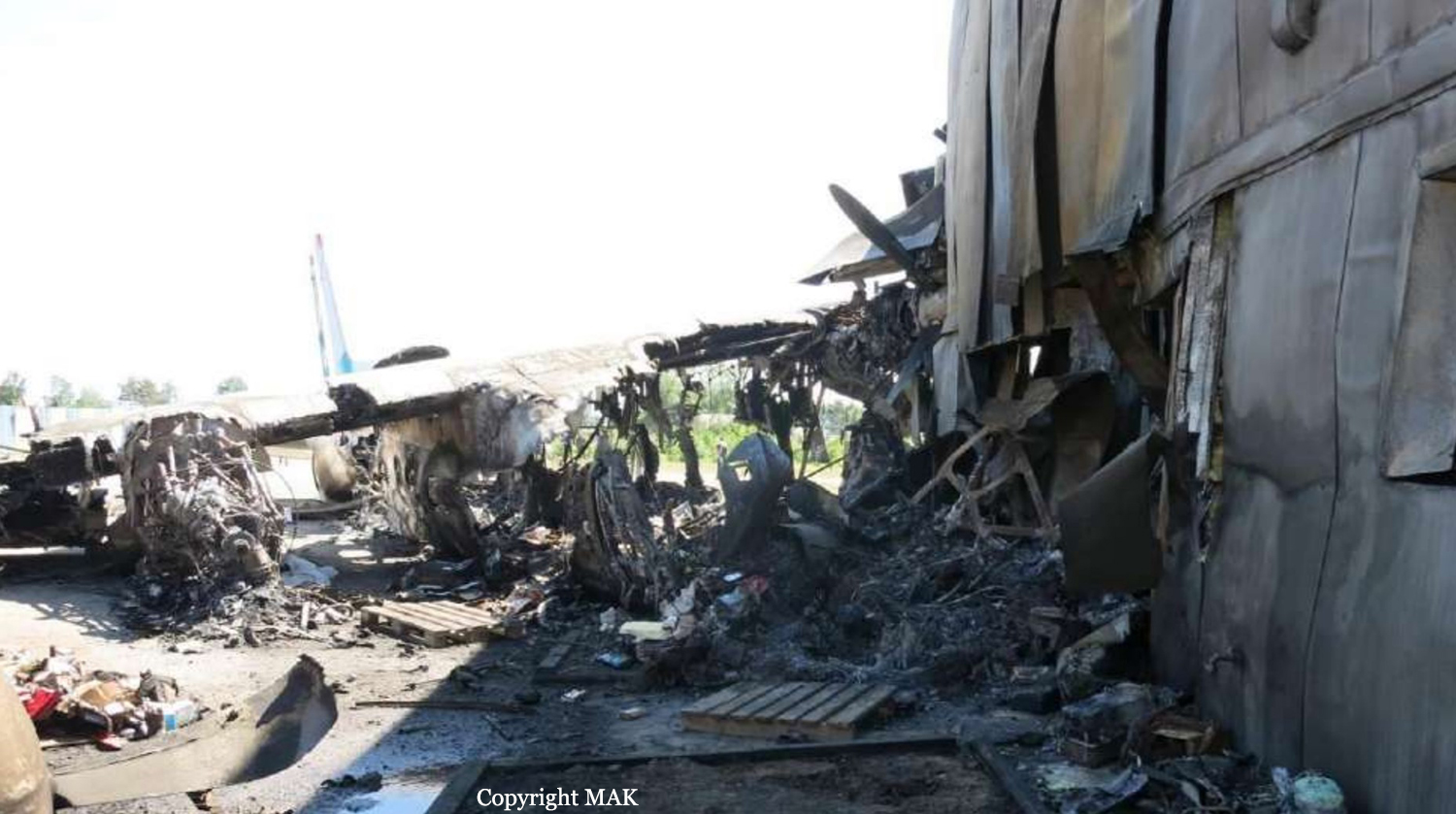
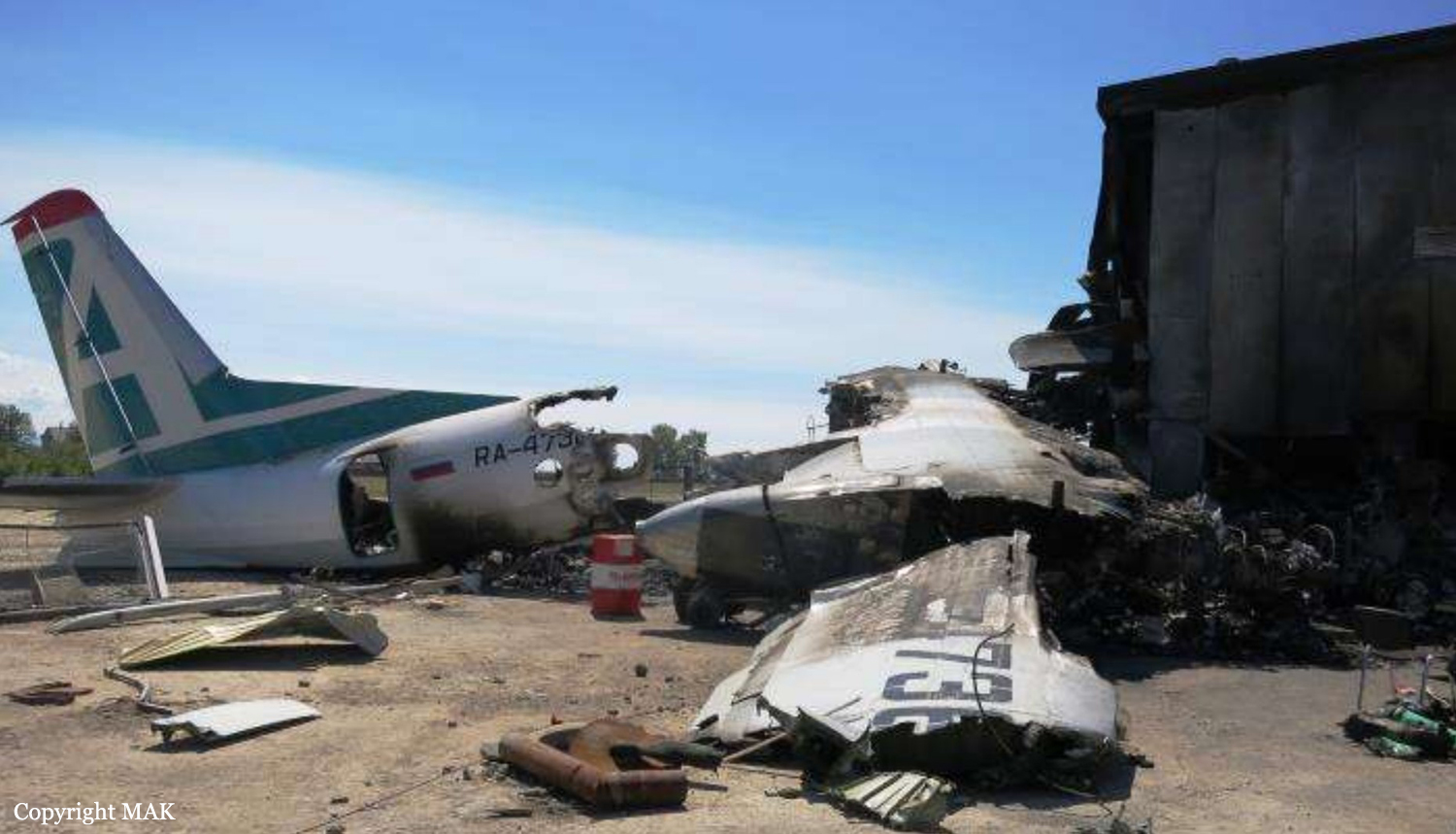
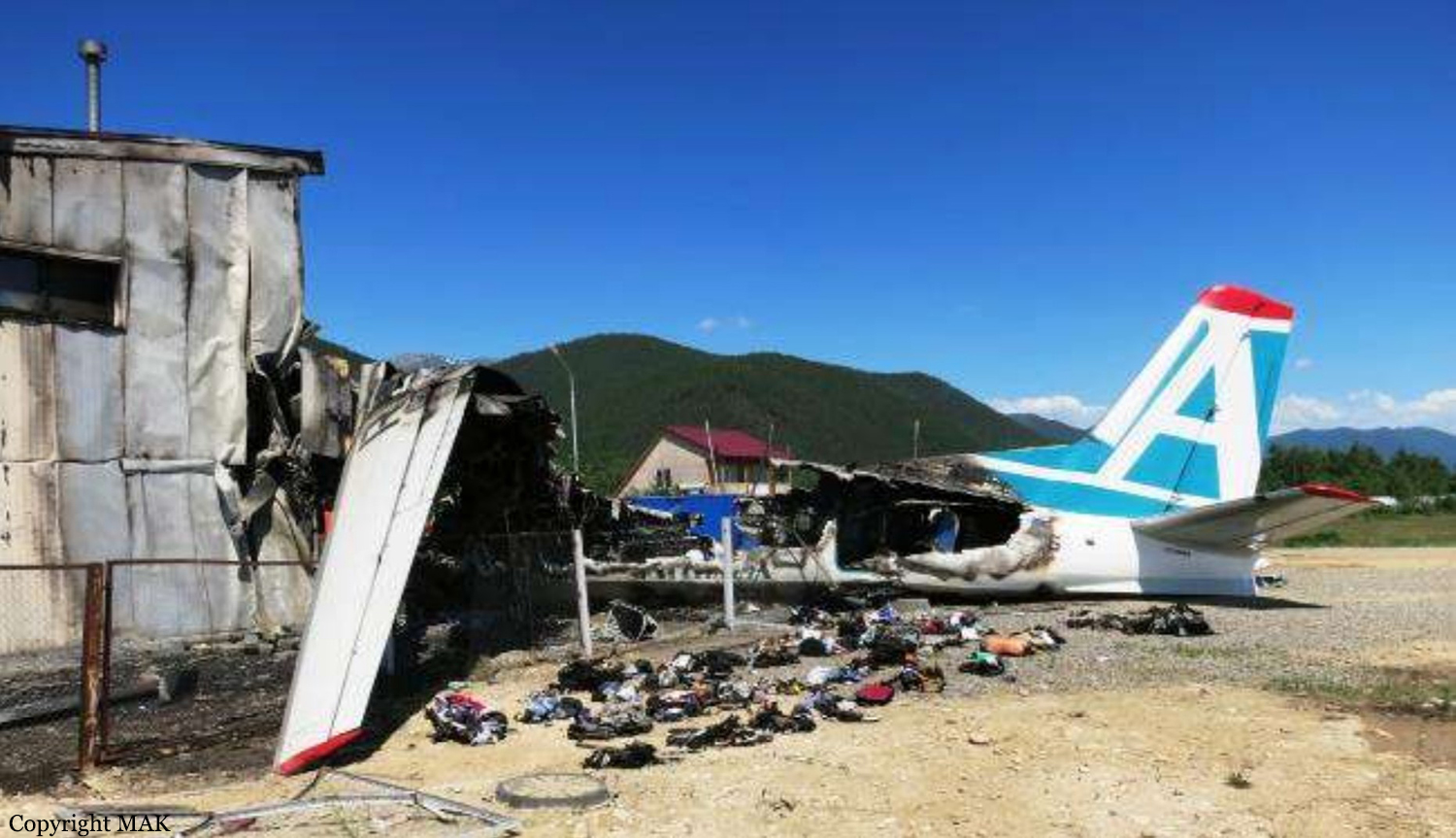
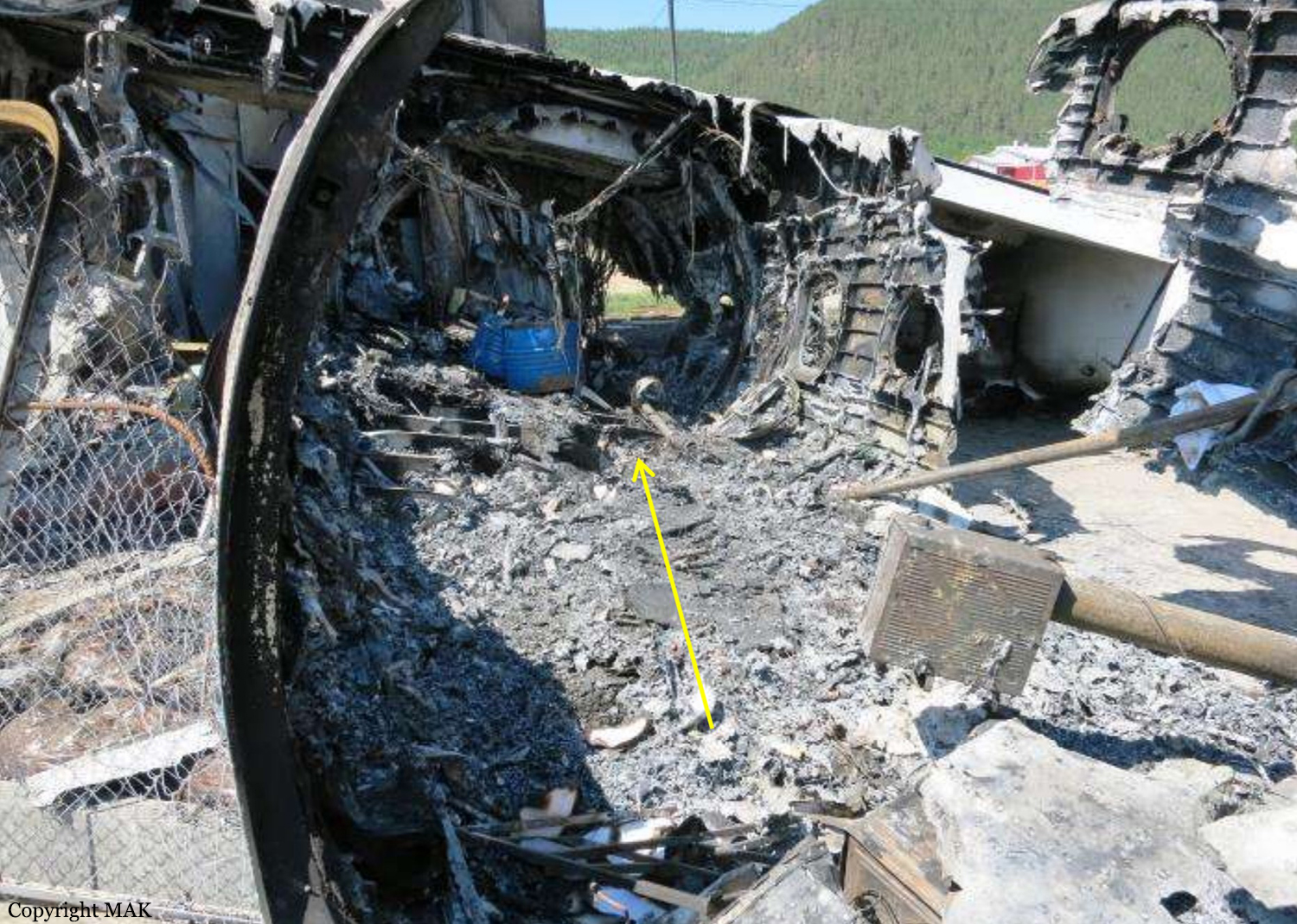
On a flight from Ulan-Ude to Nizhneangarsk, while descending to an altitude of 3,050 metres about 30 km from the destination airport, the crew contacted ATC and reported the failure of the left engine. The approach was continued to runway 22. After touchdown, the crew initiated the braking procedure when the airplane deviated to the right then veered off runway. It rolled in a grassy area, went through the perimeter fence and eventually impacted the building of a sewage treatment plant located 380 metres to the right of the runway centerline. The airplane was destroyed by a post crash fire. The captain and the flight engineer were killed while the copilot was seriously injured. 10 other occupants were injured.
Probable cause:
The accident occurred during landing with one engine inoperative as a result of a longitudinal-lateral rollout beyond the runway and subsequent collision with a building outside the aerodrome, resulting in damage to the aircraft structure and a fire. The landing was performed on a runway with an available landing distance of 1,503 metres that was significantly less than the distance required of 2,160 metres for the actual conditions.
Most likely, the accident was the result of the combination of the following factors:
- The decision by the pilot-in-command (pilot flying) to land without calculating the required landing distance;
- The incorrect choice by the pilot-in-command of the type and trajectory of the approach, which made it impossible to reduce the flight speed in time. Instead of visual maneuvering ('circle-to-land' maneuver) provided for in the approach pattern and agreed upon by the crew with the air traffic controller, the crew performed a visual approach;
- The absence in the airline's flight manual and the aircraft's flight manual of procedures for performing a visual approach maneuver ('circle-to-land' maneuver);
- Failure of the crew to take measures to go around for a second approach despite a significant discrepancy between the actual flight parameters and the criteria for a stabilized approach specified in the airline's flight procedures;
- Lack of crew coordination and cross-checking;
- Failure to follow a number of standard operating procedures in terms of informing the PIC (pilot in command) by other crew members about significant deviations of actual flight parameters from the published values;
- Insufficient crew resource management;
- Landing at a significant high speed (275 km/h instead of the recommended 220 km/h), which led the aircraft to land 530 metres pas the runway threshold;
- Incorrect use of the main landing gear wheel braking system by the crew, resulting in premature compression of the brake pedals (in the air), which, upon repeated contact, led to landing on the braked wheels of the right main landing gear with destruction of the tires and, subsequently, to the aircraft rolling sideways;
- Increased psychological and emotional stress on the part of the captain, compounded by his particular mental characteristics, contributed to the adoption of unreasonable decisions in the situation that had arisen.
- The left engine failed in flight due to abnormal operation of the fuel control system, probably the ADT-24. Due to the high degree of destruction of the system due to fire, it was not possible to definitively determine which unit failed and the cause of the failure. The abnormal adjustments of the left engine and deviations in the operation of its fuel control system manifested themselves long before the day of the accident and could have been detected by both flight and engineering personnel.
Final Report:
Crash of an Antonov AN-24RV in Moscow

Date & Time: Jan 22, 2014 at 0819 LT
Type of aircraft:
Operator:
Registration:
RA-46473
Survivors:
Yes
Schedule:
Pskov - Moscow
MSN:
2 73 081 01
YOM:
1972
Country:
Region:
Crew on board:
4
Crew fatalities:
Pax on board:
24
Pax fatalities:
Other fatalities:
Total fatalities:
0
Circumstances:
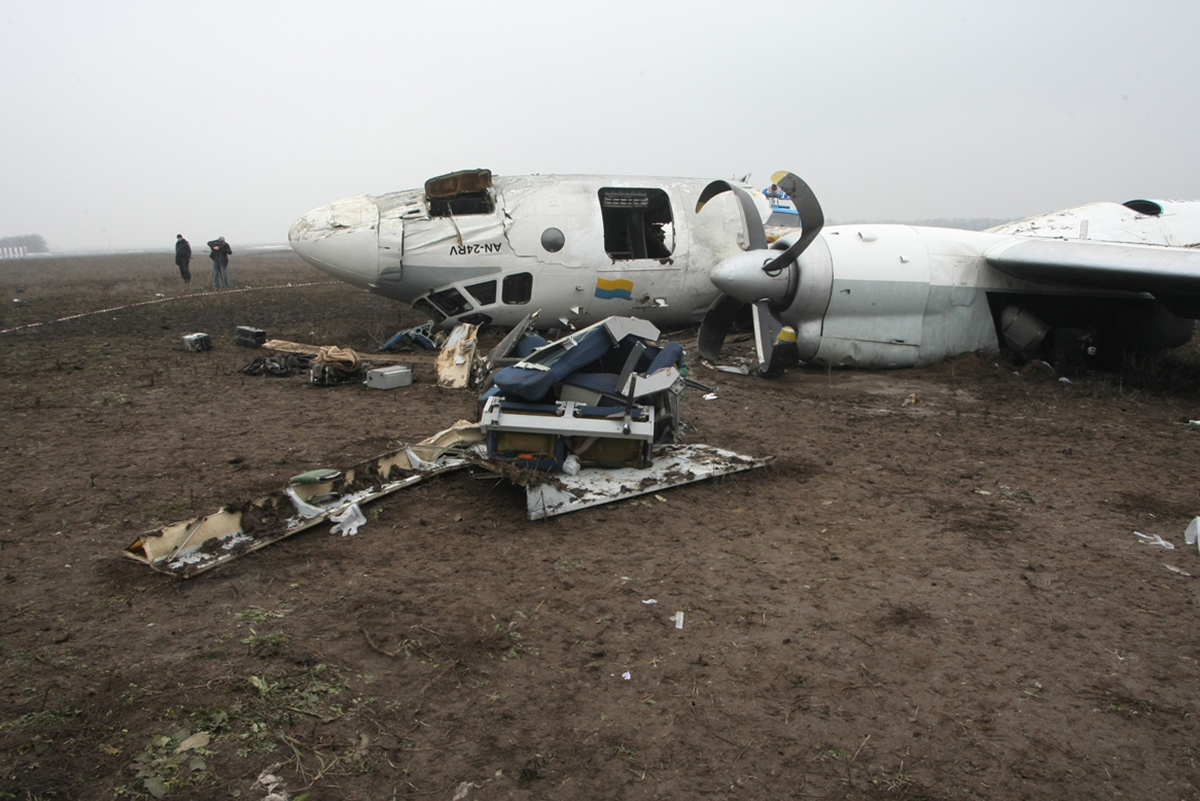
On approach to Moscow-Domodedovo Airport, the crew encountered poor visibility due to marginal weather conditions. Rather than initiating a go-around procedure, the crew continued the descent when the aircraft crash landed to the right of runway 14R, in an area between the runway and the boundary fence. All 28 occupants escaped uninjured while the aircraft was damaged beyond repair.

Crash of an Antonov AN-24RV in Donetsk: 5 killed

Date & Time: Feb 13, 2013 at 1809 LT
Type of aircraft:
Operator:
Registration:
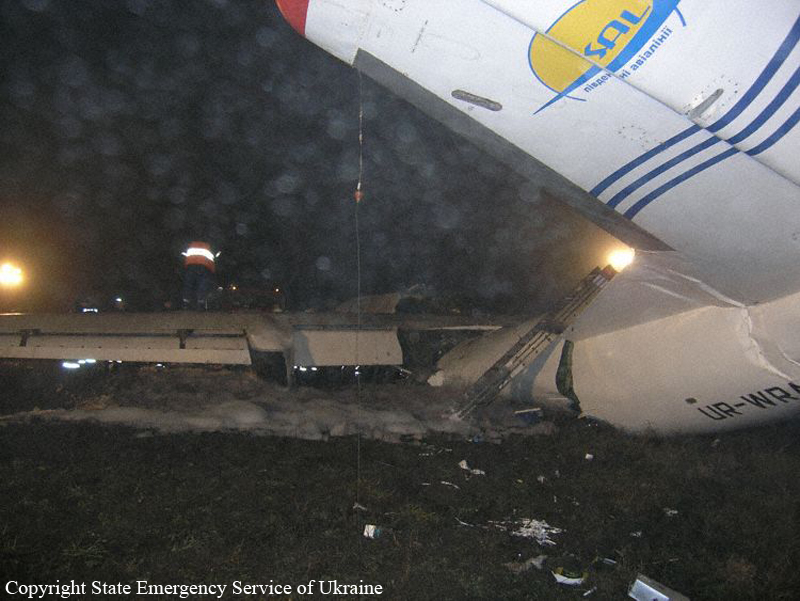
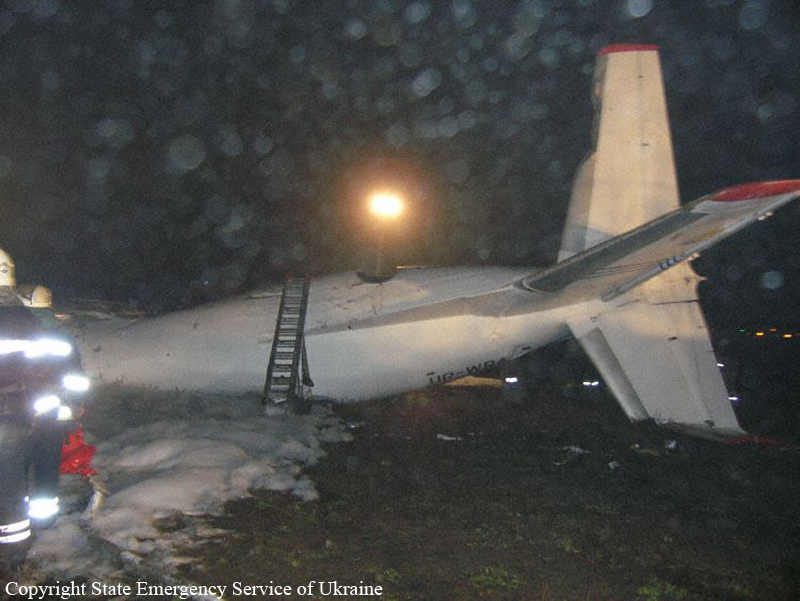
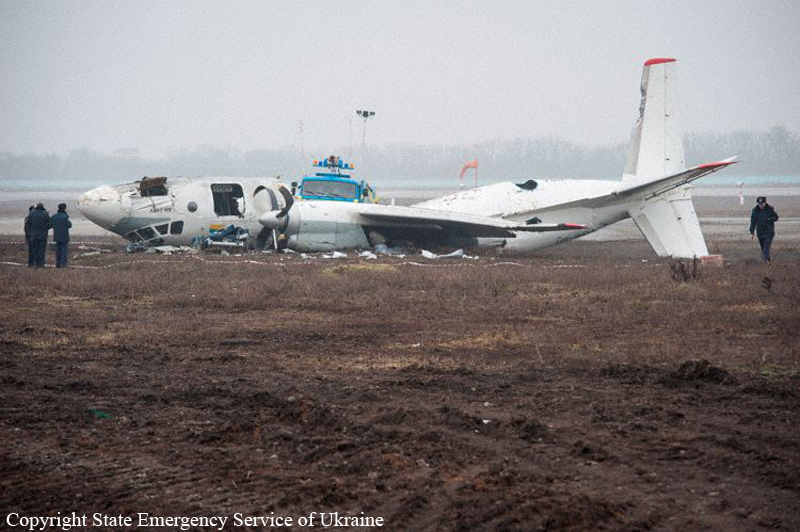
UR-WRA
Survivors:
Yes
Schedule:
Odessa - Donetsk
MSN:
3 73 087 09
YOM:
1973
Flight number:
YG8971
Country:
Region:
Crew on board:
8
Crew fatalities:
Pax on board:
44
Pax fatalities:
Other fatalities:
Total fatalities:
5
Captain / Total flying hours:
3245
Captain / Total hours on type:
560.00
Copilot / Total flying hours:
175
Aircraft flight hours:
51136
Aircraft flight cycles:
32645
Circumstances:
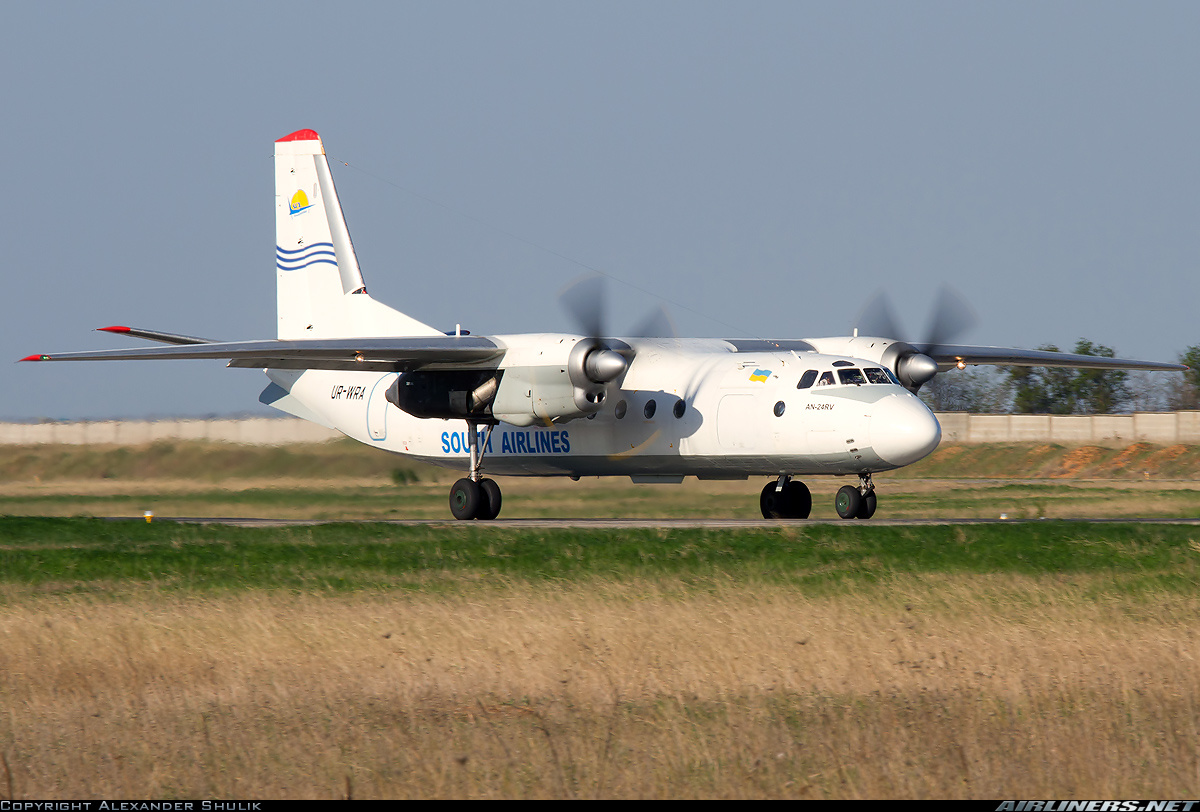
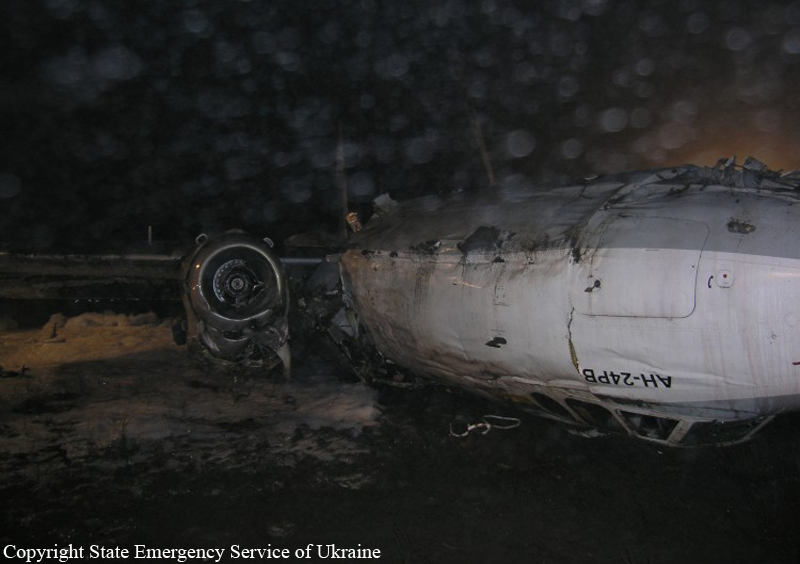
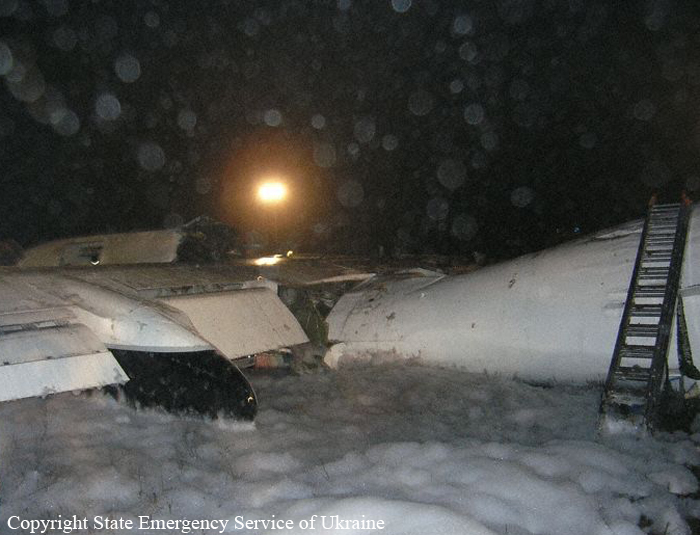
On final approach to Donetsk-Sergei Prokofiev Airport, during the last segment, the aircraft banked right to a angle of 48°, causing the right wing to struck the ground. The aircraft overturned and crashed in a grassy area to the left of runway 08, coming to rest upside down. Five passengers were killed while all other occupants were injured. The aircraft was destroyed. It was performing a charter flight from Odessa with 44 football fans on their way to a match between Shakhtar Donetsk and Borussia Dortmund. At the time of the accident, the visibility was poor due to the night and foggy conditions. The horizontal visibility was reported to be 250 metres with an RVR of 750 metres for runway 08 and vertical visibility of 200 feet.
Probable cause:
It was planned that an instructor should perform the flight with the crew but he did not show up, so the captain decided to do the flight without him. On final approach to Donetsk, the visibility was limited and the captain was authorized to descent until 1,000 feet on approach where he should establish a visual contact with runway 08 or the approach lights. At this decision height, he continued the approach without any calls to the rest of the crew despite he did not establish any visual contact with the runway. During the last segment, the aircraft banked right due to a too low approach speed of 103 knots, stalled and crashed. The crew failed to monitor the approach speed, and the captain decided to continue the approach despite the visibility was below minimums. At the decision height, he should abandon the approach for a go-around procedure.
Final Report:

Crash of an Antonov AN-24RV in Galkayo

Date & Time: Apr 28, 2012 at 1433 LT
Type of aircraft:
Operator:
Registration:
3X-GEB
Survivors:
Yes
Schedule:
Hargeisa - Galkayo
MSN:
3 73 084 03
YOM:
1973
Flight number:
6J711
Country:
Region:
Crew on board:
4
Crew fatalities:
Pax on board:
32
Pax fatalities:
Other fatalities:
Total fatalities:
0
Circumstances:
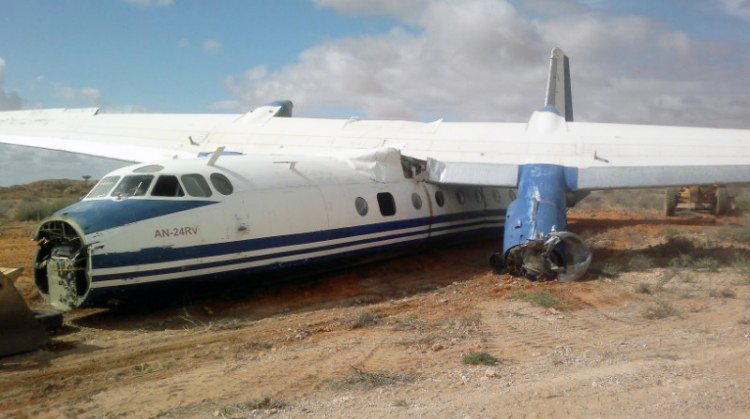
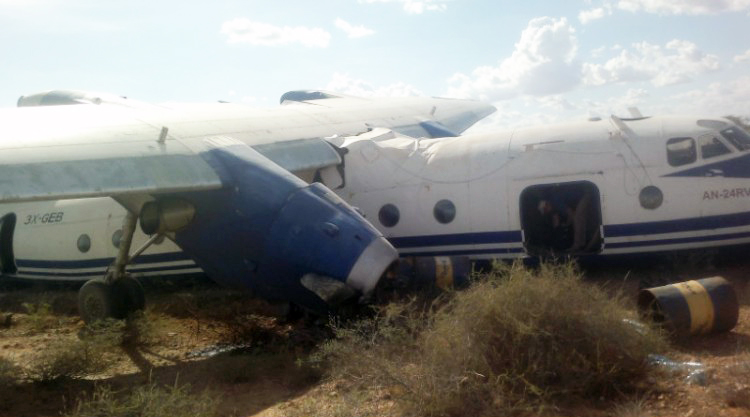
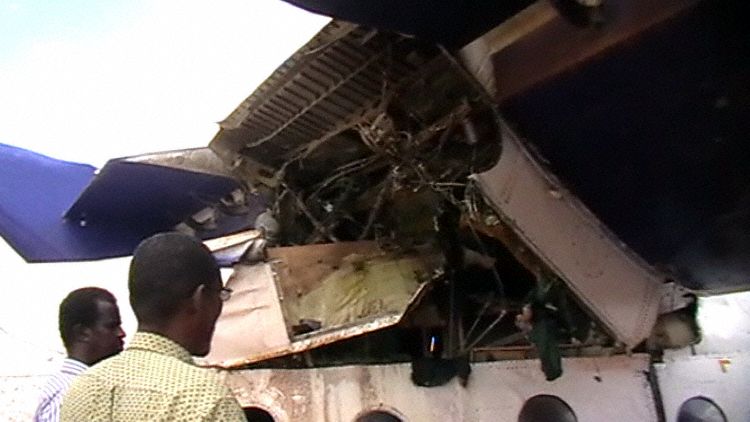
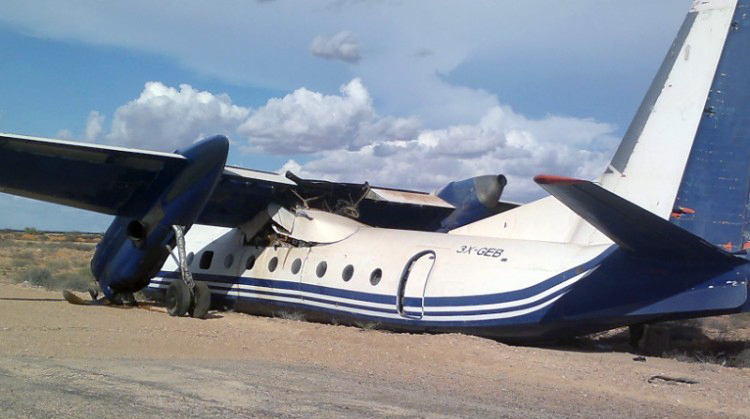
Following an uneventful flight from Hargeisa, the crew started the descent to Galkayo-Abdullahi Yusuf Airport runway 05L. On short final, at a height of about 5-7 feet, the captain spotted an animal crossing the runway from left to right. He attempted to extend the flare in order to avoid a collision but the aircraft subsequently touched down hard and bounced several times. Out of control, it veered off runway and came to rest with both wings partially detached. All 36 occupants evacuated safely while the aircraft was damaged beyond repair.

Crash of an Antonov AN-24RV in Chita

Date & Time: Dec 31, 2011
Type of aircraft:
Operator:
Registration:
RA-46683
Survivors:
Yes
MSN:
4 73 097 06
YOM:
1974
Country:
Region:
Crew on board:
0
Crew fatalities:
Pax on board:
0
Pax fatalities:
Other fatalities:
Total fatalities:
0
Circumstances:
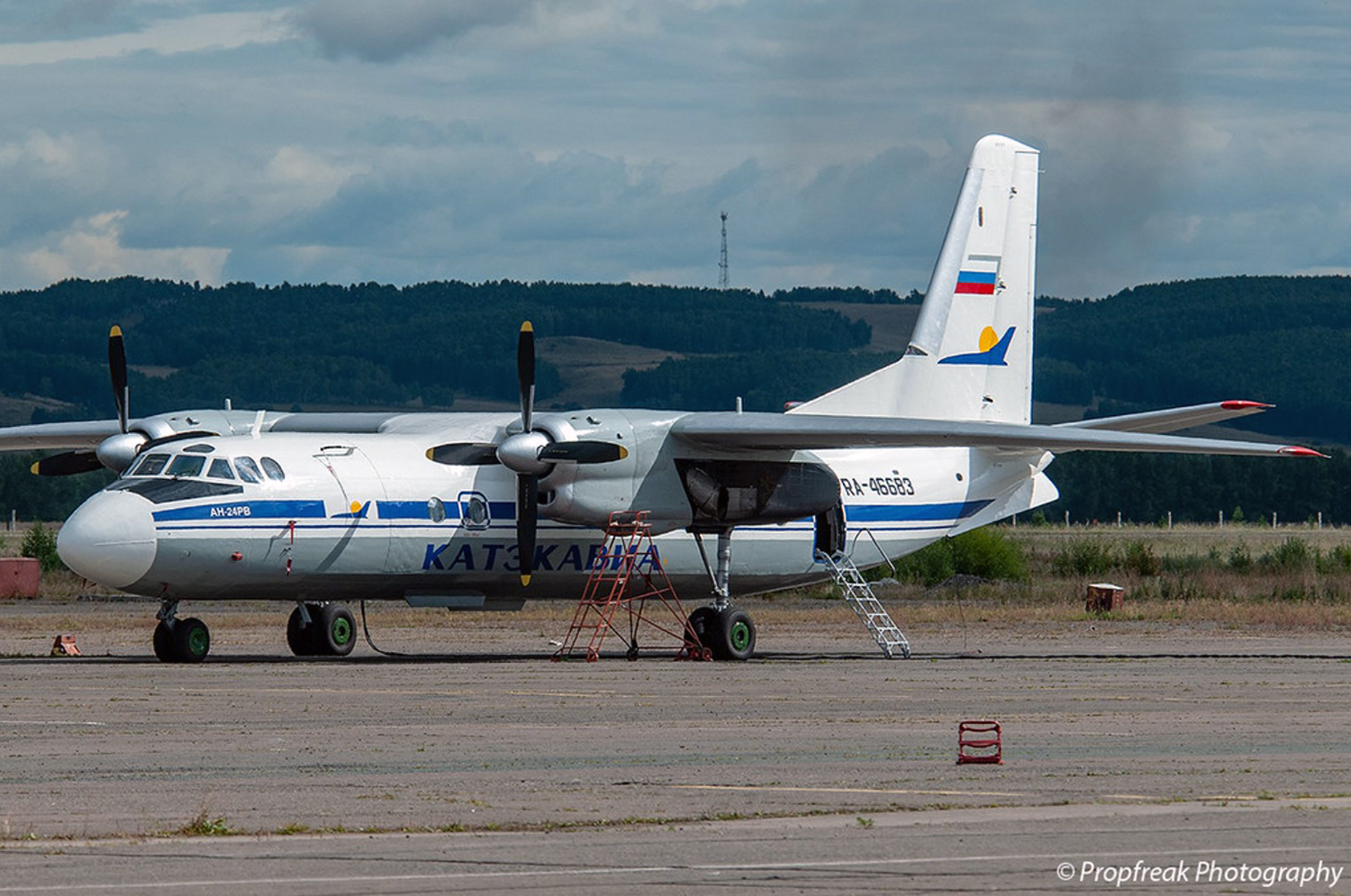
The aircraft was damaged beyond repair following a hard landing at Chita Airport. The mishap occurred between 30 March 2011 and 29 December 2011 when it was cancelled from the Russian registry. There were no injuries.

Crash of an Antonov AN-24RV in Blagoveshchensk

Date & Time: Aug 8, 2011 at 1412 LT
Type of aircraft:
Operator:
Registration:
RA-46561
Survivors:
Yes
Schedule:
Irkutsk - Chita - Blagoveshchensk - Khabarovsk
MSN:
67310609
YOM:
1976
Flight number:
RD103
Country:
Region:
Crew on board:
5
Crew fatalities:
Pax on board:
36
Pax fatalities:
Other fatalities:
Total fatalities:
0
Captain / Total flying hours:
11555
Captain / Total hours on type:
6722.00
Copilot / Total flying hours:
3268
Copilot / Total hours on type:
575
Aircraft flight hours:
12346
Aircraft flight cycles:
13767
Circumstances:
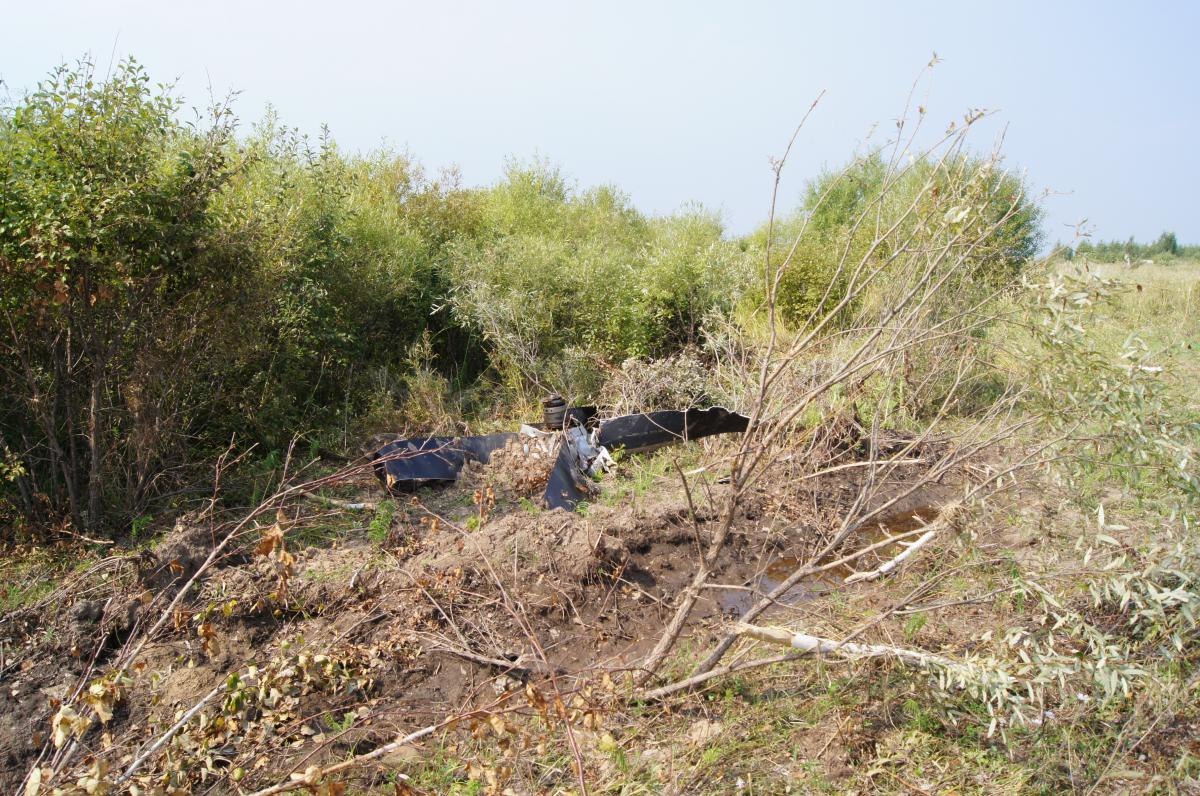
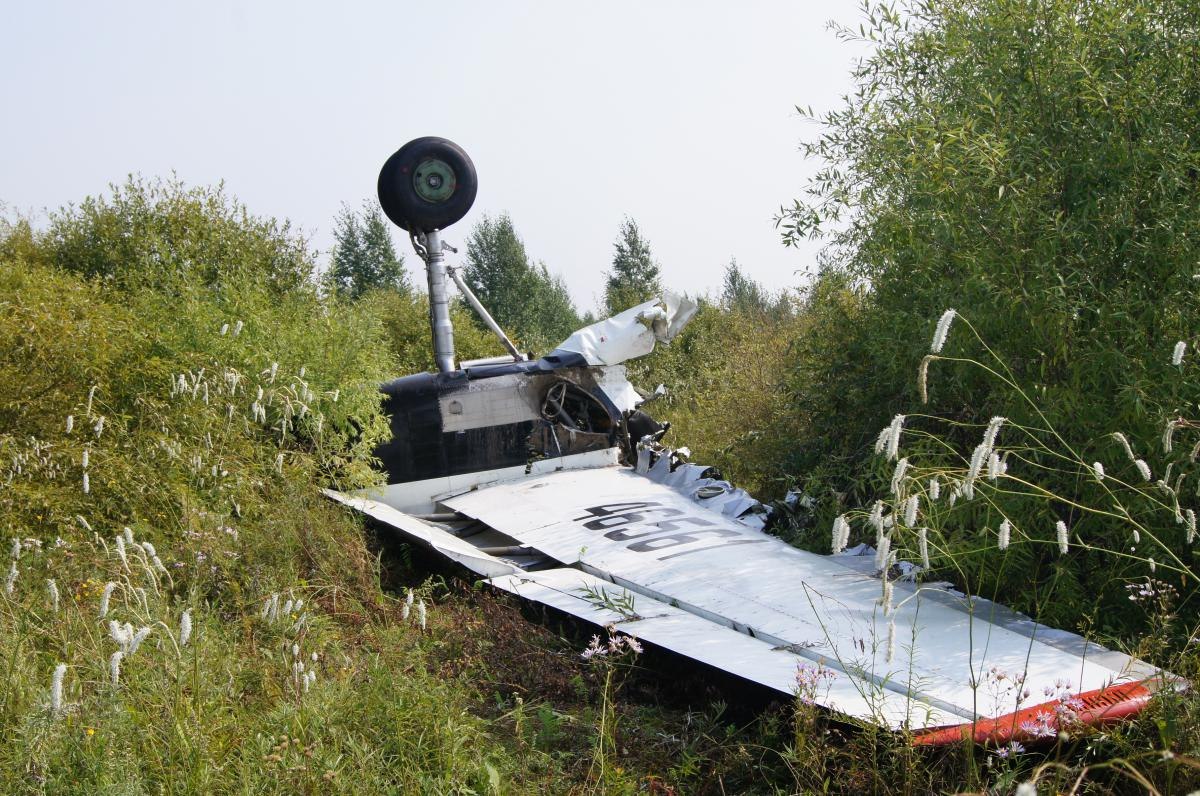
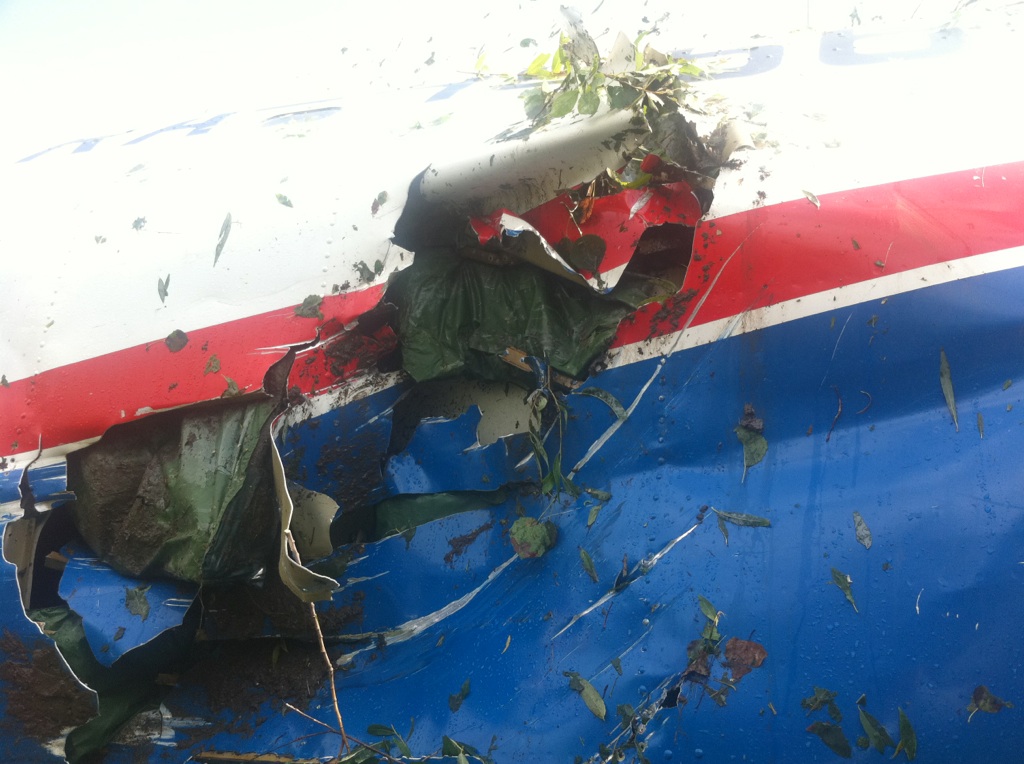
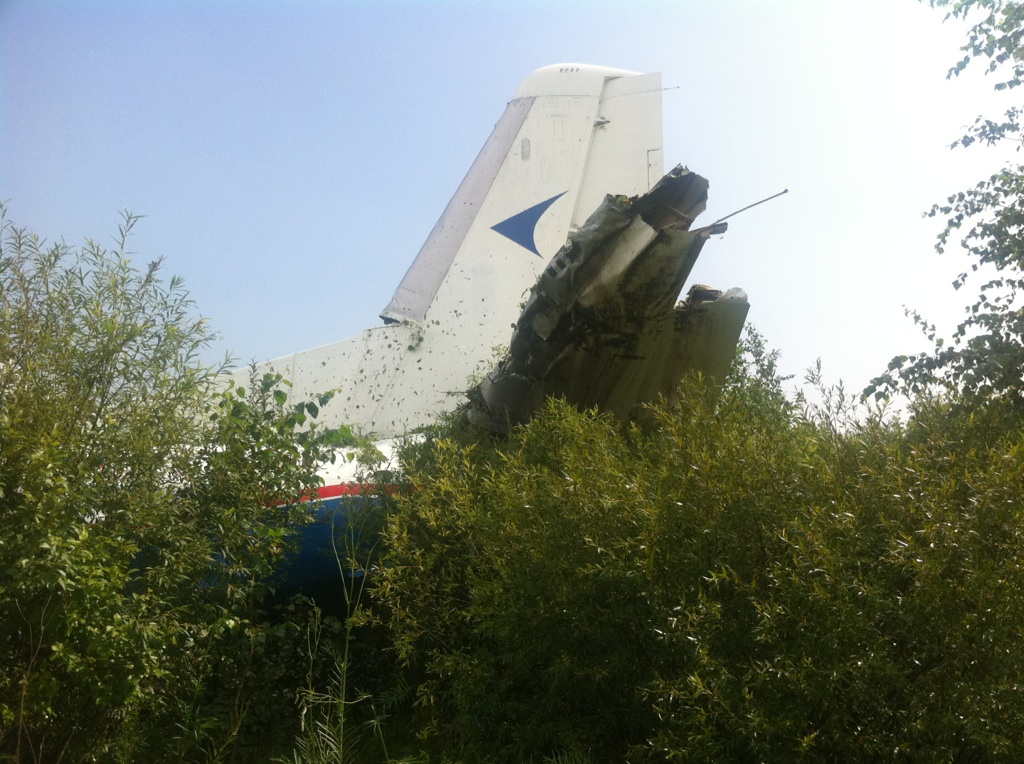
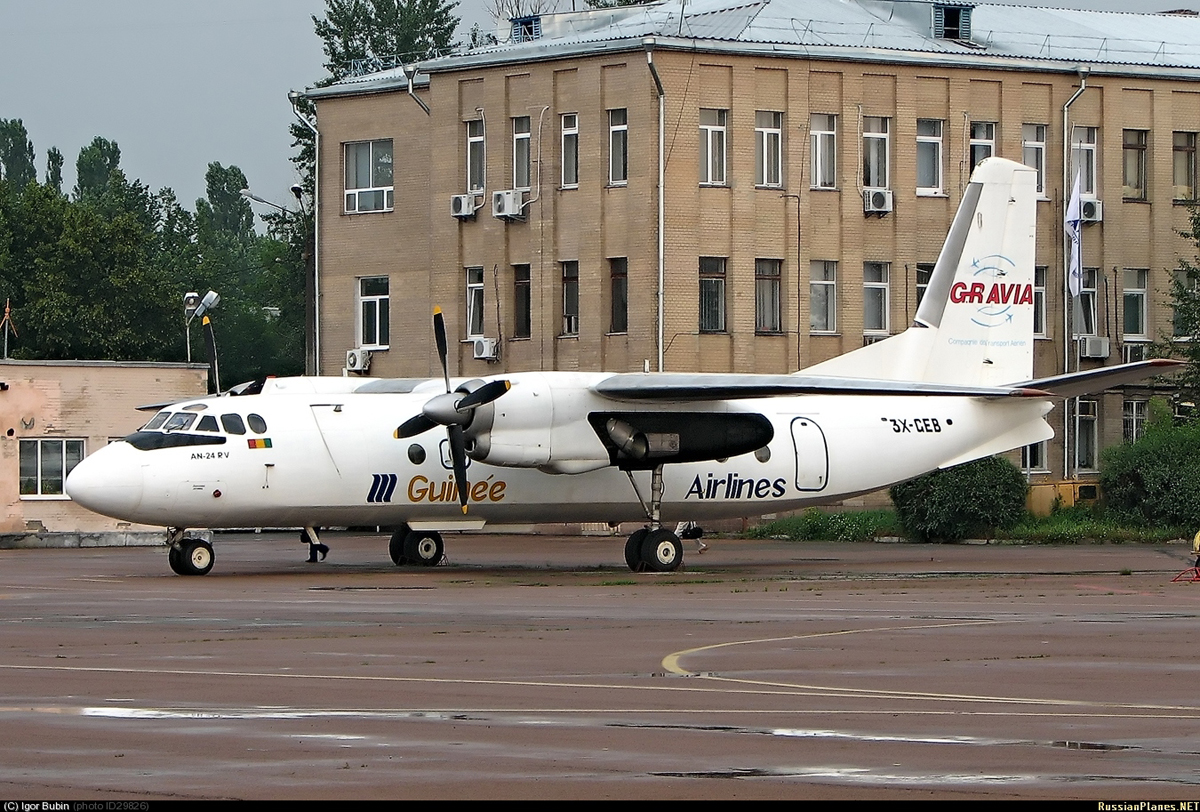
Following an uneventful flight from Chita, the crew initiated the approach to Blagoveshchensk in poor weather conditions with reduced visibility, heavy rain falls, thunderstorm activity and a cloud base at 150 metres. On final approach, despite he did establish any visual contact with the runway or its light system, the captain continued the approach and passed below the MDA. As the aircraft was not properly aligned with the runway centerline, it descended too low and impacted trees 210 meters to the right of the centerline and 50 meters short of runway 36. Upon impact, the left wing was torn off and the aircraft crashed in a wooded area. It slid over a distance of 450 metres before coming to rest. There was no fire. All 41 occupants were rescued, among them 9 were injured.
Probable cause:
The probable causes of the accident were the failure of the crew to go around and the descent well below decision height without visual reference to landmarks when the aircraft approached the airfield in weather conditions below the captain's, aircraft's and airfield's minima and in dangerous/adverse weather phenomena like thunderstorm, heavy rain and severe turbulence as well as the lack of appropriate response and required actions following terrain awareness warning system alerts resulted in a controlled flight into terrain, collision with obstacles and the destruction of the aircraft.
Contributing factors:
- the crew underestimated the weather conditions at the destination airport thus taking an erroneous decision to attempt an approach in thunderstorm and heavy rain showers,
- unsatisfactory meteorological support of the flight, the dispatcher and later air traffic control provided information about visibility, cloud and wind data that did not correspond to actual conditions that were significantly worse than minimums required,
- clearance for the approach by air traffic control despite the presence of dangerous weather phenomena (thunderstorm, heavy rain) at the aerodrome, which did not correspond to the standard operating procedures at Blagoveshchensk,
- inadequate staffing with a first officer who was performing his first flight after a prolonged leave without proper preparation and training,
- unsatisfactory crew interaction and the failure to adhere to standard operating procedures, especially the call outs of approaching decision height, the absence of a decision by the commander to continue the landing or go-around and the lack of action to recommend/initiate a go around by the first officer.
Final Report:
Crash of an Antonov AN-24RV in Strezhevoy: 7 killed

Date & Time: Jul 11, 2011 at 1156 LT
Type of aircraft:
Operator:
Registration:
RA-47302
Survivors:
Yes
Schedule:
Tomsk - Surgut
MSN:
5 73 103 02
YOM:
1975
Flight number:
IK9007
Country:
Region:
Crew on board:
4
Crew fatalities:
Pax on board:
33
Pax fatalities:
Other fatalities:
Total fatalities:
7
Captain / Total flying hours:
4570
Captain / Total hours on type:
4064.00
Copilot / Total flying hours:
9476
Copilot / Total hours on type:
5100
Aircraft flight hours:
48489
Aircraft flight cycles:
32783
Circumstances:
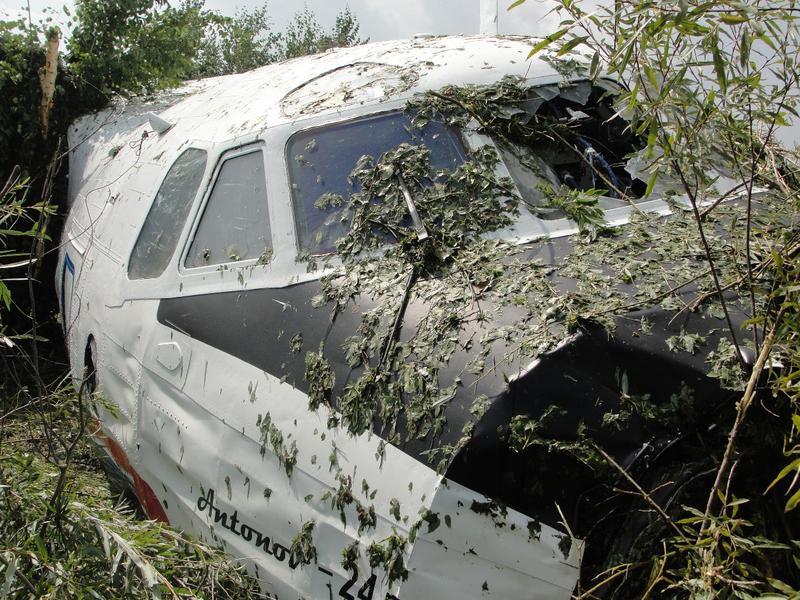
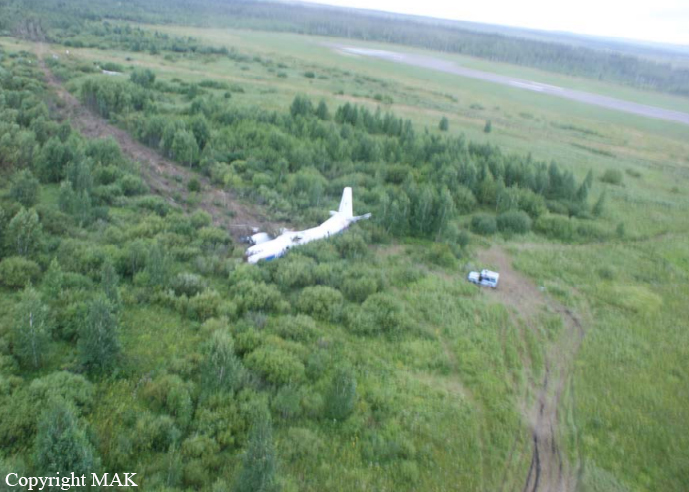
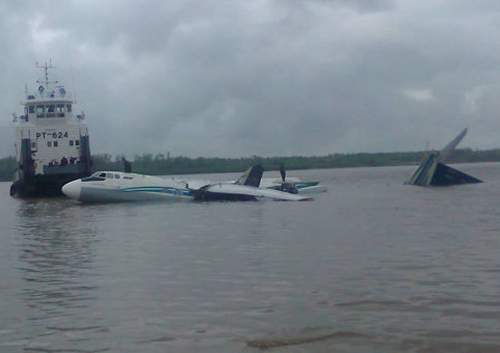
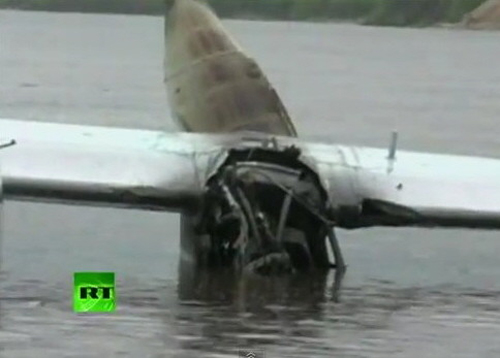
The twin engine aircraft departed Tomsk Airport at 1010LT on a flight (callsign IK9007/SP5007) to Surgut, carrying 33 passengers and a crew of four. About an hour and 26 minutes into the flight, the left engine's 'chips in oil' warning light came on. About eight minutes later, a burning smell was noticed in the cockpit and the captain decided to divert to Nizhnevartovsk Airport. During the descent, the left engine caught fire. Its propeller was feathered and the crew decided to divert to Strezhevoy Airport. But as the fire could not be extinguished, the captain eventually attempted an emergency landing in the Ob River. Upon landing, the aircraft broke in two and came to rest in shallow water. Seven passengers were killed while all other occupants were rescued.
Probable cause:
The Interstate Aviation Committee (MAK) released their final report in Russian concluding the probable causes of the accident were:
The catastrophe of the AN-24 RA-47302 occurred when ditching became necessary due to a fire in the left hand engine's nacelle. The destruction of the aircraft and loss of life was caused by collision with underwater obstacles that the crew could not anticipate or avoid. The fire in the left hand engine nacelle was caused by the fracture of a centrifugal breather releasing an air-fuel emulsion into the engine compartment as well as a delayed reaction to shut the engine down by the crew following an magnetic chip detector indication together with indications of oil pressure fluctuations, a burning smell and a low oil pressure indication. A delay in indicating engine vibrations to the crew as result of degradation of the engine vibration sensoring equipment, most likely caused by changes of the rotor speed of the engine as result of the aft bearing failure of the compressor rotor and/or misalignment of the sensor, which probably influenced the decision of the crew to shut the engine down with a delay. Cause of the fracture of the centrifugal breather was the destruction of the impeller due to prolonged exposure to hot air-fuel emulsion due to the failure of the aft compressor rotor support bearing. It was not possible to determine the cause of the destruction of the aft compressor rotor support bearing due to significant secondary damage. Most likely the destruction was caused by misalignment such as:
- Incorrect assembly of support parts mating with the compressor rotor during on-condition engine repairs,
- Or deviations from required geometry of support parts mating with the compressor rotor.
Contributing factors were:
- Psychological unpreparedness of the captain to shut the engine down due to lack of experience with the aircraft on one engine inoperative
- Late detection of the fire and as a consequence late attempts to extinguish the fire, it was however not possible to establish why the fire was detected late due to lack of objective information about the performance of the fire alarm systems.
Final Report:
Crash of an Antonov AN-24RV at Rogachevo AFB

Date & Time: Dec 14, 2010
Type of aircraft:
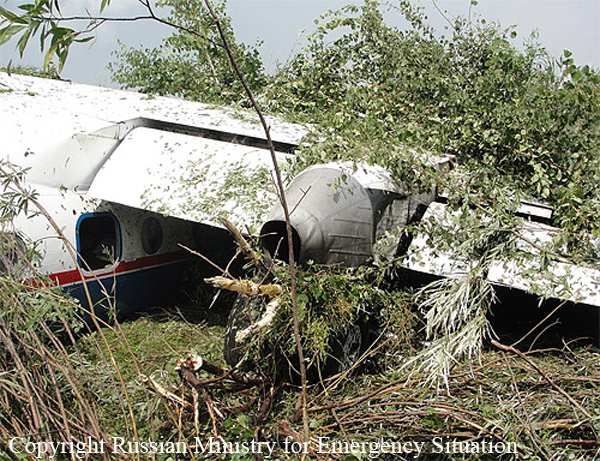
Operator:
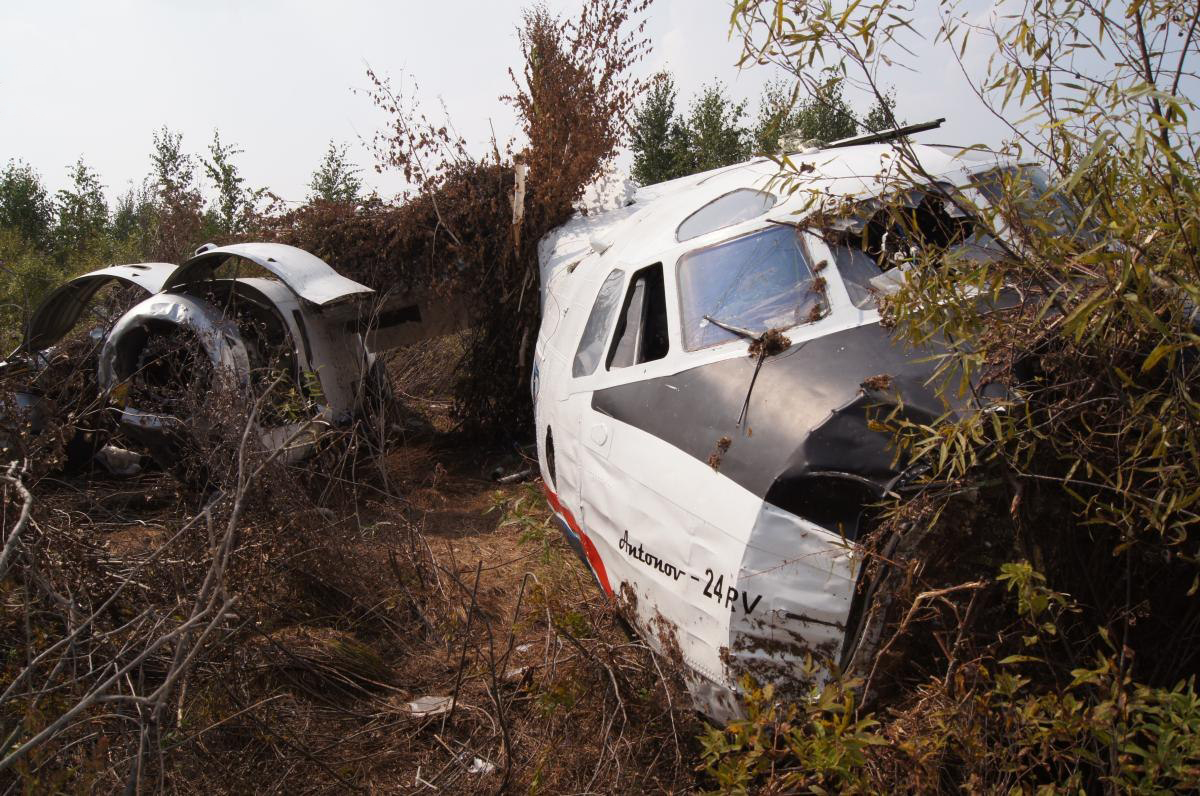
Registration:
RA-47305
Survivors:
Yes
Schedule:
Arkhangelsk - Rogachevo
MSN:
5 73 103 05
YOM:
1975
Flight number:
AUL137
Country:
Region:
Crew on board:
7
Crew fatalities:
Pax on board:
32
Pax fatalities:
Other fatalities:
Total fatalities:
0
Circumstances:
After landing on runway 16 at Rogachevo AFB (Anderma-2), the aircraft encountered difficulties to stop within the remaining distance. It overran, lost its left main gear and came to rest 8 metres further. All 39 occupants escaped uninjured and the aircraft was damaged beyond repair.

Crash of an Antonov AN-24B in Zalingei: 2 killed

Date & Time: Nov 11, 2010 at 1618 LT
Type of aircraft:
Operator:
Registration:
ST-ARQ
Survivors:
Yes
Schedule:
Khartoum - Nyala - Zalingei
MSN:
0 73 059 10
YOM:
1970
Country:
Region:
Crew on board:
6
Crew fatalities:
Pax on board:
38
Pax fatalities:
Other fatalities:
Total fatalities:
2
Captain / Total flying hours:
4400
Captain / Total hours on type:
300.00
Copilot / Total flying hours:
900
Copilot / Total hours on type:
700
Circumstances:
The crew started the approach to Zaligei Airport runway 03 in good weather conditions. The aircraft landed hard 200 metres past the runway threshold, causing both propeller blades to struck the ground on a distance of 33 metres. The aircraft bounced and landed a second time 263 metres further then a third time after 15 metres. Upon impact, both engines were torn off and the aircraft rolled for about 400 metres before coming to rest, bursting into flames. Two passengers were killed while five others were injured. All 37 other occupants escaped unhurt. The aircraft was totally destroyed by a post crash fire.
Probable cause:
Sudan's Central Directorate of Air Accident Investigation concluded the probable causes as follow:
The accident cause is a complex set of reasons. The aircraft impacted the ground on three wheels at high forward speed shearing off both engines and propellers and damaging the left main landing gear which put the aircraft in an uncontrollable condition.
Contributory factors were:
- Absence of crew coordination,
- Absence of cabin procedure and check-lists for different phases of flight,
- Unsatisfactory Periodic and Annual job check being reflected on the inoperative Cockpit Voice and Flight Data Recorders,
- Bad planning of the flight and long period taken to clear the recorded defects before departure is considered to be a contributory factor to this accident.