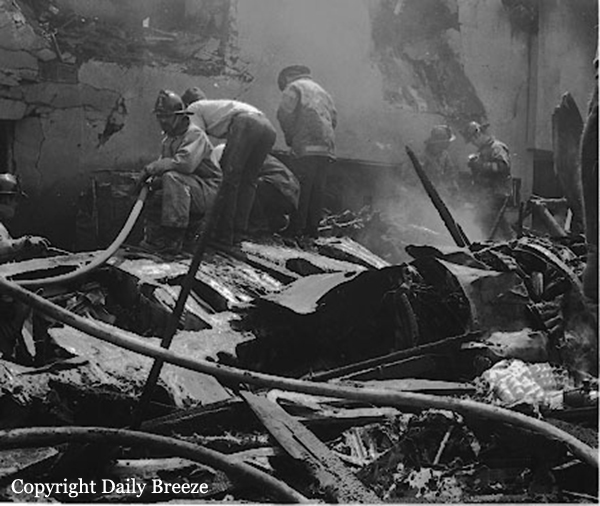
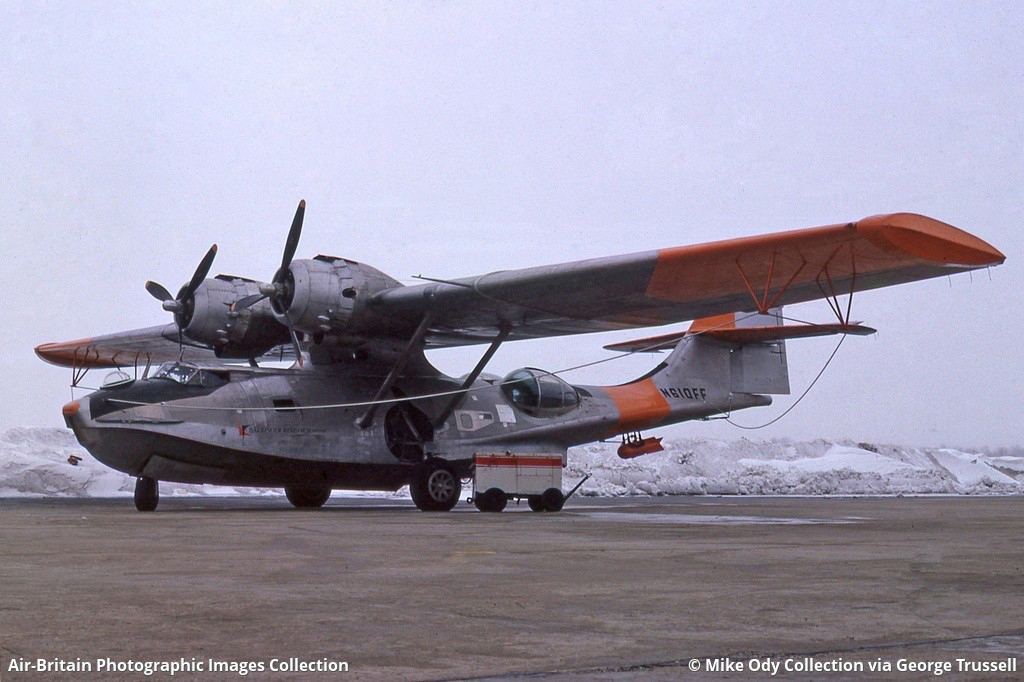
Crash of a Canadian Vickers PBV-1A Canso in Rhinelander: 2 killed

Date & Time: Oct 15, 1970 at 0940 LT
Registration:
N610FF
Flight Phase:
Flight Type:
Survivors:
Yes
Schedule:
Rhinelander - Rhinelander
MSN:
CV-399
YOM:
1941
Crew on board:
3
Crew fatalities:
Pax on board:
2
Pax fatalities:
Other fatalities:
Total fatalities:
4
Captain / Total flying hours:
18717
Captain / Total hours on type:
3507.00
Circumstances:
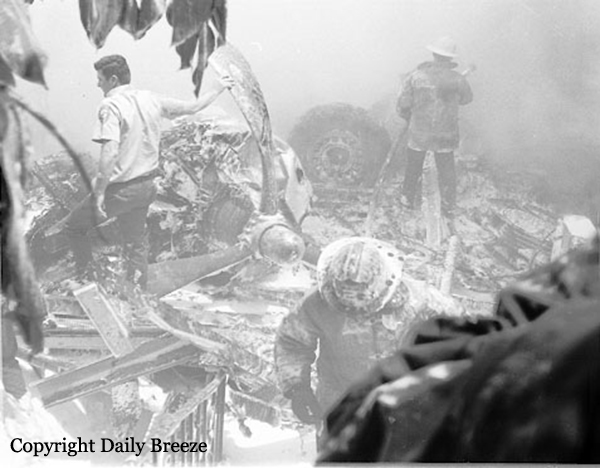
The crew (pilots and technicians) were engaged in a local test flight consisting of an electric equipment post maintenance check. After liftoff, while in initial climb, the seaplane encountered difficulties to gain height, stalled and crashed in flames in an open field. Both pilots were killed while three other occupants were seriously injured. The aircraft was destroyed.
Probable cause:
Inadequate preflight preparation on part of the crew who failed to obtain/maintain flying speed at takeoff. It was determined that the airplane stalled due to an excessive accumulation of ice on airframe. At the time of the accident, approximately 50% of frost accumulated on aircraft that was not de-iced prior to takeoff. Mineral research and electric test flight.
Final Report:
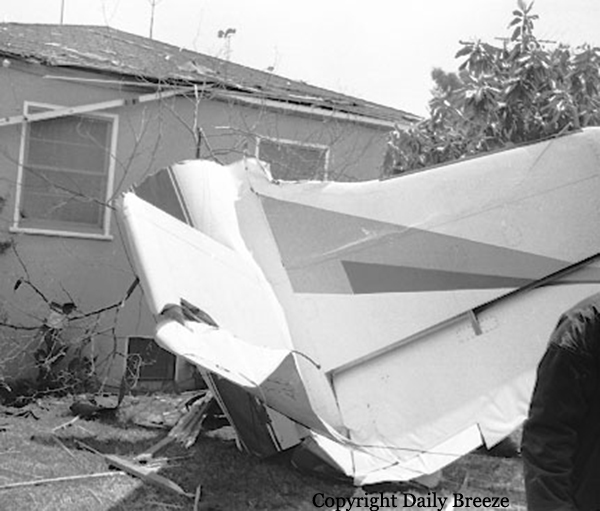
Crash of a Rockwell Grand Commander 690 in Bethany

Date & Time: Jun 26, 1970 at 1527 LT
Operator:
Registration:
N9202N
Flight Phase:
Flight Type:
Survivors:
Yes
Schedule:
Oklahoma City - Oklahoma City
MSN:
690-11002
YOM:
1969
Crew on board:
3
Crew fatalities:
Pax on board:
0
Pax fatalities:
Other fatalities:
Total fatalities:
0
Captain / Total flying hours:
9731
Captain / Total hours on type:
150.00
Circumstances:
The crew was engaged in a local test flight and departed Oklahoma-Wiley Post Airport in the early afternoon to test the aircraft that has a new tail design. While cruising at a speed of 243 knots in the vicinity of the airport, the rudder detached. The airplane entered a dive and crashed in a field located in Bethany, by the airport. All three crew members were seriously injured and the aircraft was destroyed.
Probable cause:
Uncontrolled descent caused by the failure of the rudder and the rudder tab control system that separated in flight. The following findings were reported:
- New design rudder,
- Non-prod tab,
- Arm. encountered sustained flutter at 243 knots,
- Empennage separated in flight.
Final Report:
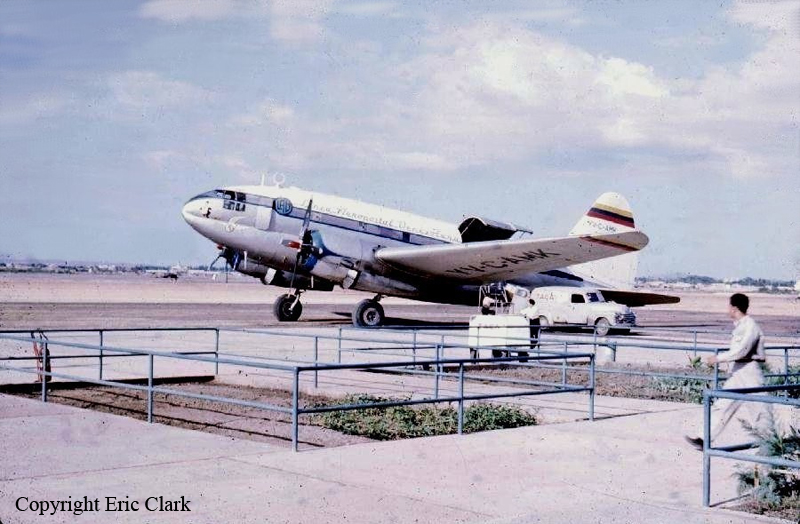
Crash of a Curtiss C-46A-55-CK Commando off Puntarenas: 7 killed

Date & Time: May 22, 1970 at 1120 LT
Type of aircraft:
Operator:
Registration:
YV-C-AMK
Flight Phase:
Flight Type:
Survivors:
No
Schedule:
San José - San José
MSN:
254
YOM:
1945
Country:
Crew on board:
3
Crew fatalities:
Pax on board:
4
Pax fatalities:
Other fatalities:
Total fatalities:
7
Circumstances:
The crew (four technicians and three pilots) departed San José-Juan Santamaría Airport in the morning on a post maintenance test flight. En route, in unknown circumstances, the airplane went out of control and crashed into the gulf of Nicoya off Puntarenas. The wreckage was found 1,2 km east of San Lucas Island. All seven occupants were killed.

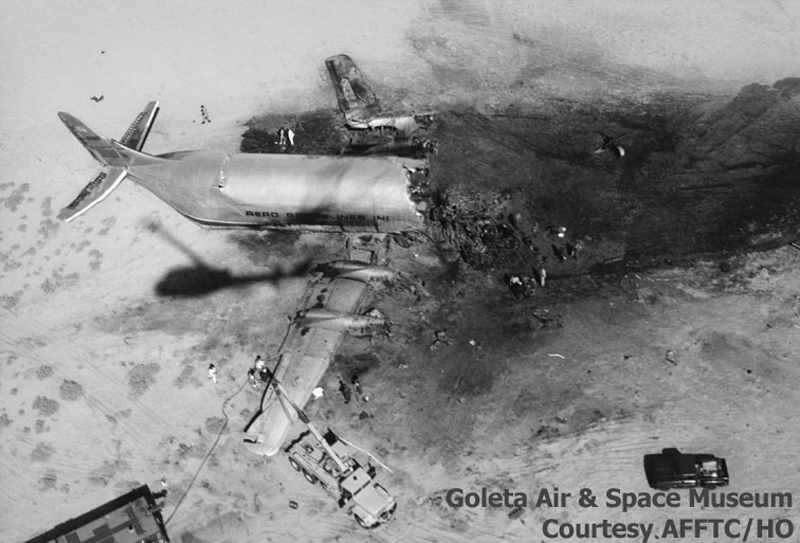
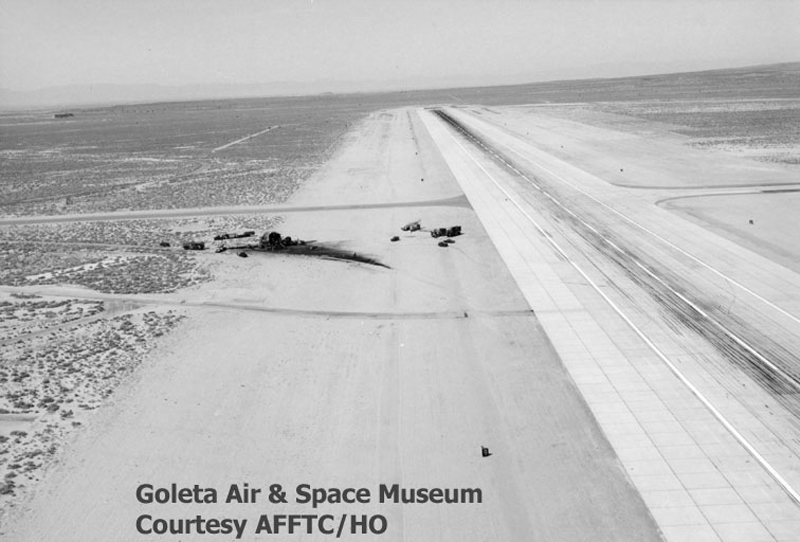
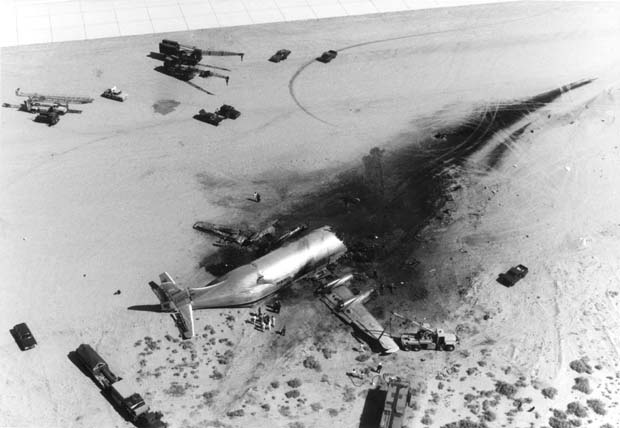
Crash of an Aero Spacelines 377MGT Mini Guppy at Edwards AFB: 4 killed

Date & Time: May 12, 1970 at 0719 LT
Operator:
Registration:
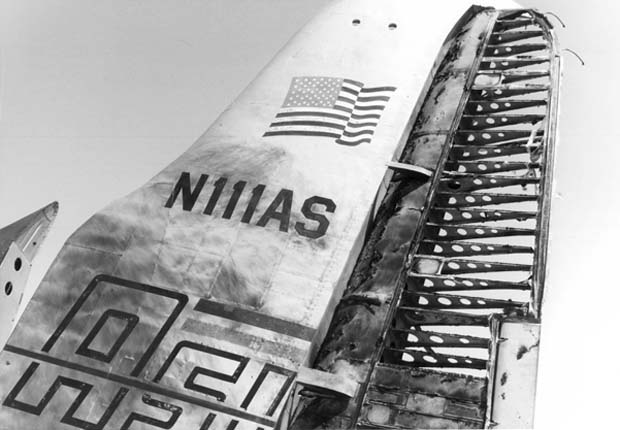
N111AS
Flight Phase:
Flight Type:
Survivors:
No
Schedule:
Edwards - Edwards
MSN:
0001
YOM:
1970
Crew on board:
4
Crew fatalities:
Pax on board:
0
Pax fatalities:
Other fatalities:
Total fatalities:
4
Captain / Total flying hours:
6827
Captain / Total hours on type:
34.00
Circumstances:
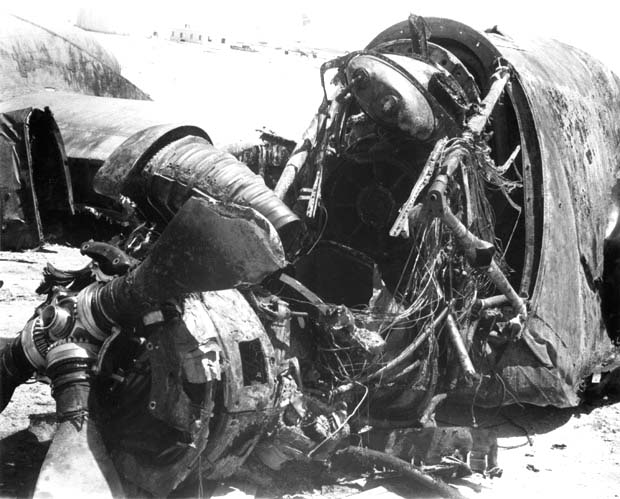
The Aero Spacelines 377MGT was a converted Boeing Stratoliner. Prototype N111AS first flew on March 13, 1970. In the following period flight testing was carried out, a.o. at Edwards AFB. The accident occurred during the sixth takeoff of Flight Number 12 following the scheduled shutdown of the engine number one at about 109 knots IAS. The takeoff was being made on runway 22 and the wind was from approximately 200 degrees at about 10 knots. Rotation occurred at about 114 knots and several seconds after rotation, according to one witness, the aircraft turned and rolled to the left, settling as it did so. The left wingtip subsequently contacted the ground, causing a severe yaw. The forward fuselage struck the ground, causing the flight deck to be destroyed. The test flight was under FAR Part 25 certification program.
Source: http://www.allaboutguppys.com
Probable cause:
The exact cause of the accident could not be determined. However, examination of the Rudder System revealed the the Rudder Bell Crank Arm Assembly, Boeing P/N 15-23765 and the Rudder Boost Control Link Assembly, Boeing P/N 6-38900 were broken. The broken assemblies were removed and forwarded to the NTSB Metallurgist for fracture analysis. The fractures were typical of bending overload breaks.
Final Report:

Crash of a Cessna 340 in Kingman: 1 killed

Date & Time: Apr 10, 1970 at 1437 LT
Type of aircraft:
Operator:
Registration:
N2340C
Flight Phase:
Flight Type:
Survivors:
No
Schedule:
Kingman - Kingman
MSN:
340-0672
YOM:
1970
Crew on board:
1
Crew fatalities:
Pax on board:
0
Pax fatalities:
Other fatalities:
Total fatalities:
1
Captain / Total flying hours:
1649
Captain / Total hours on type:
1.00
Circumstances:
The pilot, sole on board, departed Kingman-Clyde Cessna Field on a local test flight on this first Cessna 340 prototype. While flying in the vicinity of the airfield, he lost control of the airplane that crashed in an open field. The aircraft was destroyed and the pilot was killed.
Probable cause:
Uncontrolled descent caused by the failure of the elevator tab control system. The following factors were reported:
- Elevator tab control system improperly installed,
- Improper maintenance,
- Inadequate preflight preparation,
- Separation in flight,
- Bolt improperly secured in elevator trim push-pull rod came out and caused the loss of the horizontal stab assembly.
Final Report:

Crash of an IAI 1123 Westwind in Beit She'an

Date & Time: Jan 21, 1970
Type of aircraft:
Operator:
Registration:
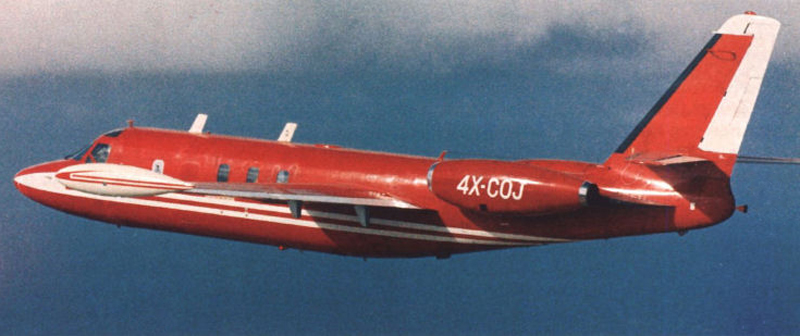
4X-COJ
Flight Phase:
Flight Type:
Survivors:
Yes
Schedule:
Tel Aviv - Tel Aviv
MSN:
29
YOM:
1965
Country:
Region:
Crew on board:
4
Crew fatalities:
Pax on board:
0
Pax fatalities:
Other fatalities:
Total fatalities:
0
Circumstances:
The crew (two technicians and two pilots) was engaged in a test flight, the third of this model, part of the certification program. En route, an unexpected situation occurred and all four crew members decided to bail out and abandoned the aircraft that dove into the ground and crashed in a field located in Beit She'an. While all four occupants were uninjured, the aircraft was destroyed.

Crash of a Rockwell T-39A-1-NA Sabreliner off Eglin AFB

Date & Time: Nov 13, 1969
Type of aircraft:
Operator:
Registration:
59-2871
Flight Type:
Survivors:
Yes
Schedule:
Eglin - Eglin
MSN:
265-4
YOM:
1959
Crew on board:
2
Crew fatalities:
Pax on board:
0
Pax fatalities:
Other fatalities:
Total fatalities:
0
Circumstances:
The crew departed Eglin AFB on a local test flight on board this aircraft that was fitted with radiological test equipment for Project "Have Doughnut". Following an uneventful mission, the crew was approaching the airbase when he encountered foggy conditions. On final, the airplane crashed into the Choctawhatchee, about 2,5 miles short of runway threshold. Both crew members were rescued while the aircraft sank.

Crash of a Beechcraft C-4G5 in Jackson

Date & Time: Jul 23, 1969 at 1630 LT
Type of aircraft:
Registration:
N9800H
Flight Phase:
Flight Type:
Survivors:
Yes
Schedule:
Jackson - Jackson
MSN:
AF-432
YOM:
1953
Crew on board:
1
Crew fatalities:
Pax on board:
0
Pax fatalities:
Other fatalities:
Total fatalities:
0
Captain / Total flying hours:
1928
Captain / Total hours on type:
230.00
Circumstances:
The pilot departed Jackson-Reynolds Airport on a local test flight to check the radio systems. Just after liftoff, while in initial climb, the right engine caught fire. The pilot completed a wheels-up landing in a swamp near the airport. He was slightly injured and the aircraft was damaged beyond repair.
Probable cause:
The right engine caught fire on takeoff for undetermined reason.
Final Report:

Crash of a Douglas A-26B-40-DL Invader in Los Angeles: 6 killed

Date & Time: May 10, 1969 at 1117 LT
Type of aircraft:
Operator:
Registration:
N9405Z
Flight Phase:
Flight Type:
Survivors:
No
Site:
Schedule:
Los Angeles - Los Angeles
MSN:
7266
YOM:
1941
Crew on board:
4
Crew fatalities:
Pax on board:
0
Pax fatalities:
Other fatalities:
Total fatalities:
6
Captain / Total flying hours:
11131
Captain / Total hours on type:
2000.00
Circumstances:
Shortly after takeoff from Los Angeles International Airport, while climbing, the left engine failed. The pilot-in-command lost control of the airplane that crashed in flames onto a house located in the district of El Segundo, by the airport. The aircraft and the house were totally destroyed and all four crew members were killed as well as two people in the house.
Probable cause:
Engine failure during initial climb caused by the following factors:
- Master and connecting rods failure,
- Piston rings failure,
- Material failure,
- The pilot failed to maintain flying speed,
- Improper emergency procedures,
- Complete power loss on left engine,
- Front bank left engine failed,
- Single pilot configuration,
- Left prop not feathered.
Final Report:

Crash of a Rockwell Grand Commander 690 in Rosedale: 3 killed

Date & Time: May 5, 1969 at 1400 LT
Operator:
Registration:
N9001N
Flight Phase:
Flight Type:
Survivors:
No
Schedule:
Norman - Norman
MSN:
690-11000
YOM:
1969
Crew on board:
2
Crew fatalities:
Pax on board:
1
Pax fatalities:
Other fatalities:
Total fatalities:
3
Captain / Total flying hours:
1454
Captain / Total hours on type:
11.00
Circumstances:
The crew was engaged in a local test flight out from Norman Airport, consisting of various tests (stalls) in specific conditions. In flight, the pilot-in-command engaged the aircraft in a stall when control was lost. The airplane entered a dive and eventually crashed in a wooded area located in Rosedale, about 28 miles southeast of Norman Airfield. The aircraft was destroyed and all threes occupants were killed.
Probable cause:
The pilot-in-command failed to obtain/maintain flying speed, causing the aircraft to stall. The lack of familiarity with aircraft was considered as a contributing factor.
Final Report: