Crash of an Antonov AN-14A near Khvishchanka: 3 killed

Date & Time: Dec 9, 1999
Type of aircraft:
Operator:
Registration:
FLARF-02373
Flight Phase:
Survivors:
Yes
Site:
Schedule:
Novopokrovka - Arsenyev
MSN:
0 033 10
YOM:
1970
Country:
Region:
Crew on board:
3
Crew fatalities:
Pax on board:
3
Pax fatalities:
Other fatalities:
Total fatalities:
3
Circumstances:
Made airworthy again in 1999 (was the last flying An-14) and used for short communications flights. Destroyed on a flight from Novopokrovka to Arsenyev when entered a snow flurry while flying along the valley of the river Bystraya. The crew decided to divert to the nearest airfield but while the aircraft was turning, the wing hit a tree on the slope of Mt Zolotaya (945 metres high) located 14 km northwest of Khvishchanka and the aircraft crashed. A pilot and two passengers (aviation mechanics) were killed and all 3 survivors injured. The wreckage was founded a day later.

Crash of a Cessna 207 Skywagon near Bethel: 6 killed

Date & Time: Dec 7, 1999 at 1300 LT
Operator:
Registration:
N1747U
Flight Phase:
Survivors:
No
Schedule:
Bethel - Nightmute
MSN:
207-0347
YOM:
1976
Location:
Crew on board:
1
Crew fatalities:
Pax on board:
5
Pax fatalities:
Other fatalities:
Total fatalities:
6
Captain / Total flying hours:
2255
Captain / Total hours on type:
390.00
Aircraft flight hours:
10363
Circumstances:
The airline transport pilot departed on a CFR Part 135 scheduled passenger flight to a remote coastal village. When the flight did not return, an aerial search was initiated. The wreckage was located the following day along the pilot's intended route, about 49 miles from the departure airport. The airplane had collided with flat, featureless, snow-covered, terrain. A pilot that departed about one minute after the accident airplane's departure, had a similar route of flight. He characterized the weather conditions along the accident airplane's route as overcast, with ceilings ranging between 2,500 and 4,500 feet. He said that as he approached the area of the accident, he encountered 'a wall of weather' starting from the ground, with tops at 1,500 feet. He added that visibility was low, with fog and varied layers of cloud cover. The pilot stated that he changed his route in order to avoid the worsening weather conditions. He added that with satisfactory weather conditions, and given the intended destination of the accident airplane, the standard route of flight would be directly over the location of the accident site. No pre accident anomalies were noted with the accident airplane.
Probable cause:
The pilot's continued VFR flight into instrument meteorological conditions. Factors associated with the accident were low ceilings, fog, and snow-covered terrain.
Final Report:

Crash of a Let L-410UVP-E near Kasibu: 17 killed

Date & Time: Dec 7, 1999 at 0930 LT
Type of aircraft:
Operator:
Registration:
RP-C3883
Flight Phase:
Survivors:
No
Site:
Schedule:
Manila - Cauayan
MSN:
89 22 28
YOM:
1989
Flight number:
RIT100
Country:
Region:
Crew on board:
2
Crew fatalities:
Pax on board:
15
Pax fatalities:
Other fatalities:
Total fatalities:
17
Captain / Total flying hours:
10000
Circumstances:
The twin engine aircraft departed Manila-Ninoy Aquino Airport at 0834LT and was supposed to arrive at Cauayan Airport at 0940LT. At 0919LT, the crew reported his position 96 km from the destination. As he encountered favorable winds, the captain informed ATC about an ETA three minutes earlier at 0937LT. At 0930LT, while flying in clouds, the aircraft struck the slope of a mountain located near Kasibu, about 77 km southwest of Cauayan Airport. The aircraft was destroyed upon impact and all 17 occupants were killed.
Probable cause:
Controlled flight into terrain.

Crash of a Shijiazhuang Yunsunji Y-5B in Ningbo

Date & Time: Nov 19, 1999
Type of aircraft:
Registration:
B-8479
Survivors:
Yes
MSN:
0107
YOM:
1990
Location:
Country:
Region:
Crew on board:
2
Crew fatalities:
Pax on board:
5
Pax fatalities:
Other fatalities:
Total fatalities:
0
Circumstances:
Ten minutes after takeoff from Ningbo Airport, the crew informed ATC about engine problems and was cleared to return. After making a 180 turn, the crew started the descent and was eventually forced to attempt an emergency landing. The aircraft crashed in a rice paddy field located near the runway threshold. All seven occupants escaped uninjured while the aircraft was damaged beyond repair after it lost its undercarriage and one wing.
Probable cause:
Engine failure due to oil exhaustion.

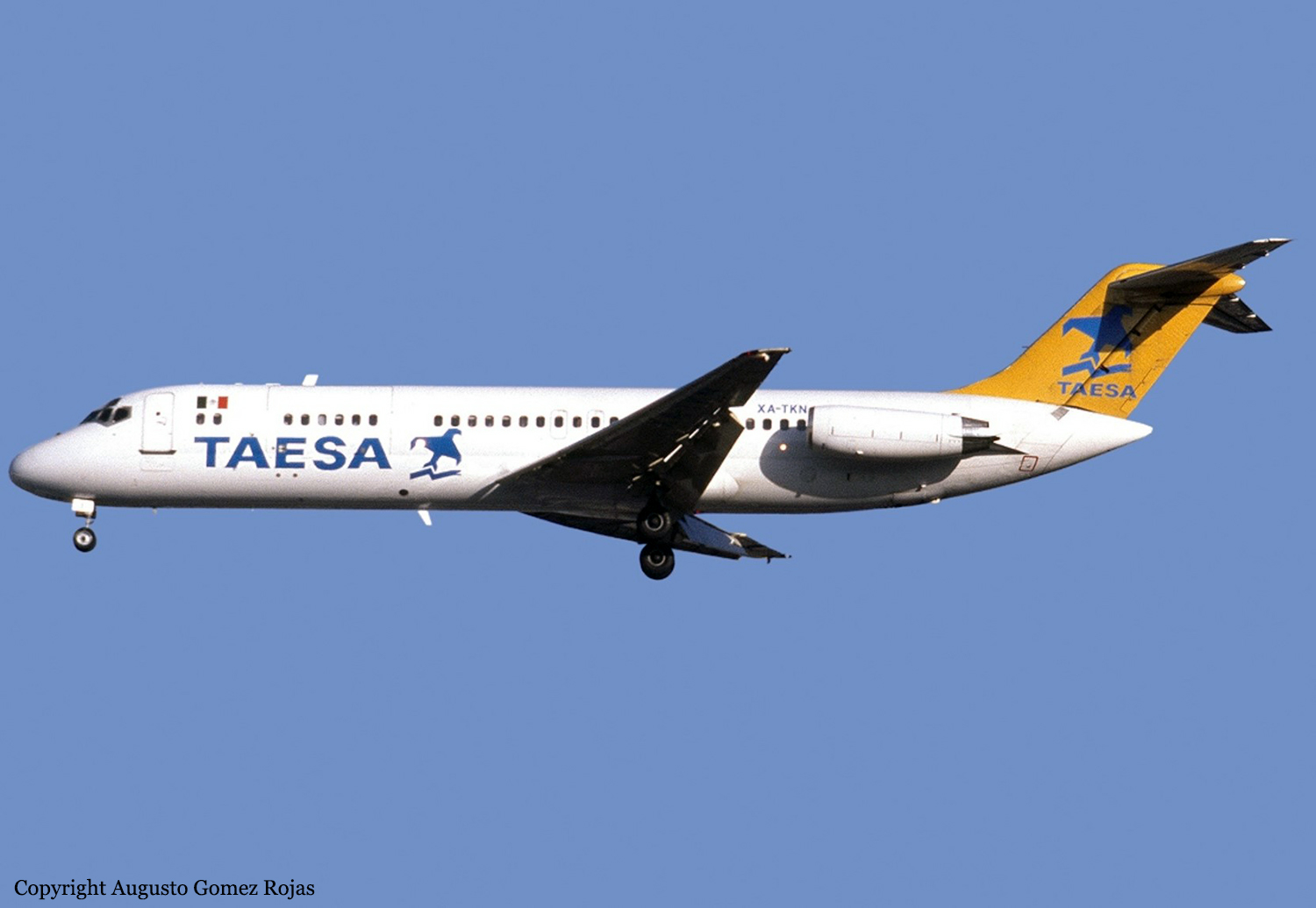
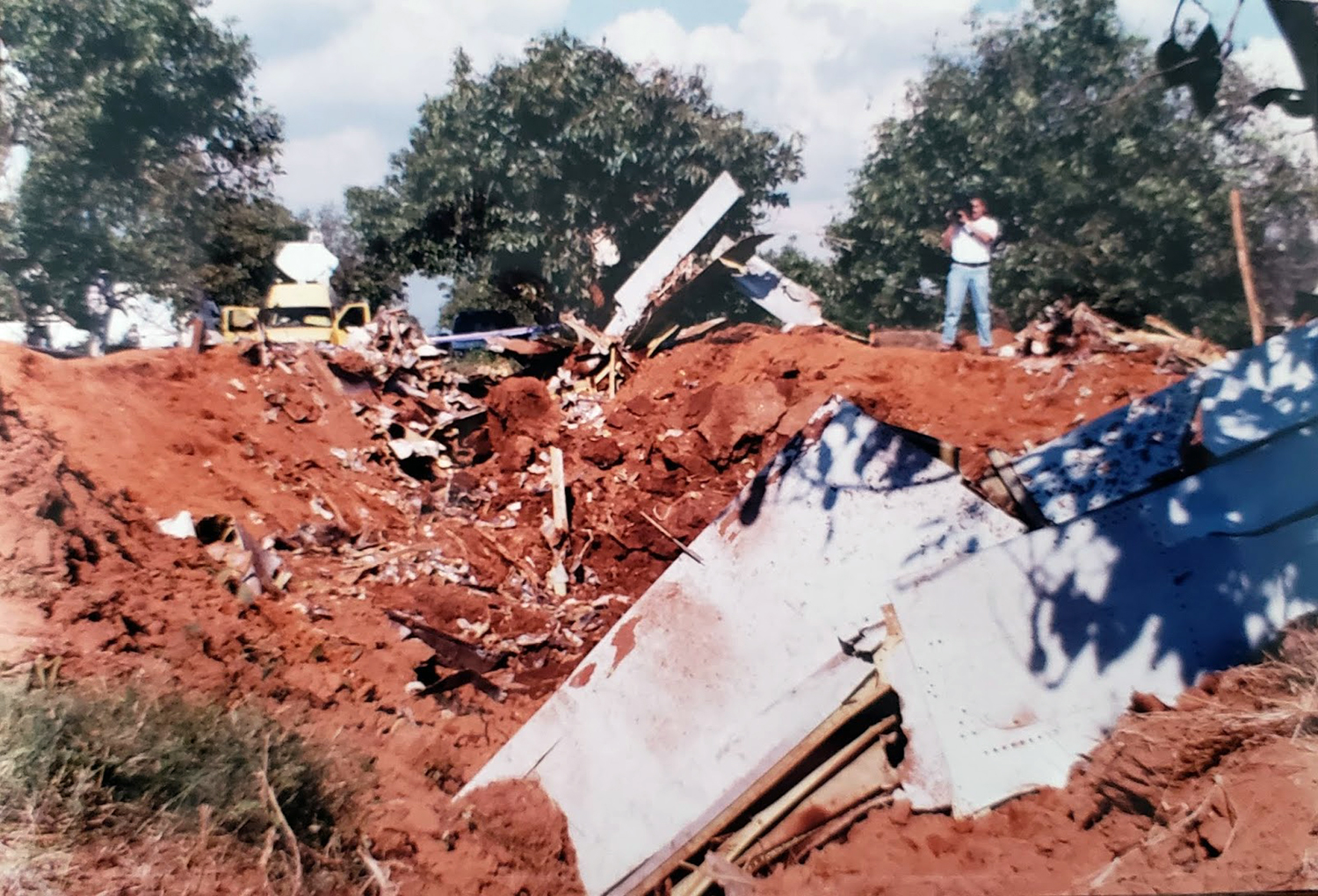
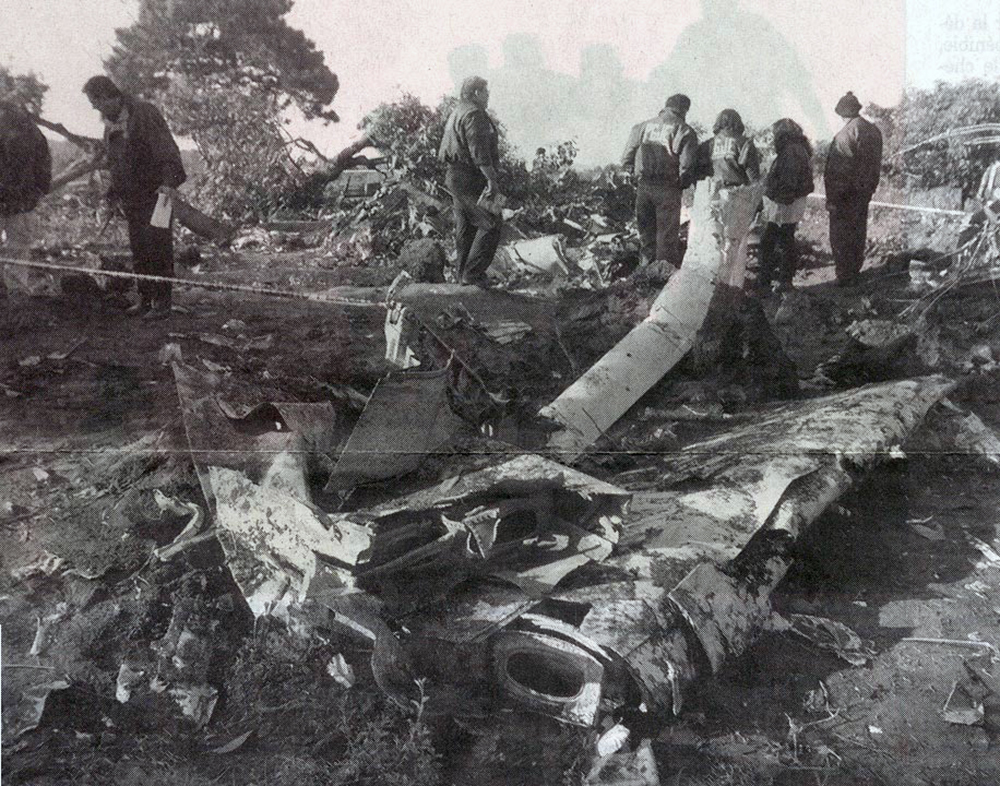
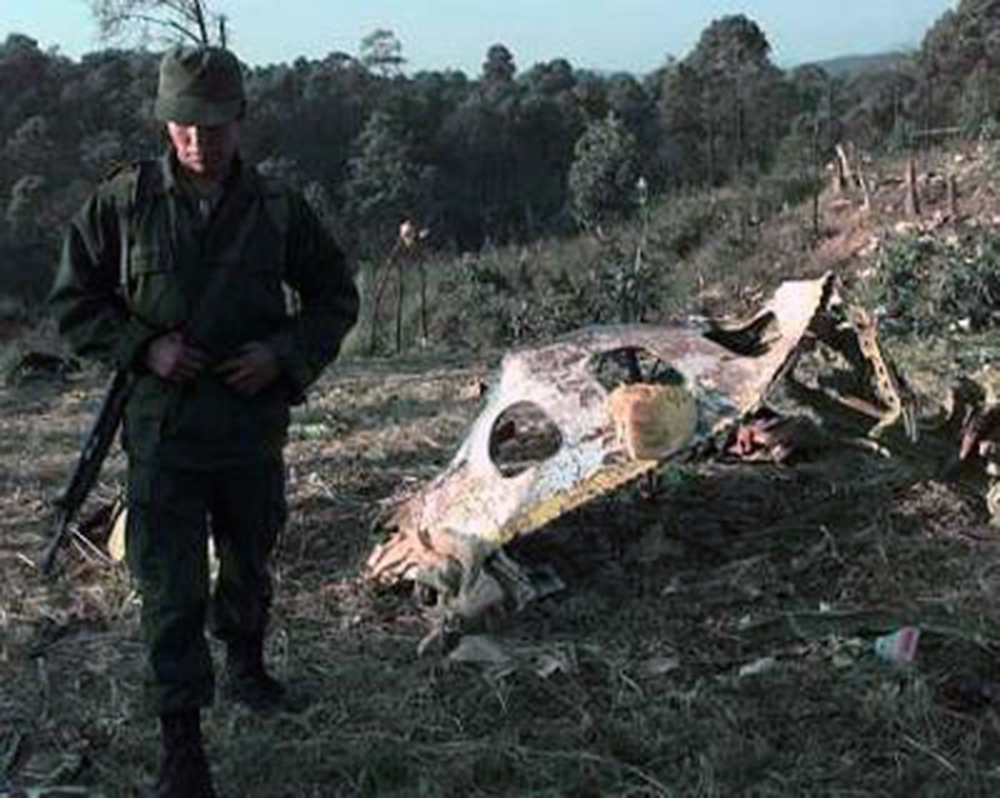
Crash of a Douglas DC-9-31 in Uruapan: 18 killed

Date & Time: Nov 9, 1999 at 1903 LT
Type of aircraft:
Operator:
Registration:
XA-TKN
Flight Phase:
Survivors:
No
Schedule:
Tijuana – Guadalajara – Uruapan – Mexico City
MSN:
47418
YOM:
1970
Flight number:
TEJ725
Country:
Crew on board:
5
Crew fatalities:
Pax on board:
13
Pax fatalities:
Other fatalities:
Total fatalities:
18
Aircraft flight hours:
58000
Aircraft flight cycles:
59000
Circumstances:
The aircraft was completing a service from Tijuana to Mexico City with intermediate stops in Guadalajara and Uruapan, carrying 13 passengers and a crew of five. It departed Uruapan-General Ignacio López Rayón Airport runway 20 at 1859LT on the last leg to Mexico City. After liftoff, the crew was cleared to climb to 5,000 feet and while at an altitude of about 1,000 metres, the aircraft adopted a high angle of attack then stalled, entered a dive and crashed in an avocado plantation located 5,3 km from the airport. The aircraft disintegrated on impact and all 18 occupants were killed.
Probable cause:
The accident was the consequence of an over-rotation on takeoff and a climb with a very pronounced angle, which caused the loss of control, with spatial disorientation (loss of the horizon), in a flight operation by instruments (IFR), in which, according to the crew, there was a possible failure of asymmetry indication in the leading edge flaps (slats), with the crew neglecting to control the flight of the aircraft.
The following contributing factors were identified:
- Inadequate preparation of information for instrument take-off (IFR) from Uruapan airport and failure to adhere to the operating procedures of the Aeronautical Information Publication (AIP) Manual.
- Failure to perform checklist procedures for the operation of the aircraft in its different phases.
- Loss of external vision (spatial disorientation), aggravated by turning on the cockpit lights, before the takeoff run.
- Inadequate procedure for the rotation of the aircraft during take-off, dragging the tail skid on the runway
- Angle of climb greater than that established in the aircraft Operations Manual.
- Lack of cockpit resource management (CRM).
Final Report:

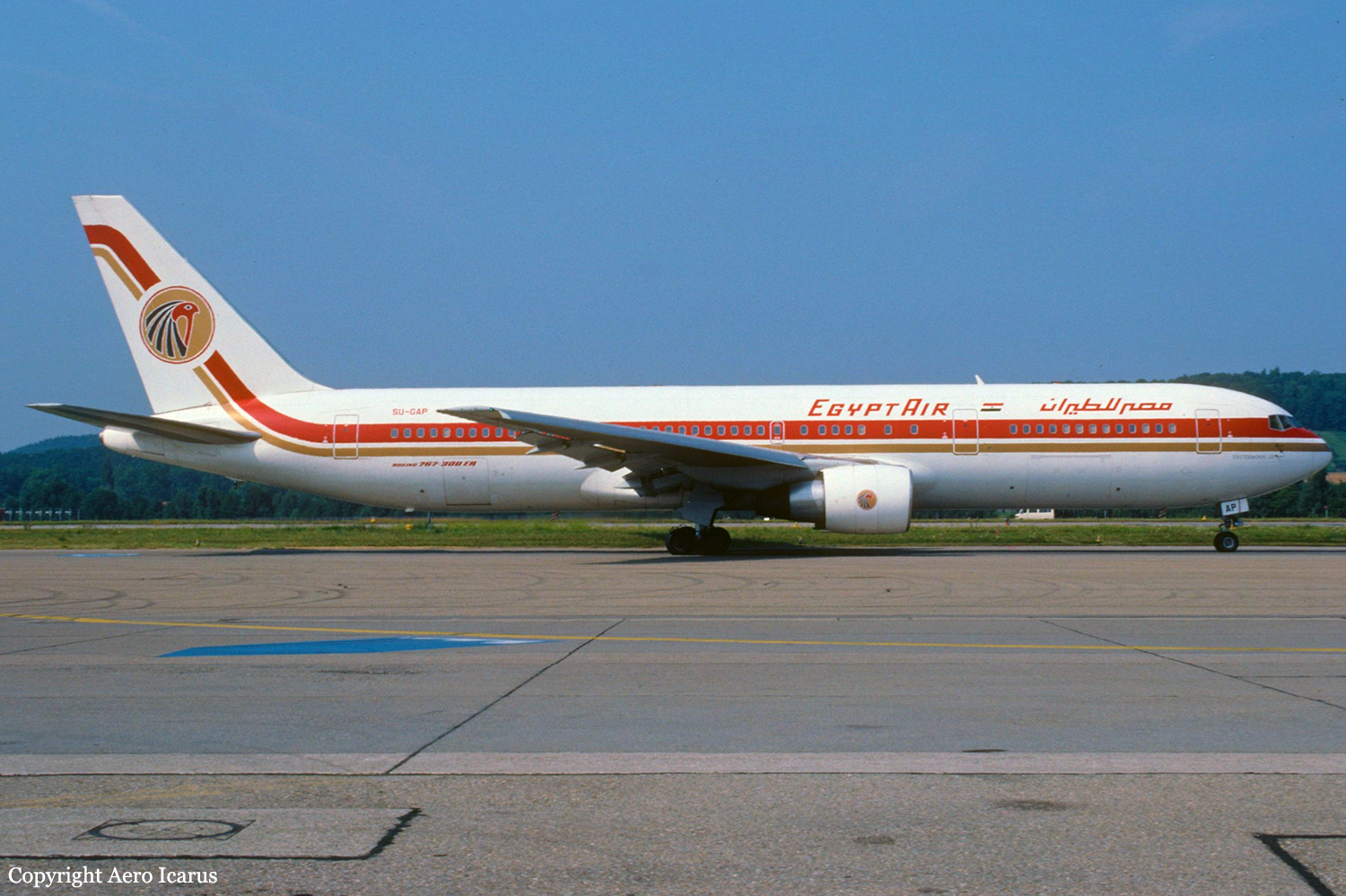
Crash of a Boeing 767-366ER in the Atlantic Ocean: 217 killed

Date & Time: Oct 31, 1999 at 0152 LT
Type of aircraft:
Operator:
Registration:
SU-GAP
Flight Phase:
Survivors:
No
Schedule:
Los Angeles – New York – Cairo
MSN:
24542
YOM:
1989
Flight number:
MS990
Country:
Region:
Crew on board:
15
Crew fatalities:
Pax on board:
202
Pax fatalities:
Other fatalities:
Total fatalities:
217
Captain / Total flying hours:
14384
Captain / Total hours on type:
6356.00
Copilot / Total flying hours:
12538
Copilot / Total hours on type:
5191
Aircraft flight hours:
33354
Aircraft flight cycles:
7594
Circumstances:
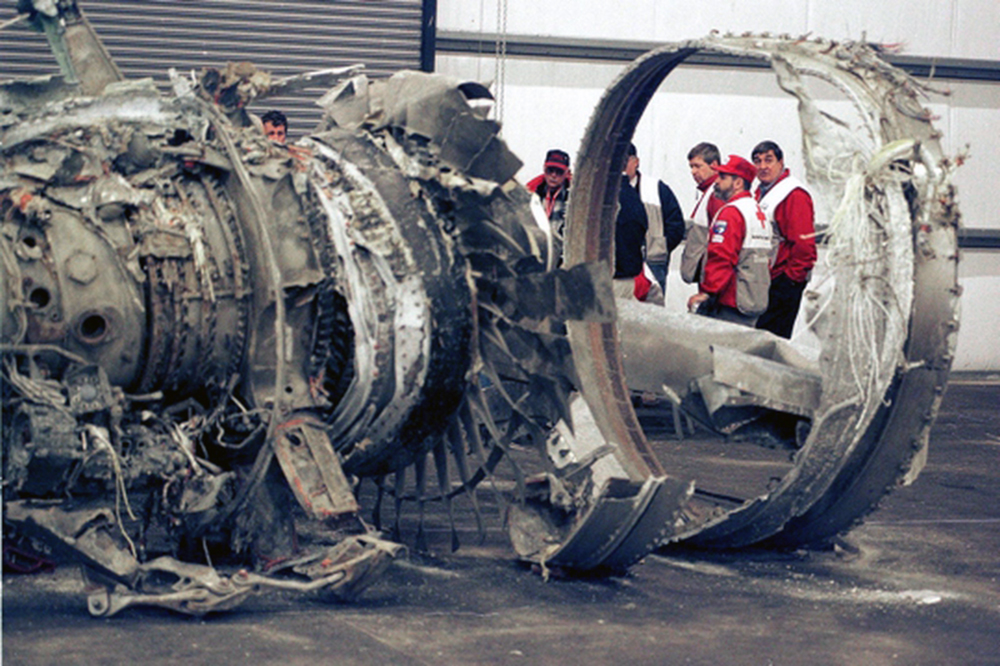
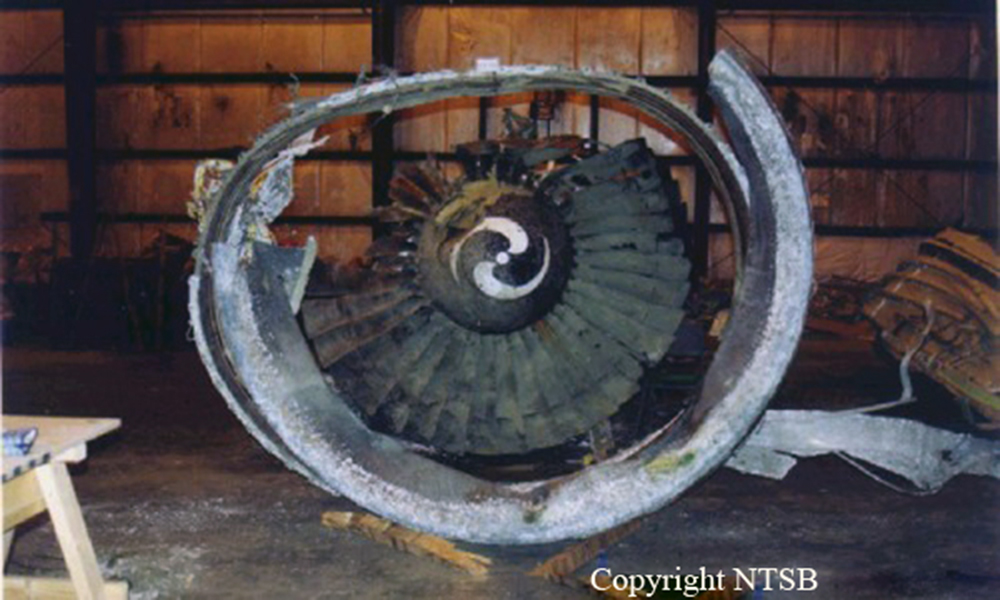
EgyptAir Flight 990 departed Los Angeles International Airport, destined for Cairo, with a scheduled intermediate stop at New York-JFK. The aircraft landed at JFK about 23:48 EDT and arrived at the gate about 00:10 EDT. Two designated flight crews (each crew consisting of a captain and first officer) boarded the aircraft at JFK. The aircraft taxied to runway 22R and was cleared for takeoff at 01:19. Shortly after liftoff, the pilots of EgyptAir flight 990 contacted New York Terminal Radar Approach (and departure) Control (TRACON). New York TRACON issued a series of climb instructions and, at 01:26, instructed the flight to climb to FL230 and contact New York Air Route Traffic Control Center (ARTCC). At 01:35, New York ARTCC instructed EgyptAir flight 990 to climb to FL330 and proceed directly to DOVEY intersection. About 01:40 the relief first officer suggested that he relieve the command first officer at the controls. The command first officer agreed and left the flightdeck. The airplane leveled at FL330 four minutes later. At 01:48, the command captain decided to go to the toilet and left the flightdeck. At 01:48:30, about 11 seconds after the captain left the cockpit, the CVR recorded an unintelligible comment. Ten seconds later, the relief first officer stated quietly, "I rely on God." There were no sounds or events recorded by the flight recorders that would indicate that an airplane anomaly or other unusual circumstance preceded the relief first officer's statement. At 01:49:18, the CVR recorded the sound of an electric seat motor and 27 seconds later the autopilot was disconnected. At 01:49:48, the relief first officer again stated quietly, "I rely on God." At 01:49:53, the throttle levers were moved from their cruise power setting to idle, and, one second later, the FDR recorded an abrupt nose-down elevator movement and a very slight movement of the inboard ailerons. Subsequently, the airplane began to rapidly pitch nose down and descend. Between 0149:57 and 0150:05, the relief first officer quietly repeated, "I rely on God," seven additional times. During this time, as a result of the nose-down elevator movement, the airplane's load factor decreased from about 1 to about 0.2 G (almost weightlessness). Then the elevators started moving further in the nose-down direction. Immediately thereafter the captain entered the flightdeck and asked loudly, "What's happening? What's happening?". As he airplane's load factor reached negative G loads (about -0.2 G) the relief first officer stated for the tenth time, "I rely on God." At 01:50:08, as the airplane exceeded its maximum operating airspeed (0.86 Mach), a master warning alarm began to sound and the relief first officer stated quietly for the eleventh and final time, "I rely on God," and the captain repeated his question, "What's happening?" At 0150:15, as the airplane was descending through about 27,300 feet the airplane's rate of descent began to decrease. About 6 seconds later the left and right elevator surfaces began to move in opposite directions. The engine start lever switches for both engines then moved from the run to the cutoff position. At 01:50:24 the throttle levers started to move from their idle position to full throttle, and the speedbrake handle moved to its fully deployed position. The captain again asked "What is this? What is this? Did you shut the engine(s)?" At 01:50:26, the captain stated, "Get away in the engines ... shut the engines". The relief first officer replied "It's shut". Between 01:50:31 and 01:50:37, the captain repeatedly stated, "Pull with me." However, the elevator surfaces remained in a split condition (with the left surface commanding nose up and the right surface commanding nose down) until the FDR and CVR stopped recording. at 0150:36.64 and 0150:38.47, respectively. The height estimates based on primary radar data from the joint use FAA/U.S. Air Force (USAF) radar sites indicated that the airplane's descent stopped about 01:50:38 and that the airplane subsequently climbed to about 25,000 feet msl and changed heading from 80º to 140º before it started a second descent, which continued until the airplane impacted the ocean.
Probable cause:
The National Transportation Safety Board determines that the probable cause of the EgyptAir flight 990 accident is the airplane's departure from normal cruise flight and subsequent impact with the Atlantic Ocean as a result of the relief first officer's flight control inputs. The reason for the relief first officer's actions was not determined.
Final Report:

Crash of a Douglas DC-9-31 in Nashville

Date & Time: Sep 9, 1999 at 1138 LT
Type of aircraft:
Operator:
Registration:
N993Z
Survivors:
Yes
Schedule:
Saint Louis - Nashville
MSN:
47082
YOM:
1967
Flight number:
TW600
Crew on board:
5
Crew fatalities:
Pax on board:
41
Pax fatalities:
Other fatalities:
Total fatalities:
0
Captain / Total flying hours:
13332
Captain / Total hours on type:
5022.00
Aircraft flight hours:
77374
Aircraft flight cycles:
34177
Circumstances:
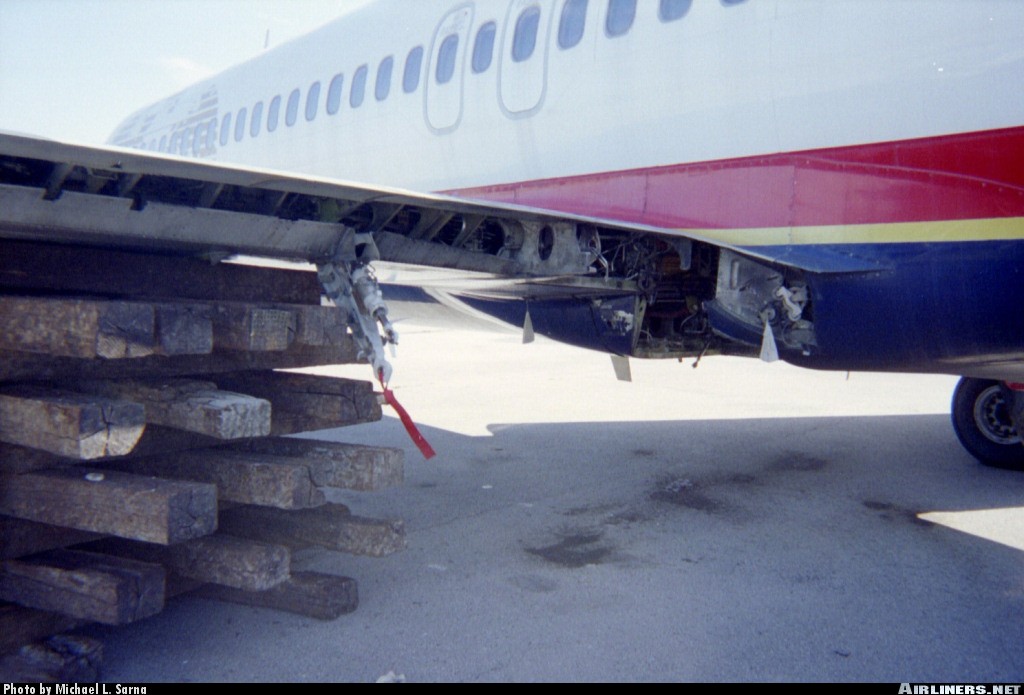
The first officer failed to maintain the proper rate of descent (sink rate) resulting in a hard landing on touch down, and separation of the left main landing gear during landing rollout. The pilot-in-command stated he knew the first officer was not going to make a good landing. He did not take any corrective action other than informing the first officer initially to increase power. Examination of the left main landing gear assembly revealed a preexisting crack in the outer cylinder housing.
Probable cause:
A preexisting crack on the left main landing gear outer cylinder housing and the first officer's failure to maintain the proper rate of descent resulting in a hard landing on touchdown, and subsequent total failure and separation of the left main landing gear on landing rollout. Contributing to the accident was the pilot-in-commands improper supervision of the first officer during the approach phase of the landing.
Final Report:

Crash of a De Havilland Dash-7-102 in Port Harcourt

Date & Time: Sep 7, 1999
Operator:
Registration:
5N-EMP
Survivors:
Yes
MSN:
49
YOM:
1981
Country:
Region:
Crew on board:
4
Crew fatalities:
Pax on board:
15
Pax fatalities:
Other fatalities:
Total fatalities:
0
Circumstances:
For unknown reasons, the four engine aircraft belly landed at Port Harcourt Airport and was damaged beyond repair. All 15 occupants escaped uninjured while the aircraft was damaged beyond repair. It is unknown if the mishap was the consequence of a technical issue or crew error.

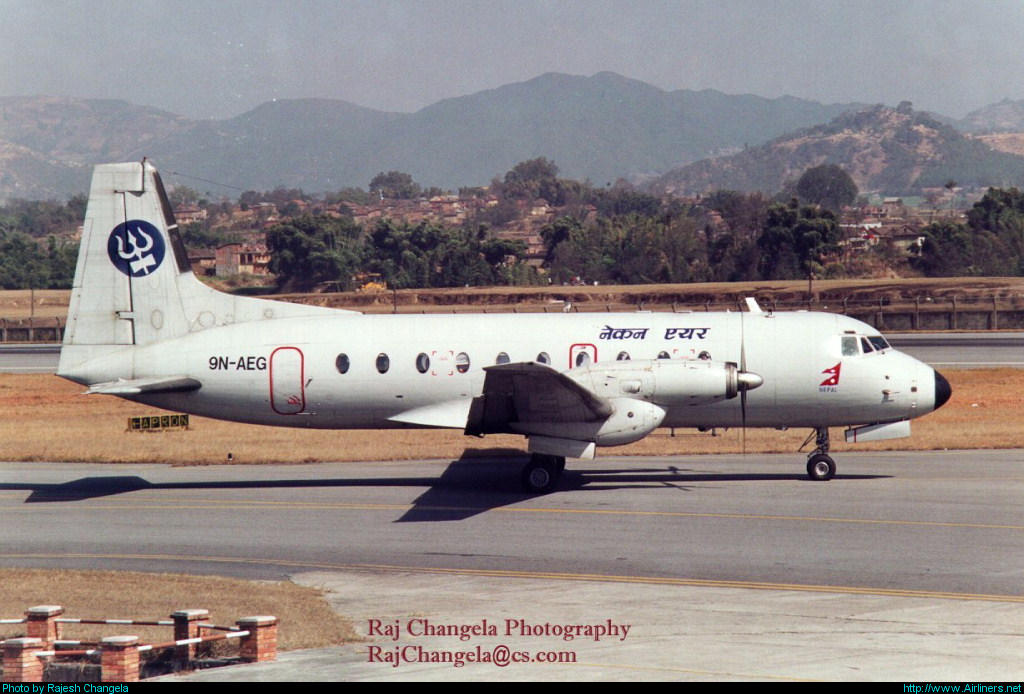
Crash of an Avro 748-501-2B in Kathmandu: 15 killed

Date & Time: Sep 5, 1999 at 1030 LT
Type of aircraft:
Operator:
Registration:
9N-AEG
Survivors:
No
Site:
Schedule:
Pokhara - Kathmandu
MSN:
1806
YOM:
1988
Flight number:
3Z104
Country:
Region:
Crew on board:
5
Crew fatalities:
Pax on board:
10
Pax fatalities:
Other fatalities:
Total fatalities:
15
Circumstances:
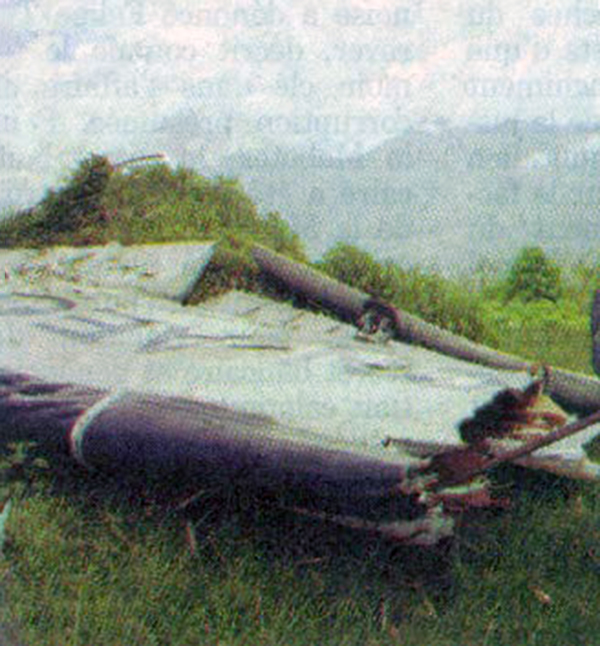
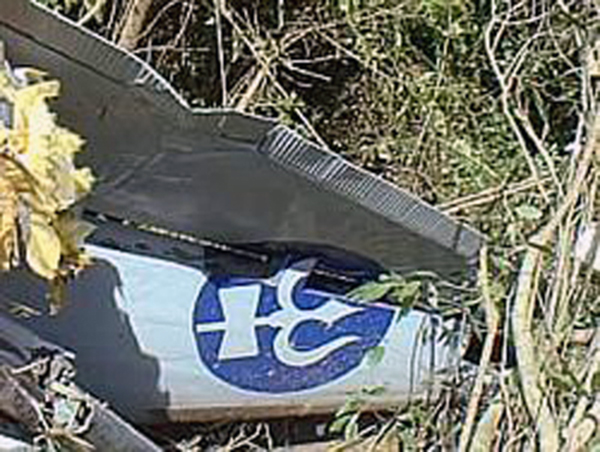
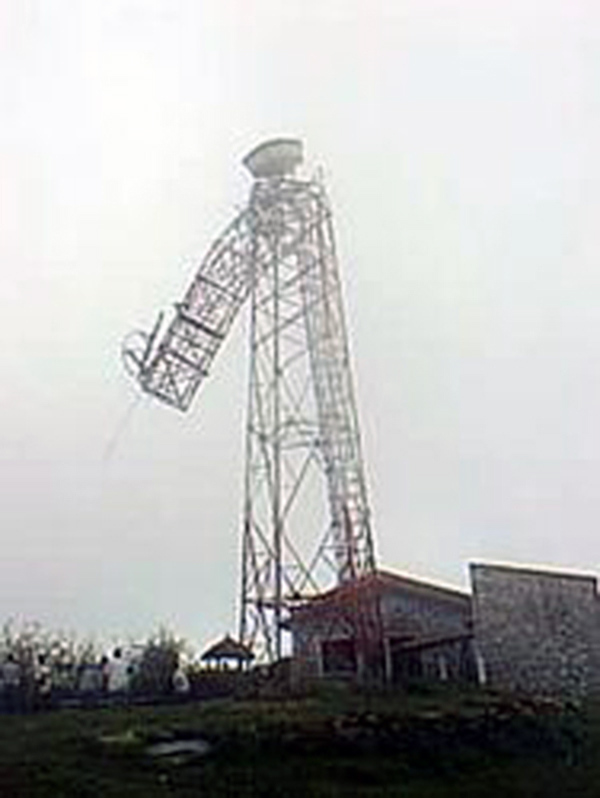
On approach to Kathmandu-Tribhuvan Airport under VFR mode, the crew encountered limited visibility due to a low cloud layer. On final, at an altitude of about 6,000 feet, the aircraft collided with a radio antenna (100 feet high) located on the top of a hill and owned by the Nepalese National Broadcasting Company. The aircraft went out of control and crashed seven km short of runway 02. All 15 occupants.
Probable cause:
Collision with obstacle on a VFR approach in limited visibility.

Crash of a Boeing 737-204C in Buenos Aires: 65 killed

Date & Time: Aug 31, 1999 at 2054 LT
Type of aircraft:
Operator:
Registration:
LV-WRZ
Flight Phase:
Survivors:
Yes
Schedule:
Buenos Aires – Córdoba
MSN:
20389
YOM:
1970
Flight number:
MJ3142
Country:
Crew on board:
5
Crew fatalities:
Pax on board:
95
Pax fatalities:
Other fatalities:
Total fatalities:
65
Captain / Total flying hours:
6500
Captain / Total hours on type:
1710.00
Copilot / Total flying hours:
4085
Copilot / Total hours on type:
560
Aircraft flight hours:
67864
Aircraft flight cycles:
41851
Circumstances:
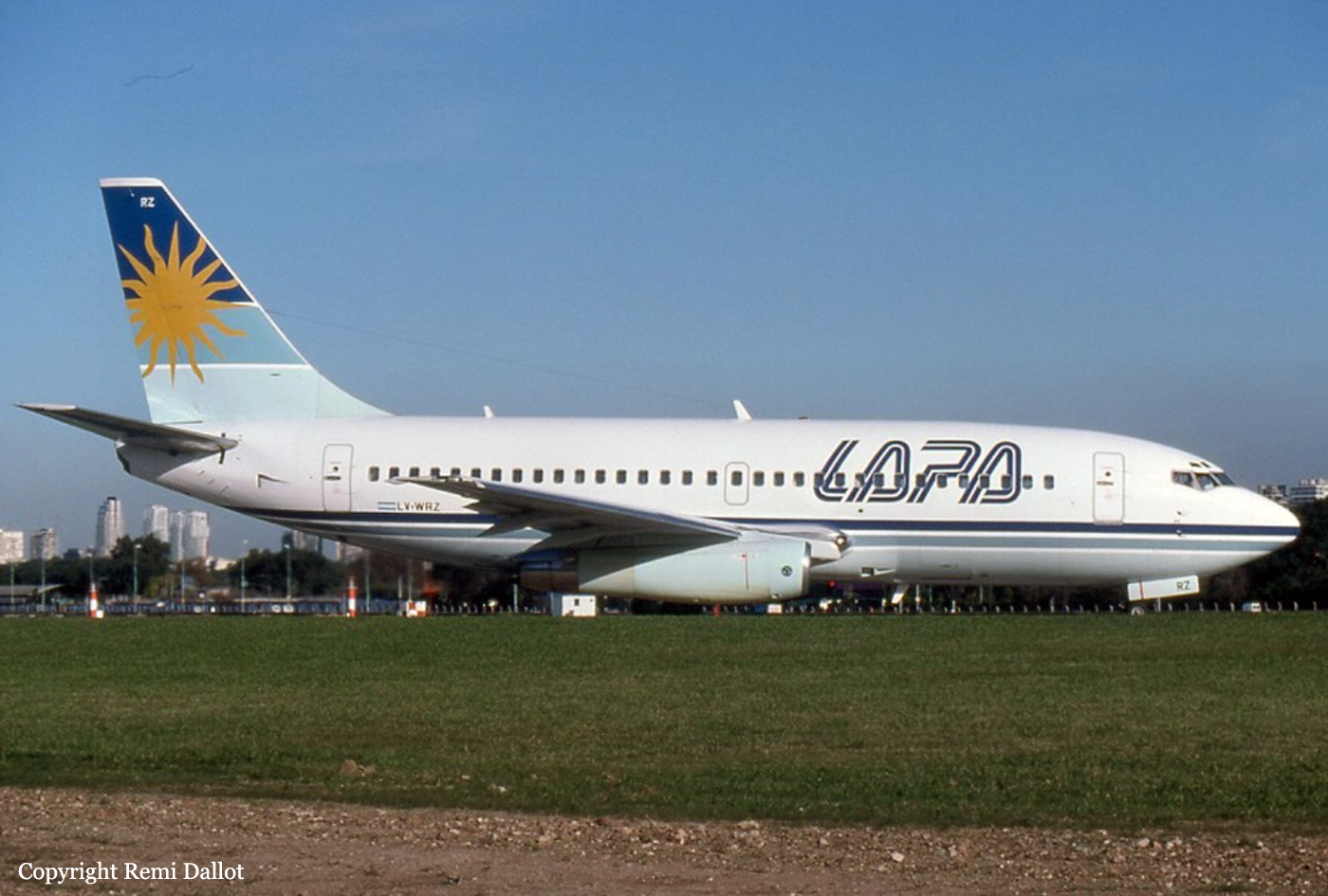
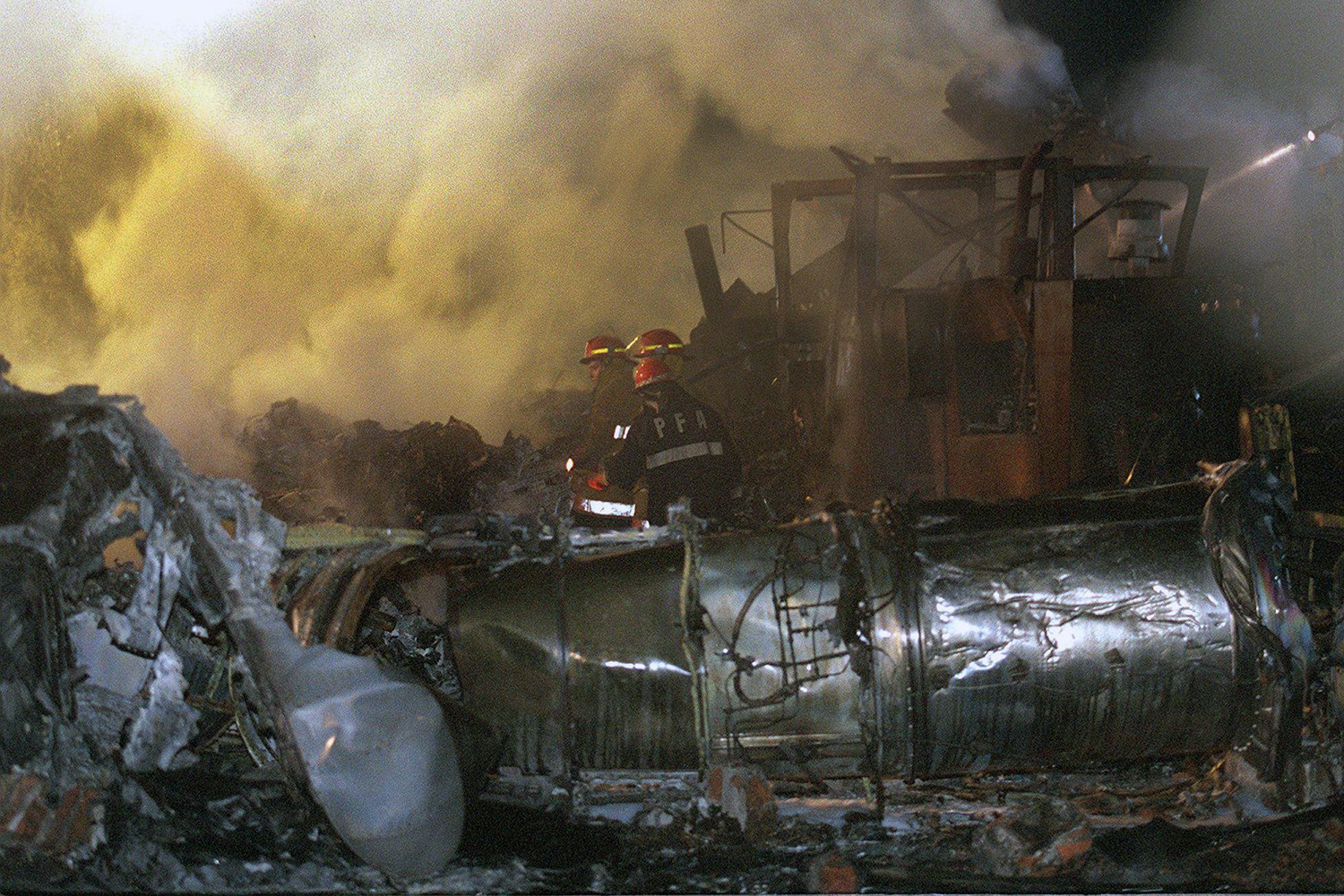
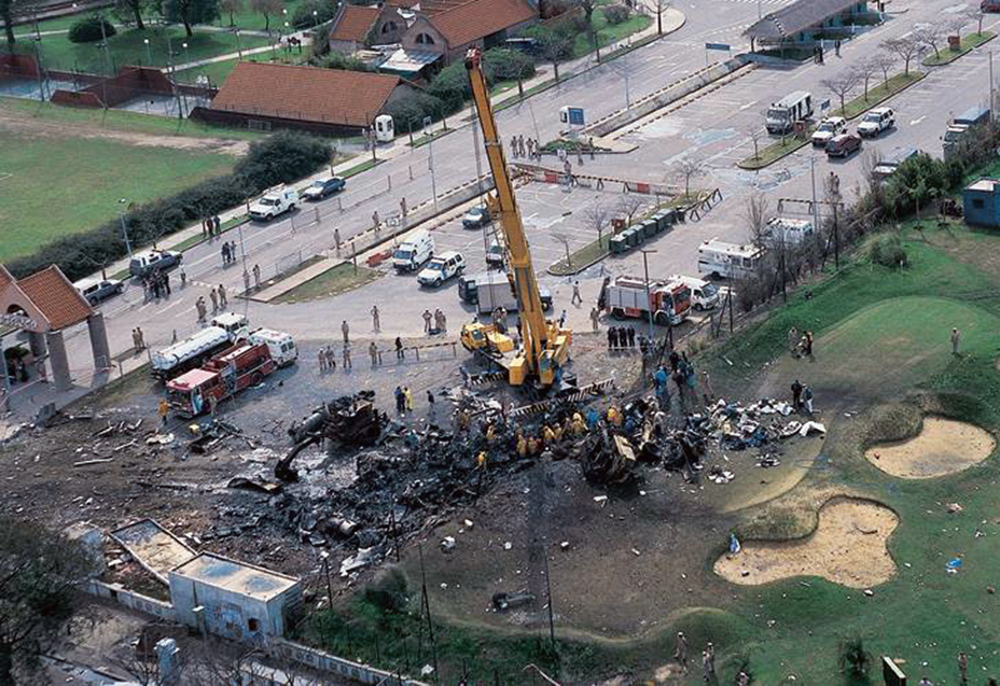
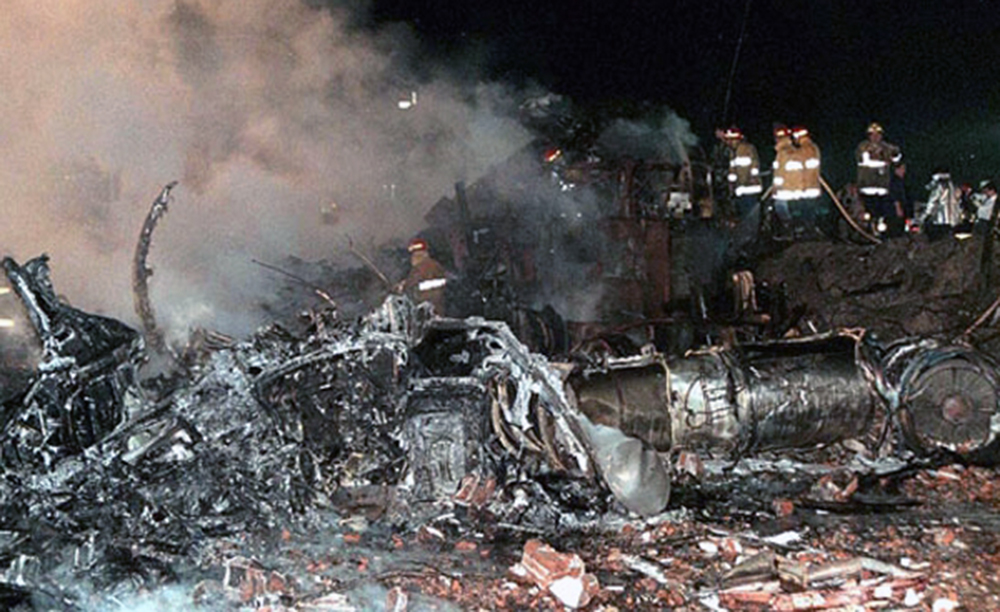
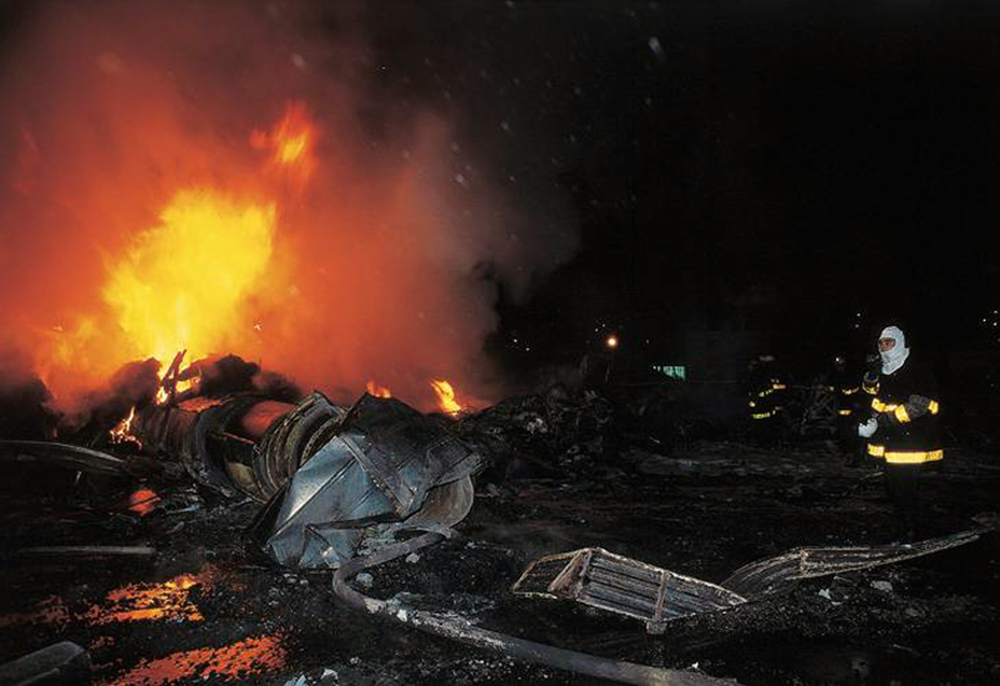
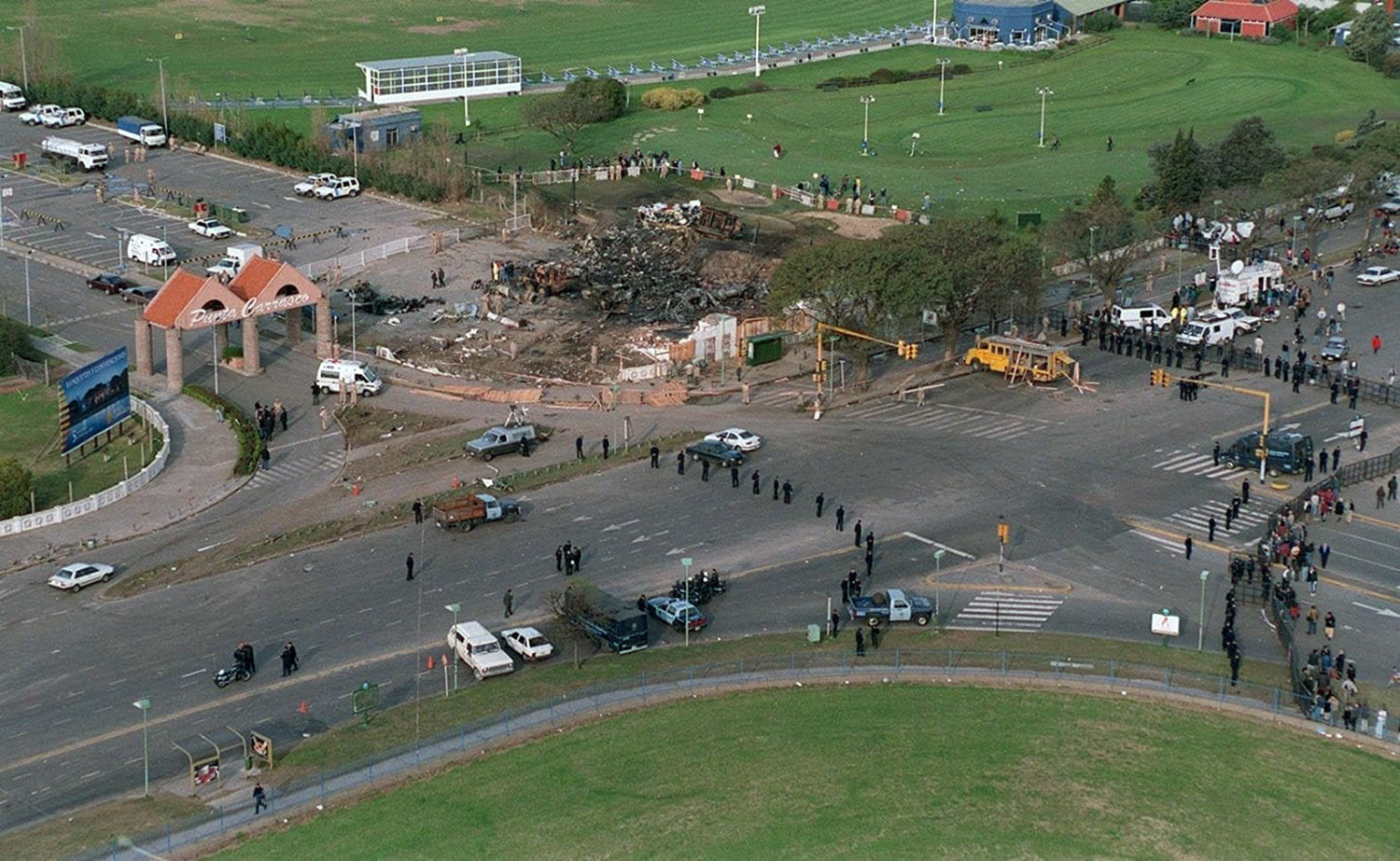
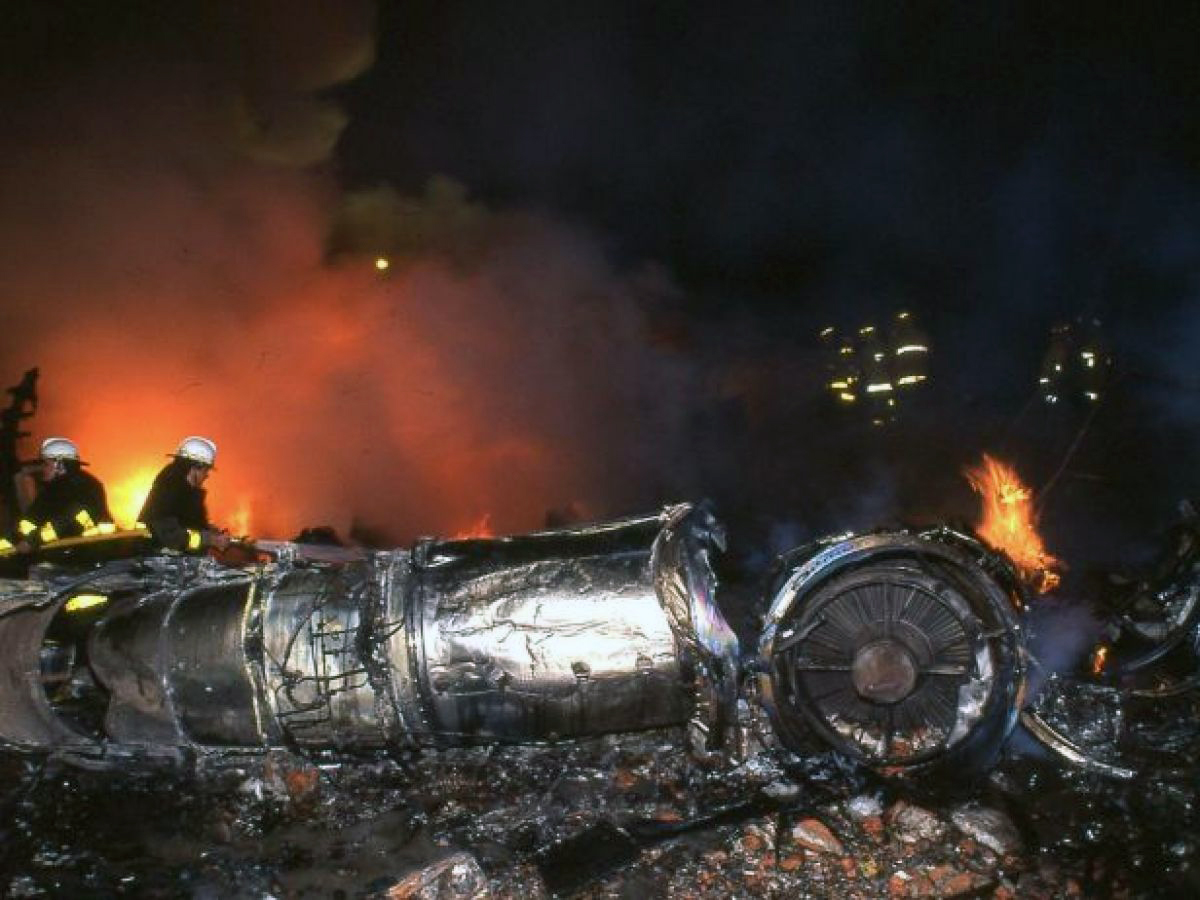
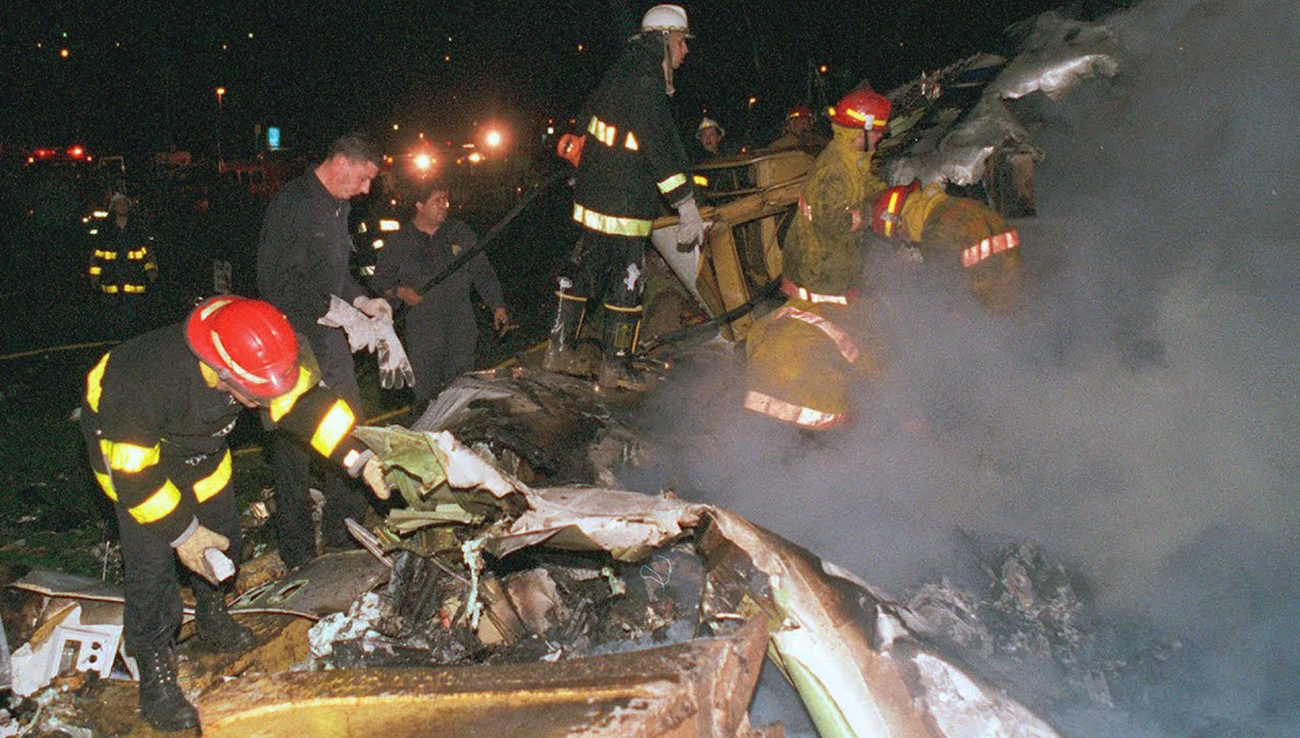
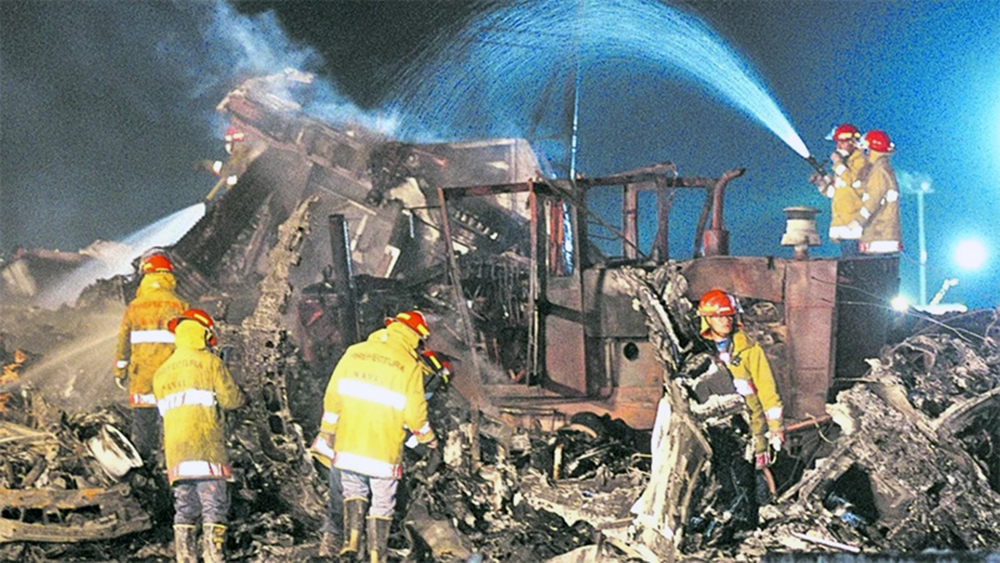
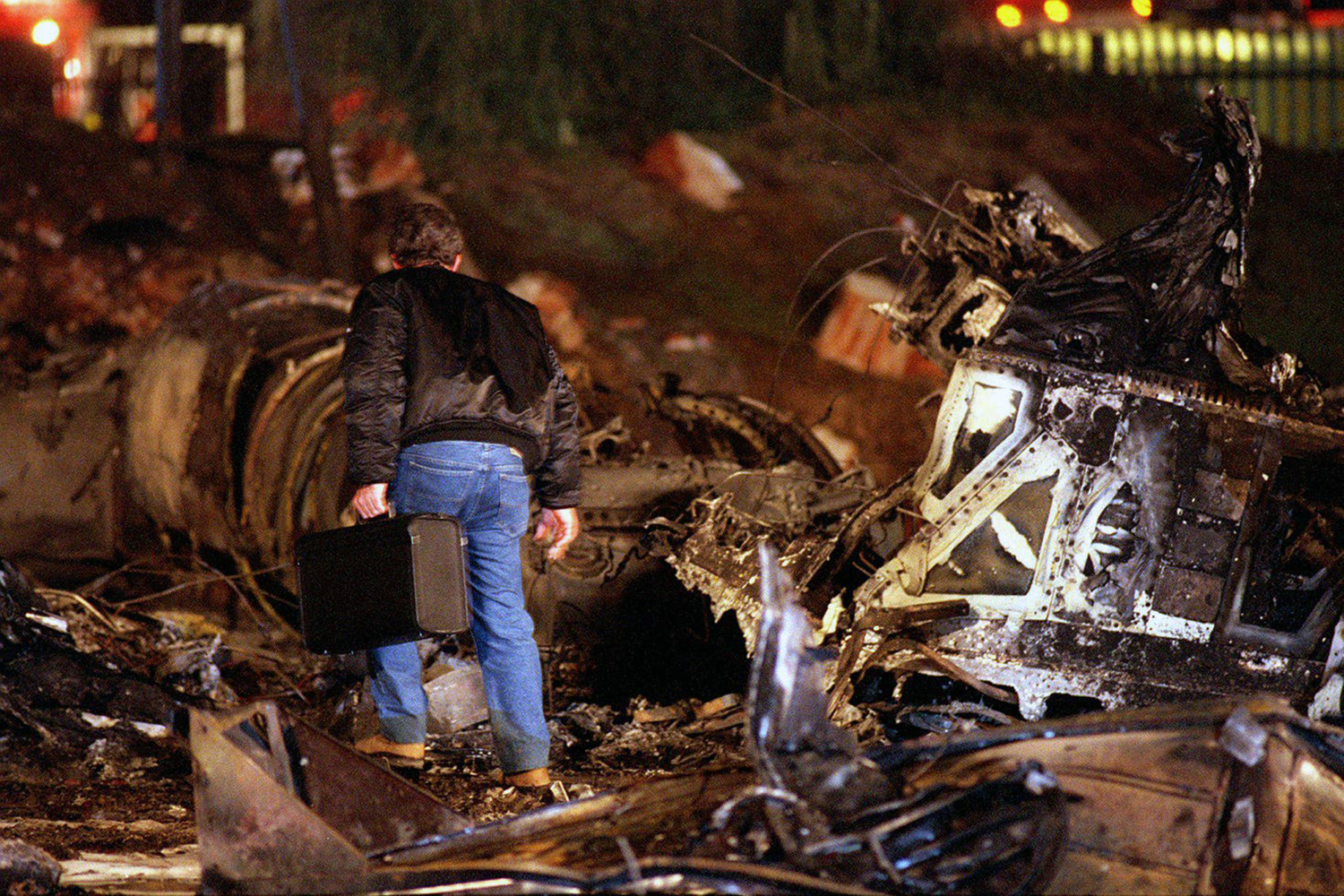
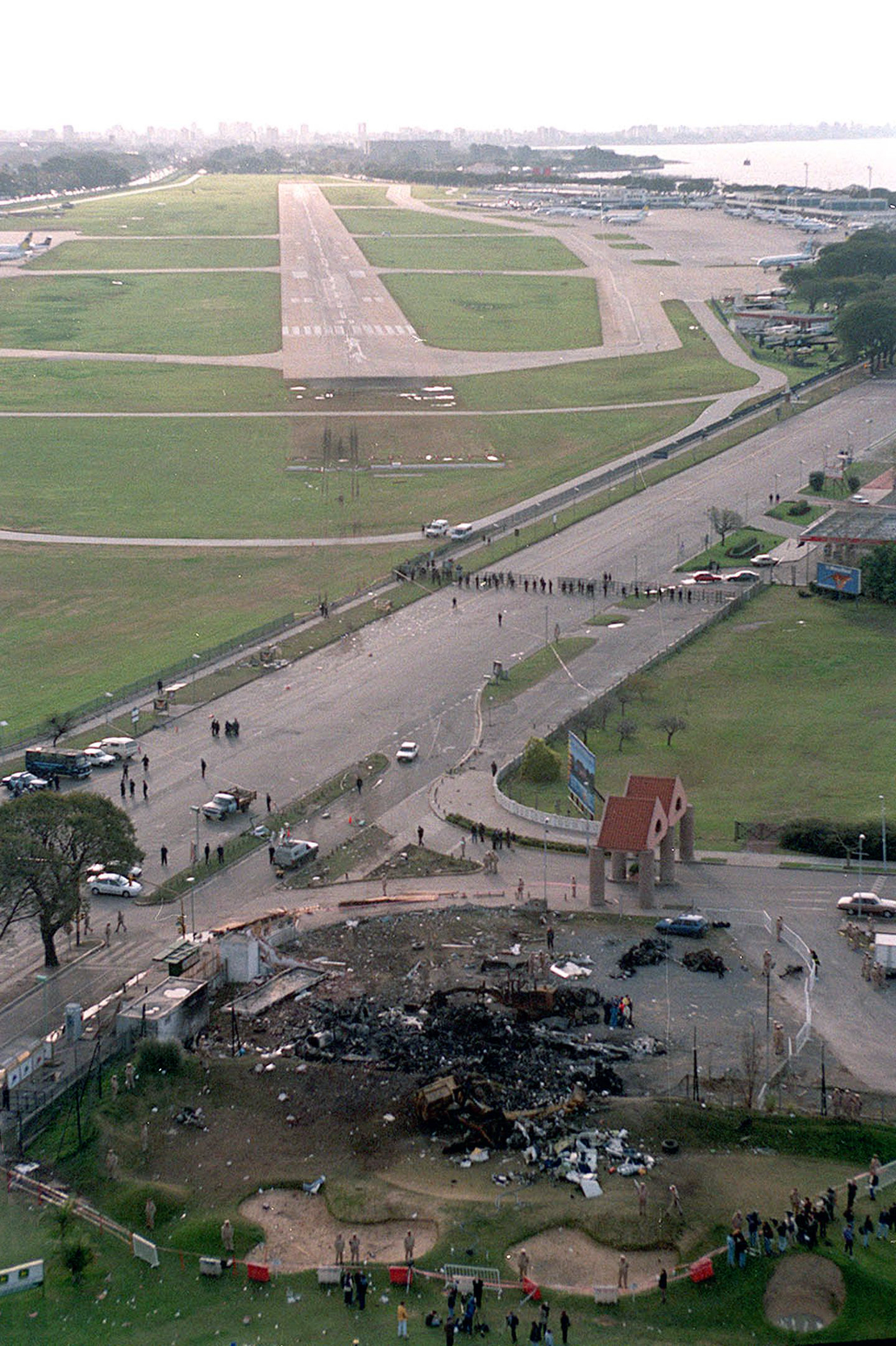
LAPA flight 3142 was scheduled to depart from Buenos Aires-Jorge Newbery Airport at 20:36 for a 1 hour and 15 minute flight to Córdoba, Argentina. The first officer and cabin crew were the first to arrive at the Boeing 737-200. The first officer notified one of the mechanics that the total fuel requirement was 8,500 kg, all to be stored in the wing tanks. The mechanic noticed there was still some fuel in the central tank and commenced transferring the fuel from the central to the wing tanks. At that moment the captain boarded the flight. He threw his paperwork on the ground, showing annoyance, confirming that attitude by later shutting off the fuel transfer between the main tank and the wing tanks. During their first four minutes on board, the captain, the co-pilot and the purser talked about trivial matters in good spirits, focusing on the purser's personal issues. When the purser left the cockpit, the conversation changed tone as they discussed a controversial situation about the family problems of the captain. The captain said that he was "going through bad times", to which the copilot replied that he was also having a bad day. Without interrupting the conversation, the crew began working the checklists, mixed with the personal issues that worried them and that led them to misread the checklist. In the process they omitted to select the flaps to the appropriate takeoff position. This confusing situation, in which the checklist procedure was mixed with conversation irrelevant to the crew's task, persisted during push back, engine start and taxiing, up to the moment of take-off, which was delayed by other aircraft waiting ahead of the LAPA flight and heavy arriving traffic. During this final wait, the crew members were smoking in the cockpit and continued their conversation. Take-off was started on runway 13 at 20:53 hours. During the takeoff roll the Take-off warning system sounded because the flaps had not been selected. The crew ignored the warning and continued the takeoff. After passing Vr, the pilot attempted to rotate the aircraft. The stick shaker activated as the aircraft entered a stall. It successively impacted the ILS antenna, the perimeter fence, a waiting shelter for buses, two automobiles, two excavators and an embankment where it stopped. Immediately a fire erupted. Three flight crew members, 60 passengers and two persons inside an automobile were killed.

Probable cause:
The JIAAC considers as an immediate cause of the accident that the flight crew of the LAPA 3142 forgot to extend the flaps for takeoff and dismissed the alarm sound that warned about the lack of configuration for that maneuver.
The contributing factors were:
- Lack of discipline of the crew that did not execute the logical reaction of aborting the takeoff and verification of the failure when the alarm began to sound when adding engine power and continued sounding until the rotation attempt.
- Excess of conversations foreign to the flight and for moments of important emotional intensity between the pilots, that were mixed with the execution of the check lists, arriving at omitting the part of these last ones where the extension of flaps for takeoff had to be completed.
- Personal and/or family and/or economic and/or other problems of both pilots, which affected their operational behavior.
- Insufficiency of the psychic control system, which did not allow to detect when the pilots were suffering personal and/or family problems and/or of another type that influenced their operational capacity when diminishing their psychic stability.
- Knowledge and treatment of very personal and extra-occupational issues among the pilots and even with the onboard commissioner, who facilitated the atmosphere of scarce seriousness and concentration in the operational tasks.
- Background of negative flight characteristics of the commander that surfaced before his personal situation and relationship in the cockpit before and during the emergency.
- Background of flight characteristics of the co-pilot, which manifested themselves during compliance with the procedural checklists in a cockpit where its components participated with a completely dispersed attention to particular interests outside the flight.
- No immediate recognition or verification of both pilots, of the relationship between the type of intermittent audible alarm that indicated failure in the configuration for takeoff, with the absence of flaps in the position for this maneuver.
- Design of the take-off configuration alarm system that does not allow, in this type of aircraft, a simple check by the crews to ensure periodic listening to this type of intermittent alarm.
Final Report: