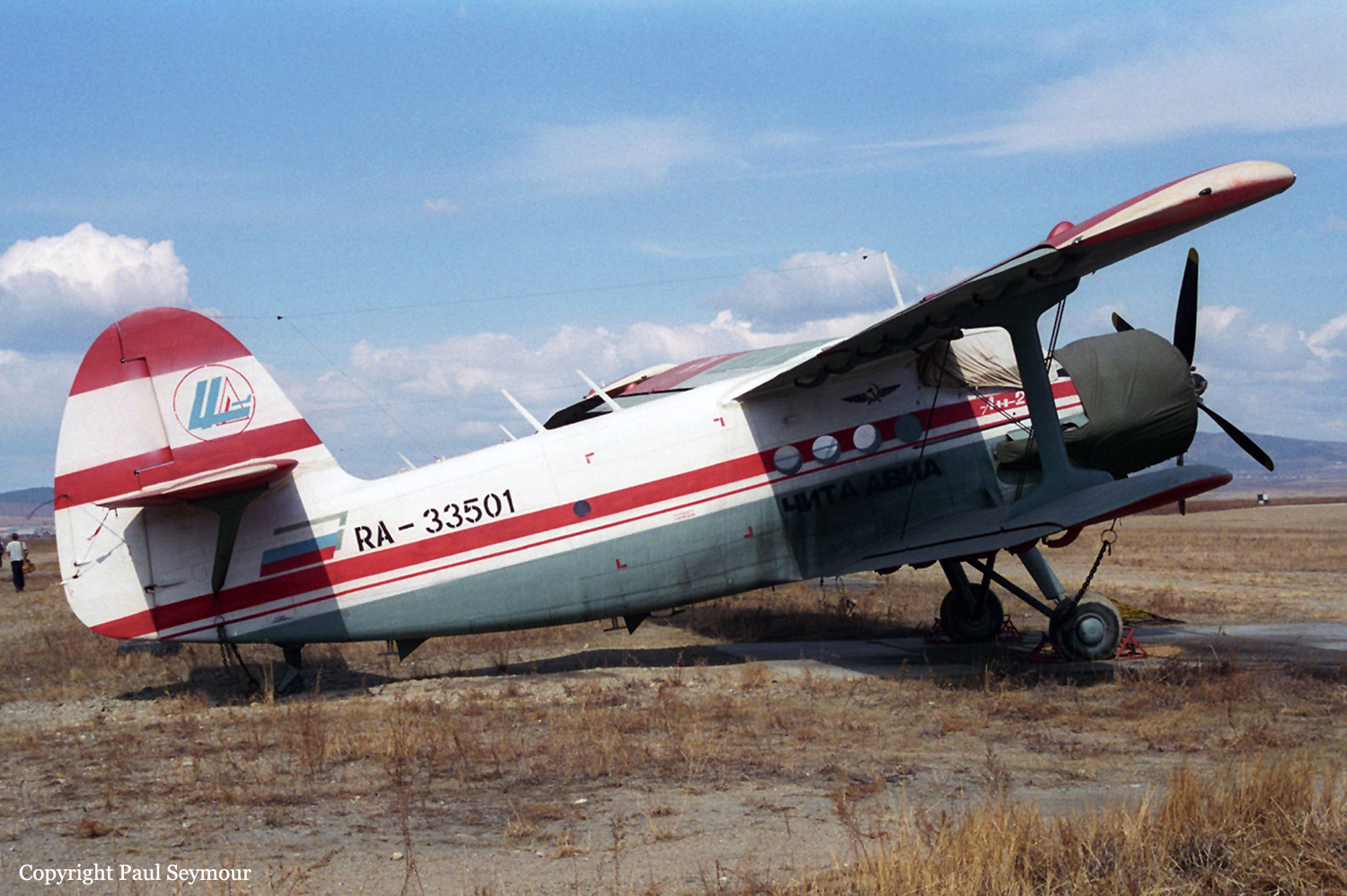
Crash of a PZL-Mielec AN-2R in Kashtak

Date & Time: Aug 26, 2002
Type of aircraft:
Operator:
Registration:
RA-33501
Flight Phase:
Survivors:
Yes
MSN:
1G228-53
YOM:
1988
Country:
Region:
Crew on board:
0
Crew fatalities:
Pax on board:
0
Pax fatalities:
Other fatalities:
Total fatalities:
0
Circumstances:
The crew was forced to make an emergency landing at Kashtak Airfield near Chita. There were no casualties but the aircraft was damaged beyond repair.

Crash of a De Havilland DHC-6 Twin Otter 300 in Pokhara: 18 killed

Date & Time: Aug 22, 2002 at 1005 LT
Operator:
Registration:
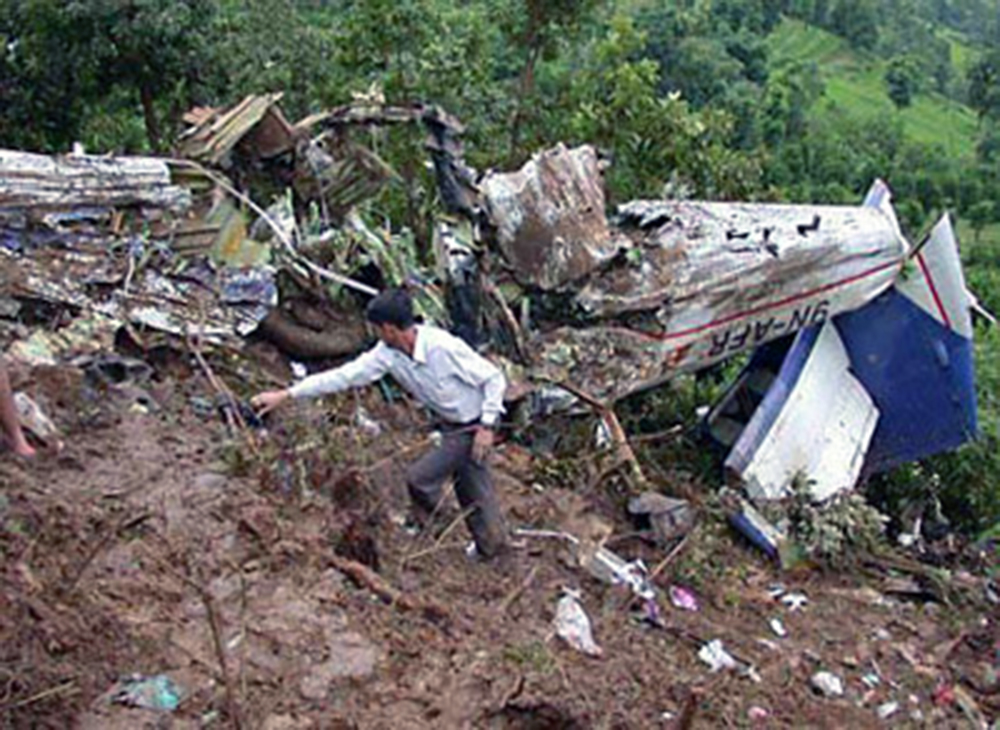
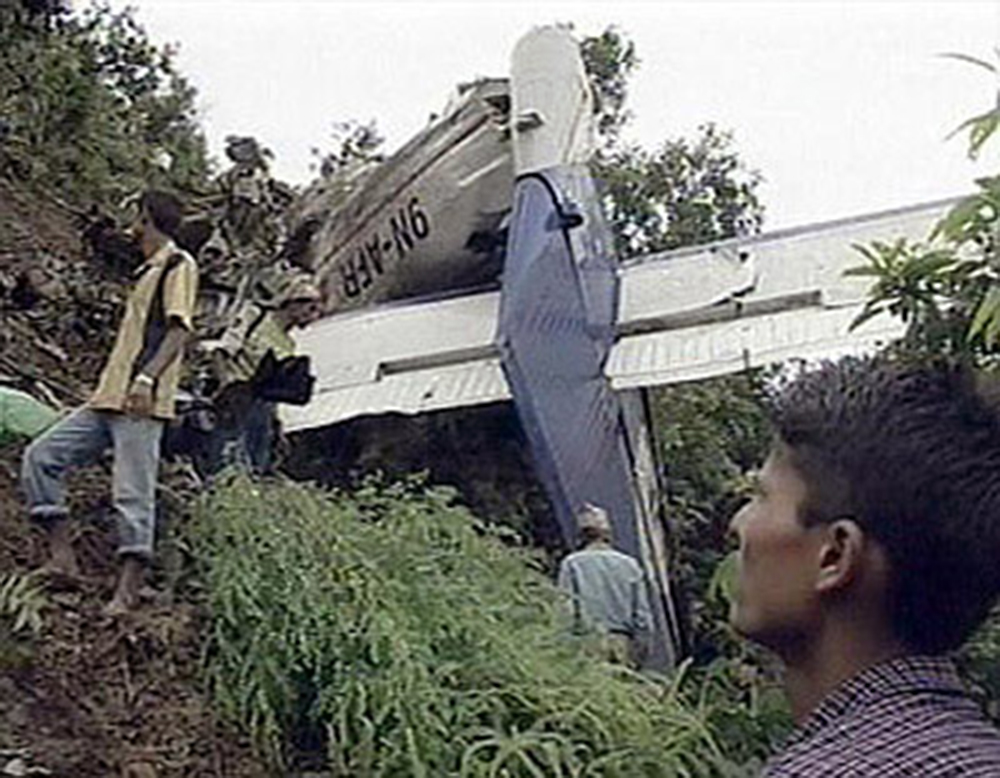
9N-AFR
Survivors:
No
Site:
Schedule:
Jomsom - Pokhara
MSN:
762
YOM:
1981
Location:
Country:
Region:
Crew on board:
2
Crew fatalities:
Pax on board:
16
Pax fatalities:
Other fatalities:
Total fatalities:
18
Circumstances:
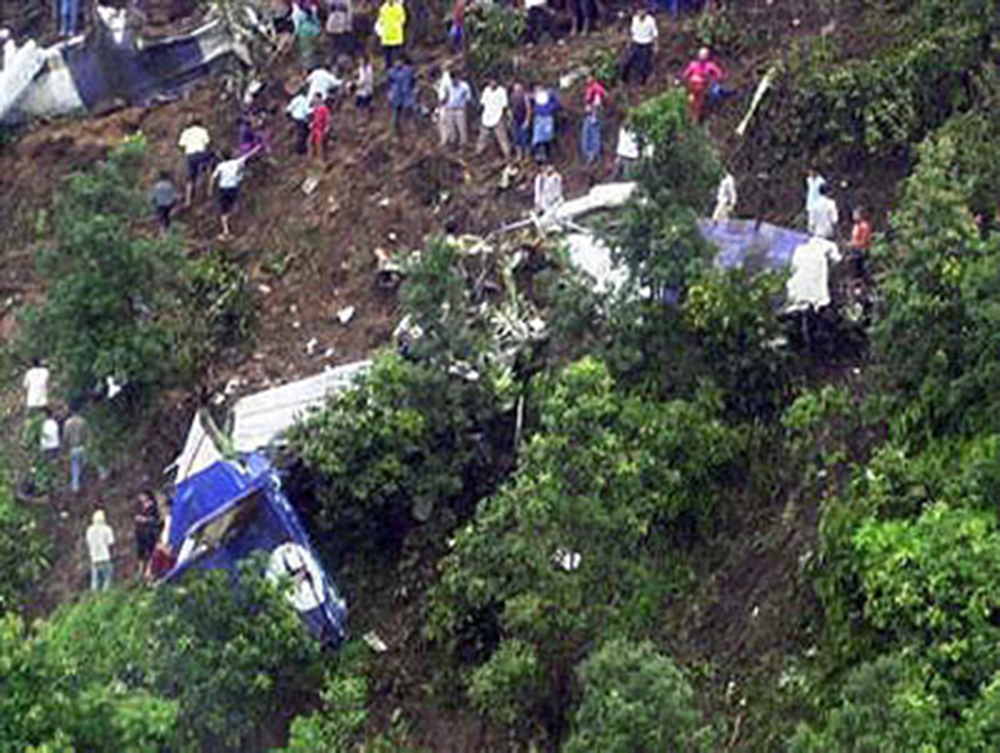
The twin engine aircraft departed Jomsom Airport at 0941LT for a 25-minutes flight to Pokhara, carrying three crew members and 15 passengers, 13 Germans, one American and one British. While descending to Pokhara Airport, the crew encountered poor weather conditions with low clouds. At an altitude of 4,600 feet, the aircraft struck the slope of a mountain located 6 km southwest of the airport, near the village of Kristi Nachnechaur. The aircraft was totally destroyed by impact forces and all 18 occupants were killed. There was no fire.
Probable cause:
Controlled flight into terrain after the crew descended too low in poor visibility without maintaining visual clearance with the ground.

Ground accident of an Embraer EMB-120RT Brasília in Manaus

Date & Time: Aug 13, 2002 at 1225 LT
Type of aircraft:
Operator:
Registration:
PT-WGE
Flight Phase:
Survivors:
Yes
Schedule:
Humaitá – Manaus
MSN:
120-004
YOM:
1986
Flight number:
RLE4847
Country:
Crew on board:
3
Crew fatalities:
Pax on board:
22
Pax fatalities:
Other fatalities:
Total fatalities:
0
Captain / Total flying hours:
13474
Captain / Total hours on type:
518.00
Copilot / Total flying hours:
4110
Copilot / Total hours on type:
3660
Aircraft flight hours:
26756
Circumstances:
Following an uneventful flight from Humaitá, the crew completed the landing at Manaus-Eduardo Gomes Airport. After taxi, the crew was approaching the apron when he feathered the propellers and applied the brakes as they wanted to stop the aircraft. There was no deceleration despite both crew applied brakes. The copilot suggested to use reverse thrust but this was not possible as the propellers were already feathered. Out of control, the aircraft struck a brick building, damaging the left engine, and the right landing gear fell into a drainage ditch, approximately one meter deep. All 25 occupants evacuated safely while the aircraft was damaged beyond repair.
Probable cause:
The following factors were identified:
- The crew did not have sufficient training to enable the desired assertiveness for the correct use of aircraft resources, which would probably have prevented the accident, since, instead of applying the emergency brake, they applied reverse with the feathered props, contrary to the procedure provided for in the Aircraft Manual.
- The maintenance services were not efficient, as they did not comply with the Aircraft Maintenance Manual in relation to the dimensional adjustment of the Hub Cap Drive Clips' drive clips, and the Service Bulletin incorporated stickers to the outer doors of the main landing gear, as a reminder to the mechanic to check the clearances.
- The copilot failed to apply the reverse pitch on the propellers as they were feathered, and at that moment the emergency brake should be commanded to brake the aircraft.
- The company failed to adequately check the execution of the actions provided for in the Aircraft Maintenance Manual regarding the 'Antiskid' system and to verify the application of all service bulletins issued by the manufacturer.
Final Report:

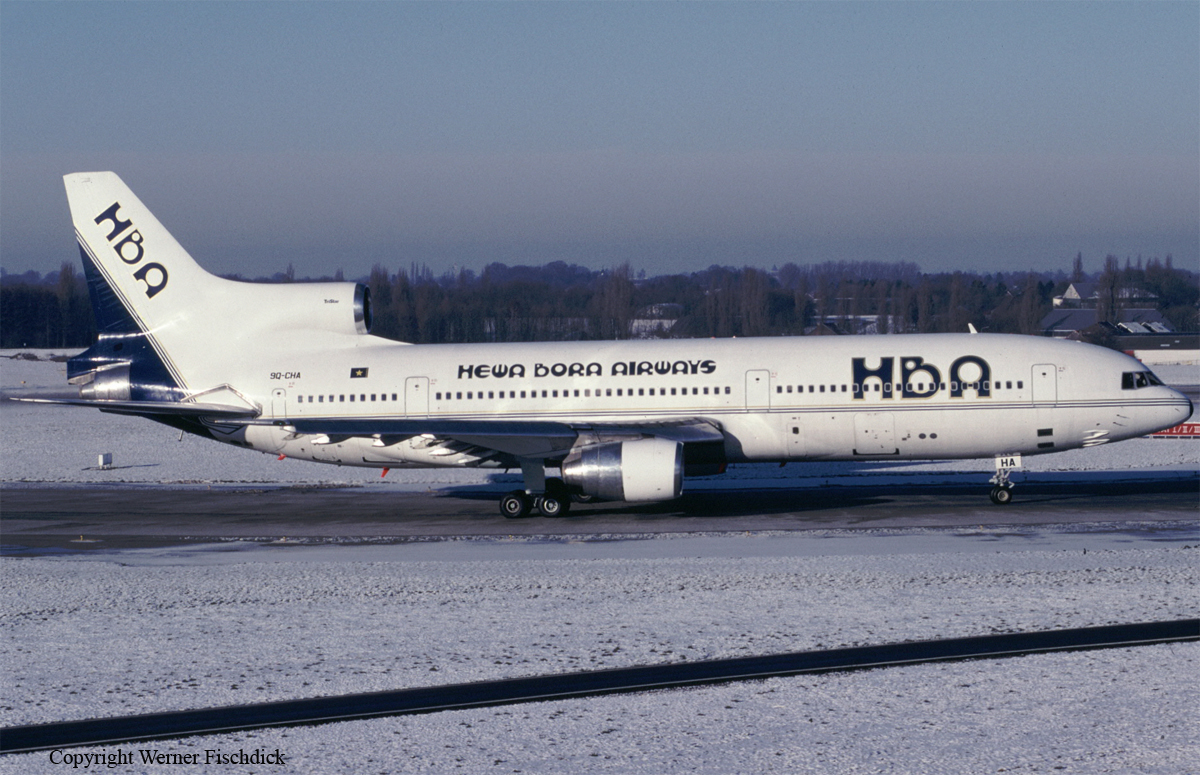
Crash of a Lockheed L-1011 TriStar 250 in Kinshasa

Date & Time: Aug 8, 2002
Type of aircraft:
Operator:
Registration:
9Q-CHA
Survivors:
Yes
Schedule:
Kinshasa - Brussels
MSN:
193C-1227
YOM:
1982
Region:
Crew on board:
12
Crew fatalities:
Pax on board:
188
Pax fatalities:
Other fatalities:
Total fatalities:
0
Aircraft flight hours:
71317
Aircraft flight cycles:
21669
Circumstances:
The aircraft departed Kinshasa-N'Djili Airport on a regular schedule flight to Brussels with 188 passengers and 12 crew members on board. While cruising at an altitude of 25,000 feet over Gabon, the crew contacted ATC and reported the failure of the engine n°3. He was cleared to return to Kinshasa for an emergency landing. Upon touchdown, all tyres burst and the aircraft skidded on the runway before coming to rest. All 200 occupants evacuated safely while the aircraft was damaged beyond repair.

Crash of a De Havilland DHC-6 Twin Otter 300 in Surkhet: 4 killed

Date & Time: Jul 17, 2002 at 1422 LT
Operator:
Registration:
9N-AGF
Survivors:
No
Site:
Schedule:
Jumla - Surkhet
MSN:
828
YOM:
1985
Location:
Country:
Region:
Crew on board:
2
Crew fatalities:
Pax on board:
2
Pax fatalities:
Other fatalities:
Total fatalities:
4
Circumstances:
The twin engine aircraft departed Jumla at 1404LT on a 25-minutes flight to Surkhet with two passengers and two pilots on board. While descending to Surkhet, the crew encountered poor visibility due to bad weather conditions. At an altitude of 6,500 feet, the aircraft struck the slope of a mountain and crashed 10 km from Surkhet. All four occupants were killed.
Probable cause:
Controlled flight into terrain after the crew descended below the minimum prescribed altitude in poor visibility.

Crash of a Britten-Norman BN-2a-6 Islander in Long Bawan: 9 killed

Date & Time: Jul 16, 2002
Type of aircraft:
Operator:
Registration:
PK-TAR
Survivors:
Yes
Schedule:
Tarakan – Long Bawan
MSN:
860
YOM:
1977
Country:
Region:
Crew on board:
2
Crew fatalities:
Pax on board:
8
Pax fatalities:
Other fatalities:
Total fatalities:
9
Circumstances:
On final approach to Long Bawan Airport, at an altitude of 5,400 feet, the twin engine aircraft collided with trees and crashed in a wooded area located 8 km short of runway. The wreckage was found six days later and a passenger was evacuated alive while all nine other occupants were killed. For unknown reasons, the crew was completing the approach at an insufficient altitude.

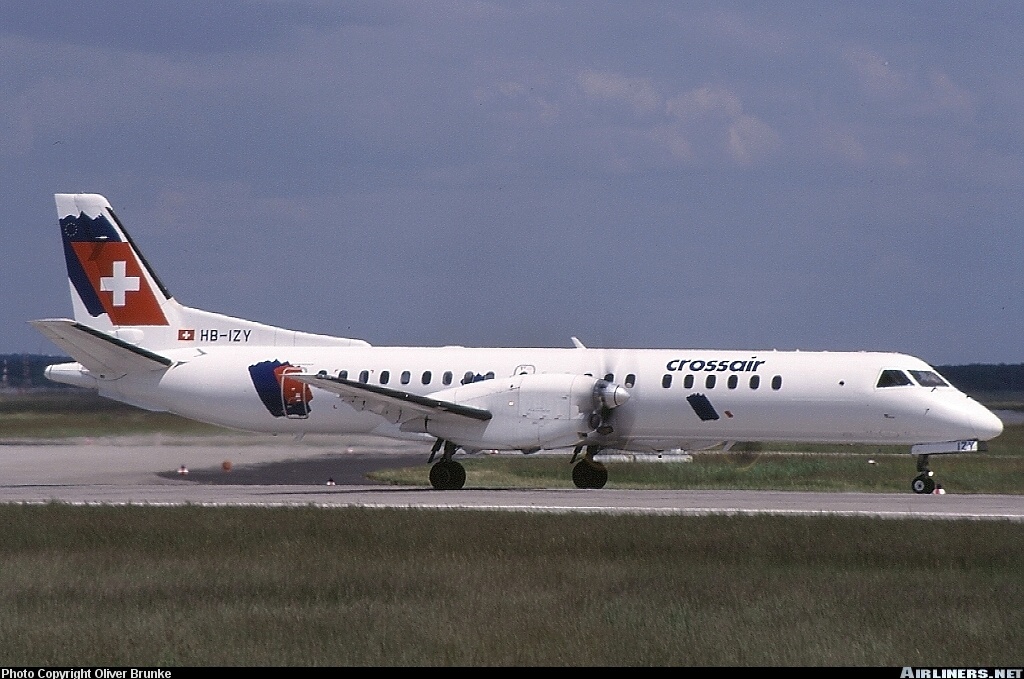
Crash of a Saab 2000 in Werneuchen

Date & Time: Jul 10, 2002 at 2042 LT
Type of aircraft:
Operator:
Registration:
HB-IZY
Survivors:
Yes
Schedule:
Basel - Hamburg
MSN:
2000-047
YOM:
1997
Flight number:
LX850
Country:
Region:
Crew on board:
4
Crew fatalities:
Pax on board:
16
Pax fatalities:
Other fatalities:
Total fatalities:
0
Captain / Total flying hours:
2600
Captain / Total hours on type:
2350.00
Copilot / Total flying hours:
1940
Copilot / Total hours on type:
1732
Aircraft flight hours:
12303
Aircraft flight cycles:
12069
Circumstances:
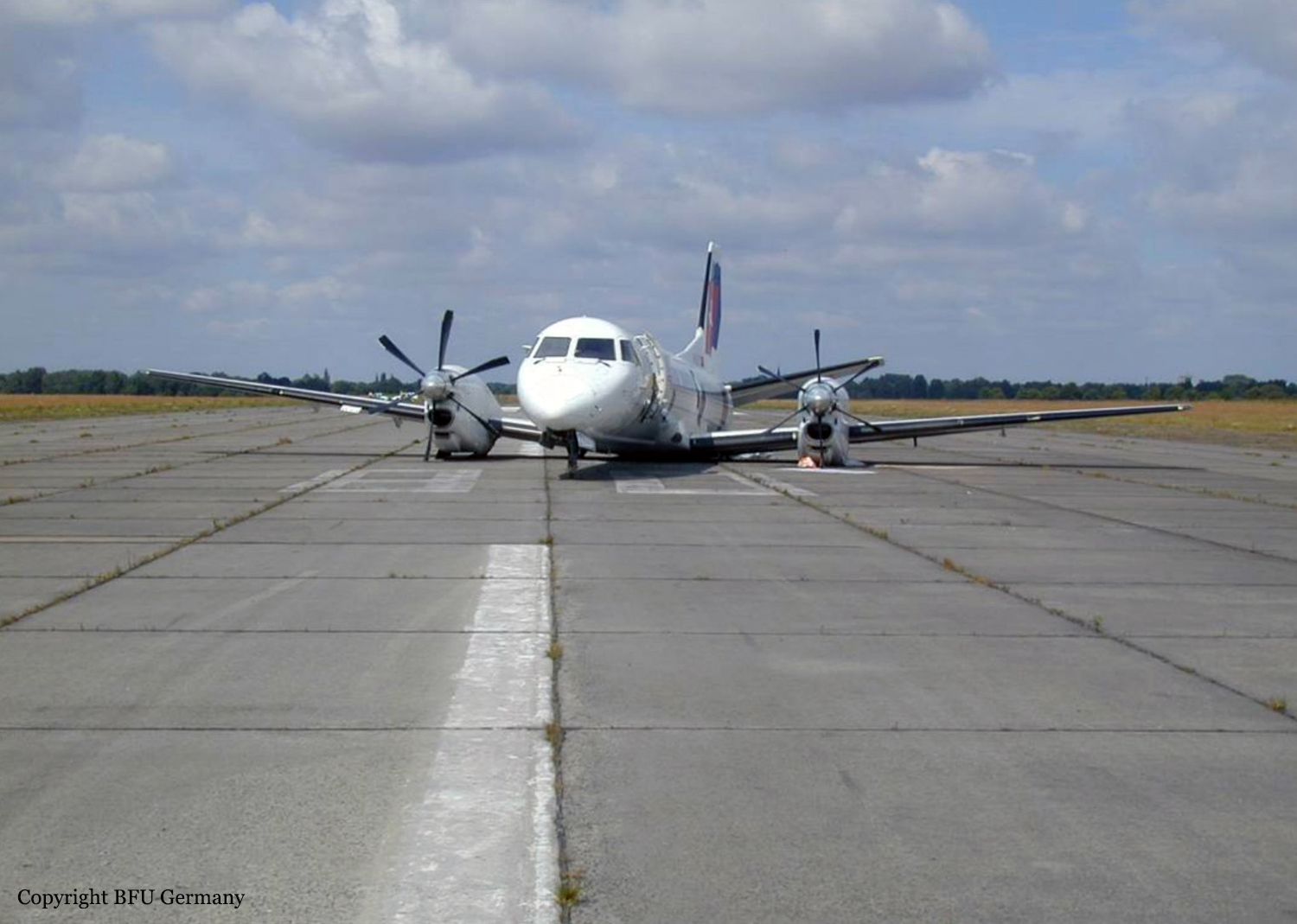
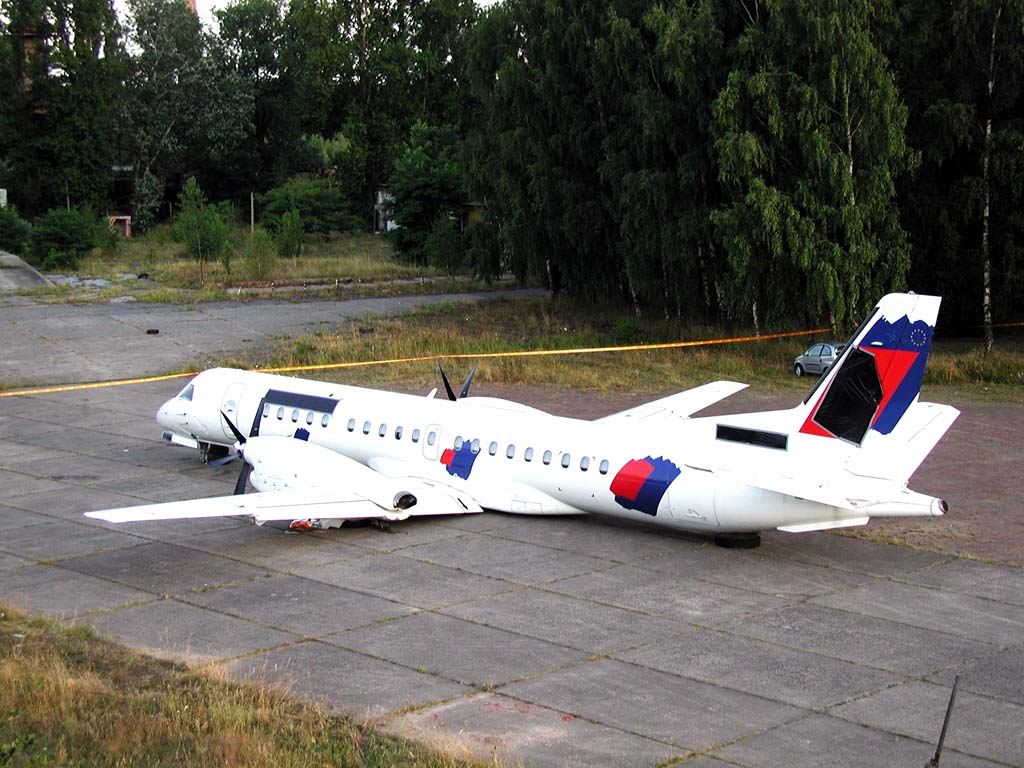
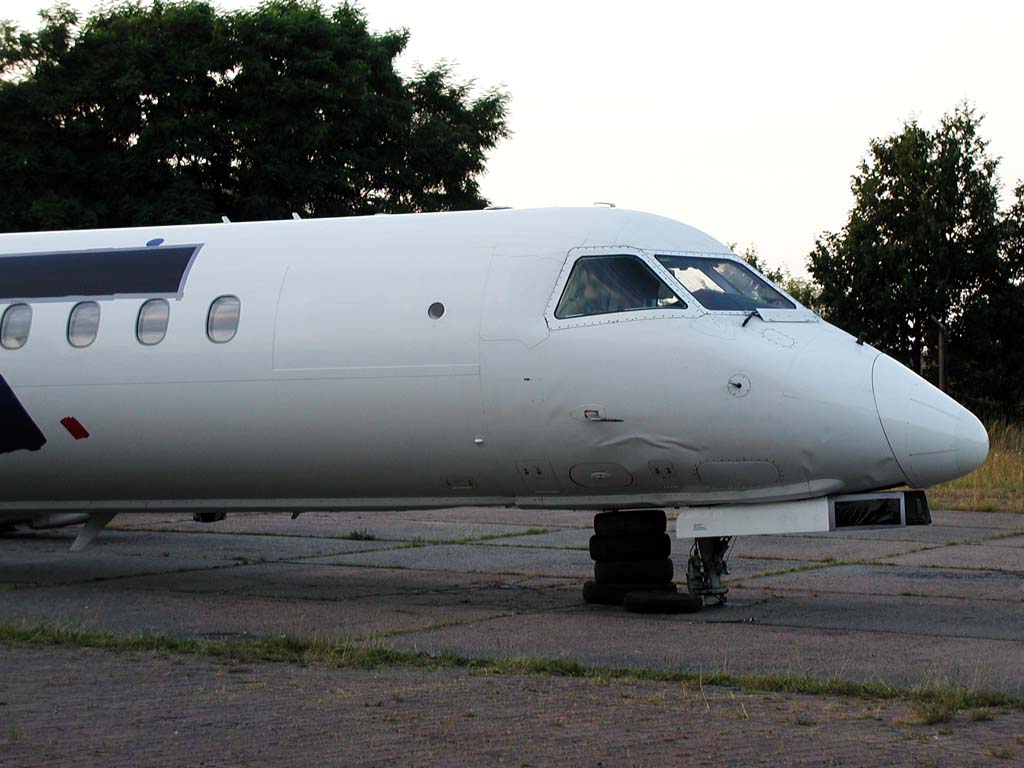
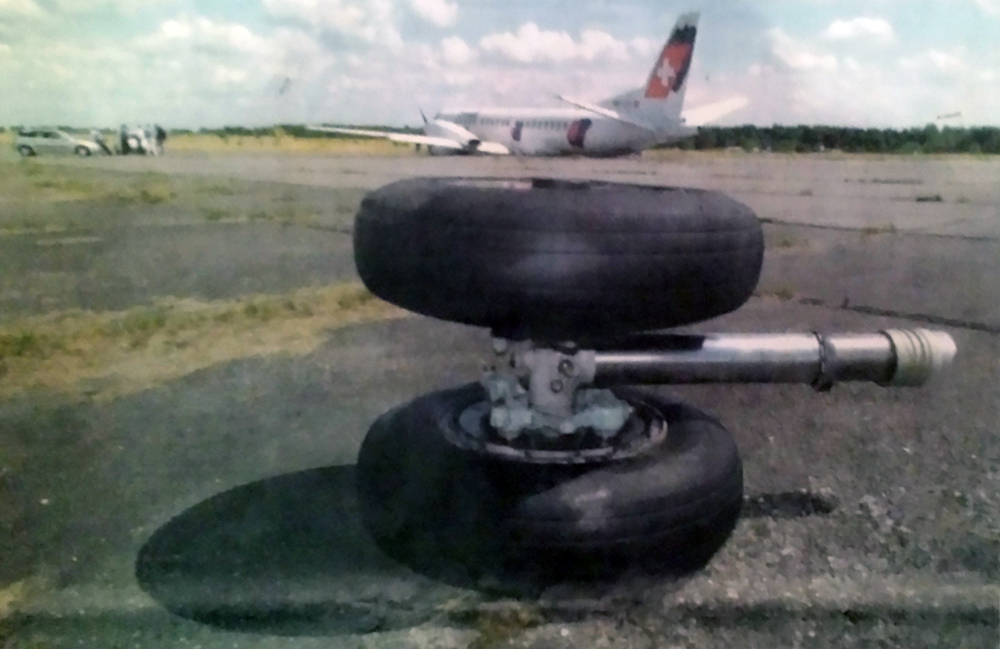
The twin engine aircraft departed Basel-EuroAirport on a flight to Hamburg with 16 passengers and four crew members on board. While descending to Hamburg, weather conditions deteriorated rapidly and due to thunderstorm activity with heavy rain falls and strong winds, the crew was unable to land at Hamburg-Fuhlsbüttel Airport and decided to divert to Bremen. Unfortunately, weather conditions were so poor that the crew was unable to land in Bremen, Hanover and Berlin-Tegel Airport as well. Due to low fuel reserve, the crew informed ATC about his situation and was vectored to Werneuchen, a former Soviet military airfield some 60 km northeast of Berlin. Werneuchen's unlighted runway has a length of 2,400 metres but has no approach aids. ATC warned the crew about the presence of a one metre high earth embankment across the runway, some 900 metres past the runway threshold which was there to avoid illegal car races. The remaining runway was still used for general aviation. Due to limited visibility caused by poor weather conditions, the crew was unable to see and avoid the earth embankment. After landing, the aircraft impacted the earth embankment, causing the undercarriage to be torn off. The aircraft slid on its belly for few dozen metres before coming to rest in the middle of the runway. All 20 occupants evacuated the cabin, among them two were slightly injured. The aircraft was damaged beyond repair.
Probable cause:
The following findings were identified:
- Dimension and intensity of the storm front and dynamics of the weather conditions,
- Inadequate use of resources in decision-making during the flight (proactive),
- Loss of alternative landing facilities at increasing time pressure (reactive),
- Landing of the aircraft outside the operating area of an aerodrome,
- Collision with the embankment due to the non-detection of an obstacle.
Systemic causes:
- Inadequate information on weather conditions and development before and during the flight,
- Inadequate information on the Werneuchen Special Airfield due to an ambiguous map display as well as misleading or lack of communication,
- Inadequate labeling/marking of the operational and non-operational areas of the airport.
Final Report:


Crash of a Britten-Norman BN-2B-26 Islander in Anholt

Date & Time: Jun 14, 2002 at 1945 LT
Type of aircraft:
Operator:
Registration:
OY-CFV
Flight Phase:
Survivors:
Yes
Schedule:
Anholt - Roskilde
MSN:
2174
YOM:
1984
Country:
Region:
Crew on board:
1
Crew fatalities:
Pax on board:
7
Pax fatalities:
Other fatalities:
Total fatalities:
0
Captain / Total flying hours:
759
Captain / Total hours on type:
131.00
Circumstances:
Before takeoff from Anholt Airfield, the pilot failed to position the elevator trim in the neutral position. During the takeoff roll, because the elevator trim remained in a 1,5 unit nose down position, the pilot was unable to rotate so he rejected takeoff. A second attempt to takeoff was abandoned few minutes later for the same reason. During a third attempt to take off, with a tailwind component near the limit, the aircraft lifted off when the stall warning alarm sounded. The pilot lowered the nose to gain speed when the right main gear impacted a sand dune. Out of control, the aircraft crash landed and came to rest. All eight occupants evacuated safely while the aircraft was damaged beyond repair.
Probable cause:
The following findings were identified:
- The elevator trim was not correctly configured to neutral prior to takeoff,
- The pilot failed to abort the takeoff after the first attempted rotation, when the aircraft did not respond normally to elevator command,
- The takeoff was initiated with a tailwind component that was close to the maximum permissible value.
Final Report:

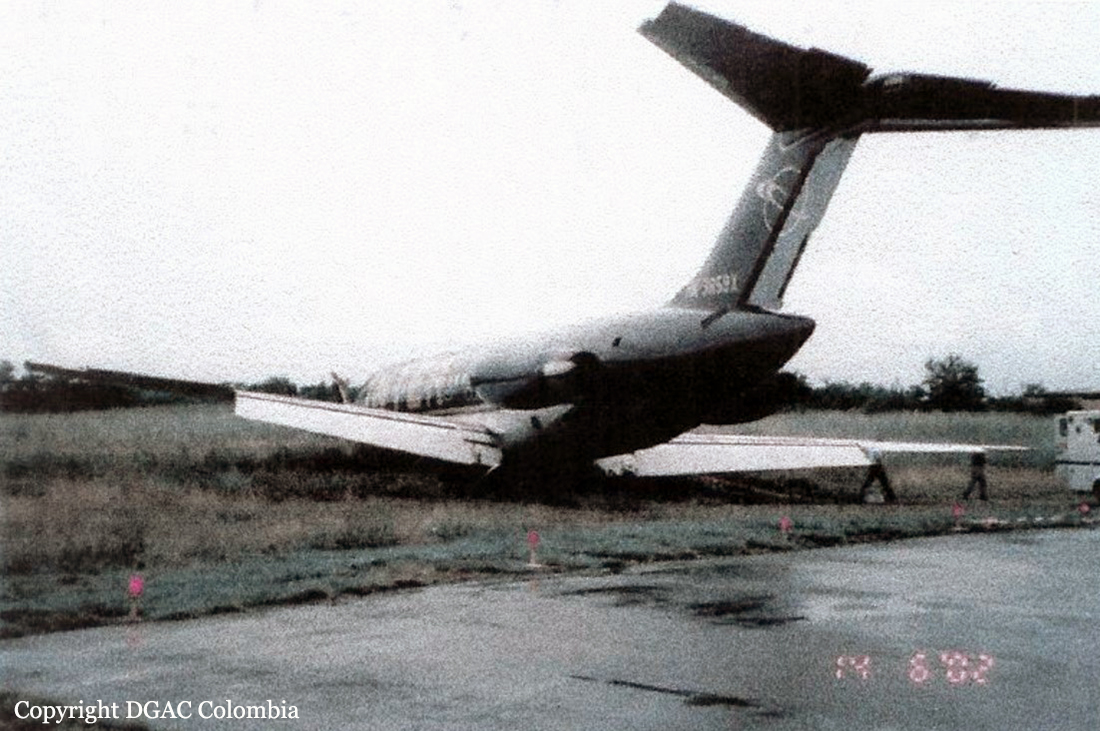
Crash of a Douglas DC-9-14 in Neiva

Date & Time: Jun 14, 2002 at 1815 LT
Type of aircraft:
Operator:
Registration:
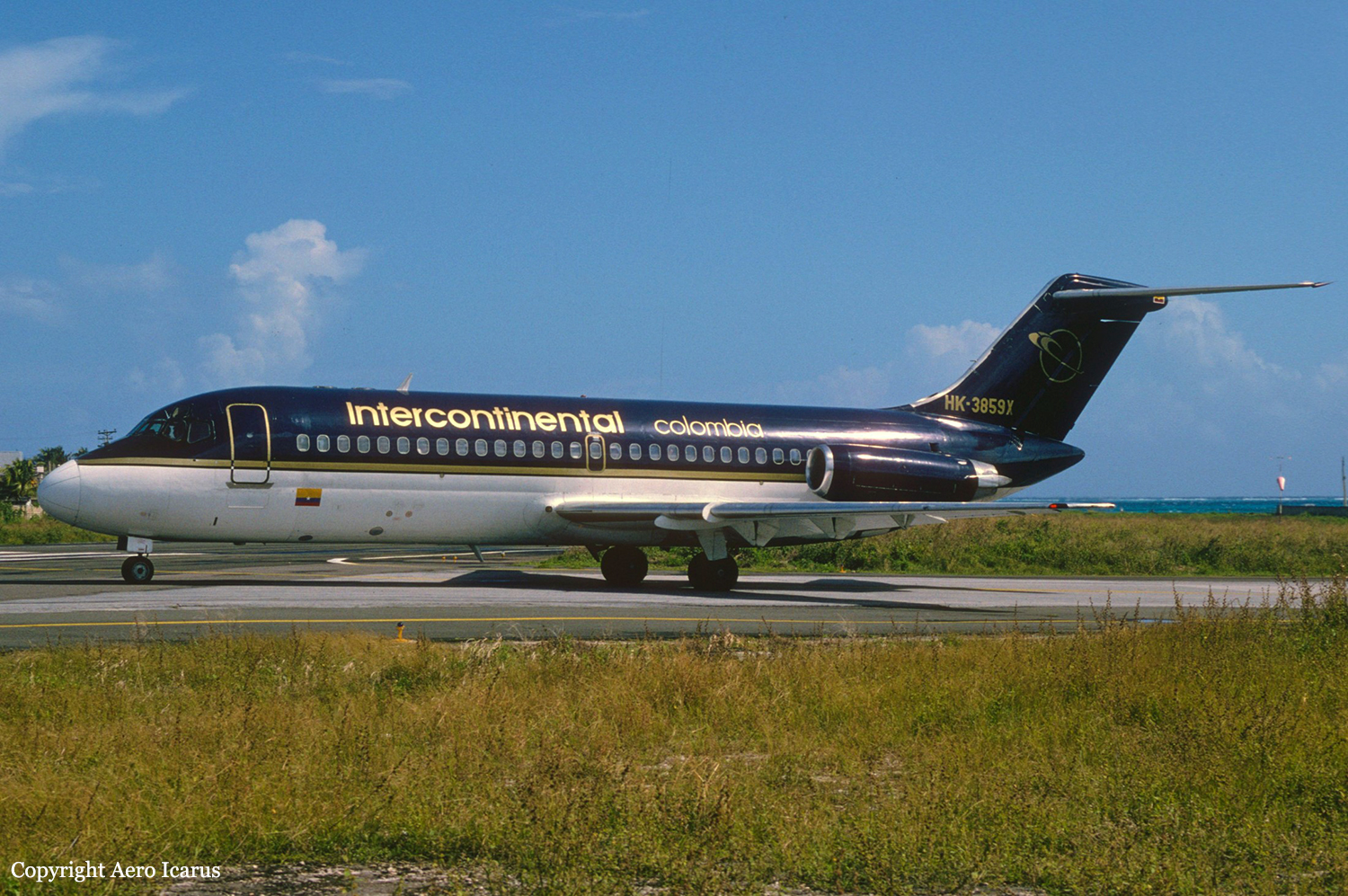
HK-3859X
Survivors:
Yes
Schedule:
Bogotá – Florencia – Neiva
MSN:
45843
YOM:
1966
Flight number:
RS8883
Location:
Country:
Crew on board:
6
Crew fatalities:
Pax on board:
65
Pax fatalities:
Other fatalities:
Total fatalities:
0
Captain / Total flying hours:
5590
Captain / Total hours on type:
442.00
Copilot / Total flying hours:
804
Copilot / Total hours on type:
461
Aircraft flight hours:
73906
Circumstances:
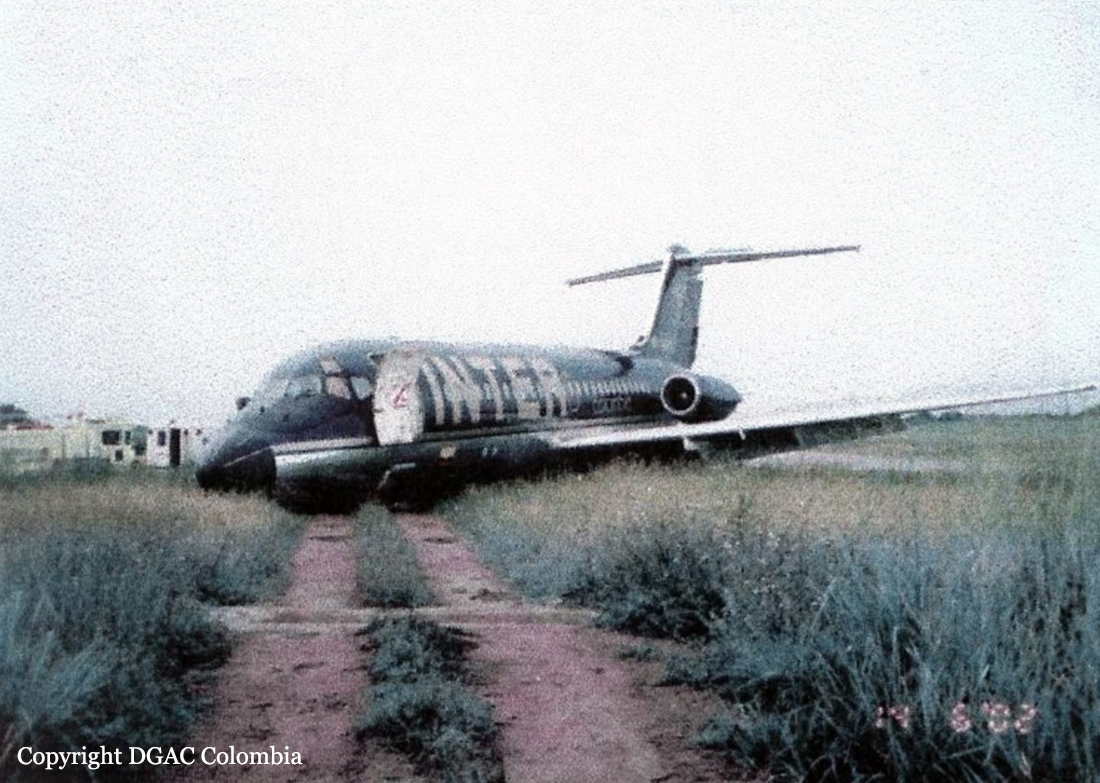
Following an uneventful flight from Florencia, the crew was cleared to descend to Neiva-Benito Salas Airport. On approach, the aircraft was unstable and after the GPWS alarm sounded, the captain increased power and gained altitude, causing the aircraft to climb over the glide. The approach was continued and the airplane passed over the threshold at a height of 140 feet and eventually landed 1,700 feet past the runway threshold at intersection Bravo (the runway is 5,249 feet long). After touchdown, the crew started the braking procedure but two tyres burst and the aircraft was unable to stop within the remaining distance. It overran and came to rest in a grassy area. All 71 occupants evacuated safely while the aircraft was damaged beyond repair.
Probable cause:
The energy accumulated in the set of tires deflated the tire n°2, reducing the braking effectiveness by 50% due to the loss of the antiskid of that set in the same proportion, and subsequently the loss of 100% of the effectiveness of braking when tires n°3 and 4 burst successively, causing the aircraft to exceed the remaining runway length leading to the accident situation.
The following contributing factors were identified:
- The increase in speed of the VRF by the crew that increased the landing length,
- An unstabilized approach completed by the the crew,
- The pressure exerted on the crew due to the public order situation in the city of Florence for the purpose of a possible overnight stay of the aircraft and consequently the crew.
Final Report:

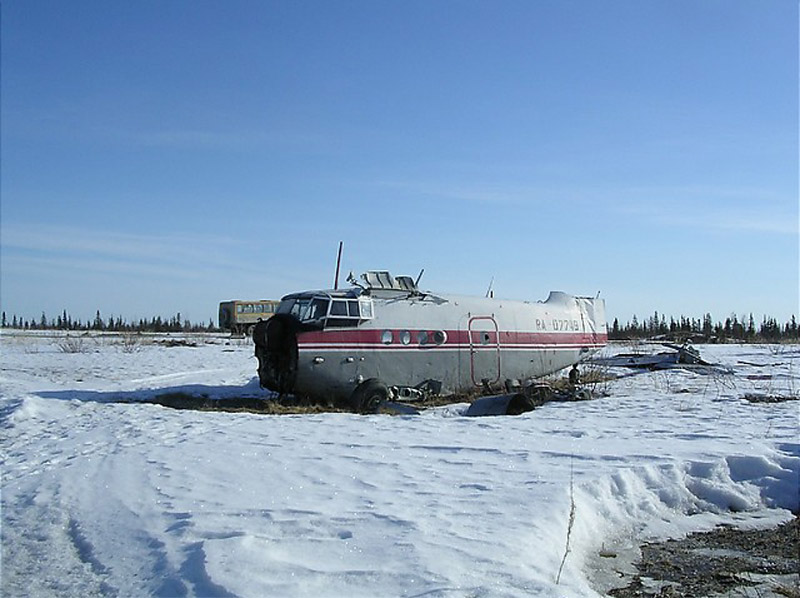
Crash of a PZL-Mielec AN-2P in Lovozero

Date & Time: Jun 4, 2002 at 1340 LT
Type of aircraft:
Operator:
Registration:
RA-07748
Flight Phase:
Survivors:
Yes
Schedule:
Lovozero – Murmansk
MSN:
1G159-23
YOM:
1974
Country:
Region:
Crew on board:
3
Crew fatalities:
Pax on board:
9
Pax fatalities:
Other fatalities:
Total fatalities:
0
Circumstances:
Just after liftoff from Lovozero Airstrip, while climbing to a height of 15-20 metres, the engine lost power and white smoke escaped from the bottom of the engine. The aircraft lost height, struck an 8 metres tall tree located 191 metres past the runway end then crashed in a wooded area 58 metres further. All 12 occupants escaped uninjured while the aircraft was damaged beyond repair.
Probable cause:
Engine failure due to poor maintenance. Deficiencies were reported during investigations regarding the operator's maintenance procedures. The documentation related to aircraft maintenance was incomplete. Also, several mechanics and engineers working on the AN-2 fleet were not qualified and authorised to do so.