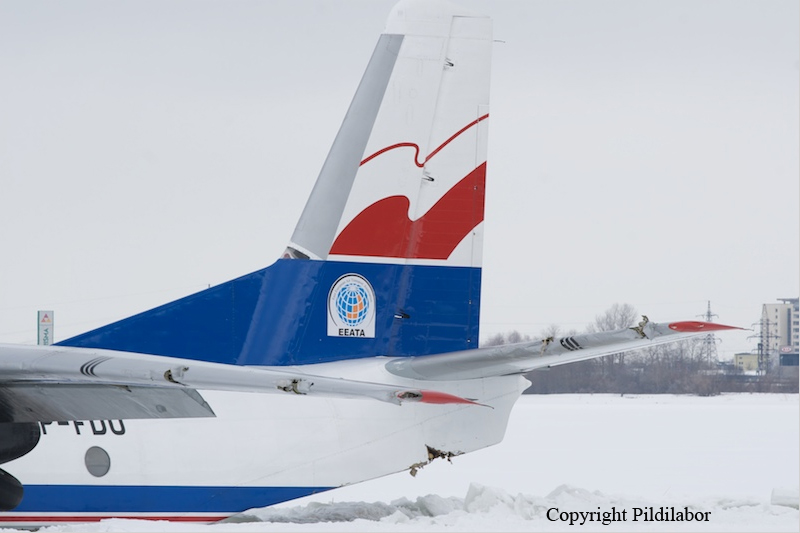
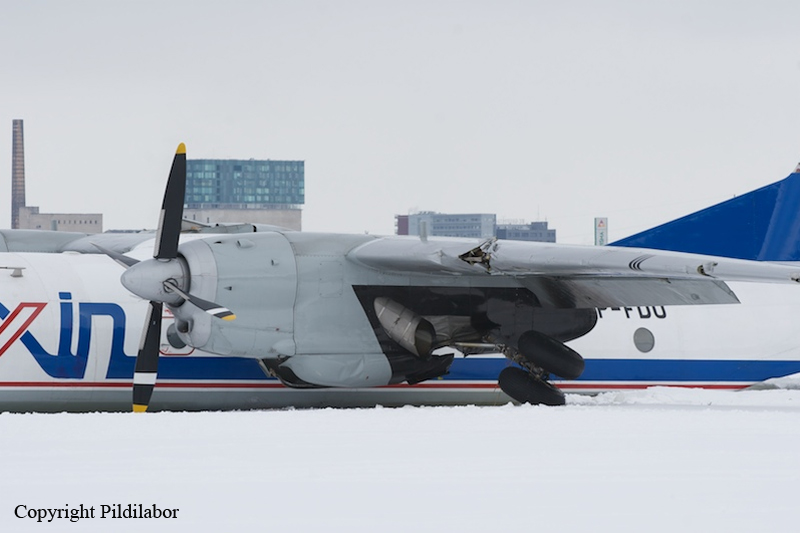
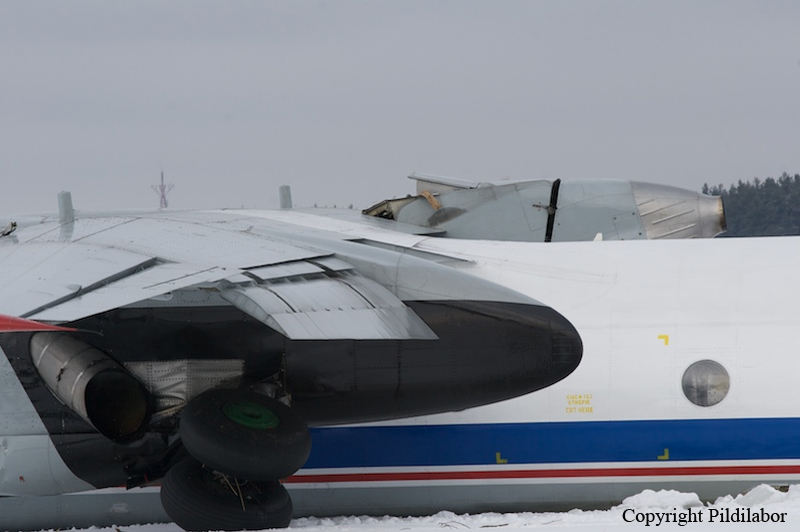
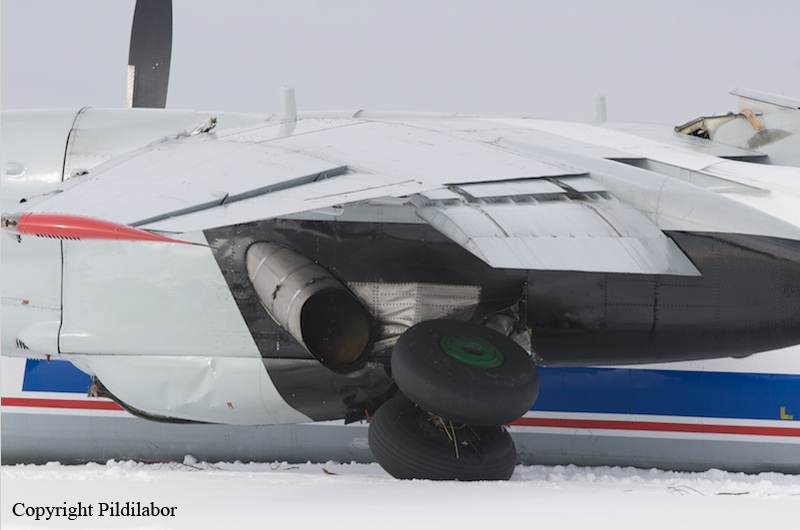
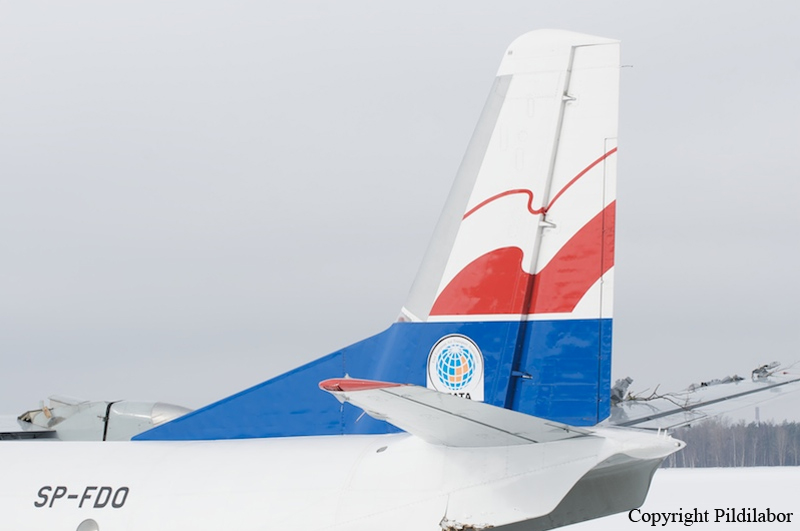
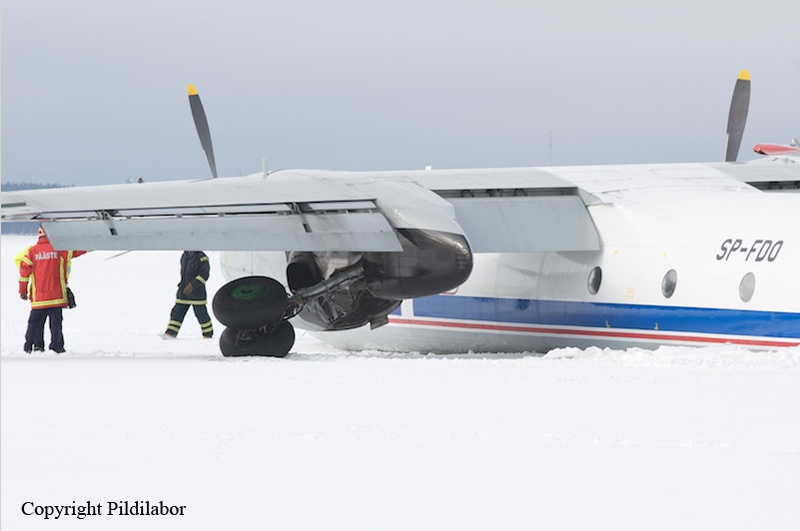
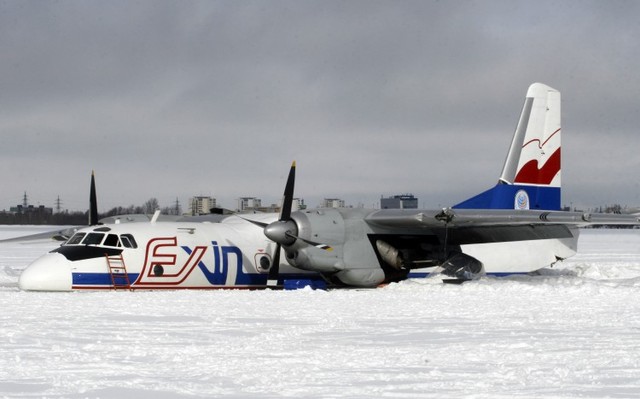
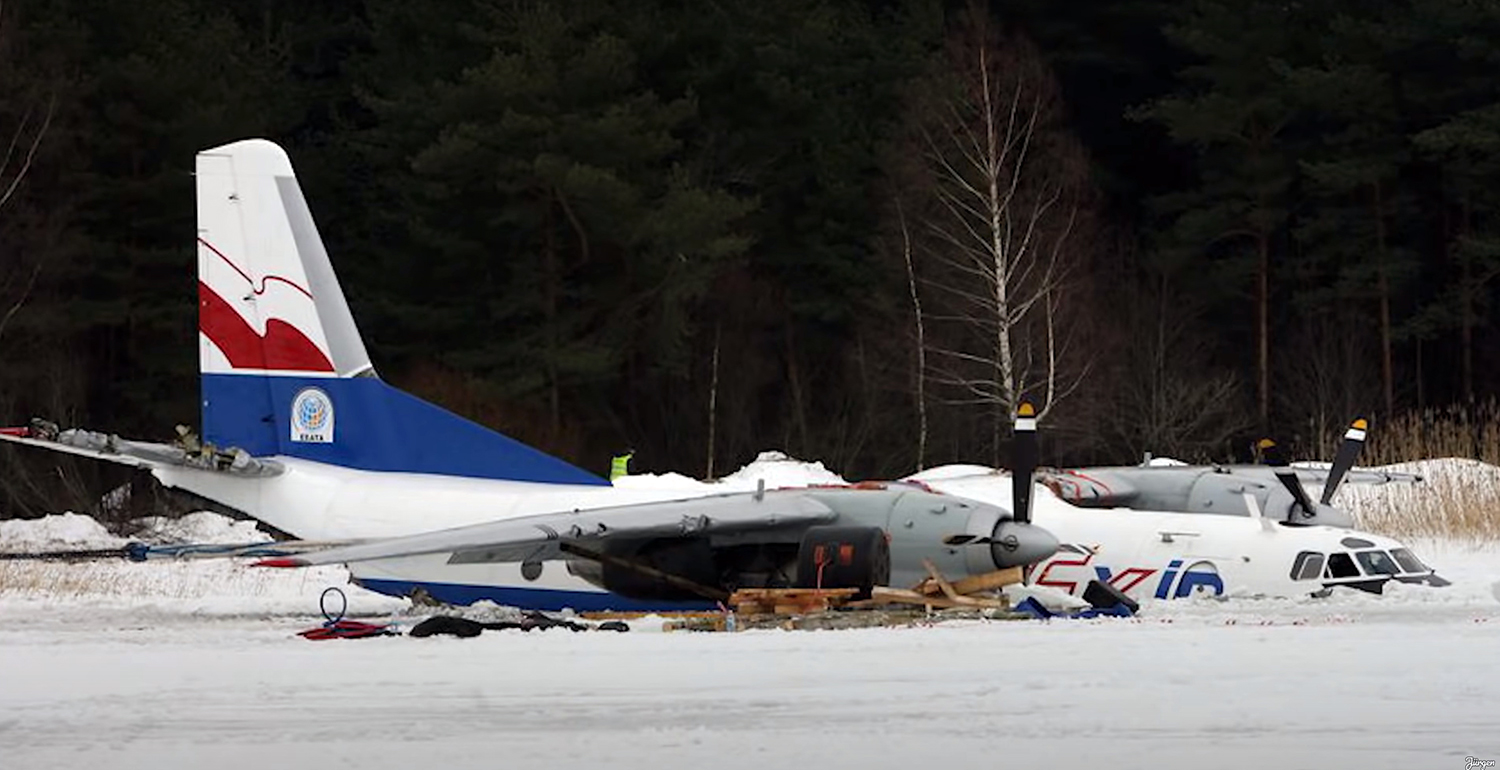
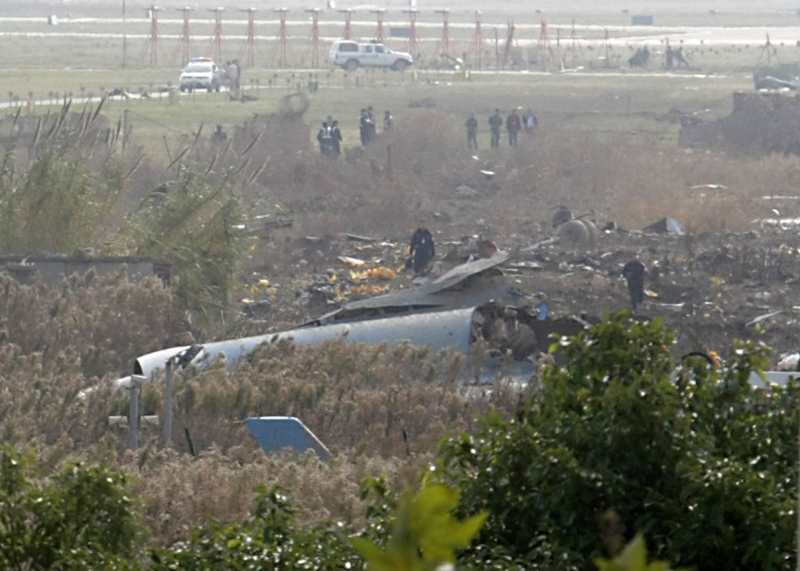
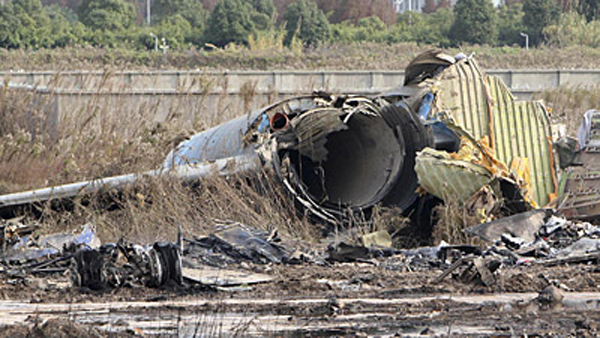
Crash of an Antonov AN-26B in Tallinn

Date & Time: Mar 18, 2010 at 1018 LT
Type of aircraft:
Operator:
Registration:
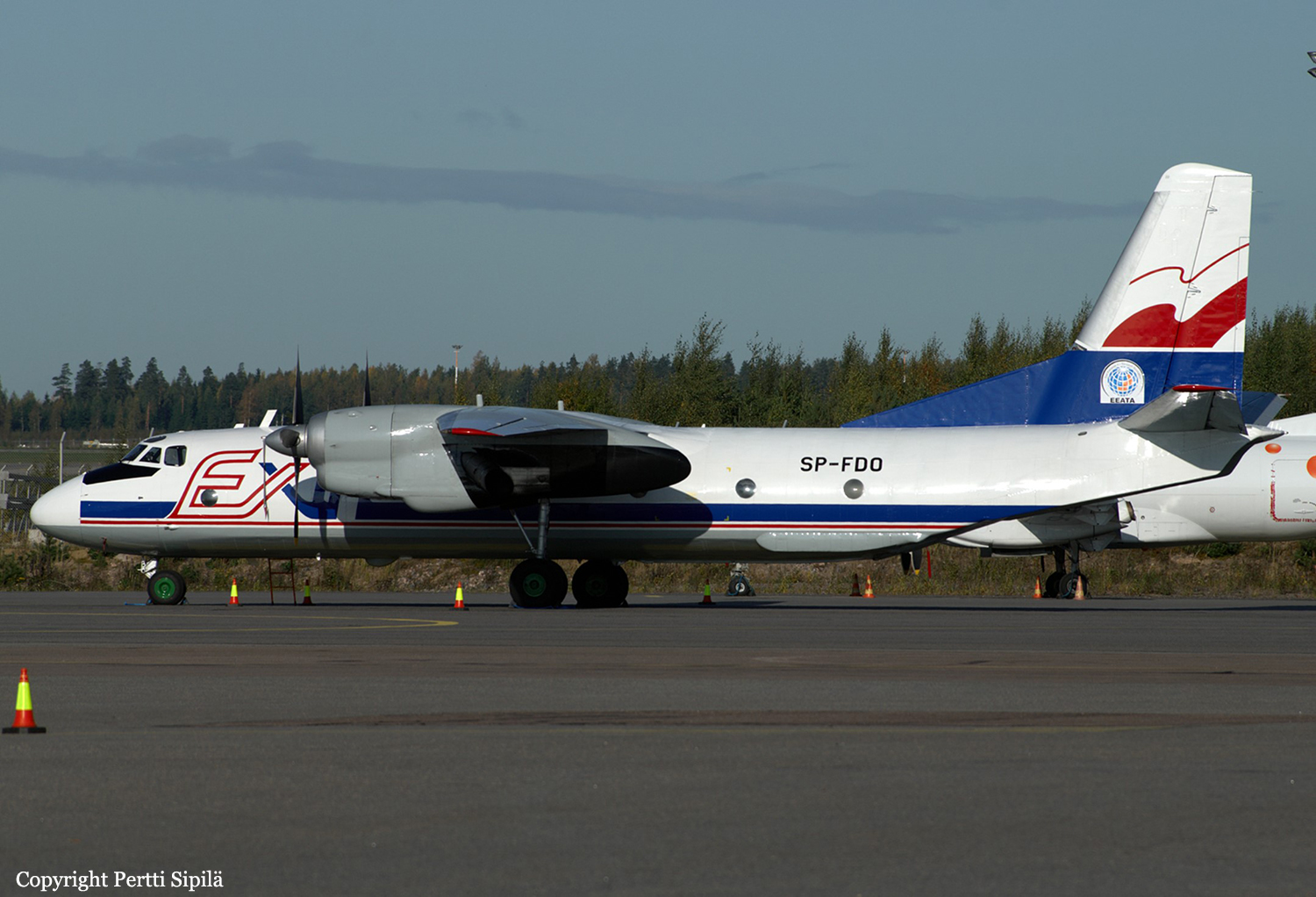
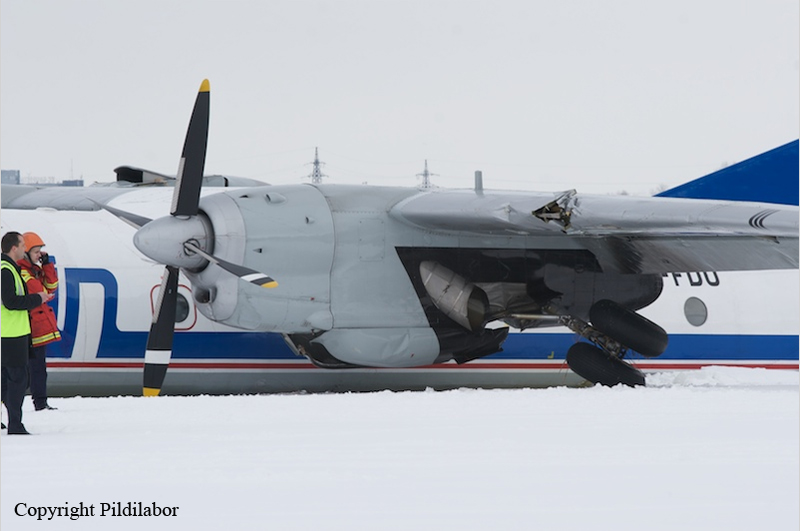
SP-FDO
Flight Type:
Survivors:
Yes
Schedule:
Helsinki – Tallinn
MSN:
105 03
YOM:
1980
Flight number:
EXN3589
Country:
Region:
Crew on board:
6
Crew fatalities:
Pax on board:
0
Pax fatalities:
Other fatalities:
Total fatalities:
0
Captain / Total flying hours:
4695
Captain / Total hours on type:
2295.00
Copilot / Total flying hours:
990
Copilot / Total hours on type:
495
Aircraft flight hours:
25941
Circumstances:
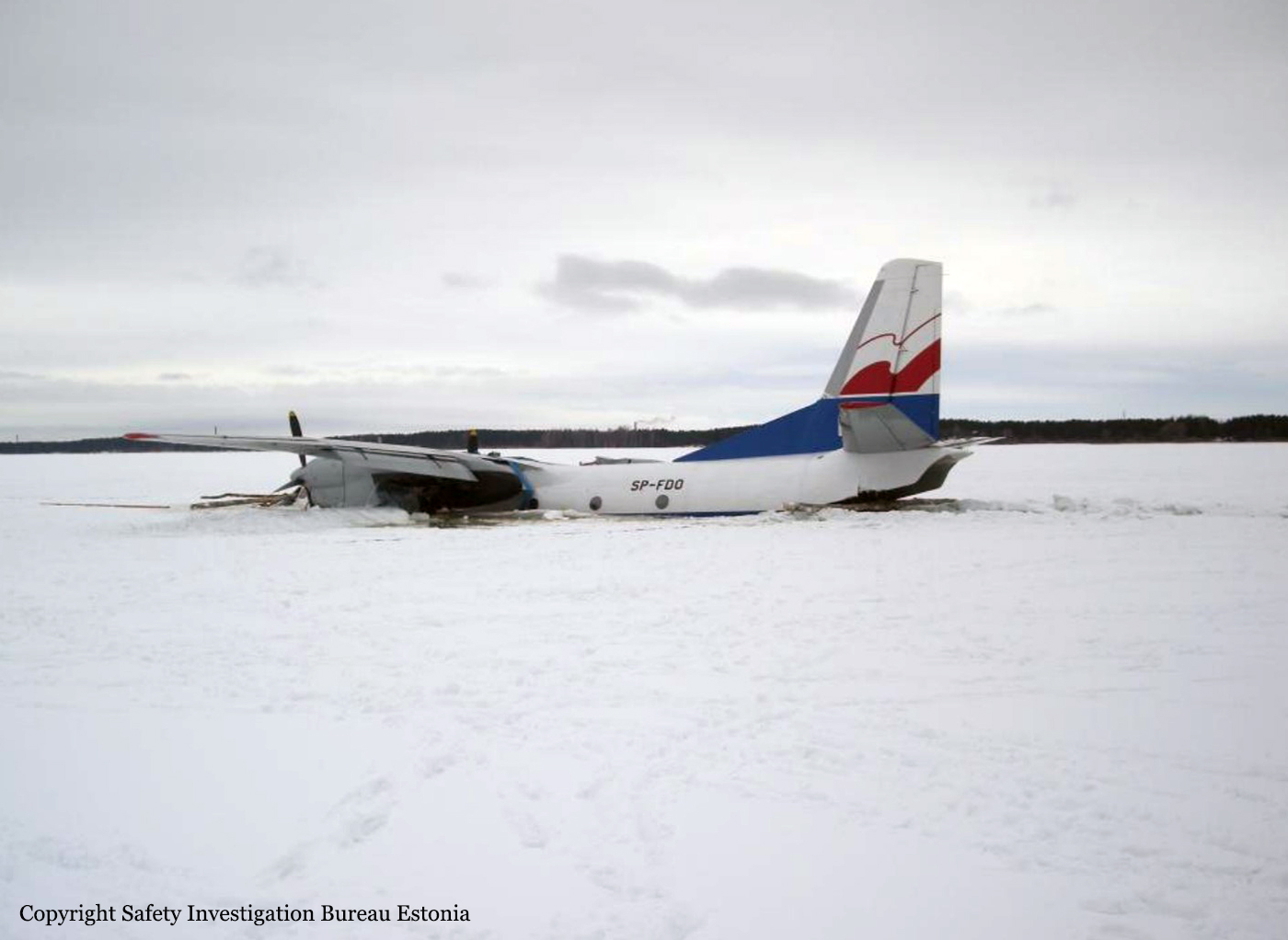
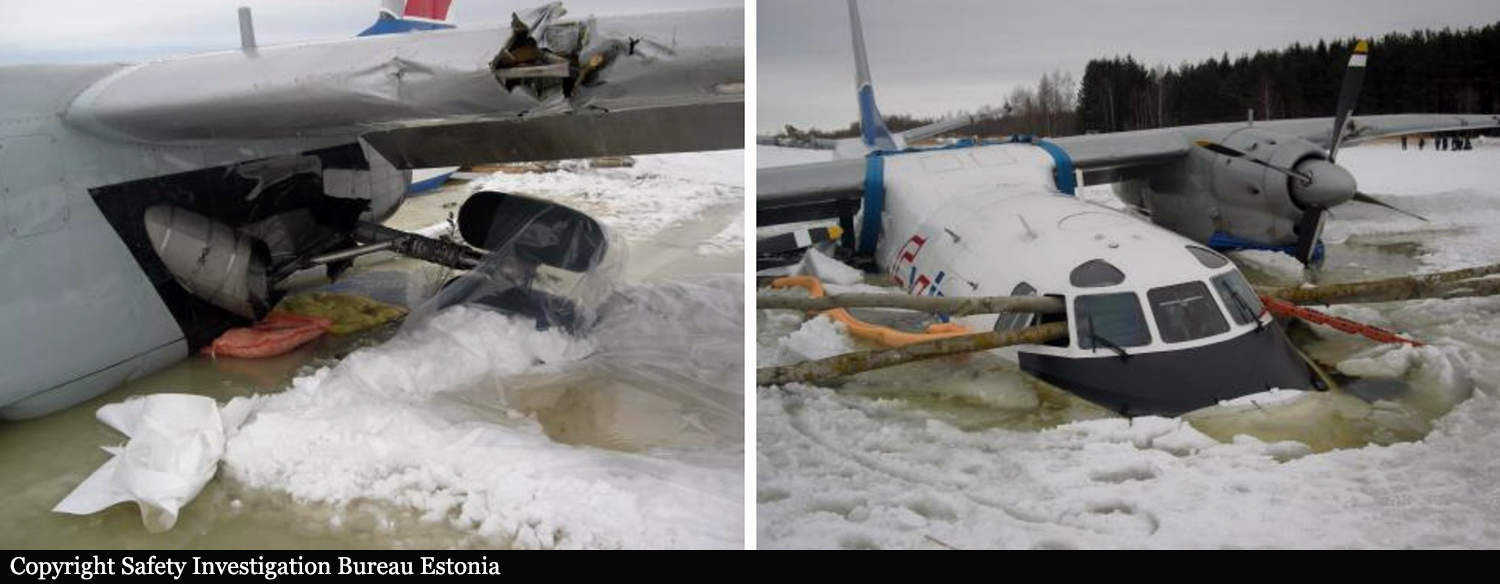
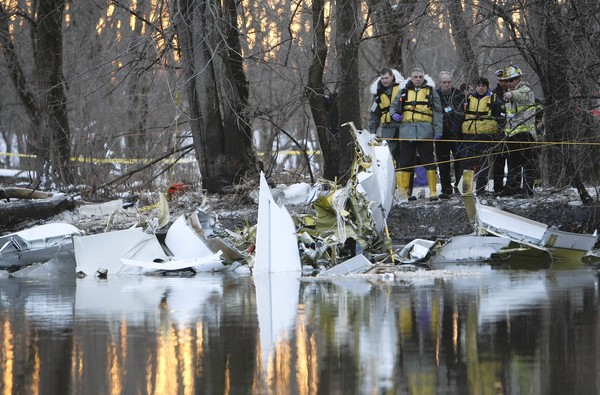
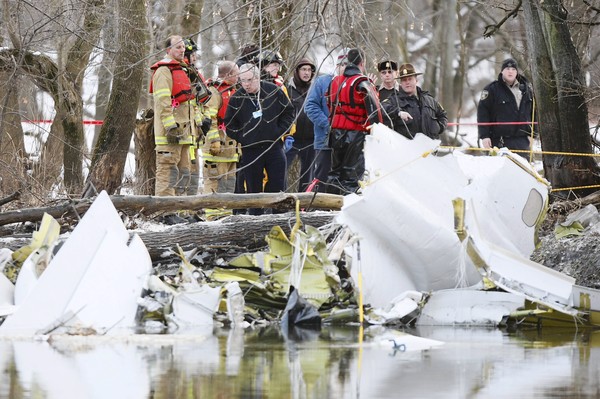
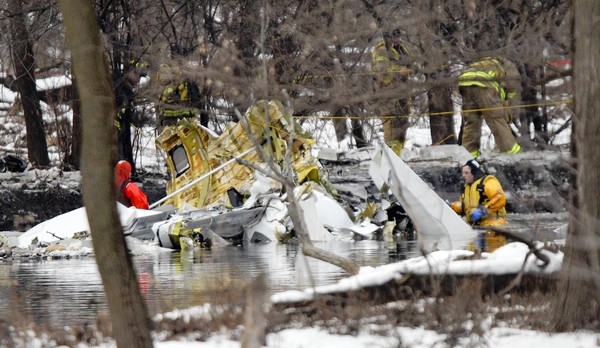
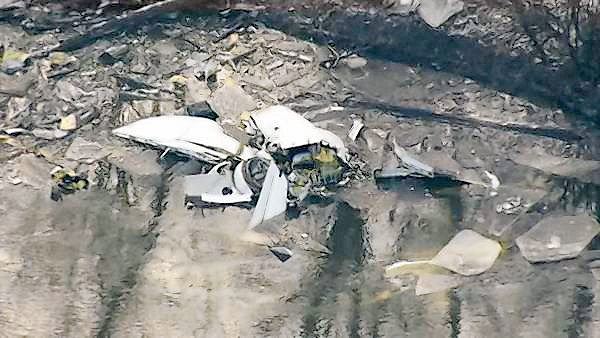
Exin Co was operating An-26B for regular cargo flight between Tallinn and Helsinki. The crew performed last maintenance check in Tallinn on previous day and made uneventful flight to Helsinki on 17th March afternoon. Next morning the aircraft took off from Helsinki for regular flight EXN3589 to Tallinn at 09:46 local time. The takeoff weight was 23,954 kg, 46 kg below the MTOW. Four crewmembers, company mechanic and one cargo attendant were on board. During takeoff crew used RU 19-300 APU for additional thrust as prescribed in AFM. The RU 19-300 was shot down after takeoff. The flight was uneventful until 08:14:50, 9.5 nm from the runway 26. When power levers were retarded to flight idle crew noticed engine vibration and smelled a smoke in the cockpit. The engine chip detector indicator in the cockpit was lit. After short discussion about which engine should be shot down the flight engineer shot down the left engine and the captain tried to start the RU19A-300 (APU) to gain more thrust. During the approach the air traffic controller noticed the aircraft deviation from the approach path to the left and notified the crew. According to the FDR and CVR data the crew was unable to maintain a proper approach path both in lateral and vertical dimensions. The attempts to start RU19A-300 engine failed. Visual contact with the RWY was established 0.5 nm from the threshold. The aircraft crossed the airport boundary being not configured for landing and with IAS 295-300 km/h. The flaps were extended for 10˚ over the threshold; the landing gear was lowered after passing the RWY threshold and retracted again. The aircraft made a high speed low path over the runway on ca 10-15 feet altitude with the landing gear traveling down and up again. Flaps were extended over runway, and then retracted again seconds before impact. At the end of the RWY the full power on right engine was selected, aircraft climbed 15-20 feet and started turning left. Crew started retracting flaps and lowered landing gear. Aircraft crossed the highway at the end of the RWY on altitude ca 30 feet, then descended again, collided with the treetops at the lake shore and made crash-landing on the snow and ice-covered lake waterline. Due to the thick ice the aircraft remained on the ice and glided 151 m on the ice with heading 238˚ before coming to full stop. After the impact the flight engineer shoot down the RH engine and power and released all engine fire extinguishers. All persons onboard escaped immediately through the main door. No emergency was declares and despite suggestions from FO go-around was not commanded.
Probable cause:
Causes of the accident:
1. The failure of the left engine lubrication oil system, leading to the failure of the rear compressor bearing and inflight engine failure.
2. The failure of the crew to maintain the approach path and adhere to single engine landing procedures.
Factors contributing to the accident:
1. Improper and insufficient crew training, inter alia complete absence of simulator training.
2. The lack of effective coordination between crewmembers.
3. The failure of the crew to start RU19A-300 (APU).
4. Adverse weather conditions.
5. Inadequate company supervision by Polish CAA, consisting in not noticing the lack.
of flight crew training and companies generally pour safety culture.
6. Inadequate company maintenance practices, leaving preexisting breather duct failure unnoticed.
Final Report:
Crash of a Fokker F27 Friendship 300M in Bosaso

Date & Time: Mar 4, 2010
Type of aircraft:
Operator:
Registration:
5Y-BRN
Flight Type:
Survivors:
Yes
MSN:
10155
YOM:
1960
Country:
Region:
Crew on board:
2
Crew fatalities:
Pax on board:
0
Pax fatalities:
Other fatalities:
Total fatalities:
0
Circumstances:
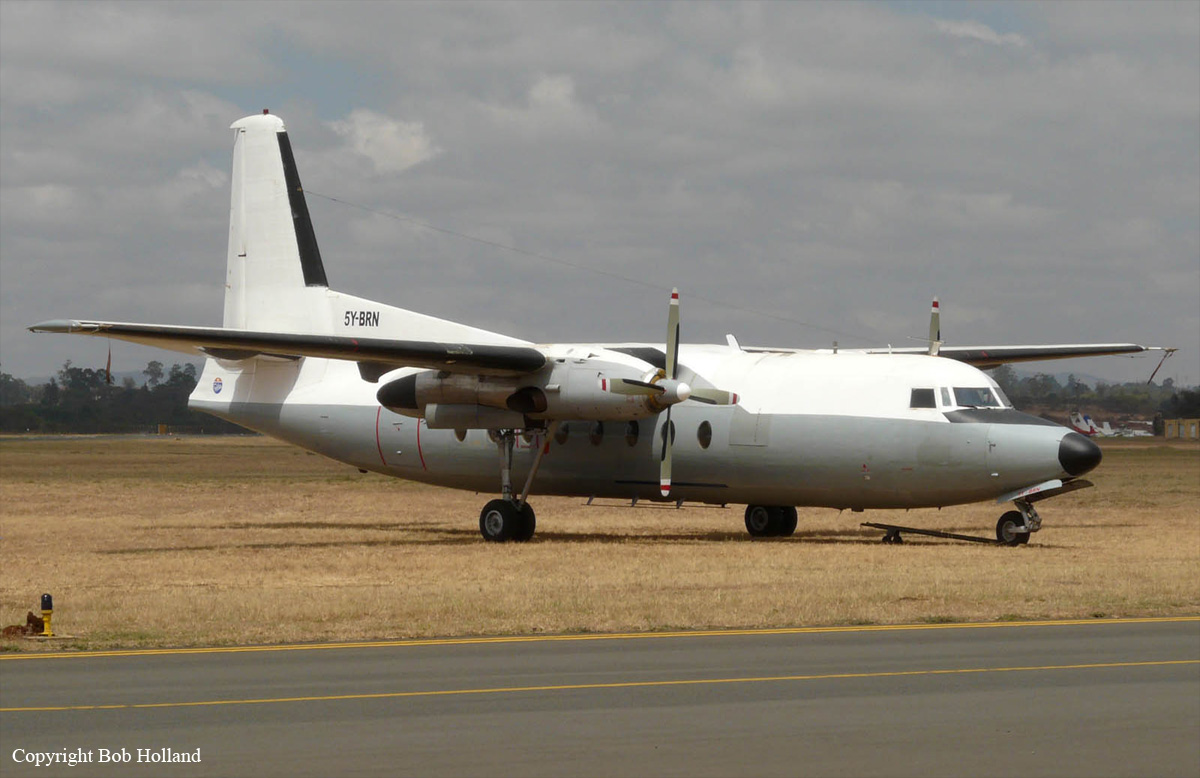
On final approach to Bosaso Airport, the crew encountered poor weather conditions when the aircraft crashed short of runway. Both pilots escaped with minor injuries and the aircraft was damaged beyond repair.

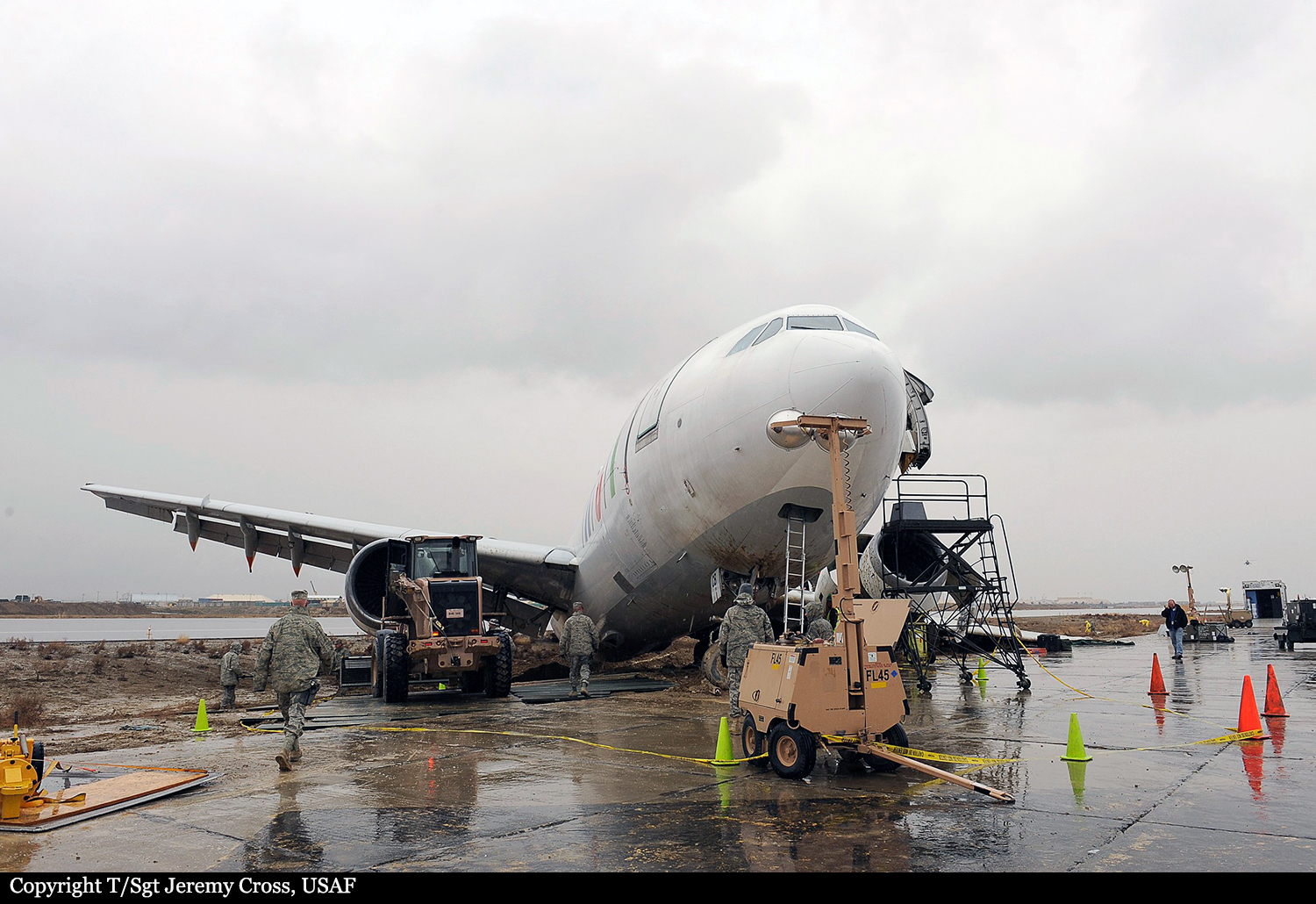
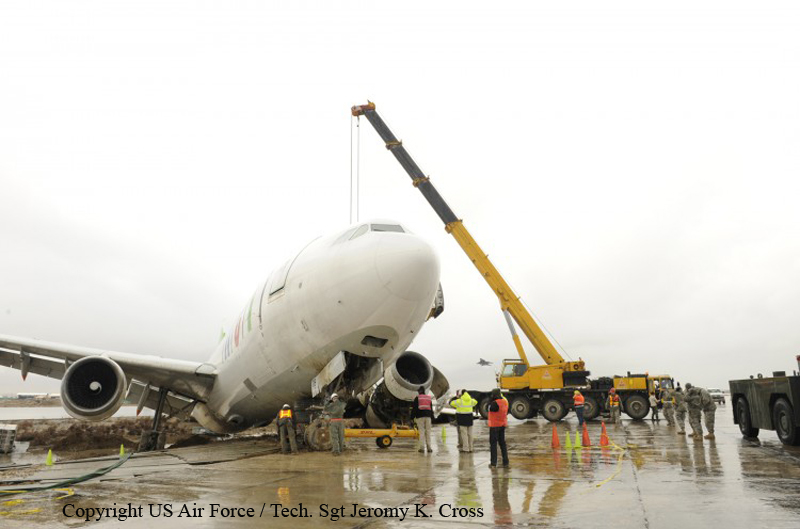
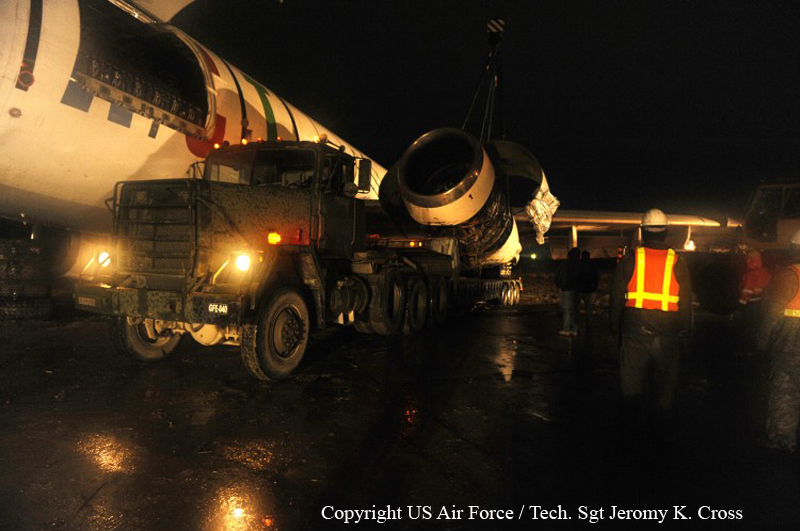
Crash of an Airbus A300B4-203F at Bagram AFB

Date & Time: Mar 1, 2010 at 1210 LT
Type of aircraft:
Operator:
Registration:
TC-ACB
Flight Type:
Survivors:
Yes
Schedule:
Bahrain - Bagram AFB
MSN:
121
YOM:
1980
Country:
Region:
Crew on board:
5
Crew fatalities:
Pax on board:
0
Pax fatalities:
Other fatalities:
Total fatalities:
0
Captain / Total flying hours:
12923
Captain / Total hours on type:
8000.00
Aircraft flight hours:
25300
Aircraft flight cycles:
46516
Circumstances:
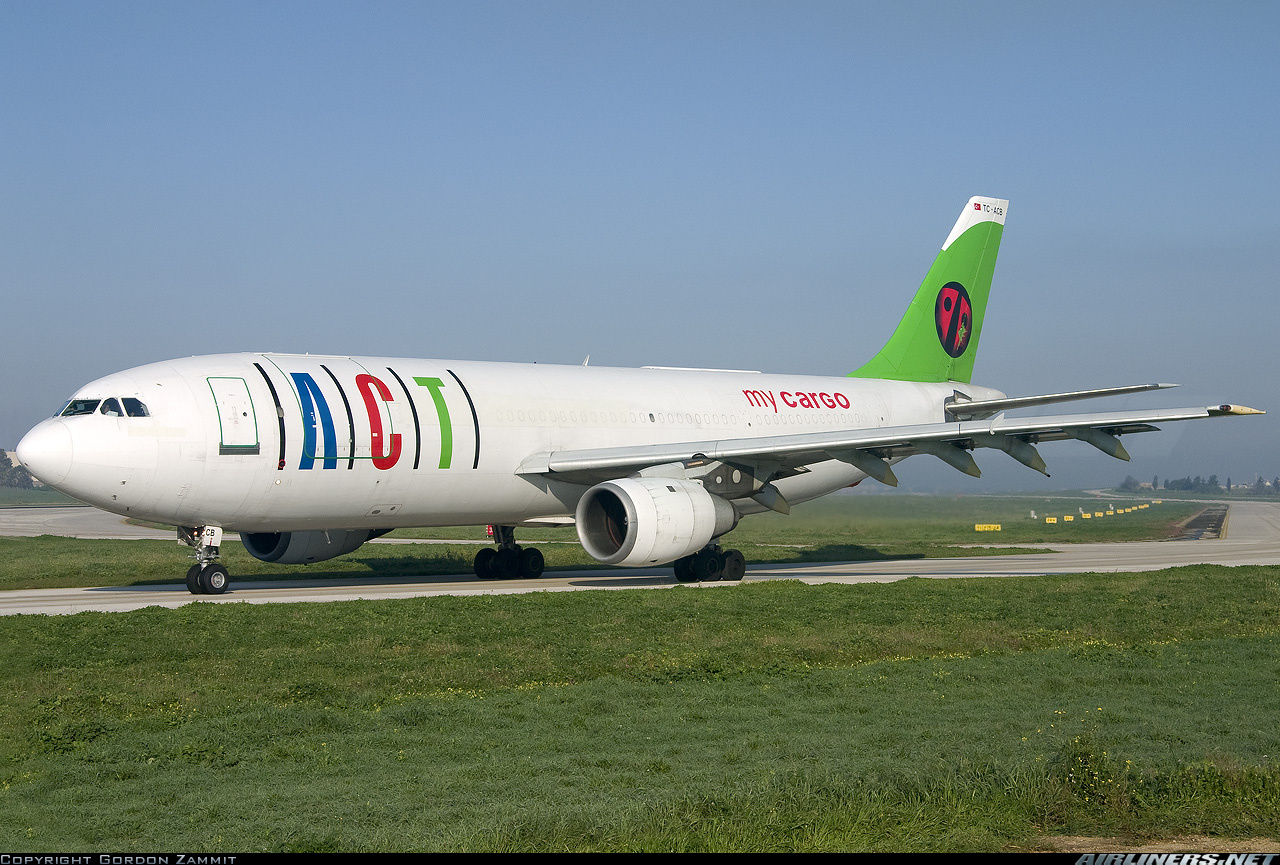
While approaching Bagram AFB, the crew did not obtain the three green lights when the undercarriage were lowered. The left main gear signal appears to remain red. The captain obtained the authorization to make two low passes over the airport then ATC confirmed that all three gears were down. The final approach was completed at low speed and after touchdown, while braking, the left main gear collapsed. The aircraft veered off runway to the left and came to rest some 2 km past the runway threshold. All five crewmen were unhurt while the aircraft was damaged beyond repair.
Probable cause:
Cracks as result of fatigue caused the fracture of the hinge arm of the left main gear strut. The cracking most likely occurred as result of corrosion that remained undetected during the last maintenance inspection. The origin of pitting could not be identified, the investigation however identified deficiencies in the maintenance task conducted during last overhaul of the gear strut. Incomplete maintenance documentation and tools available during overhaul contributed to the accident.
Final Report:
Crash of a Beechcraft 65-A90 King Air in Jacmel

Date & Time: Jan 23, 2010
Type of aircraft:
Operator:
Registration:
N316AF
Flight Type:
Survivors:
Yes
MSN:
LJ-214
YOM:
1967
Country:
Crew on board:
2
Crew fatalities:
Pax on board:
0
Pax fatalities:
Other fatalities:
Total fatalities:
0
Circumstances:
The crew was apparently completing a cargo flight from Florida. Upon landing at Jacmel Airport, the undercarriage collapsed. The twin engine aircraft went out of control, veered off runway and came to rest against trees. Both occupants escaped uninjured while the aircraft was damaged beyond repair.

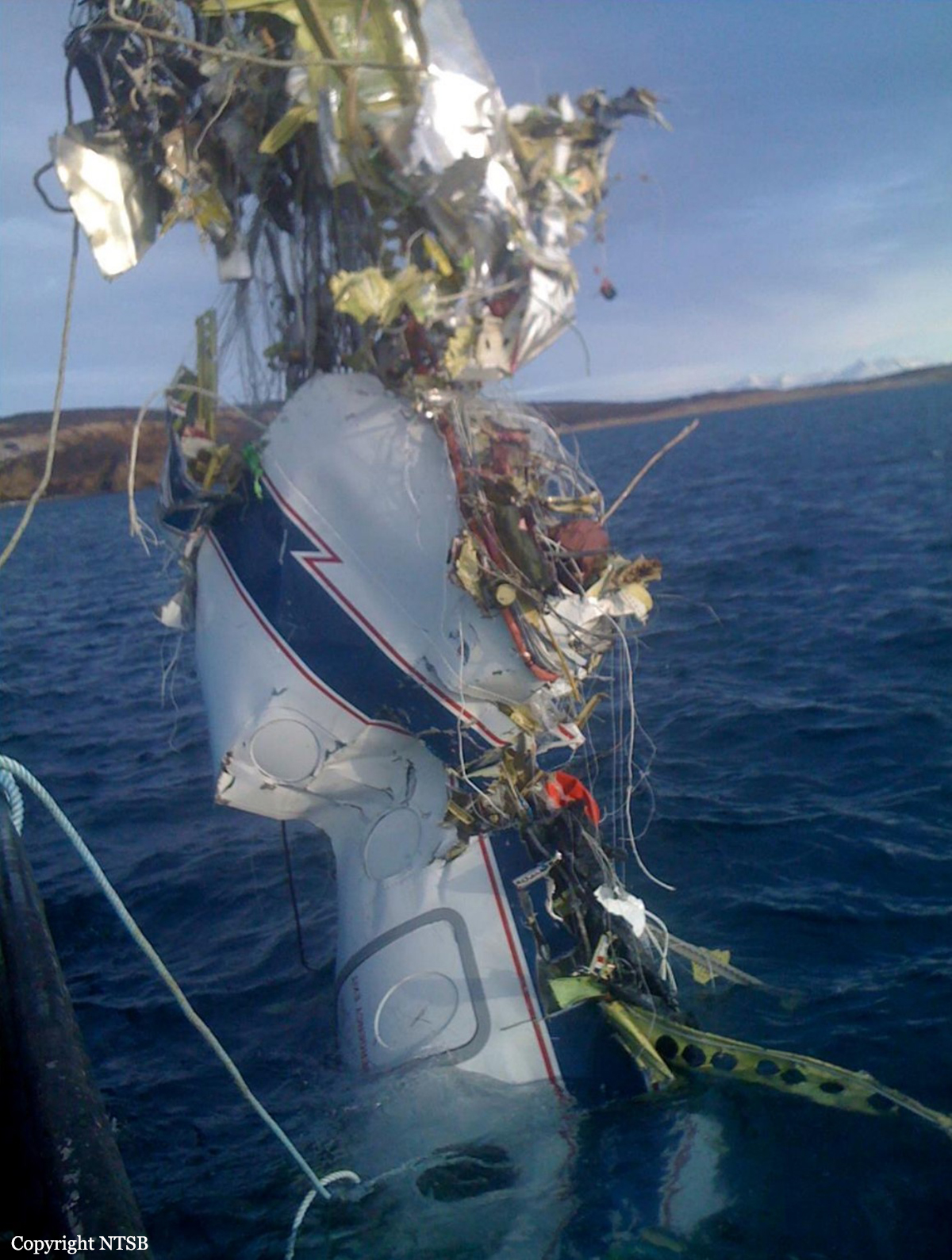
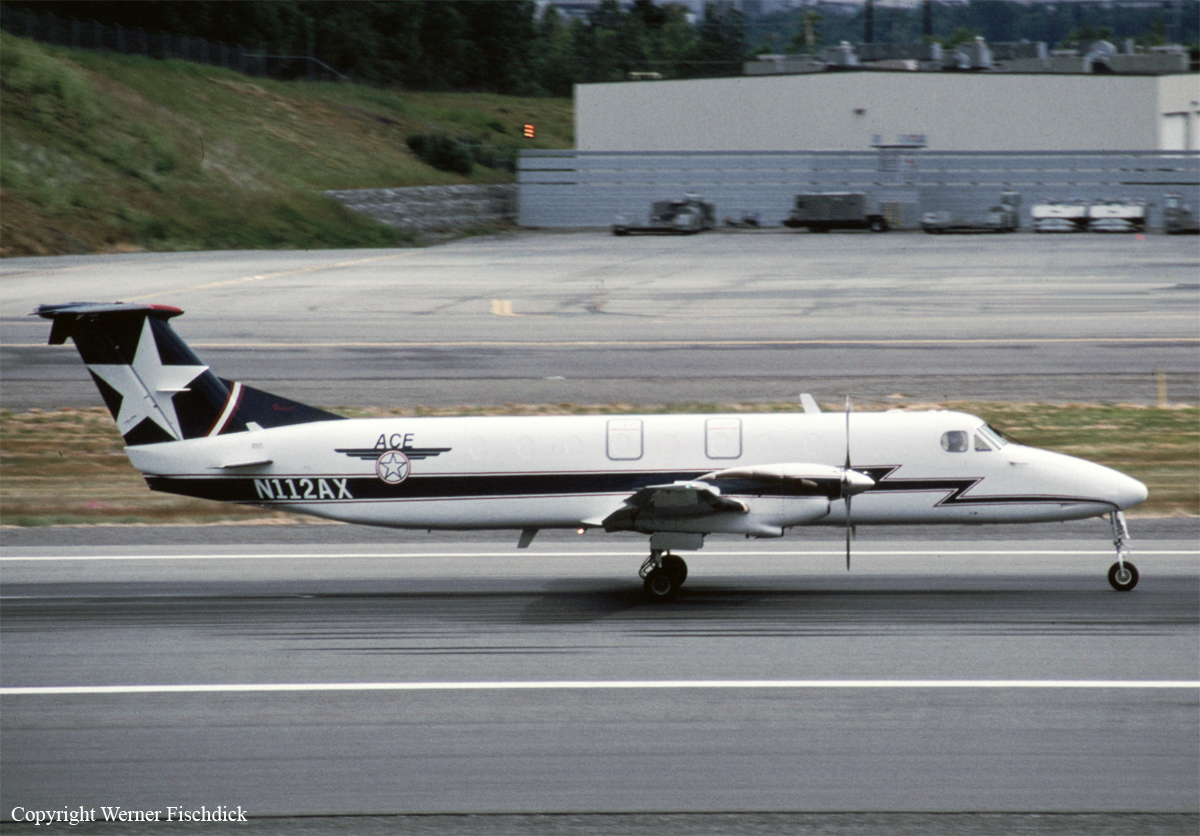
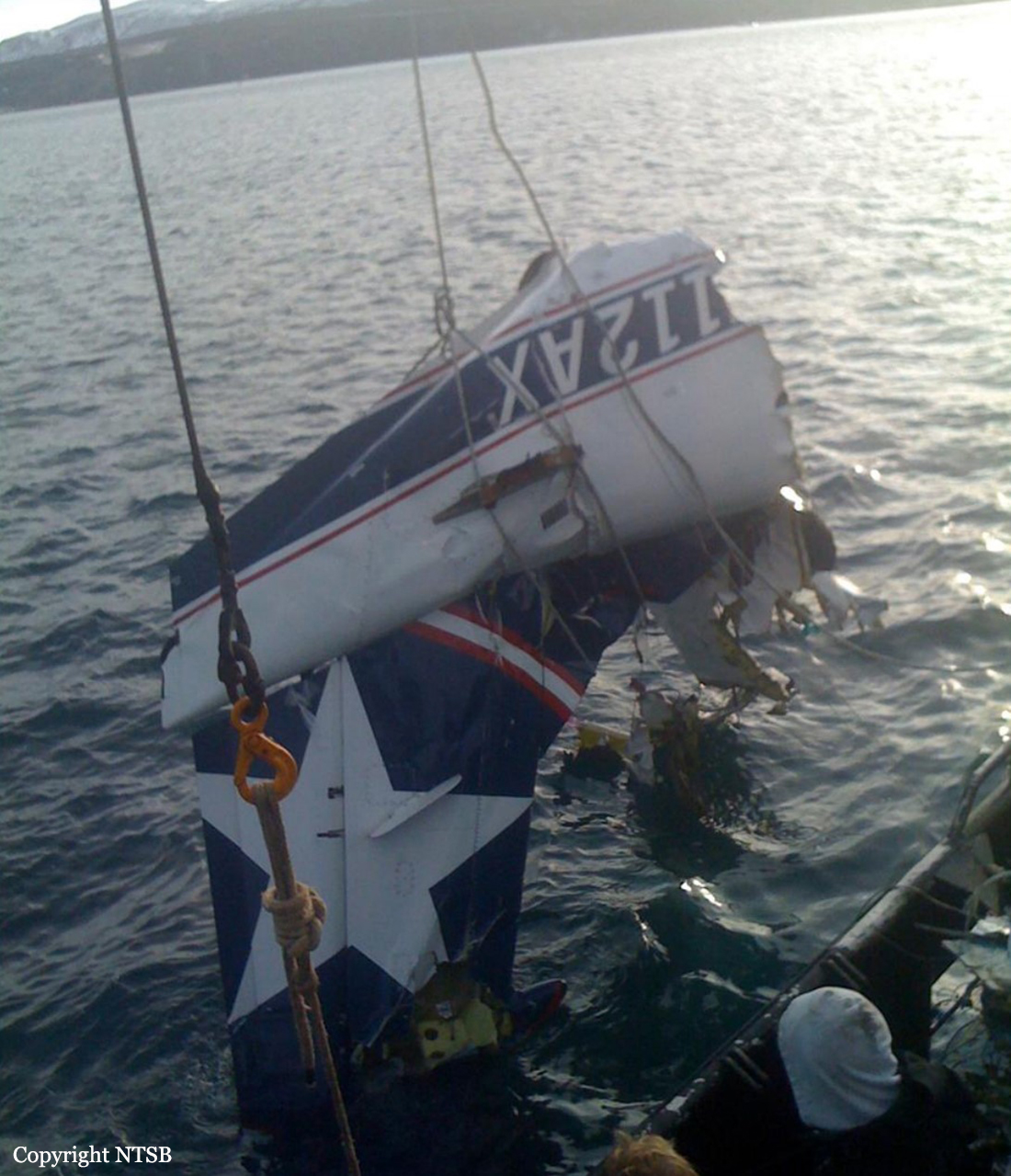
Crash of a Beechcraft 1900C-1 off Sand Point: 2 killed

Date & Time: Jan 21, 2010 at 2345 LT
Type of aircraft:
Operator:
Registration:
N112AX
Flight Phase:
Flight Type:
Survivors:
No
Schedule:
Sand Point - Anchorage
MSN:
UC-45
YOM:
1988
Flight number:
AER22
Crew on board:
2
Crew fatalities:
Pax on board:
0
Pax fatalities:
Other fatalities:
Total fatalities:
2
Captain / Total flying hours:
3700
Captain / Total hours on type:
3080.00
Copilot / Total flying hours:
1000
Copilot / Total hours on type:
280
Aircraft flight hours:
56184
Aircraft flight cycles:
45158
Circumstances:
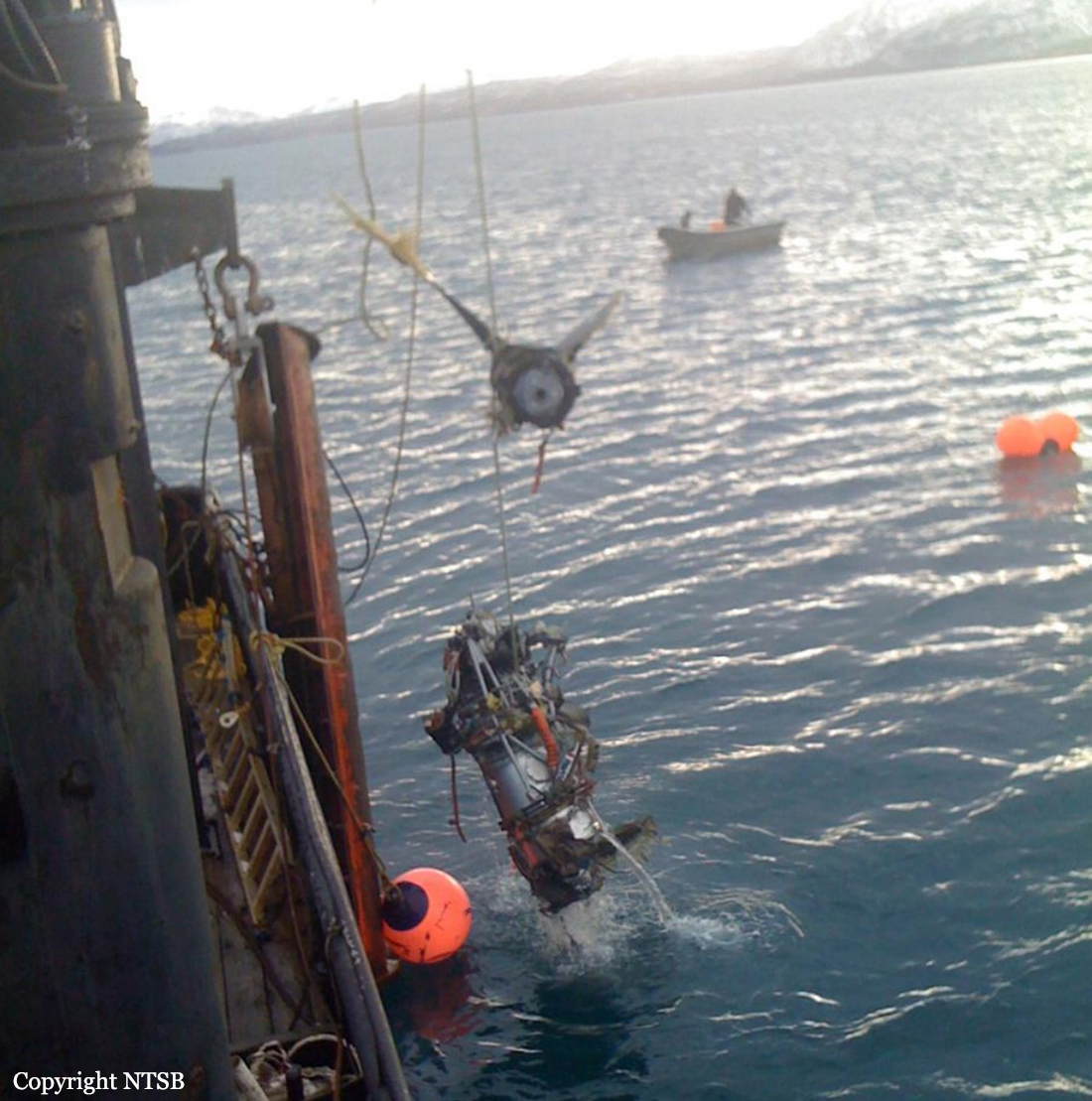
The crew departed on a commercial cargo flight during dark night, visual meteorological conditions on an instrument flight rules flight plan. The departure end of the runway is adjacent to an ocean bay, and wind gusts up to 26 knots were reported. Local residents north of the airport reported stronger wind, estimated between 50 and 60 knots. A fuel truck operator, who was familiar with the crew’s normal routine, reported that, before the airplane taxied to the runway, it remained on the ramp for 6 or 8 minutes with both engines operating, which he described as very unusual. There were no reports of radio communications with the flight crew after the airplane departed. The airplane crashed about 1 mile offshore, and the fragmented wreckage sank in ocean water. Because of the fragmented nature of the wreckage and ocean current, the complete wreckage was not recovered. The cockpit area forward of the wings was extensively fragmented, thus the validity of any postaccident cockpit and instrument findings was unreliable. Likewise, structural damage to the airframe precluded determining flight control continuity. Both propellers had witness marks consistent with operating under engine power and within their normal operating range. A postaccident examination of the engines and recovered components did not disclose any evidence of a mechanical malfunction. Due to the lack of mechanical deficiencies of the engines and propellers, and the extensive airframe fragmentation consistent with a high-speed water impact, it is likely that the crew had an in-flight loss of control of an unknown origin before impact.
Probable cause:
An in-flight loss of control for an undetermined reason, which resulted in an uncontrolled descent.
Final Report:
Crash of a Learjet 35A in Chicago: 2 killed

Date & Time: Jan 5, 2010 at 1327 LT
Type of aircraft:
Operator:
Registration:
N720RA
Flight Type:
Survivors:
No
Schedule:
Pontiac - Chicago
MSN:
156
YOM:
1977
Flight number:
RAX988
Crew on board:
2
Crew fatalities:
Pax on board:
0
Pax fatalities:
Other fatalities:
Total fatalities:
2
Captain / Total flying hours:
7000
Captain / Total hours on type:
3500.00
Copilot / Total flying hours:
6500
Copilot / Total hours on type:
2400
Aircraft flight hours:
15734
Circumstances:
The flight was scheduled to pick up cargo at the destination airport and then deliver it to another location. During the descent and 14 minutes before the accident, the airplane encountered a layer of moderate rime ice. The captain, who was the pilot flying, and the first officer, who was the monitoring pilot, made multiple statements which were consistent with their awareness and presence of airframe icing. After obtaining visual flight rules conditions, the flight crew canceled the instrument flight rules clearance and continued with a right, circling approach to the runway. While turning into the base leg of the traffic pattern, and 45 seconds prior to the accident, the captain called for full flaps and the engine power levers were adjusted several times between 50 and 95 percent. In addition, the captain inquired about the autopilot and fuel balance. In response, the first officer stated that he did not think that the spoilerons were working. Shortly thereafter, the first officer gave the command to add full engine power and the airplane impacted terrain. There was no evidence of flight crew impairment or fatigue in the final 30 minutes of the flight. The cockpit voice recorder showed multiple instances during the flight in which the airplane was below 10,000 feet mean sea level that the crew was engaged in discussions that were not consistent with a sterile cockpit environment, for example a lengthy discussion about Class B airspeeds, which may have led to a relaxed and casual cockpit atmosphere. In addition, the flight crew appears to have conducted checklists in a generally informal manner. As the flight was conducted by a Part 135 operator, it would be expected that both pilots were versed with the importance of sterile cockpit rules and the importance of adhering to procedures, including demonstrating checklist discipline. For approximately the last 24 seconds of flight, both pilots were likely focusing their attention on activities to identify and understand the reason for the airplane's roll handling difficulties, as noted by the captain's comment related to the fuel balance. These events, culminating in the first officer's urgent command to add full power, suggested that neither pilot detected the airplane's decaying energy state before it reached a critical level for the conditions it encountered. Light bulb filament examination revealed that aileron augmentation system and stall warning lights illuminated in the cockpit. No mechanical anomalies were found to substantiate a failure in the aileron augmentation system. No additional mechanical or system anomalies were noted with the airplane. A performance study, limited by available data, could not confirm the airplane's movements relative to an aileron augmentation system or spoileron problem. The level of airframe icing and its possible effect on the airplane at the time of the accident could not be determined.
Probable cause:
A loss of control for undetermined reasons.
Final Report:
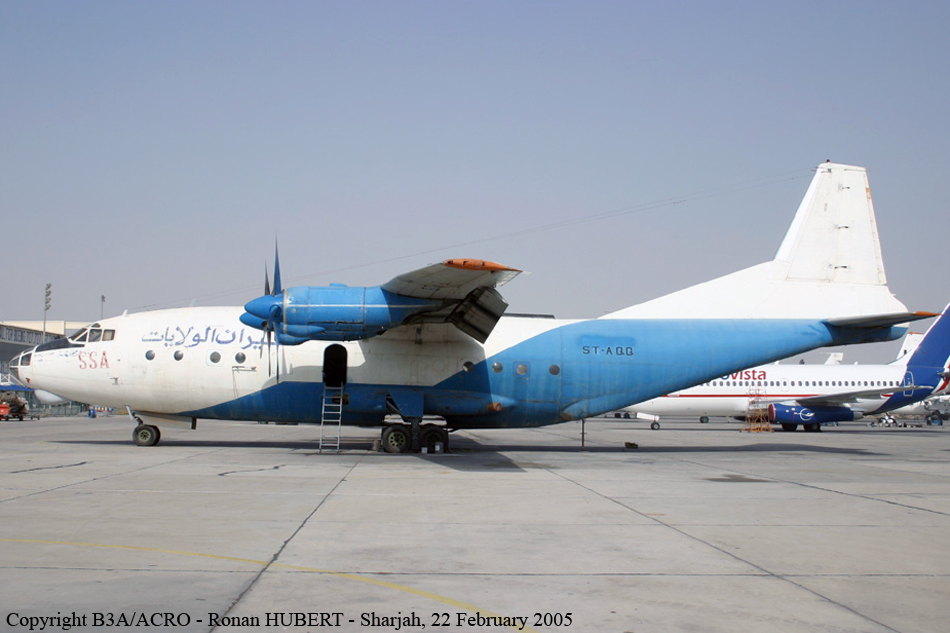
Crash of an Antonov AN-12B in Heglig

Date & Time: Jan 4, 2010 at 0910 LT
Type of aircraft:

Operator:
Registration:
ST-AQQ
Flight Type:
Survivors:
Yes
Schedule:
Khartoum – Heglig
MSN:
9 3 465 04
YOM:
1969
Flight number:
MGG100
Country:
Region:
Crew on board:
4
Crew fatalities:
Pax on board:
0
Pax fatalities:
Other fatalities:
Total fatalities:
0
Captain / Total flying hours:
7050
Captain / Total hours on type:
6000.00
Copilot / Total flying hours:
10038
Copilot / Total hours on type:
7050
Aircraft flight hours:
36190
Circumstances:
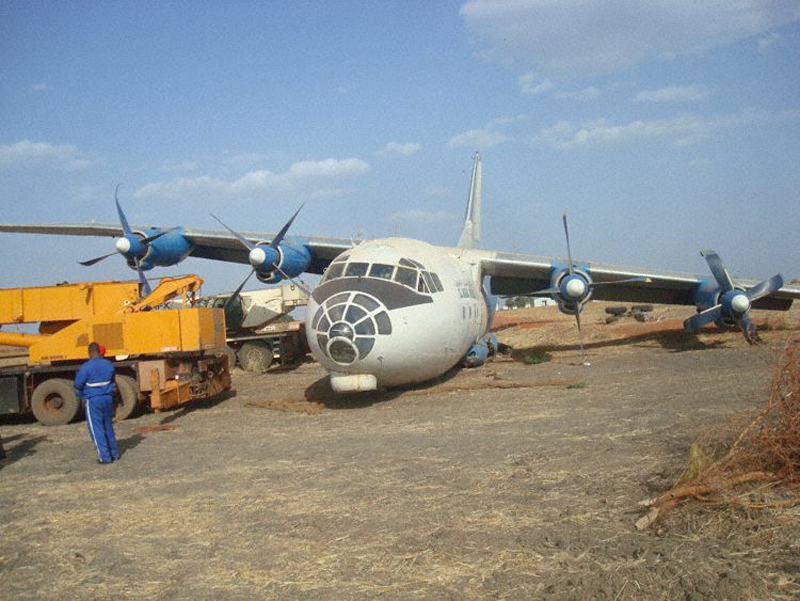
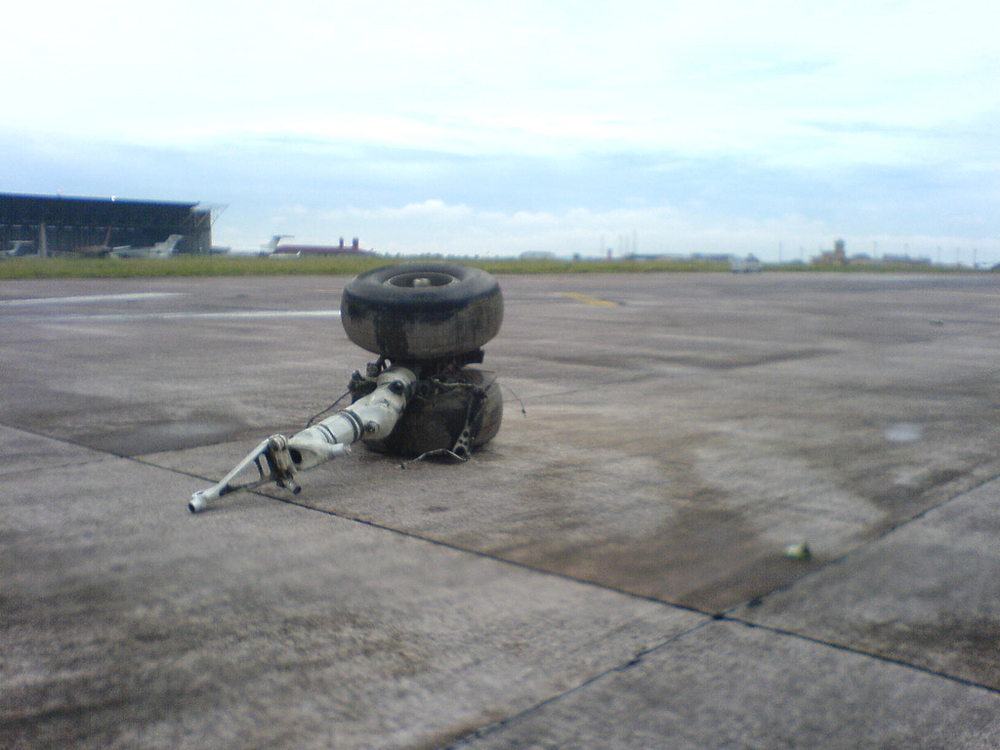
The four engine aircraft departed Khartoum Airport at 0738LT on a cargo flight to Heglig, carrying four crew members and a load consisting of 13 tons of various goods. On final approach to Heglig Airport, the aircraft was too low. It collided with obstacles and a concrete block located 16 metres short of runway threshold and housing an element of the approach light system. The aircraft bounced, nosed down and landed nose first 52 metres further. After a course of 183 metres, a tyre on the right main gear burst. The captain instructed the flight engineer to activate the reverse thrust systems but the flight engineer did not check the power levers. The aircraft veered off runway to the left, lost its left main gear and came to rest. All four occupants escaped uninjured while the aircraft was damaged beyond repair.
Probable cause:
Wrong approach configuration, causing the aircraft to land short of runway.
The following factors were identified:
- The flight engineer unlocked props I, II, III at throttle position < 20 degrees UPRT and No IV engine at 40 degrees UPRT,
- Unrectification of nose wheel and main landing gear crack as recommended by the manufacturer.

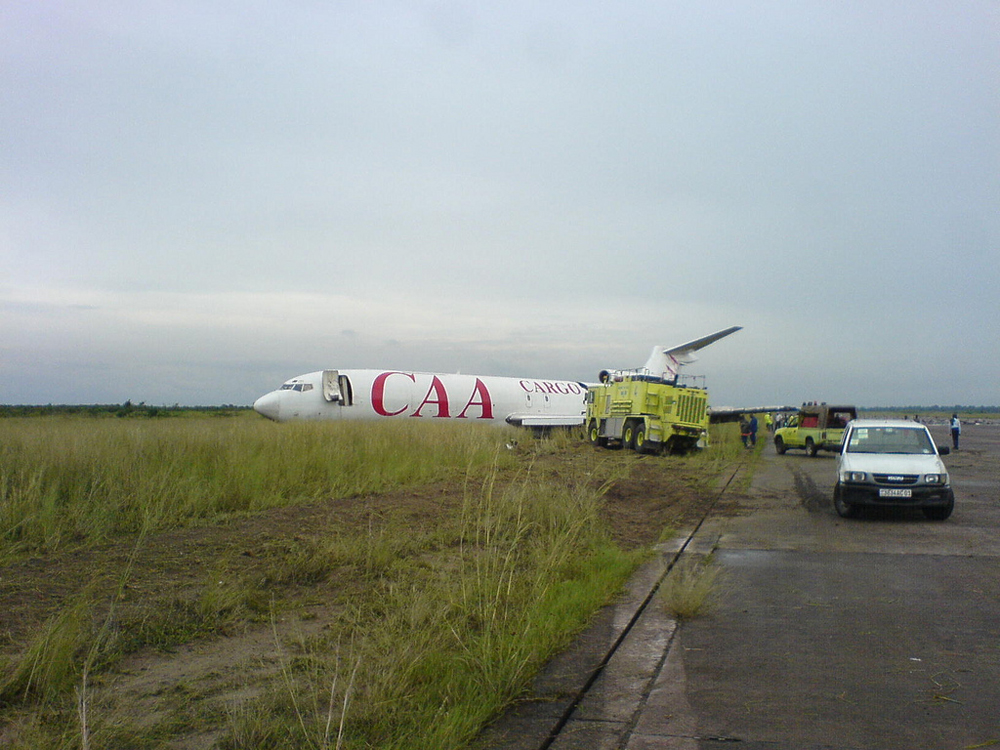
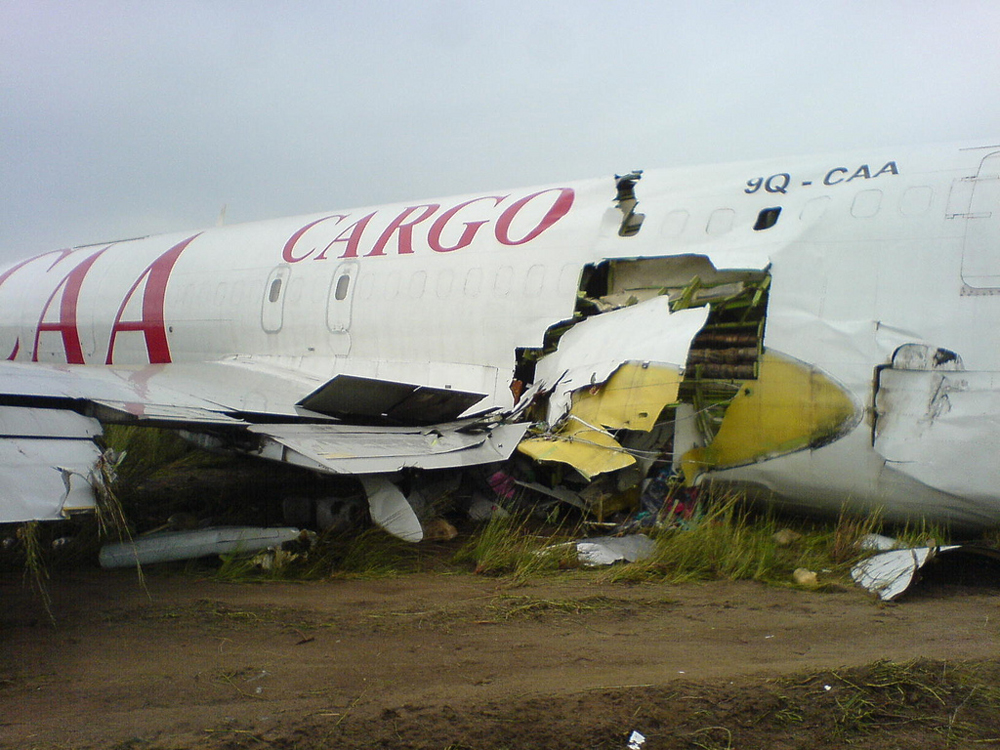
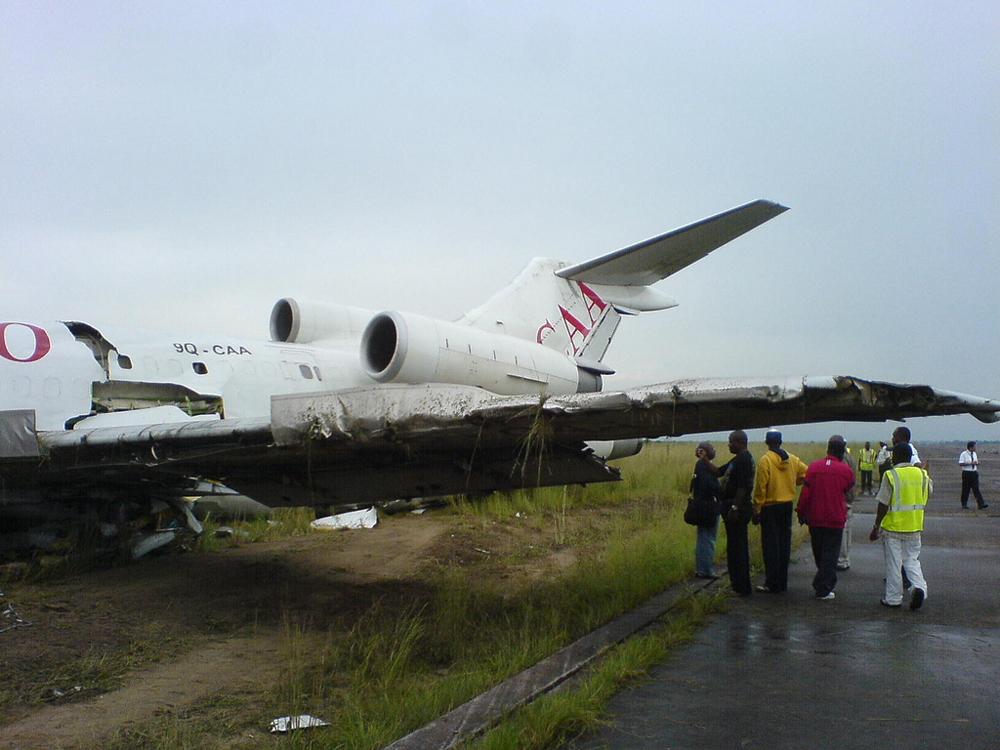
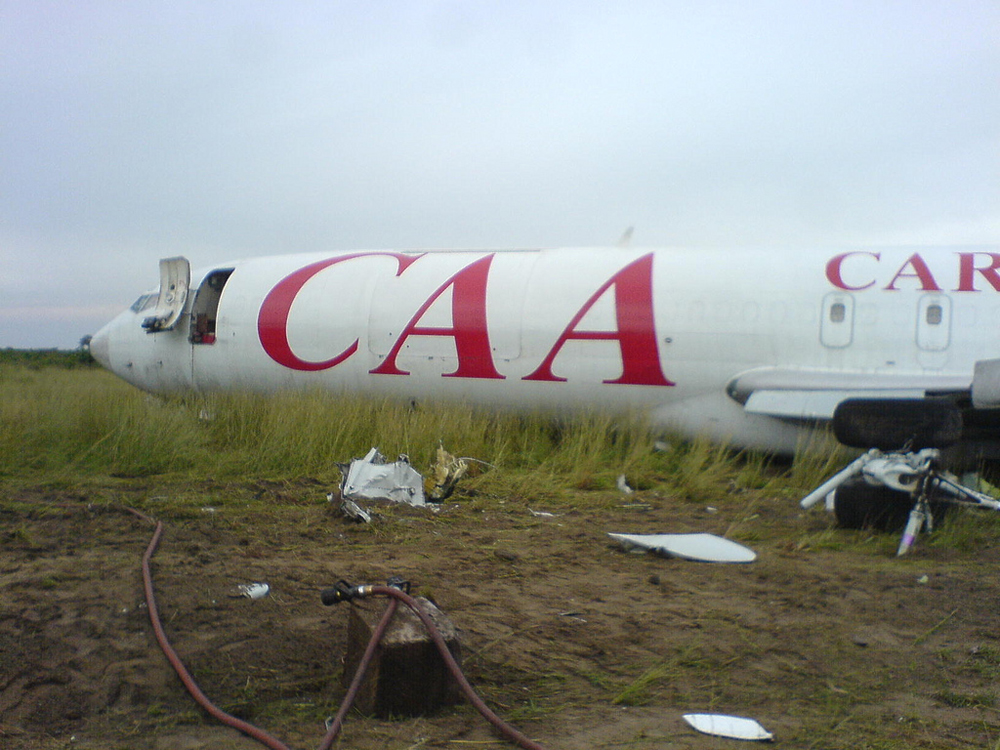
Crash of a Boeing 727-231F in Kinshasa

Date & Time: Jan 2, 2010
Type of aircraft:
Operator:
Registration:
9Q-CAA
Flight Type:
Survivors:
Yes
MSN:
21986/1580
YOM:
1980
Region:
Crew on board:
4
Crew fatalities:
Pax on board:
0
Pax fatalities:
Other fatalities:
Total fatalities:
0
Circumstances:
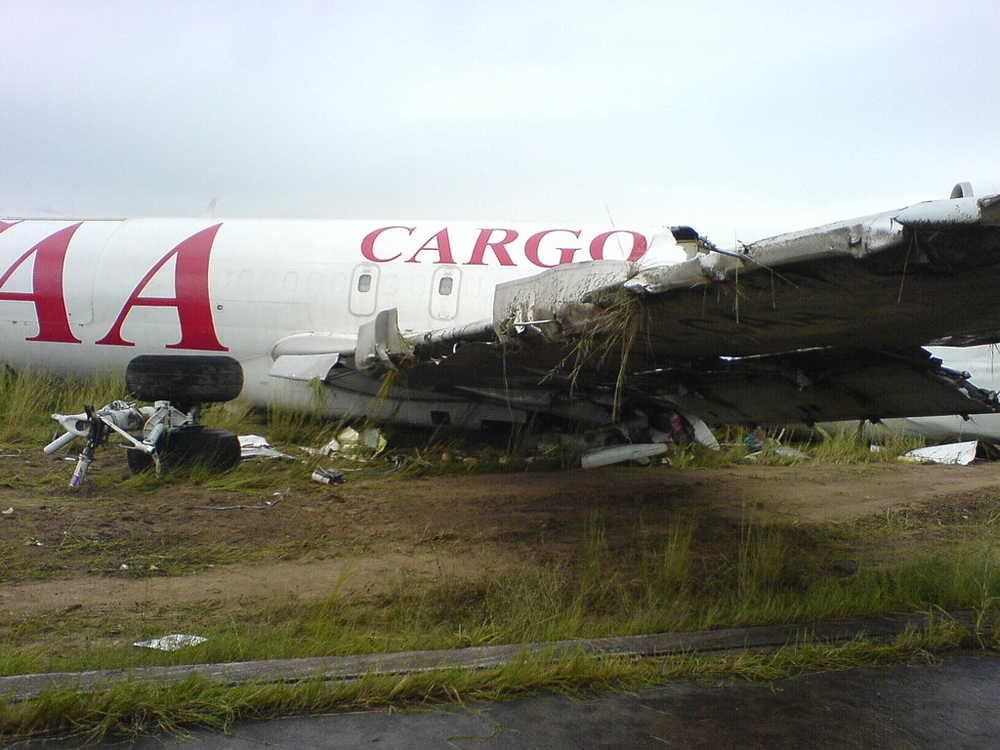
On final approach to Kinshasa-N'Djili Airport, the crew encountered poor weather conditions with limited visibility due to heavy rain falls. After touchdown on runway 06, the aircraft passed through standing water when control was lost. It veered off runway to the right, lost its undercarriage and came to rest in a grassy area. All four occupants escaped uninjured while the aircraft was damaged beyond repair.

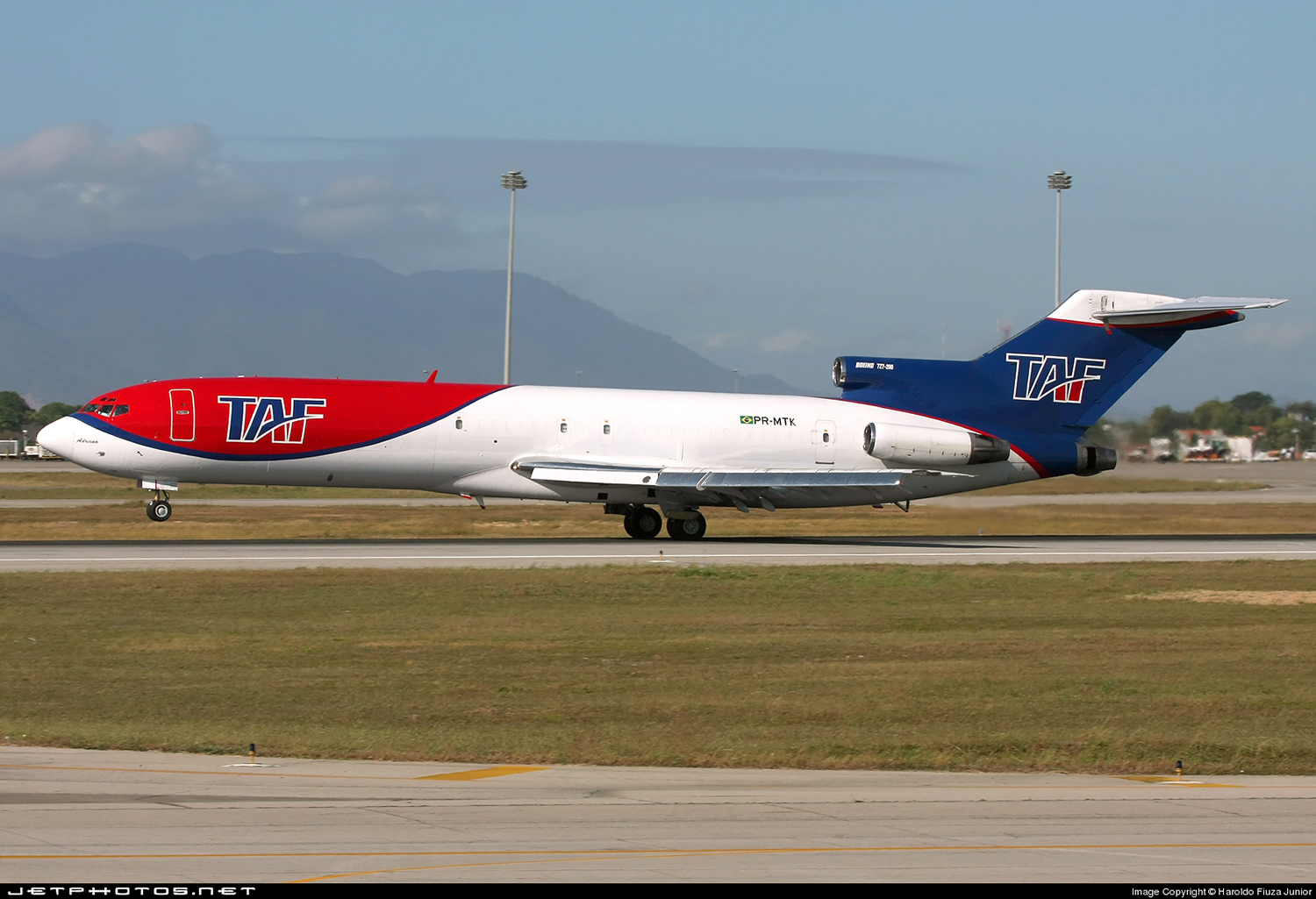
Ground accident of a Boeing 727-222F in São Paulo

Date & Time: Dec 1, 2009 at 0130 LT
Type of aircraft:
Operator:
Registration:
PR-MTK
Flight Phase:
Flight Type:
Survivors:
Yes
Schedule:
Brasília – São Paulo
MSN:
20037/701
YOM:
1969
Country:
Crew on board:
3
Crew fatalities:
Pax on board:
0
Pax fatalities:
Other fatalities:
Total fatalities:
0
Circumstances:
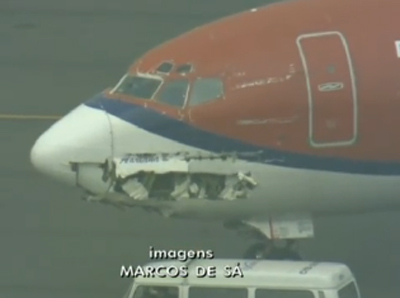
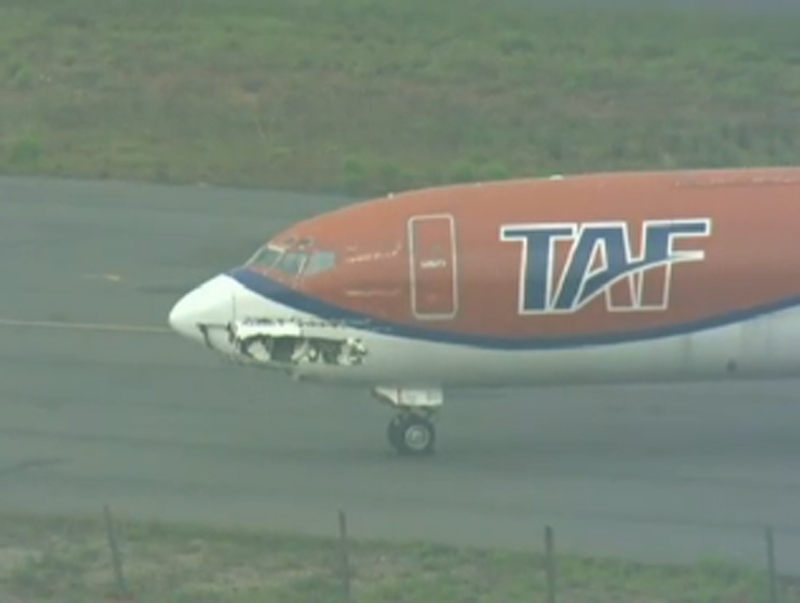
Following an uneventful night cargo flight from Brasília, the aircraft landed at São Paulo-Guarulhos Airport. While taxiing, the aircraft hit airport equipment while approaching its stand. The aircraft was severely damaged on its nose and cockpit area. All three occupants escaped uninjured while the aircraft was damaged beyond repair. The encountered brakes problems.

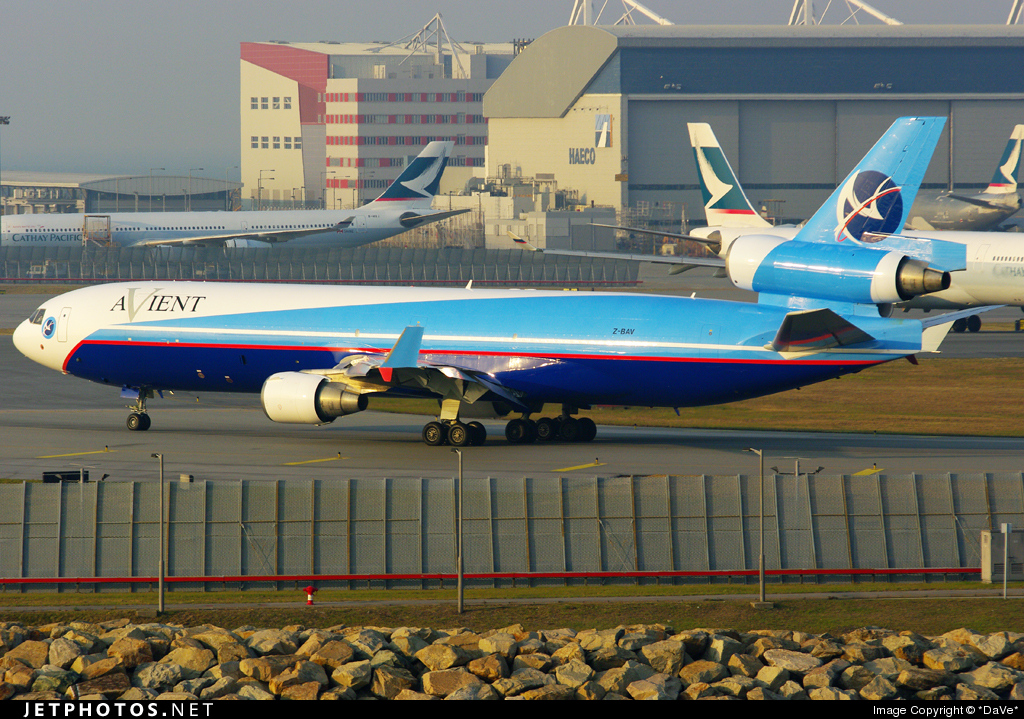
Crash of a McDonnell Douglas MD-11F in Shanghai: 3 killed

Date & Time: Nov 28, 2009 at 0814 LT
Type of aircraft:
Operator:
Registration:
Z-BAV
Flight Phase:
Flight Type:
Survivors:
Yes
Schedule:
Shanghai - Bishkek
MSN:
48408/457
YOM:
1990
Flight number:
SMJ324
Country:
Region:
Crew on board:
7
Crew fatalities:
Pax on board:
0
Pax fatalities:
Other fatalities:
Total fatalities:
3
Circumstances:
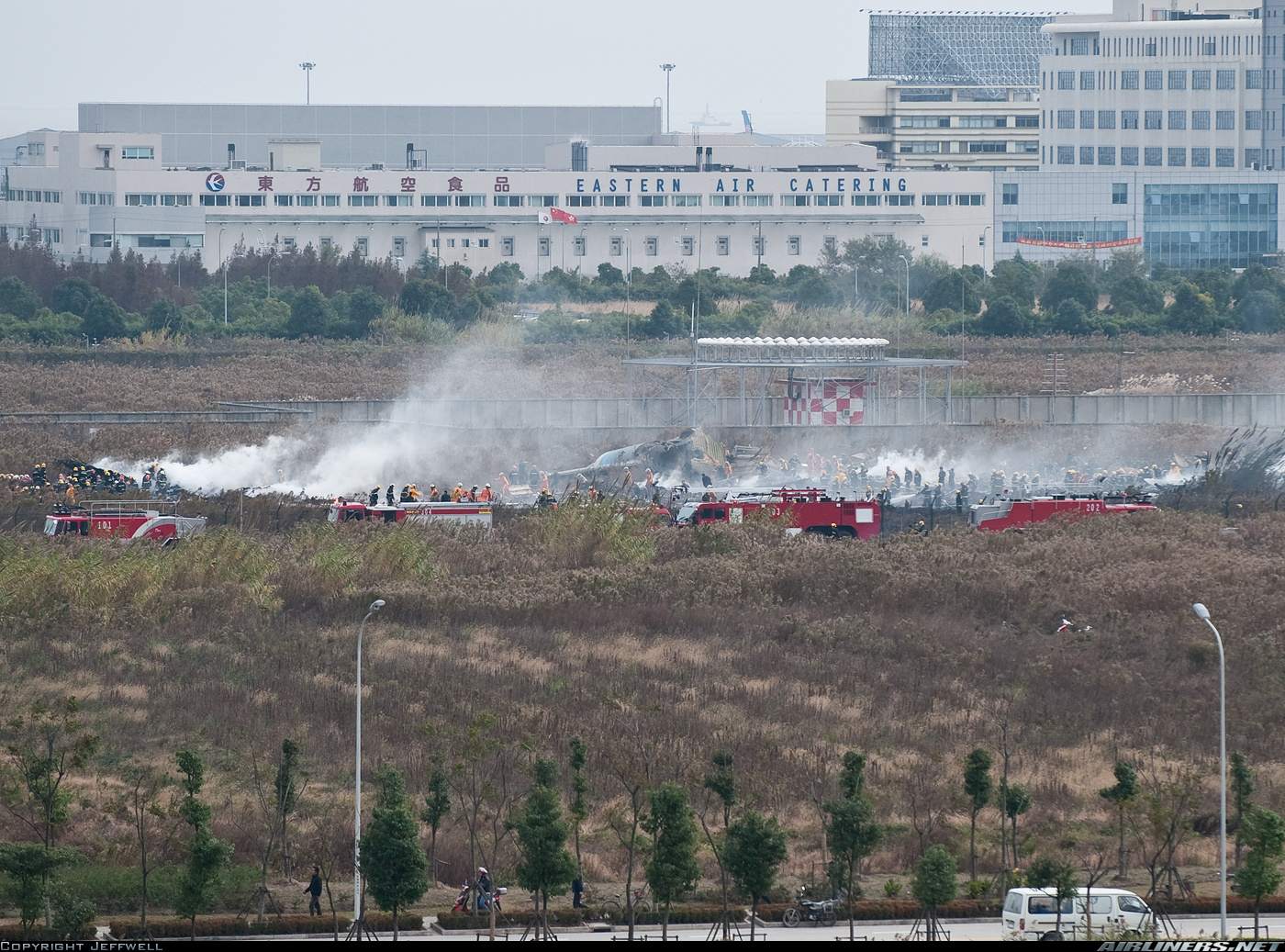
The three engine aircraft departed Shanghai-Pudong Airport on a cargo flight to Bishkek, carrying various goods and seven crew members. During the takeoff roll from runway 35L, the pilot-in-command initiated the rotation but the aircraft did not lift off properly with had a negative vario. It overran the runway and eventually crashed in an open field. Three crew were killed while four others were injured. The aircraft was totally destroyed.
Probable cause:
The crew did not properly operate the thrust levers so that the engines did not reach take off thrust. The aircraft had not reached Vr at the end of the runway and could not get airborne. According to the design criteria of the MD11 the crew needs to push at least two thrust levers to beyond 60 degrees, which will trigger autothrust to leave "CLAMP" mode and adjust the thrust to reach the target setting for takeoff, the servo motors would push the thrust levers forward in that case. During the accident departure the pilot in the left seat did not advance the thrust levers to more than 60 degrees, hence the server motors did not work although autothrust was engaged but remained in CLAMP mode and thus did not adjust the thrust to reach takeoff settings. The crew members perceived something was wrong. Audibly the engine sound was weak, visibibly the speed of the aircraft was low, tactically the pressure on the back of the seat was weaker than normal. Somebody within the crew, possibly on the observer seats, suggested the aircraft may be a bit heavy. The T/O THRUST page never appeared (it appears if autothrust is engaged and changes from CLAMP to Thrust Limit setting. Under normal circumstances with autothrust being engaged a click sound will occur as soon as the thrust levers reach the takeoff thrust position. A hand held on the thrust levers will feel the lever moving forward, however, the crew entirely lost situational awareness. None of the anomalies described in this paragraph prompted the crews members' attention. When the aircraft approached the end of the runway several options were available: reject takeoff and close the throttles, continue takeoff and push the throttle to the forward mechanical stop, continue takeoff and immediately rotate. The observer called "rotate", the captain rotated the aircraft. This shows the crew recognized the abnormal situation but did not identify the error (thrust levers not in takeoff position) in a hurry but reacted instinctively only. As the aircraft had not yet reached Vr, the aircraft could not get airborne when rotated. As verified in simulator verification the decision to rotate was the wrong decision. The simulator verification showed, that had the crew pushed the thrust levers into maximum thrust when they recognized the abnormal situation, they would have safely taken the aircraft airborne 670 meters before the end of the runway. The verification also proved, that had the crew rejected takeoff at that point, the aircraft would have stopped before the end of the runway. The crew did not follow standard operating procedures for managing thrust on takeoff. The crew operations manual stipulates that the left seat pilot advances the thrust levers to EPR 1.1 or 70% N1 (depending on engine type), informs the right seat pilot to connect autothrust. The pilot flying subsequently pushes the thrust levers forward and verifies they are moving forward on servos, the pilot monitoring verifies autothrust is working as expected and reaches takeoff thrust settings. In this case the left seat pilot not only did not continue to push the thrust levers forward, but also called out "thrust set" without reason as he did not verify the takeoff thrust setting had been achieved. It is not possible to subdivide the various violations of procedures and regulations. The crew had worked 16 hours during the previous sector. In addition, one crew member needed to travel for 11 hours from Europe to reach the point of departure of the previous sector (Nairobi Kenya), two crew members need to travel for 19 hours from America to the point of departure of the previous sector. These factors caused fatigue to all crew members. The co-pilot was 61 years of age, pathological examination showed he was suffering from hypertension and cardiovascular atherosclerosis. His physical strength and basic health may have affected the tolerance towards fatigue. All crew members underwent changes across multiple time zones in three days. Although being in the period of awakeness in their biological rhythm cycle, the cycle was already in a trough period causing increased fatigue. The captain had flown the Airbus A340 for 300 hours in the last 6 months, which has an entirely different autothrust handling, e.g. the thrust levers do not move with power changes in automatic thrust, which may have caused the captain to ignore the MD-11 thrust levers. The co-pilot in the right hand seat had been MD-11 captain for about 7 years but had not flown the MD-11 for a year. Both were operating their first flight for the occurrence company. The two pilots on the observer seats had both 0 flight hours in the last 6 months. The co-pilot (right hand seat) was pilot flying for the accident sector. The captain thus was responsible for the thrust management and thrust lever movement according to company manual. A surviving observer told the investigation in post accident interviews that the captain was filling out forms and failed to monitor the aircraft and first officer's actions during this critical phase of flight. There are significant design weaknesses in the MD-11 throttle, the self checks for errors as well as degree of automation is not high.
Source: Aviation Herald/Simon Hradecky