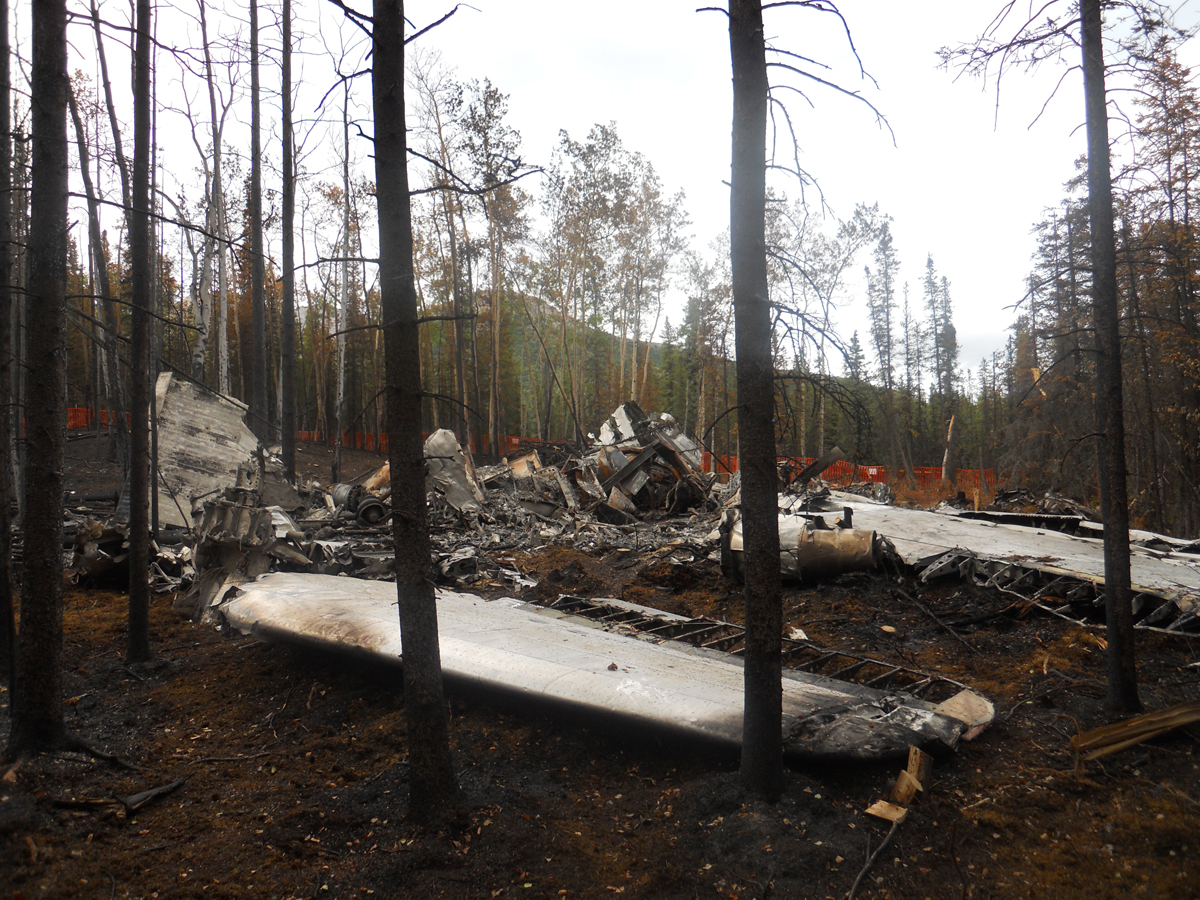
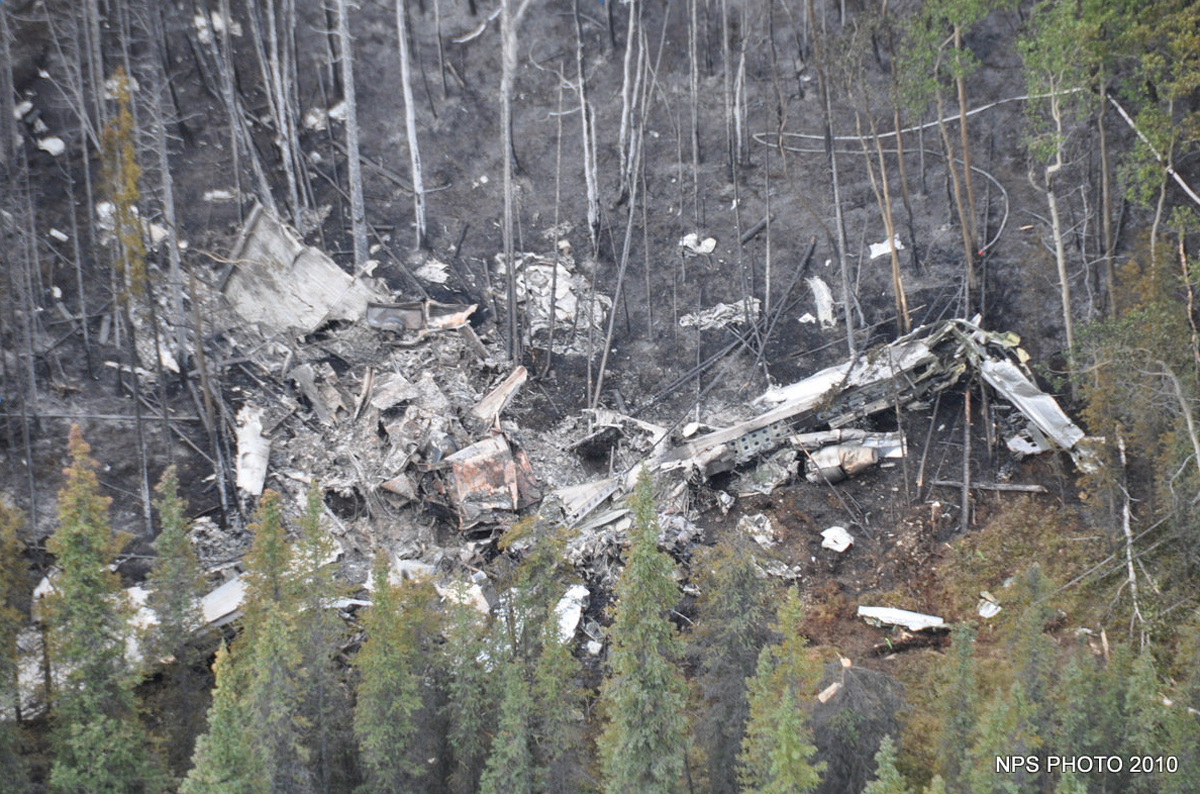
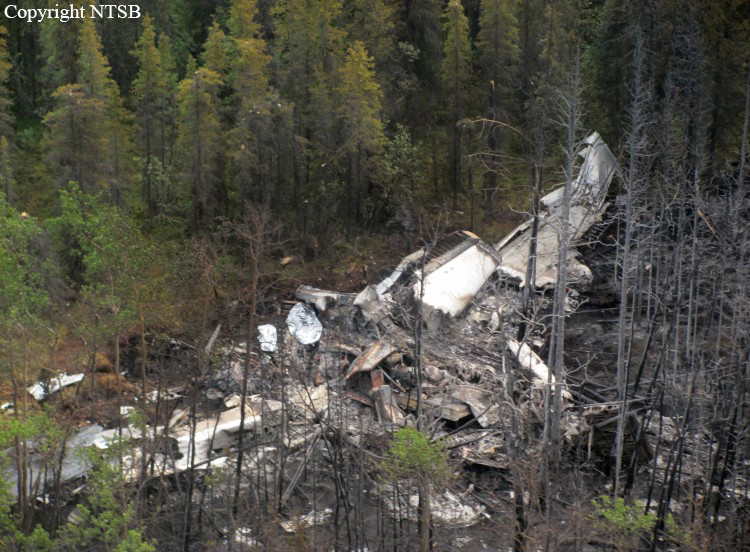
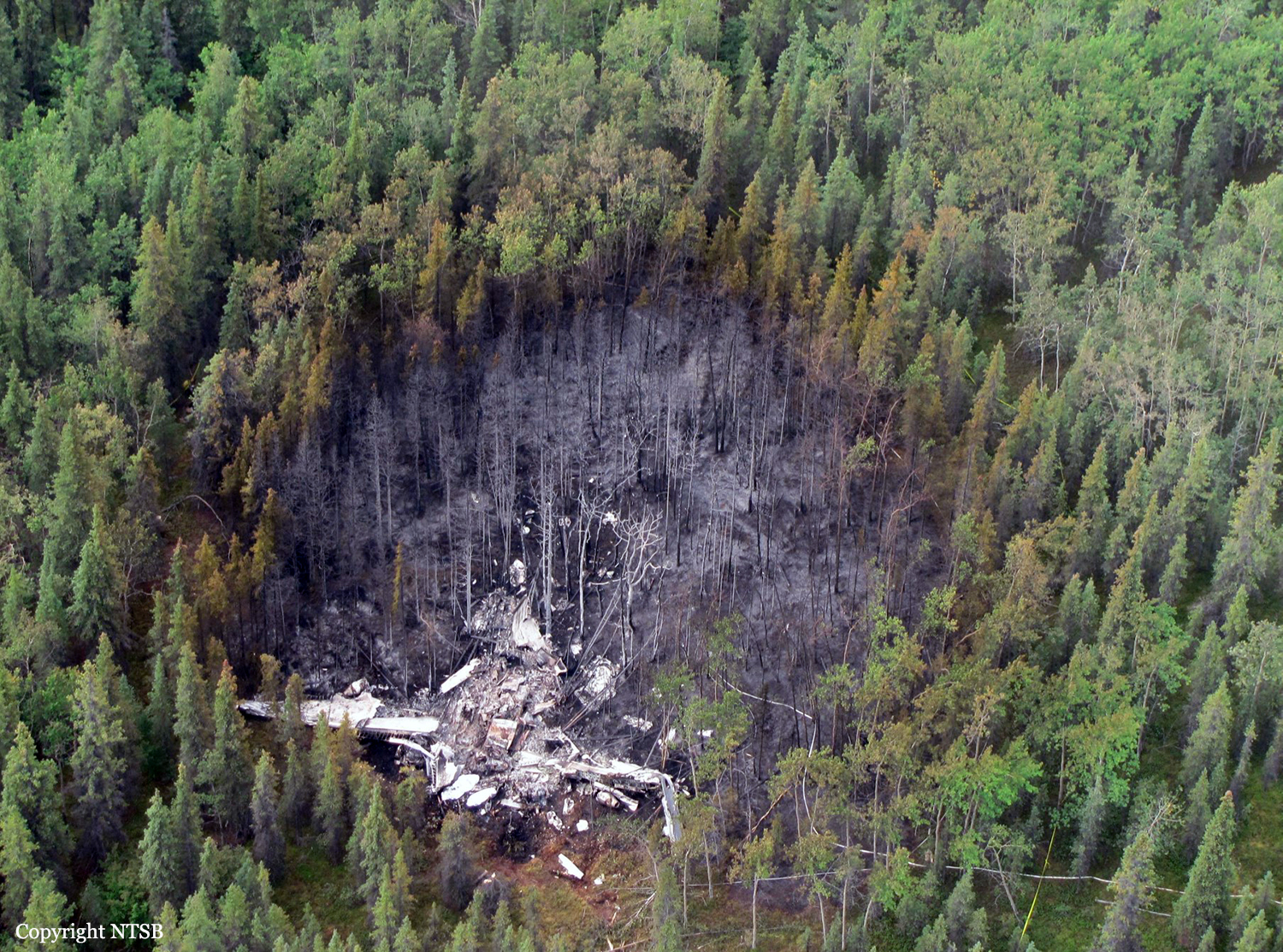
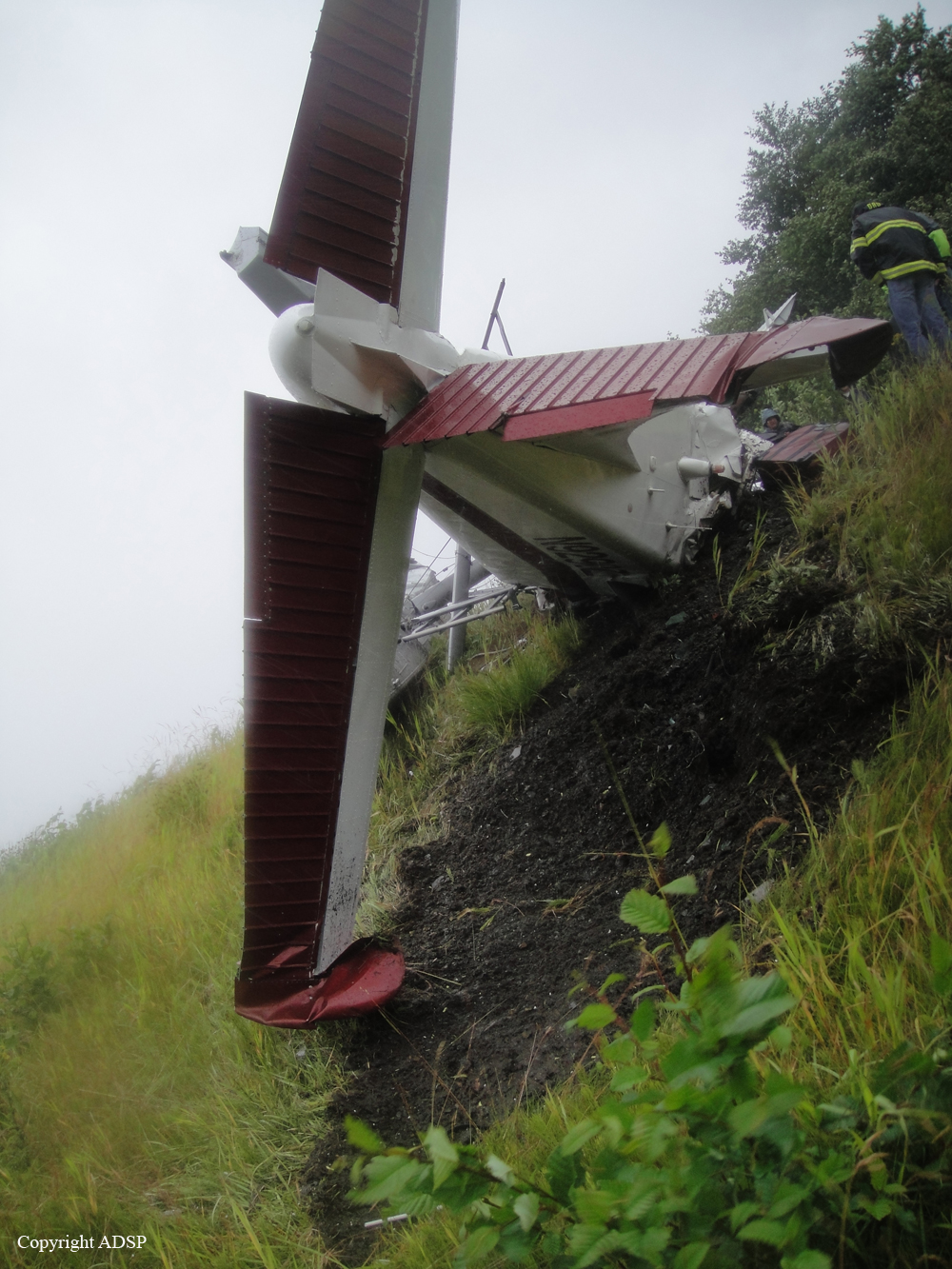
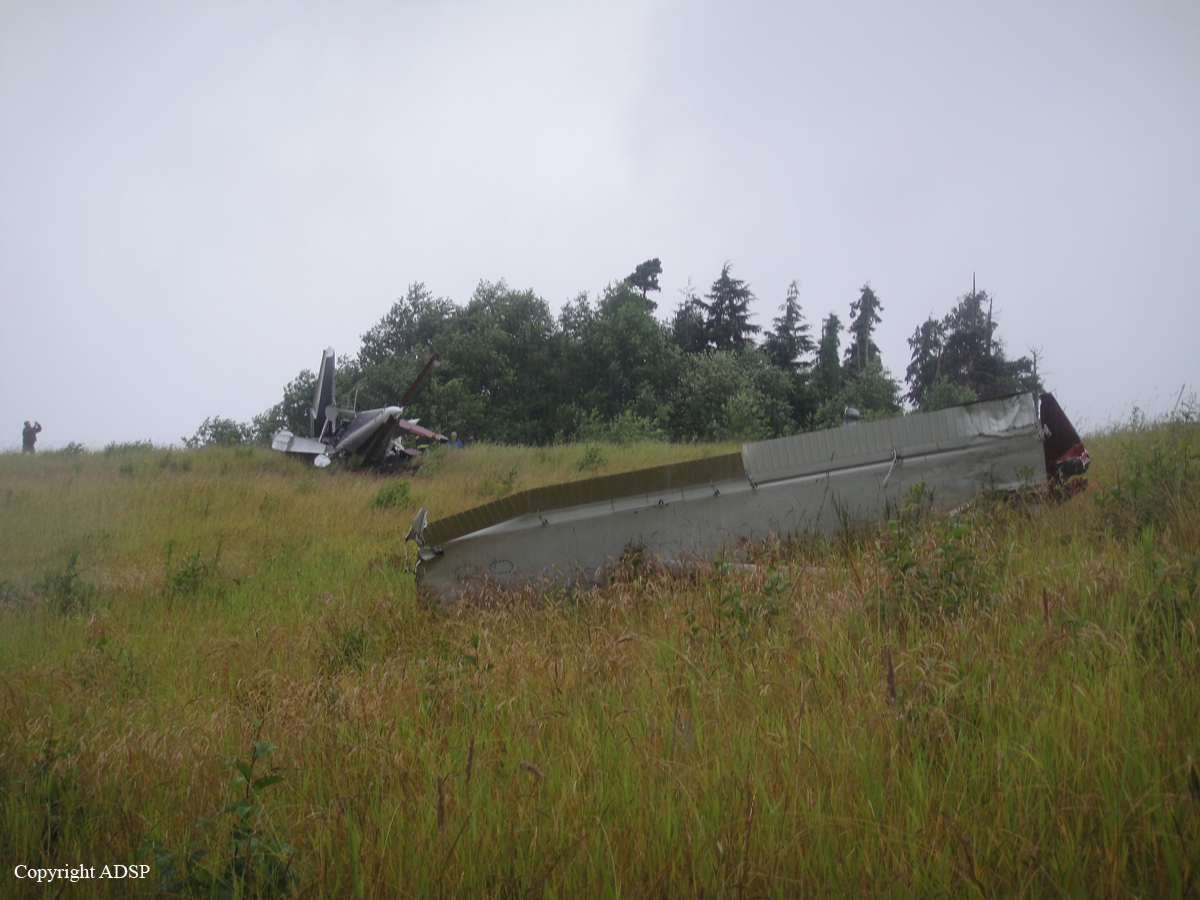
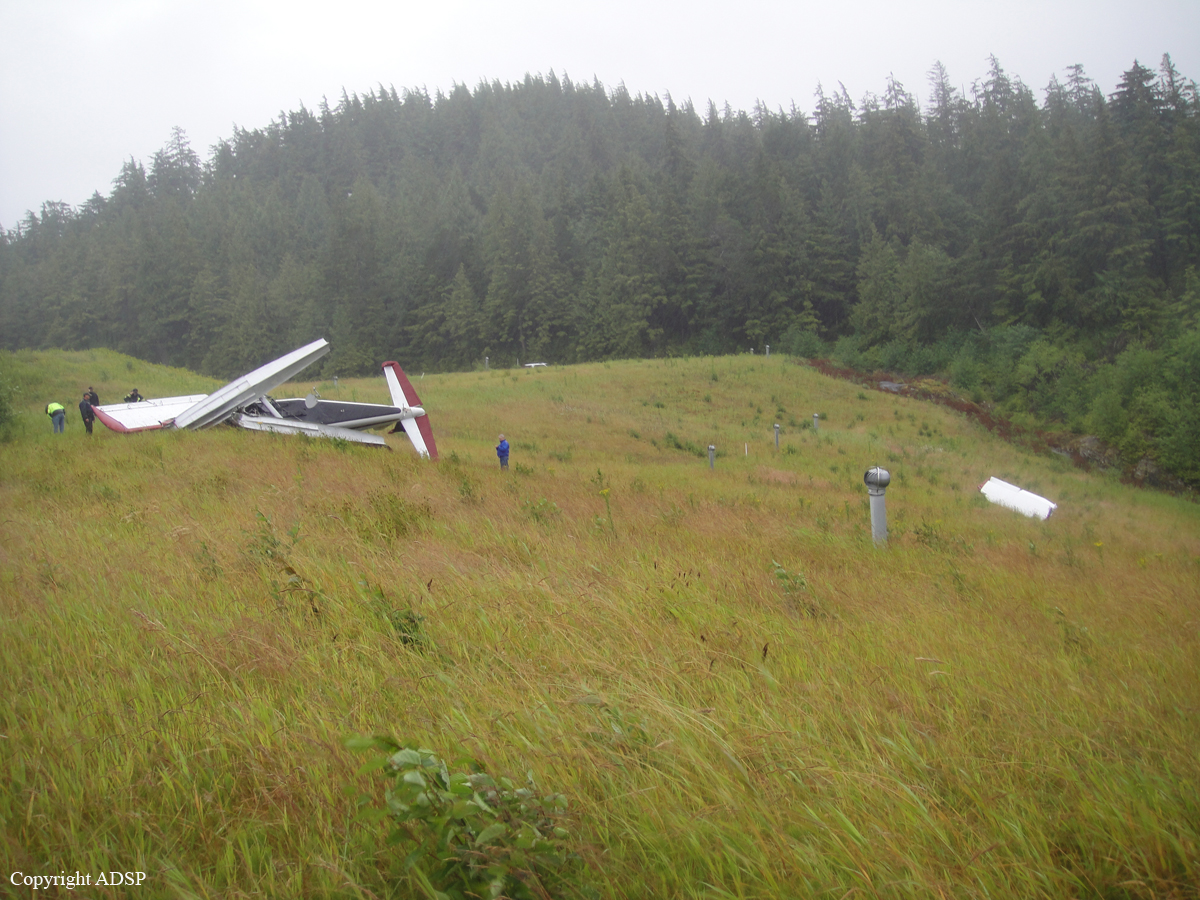
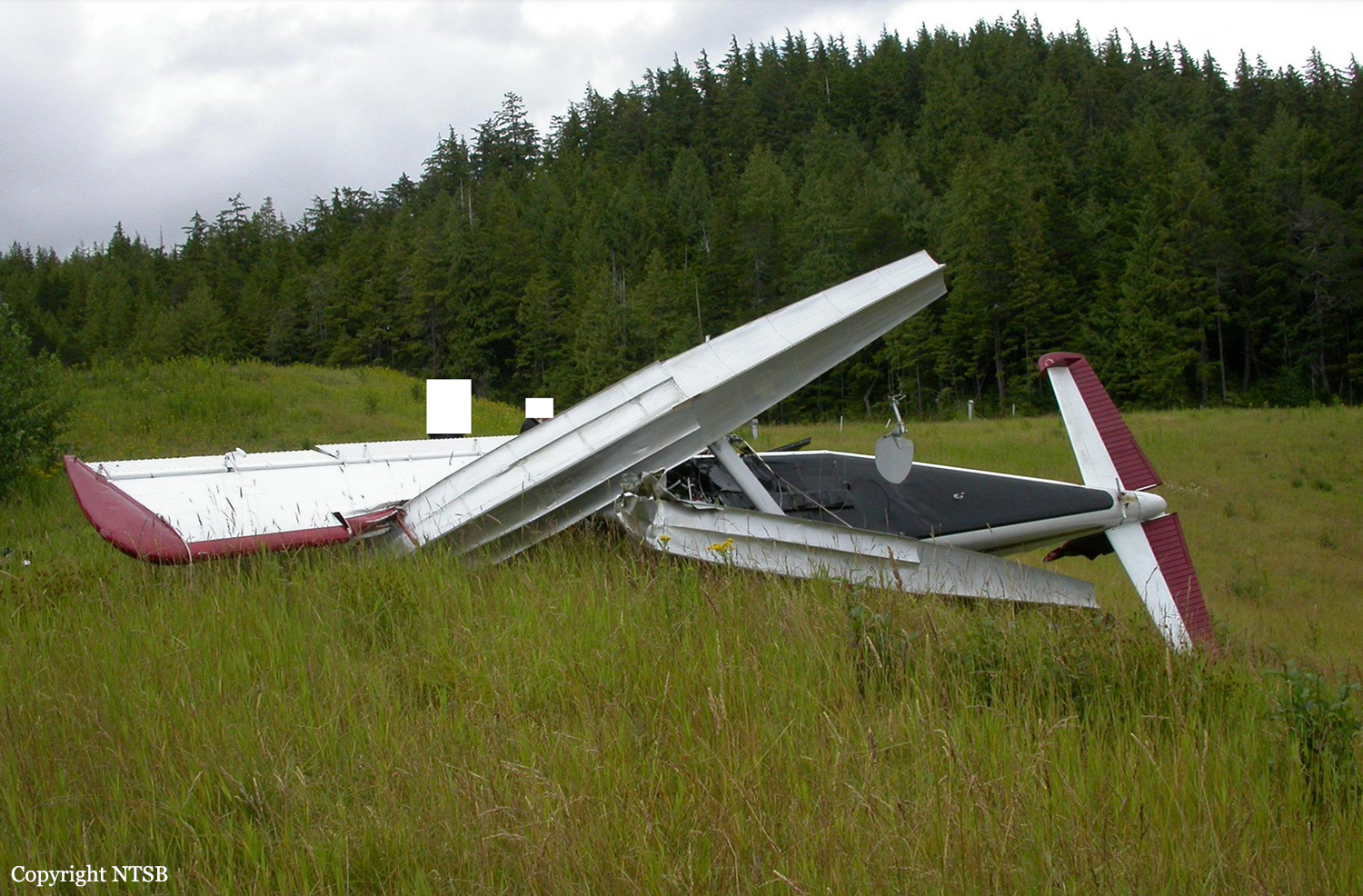
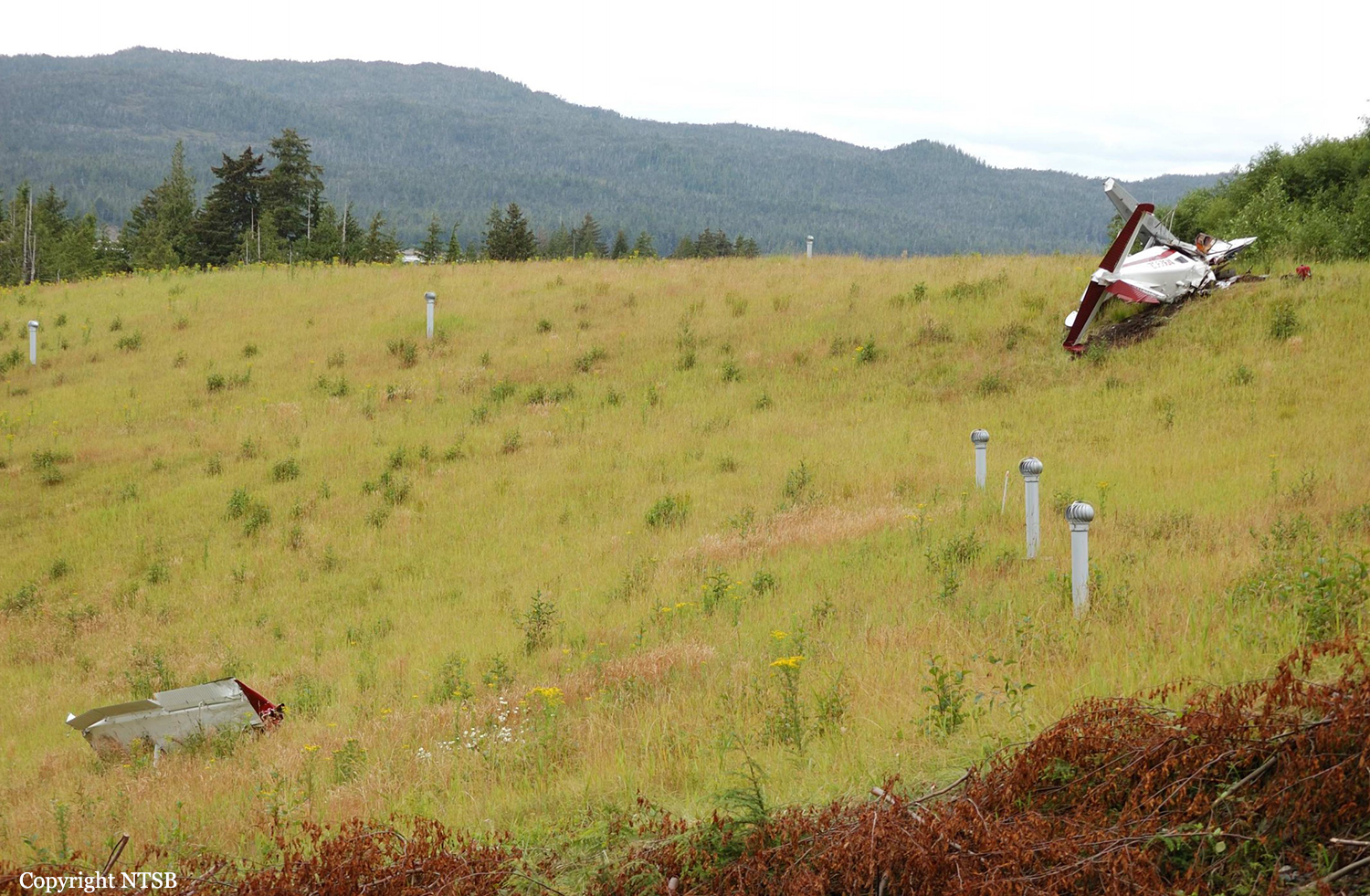
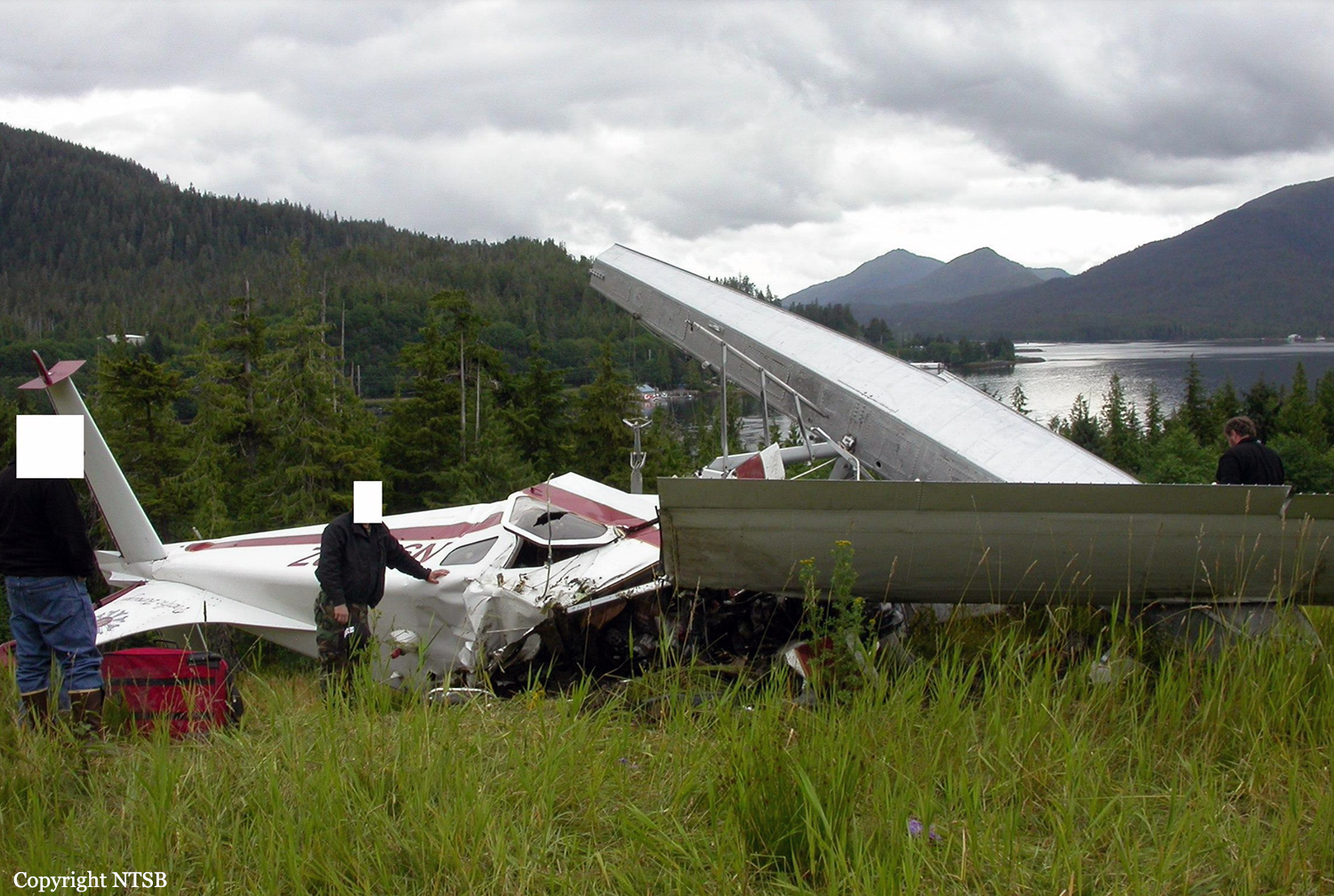
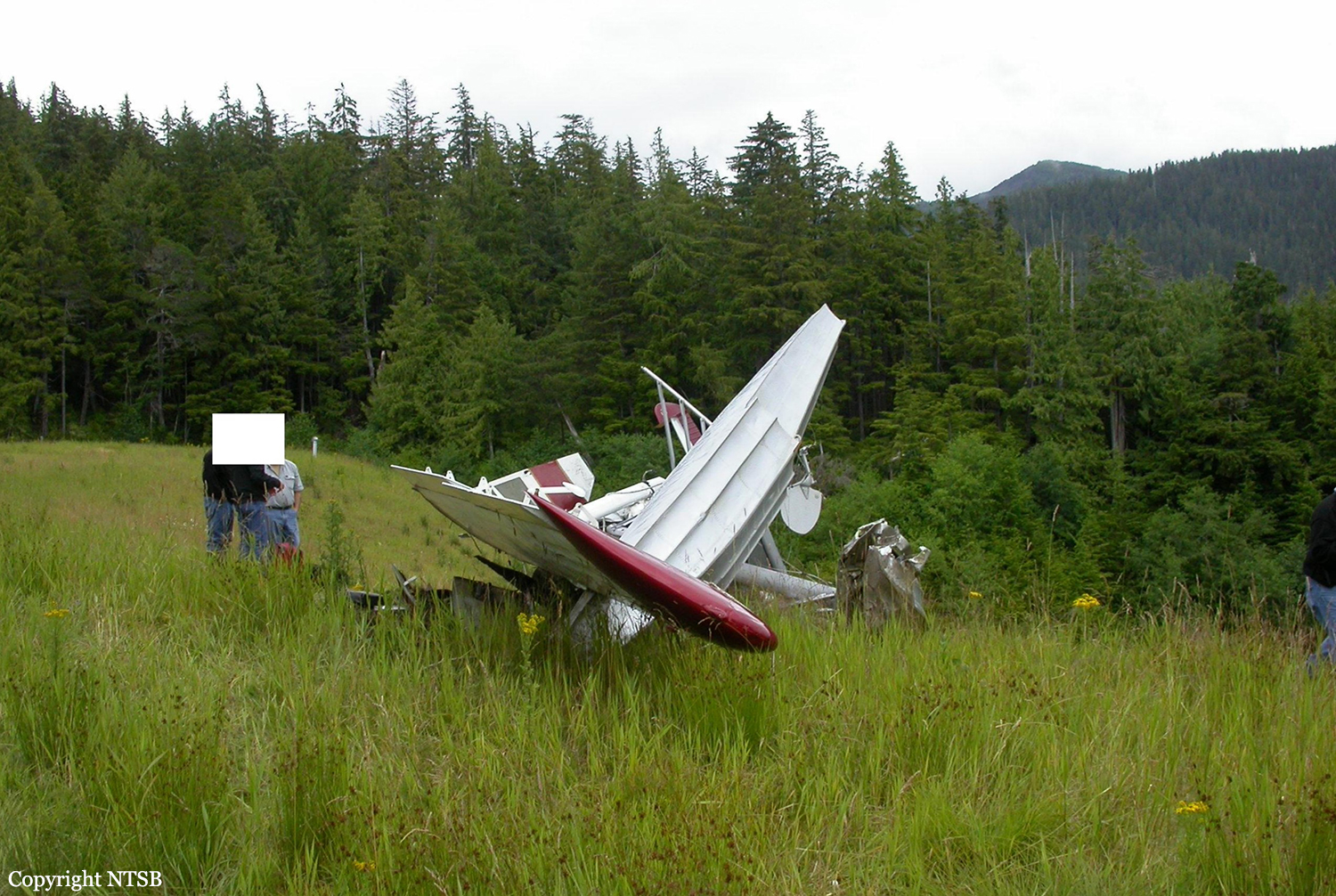
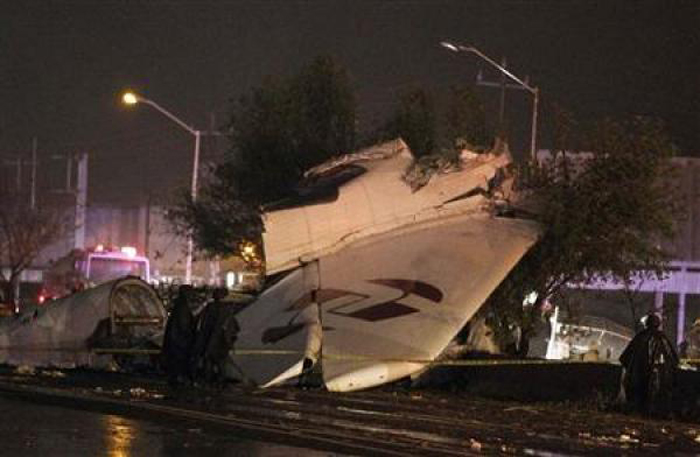
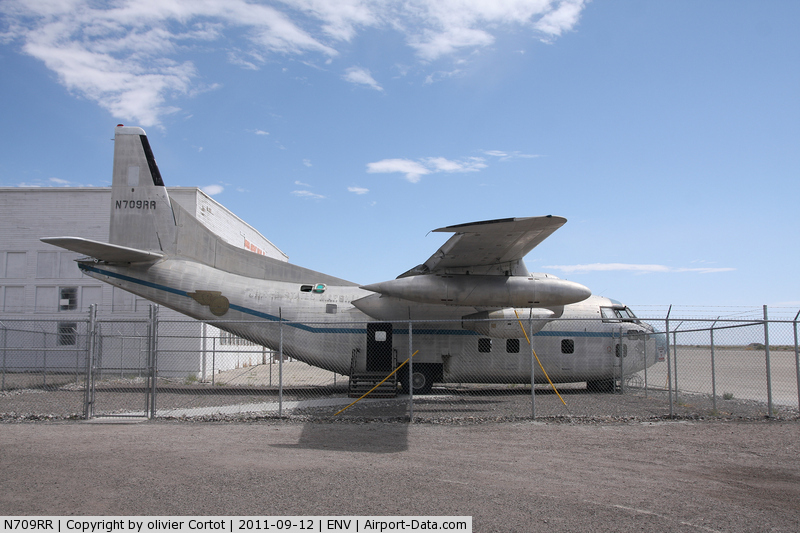
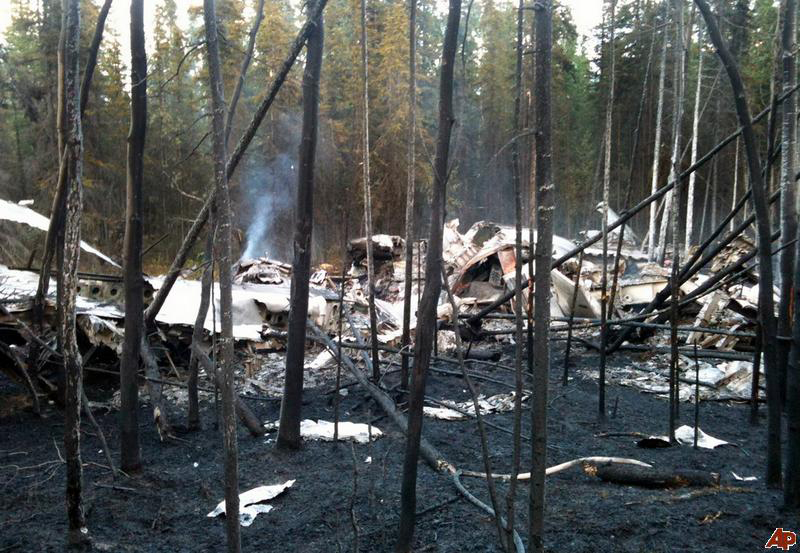
Crash of a Fairchild C-123K Provider in the Denali National Park: 3 killed

Date & Time: Aug 1, 2010 at 1500 LT
Type of aircraft:
Registration:
N709RR
Flight Phase:
Flight Type:
Survivors:
No
Site:
Schedule:
Palmer - Unalakleet
MSN:
20158
YOM:
1954
Crew on board:
2
Crew fatalities:
Pax on board:
1
Pax fatalities:
Other fatalities:
Total fatalities:
3
Captain / Total flying hours:
20000
Circumstances:
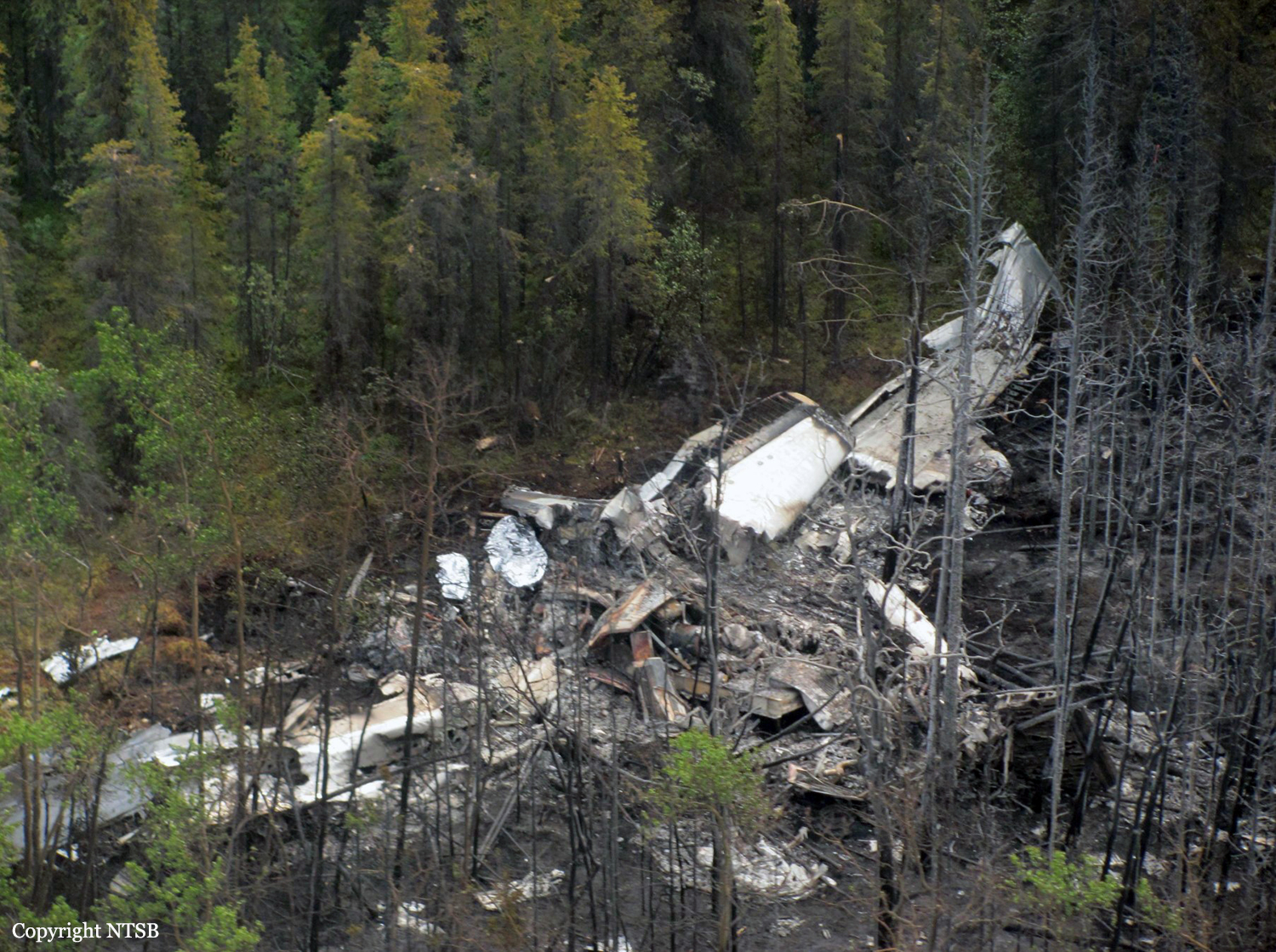
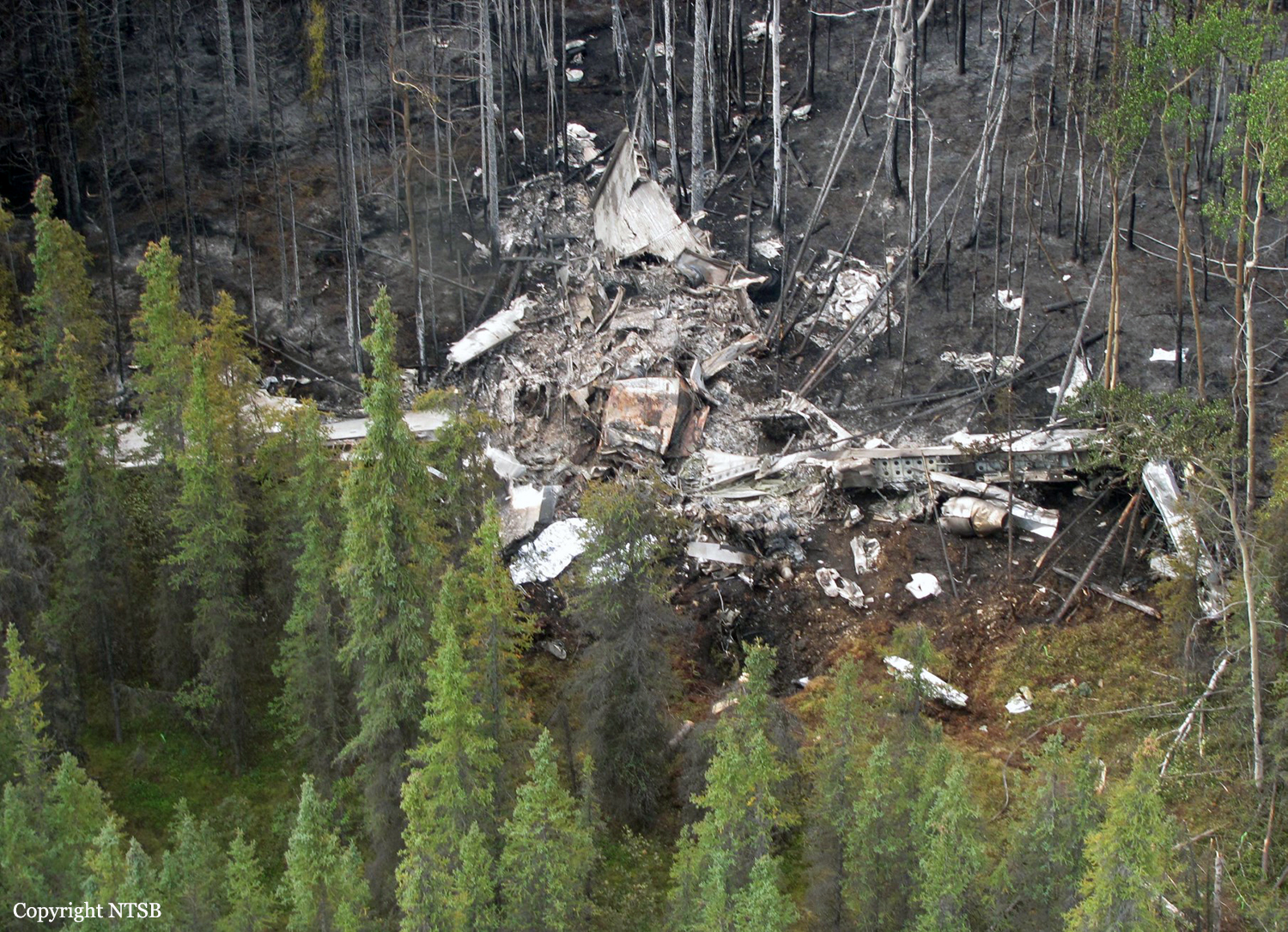
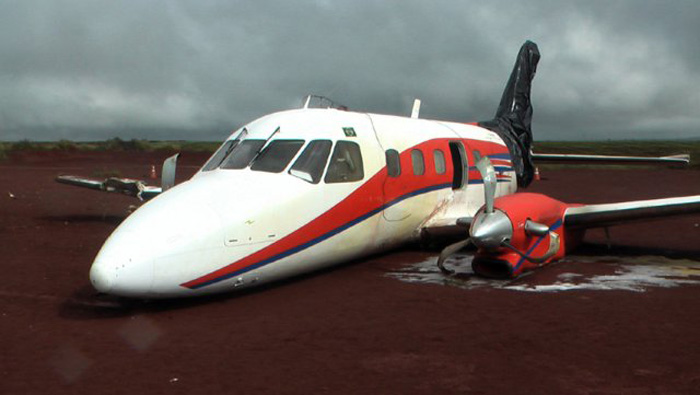
The pilot, co-pilot and the passenger departed on a day VFR cross country flight in a large, 1950's era former military transportb category airplane to deliver cargo. The pilot did not file a flight plan, and had no communication with any air traffic control facility during the flight. While en route, witnesses saw the airplane fly slowly across a valley near the entrance of a national park, which was not the intended route of flight. The airplane suddenly pitched up, stalled, and dived into wooded terrain within the park. Two pilot-rated witnesses said the engines were operating at the time of the accident, and the landing gear was retracted. An on-scene examination of the burned airplane structure and engines revealed no evidence of any preaccident mechanical deficiencies, or any evidence that the cargo had shifted during the flight. A former military pilot who had experience in the accident type airplane, stated that the airplane was considered unrecoverable from a stall, and for that reason, pilots did not typically practice stalls in it. He also indicated that if a problem was encountered with one of the two piston engines on the airplane, the auxiliary jet engine on the affected side should be started to provide additional thrust. Given the lack of mechanical deficiencies discovered during postaccident inspection, the absence of any distress communications, and the fact that neither of the two auxiliary jet engines had been started to assist in the event of a piston engine malfunction, it is likely the pilot allowed the airplane to lose airspeed and enter a low altitude stall from which he was unable to recover.
Probable cause:
The pilot's failure to maintain adequate airspeed to avoid a low altitude stall, resulting in a loss of control and collision with terrain.
Final Report:
Crash of an Antonov AN-12BP at Camp Dwyer AFB

Date & Time: Jul 28, 2010
Type of aircraft:
Operator:
Registration:
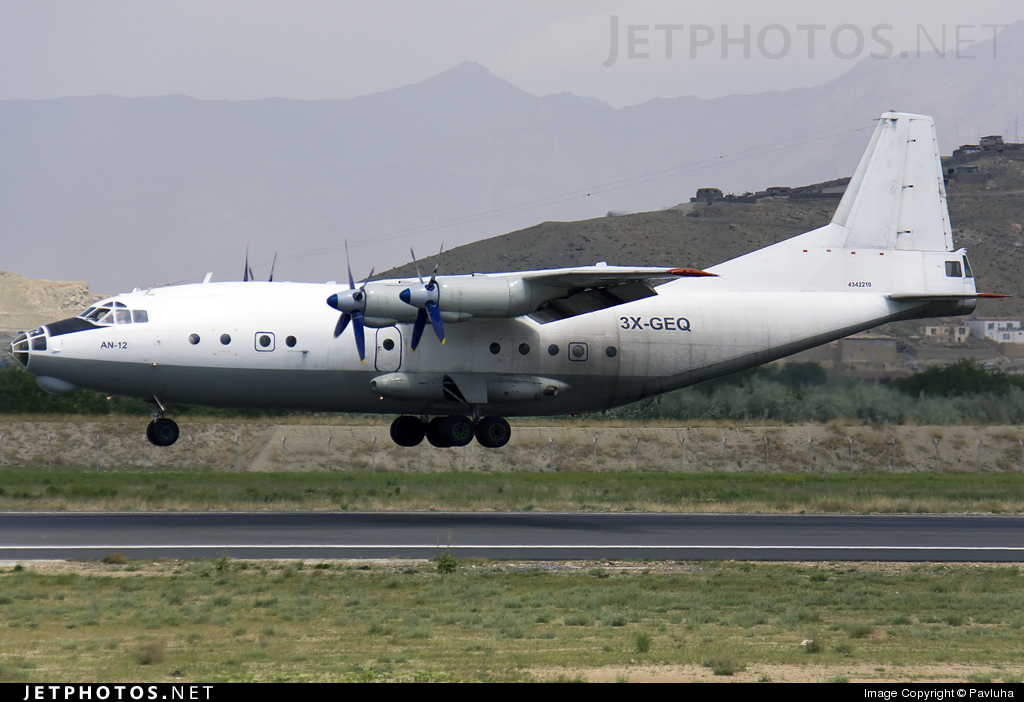
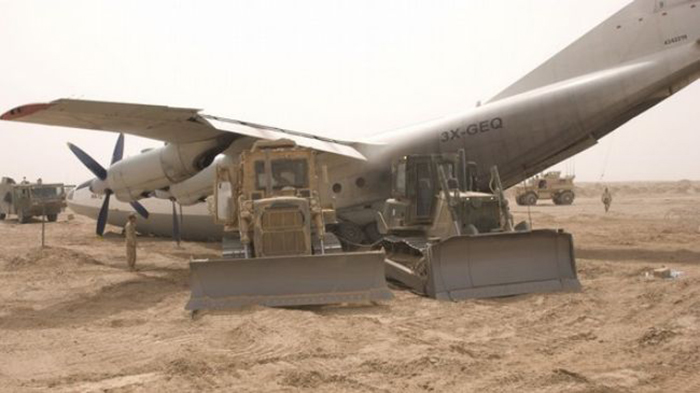
3X-GEQ
Flight Type:
Survivors:
Yes
MSN:
4 3 422 10
YOM:
1964
Country:
Region:
Crew on board:
6
Crew fatalities:
Pax on board:
0
Pax fatalities:
Other fatalities:
Total fatalities:
0
Circumstances:
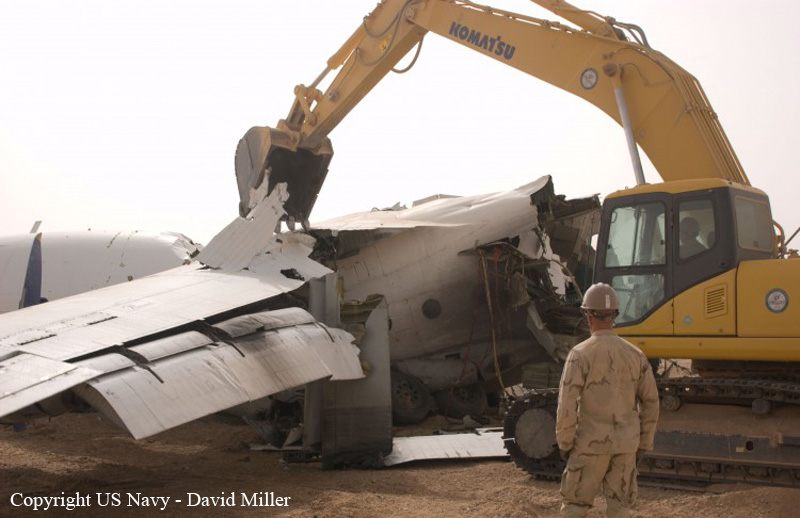
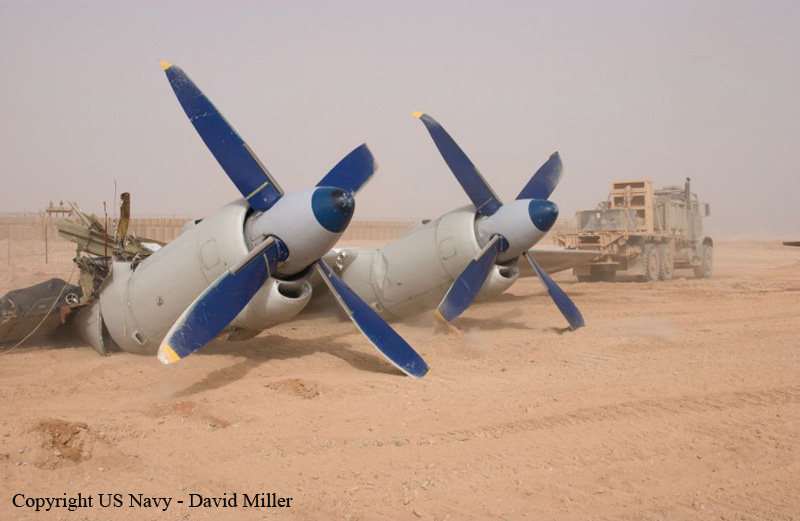
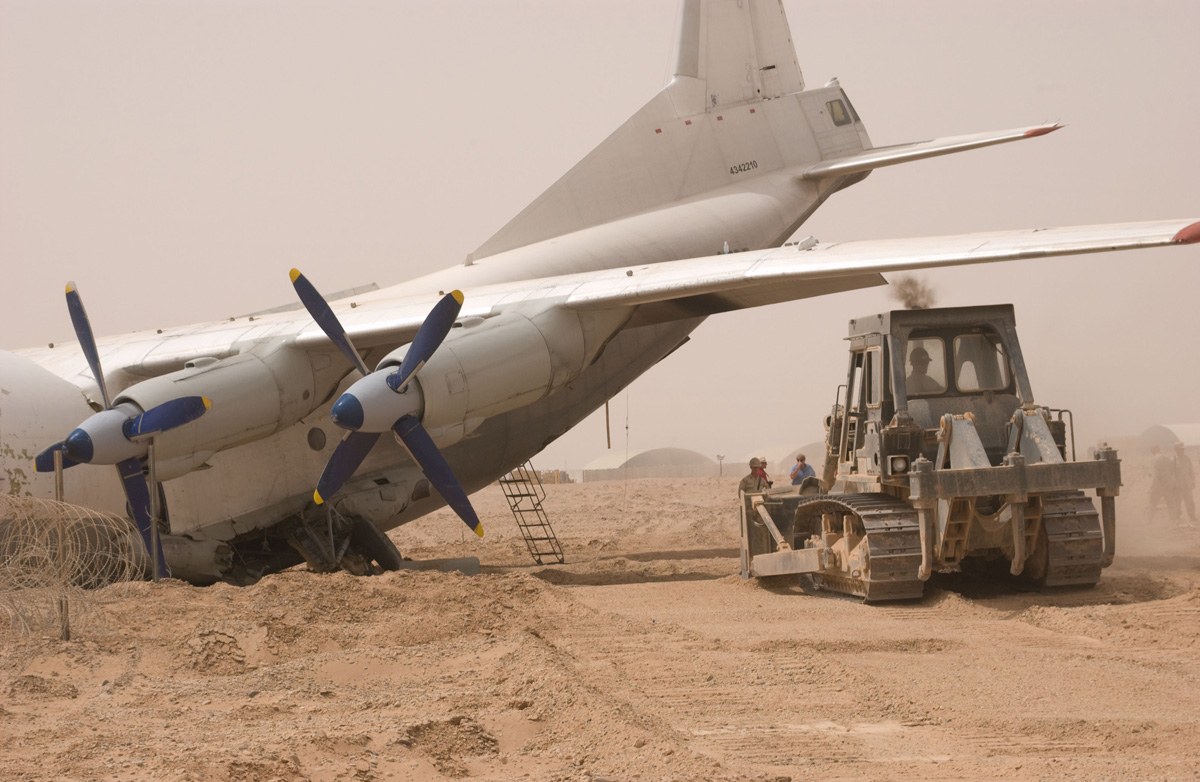
After landing at Camp Dwyer AFB (Forward Operating Base Dwyer) located in the Helmand Province, the aircraft went out of control, veered off runway, collided with a fence and came to rest into a ravine, broken in two. All six occupants were uninjured while the aircraft was damaged beyond repair. It was later dismantled by the US Air Force. The aircraft was carrying a load of fresh fruits and dairy products.

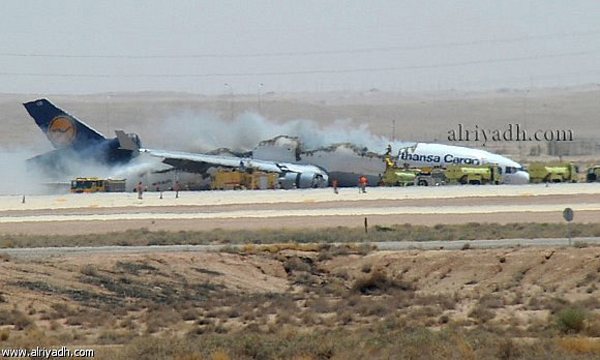
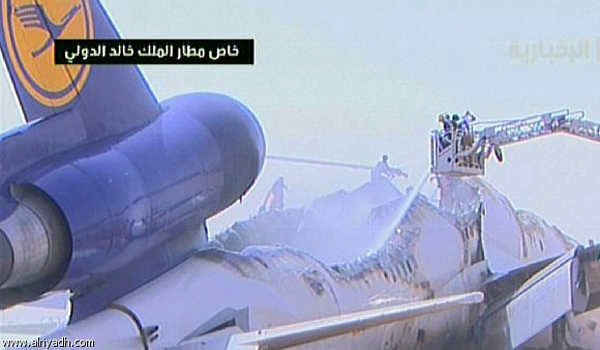
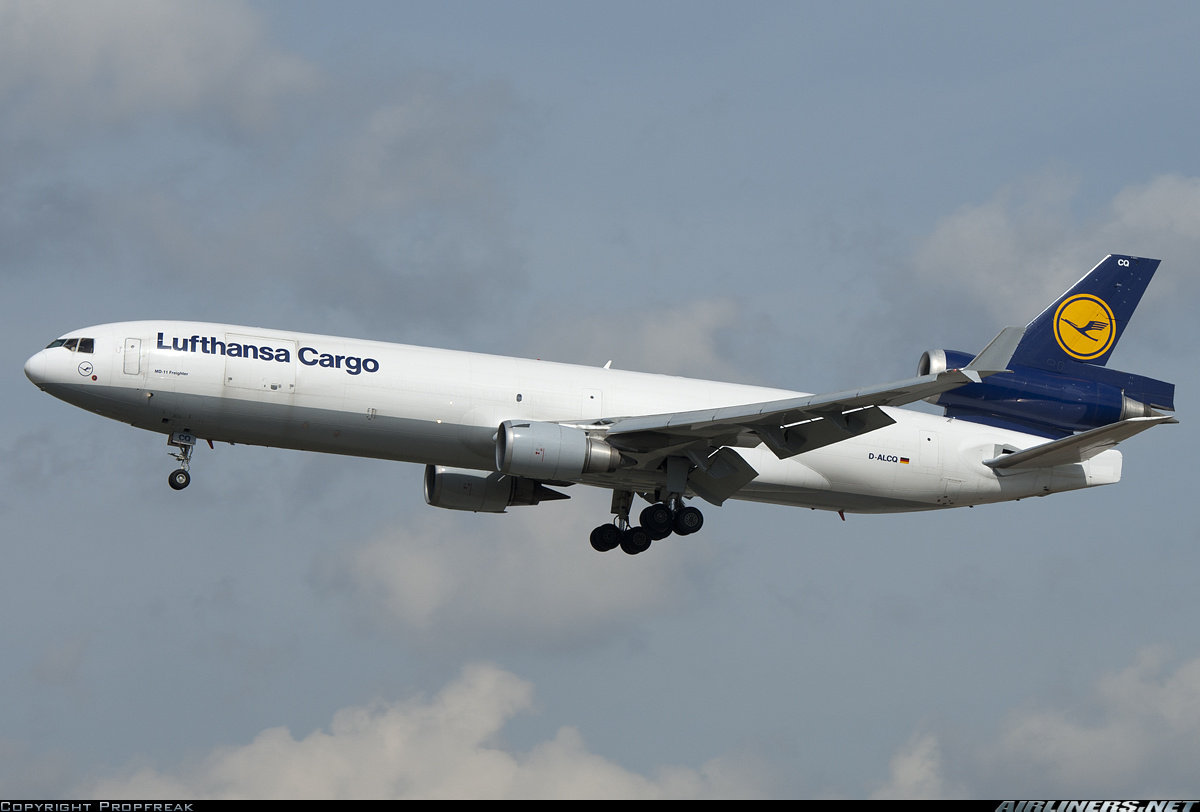
Crash of a McDonnell Douglas MD-11F in Riyadh

Date & Time: Jul 27, 2010 at 1138 LT
Type of aircraft:
Operator:
Registration:
D-ALCQ
Flight Type:
Survivors:
Yes
Schedule:
Frankfurt - Riyadh
MSN:
48431/534
YOM:
1993
Flight number:
LH8460
Country:
Region:
Crew on board:
2
Crew fatalities:
Pax on board:
0
Pax fatalities:
Other fatalities:
Total fatalities:
0
Captain / Total flying hours:
8270
Captain / Total hours on type:
4466.00
Copilot / Total flying hours:
3444
Copilot / Total hours on type:
219
Aircraft flight hours:
73247
Aircraft flight cycles:
10073
Circumstances:
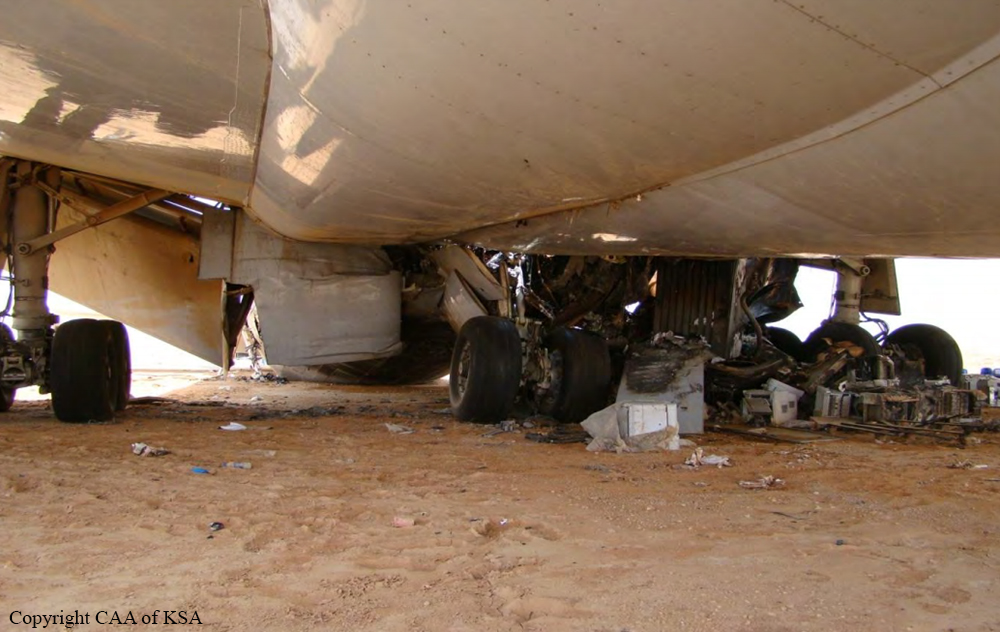
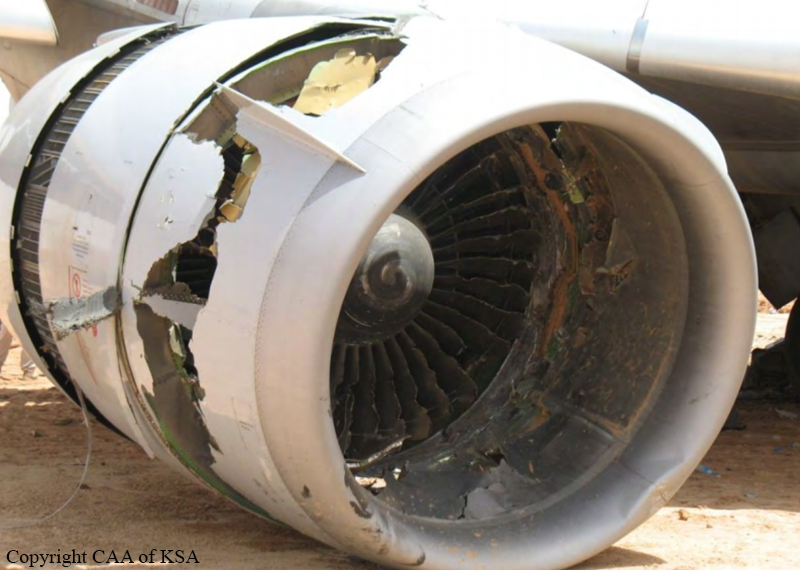
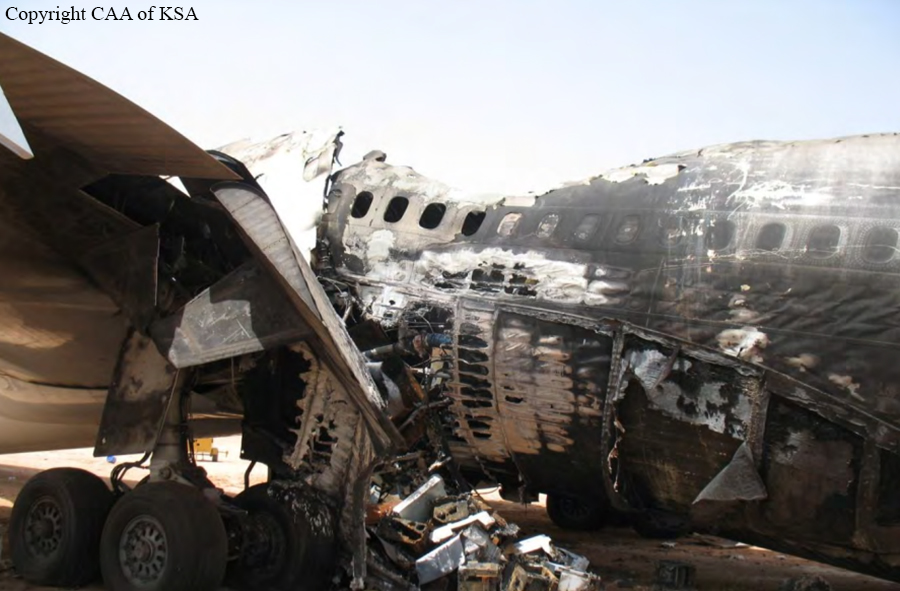
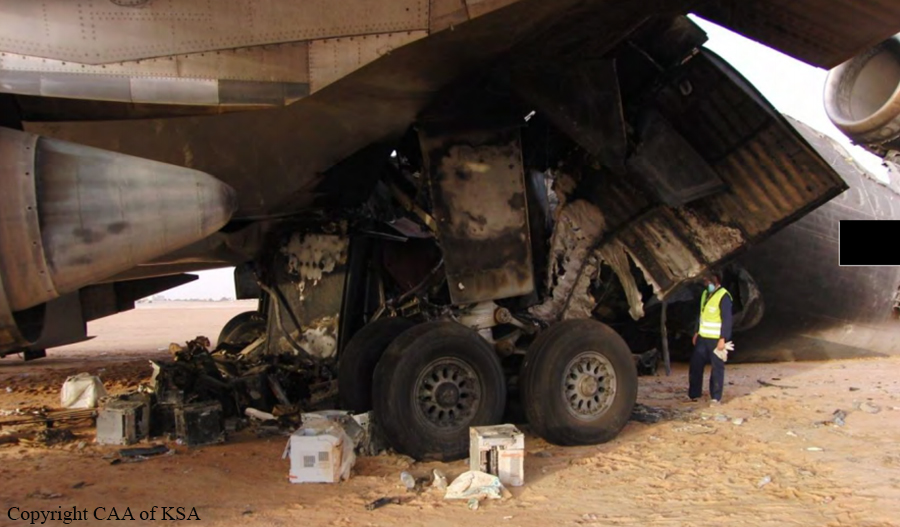
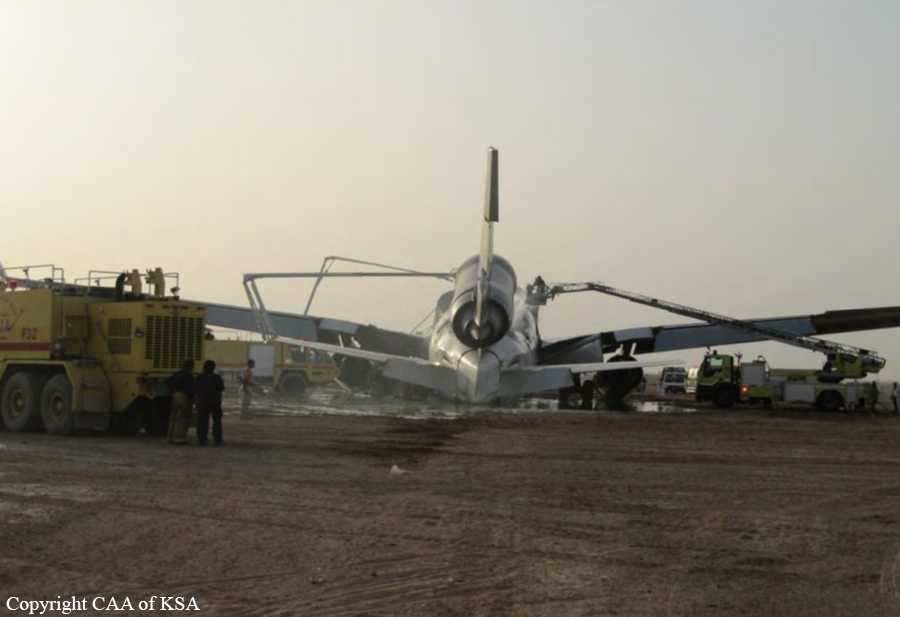
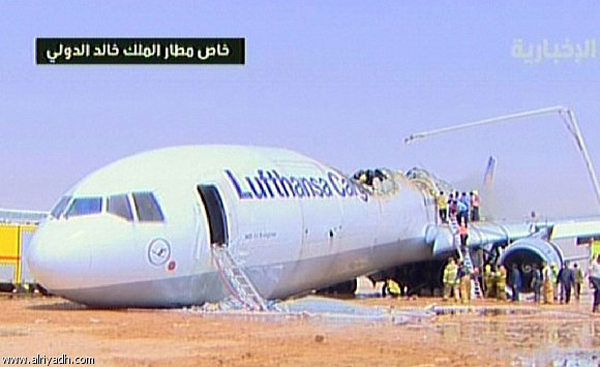
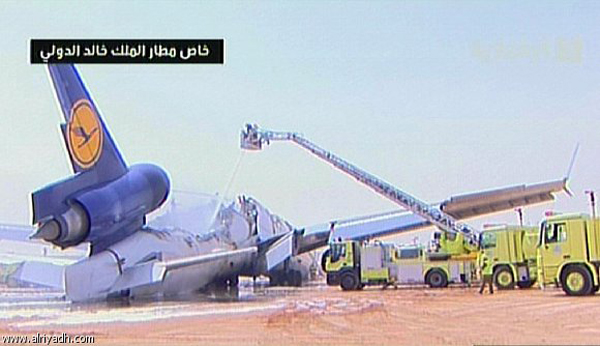
The airplane operated on Flight LH8460, a scheduled cargo service operating from Frankfurt (FRA) to Riyadh (RUH). It carried 80 tons of cargo. The accident flight departed Frankfurt about 05:16 local time (03:16 UTC), 2.5 hours later than originally scheduled due to minor maintenance issues. The accident flight was the first time the captain and first officer had flown together. The captain decided that the first officer, who had been employed with Lufthansa Cargo for 7 months and had not flown into Riyadh before, would fly the leg because he believed it would be an easy leg appropriate for the first officer. Cruise flight and approach to Riyadh were uneventful. The first officer indicated that he completed the approach briefing about 25 minutes before landing, calculating that he would use a flap setting of 35°, target 72 percent N1 rpm on final approach, expect a pitch attitude of about 4.5° on final approach, and commence the flare about 40 feet above ground level (agl). The flight was radar vectored to the instrument landing system of runway 33L, and the first officer flew the approach with a planned Vref of 158 knots. Convective conditions prevailed, with a temperature of 39°C and winds at 15 to 25 knots on a heading closely aligned with the landing runway. The aircraft was centered on the glide slope and localizer during the approach, until 25 seconds before touchdown when it dipped by half a dot below the glide slope. During that period, the indicated airspeed oscillated between 160 and 170 kt, centered about 166 kt. The ground speed was 164 kt until 20 sec. prior to touchdown, when it began to increase and reached 176 kt at touchdown. The flare was initiated by the first officer between 1.7 and 2.0 sec. before touchdown, that is: 23 to 31 feet above the runway. The main gear touchdown took place at 945 ft from the runway threshold at a descent rate of -13 ft/sec. (780 ft/min) resulting in a normal load factor of 2.1g. The aircraft bounced with the main gear reaching a maximum height of 4ft above the runway with the spoilers deployed to 30 degrees following main-wheel spin up. During this bounce, the captain who was the Pilot Monitoring (PM) pushed on the control column resulting in an unloading of the aircraft. The aircraft touched down a second time in a flat pitch attitude with both the main gear and nose gear contacting the runway, at a descent rate of -11 ft/sec. (660 ft/min), achieving a load factor of 3.0g. Just prior to this second touchdown, both pilots pulled on the control column, which combined with the rebound of the nose gear from the runway, resulted in a 14° pitch angle during the second bounce. Additionally, the spoilers reached their full extension of 60° following the compression of the nose gear strut during the second touchdown. During this second bounce, the main gear reached a height of 12 ft above the runway. Early in this second bounce, the captain pushed the control column to its forward limit and the elevators responded accordingly. Prior to the third and final touchdown, both pilots pulled back on the control column at slightly different times. Although the elevators responded accordingly and started to reduce the nose-down pitch rate, the aircraft was still pitching down at the third touchdown. During this third touchdown, the aircraft contacted the runway at a descent rate of -17 ft/sec (1020 ft/min), thus achieving a load factor of 4.4g. At this point, the aft fuselage ruptured behind the wing trailing edge. Two fuel lines were severed and fuel spilled within the left hand wheel well. A fire ignited and travelled to the upper cargo area. The captain attempted to maintain control of the aircraft within the runway boundaries. Not knowing about the aft fuselage being ruptured and dragging on the runway, the captain deployed the engine thrust reversers, but only the no. 1 and the no. 3 engines responded. The captain maintained directional control of the aircraft as best he could and requested the First Officer to declare a Mayday. The aircraft then went towards the left side of the runway as the captain attempted, without success, to maintain the aircraft on the runway. As the aircraft departed the runway, the nose gear collapsed and the aircraft came to a full stop 8800 ft from the threshold of the runway and 300 ft left from the runway centerline. The fuel to the engines was cut off and both pilots evacuated the aircraft by using the slide at the Left One (L1) door. The mid portion of the aircraft was on fire.
Probable cause:
Cause Related Findings:
1. The flight crew did not recognize the increasing sink rate on short final.
2. The First officer delayed the flare prior to the initial touchdown, thus resulting in a bounce.
3. The flight crew did not recognize the bounce.
4. The Captain attempted to take control of the aircraft without alerting the First Officer resulting in both flight crews acting simultaneously on the control column.
5. During the first bounce, the captain made an inappropriate, large nose-down column input that resulted in the second bounce and a hard landing in a flat pitch attitude.
6. The flight crew responded to the bounces by using exaggerated control inputs.
7. The company bounced-landing procedure was not applied by the flight crew.
Final Report:

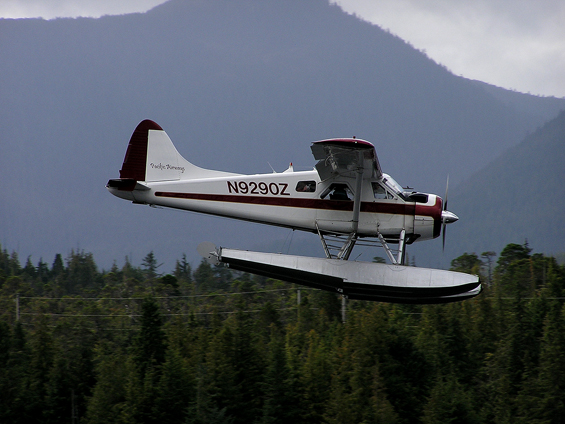
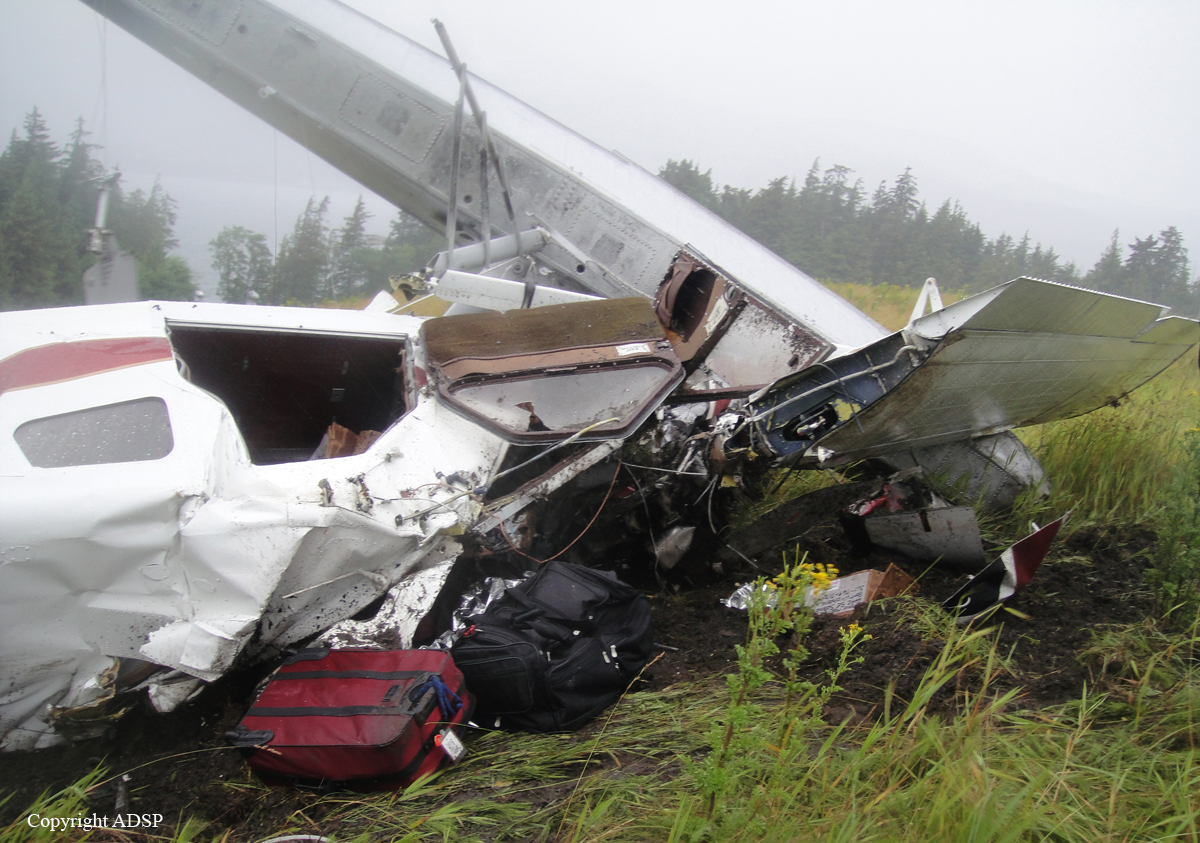
Crash of a De Havilland DHC-2 Beaver in Ketchikan: 1 killed

Date & Time: Jul 23, 2010 at 0727 LT
Type of aircraft:
Operator:
Registration:
N9290Z
Flight Phase:
Flight Type:
Survivors:
No
Schedule:
Thorne Bay - Ketchikan
MSN:
1387
YOM:
1959
Crew on board:
1
Crew fatalities:
Pax on board:
0
Pax fatalities:
Other fatalities:
Total fatalities:
1
Captain / Total flying hours:
5300
Captain / Total hours on type:
4500.00
Aircraft flight hours:
21065
Circumstances:
The pilot had been advised by the Federal Aviation Administration flight service station (FSS) specialist to remain clear of the destination airport until the specialist could issue a special visual flight rules clearance. Instrument meteorological conditions prevailed at the airport, with a strong southeasterly wind. About 8 minutes after initial contact, the FSS specialist attempted to contact the pilot to issue the clearance but received no response. A witness about 0.5 mile southeast of the accident site said he saw the accident airplane flying very low over the treetops. He said the weather conditions consisted of low clouds, rain, and gusty southeasterly wind estimated at 30 to 40 knots. He said that, as the airplane passed overhead, it turned sharply to the left. As he watched the airplane, the wings rocked violently from side to side, and the nose pitched up and down. As the airplane passed low over hilly, tree-covered terrain, it rolled to the right, the right wing struck a large tree and separated, and the airplane descended behind a stand of trees. Pilots flying in the accident area reported strong wind with significant downdrafts and turbulence. A postaccident examination of the airplane did not disclose any preimpact mechanical malfunctions. Given the lack of mechanical deficiencies and the reports of turbulence and downdrafts, as well as the witness’ account of the airplane’s physical movements, it is likely that the pilot encountered significant terrain-induced turbulence and downdrafts while flying at low altitude. The area surrounding the accident site and portions of the pilot's earlier flight path were bordered by large areas of open and protected water, several of which were suitable for landing the float-equipped airplane.
Probable cause:
The pilot’s decision to continue the flight toward his destination in significant turbulence and downdrafts, and his subsequent failure to maintain control of the airplane while flying low over rising terrain.
Final Report:
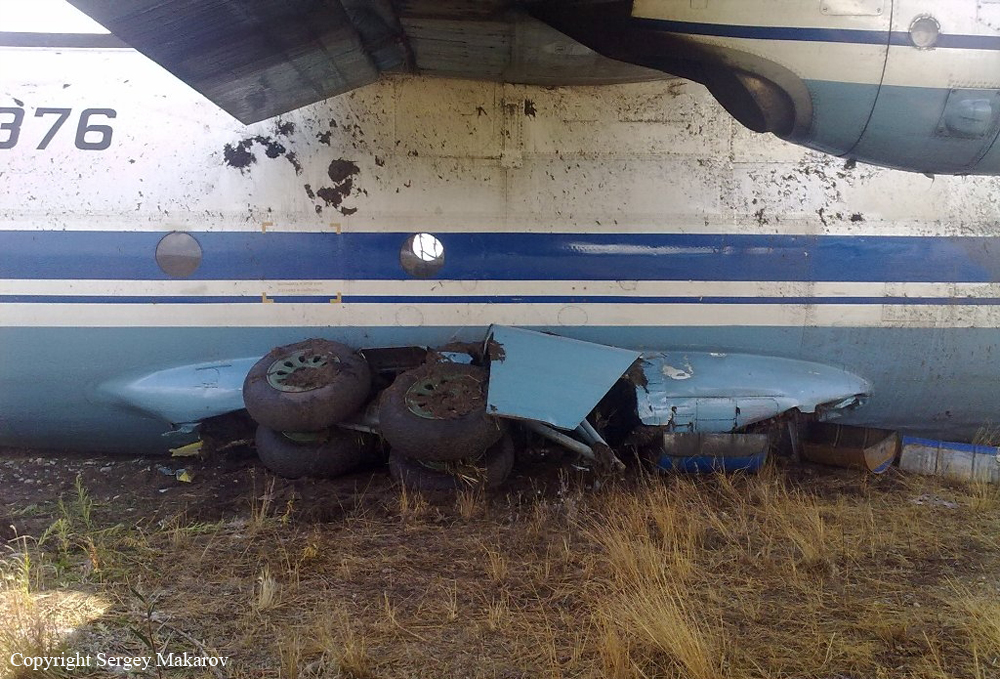
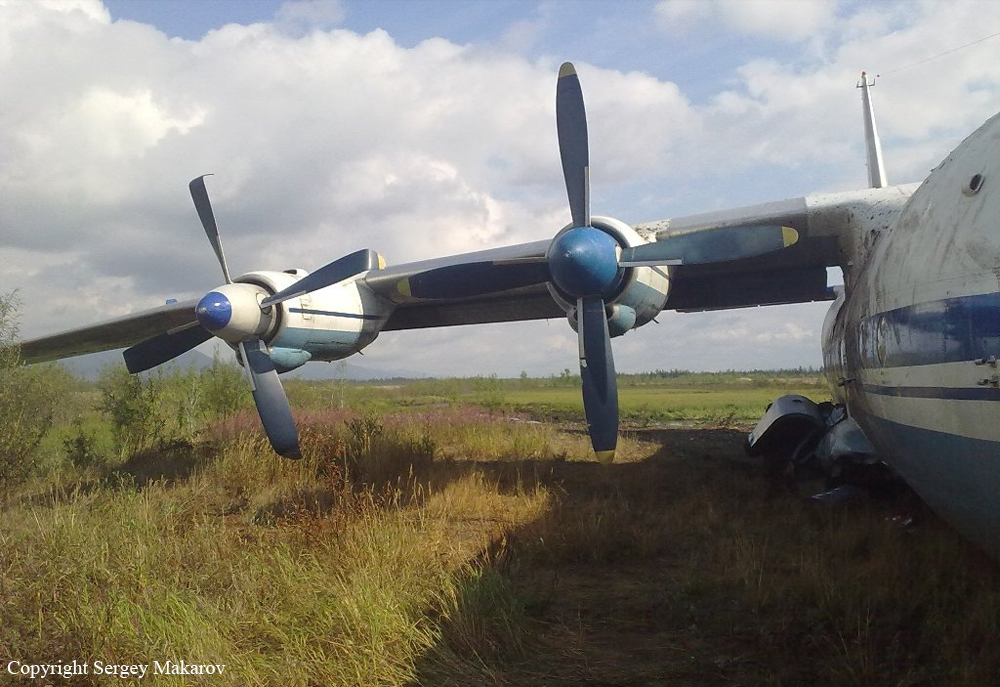
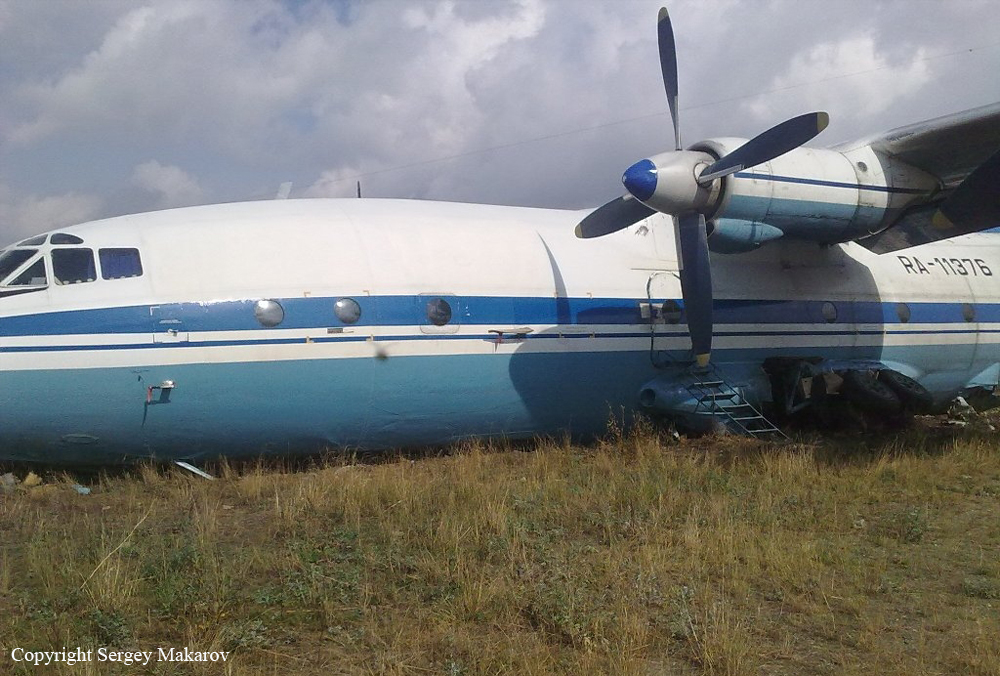
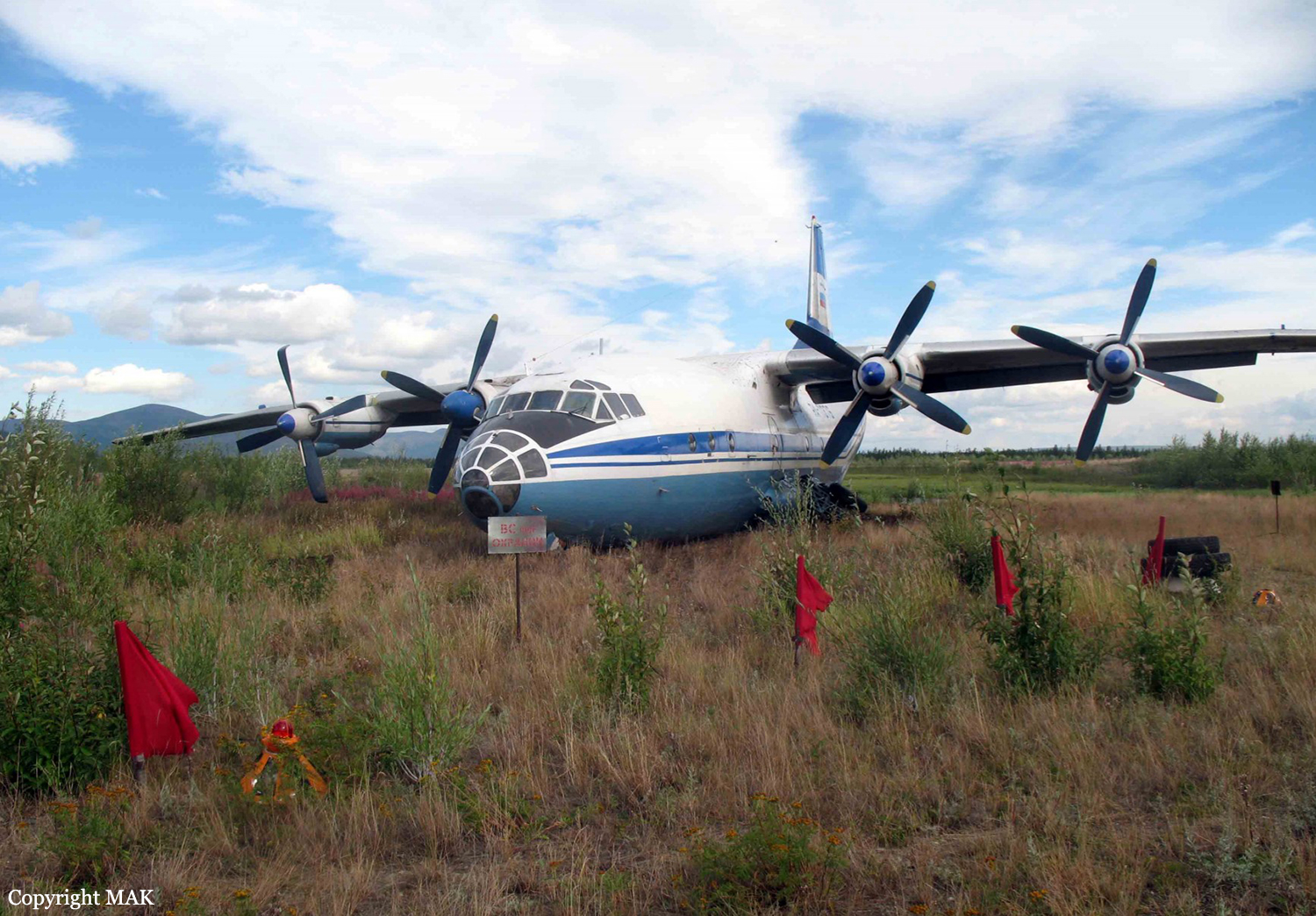
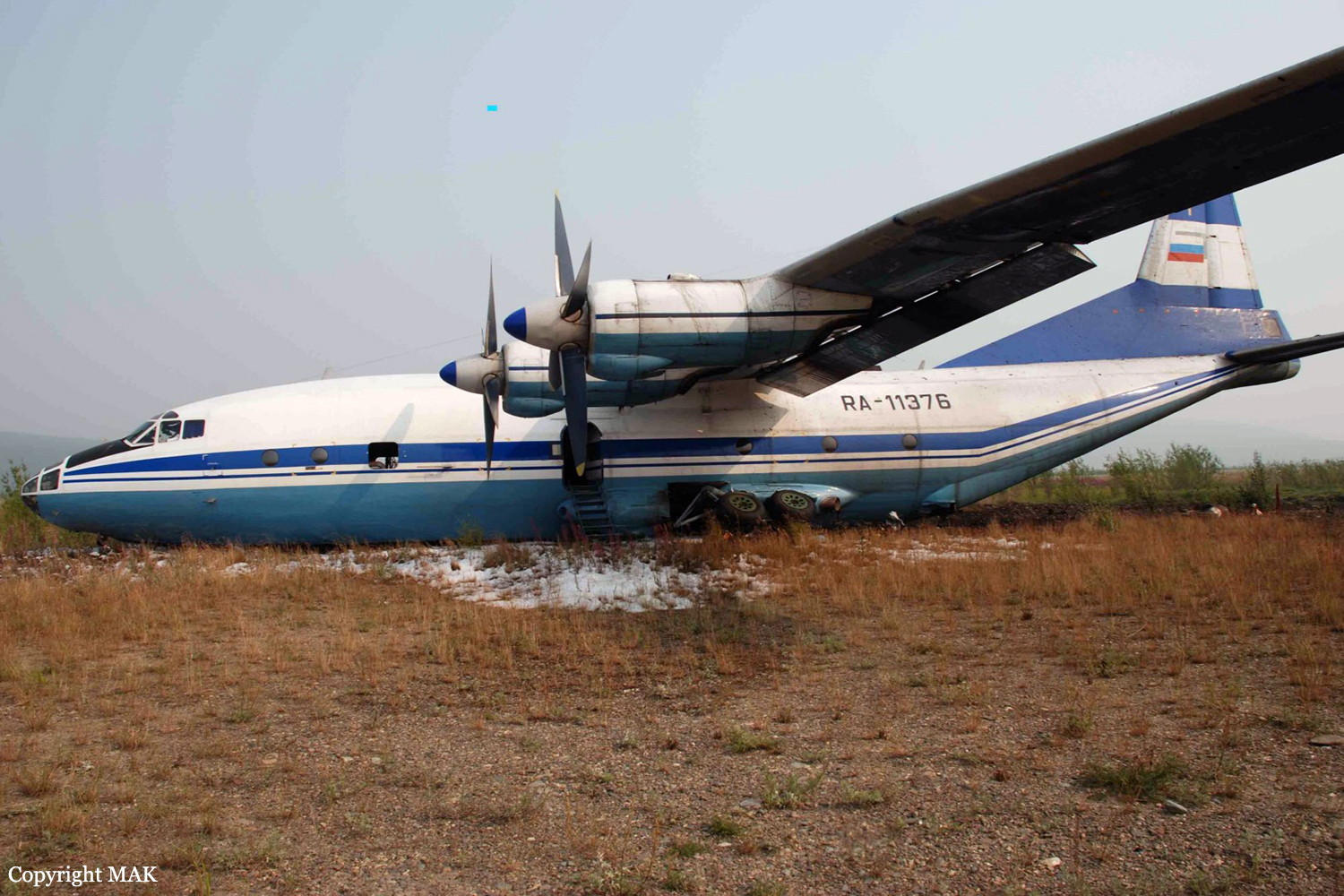
Crash of an Antonov AN-12BP in Keperveyem

Date & Time: Jul 21, 2010 at 0932 LT
Type of aircraft:
Operator:
Registration:
RA-11376
Flight Phase:
Flight Type:
Survivors:
Yes
Schedule:
Keperveem - Komsomolsk-on-Amur
MSN:
02 348 206
YOM:
1972
Flight number:
KBR9236
Country:
Region:
Crew on board:
7
Crew fatalities:
Pax on board:
1
Pax fatalities:
Other fatalities:
Total fatalities:
0
Aircraft flight hours:
5136
Aircraft flight cycles:
3090
Circumstances:
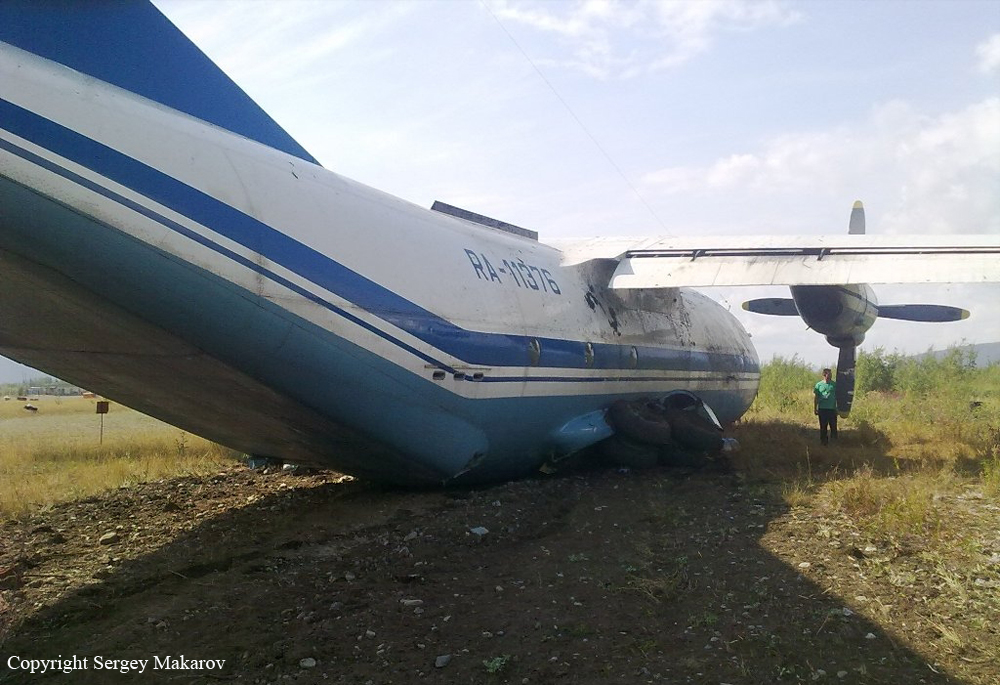
During the takeoff roll on runway 27 at Keperveyem Airport, the four engine aircraft deviated to the left, went out of control and veered off runway. It lost its undercarriage and slid before coming to rest 120 metres to the left of the runway and after a course of 880 metres. All 8 occupants escaped uninjured while the aircraft was damaged beyond economical repair.
Probable cause:
Loss of control during takeoff following the failure of the nosewheel steering system due to the malfunction of the VG15-2S switch. The captain failed to check the nosewheel steering system prior to takeoff, which was considered as a contributing factor.
Final Report:
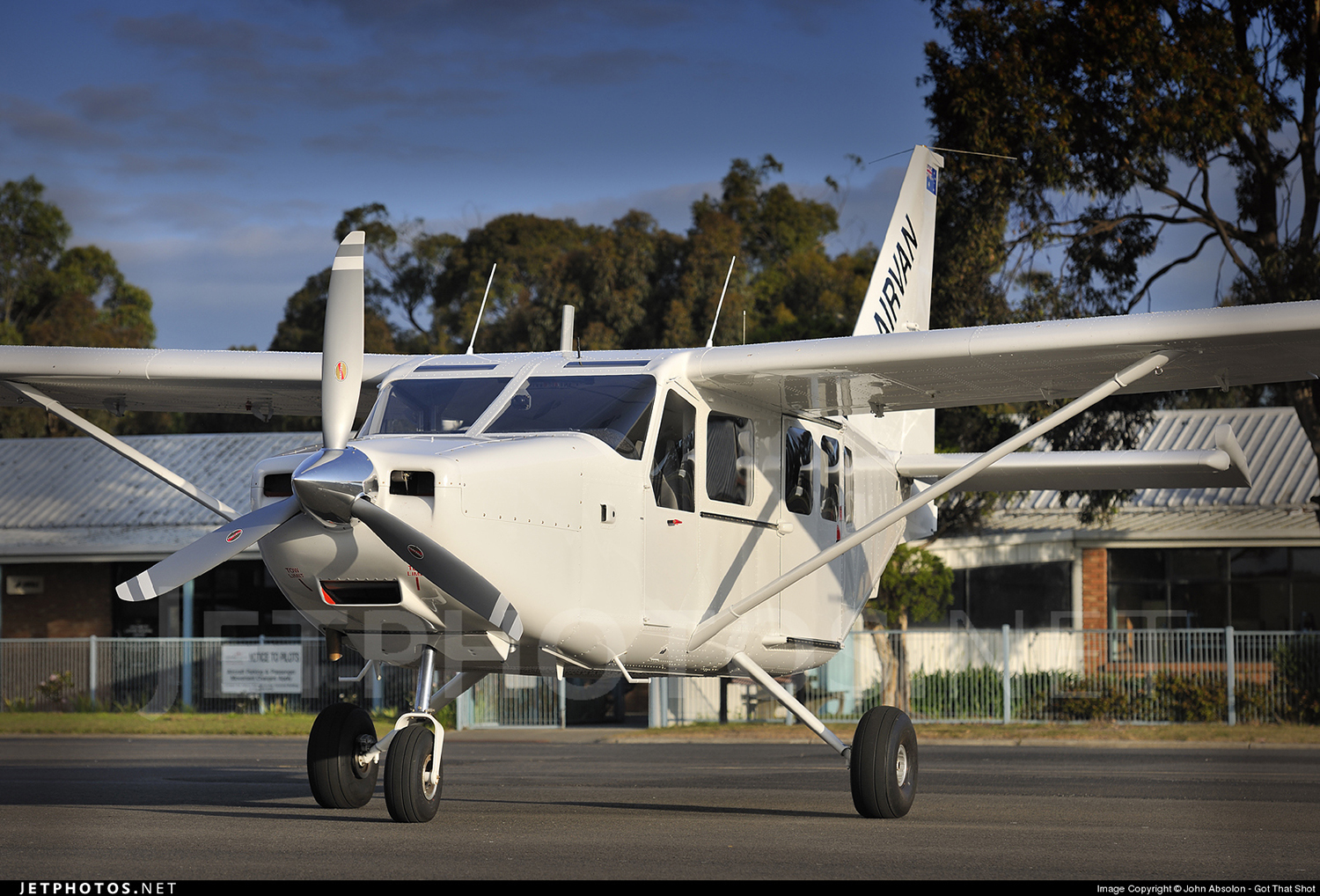
Crash of a Gippsland GA-8 Airvan in Orange

Date & Time: Jul 6, 2010 at 1745 LT
Type of aircraft:
Operator:
Registration:
VH-YBH
Flight Type:
Survivors:
Yes
Schedule:
Parkes - Orange
MSN:
GA8-08-131
YOM:
2008
Country:
Region:
Crew on board:
1
Crew fatalities:
Pax on board:
0
Pax fatalities:
Other fatalities:
Total fatalities:
0
Circumstances:
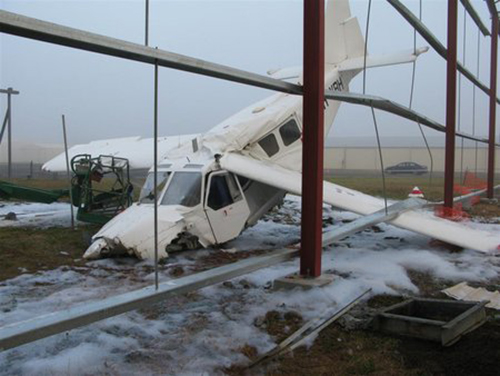
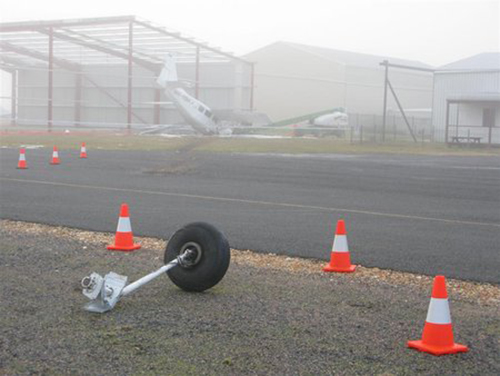
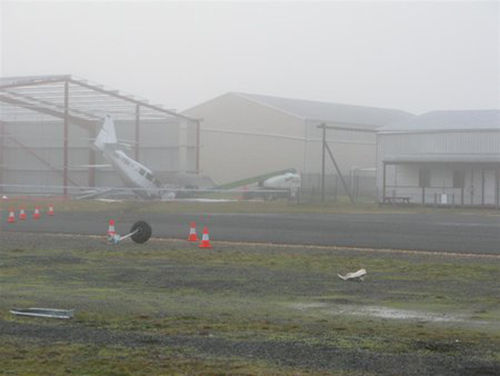
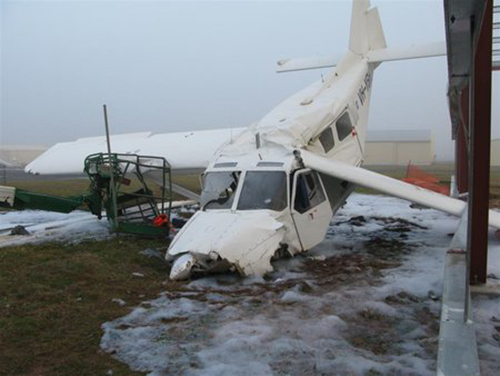
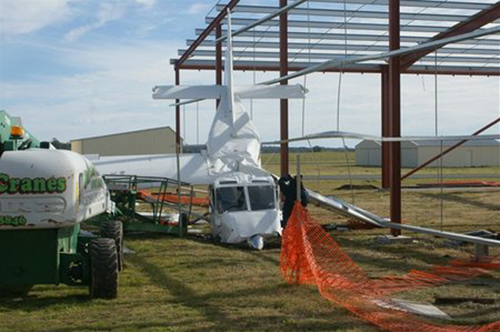
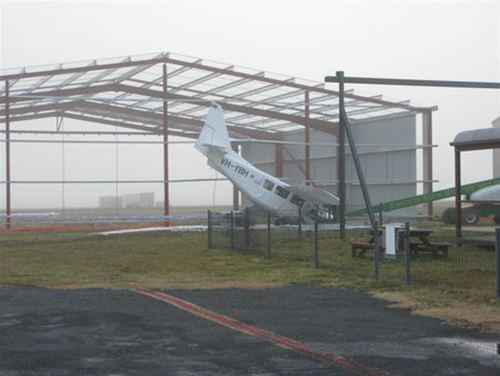
The pilot was performing a cargo flight from Parkes to Orange, New South Wales. On final approach, the single engine aircraft was too low and impacted the roof of a metal hangar located near the runway threshold. The aircraft stalled and struck the runway surface. Upon impact, the nose gear was torn off. Out of control, the aircraft veered off runway and eventually collided with a metal hangar under construction. While the pilot was injured, the aircraft was destroyed.

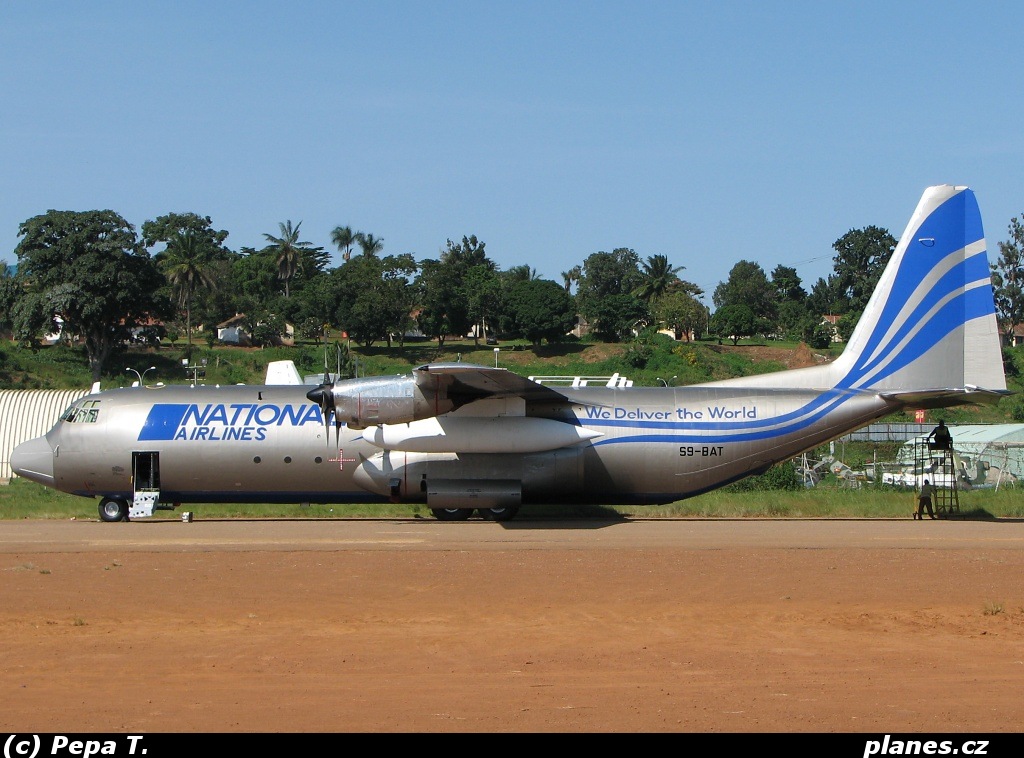
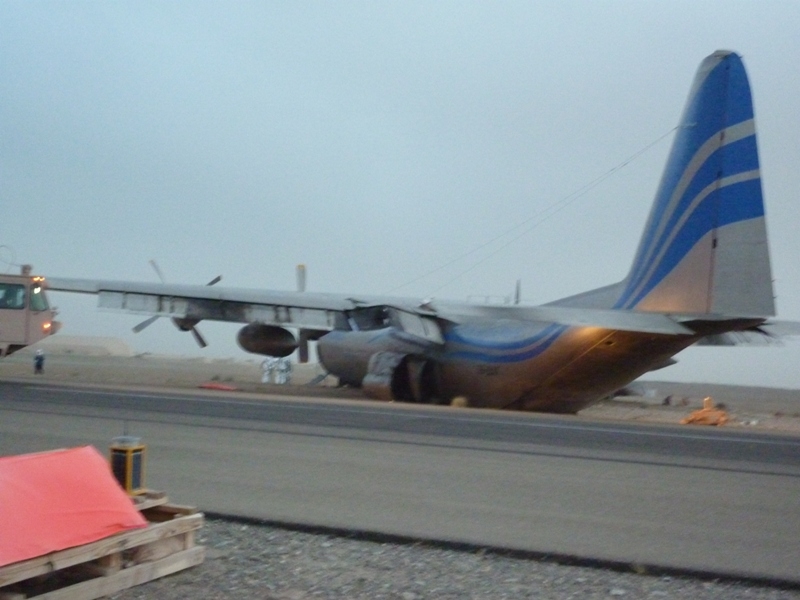
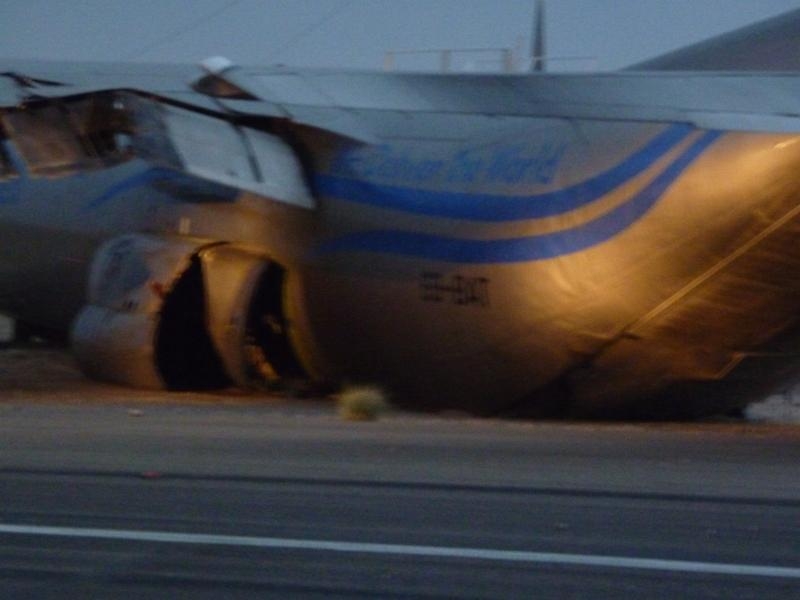
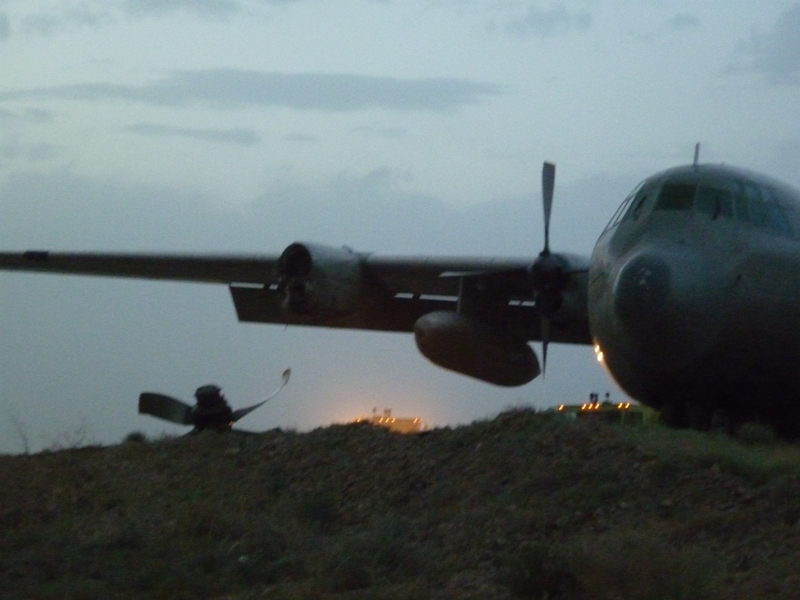
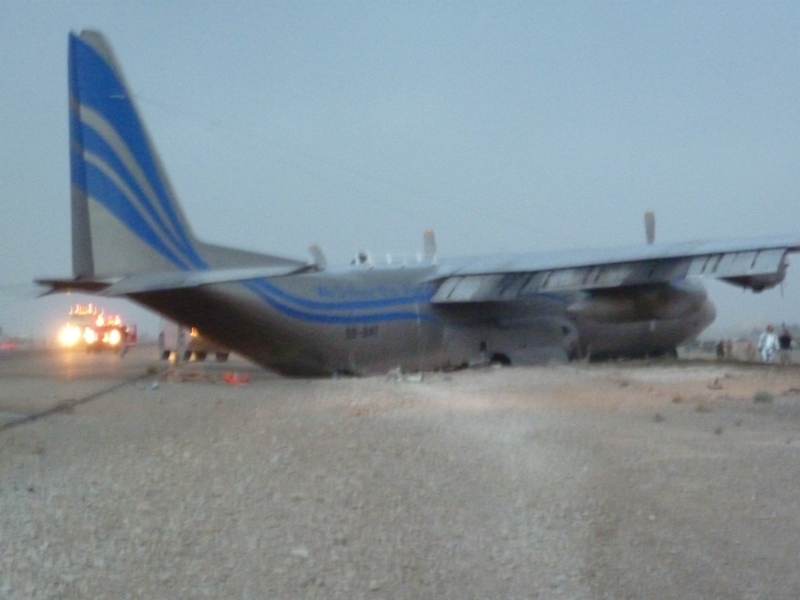
Crash of a Lockheed C-130 Hercules at Sharana AFB

Date & Time: Jun 4, 2010
Type of aircraft:
Operator:
Registration:
S9-BAT
Flight Type:
Survivors:
Yes
MSN:
4134
YOM:
1966
Country:
Region:
Crew on board:
4
Crew fatalities:
Pax on board:
0
Pax fatalities:
Other fatalities:
Total fatalities:
0
Circumstances:
Upon landing, the undercarriage collapsed. The aircraft slid on its belly for few dozen metres then veered off runway to the right and came to rest in a sandy area. All four crew members escaped uninjured while the aircraft was damaged beyond repair. It is believed that the airplane touched down few metres short of runway 14/32 which is 4,265 feet long, causing the landing gear to be torn off.

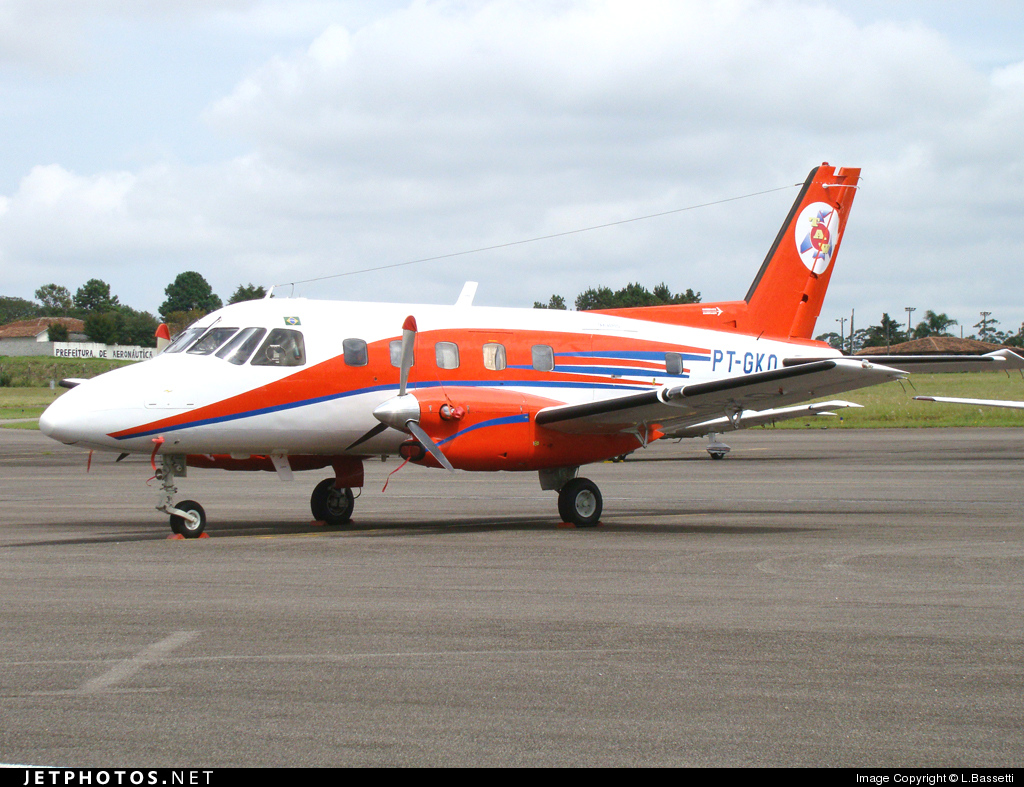
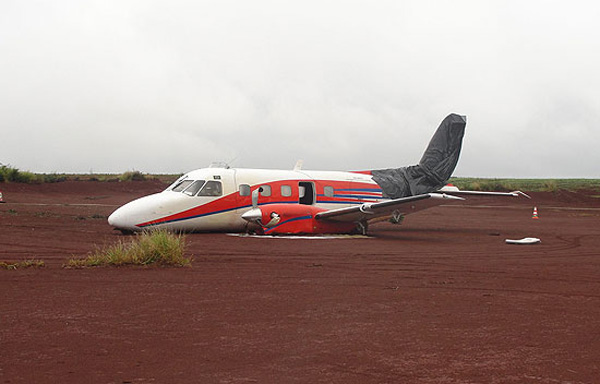
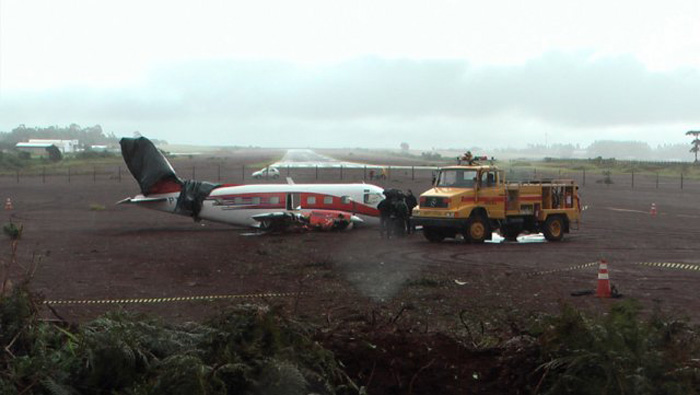
Crash of an Embraer EMB-110P Bandeirante in Cascavel

Date & Time: May 19, 2010 at 0510 LT
Operator:
Registration:
PT-GKQ
Flight Type:
Survivors:
Yes
Schedule:
Sorocaba – Cascavel
MSN:
110125
YOM:
1976
Country:
Crew on board:
2
Crew fatalities:
Pax on board:
0
Pax fatalities:
Other fatalities:
Total fatalities:
0
Captain / Total flying hours:
6879
Captain / Total hours on type:
2000.00
Copilot / Total flying hours:
1121
Copilot / Total hours on type:
15
Circumstances:
The twin engine aircraft departed Sorocaba on a cargo flight to Cascavel, carrying two pilots and a load consisting of pharmaceutical materials. On final approach in low visibility due to bad weather conditions and night, the aircraft descended below the glide and impacted the ground 700 metres short of runway 33. On impact, it lost its undercarriage then slid for 150 metres before coming to rest. Both pilots escaped uninjured while the aircraft was damaged beyond repair. Visibility at the time of the accident was 1,200 metres with mist, local patches of fog and ceiling at 100 feet. Cascavel Airport was equipped with an NDB only.
Probable cause:
Controlled flight into terrain after the crew descended too low in IMC conditions. The following contributing factors were identified:
- Visibility was below minimums,
- The crew continued the descent until the aircraft impacted ground and failed to initiate a go-around procedure,
- A probable crew fatigue,
- It is possible that the crew suffered optical illusions,
- Overconfidence on part of the captain,
- The captain did not request any assistance from the copilot during the approach procedure,
- Inexperienced, the copilot did not interfere despite dangerous flight conditions,
- Poor organizational culture,
- Deficiencies in crew training,
- Lack of crew discipline,
- Poor flight planning,
- Lack of supervision on part of the operator,
- The copilot was inexperienced on this type of aircraft.
Final Report:
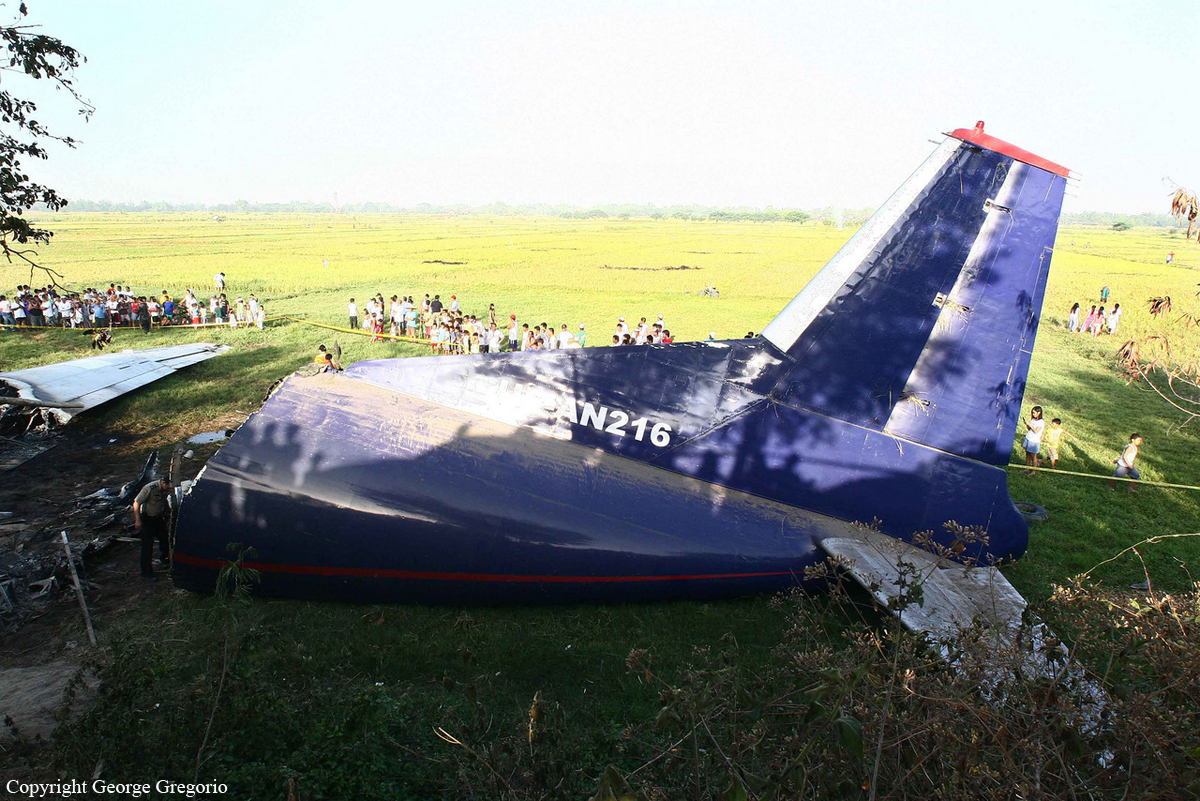
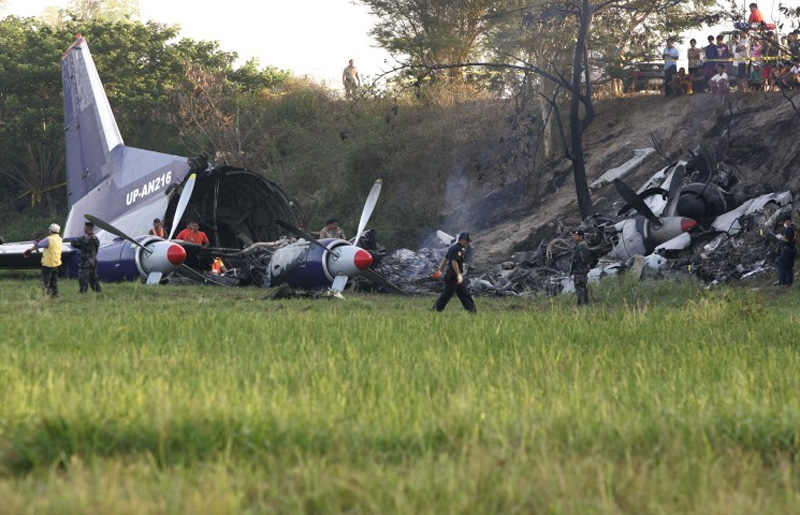
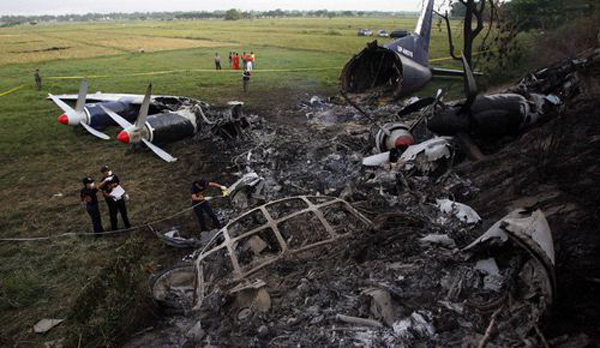
Crash of an Antonov AN-12BP near Mexico City: 3 killed

Date & Time: Apr 21, 2010 at 2050 LT
Type of aircraft:
Operator:
Registration:
UP-AN216
Flight Phase:
Flight Type:
Survivors:
Yes
Schedule:
Cebu City - Angeles City
MSN:
4 020 01
YOM:
1964
Country:
Region:
Crew on board:
6
Crew fatalities:
Pax on board:
0
Pax fatalities:
Other fatalities:
Total fatalities:
3
Circumstances:
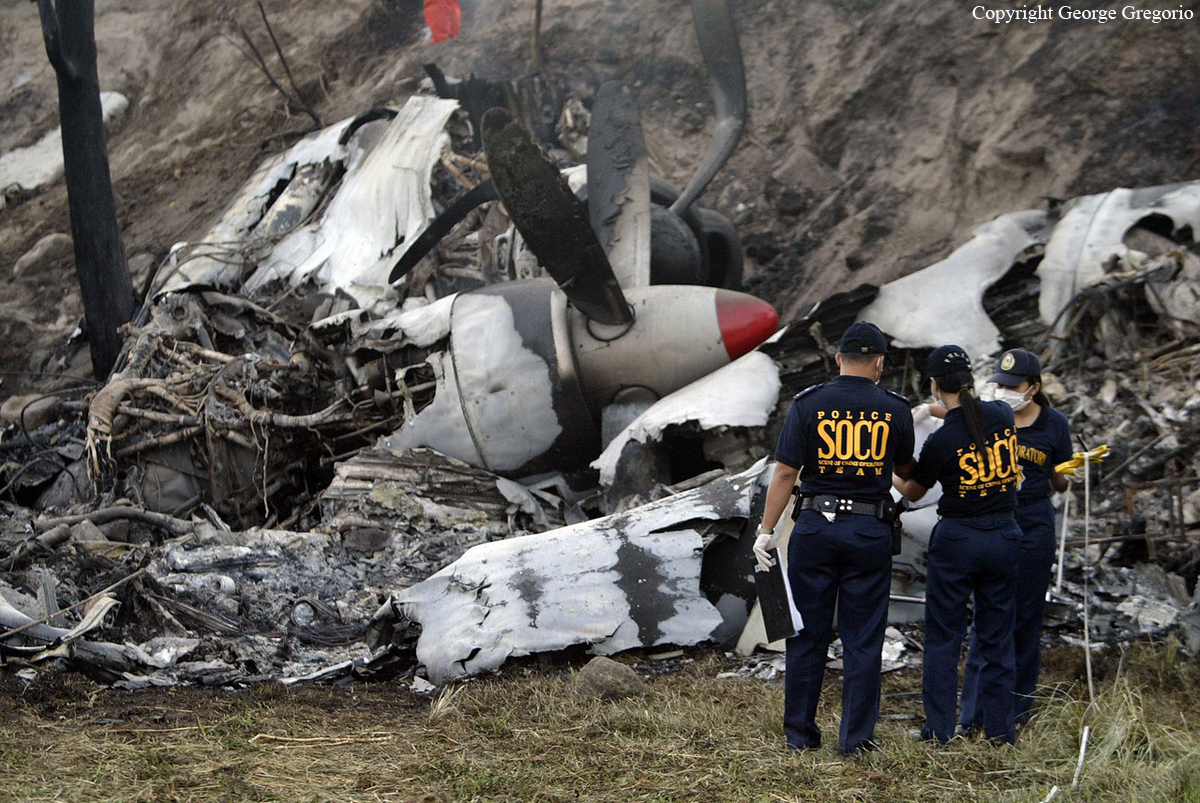
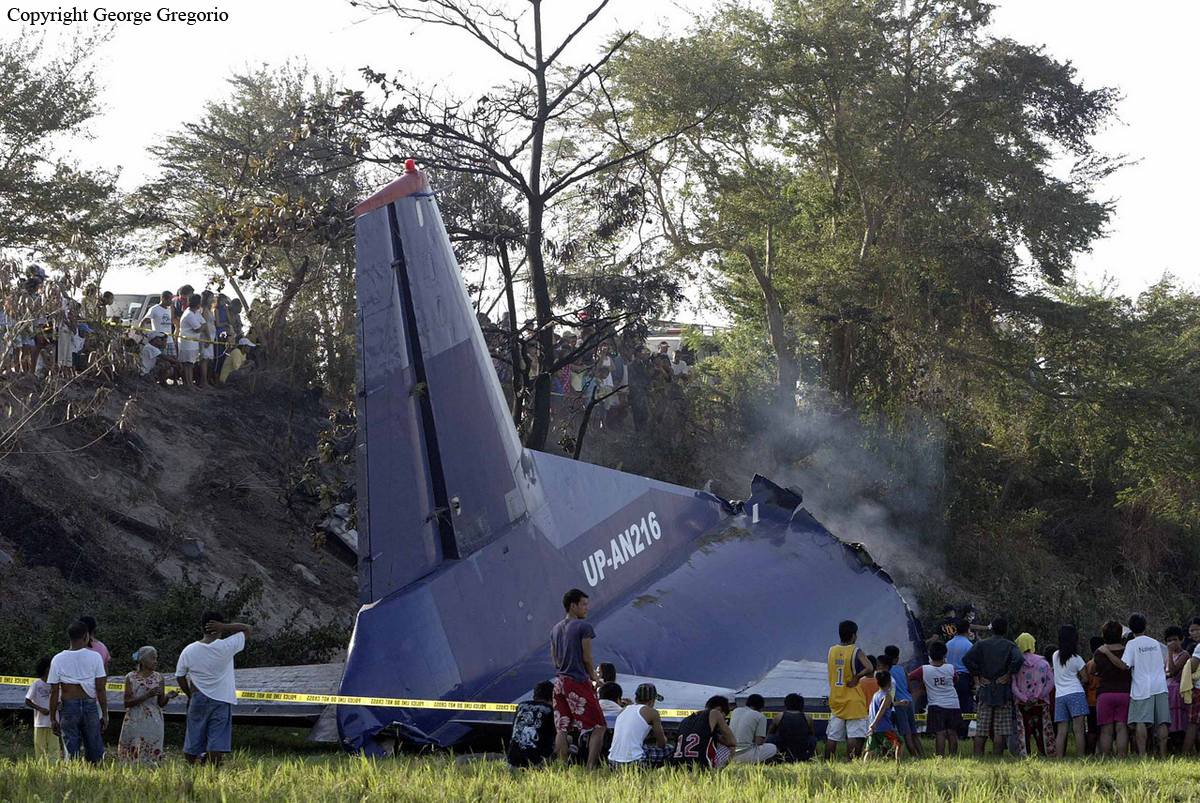
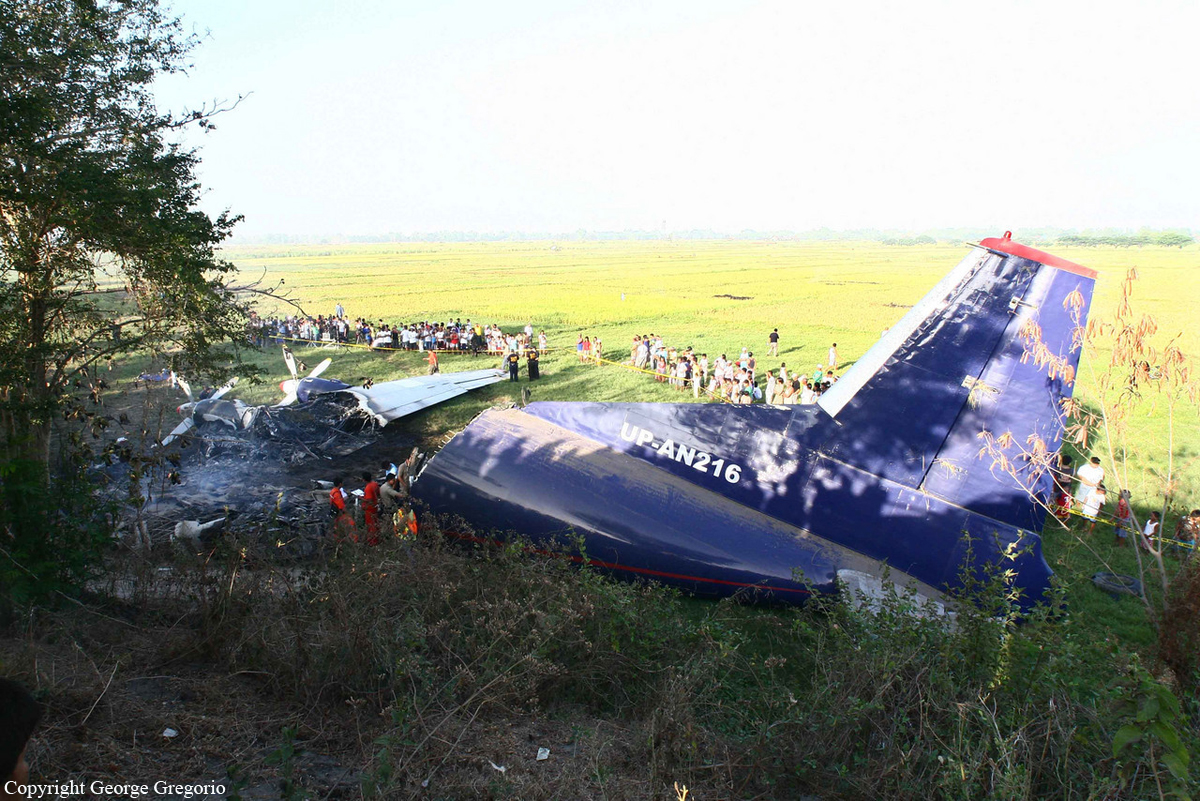
The aircraft departed Cebu City on a cargo flight to Angeles City, carrying six crew members and a load of various goods on behalf of UPS. En route, a short circuit occurred in the electrical system, followed by one or more engine failure. The crew elected to divert to the nearest airport. Unfortunately, this was not possible and the captain attempted an emergency landing in a paddy field. The aircraft came to rest on an embankment and was destroyed by a post impact fire. Three crew members were killed while three others were seriously injured.
Probable cause:
In flight short-circuit on the electrical system for unknow reasons.

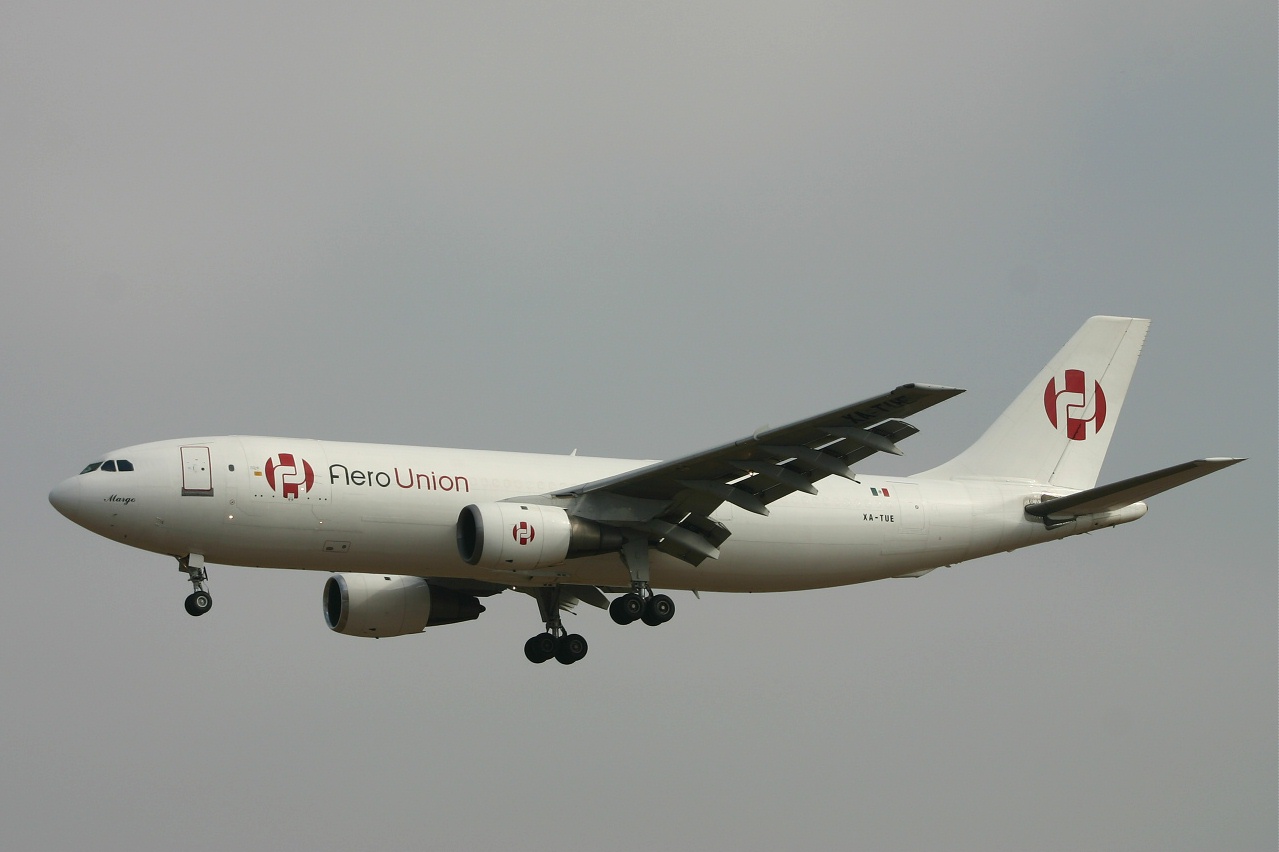
Crash of an Airbus A300B4-203F in Monterrey: 6 killed

Date & Time: Apr 13, 2010 at 2319 LT
Type of aircraft:
Operator:
Registration:
XA-TUE
Flight Type:
Survivors:
No
Schedule:
Mexico City - Monterrey - Los Angeles
MSN:
78
YOM:
1979
Flight number:
TNO302
Country:
Crew on board:
5
Crew fatalities:
Pax on board:
0
Pax fatalities:
Other fatalities:
Total fatalities:
6
Captain / Total flying hours:
16754
Captain / Total hours on type:
5446.00
Copilot / Total flying hours:
3114
Copilot / Total hours on type:
1994
Aircraft flight hours:
55170
Circumstances:
The aircraft departed Mexico City-Benito Juarez Airport on a cargo service to Los Angeles with an intermediate stop in Monterrey, carrying five crew members. On final approach to Monterrey-General Mariano Escobedo Airport by night, the crew encountered poor weather conditions with CB's and sky broken at 600 feet. On short final, while at a distance of 2 km from the runway threshold, the crew was cleared to land on runway 11. Shortly later, the aircraft rolled to the left then crashed on a motorway located 700 metres short of runway. The aircraft was totally destroyed and all five crew members were killed as well as one people in a car.
Probable cause:
The accident was the consequence of a loss of control following an unstable approach.
The following contributing factors were identified:
- Lack of crew coordination and crew resources management (CRM),
- Diminished situational awareness,
- Failure to follow proper operational procedures,
- Unstabilized non-precision approach,
- Unsuitable aircraft configuration,
- Adverse weather condition.
Final Report: