Crash of a Convair B-36B-5-CF Peacemaker at Biggs AFB

Date & Time: Jan 19, 1956
Type of aircraft:
Operator:
Registration:
44-92041
Flight Type:
Survivors:
Yes
Schedule:
Biggs - Biggs
MSN:
38
YOM:
1946
Crew on board:
0
Crew fatalities:
Pax on board:
0
Pax fatalities:
Other fatalities:
Total fatalities:
0
Circumstances:
Considered as damaged beyond repair following a hard landing at Biggs AFB. No injuries.

Crash of a Convair RB-36H-60-CF Peacemaker at Ellsworth AFB

Date & Time: Jan 4, 1956
Type of aircraft:
Operator:
Registration:
52-1387
Flight Type:
Survivors:
Yes
Schedule:
Ellsworth - Ellsworth
MSN:
339
YOM:
1952
Crew on board:
0
Crew fatalities:
Pax on board:
0
Pax fatalities:
Other fatalities:
Total fatalities:
0
Circumstances:
The crew was completing a local training mission at Ellsworth AFB. On touchdown, the six engine airplane went out of control, veered off runway and came to rest in flames. All occupants escaped uninjured while the aircraft was destroyed by fire. It is believed that the loss of control was caused by an uneven power reduction during landing.

Crash of a Lockheed 18-56-23 LodeStar in Londonderry: 2 killed

Date & Time: Dec 29, 1955 at 1240 LT
Type of aircraft:
Operator:
Registration:
N33366
Flight Phase:
Survivors:
No
Schedule:
Tulsa – Pittsburgh
MSN:
2387
YOM:
1943
Crew on board:
2
Crew fatalities:
Pax on board:
0
Pax fatalities:
Other fatalities:
Total fatalities:
2
Captain / Total flying hours:
9000
Copilot / Total flying hours:
983
Aircraft flight hours:
4372
Circumstances:
Pilot Gordon Whewell Silva and Copilot-Flight Mechanic Lloyd Littleton Cotton, on December 28, prepared N 33366 (hereinafter referred to as N 366) for a nonstop flight from Tulsa, Oklahoma, to Pittsburgh, Pennsylvania. After a study of the weather data Pilot Silva filed an IFR (Instrument Flight Rules) flight plan which called for a proposed departure at 0800 c. s. t. for Pittsburgh via Victor Airways 14, 72, and 12, with an estimated elapsed time of tour hours. It also showed fuel for 6:15 hours, an en route altitude of 9,000 feet, destination Pittsburgh, and alternate Wheeling, West Virginia. The flight departed Tulsa at 1810 c. s. t. and routine position reports were made until over Dayton, Ohio, at 1200. Starting with the Dayton position report in which the first mention of icing conditions was made, all of the entries in CAA station logs recording communications with N 366 are transcribed as follows: "N366 over Dayton 1200E 9,000 feet estimate over Columbus 1218E Adamsville (will make next report from Adamsville.) Request lower altitude light to moderate rime icing." This message was delivered at 1203 to the Indianapolis center who replied, "ATC advises unable approve lower altitude." This reply was delivered to N 366 at 1204. At 1221 CAA Columbus recorded the following from N 366, "Over Columbus 1220, 9,000 m. s. l. estimate over Adamsville 33 HLG (will make next report via Wheeling). Destination Pittsburgh requesting 5,000 feet m. s. l." At 1224 the following was transmitted to N 366 by Columbus, "ATC unable to approve 5,000 feet m. s. l. or 7,000 feet m. s. l." At 1227 Columbus received from N 366, "Rime ice request lower altitude an soon as possible." And at 1234 N 366 advised Columbus, "Over Adamsville 1233 9,000 feet m. s. l. Adena 47." The pilot was questioned about the Adena estimate and changed it to "Wheeling" (as next reporting point). Also in this communication he reported, "Difficulty maintaining altitude and airspeed request lower altitude." At 1237 Columbus CAA transmitted, "Clearance to descend and maintain 8,000 m. s. l." and the pilot replied, "Leaving 9,000 m. s. l. at 1237E". All further attempts to communicate with N 366 were unsuccessful. At approximately 1240 witnesses observed the aircraft below the overcast; it was on a westerly heading and was descending although it appeared to be in a normal attitude. Several components were seen to separate from the aircraft before it struck the ground. Both occupants were killed.
Probable cause:
The Board determines that the probable cause of this accident was the accumulation of enough ice to result in loss of control and the subsequent shedding of vertical surfaces from the tail group of the aircraft. The following findings were reported:
- Pilot Silva was familiar with the forecasts of ice over the route involved, at altitudes of 10,000 feet and above, and he knew the limitations of the deicing equipment on his aircraft,
- The flight encountered icing conditions at cruising altitude of 9,000 feet,
- Traffic prevented ARTC from assigning a lower altitude when so requested several times by Pilot Silva,
- After Pilot Silva reported difficulty in maintaining airspeed and altitude, ARTC assigned the 8,000-foot level and the pilot reported leaving 9,000 feet at 1237,
- At low altitude the aircraft lost much of the vertical surface in its tail group and struck the ground at a steep angle,
- No emergency was declared.
Final Report:

Crash of a Fairchild C-119C-13-FA Flying Boxcar in Sparrevohn

Date & Time: Dec 27, 1955
Operator:
Registration:
49-0128
Flight Phase:
Flight Type:
Survivors:
Yes
MSN:
10365
YOM:
1949
Crew on board:
8
Crew fatalities:
Pax on board:
0
Pax fatalities:
Other fatalities:
Total fatalities:
0
Circumstances:
Crashed on takeoff for unknown reason. All eight crew members were rescued and the aircraft was damaged beyond repair.

Crash of a Lockheed L-749C-79-12 Constellation in Jacksonville: 17 killed

Date & Time: Dec 21, 1955 at 0343 LT
Operator:
Registration:
N112A
Survivors:
No
Schedule:
Miami – Jacksonville – Boston
MSN:
2533
YOM:
1947
Flight number:
EA642
Crew on board:
5
Crew fatalities:
Pax on board:
12
Pax fatalities:
Other fatalities:
Total fatalities:
17
Captain / Total flying hours:
12052
Captain / Total hours on type:
2501.00
Copilot / Total flying hours:
9522
Copilot / Total hours on type:
1360
Aircraft flight hours:
29941
Circumstances:
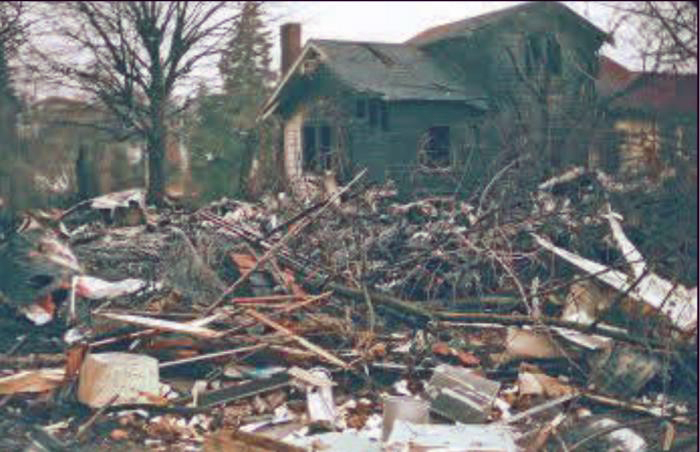
Flight 642 originated at Miami, Florida, with its destination Boston, Massachusetts; Jacksonville, Florida, was included as an intermediate stop. The captain was briefed by the company forecaster on the en route weather and terminal forecasts, and following the briefing the flight was dispatched to Jacksonville on an IFR (Instrument Flight Rules) flight plan. This plan specified a flight to be made via Victor Airway 3 at a Cruising altitude of 11,000 feet. The crew consisted of Captain Thomas Francis McBrien, Pilot John Jay Rinyu, Flight Engineer Charles Calvin Devine and Flight Attendants Emma Elizabeth Williams and Clara Dorothea Rioseco. There were 12 passengers on board. Flight 642 was scheduled to depart Miami International Airport at 2340, December 20, but because of the late arrival of an inbound flight using the aircraft involved departure was not made until 0212, December 21. According to company records the gross weight of the aircraft at the time of departure was 85,944 pounds, which was under the allowable takeoff gross weight of 107,000 pounds; the load was properly distributed. Routine en route radio reports were made and at 0315 the flight reported over Daytona Beach at 11,000 feet, estimating Jacksonville at 0336. This report was made to the company's Jacksonville station and at this time the flight was given the Jacksonville 0248 U. S. Weather Bureau special report: "Thin obscuration, 2 miles visibility; ground fog; wind north-northwest 6 miles per hour; 30 percent of sky obscured." After this message was acknowledged, the flight was given the following clearance: "Jacksonville air route traffic control clears Eastern Air Lines Flight 62 to Jacksonville middle marker ILS, cross middle marker IlS at 2.500 feet, maintain 2,500 feet until further advised. Contact Jacksonville approach control when over Sunbeam Intersection." The clearance was acknowledged. Flight 642 contacted Jacksonville approach control when over Sunbeam Intersection (16 miles SSE of Imeson Airport) at 0331 and was cleared for an ILS approach to runway 5. At the same time the Jacksonville weather was given as: "Partial obscurement; visibility one-half rule; altimeter 30.18." Immediately following this transmittal another message was given the flight, "Coming out with indefinite 300 obscurement now one-half with fog." (Eastern Air Lines' Constellation minimums for ILS approaches at Jacksonville, day or might are ceiling 200 feet, visibility one-half mile). After acknowledging this weather information, Flight 642 reported leaving. Sunbeam at 2,500 feet. Following a later query from the flight, approach control advised that there was no other known traffic in the area, and requested the flight to report when over the outer marker inbound. Flight 642 reported over the outer marker inbound and was cleared to land. Shortly thereafter the tower controller observed a large flash in the vicinity of the ILS middle marker. Calls to Flight 642 were not acknowledged and an emergency was declared by the controller. It was subsequently learned that N112A had crashed approximately six-tenths of a mile southwest of the threshold of runway 5. Investigation disclosed the main portion of the wreckage to be 212 feet northwest of the ILS middle marker and 3,486 feet southwest of the threshold of runway 5. The time of the accident was established as 0343LT. First impact of the aircraft was with the top of a small pine tree approximately 200 feet below the ILS glide path, 260 feet to the left of the extended centerline of the runway, 4,000 feet from the threshold of runway 5, and 420 feet southwest of the middle marker. This was followed by striking a 50-foot oak tree, the upper 20 feet of which was sheared off. The aircraft settled toward the ground, striking other large trees which disintegrated both wings and a portion of the empennage. Ground contact was on a heading approximately 55 degrees magnetic. The distance from the first tree struck to the farthest piece of wreckage was 801 feet. Explosion and fire occurred immediately upon impact.
Probable cause:
The Board determines that the probable cause of this accident was that during the final portion of an IIS approach the pilot, for reasons not determinable, either permitted or caused the aircraft to deviate to the left of course and descend below the glide path to an altitude too low to clear ground obstructions. The following findings were reported:
- No evidence of failure of the airframe, power plants, controls, or other components was found,
- The weather at the airport was marginal with local fog and restricted visibility; however at last report the weather vas above the carrier's minimums,
- Ground navigational facilities in the Jacksonville area, including the ILS system, functioned normally during the approach,
- There was no operating difficulty reported by the crew,
- There were no other known aircraft in the immediate area,
- While on final approach, the aircraft descended considerably below the glide path and below the minimum altitude before reaching the middle marker,
- Trees were struck six-tenths of a mile from the runway threshold approximately 200 feet below the glide path and 260 feet to the left of the extended centerline of the runway.
Final Report:

Crash of a Curtiss C-46A-45-CU Commando in Hollywood: 2 killed

Date & Time: Dec 17, 1955 at 2040 LT
Type of aircraft:
Operator:
Registration:
N9904F
Flight Phase:
Flight Type:
Survivors:
No
Schedule:
Wilmington – Jacksonville
MSN:
30262
YOM:
1944
Flight number:
RDD207B
Crew on board:
2
Crew fatalities:
Pax on board:
0
Pax fatalities:
Other fatalities:
Total fatalities:
2
Captain / Total flying hours:
10000
Captain / Total hours on type:
731.00
Copilot / Total flying hours:
3300
Circumstances:
While in cruising altitude, the aircraft suddenly pitched down, went out of control, dove into the ground and crashed in a cornfield located near Hollywood. The aircraft was destroyed and both crewmen were killed.
Probable cause:
An in-flight structural failure resulting from a violent pitch-down induced by the erratic action of nonconforming elevator tab controls.

Crash of a Lockheed P2V-5 Neptune off Kauai Island: 7 killed

Date & Time: Dec 7, 1955
Type of aircraft:
Operator:
Registration:
124899
Flight Phase:
Flight Type:
Survivors:
Yes
Crew on board:
10
Crew fatalities:
Pax on board:
0
Pax fatalities:
Other fatalities:
Total fatalities:
7
Circumstances:
The crew was taking part to a combined exercice with submarine when control was lost at low height. The airplane crashed into the ocean west of Kauai Island. Three crew members were rescued while seven others were killed.

Crash of a Fairchild C-119G Flying Boxcar in Spartanburg

Date & Time: Dec 6, 1955
Operator:
Registration:
53-3214
Flight Type:
Survivors:
Yes
MSN:
11230
YOM:
1953
Crew on board:
0
Crew fatalities:
Pax on board:
0
Pax fatalities:
Other fatalities:
Total fatalities:
0
Circumstances:
Crash landed. No casualties.

Crash of a Douglas C-54-DO Skymaster in Seattle: 28 killed

Date & Time: Nov 17, 1955 at 2359 LT
Type of aircraft:
Registration:
N88852
Flight Phase:
Survivors:
Yes
Site:
Schedule:
Seattle – Newark
MSN:
3123
YOM:
1942
Flight number:
PNS17K
Crew on board:
4
Crew fatalities:
Pax on board:
70
Pax fatalities:
Other fatalities:
Total fatalities:
28
Captain / Total flying hours:
5920
Captain / Total hours on type:
1000.00
Copilot / Total flying hours:
5778
Copilot / Total hours on type:
531
Aircraft flight hours:
19630
Circumstances:
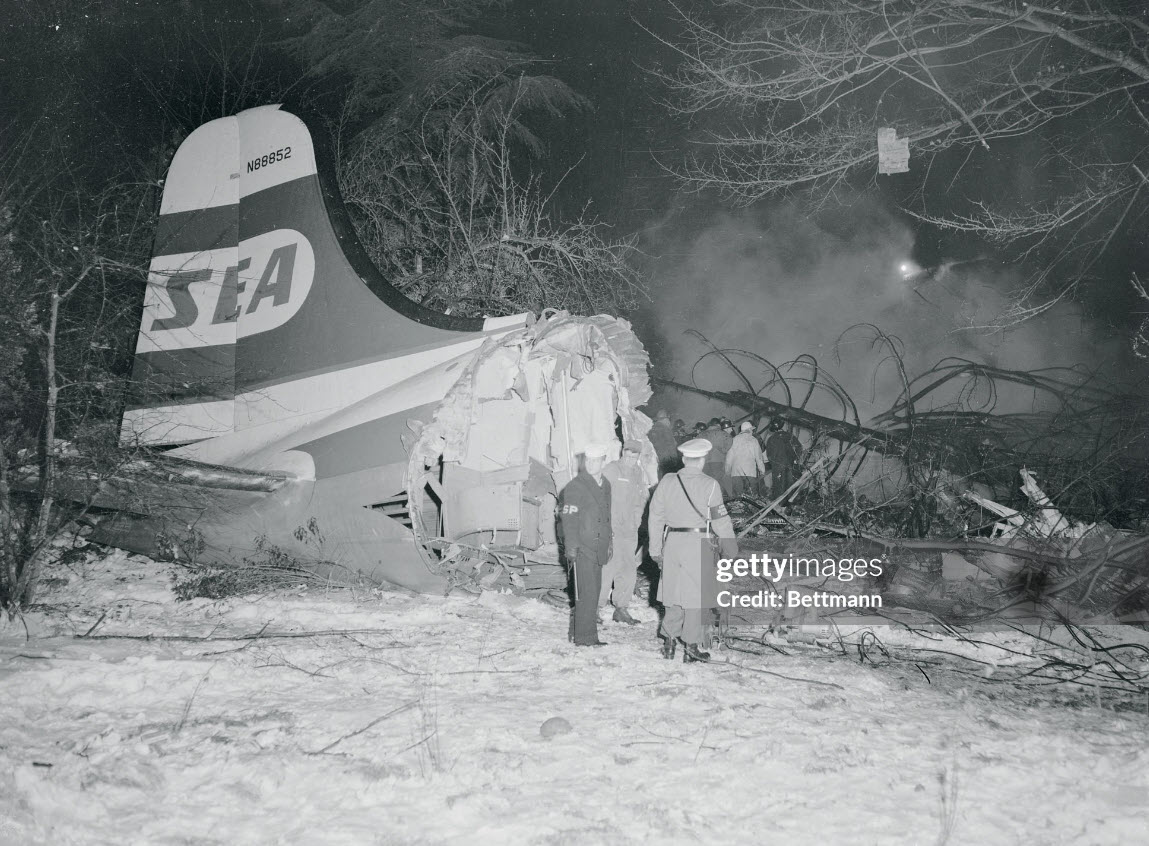
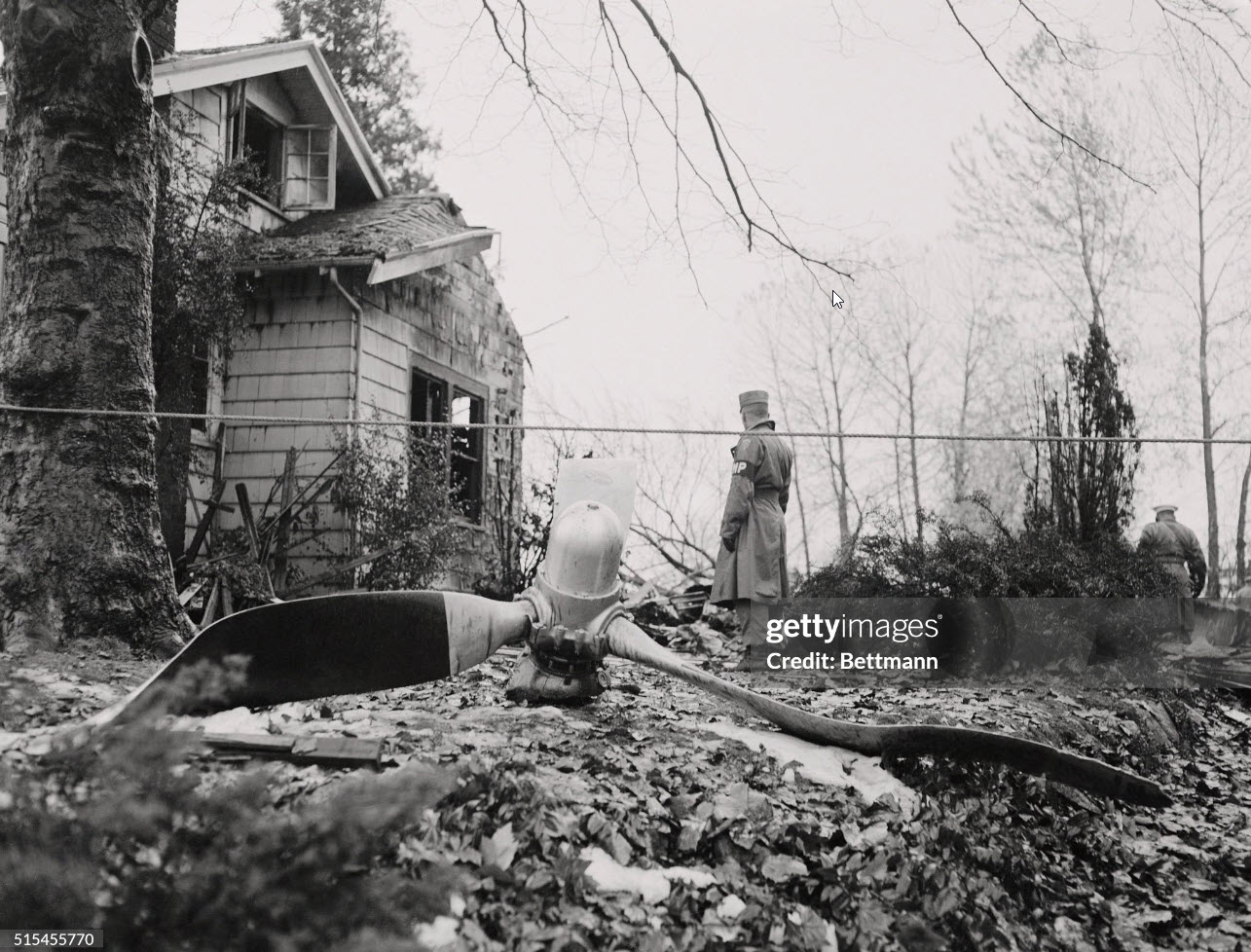
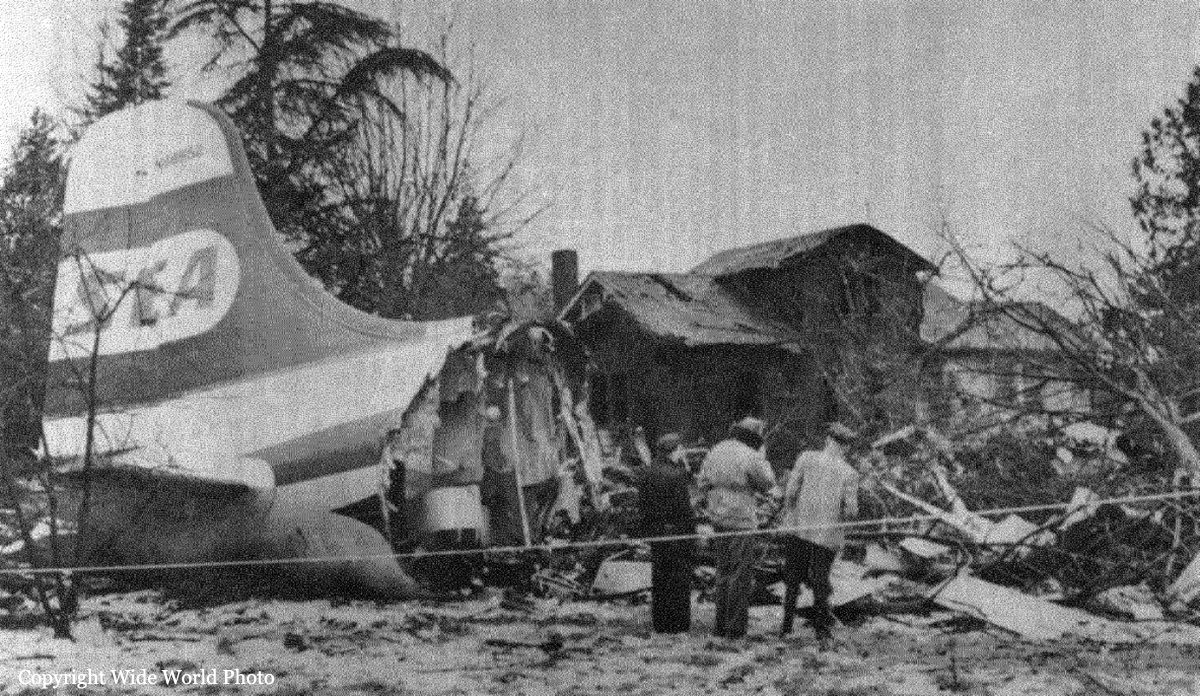
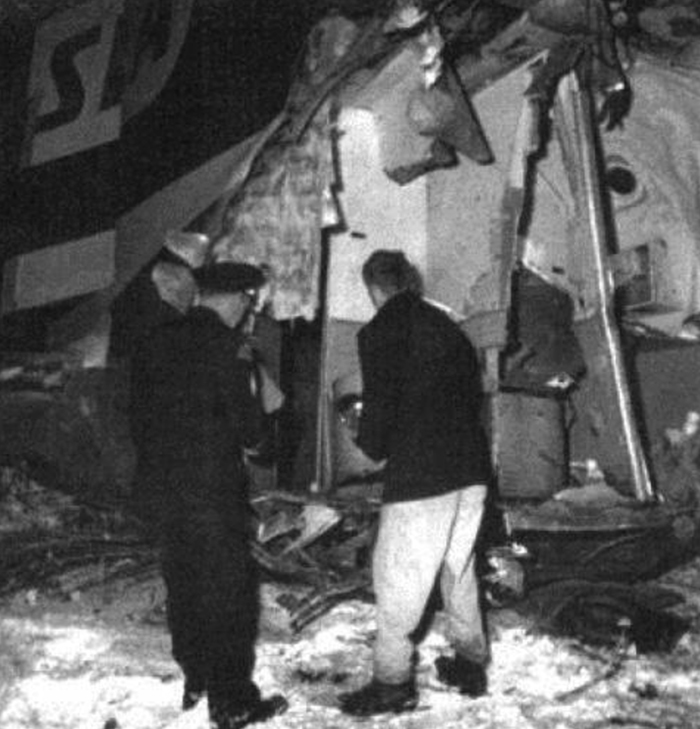
Peninsular Air Transport Common Carriage Flight 17K was scheduled to originate at Boeing Field and terminate at Newark, New Jersey, with intermediate refueling stops. The assigned crew consisted of Captain W. J. McDougall, First Officer F. C. Hall, and Steward J. O. Adams. The third pilot, Edward, McGrath, deadheading to Miami, Florida, occupied the jump seat with no crew duties. The flight, scheduled to depart at 2030, was delayed because of a heavy snowfall during the afternoon and early evening of November 17 which delayed passenger arrivals and necessitated removal of snow from the aircraft before departure. At 2332 the flight taxied to runway 13, holding off the runway waiting its turn behind other flights to take off, During this time the crew completed pre-takeoff cheeks and received an IFR (Instrument Flight Rules) clearance. This, in part, instructed them to turn right after takeoff and climb on the northwest course of the Seattle Range to 5,000 feet m. s. 1. (mean sea level). The takeoff was started at 2358 and appeared normal as the landing gear retracted and right turn was begun. When approximately 300-400 feet above the ground the first reduction of power, from takeoff to normal rated power, was made and about five of the 15 degrees of flaps extended, were retracted. At this time the No. 4 propeller surged and engine r. p. m. increased to about 2,800. Unable to reduce the r. p. m. of No. 4 by reducing its power an attempt was made to feather the propeller; this also was unsuccessful. As the aircraft then began to descend takeoff power was reapplied to Nos. 1, 2, and 3 engines and the power from No. 4 was further reduced. This action did not reduce the r. p. m. of No. 4 which surged again and increased to more than 3,000. The aircraft veered to the right and continued to descend. Realising that a crash-landing was imminent Captain McDougall reduced the airspeed until the aircraft was nearly stalled and applied full power to all four engines. The aircraft continued to settle. It then struck a telephone pole and several trees before crash-landing in a nose-high attitude. Fire and rescue equipment was dispatched to the scene from both the Seattle Fire Department and the Seattle-Tacoma Airport. The units arrived promptly and gave first aid to the survivors. Fire which followed the crash was quickly extinguished but not before extensive property was burned and the aircraft was nearly consumed. One crew member and 27 passengers were killed.
Probable cause:
The Board determines that the probable cause of this accident was the excessively high drag resulting from the improperly indexed propeller blades and inability to feather. These conditions were the result of a series of maintenance errors and omissions. The following findings were reported:
- Weather conditions at takeoff were above minim with respect to ceiling and visibility,
- There was no snow or ice on the aircraft when it took off,
- During the first power reduction the No. 4 engine r. p. m. fluctuated, became uncontrollable, and shortly thereafter increased to more than 3,000,
- Efforts to reduce the r. p. m. and feather the malfunctioning propeller were unsuccessful,
- The propeller dome retaining nut was not tightened sufficiently permitting oil to leak around the dome seal,
- The leaking oil resulted in a lack of oil for reducing the r. p. m. or feathering the No. 4 propeller,
- Poor maintenance procedures, omissions during maintenance, and lack of proper inspection were evident in the maintenance work performed by Seattle Aircraft Repair, Inc,
- Improper indexing of the No. 4 propeller blades occurred during the work at Seattle,
- Propeller drag from the overspeeding No. 4 propeller greatly increased by the incorrect indexing of the blades made continued flight difficult if not impossible,
- The aircraft was unairworthy following the Seattle maintenance work.
Final Report:

Crash of a Douglas MC-54M on Mt Charleston: 14 killed

Date & Time: Nov 17, 1955
Type of aircraft:
Operator:
Registration:
44-9068
Flight Phase:
Flight Type:
Survivors:
No
Site:
Schedule:
Burbank - Homey
MSN:
27294
YOM:
1945
Crew on board:
4
Crew fatalities:
Pax on board:
10
Pax fatalities:
Other fatalities:
Total fatalities:
14
Circumstances:
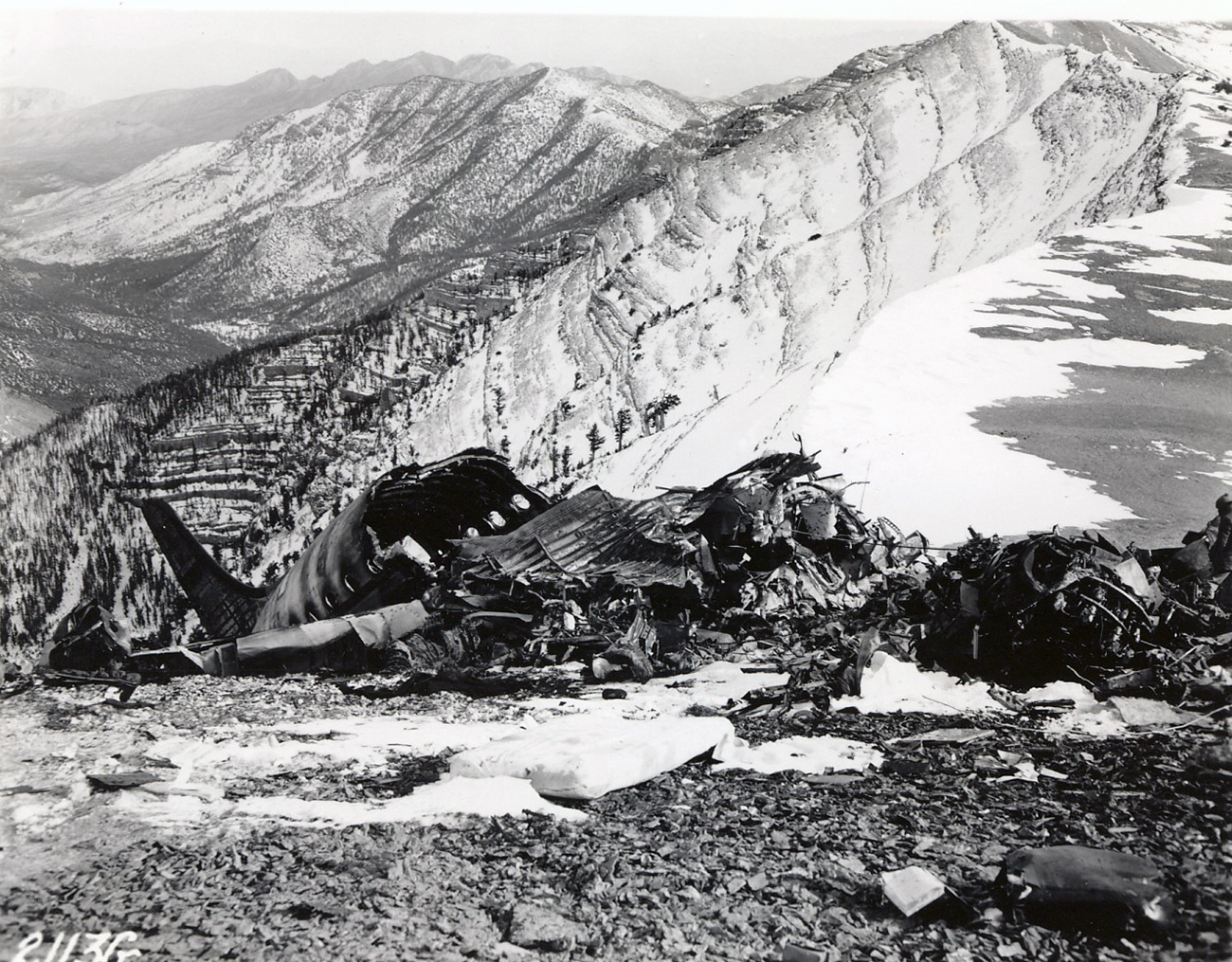
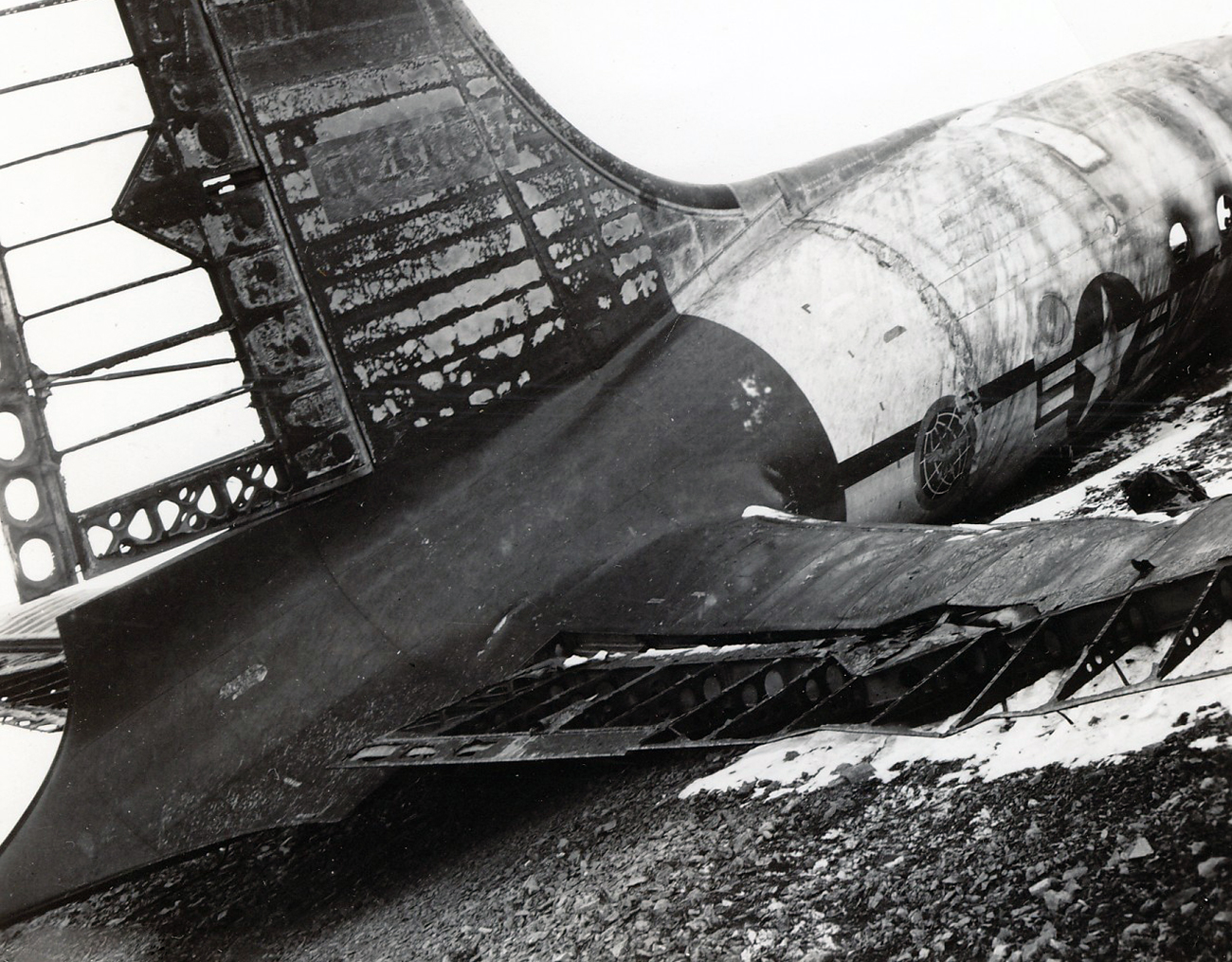
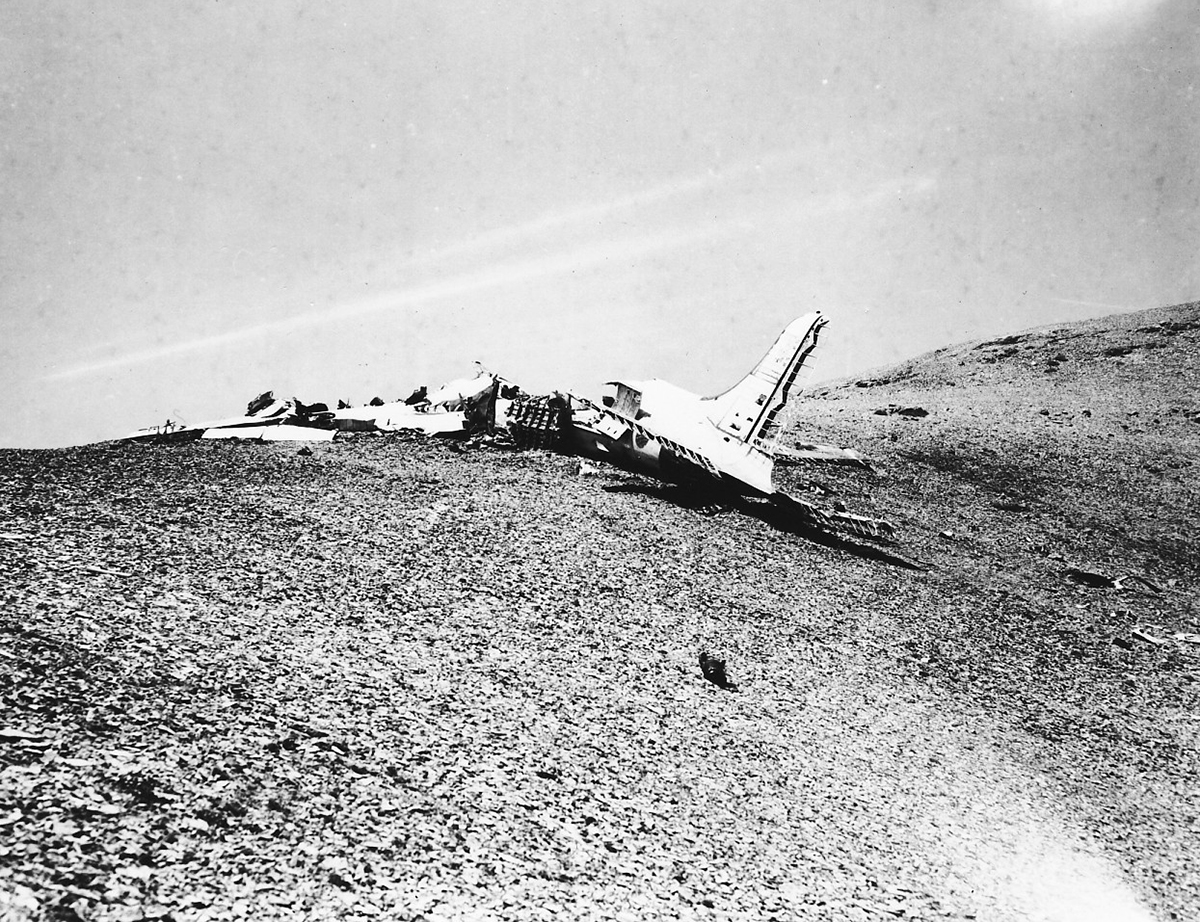
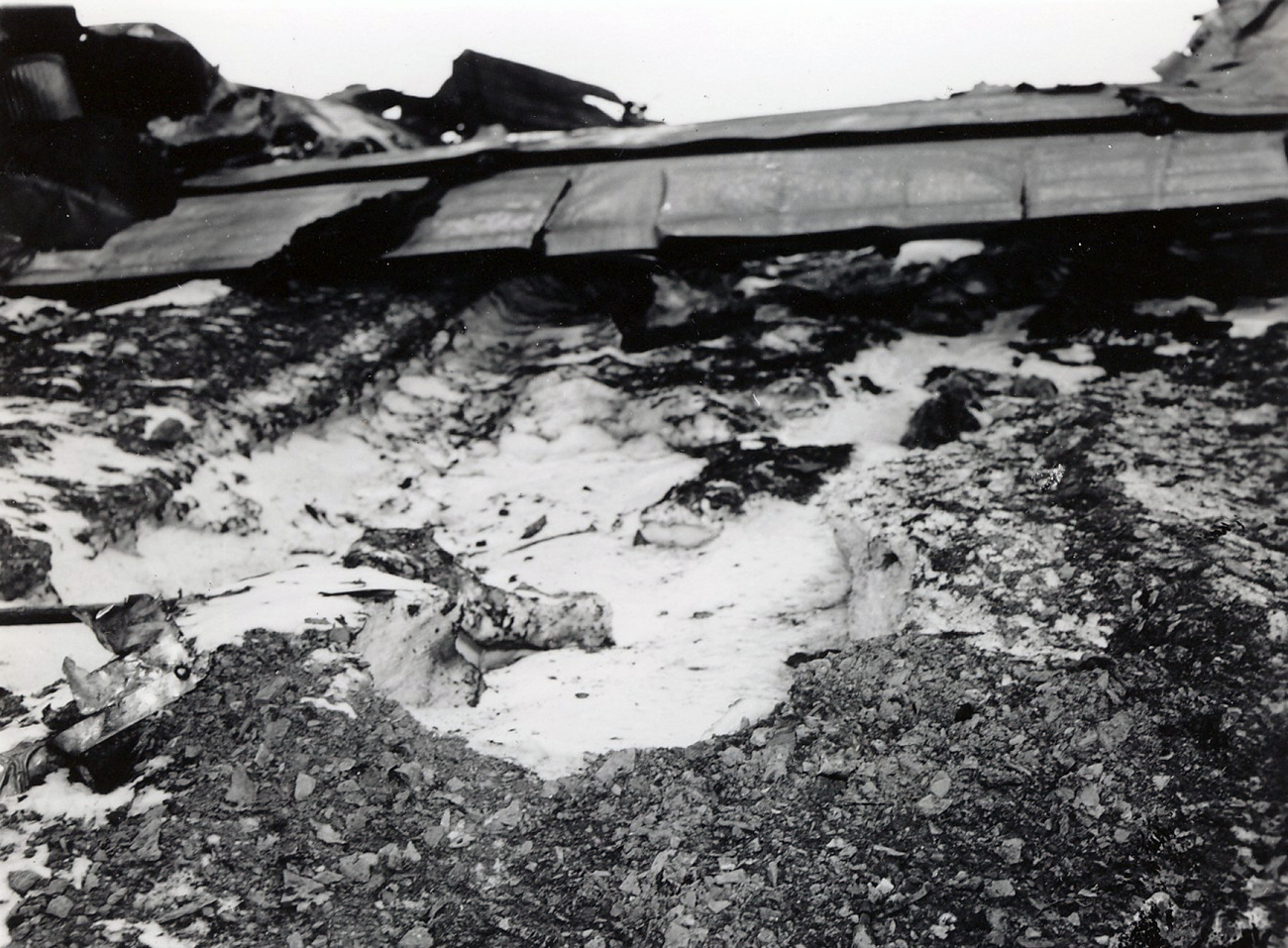
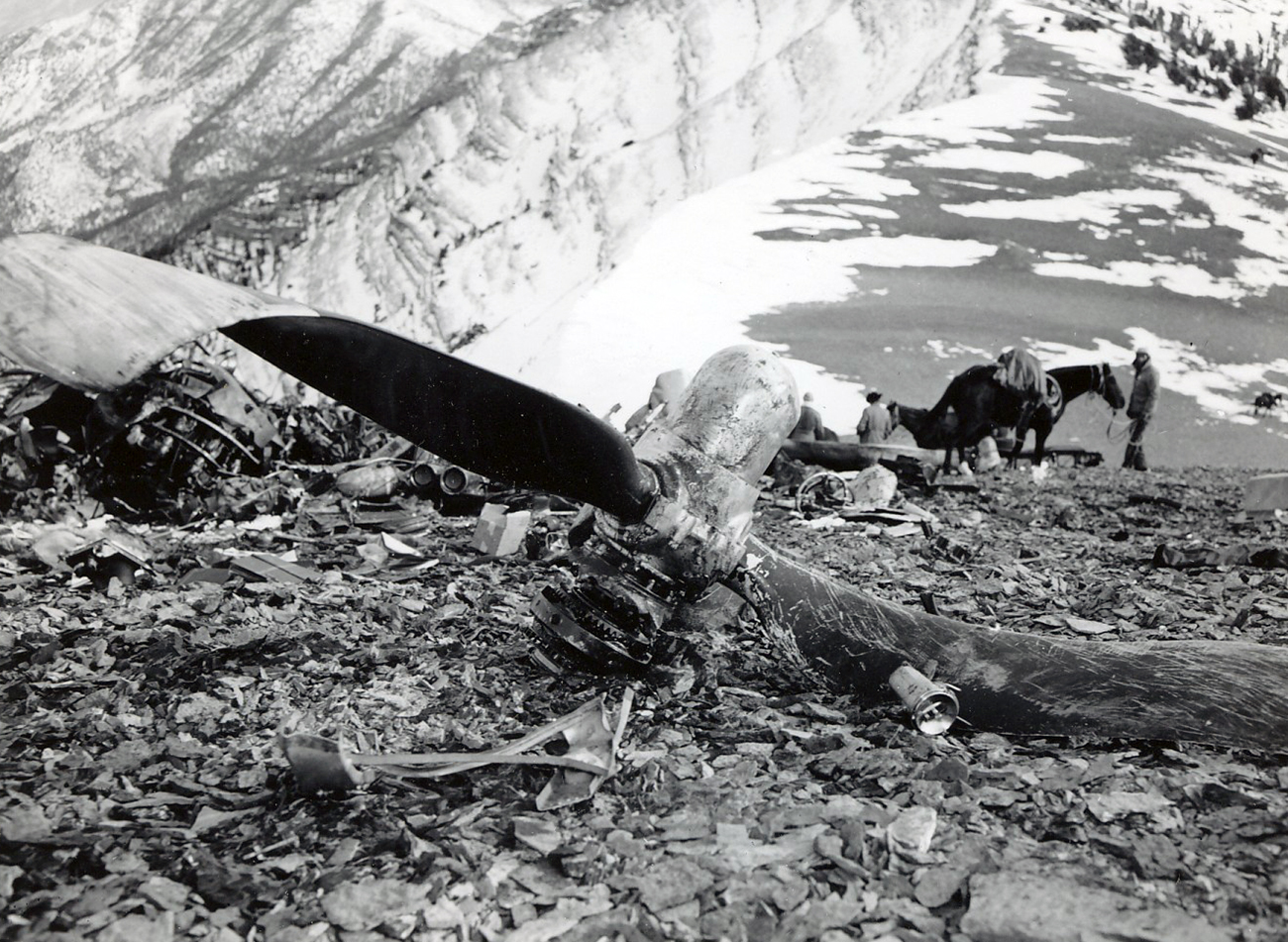
The four engine aircraft was completing a flight from Burbank to the secret base 51 (aka Homey) located near Groom Lake, Nevada, carrying a crew of four and 10 passengers, atomistics, engineers and scientists who were taking part to the Lockheed U-2 reconnaissance aircraft building program. Due to the fact that the flight was secret, the crew did not have any radio contact with ATC. Enroute, the crew encountered poor weather conditions with thunderstorm activity and low visibility. While flying in clouds at an altitude of 11,300 feet, the aircraft hit the slope of Mt Charleston about 50 feet below the summit, killing all 14 occupants.
Probable cause:
It was determined that the aircraft was off course at the time of the accident, probably because the crew became lost in the clouds.