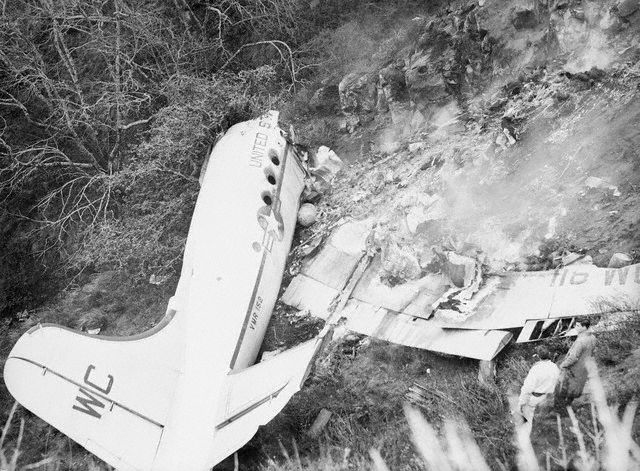
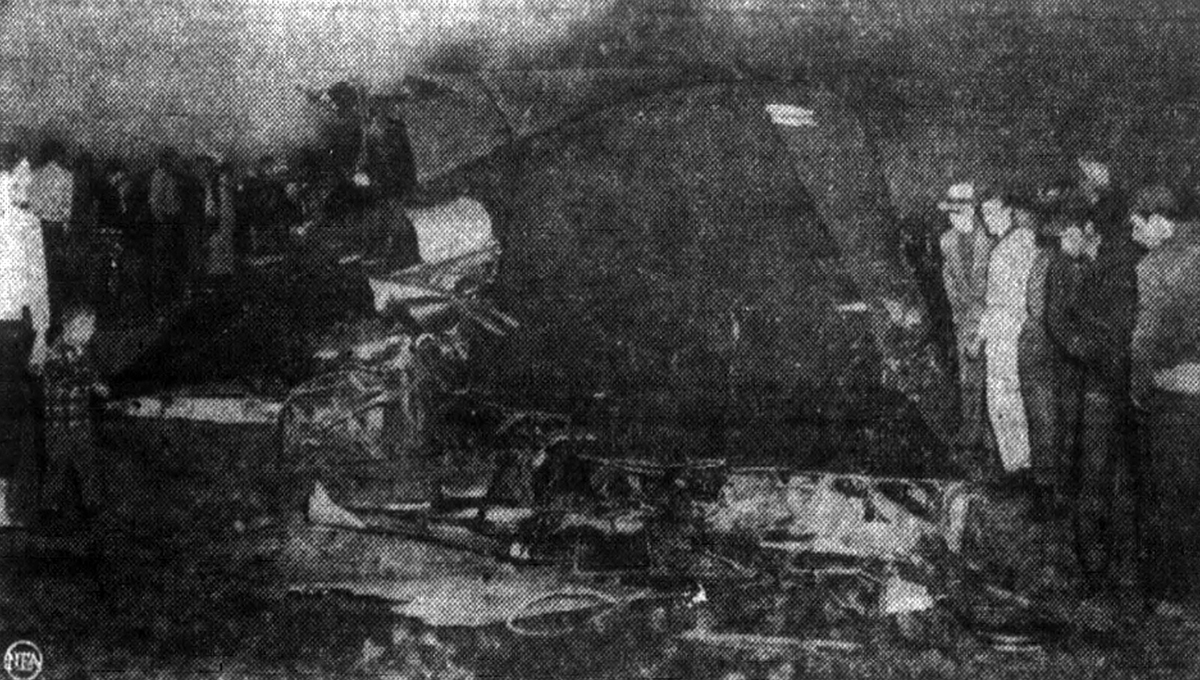
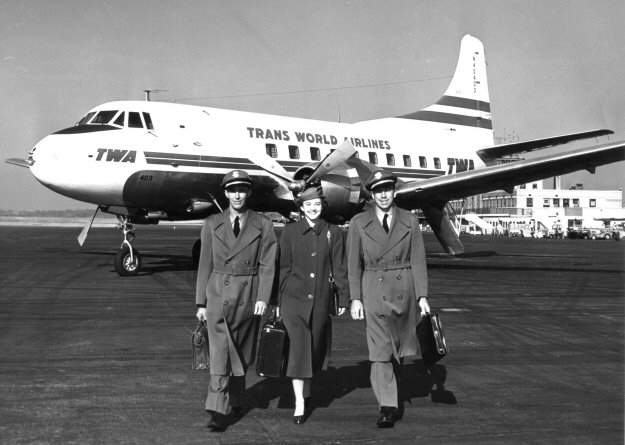
Crash of a Martin 404 in Pittsburgh: 22 killed

Date & Time: Apr 1, 1956 at 1920 LT
Type of aircraft:
Operator:
Registration:
N40403
Flight Phase:
Survivors:
Yes
Schedule:
Pittsburgh – Harrisburg – Reading – Allentown – Newark
MSN:
14103
YOM:
1951
Flight number:
TW400
Crew on board:
3
Crew fatalities:
Pax on board:
33
Pax fatalities:
Other fatalities:
Total fatalities:
22
Captain / Total flying hours:
12000
Captain / Total hours on type:
2200.00
Copilot / Total flying hours:
7145
Copilot / Total hours on type:
204
Aircraft flight hours:
9177
Circumstances:
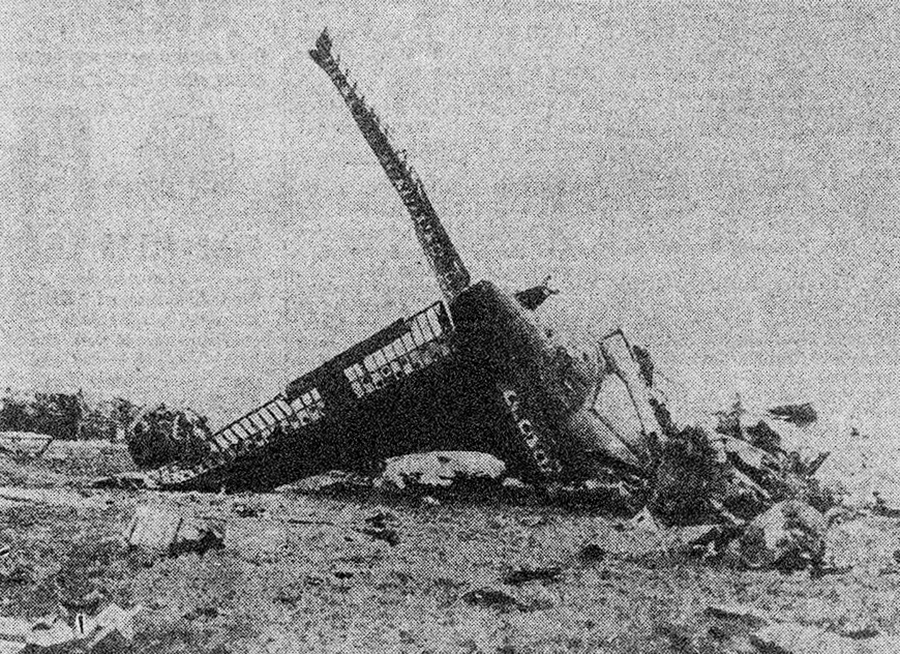
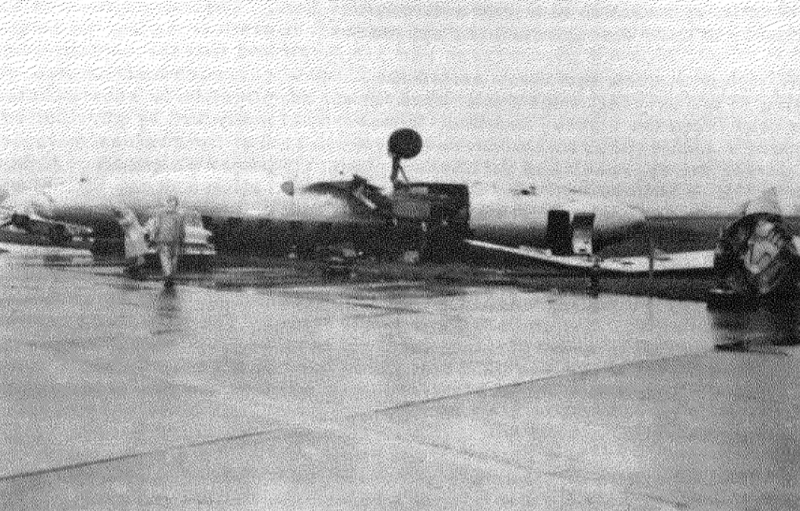
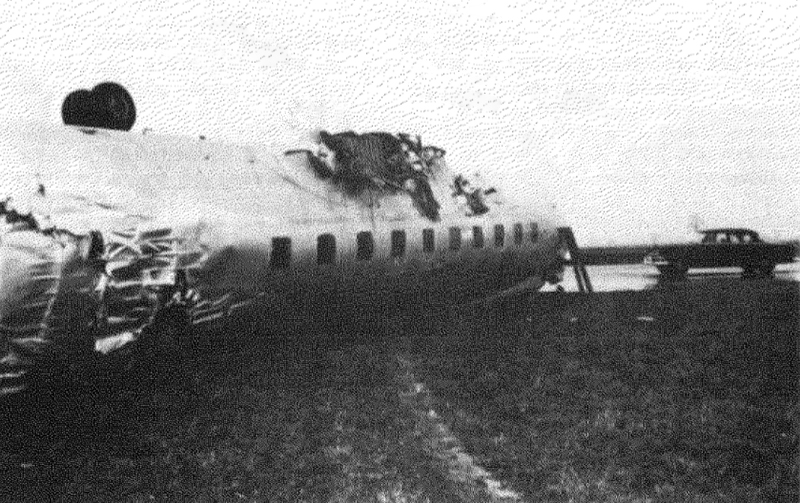
Flight 400 was regularly scheduled between Pittsburgh, Pennsylvania, and Newark, New Jersey, with stops at Harrisburg. Reading. and Allentown, Pennsylvania. Captain Raymond F. McQuade, First Officer Harlan V. Jesperson, and Hostess Vary Jane Fanning, comprised the crew. Prior to departure the pilots were briefed on the en route weather and received the sequence and forecast reports. Although the en route weather was generally good the night was dispatched to Newark on an IFR flight plan via airways as is customary. Upon departure the gross weight of the aircraft was 41,822 pounds (the certificated allowable takeoff gross is 44,900 pounds and TWA's own limit is 43.,650 pounds) and the center of gravity of the loaded aircraft was located within the prescribed limits. Scheduled departure time was 1915; the flight asked for and received taxi clearance at 1916, was then given the wind as calm, and was cleared to runway 23. Takeoff clearance was requested and granted at 1919. About one minute later tower personnel observed a seemingly normal takeoff and initial climb immediately followed by a left turning descent, crash, and erupting fire just beyond the southwest boundary of the airport. Passengers extricated themselves from the jumbled wreckage through and ahead of the fire as best they could; some helped others while a few found themselves thrown out through tears and rents in the shattered fuselage. Although airport based fire fighting equipment was dispatched with no loss of tune some 20 minutes elapsed before it reached the site because of the necessity of traversing circuitous country lanes. Once there, the conflagration, which by that time had nearly consumed the wreckage, was quickly smothered. The stewardess and 21 passengers were killed while 14 other occupants were injured. The aircraft was totally destroyed.
Probable cause:
The Board determines that the probable cause of this accident was uncoordinated emergency action in the very short time available to the crew, which produced an airplane configuration with unsurmountable drag. The following findings were reported:
- At the time of the first power reduction the first officer saw the left engine zone 1 fire warning light come on and retarded the left throttle to a point where autofeathering was deactivated,
- The first officer then reached for the left manual feathering button but was dissuaded from using it by the captain, who, not knowing that the autofeathering was inoperative, attempted futilely to obtain it by pulling back the left mixture to idle cutoff,
- This action did not comply with the emergency procedures prescribed by the carrier for powerplant fire or failure,
- Although these were not the most desirable procedures, compliance without delay would have feathered the left propeller,
- The windmilling left propeller, the extended landing gear, and the takeoff flaps produced sufficient drag to make the airplane lose altitude and strike the ground,
- The cause of the fire warning was a failed exhaust connector clamp in the left engine which triggered an adjacent fire detecting unit,
- After the accident the carrier revised its emergency procedures for powerplant fire or failure.
Final Report:
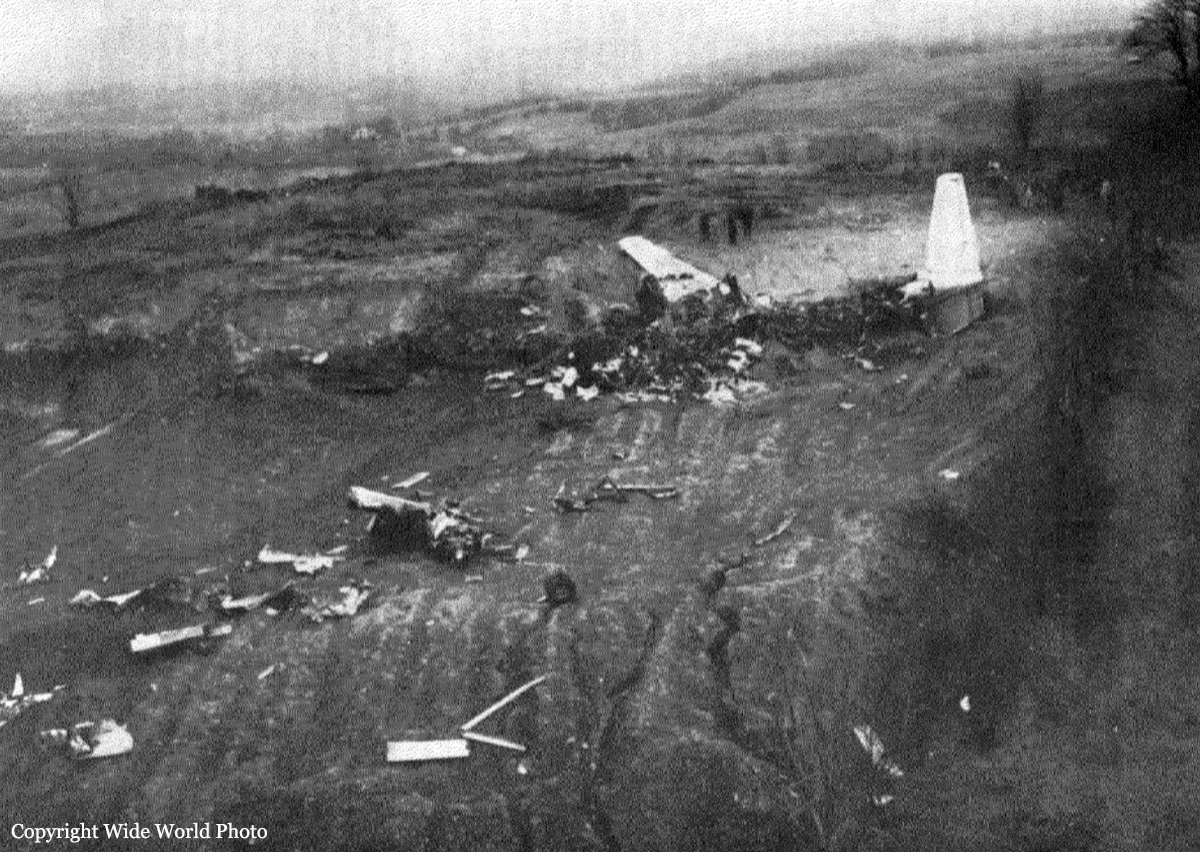
Crash of a Convair T-29B at Dobbins AFB: 2 killed

Date & Time: Mar 20, 1956
Type of aircraft:
Operator:
Flight Type:
Survivors:
No
Schedule:
Harlingen – Dobbins – New York
Crew on board:
2
Crew fatalities:
Pax on board:
0
Pax fatalities:
Other fatalities:
Total fatalities:
2
Circumstances:
The crew was performing a flight from Harlingen AFB, Texas, to New York with an intermediate stop at Dobbins AFB, Georgia. The accident occurred in unclear circumstances, killing both crew members, Cpt Cecil Bryant and 1st Lt Donald Carillo.

Crash of a Boeing B-50D-80-BO Superfortress in Wilmington Pike: 11 killed

Date & Time: Feb 27, 1956
Type of aircraft:
Operator:
Registration:
48-072
Flight Phase:
Flight Type:
Survivors:
No
Schedule:
Wright-Patterson - Wright-Patterson
MSN:
15881
YOM:
1948
Location:
Crew on board:
11
Crew fatalities:
Pax on board:
0
Pax fatalities:
Other fatalities:
Total fatalities:
11
Circumstances:
While conducting a training mission out from Wright-Patterson AFB, the airplane crashed in unknown circumstances in Wilmington Pike, southeast of Dayton. All 11 occupants were killed.

Crash of a Boeing KC-97 Stratotanker in West Palm Beach: 5 killed

Date & Time: Feb 21, 1956 at 1630 LT
Type of aircraft:
Operator:
Flight Type:
Survivors:
No
Schedule:
West Palm Beach - West Palm Beach
Crew on board:
5
Crew fatalities:
Pax on board:
0
Pax fatalities:
Other fatalities:
Total fatalities:
5
Circumstances:
The crew departed West Palm Beach at 1345LT for a local training mission. After completing several maneuvers, the crew was returning to his base when, on final approach, at a speed of 142 knots, the four engine aircraft struck a 42-foot high light pole. It continued for 660 feet, lost its both wings, broken in two and eventually crashed in a field. All five crew members were killed.
Crew:
Cpt Andrew B. Smernis, pilot,
Cpt Earl Wellington Meredith, Jr., copilot,
2nd Lt Thomas Dee McLeod, copilot,
T/Sgt William Edward McDeid, flight engineer,
M/Sgt John Harold James, panel engineer.
Probable cause:
The investigation would conclude the fault lay not with the crew. It was an in-flight fire; not in an engine, but in the area of the left wing's leading edge.

Crash of a Vickers 744 Viscount in Chicago

Date & Time: Feb 20, 1956 at 0811 LT
Type of aircraft:
Operator:
Registration:
N7404
Survivors:
Yes
Schedule:
Detroit – Chicago
MSN:
90
YOM:
1955
Flight number:
CA141
Crew on board:
4
Crew fatalities:
Pax on board:
38
Pax fatalities:
Other fatalities:
Total fatalities:
0
Captain / Total flying hours:
17752
Captain / Total hours on type:
610.00
Copilot / Total flying hours:
5539
Copilot / Total hours on type:
53
Aircraft flight hours:
1541
Circumstances:
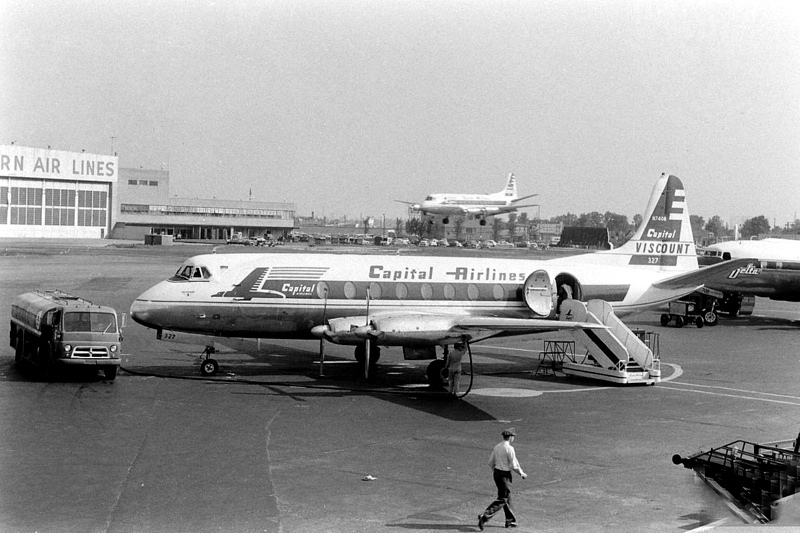
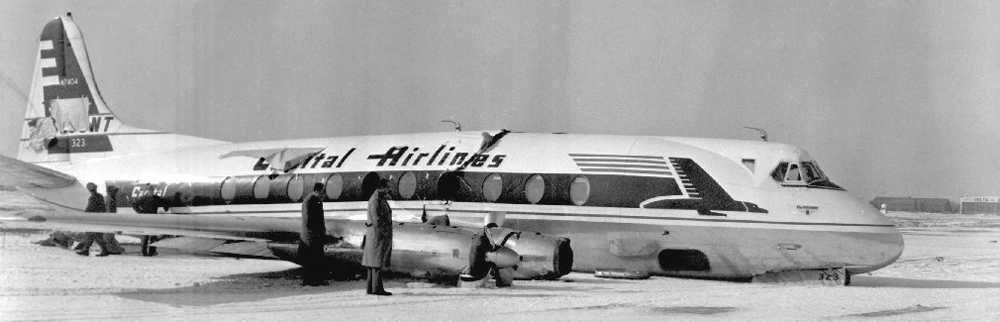
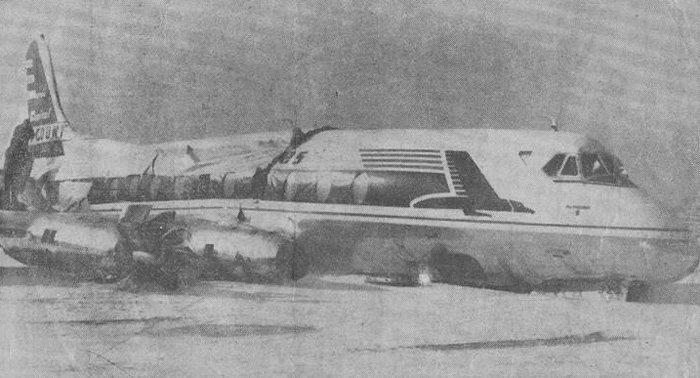
Capital Airlines flight 141 of February 20, 1956, originated at Willow Run Airport, Detroit, Michigan, and was a regularly scheduled flight to Chicago. The crew consisted of Captain Roger Harrison Taylor, First Officer George Richard Hanst and Stewardesses Jacqueline V. Sadowski and Gloria Galloway. Captain R. E. Gilliland, the fifth assigned crew member, was deadheading to Chicago and rode in the passenger cabin. Following a weather briefing, which included a review of en route and terminal weather forecasts, a VFR flight plan was filed. Departure from Detroit was at 0700. The gross takeoff weight of the air- craft was 54,701 pounds, which was below the specified limit; the load was distributed properly with respect to the center of gravity of the aircraft. The flight to the vicinity of Chicago was routine. Near Chicago Flight 141 reported to the Chicago tower that it was over the shoreline. The flight later reported passing Kedzie and was cleared to land on runway 31R. The flight was observed to make a right turn to final approach and appeared to descend in a normal manner until over the west side of Cicero Avenue (the eastern boundary of the airport) at an altitude of 25 to 50 feet above the ground. At this point the airplane appeared to decelerate and descend rapidly. The aircraft was further observed to strike the ground in a slightly nose-up attitude several hundred feet short of the threshold of threshold of the runway, and the top of the fuselage was seen to break open adjacent to the wing spar to fuselage attachment. As the aircraft proceeded down the runway the landing gear retracted and the aircraft then slid on its belly until it came to rest to the left of the runway, 1,626 feet beyond the point of initial impact. All occupants left the aircraft through emergency exits or the main cabin door. The fire department, having been called by tower personnel, arrived at the scene before all persons had evacuated the aircraft. However, there was no fire. The Chicago weather at 0720 was reported as: Sky clear, visibility 6 miles; smoke; wind north-northwest.
Probable cause:
The Board determines that the probable cause of this accident was a malfunctioning of the propeller control switches which culminated in an abrupt loss of lift. The following findings were reported:
- Three of the four landing gear actuated switches, which are located on the landing gear also struts and which effect operation of the propeller, were found to have been capable of malfunctioning by jamming, sticking, or freezing,
- No periodic inspection for internal examination of these switches had been established by the company prior to the accident,
- At least two of the tending gear actuated switches malfunctioned, making it possible for the 21-degree pitch stops to be withdrawn, and consequently ineffective,
- The crew failed to see the 21-degree pitch warning light on, and, therefore, they did not actuate the emergency switch,
- During the final stage of the approach at Chicago, the propellers moved to the ground fine pitch range,
- When the first officer saw three of the 17-degree pitch warning lights come on, he advanced all four throttles quickly,
- The rapid advance of the throttles caused the propeller governor control to move the propeller blades to the four-degree pitch position, thereby creating both propeller drag and loss of wing lift.
Final Report:

Crash of a Martin 404 in Owensboro

Date & Time: Feb 17, 1956 at 1458 LT
Type of aircraft:
Operator:
Registration:
N445A
Survivors:
Yes
Schedule:
Evansville – Owensboro – Louisville – Chicago
MSN:
14122
YOM:
1951
Flight number:
EA156
Crew on board:
3
Crew fatalities:
Pax on board:
20
Pax fatalities:
Other fatalities:
Total fatalities:
0
Captain / Total flying hours:
10491
Captain / Total hours on type:
3182.00
Copilot / Total flying hours:
4292
Copilot / Total hours on type:
2616
Aircraft flight hours:
12373
Circumstances:
Eastern Air Lines Flight 156 of February 17 was a scheduled operation between Evansville, Indiana, and Chicago, Illinois, with intermediate stops at Owensboro and Louisville, Kentucky. It utilized the aircraft and flight crew of Trip 157 from Chicago, which terminated at Evansville. The crew consisted of Captain Charles R. Hard, Pilot Raymond F. Rozman, and Flight Attendant Robert T. Schroeter. The Chicago to Evansville flight arrived at 1422, 43 minutes late because of traffic and ground delays. It was reported routine in all other respects. During the short ground time at Evansville Captain Bard reviewed the weather forecasts for the flight Evansville to Chicago, and received the latest weather observation reports for Owensboro, the first stop. These indicated the flight to Owensboro would be in accordance with Instrument Flight Rules and that an instrument approach to the airport there would be necessary. Accordingly, an IFR flight plan was filed and an instrument clearance was given the crew before departure. Clearance was direct to Owensboro at 2,000 feet. Flight 156 departed at 1441. Gross takeoff weight was 41,471 pounds, which was less than the maximum allowable, 43,306 pounds. The load was properly distributed with respect to the center of gravity limits of the aircraft. The crew reported its position en mute to ATC (Air Traffic Control) according to its clearance and thereafter at 1447 called the company radio located on the Owensboro Airport. Routine information exchanged between flight and ground personnel included giving the flight the latest weather and altimeter information. There being no control tower at Owensboro, the company there advised the flight that surface wind favored landing on runway 05. A few minutes later N445A was observed to descend below the clouds just north of the airport, flying on a southerly heading toward the field. It was observed to level out and turn right onto a downwind leg for runway 05. In the limited visibility, reported as one mile in rain and fog, the aircraft disappeared from view near the southwest boundary of the airport while still, on its downwind leg. Shortly thereafter it came back into view, proceeding toward the landing runway. It suddenly struck the ground, right wing down, rolled to an inverted position, and slid to a stop beside runway 05. The aircraft lost its both wings and was partially destroyed. All 23 occupants were evacuated.
Probable cause:
The Board determines that the probable cause of this accident was an improperly executed final approach, resulting in a stall, during a steep left turn at an altitude too low to permit recovery. The following findings were reported:
- Weather conditions reported were above the minimums for the flight to execute an ADF approach, circle, and land,
- Weather conditions experienced by the flight were equal to or better than those reported,
- The flight established visual contact with the ground at a position which was normal following the completion of the specified instrument approach procedure,
- A circling approach was begun to land on runway 05,
- The position on the downwind leg from which a left turn was begun to align with runway 5 resulted in little or no straight-in portion of the approach and an abnormally steep turn,
- During the latter phase of the approach while at low altitude the aircraft rolled from a steep left bank to the right in a continuous motion,
- The aircraft struck the ground short of and to the right of the runway of intended landing in an uncontrolled attitude,
- There was no evidence of malfunction or failure of the aircraft, its engines, or propellers,
- Thunderstorm turbulence, wind shift, and lightning were not factors in the accident.
Final Report:

Crash of a Douglas R5D-2 on Mt Sunol Ridge: 40 killed

Date & Time: Feb 17, 1956 at 1342 LT
Type of aircraft:
Operator:
Registration:
39116
Flight Type:
Survivors:
No
Site:
Schedule:
Camp Pendleton – El Toro – Alameda – Hickam
MSN:
18331
YOM:
1944
Crew on board:
5
Crew fatalities:
Pax on board:
35
Pax fatalities:
Other fatalities:
Total fatalities:
40
Circumstances:
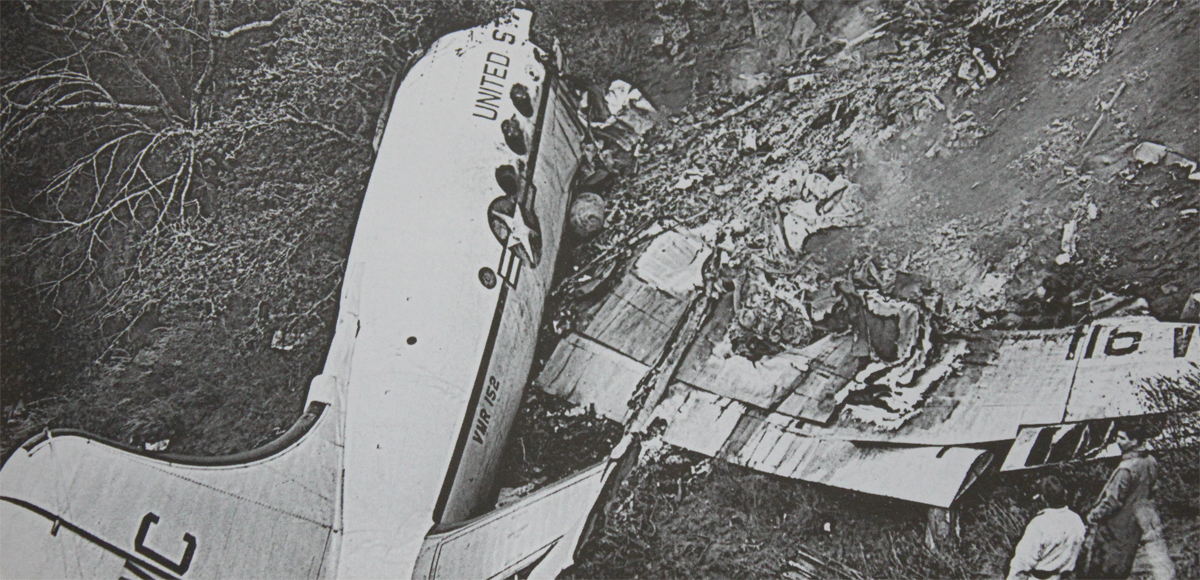
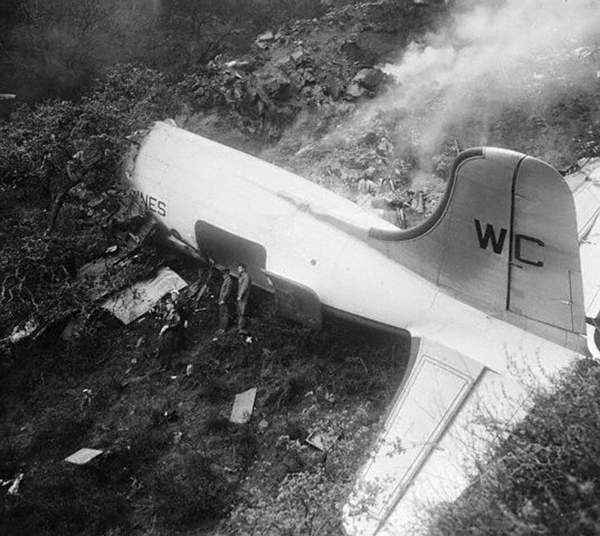
The aircraft departed El Toro Airbase at 1030LT Bound for Alameda NAS on behalf of the Marine Transport Squadron 152. On board were United States Marines from Camp Pendleton en route to Hickam Field, and five crew members. While approaching his destination, the captain was instructed to follow a 30 minutes holding circuit. At 1342LT, while descending at an altitude of 3,500 feet in marginal weather conditions, the pilot started the approach when the aircraft hit the slope of Mt Sunol Ridge located about 21 miles southeast of Alameda Airbase. The aircraft was destroyed upon impact and all 40 occupants have been killed. It was reported that the airplane hit the mountain about 200 feet below the summit.
Crew:
Maj Alexander Watson, pilot,
1st Lt Thomas E. Straughan, copilot,
M/Sgt Donald J. Down, navigator,
S/Sgt Terrell M. Young, flight engineer,
S/Sgt Harry E. Knight, radio operator.
Probable cause:
It was determined that the collision with the mountain was the consequence of several errors and omissions on part of the flying crew who neglected approach procedures and wrongly interpreted some signals transmitted by local beacons. This caused the crew to start the descent prematurely and the aircraft to drift off course by six miles to the northeast at the time of the accident. Low visibility due to clouds was considered as a contributing factor.

Crash of a Boeing B-52B-30-BO Stratofortress in Tracy: 4 killed

Date & Time: Feb 16, 1956
Type of aircraft:
Operator:
Registration:
53-0384
Flight Phase:
Flight Type:
Survivors:
Yes
Schedule:
Castle - Castle
MSN:
16863
YOM:
1953
Crew on board:
8
Crew fatalities:
Pax on board:
0
Pax fatalities:
Other fatalities:
Total fatalities:
4
Circumstances:
The crew was performing a training mission out from Castle AFB when a fire broke out apparently on the leading edge of the right wing. It appears that four crew members were able to bail out and were found alive while four others were killed when the aircraft crashed in Tracy.
Crew:
Maj Edward L. Stefanski, pilot, †
Maj Michael Shay, copilot,
Maj Albert K. Brown, pilot, †
Col Patrick D. Fleming, instructor pilot, †
Cpt James Fredrickson, navigator, †
Maj Harold F. Korger, radar observer,
Maj Billie M. Beardsley, radio operator,
M/Sgt Williard Milo Lucy, tail gunner.
Probable cause:
It is believed that a fire broke out following an explosion that occurred in an electrical power panel located on the alternator deck blowing off the cover. This caused the cover to jam the regulator valve of the left hand forward alternator disabling the over speed protection and resulting in an over speed failure.

Crash of a Fairchild R4Q-2 Flying Boxcar off Miami: 2 killed

Date & Time: Feb 4, 1956
Operator:
Registration:
131703
Flight Phase:
Flight Type:
Survivors:
Yes
Schedule:
Miami - Miami
MSN:
10888
YOM:
1952
Location:
Crew on board:
4
Crew fatalities:
Pax on board:
0
Pax fatalities:
Other fatalities:
Total fatalities:
2
Circumstances:
The crew was engaged in a local training sortie from Miami-Opa Locka Airport. Shortly after takeoff, while climbing, the aircraft suffered engine problems. The crew contacted ATC and elected to ditch the aircraft off Miami. Two crew members were rescued while others drowned.
Probable cause:
Engine failure.

Crash of a Lockheed PV-1 Ventura near Smithtown: 3 killed

Date & Time: Jan 26, 1956 at 1633 LT
Type of aircraft:
Registration:
N2000C
Flight Phase:
Flight Type:
Survivors:
No
Schedule:
Ronkonkoma - Ronkonkoma
MSN:
5243
YOM:
1943
Crew on board:
3
Crew fatalities:
Pax on board:
0
Pax fatalities:
Other fatalities:
Total fatalities:
3
Captain / Total flying hours:
800
Captain / Total hours on type:
600.00
Aircraft flight hours:
2216
Circumstances:
N2000C took off at 1625 on January 26, 1956, from MacArthur Field, Ronkonkoma, Long Island, New York, its home base, on a local flight with three pilots. They were Bernard J. Malloy, check pilot, and Pilots Raymond Hamberg and Hugo D. Filangeri. The purpose of the flight was to qualify Pilot Hamberg on the Lockheed PV-1 aircraft, a type he had never piloted. The takeoff of N 2000C was normal, toward the northwest, and made under VFR (Visual Flight Rules) conditions with Pilot Hamberg occupying the left or captain's to scat and Pilot Malloy, as check pilot, seated on the right as copilot; Pilot Filangeri acted as observer. Subsequently the PV-1 was seen over the Smithtown area, flying westerly at an estimated altitude of 2,500-3,000 feet, where a witness reported that the engines sounded normal but that the aircraft appeared to be flying at a slow airspeed. Witnesses stated that shortly thereafter the engine power sounded as though it was cut momentarily and then came back on. At an altitude of approximately 2,000 feet the aircraft was seen to dip down and pull up, slightly nose-high, and then fall off to the left, making two to three turns of a descending spiral, and disappear behind the tree-topped horizon. Flames erupted frost the woods over the point where the aircraft was last seen, followed quickly by a large column of black smoke. All three pilots were killed.
Probable cause:
The Board determines that the probable cause of this accident loss of control resulting in a stall at an altitude too low to effect recovery. The following findings were reported:
- Weather was not a major factor,
- The altitude probably did not exceed 3,500 feet above the ground during the eight minutes the aircraft wan in the air,
- There wan no fire prior to impact,
- There was no evidence of failure of the airframe or malfunction of controls as far as could be drained,
- There was no evidence of power failure of either engine,
- The purpose of the flight was pilot familiarization and included slow flight,
- The aircraft was observed to stall at low airspeed approximately 2,000-2,500 feet above the ground.
Final Report: